Tag Archives: Software Defined Radio

Creating a global network of inexpensive remote SDRs

U_Twente_SDR

Many thanks to SWLing Post contributor, Mark Fahey, who replies to Ivan’s preliminary review of the V3 RTL-SDR dongle:

With Shortwave SDRs (the receiver dongle) now costing less than $20, the time has come for us to set up a global group of receivers that we can all log into at will!

RTL-SDR-RTL2832U-e1471375714199Have a look at SDR.hu – here you can put your SDR dongle on line and share it with anyone and they have full control of the receiver just as if it was in their own shack.

Imagine receivers scatted around the world – South America, Tropical Asia, Africa! The cost is now virtually nothing, all that is needed is the dongle, antenna (doesn’t have to be anything special – even a long wire or whip) and a small low cost CPU (Raspberry Pi for example).

Anyone else interested in this dream? Lets get together, get some receivers setup and then talk about our experience in a kick-ass presentation at the 2017 SWL WinterFest in PA!

Also… I am very soon to receive my KiwiSDR matched to a BeagleBone CPU. It will be online at SDR.hu and four remote listeners will be able to tune the full shortwave bands independently, its like my own Twente setup! Heaps of others are getting receivers online in the next few months with KiwiSDRs, this is going to be totally amazing!

I agree, Mark! While there is already quite a network of remote SDRs and receivers in the world, the barrier of entry keeps getting lower and lower. It’s hard to imagine that $25 can buy an SDR that natively covers the shortwave and mediumwave bands!

There’s only one other requirement for an online SDR that Mark didn’t mention: a decent Internet connection. Sadly, this is the only thing keeping me from hosting a remote SDR here at my home. I considered purchasing a KiwiSDR like Mark, but my upload speed (0.2-0.3 mbps) is so terrible and so unreliable that I could only host one listener at a time at best. You can bet that as soon as my ISP upgrades our service, I’ll launch a web SDR as well.

Of course, I’m willing to bet that most SWLing Post readers have more than enough bandwidth to host a $25 remote receiver! Let’s make Mark’s vision a reality!

Ivan’s preliminary review of the new RTL-SDR dongle on shortwave/mediumwave

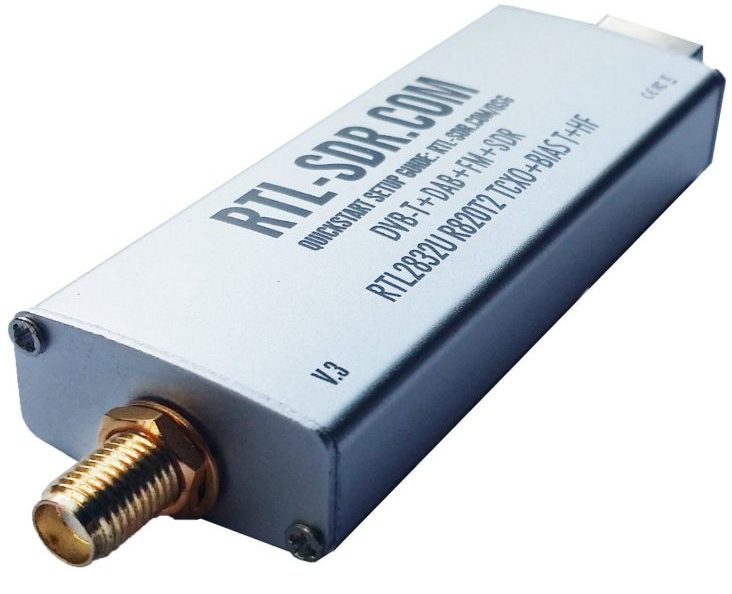
RTL-SDR-RTL2832U-e1471375714199Many thanks to SWLing Post contributor, Ivan Cholakov (NO2CW), who shares the following video review of the new RTL-SDR dongle on the shortwave and mediumwave bands.

Ivan notes:

This is daytime reception comparison. Nighttime could be a different picture. [The RTL-SDR dongle] tunes and frequency is 100% on spot.

Using SDR Sharp you have several AGC settings to play with and find the best combination. The best setting seems to vary with band and signal strength.

The [SDR receiver] comes with a short (20 cm) and long (120cm) telescopic antennas. Neither one is usable for HF or Medium wave.

When ordering the radio you have to get a USB extension cord for the dongle. When plugged in directly into a laptop and then antenna coax it can become bulky. You also will most likely need an SMA adapter to BNC and SO 238.

I hope this helps.

Click here to view on YouTube.

Many thanks for sharing your video, Ivan! For a $25 SDR, I’m pretty impressed so far! I’m also very curious how it will hold up to stronger nighttime signals and, especially, adjacent signal interference. I imagine it may be prone to overloading as well. Please keep us posted!

Have any other Post readers tested the new RTL-SDR dongle on HF? If so, please comment! 

200 metre longwire: Radio Verdad 4054.9 kHz, Guatemala, unprecedented reception in Oxford, UK

verdadRadio Verdad, Chiquimula, Guatemala is quite a regular catch at home, however, their modulation is nearly always weak as the carrier struggles to lift above the ubiquitous blanket of local QRM. Another issue with hearing this station is the digital utility signal just above 4055 kHz, thus requiring LSB reception to reject the adjacent noise.

This particular recording of Radio Verdad was taken during a DX’pedition using the 200 metre longwire and is unprecedented in signal strength and clarity – in my personal experience. With fully discernible audio both the Elad FDM DUO and Sony ICF-2001D receivers perform very well with my experimental 200 metre antenna. I should point out that the audio from the Sony is significantly louder because the speaker on the Elad is puny, to say the least. However, the reception on the Elad sounds to me at least, superior to the Sony in terms of SNR, which is everything in Tropical Band DXing. As usual, I welcome your comments. Recorded in Oxford UK on 31/07/18 at 03:31 hrs UTC. Thanks for watching.

Direct link to the Oxford Shortwave Log reception video of Radio Verdad, Guatemala

Clint Gouveia is the author of this post and a regular contributor to the SWLing Post. Clint actively publishes videos of his shortwave radio excursions on his YouTube channel: Oxford Shortwave Log. Clint is based in Oxfordshire, England.

New RTL-SDR dongles feature HF reception

RTL-SDR-RTL2832U-e1471375714199

Many thanks to SWLing Post contributor, Aaron Kuhn, who writes:

[T]he newest v3 RTL2832U USB receivers now have HF reception via Direct sampling over the SMA antenna connector directly out of the box with no hardware modding required.

I think this might make it the cheapest, out-of-the-box HF SDR possible at this point.

9:1 balun for longwire puts the whole thing under $50 still

Wow! Now you’re making me wish I would’ve waited a few more months before finally purchasing an RTL-SDR. I like the folks over at the RTL-SDR blog, so I purchased their model.

Amazingly,  the V3 RTL2832U only costs $24.95 on Amazon.com. What a value!  Anyone care to write a review of the HF performance? Please contact us.

DX’pedition: first test of deployable 200 metre longwire antenna by Oxford Shortwave Log

A view looking toward  Oxford Shortwave Log DX’pedition territory; a wood in rural Oxfordshire

Regular viewers of my youtube channel will know that I spend much of my shortwave listening time out in an Oxfordshire wood where QRM is negligable and Tropical Band stations can be heard with, at times, unprecidented signal-to-noise. Regular viewers will also be aware that I enjoy experimenting with different antenna set-ups, particularly pushing the boundaries with longwires coupled to portables. Having applied my rather modest practical skills, I constructed a 200 metre deployable 200 metre longwire antenna and finally got around to testing it, with my Elad FDM DUO and Sony ICF-2001D. There are a number of reception videos still to be uploaded to the Oxford Shortwave Log youtube channel, howvever, the immediate information and entertainment of SWLing Post readers, I have included two here. 🙂

The first is the more commonly heard Emisoras Pio XII from Boliva on 5952.5 kHz using the Sony and the second, the much more rarely reported Radio Chaski from Peru on 5979.9 kHz using the Elad. Both reception videos were very encouraging. In fact, I would go so far as to say they demonstrated excellent reception witihin the framework of their respective contexts. Emisoras Pio XII was almost booming with unprecidented signal strength and clarity, whilst Radio Chaski was heard with discernible audio. Neither station had been received as well at my QTH or the woods, previously.

Direct link to reception video of Emisoras Pio XII from Boliva on 5952.5 kHz

Direct link to reception video of Radio Chaski from Peru on 5979.9 kHz

I hope this gives other DXers ‘food for thought’ with regard to experimenting with antennas and perhaps more importantly, making significant improvements to SNR by removing themselves from the ubiquitous blanket of QRM generated by all of those devices at home that are intrinsic to modern life. Thanks for watching. 73.

Clint Gouveia is the author of this post and a regular contributor to the SWLing Post. Clint actively publishes videos of his shortwave radio excursions on his YouTube channel: Oxford Shortwave Log. Clint is based in Oxfordshire, England.

On Sale: SDRplay RSP at HRO

SDRplay-Special-HRO

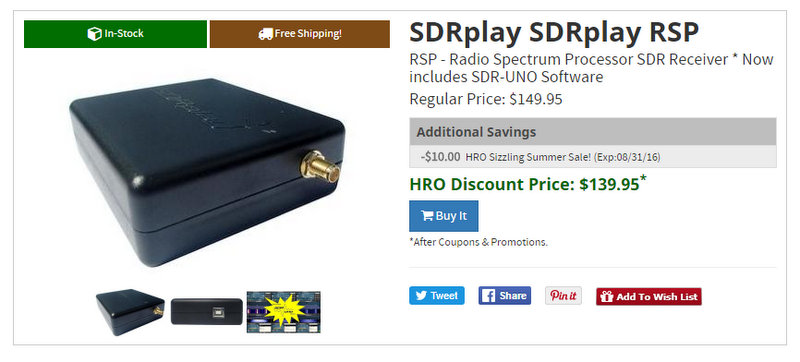
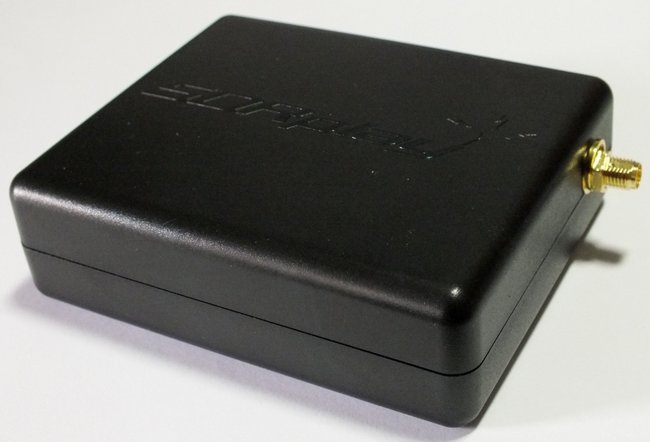
Ham Radio Outlet is currently offering the SDRplay RSP software defined receiver for $139.95 in a summer sale that is set to last until the end of August.

If you’ve been considering the SDRplay RSP, this would be a great time to pull the trigger as I’ve never seen the price of the RSP below $149. Click here to view the promotion on HRO’s website.

Click here to read our review of the RSP, or here to read past posts referencing the RSP.

Radio-Sky Spectrograph: Radio Astonomy with the SDRplay RSP

The SDRplay RSP software defined radio

The SDRplay RSP software defined radio

(Source: Amateur Radio Astronomy blog)

Thanks to the efforts of Nathan Towne, we now have the ability to use [the SDRplay RSP] with Radio-Sky Spectrograph (RSS).

[…]As with RTL Bridge, a intermediary program sits between RSS and the receiver.  This program was written by Nathan Towne and is named SDRPlay2RSS, not too surprisingly.  This is a dot NET program and if you are up to date on your dot NET run-time updates you should be fine. Installation is a no brainer as SDRPlay2RSS comes with the RSS 2.8.18 update. SDRPlay2RSS does not come with the current full install of RSS so you must do the Full install and then the Update.

Continue reading…

Click here to read our review of the SDRplay RSP.