Author Archives: Thomas

Making a good thing better: The C.Crane CC Skywave SSB 2

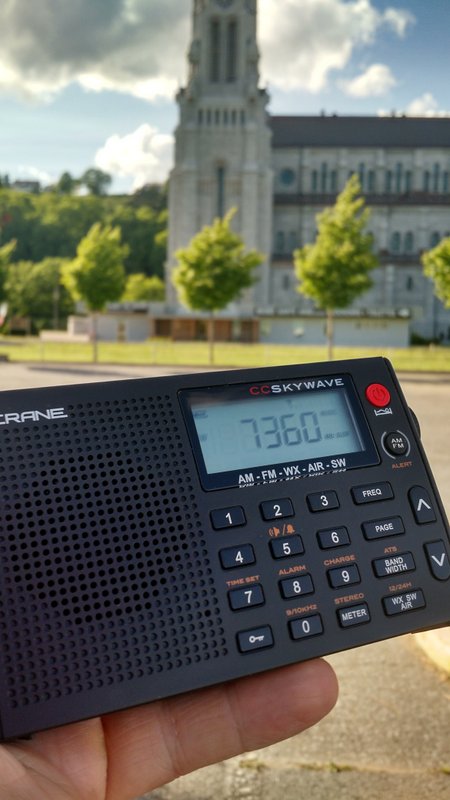
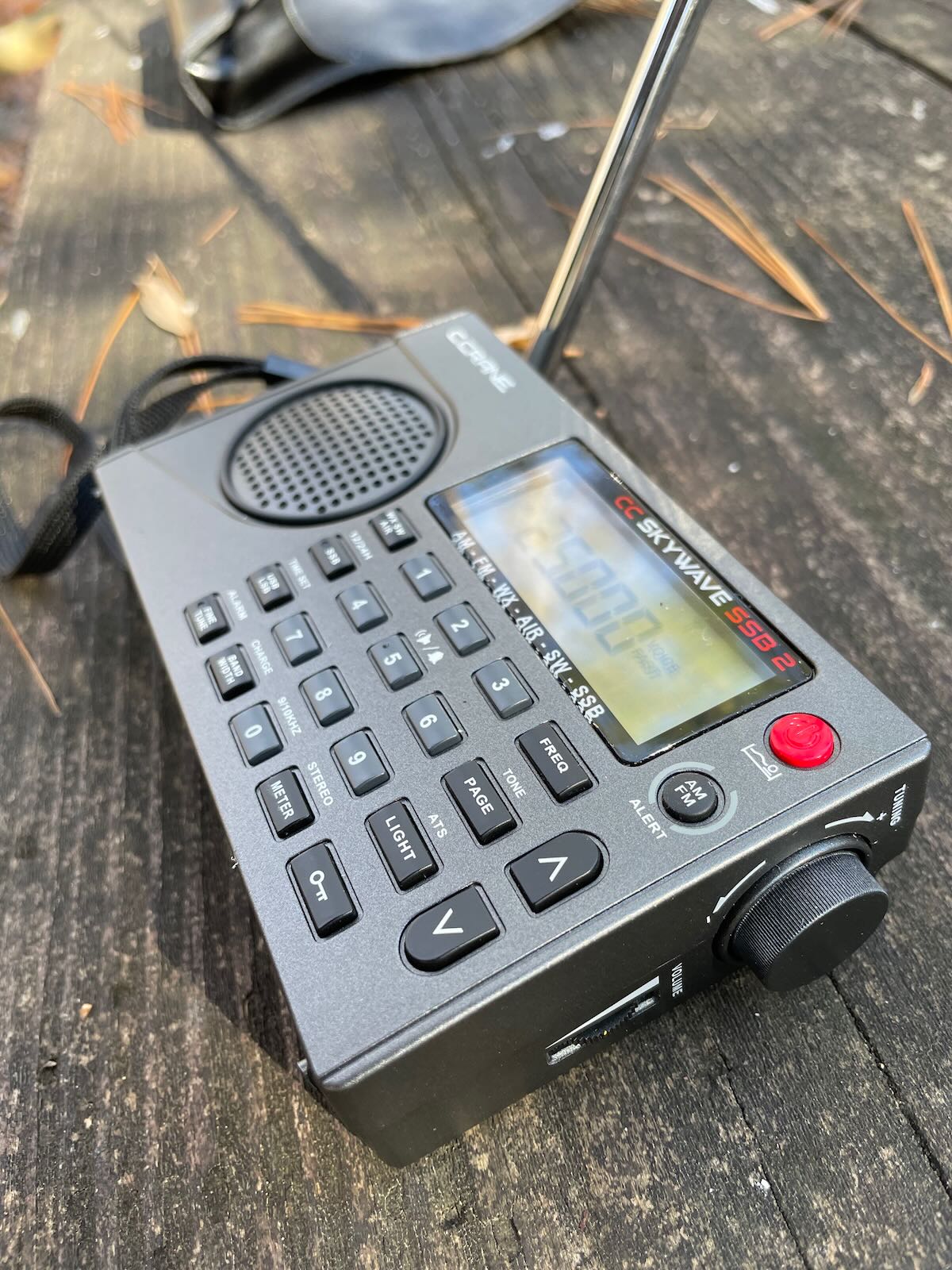
Last month, C.Crane sent me (and the infamous Jock Elliott–read his review here) a pre-production CC Skywave SSB 2 portable shortwave radio.

In full disclosure and to be clear: these pre-production units were sent to us free of charge by C.Crane who is a long-time sponsor of the SWLing Post.

Back in October, I was very pleased to see that C.Crane had updated the CC Skywave SSB to version 2 in their latest product catalog.

If you’ve read the SWLing Post for long, you’ll know that the CC Skywave SSB is my choice travel and EDC radio. I prefer it over any other portable I own (and I do have quite a lot) because it’s so insanely useful, efficient, lightweight, compact, and durable.
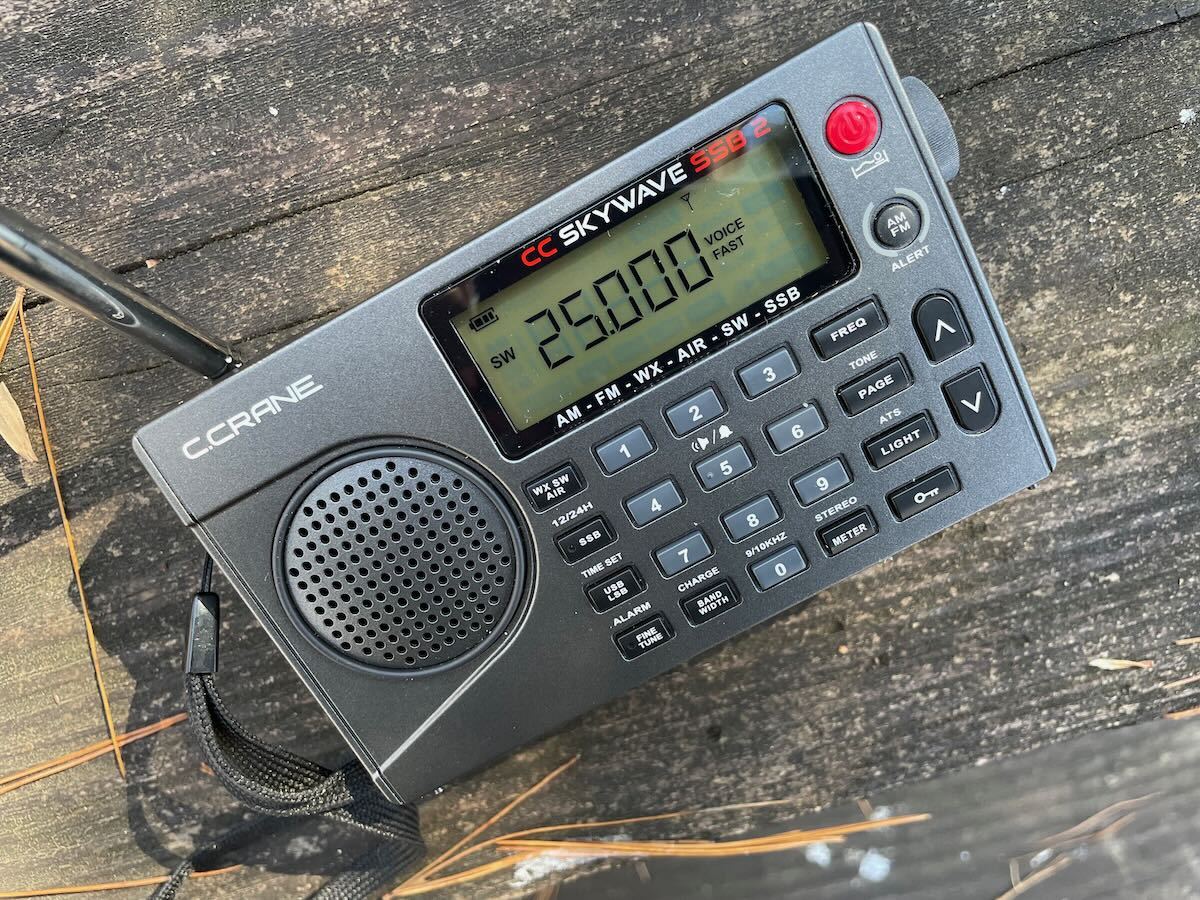
I’ve taken the CC Skywave SSB and the original CC Skywave on more travels that I could possibly remember.

What’s so great about the Skywave series?

I’m a one-bag traveler.
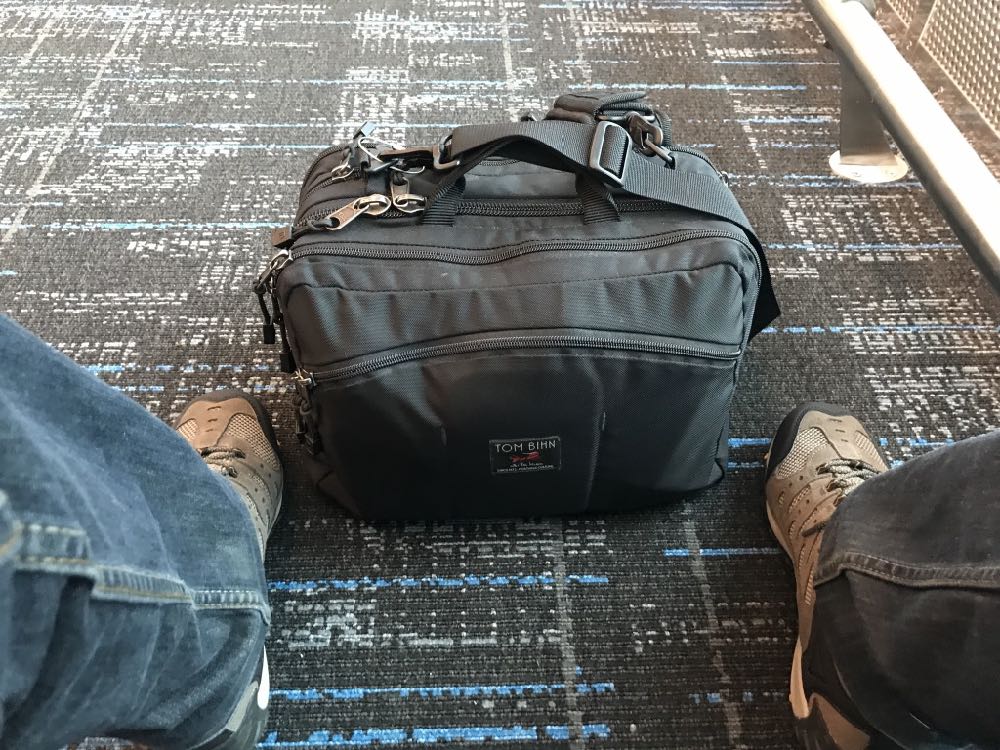
Me, at Charlotte-Douglas International waiting for a flight to the Winter SWL Fest in 2019.

When I fly, I take only one carry on bag that’s so compact it can fit under the seat in front of me in any type of commercial aircraft.

I firmly believe there is no freedom like one-bag travel. While others are stressing over where to stow luggage, how to carry it all, or why their checked-in luggage didn’t arrive at the destination, I’m cruising through the airport and to my destination unhindered.

The key to successful one-bag travel is only carrying what you need, and focusing on items that are multi-function.

Me? I need a good multi-band radio.

The CC Skywave SSB is the most comprehensive compact portable I own. It’s truly a “Swiss Army Knife” of a receiver. Here are the bands/features I appreciate:

  • AM/Mediumwave (9/10 kHz steps selectable)
  • FM broadcast (with expanded FM range when in 9 kHz step mode)
  • Shortwave
  • AIR band (to listen to Air Traffic Control and Air comms)
  • Weather Radio with alert (this functions brilliantly in the US and Canada)
  • A proper clock and alarm (that can display in 24 hour time!)
  • It uses two common AA batteries that can even be internally-recharged if NiMH
  • It even has a squelch feature for scanning, say, the AIR band

All of this and it’s also one of the best-performing compact radios on the market. It’s a capable radio for portable DXing right out of the box (or you can hot-rod it like Gary DeBock does!).

Side note: the CC Skywave’s weather radio reception is better that any other radio I’ve tested including dedicated weather radios. Continue reading
Radio Waves: State of VOA Broadcast Infrastructure, Amish Weather Radio, 96.7 FM, Australia Calling, and MAME Showcase Gerät 32620 Emulator

Radio Waves:  Stories Making Waves in the World of Radio

Welcome to the SWLing Post’s Radio Waves, a collection of links to interesting stories making waves in the world of radio. Enjoy!


Where VOA’s Broadcast Infrastructure Stands Today (Radio World)

Shortwave retains a role in serving particularly difficult-to-reach audiences

Russia’s horrific invasion of Ukraine and its simultaneous blocking of Western media outlets has renewed public interest in shortwave radio broadcasters like the federally funded Voice of America.

Now managed by the U.S. Agency for Global Media or USAGM, VOA’s roots go back to 1941, when the U.S. government leased a dozen commercial broadcaster owned/operated shortwave radio transmitters for the VOA’s predecessor, the U.S. Foreign Information Service. (These shortwave transmitters were previously used by U.S. broadcasters to share content between their AM radio stations.)

The VOA came into being in 1942. It played a major role in broadcasting U.S. news and views to the world during World War Two and the Cold War. After the fall of the Berlin Wall, shifting government priorities, the emergence of platforms competing with shortwave, and budget cuts led to VOA’s language services, broadcasts and programming being reduced.

Today, “USAGM operates transmitting stations around the world, including in the U.S., Africa, Europe and Asia,” Laurie Moy, USAGM’s director of public affairs said in an email earlier this year.

“All of these stations are equipped with multiple shortwave transmitters, and four of these stations have a medium-wave (AM) transmitter each. In total, USAGM’s network consists of about 75 shortwave (ranging from 100 to 250 kW) and medium-wave (ranging from 100 to 1000 kW) transmitters.”

The agency also has access to shortwave and medium-wave transmitters via leases and exchange agreements with other broadcasters.

At present, USAGM produces content in 63 languages, 35 of which are aired on shortwave and medium-wave. VOA itself produces content in 48 languages, 18 of which are aired on shortwave and medium-wave.

“In terms of the agency’s shortwave network, shortwave continues to reach particularly difficult-to-reach audiences, such as in North Korea, western China, Afghanistan and elsewhere,” Moy told Radio World. [Continue reading…]

How do you find out about tornadoes if your religion doesn’t allow TVs or smartphones? (Courier and Press)

If a tornado or flash flood is imminent, most Americans find out about it through a smartphone or a television.

But as the National Weather Service was reminded in the wake of the deadly Dec. 10, 2021 Kentucky tornado, one segment of the population uses neither of those things: the Amish, who shun technology.

As meteorologists studied damage in the days that followed that storm, which killed 80 people and damaged hundreds of homes, they encountered an Amish community in Ohio County, Kentucky, and asked: How do you get severe weather information?

“They basically said they listen for the weather sirens from town,” said Derrick Snyder, a meteorologist with the National Weather Service. But as loud as storm sirens are, not everyone is close enough to hear.

A solution may be on the way, as the agency teams with a national radio maker as part of the Weather Awareness for a Rural Nation initiative. Snyder and other meteorologists are part of a project developing weather radios that will be both effective in relaying information immediately, but also acceptable for the Amish lifestyle.

It will be a stripped-down, hand-crank model with absolutely no modern amenities. Continue reading

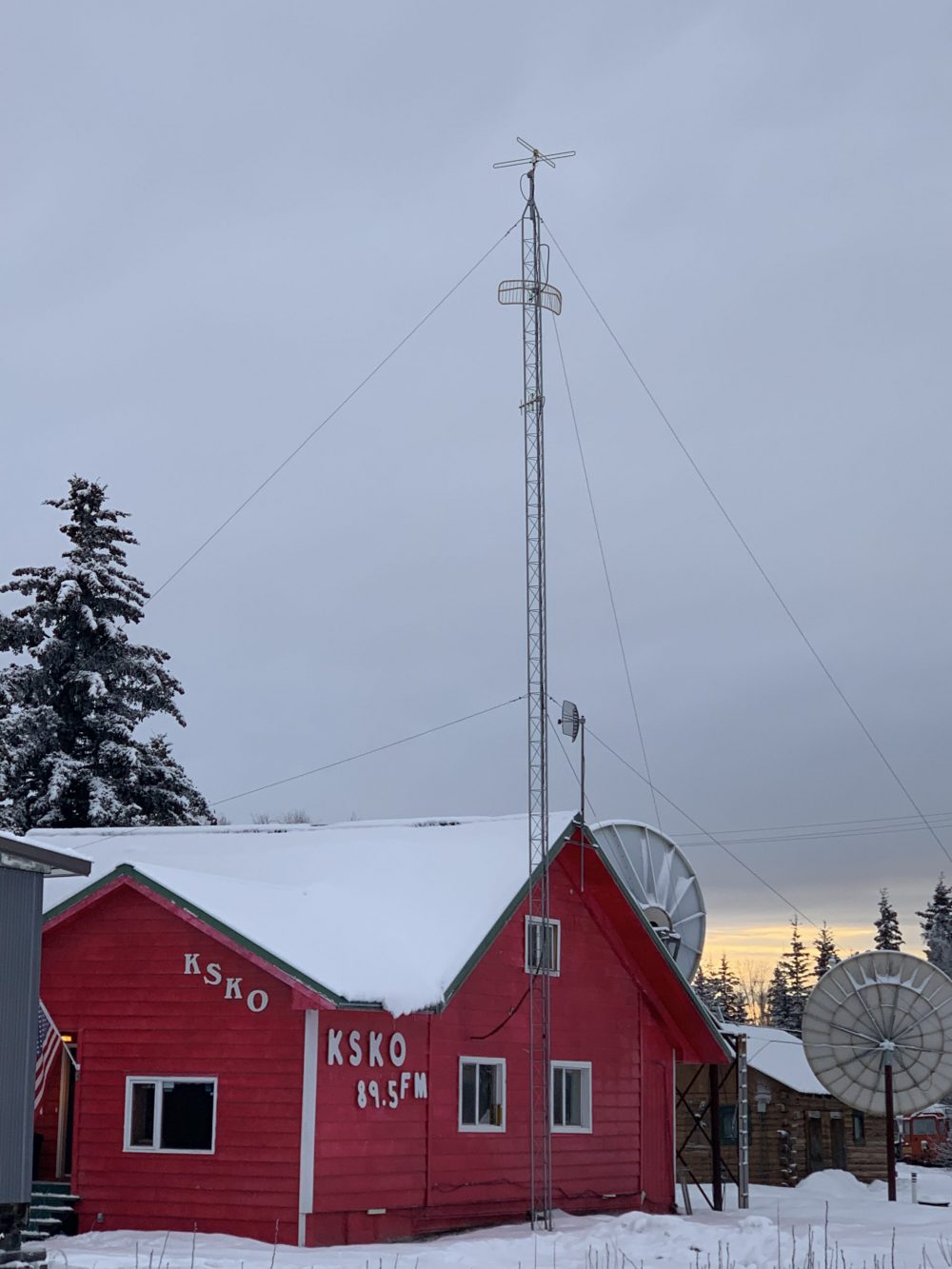
KSKO’s Paul Walker to relay a two hour Christmas program on shortwave on December 23, 2022

Many thanks to SWLing Post contributor and KSKO Program Director, Paul Walker, who shares the following announcement:

Tune in for two hours of nothing but Christmas tunes December 23rd and it’s extra special because it’ll be a live worldwide broadcast of KSKO on Shortwave!!

From 2200-2400UTC 2300-0100UTC (2pm Alaska, 3pm Pacific, 6pm Eastern) we’ll be live across Europe on the 250,000 watts of Spaceline Bulgaria’s 5900 kHz transmitter along with the 100KW WRMI 7570 kHz covering North America and the 100KW WRMI 9955 [Updated to 5085] kHz covering Latin America.

I’m footing the costs out of this out of my own pocket just for the heck of it!

I’m so glad you’re doing this again, Paul! We look forward to tuning in!

Online-Only: BBC prepares to shut down radio and TV broadcast over next decade

(Source: The Guardian via Mark Fahey)

BBC preparing to go online-only over next decade, says director general

Tim Davie outlines vision for a world of ‘infinite choice’ where broadcast TV and radio are being switched off

The BBC is preparing to shut down its traditional television and radio broadcasts as it becomes an online-only service over the next decade, according to the director general, Tim Davie.

“Imagine a world that is internet-only, where broadcast TV and radio are being switched off and choice is infinite,” he said. “A switch-off of broadcast will and should happen over time, and we should be active in planning for it.”

Davie said the BBC was committed to live broadcasting but Britons should prepare for the closure of many standalone channels and radio stations by the 2030s: “Over time this will mean fewer linear broadcast services and a more tailored joined-up online offer.”

The future will involve “bringing the BBC together in a single offer”, possibly in the form of one app combining everything from television programmes to local news coverage and educational material. This could ultimately see the end of distinct brands such as BBC One or BBC Radio 4, although the programmes they currently air could continue online. [Continue reading at The Guardian…]

19th Edition of the Global Radio Guide (Winter 2022-23) Now Available

Many thanks to SWLing Post contributor, Gayle Van Horn (W4GVH), who shares the following announcement:


19th Edition of the Global Radio Guide (Winter 2022-23) Now Available

Small moves and gradual escalation.

Positioning resources so that at the perfect moment, a move can be made to ensure a swift victory.

This is no game of chess, this is the real-world and real-time tensions playing out in the Taiwan Straits every day.

With tensions between Taiwan and China on the rise, and with the Russian-Ukrainian war raging on, radio hobbyists are following the latest news from the front lines using shortwave broadcasts and various other radio services. You can hear these international events like the pros do, but you will need an accurate and comprehensive global radio guide to know where and when to tune in to the action.

That is where you can count on Gayle Van Horn’s (W4GVH) Amazon bestselling Global Radio Guide (now in its 19th edition for the Winter of 2022-23) as it has all of the details you need to catch up with the latest from these and other hotspots around the world.

As one of the only remaining publications available with international broadcast frequencies and schedules, the Global Radio Guide (GRG) puts everything a radio enthusiast needs to navigate the action right in their hands.

In this completely updated edition, regular GRG contributor Fred Waterer (also of The Spectrum Monitor) post features on monitoring the international broadcasters at the very forefront of the events. Larry Van Horn, N5FPW, adds his detailed information on monitoring of utilities on the shortwave bands, including military communications.

With the help of the GRG, you can tune in shortwave broadcast stations from additional hotspots such as Cuba, India, Iran, North/South Korea, and many other counties. If you have a shortwave radio receiver, SDR or Internet connection, pair it with this unique radio resource to know when and where to listen to the world.

This newest edition of the GRG carries on the tradition of those before it with an in-depth, 24-hour station/frequency guide with schedules for selected AM band, longwave, and shortwave radio stations. This unique resource is the only radio publication that lists by-hour schedules that include all language services, frequencies, and world target areas for over 500 stations worldwide.

The GRG includes listings of DX radio programs and Internet website addresses for many of the stations in the book. There are also entries for time and frequency stations as well as some of the more “intriguing” transmissions one can find on the shortwave radio bands.

In addition to the global hotspots, the GRG brings the world to you from other places on the radio dial.

It’s not just the shortwave bands heating up, mediumwave DXing has seen a surge in popularity in recent years as well. For those DXing the lower bands, DX Central’s Loyd Van Horn, W4LVH, breaks down the basics of getting started with mediumwave DX and even gives us a fun summer project does a deep dive into everything you need to know when purchasing a portable radio for AM DX. While SDRs are taking over, portable radios remain popular and highly successful options for the mediumwave DXer and Loyd can help you sort through the specs and stats to find your next radio!

Whether you monitor shortwave radio broadcasts, mediumwave, amateur radio operators, or aeronautical, maritime, government, or military communications in the HF radio spectrum, this book has the information you need to help you to hear it all. Teak Publishing’s Global Radio Guide “brings the world to you.”

You can find this edition of the Global Radio Guide, along with all of our titles currently available for purchase, on the Teak Publishing Web site at www.teakpublishing.com. Details will be available at www.teakpublishing.com.

The 19th edition of the Global Radio Guide e-Book (electronic book only, no print edition available) is available worldwide from Amazon and their various international websites at
https://amzn.to/3UIcJqz

The price for this latest edition is US$8.99. Since this book is being released internationally, Amazon customers in the United Kingdom, Germany, France Spain, Italy, Japan, India, Canada, Brazil, Mexico and Australia can order this e-Book from Amazon websites directly servicing these countries. Customers in all other countries can use the regular Amazon.com website to purchase this e-Book.

You can read any Kindle e-Book with Amazon’s ‘free’ reading apps on literally any electronic media platform. You do not have to own a Kindle reader from Amazon to read this e-book. There are Kindle apps available for iOS, Android, Mac and PC platforms. You can find additional details on these apps by checking out this link to the Amazon website at www.amazon.com/gp/feature.html?ie=UTF8&docId=1000493771.

Radio Waves: Bell Labs Horn Antenna At Risk, Tuckerton Tower, The Warsaw Radio Mast, and End of AM Car Radio?

Dial

Radio Waves:  Stories Making Waves in the World of Radio

Welcome to the SWLing Post’s Radio Waves, a collection of links to interesting stories making waves in the world of radio. 

A special thanks to SWLing Post contributor, Dennis Dura, for these news tips! Enjoy:


Historic Bell Labs Horn Antenna At Risk, Holmdel Citizens Group Says (Patch.com)

Citizens for Informed Land Use is against a proposal before the Planning Board to reclassify the former Nokia site for redevelopment.

HOLMDEL, NJ — Citizens for Informed Land Use, Preserve Holmdel and others are rallying to preserve the Bell Labs Horn Antenna, which they say is threatened if the 43-acre site it stands on is reclassified for residential development.

The property at 791 Holmdel Road is home to the Bell Labs Horn Antenna, once used by Bell Labs scientists Dr. Robert Wilson, who still lives in the township, and Dr. Arno Penzias, to study microwave radiation from beyond the Milky Way, the organization says.

The site is also described by the group “as the highest point in Monmouth County, providing remarkable views of Raritan Bay and Manhattan.”

The scientists’ “research confirmed evidence of the Big Bang Theory as the origin of the universe and earned both men a Nobel Prize in Physics in 1978,” the land use group said in a news release.

But on Nov. 22, the Township Committee approved a resolution directing the Planning Board to study whether the former Nokia site in the Crawford Hill section of Holmdel – the site of the Horn Antenna – should be reclassified as an “area in need of redevelopment.” [Continue reading…]

New Jersey’s Disturbing Monolith Secrete: The Rise and Fall of Tuckerton Tower (YouTube)

In Tuckerton, NJ, a massive cement monolith sits out of place, and upon closer inspection, out of time. You see, this gigantic block was once the base of the tallest structure in North America and the second tallest in the world after the Eiffel Tower. Built in 1912, the Tuckerton tower stood at 825 feet and was the first and most potent transatlantic broadcasting tower ever, but here’s the twist, although it was on US soil, it was entirely built by and belonged to Germany.

Why the tallest tower on earth collapsed | The Warsaw Radio Mast (YouTube)

The Warsaw Radio Mast (Polish: Maszt radiowy w Konstantynowie) was a radio mast located near G?bin, Poland, and the world’s tallest structure at 646.38 metres (2,120.7 ft) from 1974 until its collapse on 8 August 1991.

Designed by Jan Polak, and one of the last radio masts built under Communist rule, the mast was conceived for height and ability to broadcast the “propaganda of the successes” to remote areas such as Antarctica. It was the third tallest structure ever built, being surpassed as the tallest by the Burj Khalifa tower in the United Arab Emirates in 2009 and Merdeka 118 tower in Malaysia in 2022. Designed by Jan Polak, its construction started in July 1970, was completed on 18 May 1974, and its transmitter entered regular service on 22 July of that year. The opening of the mast was met with extensive celebration and news coverage by the Polish Film Chronicle.

Continue reading

Tom’s Recommendations: Earbuds and EQ Settings for Shortwave Listening

Many thanks to SWLing Post contributor, TomL, who shares the following guest post:


Earbuds for Shortwave Listening

by TomL

A few years ago I had bought the discontinued Sennheiser MM 50 earbuds for a cheap price on Amazon to use in my various radios.  The portable radios in particular can use more fidelity because of their small, raspy speakers.  I also like to listen without bothering others around me who might not want to listen.  And earbuds are a LOT more comfortable for my ear lobes than any over-the-ear headphones I have ever used.  Furthermore, the old Apple iPhone 4 earbuds were very harsh to listen to.  However, a trade-off is that, generally, earbuds are somewhat fragile; one of the two pairs of MM50’s died through mishandling.

I was generally happy with them while listening to Shortwave broadcasters with a mix of news/talk and music.  I especially liked them on Mediumwave listening; stations can sound surprisingly good when playing music.  Then I tried using these earbuds on my Amateur Radio transceiver, a Kenwood TS-590S.  I was impressed how clear they sounded with a lack of distortion, although there was too much bass.  Fortunately, Kenwood supplies USB connected software with an TX & RX 18 band EQ (300 Hz spacing, not octaves).

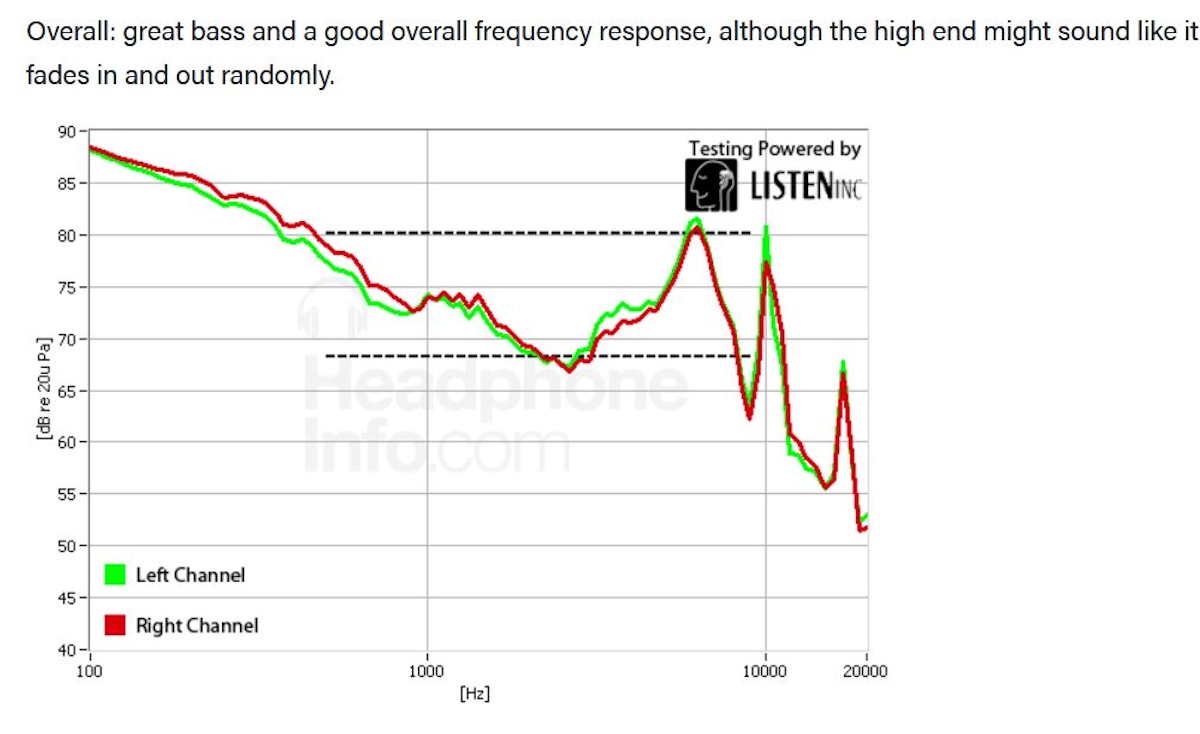
Here is a frequency response chart I found from Reviewed.com for this model:

One of the notable things about these earbuds is the total lack of distortion.  Most likely one of the reasons they sound so clear on Shortwave, which has many LOUD audio spikes.

I had not wanted to get Bluetooth earbuds.  However, I had recently upgraded my cell phone and NO headphone jacks anymore!  So, while I do not use Bluetooth yet for radios, I can see a time in the future to get a Bluetooth transmitter to plug into a radio with a headphone jack.  I am reluctant since I do not like having to recharge my earbuds and I put in a lot of radio listening time.  Am I supposed to buy two Bluetooth earbuds and swap while charging?  Maybe in the future.  And also, am I supposed to buy a Bluetooth transmitter for every non-Bluetooth radio I own?  Not likely gonna happen.

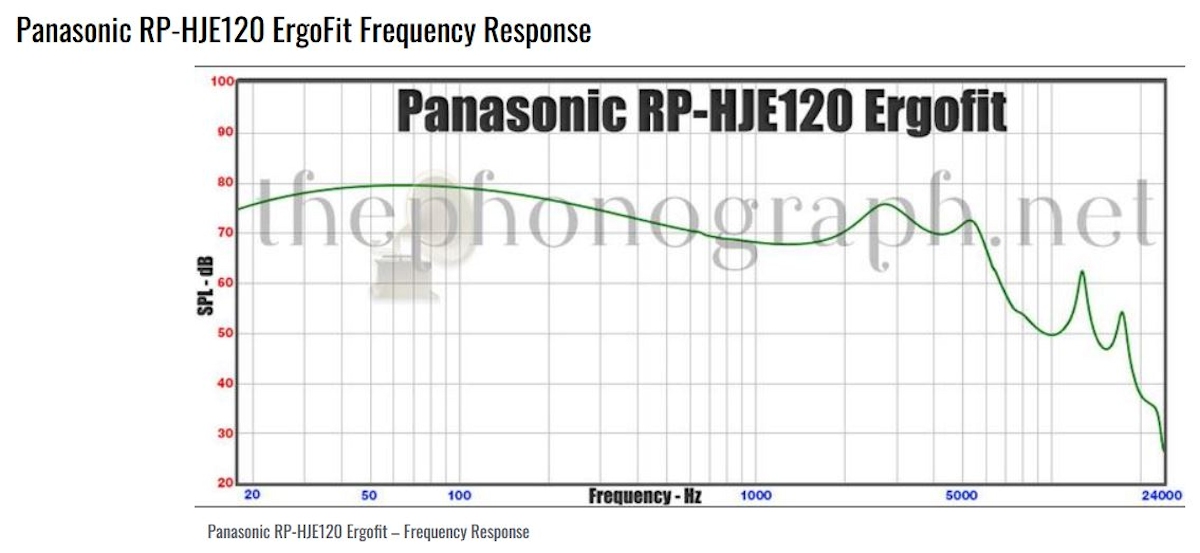
In the meantime, I ordered cheap wired earbuds from Amazon.  I had a $5 credit for trying Prime, so when I saw these Panasonic ErgoFit wired earbuds (RP-HJE120-K) for slightly over $10, I said to myself, “why not?”.   Supposedly wildly popular, they are one of the most rated products on all of Amazon with 133,821 ratings/opinions (perhaps Russian bots?!?!?).

Here is a frequency response chart from ThePhonograph.com for these Panasonic earbuds:

You can see comparatively that the bass response in the very good Sennheiser MM50’s is much stronger, being good music earbuds.  But for voice articulation, not as much, even though they have no distortion.  The Panasonic ErgoFit’s have more modest bass, less of a dip in the lower midrange audio frequencies, and more importantly, has a peak near 2500 Hz and its harmonic 5000 Hz.  The highest highs are also modest compared to the Sennheiser model.  This general frequency response to “recess” the bass and treble frequencies and peak the 2500 Hz is very useful for voice intelligibility.

As described by the famous speaker-microphone-sound-system maker, Bob Heil relates what he learned from the scientists at Bell Labs many years ago.  Speech intelligibility is enhanced when audio is compensated for our natural human hearing.  Equalizing below 160 Hz, reducing the 600-900 Hz region, and peaking the 2000-3000 region centered at 2500 Hz will increase intelligibility dramatically.  The story goes that Bell Labs was tasked by parent AT&T with finding out why the earliest phones in the 1920’s sounded so muffled and hard to understand.  After many experiments, the scientists found the most important frequencies for our ears + brain to comprehend speech.  In other words, our ears are not “EQ-flat” like a scientific instrument is. Continue reading