Author Archives: Thomas

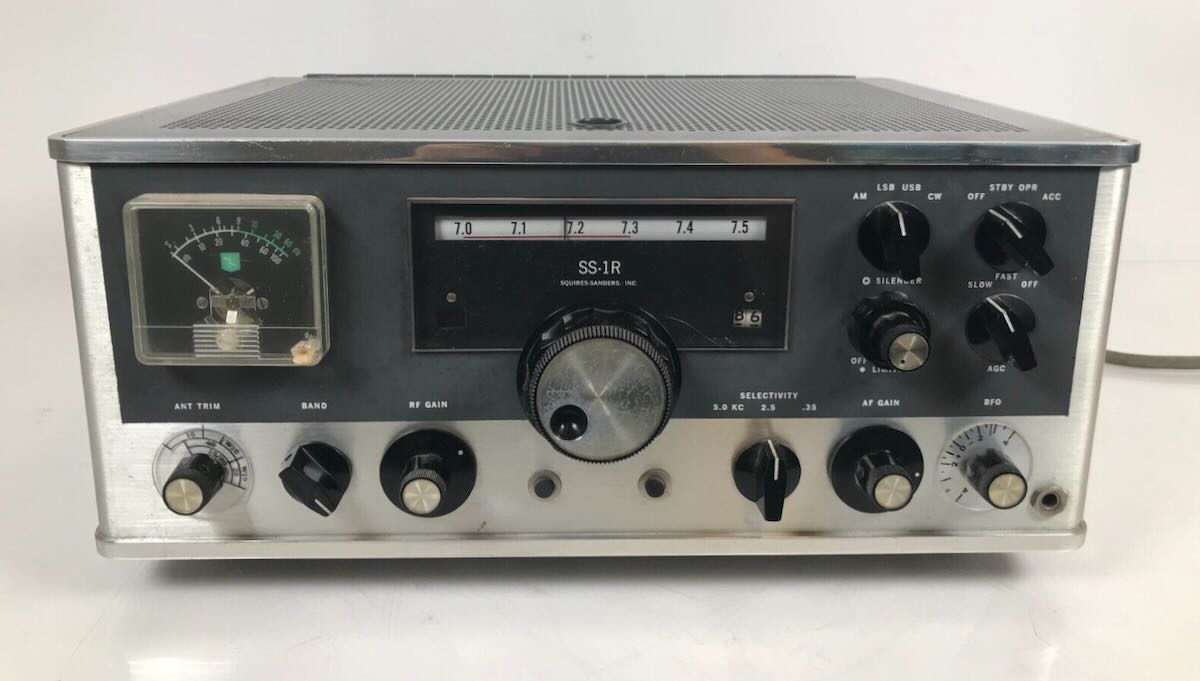
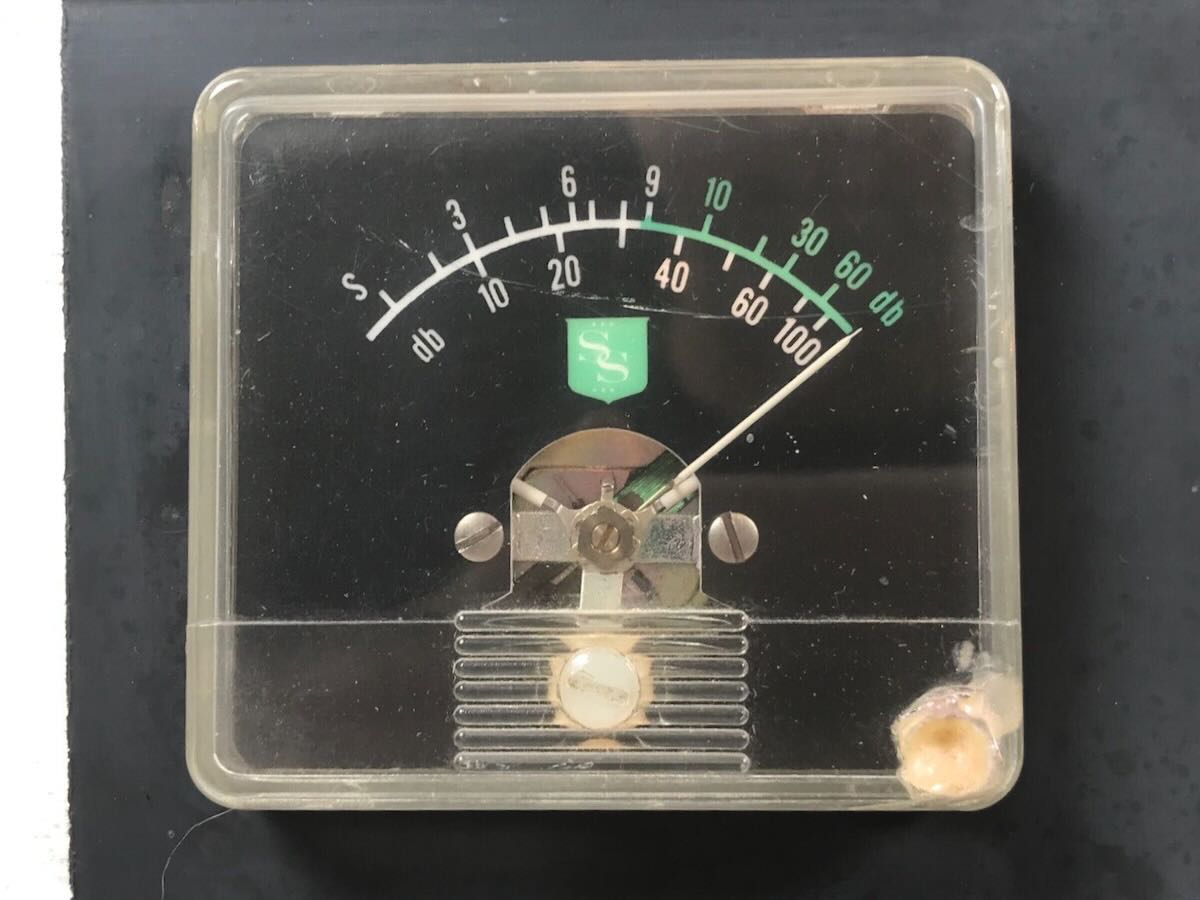
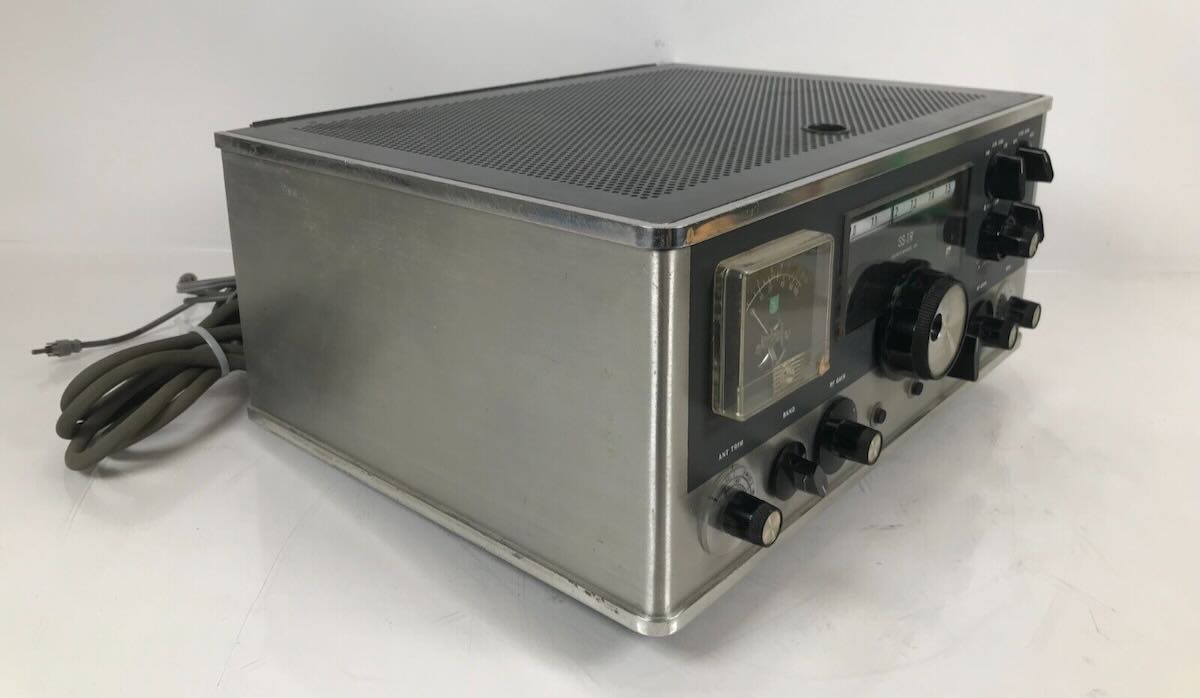
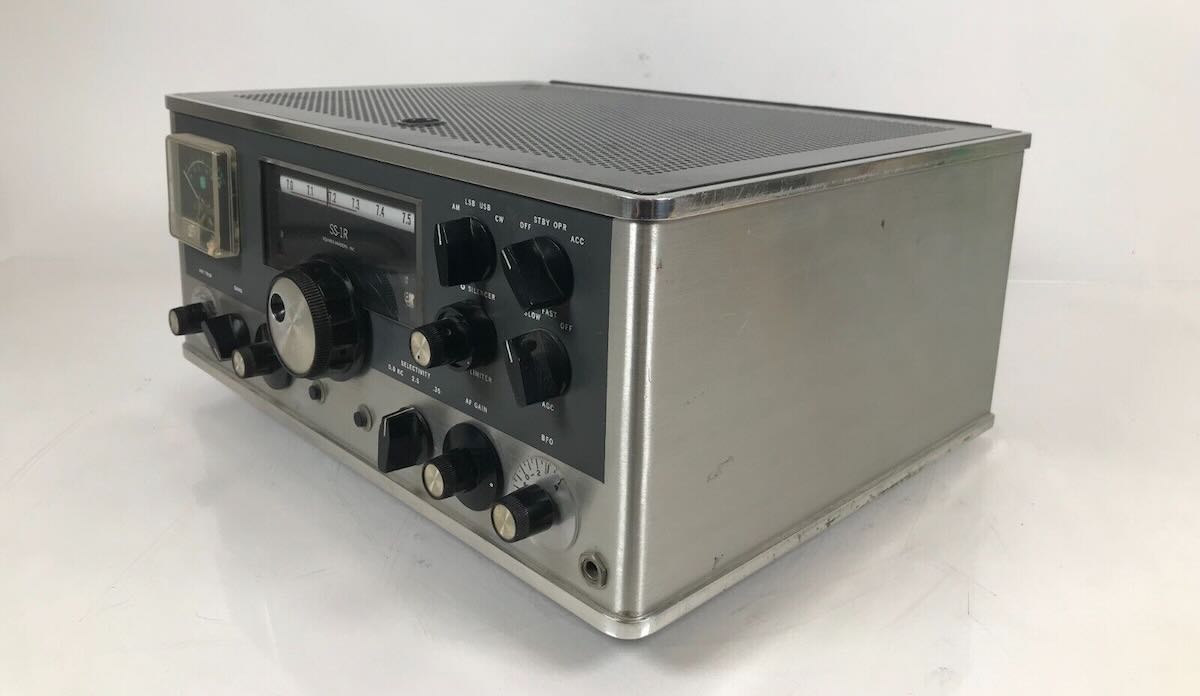
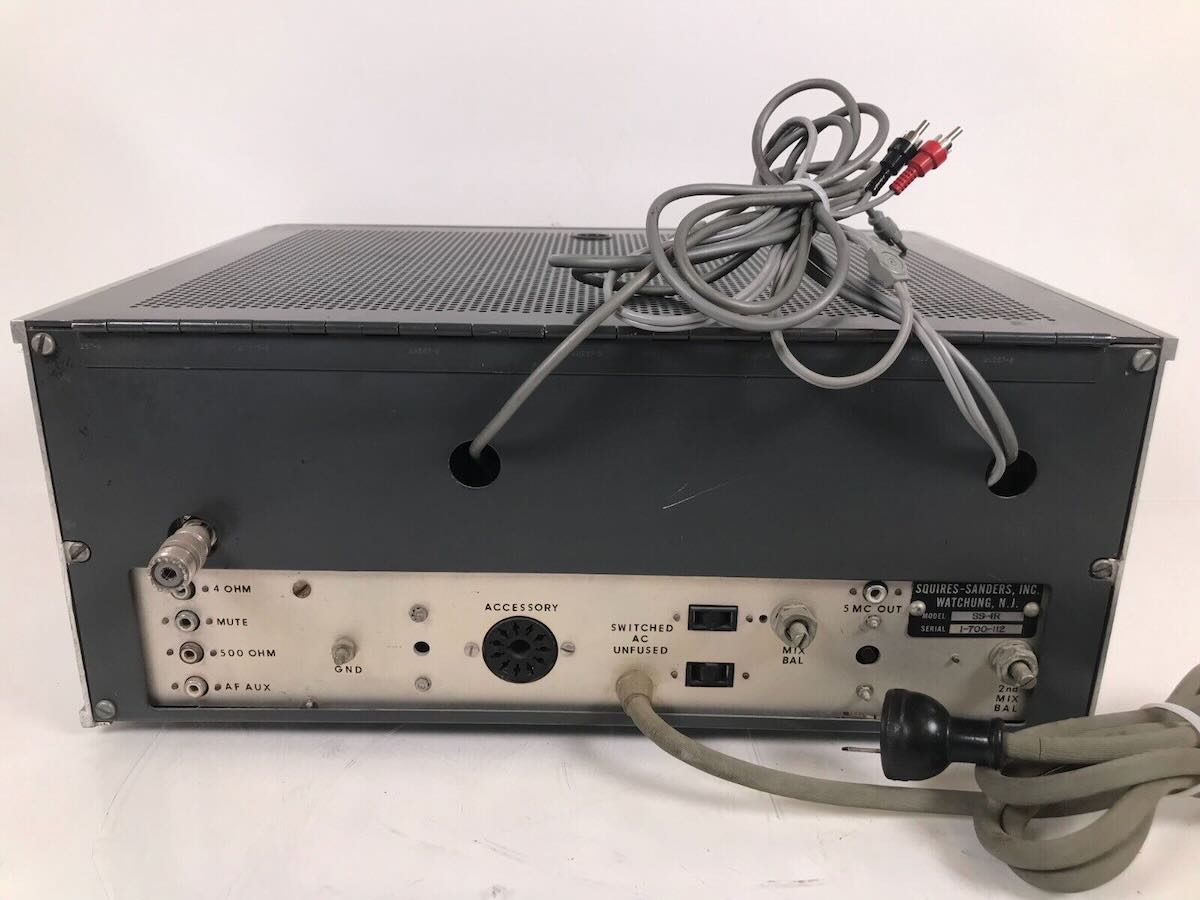
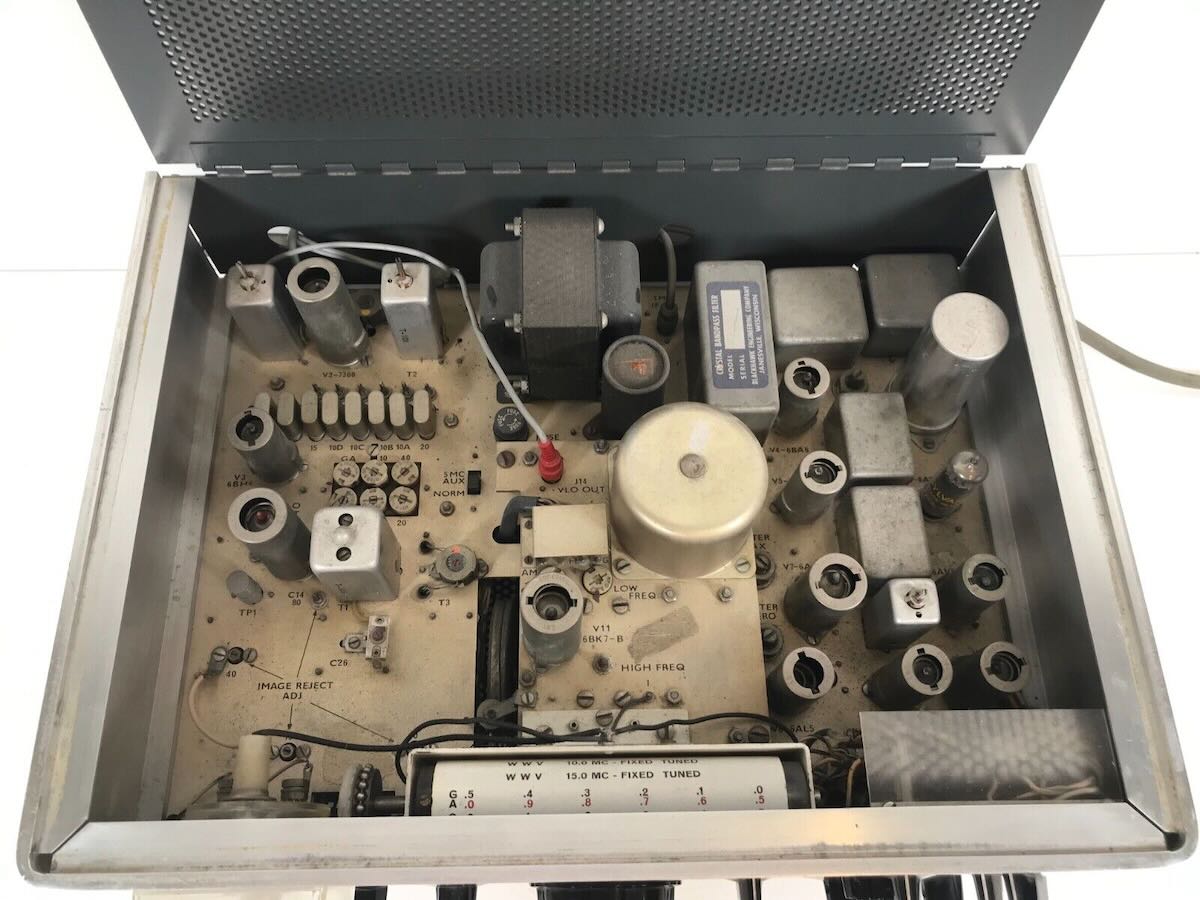
Dan spots a rare Squires Sanders SS-1R on eBay

Many thanks to SWLing Post contributor (and rare radio aficionado), Dan Robinson, who shares a link to this eBay listing.

Dan notes:

“The SS-1R is almost as rare as the SS-IBS which was the SWBC version of the receiver.”

Click here to view on eBay.

Thanks for sharing this, Dan. Seems the seller is also accepting offers (asking price is $999.99 US). Any serious buyers should read the seller notes. The unit looks incredibly clean cosmetically, but would likely need a good electrical going-over and possible alignment.

Even if, like me, it’s not in your budget to purchase a rare radio, I think we can all appreciate the photos:

Thanks again for sharing, Dan!

The Guardian: “Hundreds of jobs to go as BBC announces World Service cutbacks”

(Source: The Guardian via Mark Hirst)

Hundreds of jobs to go as BBC announces World Service cutbacks

Corporation to end production of radio output in 10 languages, including Chinese, Hindi and Arabic, as it blames licence fee freeze

The BBC has announced deep cuts to its World Service output that will result in the loss of hundreds of jobs, saying it has been forced to act by the government’s ongoing licence fee freeze.

In a move that could weaken the UK’s soft power around the world, the corporation will stop producing radio output in 10 languages, including Chinese, Hindi, and Arabic.

BBC Persian will end its audio broadcasts aimed at Iran, with the announcement coming at a time when widespread protests are taking place in the country.

There will also be a change in focus of the World Service’s English-language radio output, with more time dedicated to live news and sports programming at the expense of standalone programmes.

About 382 jobs will be lost as a result of the proposals, which the BBC said was required to make £28.5m of annual savings. The broadcaster blamed years of below-inflation licence fee freezes imposed by the government, in addition to the rapidly increasing cost of producing programmes because of the state of the economy.

Philippa Childs of the broadcasting union Bectu said she recognised the BBC needed to adapt to the digital era but that the government’s licence fee freeze has “potential ramifications for the BBC’s reputation globally”.

The World Service was traditionally funded directly by the government and was seen as a soft power tool that provided British news and information to hundreds of millions of people around the globe. This money largely dried up as part of George Osborne’s austerity measures in 2010, when the bill for World Service operations was loaded on to domestic licence fee payers.

Since then the BBC has had to go cap-in-hand to the government to seek extra funding to support specific World Service projects, with ministers providing around £400m in additional cash since 2016. However, there are doubts about how long these deals will continue. Earlier this year the BBC had to ask ministers for an emergency £4m to keep its operations in Ukraine and Russia on air. [Continue reading at The Guardian…]

Keith discovers a Radio Bougainville recording on the Shortwave Archive: “A 50-year old tape takes me back”

We’ve published thousands of off-air recordings on Shortwave Radio Audio Archive over the past decade. They’re freely available for everyone to search and download.

For those of us who work on the archive, it’s a pure labor of love. We are not compensated for the time and effort we put into running and curating it, although we use Patreon and Coffee Fund contributions to help pay for the site and online archives.

Quite frequently, our recordings are discovered and are intensely meaningful to individuals. Listening to radio recordings has an amazing ability to summon up memories and moments in time.

We recently discovered the following article on the blog PNG Attitude written by Keith Jackon. Keith has kindly given us permission to post it in its entirety here on the SWLing Post. Thank you, Keith, and we’re pleased this recording was so relevant to you:


A 50-year old tape takes me back

KEITH JACKSON

NOOSA – It had dropped into my Twitter feed via @Laselki, the account of the Lebanon-based Arab Amateur Radio Network, and @Stret_Pasin, a valued supporter and one of my 8,700 Twitter followers.

It had originated in Ontario, Canada, from the historic village of Ancaster close by the US border and Niagara Falls.

It was a fleeting recording of a shortwave broadcast.

Map showing location of Ancaster, Canada

A broadcast from Radio Bougainville transmitted 51 years ago on 21 October 1971, which had travelled 13,300 km to Ancaster and been recorded.

Then saved on a cassette tape until, for some reason, recently retrieved and shared.

“Sound is a bit crackly,” wrote @Stret_Pasin, “but this will bring back memories of Radio Bougainville.”

Truer words never were tweeted.

When you link to the brief recording here (scroll down to the black audio bar), you will pick up in rapid succession the sound of chanting to the famous Bougainville kaur flute, then an announcer’s voice and finally a snatch of Bougainville string band music.

Click here to listen on the Shortwave Radio Audio Archive.

I thought I recognised this sequence as the pre-recorded station identification put to air each time the station’s transmitters were fired up at Toniva, just south of Kieta, from a switch in the main studio down a ladder beside my house.

But the more I listen to it, the less convinced I am of its provenance.

All I can say for sure is that anything the captured snatch of radio was broadcast at about 12 noon on Bougainville on 22 October 1971.

This was at a time when Radio Bougainville usually broadcast for 11 hours a day in three separate sessions: 6 am – 9 am, 12 noon – 2 pm and 4 pm – 10pm.

In a small town in Canada it was late morning the day before, and a young Dan Greenall was tuning his Hallicrafters shortwave radio seeking out distant stations he would register as finding in the ether.

Even in our modern digital age, there are shortwave junkies who ferret out remote radio stations and seek QSL cards: written proof of reception. (One issued by Radio Bougainville in 2016 is pictured here.)
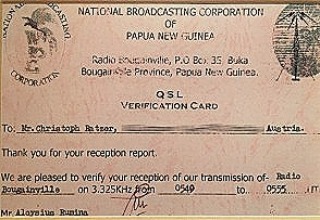
QSL reception confirmation from NBC Bougainville, 2016

’I heard this at such time on your station; tell me it is true.” And we’d check the log and return a QSL postcard. Yes, you had indeed heard our station.

Collecting these cards became popular with radio listeners 100 years ago and continues to this day

Dan had been doing just that 51 years ago when he happened upon a distant signal struggling through heavy interference to be captured by his outdoor copper wire aerial and delivered to the sturdy Hallicrafters S-52 receiver.
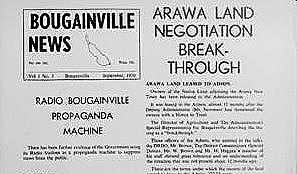
Keith’s appointment to manage Radio Bougainville was greeted by this headline in the Bougainville News

Dan has written for the Shortwave Radio Audio Archive:

“The morning of 21 October 1971 provided some of the best reception of Papua New Guinea stations in the 90 metre band that I ever experienced.

“These stations were rare visitors to my headphones but I was able to make a couple of short recordings of two PNG stations that morning, and they have survived to this day on that same audio cassette (now 51 years old).

“This one of Radio Bougainville begins with a local chant followed by announcement on the hour. The station ran 2.5 kw and their signal made it over 13,300 km to my receiver that day.

“Audio quality is passable considering the recording was made using an open mic to the speaker of the Hallicrafters S-52.”

Technical data:

Broadcaster: Radio Bougainville
Date of recording: 21/10/1971
Starting time: 1100
Frequency: 3.322.5 MHz
Receiver location: Ancaster, Ontario, Canada
Receiver and antenna: Hallicrafters S-52 using a longwire antenna

When I linked to the thin signal that had managed to land so far away so long ago, I was momentarily overcome with emotion.

I had known those sounds so well from too many early mornings wondering whether the breakfast announcer would arrive in time to open the station.

A recording something like that told me he’d arrived, fired up the transmitter and was ready to begin proceedings.

Through the static of 51 years – two-thirds of my life – came a once-familiar sequence of bamboo flute / announcer / stringband, transporting me back to a time when I was young and in my first management job which, bad bits and all, I was enjoying as if born to it.

Keith Jackson at the time of his appointment to Radio Bougainville

They were tough years for the people of Bougainville, especially in the villages around Kieta and its hinterland.

Bougainville Copper had started to dig the ore that produced great quantities of copper, gold and silver on alienated land amidst an alienated people.

Despite the volatile social and political climate, I had enjoyed the challenge of Bougainville.

I felt I’d been made for it and that it was making me.

And I enjoyed working with talented station staff, most from Bougainville, like Tom Kathoa, Sam Bena, Perpetua Tanuku, Justin Kili, Aloysius Sahoto, Aloysius Nase and Aloysius Rumina – most now gone from our midst. That’s what 51 years does.

And that simple recording – made so long ago and so far away – brought it all rushing back.

You can read more about my Bougainville years here in Brink of Secession.

So thanks to Dan Greenall, the Arab Amateur Radio Network and @Stret_Pasin for giving me a free ticket to fly back more than half a century. I really enjoyed the trip.

Read this full article and check out Keith’s website PNG Attitude here.

Also, a very special thanks to Dan Greenall and all of our contributors on the Shortwave Radio Audio Archive. 

2022-23 Season of the MW Frequency Challenge is underway with Week 1: 1160-1224 kHz

Many thanks to SWLing Post contributor Loyd Van Horn at DX Central who shares the following announcement:

We are kicking off the 2022-23 DX season with the return of the MW Frequency Challenge! The MW Frequency Challenge officially started during the season premiere of our DX Central Live! livestream on YouTube on Friday, September 2022.

Our frequency range for this week’s challenge is 1160-1224 kHz!

A reminder of the rules for this season:

    • Submitted loggings must be for receptions made between 0000 UTC Saturday, September 24, 2022 and 0200 UTC Saturday, October 1, 2022. Any station that transmits between 1160-1224 kHz will be accepted for the challenge.
    • Submissions/loggings must be made with your own equipment, NO ONLINE SDRs (unless you own the online SDR). If you are logging receptions away from your home location, be sure to note that location on the submision form.
    • Submissions must be entered on the Google Form using the link below. Logs posted through social media, DX club log submissions, email, etc. will not be accepted.
    • Receptions can be for any station received within the frequency range. It does not need to be “new to you”, relogs are welcome as long as it occurred during the challenge period.

This week’s Google Form link is: https://forms.gle/EtKhNYc1qZhVmexh8

Good luck and best of DX!

73,

Loyd

Solid copy: Tom receives JG2XA in the Netherlands on his PL-365

CountyComm GP5/SSB, aka Tecsun PL-to 365

Many thanks to SWLing Post contributor, Tom Kamp (PA/DF5JL), who shares the following brief report and video:

Today (September 21, 2022) around 2015 UT strong signal on 5006 kHz (CF) from JG2XA beacon from Japan (0.2 kW) near Den Helder, in North-Holland, The Netherlands.

JG2XA transmits continuously at 200 W on 5006 kHz and 8006 kHz. The type of radio signal is H2A (amplitude modulation with coded tones in the single sideband).

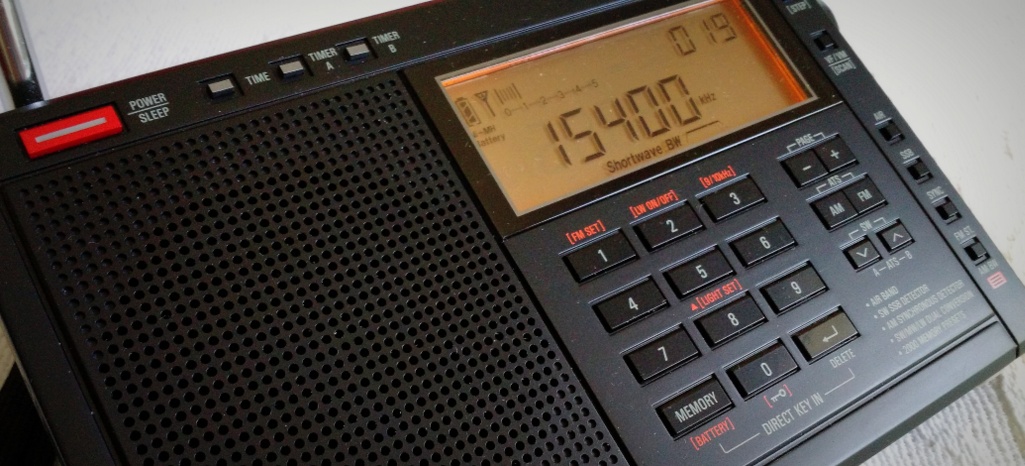
Received with the Tecsun PL-368 and the built-in telescopic antenna! The dBm display of the unit is very inaccurate (in USB), yet S5-S7 should be rated appropriately. Top signal, top RX ?

73 Tom Kamp PA/DF5JL

That’s quite a catch for the PL-365. Thanks for sharing this, Tom!

Radio Waves: Maverick-603 SDR for FT8, EC-130J Commando Solo Final Broadcast, WRTH Survey, and Railways On The Air

EC-130J Photo By Staff Sgt. Tony Harp | An EC-130J Commando Solo aircraft from the 193rd Special Operations Wing performs a flyover during Community Days at the Lancaster Airport in Lititz, Pennsylvania, Sept.17, 2022. (Source: DVIDS)

Radio Waves:  Stories Making Waves in the World of Radio

Welcome to the SWLing Post’s Radio Waves, a collection of links to interesting stories making waves in the world of radio. Enjoy!


RadioStack’s Maverick-603 Is a Fully-Functional Open-Silicon Software-Defined Radio for FT8 (Hackster.io)

Built using open tools and readied for manufacturing at SkyWater using the Efabless platform, the chip on this SDR is something special.

New Hampshire-based RadioStack is looking to launch a piece of amateur radio equipment with a difference: the Maverick-603 is powered by free and open source silicon, built using the Efabless platform at a SkyWater fab.

“Maverick-603 is the first affordable FT8 receiver board built around an RF receiver chip that was designed using fully open source tools and fabrication,” its creators explain. “It is capable of acquiring FT8 signals between 7MHz and 70MHz. With this frequency range, you will be able to receive signals from around the world with high accuracy. The use of our Low Noise Amplifier (LNA) will also give the chip the ability to amplify very low-strength signals, which is necessary for an effective FT8 receiver.” [Continue reading…]

EC-130J Commando Solo performs final broadcast (DVIDS)

MIDDLETOWN, PA, UNITED STATES
09.17.2022
Story by Master Sgt. Alexander Farver
193rd Special Operations Wing

Airmen from the 193rd Special Operations Wing here, who operate the only flying military radio and TV broadcast platform in the U.S. military, transmitted their final broadcast today to spectators at the Community Days Air Show at Lancaster Airport, Lititz, Pa., bringing to close a 54-year chapter in unit history.

The EC-130J Commando Solo mission has helped keep this Air National Guard unit’s aircraft and its Airmen at the tip of spear for nearly every major U.S. military operation since the Vietnam War. Before bombs dropped or troops deployed in the Global War on Terror following the attacks on Sept. 11, 2001, this specially modified aircraft was already over the skies of Afghanistan broadcasting to America’s enemies that the U.S. military was bringing the fight to them.

“Any world event or crisis that our military has responded to in recent history, our 193rd Airmen – and Commando Solo – were likely key components in that response,” said Col. Eric McKissick, 193rd SOW vice commander. “As we prepare to open a new chapter in our history, we thank those who have enabled us to be among the very best wings in the Air National Guard.”
The genesis for this airborne information operations platform can be traced back to 1968 when the 193rd Tactical Electronics Warfare Group received its first aircraft, called the EC-121 Coronet Solo. In the late 1970s, the aircraft were replaced by the EC-130E before finally being replaced by the current aircraft in 2003. Throughout its history, it was instrumental in the success of coordinated military information support operations, earning the wing the moniker of “the most deployed unit in the Air National Guard.”

These deployments included: Operation Enduring Freedom, Operation Iraqi Freedom, Operations Odyssey Dawn/Unified Protector in Libya, Operation Inherent Resolve, Operation Resolute Support/Freedom’s Sentinel, Operation Secure Tomorrow and Operation Unified Response in Haiti.

Although this unique mission has earned the wing many prestigious accolades, Lt. Col. Michael Hackman, 193rd Special Operations Squadron commander, believes the mission’s success and legacy lies in winning the hearts and minds of adversaries and providing vital information to allies, refugees and victims in times of crisis.

“This capability has been an essential tool in our nation’s inventory, from the battlefields to assisting hurricane and earthquake-ravaged nations,” Hackman said. “During this time, thousands of Pennsylvania Air National Guard volunteers fulfilled their call to duty in this unique capacity, leveraging this capability against U.S. adversaries and supporting allies while always fulfilling the unit tenet of ‘Never Seen, Always Heard.’”

Aside from sporting an impressive operational record, the aircraft holds another distinction with having completed over 226,000 hours of accident-free flying.

“Having that many thousands of hours of accident-free flying is a testament to the excellence of our maintainers, to the operators and anybody who has touched that aircraft. Thank you for leaving that foundation and setting that example that we’re building from,” said Col. Jaime Ramirez, 193rd Special Operations Maintenance Group commander.

McKissick believes the success of the 193rd in operating the Commando Solo mission over the past few decades has led to Air Force Special Operations Command selecting the wing to be the first and only ANG unit to operate the MC-130J Commando II. The Commando II flies clandestine, or low visibility, single or multiship, low-level infiltration, exfiltration and resupply of special operations forces, by airdrop or airland and air refueling missions for special operations helicopters and tiltrotor aircraft, intruding politically sensitive or hostile territories.
“Today we honor the men and women, past and present, who have served this unit and mission with unparalleled distinction,” said McKissick. “The Airmen who came before us created an enduring culture and spirit of hard work, innovation and grit. We thank them for that, and we will do our best to carry this forward.”

The final broadcast of the EC-130J was transmitted to the ground and played at the Community Days Air Show at Lancaster Airport. In the transmission, the wing thanked the local community for their support over the past 54 years before broadcasting the Santo and Johnny song, “Sleepwalk.” The transmission ended with the phrase, “Commando Solo, music off.” [Read the full article here…]

WRTH Reader Survey

The new owners of the World Radio TV Handbook who like your input as readers. Please click on this link and share your opinions with them!

Railways On The Air (Southgate ARC)

The South Eastern Amateur Radio Group (EI2WRC) will be active from The Waterford and Suir Valley Railway station Kilmeaden, Co. Waterford for the ‘Railways On The Air‘ event on Sunday, the 25th of September.

WSVR is a community heritage project. The project has enabled the magic of rails golden age to be brought to life in Kilmeaden. A heritage narrow gauge railway runs along 17 kilometres of the abandoned Waterford to Dungarvan line.

The South Eastern Amateur Radio Group would like to thank the manager Maria Kyte and all the staff of The Waterford and Suir Valley Railway for all their help and allowing us access to the station to do this event again this year. For more information about the WSVR please see www.wsvrailway.ie .

The September meeting of the South Eastern Amateur Radio Group EI2WRC will take place on Monday, the 26th of September 2022 at 8.00 p.m. sharp at The Sweep Bar, Adamstown, Kilmeaden, Co. Waterford, Eircode X91 H588. New members or anyone interested in learning more about amateur radio or the group are as always very welcome to attend.

For anyone that wishes to find out more about the South Eastern Amateur Radio Group and their activities you can drop them an email to southeasternarg /at/ gmail.com or please feel free to go along to any of their meetings. You can check their website www.searg.ie and you can also join them on Facebook and follow them on Twitter.


Do you enjoy the SWLing Post?

Please consider supporting us via Patreon or our Coffee Fund!

Your support makes articles like this one possible. Thank you!

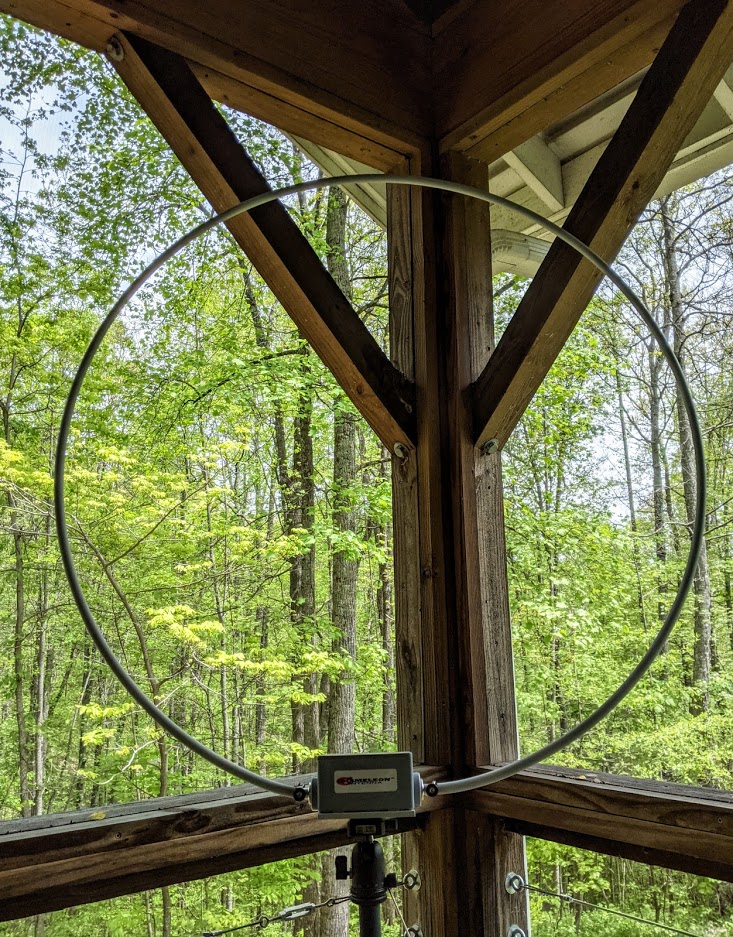
Chameleon RXL-Pro code for the SWLing Post

I just received a message from Chameleon Antenna who is a proud sponsor of the SWLing Post.

They’ve added an SWLing Post affiliate code to all of their CHA-RXL Pro orders. If you’ve decided to purchase a CHA-RXL Pro, by adding the code QRP5 at the checkout page, Chameleon will give the SWLing Post a 5% commission at no extra cost to you.

Of course, this isn’t required–I mention this only for those who are planning to purchase the loop. If you’re not familiar with the CHA-RXL, check out Dan Robinson’s recent review and Dave Casler’s video.

Thank you!

Click here to check out the CHA-RXL Pro at Chameleon Antennas.