Category Archives: AM

Oxford Shortwave Log: transatlantic MW DX catches with 200 metre Beverage – part 1

worspectrum

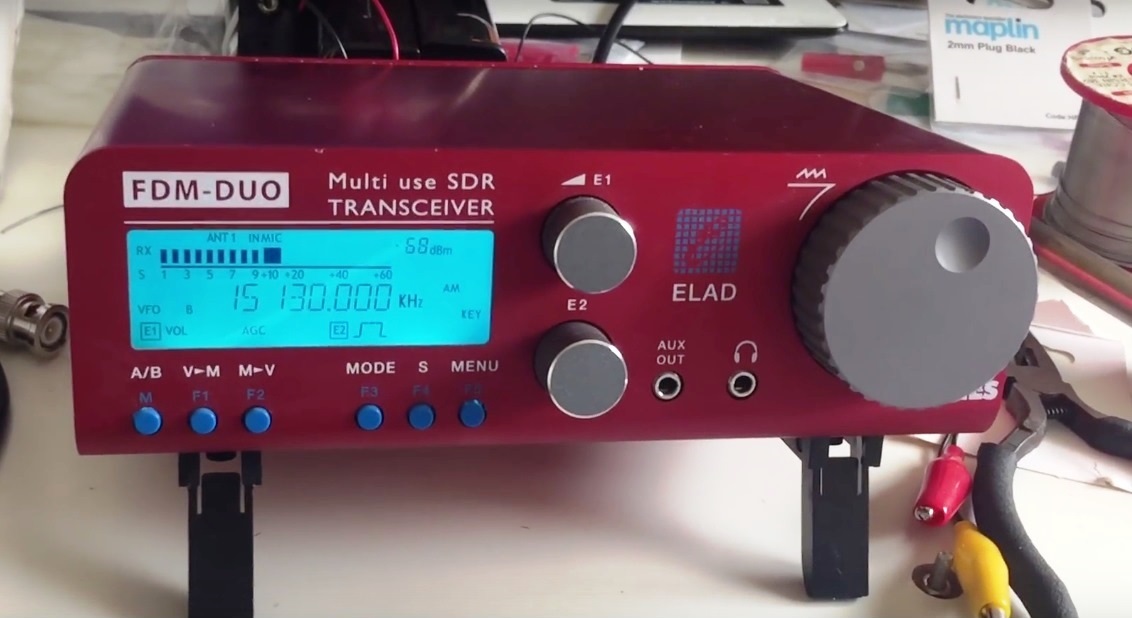
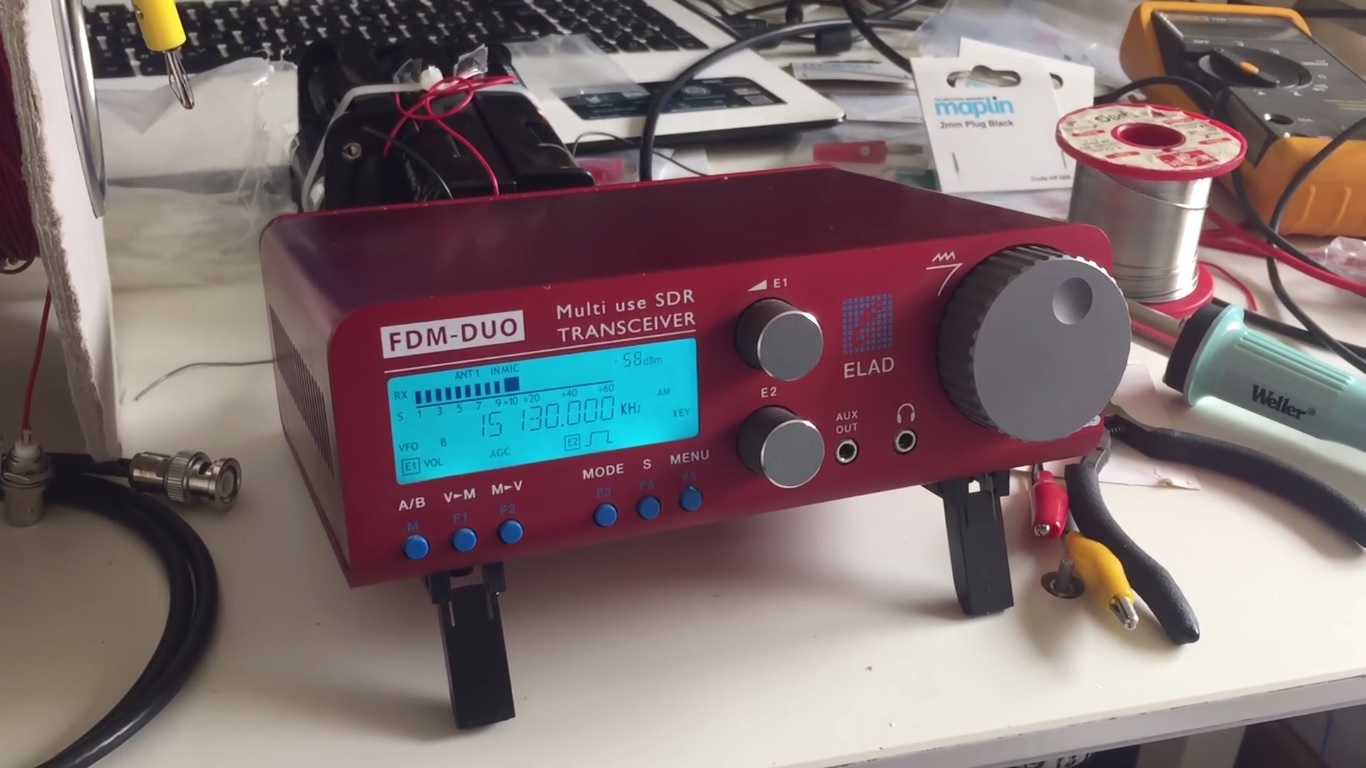
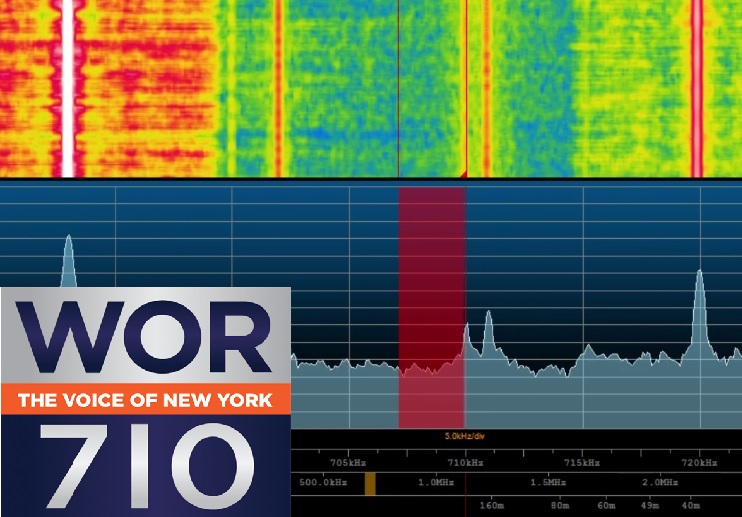
Hi there, a few weeks ago I posted a couple of medium wave DX catches with the Elad FDM DUO and newly constructed 200 metre Beverage antenna. Since then (and following my trip to Brazil) I have uploaded several more catches, some of which I would like to share with you. It has become evident that the Beverage’s low-gain but high SNR properties resulted in a huge increase in the sensitivity of my entire set-up and as a result. I have achieved numerous personal firsts on the medium wave band, coupled with many other signals that I can only describe ‘best-ever reception’. If nothing else, this endevour has underlined the importance of utillising the best antenna possible for your particular circumstances. We’ve all read at some point, how, in many respects, the antenna is more important than the receiver – and these catches demonstrate how absolutely true that statement is. All of the reception videos were captured using the Elad FDM DUO running on a home-brew battery-pack and connected to the Beverage via a 50 Ohm input transformer.

Below is the first set of reception videos, most of which are signals from East Coast of the United States. However, there is also an absolutely booming signal from WGIT Puerto Rico into my QTH in Oxford UK. Part 2 will follow almost immediately, but in the mean time thanks for watching/listening and I wish you all great DX!


elad


Clint Gouveia is the author of this post and a regular contributor to the SWLing Post. Clint actively publishes videos of his shortwave radio excursions on his YouTube channel: Oxford Shortwave Log. Clint is based in Oxfordshire, England.
Radios With Rotatable AM Antennas?

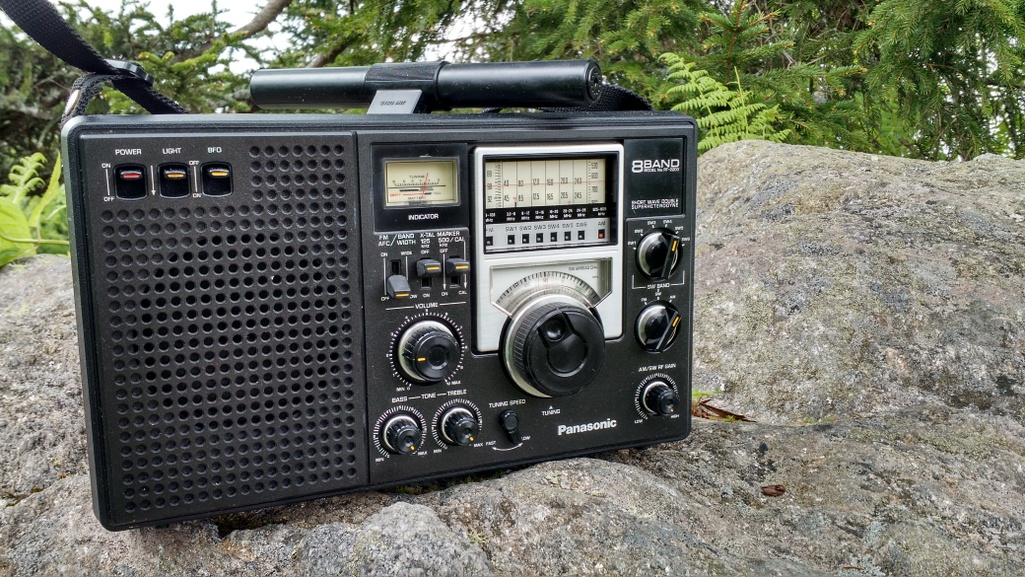
The Panasonic RF-2200 sports a rotatable AM/MW antenna

The Panasonic RF-2200 sports a rotatable AM/MW antenna

Many thanks to SWLing Post contributor, Mario Filippi (N2HUN), who writes:

With your broad knowledge of radios, wondering if you can add anything to this list of portable radios, past and present, that have 360 degree rotatable directional AM ferrite antennas. Reason is I am looking for an AM portable for the nightstand for nulling out unwanted AM stations while also doing a little DXing.

The list I have from data mining the ‘Net is:

New models with rotatable AM antennas:

  • CountyCom GP5/SSB,
  • Tecsun PL-360,
  • Grundig Satellite 750,

Older (vintage) models:

  • Panasonic RF-2200,
  • Panasonic RF-1150,
  • Panasonic RF-877,
  • Panasonic RF-1180
  • most RDF (Radio Direction Finder) radios that were used on boats

“Boom Box” variety:

  • Radio Shack 12- 795,
  • Emerson MBR-1,
  • Rhapsody RY-610.

[RDF radios] are kind of big, however Raytheon, Ray Jefferson, and Nova-Tech did have smaller model RDFs that could be considered table-tops).

The alternative is to build or buy a passive indoor antenna.

Maybe readers know of other models?

Thank you for your inquiry, Mario! I will do a little research of my own because you listed every model (and more) I could think of off the top of my head.

Post readers: Please comment with any models we could add to this list.

I will take all of the suggestions and make a master list to post here on the SWLing Post so it’ll be easier for others to research in the future. I’m pretty sure this question has come up before.

Which is the best? Sony ICF-2001D/2010 or ICF-SW77? Part two

sony-test

Hi there, after the first set of recordings were analysed, the score was 4-3 to the ICF-2001D, demonstrating how similar these two great receivers are in overall performance. There were a copule of notable differences however. The synchronous detection circuit on the ICF-2001D allows the user to effectively tune through a signal in 01. kHz steps, whilst the receiver automatically locks onto either the upper or lower sideband, depending on the frequency offset. The ICF-SW77 synchronous detection system differs in that the user must tune the signal and select the sideband. The results of this test confirmed that whilst the ICF-2001D almost always retained SYNC lock, the ICF-SW77 was very prone to losing lock, which of course affected the audio quality in many cases. The other issue was with the ICF-SW77 in that the narrow audio bandwidth filter often seemed to deliver ‘muddy’ audio. Whilst this feature proved to be excellent in terms of mitigating adjacent channel QRM, it also reduced signal clarity/ audio discernibility a little too much in my opinion. However, overall, sensitivity and selectivity was very similar between both radios – in fact, one recording had to be judged a draw (Radio Bandeirantes, Sao Paolo on 9645.4 kHz) – I simply couldn’t split them. Part two of the reception testing follows, using signals from Canda, DR Congo, Brazil, Cuba and Peru.

I hope you enjoy the recordings – text links and embedded videos follow below:


Clint Gouveia is the author of this post and a regular contributor to the SWLing Post. Clint actively publishes videos of his shortwave radio excursions on his YouTube channel: Oxford Shortwave Log. Clint is based in Oxfordshire, England.
Which is the best? Sony ICF-2001D/2010 or ICF-SW77? The halfway score

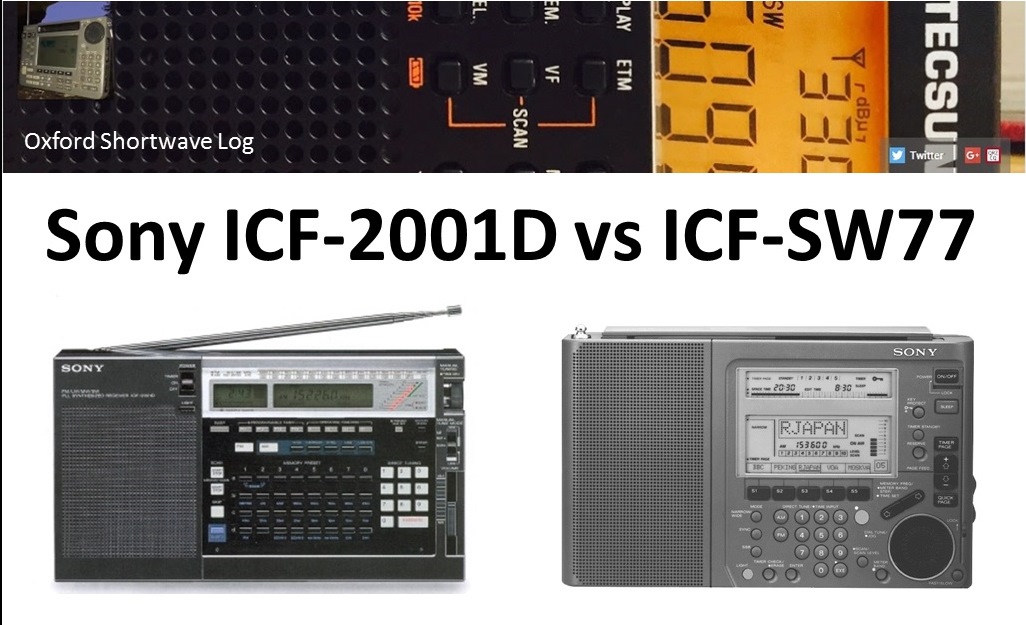
Hi there, here is a summary of the first half of tests comparing the Sony ICF-2001D against it’s replacement the ICF-SW77. Both receivers are widely acknowledged as being amongst the best shortwave portables ever made, but how close are they in performance? Is there a clear winner after the first 8 reception tests? I hope you enjoy the summary video. Links to the first half of reception tests follow again, below, whilst the second half will follow in a separate post. Thanks and good DX to all.


Clint Gouveia is the author of this post and a regular contributor to the SWLing Post. Clint actively publishes videos of his shortwave radio excursions on his YouTube channel: Oxford Shortwave Log. Clint is based in Oxfordshire, England.
Oxford Shortwave Log: DXing in the tropical rainforest of Pará, Brazil – part 2

img_9956pl-680

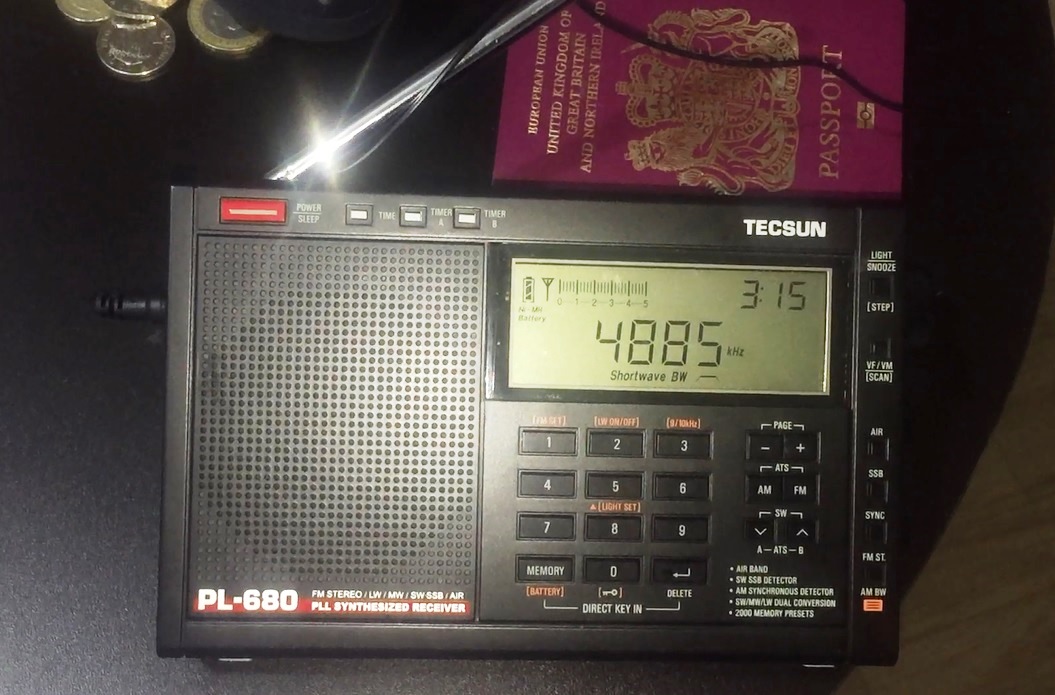
Hi there, here is part 2 of my reception videos taken in the tropical rainforest of Pará, Northern Brazil. As I mentioned in my previous post, I took a Tecsun PL-680 with me on the trip because I didn’t want to risk losing or trashing one of my precious vintage portables but also because of the following:

  • It can handle a longwire very well without overloading (I actually only used a 5 metre wire)
  • An excellent synchronous detection circuit and audio bandwidth filtering options
  • Excellent sensitivity, as demonstrated by the many DX reception videos on YouTube
  • If it got lost or damaged it would be a pain, but not difficult to replace

So, what can you hear in the jungle? Part 2 of my group of reception videos follow below – I hope you enjoy them.


Tropical rainforest DX in Pará, Brazil: RMI Overcomer Ministry 11530 kHz


Tropical rainforest DX in Pará, Brazil: Radio Tamazuj 11650 kHz, Madagascar


Tropical rainforest SW in Pará, Brazil: Radio Nacional Brasilia 11780 khz


Tropical rainforest DX in Pará, Brazil: R Aparecida 11855 khz (TX distance 2430 km)


Tropical rainforest SW in Pará, Brazil: R Brasil Central 11815 kHz, Goiania


Tropical rainforest DX in Pará, Brazil: Voice of Turkey 11980 kHz


Tropical rainforest DX in Pará, Brazil: Radio Dabanga 13800 kHz, Madagascar


Clint Gouveia is the author of this post and a regular contributor to the SWLing Post. Clint actively publishes videos of his shortwave radio excursions on his YouTube channel: Oxford Shortwave Log. Clint is based in Oxfordshire, England.
Oxford Shortwave Log: dxing in the tropical rainforest of Pará, Brazil – part 1

img_0213

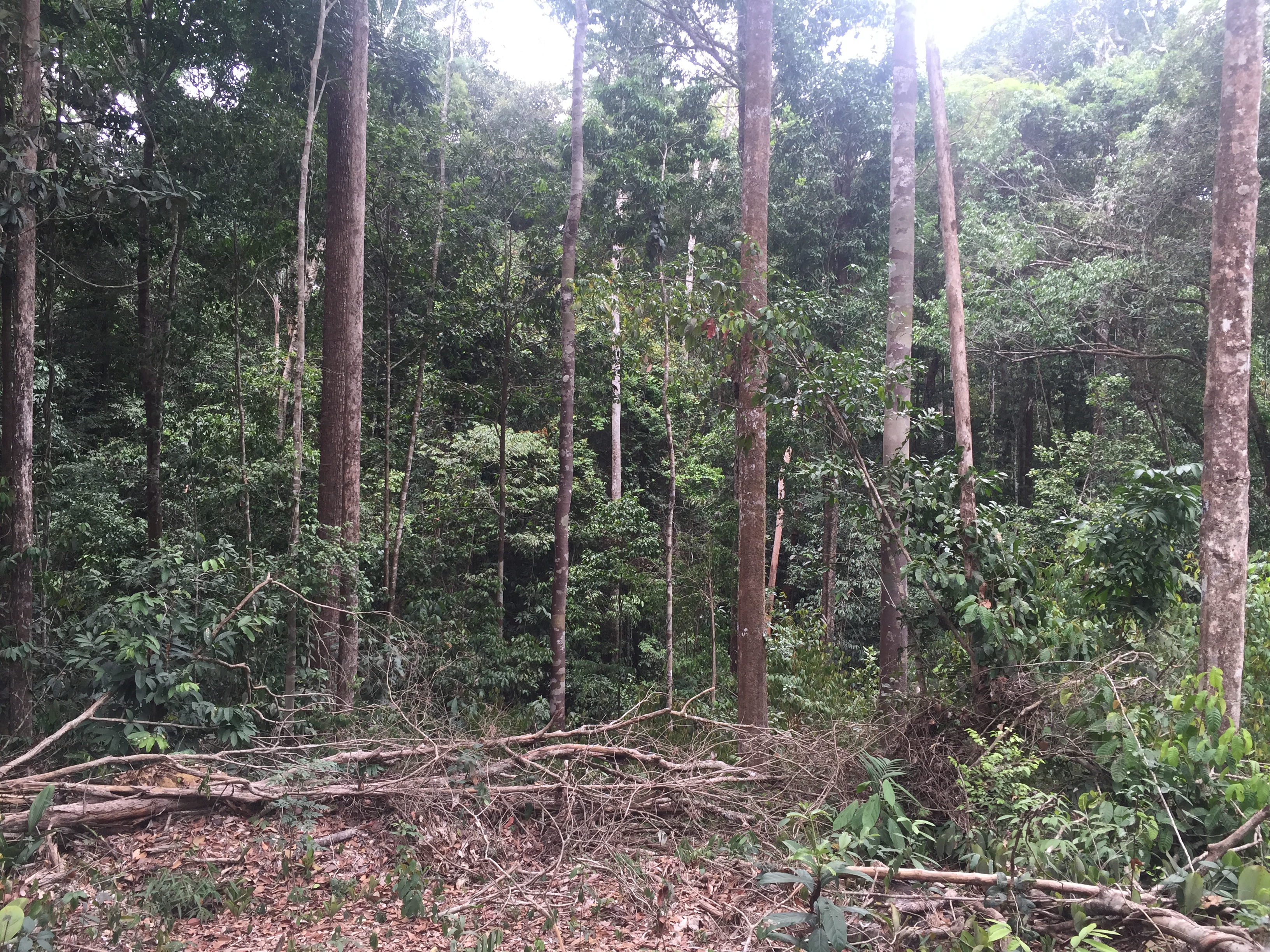
Hi there, I was fortunate enough recently for my work to take me to a very remote area of tropical rainforest in Pará, Northern Brazil and of course, I travelled with a shortwave radio. In fact I take a portable with me everywhere – even to work – just in case. During this trip I was using a Tecsun PL-680, for very specific reasons:


  • It can handle a longwire very well without overloading (I actually only used a 5 metre wire)
  • An excellent synchronous detection circuit and audio bandwidth filtering options
  • Excellent sensitivity, as demonstrating by the many DX reception videos on YouTube
  • If it got lost or damaged it would be a pain of course, but not difficult to replace

pl-680

img_9928 img_0221Although effectively travelling on business, I was hoping to find the time for a DXing session because I felt it would be really interesting to find out what could be heard on shortwave (and medium wave for that matter) out in the jungle, in the middle of nowhere! The environment was challenging – around 37/38 degrees C during the day and still 33 degrees C at 2 am, all day and night, every day and night! Furthermore, as you might imagine for a tropical location, the place was crawling with bugs lol, including mosquitos and thus a number of vaccinations were necessary, prior to the trip. Several days after arriving, I eventually managed to find the time for a DXing session in the jungle (with another the following week in Barcarena, on the coast).

So, what can you hear in the jungle? Part 1 of my group of reception videos follow below – I hope you enjoy them.


Tropical rainforest DX in Pará, Brazil: Radio Romania International 7335 kHz


Tropical rainforest SW in Pará, Brazil: Radio Nacional Brazilia 6180 kHz


Tropical rainforest DX in Pará, Brazil: WHRI 7385 kHz, Cypress Creek, Georgia, USA


Tropical rainforest DX in Pará, Brazil: Radio Mediterranee 9575 kHz, Nador, Morocco


Tropical rainforest DX in Pará, Brazil: EWTN (WEWN) 11520 kHz Vandiver, Alabama, USA


Clint Gouveia is the author of this post and a regular contributor to the SWLing Post. Clint actively publishes videos of his shortwave radio excursions on his YouTube channel: Oxford Shortwave Log. Clint is based in Oxfordshire, England.

Oxford Shortwave Log 200 metre Beverage antenna: further MW and SW reception videos

a1-beverage

Hi there, further to my previous post regarding the initial testing of the Medium Wave Circle-design 200 metre Beverage antenna at the woods in Oxford, UK, I am pleased to share further reception videos for both the medium wave and shortwave bands. For medium wave, I operated the FDM DUO via a laptop and the FDN-SW2 software, recorded the entire band at the top of the hour and retrospectiively analysed the signals. For shortwave I utillised the FDM DUO as a standalone receiver, routing the audio via the excellent Bose Soundlink Mini 2 speaker.

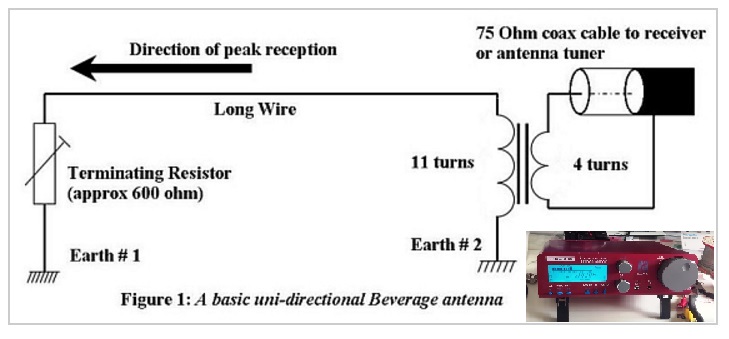
As a quick recap, the antenna was terminated at the ‘front end’ with a 650 Ohm resistor into a 1 metre-long, permanent copper earthing rod that I had previously driven into the ground, away from the route taken by the general public. The actual wire was orientated in a generally westerly direction, and thus nulling signals propagating from the east. At the receiver end, I utillised my self-built transformer, wound for a 50 Ohm input impedance (14 turns on the primary), thus making the entire set-up suitable for the Elad FDM DUO. It was quite a pain to set up, taking over an hour to deploy, however, the results were very promising. A scematic diagram follows below.

beverage3


Links to the next group of reception videos follow:

The reception from VOCM St. Johns, Newfoundland & Labrador and WRCA Waltham, Massachusetts was unprecidented and another indication that the 200 metre Beverage configuration is demonstrating excellent SNR performance. Similarly, the reception of Radio Nacional Brazilia was an improvement on any signal I’d previously recorded with any receiver or antenna. Finally, the signal received from Radio Huanta 2000 – one of the more exotic stations on the Tropical Band and rarely heard in Europe – delivered discernible audio with this set-up, whereas previously I had only ever observed a carrier. All-in-all a very pleasing result, with more reception videos using this antenna set-up to follow in the coming weeks.

Right now I’m uploading SW and MW reception videos to my YouTube channel, recorded during my two week trip to Pará in Northern Brazil – it was really interesting to check out what can be heard on the radio in the middle of what is a very remote area of tropical rainforest. I hope you find the time to take a look.  In the meantime, thank you for watching/ listening and I wish you all good DX.


MW DX with the 200 metre Beverage: WRCA 1330 kHz, Waltham Mass., big signal/ clear IDs!


Clint Gouveia is the author of this post and a regular contributor to the SWLing Post. Clint actively publishes videos of his shortwave radio excursions on his YouTube channel: Oxford Shortwave Log. Clint is based in Oxfordshire, England.