Category Archives: Antennas

Guest Post: Radiofreunde NRW’s DXpedition-grade signal distribution system


Many thanks to SWLing Post contributor, Joachim von Geisau (DH4JG), for the following guest post:


Signal distribution at SWL camps: The new JK-1000 HF distributor

by Joachim von Geisau (DH4JG)

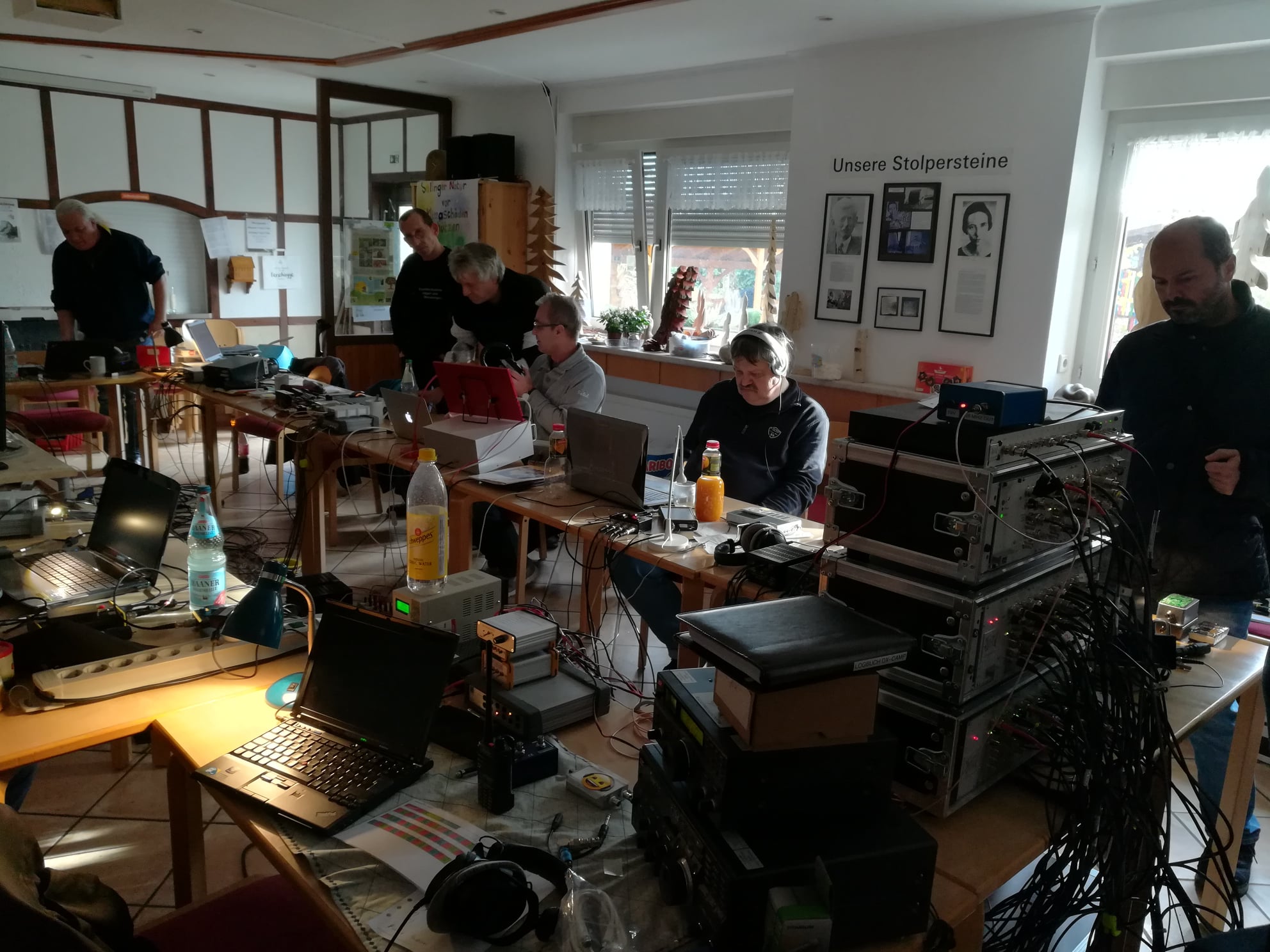
The Friends of Radio NRW – an independent group of shortwave listeners and radio amateurs in Germany – have been organizing 2-3 SWL camps per year for a number of years, where they meet as far away as possible from electrical noise in order to listen to shortwave together.

To distribute antenna signals, we have previously used an RFT AVV01 antenna distributor.

At an SWL camp there are high demands on signal distribution. Both very weak and strong signals should be distributed well, un-distorted, without noise and other interference. The signal levels are approximately between 0.2 ?V (S1) to over 5 mV (S9 + 40 dB), with a frequency range of at least from 150 kHz to 30 MHz, thus broadcast bands from LW to SW are covered, also all amateur radio bands from 160 m to 10 m.

Popular among listeners are RFT AVV01 RF distributors from the former GDR, at least 30 years old. However, the use of an AVV01 has several disadvantages: high power consumption, difficulties in getting spare parts, high upkeep with corroded contacts and the like. In addition, the transmission of the LW/MW range drops, which is a disadvantage especially for MW listeners. The NV-14 system from Rohde & Schwarz from the late 1960s has the same weaknesses.

Two years ago, the desire arose to develop a concept for the replacement of the RFT system.
The following aspects were important:

  • Frequency range at least 100 kHz – 30 MHz, as linear as possible
  • frequencies below or above desirable
  • Running on 12 V DC or integrated noise-free power supply
  • Remote power supply for active antennas
  • Robust structure
  • Versatility
  • Hobby friendly budget

The amateur radio market offers several products for RF signal distribution (e.g., ELAD, Bonito et al.), but no solution to distribute 6-8 antennas to 10-12 receivers. It was clear from the beginning that DIY development was inevitable.

The starting point of the considerations was to integrate remote power supply for active antennas, an amplifier stage and a distribution network.

Such a distributor is able to distribute an antenna signal to several receivers; several antennas require several such distributors, which led to the decision to implement the project in plug-in technology.

With OM Frank Wornast DD3ZE (www.dd3ze.de), known e.g. for his converters, filters and the like, a well-known RF developer could be won, who took over the implementation of the concept based on the detailed specifications. OM Wornast first produced a prototype without remote power supply, which already did an excellent job of RF signal distribution.

A “hardness test” at an SWL camp showed that this distribution module easily fulfilled our requirements: Frequency range 10 kHz – 50 MHz (also usable with a few dB loss above 50 MHz). Supplemented by a switchable remote power supply and a 90V gas discharger at the antenna socket, the final PCB layout was created, representing the core of the new HF distribution system of Radio Freunde NRW

The distribution block consists of the following components:

  • Input with 90V arrester & 100 kOhm MOX resistor to dissipate static interference
  • Remote power supply, switchable, 10-14 V, max. 350 mA
  • Amplifier stage with 14-14.5 dB
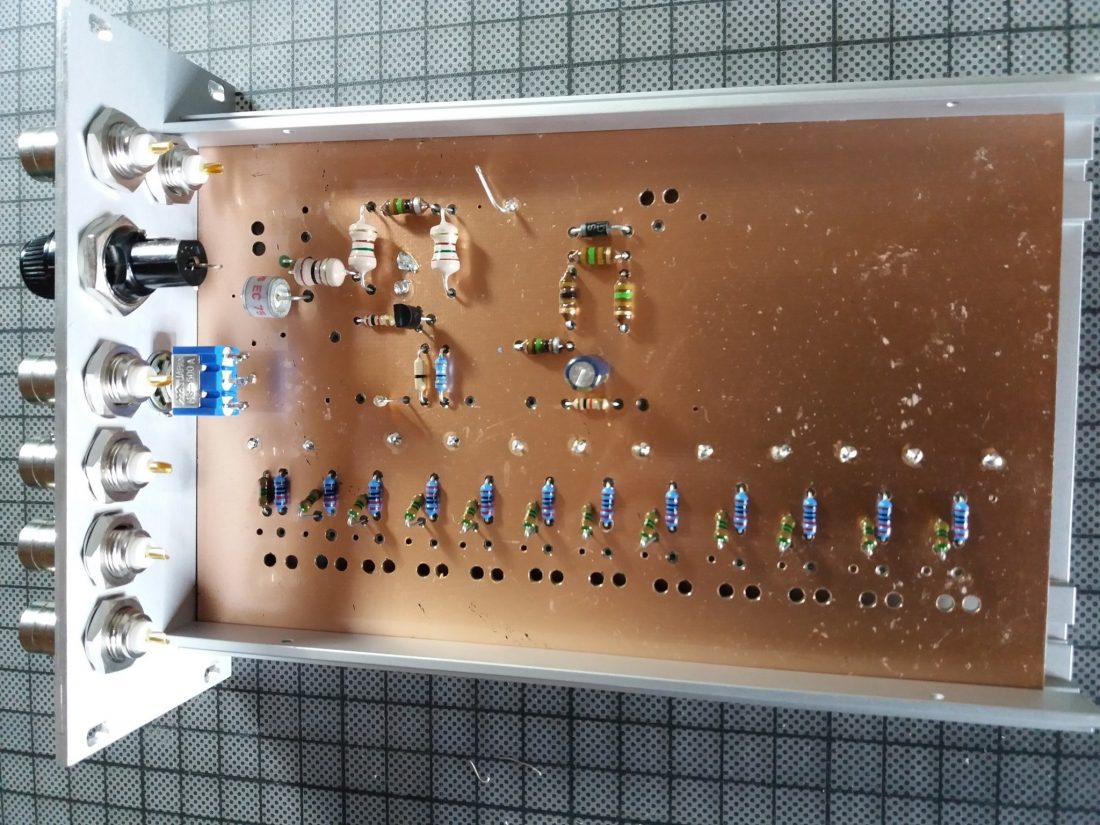
  • Resistor network for distribution

The device is characterized by a very smooth frequency response and has a very low inherent noise. It offers the possibility of using levels of -120dBm with very good SNR
to process up to strong levels of up to + 14dBm. In addition, the reception on VLF is now possible, which did not work with the previous system.


The PCB is designed in a very practical way: series resistors for LEDs are integrated as well as fixing points for coaxial cables. The remote power supply can be switched separately, but can also be used permanently by means of a jumper.

With this concept, the distribution block can be used universally: use on an active or passive antenna with distribution to several receivers, by means of a step switch in front of it also for several antennas; if you leave the remote feed path unconnected, the block can also be used as a simple distributor, so it is almost universal for hobby purposes.

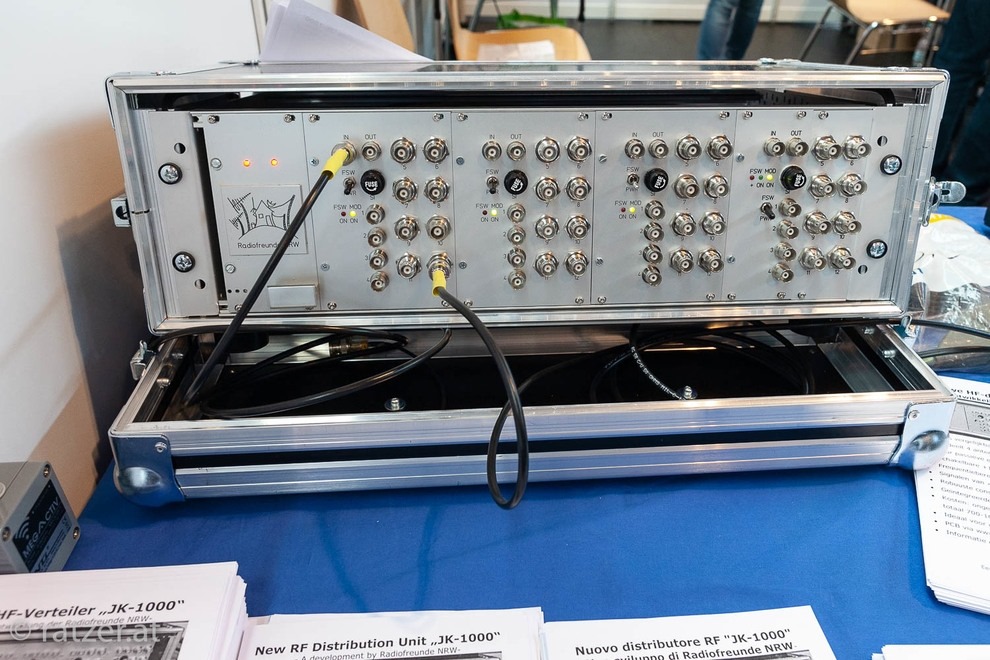
For use on SWL camps, we decided to install them in 19 “rack-mount technology. A standard rack can thus accommodate 4 distributors and a power supply, allowing  distribution of 4 antennas to 12 outputs each. An example of the installation is shown in the following picture: Parallel to the input is another BNC socket, which is connected via a C 100 nF where the input signal can be used DC-free for measurement purposes or the like. The distribution unit is installed in a transport case. The components themselves are mounted in slide-in housings which are provided with a corresponding front panel: Such front panels might be obtained from CNC manufacturers.

On the back + 12V DC must be supplied as operating voltage. For the power supply units, we opted for linear power supplies because we have made the best experience with these without interference. For a distribution unit with 4 slots, a power supply with 12V 1A is sufficient – each distribution block takes about 55 mA, an active antenna up to 150 mA, so even with “full load” a power supply with 1 A is sufficient. The distributor was tested with various well-known active and passive antennas, including a PA0RDT MiniWhip, active loops, long wires and T2FD.

Due to the wide input voltage range, the module can handle nearly any antenna. The cost for a distributor for 4 antennas amounts  (depending on the version: housing, sockets, switches, power supply, etc.) to about 700-1000 €. That may seem a lot at first glance. However, taking into account that a simple 5-gang distributor from mass production costs already around 250 ¬, the cost of the distribution of 4 antennas to each up to 12 outputs are not that much. The Friends of Radio NRW use two of these distribution units for SWL camps.

If you are interested in building one, please contact the author ([email protected]) for further information. The development history of the distribution unit is also available at www.dx-unlimited.eu.


Wow!  What a beautifully engineered antenna distribution solution, Joachim!  I love how you worked together to sort out all of the requirements for your system then build it for ultimate performance and flexibility.  No doubt, you and your colleagues at  Radiofreunde NRW posses a lot of design and engineering skills!  Simply amazing and thank you for sharing your design with the radio community!

Contact Joachim for more details and check out notes and discussion at www.dx-unlimited.eu (may require registration).

Tecsun AN-48X Loop Antenna: One simple suggestion to improve performance

Many thanks to SWLing Post contributor, Robert Richmond, who writes:

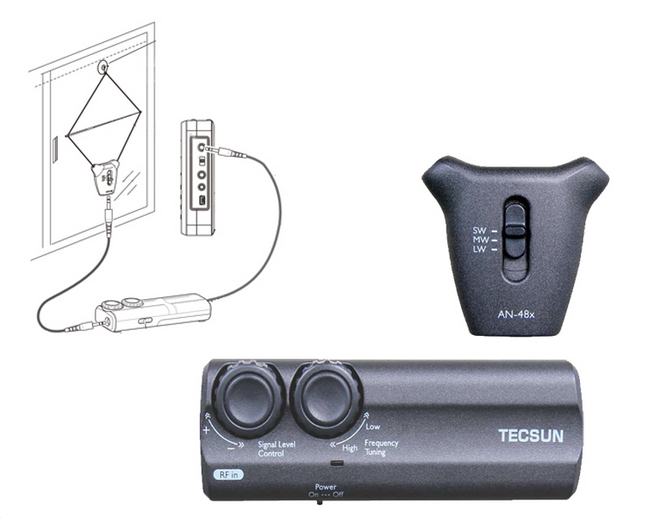
I recently received the new Tecsun AN-48X loop antenna. I have not had much time to thoroughly test it, but I can make one immediate recommendation IMO. Replace the bundled “feedline” between the loop and controller with an actual *shielded* 1/8″ male-to-male stereo audio cable.

The bundled cable causes near-hand capacitance at the controller, potential RFI issues, etc.; at least for my received unit. The noted concerns largely corrected when replacing the bundled cable with a 6′ shielded audio cable. Tuning now works as expected, and SNR seems much improved.

I have longer 12′ shielded cables and some 1/8″ female-to-female couplers on order to eventually try longer feedlines should the need arise. I will try to drop you a line if/when I get around to testing them.

That’s a sound suggestion, Robert! Thanks for sharing!

New Product: Tecsun AN-48x (now available)

Anon-Co just announced that Tecsun has released their new portable, active loop antenna – the AN-48x (27.99 plus shipping) – and it is available for purchase.  Copied below is their announcement:

Tecsun has launched its latest antenna which is now available at Anon-Co! This active loop antenna has a portable design and aims to enhance AM (LW, MW, SW) frequencies. The antenna comes with three types of connector cable and a ferrite coupler for connecting to different types of radios.

Personally, I like my TG34 (DE31MS equivalent).  Though I have *no* experience with this model – as it is new – this is the type of antenna users either love or hate.  My TG34 and the equivalents will amplify everything, including noise, but it has helped me make inaudible or barely audible signals audible.  It’s inexpensive, portable, easy to deploy and store (great for travel) – but it’s really geared towards the SWL hobbyist who can’t invest in, or erect, something bigger and/or more expensive.

The biggest advantage that I can see with this new model: the antenna has three types of connections including BNC & RCA sockets.

Click here for more information: Tecsun AN-48x

Guest post by Troy Riedel

Coastal DXing with the AirSpy HF+ Discovery and a homebrew passive loop antenna

Last week, we packed the car and headed to coast of South Carolina.

The trip was a bit impromptu but through the creative use of hotel points, we scored a two bedroom ocean front unit with a fantastic little balcony.

The vacation gave me an excuse to test the new passive loop antenna my buddy Vlado (N3CZ) helped me build recently.

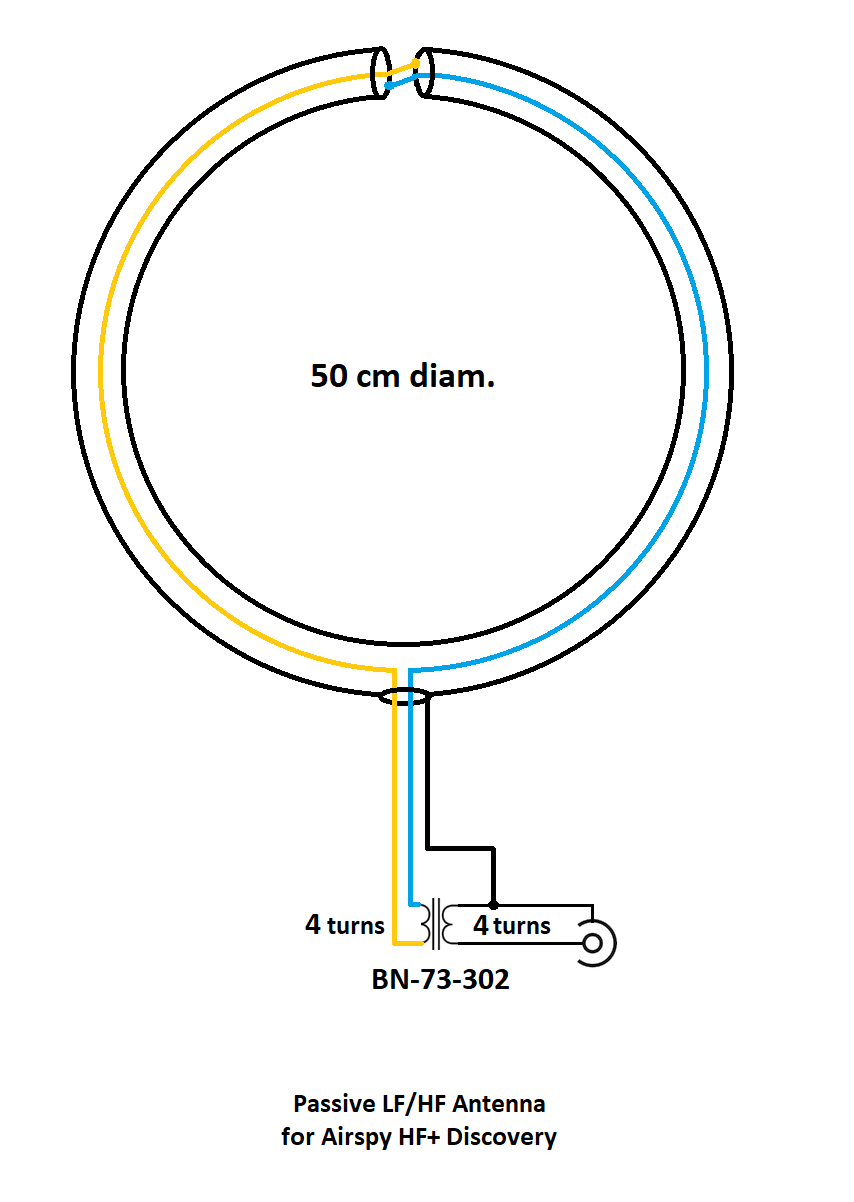
The loop design came from AirSpy’s engineer and president, Youssef Touil.

This passive mag loop takes advantage of the new AirSpy HF+ Discovery‘s exceptionally high dynamic range. Youssef had reported impressive results, so I had to build one.

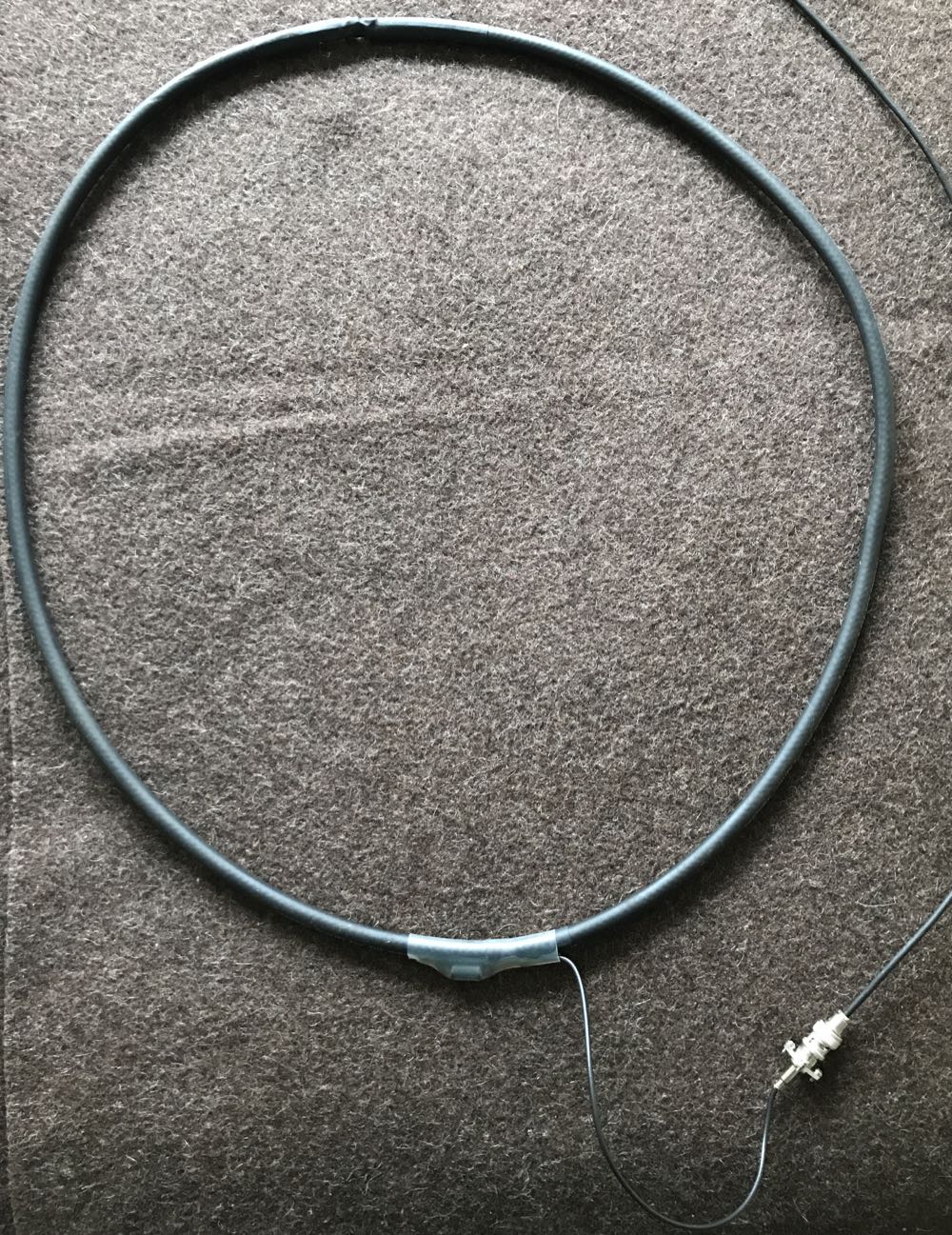
Vlado had a length of Wireman Flexi 4XL that was ideal for this project. The only tricky part was penetrating the shielding and dielectric core at the bottom of the loop, then tapping into both sides of the center conductor for the balun connections.  Being Vlado, he used several lengths of heat shrink tubing to make a nice, clean and snag-free design.

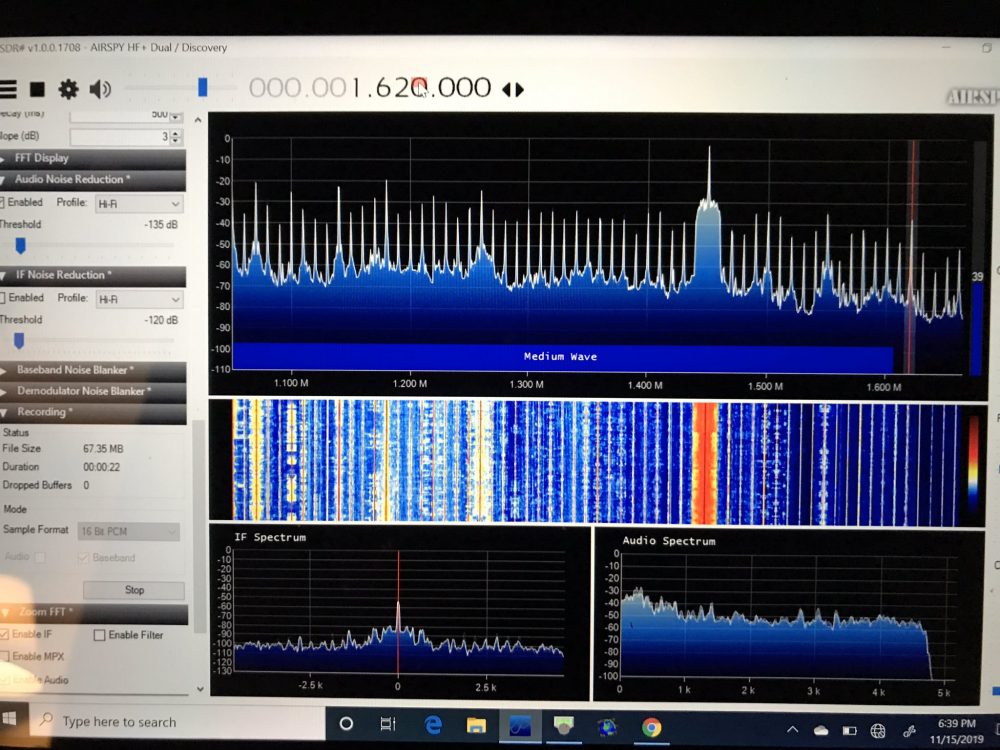
The results were truly exceptional. I spent most of my time on mediumwave from the hotel balcony because I was determined to catch a transatlantic signal.

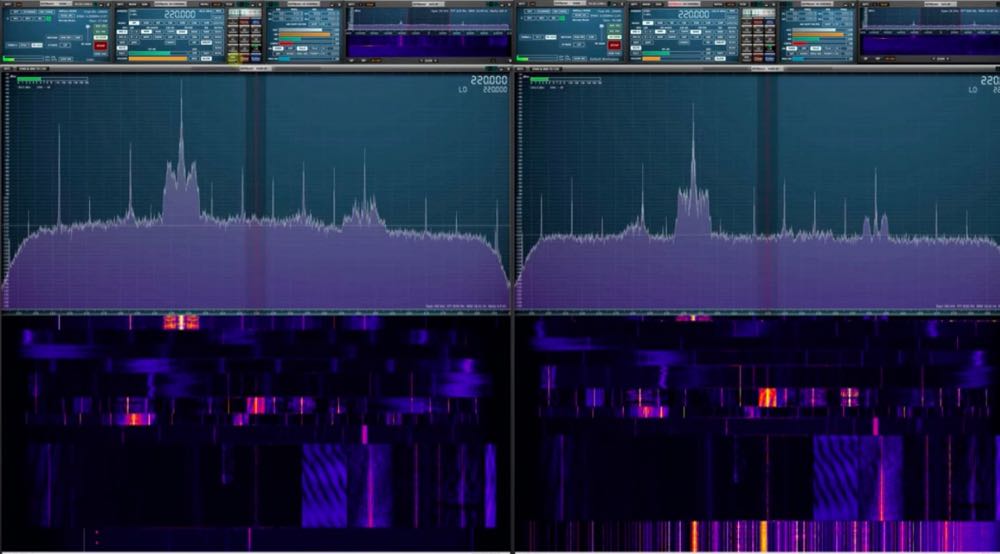
Check out the spectrum display from my Microsoft Surface Go tablet:

Our ocean front hotel was inundated with noise, but I still managed to null out most of it and maximize reception using the passive loop. I simply suspended the loop on the balcony rocking chair–not ideal, but effective and low-profile.

Want to take a test drive?

If you’d like to experience this portable SDR setup, why not tune through one of the spectrum recordings I made?

Click here to download the spectrum file [1.7GB .wav].

The recording was made on November 17, 2019 starting around 01:55 UTC–I chose it at random and have yet to listen to it myself. You’ll need to open this file in AirSpy’s application SDR# or a third party SDR app that can read AirSpy .wav files.

Stay tuned…

I’m writing an in-depth report of the HF+ Discovery, my experiments with this setup and AirSpy’s soon-to-be-released passive loop antenna for the January 2020 issue The Spectrum Monitor magazine. Spoiler alert: I am truly impressed with the wee little AirSpy HF+ Discovery. It’s a powerhouse!


Do you enjoy the SWLing Post?

Please consider supporting us via Patreon or our Coffee Fund!

Your support makes articles like this one possible. Thank you!

Guest Post: ZIPWALL10 poles as antenna supports

Many thanks to SWLing Post contributor, Mario Filippi (N2HUN), who shares the following guest post:


ZIPWALL10 poles

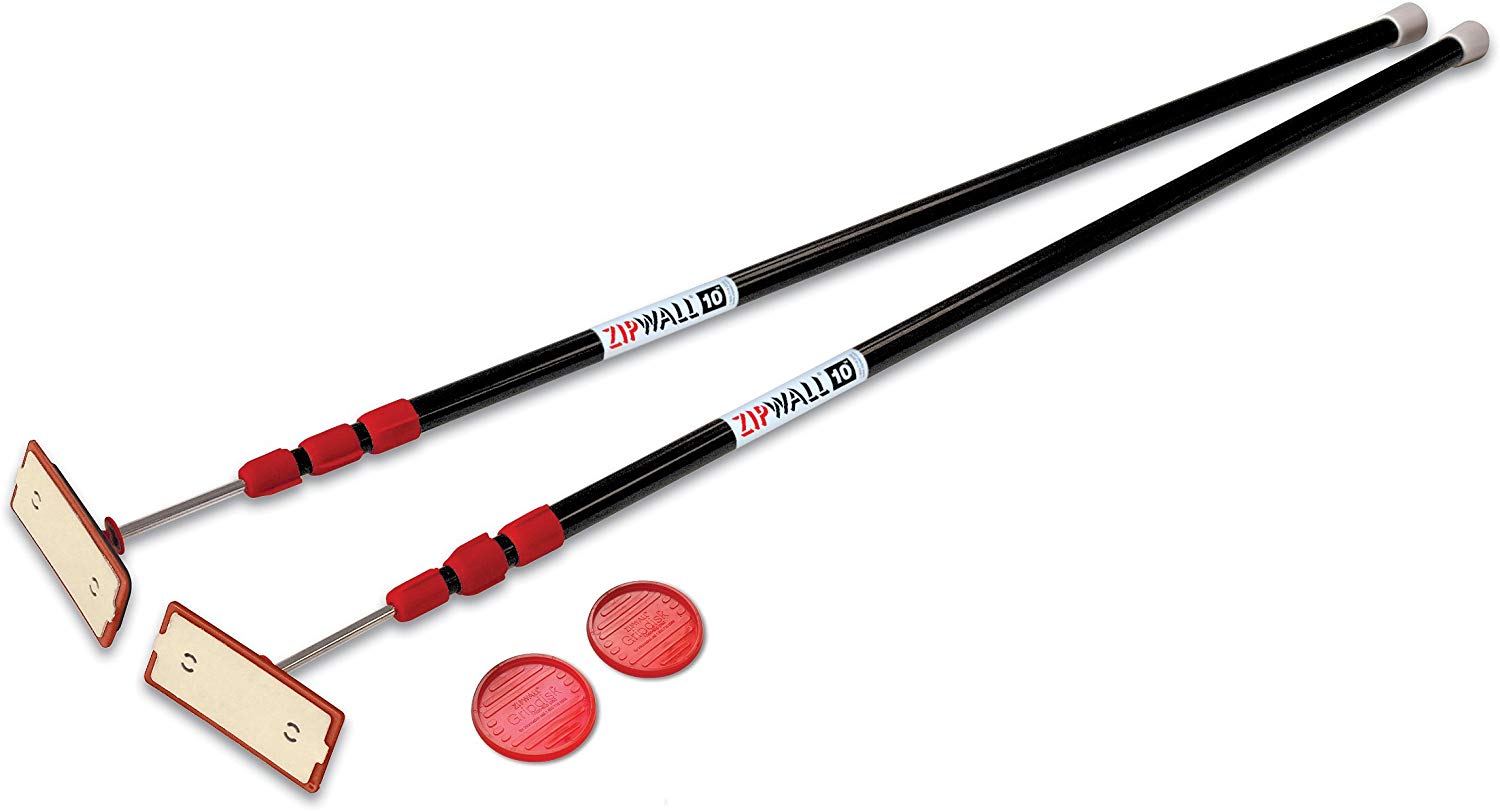
Recently we had a remodeling job performed at the home QTH and the workers used telescoping poles to form a dust barrier.  When the job ended, they said I could have the telescoping poles, a product called ZIPWALL10, which when collapsed are four feet long but extend to ten feet.  This got me pondering about how handy these could be in the radio shack, especially for indoor impromptu antennas.

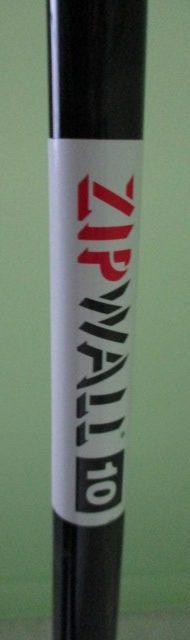
Close up of the ZIPWALL telescopic pole.

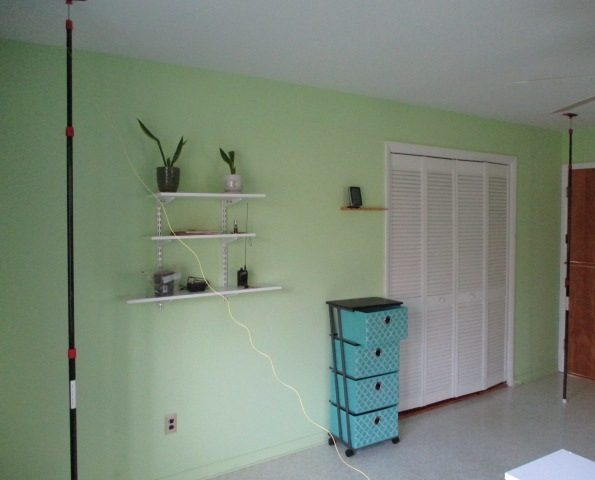
Indoor antennas, especially wire antennas usually have to be secured to a wall somehow, and should be as high as possible in the room.  That requires using adhesive tape to attach the wire and a ladder (most ceilings are eight feet), but using the ZIPWALL10 poles it’s easier and safer.  Below is a temporary random wire antenna in my shack using 26 gauge insulated wire strung between the two poles.

Random wire in shack room is a bit hard to see but it is strung between the two poles.

What’s nice about these poles is they have rubber feet to grip the floor and plastic pads on top to avoid damage to the ceiling. The top section is spring loaded to assure a tight fit.  The ZIPWALL10 model extends to ten feet in three telescopic sections. No tools are needed to set these up, and they conveniently collapse for storage.

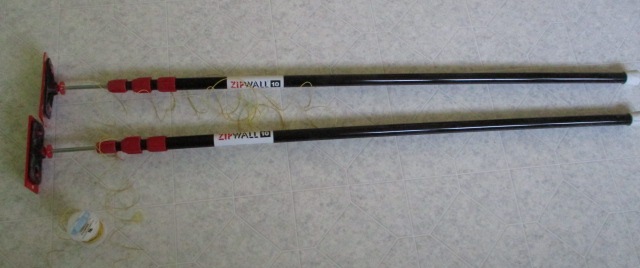
ZIPWALL10 pair along with roll of 26 gauge wire for temporary indoor antenna installation.

These poles just happened my way due to a remodeling job, but surely other types are available on the market for those wanting to experiment with indoor antennas.  The price for a ZIPWALL10 pair on Amazon is around eighty dollars. Thanks for reading.


What a great use for ZipWall poles, Mario! I’ve spent the past few days at an ocean front condo and could have used two of those supports to suspend a small, lightweight passive loop antenna safely on the balcony. That’s fantastic your contractors simply gave you those poles! 

Thanks for the tip!

As you mention, Amazon sells a full line of ZipWall options (links below support the SWLing Post) but these can also be found at most home improvement stores. 

Rick compares the Bonito ML200, Cross Country Wireless, MLA-30 and Wellbrook 1530LN

Many thanks to SWLing Post contributor, Mike Ladd, who shares the following video by Rick King who compares four mag loop antennas: the MLA-30, Cross Country Wireless, Bonito ML200, and the Wellbrook 1530LN.

Click here to view on YouTube.

Excellent comparison, Rick!

Although we’ve previously posted reviews and comments about the MLA30, I’m quite impressed that it gave the venerable Wellbrook a run for its money. I’m not surprised the Bonito ML200 was the winner here–Bonito quality is second to none.

Loop links:

The new Tecsun AN-48x Active Loop Antenna

Many thanks to SWLing Post contributor, Troy Riedel, who shares a link to the new Tecsun AN-48x Active Loop Antenna at Anon-Co. Here’s the description from Anon-Co:

TECSUN AN-48x is an active loop antenna for enhancing shortwave (SW), medium wave (MW/AM) and longwave (LW) reception.

Unlike previous models (DE31MS, A38-LMS) available on anon-co.com, the AN-48x is supplied with adapters to connect the antenna to BNC and RCA sockets. This greatly simplifies hooking up the antenna to TECSUN receivers like S-2000 and S-8800, while it is just as easy to use with H-501, PL-990, PL-880 and the rest of the “PL”-family.

AN-48x also works with portable radios that do not have an external antenna jack!

Effective Frequency Range

Longwave: 120 ~ 400 kHz

Medium Wave (AM): 520 ~ 1700 kHz

Shortwave: 3500 ~ 20,000 kHz

[…]

Click here to view at Anon-Co.

Anon-Co notes that they expect to launch this product in December 2019. If you happen to grab one, consider sharing your review here on the SWLing Post!