Category Archives: Broadcasters

New Korean language service from the BBC

(Source: BBC Media Centre)

BBC News launches Korean language service

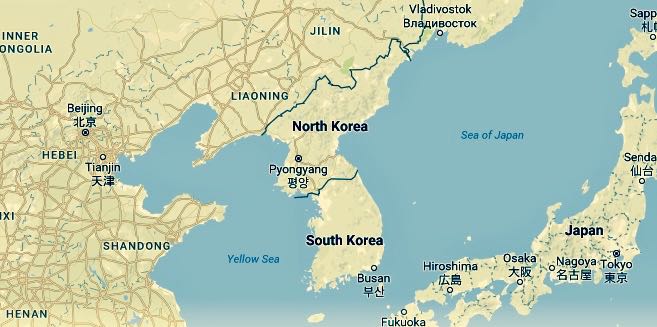
The new Korean language service announced in November 2016 by the BBC World Service began broadcasting today. Audiences in the Korean peninsula and Korean speakers around the world can now hear radio broadcasts and access the latest news online at BBC.com/Korean.
BBC News Korean is one of 12 new language service launches now underway as part of the biggest expansion of the BBC World Service since the 1940s, funded through a £291 million grant in aid from the Foreign and Commonwealth Office.

Director of the BBC World Service Francesca Unsworth says: “BBC News Korean will build on the long-standing reputation for fairness and impartiality the BBC World Service has earned all over the world.”

BBC News Korean features a daily 30-minute radio news programme broadcast at 15.30 GMT on Shortwave (SW) and 16.30 GMT Medium wave (MW). The service will also feature a digital offer with written stories, videos and radio programmes which can be downloaded and shared. The new service features a wide range of news, sport, business, culture, in-depth reports and English language learning.

BBC News Korean journalists will be based in Seoul, London and Washington and will draw on the full extent of the BBC’s global network of correspondents.

Notes to Editors
Service to launch on Monday 25 September at 15.30 GMT (Tuesday 26 September in Korea):

  • Shortwave service to broadcast for three hours, 15.30 – 18.30 GMT (0030 – 0330 GMT local time Seoul; 00.00 – 03.00 local time, PYT)
  • Medium wave service transmission for 1 hour 16.30 – 17.30 GMT (0130-0230 local time Seoul; 01.00 – 02.00 local time, PYT)
  • All transmissions to be 7 days a week
  • Medium wave (MW) Frequency: 1431KHz
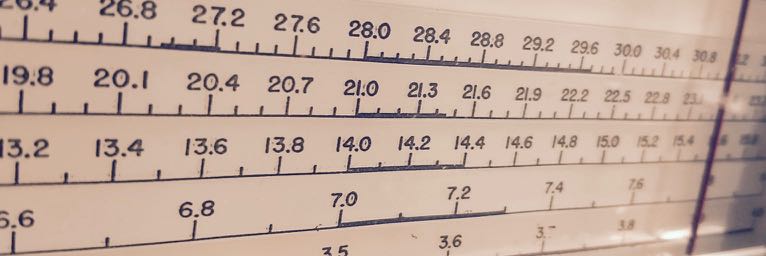
  • Shortwave (SW) Frequencies: 5810 kHz & 9940 kHz (from launch to 28 October 2017) then; 5810 kHz & 5830 kHz (from 29 October 2017 to 24 March 2018)
  • The BBC News Korean website will be available at BBC.com/Korean

The BBC World Service is currently launching in 12 new languages – Afaan Oromo, Amharic, Gujarati, Igbo, Korean, Marathi, Pidgin, Punjabi, Serbian, Telugu, Tigrinya, and Yoruba.
VORW Radio International’s New Schedule

Many thanks to SWLing Post reader, John, who hosts TheReportOfTheWeek channel on YouTube and writes:

Hello Thomas, the broadcasting schedule of VORW Radio International has changed somewhat so I would like to provide an updated schedule for your readers!

The biggest update is that our service to Europe has been fully restored.Listeners in Europe, the Middle East and even South Asia can hear our broadcast clearly on 9400 kHz at 1600 UTC each Sunday!

Each broadcast features a mixture of my commentary and listener requested music. It’s the listeners who choose the playlist in every show, so you are guaranteed to hear a great variety of music! Hope you can tune in!

Thursday 2200 UTC – 9955 kHz – WRMI 100 kW – South America
Friday 0000 UTC (Thu 8 PM Eastern) – 9395 kHz – WRMI 100 kW – North America
Friday 0000 UTC – 9455 kHz – WRMI 100 kW – Central America
Friday 0000 UTC – 7730 kHz – WRMI 100 kW – Western North America
Friday 0000 UTC – 7490 kHz – WBCQ 50 kW – North America
Sunday 1600 UTC – 9400 kHz – Spaceline – 150 kW – Europe / Middle East
Sunday 2000 UTC – 9395 kHz – WRMI 100 kW – North America

Questions, comments, reception reports and music requests may be sent to [email protected]

Reception reports will receive a QSL!

Very cool, John!  Thanks for the update–we’ll be listening!

BBC World Service: new shortwave services to Ethiopia and Eritrea

Note that, in terms of press freedoms, Reporters Without Borders ranks Eritrea the second most repressive country in the world, next to North Korea.

(Source: BBC Media Centre)

BBC World Service continues expansion with new services for Ethiopia and Eritrea

Three new language services for Ethiopia, Eritrea, and the diaspora are being launched today by the BBC World Service as part of its biggest expansion since the 1940s.
BBC News in Amharic, Afaan Oromo and Tigrinya will be available online and on Facebook. This will be followed later in the year with shortwave radio services in each language consisting of a 15-minute news and current affairs programme, followed by a 5-minute Learning English programme, from Monday to Friday.

The new BBC services will provide impartial news, current affairs and analysis of Ethiopia and Eritrea as well as regional and international news. Boosting the BBC’s operation in the Horn of Africa will also provide the rest of the BBC’s global audience with a better understanding of Ethiopia and Eritrea.

Programmes will target a younger audience with social media playing a key role. In addition to news and current affairs, there will be extensive coverage of culture, entertainment, entrepreneurship, science & technology, health and sport – including the English Premier League.

These services will benefit from a growing network of journalists across the region and around the world.

Francesca Unsworth, BBC World Service Director, says: “The BBC World Service brings independent, impartial news to audiences around the world, especially in places where media freedom is limited. I’m delighted we’re extending our service to millions of people in Ethiopia, Eritrea and the diaspora worldwide.”

Will Ross, Editorial Lead for Africa, says: “We know that there is a great deal of hunger for audiences in Ethiopia and Eritrea to access a broad range of high quality content in Amharic, Afaan Oromo and Tigrinya. It has been a privilege to work with Ethiopian and Eritrean journalists who are so keen to learn new skills and to ensure the new language services are a success.”

Photos of WRMI antenna field damage

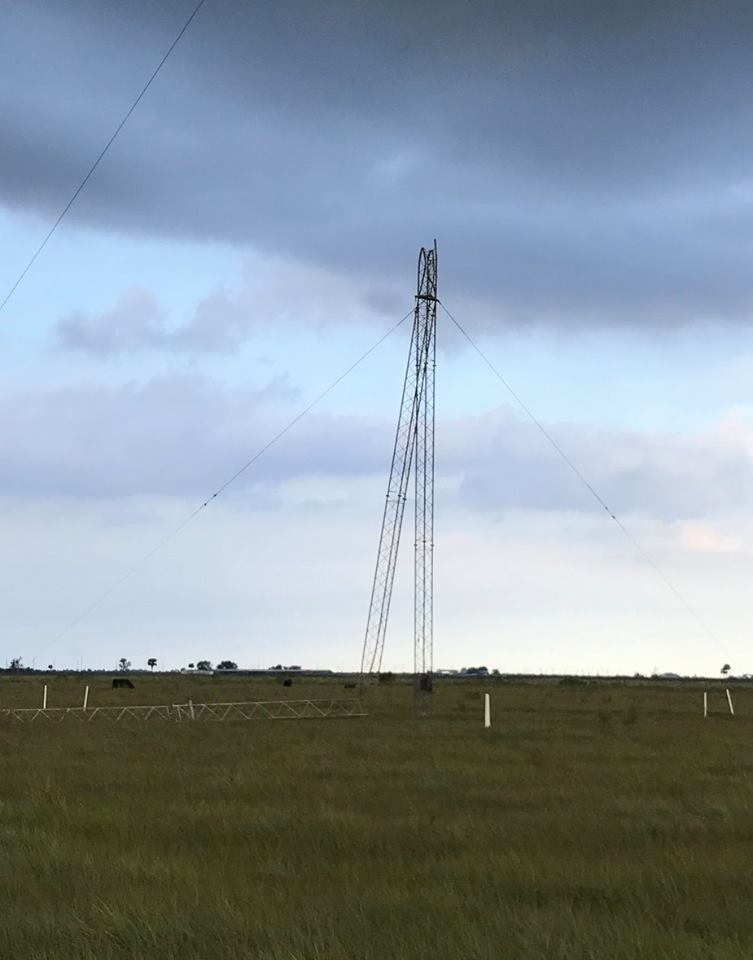
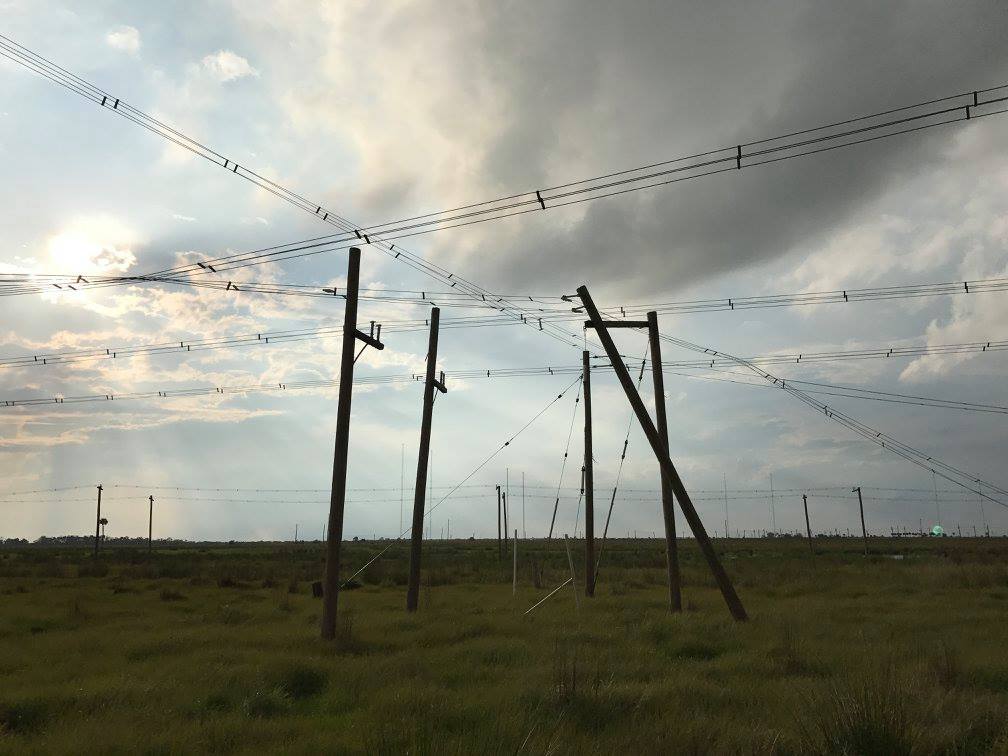
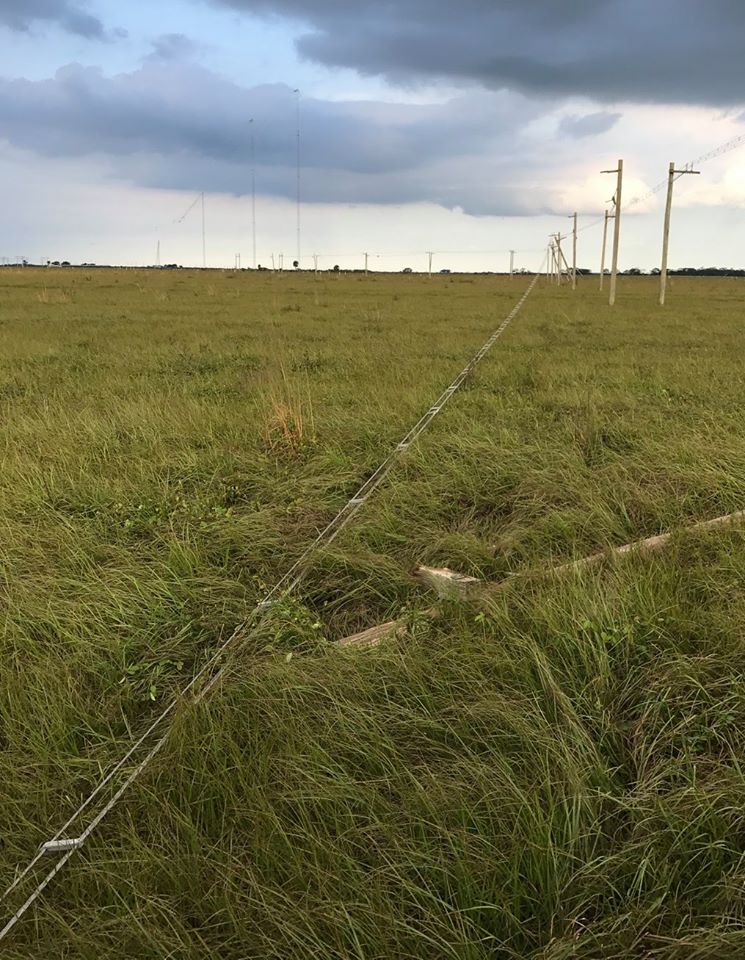
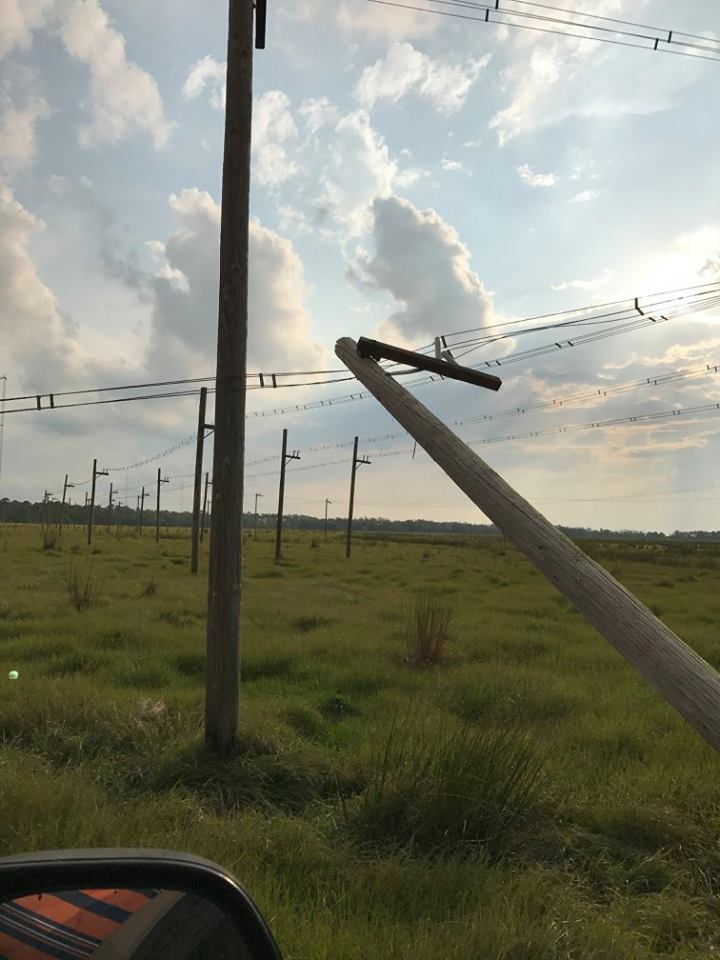
Since we’ve been following WRMI in the wake of Hurricane Irma, I’ve posted a few photos below that WRMI shared on their Facebook page. These photos give us an idea about the magnitude of damage to their antenna farm.

Amazingly, Jeff White confirmed a few days ago that WRMI is back up to full power on all of their frequencies.

All of the caption below were noted by WRMI:

One of the towers holding our 44-degree antenna to Europe was folded in the middle by the hurricane.

A mess of crossed transmission lines in the field.

Transmission lines on the ground that should be above ground on poles.

Transmission line poles were knocked down.

A second tower holding the 44-degree antenna was snapped in the middle.

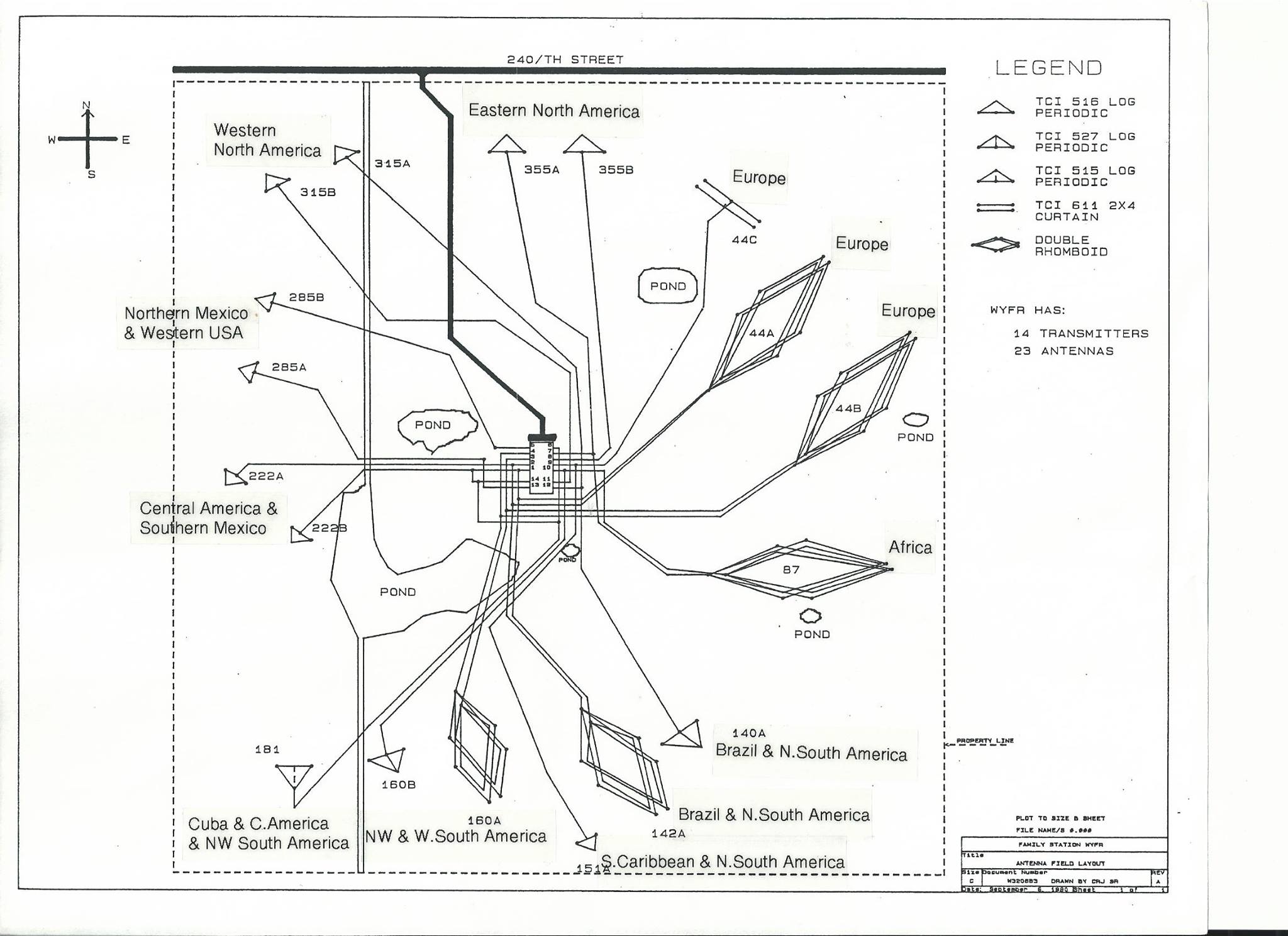
We had some requests a few days ago from listeners who wanted to see a diagram of our transmitter-antenna connections. This may blow your mind, but here goes…

For all WRMI updates, please bookmark the WRMI Facebook page.

The Guardian: Study shows ABC cuts to shortwave & rural broadcasts “jeopardising safety of remote communities”

(Source: The Guardian via Ian P)

Reduction of local news and station closures disastrous for people living outside Australia’s cities, researchers say

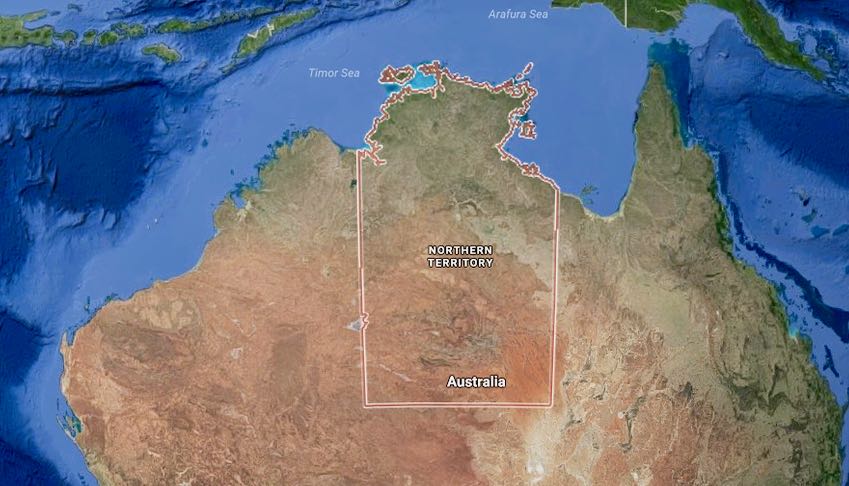
Cuts to the ABC in regional and rural Australia and the corporation’s increasing reliance on digital technologies is jeopardising the safety of remote communities and their access to emergency warnings, Deakin University research has found.

The ABC’s increasingly “digital-first” approach to emergency information and the reduction in ABC reporters’ local knowledge is causing great distress among rural populations who rely on broadcast signals because they don’t have the bandwidth or coverage for digital, researchers say.

A reduction of local news and information, centralised newsrooms in metropolitan areas, the closure of several ABC stations and the scaling back of broadcast programming has been disastrous for people outside the cities, according to a new study, Communication life line? ABC emergency broadcasting in rural/regional Australia.

But the ABC has played down the study’s significance, saying it is based on parliamentary submissions and is not an “accurate or up-to-date” summary of the corporation’s role in rural and regional Australia; and that the ABC is not funded as an emergency service.

Based on public submissions to a parliamentary inquiry, the researchers Julie Freeman, Kristy Hess and Lisa Waller found “burgeoning discontent about the corporation’s ability to fulfil its role as a designated emergency broadcaster and provide communication life lines to rural and regional communities”.[…]

Continue reading at The Guardian.

Nick Xenophon champions review of ABC shortwave broadcasting to Pacific

Many thanks to SWLing Post contributor, Ian P, who shares the following via ABC News:

ABC shortwave broadcasting to the Pacific to be reviewed

The decision to end Australian shortwave broadcasting to the Pacific earlier this year could be revisited.

There’s to be a review of Asia Pacific broadcasting services, as part of a wide ranging package of reforms to the country’s media laws agreed to by independent Senator Nick Xenophon.

The Department of Communications and the Department of Foreign Affairs and Trade are to conduct a review, including examining whether shortwave radio technology should be used.

The review will include public consultation and the report will be made public.

Senator Nick Xenophon has been strenuously opposed the decision by the ABC to end shortwave services, and he was a key crossbench figure in negotiations over the media reforms.

Click here to download the interview.

Click here to read and listen to the interview via ABC News.

East German schoolboy who was jailed for writing the BBC

(Source: BBC News via Namal Dolakumbura, 4S6NDO)

The East German secret police went to extraordinary lengths to track down people who wrote letters to the BBC during the Cold War. One of those arrested and jailed was a teenager who longed to express himself freely – and paid a high price.

It was the last day of the summer holidays. For 18-year-old Karl-Heinz Borchardt that should have meant an afternoon on a windswept Baltic beach with his girlfriend, or a few hours spent trying to catch the latest pop songs on his portable radio.
Instead his childhood came to a sudden end.

His mother hurried into his room unusually early and told him to get dressed. Five uniformed agents were waiting downstairs.

Borchardt bought himself time. “I needed time to think,” he says. “It could have been for any number of reasons.”

Insisting he needed a wash, he started to fling sheets of incriminating texts out of the window. He couldn’t know that the secret police already had all the evidence they needed.
It was two years earlier, in September 1968, that Borchardt had written his first letter.

It wasn’t easy to keep anything hidden in the cramped two-room flat Borchardt shared with his family in Greifswald, a small town on Germany’s northern coastline.

So as he sat down to write at the living room table he covered the sheet of paper with his homework whenever someone poked their head round the door.

The radio sat to his left and Borchardt was glued to the crackly foreign broadcasts coming out of Prague, where Soviet guns and tanks had rolled in to crush an attempt to introduce liberal reforms.

“To the staff of Radio London’s German service!” he wrote.

I have only just started listening to your programme, ‘Letters without signatures’, but I like it a lot, since it airs opinions you don’t find in our media. I am 16 years old. I will write to you regularly, mainly about young people and their views on world affairs. In my view, the west did not intervene strongly enough in Czechoslovakia. Does a country which fought so hard for its freedom have to carry on marching to the tune of the Soviets?

Warm regards from a schoolboy

Continue reading on the BBC News website…