Shortwave listening and everything radio including reviews, broadcasting, ham radio, field operation, DXing, maker kits, travel, emergency gear, events, and more
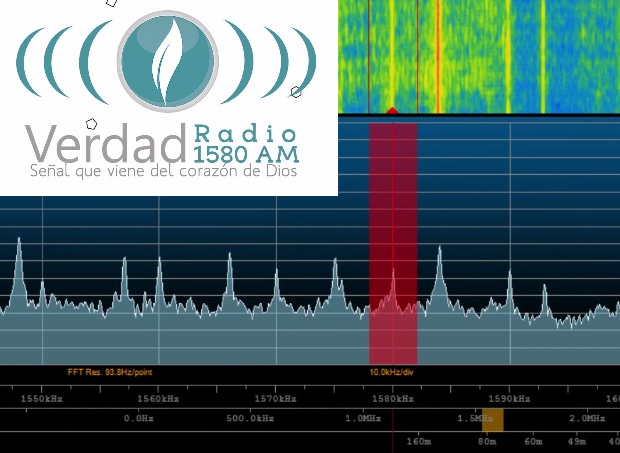
Hi there, here is the second set of reception videos for my transatlantic MW DX catches using the 200 metre Beverage antenna. Most of the signals originate from the United States and Canada, however, there is also a catch from Mexico – XERF La Ponderosa – which is a personal first and another from Bogotá, Colombia – Verdad Radio. I hope you enjoy them. Please do not hesitate to contact me if you would like further details regarding the Beverage design and/or construction. in the meantime, thank you for watching/listening and I wish you all great DX!
Clint Gouveia is the author of this post and a regular contributor to the SWLing Post. Clint actively publishes videos of his shortwave radio excursions on his YouTube channel: Oxford Shortwave Log. Clint is based in Oxfordshire, England.
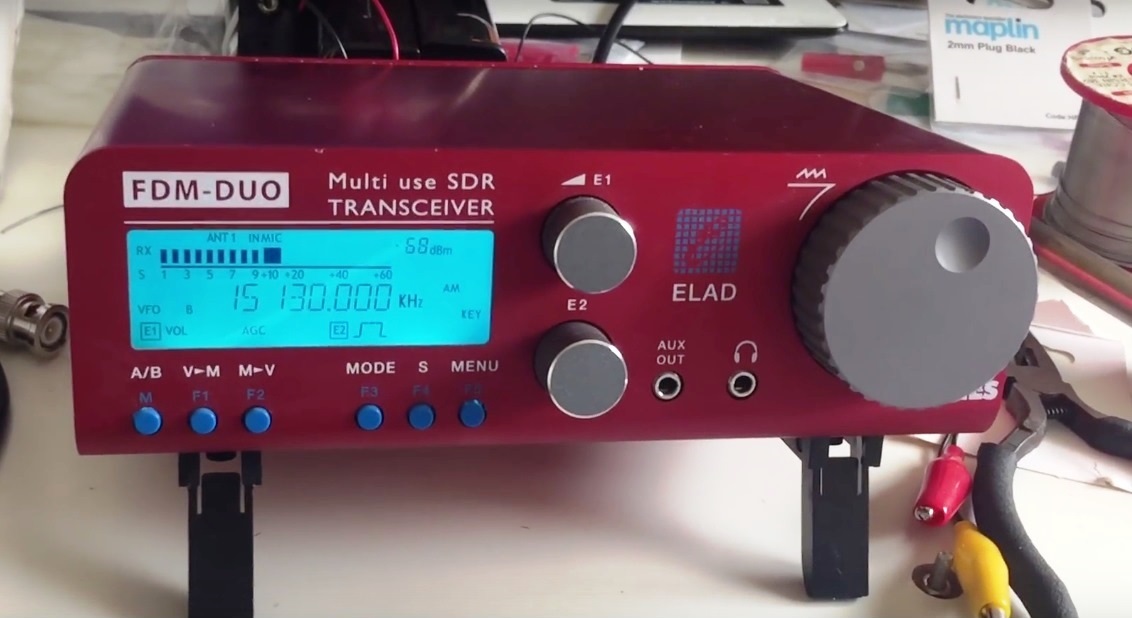
Hi there, a few weeks ago I posted a couple of medium wave DX catches with the Elad FDM DUO and newly constructed 200 metre Beverage antenna. Since then (and following my trip to Brazil) I have uploaded several more catches, some of which I would like to share with you. It has become evident that the Beverage’s low-gain but high SNR properties resulted in a huge increase in the sensitivity of my entire set-up and as a result. I have achieved numerous personal firsts on the medium wave band, coupled with many other signals that I can only describe ‘best-ever reception’. If nothing else, this endevour has underlined the importance of utillising the best antenna possible for your particular circumstances. We’ve all read at some point, how, in many respects, the antenna is more important than the receiver – and these catches demonstrate how absolutely true that statement is. All of the reception videos were captured using the Elad FDM DUO running on a home-brew battery-pack and connected to the Beverage via a 50 Ohm input transformer.
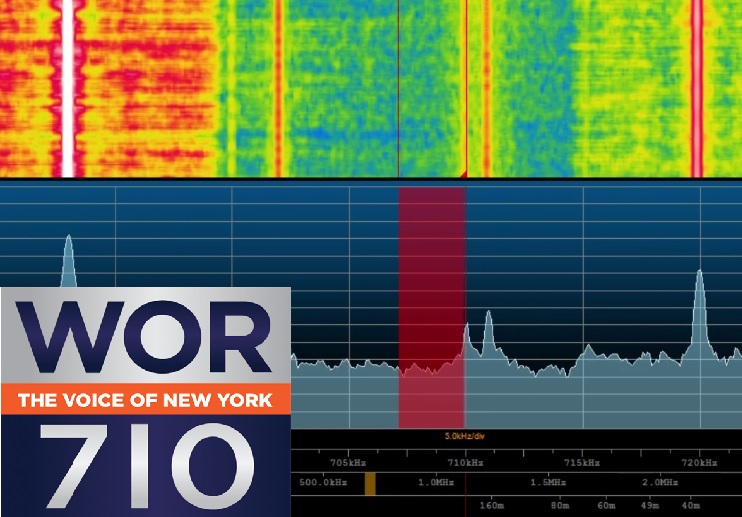
Below is the first set of reception videos, most of which are signals from East Coast of the United States. However, there is also an absolutely booming signal from WGIT Puerto Rico into my QTH in Oxford UK. Part 2 will follow almost immediately, but in the mean time thanks for watching/listening and I wish you all great DX!
Clint Gouveia is the author of this post and a regular contributor to the SWLing Post. Clint actively publishes videos of his shortwave radio excursions on his YouTube channel: Oxford Shortwave Log. Clint is based in Oxfordshire, England.
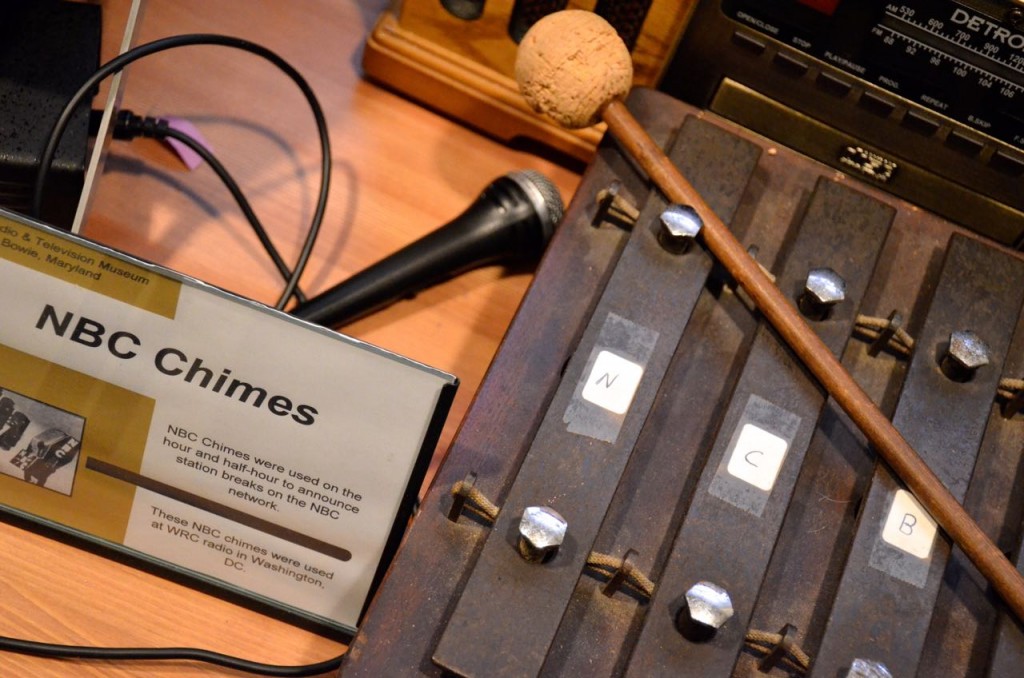
Original NBC Chimes. Photo taken at the National Capital Radio and Television Museum
If you have thirteen minutes today, do yourself a favor and listen to this excellent radio documentary about the NBC chimes from the podcast Twenty Thousand Hertz. It’s fascinating!
NBC’s three little chimes didn’t just define a television network, they defined a generation. Where did they come from and what is the surprising impact they have had on current and future media? Featuring the last person to play the NBC chimes on the NBC radio network, broadcaster Rick Greenhut, and radio historian, John Schneider.
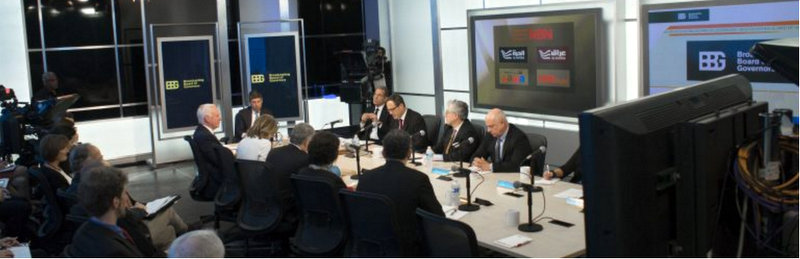
Many thanks to SWLing Post contributor Dan Robinson--former White House, Congressional and foreign correspondent for the Voice of America–who alerts us to a major development at the Broadcasting Board of Governors (BBG).
Note that the BBG supervises the Voice of America (VOA), Radio Free Europe/Radio Liberty, Radio y Television Marti, Radio Free Asia, and the Middle East Broadcast Networks.
Dan writes:
House Rules Committee approves conference report containing reform of U.S. international media management structure
[T]he BBG met today [November 30, 2016] and were trying to put a positive spin on this, but this development essentially lays the groundwork for the elimination of BBG completely, though a first stage would have remaining governors on the board serve in the first iteration of a new International Broadcasting Advisory Board (IBAB).
Also, and importantly — Congress is going ahead with a proposal to create a Global Engagement Center that would have as its main purpose, countering foreign misinformation and disinformation.
A link to the actual language in the House Committee on Rules conference report to the 2017 National Defense Authorization Act (NDAA) is below:
[Y]ou can read the actual language, beginning on Page 1396 for the Global Engagement Center and then right after, on Page 1404, on the BBG.
[Again], pages 1404 – 1421 in the conference report details making the BBG advisory and therefore putting it out of the direct decision making path and likely reducing its power, influence and impact.
The remaining BBG members would be allowed to serve out terms, constituting the first “International Broadcasting Advisory Board,” modifying the U.S. international broadcasting act with powers focused in hands of CEO, and creating a Global Engagement Center (see Pg 1396 before section on BBG) to counter foreign misinformation and disinformation…there is no specific mention of VOA in the conference report to the 2017 NDAA
‘‘SEC. 306. ESTABLISHMENT OF THE INTERNATIONAL
13 BROADCASTING ADVISORY BOARD.
14 ‘‘(a) IN GENERAL.—Except as provided in subsection
15 (b)(2), the International Broadcasting Advisory Board
16 (referred to in this section as the ‘Advisory Board’) shall
17 consist of five members, including the Secretary of State,
18 appointed by the President and in accordance with sub-
19 section (d), to advise the Chief Executive Officer of the
20 Broadcasting Board of Governors, as appropriate.
Global Engagement Centeer: PURPOSE.—The purpose of the Center shall
2 be to lead, synchronize, and coordinate efforts of the
3 Federal Government to recognize, understand, ex-
4 pose, and counter foreign state and non-state propa-
5 ganda and disinformation efforts aimed at under-
6 mining United States national security interests.
Actualidad-DX brings you the latest news of the radio world, the short waves, the media, the telecommunications, the DX, the ham radio and the digital context every week. A production of RAE Argentina to the world, edited by Arnaldo Slaen, in the voice of Mirian Turkula of the English Team of RAE
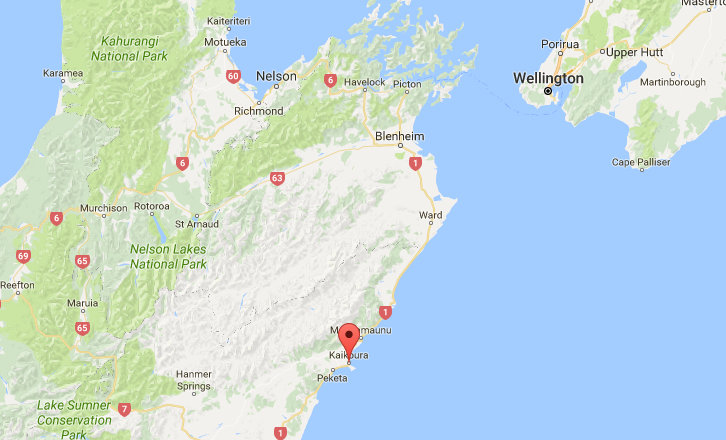
A fortnight after the Kaikoura earthquake, most of the businesses along West End, the town’s main street, are still closed – the interiors darkened, some shopfronts cordoned off.
But the door of one of those shopfronts is open, and from it, the strains of Brian FM come floating out.
Who’s Brian?
“I have no idea,” Chris Diack says.
“People are wanting to walk in and talk to Brian all the time and there’s no Brian – there’s Chris and Robert.”
Mr Diack and his offsider, Robert Jeffares, have been broadcasting from their makeshift studio for a week now, after convincing the owner of a local frequency that was not being used to let them take over.
The content is mostly “parish pump information”, says Mr Diack – the level of detail the rest of the country might not need to hear but which is invaluable to locals trying to find out where their next hot shower might be coming from.
“The water’s off, you can’t use the toilets, if you need to use the toilets use the portaloos, and where are they … Four Square’s open at midday, get along there and get some milk, bread and butter… You couldn’t buy butter for love nor money in Kaikoura.”
In between broadcasting the minutiae of post-quake life, they conduct interviews with the district mayor, civil defence, the Salvation Army, and errant RNZ reporters who wander in to the studio.[…]
Hi there, a good friend of mine Mr Thomas Brogan mentioned to me recently that his little Tecsun PL-310ET was proving to be an excellent receiver and that it would suit my DXpedition activities. Now, as someone who likes to push the envelope of performance with sophisticated portables, usually coupled to very large antennas, a cheap little Tecsun might not have been an abvious choice for my next purchase. However, Mr Brogan (who has an excellent Youtube channel by the same name – check out his wonderful collection of vintage and modern receivers) previously suggested I buy, for similar reasons, the Sony ICF-SW100. That little masterpiece of electronics turned out to be one of the best receivers I’ve ever owned. I felt compelled to take notice because Tom never gets this stuff wrong! A few days later I found myself in Maplins – again – and there it was on the shelf at just under £40, so I bought one.
I got back into shortwave listening about 18 months ago, after many years of inactivity whilst my poor Sangean ATS-803A rotted away in the garden shed and Sony ICF-7600G long-gone via eBay. To start all over again, I bought a Tecsun PL-360. What a great little portable that turned out to be – there are over 100 reception videos on my YouTube channel demonstrating how it continually performed above and beyond the very modest price tag. I even managed to hear ABC Northern Territories 4835 kHz on it once – simply amazing for a receiver under £30. Given my extensive experience with the PL-360 and having learned the PL-310ET shared the same DSP chip, I was expecting the same, or at least very similar performance and the only real benefit to upgrading to the PL-310ET was the direct frequency access. However, I was wrong about that!
The brilliant Tecsun PL-360 got me back into shortwave radio for less than £30
About a week after buying the PL-310ET, I managed to get out on a DXpedition and with 30 metres of wire attached to it via the external antenna socket, I started tuning around the SW bands. Quite simply, I was amazed at the sensitivity and selectivity of this diminutive little portable. With the proven DSP receiver chip and a number of audio bandwidth filter options from 1 to 6 kHz, coupled with direct frequency access via the keypad, it was a joy to use and listen to. In just over an hour I had copied signals from North Korea, including their internal service KCBS Pyongyang, Zanzibar BC, ABC Northern Territories (at the first attempt!), Zambia NBC Radio 1, Radio Oromiya and Radio Amhara from Ethiopia, amongst others. Brilliant stuff and clearly demonstrating that the overall hardware/software package with the PL-310ET is a step up in performance over the PL-360 and capable of proper DX for a very modest outlay. Interestingly, in a conversation with Thomas Witherspoon regarding the PL-310ET, he reminded me that it was one of his go-to radios for travelling and confirmed it’s excellent performance. I would definitely recommend this radio to novices and experts alike.
Reception videos follow below, with more to come in part 2; I hope you enjoy them. Thanks for watching/listening and I wish you all excellent DX!
Clint Gouveia is the author of this post and a regular contributor to the SWLing Post. Clint actively publishes videos of his shortwave radio excursions on his YouTube channel: Oxford Shortwave Log. Clint is based in Oxfordshire, England.