Category Archives: Guest Posts

Small Unidirectional Loop Antenna (SULA) Part 2: Construction Notes

Many thanks to SWLing Post contributor extraordinaire, 13dka, who brings us Part Two of a three part series about the new SULA homebrew antenna project. This first article describes this affordable antenna and demonstrates its unique reception properties. This second article focuses on construction notes. The third and final article will essentially be a Q&A about the SULA antenna. All articles will eventually link to each other once published.

This wideband unidirectional antenna is an outstanding and innovative development for the portable DXer. I love the fact that it came to fruition via a collaboration between Grayhat and 13dka: two amazing gents and radio ambassadors on our SWLing.net discussion board and here on the SWLing Post. So many thanks to both of them!

Please enjoy and share Part 2:


Part 2: SULA Construction notes

by 13dka

The drawing [above] has all you need to know. You basically need to put up a symmetrical wire diamond starting with a balun at the one end and terminating in a resistor at the other end of the horizontal boom, the sides are supposed to be 76cm/29.92″ long so you need to make yourself some…

Support structure:

I used 0.63″/1.6cm square plastic square tubing/cable duct profiles from the home improvement market to make the support structure. You can use anything non-conductive for that of course, broom sticks, lathes… The plastic profiles I used had the advantage of being in the house and easy to work on with a Dremel-style tool and everything can be assembled using the same self-tapping screws without even drilling. The profiles are held together with 2 screws, for transport I unscrew one of them and put that into an extra “parking” screw hole on the side, then I can collapse the cross for easy fit into the trunk, a rucksack etc.

These profiles are available in different diameters that fit into each other like a telescoping whip. This is useful to make the support structure variable for experiments and to control the loop shape and tension on the wire. The booms end up at 1.075m each, the profiles come in 1m length, so that’s 4 short pieces of the smaller size tube to extend the main booms by 37mm on each side

On the resistor end of the loop that smaller tube isn’t mounted in the “boom” tube but to the side of it in order to keep the wire running straight from the balun box on the other side.

Mast/mounting:

You can use anything non-conductive to bring it up to height. On second thought that is indeed bad news if you were planning on putting that up on your metal mast…and we have no data on what happens when you do it anyway. I don’t know if the smallest (4m) telescoping fiberglass poles would suffice for portable operation, but I’m a fan of just using the big lower segments of my 10m “HD” mast for the stiffness they give me (3 segments for the height, the 4th collapsed into in the base segment for easy rotation). Telescoping masts also give you easy control over…

Height:

The published patterns are for 3m/10′ feedpoint height over “average” ground. Increasing height further has no expectable advantage, instead it will deteriorate the favorable directional pattern of the loop. Flying it lower, or even a lot lower in windy weather on the other hand is causing a surprisingly moderate hit on performance.

Continue reading →

Introducing the amazing SULA: An affordable unidirectional DX-grade loop antenna that you can build!

Many thanks to SWLing Post contributor extraordinaire, 13dka, who brings us a three part series about the new SULA homebrew antenna project. This first article describes this affordable antenna and demonstrates its unique reception properties. The second article will focus on construction notes. The third and final article will essentially be a Q&A about the SULA antenna. All articles will eventually link to each other once published.

This wideband unidirectional antenna is an outstanding and innovative development for the portable DXer. I love the fact that it came to fruition via a collaboration between Grayhat and 13dka: two amazing gents and radio ambassadors on our SWLing.net discussion board and here on the SWLing Post. So many thanks to both of them!

Please enjoy and share SULA Part 1:


Introducing the Small Unidirectional Loop Antenna (SULA) 1-30MHz

A small and simple, unidirectional and DX-capable loop “beam” for SWLs!

by 13dka

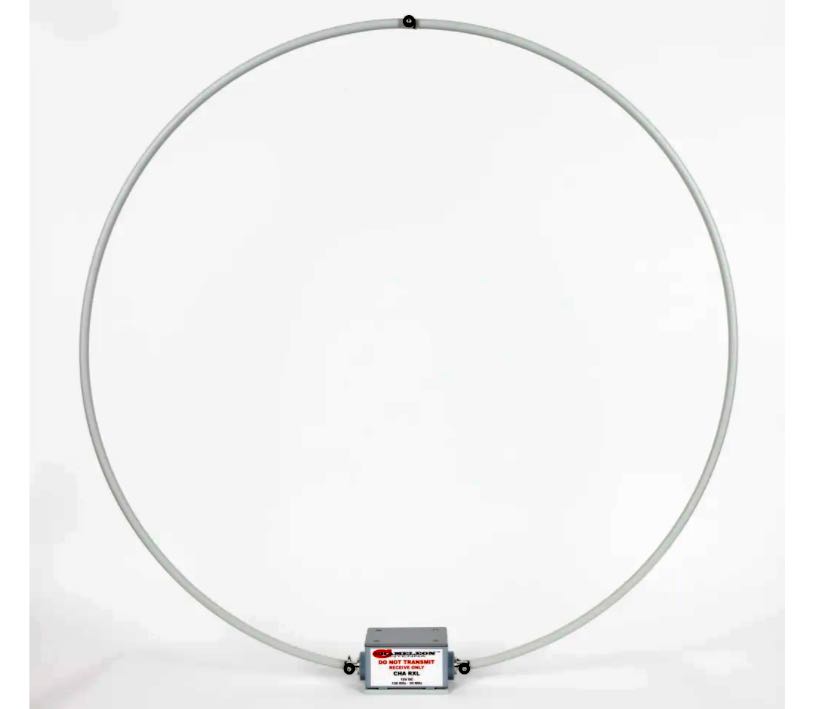
In early June, Andrew (grayhat), SWLing Post‘s resident antenna wizard suggested a variation of the “cardioid loop” on the SWLing Post message board: The original “cardioid loop” is a small loop receiving antenna deriving its name from a cardioid shaped (unidirectional) radiation footprint. The design is strikingly simple but it has a few downsides: It relies on a custom preamp, it needs a ground rod to work and it is unidirectional only up to 8 MHz.

Andrew’s version had the components all shuffled around and it did not only lose the ground rod, it also promised a nice cardioid pattern over the entire shortwave, from a small, diamond shaped loop. Wait…what? It can be made using parts available on Amazon and your DIY store:

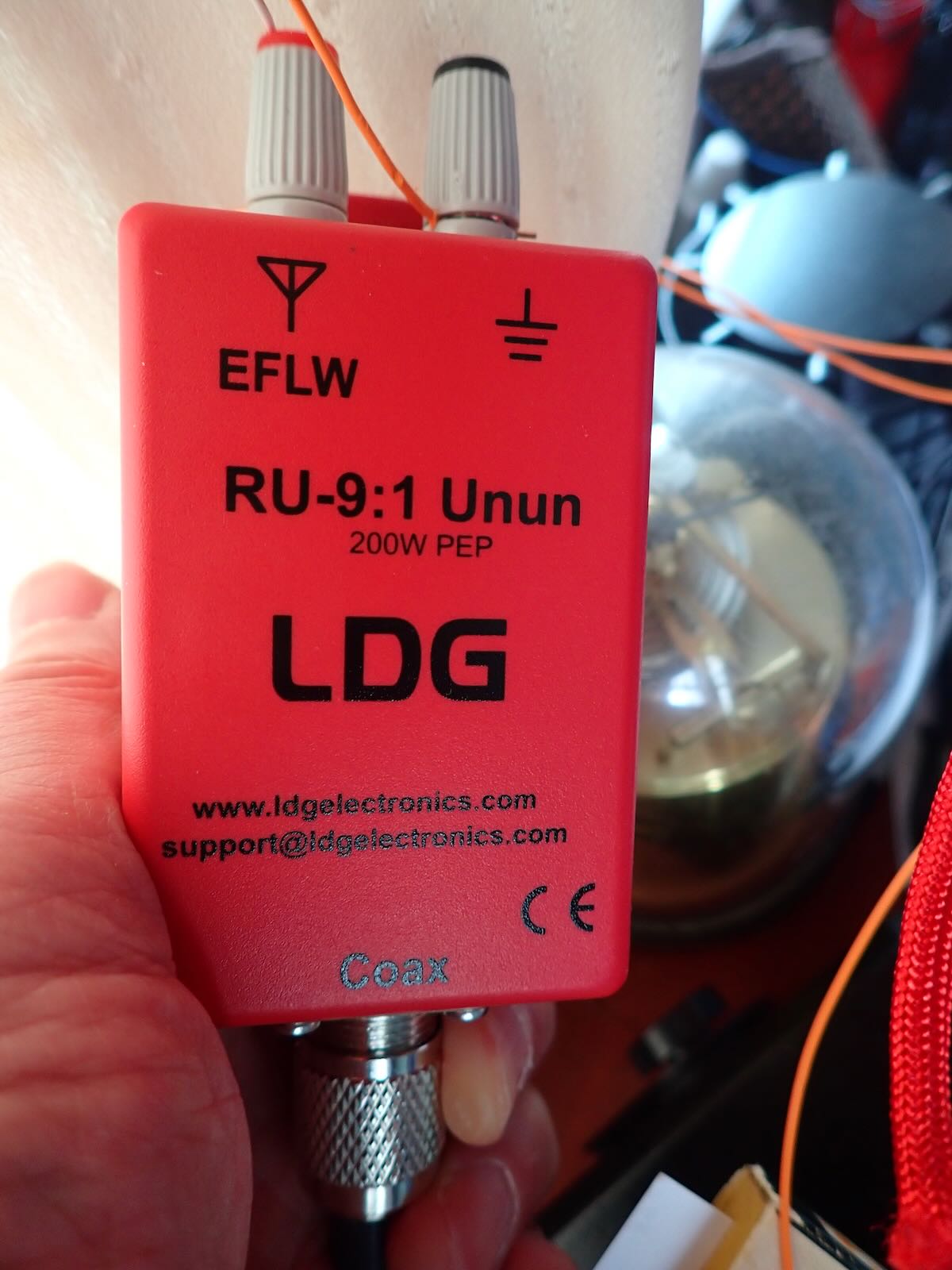
You need some 3m wire and PVC tubes to create a support structure to hold the wire, a 530 Ohm resistor and a 9:1 balun like the popular “NooElec One Nine”. Since it’s a “lossy” design, adding a generic LNA like the NooElec “LANA HF” would help getting most out of it. When you put that all together you have what sounds like an old shortwave listener’s dream: a small, portable, tangible, and completely practical allband shortwave reception beam antenna with some more convenient properties on top, for example, it is a bit afraid of heights.

That sounded both interesting and plain crazy, but the .nec files Andrew posted were clearly saying that this antenna is a thing now. Unfortunately Andrew suffered a little injury that kept him from making one of those right away, I on the other hand had almost all the needed parts in a drawer so I ended up making a prototype and putting it through some of its paces, with Andrew changing the design and me changing the actual antenna accordingly, then mounting it upside down. Let me show you around:

  •  Small, diamond shaped wire loop (with 76cm/29.92″ sides), needing as little space as most other small loops.
  • Unidirectional with a ~160° wide “beam” and one pronounced minimum with a front/back-ratio of typically 20dB over the entire reception range 1-30MHz.
  • Moderate height requirements: It works best up to 3m/10′ above ground, where it gives you…
  • …a main lobe with a convenient flat takeoff angle for DX
  • Antenna is comparatively insensitive to ground quality/conductivity.
  • Wideband design, works best on shortwave and is pretty good up to 70cm.

A functional small beam antenna for shortwave reception that’s just as small and possibly even more lightweight (prototype:~250g/9oz) than your regular SML, that can be easily made out of easy to obtain parts and easily carried around for mobile/portable DXing and due to its cardioid shaped directional pattern also for direction finding, a “tactical” antenna that’s also doing DX? Unlike conventional, Yagi-Uda or wire beams it can achieve a low takeoff angle at only 3m/10ft height or less, the front/back ratio is typically better than that of a 3-element Yagi, with a particularly useful horizontal pattern shape. That it’s rather indifferent to soil quality could mean that more people get to reproduce the good results and being a real wideband antenna is making the SULA an interesting companion for multiband radios and SDRs. Really? A miracle antenna? Is it that time of year again? If I had a dollar for every….

Continue reading →

A case of WTAB déjà vu

Apologies to everyone in SWLing Post land who tuned into WRMI to listen to WTAB last Sunday, it turns out due to technical difficulties there was a bit of a mix up but it’s all sorted now. WTAB will be “Transmitting by the magic of wireless” on 9395 kHz at 2200 utc on Sunday 14th August 2022. Fastradioburst23 

Further adventures of WELK

Hi to all SWLing Post community, it’s Fastradioburst23 again letting you know about the second transmission of WELK this evening at 2200 utc on 9395 kHz thanks to the good folks at WRMI.

If you enjoyed all the accordion and squeezebox based tunes last week you’ll be sure to love this second installment and it’ll be a good one to have on in the background whilst perfecting those air accordion moves.

Alexander shares a few photos and notes from Hamradio 2022 in Friedrichshafen

Many thanks to SWLing Post contributor, Alexander (DL4NO), who shares the following photos and notes from Friedrichshafen:


First Hamradio After Two Years

Alexander (DL4NO)

Finally the biggest amateur radio event in Europe happened again: Last weekend hams from Germany, Austria, Switzerland, France, Italy, Poland, Belgium, Netherlands, GB and more gathered in Friedrichshafen. The location is quite attractive, in Germany but near Austria and Switzerland. I could not get any numbers yet. But the event was quite a bit smaller than in 2017 when I was there the last time.

As every year amateur radio societies from Europe and the ARRL had booths. The most remarkable was from the Austrian OeVSV with their own stage. They had their own, quite interesting lectures. For example Austrian Hams have used the geostationary satellite QO-100 for LoRa experiments. They are quite active with LoRa as this technology allows to transmit data quite slowly, but quite far and with a minimum of power. Their project is called MeshCom. Continue reading →

Giuseppe’s latest homemade ferrite antenna for MW and SW

Many thanks to SWLing Post contributor, Giuseppe Morlè (IZ0GZW), who writes:

Dear friends,

I’m Giuseppe Morlè from Formia, central Italy on the Tyrrhenian Sea.

I want to share with you my latest ferrite antenna for listening; it is composed of 3 ferrites of 20 cm each in a tube for electrical systems with 2 separate windings, one for medium waves and one for short waves, 40 turns for medium waves, 4 turns for short waves. I use a 750 pf variable to tune the 2 windings and a switch is used to eliminate a winding.  Since there is only one variable, if you listen to the medium waves I interrupt the winding of the shorts.

On shortwaves it is preferable to place the system on an iron railing which, due to inductive effect, behaves like a really long wire antenna.

For the mediumwaves it is enough to bring the receiver close to the ferrites and also in this case, the induction will have its effect with an excellent increase in signal and modulation.

The range of this portable antenna is:

      • 520 to 1800 kHz
      • 3.500 to 18.000 MHz

Here’s a video from my Youtube channel where I explain how it works:

I had previously built a similar antenna but with 12 cm ferrites–very portable.

Thank you for your attention and I wish you good listening.

73. Giuseppe Morlè iz0gzw.

This is brilliant, Giuseppe! I love how you never stop building and experimenting with various antenna designs! Thank you for sharing this with us!

Jack’s “Perfect Radio Trifecta”

Many thanks to SWLing Post contributor, Jack Kratoville, for the following guest post:


My Perfect Radio Trifecta

by Jack Kratoville

Last Fall, I asked SWLing readers to assist me in my decision as to what portable radio I should take on a two-week trip to Germany. While I came up with an initial list of portables I already own, there were some excellent suggestions on what I might pack. (Sidenote to Thomas – yes, my wife and I packed everything we needed into two carry-on pieces, including my 3 radios. Your expertise continues to serve us well!) To all else, thank you again for your thoughts, suggestions and comments.

The Tecsun PL-310ET was a top choice of many, yet one I had previously never taken into the field. It seemed a logical choice for this trip. The second is the Sangean PL-210 and it just fits in any pocket. The third is a DAB receiver someone had given me, tossed in a drawer, and forgotten about until I realized Germany implemented DAB to replace the MW and LW bands. The only name I can find online is the DAB-8. Being quite small, it made the cut and I shoved it in between a couple of tee shirts.

At our destination, I quickly realized I could not have chosen a better trinity for myself. Here’s why.

Tecsun PL-310ET

If this had been the only radio I brought, I would have been more than satisfied. SW signals abound (the war just two countries away was certainly a factor.) A quick hit of the ETM feature at the top of the hour brought in 40-50 listenable signals, with only a scant few broadcasts religious in nature. Even during the day, I could capture 25 easily. With the bandwidth set at 3 kHz, sound was most impressive. While some were the same broadcast on different frequencies, my only real disappointment was the lack of English-speaking broadcasts – but that was to be expected. The PL-310ET scans relatively fast and holds on to strong signals quite nicely.

We stayed with relatives who lived high on a hill not far from Kiel, in the north of Germany. One push of the ETM feature on FM filled the dial with German voices playing mostly English pop music (the eighties apparently a favorite decade there too.) Simply put, the selectivity on this radio is phenomenal. Odd / even frequencies happily sharing adjacent homes on the dial. And with the pre-emphasis on European FM at 50, the sound from this portable was absolute perfection. As a matter of fact, my first complaint about this radio was a bit of harshness on our over-processed FM commercial stations. In Europe, the audio characteristics of classical, pop, rock and talk stations was simply sweet.

My first night on the AM band was a disappointment. One, maybe two signals that didn’t come in very well. Thankfully, I quickly remembered to flip it to 9kHz and – wow! The BBC, Spanish, Italian, and signals that sounded very much like eastern Europe came booming in. I did not expect all of this and can easily say this was the most fun I’ve had band scanning and DXing in a long, long time! Traveling domestically, I’m more apt to load a memory page, but in this situation, the ETM feature was incredibly useful.

For all DXing, I only used the whip and internal antennas. The battery indicator dropped one notch on the second to the last day we were there. The PL-310ET is an absolute true travel performer.

The Tecsun PL-310ET now sits proudly alongside my CCrane Skywave, Digitech AR1780, Eton Executive Satellit (Grundig edition) and the semi-retired Grundig G5. When we travel to London next year, there’s no question this gets packed again.

Sangean PL-210

A radio that became my constant walking companion during Covid. Hand-sized with a really nice on-board speaker for its size. The sensitivity is impressive and considering its PLL circuitry, has excellent selectivity on FM. AM was also impressive for an antenna no more than a half-inch – if that. It went with me to Hamburg, Berlin, Frankfort and Denmark; always just a quick pull from the pocket for a quick scan. To say I like this radio, well, I own three.

DAB-8

My curiosity in DAB was basically zero. One reader actually PM’d me and offered their own DAB receiver, saying I should check it out. (Thank you, Mike, for that generous offer.) This radio sounds great, but has very poor FM reception. (No MW). It does have inputs for mp3 and Bluetooth, so I figured just in case there was nothing to listen to, I could stream something on it. Its small size was the biggest factor in making the trip. Once settled, a quick daytime scan grabbed nine signals easily on DAB and they sounded great. It was the only band that featured more traditional (even country!) music. It’s back in the drawer at home, but I am very glad it made the trip.

Summary

I truly had a blast listening to the various captures on these three radios, the Tecsun being the most impressive and fun. I’m sure many newer models would be excellent choices, but not once did I wish to have something bigger or better. That doesn’t happen on trips very often, so perfection indeed.

My apologies to those looking / hoping for recordings. I stopped recording from the radio back when I opted to purchase 45rpm records rather than record them, complete with DJ patter on my father’s Webcor reel-to-reel. Once I got into the biz, I recorded enough DJ patter to last a lifetime! Again, thanks to everyone for their input.