Shortwave listening and everything radio including reviews, broadcasting, ham radio, field operation, DXing, maker kits, travel, emergency gear, events, and more
Photo: Ivan Dias & Martin Butera, during the first Dx-Camp 15.61 Crew Radio Listeners’ Marajó Island – Amazon Rainforest, North of Brazil – November 2019
Many thanks to SWLing Post contributor Martin Butera, founding member of the 15.61 Crew, for the following guest post:
The 15.61 Crew Radio Listeners, Martin Butera and Ivan Dias, give us a small video preview made in the first Dx-Camp on Marajó Island in the Amazon Rainforest, North of Brazil on November 2019.
There are more than 11 hours of SDR recordings and videos of the Ultralight radios, which will take much additional time to process, of course.
Crew is working on the report with a complete story that includes videos and photos of everything experienced during the DX-Camp–this will be published in several languages and the first LOG, which we estimate will be the first months of the South American summer 2020.
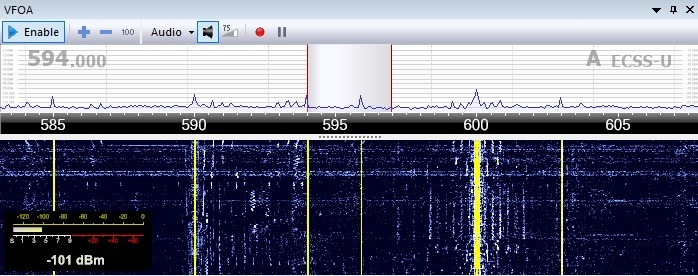
Above, you’ll see a short stretch of the medium wave band with plenty of interesting content: 585 kHz, alternating between National Radio of Spain (Madrid), BSKSA (Saudi Arabia), 590 kHz, alternating with Poty Radio (Crateús / CE), Radio Diffuser (Boa Vista / RR) and Radio Continental (Buenos Aires), 594 kHz BSKSA (Saudi Arabia), 595.9 kHz SNRT (Morocco – operating off-frequency for years), 600 kHz Mirante Radio (São Luís / MA), Vale Radio (Barreiras) / BA) and Radio Gaucha (Porto Alegre / RS) and 603 kHz National Radio of Spain (Sevilla).
Videos
All of the following videos were captured during the November 2019 Dx-Camp:
Brazil is a country with vast continental distances. The following three videos showcase Brazilian radio from across the country.
Radio Diffuser Boa Vista (1408 km distance)
Radio Itatiaia 2191 (km distance)
Radio Band B (2747 km distance)
Photo: Ivan Dias & Martin Butera, during the first Dx-Camp 15.61 Crew Radio Listeners’ Marajó Island – Amazon Rainforest, North of Brazil – November 2019
More photos of the DX-Camp from the official site:
The field trip took a most unexpected turn; It was a total failure. Mark didn’t suffer any equipment problems, the loop antennas performed well; the problem was that MW, SW radio was irrelevant to the local population and there were just no longer any local stations broadcasting to archive.
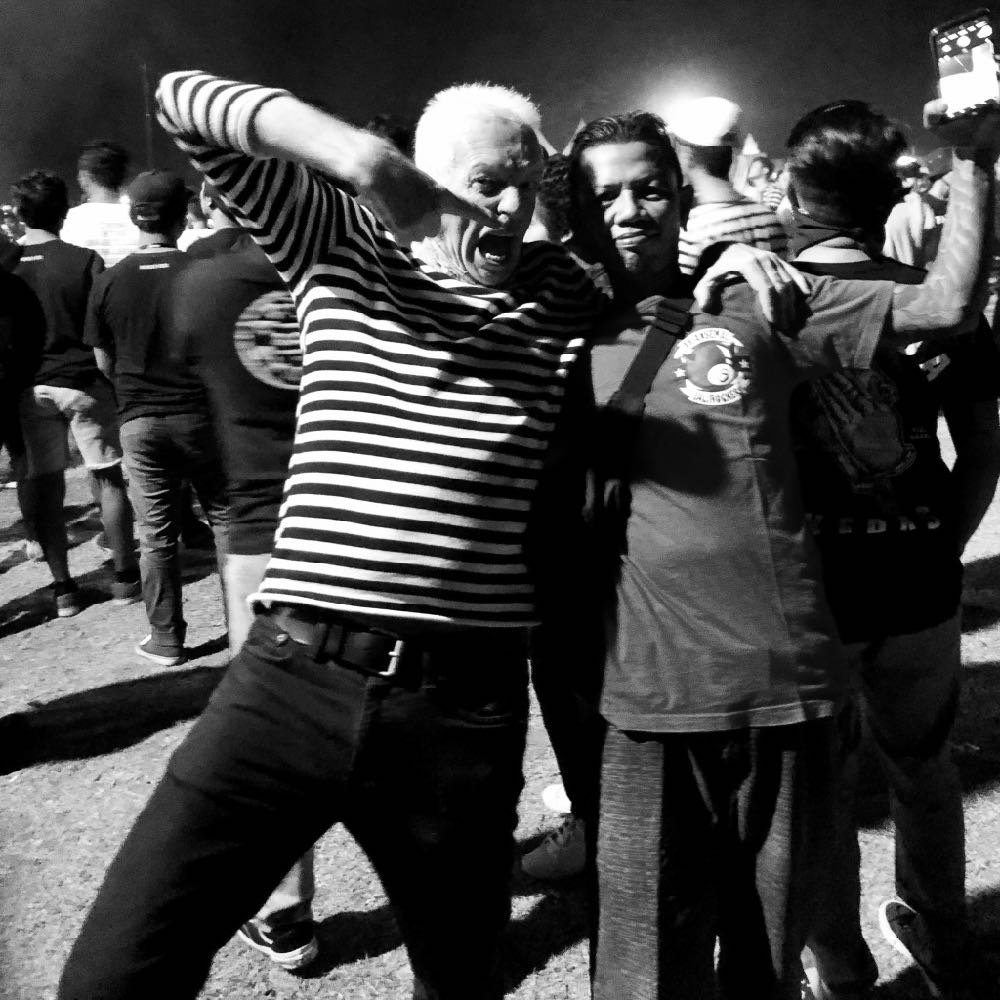
Mark hanging backstage for Radio Volcano
To salvage the experience, Mark shifted his focus to recording video and audio of local gamelan and soundscapes. Seen as a strange novelty by the local jungle community, Mark was soon allocated land, the village built him a house and he has become the first foreigner to ever become a resident of the district and village.
Radio Seribatu Studio Building Studios are on Lower Levels of the house
In return, he has undertaken a project to introduce, and up-skill the village in sustainable eco-industries and educate the village millennials on how to manage these ventures using digital technologies. A component of the project has seen the establishment of three radio stations broadcasting 100% Balinese content. They are the first 24-hour radio stations in the province.
For the last six months, the three stations, Radio Seribatu – Village; Radio Seribatu – Volcano and Radio Seribatu – Mesin have been building the studio complex, solving power and bandwidth issues and training the staff. The network licensing is now permanently allocated and at midnight on January 1st, the test transmissions finish and the three stations officially open.
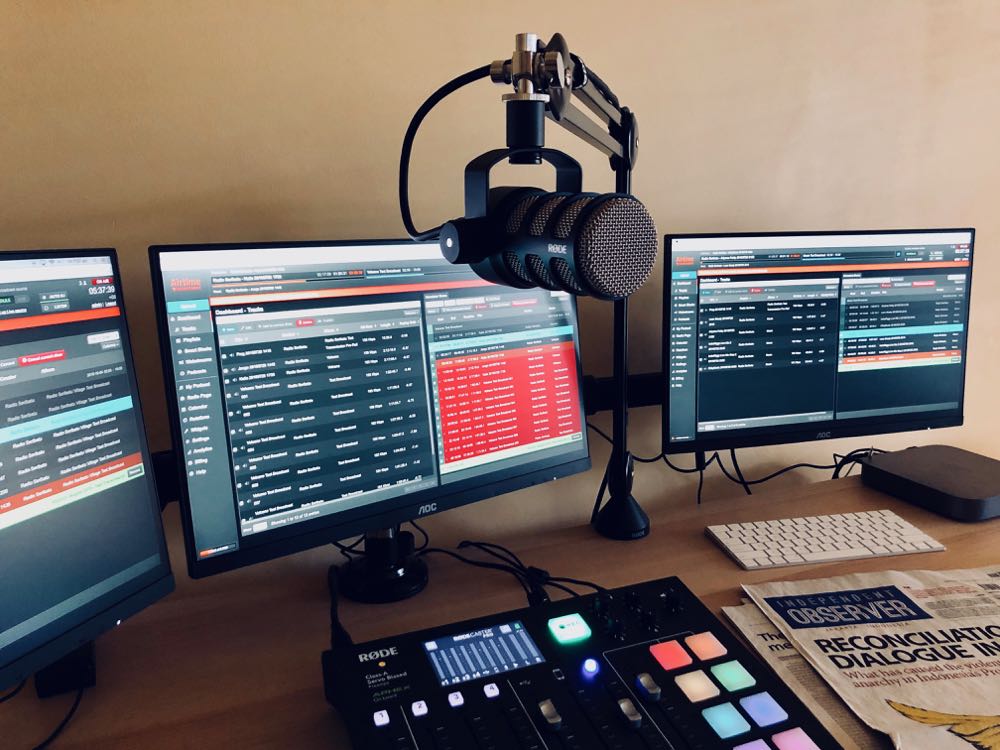
Each station brings many firsts to the region. They are the first to broadcasts 24 hours per day in the province, the first to broadcast 100% Balinese content and the first to deploy a fully digital workflow and studio complex.
Radio Seribatu Studio A sports state-of-the-art digital workflow
Late February, Mark is presenting a deep dive of the stations in a presentation at the upcoming NASWA Winter SWL Fest in Philadelphia, and at that time the SWLing Post will present a detailed tour of the network, discuss the journey, how unexpected twists and turns were overcome, and explain how Radio Seribatu’s test broadcasts in less than twelve months have reached the third most listened to radio network in all of Indonesia.
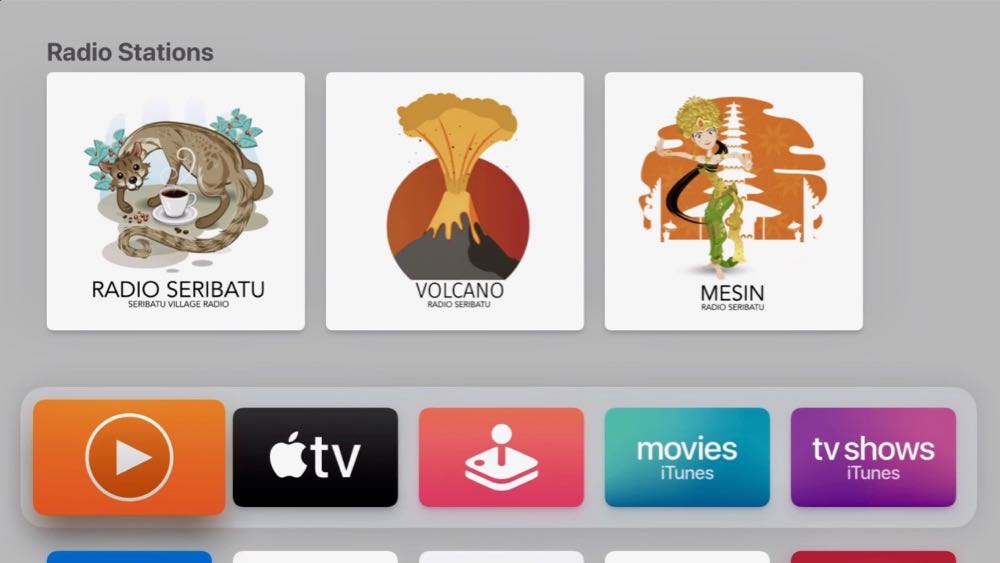
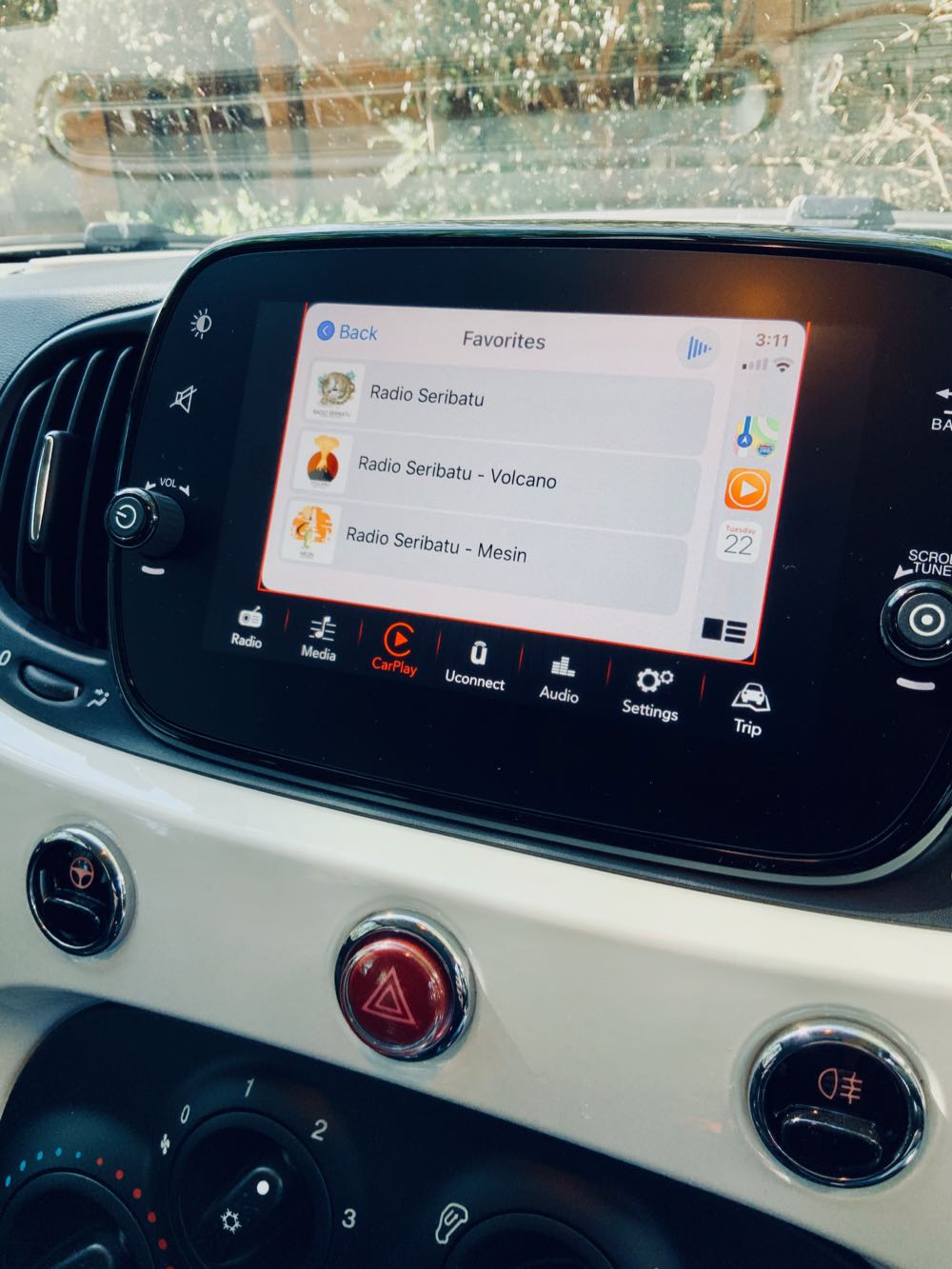
Most (if not all!) SWLing Post readers are beyond Radio Seribatu’s FM footprint; however, the majority of the station’s listeners tune in via their IP web streams and so can you! You will find the stations in most online radio directories, iOS and Android Apps and new generation factory fitted car radios (including Buick, Hyundai, Subaru, Mazda, Chevrolet, VW, BMW, GMC, Ford, Chrysler, Kia, Honda, Audi, Toyota, RAM, etc.).
Radio Seribatu Worldwide on Car Radio
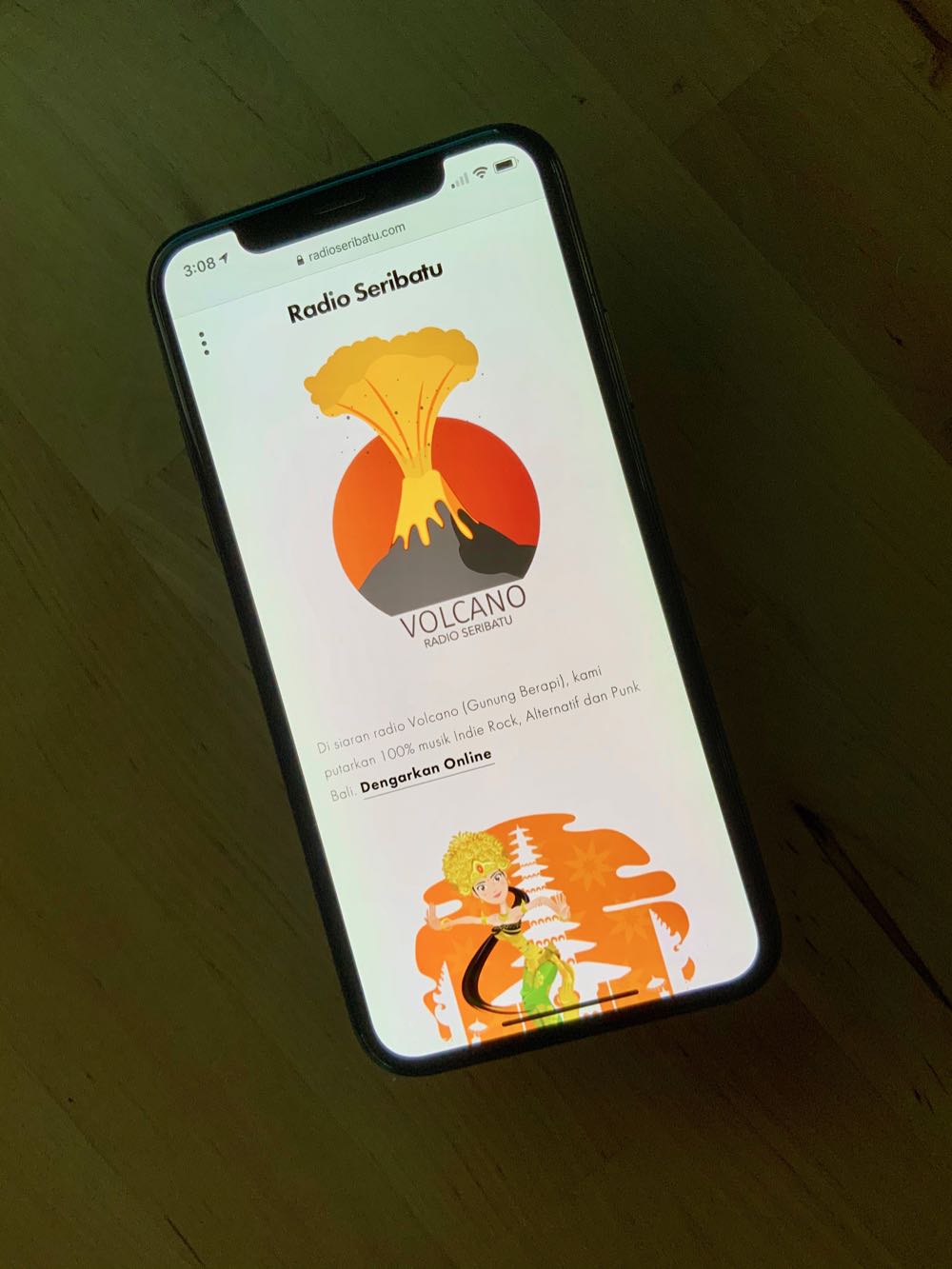
A sure-fire way to listen is via the stream links on their website www.radioseribatu.com
On the Radio Seribatu VILLAGE station, you will hear everything that is happening around Seribatu village and wider across the island. This is the place to hear live gamelan, festival broadcasts and discussions about issues affecting the community.
On VOLCANO, the playlist is 100% Balinese Indi Rock, Alternative and Punk. 24 hours per day this is the place to hear Balinese bands.
On MESIN Radio Seribatu is playing 100% Balinese Electronic, Trance, House, Techno and Dance.
Each station’s test transmissions are on air right now and continue up until 6 PM Bali Time on New Year’s Eve, December 31st (1000 UTC December 31st). Then all three stations will be in simulcast, presenting a 6-hour special soundscape/actualities program that allows the listener to experience the tropical sounds of Seribatu. With the stroke of midnight; at the beginning of the new decade, all three stations launch into their regular programming.
Putu and Radio Seribatu_s Scoppy
Radio Seribatu is QSLing anyone who listens in, be it via stream or FM. Simply send a hello note and brief report of reception to[email protected]and in return, you will receive a limited edition QSL, complete with an exotic postage stamp, posted directly from the Balinese jungle. No return postage required!
Here’s a rundown of what you can hear on the 31st December 2019 launch broadcast:
1000 UTC – (6:00 PM Bali Time)
Puja Tri Sandya Prayers
The Trisandya (from Sanskrit ??????????? ??? , Trisandhy? Puja, “three-evening prayer”) is a commonly-used prayer in Balinese Hinduism. It is uttered three times each day: 6 am, noon, and 6 pm, somewhat reflecting the Muslim azan prayers heard in other parts of Indonesia.
1005 UTC – (6:05 PM Bali Time)
Seribatu Village Awakens
Most Balinese families live within a family compound in villages that may have a population of around 700 – 800 people. In Seribatu the family compounds typically contain several homes for different members of the extended family. A typical home compound may comprise up to three families and grow to approximately 30 people. The village stirs to life just before the crack of dawn; roosters crow and chickens are fed. Early morning is a busy time in Seribatu, listen for village drums, Motor Bikes and Scooters heading off to the Dawn Market, Women sweeping their homes with a wicker brush, crickets chirp, and villagers trade at the dawn market. School starts early, and before the heat the day the Indonesian National Anthem is recited.
1017 UTC – (6:17 PM Bali Time)
Balinese Wisdom – The Song of Morality
Please don’t ever think you are very Clever; Let people either say you are good or great.
1019 UTC – (6:19 PM Bali Time)
Morning Market
Simple Seribatu village compounds do not have a refrigerator. Meat, fish and other food are purchased the local central market at dawn and the following few hours before the heat of the day descends. Farmers trade their vegetables and other produce. Merchants sell hardware and household supplies. Minivans packed to the roof with purchased fresh produce maneuver around the narrow lanes of the market.
1044 UTC – (6:44 PM Bali Time)
Ducks in the Rice Fields
Rice is a staple food in Bali, and it has strong ties to the Balinese culture. The cycle of rice growth pretty much sets the tone for much of the traditional Balinese life. The Balinese community views rice as a gift from God and a symbol of life. For thousands of years, the Balinese people have been growing rice and cultivating the beautiful rice terraces of Bali where three kinds of rice are grown: white rice, black rice, and red rice.
1102 UTC – (7:02 PM Bali Time)
Balinese Cleansing Ceremony
This ceremony is intended to cleanse the bhuana alit (the inner world of the individual human being or the micro-cosmos) of negativity so that he/she will be able (again) to enclose and utilize this inner power in an appropriate, spiritual way. The symbolism of this ceremony is intended to remind the individual to guard himself against the selfish desires and actions of the ego in favor of the unselfish goals of the soul or higher self. One prays for a clear mind with positive thinking and for strength to keep one’s self- control in situations where negative emotions are bound to arise.
1114 UTC – (7:14 PM Bali Time)
Satria Bird Market
As a popular Indonesian saying goes, a man is considered to be a real man if he has a house, a wife, a kris (dagger), and a bird. Keeping wild birds as pets is a massively popular hobby in many parts of Indonesia. The better the bird sings, the higher the demand for it. On a visit to Bali’s Satria Bird Market, you will see many thousands of birds from hundreds of species. Many of the birds are caged in poorly maintained conditions. Among the strangest are vendors who keep birds in bags, from unfledged chicks still in nests to breeding adults.
1115 UTC – (7:15 PM Bali Time)
Bats at the Goa Lawah Temple
One of nine sacred temples on the island of Bali, the cave temple of Pura Goa Lawah is home to thousands of bats. If the local legend is to be believed, it also hides a river of healing waters and a titanic snake wearing a crown.
While the site had no name when the temple was built, it gained its name due to the thousands of bats that cling to the ceiling and walls of the natural chasm, “Goa” meaning “cave” and “Lawah” meaning “bat.” It is thought that the cave may extend through the mountain right to a nearby town. The legend goes that the dark recesses of the tunnel are home to a mythical snake king known as Vasuki, a massive naga that wears a crown on his head. He is said to live on the copious amounts of bats in the cavern. Yet another legend claims that a river of miraculous healing waters rushes through the depths of the cave.
1120 UTC – (7:20 PM Bali Time)
Balaganjur Traditional Musicians Rehearsal
Baleganjur music is an inseparable part of life and death in Bali, heard in every village across the island. Its traditional purpose is to accompany funeral processions, so this intensely rhythmic yet dignified ensemble has a permanent role in Balinese society. The musicians play their instruments as they walk, and due to this portability, Baleganjur is now a fixture of all celebratory processions. A standard Baleganjur ensemble consists of about 20 musicians, plus helpers to carry gongs, but these days in Bali bigger is better!
1155 UTC – (7:55 PM Bali Time)
A Brief Balinese Radio Interlude
Listeners phone in and sing, callers discuss the terrorist bombings in Bali, Rinso (Indonesia’s most popular detergent) Soap Powder advertisement and how to cure a stubborn cough.
1242 UTC – (8:42 PM Bali Time)
Subak – Water Irrigation
Subak is a traditional ecologically sustainable irrigation system that binds Balinese agrarian society together within the village’s Bale Banjar community center and Balinese temples. For the Balinese, irrigation is not simply providing water for the plant’s roots, but water is used to construct a complex, pulsed artificial ecosystem. The water management is under the authority of the priests in water temples, who practice Tri Hita Karana Philosophy, a self-described relationship between humans, the earth and the gods.
1255 UTC – (8:50 PM Bali Time)
Temple Ceremony
In Bali, there are over 4,500 temples where ceremonies take place almost every day of the year. Temple festivals are held on the anniversary of when the temple was consecrated and usually on a new or full moon.
An Odalan or temple ceremony usually lasts for three days, but larger ones, which occur every 5, 10, 30 or 100 years, can last for 11 days or longer. The Balinese are honoring the deities that rule over the temple by giving them a myriad of offerings, performances of vocal music, dance and gamelan music. They invite them down from their abode on Mount Agung to partake in the activities. Every ceremony in Bali is to maintain the natural balance of positive to negative, so the Balinese do not destroy the negative forces, but balance them in harmony with the positive.
1426 UTC – (10:26 PM Bali Time)
Seribatu Evening
As the end of the year and the decade approaches, the sounds of frogs, crickets and tropical rain delight the ear while a cool bottle of Bintang refreshes your thirst.
1505 UTC – (11:05 PM Bali Time)
Radio Seribatu Countdown to Launch
Sinaga Goatama’s (Mendira Village) original electronic composition “Blazing Fire” guides us to midnight and the launch of regular programming on all three Radio Seribatu stations.
1600 UTC – (Midnight AM Bali Time)
It’s 2020 and Radio Seribatu has Launched!
All three of Radio Seribatu’s Radio Stations; Village, Volcano and Mesin radio are officially on-air, and commence their regular programming!
Wow, Mark! This is a most impressive endeavor and, no doubt, all three Seribatu stations will have a loyal following in Bali and across the planet! I’ve already become a fan of MESIN!
We wish you and the Seribatu staff/volunteers massive success in your 2020 launch year!
Post readers: Again, Radio Seribatu, is QSLing anyone who listens in. Send a brief, accurate report and you will receive a limited edition Seribatu QSL. Send all reports to: [email protected]
Many thanks to SWLing Post contributor, Mike Ladd with SDRplay, who shares the following guest post:
Basics to decoding WEFAX using an RSP and SDRuno
by Mike Ladd
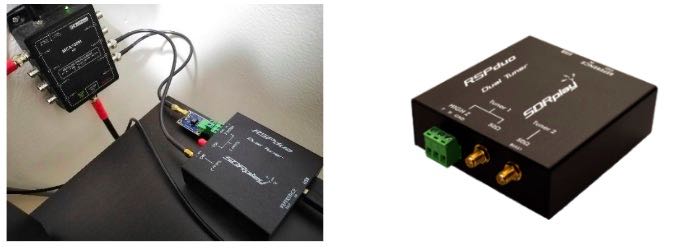
SDR I use: RSPduo from SDRplay using the Hi-Z input. Any model RSP’s can tune WEFAX transmissions. https://www.sdrplay.com/rspduo/
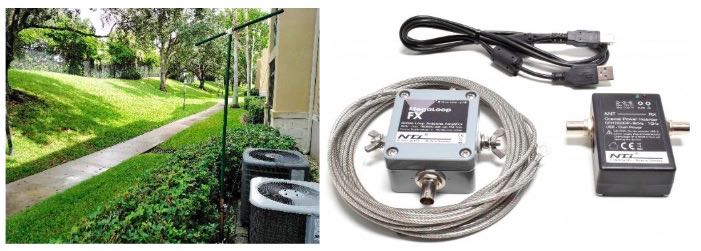
Antenna I use: Megaloop FX from Bonito. In an Inverted delta loop configuration pointed N/E-S/W. Any good antenna placed outdoors should be fine. It’s all about the SNR, not your S-meter reading. https://www.bonito.net/hamradio/en/mega-loop-fx/
Software:
SDRuno v1.32
SDRuno is an advanced Software Defined Radio application platform which is optimized for use with SDRplay’s range of Radio Spectrum Processing receivers. https://www.sdrplay.com/downloads/
VBcable (donationware) vPack43
Transfers audio, digitally from one application (SDRuno) to another (Black Cat HF weather Fax) with zero loss. https://www.vb-audio.com/Cable/
Black Cat HF Weather Fax (paid for use) beta 19
Decodes and produces images from the WEFAX transmissions from the output of SDRuno using a virtual audio cable.
Black Cat Uno UDP
UnoUDP allows you control SDRuno’s VFO frequency from within Black Cat HF Weather Fax scheduler. This is done over a virtual com port pair using a virtual com port emulator. http://blackcatsystems.com/download/UnoUDP.zip
VSPE or COM0COM
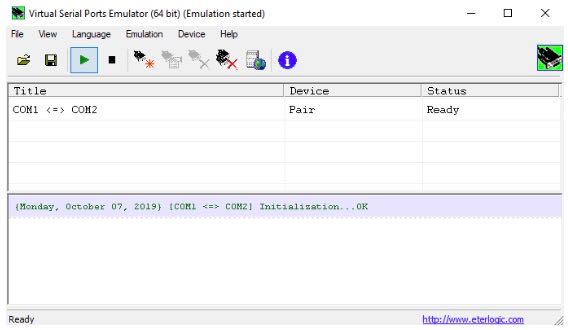
VSPE is a paid for use app. COM0COM is completely free. Either one of these applications will work. A virtual com port emulator allows you to create a virtual com port. The pair will internally link Black Cat Weather Fax decoder to SDRuno’s using UnoUDP as the transport protocol.
This document is not a definitive guide to the WEFAX protocol, the process of decoding WEFAX images or reading a synoptic weather chart https://youtu.be/kzfNSvQREu8. This is only a collection of information that I have found scatter throughout the internet and re-compiled into a document, this document. Expect typographical mistakes, inaccuracies, or omissions.
WEFAX is an analog mode for transmitting monochrome images. It was the predecessor to slow-scan television (SSTV). Prior to the advent of the commercial telephone line “fax” machine, it was known, more traditionally, by the term “radio facsimile”.
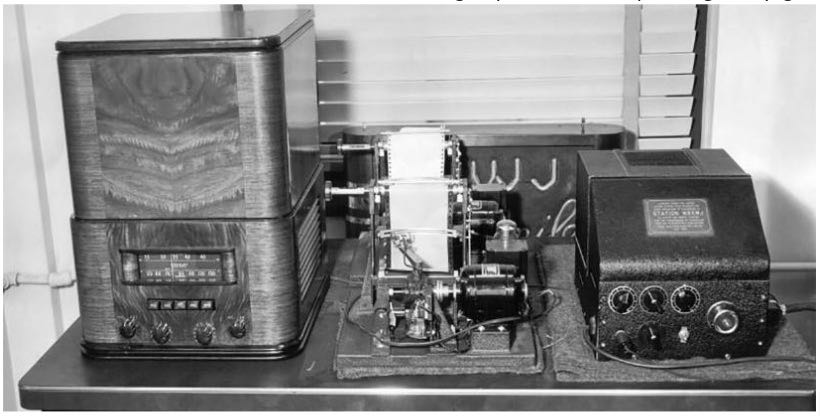
Facsimile machines were used in the 1950s to transmit weather charts across the United States via land-lines first and then internationally via HF radio. Radio transmission of weather charts provides an enormous amount of flexibility to marine and aviation users for they now have the latest weather information and forecasts at their fingertips to use in the planning of voyages.
Radio fax relies on facsimile technology where printed information is scanned line by line and encoded into an electrical signal which can then be transmitted via physical line or radio waves to remote locations. Since the amount of information transmitted per unit time is directly proportional to the bandwidth available, then the speed at which a weather chart can be transmitted will vary depending on the quality of the media used for the transmission.
Radio fax data is available from the web on sites such as the ones hosted by the National Oceanic and Atmospheric Administration (NOAA). https://tgftp.nws.noaa.gov/fax/marine.shtml Radio fax transmissions are also broadcasted by NOAA from multiple sites in the country at regular daily schedules https://www.nws.noaa.gov/os/marine/rfax.pdf. Radio weather fax transmissions are particularly useful to shipping, where there are limited facilities for accessing the Internet.
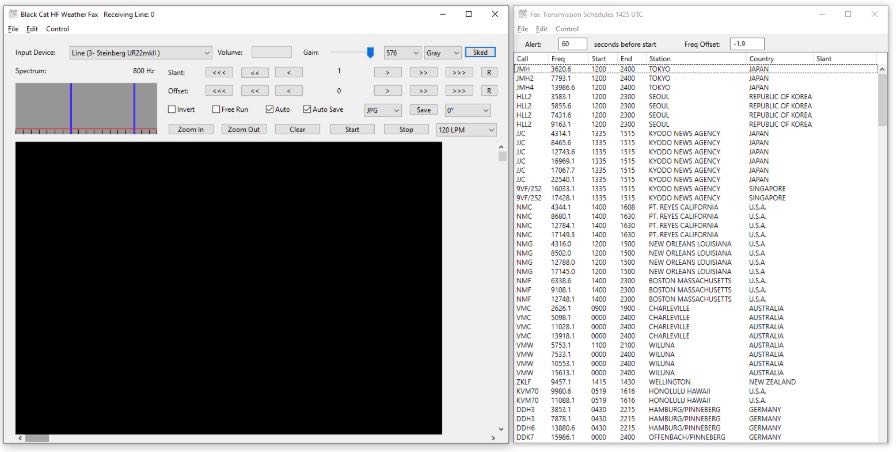
Black Cat HF Weather Fax is a program that decodes WEFAX (Weatherfax, HF-FAX, Radiofax, and Weather Facsimile) transmissions sent from fixed locations around the globe.
A fax is transmitted line by line, typically at a rate of 120 lines per minute, or half a second per line. For example, to send a weather chart, you would start in the upper left corner. You would send the value of that pixel (dot), black, white, or perhaps a shade of gray. Then you would move over one pixel to the right, and send that pixel, and so on, until you reach the edge of the chart. Then you’d move all the way back to the left edge, and move down slightly, one line, and repeat the process.
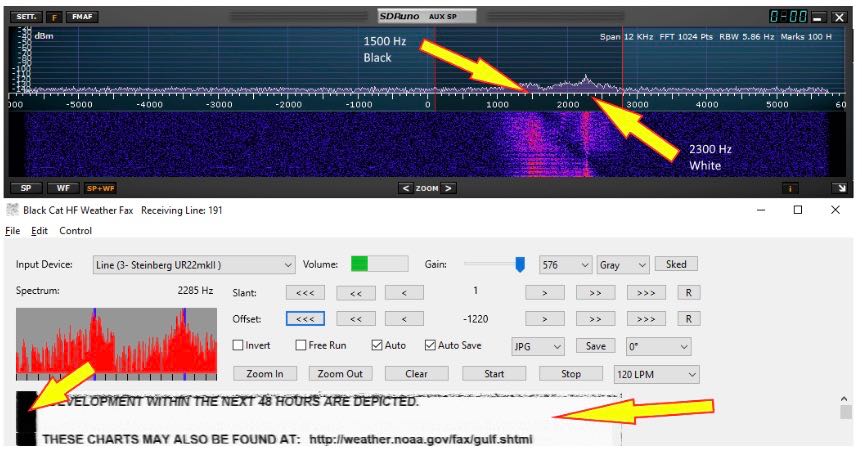
Each pixel is converted into a certain audio frequency or tone. By convention, a tone of 1500 Hz represents black, 2300 Hz represents white, and frequencies in-between represent shades of gray. So if you listen to a fax transmission, you’ll hear the different tones as each pixel is present. For example, listen to a chart with mostly white background being sent. You’ll hear mostly the high pitch 2300 Hz, and some lower (1500 Hz) blips as each black pixel is sent. When a horizontal line is sent, you’ll hear a long half second burst of 1500 Hz, since the line is all black.
The transmitting station frequency modulates the carrier. That is, when a black pixel is transmitted, the carrier shifts down 400 Hz. When a white pixel is transmitted, the carrier shifts up 400 Hz. For a medium gray pixel, it stays on the assigned frequency. This is how most fax transmissions are made. Since we’re tuning it in SSB, it sounds to us as if the station is transmitting a variable frequency audio tone. The two processes are identical. This accounts for the confusion regarding what frequency to tune the radio to in order to properly decode the fax transmission. Different stations list their frequency in different ways. It is important to remember that a black pixel produces a 1500 Hz tone, and a white pixel produces a 2300 Hz tone within the AUX SP.
The setup works as follows. SDRuno demodulates the received signal. The demodulated audio is piped from SDRuno using virtual audio cable and sends it to the HF weather fax decoder. HF weather fax decoder receives this audio from the virtual audio cable that was demodulated from SDRuno and processes it, producing a picture on the screen
HF weather fax decoder can also set the VFO (tune) frequency of the RSP in SDRuno. This is done over the virtual com port pair using the UnoUDP application as the transport.
SDRuno can internally emulate a Kenwood TS-480, UnoUDP sends the Kenwood TS-480 serial commands via UDP over the virtual com port pair in order to set the frequency selected from the HF Weather Fax Scheduler option over to SDRuno.
You will need to install and configure the following applications.
1: A virtual audio cable.
2: A virtual com port emulator (If you would like HF Weather fax to communicate with SDRuno).
3: UnoUDP (If you would like HF Weather fax to communicate with SDRuno using the virtual serial emulator).
4: HF Weather Fax.
5: A simple wire antenna placed outdoors.
Virtual Audio Cable:
A virtual audio cable allows you to pipe the audio from one application (SDRuno) into another application (a decoder like HF Weather Fax) digitally. I will assume SDRuno is already installed with your device attached and functioning properly.
You can now download a virtual audio cable package. If you already have a virtual audio cable package installed, you can skip to the next section. If you don’t have a virtual audio cable application installed, you only need to choose one and install only one of the two that are available.
Close any running apps, install the virtual audio cable and reboot your computer. When your computer boots to your desktop, your computer will now have a virtual audio cable pair installed on the system.
You can verify it the installation by going to your Control Panel and double clicking the Sound icon. VB-Cable and Virtual Audio Cable will only install a single virtual audio cable pair, one is for the input (Recording) and one is for the output (Playback). A single pair is all that is needed (as shown below).
Virtual Serial Port:
A virtual com port emulator is only needed if you would like Black Cat HF Fax decoder the ability to tune the station in SDRuno when you double click a station name in the HF Fax Decoder scheduler.
Please use the links provided (additional PDF’s and YouTube videos) on Page 2 of this document for an installation / configuration walkthrough.
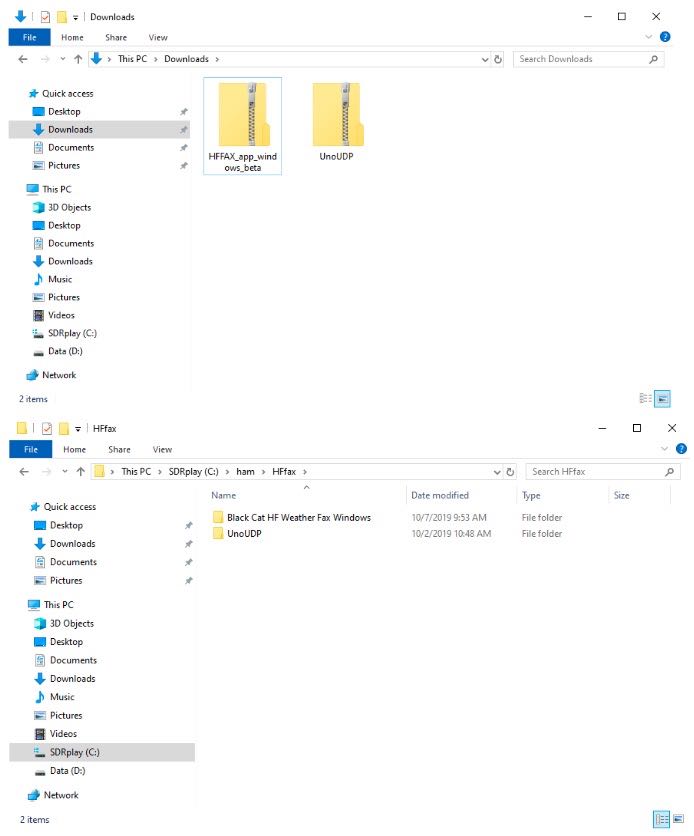
Download the latest HF Weather Fax beta package and the UnoUDP application from the link provided on Page 2 of this document. I suggest making one main folder called HFfax and two subfolders within HFfax for each of the applications. One folder is for the HF Weather Fax Decoder and the other folder is for the UNO UDP transport application.
Double click the HF Weather Fax beta ZIP file you downloaded and extract the full contents of this ZIP into the folder you created on your local drive. Right click the “Black Cat Weather Fax” EXE file and send a shortcut to your Desktop.
Double click the UnoUDP zip file you downloaded and extract the full contents of this ZIP into the folder you created on your local drive. Right click the “UnoUDP” EXE file and send a shortcut to your Desktop.
You should have two shortcuts on your desktop, One for the decoder and one for the transport app.
Black Cat UnoUDP:
HF Weather Fax needs a way to communicate with SDRuno, this is done via UnoUDP and the virtual com port emulator.
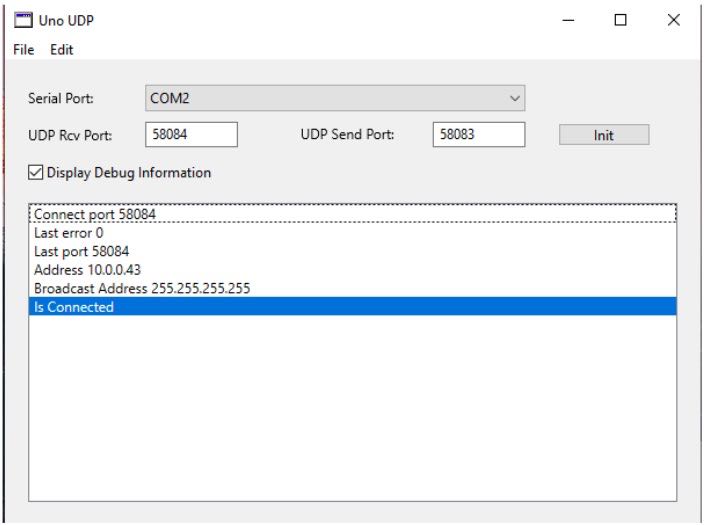
Launch UnoUDP with the above configuration. Set your UDP Receive port to 58084 and your UDP send port to 58083. UnoUDP must be left running in the background, this will control SDRuno. You can minimize the application or right click the shortcut and have UnoUDP auto minizine on launch.
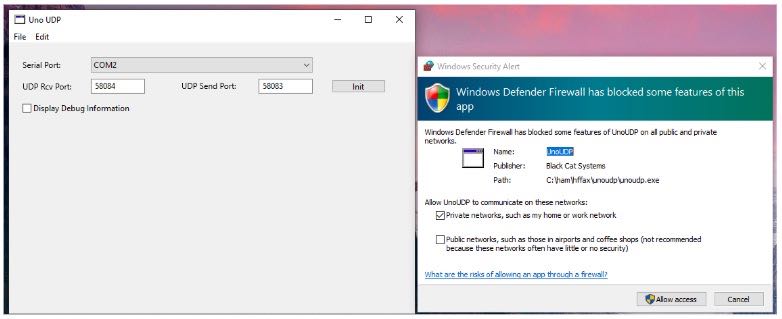
You should see a Firewall popup prompt asking permission to allow UnoUDP to pass data within the system. You must allow this traffic to pass or external control of SDRuno will not be possible from the HF Weather Fax decoder scheduler.
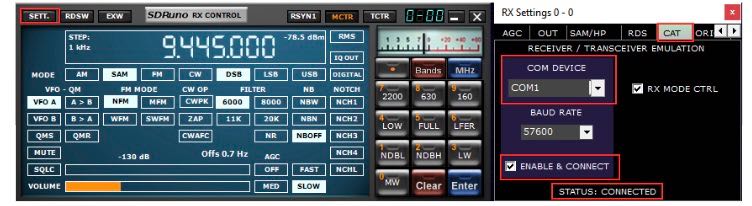
Assign 1 of the 2 com ports from the virtual com port emulator to UnoUDP (the 2nd com port will be assigned to SDRuno). My com port pair is Com 1 and Com 2, SDRuno uses Com1 and UnoUDP uses Com 2.
Black Cat HF Weather Fax:
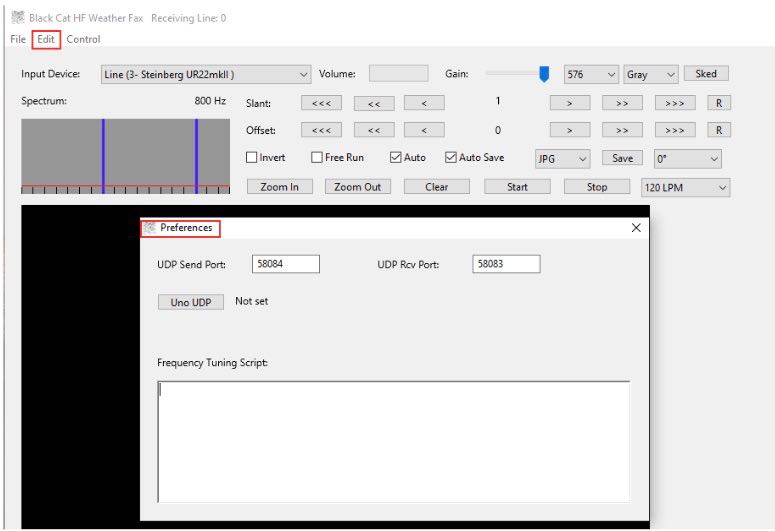
HF Weather Fax needs to be configured in order to communicate with UnoUDP, this is done via the UDP settings. Click “Edit” and “Preferences” Set the UDP Send port to 58084 and the UDP Receive port to 58083.
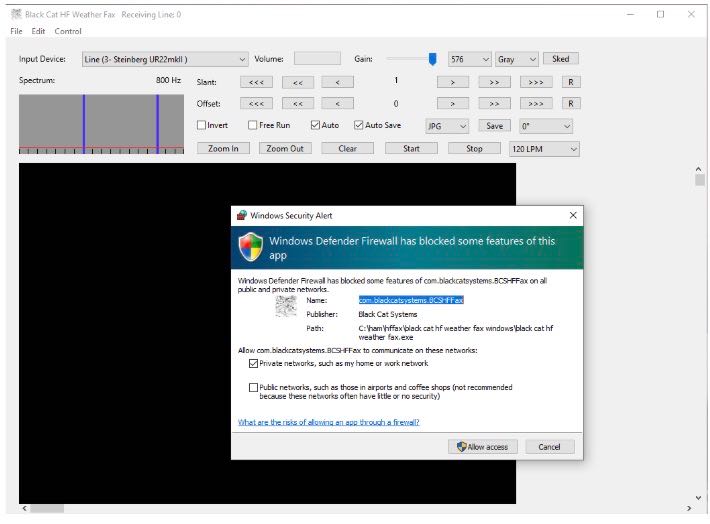
You should see a Firewall popup prompt asking permission for HF Weather Fax to pass data within your system. You must allow UDP traffic to pass or external control of SDRuno will not be possible from the HF Weather Fax decoder scheduler.
SDRuno:
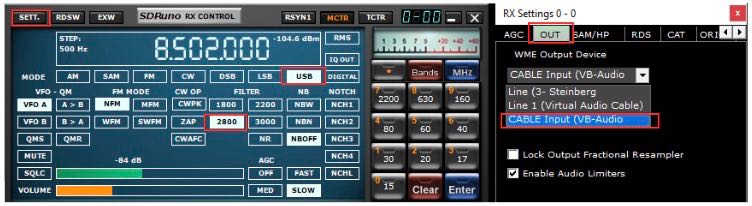
SDRuno needs its Output assigned to the Virtual Audio Cable. The output can be changed via the RX CONTROL panel, clicking the SETT. button on the top left and clicking the OUT tab.
SDRuno needs a com port assigned so it can be externally controlled. The serial port is assigned via the RX CONTROL panel, clicking the SETT. button on the top left and clicking the CAT tab.
I recommend running the RSP in LOW-IF mode, this is selected via the MAIN panel. This reduces the need to track separation between the Tuned frequency and LO (local oscillator) https://youtu.be/Fsns4P3JxrM
LOW-IF mode also minizines the LO being placed outside of the desired preselect filter of the device in use, Remember the preselect filter is automatically enabled based on the LO frequency https://youtu.be/w-vkiVp7Q4E
I also recommend leaving the IF AGC enabled and placing the RF GAIN as high as possible without causing an ADC OVERLOAD warning within the MAIN panel. If an ADC OVERLOAD warning appears, back the RF GAIN down.
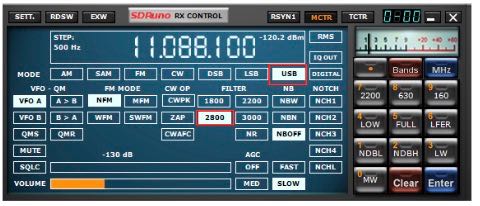
Launch SDRuno. Set the mode to USB and the filter width to 2.8k
HF weather fax will not set the mode or filter width at this time.
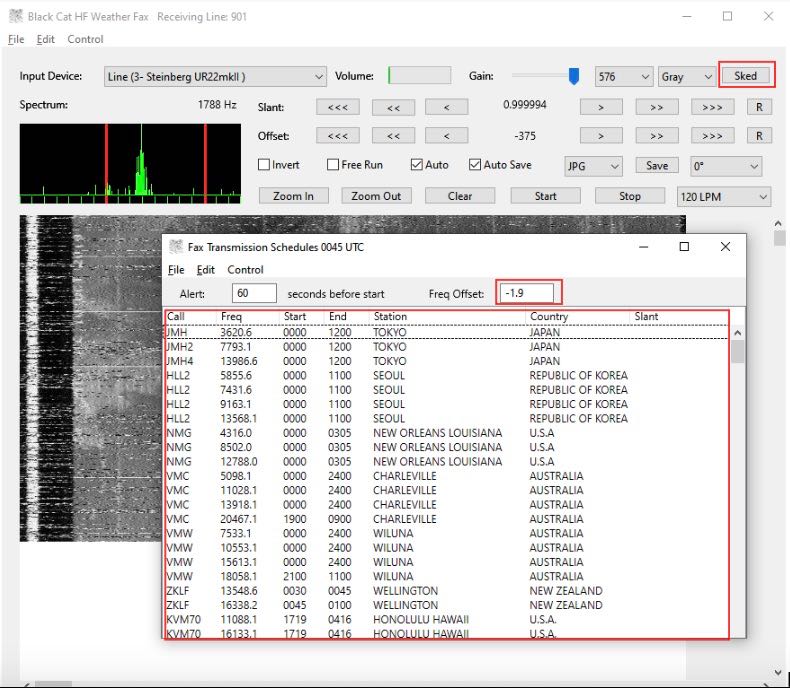
Click the Sked button in Black Systems HF Weather Fax. A current WEFAX transmission schedule will appear. Stations listed in White are either scheduled to transmit or about to transmit based on your computers clock. Stations show in Grey at the bottom of the list are currently off the air or not transmitting.
In the Freq Offset: box enter -1.9 and hit enter (Reason for this is on Page 5).
Click any of the stations listed in the Fax Transmission Schedule and it will automatically tune SDRuno to the correct frequency.
Black Cat HF Weather Fax folder will have a file named “Black Cat HF Weather Fax Docs” Please view this file to understand some of the advanced features available.
Your first decode (Without UnoUDP)
Launch Black Cat HF Weather FAX.
Launch SDRuno.
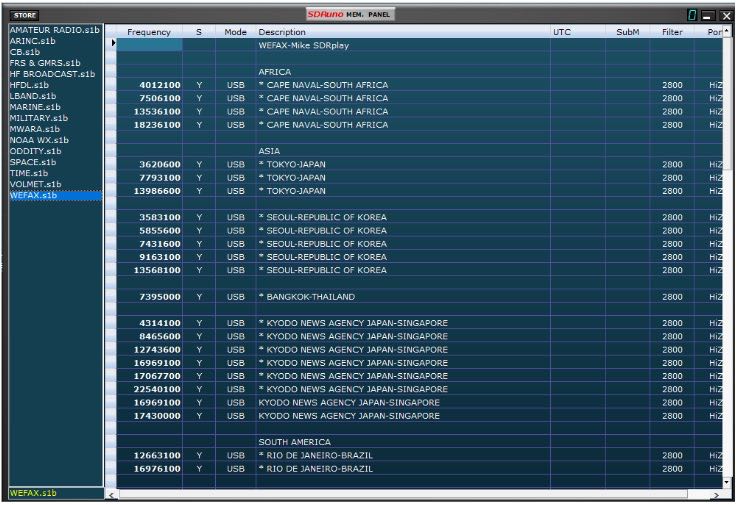
Navigate to the Memory Panel (MAIN panel and click the MEM PAN button)
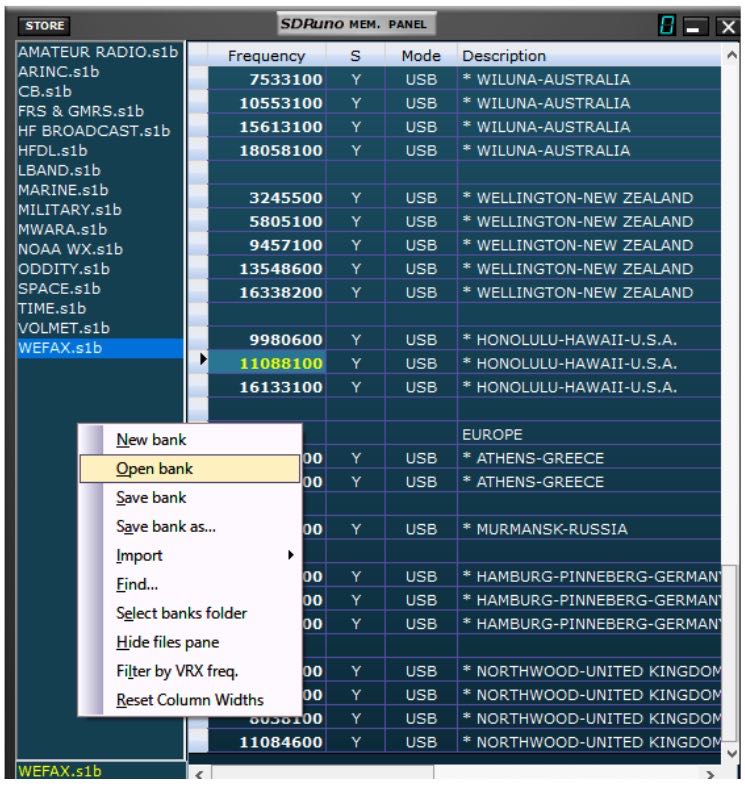
Right click the Memory panel and select “Open bank”. Navigate you C drive telling SDRuno the location of WEFAX.s1b
Double click any of the frequencies shown within the WEFAX bank and SDRuno will set the correct mode and tune that station. My WEFAX.s1b file defaults to the Hi-Z port. If your device lacks a HI-Z input, navigate to the port section within the memory panel, double click the stations port you want to edit and change it to the correct port that’s available or in use for your device. Right click the memory panel and “Save bank” to save the changes.
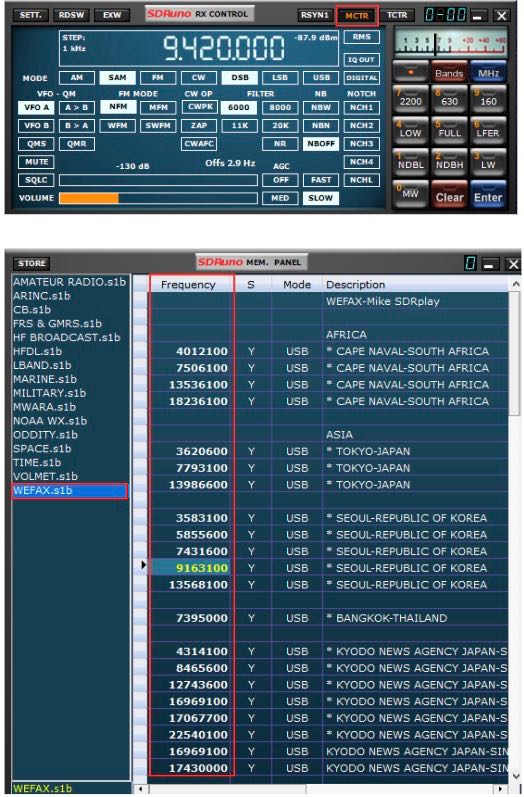
To use my SDRuno WEFAX frequency bank properly. The MCTR button must be enabled within the RX CONTROL panel, enabling this option allows you to double click and tune a station that is stored within the WEFAX bank. Make sure the LO is not locked in the MAIN panel (LO LOCK).
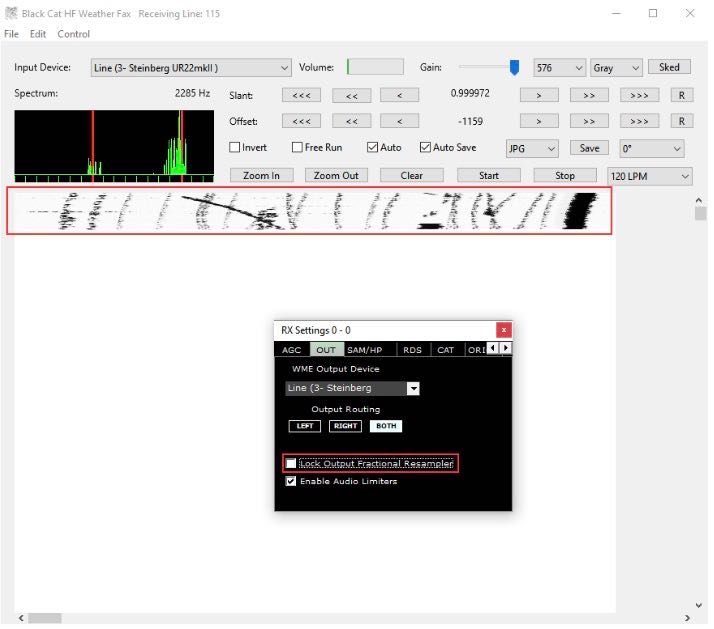
If a decoded WEFAX image looks blocky or skewed or possibly pixeled, I recommend that the lock output fractional resampler option is enabled in SDRuno. You can enable this from the RX CONTROL panel, clicking the SETT. button on the top left and clicking the OUT tab.
I hope this document helped guide you in getting started with decoding WEFAX transmissions from around the world. I am sure I missed some key features, remember this is only a primer/basics to decoding WEFAX. I do have an accompanying video located here
SDRPlay modules use a Mirics chipset and software. The information supplied hereunder is provided to you by SDRPlay under license from Mirics. Mirics hereby grants you a perpetual, worldwide, royalty free license to use the information herein for the purpose of designing software that utilizes SDRPlay modules, under the following conditions:
There are no express or implied copyright licenses granted hereunder to design or fabricate any integrated circuits or integrated circuits based on the information in this document. Mirics reserves the right to make changes without further notice to any of its products. Mirics makes no warranty, representation or guarantee regarding the suitability of its products for any particular purpose, nor does Mirics assume any liability arising out of the application or use of any product or circuit, and specifically disclaims any and all liability, including without limitation consequential or incidental damages. Typical parameters that may be provided in Mirics data sheets and/or specifications can and do vary in different applications and actual performance may vary over time. All operating parameters must be validated for each customer application by the buyer’s technical experts. SDRPlay and Mirics products are not designed, intended, or authorized for use as components in systems intended for surgical implant into the body, or other applications intended to support or sustain life, or for any other application in which the failure of the Mirics product could create a situation where personal injury or death may occur. Should Buyer purchase or use SDRPlay or Mirics products for any such unintended or unauthorized application, Buyer shall indemnify and hold both SDRPlay and Mirics and their officers, employees, subsidiaries, affiliates, and distributors harmless against all claims, costs, damages, and expenses, and reasonable attorney fees arising out of, directly or indirectly, any claim of personal injury or death associated with such unintended or unauthorized use, even if such claim alleges that either SDRPlay or Mirics were negligent regarding the design or manufacture of the part. Mirics FlexiRFTM, Mirics FlexiTVTM and MiricsTM are trademarks of Mirics .
SDRPlay is the trading name of SDRPlay Limited a company registered in England # 09035244.
Mirics is the trading name of Mirics Limited a company registered in England # 05046393
Many thanks to SWLing Post contributor, Mike (KA3JJZ), who writes:
Have you ever heard of the SW Radiogram digital broadcasts? These are produced by Dr. Kim Andrew Elliott and started way back when as the VoA Radiogram. They are now carried on 2 other stations (WRMI and WINB) on a schedule (check every week for a summary of images) that you can find on the SW Radiogram website;
These tests consist of both text and images. Currently MFSK32 and 64 have been used, and an occasional ‘secret’ mode has been slipped in at the end of the transmission. The last time this was done, the mode was PSK125R.
You might ask how you can receive these broadcasts, and what you need to decode them. We have 2 wiki articles that go into great detail – one for PCs, and one for Android devices – here;
Yes, you can copy these broadcasts using an Android powered phone or tablet using an application called TIVAR. John VK2ETA has written a quick start guide which is available on the SourceForge website as well as the RadioReference wiki (the links are provided in the article)
These articles are written for folks who are just getting their feet wet, so the above articles touch on radios (no, you don’t need to use an expensive radio, though many do), antennas, propagation and more. The most popular software is FLDigi, but if you happen to have MultiPSK or DM780 (part of Ham Radio Deluxe), they can be used as well. Links are given for the software and any available support.
Along with Tumblr, SW Radiogram has both a Facebook and Twitter page (where members often post decoded images) here…
Thank you, Mike! Yes, I’m a big fan of the SW Radiogram–the community that has formed around this particular shortwave program is quite amazing. Thanks for all of the tips!
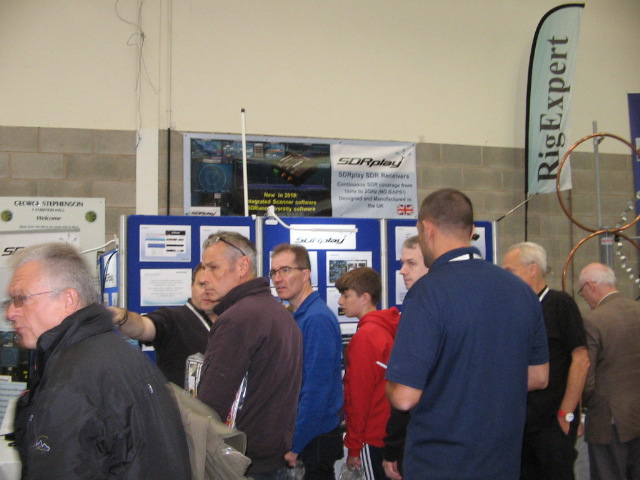
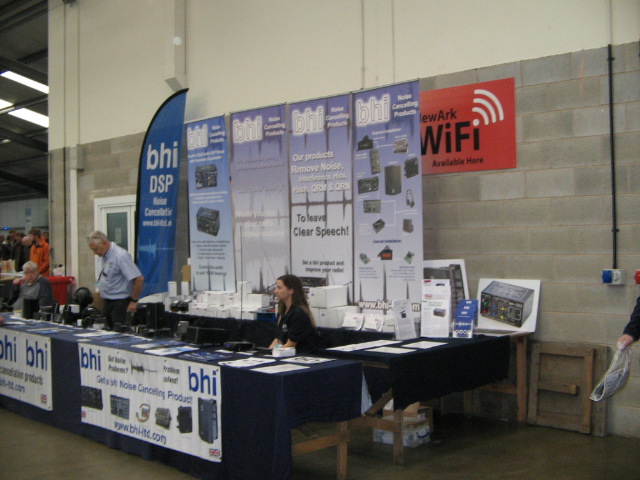
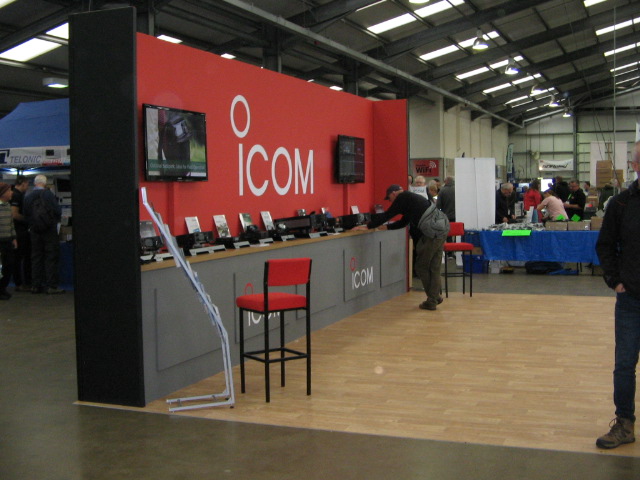
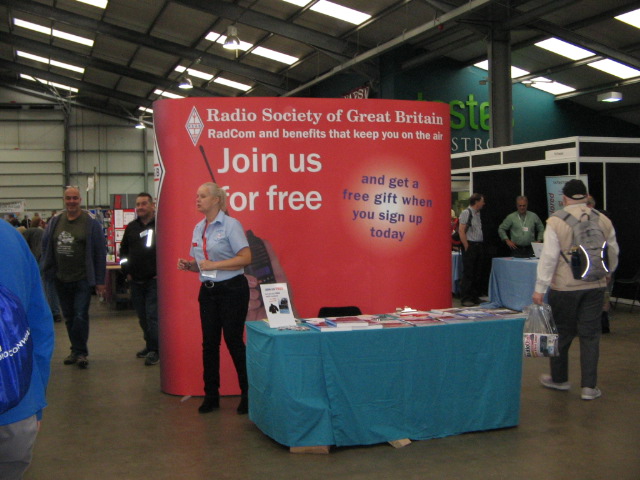
Your travelling foreign correspondent took in a visit to the UK’s National Hamfest held in Newark, Notts.
We arrived right on opening time (10am) and were the first in the door.
There was a ‘rush’ to the SDRPlay stand because they were giving away some nice FLASH drives to the first 25 people to get there. The author managed to get one and later found it was a) fast b) pre-loaded with software for all things SDRPlay. They were busy showing the new diversity software amongst other things.
bhi had some new hardware and I took the chance to thank them for a prize won in the W5KUB Xenia draws.
The hall was pretty empty (this was the second day and a Saturday). Noticeable was that some products were already sold out and on back order [such as the amazing nanoVNA].
It’s a shadow of the former Leicester Show which was the precursor to this event with a lot less parts on sale.
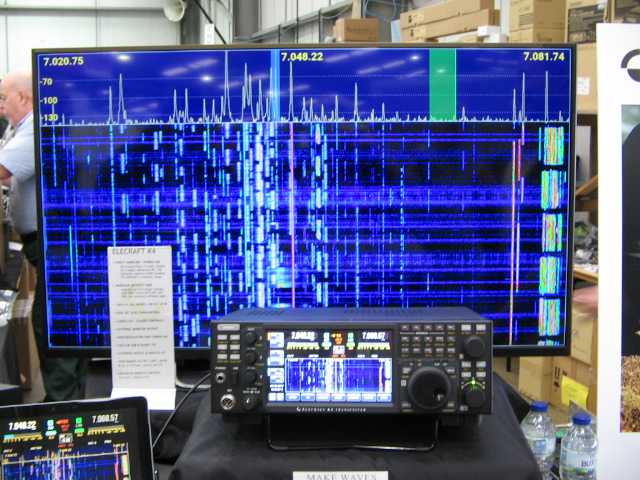
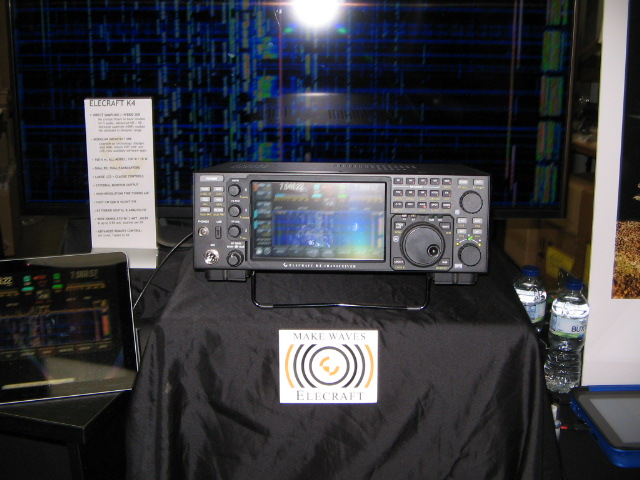
I had a long chat with Eric of Elecraft while twiddling with the K4 and suggested some improvements to the button usage, which he said would be tested in use. A date of the ‘beginning of the year’ for first shipments was mentioned and that the first batch would be ‘large’ [much more than 100] followed by smaller batches. Components are on order, some of which are on long lead times (and have to arrive in good shape for surface mount assembly down the line).
The K4 was ‘playing’ the 7 Area QSO Party on several bands and most controls were operable. This was streaming from an IQ recording and an RF modulator straight into the rig. Just exactly how close this was ‘to the original sound’ and TRUE performance of the rig and/or software is
to be seen.
The weather was fine for the show (although patchy – XYLs reported that it poured with rain back in Nottingham itself!). Turnout was very disappointing and a lot of grey hair was to be seen in the one (yes one) Hall Building.
73,
Paul W4/VP9KF [and G4BKI]
Thank you so much for the report, Paul. I do want to make a pilgrimage to the UK’s National Hamfest one year–any excuse to visit my home-away-from-home country!
Recently, I have been amazed by the growing number of frauds that foul up the radio market on the Internet (I was scammed too), so I decided to write a post in order to help anyone who is interested in buying anything on the web.
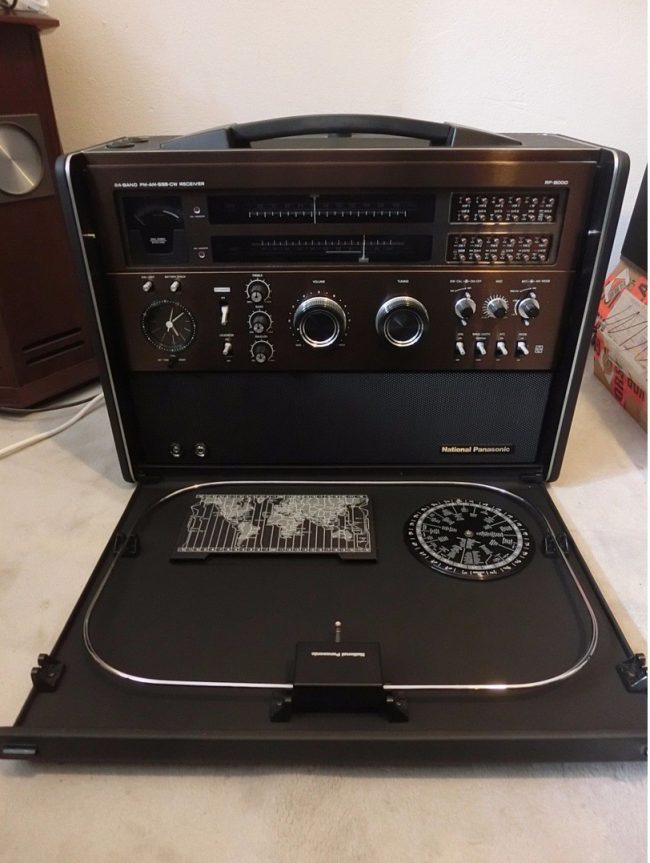
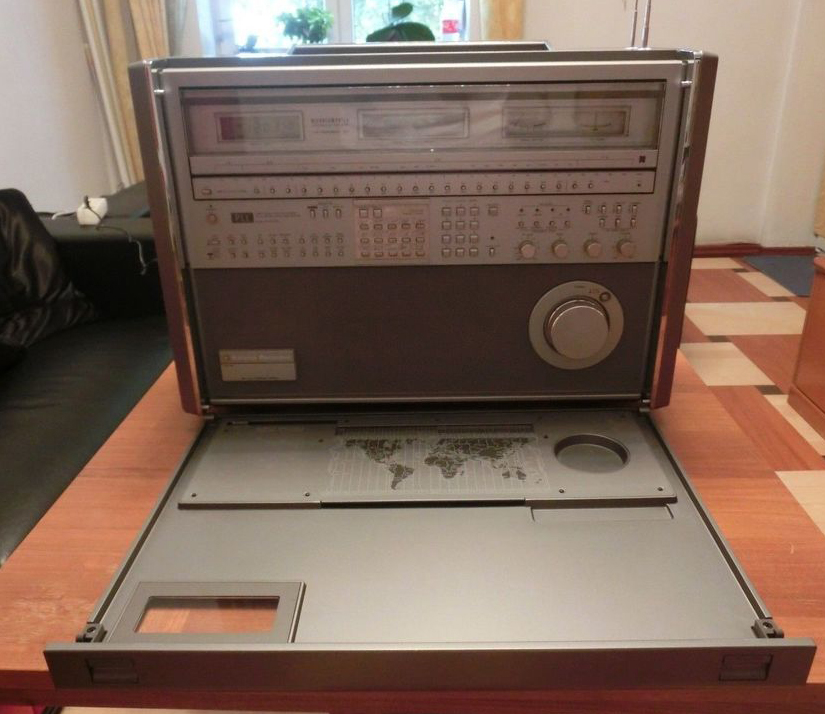
First, it’s worth saying that most scam attempts involve high-quality items that are offered at surprisingly low prices. One of the most significant examples involves some rare (and discontinued) high-end radios by National Panasonic, typically the RF-8000 and RF-9000 models. In this post, I make an example of the RF-8000, but scams also concern radios of other brands..
Generally speaking, a number of advertisements on the most known advertising/classifieds sites (Quoka.de and ebay-kleinanzeigen.de in Germany, Subito.it, Kijiji and AAAnnunci.it in Italy, Le Bon Coin in France, ComoFicho in Spain, etc.) are mirrors for larks only, and we have to pay a great attention in order not to be scammed.
But… how can we recognize a scam?
The most common scams use the following techniques:
The scammer advertises a very rare radio in like-new condition at an unbelievably low price. The buyer does not want to miss the bargain, so he contacts the seller and promptly transfers the money to him without further ado, but after that he waits in vain for the delivery of his item.
High quality radios offered very cheap. If you contact the seller, the item is suddenly abroad. The alleged seller then proposes to handle the purchase through a “trust company”. The radio should be paid for in advance and the amount sent via cash transfer, but after that you never hear anything from the seller again.
Alternatively, the buyer is requested to to deposit the money to the eBay company account to get the product. But the account is fake (really eBay has no “COMPANY ACCOUNT” and never handles private transactions–!), so the buyer loses his money and receives nothing in return.
Please also notice that often the fraudulent sellers offer a free period for evaluating the item, saying that if you do not like the device, you can send it back. Please don’t fall into this trap, it is only one of the means the scammers use to entice you to purchase, but it is not true at all!
In the following section I’ll recount some examples of real scams concerning the National Panasonic RF-8000 and RF-9000 radios (but, as I already mentioned, the scams involve many other radios and also high-quality electronic or electro-acoustic devices).
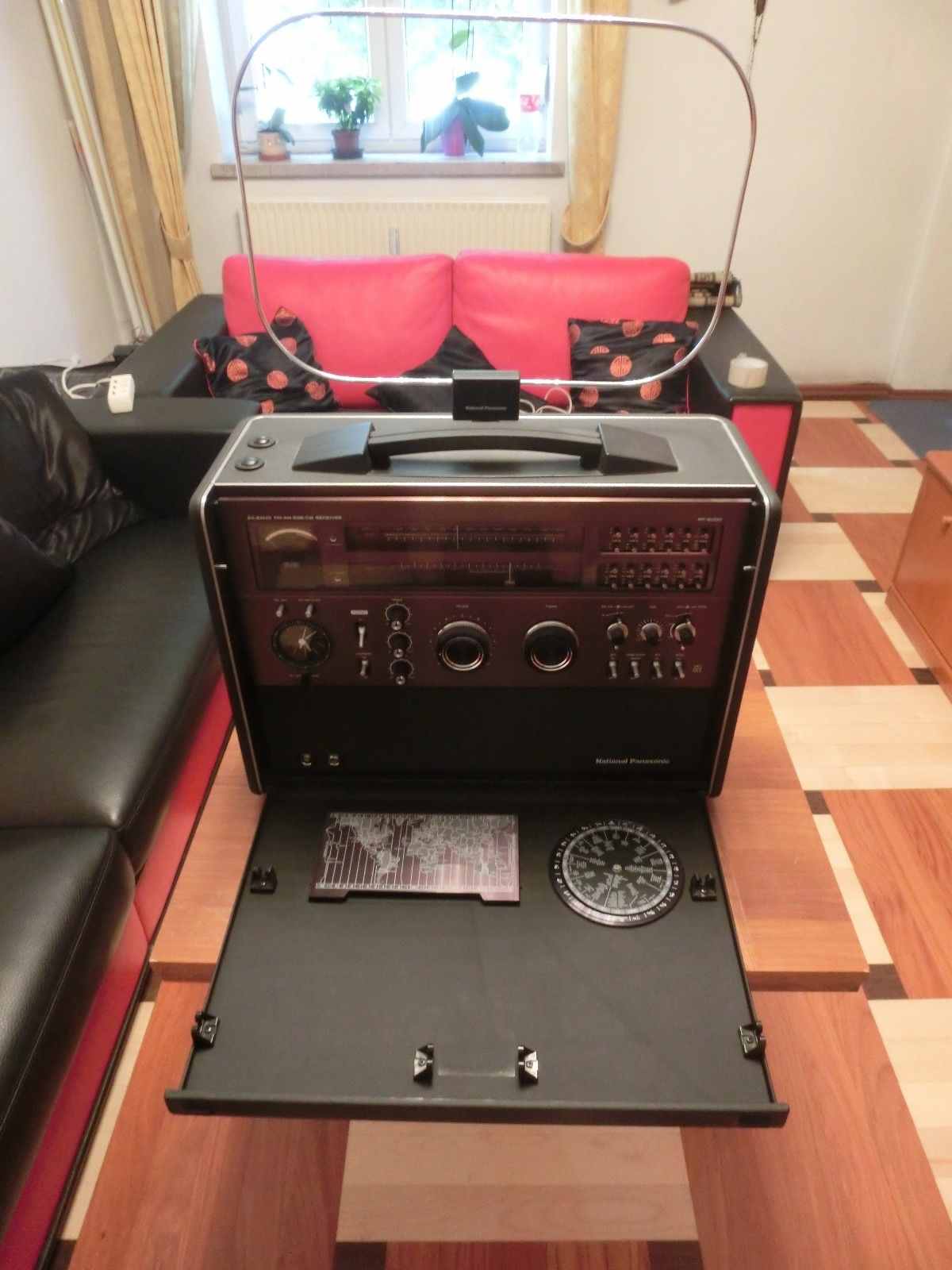
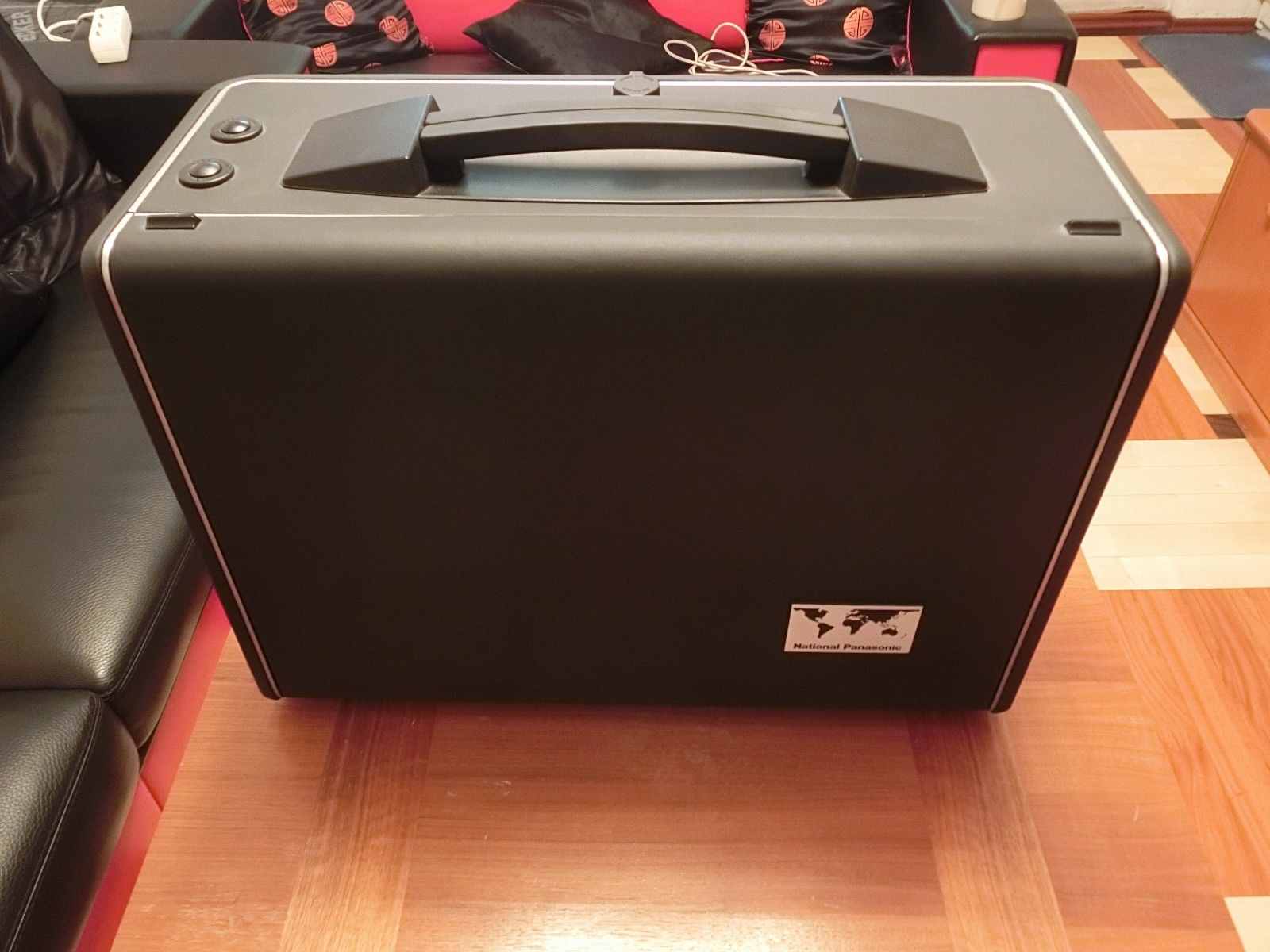
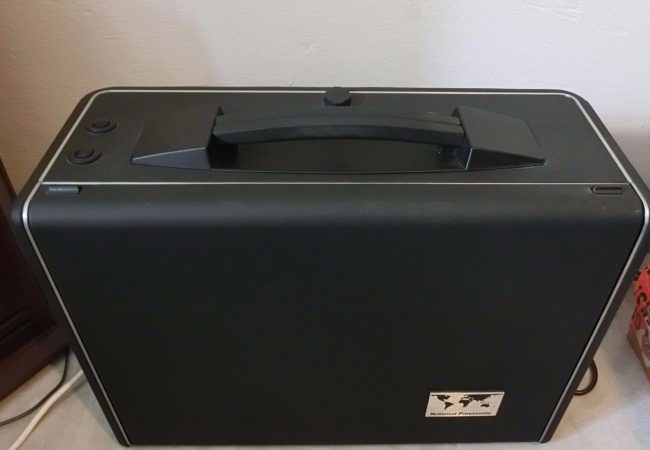
One of the most prevalent (and very dangerous) scams concerning the RF-8000 radio is (was) perpetrated by a Portuguese seller who offered (for about 2.300 Euro on the AAAnnunci.it and Quoka.de websites) a very nice appearing radio, look at the photos below.
Really a radio in like-new conditions, uh?
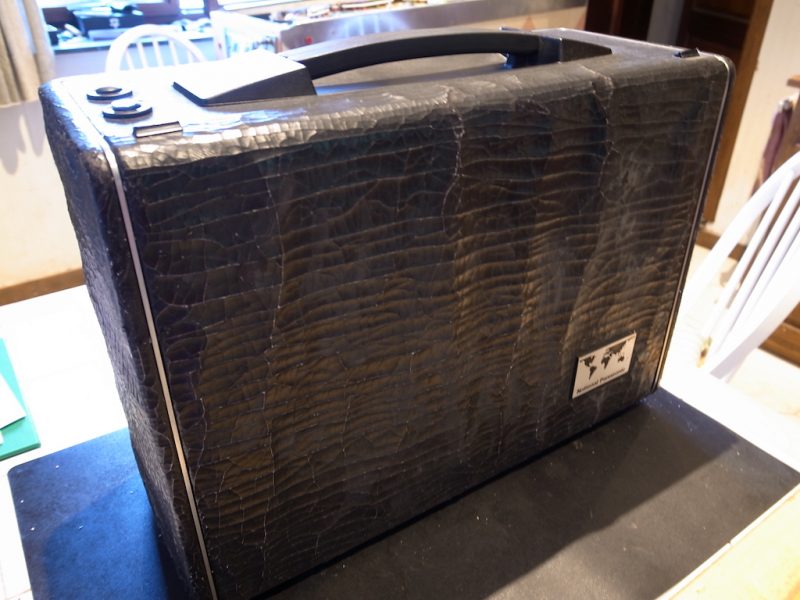
But it is just a trap: most of the Panasonic RF-8000 radios have the leather covers on all sides cracked like crocodile skin (look at the image below); only a very few units still have the covers in pristine condition and for sure they cannot be found at cheap prices!
Incidentally, all the pictures used by that scammer (including the two shown in the first two pictures above) were stolen from an old eBay advertisement of October 2018 and that wonderful appearing RF-8000 was sold to a radio collector in China for about $ 5,000 USD.
But the same images also recently appeared on some European advertisement websites (in Italy and in Germany too); if you ask for info, you’ll be contacted soon by a seller from Portugal who offers to handle the purchase through a “trust company” of his confidence, named TrafCargo (beware of this, it is a convincing but fake website!).
Then, the seller requests that the amount for the radio and its shipping costs be sent via a bank wire transfer to the fake transportation company.
After that you never hear anything from the seller again.
Very similar scams are also found in various advertisement/classified websites (Quoka.de, ComoFicho.com etc.), look at the images below as examples. If such items are offered cheap, it is for sure a scam:
A similar attempt of fraud is commonly perpetrated by other people, including a female seller from Spain. As you might suspect, she offers something that looks like a real bargain, but it’s only a scam. After you have asked for info on the product, you receive a message in which it is specified that the item is located abroad and you are asked to deposit money to a fake “eBay” account (note that eBay does not accept any payment outside their site!).
In order to be more persuasive, often the scammer attaches a copy of his/her passport of other identity documentation in order to appear as a serious seller–please do not trust them however!
Also, beware of the fake “eBay invoice” that sometimes the scammers send, and for anything that involves eBay, contact the eBay helpdesk, ask for specific info and report them the fraud eventually.
In the following section you’ll find some useful advice on recognizing scams and making secure and safe purchases on the Internet:
Always beware whenever the item is in a place (or a country) different from the one that was specified in the advertisement; also there is a valid reason for suspicion when the name or the address of the advertiser does not match the seller’s ones;
Do not completely trust the pictures sent by the seller (they could be stolen from the Internet) and don’t forget to proceed to a “Google Image” search in order to find the sources of similar ones;
Always ask the seller for some specific pictures or videos (radio precisely tuned on various frequencies and/or modes) and do not accept any runarounds about it (“you can try the radio for some days”, etc.); normally the scammers do not have the items they offer at hand, so they are not able to satisfy your precise requests.
Never pay for the item in advance by rechargeable cards like Western Union or other non-secure ways of payment. Also the Bank Transfer (Wire Transfer) is not a secure form of payment in order to avoid frauds;
Always ask the seller for payment by PayPal “Goods and Services” (NOT “Send money to friends”). If you choose Goods and Services, your purchase will be fully covered by the PayPal warranty.
And, in the case that you are a victim of a scam anyway, please always report the incident to the Police or the Judiciary of your Country, and don’t forget to also warn the site where the announcement was found.
Following the above advice should be sufficient to avoid any scam. So, good luck on your future web purchases!
This is excellent advice, Paolo. Thank you for sharing your experience!
One of my favorite bits of advice above–and one I use anytime I make a significant purchase via a classifieds website–is to ask the seller for specific photos or a video of the item. As you say, they don’t typically have the item on hand, so can’t comply and will make up excuses. That’s a major red flag!
Another red flag? If it sounds too good to be true, it probably is! Trust your instincts and avoid the hassle and headache.
Post readers: Please share any other advice you have about avoiding radio scams. Have you ever been the victim of a scam? How did it play out? Please comment!
Many thanks to SWLing Post contributor, Jack Blanke (WB5LVP), who shares the following:
Really enjoyed your article yesterday, and felt compelled to respond with a similar DX’ing jaunt of mine two days ago.
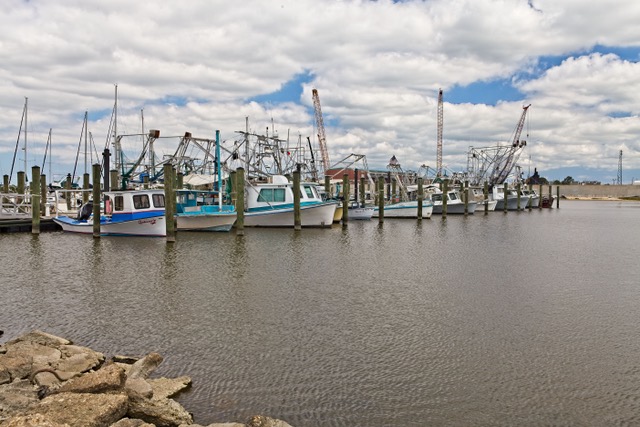
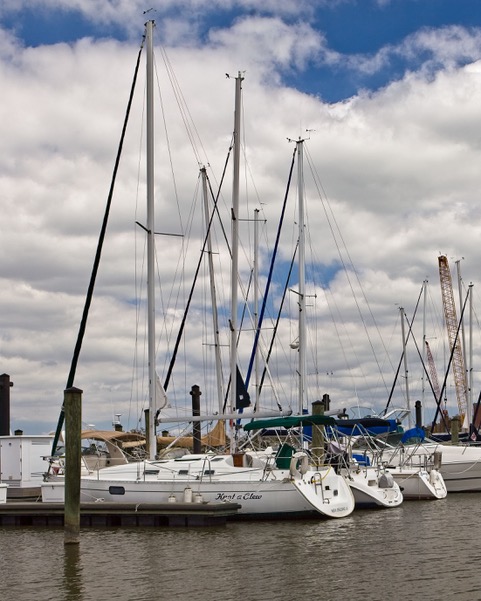
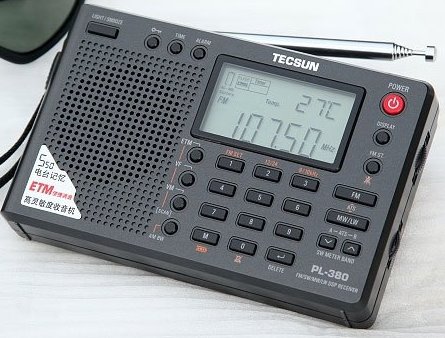
I found myself in the same mindset and ventured out to a nearby peaceful fishing and yacht harbor to try out my new Tecsun PL-380. I have had it about 10 days and I have figured out that I have about all the urban power line and electrical noise I can stand at my home location, so I was headed out to give the 380 a chance to exercise its ears.
I found the most deserted corner of the parking lot at the harbor, positioned my pick-up for maximum shade, dropped the tail gate to provide a work surface, strung out about 75 feet of stranded #14 insulated copper wire and positioned my portable chair for DX action.
I did not have a copy of the WRTH, but I do use an iPhone app called Shortwave Broadcast Schedules by Black Cat that has really worked well for me and I highly recommend. With great anticipation, I flipped the power switch and enjoyed the most beautiful silence from man made electrical noise that I have ever experienced!! I could not believe how much quieter the receiver was in a more more pristine environment.
Jack’s ultralight Tailgate DXpedition kit
I opened the app to search for some DX’ing frequency possibilities, began tuning the bands and I was amazed at the number of short wave broadcast stations, the strength of their signals and the pure listening quality coming out of my 380, which is little larger than a pack of cigarettes!! I have been a licensed ham since 1970 and at one point back in the early 1970’s, I had a complete R. L. Drake HF station which might be called “Boat Anchors” by today’s standards. I was now listening to stations from around the globe on a receiver that comfortably fit in my pocket and a long wire strung out to a nearby “NO PARKING” sign post.
The Tecsun PL-380
Within a matter of a couple of relaxing hours, I had logged and enjoyed listening to Radio Habana, Voice of Vietnam, China Radio Int., Voice of Nigeria, Radio Romania Int., KBS World Radio and several other stateside shortwave broadcasts from Miami, Nashville & Lebanon Tennessee. I was totally thrilled at the performance of the radio/antenna combo and I anxiously await the opportunity to visit the area again for another Tailgate DXpedition!! I am particularly looking forward to fall days and cooler temps to go lose myself in the reverie of the shortwave bands, this time with a few brewskies in the ice chest, along with lunch.
It was a thoroughly enjoyable day and I could not help but relate to your article when I read it!! Next time, I plan to photograph my Tailgate DXpedition, simple though it may be to share with others. I have been away from radio for some time, but have maintained my amateur license for nearly 50 years. Now that I am retired and have more time, I plan to enjoy my long lost love of radio once again.
Thanks for your web sight. I look forward to the newsletters and enjoy its resources.
Take care.
’73’s
Jack Blanke
Thanks so much for sharing your story, Jack!
Isn’t it amazing how the shortwave bands simply open up when you remove all of the urban noise that plagues our receivers? That’s the brilliance behind impromptu DXpeditions. Plus, I’ve always believed that radio is best enjoyed outdoors.
We look forward to seeing some photos and a report of your next Tailgate DXpedition, Jack!