Category Archives: Mediumwave

Don Moore’s Photo Album: Ecos del Torbes

Many thanks to SWLing Post contributor, Don Moore–noted author, traveler, and DXer–for the following guest post series:

Don Moore’s Photo Album

by Don Moore

Introduction

When I discovered DXing over fifty years ago I also discovered the world. Through my ears I traveled to other countries and explored other cultures. But DXing has also literally taken me places. My early interest in Latin American DXing developed into a broader interest in Latin America. That led to me joining the Peace Corps after college and working three years in Honduras. That experience furthered my interest in Latin America and I have continued to travel in the region whenever possible. For me DXing and travel were always intertwined. I’m one of a handful of hobbyists who took DXing beyond just listening and went knocking on broadcasters’ doors to visit the distant stations I heard. My ex-wife dubbed this ‘door-to-door DXing.’

To date I’ve visited over 150 radio stations in thirteen countries. A few were medium-wave or FM only, but I was always most interested in visiting broadcasters that used shortwave, either at the time of my visit or a few years before. As my station visits were primarily made in the 1980s and 1990s, almost all of the stations are long-gone from the shortwave bands. However, many are still around on medium wave and FM and often also via streaming on the Internet. As much as I miss the magic of shortwave I know that these stations reach more listeners today via streaming than they ever did with their low-powered shortwave transmitters. Honestly, I sometimes enjoy tuning them in without the fading and static of shortwave. But the memories of what shortwave once was are still there.

Photos also bring back memories. I took dozens of pictures on my station visits and enjoy scrolling through them now and then. You may have seen some of them. Many of my photos were printed with articles I wrote for various DX publications and I’ve done a few slide-shows at DX get-togethers over the years.

In this series of columns I want to share my old photos once again. If you’ve been DXing as long as I have maybe they’ll bring back memories of what you once heard. And if you haven’t been around that long you will have a better understanding of the good old days we oldtimers talk about.

Ecos Del Torbes

There is no better place to start this journey than with Ecos del Torbes. Using ten kilowatts on 4980 kHz, this Venezuelan broadcaster was possibly the most consistent station in the sixty-meter band throughout the 1970s, 80s, and 90s. If you were DXing the tropical bands during those years you surely logged them a few times. If you were lucky you may even have heard their one kilowatt signal on 9640 kHz. They were a very good verifier and for many DXers Ecos del Torbes was among the first Latin American stations QSLed.

Just after Christmas in 1994, my then-wife, four-year-old daughter, and I flew to Mérida in western Venezuela for a family vacation. For ten days we had a great time in this Andean city and then Theresa and Rebecca returned to Iowa while I stayed another week to visit radio stations. I was also getting paid by the Voice of America to research and write a study on the media scene in Andean Venezuela. The now very-out-of-date report can be read at my Patepluma Radio website (which hasn’t been changed in over twenty years and is in need of a facelift).

In that week I visited fifteen radio stations in six towns and cities and Ecos del Torbes was the highlight. I arrived at their doorstep unannounced but was immediately treated as an important guest. I was given a great tour and even got to sit in on a live newscast to see the famous Venezuelan doorbell being used live. I was there about ninety minutes and then walked a block up the street to sister station Radio Táchira. Their facilities were smaller but that’s where the technical offices were and Chief Engineer Ivan Escobar had been told to expect me. Ivan gave me a tour and invited me to visit the Ecos del Torbes transmitter site with him in the afternoon. On the way we stopped by his house where his wife had lunch waiting for us. Visiting Ecos del Torbes was not just the highlight of this trip but ranks as one of my all-time favorite station visits. These pictures bring back many good memories.

Photos

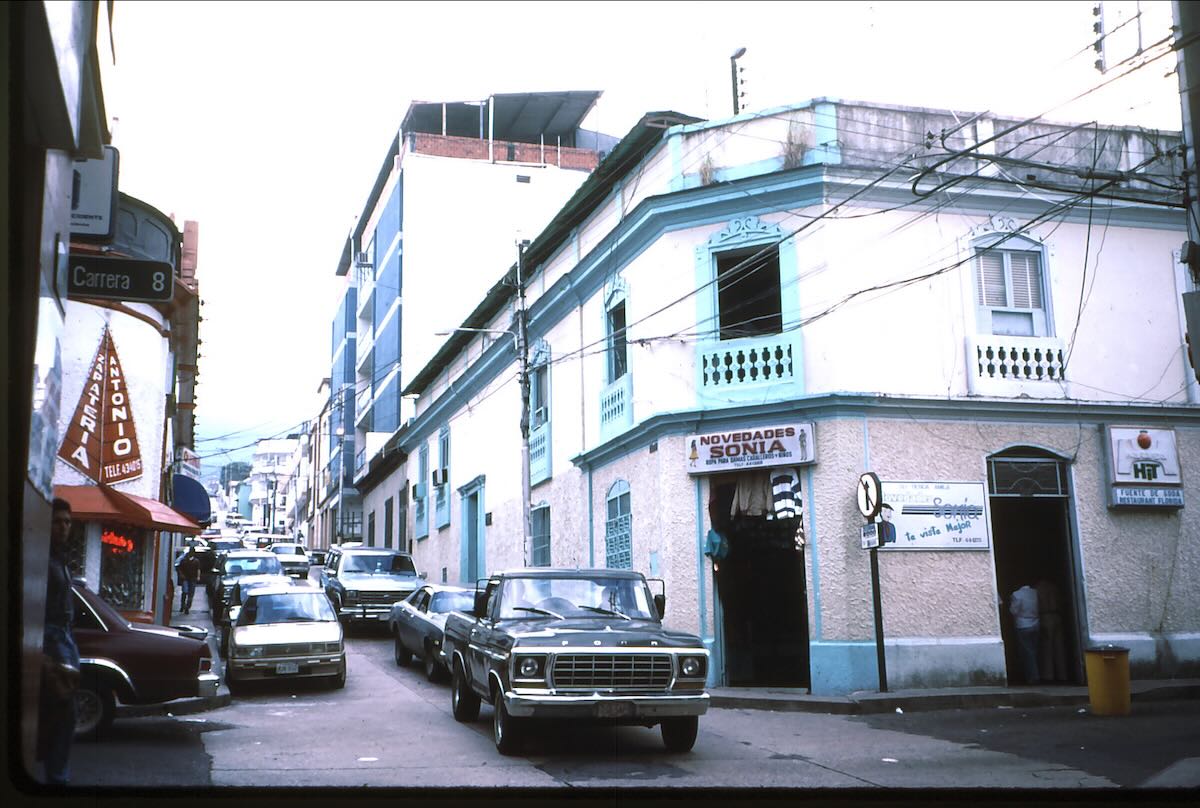
Ecos del Torbes was located in the second floor of this building in downtown San Cristóbal. The entrance was the door on the side.

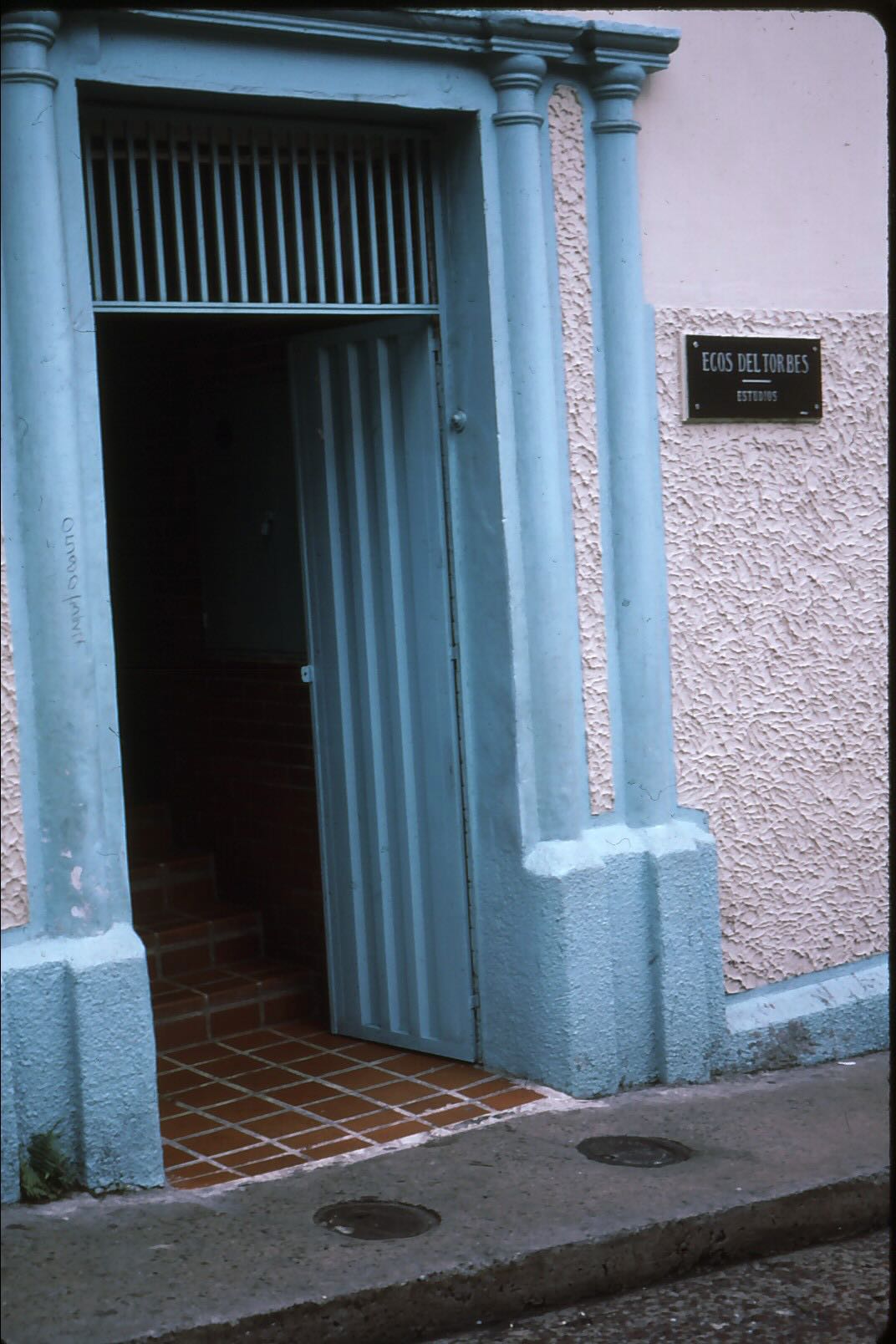
The small plaque next to the door was easy to miss. I walked right by the first time.
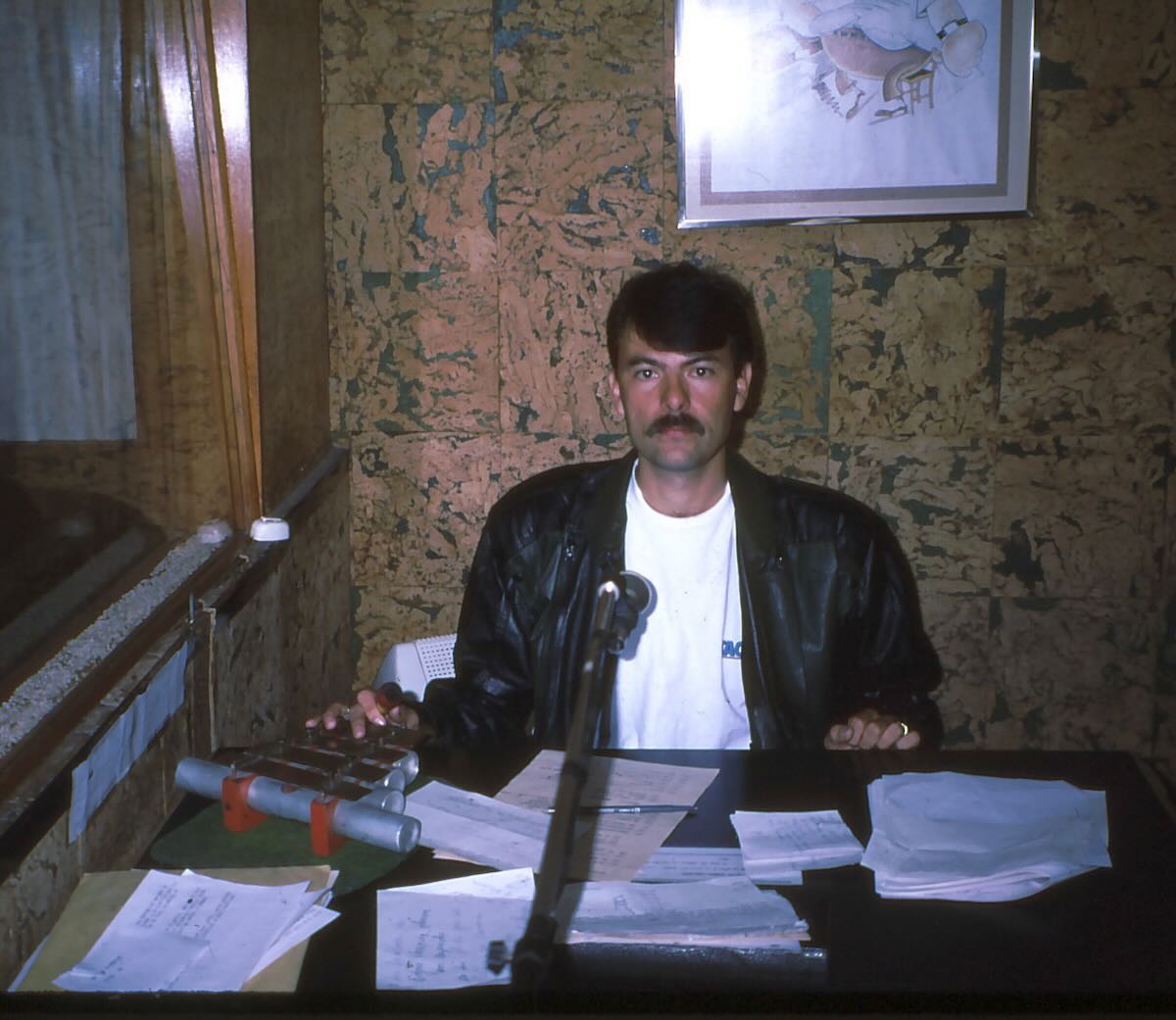
Edgar Fabala of the news department showed me around. Here he demonstrates the mini-xylophones that Venezuelan stations used to make the distinctive ‘doorbell’ sound that separated items in the news reports.

Announcer in the studio preparing to read the news.
The adjoining control room.
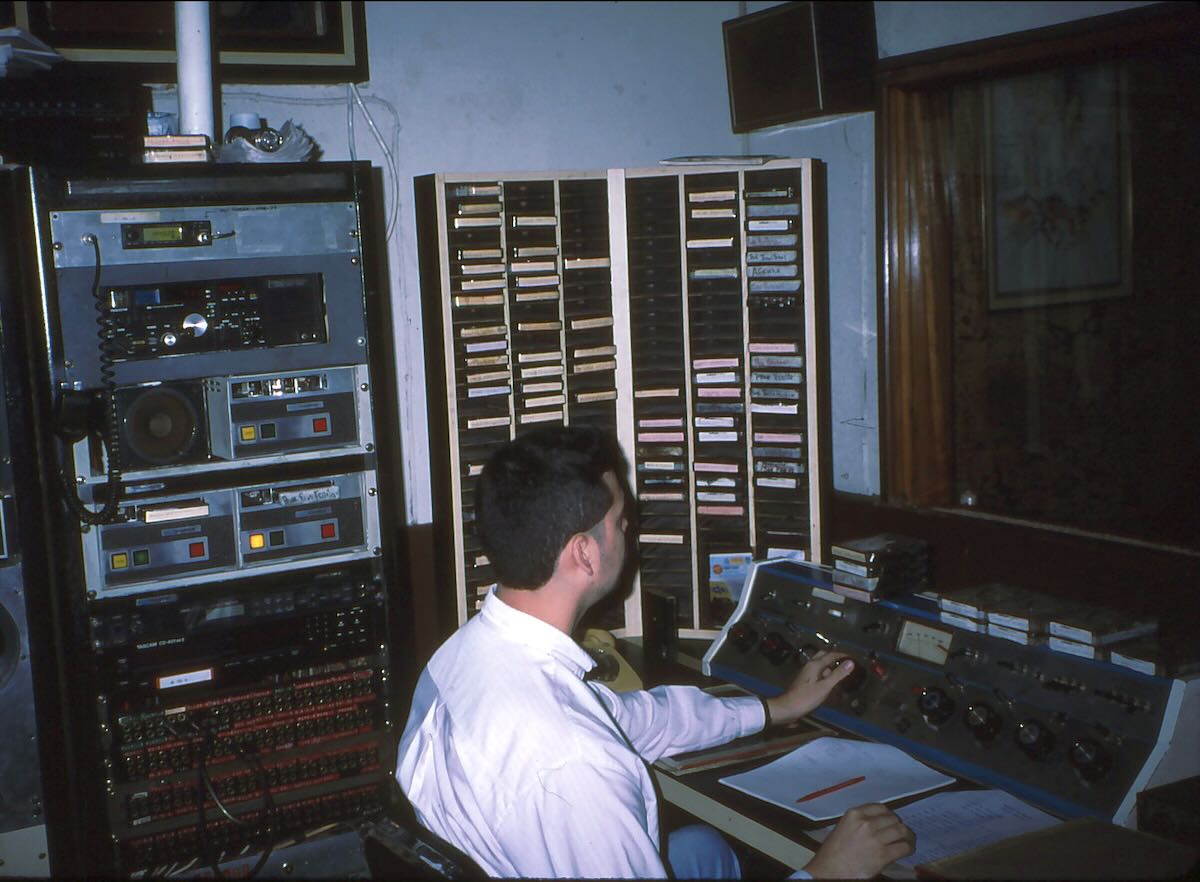
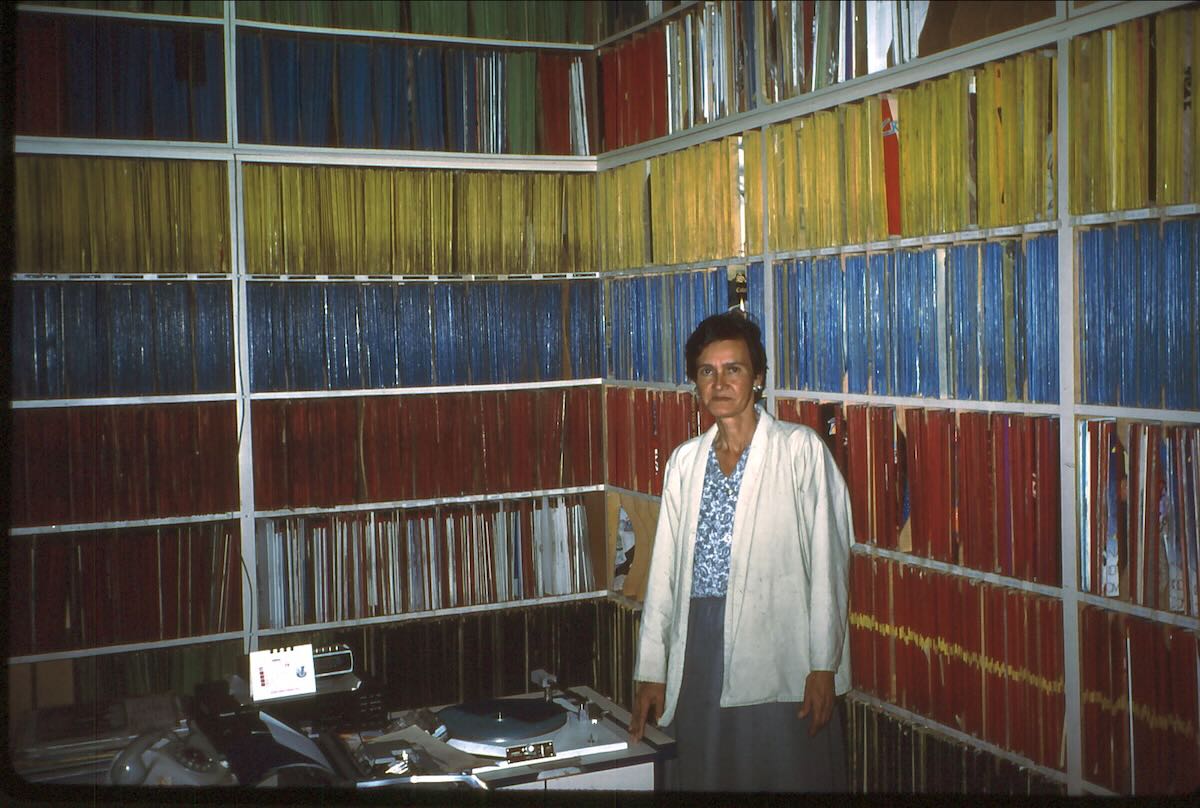
Ecos del Torbes had one of the largest record libraries in Venezuela. The LPs were color-coded by type.
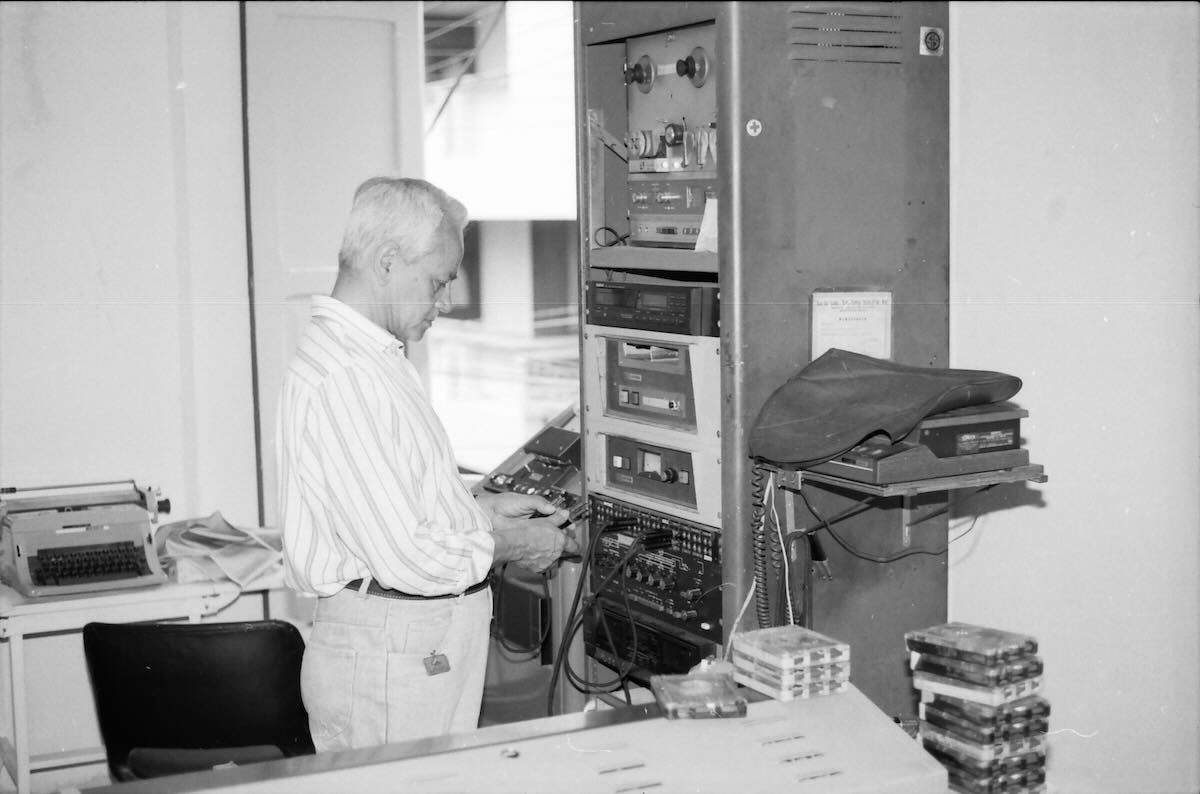
Julio Achila was a control room operator who had worked at the station since it opened in 1947.
This pennant was considerably larger than the ones sent to DXers.

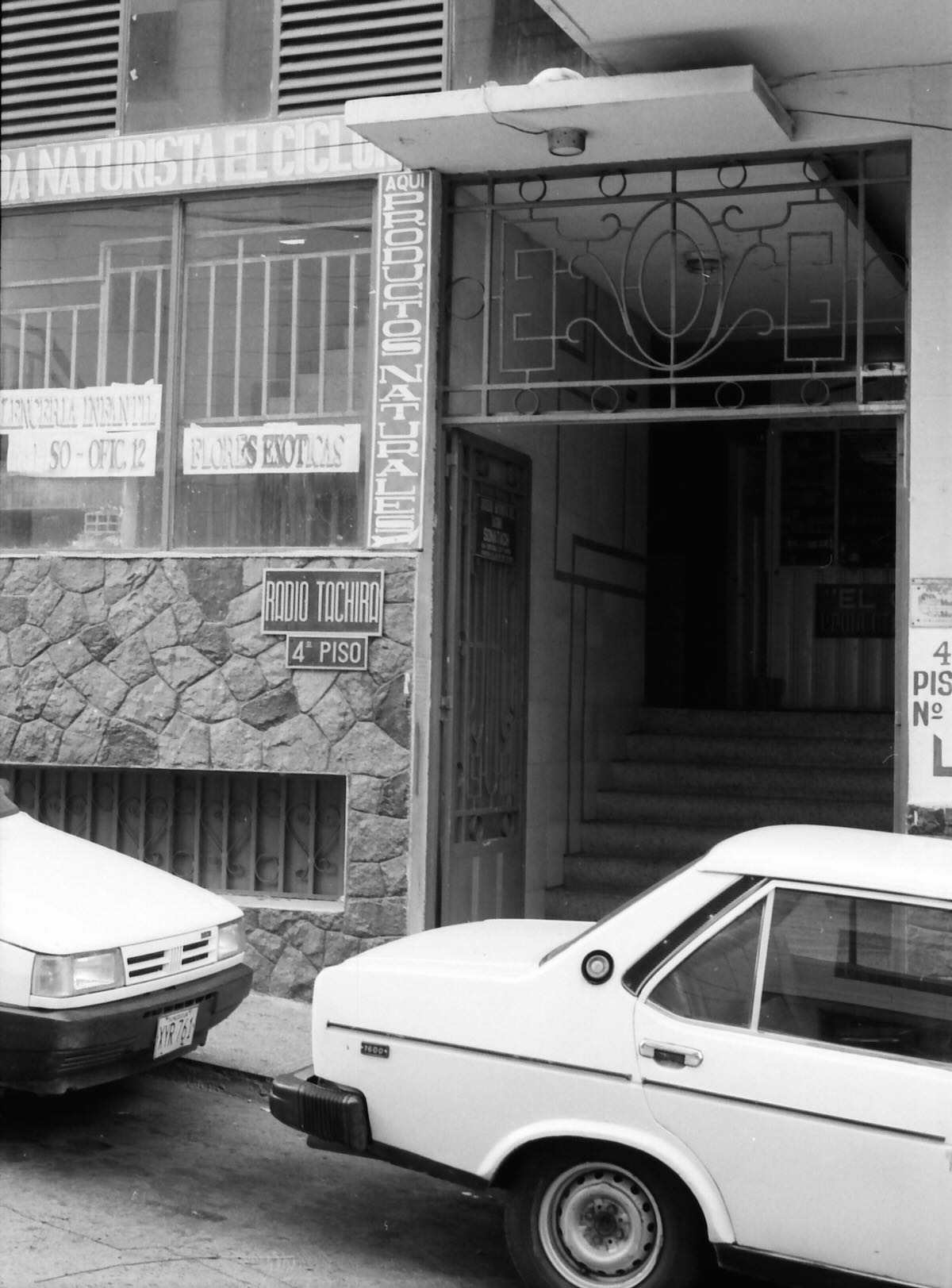
Sister station Radio Táchira was located a block up the street on the fourth floor of this building.
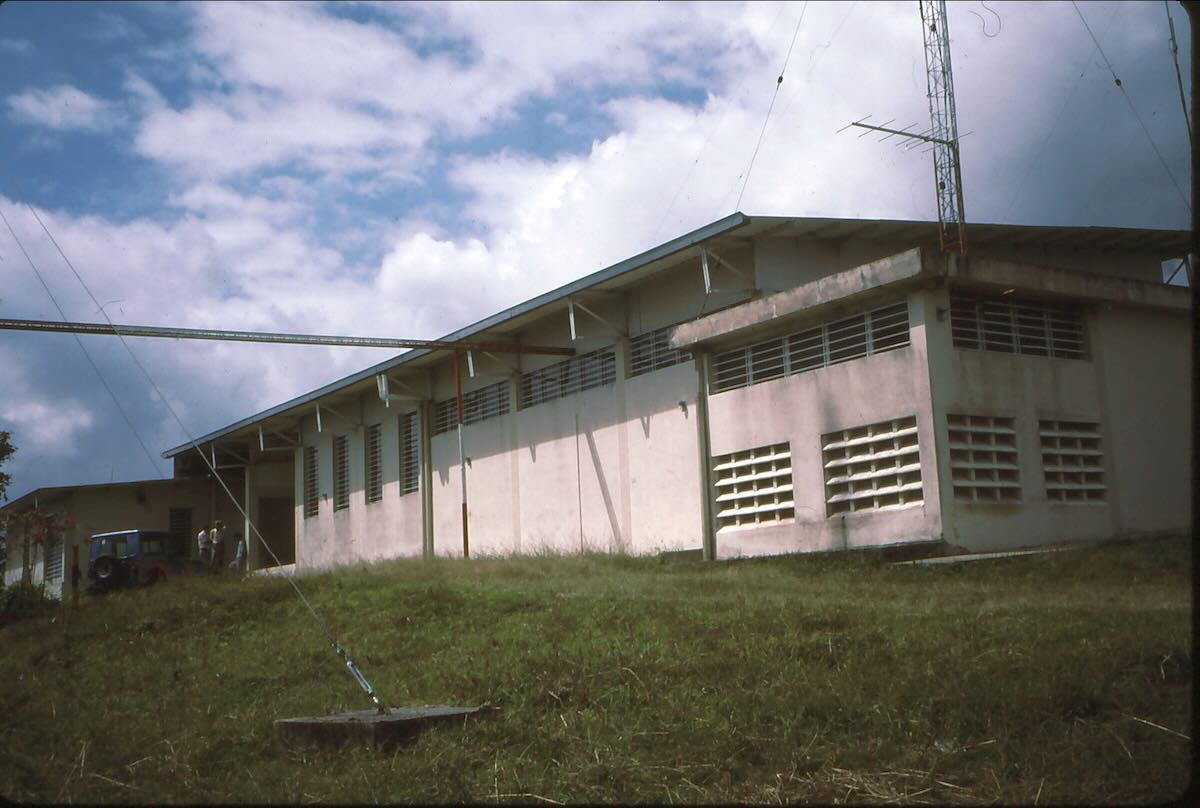
The Ecos del Torbes transmitter building.
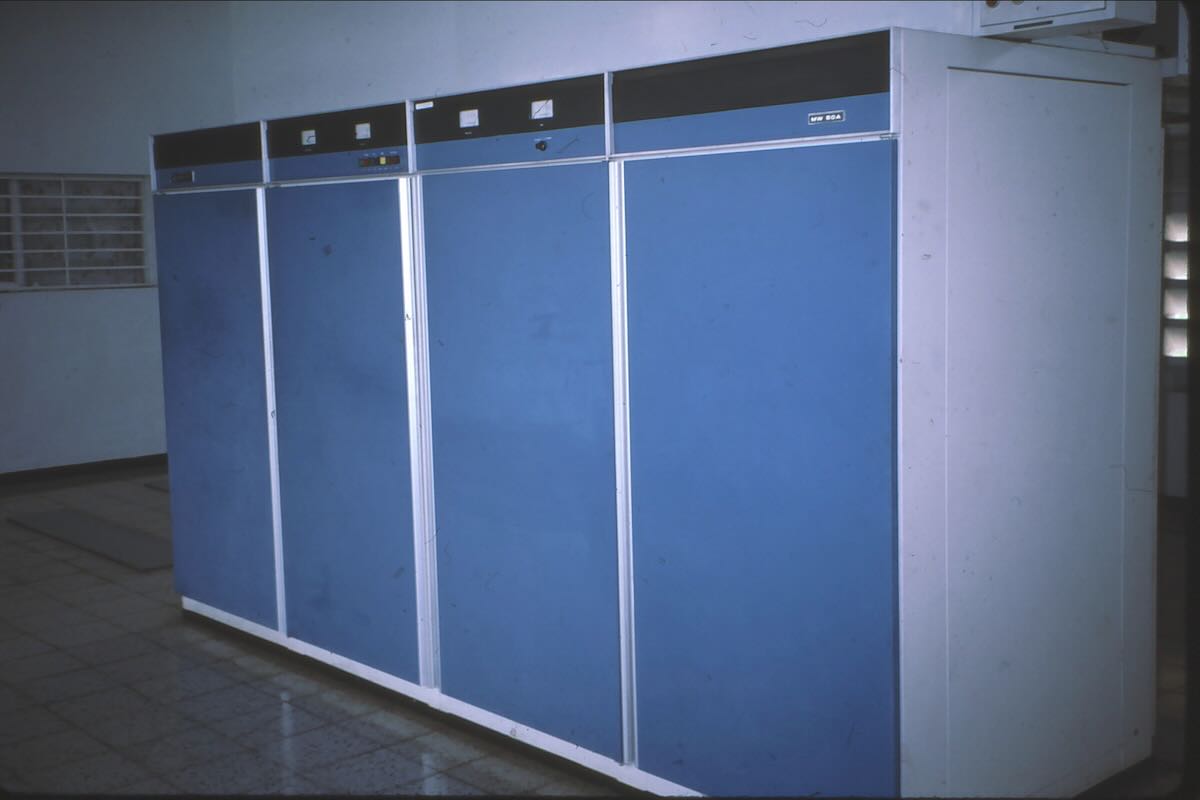
The 50 kilowatt medium wave transmitter on 780 kHz.
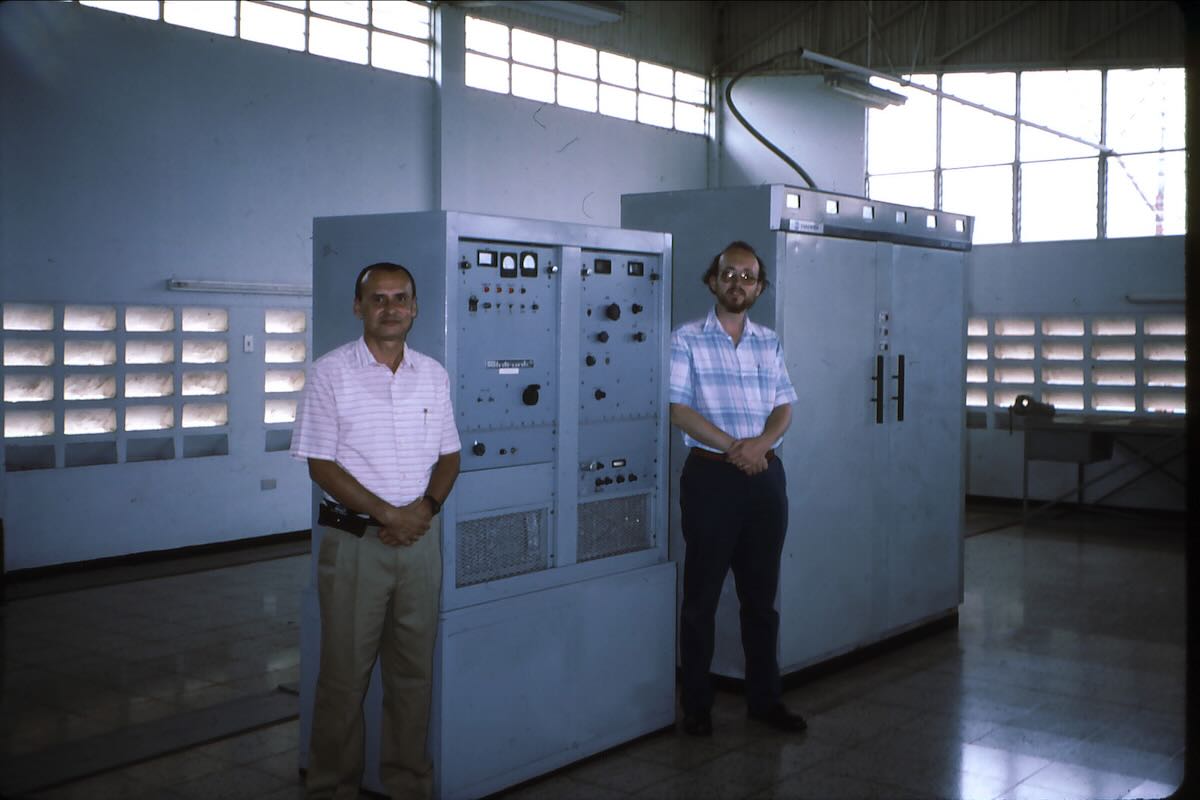
Chief Engineer Ivan Escobar and Don Moore next to the 31 meter transmitter. The larger transmitter was for the well-heard 4980 kHz frequency.
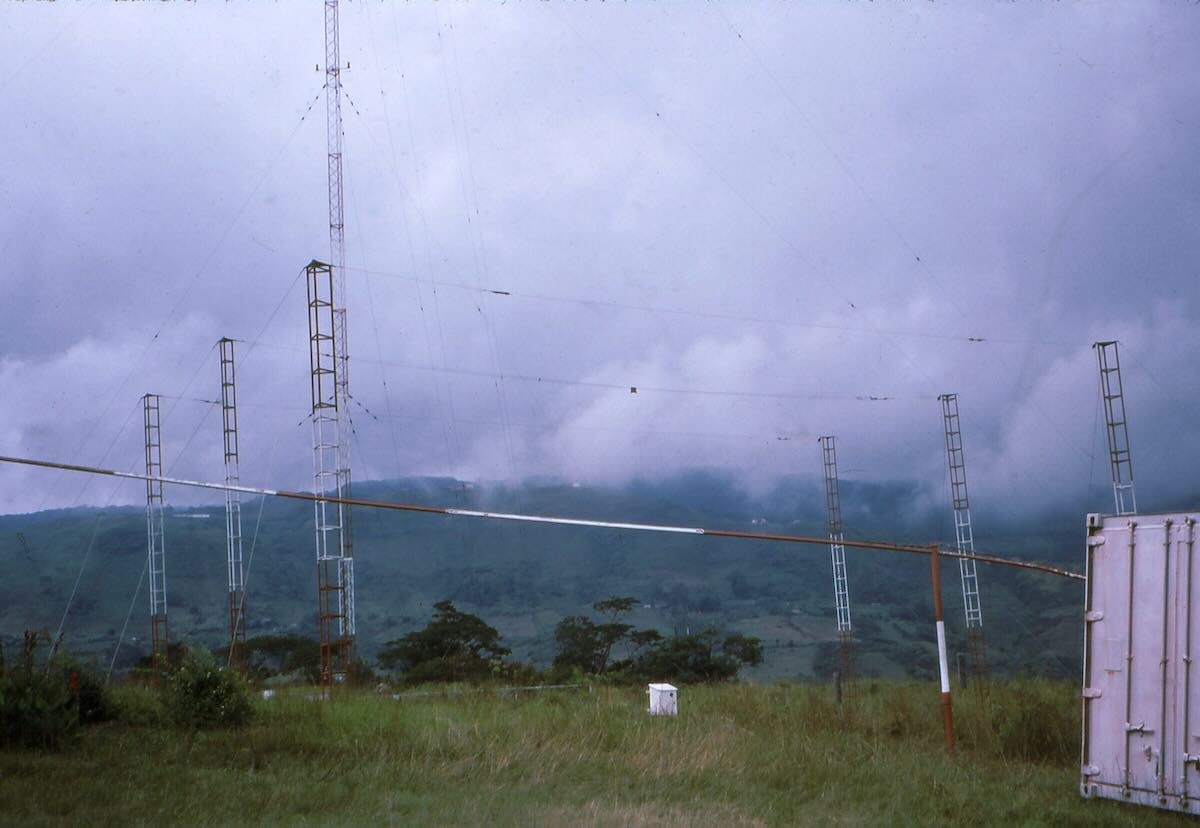
The antenna array used for 4980 kHz. The medium wave tower is in the background.
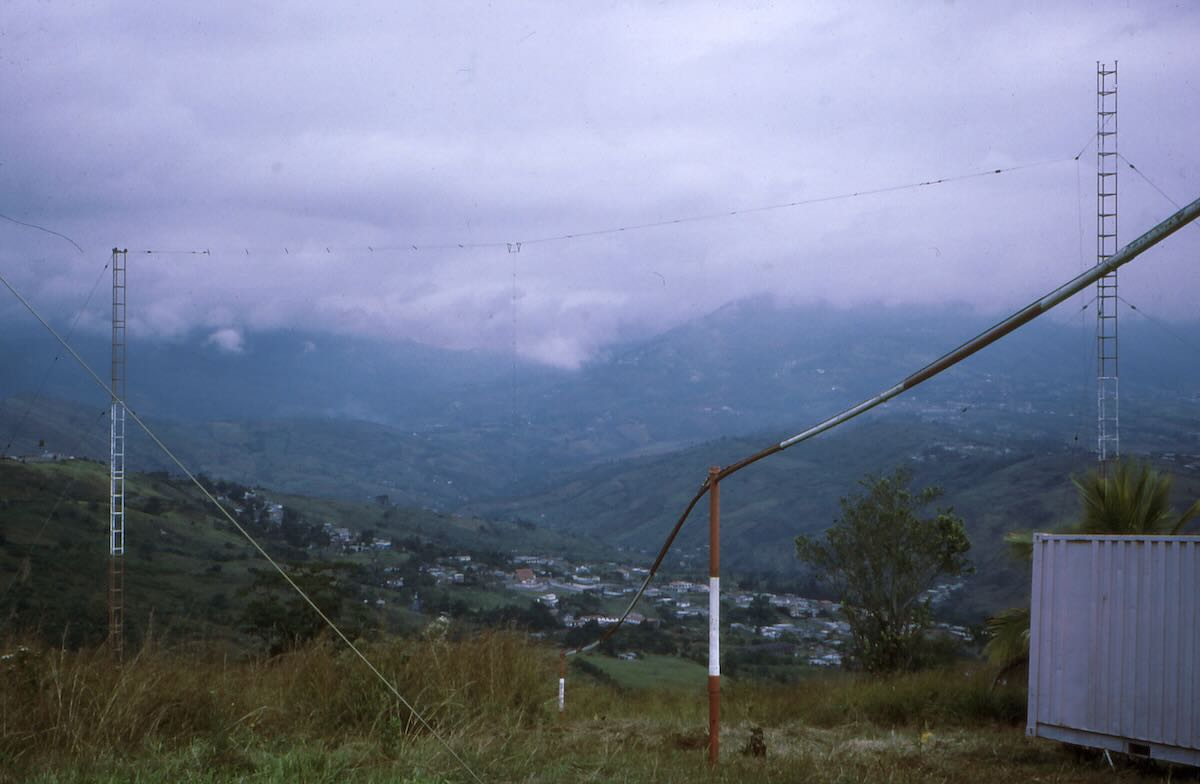
Dipole antenna used for 9640 kHz.
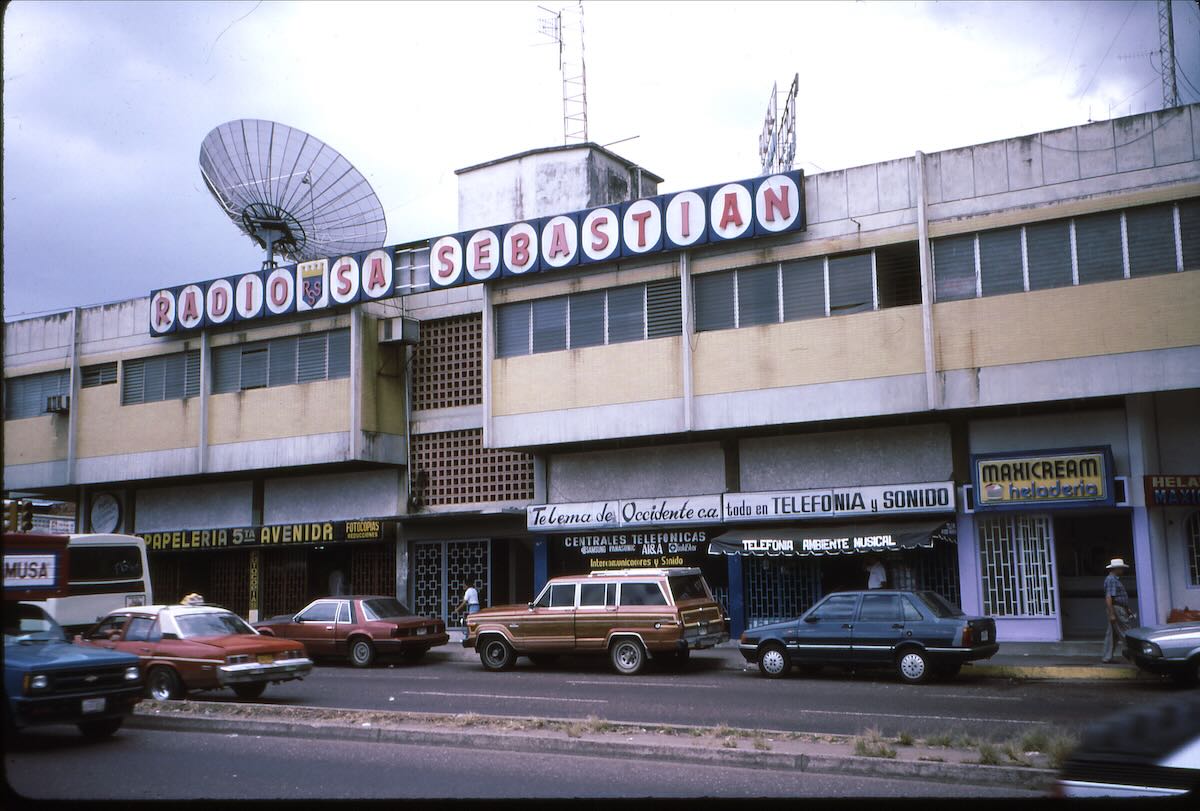
San Cristóbal once had a third broadcaster on shortwave. Radio San Sebastian used 6070 kHz in the early 1970s. (They were not affiliated with Ecos del Torbes).
That was nearly three decades ago and a lot has changed. Ecos del Torbes and Radio Táchira have been gone from shortwave for over twenty years.

In 1995 Ecos del Torbes was at the corner of Calle 9 and Carrera 8, the same address as when I first QSLed them in 1972. Sometime since my visit they moved an outer neighborhood about two kilometers to the east. To find the new offices locate San Cristóbal on Google maps and then search for “Grupo Radial Gonzalez Lovera”. The transmitter site is still where I visited it and can be seen by plugging the coordinates “7.7885, -72.2725” into Google maps and switching to satellite view. (Ignore the picture that pops up to the side. That’s not it.) Zooming in, the medium wave tower is clearly visible but there are no signs of the old shortwave antennas. I suspect they were sold for scrap years ago. I never have found out where the Radio Táchira transmitter site was.

I’d love to go back to Venezuela someday and see some of the other cities that I used to listen to, such as Barquisimeto, Valencia, El Tigre, and Sucre. Unfortunately the political and economic situation there doesn’t look good and it doesn’t look as if it will improve any time soon. But when it does, I’ll be back.


Click here to check out all of Don Moore’s Photo Album columns. Each new article will appear on the SWLing Post home page/feed and in this link.

13dka Reviews: The new 2022 “Belka” (generation 3) general coverage receiver

The new 2022 “Belka” (generation 3) general coverage receiver

by 13dka

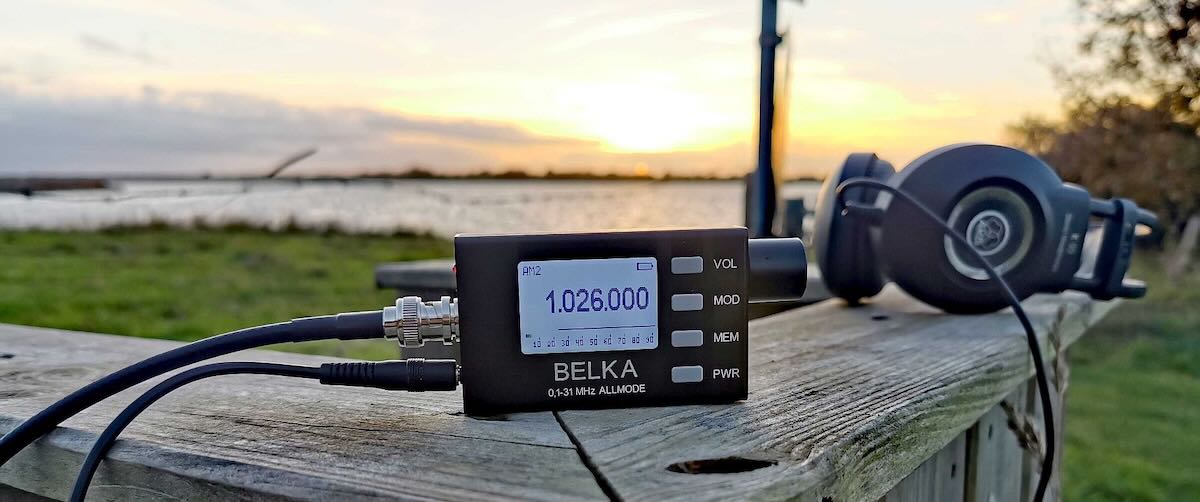
Since its introduction in 2019, the super-tiny Belka (back then called “Belka DSP”) shortwave receiver sure gained an enthusiastic followership among SWLs and hams. The main reason for this is certainly the way how the Belka is incredibly small yet playing in a different league than the various consumer grade, Chinese mass-production radios, particularly the DSP-based ultraportables: The Belka is an all-mode shortwave communications receiver with a completely different (direct conversion SDR) architecture, developed and produced by a radio enthusiast (Alex, EU1ME) in a small mom&pop shop in Belarus.

In case you’ve never heard about it amidst all the buzz about more popular brands, here’s the skinny:

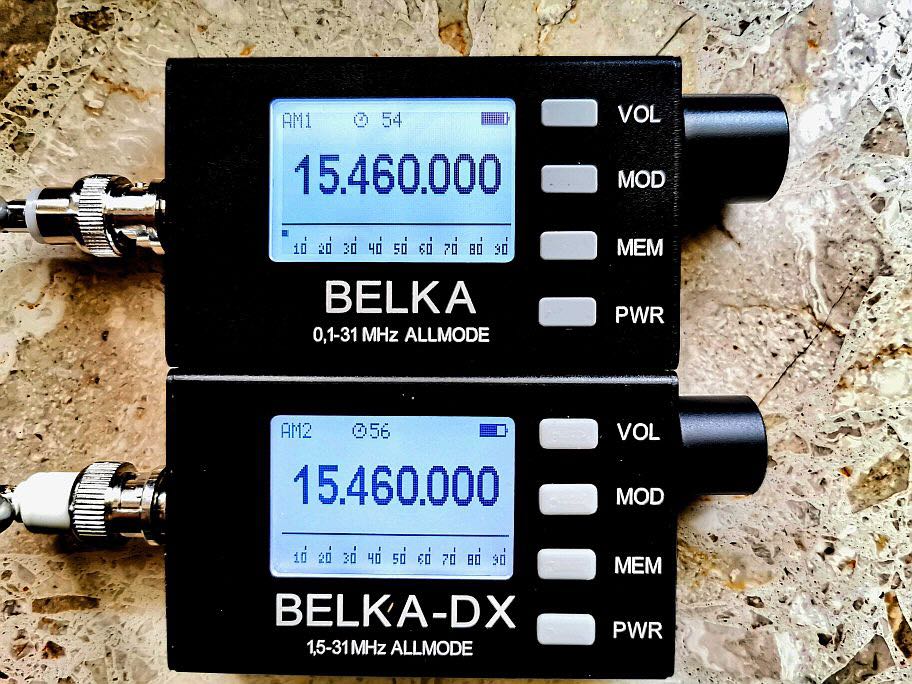
The Belka offers true allmode (including NFM and CW) reception with a proper 400 Hz CW filter and individual settings for the low and high filter slopes for AM, FM and SSB. It has an AM sync detector and comes with a 0.5ppm TCXO-controlled local oscillator for absolutely spot-on, calibration-free frequency precision and stability, which makes SSB or ECSS reception of broadcast stations a pure joy. The second iteration “Belka DX” brought a slightly extended coverage down to 1.5 MHz and an I/Q output for panadapter display and/or processing via your favorite SDR software.

All Belkas are quiet and very sensitive radios with a surprisingly robust front end, the filters are better and its AGC works like you’d expect it from a communications receiver, without the artifacts and distortion the DSP radios are infamous for, and of course smooth, non-“muting” tuning in variable steps down to 10Hz.

The Belkas have no built-in speaker (available as option tho) but really excellent audio on headphones and external speakers and they actually give my Icom IC-705 a run for its money in terms of reception quality, and they do that for up to 24 hours on a single charge of the internal Li-Ion battery. This stunning feature set is crowned by the best performance on a telescopic whip antenna ever – the Belkas have a high-impedance (>10 kOhm) antenna input optimized for this whip and taking it on a walk is (really!) like having a big rig with a big antenna in tow…

Despite all this goodness setting the Belka(s) quite fundamentally apart from most (if not all) current and former, even much higher priced portables and simultaneously putting it solidly into pricey tabletop territory, it hasn’t put Tecsun et al out of business for a couple of reasons: One reason is that it can only be obtained from Alex in Belarus, which is now often assumed to be impossible (it isn’t, more on that later). Another reason is that it doesn’t try to compete with aforementioned multiband radios from China, so there is no FM broadcast band and – until now – no AM BC band, but most owners and potential buyers particularly in the US really wished it had at least the latter. Well, Alex obviously heard us! After the Belka DSP and the Belka DX, the new Belka is just called “Belka”, so in order to avoid any ambiguity I’m going to refer to this model as “Belka 2022”.

What’s new?

The most prominent addition to the Belka 2022 is the extended 0.1-31 MHz coverage, the previous version only started receiving at 1.5 MHz. With LW and MW included, its “pseudosynchronous” detector (as featured in venerable radios from Harris, Racal or Drake), the great filtering and the great frequency precision for hassle-free ECSS reception are promising that the “squirrel” is now an ultra-ultraportable companion for MW DXers as well.

Continue reading

Belka DX updated to now cover mediumwave and longwave

Many thanks to SWLing Post contributor, Dave Garr, who writes:

I have some interesting news for all of those Belka DX fans, Alex the guy behind this magnificent receiver has just announced the introduction of a new model. Ok so it is still called the Belka DX but it has now got a total frequency coverage of 100KHz to 31MHz so those that have put off buying because of lack of Long wave and Medium wave have now had their prayers answered. There has been no fanfare announcement about this but they have just updated their website with the new added frequency range. I am just waiting for the first review to appear before committing my hard earned cash.
Regards
Dave Gurr

Click here to check it out.

Excellent news. I’m sure this will make the Belka DX even more popular than it already is. I have to assume a ferrite bar hasn’t been added (there isn’t much room for one in the Belka series) so you would need to pair a proper MW/LM antenna antenna in order to fully take advantage of the new bands.   

Thank you for the tip, Dave!

File this under: you never know and . . . what’s the harm in experimenting?


by Jock Elliott, KB2GOM

Ever since Thomas (our Maximum Leader) posted the latest DX Central MW Challenge, I’ve been curious . . . what could I hear if I gave it a shot?

Habitually, I get up early, between 4 and 5 am, so I decided to give it a try. Conventional wisdom is that, if you want to do AM (medium wave) DXing, you need a hot AM radio with a big ferrite bar, like the CCrane 2E . . .

Wanna guess what radio and antenna combo acquitted itself pretty well?

My old ham rig, an Icom IC-706 MkIIG, (which I wrote up here), hooked to my 50-foot wire indoor antenna, the horizontal room loop (which I wrote up here).

This AM’s listening, from my home outside Troy, NY, produced:

1170, WWVA — Wheeling, West Virginia
1180, WHAM — Rochester, NY
1200, Talk 1200 — Boston
1210, WPHT — Philadelphia

Now, before you hard-core AM DXers get all up in my face — Hey, I could hear those stations on the fillings in my teeth! — I’ll simply say that I get a kick out of hearing a distant station . . . any distant station . . . even it’s just a few hundred miles away. Sure, it’s not the astonishing stuff that Paul Walker and Gary DeBock accomplish, but to hear that faraway signal, crackling through the airwaves does me good.

Bottom line: you don’t need the latest and greatest optimized-for-the-task gear to give something a try . . . and you just might really enjoy it!

2022-23 Season of the MW Frequency Challenge is underway with Week 1: 1160-1224 kHz

Many thanks to SWLing Post contributor Loyd Van Horn at DX Central who shares the following announcement:

We are kicking off the 2022-23 DX season with the return of the MW Frequency Challenge! The MW Frequency Challenge officially started during the season premiere of our DX Central Live! livestream on YouTube on Friday, September 2022.

Our frequency range for this week’s challenge is 1160-1224 kHz!

A reminder of the rules for this season:

    • Submitted loggings must be for receptions made between 0000 UTC Saturday, September 24, 2022 and 0200 UTC Saturday, October 1, 2022. Any station that transmits between 1160-1224 kHz will be accepted for the challenge.
    • Submissions/loggings must be made with your own equipment, NO ONLINE SDRs (unless you own the online SDR). If you are logging receptions away from your home location, be sure to note that location on the submision form.
    • Submissions must be entered on the Google Form using the link below. Logs posted through social media, DX club log submissions, email, etc. will not be accepted.
    • Receptions can be for any station received within the frequency range. It does not need to be “new to you”, relogs are welcome as long as it occurred during the challenge period.

This week’s Google Form link is: https://forms.gle/EtKhNYc1qZhVmexh8

Good luck and best of DX!

73,

Loyd

Video: Tour of AM Stereo Station KYET

Many thanks to SWLing Post contributor, Dave (N9EWO), who writes:

Dan, shango066 on You Tube give us a nice little tour of KYET on 1070 kHz in Golden Valley Arizona which transmits in AM Stereo (6K day, 1 watt night). Harris solid state transmitter which is also shown in this video:

Click here to view on YouTube.

First part of his video explains the modified Realistic receiver (which he could not get working, well at least not yet):

Click here to view on YouTube.

Small Unidirectional Loop Antenna (SULA) Part 3: Questions & Answers

Many thanks to SWLing Post contributor extraordinaire, 13dka, who brings us Part Two of a three part series about the new SULA homebrew antenna project. This first article describes this affordable antenna and demonstrates its unique reception properties. The second article focuses on construction notes. This third and final article will essentially be a Q&A about the SULA antenna. 

This wideband unidirectional antenna is an outstanding and innovative development for the portable DXer. I love the fact that it came to fruition via a collaboration between Grayhat and 13dka: two amazing gents and radio ambassadors on our SWLing.net discussion board and here on the SWLing Post. So many thanks to both of them!

Please enjoy and share Part 3:


Part 3: SULA Q&A

by 13dka

Q: Where can I ask questions, discuss all aspects of the the SULA or collaborate in its further development?

A: There is a thread dedicated to the SULA in the new SWLing.com message board: https://swling.net/viewtopic.php?t=55

Q: Since the antenna is “lossy”, what’s the point of having a “beam”?

A: The answer is once again “SNR”: First off, remember that the LNA is there to make up for most of the losses. Secondly, this is all about the noise pickup, 20dB less gain/more losses outside the main lobe means also a reduction of atmospheric/cosmic/whatnot QRN and of course everything manmade from all these sides. The wide horizontal lobe is more or less one hemisphere horizontally, but the flat-ish vertical pattern makes that only a slice of it. In other words, there will be less QRN and QRM pickup from the back and the top. The idea is that the SNR will ideally increase more than the preamp’s noise figure will cost and it often sounds like this is what actually happens. Of course it’s also nice that you can turn an unwanted signal down using the more or less pronounced notch in the backside pattern up to 21 MHz – also very helpful for direction finding.

Q: Do I need a rotor?

A: It depends. If you are one of the lucky few still having a low-QRM-environment at home and you want to put it in the backyard, you really may want to be able to turn it remotely. If you’re using it portable you can simply rotate the mast manually. If you have local QRM or can’t mount it very far away from your or other houses, you may want to rotate the back of the antenna towards that source, leave it at that position forever and enjoy what’s coming in on the pretty wide main lobe of the antenna. The horizontal lobe covers more or less half of the horizon, depending on your stations of interest and location you could get away with never turning the antenna at all.

Q: Is it better than the XYZ loop?

A: Hey, that’s exactly what I wanted to ask you! 🙂 Even though the SULA is very similar in appearance and performance to a good SML working in ideal (ground conductivity) conditions, the SULA is a pretty different animal with a different behavior: Regular small loops, besides being bidirectional, can lose quite a bit of their low angle sensitivity over “poor” ground while the SULA is supposed to be retaining its properties better over any type of ground. Also, while many SMLs are tuned for VLF through the lower portion of the shortwave, the SULA complements those with quite uniform (good) properties up to 30 MHz and beyond.

Q: I have an end-fed random wire or dipole strung up from the house to a tree etc. – can the SULA beat that?

A: That’s quite possible. To get low takeoff angles from horizontal wire antennas you need to string them up at least 1/2 wavelength high, that’s 20m/66ft on 40/41m, 10m/33ft on 20m and so on. If you can’t do that, the SULA may be your ticket to listen farther beyond the horizon. Also, wire antennas are often strung up to match space restrictions or avoid QRM vectors and that way you may end up with some directionality in directions you don’t want, or no directionality at all when the wire is too low. Another noteworthy point is the ground: For most horizontal antennas, better ground means a considerable higher takeoff angle so the dipole needs even more height for low angles. The SULA’s takeoff angle benefits a little from the better ground and only gets a little worse over poor ground.

Q: Do I really need an LNA?

A: I hope so? Of course it depends… if you are going to try this antenna in a very noisy environment, the LNA may have little to no benefit. The noise is limiting your “radio horizon” to very loud signals anyway and for those you may not need an LNA, ever. On the other hand, the antenna is very lossy and in a quiet environment where noise is not an issue at all, weak signals may drop below the sensitivity threshold of your receiver without the LNA. The less noise you have, the more you’ll be able to benefit from an LNA. You will also need one when your radio isn’t all that sensitive, similar to the requirements to run a YouLoop. Andrew kept the loop impedance as constant as possible in order to allow any low impedance coax preamp to work behind the Balun. Any LNA with 20dB of gain should do, as per usual, better stuff may bring better results.

Among the sparse offers for decent shortwave LNAs, the NooElec LANA HF seems to be the only decent LNA sold via Amazon. It’s comparatively low-cost and unlike the other offers on Amazon, ready to be powered via Bias-T or even via Micro-USB and therefore happy with 5V. Since I also had the balun from the same company I could simply connect that all with a couple of these cute little SMA plumbing bits and it worked. The downside is its unknown but perceivably low resilience against intermodulation (low 3rd-order intercept point), this is usually not a problem with such a small loop but it can be in the presence of nearby transmitters.

If you do have nearby transmitters and don’t mind sourcing an LNA from Europe, Andrew recently pointed me to preamps from here. They offer a moderately priced preamp with a 2N5109 transistor (based on the W7IUV design) for a high IP3 value and low noise, which is also available in PCB-only and fully assembled versions including a compartment. They also offer Bias-T boxes.

Q: What is special/different about this antenna? There are already very similar designs!

A: It’s supposed to be simpler and more compact/portable, and it seems to deliver more consistent results over the entire coverage range in different usage environments than similar designs. The SULA was designed to be made with things that are particularly easy to obtain, or which were already obtained — many of us SWLs have some of that Nooelec stuff in our drawer anyway, even when (or because) we’re not habitual antenna builders and balun winders. Now making a better balun and buying a better preamp is not hard and could even bring better results but the point is that you don’t have to. In summary, this is not meant to be a miracle antenna, just number of compromises re-arranged to create a particularly uncomplicated, small, unidirectional loop antenna that aims for DX, for apartment dwellers and DX nomads like me.