Category Archives: Mediumwave

Guest Post: An Introduction to DXing the MF Marine Bands

Many thanks to SWLing Post contributor, Don Moore–author of  Following Ghosts in Northern Peru–for the following guest post:


Monitoring the MF Marine Bands

By Don Moore

For me, DXing has always been about the challenge of receiving difficult-to-hear radio stations, regardless of the type of station or frequency range. In my five decades in the radio hobby I’ve logged a lot of different kinds of stations – shortwave broadcast, medium wave, shortwave utility, longwave beacons, etc. But some of my favorite catches have been in the upper end of the medium frequency range.

Technically speaking, medium frequency (MF) is the range from 300 to 3000 kHz and includes the standard medium wave (AM) broadcast band. The upper end of the MF band, from 1600 to 3000 kHz (except for a small portion reserved for amateur radio),  has always been assigned to various types of utility uses including broadcasts and other voice communications from regional maritime stations. And while digital modes and satellites have done a lot to change the nature of communication with ships at sea, there is still a lot of good human-voice DX to be heard.

Several dozen stations, mostly in Europe and North America, broadcast regularly scheduled marine information broadcasts in the MF range. These broadcasts are usually between five to ten minutes in length and include weather forecasts, navigational warnings, and other notices to keep ships at sea safe. On occasion it’s possible to hear two-way voice communication here between ships and shore stations, although that’s much less common today.

The Equipment

Nothing special is needed to DX the marine MF band other than a receiver that covers the frequency range and can receive USB mode (which all these broadcasts are in). However, for reasons explained below, I highly recommend using an SDR to make spectrum recordings of the entire band to go through later. Continue reading

Guest Post: Don targets rare Norwegian stations during Newfoundland DXpedition

Photo by the Bjørnøya Meteorologiske Stasjon

Many thanks to SWLing Post contributor, Don Moore–author of  Following Ghosts in Northern Peru–for the following guest post:


The Rarest DX?

By Don Moore

In mid-October I received an invitation to attend the annual DXpedition in Cappahayden, Newfoundland with Jean Burnell, John Fisher, and Jim Renfrews. It didn’t take long for me to say yes. Newfoundland is one of the best places in the world to DX from and all kinds of amazing stuff has been heard there. I was excited at the prospect of great medium wave DX and being able to log low-powered European private and pirate shortwave broadcasters.

But something else was at the top of my try-for list. One of my many DX interests has always been logging coastal marine stations in the 1600 to 3000 kHz range. In preparation I started checking online sources to update my spreadsheet of schedules. In going through a recently added section on Marine Broadcasts in the DX Info Centre website I came across listings for twice-daily weather broadcasts from Hopen Island on 1750 kHz and Bjørnøya (Bear Island) on 1757 kHz.

I didn’t remember ever seeing anything about broadcasts from these remote islands in the Norwegian Arctic before. Were these stations actually on the air, I wondered. And if they were, could I hear them in Newfoundland? Continue reading

Guest Post: Pavel’s Homebrew “Monster” Drain Pipe FSL Antenna


Many thanks to SWLing Post contributor, Pavel Kraus, for the following guest post:


Building a Drain Pipe FSL Antenna

by Pavel Kraus

Hi, I greet all DX fans and the entire SWLing Post community! I enjoy reading reading this blog and the diversity of contributions from our authors and contributors; many thanks from me for so much useful information.

The following are the construction notes of my FSL antenna, which I designed thanks to the suggestions of GaryDeBock, and other FSL designers.

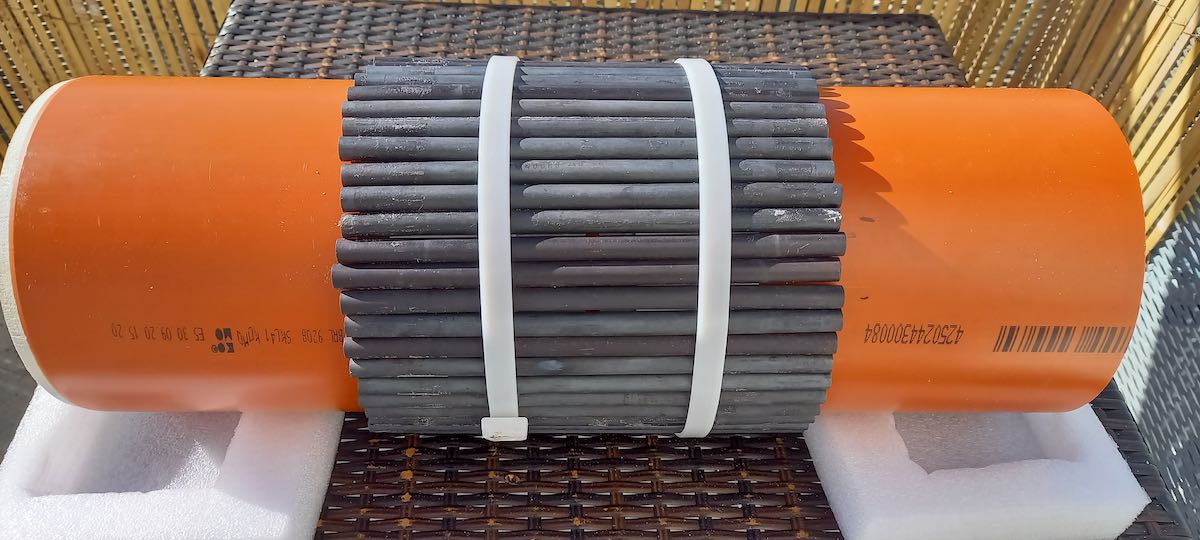
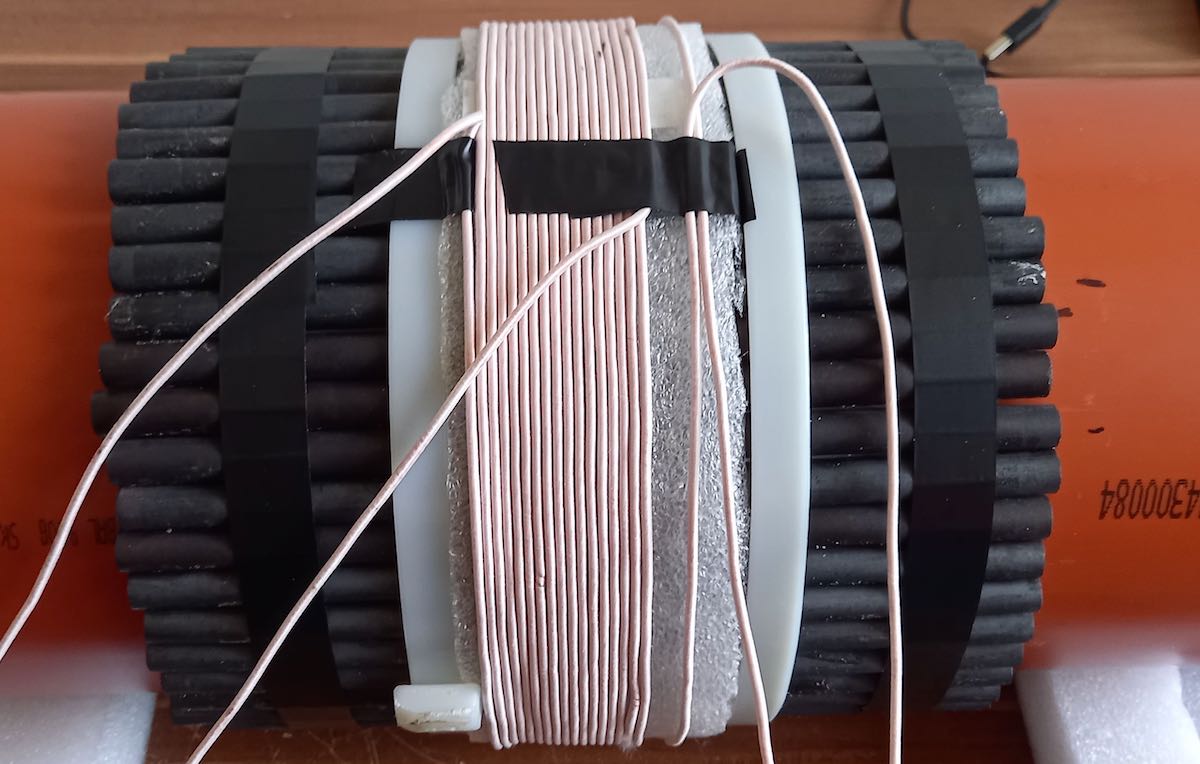
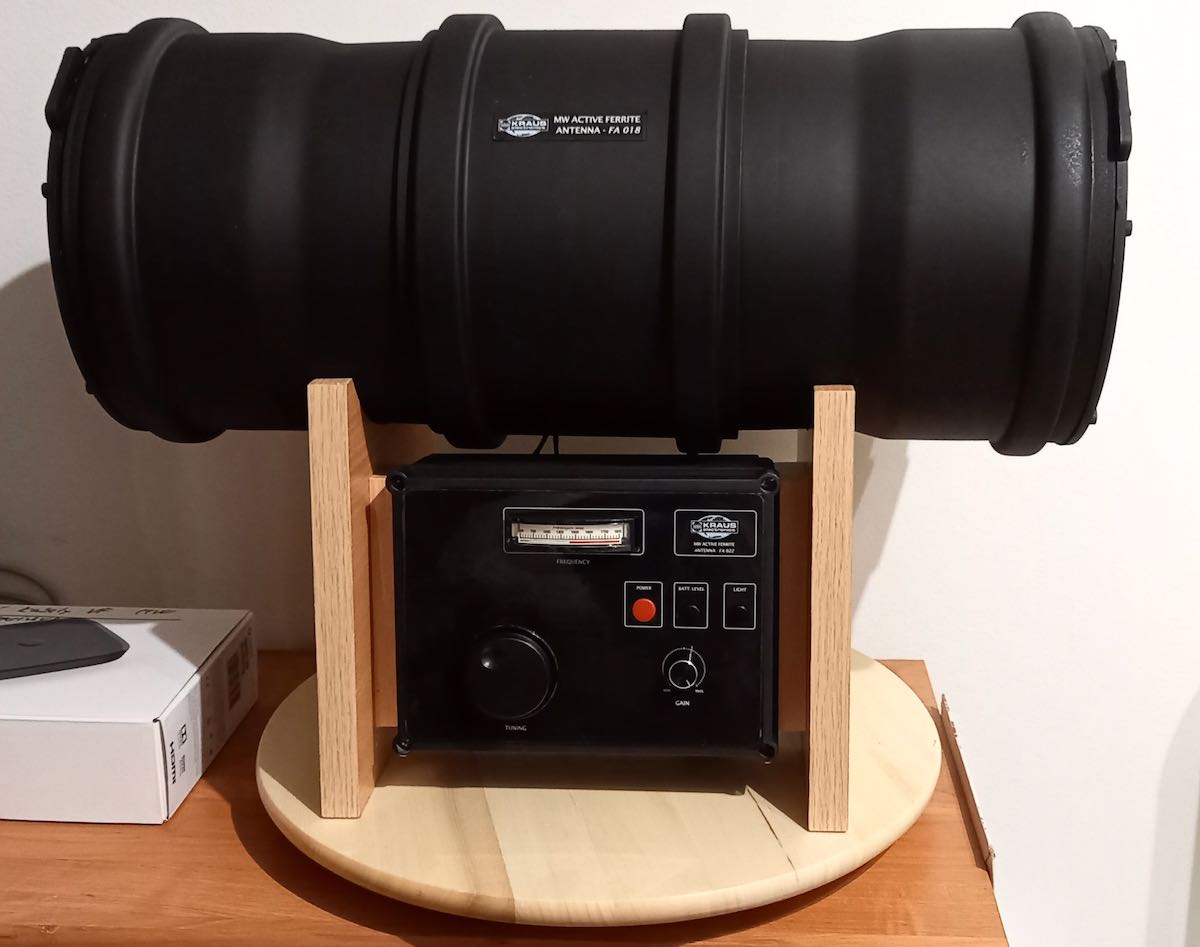
The antenna is a classic design featuring 60 ferrite rods 200x 10 mm, which are placed on a plastic sewage pipe.

Pict 3: Pipe with ferrite rods and windings

Pict 4: Pipe with ferrite rods and windings

In addition, sewer pipe sections are used for the entire antenna cover. I assume that this material can be obtained in other countries as well. Continue reading

DX Central’s MW Frequency Challenge: Week 1 results & Week 2 announcement

Many thanks to SWLing Post contributor Loyd Van Horn at DX Central who shares the following announcement:

Week 1 of the DX Central MW Frequency Challenge is in the books and with nearly 75 entries on a short week, it was a great success! You can read a full recap of the results at the blog post link, below including the announcement of the overall winner and leaders in various categories. Feel free to publish as much or as little of that as you would like, with credit of course.

https://www.dxcentralonline.com/post/week-2-of-the-mw-frequency-challenge-1430-khz

For Week 2, we turn our attention to 1430 kHz. The official Google Forms link to submit loggings can be found at https://forms.gle/f7ZEVFLJuXEnVPAm9.

Loggings must be for receptions between 0500 UTC on Sunday, November 28, 2021 and the closing announcement during our next livestream, on Saturday, December 4, 2021. Loggings must be for stations on 1430 kHz only and must be received using a DXers own equipment. WebSDR loggings are welcome for reference purposes but will not be counted towards the challenge competition. Full rules can be found at the above blog post.

73 and best of DX! Good luck to you all!

Loyd – W4LVH
Mandeville, LA

Radio Waves: Radio 77, RRI Personality of the Year, Radio Repair in Iraq, and Bernard’s Collection of 500+ Radios

Radio Waves:  Stories Making Waves in the World of Radio

Because I keep my ear to the waves, as well as receive many tips from others who do the same, I find myself privy to radio-related stories that might interest SWLing Post readers.  To that end: Welcome to the SWLing Post’s Radio Waves, a collection of links to interesting stories making waves in the world of radio. Enjoy!


The DJ Who Broadcast to One Listener for 40 Years (Narratively)

The Deke Duncan show on Radio 77 had it all — the latest hits, bouncy jingles, and a DJ who was born to be on the airwaves. In the 1970s it ran around the clock, several days a week, playing to the smallest audience in the world: Deke’s only listener was his wife. Radio 77 was based in a shed in Duncan’s backyard in a small English town, and everything on the show was a figment of his imagination. “My ultimate ambition would be to broadcast my radio station to the rest of Stevenage,” he told the BBC’s Nationwide TV show, when they visited his shed in 1974.

In a new podcast episode from Snap Judgement and Narratively, Duncan, now 75, reveals how he made up the news, the weather, and even the commercials — and kept Radio 77 alive for over forty years. It was Britain’s ‘pirate’ radio stations that inspired him, he said, recalling the rock’n’roll ships that broadcast illegally from international waters in the 1960s. But the young DJ’s dreams had been dashed when the BBC turned down his job application.

“They said, ‘I suggest you go away and get yourself a real job,’” Duncan recalled. (Check out an original Radio 77 show, recorded in 1974.) [Continue reading…]

RRI Personality of the Year (Radio Romania International)

Dear friends, RRI continues its traditional polling of listeners on short wave, the Internet and social media, with a new challenge, in a further complicated context generated by the Covid-19 pandemic. We would like to ask you which person you think left their imprint on the world in a positive way in 2021.

We are preparing to designate, based on your options, “The Personality of the Year 2021 on RRI”. Will this person be a public person, an opinion leader or a regular person with a special story? The decision is yours. We would also want to ask you why you picked that particular person. Continue reading

The DX Central MW Frequency Challenge

Many thanks to SWLing Post contributor Loyd Van Horn at DX Central who shares the following announcement:

It is with much excitement that I announce the launch of a new, fun initiative from DX Central: The MW Frequency Challenge!

The MW Frequency Challenge consists of DXers trying to log as many stations on a single frequency as they possibly can – and we all do it together at the same time!

This week’s frequency: 910 kHz

DXers can use the link below to submit their loggings starting now through the end of our live stream on Saturday during DXC Live!

Google Form for Loggings: https://forms.gle/miJJ6rE81uuyNDzG9

After the conclusion of our livestream, we will tally up the logs and announce the results. The DXer with the most logs on the frequency will receive a special customized “eCertificate” from DX Central!

Speaking of the live stream, don’t forget to join us for the premiere of Season 2 of DXC Live on Saturday, Nov, 27th at 0145 UTC on our YouTube channel at: youtube.com/c/dxcentral.

During the stream, we will be conducting our usual live AM DX session (including some time spent on 910 kHz to close out this week’s challenge). In addition, we are debuting a new feature on DXC Live: DXC 1-on-1, which consists of interviews with some of the biggest and most influential names in the DX community. This week, we will be joined by Wayne Heinen, the Chairman-of-the-board of the National Radio Club. Wayne will be sharing his expertise as a longtime hardcore DXer as well as some fantastic information about the National Radio Club!

You definitely do not want to miss out on this week’s livestream!

Giuseppe’s Homemade “Magic Tablet” Antenna System

Many thanks to SWLing Post contributor, Giuseppe Morlè, who writes:

Dear Thomas,

This is Giuseppe Morlè, from Formia central Italy on the Tyrrhenian Sea,

I built this “Magic Tablet. during a rainy afternoon to test various portables I have.

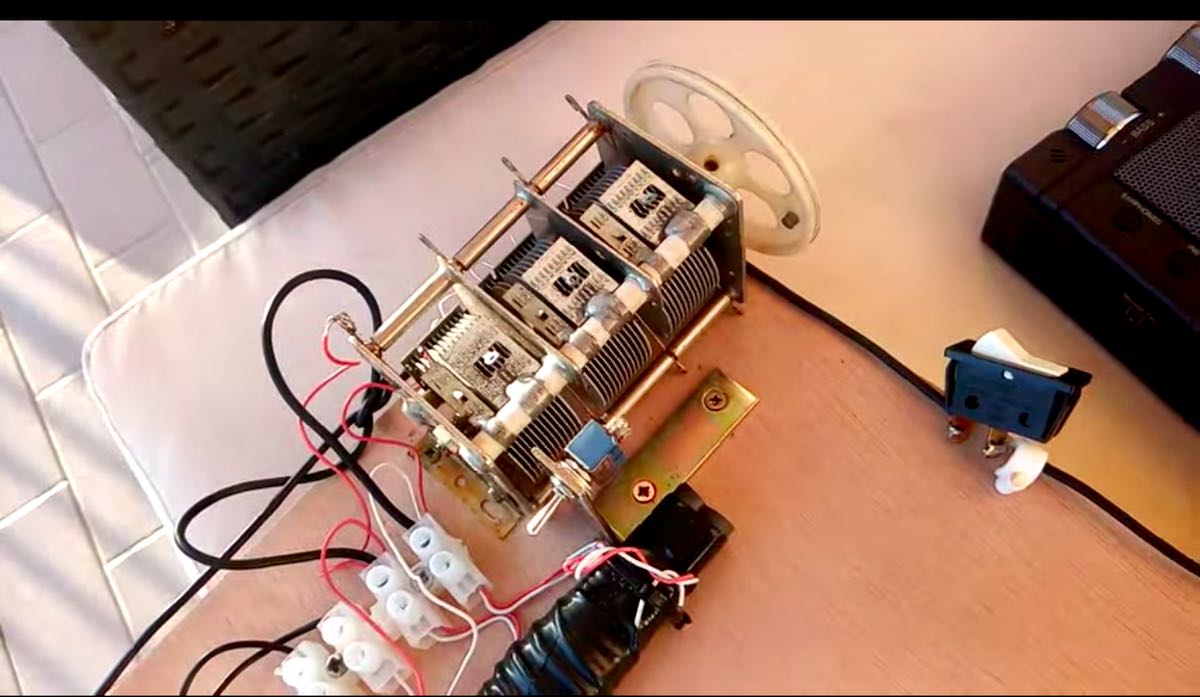
The tablet is composed of 2 separate circuits: one for the short waves, a single coil along the entire perimeter of the tablet, and another with 2 ferrites wrapped around 36 turns of telephone cable for the medium waves.

The heart of the system is a 1050 pf variable capacitor with its old wheel.

To listen to medium wave I have to exclude the short wave loop with a switch on the loop.

I also added another small switch to connect it to a capacitor for more or less capacity, but this I will do later.

I can test my portables like this because the tablet tunes very well from 500 kHz to 18 MHz. I spent very little to make all this as it is all recycled stuff.

You can see the first tests on the balcony of my house with a Tecsun H-501 via my YouTube channel:

Note: this video is in Italian, but you can turn on closed captions and have it translate into the language of your choice.

As I always say, I am not a technician and I have little manual skills in building things, not having a proper laboratory. When I get an idea, I put it on paper and I start to find all the materials and then see if they work. Not all of us are of the experts in electronics–what drives me is a passion for radio listening. Now being retired, I have more time to devote to it.

Thanks to you and hello to the whole SWLing Post community …

73. Giuseppe Morlè (IZ0GZW)

I love this, Giuseppe! What a clever all-in-one portable antenna system for your shortwave radios. I especially love the fact you were able to create all of this from parts you have at your home. You’ve got a winning attitude, too: build and experiment!  Thank you for sharing.