Category Archives: News

Is Amazon.com selling used, defective Grundig G3’s?

Amazon GrundigG3-001After posting the Grundig G3 deal from Amazon.com last week, many of you sent a message saying that you had snatched one up at that excellent price. However, readers Gary and Dave will be sending theirs back.  Here are their comments:

From Gary:

I received my $52 Grundig G3 today. Unfortunately, it appears to have been a re-sold defective unit. The whip antenna is bent, MW AM sensitivity is far worse than my Sony 7600GR, there is lots of internal noise on MW AM, and sync locks only on the strongest stations (and 1 kHz low).

From Dave:

Well, when I got to it it was up to $59 but that’s still a great deal so I snagged one.  It arrived today.  I suspect like Gary (above) that it was a returned unit.  Lots of scuffs and signs of use.  So… I’ve sent it back to Amazon asking for a replacement.  We’ll see what shows up.  I see now that it’s selling for $96.    I would hate to think that Amazon would be selling off returned stuff at a discount and yet presenting it as new.

Gary and Dave, I certainly hope that Amazon replaces your G3s with new-in-box units; I expect they will. These G3s were certainly advertised as new and sold by Amazon.com (not anther vendor). Let us know if you get a proper replacement.

Any one else experience the same problem from this Amazon sale? Please comment.

[Update: Also check out this thread on the Herculodge. Thanks, Gary.]

Spectres of Shortwave: RCI Sackville documentary seeks support

1-IMG_2274Last year, we mentioned that a documentary film featuring the RCI Sackville transmitter site was in the works. Fortunately, artist/film maker Amanda Dawn Christie, is on track for production of Spectres of Shortwave. Though the film has already received $70,000 in cash funding and $17,500 in services, they need an additional $10,000 to cover incidentals, so they’ve launched an indiegogo campaign.

Consider helping them along the way with even a modest contribution by visiting their indiegogo campaign page.

Heritage Foundation: BBG is cutting “the most cost-effective part of its organization”

One of the 19 curtain antennas on the campus of the Edward R. Murrow Transmitting Site (Click to enlarge)

One of the 19 curtain antennas on the campus of the Edward R. Murrow Transmitting Site (Click to enlarge)

For those of you not familiar, note that the The Heritage Foundation is a US conservative think tank based in Washington, D.C. whose mission is to “formulate and promote conservative public policies based on the principles of free enterprise, limited government, individual freedom, traditional American values, and a strong national defense.”

(Source: Heritage Foundation)

The Broadcasting Board of Governors (BBG) recently informed its workforce about sequestration cuts to Voice of America’s (VOA) shortwave and medium-wave broadcasting. Ironically, the Board is cutting the most cost-effective part of its organization: radio.

It would be more rational to cut the bloated management and administration of the International Broadcasting Bureau, which accounts for over 36 percent of the 2013 BBG budget request. Television broadcasting would also be a good place to look for savings, being far more expensive to produce and highly variable in terms of ratings.

Last year, however, the BBG declared in its “Strategic Plan” that radio is a “legacy medium,” a hold over from the past compared to television and the Internet. Now a golden opportunity has presented itself for the BBG staff. Thus, under the guise of complying with sequestration, the board has moved ahead with plans to cut radio, plans that have been fought by Members of Congress and heavily criticized by supporters of U.S. public diplomacy for several years.

One vocal critic was former Secretary of State Hillary Clinton, no less. During her Benghazi testimony in January, Clinton had harsh words for the BBG. Clinton bemoaned the fact that the U.S. government has “abandoned broadcasting to the Middle East,” and stated that the BBG, which is responsible, is “a defunct agency.” While this is hardly true in terms of budget, it is in terms of leadership.

Under sequestration, the BBG must cut $37.2 million out of its total budget of $720 million. The announced cuts in shortwave and medium-wave broadcasting are a drop in the bucket, a mere $5.3 million. While efficiencies should certainly be part of the budget picture, decimating the agency’s core mission—broadcasting—should not. Moreover, management has made it clear that these cuts are permanent and not reversible.

[…]It means deep cuts in broadcasting in Cantonese to China, Dari and Pashto to Afghanistan, English to Africa and Asia, Khmer to Cambodia, and English-learning programs around the world. It further means elimination of medium-wave and shortwave broadcasting in Albanian, Georgian, Persian, and Spanish, as well as in English to Afghanistan and in English to the Middle East.

The document notes that national FM and television affiliates will continue to carry VOA broadcasting. The catch is that local affiliates are subject to the whims of the host countries, with all the vulnerabilities and complications that entails.[…]

Read the full article on the Heritage Foundation website.

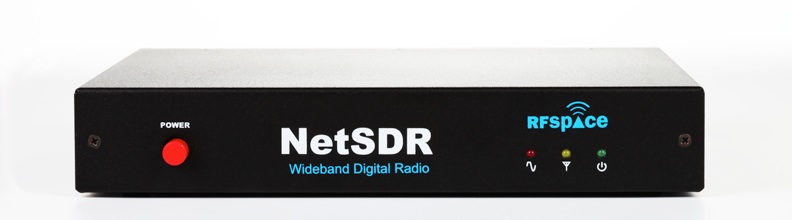
Ragnar’s review of the RFspace NetSDR

The RFspace NetSDR wideband receiver

The RFspace NetSDR wideband receiver

A few weeks ago, I posted a link to Universal Radio’s used receiver page which featured a used RFspace NetSDR. Ragnar Daneskjold (of Pirates Week fame) jumped on the deal. Ragnar had been contemplating an SDR purchase for some time, and the NetSDR fit the bill.

Now that Ragnar has had some time to play with the NetSDR, he posted some of his impressions which began with this statement:

A few weeks ago I purchased a Net SDR from RF Space. I have to say that I love it. Its just a black box that resides in my basement but it has revitalized shortwave listening for me.

Ragnar evaluates the NetSDR using three different SDR applications: CuteSDR, sdrDX and SDR-Radio.

Click here to read his full post which also includes instructions on how to listen to his Internet-connected NetSDR.

Thanks for sharing your thoughts on the NetSDR, Ragnar!

RNW looks into Zimbabwe’s history of media repression

Zimbabwe-MapIronically, Radio Netherlands Worldwide was once an international voice for those living without free press. In the following RNW article,  Dlamini points out that technology is advancing at a rapid pace and media outlets increasing; however, radio remains the most accessible means of receiving news and information, and unlike technologies that rely on the Internet and mobile phone networks, radio listening cannot be easily traced or monitored by those in power.

It is my sincere hope that, somehow, RNW’s voice will once again find the means to speak for those in need of free press.

Even 33 years after winning the fight for independence, Zimbabwe’s President Robert Mugabe remains a harsh critic of the white colonial government’s system. But with his recent ban on radios, he is imposing the same oppressive tactics that he himself once fought against to liberate his people.

By Nkosana Dlamini, Harare

As I write, Zimbabwe’s statutes are being stiffened with the state oppression that Mugabe himself once fought against. A case in point is the state’s recent banning of small wind-up radios with a short-wave dial.

To understand better, let’s first rewind a few decades…

Chiefs and Commandos
Zimbabwe, formerly Rhodesia, gained independence in 1980 after a protracted guerrilla war. At its peak, in the 1970s, the two main fighting movements, ZIPRA and ZANLA, established exiled radio stations in neighbouring countries where their fighters received training. These stations broadcast into Zimbabwe via short and medium-wave. It was the way to communicate with the local villagers who supported the war by sharing intelligence and foodstuffs.

But in a bid to thwart enemy operations, Ian Smith, the last white Rhodesian ruler, developed strategies that forced radios to be fitted with frequency modulation (FM), as opposed to short wave.

Manufactured by local Zimbabwean firms, Smith’s FM radio sets were branded with the name ‘Chief’.[…]Other radios were manufactured under the name ‘Commando’ and distributed to soldiers in the bush. The government’s intention here was to keep spirits up with music and programmes in which troops could request favourite songs and relay messages about their welfare to loved ones.

Mugabe’s heavy hand
Smith claimed – as Mugabe does now – to be shielding people from pirate stations broadcasting hate speech. In both eras, locals have been instilled with fear. They have had to resort to listening to exiled stations from under the blankets and in their barns, anxious that their neighbours might see them using forbidden radios.

[…]Even under Zimbabwe’s stringent laws today, it is not a crime to own a radio receiver. But, by day, Mugabe’s state agents confiscate the radios and harass citizens found in possession of them – a practice that gets revved up each time a Zimbabwean election looms. By night, the same agents return home to tune into exiled stations via the radios they’ve confiscated. In some instances, they distribute them among their relatives.

The state says it is confiscating the receivers because they are being brought into the country by NGOs without paying a customs fee. In some instances, the do admit they are trying to prevent ordinary citizens from accessing exiled Zimbabwean radio stations through shortwave – a unique feature in these radios.

In other ways, too, Mugabe has proven worse than his predecessor. He has made repeated attempts to scramble these stations’ signals. He is also allegedly responsible for the 2002 bombing of exiled station Radio Voice of the People and the 2000 and 2001 bombings of independent newspaper The Daily News.

Today’s listener
But Mugabe may be fighting a losing battle. Technological advances are no longer so slow. Today’s listener is not only more stubborn, but also more able to access alternative media sources such as the internet and digital satellite broadcasters.

Radio is also accessible via cell phone and computer. Most Zimbabweans now own cheap Asian-import cars fitted with radios that can access Studio 7, the exiled station most despised by Mugabe which has coverage even wider than that of the FM state broadcaster, Zimbabwe Broadcasting Cooperation (ZBC). Radio Voice of the People and Short Wave Radio Africa are two other exiled stations that attract a generous listenership.

And the stricter Mugabe gets about the ban’s imposition, the more ravenous becomes the appetite of Zimbabwean citizens. They want to hear precisely what the state broadcaster cannot – or will not – put in their domain.


(Source: RNW)

Allen’s thoughts as BBC Cyprus relay station closes today

bbc_arabicSWLing Post reader, Allen, writes:

BBC’s Cyprus relay station is being closed down today after more than 50 years of service. The BBC currently uses the station to broadcast its Arabic radio service to the Arab world on short wave. The BBC will still incur the cost of making its Arabic radio service in London, but it will only be available to listeners if Arab governments permit it, as the radio channel will only be available online or where governments have permitted the BBC to have an FM licence.

So – Saturday (today) is the last day that the ten million Arabic radio audience will be able to listen on short wave.

If all Arab regimes were really democratic enough to have a permanently free media and allow the BBC on, what is the point of the BBC Arabic anyway? But do we really believe that all the Arab world is free and democratic??

It is also another blow to the English World Service. World Service listeners lost their medium wave service to Europe on 648 two years ago. The closure of Cyprus means that the continuous World Service English medium wave service to Israel and surrounding countries on 1323 kHz also ends today.

For the time being, the Arabic medium wave to small parts of the East mediterranean will continue from another part of Cyprus. This will carry English for just two hours of daytime and two hours in the middle of the night on 720kHz.

The Cyprus relay station was taken over by the BBC as a result of the Suez Crisis.

It is part of the WS strategy to move from short wave and radio into television forced through against the views of World Service traditionalists by Peter Horrocks (head of Global news) and a contender to replace Helen Boaden as head of BBC news.

Peter Horrocks has no radio background, as former editor of Newsnight.

Peter Horrocks has diverted much of the 200 million pound annual World Service budget into making television programmes given free to local stations in Africa, and India. The flaw in that is that the BBC has no guarantee that the programmes will get through local consorship.

This is also the last Saturday that rural areas in Africa will get the Saturday afternoon Premier league live soccer commentary and other sports coverage from World Service. English short wave is being cut by 60 per cent from this weekend, with only 6 hours a day left – and no live sport on Saturday. It will be available if you are in a big city with an FM BBC relay, but most listeners still rely on short wave in Africa.

The only upside is that – at least this six hours a day in English seems to be guaranteed for another 10 years, as that’s the length of the BBC contract with the transmitting firm, Babcock.

VOA reducing shortwave radio broadcasts

VOAFollowing the BBC World Service’s lead, the VOA will reduce broadcasts to Iran, Albania, Georgia and Latin America, along with English language broadcasts to the Middle East and Afghanistan.

Full details below:

(Source: Inside VOA)

WASHINGTON, D.C. — Voice of America is reducing some of its radio transmissions this weekend and ending shortwave broadcasts to regions where audiences have alternative ways of receiving VOA news and information programs.

The transmission reductions allow VOA to comply with budget cuts required by sequestration and to avoid furloughs of staff members.

When the new broadcast schedule goes into effect on March 31st, cross-border shortwave and medium wave broadcasts to Albania, Georgia, Iran and Latin America will be curtailed, along with English language broadcasts to the Middle East and Afghanistan.

VOA will continue to provide audiences in these regions with up-to-date news and information through a host of other platforms, including radio and TV affiliate stations, direct-to-home satellite, web streaming, mobile sites and social media.

The new broadcast schedule calls for reductions in some  shortwave and medium wave radio broadcasts in Cantonese, Dari/Pashto, English to Africa, Khmer, Kurdish, Mandarin, Portuguese, Urdu and Vietnamese. Direct radio broadcasts to all of these regions will continue.

The transmission reductions are expected to have minimal impact on audience numbers since primary modes of delivery will remain.  Shortwave and medium wave broadcasts will continue to regions where they draw substantial audiences, and to countries where other signal delivery is difficult or impossible.

For more information contact Kyle King at the VOA Public Relations office in Washington at (202) 203-4959, or write [email protected].  For more information about VOA visit our Public Relations website atwww.insidevoa.com, or the main VOA news site at www.voanews.com.