Category Archives: Nostalgia

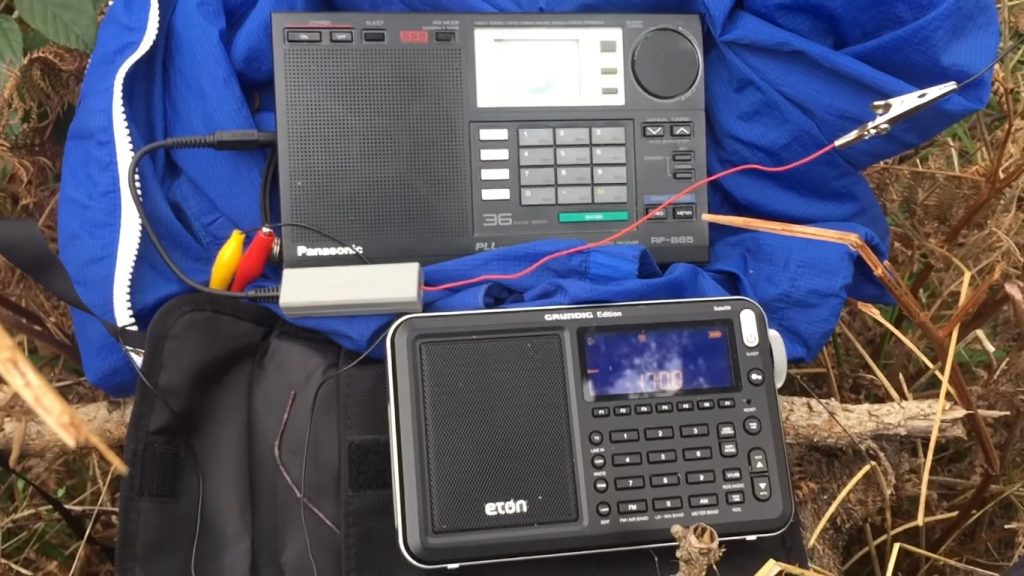
The Panasonic RF-B65: the legendary portable with a cult following amongst DXers

Hi there, back in 1990 I was given a Panasonic RF-B40 for my birthday (I think it was my birthday…1990 was a long time ago!). I found that radio to be very sensitive on shortwave, more so perhaps than my Sangean ATS-803A, but ultimately it didn’t really add much value to any serious DXing because it would only tune on shortwave in 5 kHz steps. This rather course tuning arrangement was very limiting in terms of tuning out adjacent noise and copying tropical band – and other signals that weren’t quite on-frequency etc. Frustrated, I  lent my RF-B40 to my brother a few years ago and serves me right; following a house move, he managed to lose it! Quite a shame really because almost three decades later, I would have been very interested to put the RF-B40 through it’s paces on a DXpedition or two. You really don’t see them in action very often at all these days.
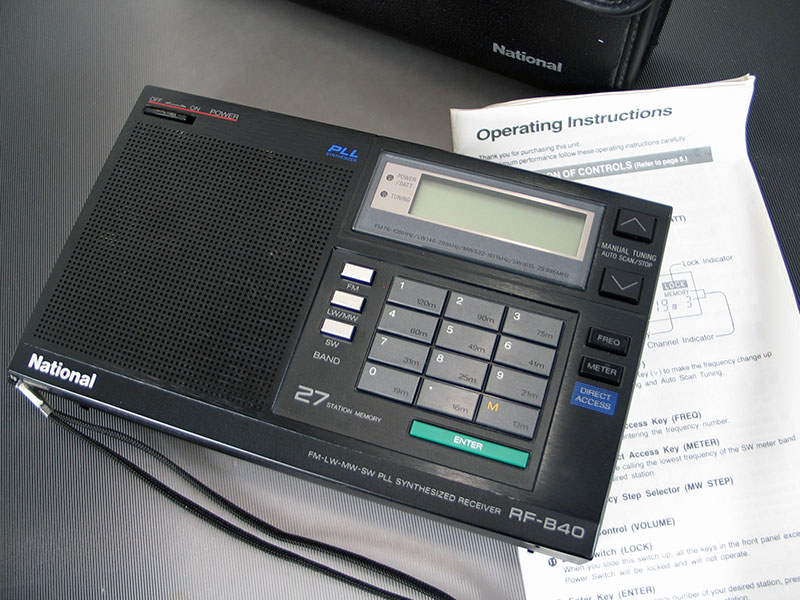
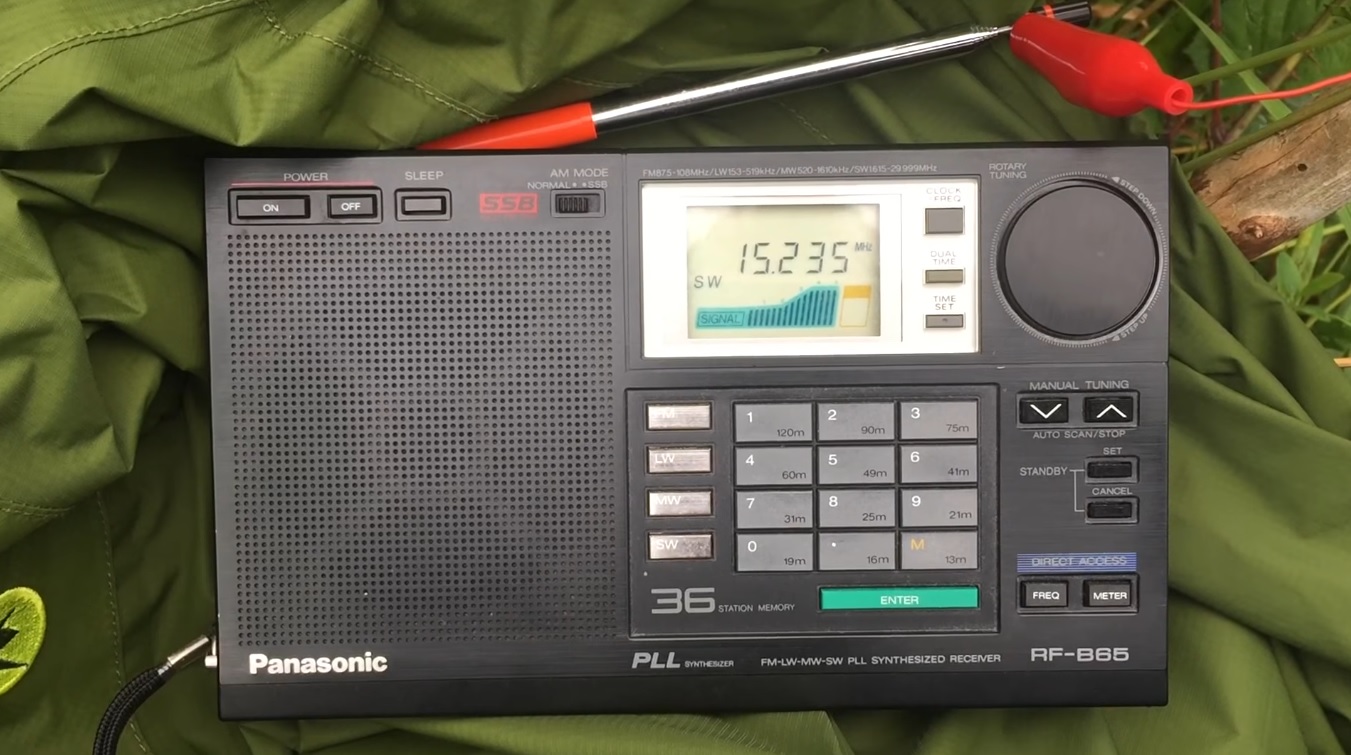
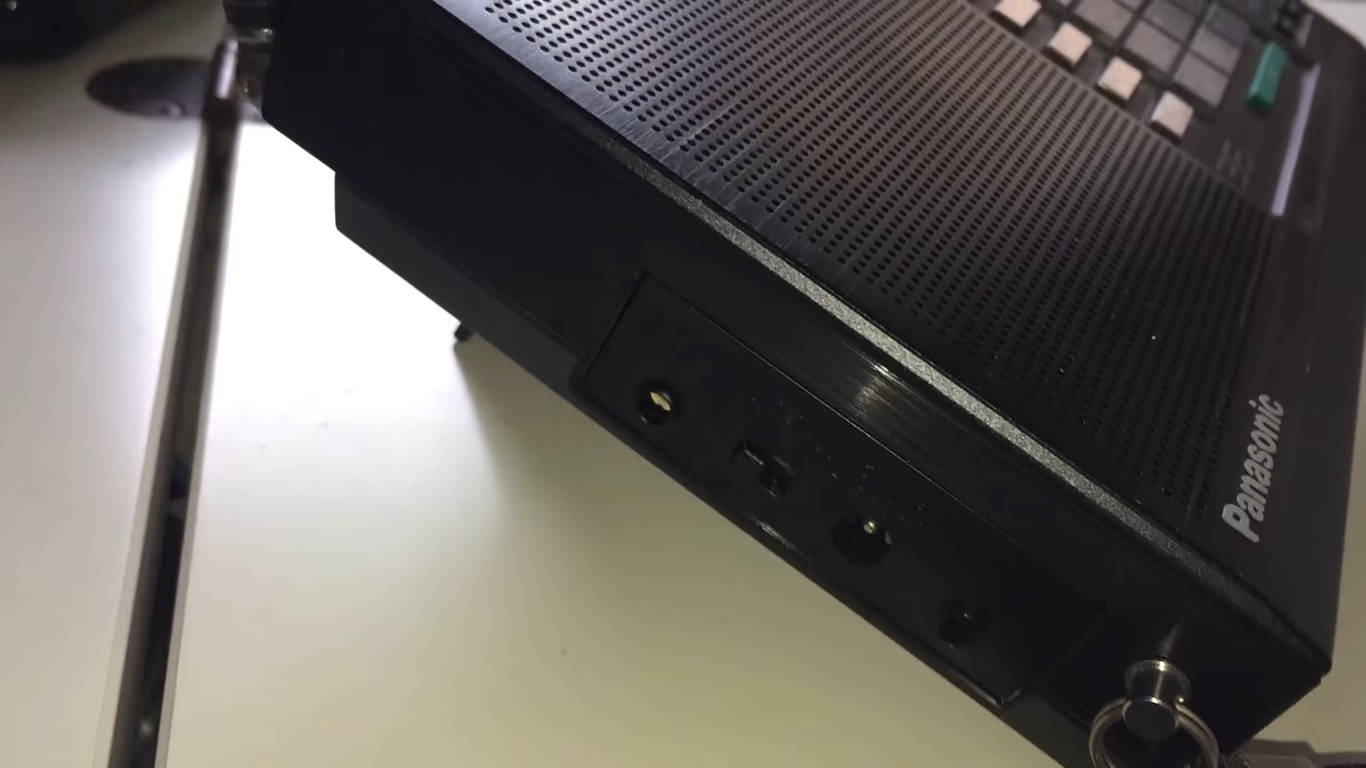
 Above: the Panasonic RF-B40 (not mine – unfortunately) and the RF-B60, mid-DXpedition!

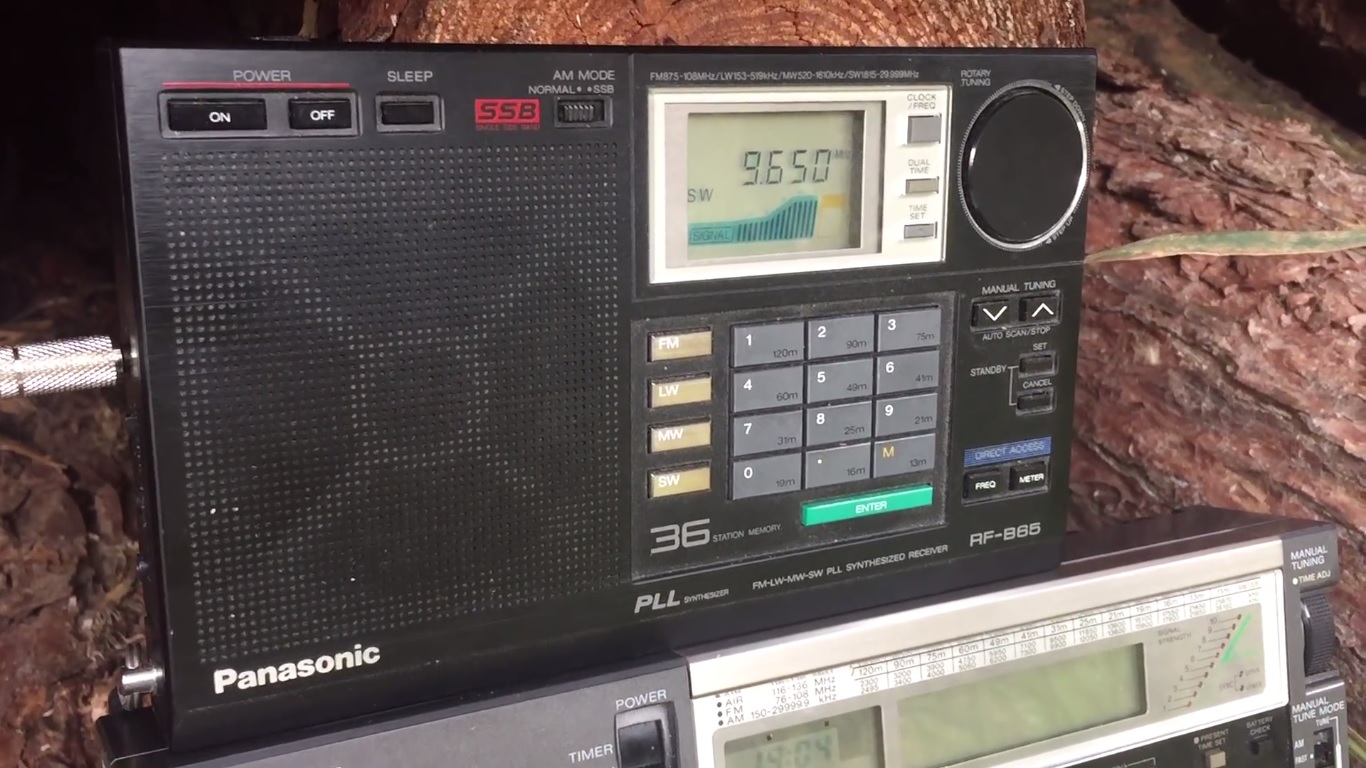
At that time, which was around the beginning of the 1990s, I read a review somewhere and it became clear that the better receiver was quite obviously the RF-B65. Upon it’s introduction into the market, the RF-B65 was immediately recognised as an excellent receiver, however, in the intervening years it’s reputation has continued to grow to the point today where it enjoys legendary status amongst DXers and bit of a cult following. There’s a lot of information on the RF-B65 to be found on the internet, so I won’t go into huge detail, but the obvious question is: what makes thsi receiver so special? Well, it’s a quite compact PPL double conversion receiver, covering 153 kHz to 29,999 kHz AM and 87.5 to 108 MHz, FM. It has a keypad for direct frequency input, although you have to press either the ‘FREQ’ or ‘METER’ buttons prior to punching in the numbers to define whether you wish to access a particular frequency, or band. I actually find that slightly annoying, but you easily learn to live with such trivial matters when using a radio of this quality and performance.

Furthermore, there’s an electronic signal strength meter, a DX/local attenuation switch, external antenna jack, SSB reception mode, 1 kHz tuning steps on shortwave (unlike it’s little brother the RF-B40) and fine tuning. The single bandwidth filter is 6 kHz wide and thus limits selectivity a little, although the SSB option and fine tune helps offset that somewhat.  It would have been nice to have a couple more filtering options, particularly narrower for serious DXing in crowded bands, to combat adjacent channel QRM. Build quality is generally excellent as you would have expected from a high-end Panasonic portable and with a very compact form-factor – roughly the size of a paperback book and weighing in at just 1.4 Ibs, it is eminently more portable than a Sony ICF-SW77 or the iconic ICF-2001D/2010.


Ultimately, the RF-B65 continues to enjoy an excellent reputation today, nearly 30 years after it was introduced because it is a wonderfully sensitive receiver and arguably the best-ever performing shortwave portable in the paperback book size category – often touted as ‘travel portables’. I managed to acquire an example in as-new condition from eBay, although mind you, I paid through the nose for it lol – that cult following ensures prices remain very robust! I have tested my example against the equally legendary Sony ICF-2001D, still considered by many to be the benchmark for shortwave portables, and in my experience the Panasonic is right up there with it. There’s virtually no difference whatsoever in sensitivity. Where the Panasonic comes a little unstuck is the lack of bandwidth filtering and SYNC, leading to lower selectivity. However, clever use of SSB and fine tuning does provide quite good compensation for these shortcomings. Overall though, given it’s size, sensitivity, build quality and audio, as a complete package, in my opinion, the RF-B65 is equal to the ICF-2001D, and this is why today, it remains so highly sought after.
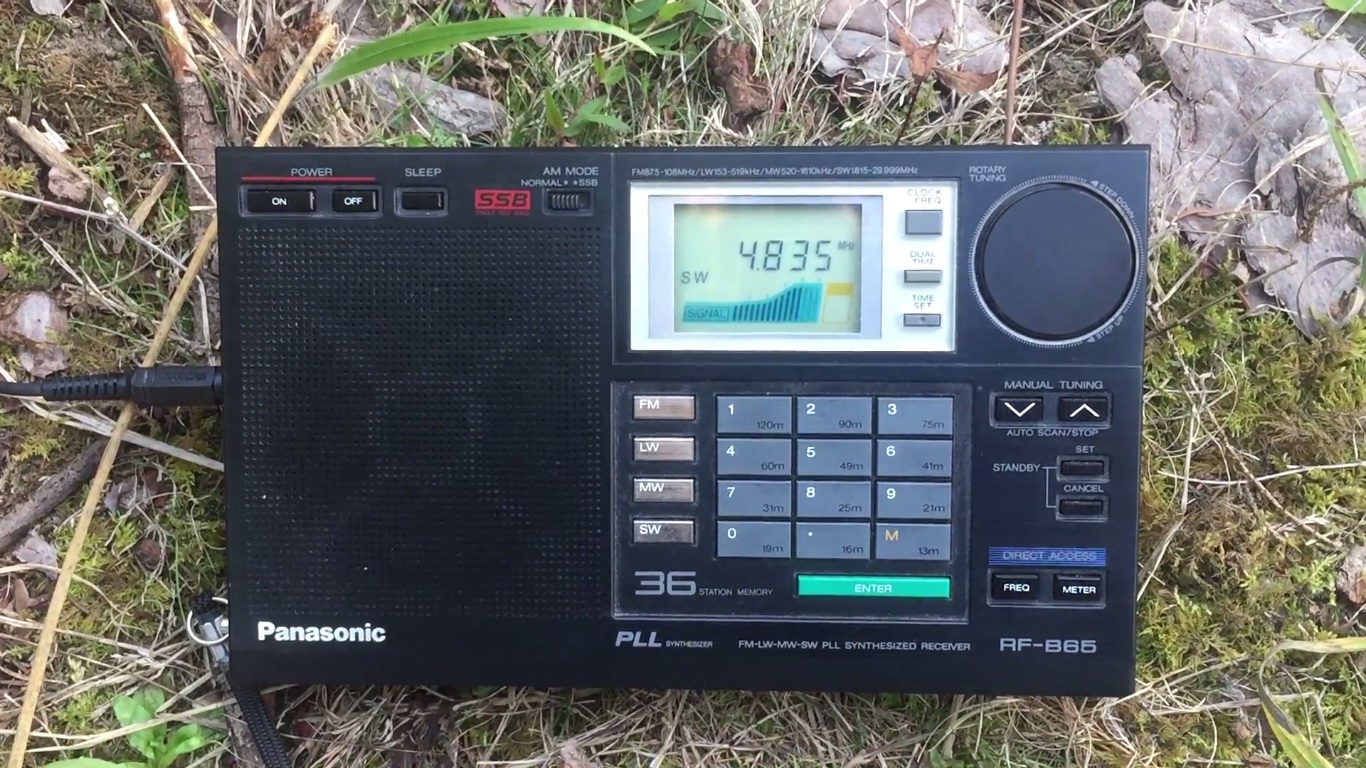
Below are embedded reception videos and text links to the Oxford Shortwave Log YouTube channel, with various DX catches on the RF-B65. Some of these are considered quite rare in Europe, for example EXPPM Radio Educación’s 1 kW signal from Mexico City, the now defunct ABC Northern Territories on 120 metres and Radio Bandeirantes from Sao Paolo, Brazil, amongst others. Please note; right at the bottom of this post is a link to some very recent comparisons with the brilliant Eton Satellit – one of the very best portables currently on the market today. The vintage Panasonic holds its own, despite 30 years of supposed technical innovation in electronics. Thanks for reading/watching/listening and I wish you all great DX.


Click here to view on Oxford Shortwave Log

Click here to view on Oxford Shortwave Log

Click here to view on Oxford Shortwave Log
Click here to view on Oxford Shortwave Log

Click here to view on Oxford Shortwave Log

Click here to view on Oxford Shortwave Log

Click here to view on Oxford Shortwave Log

Click here to view some comparison videos of the RF-B65 and Eton Satellit


Clint Gouveia is the author of this post and a regular contributor to the SWLing Post. Clint actively publishes videos of his shortwave radio excursions on his YouTube channel: Oxford Shortwave Log. Clint is based in Oxfordshire, England.
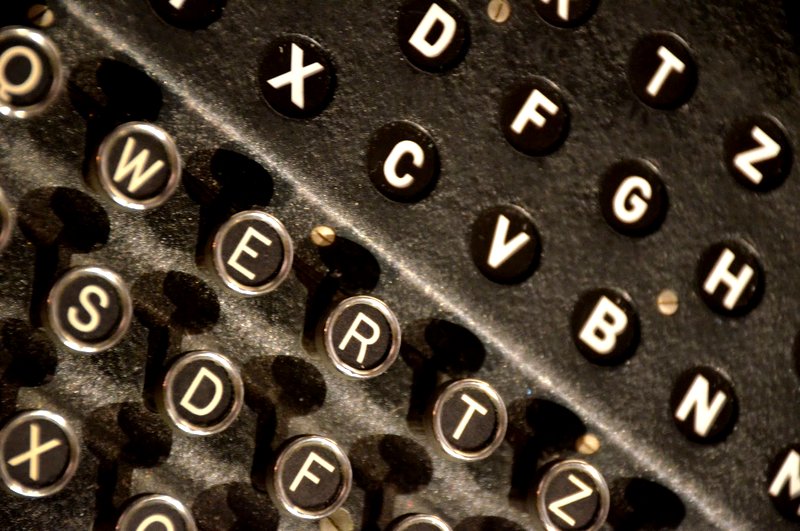
Bletchley Park replica Turing Bombe decodes 40M Enigma message

Remember the weekend 40 meter Enigma message transmitted by DL0HNF? At least one recipient decoded this message:

(Source: Southgate ARC)

40m Enigma Message decrypted at Bletchley Park

On Friday, April 7 the amateur radio station DLØHNF transmitted an Enigma encrypted message on 7036 kHz to Bletchley Park

DLØHNF is the club station at the Heinz Nixdorf Museum in Paderborn, Germany. The encrypted telegraphy message they transmitted was received at the home of the World War Two UK Codebreakers in Bletchley Park. There the message was fed into a replica of the Turing Bombe which enabled the encryption to be cracked.

The message read:  “Paderborn greets the Codebreakers at Bletchley Park”

Read the report and pictures of the event down the page at
http://www.hnf.de/en/veranstaltungen/events/cipher-event-wer-knackt-den-enigma-code.html

Bletchley Park
https://www.bletchleypark.org.uk/

I would have loved to watch the Touring Bombe in action!

Out of curiosity, did anyone record the Enigma transmission?  I’ve had a number of readers inquire about this. Please comment!

1920s Radio Times magazines now available to public

(Source: BBC Media Centre)

BBC makes 1920s Radio Times magazines available to public

The BBC is making the earliest issues of the complete Radio Times magazines publicly available online for the first time. This release is part of the BBC Genome Project – a digitised searchable database of programme listings – from 1923 to the end of 2009.

BBC programme records have been available to the public via the BBC Genome Project since October 2014. Now, users can access digitised editions of the magazines from 1923-1929. Opening up this archive means researchers will be able to make direct links between the listings in the database and the original published listings.

Early colour front covers, specially commissioned illustrations and letters from the BBC’s first radio audience form part of the content in this fascinating record of early broadcasting.

Radio Times began in 1923, a year after the British Broadcasting Company started regular broadcasts, and thus provides a valuable record of the programmes that have been broadcast over nine decades.

More than five million programme records, scanned from Radio Times magazines, form the backbone of the BBC Genome website. Now, members of the public will be able to view the 1920s listings in facsimile, as well as all the extra material contained in articles and features in the magazine that have previously been unavailable on the site.

Hilary Bishop, Archive Development Editor, says: “We are particularly pleased that it is easy for our users to flick between the listings in the database and the related text in the magazine, as well as to scroll through articles not seen previously on BBC Genome. It is part of our commitment to continually improving BBC Genome and helping to open up the BBC’s archives as much as possible.”

Radio Times in the 1920s featured regular articles by the first Director General of the BBC, Lord Reith, and the BBC’s chief engineer, Peter Eckersley, addressing topics that concerned the BBC audience of the time, such as how to choose the best ‘receiving set’ and how to prevent ‘oscillations’ over the airwaves.

Articles, cartoons and programme listings all provide an insight into the history of broadcasting and the BBC’s first listeners, while adding some context, for a modern audience, to the earliest BBC programme records. The first editions of Radio Times show a nation still enthralled by the technological wonder of the new ‘wireless’ sets.

In each edition for the first few years of publication, cartoons explored the comic possibilities of a public who still didn’t quite understand how radio worked. “Would you kindly remove your hat madam?” asks a man at a ‘wireless village concert’. Yet the performer on stage is a radio set.

As the public wrestled with their new radio antennae, legendary cartoonist W. Heath Robinson illustrated two editions with eccentric designs of aerials.

Other historical snippets include a ‘new experiment’, in 1924, to broadcast a programme from California, to London. The exercise was to be repeated in the opposite direction. “If suitable conditions exist in the atmosphere”, concludes the article, “there is no reason why the experiment should not be successful”.

You can access the digitised 1920s magazines at: http://genome.ch.bbc.co.uk

Click here to read this article at the BBC Media Centre.

Click here to browse the Radio Times archive.

30 Year Flashback: From the April 1st Edition of the Cascade Mtn. DX Club Bulletin

Among SWLing Post readers, I’m sure there are others like myself who, decades ago, listened to the Zzzt…Zzzt…Zzzt! sound of a dot-matrix printer as it spit out copy for “pasting up” a DX club bulletin. In the 1980s I was one of those enterprising DXers, taking over publication of the Cascade Mountain DX Club (CMDXC) when a local hobbyist lost interest in producing it.

For a few years I found that creating a regular bulletin was almost as satisfying as DXing itself, and I went on to publish another local bulletin, DX/Northwest. It was a forum for DXers in the Pacific Northwest USA to share loggings and information. I also hosted occasional gatherings of Seattle area DXers who were members of the club.

I recently came across my collection of all the past bulletins and appropriately found the April 1, 1987 edition of the CMDXC. I had completely forgotten I’d made an effort every April 1st to “spice up” the bulletin content with some April Foolery.

The first item was slipped into the midst of the monthly loggings, just to make sure readers were paying attention:

The fictitious DXer named “Grobe” in the spoof logging was a thinly veiled reference to radio hobby publisher Bob Grove of Grove Enterprises and Monitoring Times magazine. He actually wrote to me after the initial April 1st edition, beginning a running joke of humorous responses to my April Fool’s bulletin content, and always signing his letters “Bob Grobe”. I received similar letters from him after each year’s April edition. I don’t recall Bob ever being a member of the CMDXC, so I’m not sure how he knew of the content. I still have one or more of those letters stashed away somewhere.

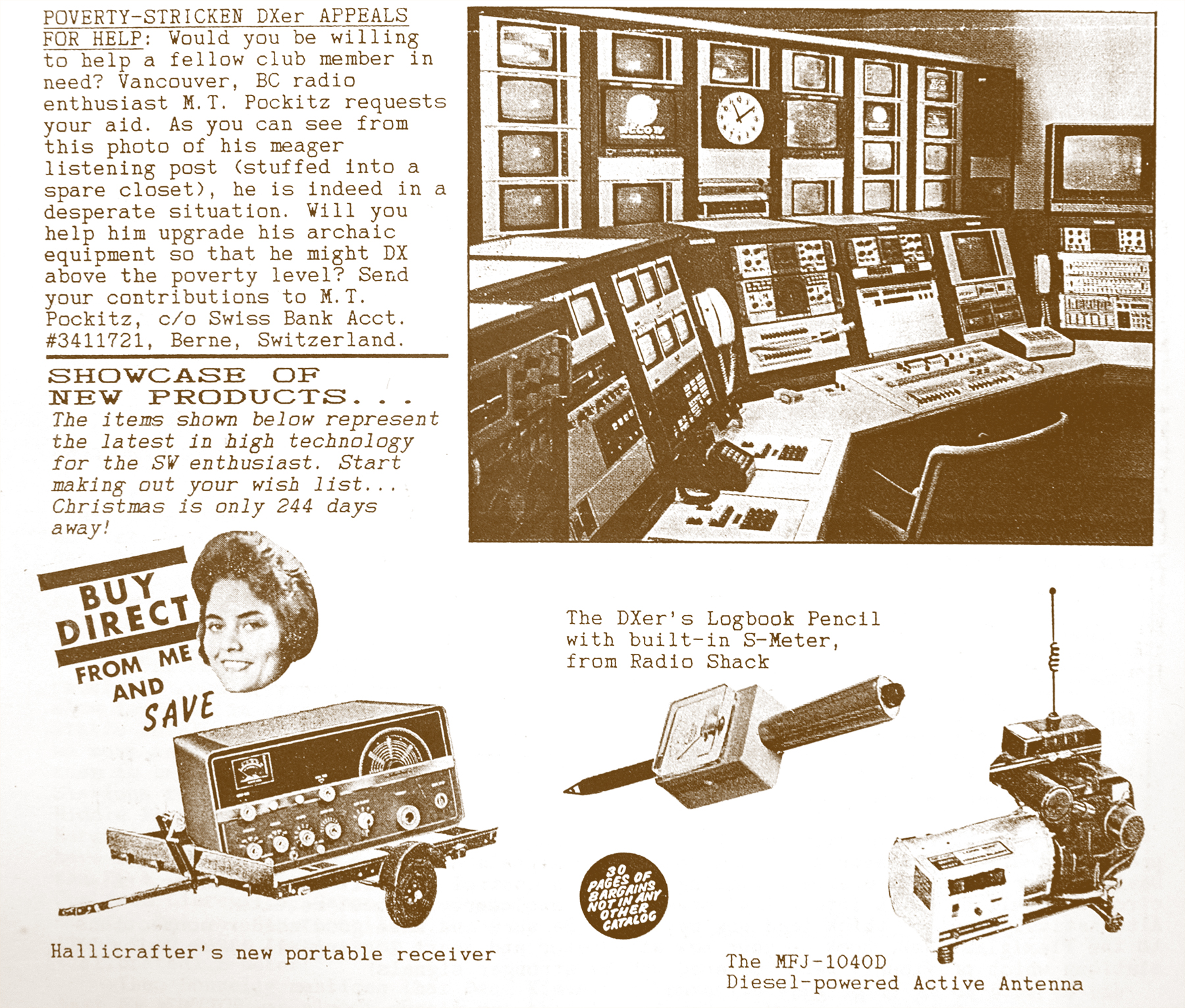
Perusing the April 1st, 1987 bulletin again, I note that I was feeling charitable towards a certain down-on-his-luck DXer “M.T. Pockitz” from nearby Vancouver, BC Canada, and wanted other club members to help him in his time of need. I was also in close touch with new developments in radio technology, as I am today:

Who else remembers the old DX club bulletins–from the dot-matrix printer era–with fondness? You may even be senior enough to feel nostalgic over the “ditto machine” or Mimeograph produced publications!

To read more humor that only a DXer could love, I highly recommend Don Moore’s excellent web site BLANDX – Historical DX Humor. This site is the web archive of the classic BLANDX parody bulletins. I was an occasional contributor, and on the receiving end of Don’s wonderfully warped funny bone at times. If you can’t laugh at the BLANDX content, watch out–your WPE Callsign might have expired!

Guy Atkins is a Sr. Graphic Designer for T-Mobile and lives near Seattle, Washington.  He’s a regular contributor to the SWLing Post.

Standing Inside a Broadcast Transmitter While it’s ON!

I stumbled across a video from the fabulous Mr Carlson’s Lab YouTube channel. If you haven’t check out this channel before, and you are really eager to learn more about electronics, this is a wonderful YouTube site.

So, in the latest episode, Mr Carlson takes us on a tour of a very large Gates BC-250-GY broadcast transmitter from the 40’s era. Lots of big tubes, transformers and capacitors! This is an old mediumwave transmitter that he has restored. Although the technology has changed markedly since the 1940s, the basic principals of transmission are still present. And, interestingly, he points out that this particular unit was in regular service right up until as recently as 2003!

It’s an interesting show and even if you can’t grab onto all the technical information presented, I think you will enjoy looking at technology from a past era.

73 and good DX to you all,

Rob Wagner VK3BVW

Rob Wagner, VK3BVW, is the author of this post and a regular contributor to the SWLing Post. He also blogs at the Mount Evelyn DX Report.

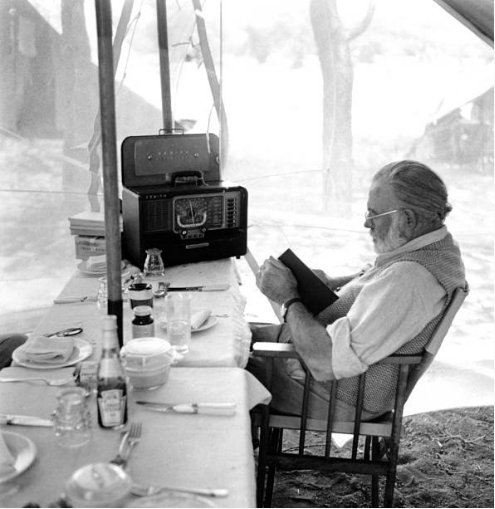
Hemingway and a Zenith Tranoceanic?

In a Twitter exchange yesterday @dean_frey shared the photo above of Ernest Hemingway on Safari in Kenya in 1952.

I believe this may be a Zenith Transcoceanic model H500. Could a Transoceanic expert in the Post community confirm of correct me? Please comment!

I know this: I love Earl Thiesen photos.

Thanks for sharing, Dean!

Check out Dean’s twitter feed for other vintage photos.

Dan sheds light on various Hammarlund SP-600 models

Many thanks to SWLing Post contributor, Daniel Hawkins, who leaves the following comment in reply to our previous post about the Northern Radio SP-600 and discussion about diversity operation. Dan writes:

Diversity operation: two or more receivers and antennas used to copy CW or RTTY from one or more transmitters.

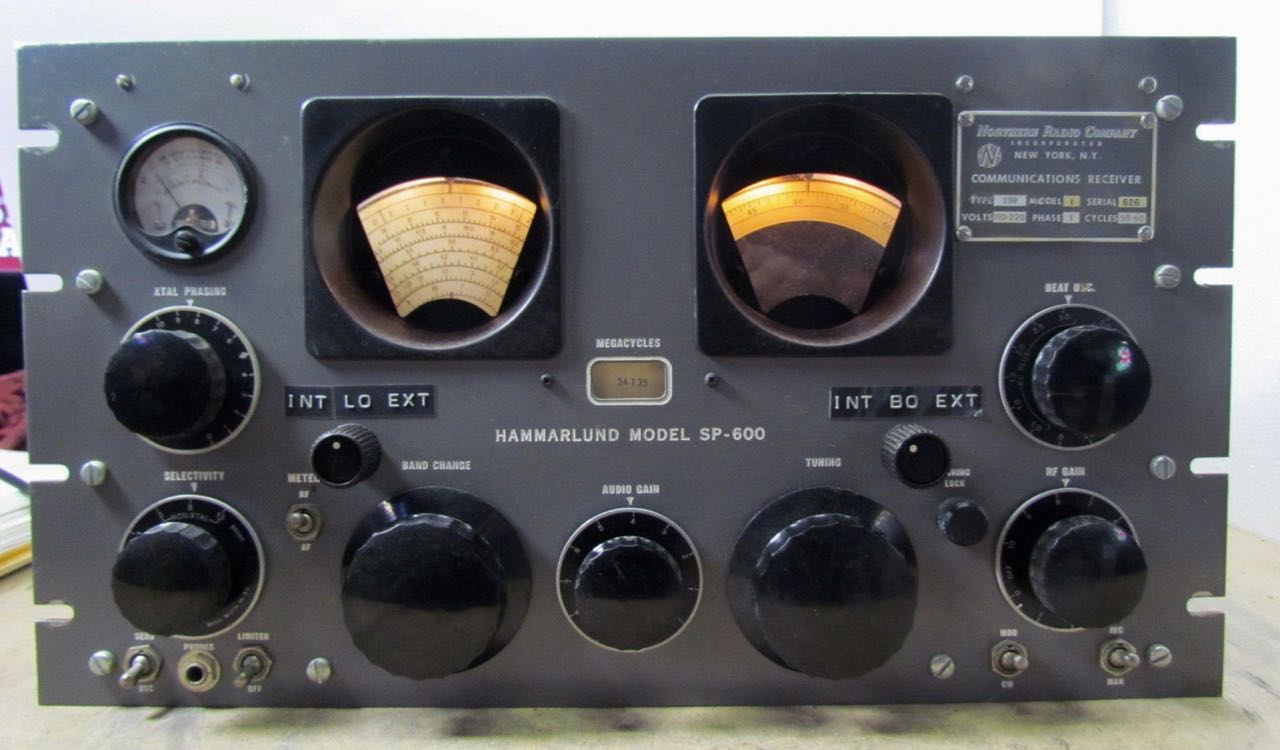
Most of the Hammarlund SP-600s were models built for diversity use including the well-known JX-17, the most common SP-600. Diversity models can be used as single receivers. In this eBay example Northern Radio has modified a SP-600 J-11 for diversity use.

SP-600 nomenclature: J means joint army/navy (JAN) mil-spec components. L means low frequency. X means crystal frequency control in addition to VFO. My SP-600 is a JX-21, which is not a diversity model. Higher model numbers do not necessarily mean later production dates. All SP-600s use the same serial number sequence regardless of model. Somewhere between serial numbers 15,000 and 17,000 (mid 1950’s) Hammarlund stopped using molded black beauty capacitors and switched to installing ceramic capacitors.

The two-digit model numbers indicate model types. JX-1, 7, 10 and 21 were similar non-diversity receivers. SP-600s built for military contracts will have an additional tag showing the military model number(s).

Here is a great page showing Northern Radio modified SP-600s in action with accompanying Northern Radio RTTY gear.

http://www.navy-radio.com/rcvrs/frr28.htm

Thanks for the primer, Dan! I believe I have one of the X models with crystal control, but I’ll need to verify once back home. Any other SP-600 owners out there in the Post readership?