Category Archives: Nostalgia

Cambridge 105 goes pirate for Good Friday

Cambridge-105(Source: Southgate ARC via Thomas Ally)

Cambridge 105 goes pirate – including on 6,070 kHz – for Good Friday

Community broadcast radio station Cambridge 105 is throwing away the modern technology and returning to the era of pirate radio for Good Friday.

Setting up turntables and cart machines on the Riverboat Georgina on the River Cam, we’ll be broadcasting from 10am to 10pm, covering everything from the early days of offshore radio in the 1960s to the end of the era in the early ’90s.

We’ve also teamed up with the DARC-run Channel 292 shortwave transmitter on 6070kHz for the day, so SWLs should be able to hear us there across much of Europe.

Dom M0BLF will be handling QSL cards for anyone who does hear us on HF.

Cambridge 105 is run entirely by volunteers, including a good number of licensed amateurs, both on the engineering and presentation side of the station.

73,

Rob, M0VFC

My new (to me) Sony ICF-2001 shortwave radio

Sony-ICF-2001-003

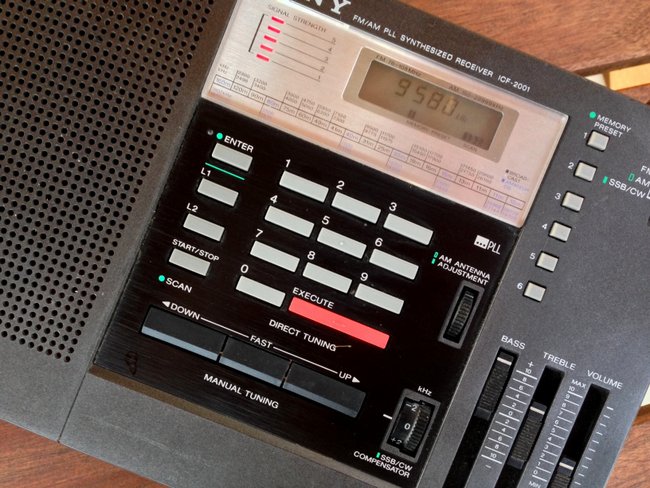
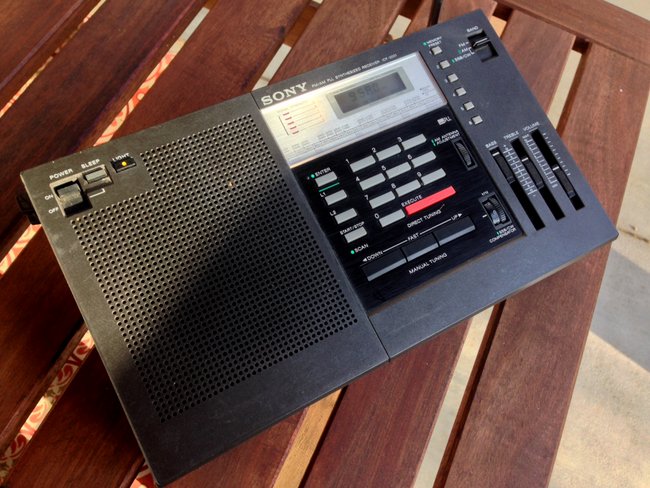
A few weeks ago, I made an impulse purchase: a Sony ICF-2001.

Perhaps it was the post about John Lennon’s ICF-2001, or perhaps it was the simple fact I couldn’t afford a ‘2001 when I was a kid; either way, I saw what I thought was a fair price and I bit the bullet.
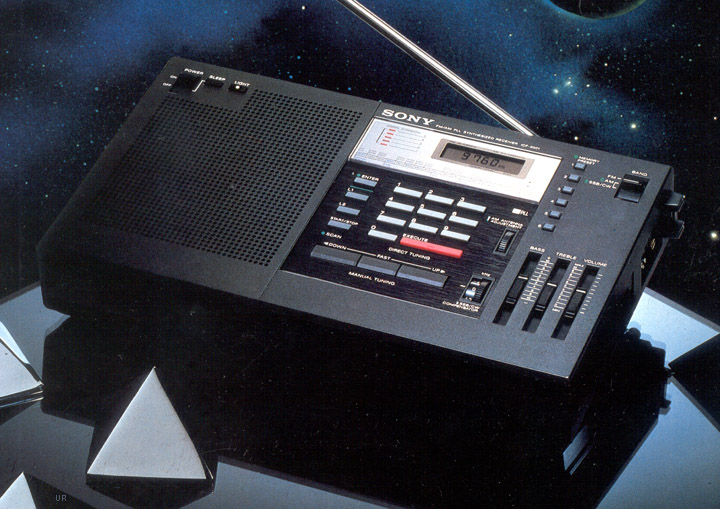
icf2001lAt about 9-10 years old I remember seeing the (above) image of the ICF-2001 in an advertisement and imagining all that I could hear with this amazing–microprocessor-controlled, dual conversion, frequency synthesized general coverage(!)–portable receiver.
Sony-ICF-2001-7

At the time, my only shortwave radio was the Zenith Trans Oceanic Royal D7000–a wonderful radio for sure–but the convenience of digital tuning? I could only imagine.

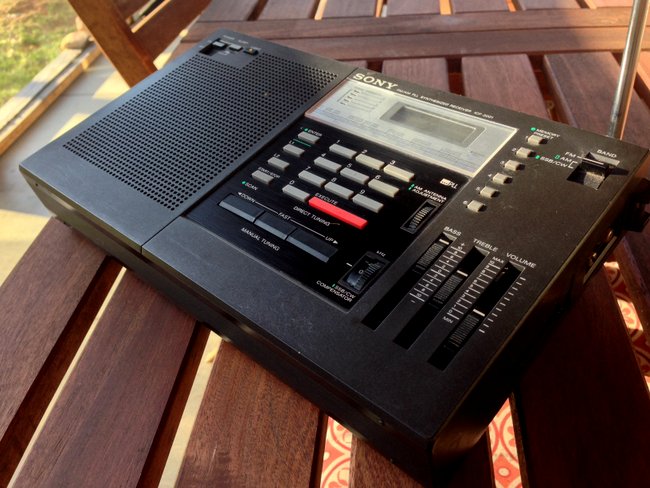
The ICF-2001 had revolutionary featured like direct access keypad tuning and an LCD digital readout. The ICF-2001 covered 150 to 29,999 kHz and, like my Transoceanic, could receive single sideband. It also had six memories that could be assigned to buttons for quick access to my favorite frequencies. Six. Whole. Memories!  
Sony-ICF-2001-1

I picked up my used ICF-2001 for $67.00 US shipped. The seller (a fellow ham radio operator) insured that the radio was in excellent mechanical shape, though cosmetically showed some signs of wear. The only thing missing was the ICF-2001’s shoulder strap. That was fine by me, though, because the seller included all original manuals/documentation and a very cool canvas carry bag (below) that fits the ICF-2001 like a glove.
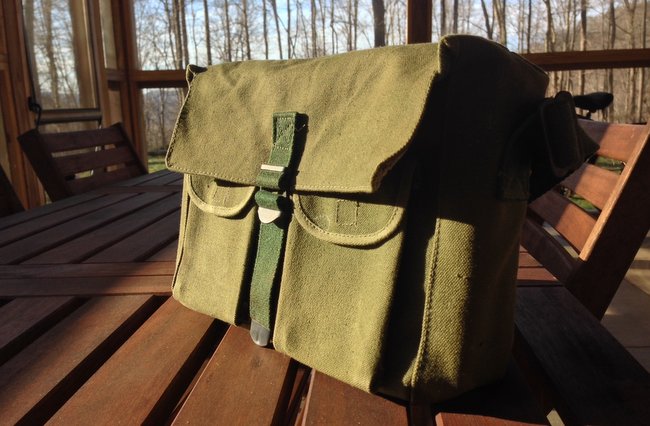
Sony-ICF-2001-8I’ve had the ICF-2001 for a few weeks now and I must say that I’m quite pleased.  It’s much larger that most portables currently on the market, but was probably slightly smaller than the venerable ICF-2010.

The audio from the ICF-2001’s built-in speaker is top-notch; with separate treble and bass control, it’s easy to adjust audio to your taste.

Would the ICF-2001 out-perform a modern portable receiver? Probably not. Was performance similar to the ICF-2010? No way. The ICF-2001 has a few annoying quirks (like muting between frequencies, no tuning knob, a backlit display that’s rather small and hard to read at certain angles)–items most modern portables have long since addressed.

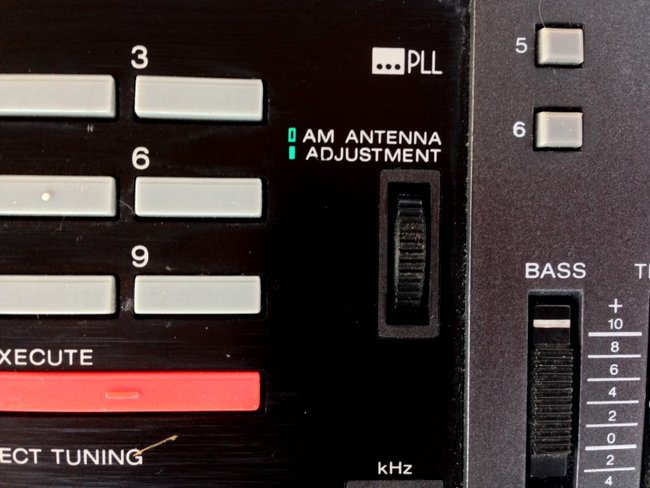
With that said, the ICF-2001 does have a few features I wish modern receivers would adopt, like, a built-in antenna trimmer.
Sony-ICF-2001-3

This morning, on my porch, I listened to several broadcasters across the bands and used the antenna adjustment to tweak the match. The adjustment would sometimes increase reception by three S units. I would love to have a similar feature on, say, my Tecsun PL-680.

I also like the old school power switch–a proper mechanical switch that makes it much more difficult to accidentally turn the radio on while traveling or operating in a portable setting.

Sony-ICF-2001-1

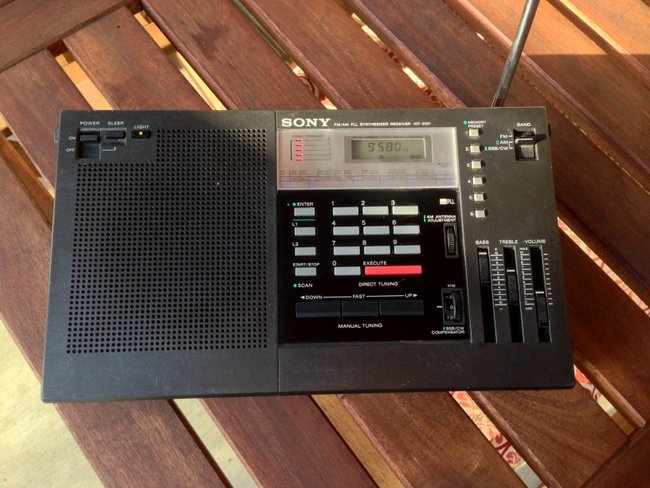
Even thought the ICF-2001 was a bit of an impulse purchase, I have no buyer’s remorse at all. She’s a sturdy rig with great audio and, I believe, decent performance on the shortwave and medium wave bands. I can certainly confirm that it would have blown my mind when I was 9 years old!

Besides..if the ICF-2001 is good enough for John Lennon, it’s good enough for me!
Sony-ICF-2001-5

Any SWLing Post readers out there still have a Sony ICF-2001?

How Bob found his Zenith “Bomber”

Zenith-Bomber-Clipper-1

After posting a link to Paul Litwinovich’s Zenith Transoceanic article, SWLing Post reader, Bob LaRose (W6ACU) sent me the following message:

“Just a quick story to follow-up on the excellent Zenith Transoceanic article today. It brought back a lot of great memories!

About twenty years ago I decided to collect some of the things that I couldn’t afford when growing up. I acquired quite a number of Hallicrafters receivers and other “heavy metal” including several transmitters (including my Viking I AM Transmitter). In the process of our last move, I got rid of a lot of the collection. One part of the collection that I did keep was my Transoceanics. If I remember correctly I have every major model except the military one mentioned in the article and the very last one.

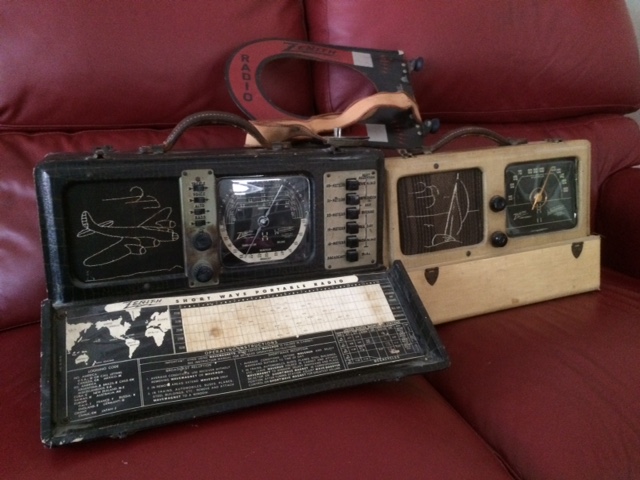
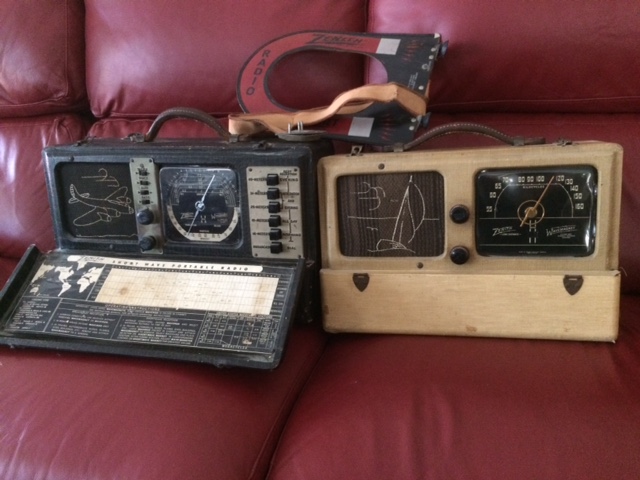
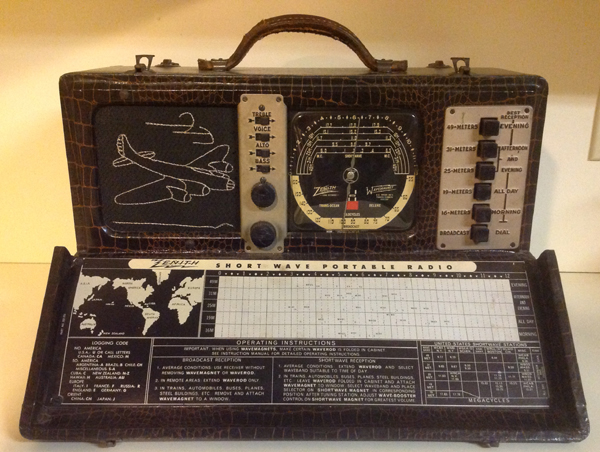
Here is my story is about obtaining a “Bomber” as described in the article. I was visiting a gun show at the North Carolina Fair grounds in Raleigh (I went there with a friend who is into Civil War collectables). Anyway, we were walking around and I spotted a small dusty suitcase on a table in the back of a booth. It was closed and to anyone else it looked like an old carrying case. However, by the size and the brown leatherette-grained case I thought it just might be a “Bomber”.

I tried not to act too excited and asked the seller what it was. He said it was an old radio and I asked him to bring it out. Sure enough, it was a Bomber! Still trying not to act too excited, I tried to let on that I didn’t know what is was and asked him if it worked. He said he didn’t know. I made a point of saying that it was missing the dial cover (but the pointer was there and unbent and the inside looked pretty clean and even had its “Wave Magnet”).

I asked him how much he wanted and he said $100. We haggled a bit over the condition and I finally got it for $75. I walked away very happy and excited!

Zenith-Bomber-Clipper-2

I spent some time cleaning it up, de-oxing the contacts and then used a VARIAC to slowly bring up the voltage to reform the electrolytics. But guess what? IT CAME TO LIFE!

I was even able to get the Sam’s manual and do an alignment. I don’t recall that I had to change any electrical parts or tubes and I even found a guy that made a replacement dial cover! It’s not as shiny as the one in the article but it was sure a great find. It proudly sits on the bookshelves in my office along with the Zenith “Sailboat” AM receiver mentioned in the article and my other Transoceanics. I’ve attached a picture of the two side-by-side. [See photos above]”

Many thanks, Bob, for sharing your “barn find”–or should I say “gun show find”(?)– Zenith “Bomber.” What a great story. I’m glad it’s in the hands of someone who has restored it and can appreciate its history. Indeed, your story proves that you never know where you’re going to find a vintage radio deal.

Paul Litwinovich sheds light on the “Royalty of Radios”

Zenith Model 7G605, the first in the line of Trans-Oceanic radios. Credit P. Litwinovich collection via WSHU

Zenith Model 7G605, the first in the line of Trans-Oceanic radios.
Credit P. Litwinovich collection via WSHU

Many thanks to SWLing Post reader, Paul, who points out this excellent article about the Zenith Transoceanic by Paul Litwinovich of WSHU.  Litwinovich’s article covers a brief history of the Zenith Transoceanic series including photos from his amazing collection (check out his model 7G605 above).

Here’s a short clip from his full article:

“The first version of Zenith Trans-Oceanic line of portable shortwave radios, the 7G605, [above] was released less than two months before the Pearl Harbor attack. It bore the sailboat image, and continued to be known as the “Clipper.” It sold for $75, and was an instant success. It was just the beginning, though, of the series’ long and colorful history. Zenith planned to heavily promote the radio for the coming holiday season. Then, the surprise attack on Pearl Harbor came. Most manufacturers halted production of consumer goods for the war effort. Zenith had other plans for their new radio, though. They changed the image on the grill from that of a sailboat to the likeness of the B-17 bomber. The change was implemented in such a hurry, that collectors have reported finding the bomber grill inserted over the top of the sailboat grill.”

Click here to read the full article at WSHU…

By the way, we’ve mentioned Paul before here on the SWLing Post–I would encourage you to bookmark his excellent article thread on WSHU’s website.

Recording Deutsche Welle Kigali’s final broadcast and remembering its early days

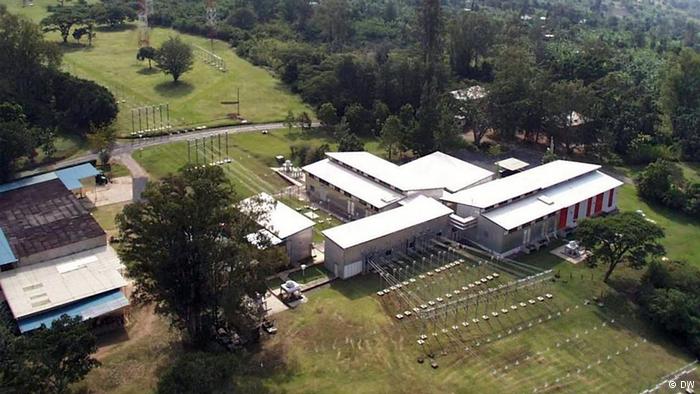
DW's relay station in Kigali (Source: Deutsche Welle)

DW’s relay station in Kigali (Source: Deutsche Welle)

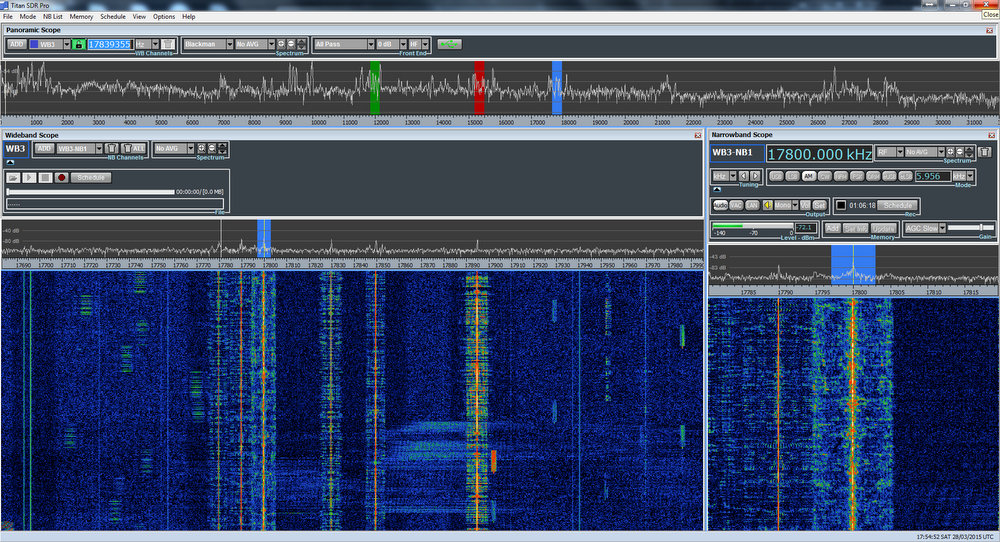
Yesterday, Deutsche Welle transmitted its final broadcast from the Kigali, Rwanda relay station. Since I’ve only had moderate luck hearing the Kigali site the past few days–especially on 31 meters–I fired up the TitanSDR Pro (which is still currently under review) and set it to record all three final afternoon broadcasts from Kigali on 12,005, 15,275 and 17,800 kHz.

TitanSDR-DeutscheWelle-FinalBroadcasts

As you can see from the screenshot above, Kigali produced a very strong signal on 17,800 kHz. The TitanSDR recorded the full broadcast, starting with one minute of the transmitter tuning, then one hour of DW’s French language service, followed by one hour of DW’s Hausa language service…then the transmitter went silent.

The recording begins around 1659 UTC on March 28, 2015 on 17,800 kHz:

Kigali’s early days

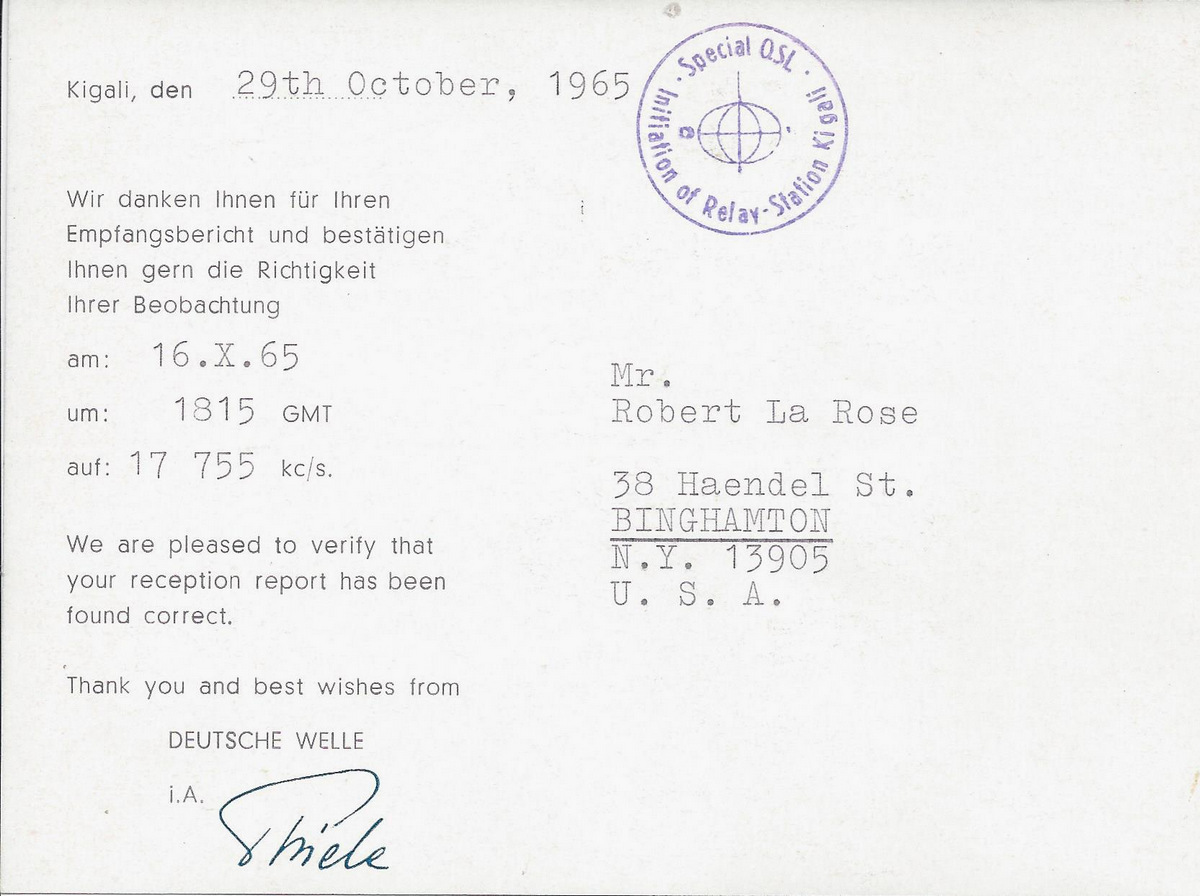
Last week, SWLing Post reader Bob LaRose (W6ACU) sent me the following message and scans:

“Here’s some nostalgia from [when the Kigali relay] opened, 50 years ago!”

Kigali Front

Kigali 2

Bob then followed this with another email:

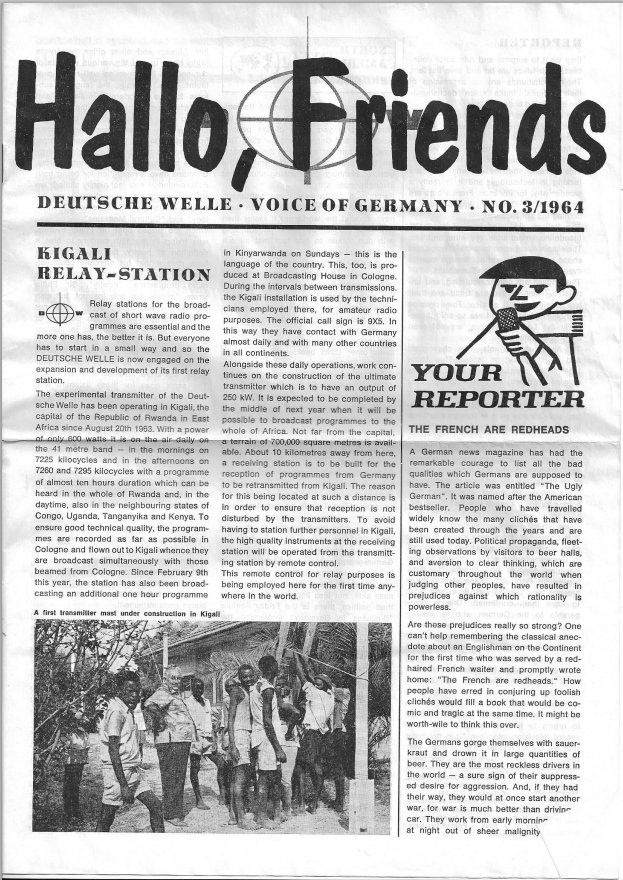
“I dug into the “vault” and I found [the] 1964 Third Quarter issue of “Hallo, Friends” from Deutsche Welle that talks about the “new” Kigali station as it was being built. The 1965 issues did not cover the actual inauguration.”

DW-HalloFriends-BobLaRose

Click here to download this page as a PDF.

Many thanks for digging through your archives and sharing this wonderful DW nostalgia, Bob! It’s simply brilliant!

Readers: If you have shortwave nostalgia you would like to share on the SWLing Post, please contact me.

Latest addition to the RNI Mailbag archive

DanLewisDan Lewis, from RNI’s Mailbag show, describes the latest addition to his audio archive:

You can’t keep a good pirate down. Another snow-filled weekend in NYC seems like a good time to go back in time to November 11, 1990. Al Gore had not yet invented the internet, but somehow Dan Lewis was able to talk to the world on international shortwave — despite almost not being able to board a flight home from Paris. And this was before the TSA!
Give a listen over at the blog.

Enjoy the snow and enjoy the show!

Dan also commented on the SWLing Post:

We haven’t posted any new (old) content lately, but I’m going through some old, unlabeled, reel-to-reel tapes and have discovered a few RNI Mailbag shows from 1990. One has been posted and another will follow next week.

Next week’s show features letters from noted piratologists Andy Yoder and George Zeller and noted DXers Jerry Berg and Rich D’Angelo.

Andy Yoder and George Zeller?  That’s certainly going to be a good show! Let us know when it’s posted, Dan!

Click here to go to Dan Lewis’ website.

BBC Bush House desk on eBay

BBC-BushHouse-Desk

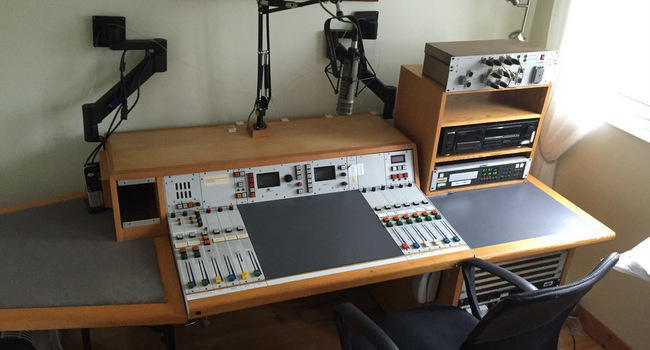
Want to own an bit of shortwave radio broadcasting history? Many thanks to Mike Barraclough who shares this listing on eBay: a BBC World Service Broadcast Radio Studio Desk from the Bush house in London.

Starting bid is £999–yep, that’s some serious money–and you’ll need to travel to Bristol, England to pick it up.

Here’s the full item description:

This is a genuine BBC World Service Studio from Bush House. I bought this when the BBC moved out of Bush House in July 2012. Unfortunately I have no room for it and so sadly I must sell it. All the components are still original as seen in the images.

Just think of the famous people who were interviewed at this desk. The whole desk is bespoke, beautifully made and crafted by BBC engineers, there is nothing quite like it. It still has all the detail such as the panic button underneath the desk, stands for computer monitors, telephone, the professional CD player and cassette desk player. Also original mixing desk, router board and switches – all you need to start your own radio station! The desk is mono as used by the BBC World Service.

Original Revox Professional Series CD player C-221
Original Kenwood Stereo Cassette Deck KX-4520
The original ElectroVoice RE20 Microphone with adjustable stand is NOT included and will be sold separately on eBay
BBC speaker will be sold separately.

The lucky winner will have to ship this from my home in South Bristol at their own expense. It will require a medium sized van and two people to lift it.

More pictures to follow including accurate measurements. Approx 8ft wide, 3 feet deep and 3.5 feet high.

Click here to view on eBay.