Category Archives: Nostalgia

Radio history videos are a serious benefit of Social Distancing!

Many thanks to SWLing Post contributor, Bill Hemphill (WD9EQD), who shares the following guest post:


Benefits to Social Distancing

I have discovered that there is a positive side effect of social distancing.  With so many organizations using Zoom and other video methods for their meeting, the volume of great videos to watch has drastically increased, with most of it residing on YouTube.  Also everyone is sharing video links that they have found with other.

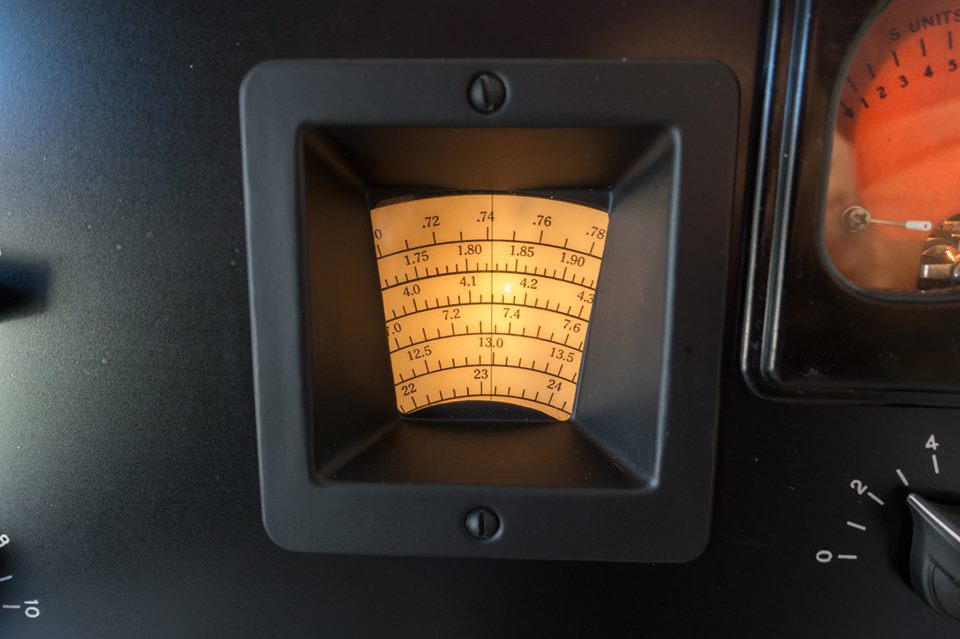
For example, the New Jersey Antique Radio Club (NJARC) has, for some time, posted their monthly meetings on their YouTube channel.  They have very enjoyable presentations.  Last night was their virtual monthly meeting for June and they had a great talk by Prof. Joe Jesson on “What You Did Not Know About the RCA AR88.”

I am a fairly new member to NJARC and must recommend them to others.  They are a very active group and are currently having Zoom conferences weekly between the members.  They also host the RADIO TECHNOLOGY MUSEUM at the InfoAge Technology Center.

Link to NJARC:

http://www.njarc.org/

Link to NJARC YouTube channel:

https://www.youtube.com/user/njarc/

Link to the Radio Technology Museum:

http://www.rtm.ar88.net/

Last week, I received an email from Mark  Erdle (AE2EA) referring to some videos by the Antique Wireless Museum which is hosted by the Antique Wireless Association (AWA).  From his email:

The Radios (and Filming) of “Across the Pacific”  presented by AWA member Brian Harrison.  Brian served as the radio consultant for the 3-hour PBS documentary “Across the Pacific”, which tells the story of the early days of Pan American Airways and of Hugo C. Leuteritz, a RCA radio engineer who helped make Pan Am’s expansion across the oceans possible with radio communication and navigation systems. Brian explains how he worked to insure that this documentary portrayed the pioneering work of Hugo Leuteritz as accurately as possible. Much of the early radio equipment that Pan American used was custom made for Pan Am, and is quite rare today, but Brian hunted it down.


In addition to Brian’s video, you can also see Tom Perera’s updated presentation of “Phil Weingarten’s Fabulous Fakes” which was originally presented at the 2007 AWA conference:

Link to AWA:  https://antiquewireless.org/homepage/

Link to AWA You-Tube Channel:  https://www.youtube.com/channel/UCX55peBhzeX1qps_VYXdLBA

Here are some other videos that people have passed along to me that I have found enjoyable.  Most of these are radio-oriented and I have omitted the many cat videos:


Thank you for sharing these links and videos, Bill! I’ve been watching Phil Weingarten’s Fabulous Fakes this morning–what a fascinating bit of history!

Post readers: Have you discovered videos and sites while social distancing (a.k.a. Social DXing)? Please comment and share your links!

Radio Waves: FEBC at 75 Years, Radio Drama “With a Twist”, Remembering Rufus Turner, and Free Foundation Online Training course

Radio Waves:  Stories Making Waves in the World of Radio

Because I keep my ear to the waves, as well as receive many tips from others who do the same, I find myself privy to radio-related stories that might interest SWLing Post readers.  To that end: Welcome to the SWLing Post’s Radio Waves, a collection of links to interesting stories making waves in the world of radio. Enjoy!

Many thanks to SWLing Post contributors Richard, Michael Bird, for the following tips:


Far East Broadcasting Celebrates 75 Years (Missions Box)

LA MIRADA, CA – Two students attending Southern California Bible College were given the vision to establish the Far East Broadcasting Company, which they incorporated in 1945.

Their initial broadcasting location was in Shanghai in the midst of the Chinese people whom the Lord had laid upon their hearts. The effort was short-lived, however, when China closed its doors to all missionary work in 1948.

Some people would have considered that to be the death of the vision. Not Bob Bowman, John Broger, or their supportive pastor, William Roberts. The vision remained the same, FEBC would have to find a different location.

On June 4, 1948, FEBC regenerated from station KZAS in Manila. By 1949, FEBC was equipped to air broadcasts from the Philippines, across the South China Sea, and into parts of China.

Now celebrating its 72nd year of continuous operations, Far East Broadcasting Company has expanded multiplied times and broadened its ministry to include AM, FM, shortwave, satellite, internet, and other digital technologies.[]

Theaters Return To An Old Art Form — The Radio Drama — With A Twist (NPR)

As theaters across the world have closed because of the coronavirus pandemic, they’ve scrambled to find ways get work to the public.

Some have made archival video of productions available, some have created Zoom plays and some have returned to an old art form — radio drama — but with a digital twist.

In the 1930s, with many people out of work, families huddled around radio receivers to listen to audio plays, like Orson Welles’ famous broadcast, War of the Worlds.

“Orson Welles began his career as a theater actor and director,” says Adam Greenfield, artistic director for New York’s Playwrights Horizons. “And I think he’s able to really utilize the full potential of what audio can do.”

Taking cues from Welles’ success, Greenfield commissioned a new series of audio plays for podcast called Soundstage. He planned to release them this summer, when the theater was dark, but because of the pandemic he hustled them online.

The first podcast released was Prime: A Practical Breviary by songwriter and performer Heather Christian. It’s based on the 6:00 a.m. rite, or breviary, of solo contemplation for nuns and monks.[]

Do you know Rufus Turner (Hackaday)

It is hard to be remembered in the electronics business. Edison gets a lot of credit, as does Westinghouse and Tesla. In the radio era, many people know Marconi and de Forest (although fewer remember them every year), but less know about Armstrong or Maxwell. In the solid-state age, we tend to remember people like Shockley (even though there were others) and maybe Esaki.

If you knew most or all of those names without looking them up, you are up on your electronics history. But do you know the name Rufus Turner?

W3LF

Turner was born on Christmas Day, 1907 in Houston, Texas. At the age of 15, he became fascinated by crystal diodes and published his first article about radio when he was 17. Rufus Turner was–among other things–the first black licensed radio operator (W3LF). He was building and operating radios in Washington D.C., where he was attending Armstrong Tech.

Turner became a licensed professional engineer in California and Massachusetts. You may have even used something that Turner worked on. In the 1940’s, working with Sylvania, he helped to develop the 1N34A germanium diode (you can still buy these if you look around for them).[]

Register now for Free Foundation Online Training course (Southgate ARC)

The next free amateur radio Foundation Online training course run by volunteers from Essex Ham starts on Sunday, June 21

The Coronavirus outbreak and the RSGB’s introduction of online exams that can be taken at home has led to a surge in demand for free online amateur radio training courses such as that run by Essex Ham.

To cope with the high-demand from people wanting to get their amateur radio licence, the Essex Ham Team have been running an additional online training course each month. The next course starts on June 21.

You can find out more about online training and register to join a course at
https://www.essexham.co.uk/train/foundation-online/

Essex Ham
https://www.essexham.co.uk/
https://twitter.com/EssexHam


Do you enjoy the SWLing Post?

Please consider supporting us via Patreon or our Coffee Fund!

Your support makes articles like this one possible. Thank you!

“Letters of a Radio-Engineer to His Son”

Many thanks to SWLing Post contributor, Paul, who shares a link to Letters of a Radio-Engineer to his Son by John Mills. The book, originally published in 1922, is in the public domain and shared/hosted on the Project Gutenberg website.

It is a fascinating read. Mills does a rather amazing job explaining complex electronic principles in a simple narrative form.

To give you a taste, check out Letter 3 – How a Battery Works below:


LETTER 3
HOW A BATTERY WORKS

(This letter may be omitted on the first reading.)

My Dear Boy:

When I was a boy we used to make our own batteries for our experiments. That was before storage batteries became as widely used as they are to-day when everybody has one in the starting system of his automobile. That was also before the day of the small dry battery such as we use in pocket flash lights. The batteries which we made were like those which they used on telegraph systems, and were sometimes called “gravity” batteries. Of course, we tried several kinds and I believe I got quite a little acid around the house at one time or another. I’ll tell you about only one kind but I shall use the words “electron,” “proton,” “nucleus,” “atom,” and “molecule,” about some of which nothing was known when I was a boy.

We used a straight-sided glass jar which would hold about a gallon. On the bottom we set a star shaped arrangement made of sheets of copper with a long wire soldered to it so as to reach up out of the jar. Then we poured in a solution of copper sulphate until the jar was about half full. This solution was made by dissolving in water crystals of “blue vitriol” which we bought at the drug store.

17Blue vitriol, or copper sulphate as the chemists would call it, is a substance which forms glassy blue crystals. Its molecules are formed of copper atoms, sulphur atoms, and oxygen atoms. In each molecule of it there is one atom of copper, one of sulphur and four of oxygen.

When it dissolves in water the molecules of the blue vitriol go wandering out into the spaces between the water molecules. But that isn’t all that happens or the most important thing for one who is interested in making a battery.

Each molecule is formed by six atoms, that is by six little groups of electrons playing about six little nuclei. About each nucleus there is going on a game but some of the electrons are playing in the game about their own nucleus and at the same time taking some part in the game which is going on around one of the other nuclei. That’s why the groups or atoms stay together as a molecule. When the molecules wander out into the spaces between the water molecules something happens to this complicated game.

It will be easiest to see what sort of thing happens if we talk about a molecule of ordinary table salt, for that has only two atoms in it. One atom is sodium and one is chlorine. The sodium molecule has eleven electrons playing around its nucleus. Fairly close to the nucleus there are two electrons. Then farther away there are eight more and these are having a perfect game. Then still farther away from the nucleus there is a single lonely electron.

The atom of chlorine has seventeen electrons which 18play about its nucleus. Close to the nucleus there are two. A little farther away there are eight just as there are in the sodium atom. Then still farther away there are seven.

I am going to draw a picture (Fig. 1) to show what I mean, but you must remember that these electrons are not all in the same plane as if they lay on a sheet of paper, but are scattered all around just as they would be if they were specks on a ball.
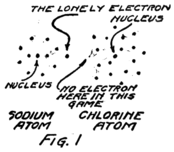
You see that the sodium atom has one lonely electron which hasn’t any play fellows and that the chlorine atom has seven in its outside circle. It appears that eight would make a much better game. Suppose that extra electron in the sodium atom goes over and plays with those in the chlorine atom so as to make eight in the outside group as I have shown Fig. 2. That will be all right as long as it doesn’t get out of sight of its own nucleus because you remember that the sodium nucleus is responsible for eleven electrons. The lonely electron of the sodium atom needn’t be lonely any more if it can persuade its nucleus to stay so close to the chlorine atom that it can play in the outer circle of the chlorine atom.
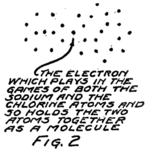
The outer circle of the chlorine atom will then have a better game, for it will have just the eight that makes a perfect game. This can happen if the chlorine atom will stay close enough to the sodium atom so that the outermost electron of the sodium atom can play in the chlorine circle. You see everything will be satisfactory if an electron can be shared by the two atoms. That can happen only if the two atoms stay together; that is, if they form a molecule. That’s why there are molecules and that’s what I meant when I spoke of the molecule as a big game played by the electrons of two or more atoms.

This molecule which is formed by a sodium atom and a chlorine atom is called a molecule of sodium chloride by chemists and a molecule of salt by most every one who eats it. Something strange happens when it dissolves. It wanders around between the water molecules and for some reason or other–we don’t know exactly why–it decides to split up again into sodium and chlorine but it can’t quite do it. The electron which joined the game about the chlorine nucleus won’t leave it. The result is that the nucleus of the sodium atom gets away but it leaves this one electron behind.

What gets away isn’t a sodium atom for it has one too few electrons; and what remains behind isn’t a chlorine atom for it has one too many electrons. We call these new groups “ions” from a Greek word which means “to go” for they do go, wandering off into the spaces between the water 20molecules. Fig. 3 gives you an idea of what happens.

You remember that in an atom there are always just as many protons as electrons. In this sodium ion which is formed when the nucleus of the sodium atom breaks away but leaves behind one planetary electron, there is then one more proton than there are electrons. Because it has an extra proton, which hasn’t any electron to associate with, we call it a plus ion or a “positive ion.” Similarly we call the chlorine ion, which has one less proton than it has electrons, a minus or “negative ion.”
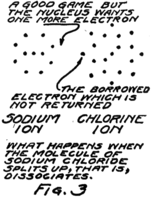
Now, despite the fact that these ions broke away from each other they aren’t really satisfied. Any time that the sodium ion can find an electron to take the place of the one it lost it will welcome it. That is, the sodium ion will want to go toward places where there are extra electrons. In the same way the chlorine ion will go toward places where electrons are wanted as if it could satisfy its guilty conscience by giving up the electron which it stole from the sodium atom, or at least by giving away some other electron, for they are all alike anyway.

Sometimes a positive sodium ion and a negative chlorine ion meet in their wanderings in the solution and both get satisfied by forming a molecule 21again. Even so they don’t stay together long before they split apart and start wandering again. That’s what goes on over and over again, millions of times, when you dissolve a little salt in a glass of water.

Now we can see what happens when copper sulphate dissolves. The copper atom has twenty-nine electrons about its nucleus and all except two of these are nicely grouped for playing their games about the nucleus. Two of the electrons are rather out of the game, and are unsatisfied. They play with the electrons of the part of the molecule which is called “sulphate,” that is, the part formed by the sulphur atom and the four oxygen atoms. These five atoms of the sulphate part stay together very well and so we treat them as a group.

The sulphate group and the copper atom stay together as long as they are not in solution but when they are, they act very much like the sodium and chlorine which I just described. The molecule splits up into two ions, one positive and one negative. The positive ion is the copper part except that two of the electrons which really belong to a copper atom got left behind because the sulphate part wouldn’t give them up. The rest of the molecule is the negative ion.

The copper ion is a copper atom which has lost two electrons. The sulphate ion is a combination of one sulphur atom, four oxygen atoms and two electrons which it stole from the copper atom. Just as the sodium ion is unsatisfied because in it there is one more proton than there are electrons, so the copper ion is unsatisfied. As a matter of fact it is twice 22as badly unsatisfied. It has two more protons than it has electrons. We say it has twice the “electrical charge” of the sodium ion.

Just like a sodium ion the copper ion will tend to go toward any place where there are extra electrons which it can get to satisfy its own needs. In much the same way the sulphate ion will go toward places where it can give up its two extra electrons. Sometimes, of course, as ions of these two kinds wander about between the water molecules, they meet and satisfy each other by forming a molecule of copper sulphate. But if they do they will split apart later on; that is, they will “dissociate” as we should say.

Now let’s go on with the kind of batteries I used to make as a boy. You can see that in the solution of copper sulphate at the bottom of the jar there was always present a lot of positive copper ions and of negative sulphate ions.

On top of this solution of copper sulphate I poured very carefully a weak solution of sulphuric acid. As I told you, an acid always has hydrogen in its molecules. Sulphuric acid has molecules formed by two hydrogen atoms and one of the groups which we decided to call sulphate. A better name for this acid would be hydrogen sulphate for that would imply that its molecule is the same as one of copper sulphate, except that the place of the copper is taken by two atoms of hydrogen. It takes two atoms of hydrogen because the copper atom has two lonely electrons while a hydrogen atom only has one. It takes two electrons to fill up the game which the 23electrons of the sulphate group are playing. If it can get these from a single atom, all right; but if it has to get one from each of two atoms, it will do it that way.

I remember when I mixed the sulphuric acid with water that I learned to pour the acid into the water and not the other way around. Spatterings of sulphuric acid are not good for hands or clothes. With this solution I filled the jar almost to the top and then hung over the edge a sort of a crow’s foot shape of cast zinc. The zinc reached down into the sulphuric acid solution. There was a binding post on it to which a wire could be connected. This wire and the one which came from the plate of copper at the bottom were the two terminals of the battery. We called the wire from the copper “positive” and the one from the zinc “negative.”

Now we shall see why and how the battery worked. The molecules of sulphuric acid dissociate in solution just as do those of copper sulphate. When sulphuric acid molecules split, the sulphate part goes away with two electrons which don’t belong to it and each of the hydrogen atoms goes away by itself but without its electron. We call each a “hydrogen ion” but you can see that each is a single proton.

In the two solutions are pieces of zinc and copper. Zinc is like all the rest of the metals in one way. Atoms of metals always have lonely electrons for which there doesn’t seem to be room in the game which is going on around their nuclei. Copper as we saw has two lonely electrons in each atom. Zinc 24also has two. Some metals have one and some two and some even more lonely electrons in each atom.

What happens then is this. The sulphate ions wandering around in the weak solution of sulphuric acid come along beside the zinc plate and beckon to its atoms. The sulphate ions had a great deal rather play the game called “zinc sulphate” than the game called “hydrogen sulphate.” So the zinc atoms leave their places to join with the sulphate ions. But wait a minute! The sulphate ions have two extra electrons which they kept from the hydrogen atoms. They don’t need the two lonely electrons which each zinc atom could bring and so the zinc atom leaves behind it these unnecessary electrons.

Every time a zinc atom leaves the plate it fails to take all its electrons with it. What leaves the zinc plate, therefore, to go into solution is really not a zinc atom but is a zinc ion; that is, it is the nucleus of a zinc atom and all except two of the planetary electrons.

Every time a zinc ion leaves the plate there are left behind two electrons. The plate doesn’t want them for all the rest of its atoms have just the same number of protons as of electrons. Where are they to go? We shall see in a minute.

Sometimes the zinc ions which have got into solution meet with sulphate ions and form zinc sulphate molecules. But if they do these molecules split up sooner or later into ions again. In the upper part of the liquid in the jar, therefore, there are sulphate 25ions which are negative and two kinds of positive ions, namely, the hydrogen ions and the zinc ions.

Before the zinc ions began to crowd in there were just enough hydrogen ions to go with the sulphate ions. As it is, the entrance of the zinc ions has increased the number of positive ions and now there are too many. Some of the positive ions, therefore, and particularly the hydrogen ions, because the sulphate prefers to associate with the zinc ions, can’t find enough playfellows and so go down in the jar.

Down in the bottom of the jar the hydrogen ions find more sulphate ions to play with, but that leaves the copper ions which used to play with these sulphate ions without any playmates. So the copper ions go still further down and join with the copper atoms of the copper plate. They haven’t much right to do so, for you remember that they haven’t their proper number of electrons. Each copper ion lacks two electrons of being a copper atom. Nevertheless they join the copper plate. The result is a plate of copper which has too few electrons. It needs two electrons for every copper ion which joins it.

How about the zinc plate? You remember that it has two electrons more than it needs for every zinc ion which has left it. If only the extra electrons on the negative zinc plate could get around to the positive copper plate. They can if we connect a wire from one plate to the other. Then the electrons from the zinc stream into the spaces between the atoms of the wire and push ahead of them the electrons 26which are wandering around in these spaces. At the other end an equal number of electrons leave the wire to satisfy the positive copper plate. So we have a stream of electrons in the wire, that is, a current of electricity and our battery is working.

That’s the sort of a battery I used to play with. If you understand it you can get the general idea of all batteries. Let me express it in general terms.

At the negative plate of a battery ions go into solution and electrons are left behind. At the other end of the battery positive ions are crowded out of solution and join the plate where they cause a scarcity of electrons; that is, make the plate positive. If a wire is connected between the two plates, electrons will stream through it from the negative plate to the positive; and this stream is a current of electricity.

Pl. III.–Dry Battery for Use in Audion Circuits (Courtesy of National Carbon Co., Inc.) Storage Battery (Courtesy of the Electric Storage Battery Co.).


Click here to read the entire book.

Quindar Tones: Those iconic NASA PTT confirmation beeps

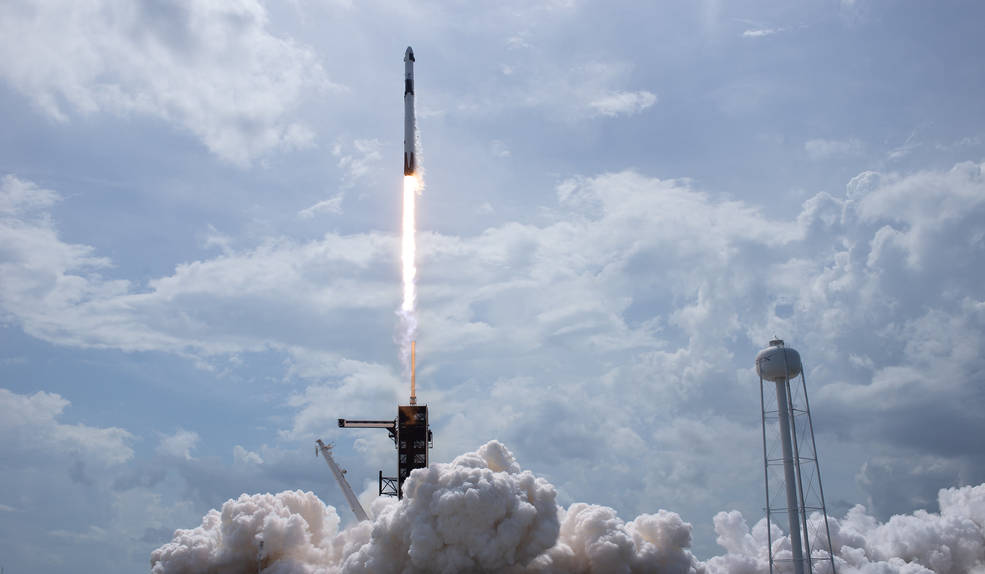
Photo credits: NASA/Bill Ingalls

Yesterday, my family watched the successful launch of the NASA Demo-2 SpaceX Dragon via YouTube.

As astronauts Robert Behnken and Douglas Hurley communicated with Mission Control, we heard PTT confirmation beeps after each transmission.

Those beeps, of course, reminded me of past NASA missions and those iconic confirmation tones we heard in audio from the Mercury, Gemini, and Apollo days all the way into Space Shuttle missions.

Quindar Tones

Source: honeysucklecreek.net

Last year, after spending a couple of days at the US Space and Rocket Center (and attending the Huntsville Hamfest), I heard numerous NASA audio clips and that lead me down the path of researching those PTT confirmation tones.

Turns out, they’re called “Quindar Tones.”

I couldn’t find any information about Quindar Tones at the US Space and Rocket Center–although, admittedly, the place is massive and I could have easily overlooked it–so I did a little research when I returned home.

I found this archived post on the NASA’s Apollo Lunar Surface Journal wesbite:

Re: Apollo beeps

Journal Contributor Mark Burckhard writes:

“I’ve always wondered what purpose the ‘beeps’ served that one heard intermittently during the voice communications with the Command and Lunar Modules during the Apollo missions, as well as other space missions.”

Journal Contributor Mike Dinn provides an MP3 clip ( 123k ) from a network audio check that includes numerous quindar tones.

Journal Contributor Markus Mehring replies:

“‘Other space missions’ is quite an accurate observation, since the ‘beeps’, in fact, are still in use today on Shuttle flights, at least on the UHF frequencies.”

“These beeps are called ‘Quindar-Tones’. Their purpose is to trigger the ground station transmitters when there is an outgoing transmission from Earth. The CapCom in the Mission Control Center, who is taking care of communications with the crew, uses his communication gear in a PTT mode exclusively. ‘PTT’ is short for Push-To-Talk, which means that the CapCom presses a button every time and as long as he wants to talk. (The crews back during Apollo – and also today – usually communicate via PTT as well, but they also have the so-called ‘VOX mode’ at their disposal, in which their microphones are voice-triggered by a certain adjustable threshold volume levels. VOX is used when they don’t necessarily have their hands free.)

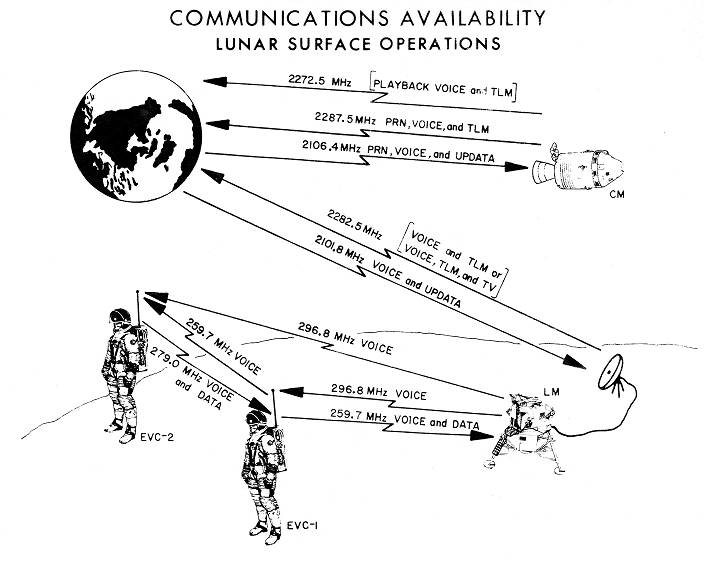
When the CapCom presses his PTT button to start a transmission, an intro tone (2.525KHz sine wave with a length of 250ms) is generated and triggers the ground station transmitters to send. And when he is finished talking and releases the button again, a slightly lower outro tone (2.475KHz, sine, 250ms) is generated to trigger the ground station transmitters to turn off. So in short, these are remote control trigger tones.

CU! Markus”

I then discovered this article via the Internet Archive Wayback Machine, which gave more detail about the Quindar Tones’ name and some of the idiosyncrasies of the system:

The story behind the “Beep”

Steve Schindler, an engineer with voice systems engineering at NASA’s Kennedy Space Center, offers the following history of [Quindar Tones] origins.

“Quindar tones, named after the manufacturer of the tone generation and detection equipment, are actually used to turn on and off, or “key,” the remote transmitters at the various tracking stations (Merritt Island Launch Area–now Kennedy Space Center, Bermuda, Australia, etc.) that were used to communicate with the Mercury through Apollo spacecraft and, in some cases, are still used with the Space Shuttle.”

[…]”Although it usually worked well, there were a couple of peculiarities with this system. If the transmitter was keyed and the telephone line connection broken, the transmitter would never get the tone to turn off. To prevent this there was a “transmitter on” light at each remote site that would come on when the transmitter was keyed. Someone was supposed to monitor the circuit and if the audio dropped, but the “transmitter on” light was still on, they would have to manually unkey the transmitter. Also, just before communications was handed over to a new tracking station, the key-unkey tone pair was sent 10 times to ensure that everything was functioning correctly. This was done before the audio was patched to the tracking station’s line so it wasn’t heard in the control room or on NASA Select audio.

The Quindar system was actually built from a piece of equipment that was used to put multiple teletype circuits on a single phone line by means of frequency domain multiplexing. Because replacement parts are no longer available, an “out-of-band signaling” system was installed in 1998 for the transmitters located in the U.S. This system uses a continuous tone that is below the normal audio frequency range. When the tone is present, the transmitters are keyed. When the tone is not present, the transmitters are unkeyed. It worked fine, but the Astronaut Office complained about the lack of tones which everyone had become accustomed to as an alert that a transmission was about to start. So, the Quindar tone generator, which was still installed in case it was necessary to key the transmitters at an overseas site, was re-enabled.

Even though you won’t hear the same Quindar tones in present-day space missions, you can listen until your heart is content at the website Apollo In Real Time.

The Internet Archive also has a massive collection of Apollo audio free to stream and download.

Quindar Music

If you’re fascinated with the NASA audio soundscape in general, you might check out the electronic music duo Quindar featuring longtime Wilco member Mikael Jorgensen, and art historian-curator James Merle Thomas.

Quindar: Mikael Jorgensen & James Merle Thomas. Photo by Chad Ress, Spacesuits by Cassandra C. Jones

Science Friday featured an extended interview with the group in 2017. If you love electronic music–especially if you’re a fan of Wilco, it’s well worth a listen:

Check out their latest video, Choco Hilton:

Speaking of Mikael Jorgensen and Wilco, I should note here that their album yankee hotel foxtrot has a deep shortwave motif.

Anyone else fascinated with Quindar Tones and NASA audio? Feel free to comment and share any other resources or projects you’ve found.


Do you enjoy the SWLing Post?

Please consider supporting us via Patreon or our Coffee Fund!

Your support makes articles like this one possible. Thank you!

Reunited with an old friend…

Many thanks to SWLing Post contributor, Marwan Baayoun, who writes in response to our recent post about radio regrets:

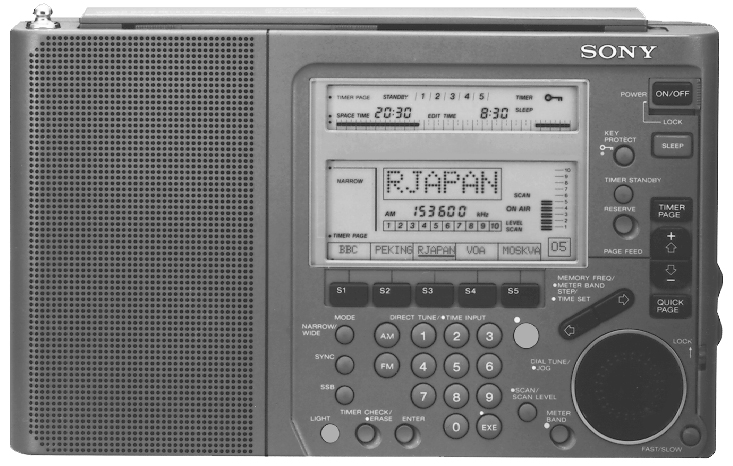
For me, my biggest regret was when in November 2018 I sold my well-protected Sony ICF-SW77.

I bought it brand new over the phone from Universal Radio. My ICF-SW77 was my side kick and went with me everywhere. I remember working the second shift at a publishing company, I would always eat my lunch outside while listening to any international broadcasters I could catch like the BBC, Radio Havana Cuba, Deutsche Welle, or the VOA.

I remember how my co-workers reworded the saying “Life Without A Wife, Is Like A Kitchen Without A Knife” to “Life Without A Wife, Is Like Marwan Without His Shortwave Radio.”

When I got married, my best friend invited us to visit with his wife and children at their house in Upstate New York. He even bought one of the tickets as his way in helping me paying for the fares. I remember the night we arrived at his house me pulling my ICF-SW77 and tuning it to the BBC World Service because we all wanted to get the latest on a sad piece of news that was just breaking that made us, and almost everyone in North America and around the world, stare at TV sets hoping for the best. Then Tom Brokaw came on to announced something that we, and others who were listening to the BBC World Service, had already knew 15 minutes earlier: the sad news the Lady Dianna did not survive the car crash.

My friend was impressed with what shortwave radios could bring to the table.

In the last month I went on a binge and bought a used Realistic DX-440 (love this radio BTW, very nice), and all new XHDATA D-808, Tecsun PL-880, and Tecsun PL-680. I also bought but then returned a Sangean ATS-909X.

To close on a happy note, today I received an almost brand new Sony ICF-SW77 that I bought from a very kind gentleman on eBay–he was willing to accept my fifty dollars less than his asking price offer.

My happiness is beyond expression. I would have never thought I would be able to re-unite again with one of these radios in a condition that is identical to the one I sold. He kept it very well. I tried to find a scratch or a piece of dust on this radio but couldn’t. Not only that, it also came with it the original box, very well kept manual and “Catch the Waves” booklet, (I gave mine to the gentleman who bought my radio, so it was sweet that they were replaced with this purchase). My new ICF-SW77 seller just did not have the power adapter that came with this radio, which is fine with me. I can always find a third party power adapter to buy.

I feel so lucky I am once again an owner of one of these awesome radios.

What an amazing story, Marwan, and I’m so glad you’ve been reunited with an IC-SW77!

Radio love is a funny thing and hard to compare with any fondness one might have of other consumer electronics. For example, I’ve never lamented over the loss of a laptop, iPhone, or iPod–but, like you, I have indeed regretted parting with radios. I know many of you feel the same way.

To me, radios feel much more like companions who share the world with you–through travels and over the air.

I’m happy to hear you’ve got your companion back, Marwan!

Radio Waves: Free Foundation License Course, More Titanic Radio, CQD, and ARRL Field Day Waivers

Radio Waves:  Stories Making Waves in the World of Radio

Because I keep my ear to the waves, as well as receive many tips from others who do the same, I find myself privy to radio-related stories that might interest SWLing Post readers.  To that end: Welcome to the SWLing Post’s Radio Waves, a collection of links to interesting stories making waves in the world of radio. Enjoy!

Many thanks to SWLing Post contributors Trevor, Mark Hirst and Ulis Fleming for the following tips:


Register now for free Amateur Radio Foundation Online training course (Southgate ARC)

The next free amateur radio Foundation Online training course run by volunteers from Essex Ham starts on Sunday, June 7

The Coronavirus outbreak and the RSGB’s introduction of online exams that can be taken at home has led to a surge in demand for free online amateur radio training courses such as that run by Essex Ham.

These courses have been very popular and early registration is advised. 313 people took the course that started on May 3 and a further 235 are on the course that started on May 17.

You can find out more about online training and register to join a course at
https://www.essexham.co.uk/train/foundation-online/

Essex Ham
https://www.essexham.co.uk/
https://twitter.com/EssexHam

US court grants permission to recover Marconi telegraph from Titanic wreckage (ARS Technica)

But NOAA is fiercely opposed to the controversial salvage mission.

When RMS Titanic struck an iceberg on April 14, 1912, crew members sent out numerous distress signals to any other ships in the vicinity using what was then a relatively new technology: a Marconi wireless telegraph system. More than 1,500 passengers and crew perished when the ship sank a few hours later. Now, in what is likely to be a controversial decision, a federal judge has approved a salvage operation to retrieve the telegraph from the deteriorating wreckage, The Boston Globe has reported.

Lawyers for the company RMS Titanic Inc.—which owns more than 5,000 artifacts salvaged from the wreck—filed a request in US District Court in Alexandria, Virginia, arguing that the wireless telegraph should be salvaged because the ship’s remains are likely to collapse sometime in the next several years, rendering “the world’s most famous radio” inaccessible. US District Judge Rebecca Beach Smith concurred in her ruling, noting that salvaging the telegraph “will contribute to the legacy left by the indelible loss of the Titanic, those who survived, and those who gave their lives in the sinking.”

However, the National Oceanic and Atmospheric Administration (NOAA) is fiercely opposed to the salvage mission. The agency argues in court documents that the telegraph should be left undisturbed, since it is likely to be surrounded “by the mortal remains of more than 1500 people.” Judge Smith countered in her decision that the proposed expedition meets international requirements: for instance, it is justified on scientific and cultural grounds and has taken into account any potential damage to the wreck.[]

Why Titanic’s first call for help wasn’t an SOS signal (National Geographic)

When RMS Titanic set sail in 1912, it was blessed and cursed with the latest in communication technology—the wireless telegraph. In the last hours after Titanic hit an iceberg, radio messages sent from the storied sinking ship summoned a rescue vessel that saved hundreds of people, but also sowed confusion with competing distress calls and signal interference. More than 1,500 people died that fateful night.

Now, a recent court ruling may pave the way to the recovery of Titanic’s telegraph, designed by Guglielmo Marconi, a telecommunications pioneer and 1909 Nobel Prize winner in physics who invented the first device to facilitate wireless communications using radio waves.

[…]Despite the limitations of the Marconi telegraph—and the fact that it wasn’t intended to be used as an emergency device—Titanic was outfitted with a radio room and a Marconi-leased telegraph machine. Two young Marconi-employed operators, chief telegraphist Jack Phillips and his assistant Harold Bride, sent Morse code “Marconigrams” on behalf of Titanic’s well-heeled customers 24 hours a day during its maiden voyage in April 1912.

Both Marconi’s technology monopoly and the torrent of personal messages conveyed through Titanic’s telegraph proved fatal on that April night. Phillips was so overwhelmed by a queue of incoming and outgoing guest telegrams —one Titanic passenger wanted to “notify all interested” about an upcoming poker game in Los Angeles—that he didn’t pass on messages about the ice threatening Titanic’s ocean environs. When a nearby vessel, SS Californian, telegraphed that it was already surrounded by ice, Phillips testily responded “Shut up! I am busy.”

Once Titanic hit the iceberg, Phillips tone shifted and he used the Marconi distress signal: “CQD.”[]

Temporary Rule Waivers Announced for 2020 ARRL Field Day (ARRL News)

With one month to go before 2020 ARRL Field Day, June 27 – 28, the ARRL Programs and Services Committee (PSC) has adopted two temporary rule waivers for the event:

1)      For Field Day 2020 only, Class D stations may work all other Field Day stations, including other Class D stations, for points.

Field Day rule 4.6 defines Class D stations as “Home stations,” including stations operating from permanent or licensed station locations using commercial power. Class D stations ordinarily may only count contacts made with Class A, B, C, E, and F Field Day stations, but the temporary rule waiver for 2020 allows Class D stations to count contacts with other Class D stations for QSO credit.

2)      In addition, for 2020 only, an aggregate club score will be published, which will be the sum of all individual entries indicating a specific club (similar to the aggregate score totals used in ARRL affiliated club competitions).

Ordinarily, club names are only published in the results for Class A and Class F entries, but the temporary rule waiver for 2020 allows participants from any Class to optionally include a single club name with their submitted results following Field Day.

For example, if Podunk Hollow Radio Club members Becky, W1BXY, and Hiram, W1AW, both participate in 2020 Field Day — Hiram from his Class D home station, and Becky from her Class C mobile station — both can include the radio club’s name when reporting their individual results. The published results listing will include individual scores for Hiram and Becky, plus a combined score for all entries identified as Podunk Hollow Radio Club.

The temporary rule waivers were adopted by the PSC on May 27, 2020.

ARRL Field Day is one of the biggest events on the amateur radio calendar, with over 36,000 participants in 2019, including entries from 3,113 radio clubs and emergency operations centers. In most years, Field Day is also the largest annual demonstration of ham radio, because many radio clubs organize their participation in public places such as parks and schools.

Due to the COVID-19 pandemic, many radio clubs have made decisions to cancel their group participation in ARRL Field Day this year due to public health recommendations and/or requirements, or to significantly modify their participation for safe social distancing practices. The temporary rule waivers allow greater flexibility in recognizing the value of individual and club participation regardless of entry class.

ARRL is contacting logging program developers about the temporary rule waivers so developers can release updated versions of their software prior to Field Day weekend. Participants are reminded that the preferred method of submitting entries after Field Day is via the web applet. The ARRL Field Day rules include instructions for submitting entries after the event. Entries must be submitted or postmarked by Tuesday, July 28, 2020.

The ARRL Field Day web page includes a series of articles with ideas and advice for adapting participation this year.[]


Do you enjoy the SWLing Post?

Please consider supporting us via Patreon or our Coffee Fund!

Your support makes articles like this one possible. Thank you!