Category Archives: Radios

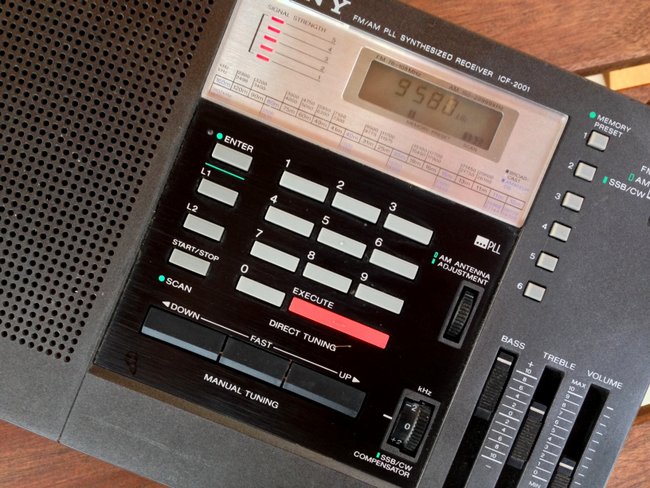
My new (to me) Sony ICF-2001 shortwave radio

Sony-ICF-2001-003

A few weeks ago, I made an impulse purchase: a Sony ICF-2001.

Perhaps it was the post about John Lennon’s ICF-2001, or perhaps it was the simple fact I couldn’t afford a ‘2001 when I was a kid; either way, I saw what I thought was a fair price and I bit the bullet.
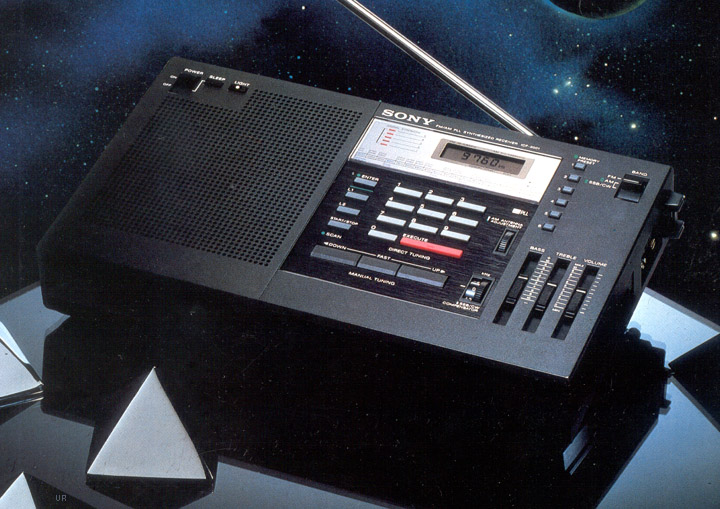
icf2001lAt about 9-10 years old I remember seeing the (above) image of the ICF-2001 in an advertisement and imagining all that I could hear with this amazing–microprocessor-controlled, dual conversion, frequency synthesized general coverage(!)–portable receiver.
Sony-ICF-2001-7

At the time, my only shortwave radio was the Zenith Trans Oceanic Royal D7000–a wonderful radio for sure–but the convenience of digital tuning? I could only imagine.

The ICF-2001 had revolutionary featured like direct access keypad tuning and an LCD digital readout. The ICF-2001 covered 150 to 29,999 kHz and, like my Transoceanic, could receive single sideband. It also had six memories that could be assigned to buttons for quick access to my favorite frequencies. Six. Whole. Memories!  
Sony-ICF-2001-1

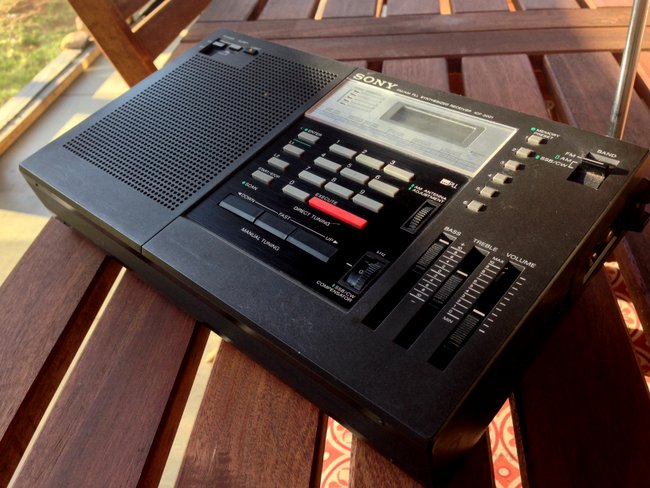
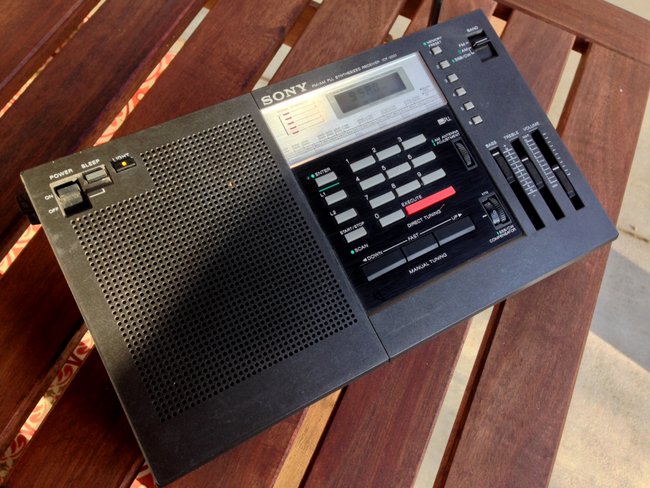
I picked up my used ICF-2001 for $67.00 US shipped. The seller (a fellow ham radio operator) insured that the radio was in excellent mechanical shape, though cosmetically showed some signs of wear. The only thing missing was the ICF-2001’s shoulder strap. That was fine by me, though, because the seller included all original manuals/documentation and a very cool canvas carry bag (below) that fits the ICF-2001 like a glove.
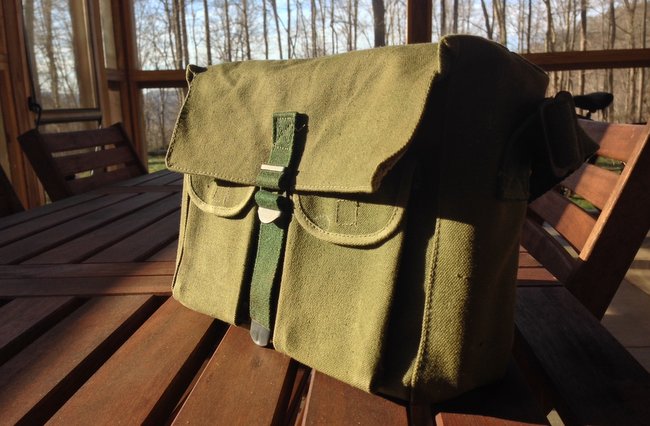
Sony-ICF-2001-8I’ve had the ICF-2001 for a few weeks now and I must say that I’m quite pleased.  It’s much larger that most portables currently on the market, but was probably slightly smaller than the venerable ICF-2010.

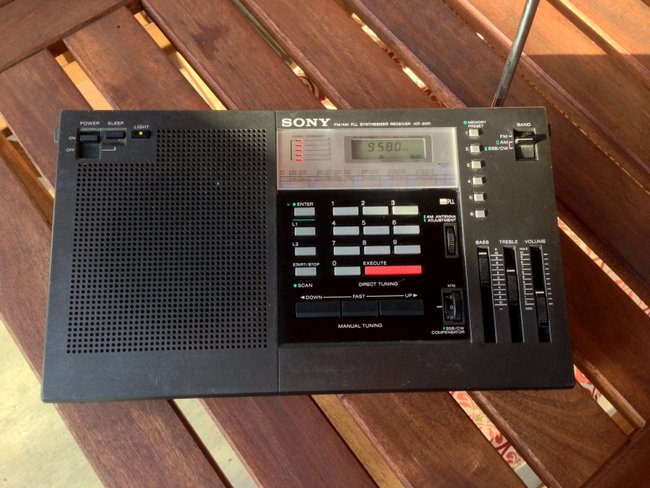
The audio from the ICF-2001’s built-in speaker is top-notch; with separate treble and bass control, it’s easy to adjust audio to your taste.

Would the ICF-2001 out-perform a modern portable receiver? Probably not. Was performance similar to the ICF-2010? No way. The ICF-2001 has a few annoying quirks (like muting between frequencies, no tuning knob, a backlit display that’s rather small and hard to read at certain angles)–items most modern portables have long since addressed.

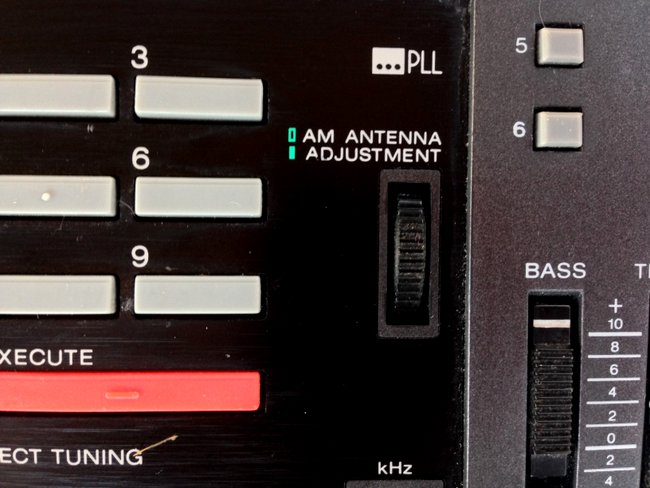
With that said, the ICF-2001 does have a few features I wish modern receivers would adopt, like, a built-in antenna trimmer.
Sony-ICF-2001-3

This morning, on my porch, I listened to several broadcasters across the bands and used the antenna adjustment to tweak the match. The adjustment would sometimes increase reception by three S units. I would love to have a similar feature on, say, my Tecsun PL-680.

I also like the old school power switch–a proper mechanical switch that makes it much more difficult to accidentally turn the radio on while traveling or operating in a portable setting.

Sony-ICF-2001-1

Even thought the ICF-2001 was a bit of an impulse purchase, I have no buyer’s remorse at all. She’s a sturdy rig with great audio and, I believe, decent performance on the shortwave and medium wave bands. I can certainly confirm that it would have blown my mind when I was 9 years old!

Besides..if the ICF-2001 is good enough for John Lennon, it’s good enough for me!
Sony-ICF-2001-5

Any SWLing Post readers out there still have a Sony ICF-2001?
Paul Litwinovich sheds light on the “Royalty of Radios”

Zenith Model 7G605, the first in the line of Trans-Oceanic radios. Credit P. Litwinovich collection via WSHU

Zenith Model 7G605, the first in the line of Trans-Oceanic radios.
Credit P. Litwinovich collection via WSHU

Many thanks to SWLing Post reader, Paul, who points out this excellent article about the Zenith Transoceanic by Paul Litwinovich of WSHU.  Litwinovich’s article covers a brief history of the Zenith Transoceanic series including photos from his amazing collection (check out his model 7G605 above).

Here’s a short clip from his full article:

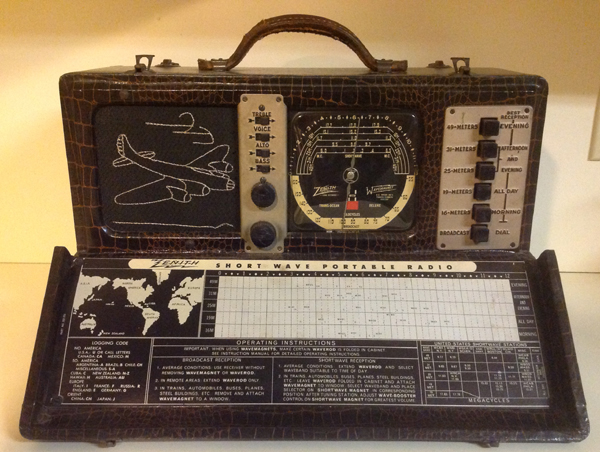
“The first version of Zenith Trans-Oceanic line of portable shortwave radios, the 7G605, [above] was released less than two months before the Pearl Harbor attack. It bore the sailboat image, and continued to be known as the “Clipper.” It sold for $75, and was an instant success. It was just the beginning, though, of the series’ long and colorful history. Zenith planned to heavily promote the radio for the coming holiday season. Then, the surprise attack on Pearl Harbor came. Most manufacturers halted production of consumer goods for the war effort. Zenith had other plans for their new radio, though. They changed the image on the grill from that of a sailboat to the likeness of the B-17 bomber. The change was implemented in such a hurry, that collectors have reported finding the bomber grill inserted over the top of the sailboat grill.”

Click here to read the full article at WSHU…

By the way, we’ve mentioned Paul before here on the SWLing Post–I would encourage you to bookmark his excellent article thread on WSHU’s website.

Roundup of software defined radios


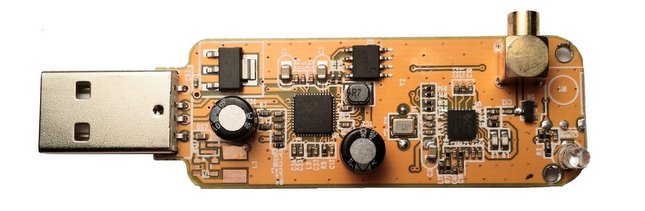
RTL-SDR

Many thanks to several readers (including Mike and Greg) who have shared a link to RTL-SDR.com’s Roundup of Software Defined Receivers. The list gives an excellent, comprehensive overview of SDRs currently on the market. I encourage you to check it out.

Indeed, while you’re at RTL-SDR.com, take a look at their active blog and forum to get the most out of your RTL-SDR dongle!

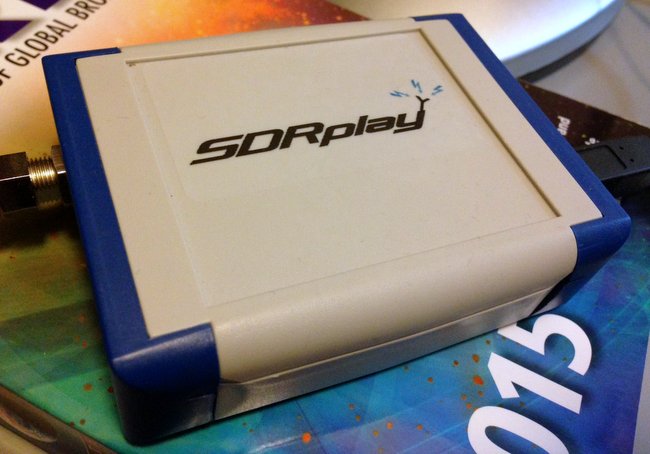
Wyn compares the SDRplay RSP and Airspy

SDR-PLay-RSP

After posting about the price reduction in the SDRplay RSP, Wyn Evans commented with his comparison of the SDRplay RSP and Airspy (another popular low-cost wideband SDR). Wyn writes:

I have both and Airspy and the SDRplay RSP. I like them both, but on balance I prefer the RSP. The pluses of the RSP over the Airspy for me are:

1. Sensitivity – At least with my Airspy, I find the sensitivity a bit disappointing. The RSP is on the other hand excellent. I read on another forum one user claiming that the difference between the two was as much as 3 dB. I can’t verify the number, but I would not be surprised if it were about right

2. HF support – Absolutely fantastic, no up-converter needed

3. ZIF or Low IF. In ZIF mode, with calibration, you can get image free reception

4. Programmable filters. You can change the selectivity from as low as 200 KHz to the full bandwidth of 8 MHz, This is a huge plus for DX-ing if you live in an area with very strong local stations

The plus for the Airspy is that there is does cover the gap between 380 MHz and 430 MHz, with the RSP doesn’t. For some people, this is a really big deal.

Both seem to have about the same dynamic range, which isn’t surprising as despite using different tuners, the ADCs seem to be virtually identical.

So in summary, I think both are pretty good products with pluses and minuses, but at this new price point, as long as you don’t need to use 380 – 430 MHz, there is really only one I would choose now.

Many thanks for your comparison, Wyn. As I stated before, my impression of the SDRplay RSP is quite good so far. I live in a very RF quiet area–I am curious if anyone has used the SDRplay in urban areas, near local broadcast stations and experienced any overloading or serious imaging.

The new Sangean WR-15 AM/FM radio

Sangean-AMFM-Radio

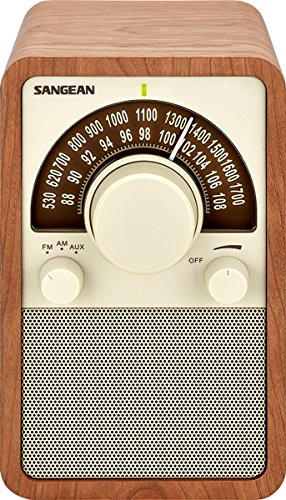
Jeff over at the excellent Herculodg blog, is about to pull the trigger on this Sangean WR-15. I must admit, I’m mighty tempted, too–about as tempted as I get for radios lacking shortwave coverage.

I love the simple design, the analog dial, and the three choices of finish: walnut, black leatherette, and silver piano finish.

At $145.95, the WR-15 is no bargain basement find, but I’m willing to bet it’ll perform quite well. Perhaps as well as my Tivoli Model One? We’ll see.

I’m sure Jeff will post a review on the Herculodge after he receives his unit in the coming weeks/months!  Thanks for the tip, Jeff!

Software Defined Receivers (SDRs) for the visually impaired listener

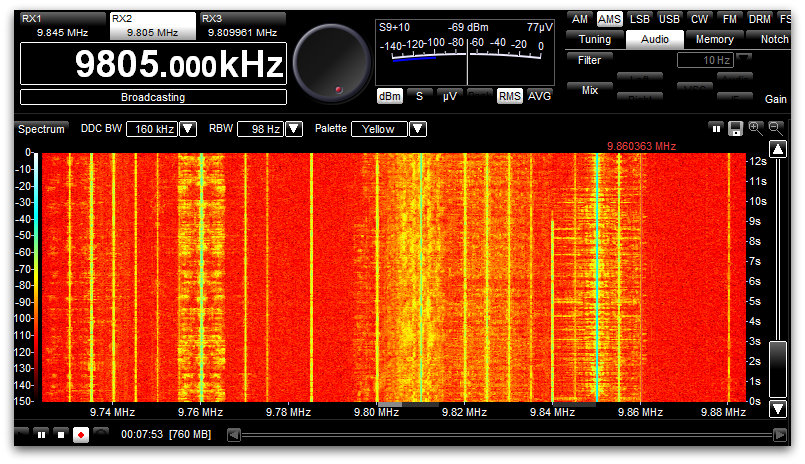
Spectrum Display 31 Meters on the WinRadio Excalibur

At the 2015 Winter SWL Fest, I co-hosting a forum on Software-Defined Radios.  Afterwards, a radio friend–who happens to be visually impaired–approached me to ask:

“What is the best SDR for those who are blind or visually impaired?”

I’d never been asked the question before, and replied that I’d have to do a little research. In truth, I suspected that research would turn up very little that was useful:  after all, SDRs require a lot of pointing and clicking, and some of the interfaces are rather complicated. Spectrum and waterfalls displays, often at the heart of the SDR app, are visual displays.

But I kept thinking of my friend’s question. Upon my return, I set out to do a little research and possibly pose the question here on the SWLing Post.  Then assistance stepped in…in the form of medium wave DXer Tore Johnny Bråtveit.

If Mr. Bråtveit’s name sounds familiar, that would be because I recently posted a link to an Oregon Public Broadcasting interview with him. In the interview, he mentioned that he uses SDRs to chase MW DX, and that he is visually impaired.

I reached out to Mr. Bråtveit via his website and asked for any advice he could give about SDRs for those who are blind or visually impaired.  His enlightening response:

“In the interview I mentioned screen reader software and the need to find SDR software that plays well along with such screen reader software. For those visually impaired who have some eyesight, this aspect may not apply, since many of them are well helped by a screen magnifier software package.

For those without eyesight at all, or with so little left of the eyesight that they cannot make practical use of the screen, there are these screen reader software packages. They all do the same, but they solve the job in a somewhat different way and are good at different tasks.

I began using SDRs back in 2007. First I used some [RFspace] SDR-IQs for a few years, until I purchased a Winradio G31DDC in 2010. The user experience with Winradio was so good that I have stayed with those radios since then, using both G31DDC and G33DDC receivers at my remote listening places.

I think I can say that all the software packages delivered with SDRs have issues and challenges when it comes to using them along with a screen reader. The worst example of unusable native software I have seen so far, is the software package delivered with the [Microtelecom] Perseus. I had a thought purchasing one some years ago and make some scripts for my screen reader JAWS to see if I could make the Perseus possible to use effectively, but I dropped the idea at that time in favor of Winradio.

The SpectraVue software delivered with SDR-IQ was usable, but I had to script it quite extensively, especially to be able to use the timeline when playing back recordings. Also the frequency selector was a bit tricky, so I had to assign some hotkey combinations to it. Otherwise it worked fine.

The Winradio software for the G3x series works quite fine right out of the box. They have apparently thought [through] keyboard operation, and there are shortcuts for almost everything. Such shortcut keys are necessary, as navigating the program interface with a screen reader can be a bit too complicated, especially for those only using speech output from the screen reader to access the screen content.

I personally am living in a country where we have good access to refreshable Braille displays, which gives me the opportunity to turn off the speech entirely if I want and only use Braille output. This way I can navigate the program interface quite effectively to understand how things are laid out.

The only real issues I have had with Winradio software, is:

1. Changing shortcut keys:
Normally, the Tab key is used to move between elements on a screen, so it would be natural to think that pressing the Tab key will bring me to the next shortcut key definition. Not in Winradio. Tab can be defined as a shortcut key itself, so trying to navigate the shortcut keys dialog with that key gives you a number of options, all connected to the Tab key. My way around this was to navigate with the Braille display until I found the shortcut key definition I wanted to change, focus on it by pressing a cursor routing key in that position and changing the definition. Then navigate further down to the OK button and activate it.

2. The timeline:
The timeline used when playing back recordings can be hard to locate when using a screen reader, and even more difficult to work with, since when you press a cursor routing key on the Braille display to simulate a mouse click on it, the focus often moves to somewhere else on the screen. Then you have to work hard to locate back to that timeline again. My solution here was to script my screen reader with a hotspot at the timeline with a shortcut key assigned to it, so that I could move focus back there by pressing a key.

Among the third-party software packages developed for SDRs, I have found few that I can recommend. The only one I can think of, is HDSDR. Especially in the current version from November 2013, there are a number of useful shortcut keys, and the program seem to work very well. I have used it a bit with an AFEDRI SDR I have, and have also used it to play back older SDR-IQ recordings.

So, if nothing else works, Iwould say that HDSDR is the solution, since it is both easy to use and have support for a number of receivers. And it is free, as you certainly know.

[…]Please write back if I can help you any further”

Brilliant!  What a treasure trove of information for our visually-impaired SDR listeners and operators.  Thanks so much, Mr. Bråtveit, and please keep in touch with us here at the SWLing Post.  73s!

Do late model PL-880s lack some hidden features?

Tecsun-PL-880-Manufacturing-date-SWLing-Post

SWLing Post reader, Del Fields, writes:

“I’ve bought a new PL-880 this year (2015) and apparently some of the “hidden features” are not hidden anymore. They don’t even exist. HaHa.

For example, I tried the DNR hidden function by pressing and holding 6. Nothing.

Also I tried the hidden date of manufacture trick…..nothing. I tried the pressing holding while turned off, the AM BW button and did that twice and got “8820”. Pressing and holding a third time just returned it to normal off screen. Just fyi. But I do wish there was a DNR function or a squelch feature.”

This is interesting, Del–I have no late model PL-880s to try out these hidden features. My PL-880 dates from November 2013 (see the manufacturing date displayed on screen above).

Have any others who have recently purchased the PL-880 noticed this? Click here for a complete list of PL-880 hidden features.