Shortwave listening and everything radio including reviews, broadcasting, ham radio, field operation, DXing, maker kits, travel, emergency gear, events, and more
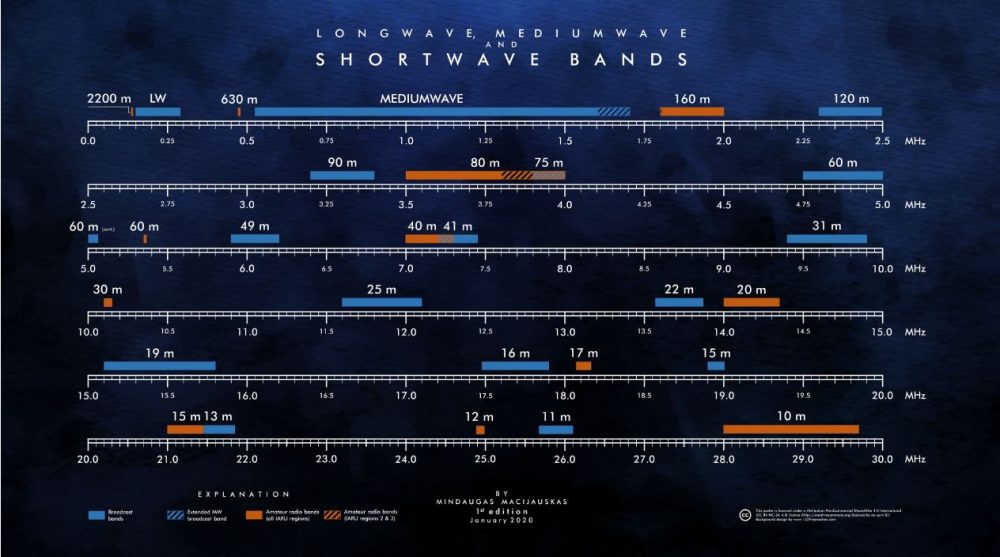
Radio enthusiast, Mindaugas Macijauskas, has recently shared a graphics project he’s been working on for quite a few months. Mindaugas writes (on Facebook):
Few months ago I’ve started my little spare time project – “Longwave, mediumwave & shortwave bands” poster. So, I’m happy to announce that poster & wallpaper are ready to download!
This is initial, 1st edition so some errors might occur. In that case – please PM me.
Currently it’s a bit simpler version, than I’ve initially intended to create. But for this one decided to use “less is more” philosophy.
Had some issues with PDF making, so not all sizes currently are available. I’ll try to fix this within a week or so. On the other hand – tried to print 30×40 cm (12X16 inch) jpeg file at photo lab – and this went exceptionally well.
If you like my my work – you can support it via PayPal. Link is in website.
Very well done, Mindaugas! This is a gorgeous poster and is now the wallpaper on one of my PC monitors.
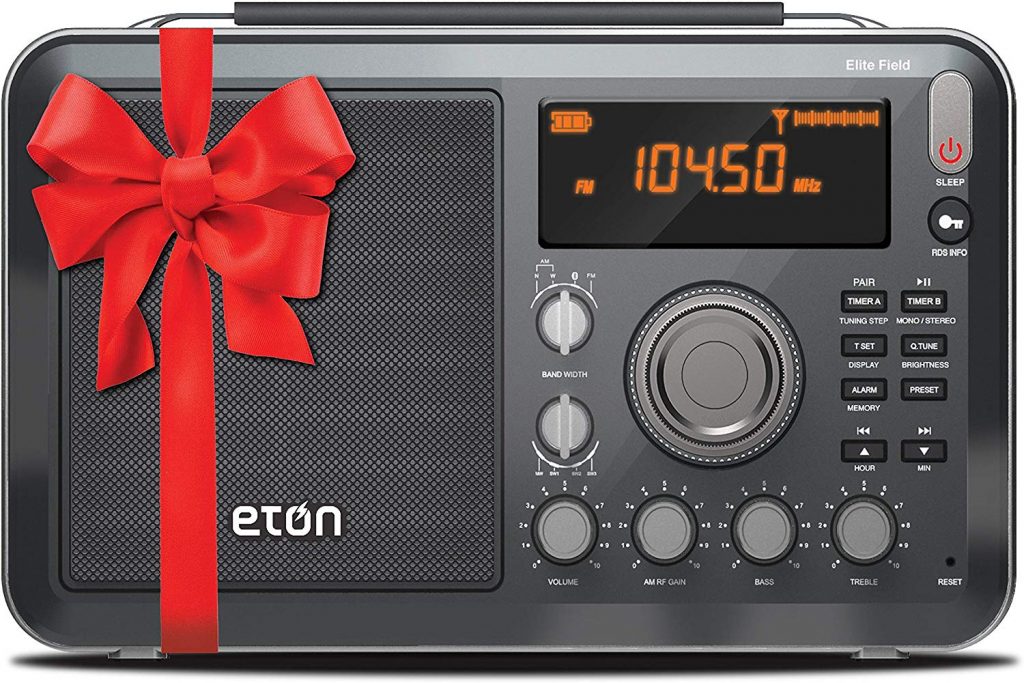
Many thanks to SWLing Post contributor, Dennis Dura, who notes that the Eton Elite Field is currently at an all-time low price of $78.99 shipped on Amazon.com. Of course, being Amazon, this price will change without notice.
Many thanks to SWLing Post contributor, Pete (WB9FLW), who notes that Ashhar Farhan (VU2ESE) has recently announced the availability of the uBITX v 6.0–as Pete notes, “just in time for the Holidays!“
Pete shared the following message from Farhan:
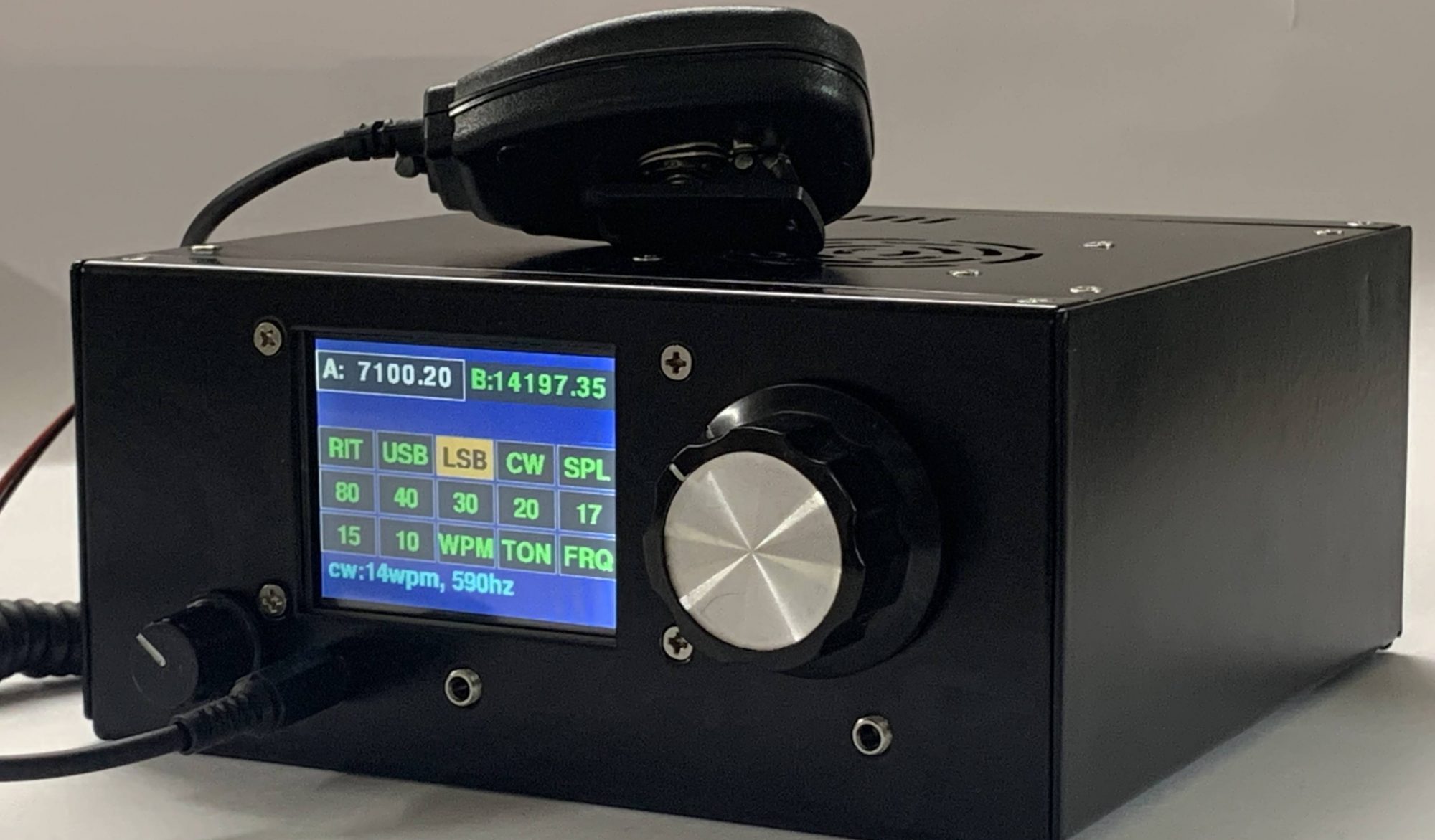
Here is what [the uBITx v 6.0] looks like :
And of course, you can buy it on hfsignals.com. The shipping will happen from Tuesday onwards. We have a limited supply of the first 200 boards. The rest is for after Christmas.
The most important thing about this revision is that the Radio circuitry is almost unchanged. We have incorporated the connectors on the PCBs. So, this kit needs none of the confusing soldering. You snap in the TFT Raduino onto the main board, plug the power and antenna from the back, snap on headphones, plug in the mic (supplied with the kit) and off you go!
It is offered in two kits now : The basic kit (150 USD) is without the box (like old times) but with a microphone and two acrylic templates for the front and back panels.
The Full kit (199 USD) has the box with speaker, mounting hardware etc. Both are described on the website.
Now, about the TFT display:
For those who are using the 16×2 display and you would like to upgrade, you will have to do three things:
I have been hacking away at adding a TFT display for the Arduino for sometime. Finally, I managed to do this with a really inexpensive 2.8 inch TFT display that uses a controller called the ILI9341. The display update is slow but, clever guy that I am, the display very usable. it uses the same pins that earlier connected to the 16×2 LCD display. This display is available everywhere for a few dollars.
Many thanks, Pete, for sharing this announcement. The price was simply too attractive to me, so I just purchased the full kit for $199 US. (Thanks for being the good enabler you are, Pete!)
Update – 30 May 2020: Many thanks to Armin Sander who notes that the uBITX V6 full kit price has increased to $209 US.
I’ll post an update when I receive the transceiver and assemble it. I do hope this is a workable little radio–it would be pretty amazing for newcomers to the hobby to be able to get on the HF bands for a mere $200 US. I also love the fact that this is all based on open-source, hackable technologies.
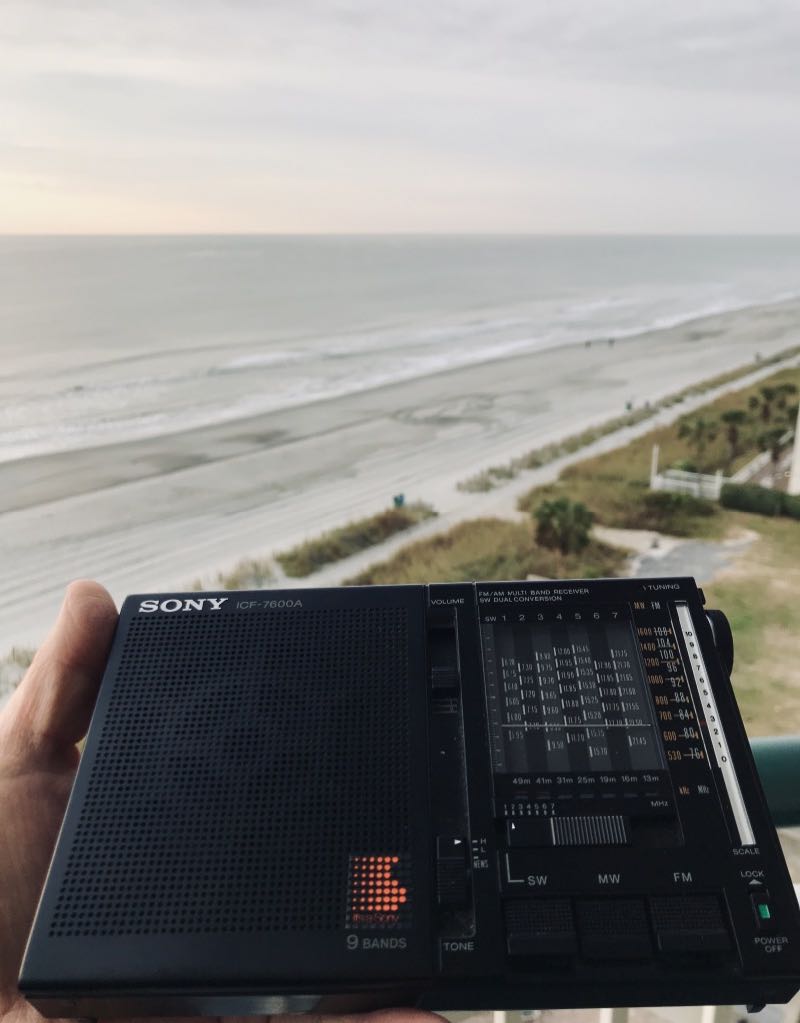
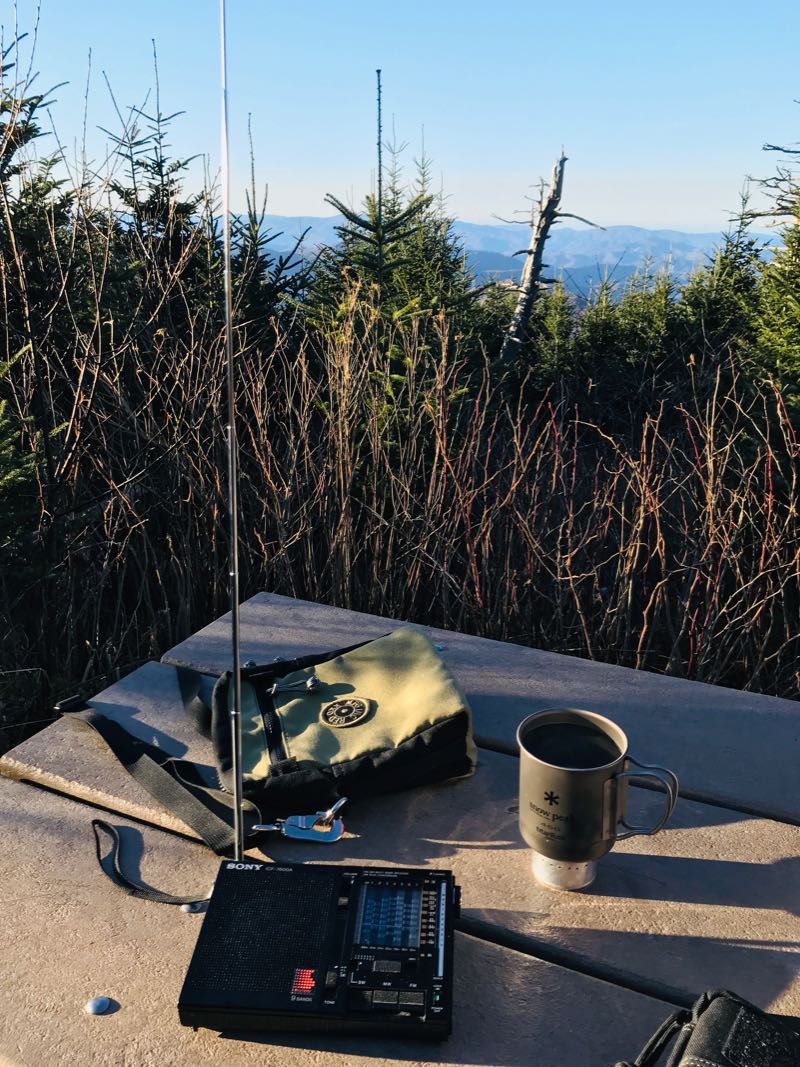
I mentioned in a previous post that SWLing Post contributor, Ed Earps, recently gifted me his Sony ICF-7600A.
I’ve been having a field day with this radio!
Well, many field days, in fact. Early on, I packed the ‘7600A in my Red Oxx Hound EDC pack–it fits in the Hound’s interior pocket perfectly and is well-protected on all sides. The radio has pretty much lived in my car and truck since then, thus has gotten a lot of air time when I take short breaks throughout the day.
In November, I took the ‘7600A to Mount Mitchell (6,684 feet/2,037 meters above sea level) and to coastal South Carolina (sea level). It’s been a great radio companion and has given me an excuse to go “old school” and do a little analog band-scanning.
The ICF-7600A certainly has some strengths.
For one thing, although I’ve let this radio on for extended listening sessions, I’ve yet to deplete the eneloop rechargeable batteries (Amazon affiliate link) I originally installed in October. Obviously, this radio will run for days on batteries–a serious plus if DXing off-grid.
The ‘7600A is a fantastic portable for mediumwave DXing. Although it’s also a very sensitive and selective shortwave receiver–especially in this class and era of analog portable–I think mediumwave may be its strong suit.
On the negative side, some of the shortwave band selections are truncated and for some reason, it doesn’t have a back stand (quite an odd omission). Still, these are pretty minor cons.
Obviously, the pros outweigh the cons on this brilliant vintage portable that seems to have held up very well over the years.
To ensure its longevity–and as a precaution–I do think I’ll take it to Dr. Vlado to have all of the caps replaced soon.
My thoughts? If you ever stumble across an ICF-7600A at a hamfest or on eBay, I say grab it!
Post readers:Anyone else love the ICF-7600A? Did I miss any major pros or cons? Please comment!
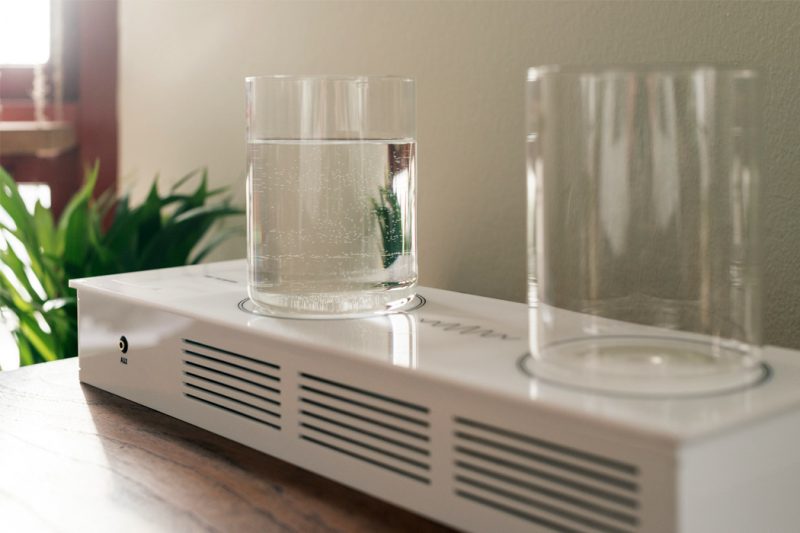
We’re all used to turning a couple of knobs and pressing a few buttons to operate a radio, but have you ever played with glasses of water to change a radio channel? Probably not. Designers Tore Knudsen, Simone Okholm Hansen, and Victor Permild recently launched their art project ‘Pour Reception’. And it’s beyond anything you can imagine. Pour Reception consists of two internal speakers, an AUX input, a handy guide and two glasses that must be placed on the body of the radio. And no the glasses aren’t just to sip water from, though you could do that. The radio uses the two glasses filled with water as it’s interface!
[…]Pour water into the glasses, and the stereo starts! Transfer some water from one glass to another and you can change channels. Touch the glasses, and you can fine-tune the radio’s signal, eliminating distortion. Finally, pop a finger into the water to control the volume or to bring the radio to a halt!
This might seem like a scenario from an alternate universe, but the tech behind it is pretty common. Objects emit micro amounts of electricity, and touch tends to disrupt this and convert it into a signal. By using Tact library by NANDstudio (an open-source Arduino shield that turns any object into a touch and proximity sensor), the designers converted the radio platform, glasses, and water into different layers of a capacitive interface, allowing them to conduct minute amounts of electricity and transforming them into sensors. Utilizing a Wekinator (an interactive machine learning tool), various gestures such as touching the glass or dipping a finger into the water were mapped into commands for controlling the radio. The end result; a radio with glasses of water functioning as a “digital material interface”.[…]
Oh now that’s a fun way to combine radio and art! Obviously, this isn’t an RF radio–it either grabs streaming content or (more likely) uses pre-recorded content on an internal storage device. Still, I think it’s a creative little project and an ideal way to play with Arduino Tact library.
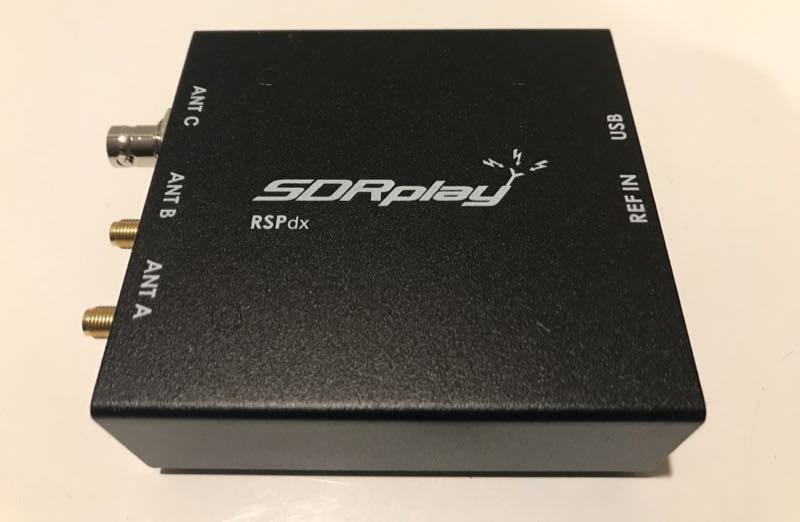
For over two weeks now, I’ve had an early production model of the RSPdx here in the shack operating on a beta version of the SDRuno application.
In the spirit of full disclosure, SDRplay is a long-time supporter of the SWLing Post and I have alpha- and beta-tested a number of their products in the past. This early production RSPdx was sent to me at no cost for a frank evaluation, and that’s exactly what I’ll offer here. To be clear, while I am using beta software, this is not a beta SDR, but one from a first limited production run.
And thus far, I must say, I’m impressed with the RSPdx.
Upgrades
The RSPdx has been introduced as a replacement for the RSP2 and the RSP2pro receivers. It has been updated and upgraded, with a completely new front-end design.
Here are the highlighted improvements and changes:
Performance below 30 MHz has been enhanced when compared to the RSP2/RSP2pro.
Performance below 2 MHz has been substantially upgraded. Through the use of the new HDR mode, both dynamic range and selectivity have been considerably improved.
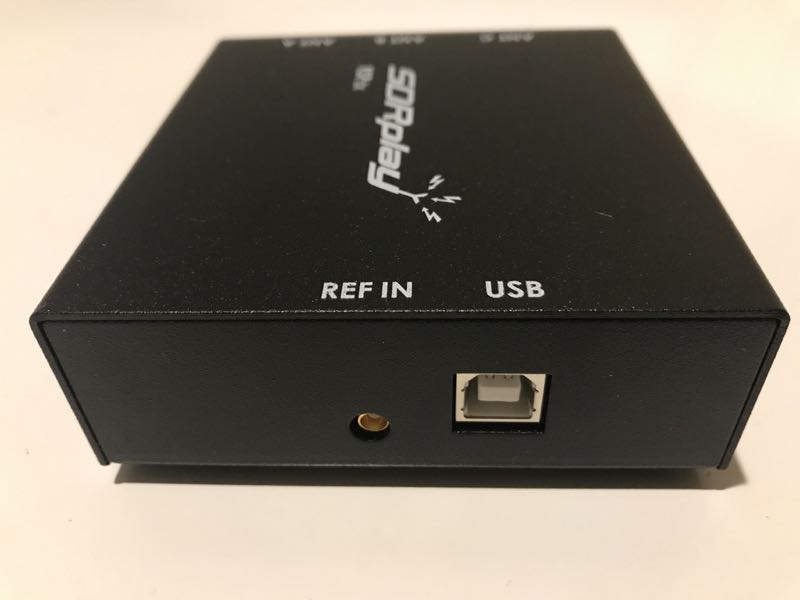
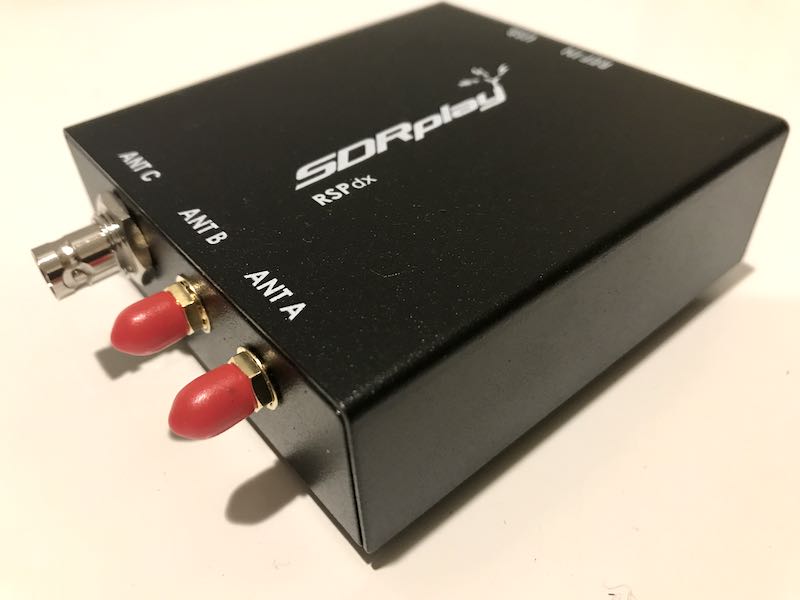
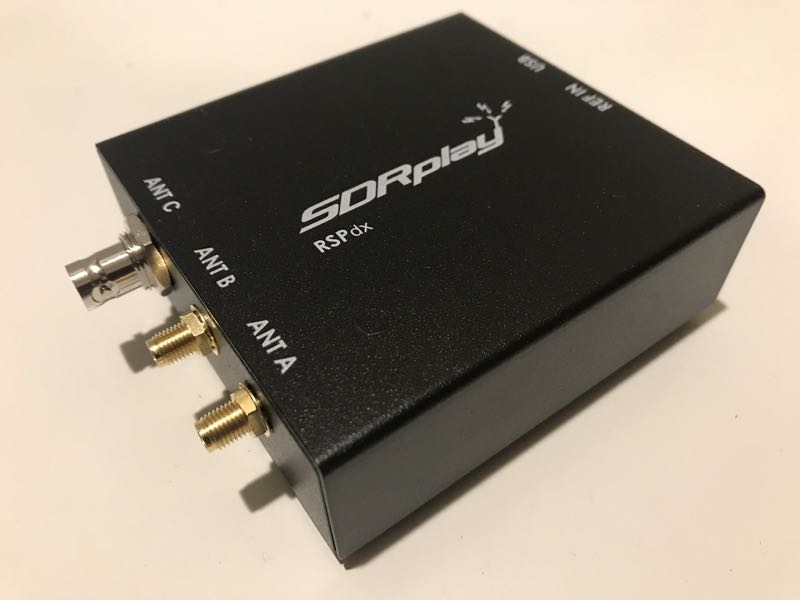
There is now a BNC antenna connector on antenna C position instead of a HiZ port. Both A and B antenna ports are SMA like other RSP models.
Let’s face it: those of us interested in low-cost SDRs are spoiled for choice these days. The market is chock-full of sub-$200 SDRs, especially if you include all of the various RTL-SDR-based SDRs and knock-off brands/models one can find on eBay.
Personally, I invest in companies that support radio enthusiasts for the long haul…those that do their own designs, innovations, and production. SDRplay is one of those companies.
SDRplay’s market niche has been providing customers with affordable, high-performance wideband receivers that cover an impressive 1 kHz to 2 GHz.
Wideband coverage can come at a cost. Unless you pay big money for a commercial-grade wideband receiver, you’re going to find there’s a performance compromise somewhere across the spectrum. On the RSP2 series, those compromises would have been most apparent on frequencies below 30 MHz.
That’s not to say HF, MW, and LW performance was poor on the RSP2 series–indeed, it was quite impressive and well-balanced; it just didn’t stack up to the likes of the similarly-priced AirSpy HF+ and HF+ Discovery, in my humble opinion. Both little Airspy SDRs have wooed DXers with their impressive dynamic range and overall ability to work weak signals in the HF portion of the spectrum.
Neither of the AirSpy HF+ models are wideband receivers, but still offer a generous range: 9 kHz to 31 MHz and from 60 to 260 MHz––about 11.5% of the frequency coverage of RSP models. (Note that the Airspy R2 and Mini do cover 24 – 1700 MHz.) For shortwave radio listeners that also want to venture into the UHF and SHF regions, a wideband SDR is still required.
It’s obvious SDRplay’s goal is to make the wideband RSPdx into a choice receiver for HF and, especially, for MW/LW DXers. But have they succeeded? Let’s dive in…
Performance
As I say in most of my SDR reviews: doing comparisons with receivers that have so many features and adjustments is never easy. In other words, we want an apples-to-apples comparison, but it can be difficult to achieve, especially with new products.
The RSPdx, Excalibur, and HF+ Discovery all used the same antenna in my tests––a large, horizontal delta loop antenna, via my ELAD ASA15 amplified antenna splitter. I’ve used this antenna splitter for years and can vouch for its equitable, lab-grade distribution of signal.
The RSPdx is not in full production at time of posting, thus application options are limited. Typically, I’d load comparison SDRs in SDR Console or HDSDR and test them with identical settings as well. At present, the RSPdx is only compatible with a beta version of SDRplay’s own application, SDRuno (which will come out of beta rior to the first major production run). The benefit of using SDRuno is that you unlock the full potential of the RSPdx, plus signal and noise numbers are incredibly accurate.
For each SDR in this comparison, I used their native/OEM application to give them the best possible performance.
I also matched filter settings and made an effort to match AGC and volume settings as closely as I could.
Additionally, I resisted the temptation of comparing my RSP2 with the new RSPdx because I didn’t want to run two simultaneous instances of SDRuno on the same computer––especially considering one was in beta.
Is this comparison perfect? Probably not, but I did the best with the time I had available. I do intend to make further comparisons in the future.
Longwave performance
Via the RSPdx’s new “HDR” mode, both dynamic range and selectivity have been considerably improved with frequencies below 2 MHz. While I’ll fully admit that I’m not much of a longwave DXer, my very first listening session with the RSPdx started in this region of the spectrum.
In fact, the first evening I put the RSPdx on the air and confirmed that I was, indeed, in HDR mode, I noticed a small carrier via the spectrum display on 171 kHz. I clicked on it and quickly discovered it was Medi 1. The signal was faint, but I could clearly ID at least one song. This truly impressed me because I believe this was the first time I had logged Medi 1 on longwave from the shack.
I didn’t connect the Excalibur at that point to see if it could also receive the faint Medi 1 signal, but I imagine it could have. I’m pretty sure this would have been outside the reach of the RSP2, however.
I tried to explore more of the longwave band, but due to local RFI (I suspect an appliance in my home), most of the LW band was inundated with noise. With that said, I did grab three of my benchmark non-directional beacons.
Obviously, the RSPdx is a capable LW receiver. I would like to spend more time on this band once I’ve tracked down the source of my local RFI.
Mediumwave/AM performance
In the past two weeks, I’ve spent many hours with the RSPdx on mediumwave.
We’re heading into the winter months in the northern hemisphere, and that’s normally when my listening habits head south on the bands.
In short: I find the RSPdx to be quite sensitive and selective on the mediumwave bands while the HDR mode is engaged. A major improvement over its predecessor.
I primarily compared the RSPdx with my WinRadio Excalibur on mediumwave since I consider the Excalibur to be a benchmark MW receiver. And, as you’ll hear in the screencasts below, the RSPdx truly gives the Excalibur a run for its money:
Note that my horizontal delta loop antenna is omni-directional, hence the tug-of-war you hear between stations in the clips above.
In truth, I could have done more to stabilize the signal on both of these fine SDRs, but I wanted to keep the comparison as fair as possible.
You might have noticed that both were running AM sync mode. It seems the sync lock on the RSPdx may have also improved––though I would need to do a direct comparison with the RSP2 to know for sure––but in terms of stability, I still found that the WinRadio Excalibur was superior. Mind you, the Excalibur is a $900 – $1,000 receiver and has the strongest synchronous detector of any radio I’ve ever owned.
Shortwave/HF
SDRplay notes on the preliminary specifications sheet that the RSPdx has been “enhanced” when compared with the RSP2 series.
And, after having spent two weeks with the RSPdx on the shortwave bands, I would say this is a bit of an understatement. For although I haven’t compared the RSPdx directly with the RSP2 yet, I do feel HF performance is substantially better than its predecessor. Indeed, in my comparisons, I often found it gave the Excalibur some serious competition. Overall, the Excalibur had an edge on the RSPdx, but the gap has closed substantially. That’s saying something.
For the comparison videos below, I also included the excellent AirSpy HF+ Discovery.
As you can see and hear, the RSPdx is now in the league of some of the finest HF receivers in my arsenal.
But I’m curious to know what you think after listening to these comparisons. Please comment!
Notch Filters
For those of you living in areas with DAB/DAB+ broadcasters nearby, you’ll be happy to note that the RSPdx has a DAB filter to help mitigate any potential overloading.
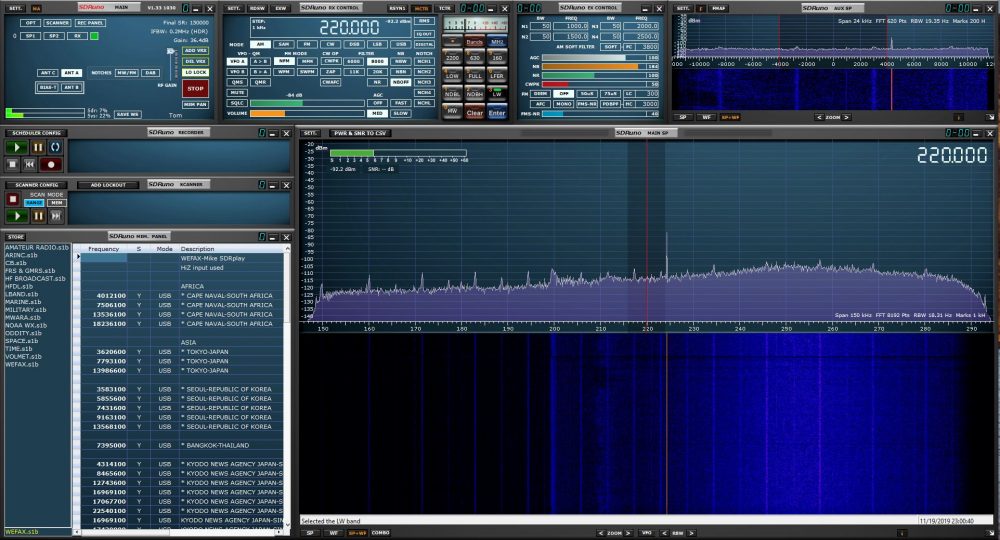
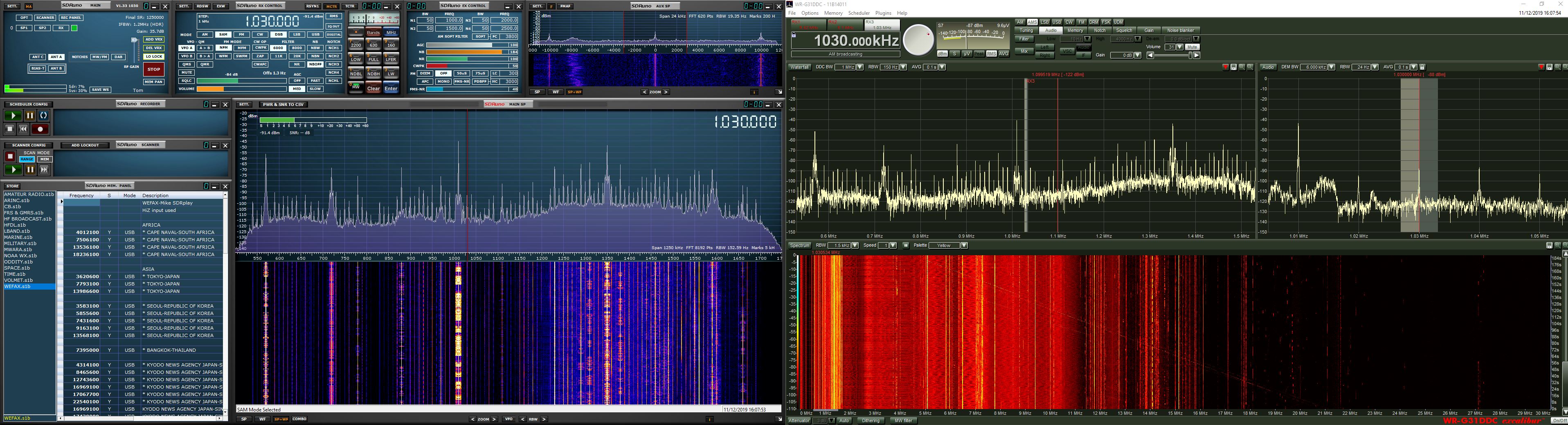
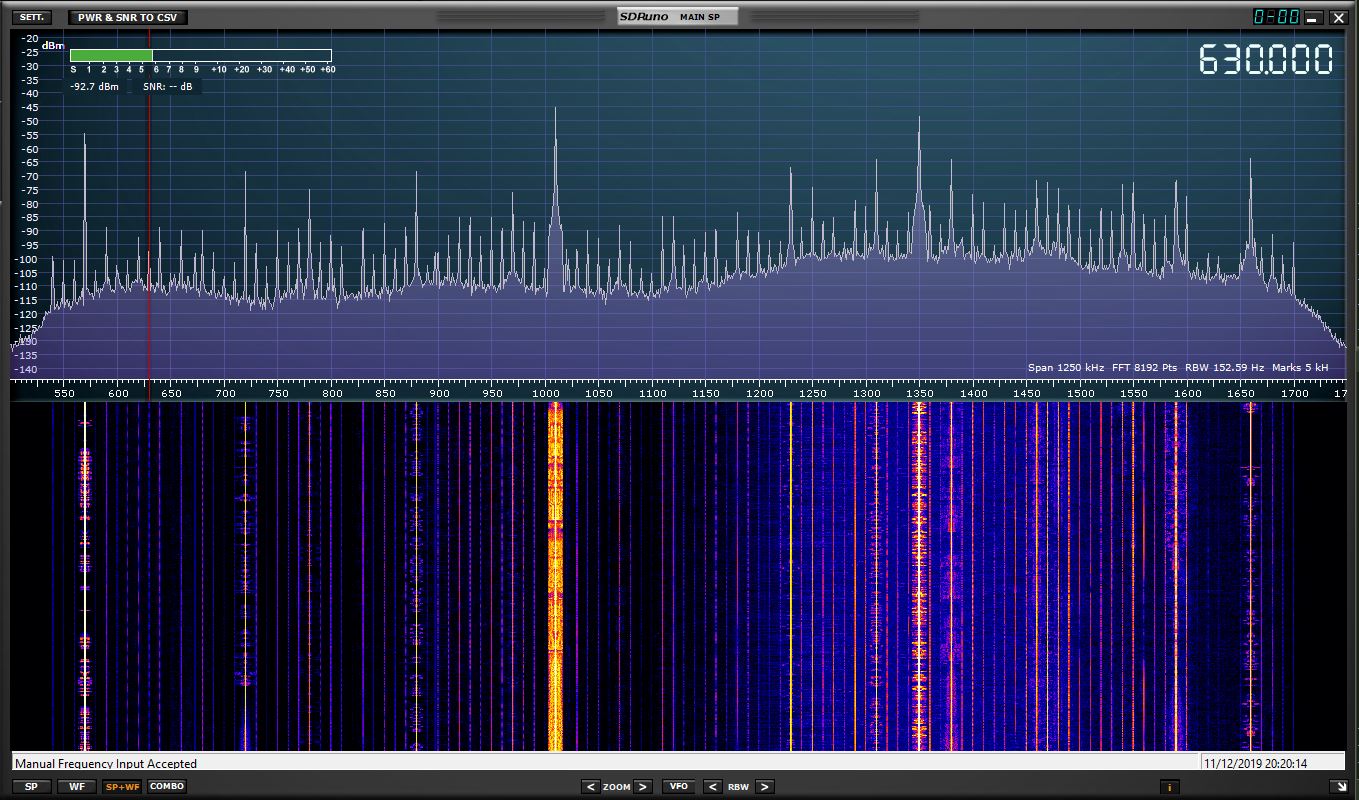
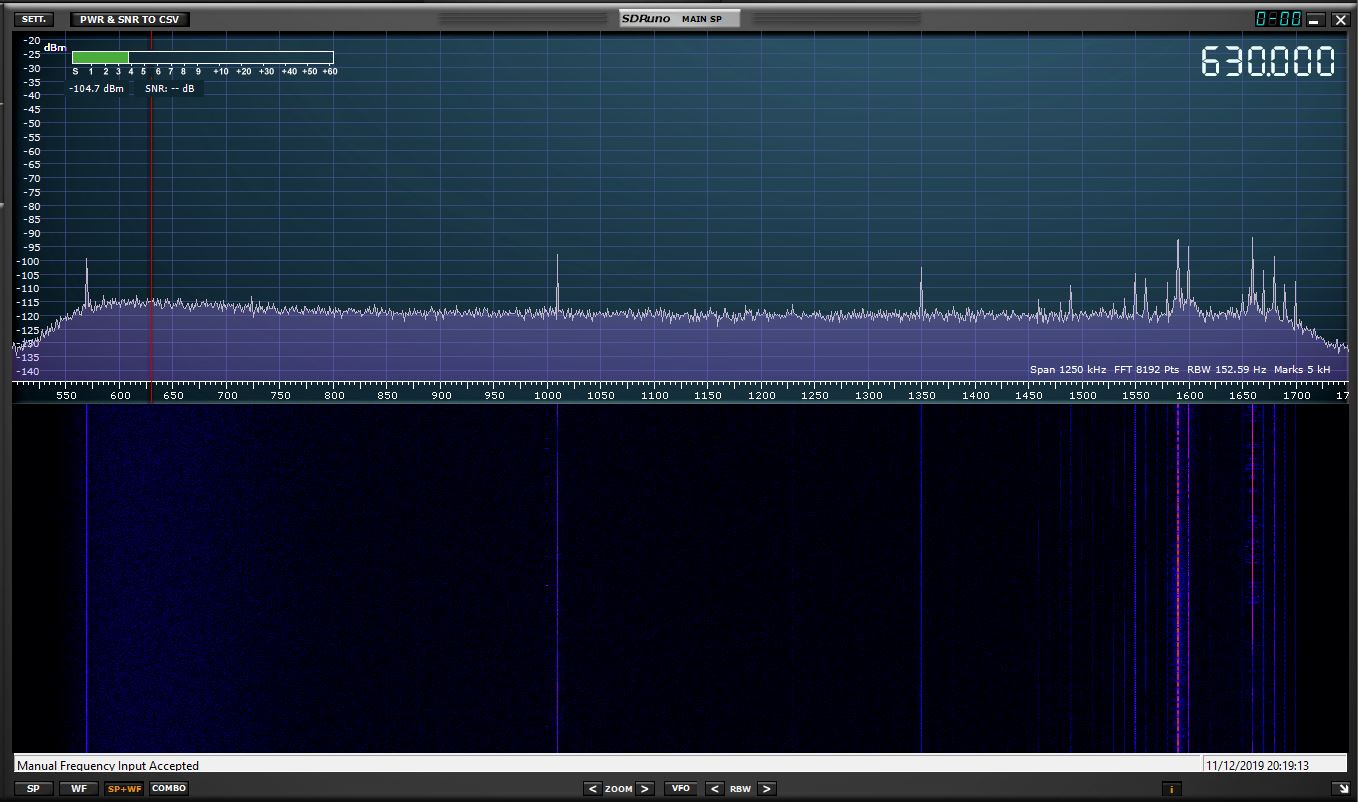
Also, if you live near a blowtorch mediumwave station, you’ll be quite pleased with the MW notch filter. It’s so effective at filtering out the mediumwave band, my local blowtorch on 1010 kHz is barely visible on the spectrum once the notch filter is engaged. (Note: I should add that neither the DAB nor the mediumwave notch filter was engaged during any of my previous comparisons above.) Check out the screen shots below showing the mediumwave band before and after the MW notch filter is engaged:
Before:
After:
Summary
For those of you looking for a budget wideband SDR with solid performance below 30MHz, look no further.
For $199 US, you’re getting a quality UK-designed and manufactured SDR in a proper metal housing. The OEM application, SDRuno, is one of my favorite SDR applications and can fully take advantage of the RSPdx’s new HDR mode. No doubt, with a little more time, most third-party SDR applications will also support the RSPdx.
Frankly, I was expecting classy mediumwave and longwave performance as this was the most touted upgrade of the RSPdx. SDRplay certainly delivered.
In my experience, SDRplay doesn’t oversell their products. Their preliminary product sheet mentioned improved performance on HF, but their press release didn’t even mention the HF upgrades. And this is where I, in particular, noticed significant improvement. Perhaps this is because I am primarily an SWLer, thus spend a larger portion of my time in the HF region.
SDRplay products also have a mature, robust SDR application via SDRuno. Day to day, I tend to use Simon Brown’s SDR Console as my primary SDR application, since it’s compatible with so many of my SDRs and also offers some of the best recording functionality for those of us who do audio and spectrum archiving. Each time I beta test or review an SDRplay SDR, however, I’m more and more impressed with SDRuno. It’s evolved from being a rather cluttered application to one with a thoughtful, cohesive user interface that’s a joy to use––a product of true iterative agility.
Indeed, after having used SDRuno exclusively these past two weeks, I believe I would consider it as my primary SDR application…if only it had audio recording in addition to spectrum recording, and could run multiple instances with multiple SDRs. Again, given a little time, I wouldn’t be surprised if some of this functionality is eventually integrated.
Questions?
Since many SWLing Post readers already own an SDR, I’m sure some of you will have questions. Let’s address a few of those right now.
Question: “I have an RSP2/RSP2pro. Should I upgrade to the RSPdx?”
My recommendation: If you are a shortwave, mediumwave, or longwave DXer, I would indeed recommend upgrading to the RSPdx. If you primarily use your RSP2 series SDR on frequencies above 30 MHz and only occasionally venture below for casual listening, then I’d keep the RSP2.
Question: “I have an RSP1a. Should I upgrade to the RSPdx?”
My recommendation: If you’ve been enjoying your RSP1a and would like to take your listening/monitoring to the next level, then, yes, I would upgrade. Not only can you take advantage of the RSPdx’s enhanced performance, but the RSPdx affords you three antenna ports, and has a more robust front end.
Question: “I have an RSPduo. Should I buy the RSPdx?”
My recommendation: I’m a big fan of the RSPduo. Unless you’re a dedicated mediumwave/longwave DXer, or you’d just like to add another separate SDR to your radio arsenal, I wouldn’t rush out to buy the RSPdx.
And while I’m offering advice, I’d like to offer my standard two cents on the subject of performance optimization: a radio is only as good as its antenna!If you have a compromised antenna, invest in your antenna before upgrading your radio. You’ll be glad you did.
Conclusion
Happily, I can recommend the SDRplay RSPdx without hesitation. This latest iteration of the RSP series SDR is a proper step forward in terms of performance and functionality––obviously implementing years of customer feedback.
SDRplay also has a proven track record of innovation and customer support. Their documentation, video tutorials, and community are among the best in the industry. Purchase with confidence.
Many thanks to SWLing Post contributor, Mei Tao, who writes:
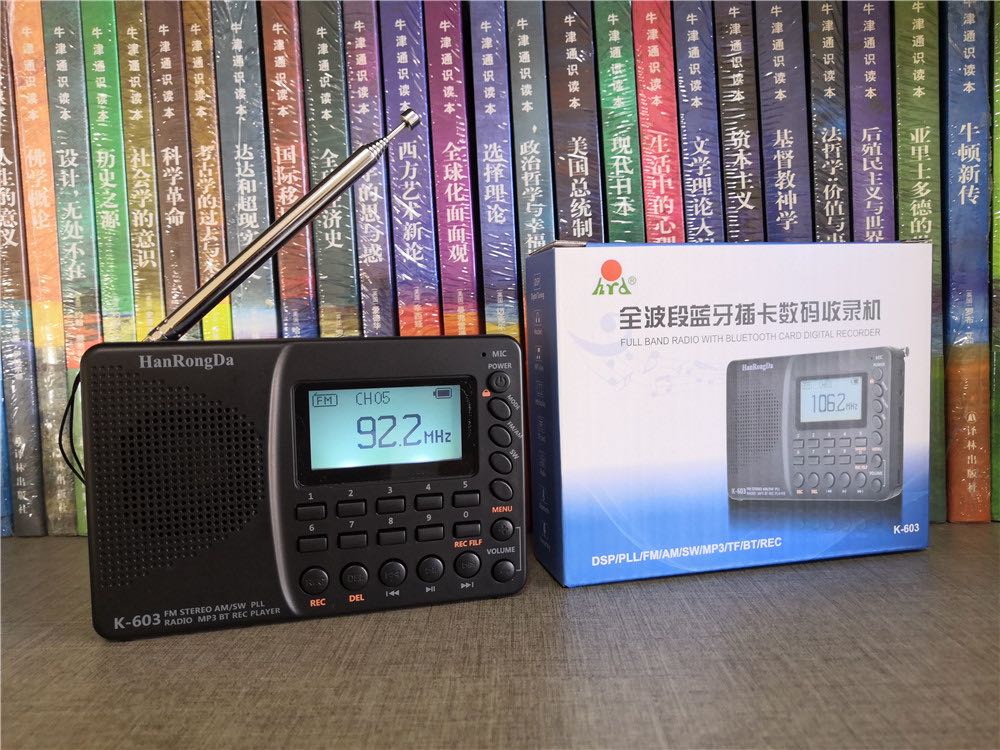
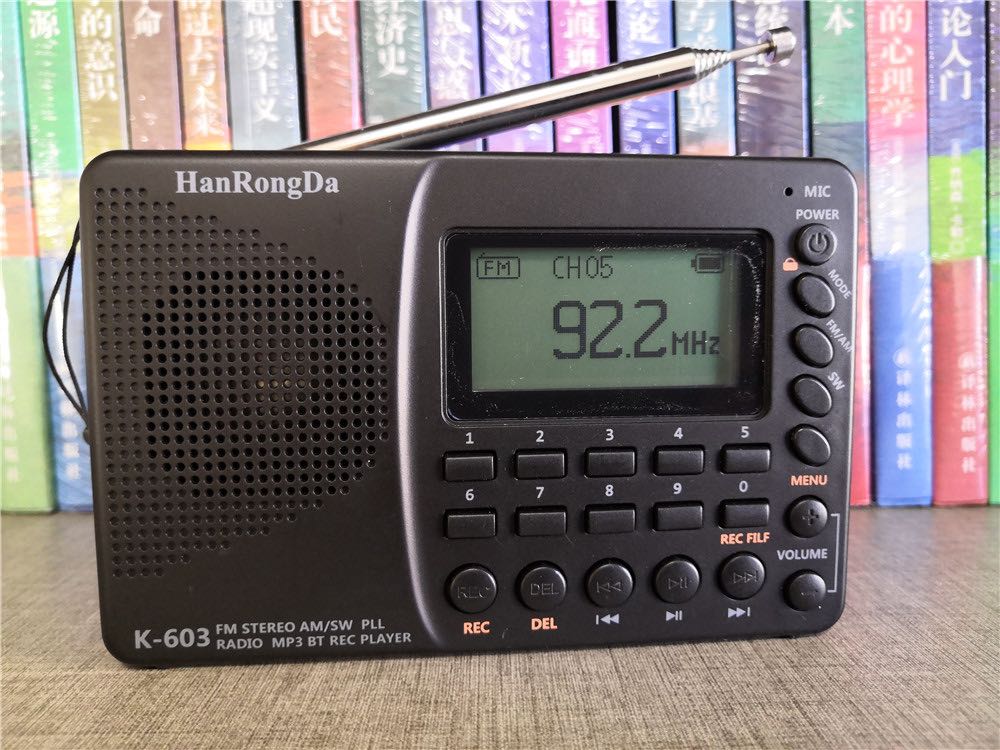
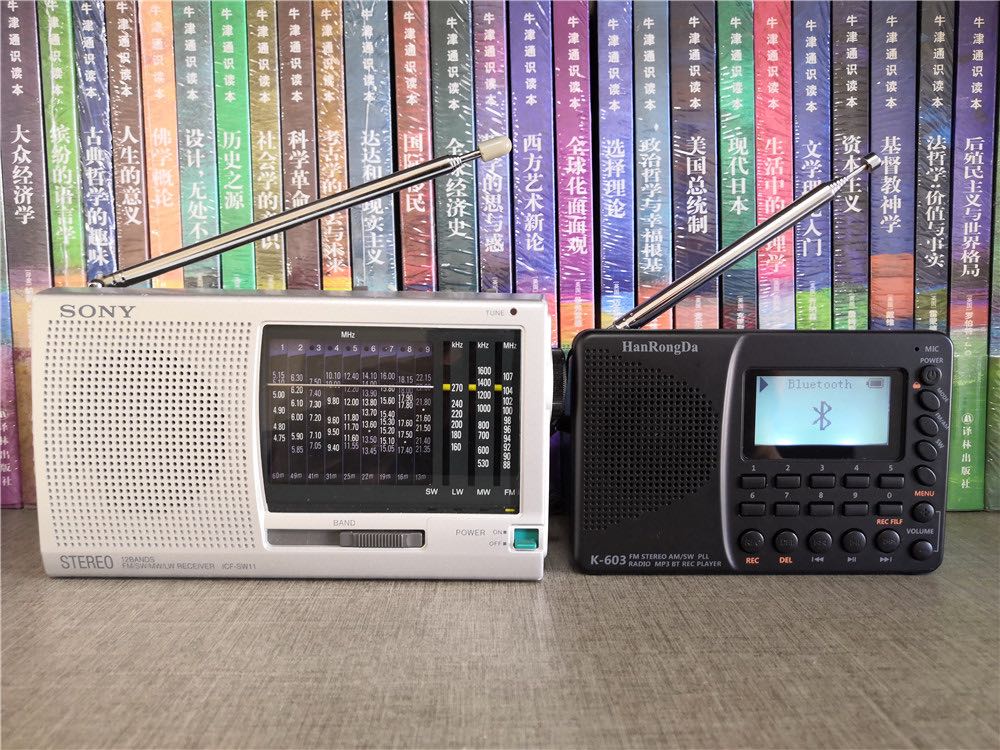
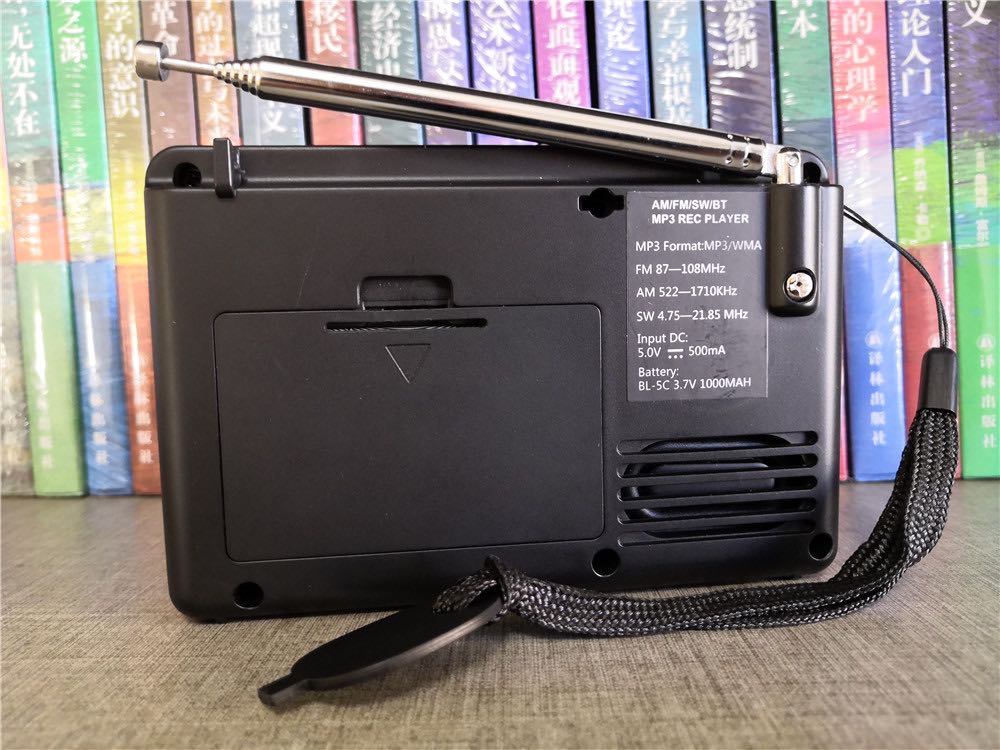
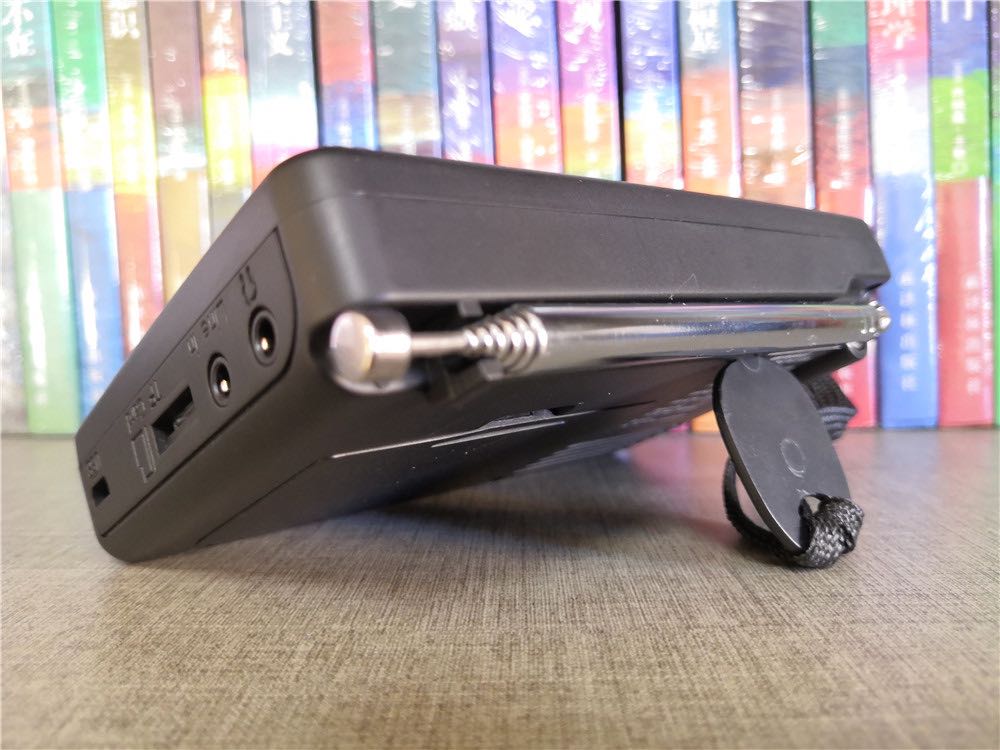
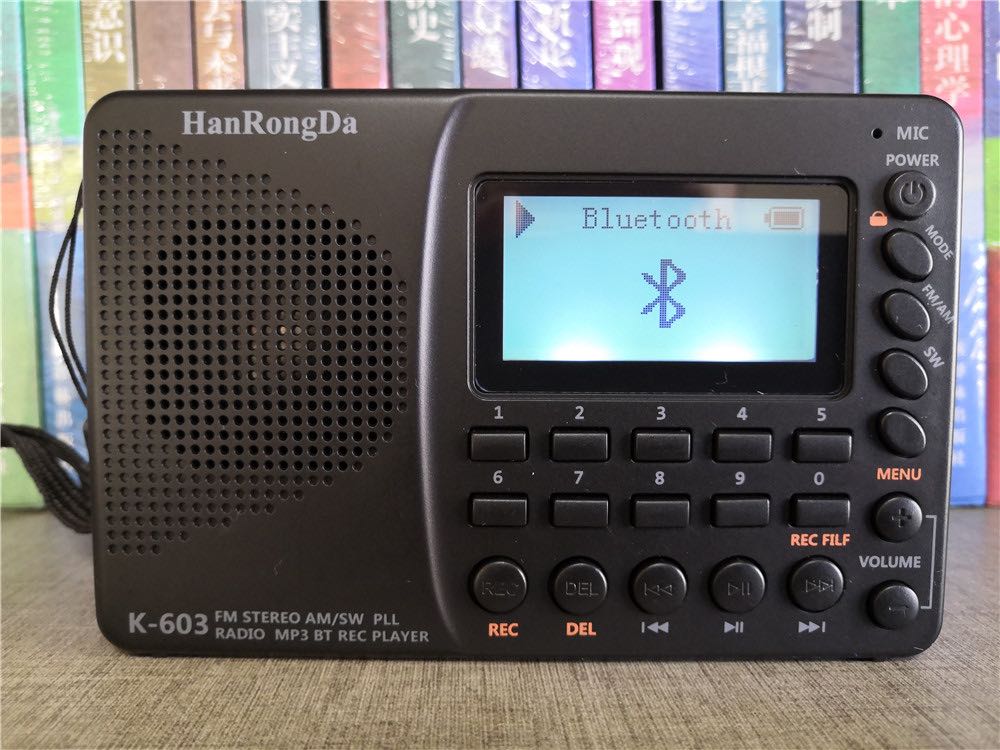
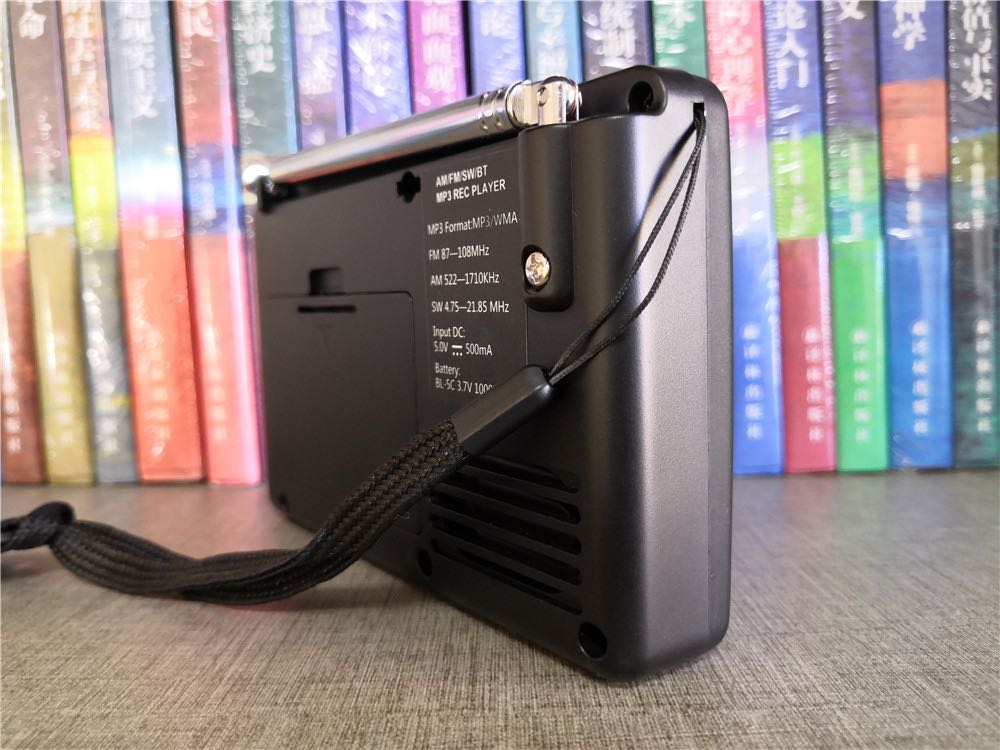
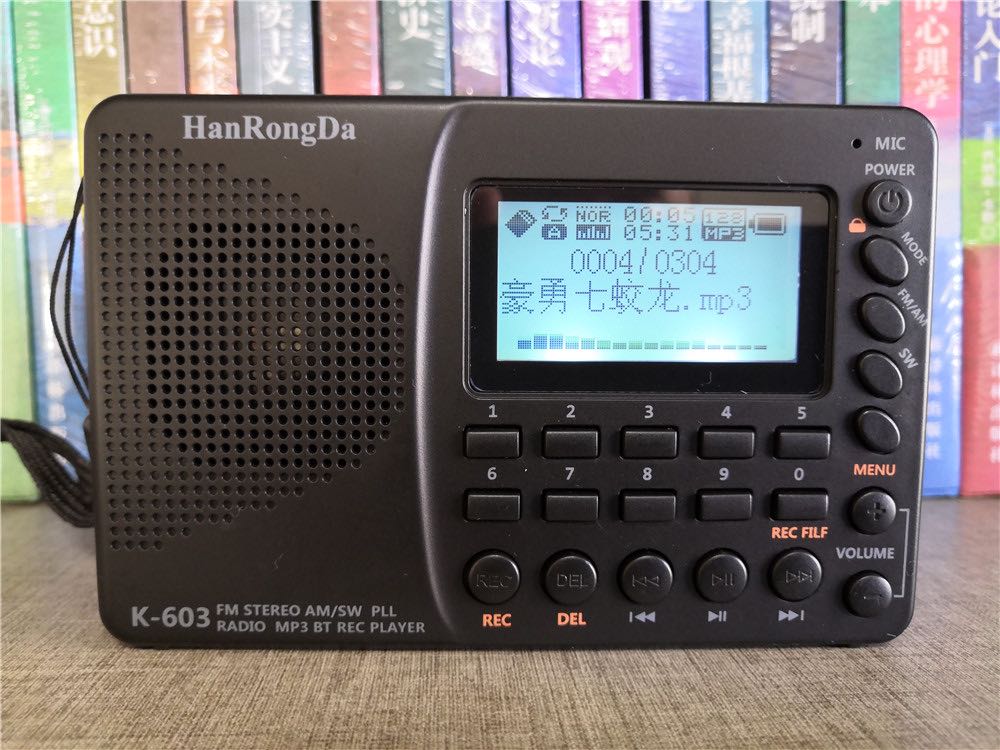
Yesterday, I received a new radio: the HanRongDa K-603, which was sent to me by the manufacture.They want me to test this prototype machine in order to find any bugs. If there is nothing to fix, I believe this radio will hit the market in this or next month.
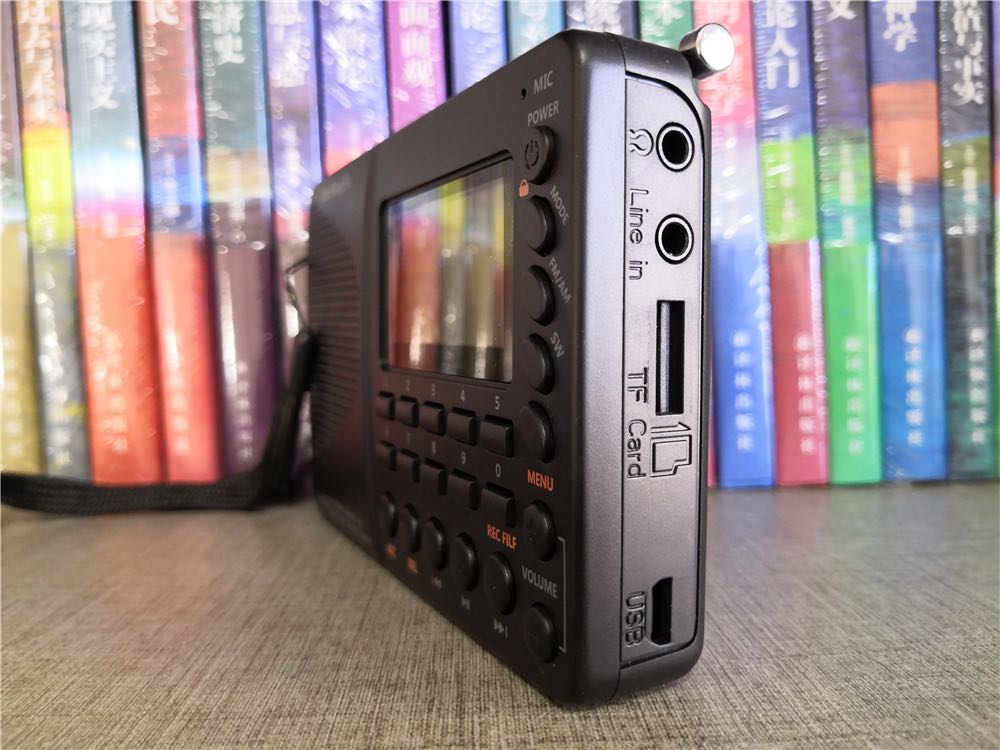
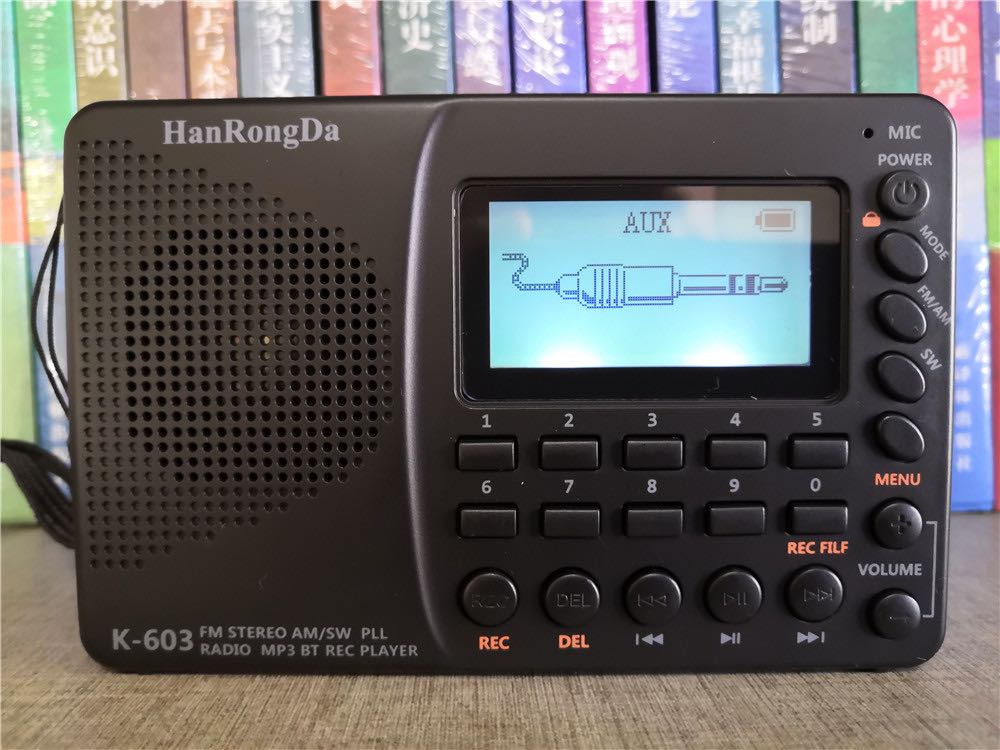
K-603 is a small portable radio which also has some great functions. Its major features include:
FM, AM, and SW bands
Bluetooth 5.0 connection
TF Card Player
Recording function
Line in
LCD can display three different languages,English?Chinese and another foreign language.
Powered by the BL-5C Li battery
MW channnel space can be switched between 9KHz adn 10KHz.
Tuning methods: Scan, ATS, and direct key entry
The designer told me that this K-603’s fm coverage is from 87MHz to 108MHz, but they will extend it to 64MHz in the next version. That’s really good news.
In a few days, I will test it carefully. If necessary, I will make side-by-side comparisons with my own Tecsun, Sangean, Radiwow, and Degen radios. Then i will present some text and video reviews.
I would like to share some pictures of this new radio with you and other BCLers
Best wishes to you!
Photos
Thank you, Mei Tao! We look forward to your review of the HanRongDa K-603. Yes, please let us know how it compares to your other receivers. We also look forward to any update regarding price and availability. Thanks for sharing those photos!