Category Archives: Radios

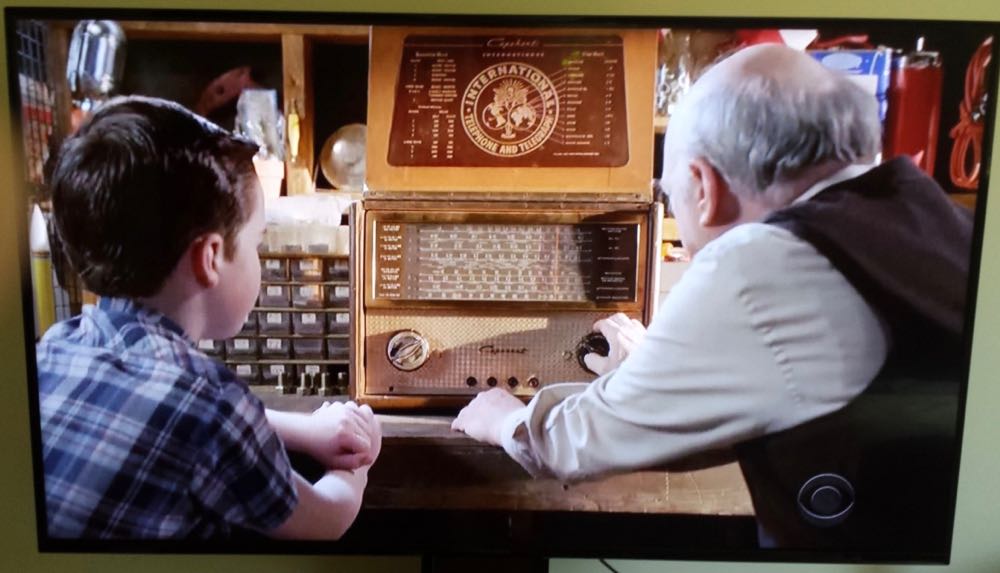
Steve spots a Capehart International Radio and mag loop antenna in “Young Sheldon”

Many thanks to SWLing Post contributor, Steve Yothment, who writes:

Check out the attached picture. It is from a preview of tonight’s episode of “Young Sheldon.” In it, Sheldon and Dr. Stergis are listening to an antique shortwave radio. I think it is a Capehart International Radio Model 88P66NL.

Also in the preview is an active loop receiving antenna. The show is supposed to be about Sheldon when he was young, back in about 1985. I don’t think active loop antennas were very popular at that time! Maybe they got the timeframe wrong on the use of the antenna. What do you think?

What a catch! I love the flip-up cover on the Capehart although I’m sure in daily use it might have been a bit unhandy. 🙂

Regarding active magnetic loop antennas, like you, I don’t remember them being around much in the mid 80s, although I know the technology was available. I imagine they were used in speciality commercial and military applications. Like you, I’m guessing we didn’t have as many noisy switching power supplies which make them such a necessity these days. I remember happily DXing with my Zenith Transoceanic in the middle of my house in the mid 80s.  Those were certainly the days!

Post Readers: Do you know of any active magnetic loop antennas that were used in homes in the mid 1980s and before?  If so, please comment!

I’ll add this post to our ever growing archive of radios in film!

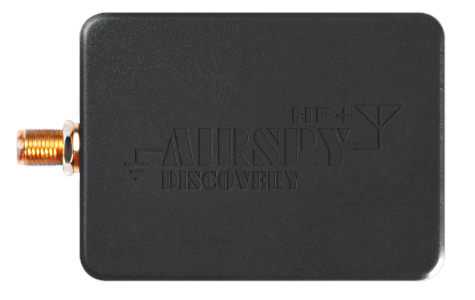
The Airspy HF+ Discovery: A new high-performance SDR

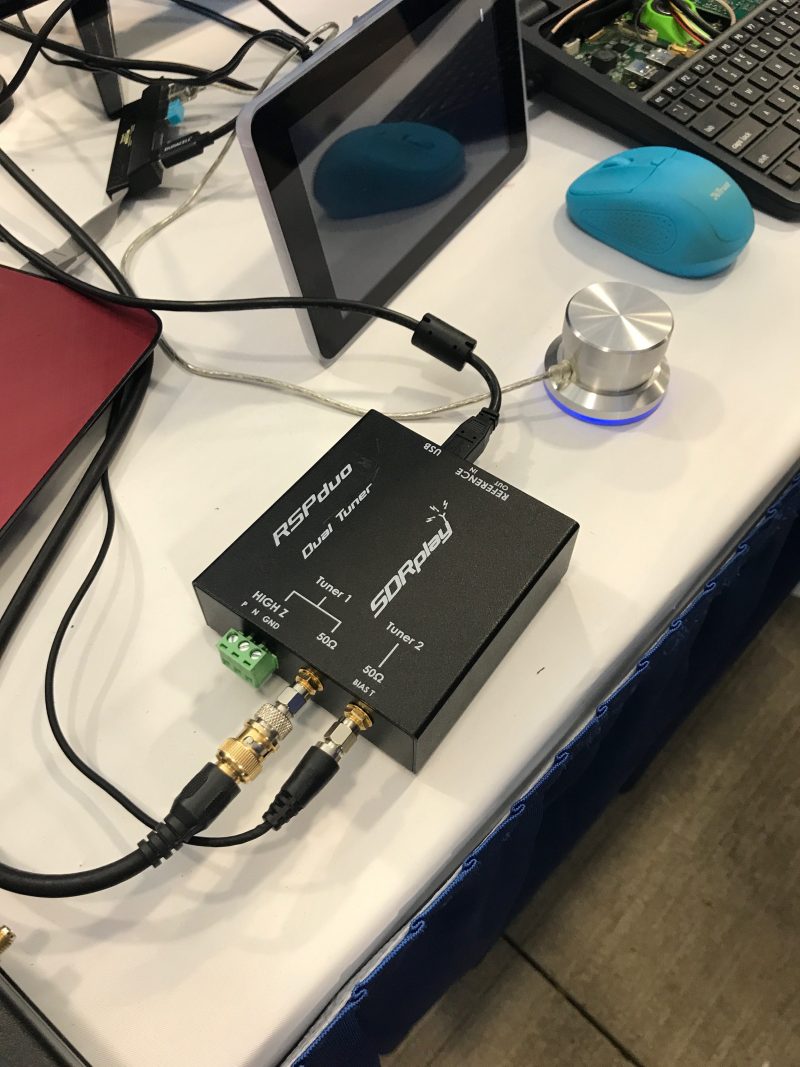
At the 2019 Hamvention, I stopped by the Airspy.US booth and checked out the specifications of Airspy’s latest SDR: the Airspy HF+ Discovery.

At first glance, the Discovery looks a lot like the Airspy HF+ but even smaller and sporting performance upgrades. Keep in mind, I consider the Airspy HF+ (the Discovery’s predecessor) to be one of the best HF SDR receivers on the market–certainly the best sub $200 HF SDR–so of course the Discovery has piqued my interest.

I wanted to get the scoop directly from the source, so I contacted Youssef Touil with Airspy and asked for more insight. What follows is Youssef’s reply:

This new release of the HF+ aims to improve the overall performance in highly demanding situations while fully automating the gain and filtering control. This frees the operator from the RF front-end details and keeps the focus on the actual signals.

The new filters are implemented using a combination of static LC filter banks and other RC filters implemented in silicon. This considerably improves the overall behavior in a crowded band, while still giving a very low noise floor. Also, the very nature of the Polyphase Harmonic Rejection mixer combined with the integrated IF filtering and the high dynamic range Sigma-Delta ADC act like a roofing filter in a heterodyne system. This architecture is quite original with still very few commercial implementations attempted.

A lot of attention went to improve the far-range IIP2 and IIP3 in practical receive scenarios. Other radios just opt to increase the noise figure of the radio to hide the IMD problem, but this also reduces the sensitivity. We opted not to go this way and fix the problem at its root and preserve the maximum sensitivity benefit. The new intercept points protect the front-end from images originating from various IMD scenarios while still using the maximum gain. The LF and VLF bands also benefited from these improvements.

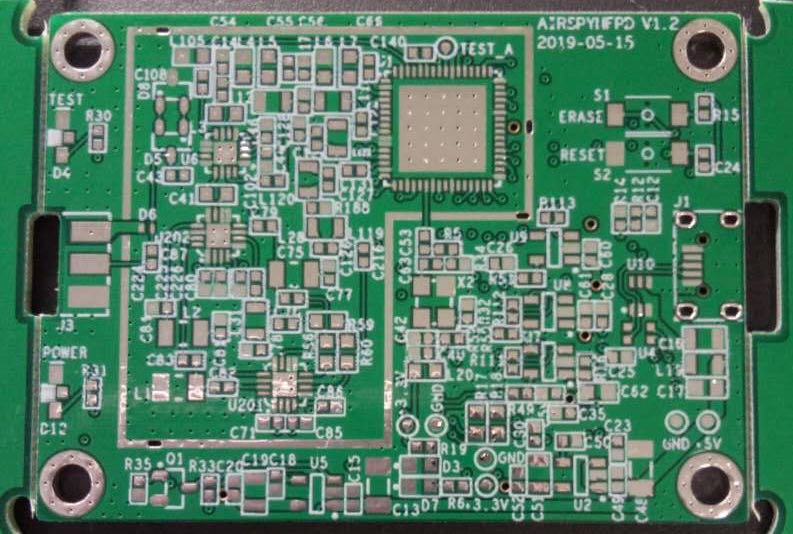
The PCB layout was also improved to get rid of most of the digital noise. The new PCB has 6 layers filled with ground plans and a metal shield can soldered on top of the RF section. This might look overkill for a HF/VHF radio, but given the MDS we are aiming at, it’s really necessary. The older PCB was 4 layers only.

The radio weighs less than 30 grams and fits inside a 45 x 60 x 10 mm volume (ex. The SMA connector). Given the achieved performance and the form factor, we expect it to interest a lot of our SIGINT partners who are already using the first HF+ design.

As you know, when it comes to high performance, the big players still opt for heterodyne systems in the actual RX path and only use direct sampling for the “eye candy” panoramic view. This was confirmed by Yaesu (FTDX101D) and Elecraft (K4). The reason is evident: Good mixers are still better (and scale better) than state of the art ADCs. I think our Polyphase Harmonic Rejection mixer-based SDR architecture is a step in the right direction, where both goals are achieved without compromises, and in the most economical way. The first version was kind of a revolution for us, but the “Discovery” is the consolidation of a lot of polishing opportunities we discovered since the first release.

Thank you for the details, Youssef–it sounds like a lot of innovation and iterative upgrades have gone into the Discovery receiver design.

Of course, I will plan to grab the HF+ Discovery and review it here on the SWLing Post. In the meantime, check out the excellent RTL-SDR website where Carl has posted a short preliminary review of a pre-production HF+ Discovery.

Click here to check out the HF+ Discovery at Airspy and place a pre-order ($169 US). 

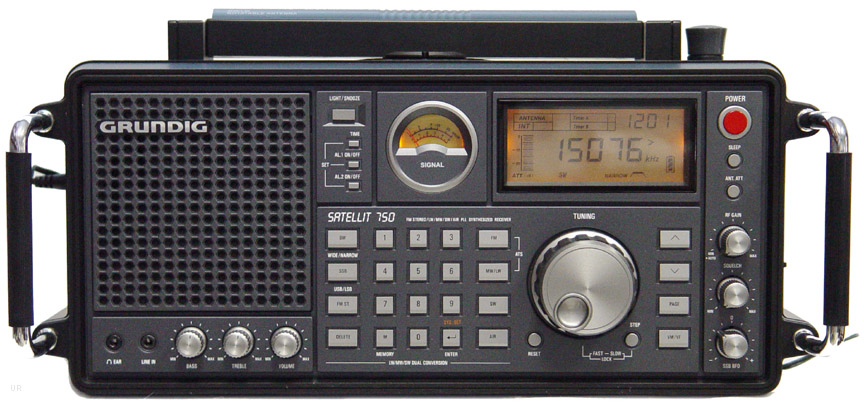
Radio Deal: Eton Grundig Satellit 750

Many thanks to SWLing Post contributor, Christian, who writes:

Hi Thomas. Thought you and your readers might like to know that the Eton Grundig Satellit 750 has just dropped to the lowest price I’ve seen in over three years on Amazon.com…$262.43 shipped. As always, Amazon prices change without notice so just be aware.

Click here to view (purchasing with this affiliate link supports the SWLing Post).

Thanks for the tip, Christian! I appreciate the fact that you watch these deals so closely for us.

2019 Hamvention photos: Inside Exhibits

The amazing Pietro Begali (I2RTF), winner of the 2019 Hamvention Technical Achievement Award.

The 2019 Hamvention seemed to attract a very large crowd this year so I’m eager to see what the actual numbers are when they’re published. The weather was nearly perfect.

From speaking with inside exhibitors, it sounds like sales were quite good this year, some told me it was a record event.

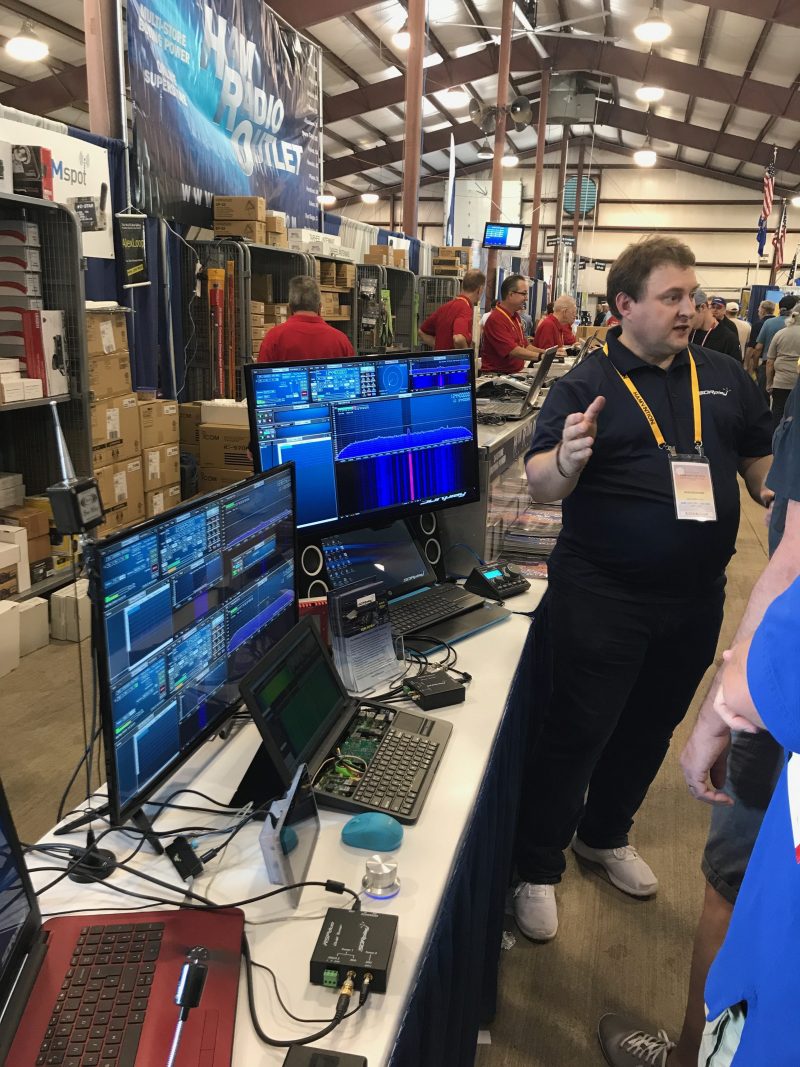
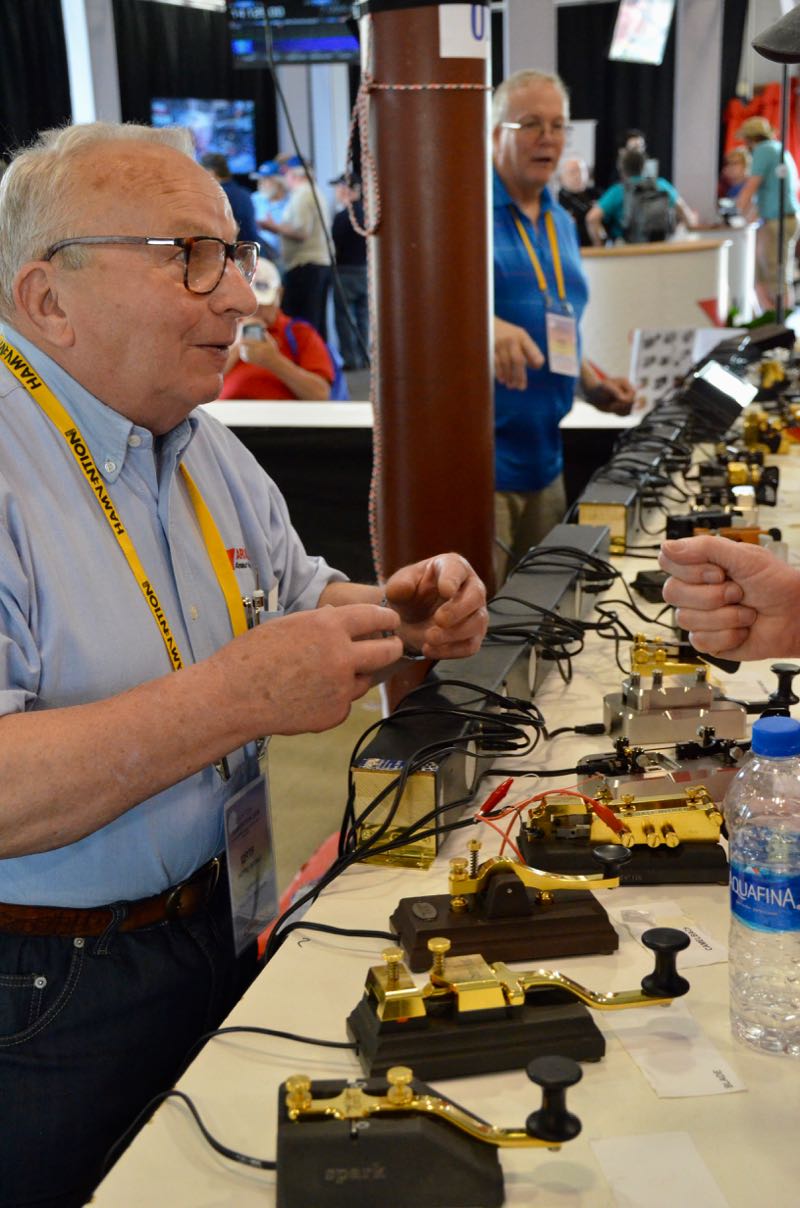
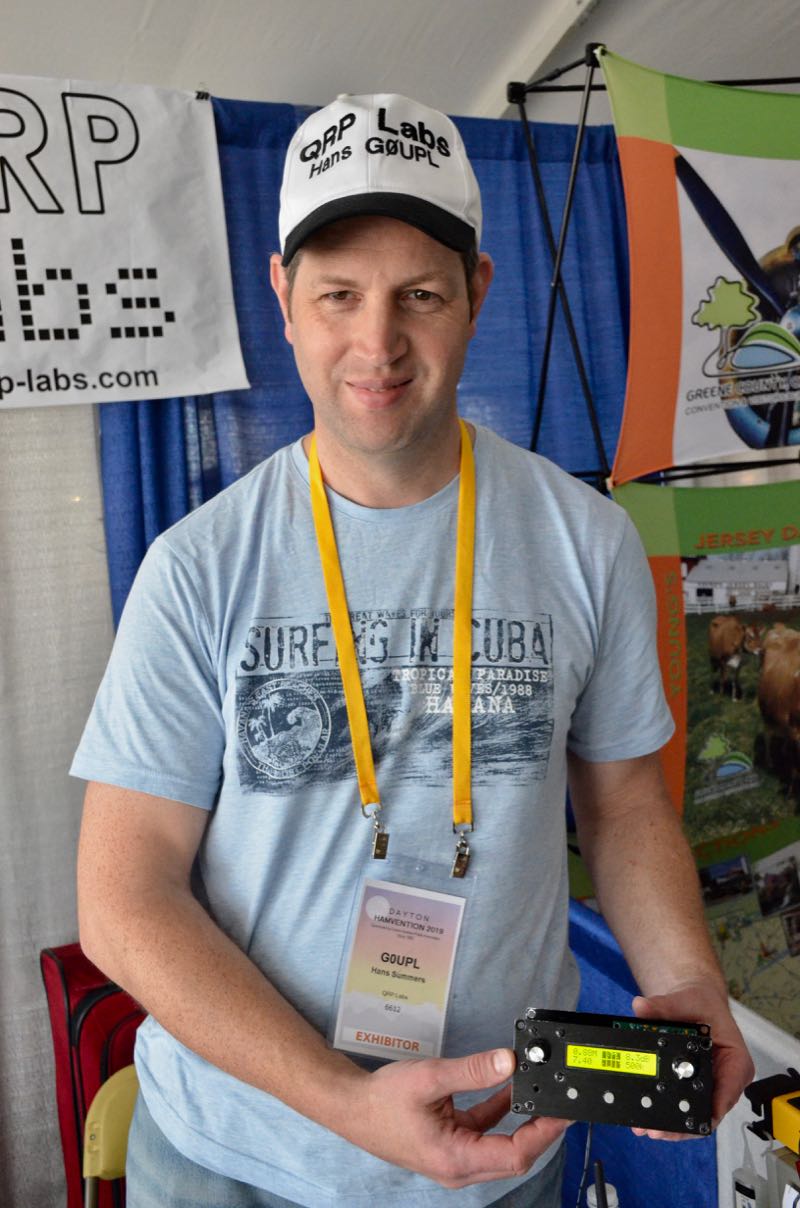
On Saturday I took time away from my booth–thanks to my volunteers–to visit the inside exhibit tables. Most of the following photos were taken in the main Hamvention metal buildings. Somehow, omitted many photos from the tent area where our table was located.

Note that the following photos are in no particular order. (Click here to view photos of the 2019 Hamvention Flea Market.)

2019 Hamvention Inside Exhibitor Photos

Click on the thumbnails below to view larger images:


Do you enjoy the SWLing Post?

Please consider supporting us via Patreon or our Coffee Fund!

Your support makes articles like this one possible. Thank you!

Inntot Technologies focuses on SDR based DRM+ Receivers

(Image Source: @YogendraPal9)

(Source: Inc42)

[…]Inntot Technologies provides software-enabled IP solutions for Digital Radio Mondiale (DRM for AM and FM band, a set of digital audio broadcasting guidelines) enabled receivers, DAB/DAB+ (digital audio broadcasting) enabled receivers and ISDB-T (A technical standard for digital TV broadcast) Digital Television paving way to digital radio transmission.

Though the transmission side in India is almost ready, next-generation digital radio receivers are expensive (can go upto INR 14K), which is posing as a hurdle in the common man from benefiting from the features offered by digital radio.

[…]Inntot Technologies is facilitating software-defined radio (SDR) based DRM+ Receiver solution, wherein the software can be embedded directly to the fixed receivers, automotive/in-car radios, smartphones, as well as USB dongles.

[…]Inntot solution is different from using a separate hardware demodulator which adds to the overall cost of the digital radio receiver.

Inntot’s software solution can also help OEMs, radio receiver manufacturers, and semiconductor chip manufacturers in:

  • Doing away with the recurring cost of the demodulator chip, which, in turn, will reduce the bills of material (BoM) cost — ideal for a high-volume market like India
  • Easy portability on platforms like Android
  • Reusable, fully standard, and specifications-compliant complete stack and no external dependency on any vendor
  • System integration and field testing

[…]Inntot is not the only company looking to offer cost-effective DRM receivers. Launched in 1993, the New Delhi-based OEM manufacturer Communications System Inc., has also put up its digital radio for sale on online websites like Amazon, and IndiaMart.

As of May 2018, the company has put up a notice for being in production for the second batch of digital radio receivers. However, despite tracking for weeks, its status remains ‘currently unavailable’ on Amazon, while we were not able to place an order from Indiamart.[…]

Read this full article at Inc42.


First Look: Elecraft K4 photos and preliminary information

The new Elecraft K4

Today, prior to the open of the 2019 Hamvention, I had an opportunity to hang with the folks at Elecraft and grab some photos of their newest transceiver: the Elecraft K4 direct-sampling SDR (click here to read the announcement).

Elecraft has now published a K4 product page on their website with information about pre-orderswith information about pre-orders. In short, the base model—which includes two full receivers—starts at $3999 US.

Wayne Burdick told me that they expect to start shipping the K4 by the end of 2019.

I snapped a number of photos of the two engineering prototypes of the K4 this morning in Building 1 at the 2019 Hamvention.

Elecraft K4 Photos

Click on the images below to enlarge:


Cyclone Fani: How Ashok prepared for this powerful storm

Category 4 Cyclonic Storm Fani was the strongest tropical cyclone to strike the Indian state of Odisha since Phailin in 2013.

Many thanks to SWLing Post contributor, Ashok Shankar Das, who shares the following post from his blog SWLDAS:

The extremely severe cyclonic storm #Fani recently visited Odisha. It is Peculiar to have a Cyclone in this time of year. Though history says earlier there are some cyclones hit Odisha coast during this summer season.

[…]I have seen several Cyclones including #1999SuperCyclone . Though Super cyclone has done a lot of damage, this one is no less. Wind speed of 200kmph with gust 220 to 250 kmph ripped everything in its path. major damages to infrastructures like power grids, cell towers under construction buildings are name a few.

My Preparedness

The CountyComm GP5-SSB

See this SWLING article–I was runner-up in that challenge. My preparation for Cyclone Fani was as per I have described. Well Not all. I have charged emergency light, arranged candles and lantern. Stocked Biscuits and Flat rice. Stored around 15Liters of drinking water. Emergency medicines and fully Charged 3 Baofeng Walkie Talkies.

The GP5SSB I got as a gift from SWLING Post, put new battery in it. I have downed external antennae for HF and VHF. Baofeng handys are quite good as scanner. I monitored HAM band so I could know the situation in surrounding area and also if situation arises I could give a distress call to Nearby monitoring person. But that situation didn’t arise.

HAM volunteers from WBRC started their communication service since 5th May. They Have setup a VHF in state control room at Bhubaneswar, ADM office Puri and Khurda.
Since 5th may onward I was monitoring and in QSO with VU2IPL(Suresh). VU2FTP VU2XRY VU3YDA and VU3OXI are handling the communication between Puri, Khurda and Bhubaneswar.[…]

Click here to read Ashok’s full post on his blog, SWLDAS.

Thank you for sharing this, Ashok and we’re very pleased that you made it through this extremely dangerous storm well-prepared. It sounds like your community has a good ham radio communications network at the ready as well.

Ashok, you are reminding me that it’s time to dream up another Virtual Radio Challenge along with an enticing prize. I’ll start putting one together! Perhaps I can find a prize at the Hamvention this week. Stay tuned…