Category Archives: Shortwave Radio

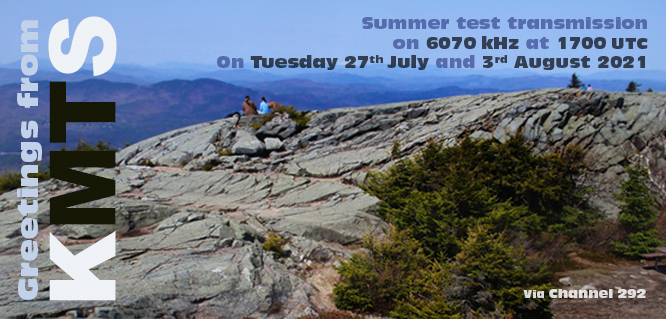
KMTS Summer Test Transmission

Many thanks to SWLing Post contributor, Fastburstradio23, who shares the following:

Beaming to you from the transmitter’s location, forget summer vacation, it’s time for summer school. Get your pencils sharpened and thinking caps on for the KMTS Summer Test (transmission)! Numbers, poetry, the science of strange tones, music and mountaineering are all part of the curriculum.

And if you are one of those cats who was too hip for school the first time around, we understand. We’ve been there! When you use one of our proprietary quantum radios passing is as easy and pleasant as a breeze blown in from a deserted tropical island. All the answers tp all the questions are right in some reality or timeline!

And after you’ve peaked out with us at the crown of KMTS, you can join us for a Mai Tai at the Tiki bar on top of the mountain as we go over the summer test results.

6070 kHz at 1700 UTC on Tuesday 27th July and 3rd August 2021.

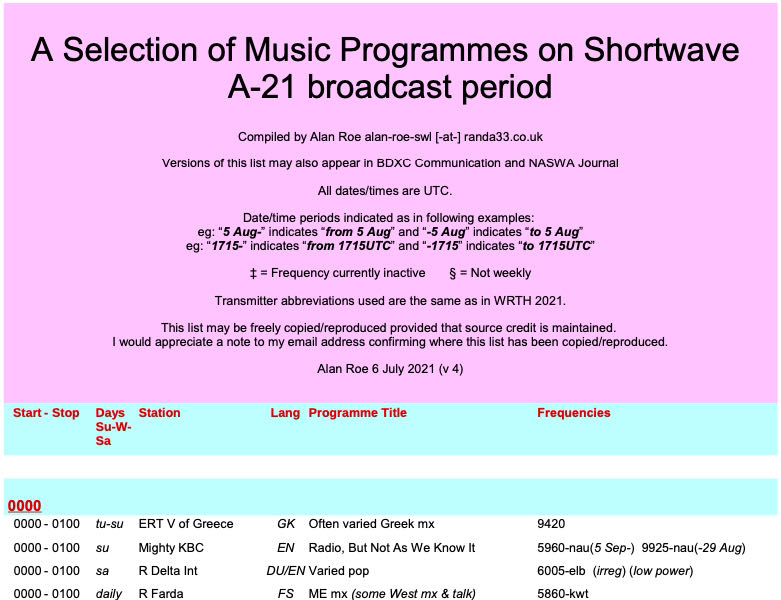
Alan Roe’s A21 season guide to music on shortwave (version 4 update)

Many thanks to SWLing Post contributor, Alan Roe, who shares his latest A21 season guide to music on shortwave.

Click here to download Music on Shortwave A-21 v4 (PDF)

Alan notes that this might be the final update of the A-21 broadcast season.

This dedicated page will always have the latest version of Alan’s guide available for download.

Radio Waves: The Enduring Appeal of Shortwave Radio, Ampegon Ships 100kW Transmitter, 4,270 km FM DX, Emisión Sefarad, and the Eswatini Transmitter

Radio Waves:  Stories Making Waves in the World of Radio

Because I keep my ear to the waves, as well as receive many tips from others who do the same, I find myself privy to radio-related stories that might interest SWLing Post readers.  To that end: Welcome to the SWLing Post’s Radio Waves, a collection of links to interesting stories making waves in the world of radio. Enjoy!

Many thanks to SWLing Post contributors David Goren, Tracy Wood, and David Iurescia for the following tips:


Deep in the dial: Lawrence English on the enduring appeal of shortwave radio (The Wire)

To mark The Wire’s Radio Activity special issue, the Room40 label head examines the uncanny sonic properties of high frequency transmission

100 years ago this December, voices spoken on one side of the Atlantic shot through the atmosphere and materialised on the other side of the ocean. It was a moment of jubilation for those involved and proof of concept that formalised the possibilities of an emergent zone of signalling and communications called radio. It also helped to bring into focus the unrealised potential of this technology as a mechanism for access to, and transference of, signals of all sorts from around the globe.

These first transatlantic voices were carried on wavelengths of around 200 metres. At that time, which was before the creation of the International Telecommunication Union who coordinate the use of various frequency bandwidths on the radio spectrum, the length of the waves sat at the cusp of two bandwidths: the lowest end of medium wave and the highest end of shortwave. Not only had this amateur broadcast achieved new distances over which communication might pass, but it also demonstrated the process of skywave propagation. This method, whereby radio signals are bounced off the ionosphere (the electrically charged upper layer of Earth’s atmosphere), extends the range of transmission of a radio signal considerably.

What made skywave propagation especially interesting was that, as a technique, it was being actively explored by both amateur radio enthusiasts (the so-called ham radio movement) and commercial interests alike. In fact, throughout the 1920s experimental approaches to radio (broadcast and otherwise) were an area of intense interest and research. This attention was aided by booms in broadcast hardware and a growing understanding about how the technology could be deployed to radically reconfigure the ways in which transmission of voice, music and other signals might be achieved over greater and greater distances.[]

Ampegon Ships First of Four 100kW Shortwave Transmitters (Ampegon)

Ampegon has shipped the first of a series of four new 100kW shortwave transmitters from its factory in Kleindöttingen, Aargau, Switzerland. The transmitter RF and PSM sections were carefully moved out of the factory and onto a lorry for transfer to our shipping partner. There it will be securely packed in shipping crates and prepared for onward transport.

Ampegon’s TSW-2100 100kW shortwave transmitter is an economical and reliable transmitter system intended for regional to international broadcasting. Its relatively high output power provides good signal strength hundreds of kilometers away from the transmitter when attached to a good antenna, while it is still of sufficiently low power to allow operation from standard low voltage three-phase electrical connections.

Almost all shortwave transmitters currently in production feature digital DRM capabilities, since they are specified with DRM modulators and content servers. This permits the delivery of stereo FM-quality sound and a digital data channel over the same 9/10kHz broadcast band as an analogue transmission. Additionally, when used in DRM mode, power consumption is reduced by approximately 40%-50%, saving broadcasters hundreds of thousands of dollars each year in electricity costs!

With this transmitter safely on its way to its new home, attention turns to completing the next two systems currently under testing. All transmitters undergo rigorous factory acceptance testing to ensure installation and commissioning can be completed with minimum possible disruption.

For further information about Ampegon’s high power shortwave transmitter range, please see our product pages at: www.ampegon.com/products/sw-tube-transmitters/

To learn more about DRM transmissions, please visit the DRM consortium here: www.drm.org[]

FM radio station on 90.7 MHz near Quebec is heard across the Atlantic in Ireland – 21st June 2021 (EI7GL)

21st June 2021: This was a remarkable day for VHF propagation with a very rare trans-Atlantic opening on the 88-108 MHz FM band.

As outlined in a previous post, Paul Logan in the north of Ireland managed to hear a radio station from Greenland on 88.5 MHz from roughly 13:00 to 14:00 UTC on the 21st of June.

Near the end of this opening, Paul also managed to hear a radio station near Quebec in Canada, a distance of approximately 4,270 kms !

The radio station in question was the 100 kilowatt transmitter of CBRX-FM-3 ICI MUSIQUE which is located at Riviére-du-Loup just to the east of Quebec City in Canada.

A short audio clip from Paul is embedded below…


[Click here to continue reading this post on EI7GL’s blog…]

For 35 years, mother-daughter duo has run a radio show on Ladino and Sephardic Jewish culture from Madrid (South Florida Sun Sentinel)

Matilde Gini de Barnatán and her daughter Viviana Rajel Barnatán didn’t set out to make Jewish history in Spain.

In the 1960s and ’70s, Matilde, now 85, established herself in Argentina as a prominent researcher, teacher and scholar of the history of Sephardic culture and the Spanish Inquisition in Ibero-America. Her extensive expertise and recognition in Argentine intellectual circles helped her become a close friend of the renowned writer Jorge Luis Borges.

Viviana Rajel, now 55, studied acting in Buenos Aires.

But in April 1986, as Israel was establishing its diplomatic relations with Spain, so did the Spanish government with its Jewish ancestry. Through its state-owned public radio service, the country set out to develop a cultural project in the form of a radio show to reintroduce Ladino — or Judeo-Spanish, an endangered Romance language spoken by past generations of the Sephardic Jewish Diaspora — as a vital piece of Spanish heritage.

It was “a gesture of friendship between Spain, Israel and the Sephardic communities around the world,” according to Viviana Rajel.

Due to the lack of native Ladino speakers in Spain at the time, there was virtually no one available to take on the endeavor. Through academic networks of Sephardic scholars that linked Spain with Argentina, Matilde was found and asked to relocate and be the project’s primary role — which its developers pitched as a way to redress the historical wrong of the Spanish Inquisition, the 15th-century expulsion of Jews from the country.

Viviana Rajel followed her mother because she wanted the show to portray the matriarchal essence behind the oral tradition of Ladino, which traditionally passes from generation to generation through the women of the family.

Hence was born “Emisión Sefarad” (or “Sepharad Broadcast”), a weekly radio show available online and on shortwaves in Judeo-Spanish that broadcasts every Sunday on the Spanish National Radio’s overseas service. April marked 35 years of the program, which has aired uninterrupted since its launch.

Click here to continue reading, noting that this article is behind a paywall.

The incredible reach of the Eswatini transmitter (Evangelical Focus)

TWR Africa has been spreading hope throughout the African continent since 1974 engaging millions in more than 50 countries.

Radio, the internet, mobile devices, TWR360, and other media sources open doors to allow the gospel to spread to countries where Christianity is legally forbidden, to animistic tribes in the Nuba Mountains who are cut off from the rest of civilization, and to displaced people fleeing war in northern Mozambique. We have been equipped with powerful media tools to take the Good News into places where we physically cannot go. Through the power of the Spirit, we can use radio and other mass media to accomplish the task Jesus gave us to make disciples of all nations.

TWR broadcasts from various transmitter sites in Africa including TWR Eswatini and the Middle East on shortwave, and TWR West Africa on medium wave (AM). In addition, TWR broadcasts programs via several TWR partner FM radio networks and a satellite channel that offer direct-to-home services to various parts of the continent.[]


Do you enjoy the SWLing Post?

Please consider supporting us via Patreon or our Coffee Fund!

Your support makes articles like this one possible. Thank you!

Radio Northern Europe International Show #19 announcement

Many thanks to SWLing Post contributor, Roseanna, with Radio Northern Europe International who shares the following announcement:


Hei alle sammen,

We’ve been continuing to write your QSL cards and we’re now sending them within 2 months of receipt of your emails!

Just like the last few months, we’ve split the broadcasts into 3 versions;
• WRMI & On-Demand Version: RNEI 19 + RNEIxtra (Mammas Mest Metal & Stephen’s feature) + HamDRM.
• Channel 292 & Radio Onda version: RNEI 19 + HamDRM + This is an Express Music Show.
• World FM version: RNEI 19 only.

RNEI #19 is packed full of great music including:
• The show starting with some Icelandic Rock
• Cindy Chiche
• A really pretty song from Døssi
• Spooky vibes in our traditional pick from Gyda
• Scandipop.co.uk‘s fantastic song of the month that has some Sámi Lyrics!
• Some MFSK64 embedded in two parts of our dance mix at the end of the dance mix!

The 4th show of Mamma’s Mest Metal will bring some amazing symphonic metal this month, it’s an amazing genre and some of Mamma’s picks this month are fantastic!
Stephen is bringing us a feature on the Scottish artist Julie Fowlis with some really beautiful songs and, lastly, YH brings us another fantastic episode of This is an Express Music Show.

Daz has coded some HamDRM data for you to have a go at decoding too!
You can use EasyDRF, Easypal & WinDRM on Windows (or Wine in Linux) and QSSTV & TRXAMADRM on Linux. We recommend against Easypal due to some security flaws we’ve noticed and WinDRM because it’s an older version of EasyDRF.

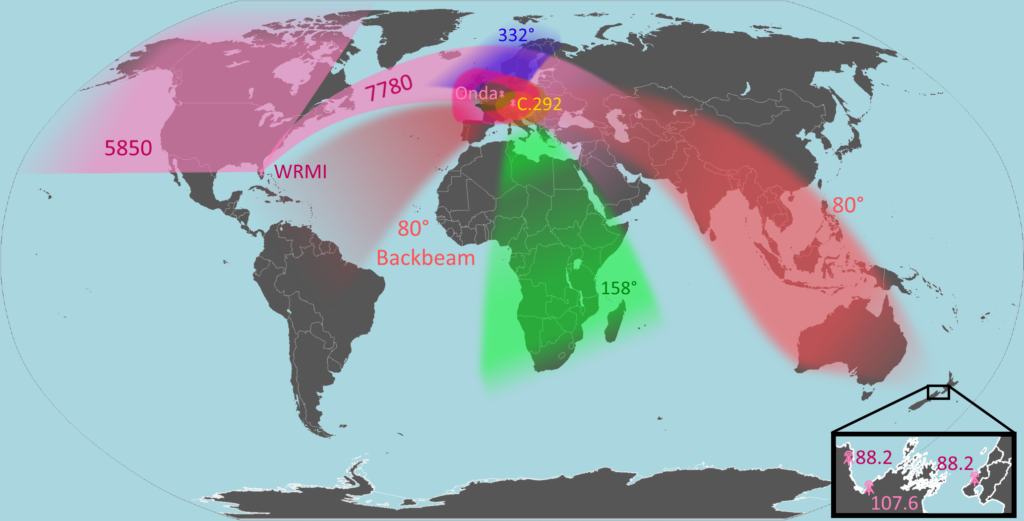
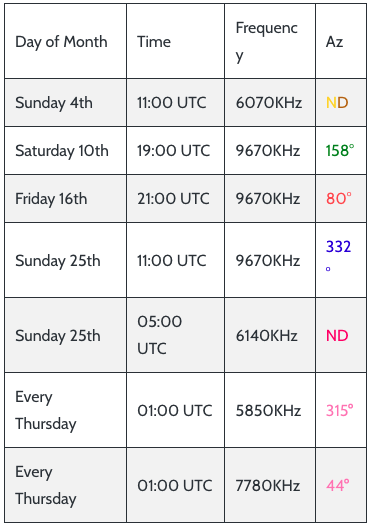
We have found that 158° has a good signal in South Eastern and Northern Europe, 80° has a signal in Brazil and surrounding areas as well as Portugal & Spain and 332° is good between Ukraine and Italy. These happen because there is some backbeam with these directional antennas so give them a go and see what happens!
Also keep an eye on our announcements for extra broadcasts!

If you miss the show you can always catch up on demand and, if you prefer to only hear our music, we have Spotify Playlists of each show usually published after the first broadcast!

Wishing you well,
Roseanna

Click here to read this post at the RNEI website.

Guest Post: Recording Music on Shortwave Part 2 – Weak signal recovery

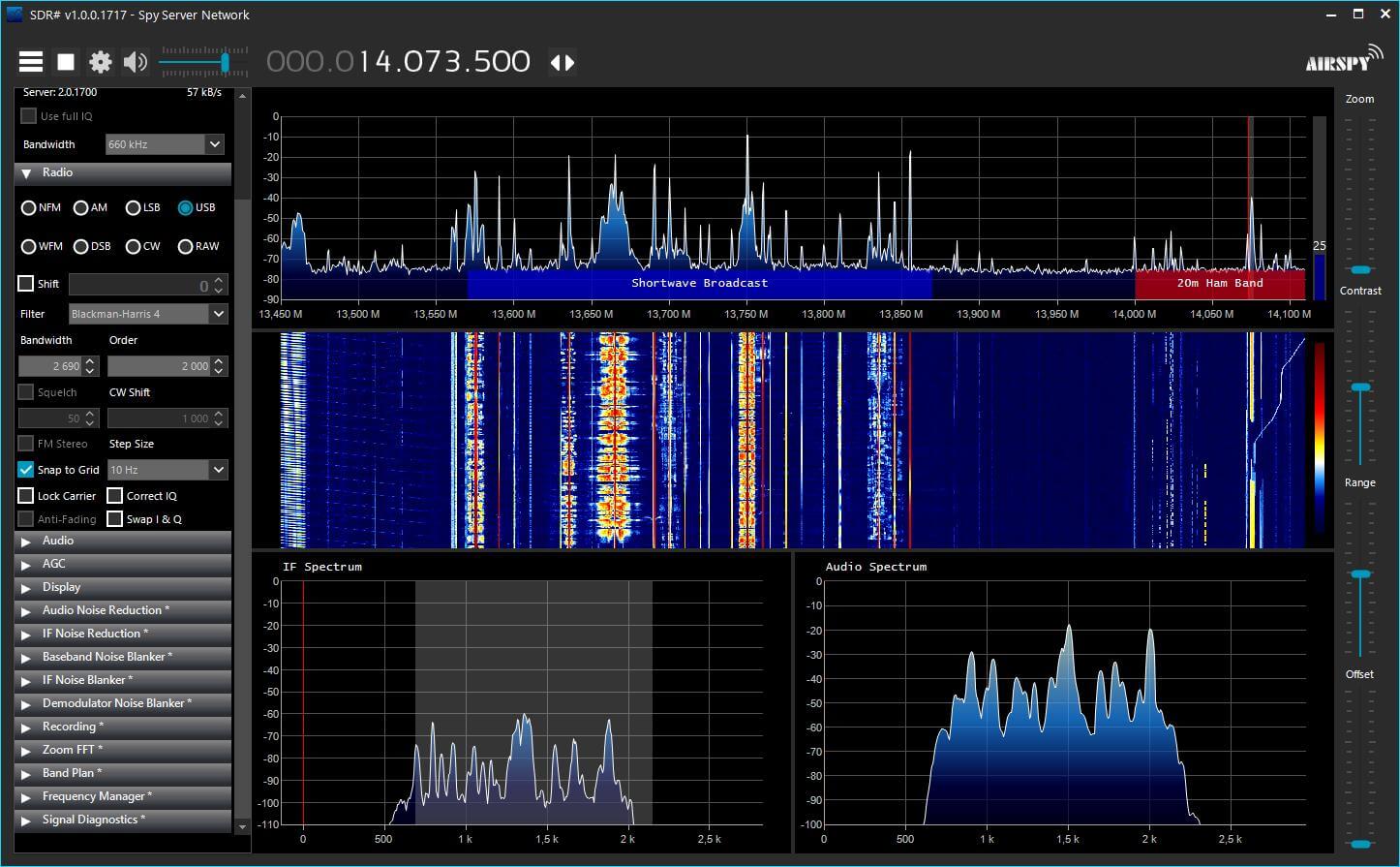
An example of an AirSpy SDR# software screen.

Many thanks to SWLing Post contributor, TomL, who shares the following guest post:


Recording Music on Shortwave Part 2 – Weak signal recovery

by TomL

The QRM noise cloud surrounding my condominium motivated my first foray into noise reduction software to find a little relief (Please refer to Part 1 posted here) using SDR recordings.  I was able to use the freeware software Audacity to reduce some of that type of noise to tolerable levels on strong broadcasts.  But what about non-condo noise, like out in the field??

NHK Japan

I took my trusty Loop On Ground antenna to the usual county park Forest Preserve which is relatively low in RF noise.  I did some usual recording on 25 meters and poked around for something being captured by SDR Console.  On 11910 kHz is NHK broadcasting daily from Koga, Japan.  It is hearable at this location but is always an S7 or weaker signal despite its 300 KW of power no doubt due to being beamed away from the Midwest USA.

I recorded it using the SDR Console 10kHz bandwidth filter and created a separate noise recording from a nearby empty frequency.  Here is the 2 minute portion of a Japanese music teacher. No noise reduction was applied:

I opened the noise and broadcast recordings in Audacity to see what I could do.  Part 1 of my previously mentioned post details how I apply the Noise file.  A big downside of using any kind of noise reduction software is that it is ridiculously easy to destroy the desirable characteristics of the original recording.  Applying too much noise reduction, especially in the presence of constant, spiky lightning noises, will create both digital artifacts as well as very dull sounding results.  So I used the Effect – Noise Reduction (NR) feature very carefully.

In this example, I used the Effect – Amplify feature on the one minute noise file.  I applied just +1dB of Amplify to the whole file.  Then I highlighted a 10 second section I thought was representative of the general background noise and chose Edit – Copy.  Then, I opened the broadcast file, Pasted the 10 seconds of noise to the END of the file and highlighted just the 10 seconds of noise. Then I chose Effect – Noise Reduction – Get Noise Profile button.  Amplifying the noise file by +1db does not sound like much but it seems to help according to my tests.  Anymore than this and the Noise Profile would not recognize the noise without destroying the music.

I used the NR feature three times in succession using the following (NoiseReduction/Sensitivity/FrequencySmoothing) settings:  Pass1 (3dB/0.79/1), Pass2 (2dB/1.28/1), Pass3 (1dB/2.05/0).  Part of what I listened for was choosing the Residue circle and Preview button for any music or dialog that was being filtered out.  If I heard something that came from the desired part of the recording in Residue, I knew that I hit the limit concerning the combination of Noise reduction and Sensitivity settings to engage.  I used those Residue & Preview buttons over and over again with different settings to make sure I wasn’t getting rid of anything wanted.  I also used the higher Noise reduction with lower Sensitivity to try to get rid of any momentary spiky type noise that is often associated with SWLing.

I messed around with a lot of test outputs of differing dB and Sensitivities and a lot seemed to depend on the strength of the broadcast signal compared to the noise.  If the broadcast was weak, I could push the dB and Sensitivities a little harder.  I also noted that with strong signal broadcasts, I could NOT use more than 1 dB of Noise reduction beyond a Sensitivity of about 0.85 without causing damage to the musical fidelity.  This was a pretty low level of nuanced manipulation.  Because of these minor level Audacity software settings, it dawned on me that it is very helpful to already be using a low-noise antenna design.

If the Sensitivity numbers look familiar, that is because I tried basing the series of Sensitivity on Fibonacci numbers 0.618 and 0.786.  Don’t ask me why these type of numbers, they just ended up sounding better to me.  I also needed a structured approach compared to just using random numbers!  Probably any other similarly spaced Sensitivity numbers would work just fine, too.

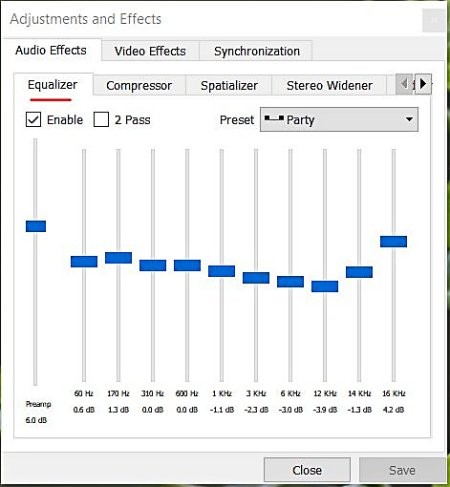
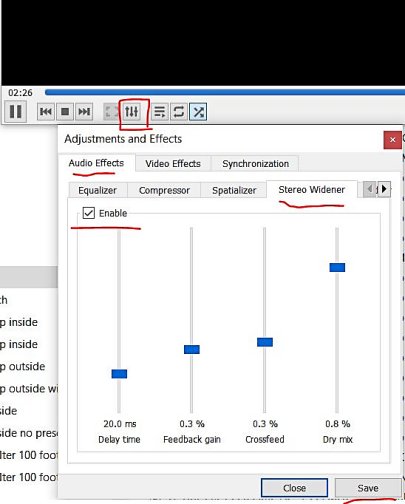
Now if you really want to go crazy with this, add Pseudo Stereo to your favorite version of this file (also detailed in Part 1) and playback the file using VLC Media Player.  That software has a couple of interesting features such as an Equalizer and a Stereo Widener.  You may or may not like using these features but sometimes it helps with intelligibility of the voice and/or music [VLC will also let you right-click a folder of music and choose to play all it finds there without having to import each MP3 file into a special “Library” of music tracks where they bombard you with advertisements].

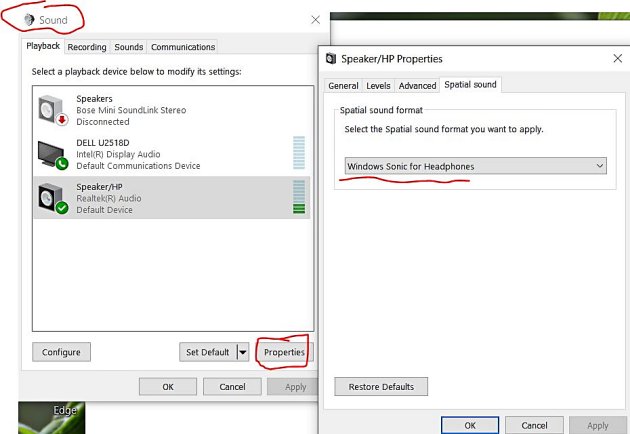
You can also turn on Windows Sonic for Headphones if you are using the Windows operating system.  However, this can sometimes be too much audio manipulation for my tastes!

Here is the resulting NHK noise-reduced file with 9ms of delay with High & Low Filters:

Radio Thailand

Five days later I was out in the field again.  This time I found Radio Thailand on 11920 kHz finishing up a Thai broadcast.  It was a weaker S5 signal than the NHK example, so it would be a good test.

When I got home, I recorded the broadcast file at a Bandwidth filter of 8 kHz and using Slow AGC and the extra Noise file at 12kHz using Fast AGC.  In a previous test I had noticed a very slight improvement in sound quality in the way noise seems to get out of the way quicker compared to Slow AGC (which is usually how I listen to shortwave broadcasters).  I now try to remember to record the Noise file with Fast AGC.

Here is the original without any noise reduction:

This time the Noise file using Amplify +1dB did not help and I used it as-is for the 10 second Noise Profile.  I then tried multiple passes of NR at higher and higher Sensitivities and ended up with these settings the best: Pass1 (1dB/0.79/0), Pass2 (1dB/1.27/0), Pass3 (1dB/2.05/0), Pass4 (1dB/3.33/0).

As a comparison, I tried recording only with SDR Console’s noise reduction NR1 set to 3dB and got this.  I hear more noise and less of the music coming through:

Now for more crazy Pseudo Stereo to finish up the Audacity 4Pass version (nice Interval Signal of Buddhist bells ringing and station ID at the very end):

Summary

I do not understand why applying 3 or 4 separate 1dB Sensitivities of noise reduction is superior to just one Pass at 3dB Sensitivity (in Audacity) or the one 3dB noise reduction (in SDR Console).  My guess is that doing 1 dB at different Sensitivities shaves off some spiky noise a little at a time, somehow allowing for more of the musical notes to poke through the noise cloud.  Who knows but I can hear a difference in subtle musical notes and sharpness of voice and instruments.  Probably the Fast AGC helps too.

Music is a Universal Language that we can share even when we don’t understand a word they are saying. And there is more music on the air than I thought.  Some of these recordings sound surprisingly pleasing after noise reduction. The fake stereo is pumped through a CCrane FM Transmitter to a few radios in the home, or I can use the Beyerdynamic DT990 Pro headphones.

Enjoying the Music!

TomL

Free Radio Skybird on July 4, 2021

Many thanks to SWLing Post contributor, Pete Madtone, who shares the following announcement:


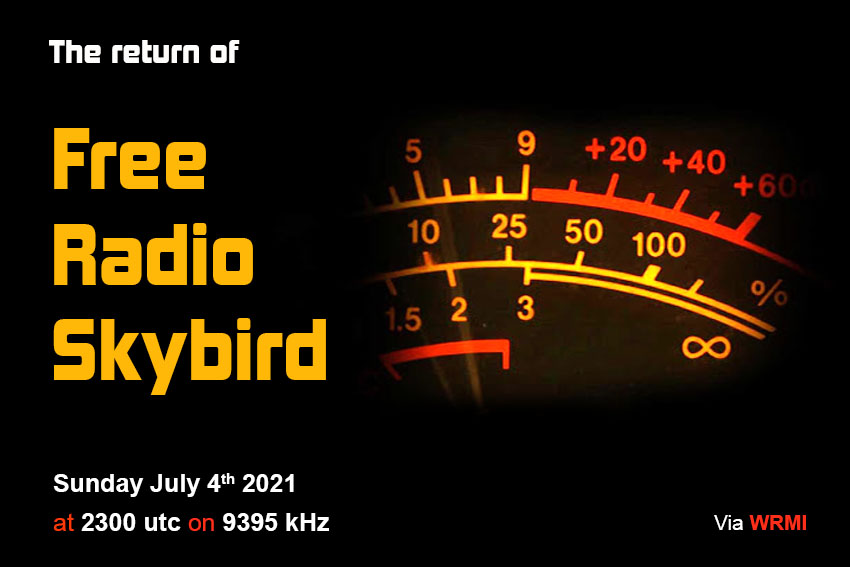
This Sunday 4th July 2021 Free Radio Skybird is being beamed out of the WRMI transmitter from Miami on 9395 kHz at 2300 utc (12 midnight UK time). Expect some free radio goodness from DJ Frederick and the Free Radio Skybird crew. Tune in here on Sunday if you’ve no shortwave radio.

Dan Notes: Vintage JRC Receivers Set Price Records in Japan

Many thanks to SWLing Post contributor, Dan Robinson, for the following guest post:


Vintage JRC Receivers in Japan Set Price Records

by Dan Robinson

While used market prices for older vintage communications receivers have been dropping significantly in recent years, prices for some classic “premium” receivers — particularly rare marine radios made by Japan Radio Company — have remained in the stratosphere.

The past year has seen a number of examples of this observable on the Japan Yahoo auction site Buyee, and in May and June of 2021 two JRC sets sold for more than $5,000 dollars each after intense bidding.

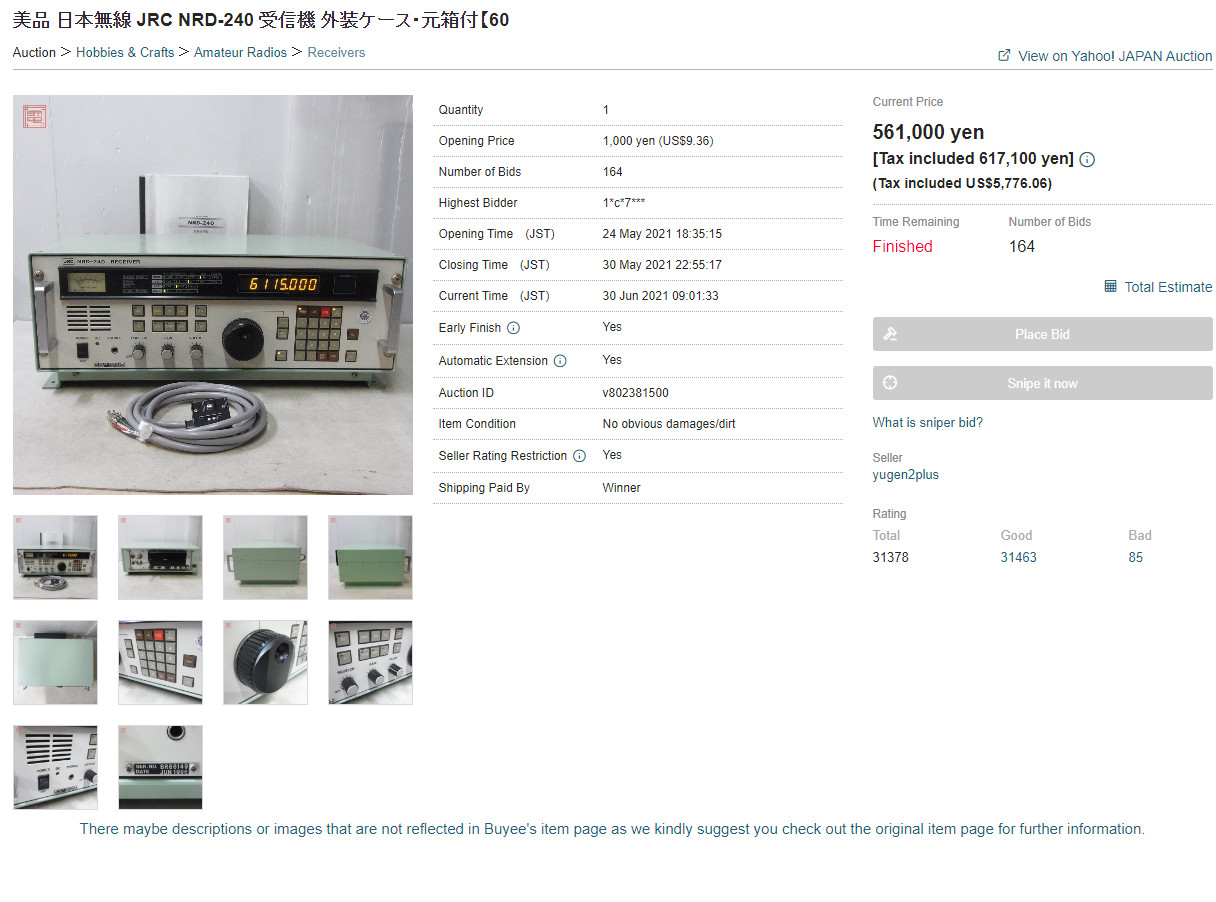
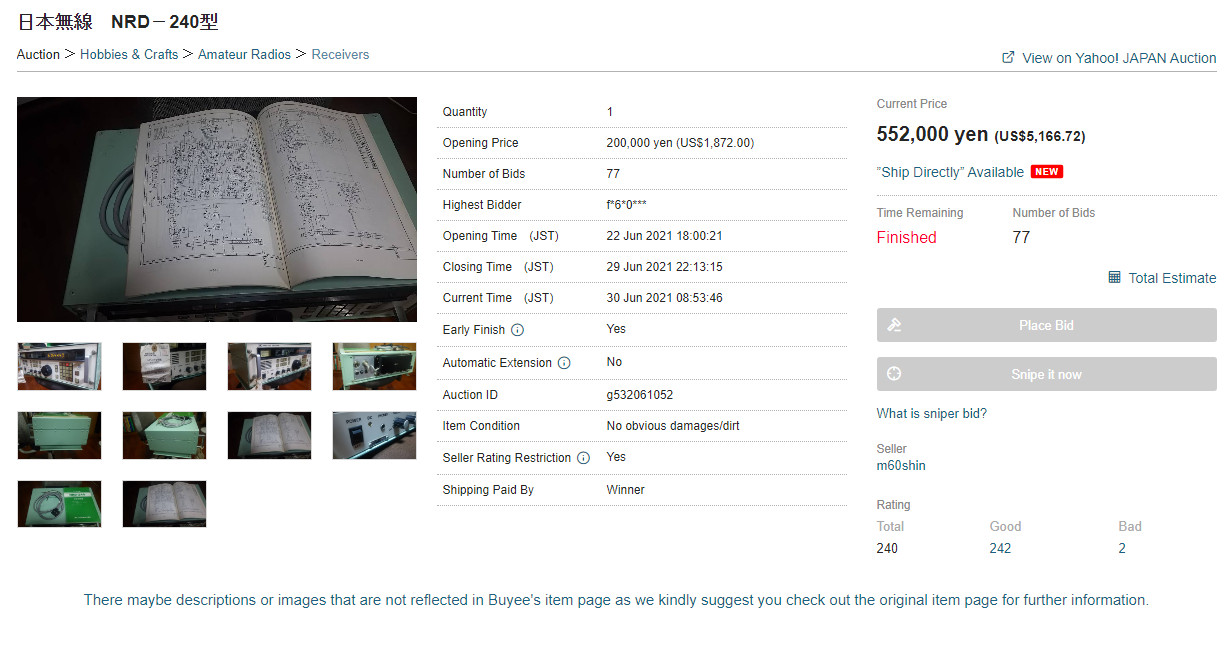
Both of these involved what appeared from photos to be mostly pristine NRD-240 receivers which came complete with original manuals and cables.

Photos

With Serial Numbers of 66149 and 50337, manufactured in 1996 and 1997, these receivers are examples of what I call “time capsules.” Their condition indicates that they were both in the hands of collectors in Japan, and probably were not in regular extended service as shipboard receivers.

The first sold for $5,776.06 after 164 bids on the Buyee site, while the second went for $5,166.72 after 77 bids.

As described here in an old Universal Radio ad, the JRC NRD-240 was built for marine operations and complied with GMDSS requirements. With coverage from 90.000 to 29999.999 kHz it has 1 Hz display in LSB, USB, AM, CW, and FSK (RTTY) modes. Like many JRC marine receivers it had a front panel selectable 2182 kHz emergency channel. Bandwidths include: 6, 3, 1 and 0.3 kHz with 100 channels, scan/sweep, along with a switchable AF Filter, NB, Lock, Keypad entry, built in speaker, Squelch, BITE, Dimmer and AGC selection.

In the lineup of the most sought after JRC marine receivers, the NRD-240 is listed in the famous guide book by Fred Osterman “Shortwave Receivers Past & Present” on Page 222, as well as on the cover of the book. The price tag is $8000. The receiver was also the subject of a review by in the former Passport to World Band Radio in 1991.

Historically, the NRD-240 was replaced by the JRC NRD-301A, which itself was later replaced by the super-rare NRD-302A, and still later the NRD-630. In terms of rarity, at this point based on my following of the premium receiver used market, the most rare of the JRC marine sets are the NRD-95, followed by the NRD-630 and 301 series.

When bidding gets furious for radios like this, it can take one’s breath away and that was certainly the case with these two NRD-240s. How many more like these, in this condition, may remain in the hands of collectors is, of course, not known.

The rarity of certain receivers can be measured also by the number of user videos showing up on You Tube. There are many of the NRD-92/93 receivers, even some of the NRD-630, and a few showing much older JRC sets such as the NRD-73. I have yet to find a video showing a NRD-240 in operation.

The Japan Buyee site (which sometimes also has receivers that are not physically located in Japan) has a seemingly constant flow of these amazing vintage JRC sets, along with other premium rigs. Photos of the two NRD-240s that sold in May and June are posted with this article (above).

Click here to check out listings on Buyee.