Category Archives: Shortwave Radio

Radio Waves: RCI Staff cut in half, DRM Newsletter Notes, and VOA in the Press

Radio Waves:  Stories Making Waves in the World of Radio

Because I keep my ear to the waves, as well as receive many tips from others who do the same, I find myself privy to radio-related stories that might interest SWLing Post readers.  To that end: Welcome to the SWLing Post’s Radio Waves, a collection of links to interesting stories making waves in the world of radio. Enjoy!

Many thanks to SWLing Post contributors William Lee, Kris Partridge, Kim Elliott, and Jason Hauser for the following tips:


CBC’s plan for Radio Canada International sees its staff cut in half (CARTT.ca)

By Steve Faguy MONTREAL — This week, the CRTC began a two-week hearing into the renewal of CBC/Radio-Canada’s licences, a process which began more than a year ago. There will be days of questioning, dozens of intervenors appearing, and discussions of everything from children’s programming to the fees for CBC News Network to diversity, local news, online distribution and official minority communities. But one thing that probably won’t be discussed is a service the public broadcaster is specifically required by legislation to provide, relatively few know about, but that the company has seemingly treated like a forgotten stepchild: Radio Canada… [Note this article fades into a Paywall, but William recommends reading more at Fagstein.com]

Digital Radio Mondial Newsletter includes a number of announcements

Successful DRM for FM Simulcast Demonstration in Russia

The Russian company Digiton Systems, supported by DRM Consortium members, carried out a high-power field trial of the DRM standard in the FM band using the simulcast mode.  The trial report in St Petersburg covers the trial that took place from June – December 2019. The trial continues to be on air and its main findings will be collected in a more detailed ITU report.  Read more

The Indian Public Broadcaster Updates on 2021 Plans including digitisation

On the website of the Ministry of Information and Broadcasting, Prasar Bharati (the radio and TV Indian public broadcaster) has today clarified that no AIR station is being closed anywhere in any Indian state, some “fake news” widely circulated recently in the press.

All India Radio (AIR) stressed the importance attached to localism and the news projects included in its 2021-2022 plan. In its press release of January 13th.  Prasar Bharati mentions that it is also moving ahead with its plans to introduce Digital Terrestrial Radio in India. Select AIR channels are already available through Digital DRM technology to the listeners in many cities/regions on an experimental basis. Listeners in these cities/regions can experience the power of Digital Radio through a choice of multiple radio channels available on a single radio frequency in digital mode. Specialised Digital Radio Services available on DRM transmitters include AIR News 24×7 dedicated to news and current affairs, AIR Raagam 24×7 dedicated to classical music as well as local/regional radio services and Live Sports.

AIR Announces Tender for DRM Receivers

All India Radio announced a tender for the supply of DRM receivers.  More here

DRM FOR EDUCATION DURING COVID-19 AND BEYOND

DRM offers a solution for tackling the global disruption in education at a local level. DRM not only provides audio but also multimedia services consisting of Journaline text services, slides, graphics, and images simultaneously.  In this article published by Broadcast Cable & Satellite, a much-respected Indian publication, Yogendra Pal (Hon Chair, DRM India Platform) and Ruxandra Obreja (DRM Consortium Chair), set out the benefits of DRM technology in facilitating distance learning for all.  Read more 

DRM Providing Distance Learning Without the Internet

In the Fourth Quarter Broadcast Technology publication published by the IEEE, Thimmaiah Kuppanda and Alexander Zink, Fraunhofer IIs, explain how DRM and Journline technologies rise to the challenge of providing distance learning solutions where there is no internet availability.  Read more

Article published reproduced with permission from IEEE

How DRM Contributes to UN Sustainability Goals

In the latest edition of the ETSI magazine, Lindsay Cornell (BBC & Chair of the DRM Technical Committee), sets out how DRM (the only open digital radio standard) delivers substantial energy savings and gives access to remote communities.  Read more

Dxers Diary New Programme Launched on KTWR

Arun Kumar Narasimhan from Chennai in India has been producing and presenting a new short programme called “DXERS DIARY”.  From Sunday January 3rd he was on air presenting a 5-minute weekly DX programme in KTWR’s DRM broadcast (13800 Khz at 10.26 UTC) every Sunday. The programme is designed to make it easy for listeners to contribute to the advancement of the DX hobby.  The programme will include listeners’ logs, band scans from across the world and news and information on frequency changes by various radio stations. Listeners can send logs, bandscans and reception reports about DXERS DIARY to our email to [email protected].

Women in Broadcast Technology

The DRM Chair, Ruxandra Obreja is featured in a profile in IEEE focusing on “Women in Technology”.  Read more 

DRM SW Recordings Brazil, China and India

DRM shortwave recordings to Brazil broadcast by Radio Romania, China National Radio and recording received on the road in India.

Voice Of America White House Reporter Reassigned After Questioning Pompeo (NPR)

Voice of America White House reporter Patsy Widakuswara was reassigned Monday evening just hours after pressing Secretary of State Mike Pompeo on whether he regretted saying there would be a second Trump administration after President-elect Joe Biden’s victory was apparent.

Pompeo had appeared at the U.S. government-owned international broadcaster’s headquarters in Washington on Monday to make an address. He did not address last week’s assault on Congress by a mob filled with President Trump’s avowed supporters in his remarks, nor was he asked about it in a congenial question-and-answer session by VOA’s new director, Robert R. Reilly. To date, Pompeo, a steadfast Trump ally, has not substantively addressed the attack on the U.S. Capitol at all.

As Pompeo walked out of the VOA building, giving a thumbs up to a man with whom he exchanged remarks in the crowded foyer, Widakuswara lobbed several questions. She asked what he was doing to repair the reputation of the U.S. around the world. She finally asked: “Mr. Secretary, do you regret saying there will be a second Trump administration?” Pompeo did not acknowledge the questions.

She tweeted out videotaped footage of that exchange, which showed a throng of people around. Contemporaneous audio obtained by NPR shows she then turned to press Reilly: “Mr. Director, why did you not ask any of the questions that we wanted to know about?”

He asked who she was, and Widakuswara identified herself as a Voice of America White House reporter. An irate Reilly can be heard saying, “You obviously don’t know how to behave,” adding, she wasn’t “authorized” to be there to ask questions.

Widakuswara: “I know, but I am a journalist, and I am paid to ask questions.”[]

Voice of America journalists demand resignation of top officials, protest sidelining of two staffers (NBC News)

“It is not out of order for VOA journalists to ask questions of U.S. government officials. It is our job,” the journalists wrote in a letter.

WASHINGTON — A group of Voice of America journalists has signed a letter demanding the resignation of the director of VOA and his deputy, accusing them of using the network “to stage a propaganda event” for Secretary of State Mike Pompeo and for the “sudden and unexplained” reassignments of the chief news editor and White House correspondent.

The journalists said the actions of VOA Director Robert Reilly and Deputy Director Elizabeth Robbins violated the network’s decades-old charter, which states that the U.S.-funded outlet does not speak for the U.S. government, according to the letter obtained by NBC News.

Reilly and Robbins were recently installed by President Donald Trump’s appointee, Michael Pack, who runs the parent agency that oversees VOA, the U.S. Agency for Global Media.

The letter was sent to Pack, Reilly and Robbins and has so far been signed by two dozen journalists from the VOA’s staff of about 1,000.

At the network’s headquarters in Washington on Monday, Pompeo delivered a speech carried live on VOA, extolling the virtues of America’s free press and accusing the service of having overly negative coverage of the U.S. in the past. The broadcasters’ reporters were barred from asking questions and outside media were not allowed to attend, according to the letter and journalists who spoke to NBC News.

Pompeo “used this opportunity to attempt to direct VOA journalists to cease critical coverage of the United States,” and Reilly, who was on stage with the secretary of state, “did not challenge him — a disservice to our international audience,” the letter said.[]


Do you enjoy the SWLing Post?

Please consider supporting us via Patreon or our Coffee Fund!

Your support makes articles like this one possible. Thank you!

Replacing the keypad on my Drake SW8

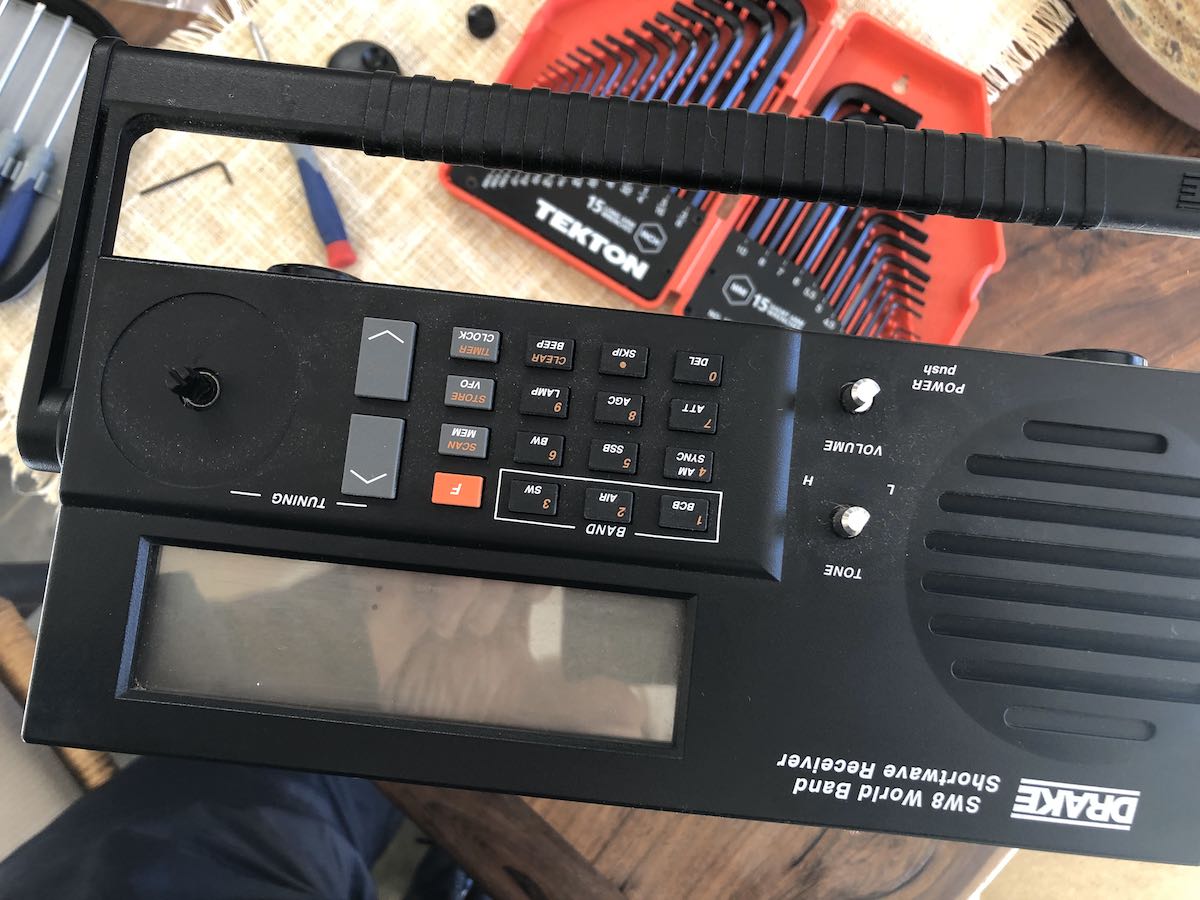
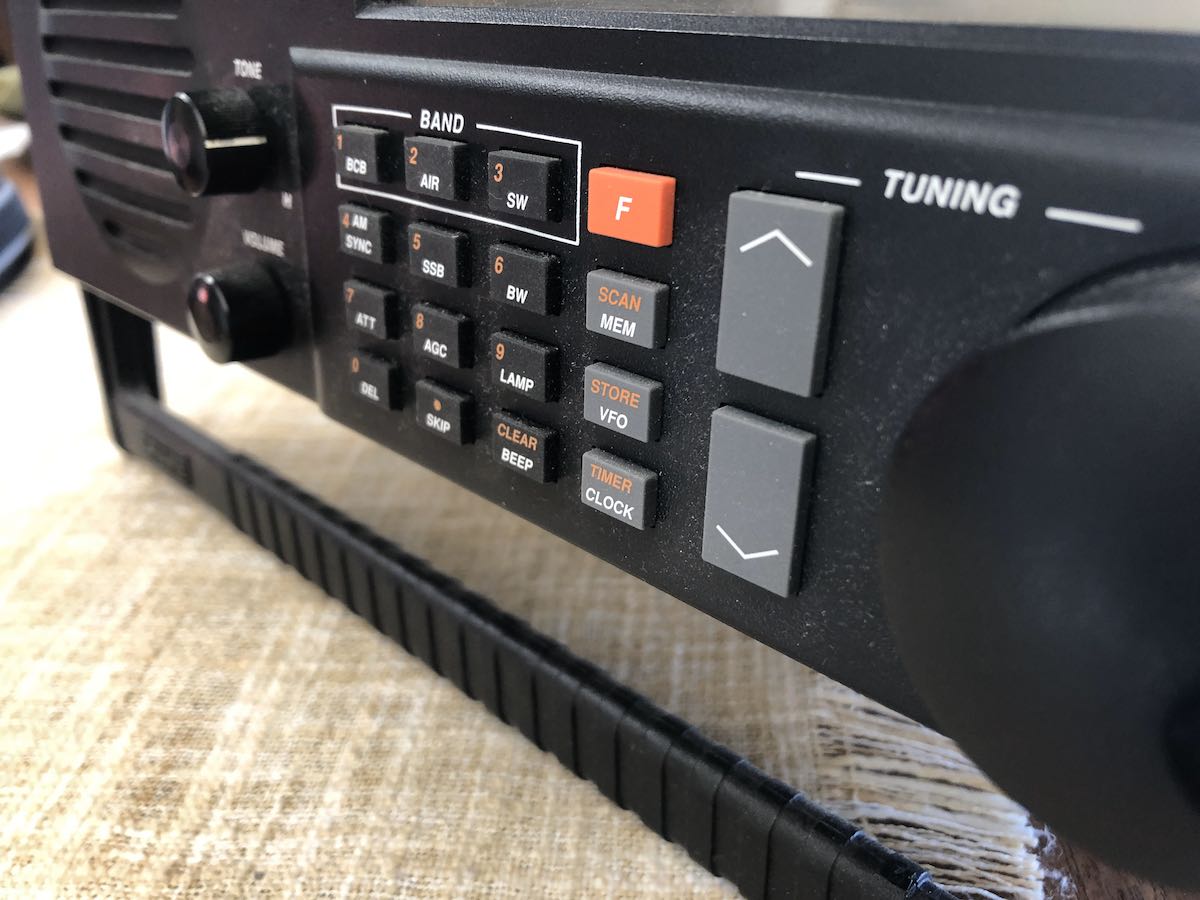
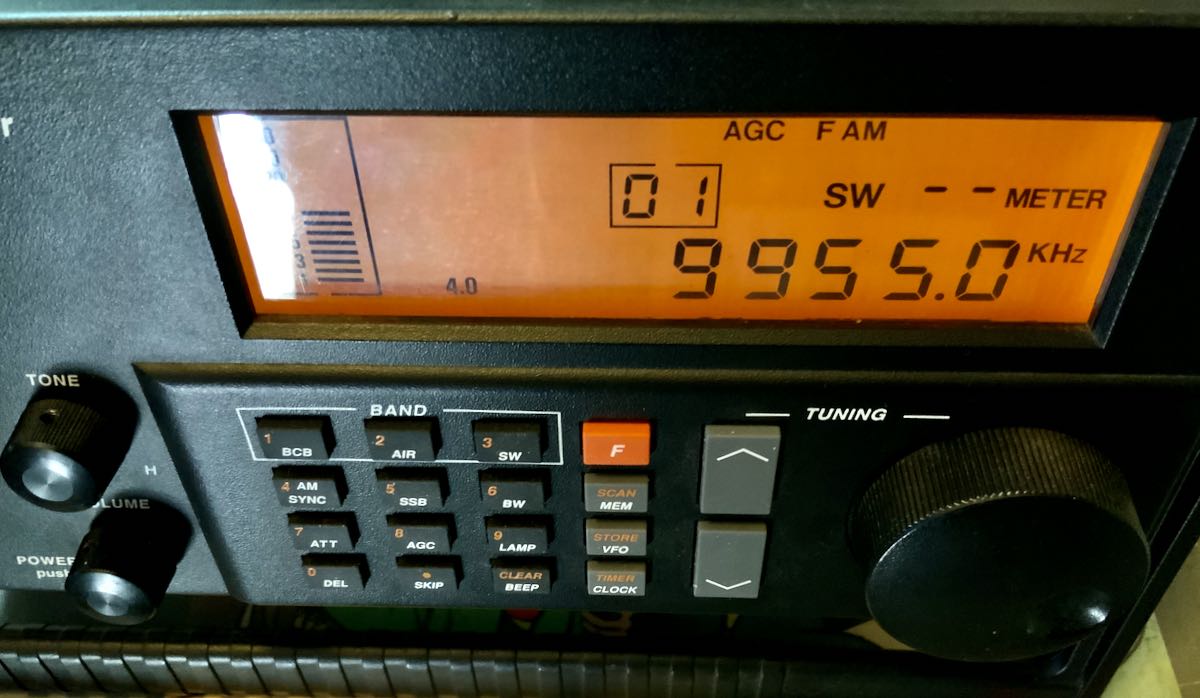
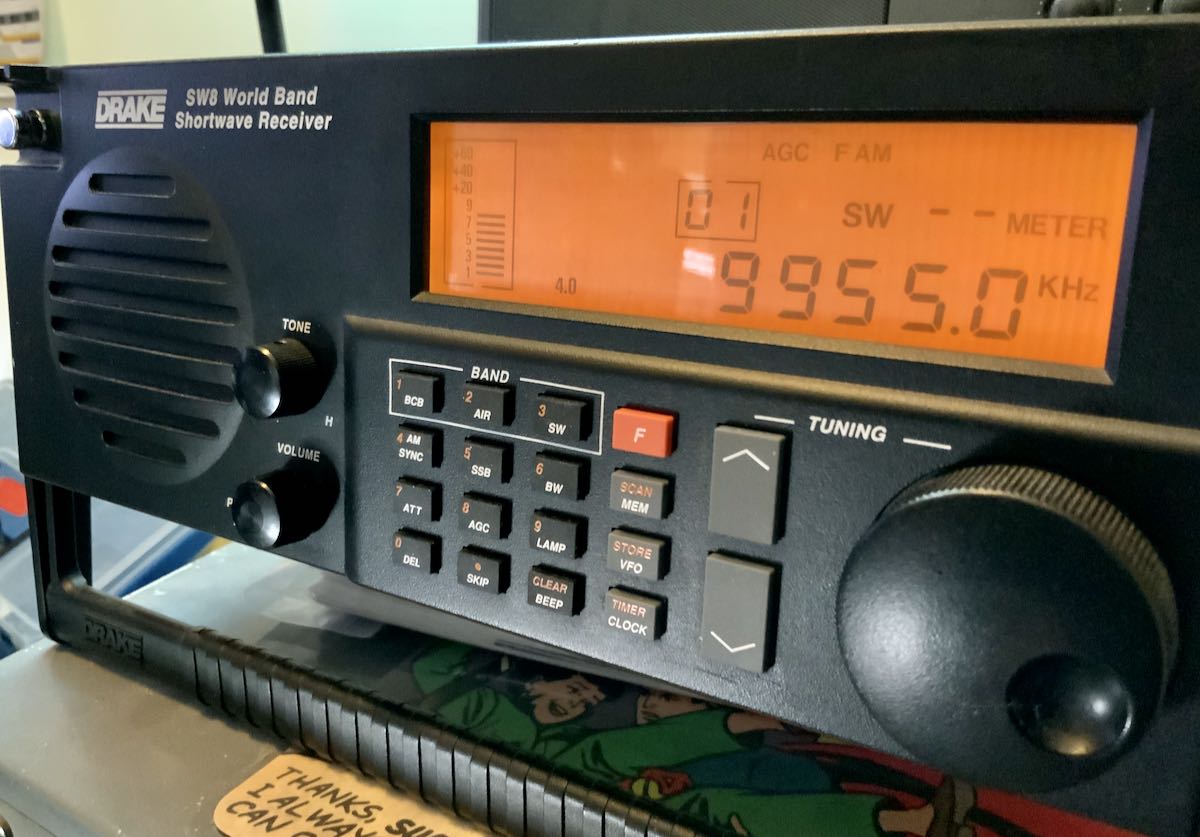
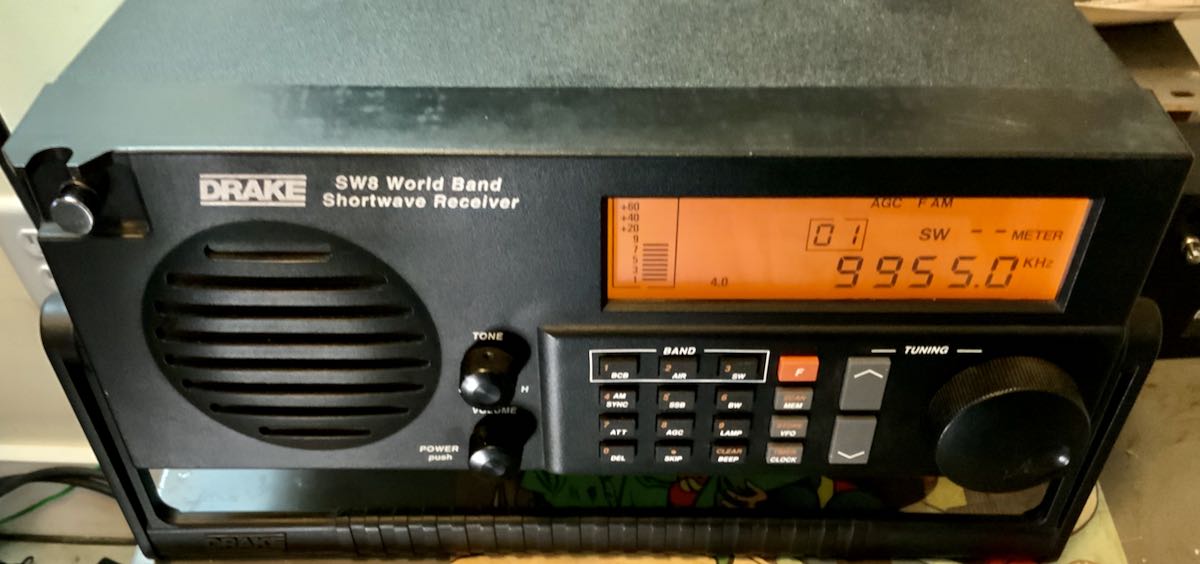
In 2019, I made an impulse purchase: a Drake SW8 tabletop receiver. As I mentioned previously, I’d always wanted an SW8. My buddy, David Goren, recommended this receiver ages ago, Each time I’ve stayed at his home in Flat Bush, he magically made an SW8 available as my bedside radio in the guest room. (That’s hospitality!)

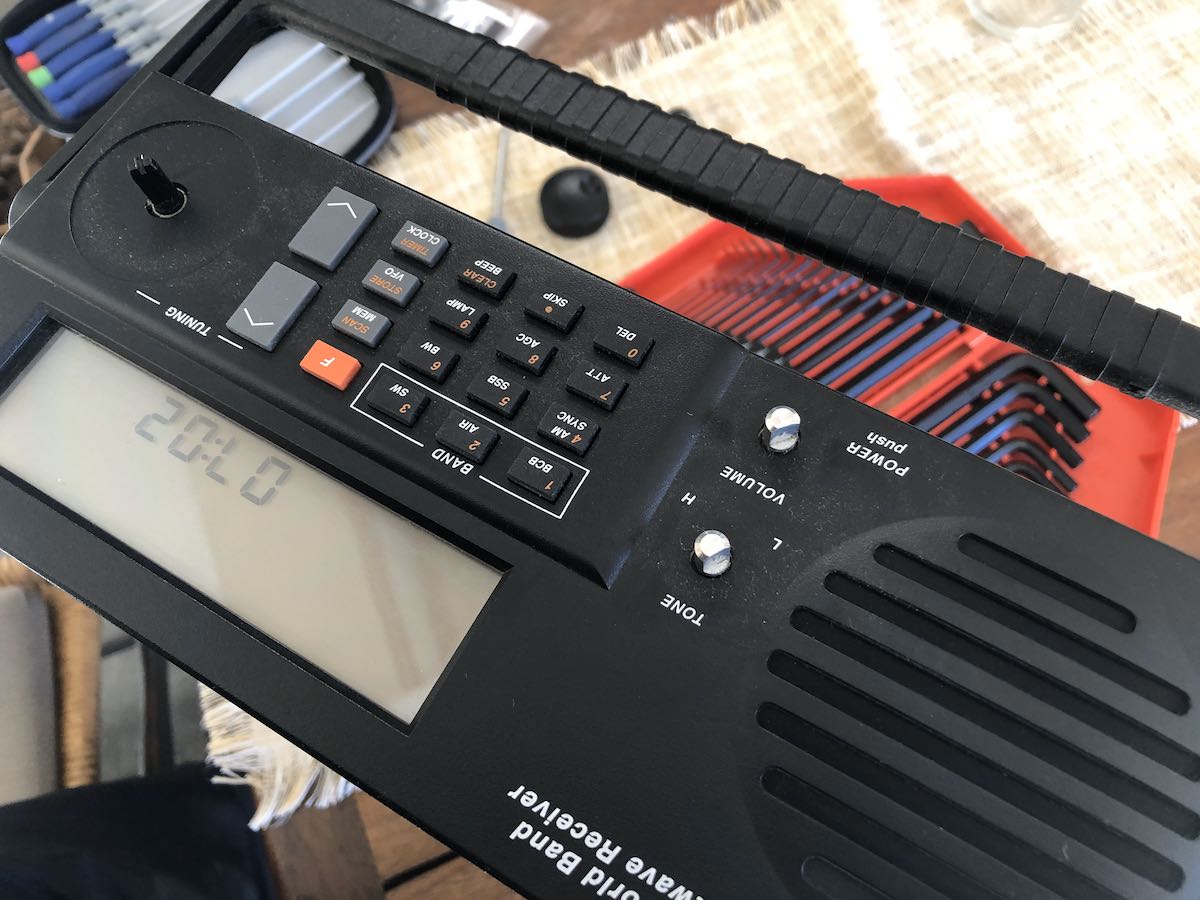
After receiving my SW8 and putting it on the air, I realized it suffered from a common problem found in Drake receivers: a flaky keypad. Several of the buttons didn’t work reliably, or they made multiple contacts on each push, or they didn’t work at all.

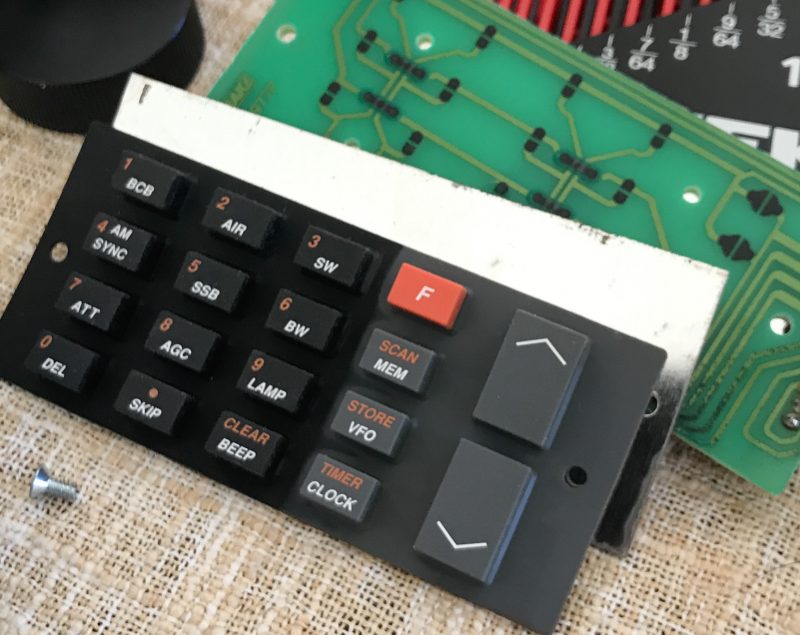
What happens is, over time, the black carbon dot on the back of each pad on the rubber membrane simply wears out and no longer makes reliable contact. I believe a number of Drake receivers of the era used the same keypad style (though configured differently).

The seller didn’t realize this when he sold it to me and, frankly, I felt I got a pretty good deal regardless, so never bothered him about it.

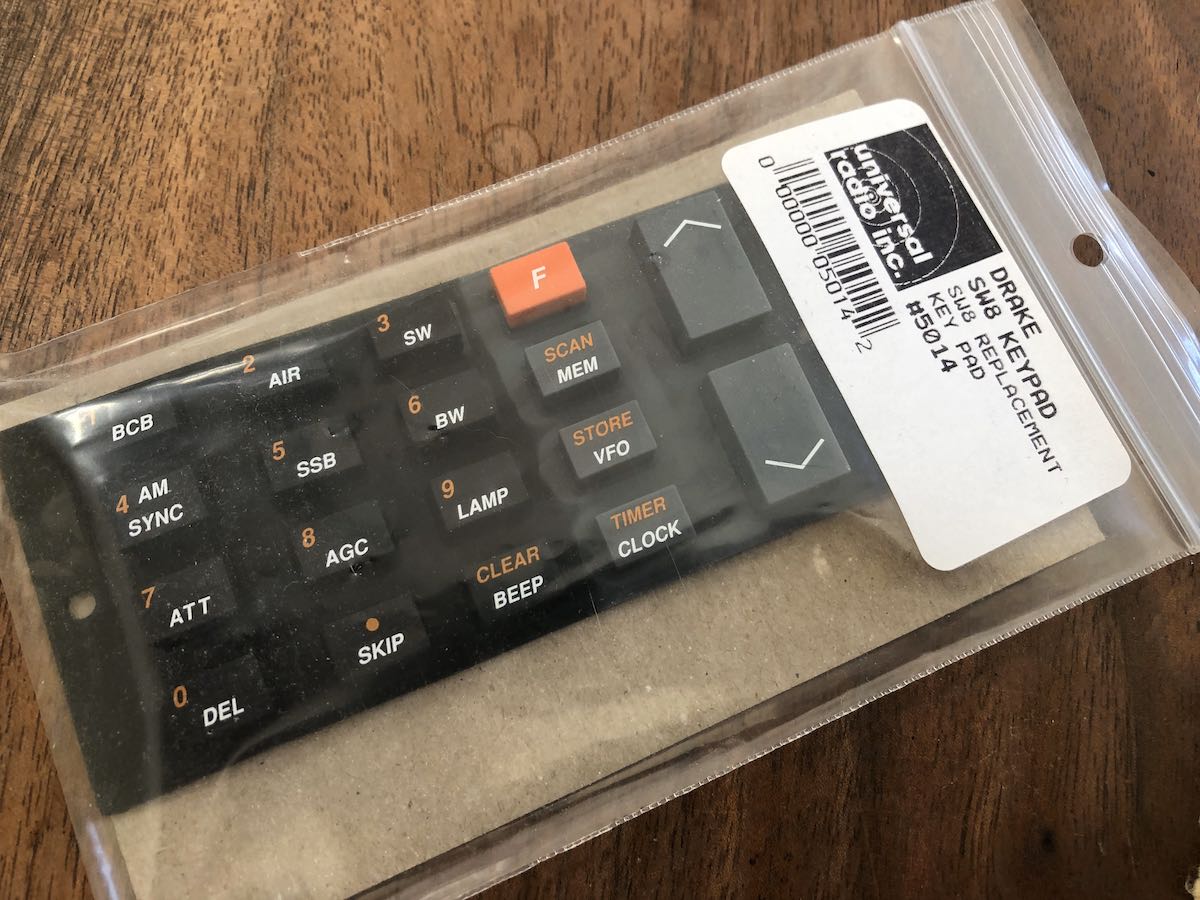
A couple months later, I found out that Universal Radio uncovered a box of new old stock SW8 replacement keyboards, so I ordered one.

2020 got a little out of hand and I put off making the repair. I didn’t want to trouble my buddy, Vlado, who could have done this in his sleep. I knew I could handle a parts replacement as long as I didn’t need to de-solder the keypad from a circuit board (as one does with the SW2, I understand).

Tuesday, I cleaned off one of my radio shelves and found the replacement keypad. I looked at the SW8 and knew it was time to get’er done!

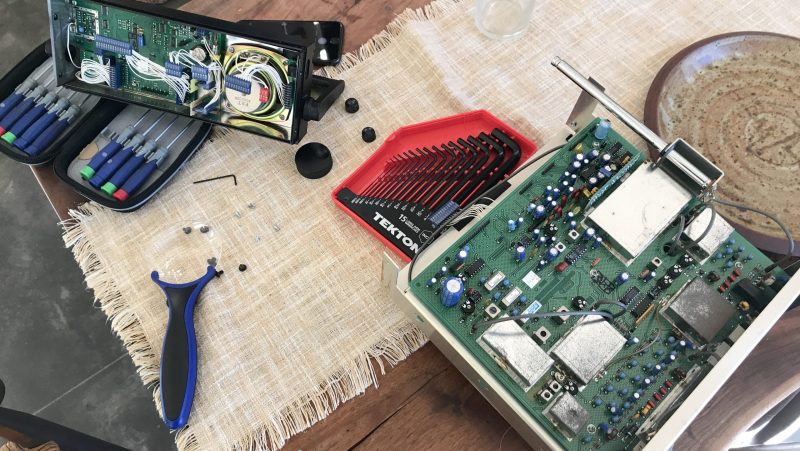
I first removed the encoder, volume, and tone knobs.

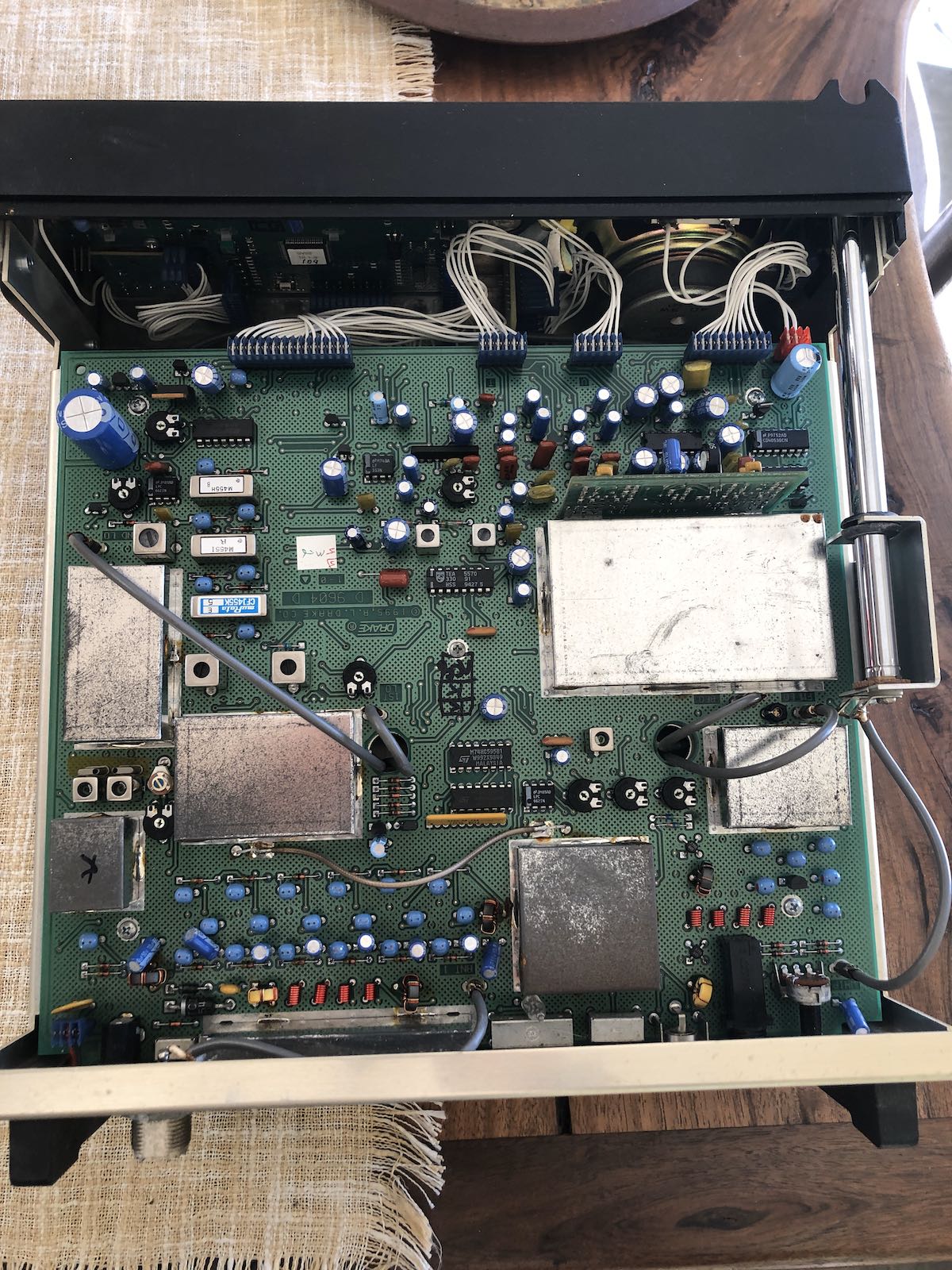
Next, I removed the top cover which is attached with five screws.

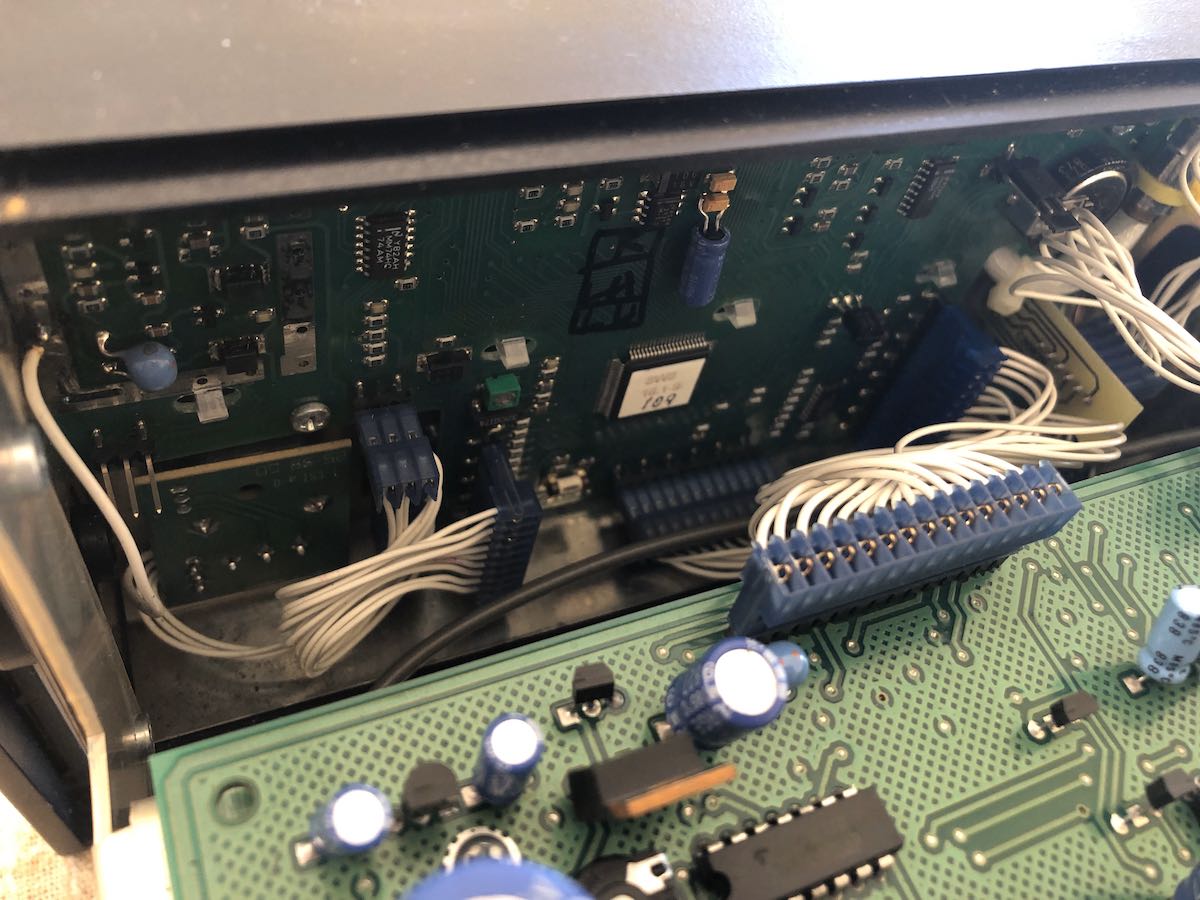
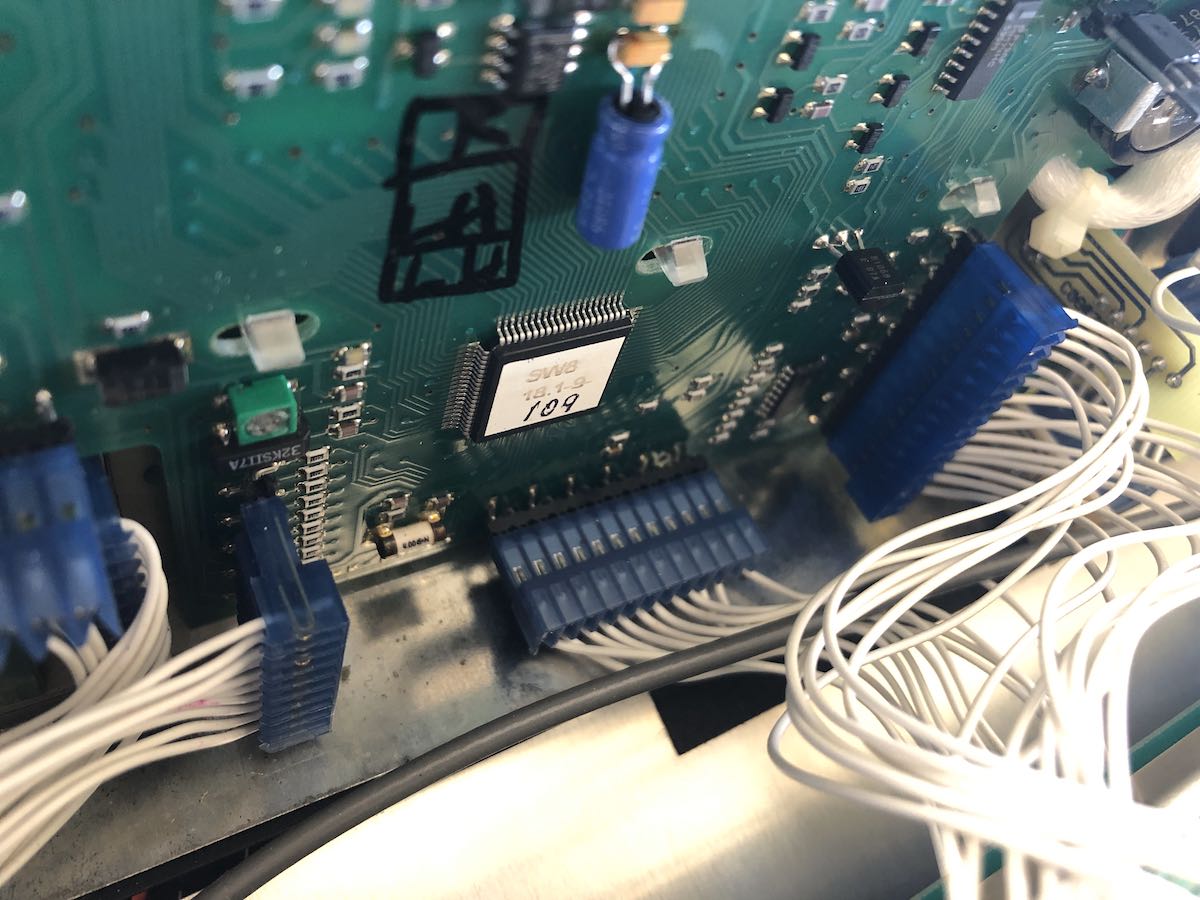
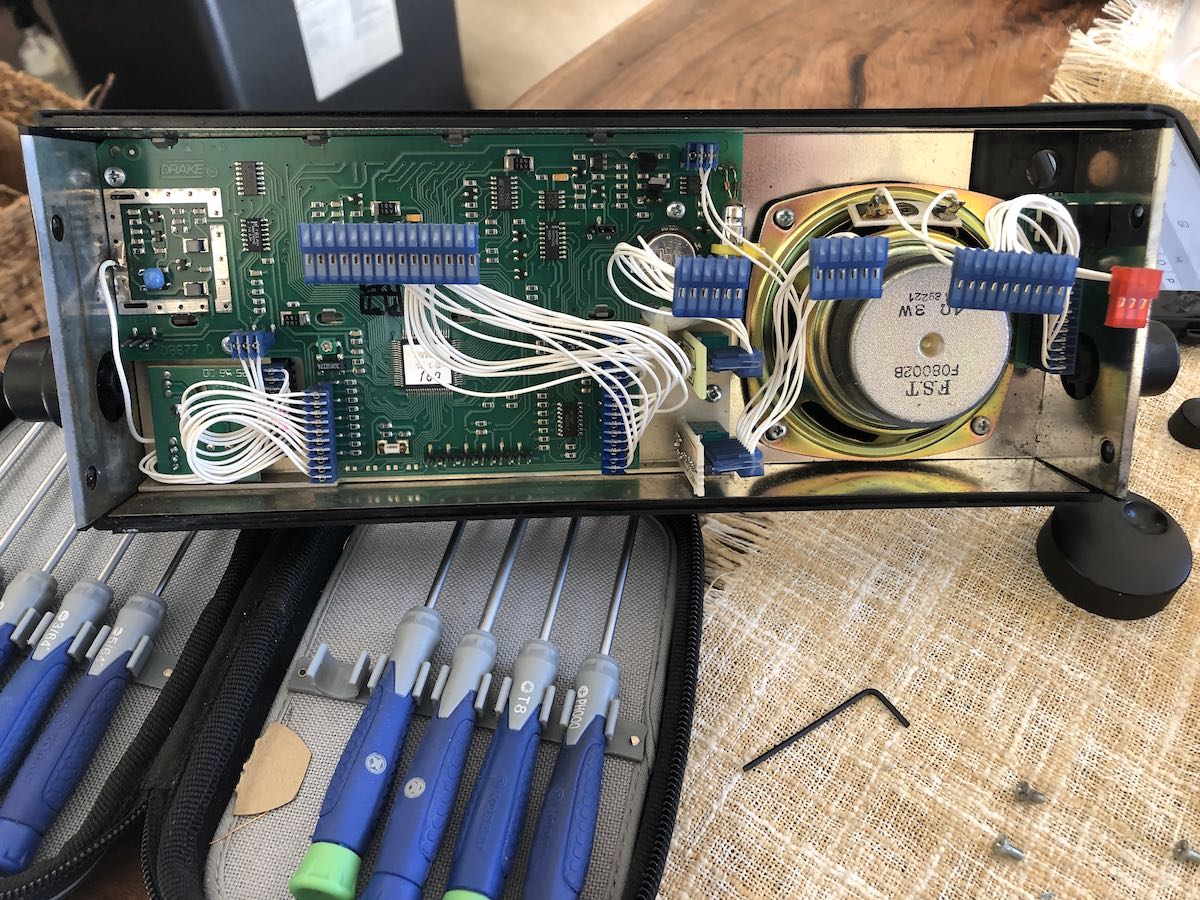
There are a number of multi-pin plugs that attach the front faceplate section to the main body of the radio.

I carefully removed all of them and noted their positions (taking photos at each stage really helps).

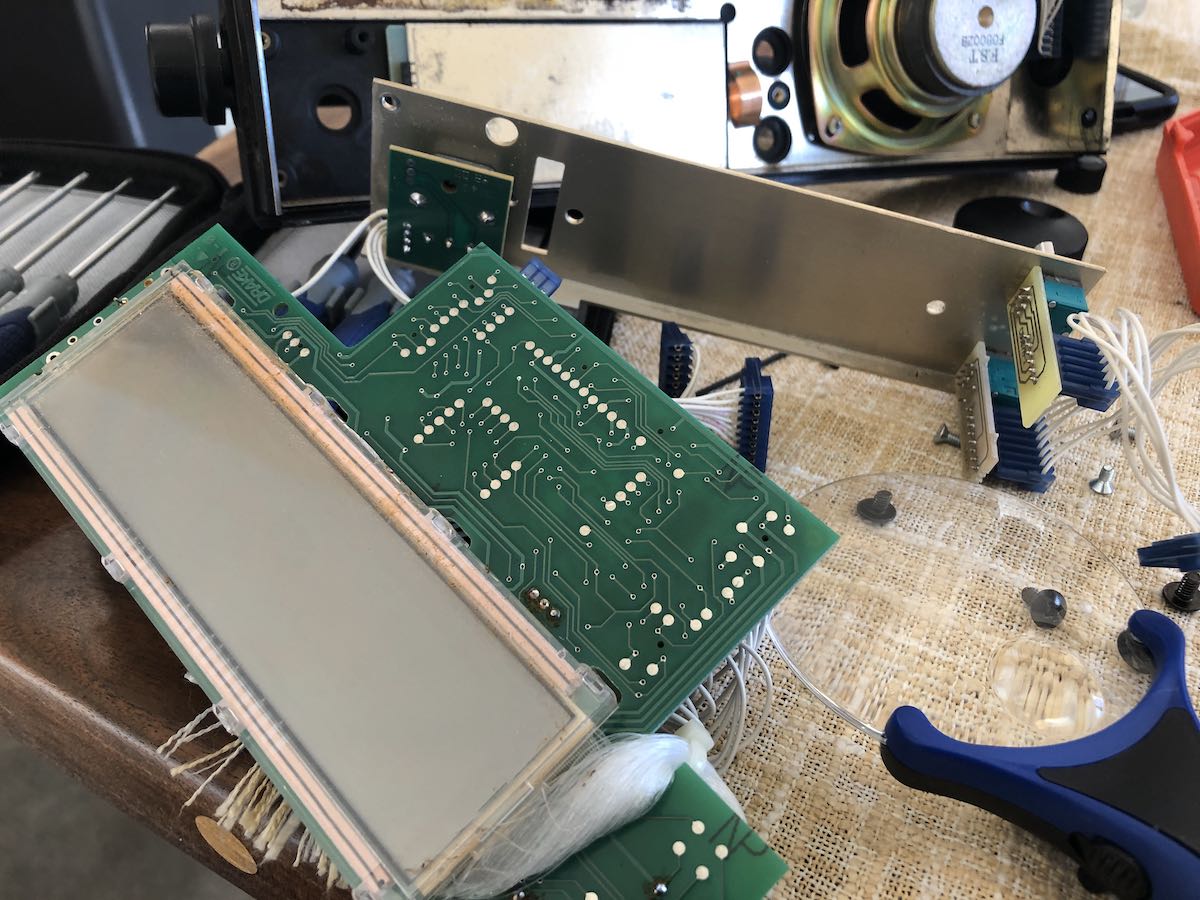
I quickly discovered that the keypad was under at least two more board layers.

I removed the main board which is held in place with three screws, then the board underneath which is also held in place with three screws.

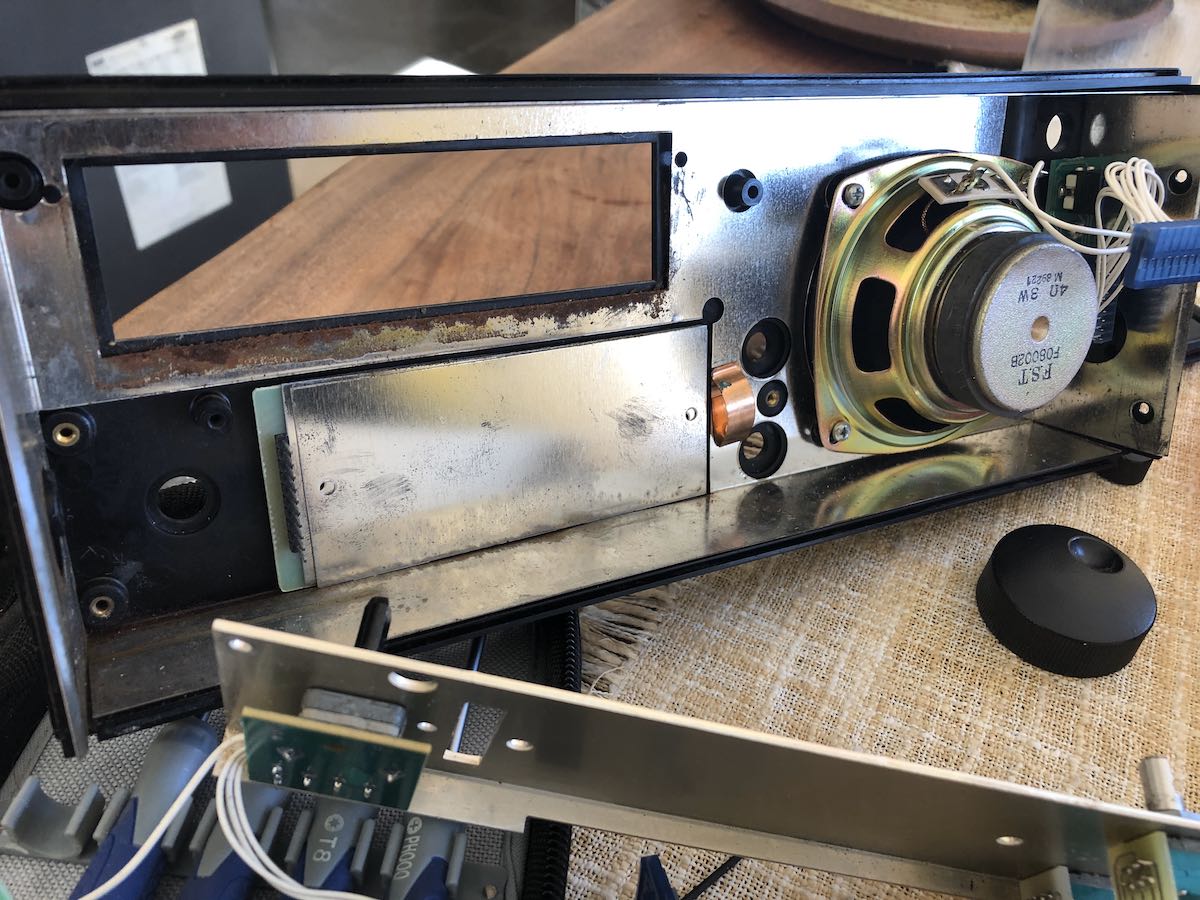
To my surprise, the keypad, circuit board and two metal plates (in that order) are held in place with compression from the last board layer.

The keypad, circuit board and metal plates fell out quite easily.

While I had everything apart, I cleaned the inside. At some point, a wee bit of moisture must have accumulated near the bottom of the keypad. I’m guessing this was condensation, because it was so minimal and so localized.

I replaced out the old keypad with the new one. Should you ever do this procedure, take note that the keypad has holes that line up with dimples on the back of the SW8 face place–the keypad circuit board also has holes that line up with dimples on the back of the rubber keypad. Lining these up will insure a correct fit.

I then re-assembled the faceplate boards and reconnected it to the body of the radio. Unfortunately, one can’t really test to see if the replacement works until all of the boards have been re-connected and re-assembled–a good 10-15 minute process.

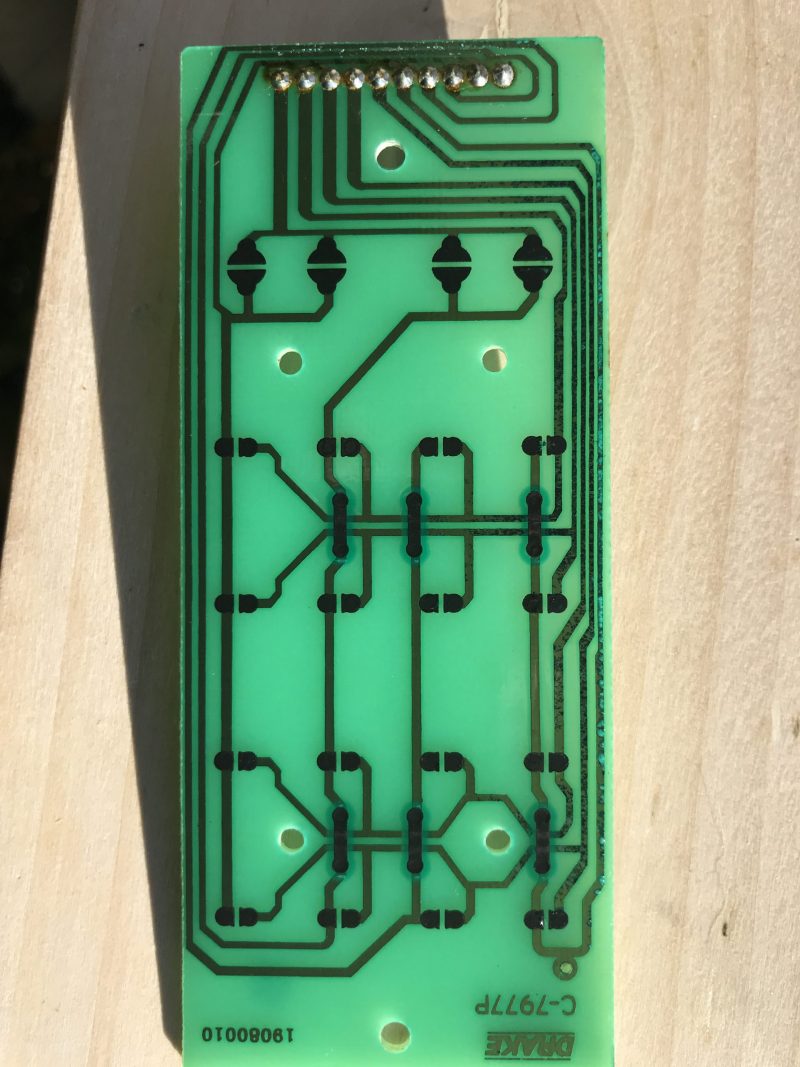
I tested the keypad and quickly discovered that number 9 and the bottom row of buttons were still a little flaky. After a little head scratching, it then dawned on me (after pulling the radio apart and reassembling it twice more!) that maybe part of the problem was left-over carbon/dust on the keypad circuit board.

I disassembled the radio again and carefully cleaned the keypad circuit board with some DeOxit (a radio enthusiast’s best friend).

Through a closer inspection of the board, I could see that some of the traces on the bottom of the board had corrosion. That really worried me because I’m not entirely sure how I could mend traces. I tested continuity, however, and they all passed.

I reassembled the SW8 for the fourth or fifth time, tested it, and the keypad performed perfectly!  Woo hoo!

Not only am I incredibly pleased that I was able to sort this out on my own, but now I can dissemblable and reassemble the SW8 with the speed of an Indy pit crew.

I’m still a little concerned about those traces on the keypad circuit board and the new keypad’s overall longevity, but at least I’ve got the SW8 back in tip-top shape and on the air for now. I’ll explore a work-around if these parts ever fail again.

I do love this receiver and now have it set up in the shack where I can do some proper armchair SWLing.

Do you have an SW8?

I’m curious if any SWLing Post readers have an SW8 and especially if you’ve had to replace your keypad.  Please comment!

Loop-On-Ground Antenna Part 2: Tom upgrades his low profile, low noise, portable DXing antenna

Many thanks to SWLing Post contributor, TomL, who shares the following guest post:


Loop on Ground Part 2

by TomL

My previous Loop on Ground (LoG) experiment was useful which entailed connecting my Wellbrook loop amplifier to a 100 foot loop of speaker wire in the field at my favorite local Forest Preserve. It really brought in stations I had never heard before or strong stations in a more powerful way that made the audio really pleasant to listen to.  This report will describe more experiments with smaller wire loops to see what the limitations are.  100 feet of wire is quite a lot of wire to mess around with especially in the cold weather or public places that do not have as much private space.

I don’t understand all the electrical interrelationships but a long posting at RadioReference.com had  a great discussion about creating a 160-20 meters LoG receive-only antenna. It is 11 pages long but is worth reading how “nanZor” experimented with various parameters for general use. Kudos to him for documenting the findings as the design changed over time. You can find it here:

https://forums.radioreference.com/threads/160-20m-log-loop-on-ground.370110/

nanZor basically boils it down to a few guidelines.

  1. Keep it on the ground. Lifting the wire more than an inch or two decreased the lower angle signal reception greatly.
  2. Calculate the optimal length for one full wavelength of wire at the highest target frequency, say for example, the top of the 20 meter band (14350 kHz). 936/14.350 MHz * 0.9 velocity factor of simple insulated wire = 58.7 feet.  You can round up to 60 feet, no big deal since this is broadband.  The antenna should have a predictable reception pattern from 1/10th wavelength up to 1 full wavelength. Outside that range, the pattern gets “squirrely”.
  3. Using a 9:1 balun seemed to be a little better than a 4:1 balun at the antenna feedpoint. This gets into things I cannot measure and has to do with rising impedance as a loop gets closer to ground level. I am not sure but I think my Wellbrook amp has a built in 4:1 balun and it seems to work just fine.
  4. Make sure to use an RF Choke at BOTH sides of the feedline coax cable. He was adamant that the loop can get easily unbalanced and allow noise into the antenna and/or feedline and so it must be isolated and the ground allowed to “float” in his words.

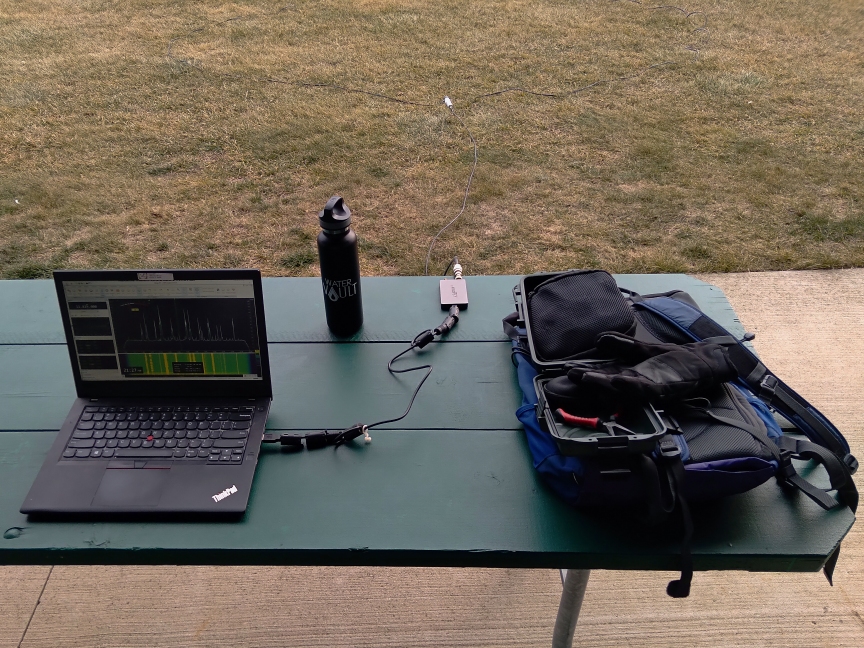
Personally, I also wanted to use less wire and happened to have a length of 42 feet of landscape wire which should work well below 5 MHz with the Wellbrook amp engaged.  Results were not bad even though on hard frozen ground. Signal levels were down a little compared to the 100 foot of wire.  Here are a couple of examples, first one in a fast food parking lot with a grass field next to it and second at the usual Forest Preserve parking lot on a grass field.  I made sure that my car blocked the view of the wire so people would not get nervous!

La Voz Missionaria, Brazil:

Voice of Welt from Issoudun France in Kurdish:

These are not necessarily “DX” but definitely good for SWLing. I like the signal strength with the amplifier inline at the antenna feedpoint and I did not have to use an RF Choke at the receiver side as was suggested.

I had a 75 foot long insulated wire and used that at the Forest Preserve parking lot on a couple of different days.  Lower frequency signal strength and signal/noise ratio improved a little bit to be noticeable.

US Air Force HFGCS “numbers” station. Remote controlled from Andrews or Grand Forks bases (https://en.wikipedia.org/wiki/High_Frequency_Global_Communications_System), there was no way for me to know which of the 6 transmitters it was coming from:

BBC from Tinang Philippines in Korean:

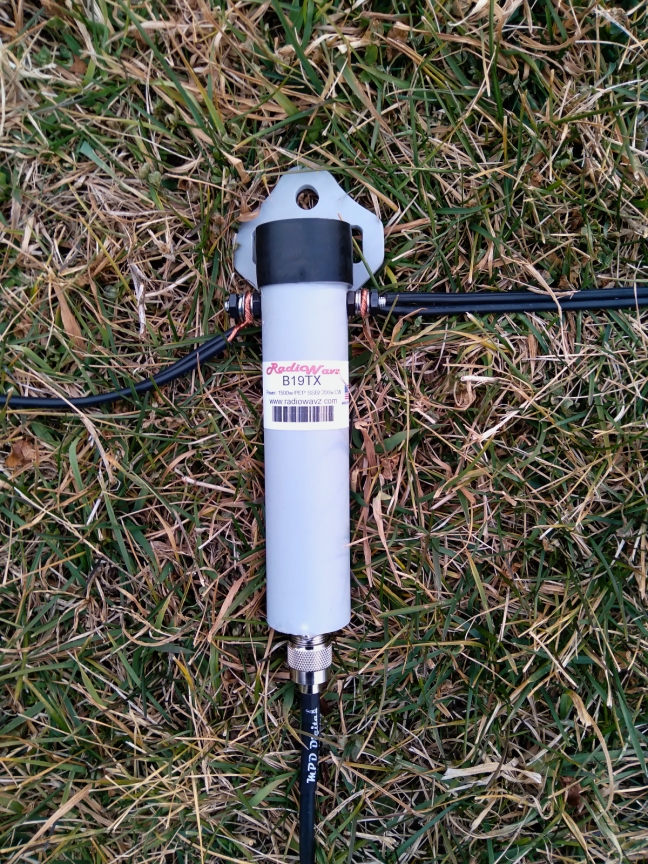
Then, as nanZor suggested in his postings, I purchased a 9:1 balun/RF choke (it has both a balun and an RF choke built-in) from Ham Radio Outlet and put that in place of the Wellbrook amplifier.

I have not worked with it, but it is reported that the Nooelec.com v2 model is cheaper and works just as well – https://swling.com/blog/2019/10/the-nooelec-balun-19-v2/

Examples below with the 42 foot loop and 9:1 balun/choke, no amplifier:

KSDA, Agat Guam in English

WB8U doing a POTA activation of Leavenworth State Fishing Lake

VOLMET weather, Shannon Ireland

HCJB Quito Ecuador, probably in Quechua

As a side note, there is a posting that mentions low-angle DX is better with regions that have better “ground conductivity”, salt water being the best. I have no way of verifying this.  See post# 126 by KK5JY Matt.

So, bottom line is that a Loop on Ground can be useful for pleasant SWLing and portable.  Best to use it on grass, not asphalt.  The loop amplifier is useful to get signal levels up if you have to use a smaller loop size but the signal/noise ratio will suffer due to its smaller aperture.  And, warning, the public will find a way to trip over the wire no matter where you set it up (I may try putting the wire around my car if I can park on a grass surface and/or use the gaudiest, brightest neon green or orange wire I can find – they can’t trip over THAT, can they?).

TomL


Thanks, Tom, for sharing your update. Obviously, the LoG is working brilliantly. It’s amazing that you got such clear reception from the parking lot of a fast food restaurant.  If you were using a vertical instead, I bet signals would have been buried in the noise. 

I can also relate to people tripping over antenna wires. I remember one POTA activation recently (the first activation in this three park run) where I intentionally laid my counterpoise on the ground, off a foot path, in the brush and where I couldn’t imagine anyone ever stepping. Ten minutes into the activation and for no reason, someone walked off the path, into the brush, and it snagged them. Maybe I’m just a Ninja level trapper and never realized it!?

Thanks again for sharing the results of your LoG, Tom. Inspiring! 

Radio Waves: Old Goats Are Going Away, Pack Accused of Fraud, Post-Brexit Radio Imports, and a TV Drama About Murder of G0HFQ

Radio Waves:  Stories Making Waves in the World of Radio

Because I keep my ear to the waves, as well as receive many tips from others who do the same, I find myself privy to radio-related stories that might interest SWLing Post readers.  To that end: Welcome to the SWLing Post’s Radio Waves, a collection of links to interesting stories making waves in the world of radio. Enjoy!

Many thanks to SWLing Post contributors Dennis Dura, Ronald Kenyon, Michael Guerin, and the Southgate ARC for the following tips:


Commentary: “The Old Goats Are Going Away” (Radio World)

Broadcasters need to act to refill our ranks before the dial goes quiet

I see trouble ahead in our business in the shortage of qualified broadcast engineers.

I am not speaking of IT people. I am speaking of the guy in a T-shirt and jeans who gets to the transmitter, looks for the problem, reads the schematic, crawls inside the box and replaces R-16, R-17, C-232 and Q-4, and the music again blares forth.

We are losing those guys every day, and they are being replaced by the guy who walks into the site, looks at the box, grabs his cell phone, calls BE or Nautel to find which board to pull, and ships it back while waiting for a loaner to get the rig going.

I never thought of myself as an old-timer. Starting in the business in 1963, old-timers were the guys I learned from, mostly World War II graduates. They knew everything about audio and RF. I wished I knew a tenth as much as they did.

My first real bit of engineering was converting a 50 kW FM station to stereo in 1963. No one listened to FM then, I think there were 10 FM radios in the city and five were in Cadillacs owned by mob hit men.

I remember putting the stereo generator in an eight-foot rack. It took up four feet of the rack and had enough 12AU7s in it to heat the building. It had two outputs, one L+R that went into the phase modulator of the serrasoid exciter and the L–R output that went into the exciter about 200 multipliers later (the crystal frequency was multiplied 864 times).

It was a technical nightmare compared to mono FM. Getting two matched phased phone lines from the studio to the transmitter over three exchanges was another task. But we were stereo most of the time.

The FCC had a rule that if you weren’t transmitting stereophonic program material for more than a certain length of time, you had to shut the stereo pilot off so as not to mislead the 10 listeners by illuminating their stereo beacon. So the pilot on/off was wired into the old Rust remote control so the studio could turn it off when a monophonic recording of a symphony played.

Times changed; we wound up with RF STLs, stereo generators on a single chip, CD players, computers and lots of stuff made in foreign countries that wasn’t worth fixing or whose parts were not available, so when they broke they wound up on a shelf at the transmitter site.[]

Voice of America CEO Accused Of Fraud, Misuse Of Office All In One Week (NPR)

Fresh crises and fresh challenges confront the Trump-appointed CEO of the parent of Voice of America, even with less than two weeks left of the Trump presidency.

To start, the Attorney General of the District of Columbia this week accused U.S. Agency for Global Media CEO Michael Pack of illegally funneling more than $4 million to his private documentary company through a not-for-profit that he also controls.

Then, five recent chiefs of Radio Free Europe/Radio Liberty – appointed under Democratic and Republican administrations – jointly warned President-elect Joe Biden that Pack poses “a long-term threat to the credibility and professionalism of the five networks” he oversees.

And now Pack is now being accused of trying to propagandize the Voice of America by a group of whistleblowers. They take exception to a planned appearance by Secretary of State Mike Pompeo at VOA’s Washington headquarters on Monday, just nine days before the Biden administration begins.

Pompeo will soon be out of his job. And it’s expected Pack will be replaced promptly as well. But he has sought to outlast his time in office by burrowing himself and conservative allies into boards that will steer Radio Free Europe/Radio Liberty, Radio Free Asia, and the Middle East Broadcasting Networks. The not-for-profit broadcasters are all funded by the federal government through USAGM.

Those networks, along with VOA and the Office of Cuba Broadcasting, collectively reach more than 350 million people across the world each week. They historically have demonstrated American pluralism by providing balanced coverage of news events and robust political debate, regardless of how it reflects on current government officials. The broadcasters are also intended to serve the citizens of nations which do not allow journalists to operate freely.[]

Radio imports (Southgate ARC)

Now that the United Kingdom has left the European Union, we will see major changes in importing radio equipment.

Definitive information is scarce but imports from the UK can have VAT paid on purchase or depending on the retailer, VAT may have to be paid before delivery. If it comes via An Post, any charges will have to paid before the item is sent out for delivery.

The Post Office employees will not be collecting money at the door. Whether duty is also collected is not very clear, but some sources say that anything originating outside the European Union will attract duty as well as VAT. There may also be a handling charge.

John EI7GL has compiled a list of radio and electronic dealers based in the European Union on his blog page and would welcome any updates you can supply.[]

TV drama about murder of radio ham G0HFQ (Southgate ARC)

On Monday, January 11, ITV will be broadcasting the first of a three part TV drama about the murder in June 1989 of Oxfordshire radio amateur Peter Dixon G0HFQ and Gwenda Dixon who were on holiday in Pembrokeshire

In the November 1989 Radio Communication magazine the RSGB asked:

Did you work GW0HFQ/M ?

As we’ve reported in previous editions of RadCom, Peter Dixon, G0HFQ. and his wife Gwenda were brutally murdered whilst on holiday in South Wales last June. Dyfed-Powys Police have asked us to say that they are still anxious to talk to anyone who had a contact with Peter whilst he was operating in Pembrokeshire as GW0HFO/M on 7 or 14MHz SSB. 28MHz FM/SSB or 144MHz FM. The dates between which they’d like you to check your logbooks are 19-29 June 1989.

Dyfed-Powys Police believe that Peter Dixon had a contact with another mobile station in the area on 28MHz FM on the morning of Wednesday 28 June.

The drama will be shown on ITV at 9pm on Monday, January 11, details at
https://www.itv.com/presscentre/ep1week2/
pembrokeshire-murders

A description of the murder is at
https://www.nickdavies.net/1992/06/27/the-tantalising-mystery-of-a-murder-in-pembrokeshire/

The October 1989 issue of 73 magazine carried a report, see page 13
https://worldradiohistory.com/Archive-DX/73-magazine/73-magazine-1989/73-magazine-10-october-1989.pdf


Do you enjoy the SWLing Post?

Please consider supporting us via Patreon or our Coffee Fund!

Your support makes articles like this one possible. Thank you!
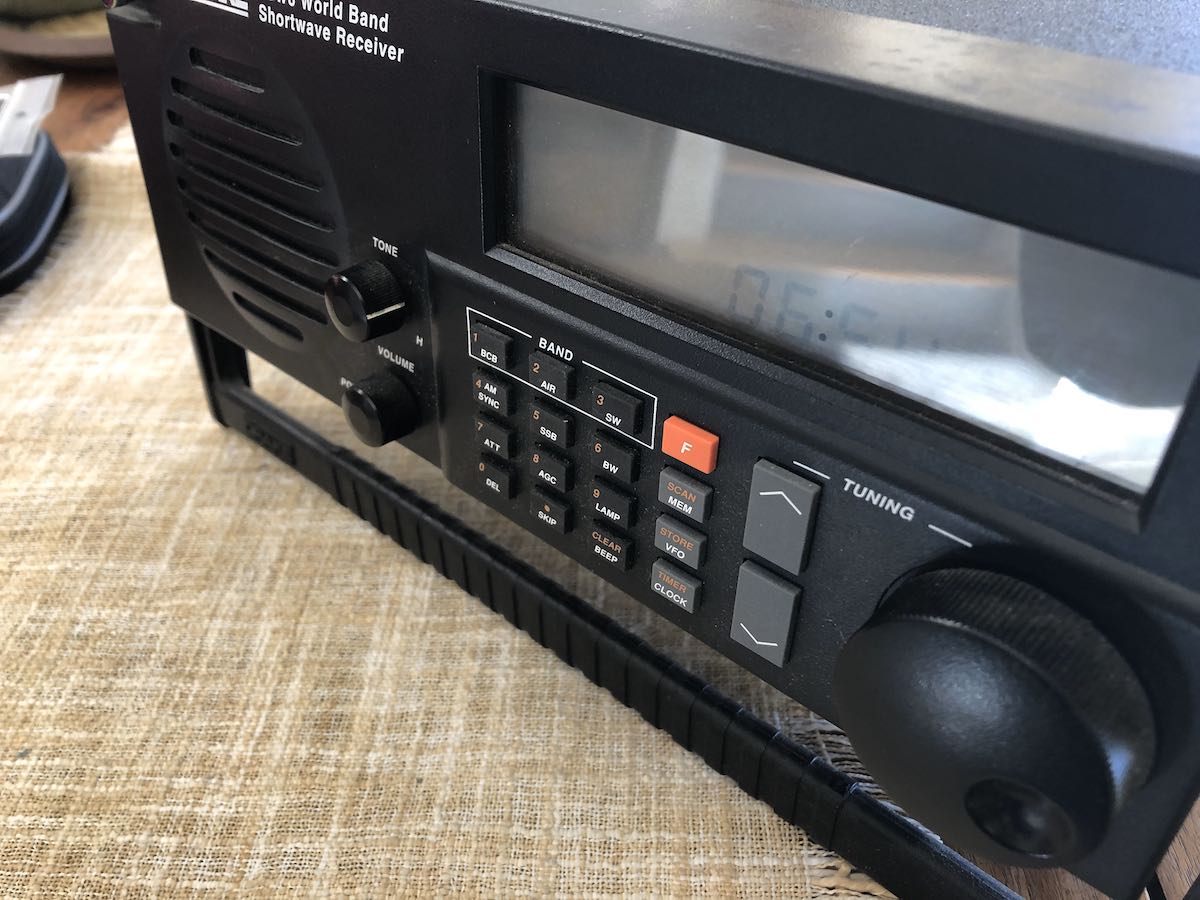
Is AM synchronous detection a crucial portable radio feature?

Many thanks to SWLing Post contributor, Mike, who writes with the following question:

How important is AM Sync for a portable radio? Is it essential or a deal breaker?

That’s a great question, Mike, and one I don’t think I’ve directly addressed it here on the SWLing Post oddly enough.

Synchronous detection is actually a fairly deep topic to explore–and everyone has their own opinion–but I get the impression that you’d like a simple answer, so I’ll try to keep this as brief as possible. You might follow the comments section of this post as I’m sure some SWLing Post readers will share their thoughts on synchronous detection and how important it is for them.

So what is Synchronous Detection?

I like this concise Wikipedia answer:

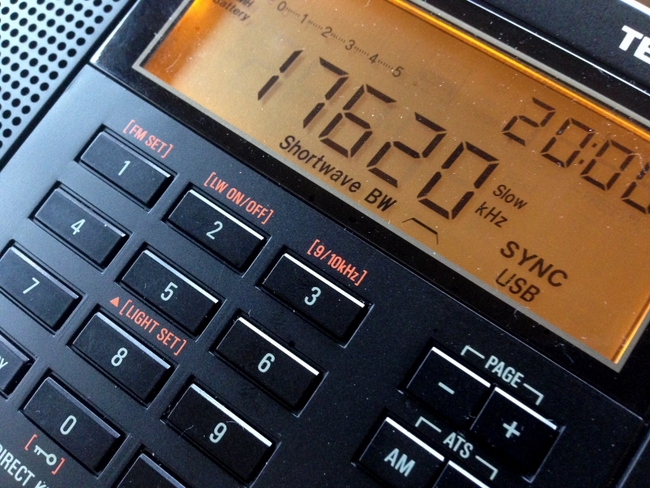
In electronics, a synchronous detector is a device that recovers information from a modulated signal by mixing the signal with a replica of the un-modulated carrier. This can be locally generated at the receiver using a phase-locked loop or other techniques. Synchronous detection preserves any phase information originally present in the modulating signal. Synchronous detection is a necessary component of any analog color television receiver, where it allows recovery of the phase information that conveys hue. Synchronous detectors are also found in some shortwave radio receivers used for audio signals, where they provide better performance on signals that may be affected by fading. To recover baseband signal the synchronous detection technique is used.

How does synchronous detection help shortwave, mediumwave, and longwave listeners?

As the Wikipedia article notes above, sync detection can help “provide better performance on signals that may be affected by fading.”

In short: a solid synchronous detector can help stabilize an AM signal which then can help with overall signal intelligibility.

In some modern portable radios, at least, this could come at the expense of audio fidelity (see caveat below).

I use sync detection when the bands are rough, noisy, and QSB (fading) is affecting signals.

A good sync detector will help clean-up and stabilize the signal so that you can hear voice information with less listener fatigue. Sync detectors are also great tools for grabbing station IDs when propagation is less stable. If you have a receiver with selectable sideband synchronous detection, it can also be used as a tool for eliminating adjacent signal interference.

Caveat? Sync detectors vary in terms of quality.

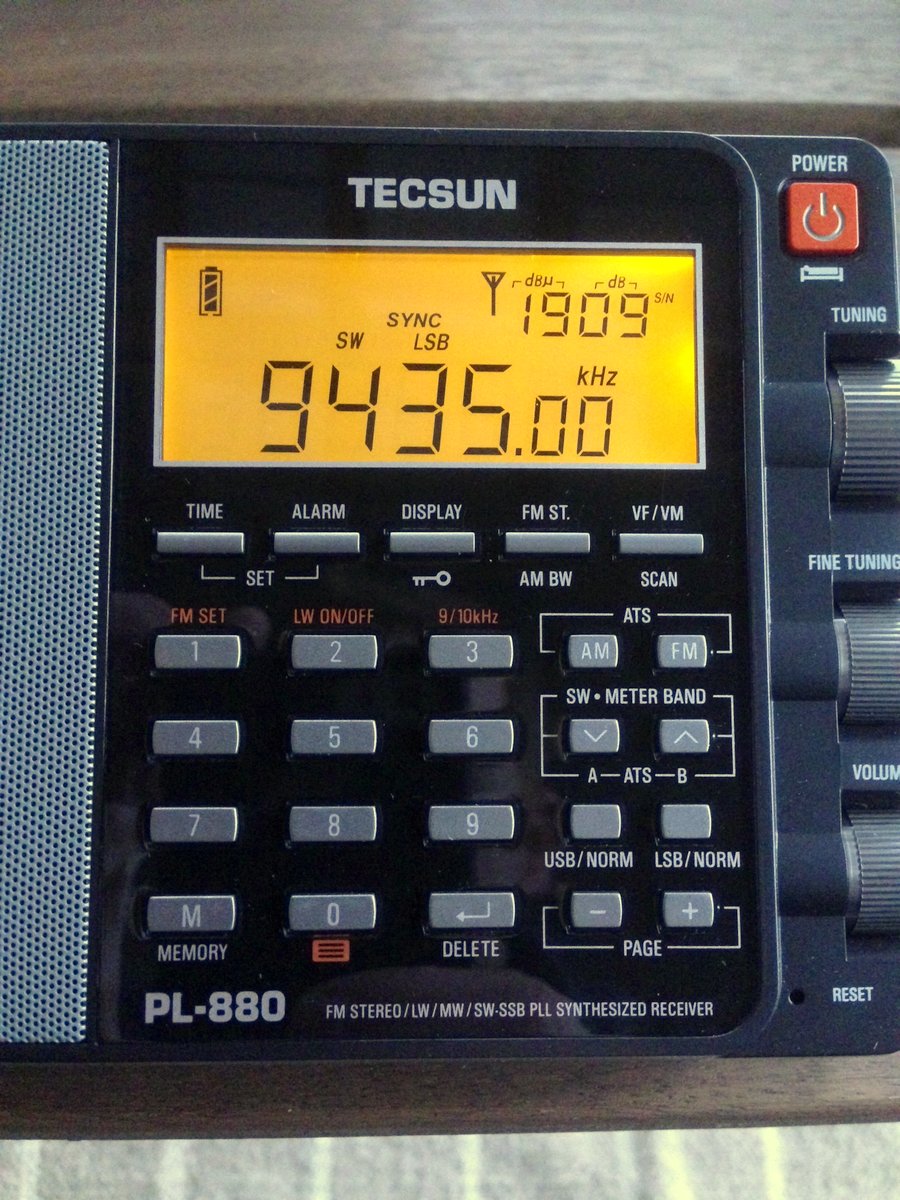
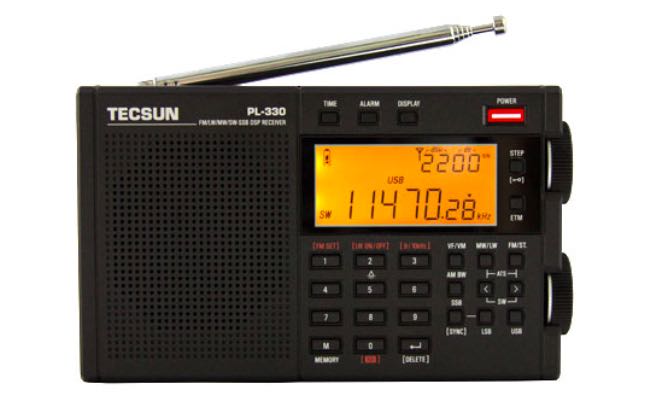
The PL-880 has a synchronous detection “hidden” function. I’m sure it’s hidden because it’s so ineffective. The PL-880 is a fantastic portable, but don’t bother using the sync detector.

Many modern DSP portables sport synchronous detection, but they’re not terribly stable and the audio fidelity can take a big hit as well. Poor sync detectors can make audio sound “tinny” and narrow.

If a sync detector isn’t effective a providing a stable lock on a signal, then it’s pretty much useless. Why? If it can’t maintain a stable lock, it’ll produce very unstable shifting audio, often with the occasional heterodyne sound popping in as well. In those cases, it’s better to turn off synchronous detection.

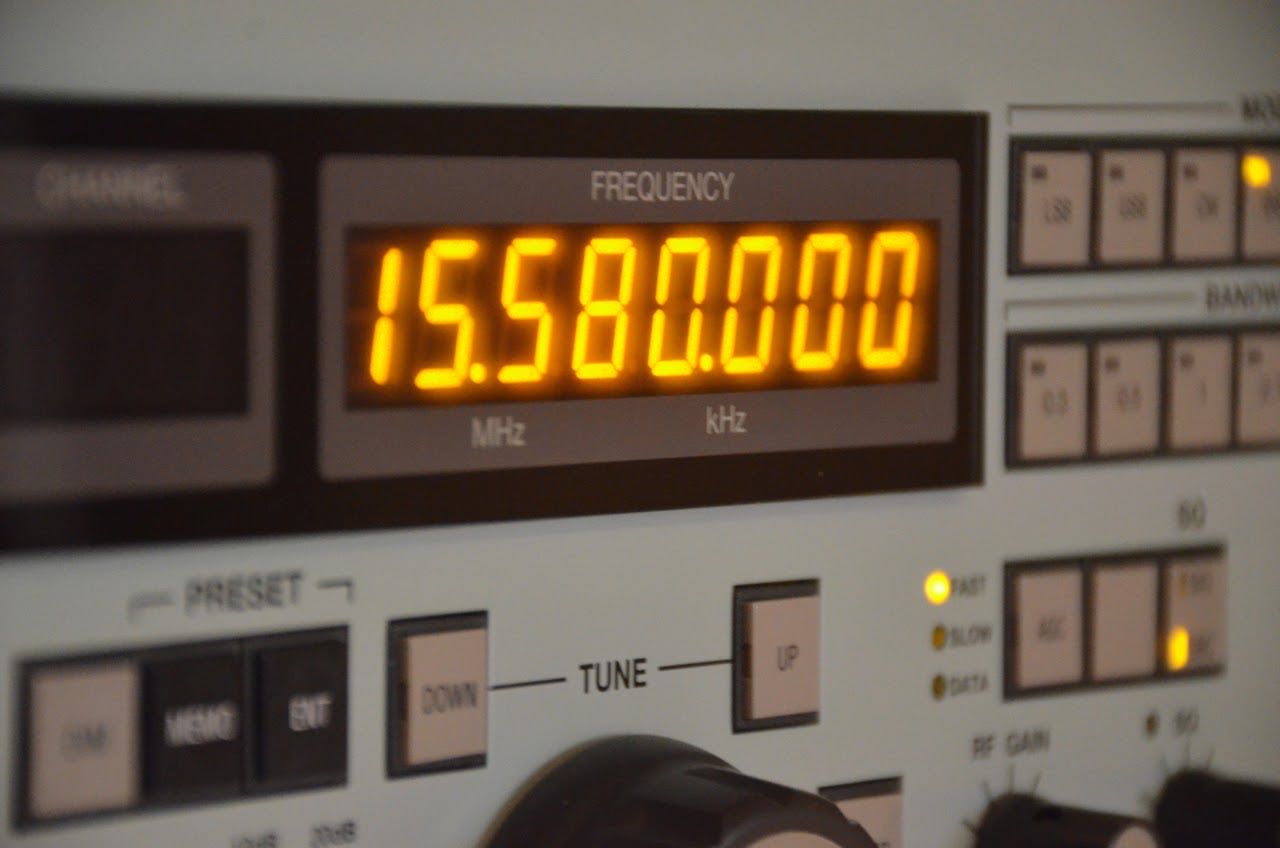
Benchmark legacy tabletop receivers and modern Software Defined Radios (SDRs) typically have solid, effective sync detectors. Indeed, I rarely have the AM synchronous detector disengaged on my WinRadio Excalibur–that particular SDR and application enhance audio fidelity through sync detection.

I find that I use sync detection less with my Airspy HF+ Discovery and SDRplay RSPdx, for example, because the OEM applications natively does a brilliant job managing unstable signals.

In terms of portables, I’ve always considered the sync detector of the Sony ICF-2010, Sony ICF-SW7600GR, and PL-660/PL-680 to be pretty solid. I’m sure readers can suggest even more models.

Is sync detection an essential feature on a portable radio?

Not for me. But I do admit that I value the radios I own that sport a good sync detector.

For some SWLs and DXers, however? It might very well be a deal-breaker if a radio doesn’t have a sync detector, or if its sync detector doesn’t function well.

What do you think?

Is the lack of sync detection a deal-breaker for you? When do you employ sync? Please comment!

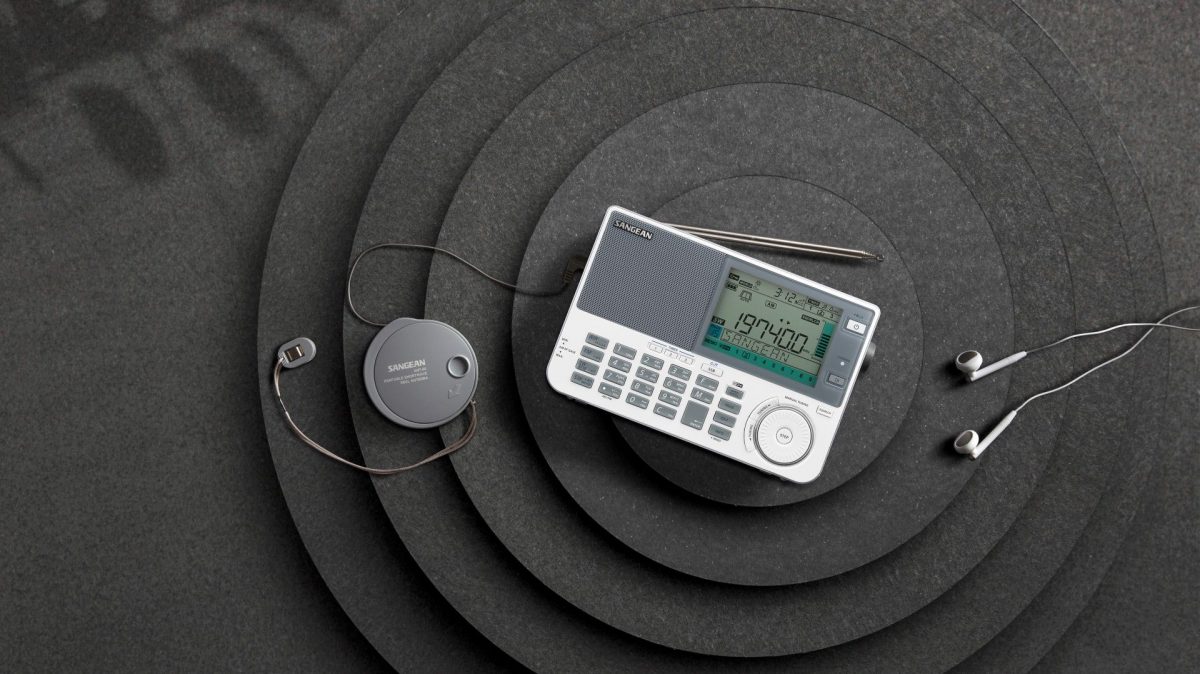
Stephan notes a few issues with his first production run Sangean ATS-909X2

Update: Please read this comment from Sangean America. It seems the receiver Stephan received was actually a pre-production model that shouldn’t have been sold to him. Sangean has replaced his radio with one from the first production run. 

Many thanks to SWLing Post contributor, Stefan, who recently shared two descriptive comments about issues his new Sangean ATS-909X2 is exhibiting. I’ve edited both comments together below:

I purchased [my Sangean ATS-909X2] from Sangean Europe and I am totally disappointed. I know that my radio is from the first production batch and I really hope that Sangean will address the following issues:

1. When I switch from FM to MW/LW/SW, I lose reception completely on these bands. However, FM works as expected, regardless from which band I switch back to it. To restore reception on the affected bands, I have to turn off the radio for a few seconds.

[Stefan then provided the following update:] Note [in this audio clip example the] first time I had to restart the radio two times to restore reception.

2. Lots of tones across all the bands, except FM. In fact, every receivable station has at least a minor tone. I can’t judge if these tones are interferences coming from internal components, such as the display, or there are oscillators related. If you are interested I can record some audio samples. Video is not possible because I’m visually impaired.

[Stefan shared the following update:] I am pretty confident to say that most tones across the bands are not generated by internal components. There are some birdies here and there, especially when I touch the screen, but these are acceptable. I suspect that it is something wrong with signal demodulation. I can get that tone even on strong local stations, while the sensitivity is set to minimum.

[…]The environment where I made these recordings is very noisy, but I tried the radio outside and, even if reception is much better, that tone on the affected bands is always present.

Below [is an audio sample] demonstrating that annoying tone on MW (LW, SW and air band are also affected):

3. The following one is not so important: The upper part of the LW is totally deaf. I can’t receive anything above 300 kHz. Tried some non-directional beacons from the nearest airport, but no luck. I also tried to induce some interference from my mobile phone, but I can’t generate any noise. Very interesting…

4. Frequency calibration is off by 2 kHz. For example a station on 540 kHz sounds centered at 542.

5. I noticed a huge sensitivity drop on MW/LW (SW not tested yet) when the batteries reach the half of their capacity. I suspected that it was bad propagation, but tested this with another radio I have and turns out I was wrong. When batteries are full, the sensitivity is ok. When the batteries are a bit discharged, sensitivity on MW/LW begins to drop. I can admit that the sensitivity is correlated with battery voltage, but on this radio the dropping curve is unusually aggressive.

That’s all for now. This is not a review. These are my first personal observations on the new ATS 909×2. I think I should return the radio for a product exchange and try another unit after a few months or maybe even for a refund, I still have not decided yet.

Thanks so much, Stefan, for taking the time to share these notes with us.

I’ll admit that this is discouraging if these issues are present in all of the ATS-909X2 units from this production run. Your points 1 and 2 are big ones. I would not enjoy hearing those het-like tones in my received audio. It sounds like it’s ever-present in AM mode regardless of frequency. The drop-off in sensitivity when toggling FM? That’s also unacceptable. These bugs should have been discovered and addressed during Alpha/Beta testing which leads me to believe it could very well be an issue with the first production run (and lack of QC check before shipping).

Issue number 5 on your list is actually a criticism of the original ATS-909X as well.

Please keep us informed, Stefan, and thanks again. I know our contributor, Dan, has an ATS-909X2 on order in North America and I’m sure we’ll hear from him once he receives his unit.

Any other ATS-909X2 owners out there? Please feel free to comment.