Category Archives: Shortwave Radio

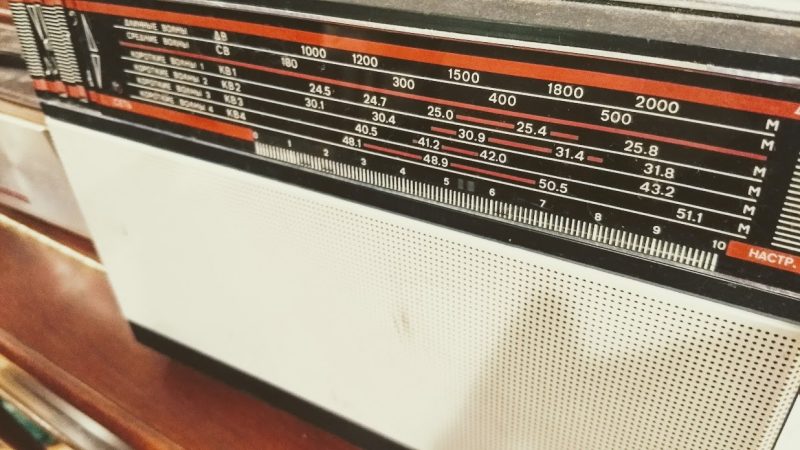
Help Mark identify this radio in The New Avengers

Many thanks to SWLing Post contributor, Mark Hirst, who writes with another mystery radio to identify:

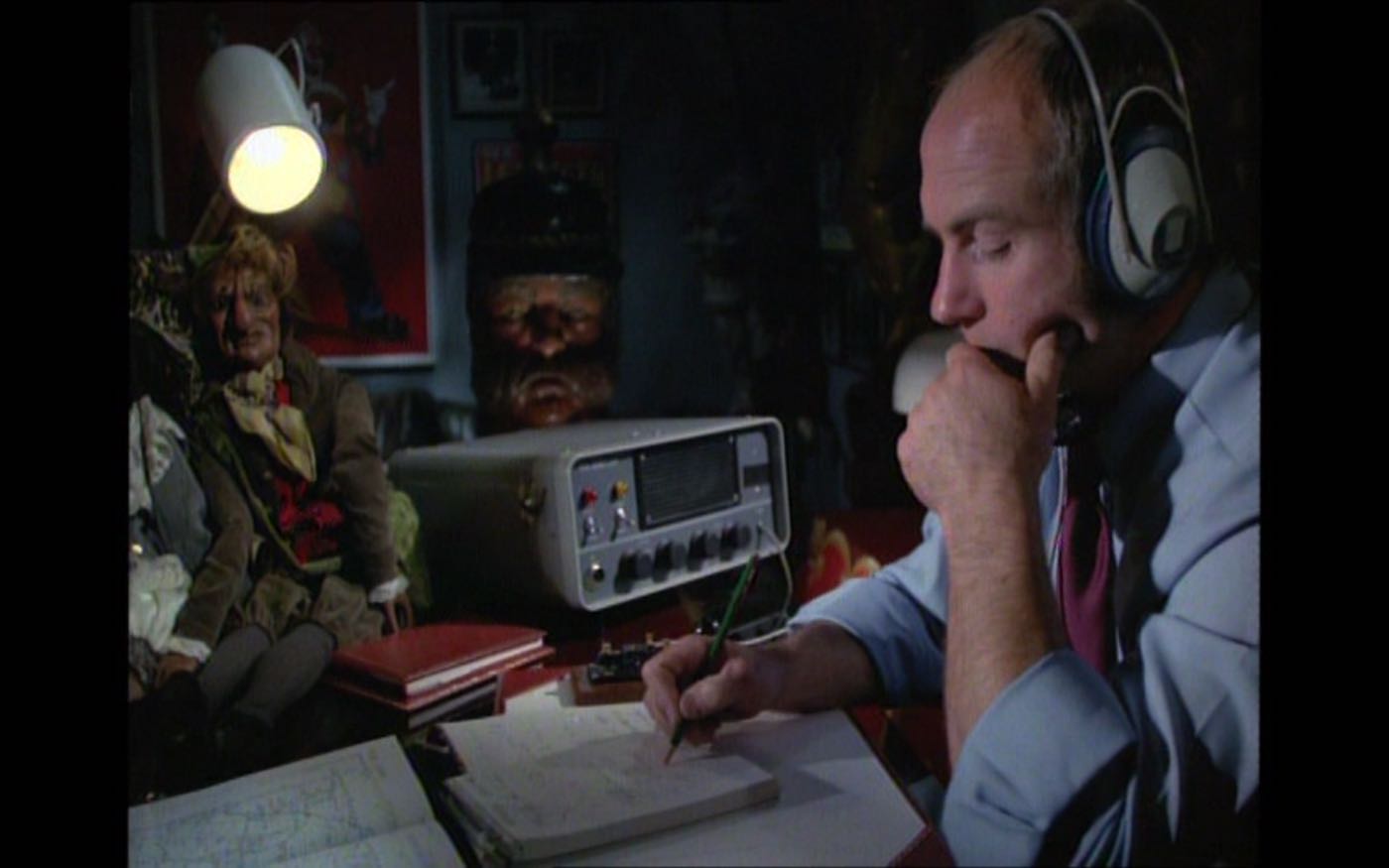
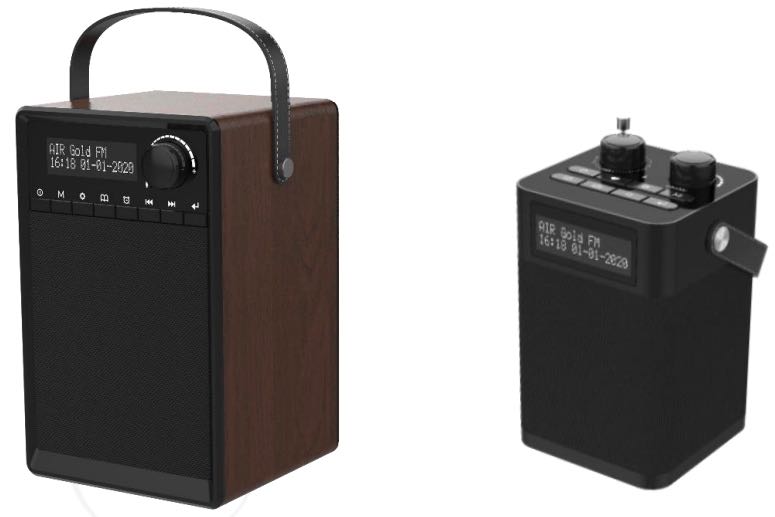
This radio (see photo above) is featured in the mid 1970’s TV show ‘The New Avengers’, an episode called “To Catch a Rat”. Mysterious morse code messages are being intercepted in this scene.

Can you help Mark identify this radio model? Is it even a radio or is it simply a speaker? Please comment if you can ID this one!

I’ll add this post to our (massive) archive of radios in film.

Faulty TV to blame for 18 month broadband outage

Many thanks to SWLing Post contributor, Jeremy, who–in light of our recent discussions about RFI–shares the following news item from the BBC:

The mystery of why an entire village lost its broadband every morning at 7am was solved when engineers discovered an old television was to blame.

An unnamed householder in Aberhosan, Powys, was unaware the old set would emit a signal which would interfere with the entire village’s broadband.

After 18 months engineers began an investigation after a cable replacement programme failed to fix the issue.

The embarrassed householder promised not to use the television again.

The village now has a stable broadband signal.

Openreach engineers were baffled by the continuous problem and it wasn’t until they used a monitoring device that they found the fault.

[…]”Our device picked up a large burst of electrical interference in the village.

“It turned out that at 7am every morning the occupant would switch on their old TV which would, in turn, knock out broadband for the entire village.”

The TV was found to be emitting a single high-level impulse noise (SHINE), which causes electrical interference in other devices.

Mr Jones said the problem has not returned since the fault was identified.[…]

Click here to read the full story at the BBC.

Thank you for sharing this, Jeremy. I can guarantee that if the TV was emitting enough noise to interfere with broadband, it likely also affected the HF, MW, and LW radio bands!

What baffles me is the amount of time it took for the engineers to track down the source in such a small community. A skilled RFI engineer would have likely discovered what was causing the noise by looking at the spectrum analyzer–quite often the signal shape and frequency are indicators. In addition, a little signal “fox hunting” could have proven useful. With that said, noises aren’t always easy to locate and can travel along unexpected paths.

I certainly don’t blame the resident for remaining anonymous!

Guest Post: Spanish TV series “El Ministerio del Tiempo” prominently features Arganda del Rey transmitter site

Many thanks to SWLing Post contributor, Tracy Wood (K7OU), who shares the following guest post:


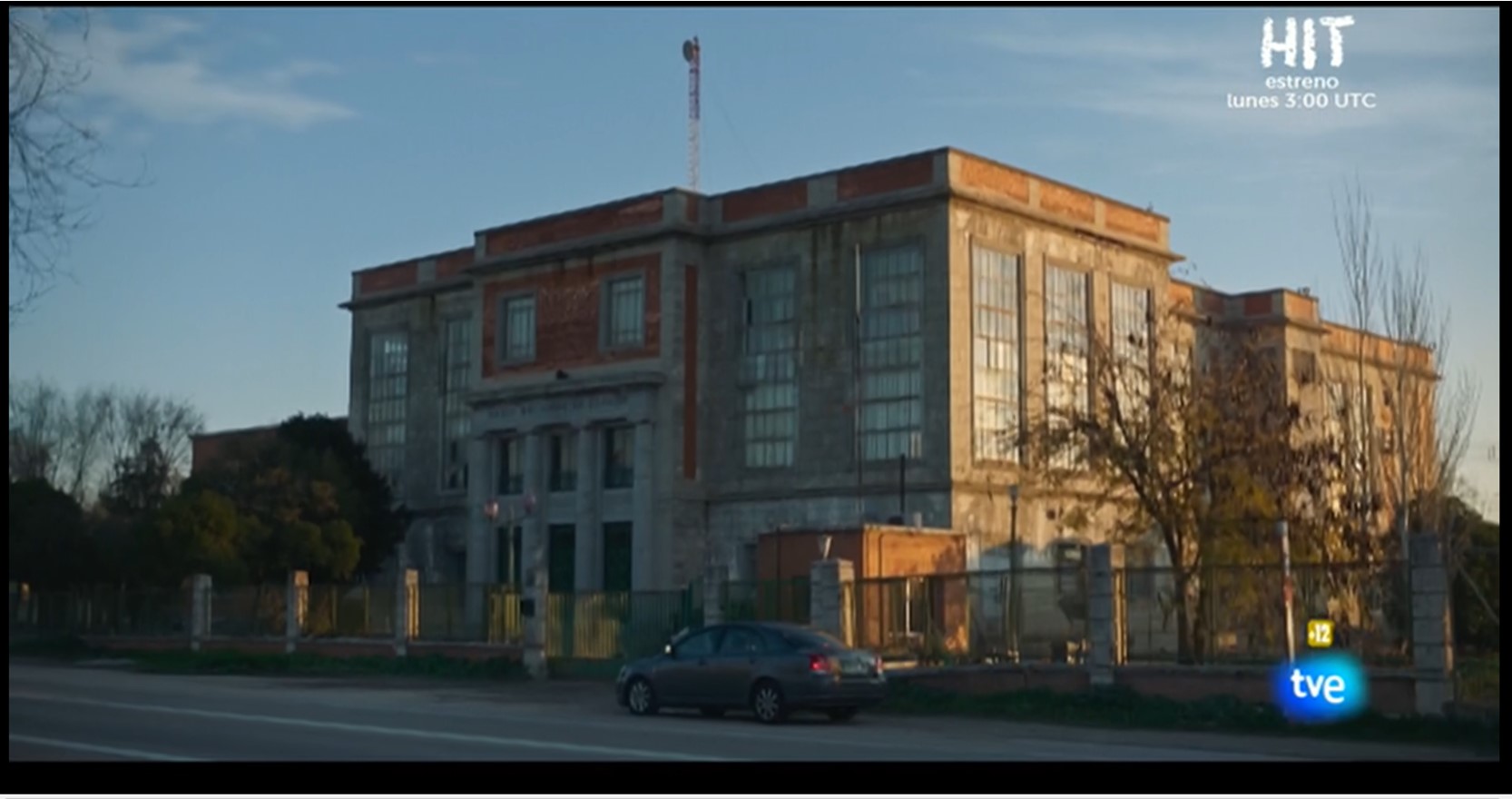
Arganda del Rey Transmitter Building

SWLing.com now takes “Spot the shortwave radio set in the movie or show” to new heights –

“Spot the shortwave radio station in the TV series”

The former Radio Exterior de España (REE) shortwave transmitter site at Arganda del Rey forms the backdrop for the fourth season of the hit Spanish TV series “El Ministerio del Tiempo” (the Ministry of Time).  The show’s premise – unlike today’s superpowers with their high-tech kinetic weaponry, Spain’s 21st century advantage lies in the nation’s time-traveling skills.

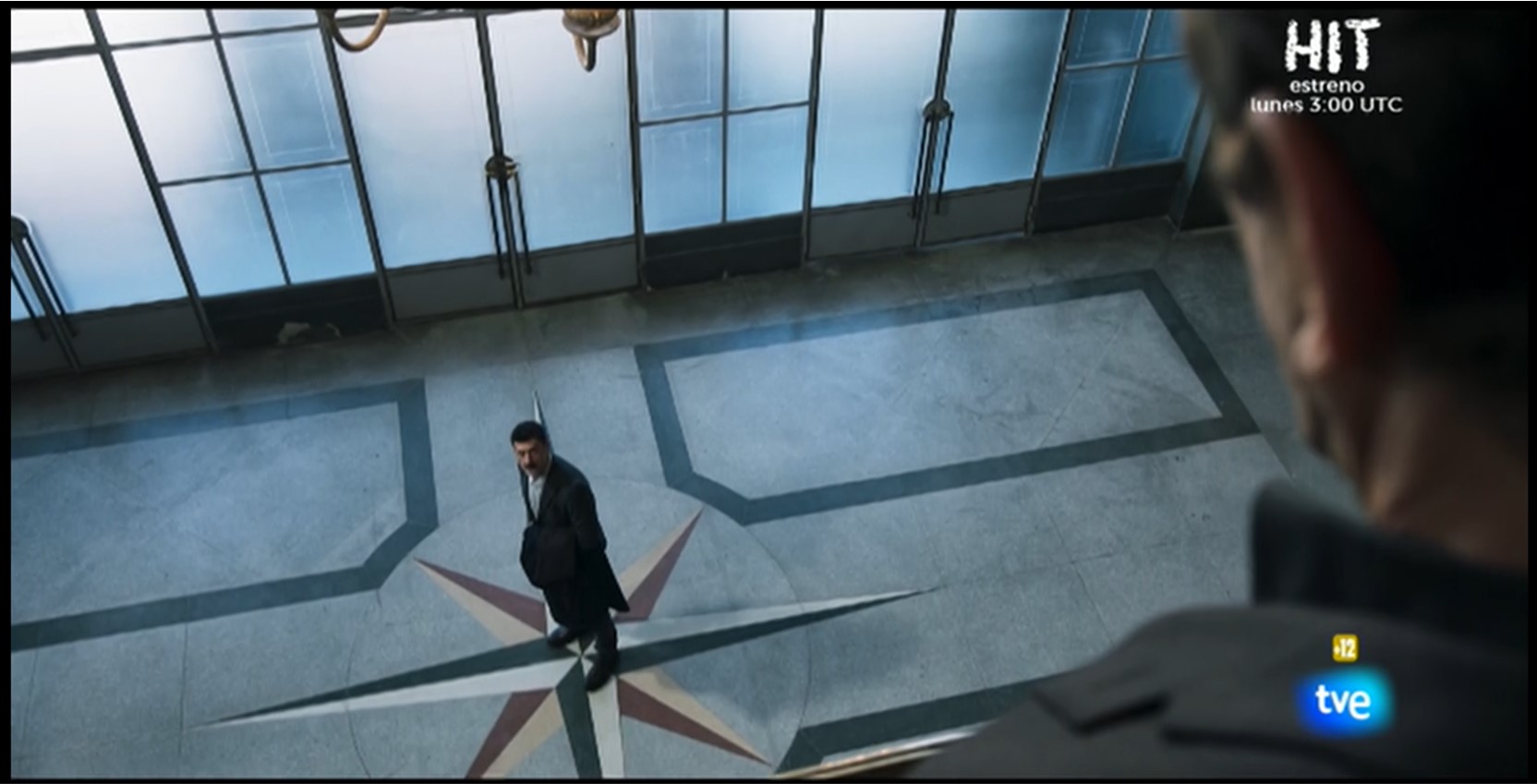
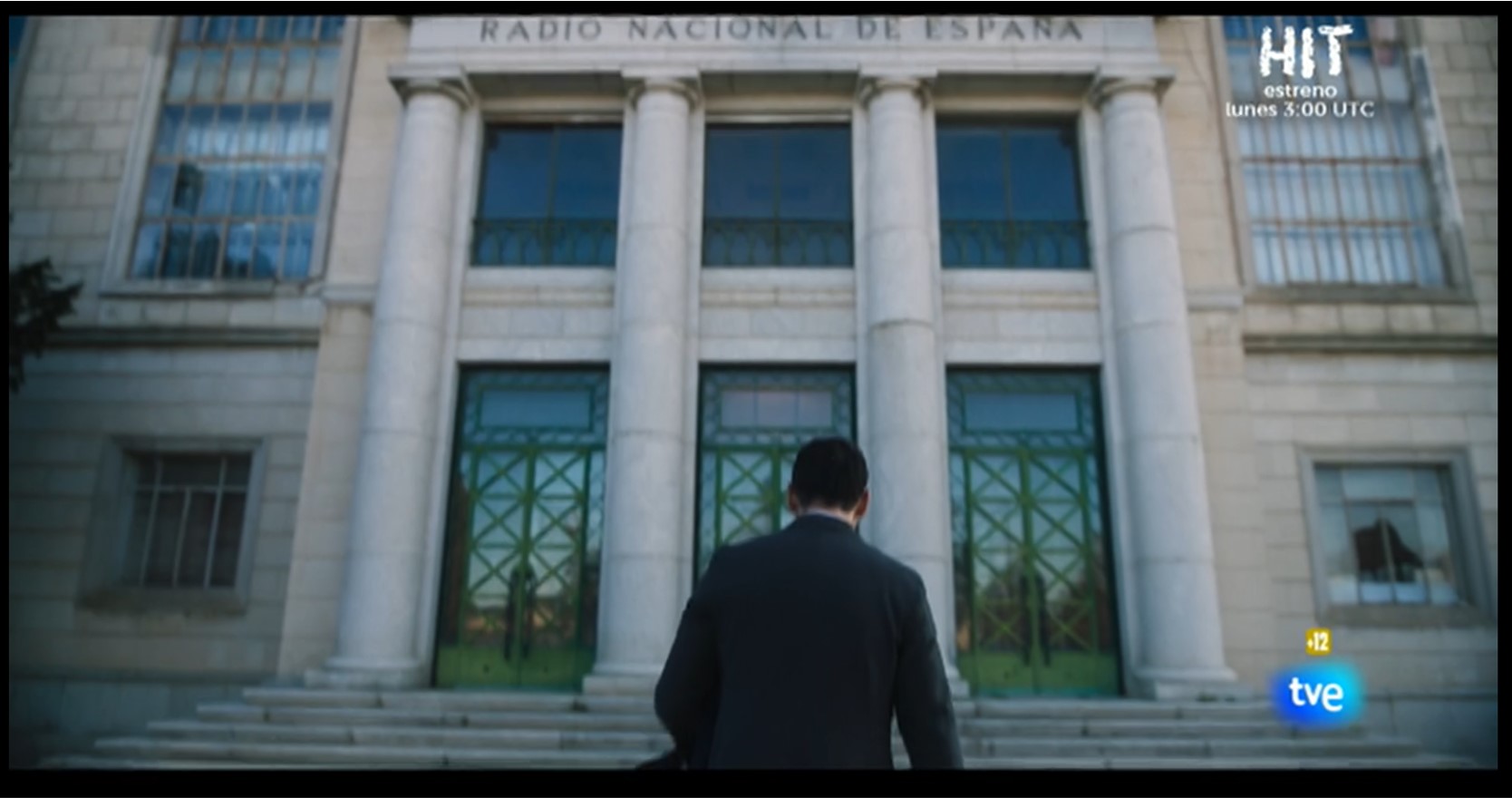
Grand Entrance looking down on actor

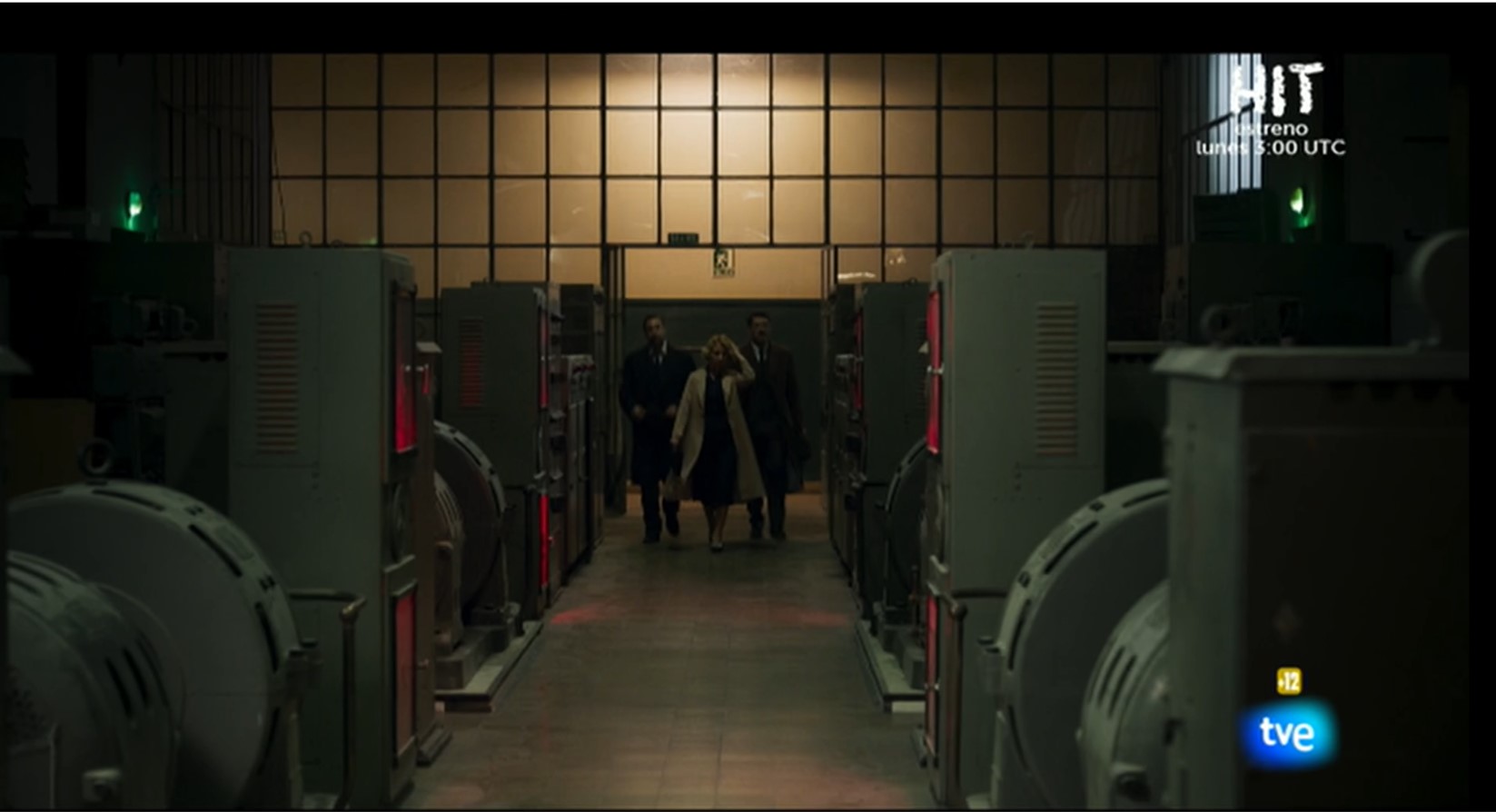
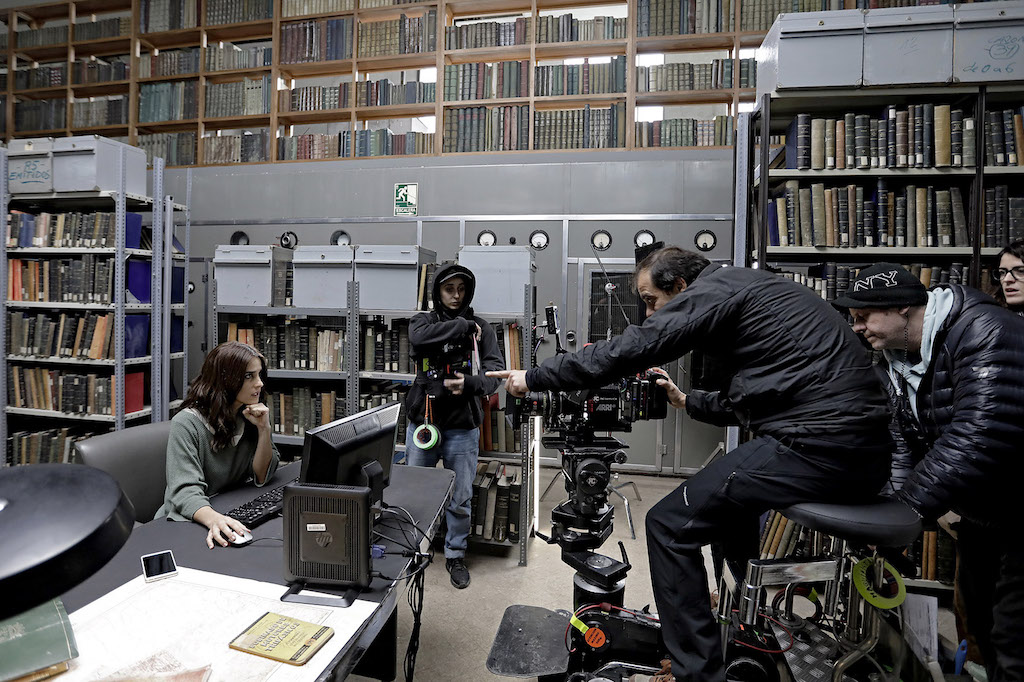
The show’s producers tip their hat to the “Centro Emisor de Onda Corta” facility as the Ministry of Time’s “headquarters” relocates this season to this historic broadcast complex.  The large engineering library, old shortwave transmitters, electric rectification hardware and even antenna field form a ready-made stage.

Power rectification units

Up into the early 1990’s Arganda del Rey served as a shortwave and medium wave site.  When all the shortwave services finally migrated over to Noblejas (40 km SE) the Arganda del Rey center continued as the long-standing medium wave location for Radio Nacional de España’s Radio 1 (585 kHz 600kw) and Radio 5 (657 kHz 50kw).  Arganda is now completely inactive with the last transmissions being DRM tests on 1359 kHz with 10 kilowatts. The facility was replaced by Madrid’s Majadahonda site.

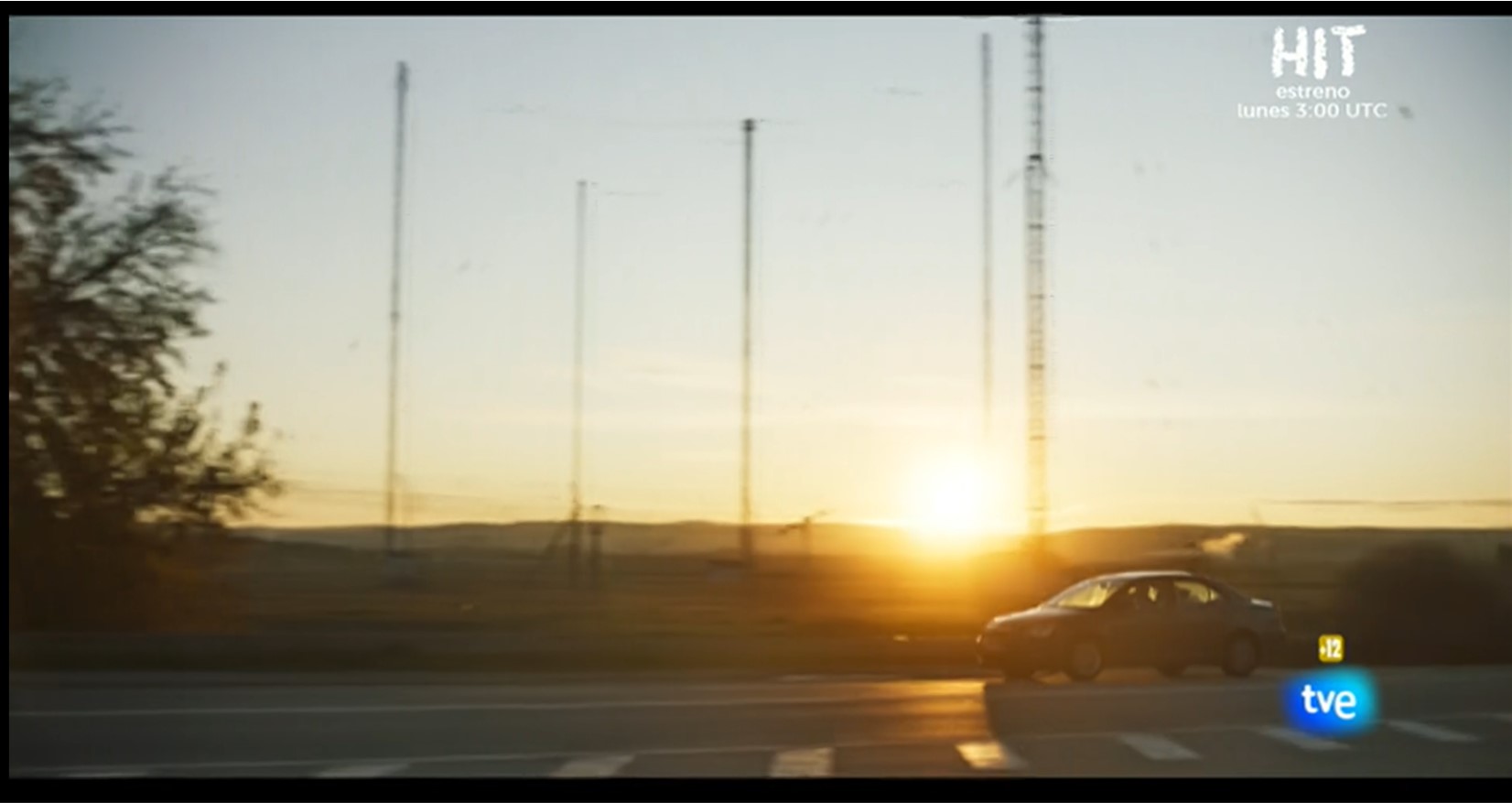
Ministerio de Tiempo viewers first get a hint of the radio connection as the character “Alonso de Entrerríos“ (played by José Ignacio “Nacho” Fresneda García) drives towards the new headquarters.  In the background we see the old Radio 5 antenna array.    As the character Alonso approaches the building he looks up and sees the historic “Radio Nacional de España” lettering above the building entrance thus confirming the “Headquarters” original purpose.

Cross Dipole Antenna

A DXer might mistake the Radio 5 array for a shortwave NVIS antenna but instead it is a rare medium-wave cross-dipole arrangement; it was also this antenna that RTVE used for the DRM tests.  The only remaining shortwave antennae at Arganda del Rey are some abandoned log-periodics which support a growing stork colony.

Satellite TVRO hobbyists also may recognize the “Arganda del Rey” municipality.   HISPASAT has established its main uplink facility in a nearby industrial park in this same Madrid suburb.

Radio textbooks and HF transmitter in background…

Many thanks to DXer Pedro Sedano, General Coordinator of the Asociación Española de Radioescuchas (aer.org.es), for confirming the complete abandonment of Arganda del Rey from an RF-perspective.  Also contributing is Ulis Fleming, K3LU, who several months earlier identified a NO-DO newsreel that helped tie the pieces together.

Links

An English-language description of the facility is here:

https://www.esmadrid.com/en/tourist-information/centro-emisor-onda-corta-rne-arganda-rey

“ Located on the Chinchón road, alongside the Arganda Bridge, this former  Radio Nacional de España building, opened in 1954, is today popular for being the new headquarters of The Ministry of Time in its fourth season, the successful TVE series, as well as having appeared in other productions, such as a post office in Velvet Collection (Movistar +), and as the Medical Research Centre in La Valla (Antena 3).”

“The building, now abandoned, forms part of a set of buildings located on both sides of the road  in which RNE had the headquarters of the medium and short-wave radio stations, houses and warehouses, whereby the most representative is this monumental property that was home to the short-wave radio station. “

“The building was designed by the architect, Diego Méndez, following the guidelines of classic architecture from the Franco era. Inside, the entrance hall stands out, a square room decorated with polychromatic marbles, presided by an impressive staircase with two flights of stairs, which is also in marble.  On the first floor, there is all of the machinery for generating the necessary voltage and current for the short-wave transmitters, and the third floor has a library with important telecommunications books and articles.”

LAT-LON:    40°18’47.09″N     3°30’34.95″W

Show Wikipedia URL (in English):

https://en.wikipedia.org/wiki/El_ministerio_del_tiempo

Additional URLs  (all in Spanish)

  1. Series Website:  https://www.rtve.es/television/ministerio-del-tiempo/
  2. A “NO-DO” newsreel showing the 1954 inauguration of two 100-kw shortwave transmitters and the building interior in context. https://www.rtve.es/filmoteca/no-do/not-604/1481595/
  3. Site overview with links to a four-part video tour. https://historiatelefonia.com/2019/07/12/centro-emisor-de-onda-corta-radio-nacional-de-espana-en-arganda-del-rey/
  4. RTVE publicity photos showing building and interior set (with shortwave transmitter in background) https://www.panoramaaudiovisual.com/wp-content/uploads/2020/04/MdT_EdificioRNE_DavidHerranz.jpg https://www.panoramaaudiovisual.com/wp-content/uploads/2020/04/MdT_RNE-archivo1_DavidHerranz.jpg
  5. RTVE press release about the Centro Emisor https://www.rtve.es/rtve/20200401/ministerio-del-tiempo-rueda-integramente-escenarios-naturales-su-cuarta-temporada/2010843.shtml
  6. Site Description (Historic) with Interior/Exterior Views http://archivo.ayto-arganda.es/patrimonio/fp.aspx?id=23
    http://archivo.ayto-arganda.es/patrimonio/BusquedaPatrimonio.aspx?id=23#

— Tracy Wood (K7OU)


Thank you so much, Tracy, for putting this post together!

Now I wish my Spanish comprehension was better as I’d love to watch this show–sounds like a fascinating story line! And the transmitter site is pure radio eye candy! Brilliant!

Post-storm power outage leads Emilio to find the RFI-spewing source of his problems

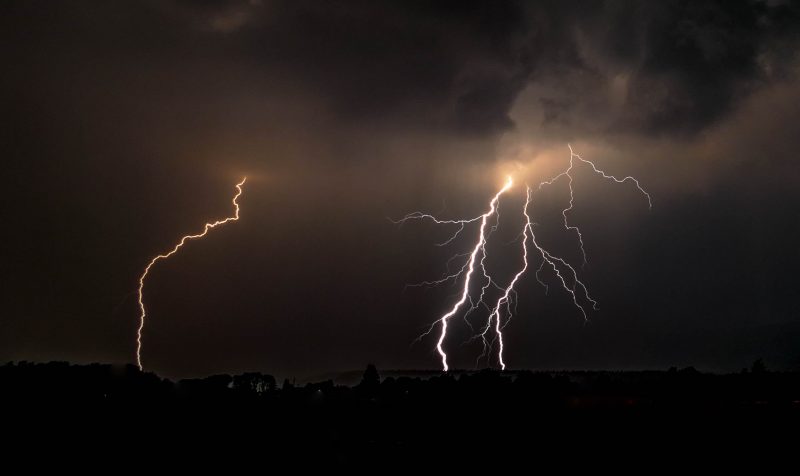
Storm with lighteningMany thanks to SWling Post contributor, Emilio Ruiz, who shares the following guest post:


Apprehending an RFI-generating monster!

At the beginning of the year, I was sad because, at home, an awful RFI noise appeared. The next few months the noise increase until S9!!. Day and night my receivers and my feelings were so dampened with this terrific RFI–only the lower Broadcast Band (900 to 540 Khz) was relatively immune to it.

Yesterday, we had a storm and the mains electricity service went off, so I connect a 12 volt battery to my RT-749b military surplus transceiver and the received signals were very clean like the “good old days”.

(Above: Listen W1AW loong distant from my QTH in Chiapas Mexico).

When the power electricity come back on, so did the RFI too!!

(Above: W1AW gone)

Remembering the recently publish post in SWLing Post about RFI, I did some testing by
cutting the electricity to my home (the main switch) and the RFI was gone!! So I discovered the RFI lives in my house–not in the outside wires!!

I put batteries in my old shortwave portable radio and searched (like Ghostbusters) all outlets contacts, one by one, connect and disconnected each device.

And I found the guilty party!

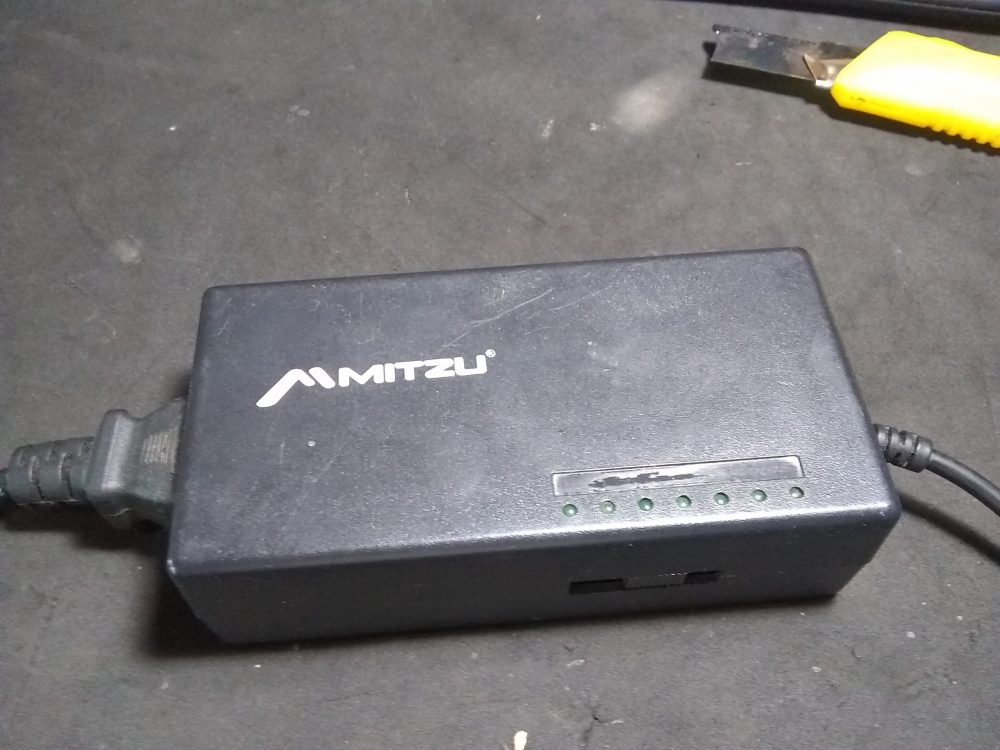
Exhibit A: The Mitzu laptop power supply

On December 2019, the power supply of my son’s laptop broke, so I bought a cheap substitute.

The RFI produced by this little monster could be heard at a distance of about 200 meters from my QTH!!! (Much like an old transmitter spark gap–!)

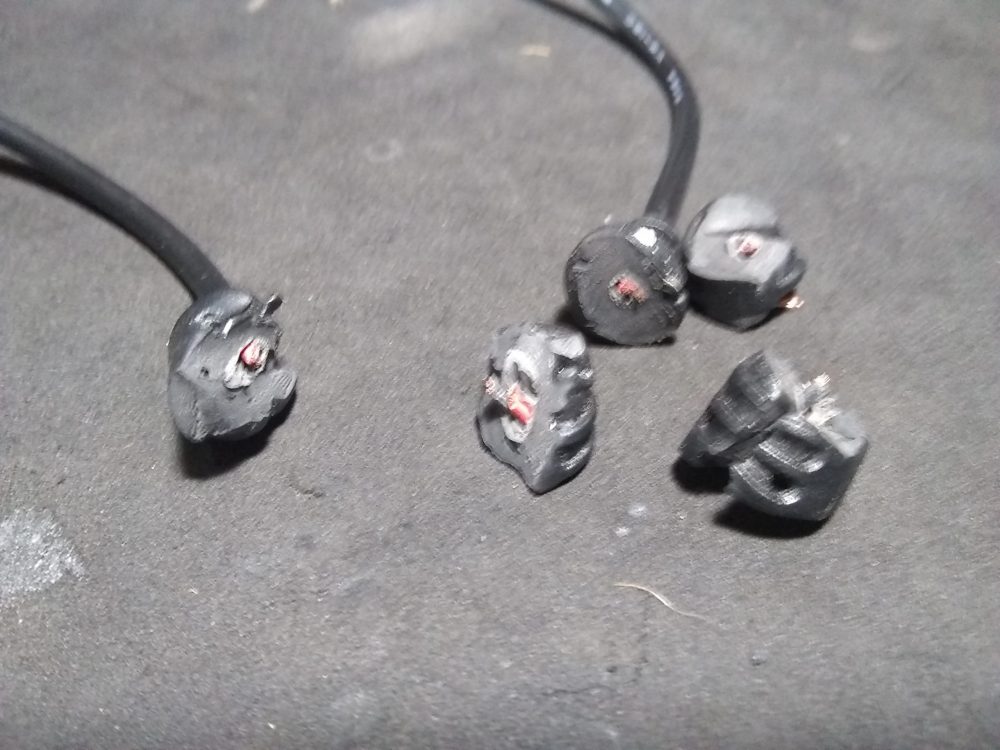
Even this cheap power supply apparently featured ferrite toroids on the wire but turns out it is fake!! It was only a plastic ball!

Exhibit B: Fake toroids!

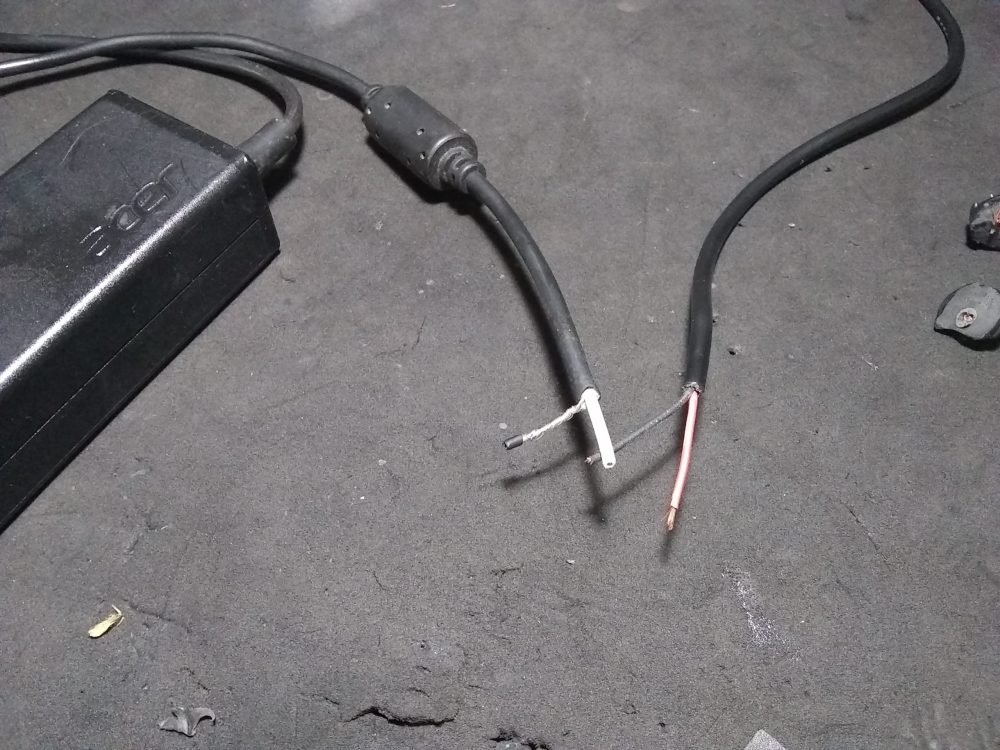
The wires were also not shielded. No doubt one of the worst switched-mode power supplies I could have purchased.

Exhibit C: The Mitzu RFI generator wire without shield, only pair wires!

I found a old Acer power supply with same specs and I replaced out the RFI monster one.

And now? The shortwave bands are clean again.

(Video: Testing my Kenwood R-600 rx with Radio Exterior de España… plugging and unplug the Mitzu monster RFI generator).

So I wanted to share what happened to me, so perhaps it can be useful for other SWLing Post blog friends.

Watch these little switched mode power supplies from all devices in your home. Replace them if you detect RFI levels that harms SWLing. Consider disconnect all devices (vampire consumption–or phantom loads) if not in use; the radio waves and electric bill will be grateful to you!


WOW! What a difference! Emilio, that was great investigative work on your part. It’s as if that switching power supply was specifically designed to create RFI! No shield and fake toroids? That’s just criminal in my world! 

Thank you so much for sharing your story. Hopefully, this might encourage others to investigate and apprehend their own local RFI monsters!

(And by the way, Emilio, I love that RT-749b military transceiver!)

New DRM portables announced at IBC 2020

Many thanks to SWLing Post contributor, Ed, who writes:

SWLing Post readers might be interested in reading the Digital Radio Mondiale Newsletter of September 2020, which covers DRM developments announced at IBC 2020.

These include DRM transmitter developments and deployments, and lots of new DRM receivers–such as eight (8) AM/FM/DRM portables, (1) AM/FM/SW/DRM portable, an automotive AM/FM/DRM model, a low-cost automotive AM/FM/SW/DRM model, and an AM/FM/SW/DRM development module with “High quality Tuner Frontend and Audio DAC” from Starwaves in Germany.

URL for newsletter: https://us10.admin.mailchimp.com/campaigns/show?id=5196729

URL for PDF describing new DRM receivers: https://www.drm.org/wp-content/uploads/2020/09/[email protected]

Thank you for the tip, Ed!

Radio Waves: Digital Broadcasts in South Africa, Cold War Broadcasting in Late Soviet Era, Possible Ban on RFI Producers in Sweden, and Ham Radio on the ISS

Radio Waves:  Stories Making Waves in the World of Radio

Because I keep my ear to the waves, as well as receive many tips from others who do the same, I find myself privy to radio-related stories that might interest SWLing Post readers.  To that end: Welcome to the SWLing Post’s Radio Waves, a collection of links to interesting stories making waves in the world of radio. Enjoy!

Many thanks to SWLing Post contributors Paul, Michael Bird,  William Lee, Rob PE9PE, and the Southgate ARC for the following tips:


SABA partners with T&A and Sentech to deliver digital radio in SADC (Advanced Television)

The Southern African community will soon enjoy digital audio broadcasts, thanks to an initiative lead by a South African based entity, Thembeka & Associates that has taken the lead in implementing the much anticipated interactive radio solution.

This was announced by the Secretary-General of the Southern African Broadcasting Association, SABA, Mr Cecil Jarurakouje Nguvauva, following the conclusion of initial agreements between the participating entities. Welcoming the digital radio solution to the SADC region, Nguvauva emphasised the need for rural communities to be engaged fully in the developmental agenda of the respective African governments if the planned development is to add value to the lives of the most disadvantaged members of our society.

Chief Executive Officer of Thembeka & Associates, Madam Thembeka Kaka has hailed this initiative a huge success for the continent and a dream come true for her institution. Madam Kaka added that as a member of the National Committee on ICT Chamber Accessible Broadcasting for People Living with Disabilities, she has passionately driven this project for a long while. Madam Kaka added that “Following the announcement of the Policy Directive that has introduced Digital Sound Broadcasting by the South African Minister of Communications & Digital Technologies, Stella Ndabeni-Abrahams in July this year. I have since realised that greater opportunities have emerged for the broadcast industry as a whole. And this initialises an evolution of radio broadcasts going forward,” she stated.

Sentech’s Meyerton Radio Shortwave site in South Africa will carry the Digital Sound Broadcasting Shortwave Transmission from the broadcast centre in Southern Africa to the rest of SADC countries.

For the initial stage, only six countries are earmarked for the coverage, before it is rolled out to the rest of the SADC Region. The targeted countries are Namibia, Botswana, Lesotho, Eswatini, Zambia and South Africa. The rapid deployment is planned to work alongside the existing analogue radio service, which will seamlessly transition to a fully-fledged Digital Radio transmission in SADC. The receivers to be deployed will have the capabilities to receive and transmit both Analogue and Digital radio signal on FM and AM.

The primary purpose of the initiative is for governments and various newsmakers to urgently provide vital information to all citizens, especially the rural, remote and marginalised vulnerable communities. The outbreak of COVID-19 has amplified the need for this undertaking, that has highlighted risk areas in our various communities. Particular emphasis will be given to the following sectors in the respective communities: Education Sector; Health Sector; Socio-Economic factors; Gender issues; Youth & Disability.[]

Listening Out, Listening For, Listening In: Cold War Radio Broadcasting and the Late Soviet Audience (Wiley Online Library)

Abstract

This article interrogates the well?known phenomenon of western broadcasting to the Soviet Union from the little?known vantage point of the audience’s sonic experience and expression. I use the example of the BBC’s main popular music program in the late USSR, Rok posevy, with its remarkable presenter, Seva Novgorodsev, to explore fundamental questions about the who, how, and why of listening to the so?called “enemy voices.” The popularity of Novgorodsev’s show, I argue, is best understood in the context of the Soviet soundscape and, in particular, of longstanding Soviet media practices, including radio jamming and Soviet ideologies of the voice. Novgorodsev’s Rok posevy presented listeners with a powerful alternative sociocultural space, one that promoted models of authority and community very different from Soviet norms and, indeed, antithetical to Soviet norms.[]

Swedish Electrical Safety Agency threatens ban on sale of optimizers (Southgate ARC)

In Sweden the Swedish Electrical Safety Agency may ban the sale of optimizers used in Solar Panel installations due to the high level of RF Pollution they produce

A translation of an SSA post reads:

The Swedish Electrical Safety Agency wants to remove optimizers that spread interference. “It should be easy for the electrician to do the right thing.”

– We want to remove all solar cell products that spread disruption from the market. It should be easy for the electrician to do the right thing, and if you choose CE-marked gadgets and follow the manufacturer’s instructions, the system should be nice, says Martin Gustafsson, who is an inspector in market control at the Swedish Electrical Safety Agency. reports of disturbing solar cells. In addition to radio amateurs such as Anders Ljunggren, the  mobile operator Telia is among those affected . The Swedish Electrical Safety Board has made inspection visits to disturbing facilities, and carried out a market review of optimizers and inverters from eleven different manufacturers.

“They take advantage of a gap in the standard and instead hide behind a general EMC standard.”

The report is not complete yet. However, one of the conclusions is that a number of manufacturers of interfering products have chosen not to use the standard developed for photovoltaic products, but which has not yet been harmonized by the European Commission.

– They use a gap in the standard and instead hide behind a general EMC standard, which does not make any demands on the dc side. This makes our evidentiary situation difficult. But if the disruption problems are not solved, the products can be banned from sale, says Martin Gustafsson.

Text:  Charlotta von Schultz – www.elinstallatoren.se

Thank you SM5TJH / Janne for the information
Source SSA https://tinyurl.com/SwedenSSA

New Ham Radio Onboard The ISS Is On The Air (K0LWC Blog)

Ham Radio operators have enjoyed making contact with the ISS for many years. The holy grail has always been talking to ISS astronauts on FM simplex (145.800) — but those can be rare chance encounters. Ham radio operators have also enjoyed slow-scan television (SSTV) broadcasts and APRS packet radio via the ISS digipeater. Now we get to work the world’s most expensive FM repeater thanks to the new InterOperable Radio System (IORS) installed on the ISS.

The InterOperable Radio System (IORS) replaces an ancient Ericsson radio system and packet module that were certified for spaceflight over two decades ago. The 5 watt HT that was aboard the ISS was getting worn out after many years of use. The Ericsson radio looks like something from a 1990s episode of Cops.

The new IORS was launched from Kennedy Space Center on March 6, 2020 onboard the SpaceX CRS-20 resupply mission. It consists of a custom space-modified Kenwood D710GA transceiver and an ARISS-developed multi-voltage power supply. The equipment was installed by NASA astronaut Chris Cassidy (KF5KDR).

New Kenwood D710G ‘Space Flight Edition’

The radio now being used is a Kenwood D710G and was engineered specifically for space flight. JVCKENWOOD USA and the ARISS worked closely to modify the D710G. The upgrades were performed by JVCKENWOOD and include:

  • Output power is hardware limited to 25 watts for the safety of the International Space Station
  • Custom firmware and menus tailored for operation onboard the ISS.
  • Higher output/high-reliability fan to allow continuous repeater operation.

Continuous fan operation is an important feature in space for the reliability of the radio. There is no convection in microgravity, so all heat-generating components need to be cooled by moving air or conduction. If the radio burns up, there isn’t a Ham Radio Outlet down the street to grab parts.[Continue reading the the full article at K0LWC’s blog…]


Do you enjoy the SWLing Post?

Please consider supporting us via Patreon or our Coffee Fund!

Your support makes articles like this one possible. Thank you!

NASA Science Live presents “Our Next Solar Cycle”

Many thanks to SWLing Post contributor, Paul Evans, who writes:

On Tuesday, September 15, 2020 Science at NASA had a presentation on the next solar cycle predictions.

It’s available on YouTube and other outlets without needing a login or Zoom serial number:

Fascinating! Thanks for the tip, Paul!