Shortwave listening and everything radio including reviews, broadcasting, ham radio, field operation, DXing, maker kits, travel, emergency gear, events, and more
According to AirSpy, the coupon code AWARDWINNING2019 will be activated “within a few hours.” I believe this might mean at midnight UTC because they had mentioned a November 26th activation date. Although the sale extends until December 2, 2019, AirSpy states that supplies are limited.
Last week, we packed the car and headed to coast of South Carolina.
The trip was a bit impromptu but through the creative use of hotel points, we scored a two bedroom ocean front unit with a fantastic little balcony.
The vacation gave me an excuse to test the new passive loop antenna my buddy Vlado (N3CZ) helped me build recently.
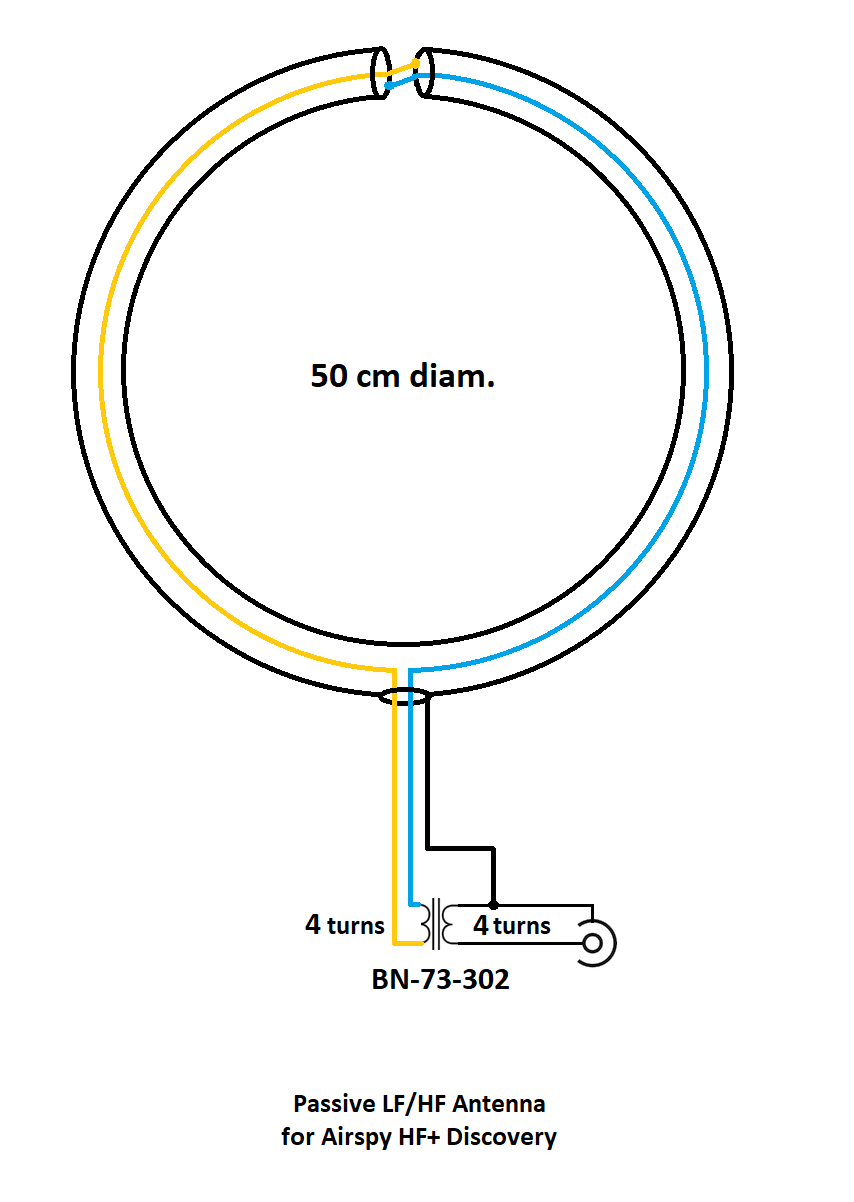
The loop design came from AirSpy’s engineer and president, Youssef Touil.
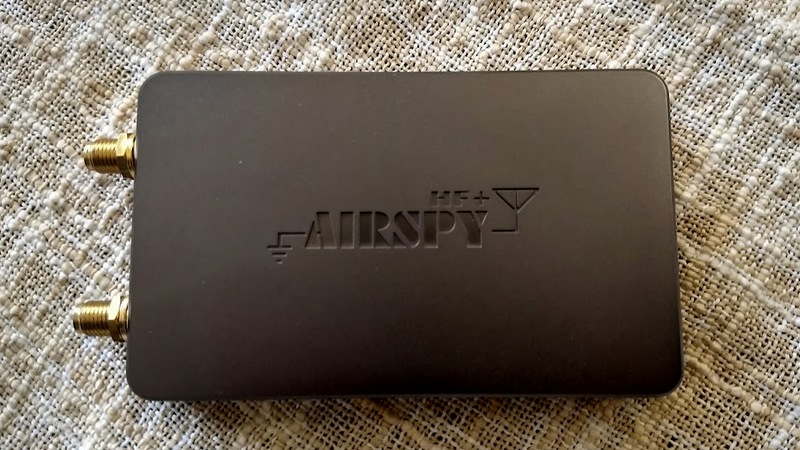
This passive mag loop takes advantage of the new AirSpy HF+ Discovery‘s exceptionally high dynamic range. Youssef had reported impressive results, so I had to build one.
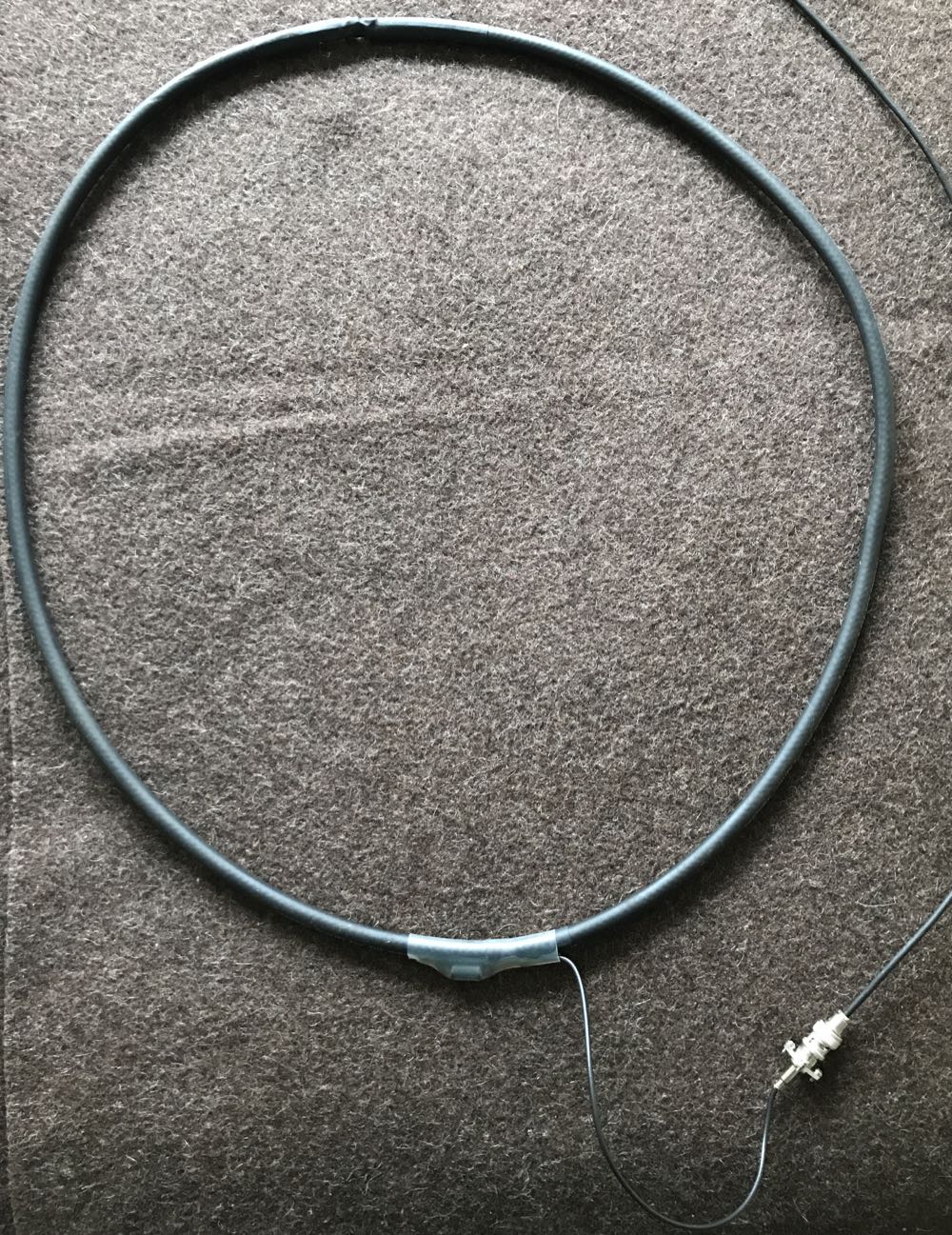
Vlado had a length of Wireman Flexi 4XL that was ideal for this project. The only tricky part was penetrating the shielding and dielectric core at the bottom of the loop, then tapping into both sides of the center conductor for the balun connections. Being Vlado, he used several lengths of heat shrink tubing to make a nice, clean and snag-free design.
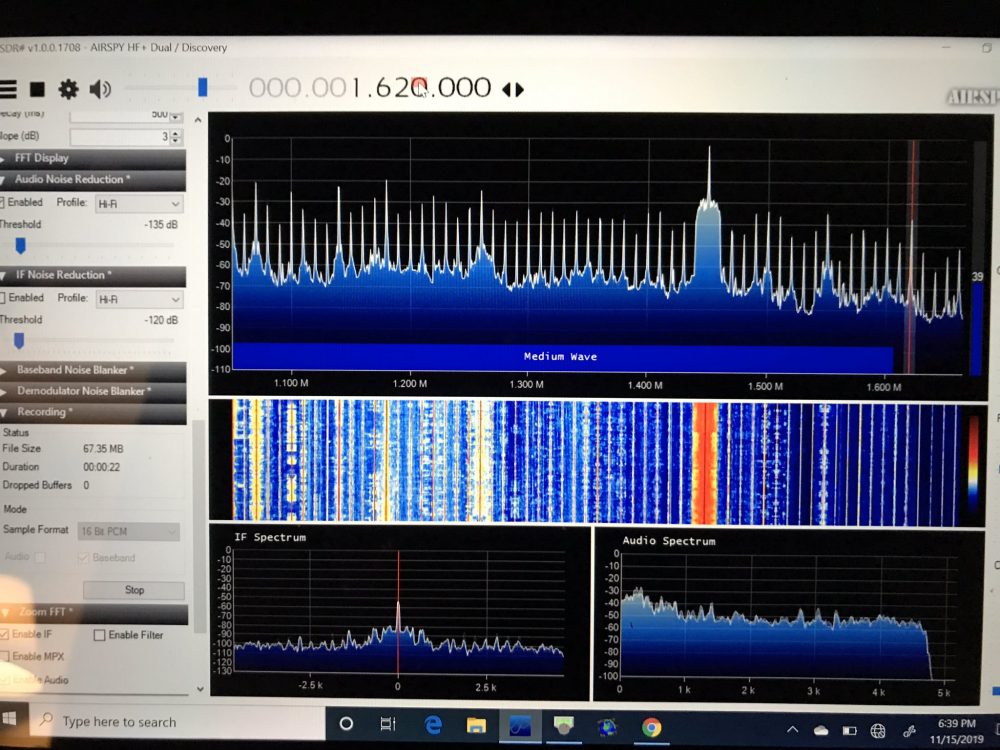
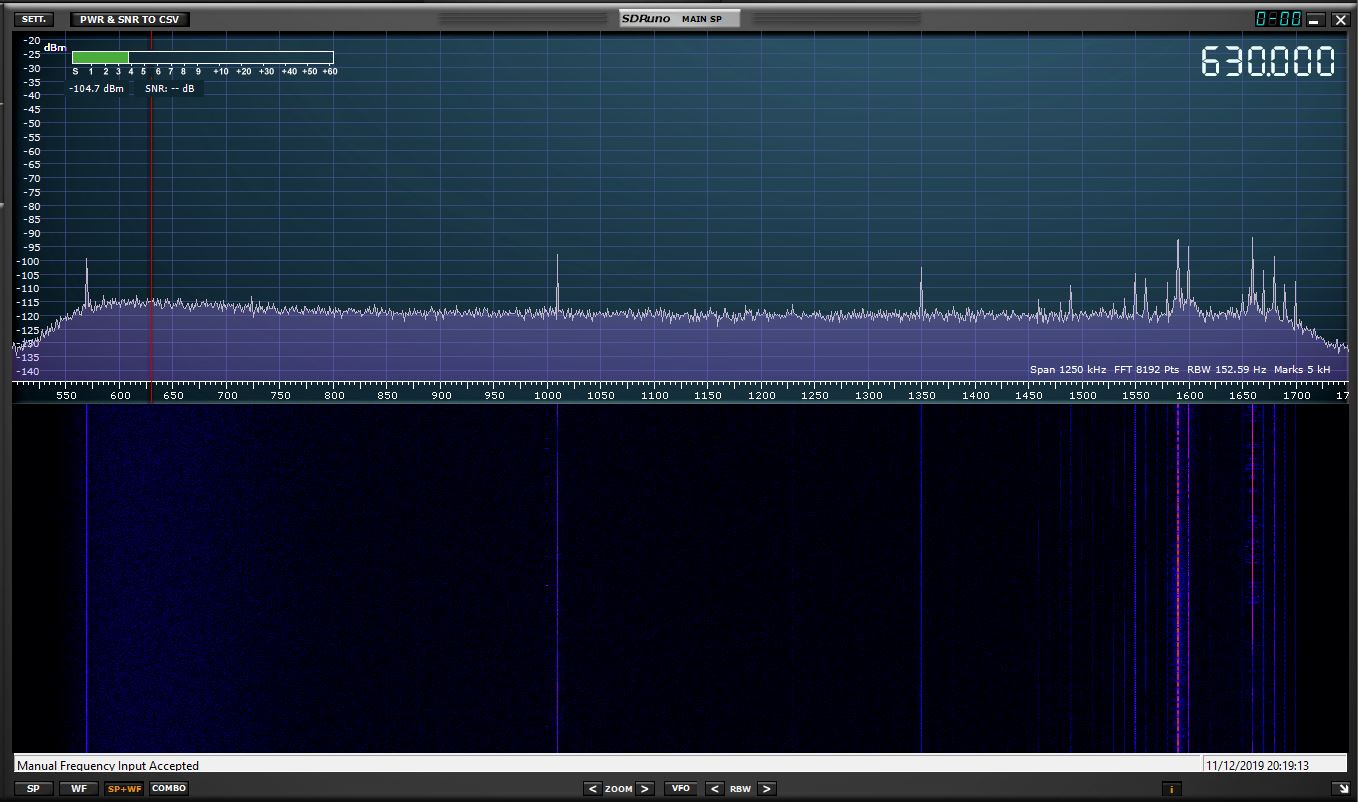
The results were truly exceptional. I spent most of my time on mediumwave from the hotel balcony because I was determined to catch a transatlantic signal.
Check out the spectrum display from my Microsoft Surface Go tablet:
Our ocean front hotel was inundated with noise, but I still managed to null out most of it and maximize reception using the passive loop. I simply suspended the loop on the balcony rocking chair–not ideal, but effective and low-profile.
Want to take a test drive?
If you’d like to experience this portable SDR setup, why not tune through one of the spectrum recordings I made?
The recording was made on November 17, 2019 starting around 01:55 UTC–I chose it at random and have yet to listen to it myself. You’ll need to open this file in AirSpy’s application SDR# or a third party SDR app that can read AirSpy .wav files.
Stay tuned…
I’m writing an in-depth report of the HF+ Discovery, my experiments with this setup and AirSpy’s soon-to-be-released passive loop antenna for the January 2020 issue The Spectrum Monitor magazine. Spoiler alert: I am truly impressed with the wee little AirSpy HF+ Discovery. It’s a powerhouse!
Many thanks to SWLing Post contributor, David Iurescia (LW4DAF), who shares the following announcement from Radio Romania International:
Dear friends, RRI continues its traditional polling of listeners on short wave, the Internet and social media, with a new challenge that, we hope, you will find interesting.
We would like to ask you which person you think left their imprint on the world in a positive way in 2019. We are preparing to designate, based on your options, “The Personality of the Year 2019 on RRI”. Will this person be a politician, an opinion leader, a businessman, an athlete, an artist, a scientist, or even a regular person with a special story? It’s up to you! We would also want to ask you why you picked that particular person.
You can send your answers, as usual, by commenting on our website, at rri.ro, by e-mail at [email protected], on our Facebook, Google+, Twitter and LinkedIn profiles, on WhatsApp at +40744312650, by fax at 00.40.21.319.05.62, or by post, at 60-64, General Berthelot Street, sector 1, Bucharest, area code 010165 (PO Box 111), Romania.
We recall that:
The “Personality of the year 2018 on RRI” was the German Chancellor Angela Merkel.
The “Personality of the year 2017 on RRI” was the Romanian tennis player Simona Halep, former no.1 in the WTA rankings and the “Personality of the year 2016 on RRI” was the American president Donald Trump.
The Personality of the year 2019 on RRI will be announced on January 1st, 2020.
Amateur Radios from the Past: The Index Labs QRP++
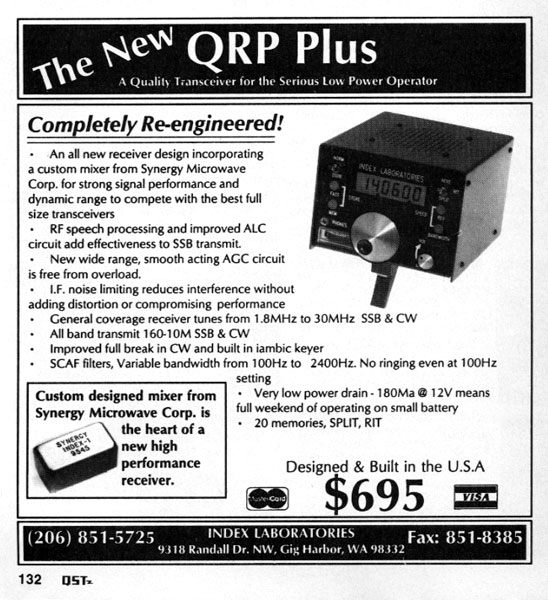
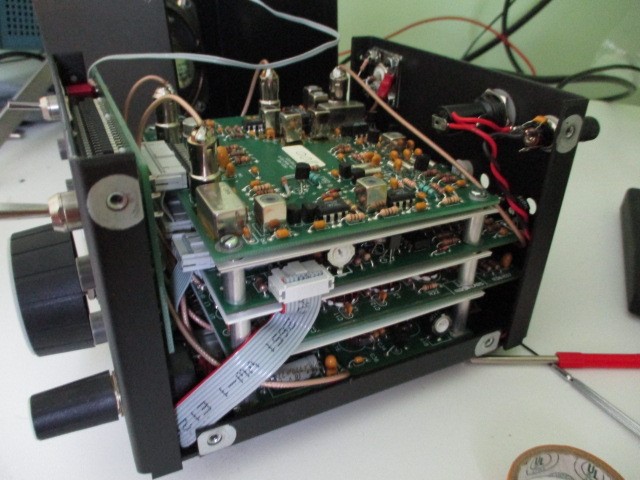
The Index Labs QRP ++ was an intriguing little radio manufactured back in the mid-‘90’s by Index Labs of Gig Harbor, WA. For those interested in QRP (low power operating, generally less than five watts output) this transceiver filled the bill perfectly. It supports CW and SSB, transmits on all WARC bands, covers 1.8 – 30 MHz receive, has full break-in CW and a built-in iambic keyer. It boasts 20 memories, weighs four pounds (perfect for portable operation) and measures 5.5 x 4 x 6 inches. It’ll run on a 12V 1.5 amp supply or a stout 12 volt gel cell. The internals (see second pic) are an engineering masterpiece with stacked circuit boards reminiscent of commercial rigs.
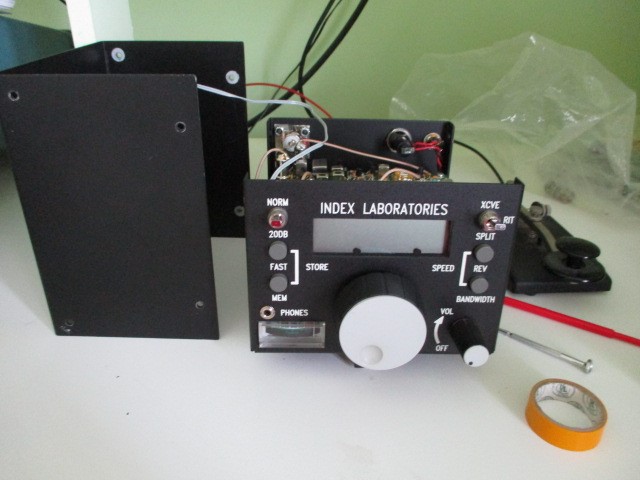
Index Labs QRP ++ on the test bench
I recently acquired one of these radios as I was heavily into QRP in the 1970’s while using a TenTec Argonaut 509 and vertical on our apartment house’s roof. Back then the sunspot numbers scored much higher than today and many contacts were made, most notably a CW contact with Japan with a paltry one watt. So for nostalgic reasons I had to have one of these QRP++ rigs even though more modern and sophisticated versions are available.
At the moment bench tested is being done prior to sending it into action. One important component needing replacement was the memory battery which was totally kaput. Interestingly, this battery not only keeps the 20 memories alive but also brought back to life the CB radio-style S-meter reminiscent of radios from decades ago. Other items on the testing “to do” list will be checking power output, frequency accuracy, drift, and finally, on-air performance. The radio will feed a ground mounted 31’ vertical with 53 radials. With the right ionospheric conditions hopefully contacts will be aplenty.
Neatly stacked circuit boards and clean layout of QRP++
Unfortunately, no service manual exists for this gem, but it rates a 4.1 out of 5 on the eham.net Richter scale, and a number of ops have published helpful information on problems, solutions and modifications. Notably the first run of these radios was later replaced with improved models boasting higher performance via a custom designed mixer, so knowing the serial number of your unit helps to determine if yours was an upgrade.
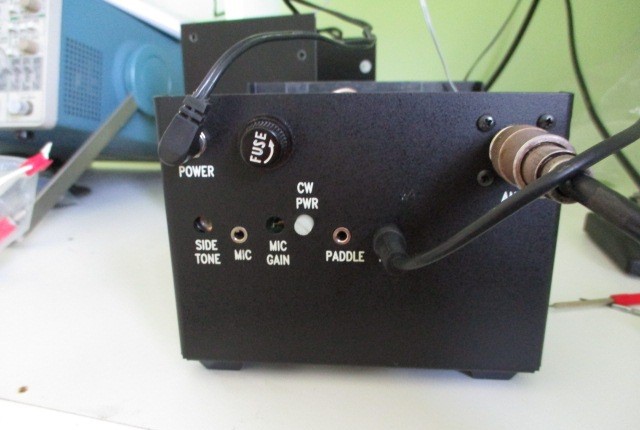
Rear panel control layout. Power is adjustable and tested at a hair under 5W.
Thank you, Mario, for sharing this article and many thanks to the DVRA for allowing us to re-post it.
I owned a QRP++ for a few years and absolutely loved it. At the time, it was one of the most portable full-featured transceivers on the market. Although it can struggle in RF dense environments like Field Day or other contests, for daily use it was very effective. I eventually sold mine to fund the purchase of the Elecraft KX1 and, later, KX3.
I always loved the simple front-panel ergonomics of the QRP+ and QRP++. It’s an incredibly easy rig to operate in the field. Plus…it has a bit of a “cute” factor, if you like radios shaped like cubes.
There is a dedicated email discussion group for Index Labs transceivers–currently, they’re on Yahoo Groups but may migrate to another platform by end of year.
After an EDXC vote, by organisation members and individual members, Bucharest in Romania has been chosen as the destination for the 2020 EDXC Conference. It will take place in September 2020, dates and details are at the planning stages.
The two other contenders put forward by EDXC members were Skopje and Ohrid in North Macedonia and Malta.
Looking back a couple of months to September 2019, a report on the EDXC Conference in Andorra is online at the British DX Club website [PDF]. Written by Alan Pennington of the British DX Club, it captures the great atmosphere that these conferences always engender: travel, sightseeing, radio station visits, DX talk, interesting presentations, and socialising.
For over two weeks now, I’ve had an early production model of the RSPdx here in the shack operating on a beta version of the SDRuno application.
In the spirit of full disclosure, SDRplay is a long-time supporter of the SWLing Post and I have alpha- and beta-tested a number of their products in the past. This early production RSPdx was sent to me at no cost for a frank evaluation, and that’s exactly what I’ll offer here. To be clear, while I am using beta software, this is not a beta SDR, but one from a first limited production run.
And thus far, I must say, I’m impressed with the RSPdx.
Upgrades
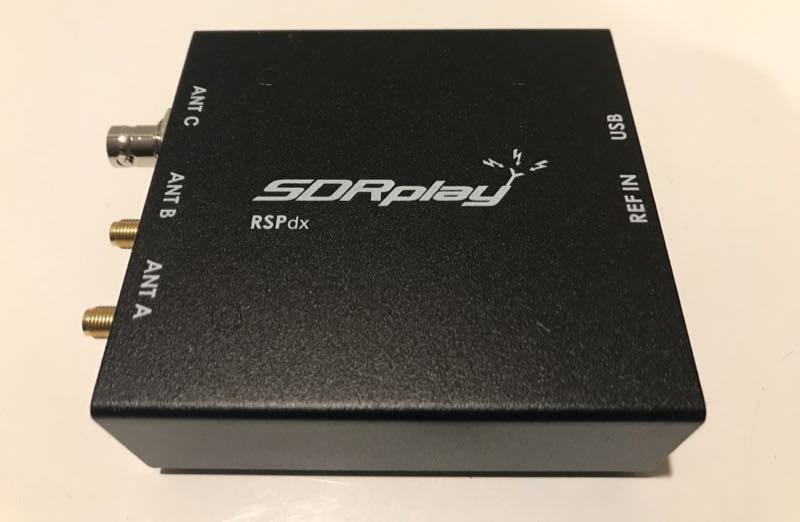
The RSPdx has been introduced as a replacement for the RSP2 and the RSP2pro receivers. It has been updated and upgraded, with a completely new front-end design.
Here are the highlighted improvements and changes:
Performance below 30 MHz has been enhanced when compared to the RSP2/RSP2pro.
Performance below 2 MHz has been substantially upgraded. Through the use of the new HDR mode, both dynamic range and selectivity have been considerably improved.
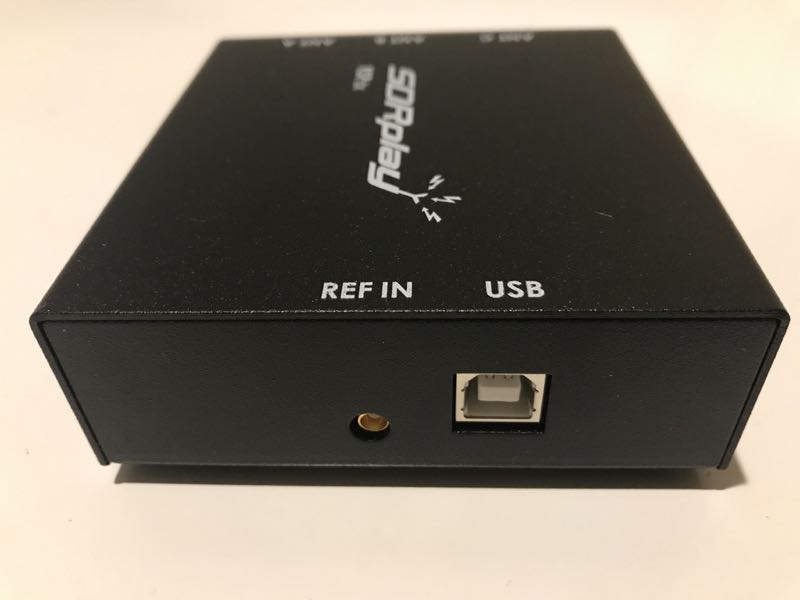
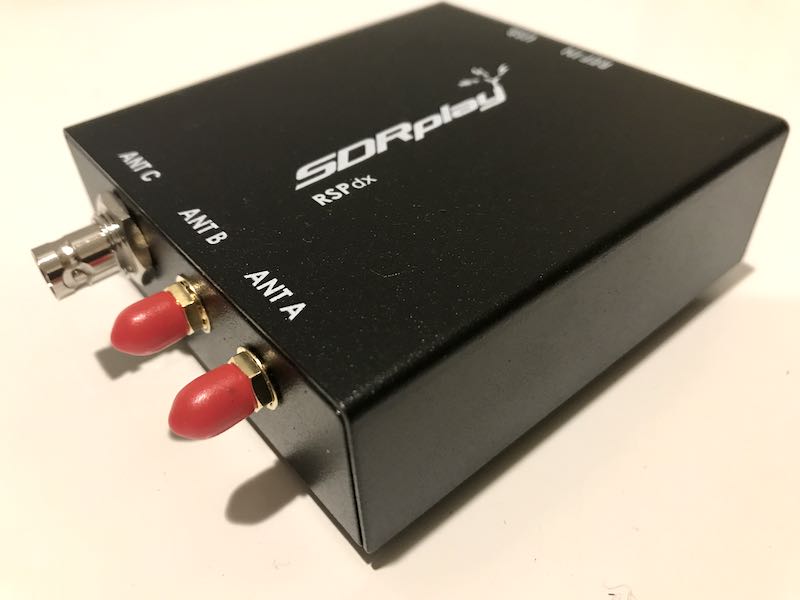
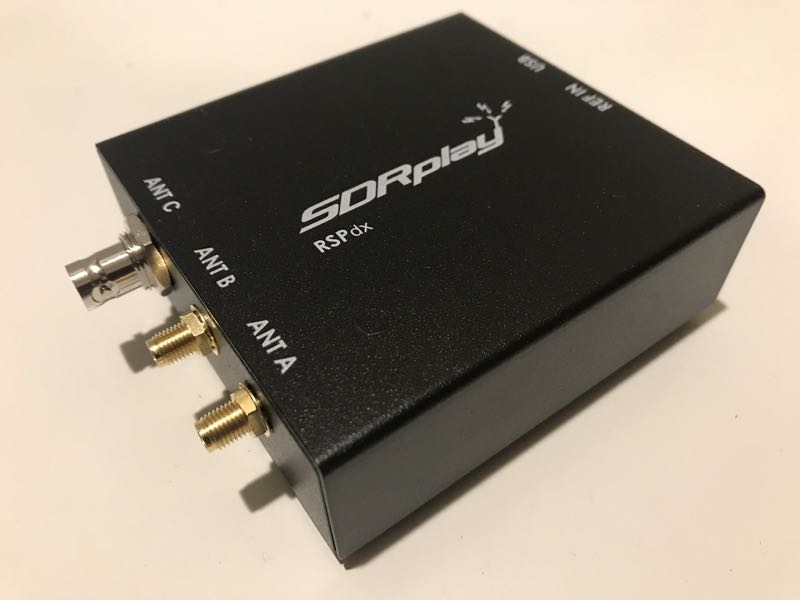
There is now a BNC antenna connector on antenna C position instead of a HiZ port. Both A and B antenna ports are SMA like other RSP models.
Let’s face it: those of us interested in low-cost SDRs are spoiled for choice these days. The market is chock-full of sub-$200 SDRs, especially if you include all of the various RTL-SDR-based SDRs and knock-off brands/models one can find on eBay.
Personally, I invest in companies that support radio enthusiasts for the long haul…those that do their own designs, innovations, and production. SDRplay is one of those companies.
SDRplay’s market niche has been providing customers with affordable, high-performance wideband receivers that cover an impressive 1 kHz to 2 GHz.
Wideband coverage can come at a cost. Unless you pay big money for a commercial-grade wideband receiver, you’re going to find there’s a performance compromise somewhere across the spectrum. On the RSP2 series, those compromises would have been most apparent on frequencies below 30 MHz.
That’s not to say HF, MW, and LW performance was poor on the RSP2 series–indeed, it was quite impressive and well-balanced; it just didn’t stack up to the likes of the similarly-priced AirSpy HF+ and HF+ Discovery, in my humble opinion. Both little Airspy SDRs have wooed DXers with their impressive dynamic range and overall ability to work weak signals in the HF portion of the spectrum.
Neither of the AirSpy HF+ models are wideband receivers, but still offer a generous range: 9 kHz to 31 MHz and from 60 to 260 MHz––about 11.5% of the frequency coverage of RSP models. (Note that the Airspy R2 and Mini do cover 24 – 1700 MHz.) For shortwave radio listeners that also want to venture into the UHF and SHF regions, a wideband SDR is still required.
It’s obvious SDRplay’s goal is to make the wideband RSPdx into a choice receiver for HF and, especially, for MW/LW DXers. But have they succeeded? Let’s dive in…
Performance
As I say in most of my SDR reviews: doing comparisons with receivers that have so many features and adjustments is never easy. In other words, we want an apples-to-apples comparison, but it can be difficult to achieve, especially with new products.
The RSPdx, Excalibur, and HF+ Discovery all used the same antenna in my tests––a large, horizontal delta loop antenna, via my ELAD ASA15 amplified antenna splitter. I’ve used this antenna splitter for years and can vouch for its equitable, lab-grade distribution of signal.
The RSPdx is not in full production at time of posting, thus application options are limited. Typically, I’d load comparison SDRs in SDR Console or HDSDR and test them with identical settings as well. At present, the RSPdx is only compatible with a beta version of SDRplay’s own application, SDRuno (which will come out of beta rior to the first major production run). The benefit of using SDRuno is that you unlock the full potential of the RSPdx, plus signal and noise numbers are incredibly accurate.
For each SDR in this comparison, I used their native/OEM application to give them the best possible performance.
I also matched filter settings and made an effort to match AGC and volume settings as closely as I could.
Additionally, I resisted the temptation of comparing my RSP2 with the new RSPdx because I didn’t want to run two simultaneous instances of SDRuno on the same computer––especially considering one was in beta.
Is this comparison perfect? Probably not, but I did the best with the time I had available. I do intend to make further comparisons in the future.
Longwave performance
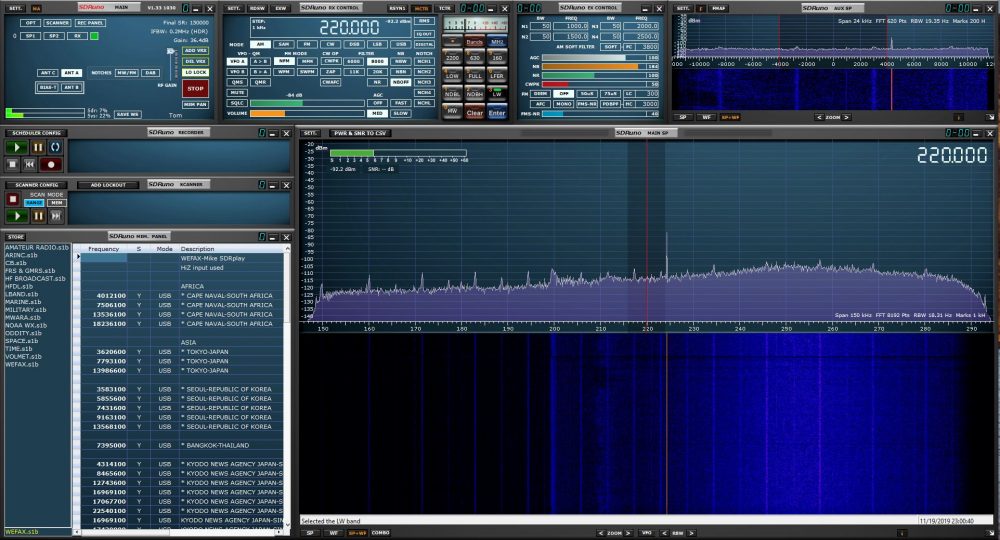
Via the RSPdx’s new “HDR” mode, both dynamic range and selectivity have been considerably improved with frequencies below 2 MHz. While I’ll fully admit that I’m not much of a longwave DXer, my very first listening session with the RSPdx started in this region of the spectrum.
In fact, the first evening I put the RSPdx on the air and confirmed that I was, indeed, in HDR mode, I noticed a small carrier via the spectrum display on 171 kHz. I clicked on it and quickly discovered it was Medi 1. The signal was faint, but I could clearly ID at least one song. This truly impressed me because I believe this was the first time I had logged Medi 1 on longwave from the shack.
I didn’t connect the Excalibur at that point to see if it could also receive the faint Medi 1 signal, but I imagine it could have. I’m pretty sure this would have been outside the reach of the RSP2, however.
I tried to explore more of the longwave band, but due to local RFI (I suspect an appliance in my home), most of the LW band was inundated with noise. With that said, I did grab three of my benchmark non-directional beacons.
Obviously, the RSPdx is a capable LW receiver. I would like to spend more time on this band once I’ve tracked down the source of my local RFI.
Mediumwave/AM performance
In the past two weeks, I’ve spent many hours with the RSPdx on mediumwave.
We’re heading into the winter months in the northern hemisphere, and that’s normally when my listening habits head south on the bands.
In short: I find the RSPdx to be quite sensitive and selective on the mediumwave bands while the HDR mode is engaged. A major improvement over its predecessor.
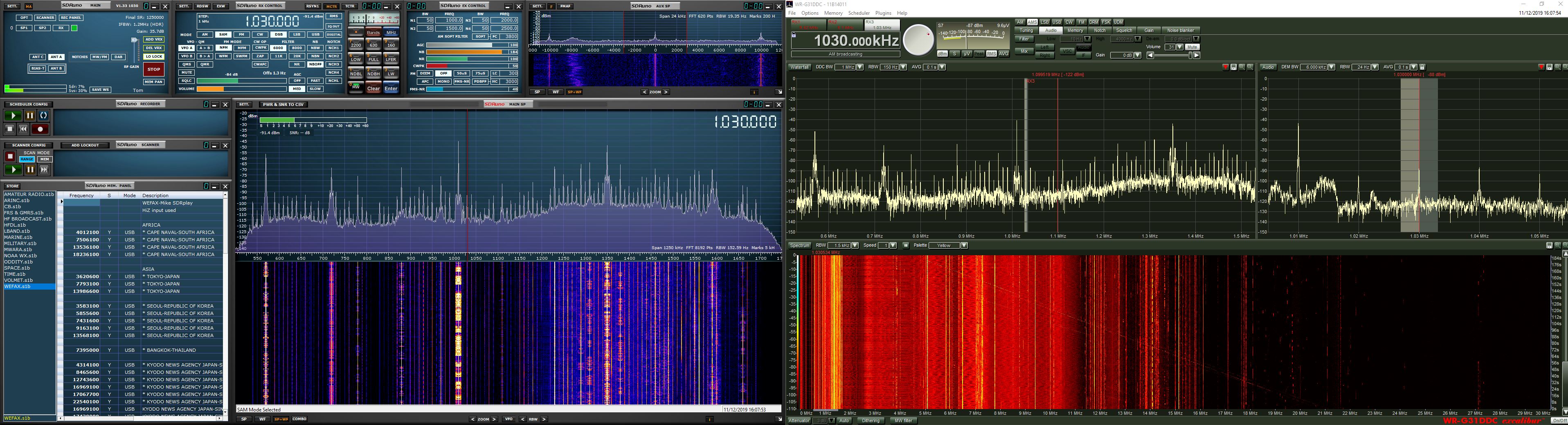
I primarily compared the RSPdx with my WinRadio Excalibur on mediumwave since I consider the Excalibur to be a benchmark MW receiver. And, as you’ll hear in the screencasts below, the RSPdx truly gives the Excalibur a run for its money:
Note that my horizontal delta loop antenna is omni-directional, hence the tug-of-war you hear between stations in the clips above.
In truth, I could have done more to stabilize the signal on both of these fine SDRs, but I wanted to keep the comparison as fair as possible.
You might have noticed that both were running AM sync mode. It seems the sync lock on the RSPdx may have also improved––though I would need to do a direct comparison with the RSP2 to know for sure––but in terms of stability, I still found that the WinRadio Excalibur was superior. Mind you, the Excalibur is a $900 – $1,000 receiver and has the strongest synchronous detector of any radio I’ve ever owned.
Shortwave/HF
SDRplay notes on the preliminary specifications sheet that the RSPdx has been “enhanced” when compared with the RSP2 series.
And, after having spent two weeks with the RSPdx on the shortwave bands, I would say this is a bit of an understatement. For although I haven’t compared the RSPdx directly with the RSP2 yet, I do feel HF performance is substantially better than its predecessor. Indeed, in my comparisons, I often found it gave the Excalibur some serious competition. Overall, the Excalibur had an edge on the RSPdx, but the gap has closed substantially. That’s saying something.
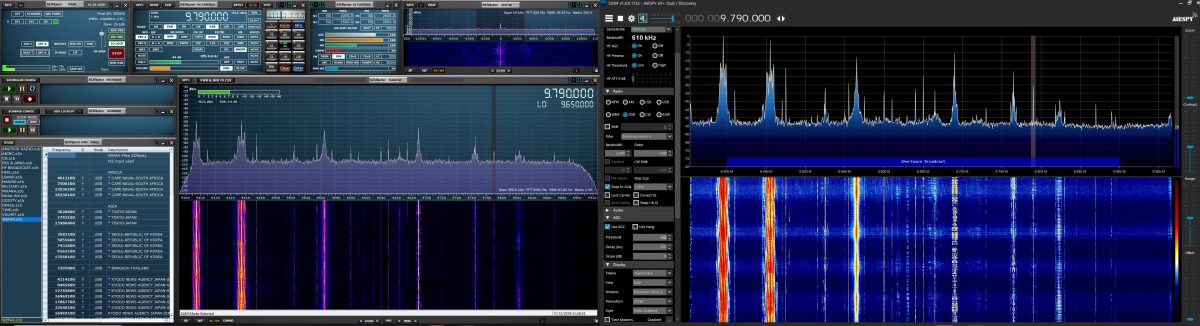
For the comparison videos below, I also included the excellent AirSpy HF+ Discovery.
As you can see and hear, the RSPdx is now in the league of some of the finest HF receivers in my arsenal.
But I’m curious to know what you think after listening to these comparisons. Please comment!
Notch Filters
For those of you living in areas with DAB/DAB+ broadcasters nearby, you’ll be happy to note that the RSPdx has a DAB filter to help mitigate any potential overloading.
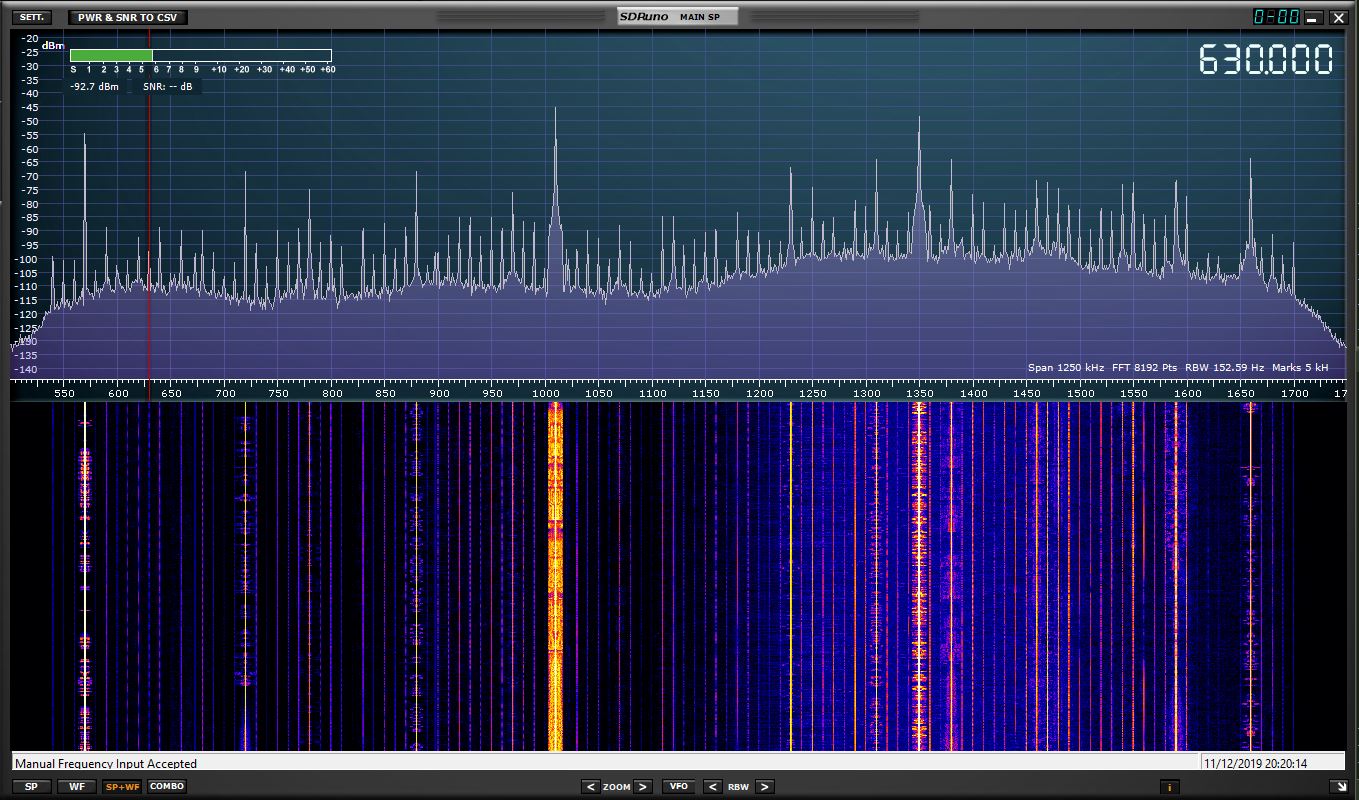
Also, if you live near a blowtorch mediumwave station, you’ll be quite pleased with the MW notch filter. It’s so effective at filtering out the mediumwave band, my local blowtorch on 1010 kHz is barely visible on the spectrum once the notch filter is engaged. (Note: I should add that neither the DAB nor the mediumwave notch filter was engaged during any of my previous comparisons above.) Check out the screen shots below showing the mediumwave band before and after the MW notch filter is engaged:
Before:
After:
Summary
For those of you looking for a budget wideband SDR with solid performance below 30MHz, look no further.
For $199 US, you’re getting a quality UK-designed and manufactured SDR in a proper metal housing. The OEM application, SDRuno, is one of my favorite SDR applications and can fully take advantage of the RSPdx’s new HDR mode. No doubt, with a little more time, most third-party SDR applications will also support the RSPdx.
Frankly, I was expecting classy mediumwave and longwave performance as this was the most touted upgrade of the RSPdx. SDRplay certainly delivered.
In my experience, SDRplay doesn’t oversell their products. Their preliminary product sheet mentioned improved performance on HF, but their press release didn’t even mention the HF upgrades. And this is where I, in particular, noticed significant improvement. Perhaps this is because I am primarily an SWLer, thus spend a larger portion of my time in the HF region.
SDRplay products also have a mature, robust SDR application via SDRuno. Day to day, I tend to use Simon Brown’s SDR Console as my primary SDR application, since it’s compatible with so many of my SDRs and also offers some of the best recording functionality for those of us who do audio and spectrum archiving. Each time I beta test or review an SDRplay SDR, however, I’m more and more impressed with SDRuno. It’s evolved from being a rather cluttered application to one with a thoughtful, cohesive user interface that’s a joy to use––a product of true iterative agility.
Indeed, after having used SDRuno exclusively these past two weeks, I believe I would consider it as my primary SDR application…if only it had audio recording in addition to spectrum recording, and could run multiple instances with multiple SDRs. Again, given a little time, I wouldn’t be surprised if some of this functionality is eventually integrated.
Questions?
Since many SWLing Post readers already own an SDR, I’m sure some of you will have questions. Let’s address a few of those right now.
Question: “I have an RSP2/RSP2pro. Should I upgrade to the RSPdx?”
My recommendation: If you are a shortwave, mediumwave, or longwave DXer, I would indeed recommend upgrading to the RSPdx. If you primarily use your RSP2 series SDR on frequencies above 30 MHz and only occasionally venture below for casual listening, then I’d keep the RSP2.
Question: “I have an RSP1a. Should I upgrade to the RSPdx?”
My recommendation: If you’ve been enjoying your RSP1a and would like to take your listening/monitoring to the next level, then, yes, I would upgrade. Not only can you take advantage of the RSPdx’s enhanced performance, but the RSPdx affords you three antenna ports, and has a more robust front end.
Question: “I have an RSPduo. Should I buy the RSPdx?”
My recommendation: I’m a big fan of the RSPduo. Unless you’re a dedicated mediumwave/longwave DXer, or you’d just like to add another separate SDR to your radio arsenal, I wouldn’t rush out to buy the RSPdx.
And while I’m offering advice, I’d like to offer my standard two cents on the subject of performance optimization: a radio is only as good as its antenna!If you have a compromised antenna, invest in your antenna before upgrading your radio. You’ll be glad you did.
Conclusion
Happily, I can recommend the SDRplay RSPdx without hesitation. This latest iteration of the RSP series SDR is a proper step forward in terms of performance and functionality––obviously implementing years of customer feedback.
SDRplay also has a proven track record of innovation and customer support. Their documentation, video tutorials, and community are among the best in the industry. Purchase with confidence.
Many thanks to SWLing Post contributor, Mei Tao, who writes:
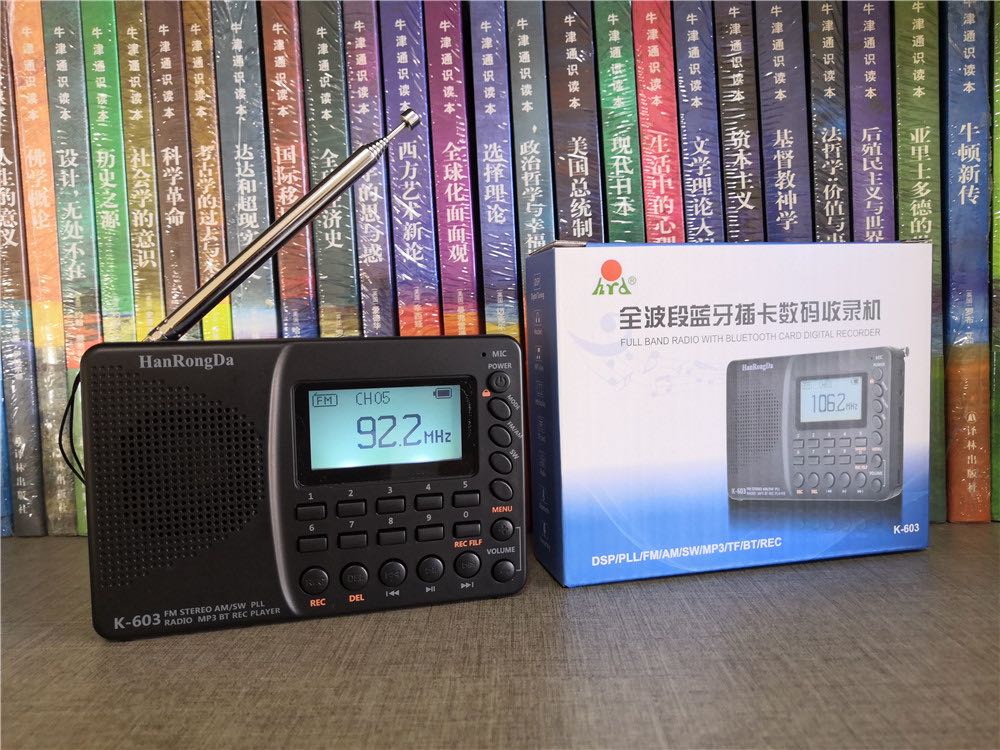
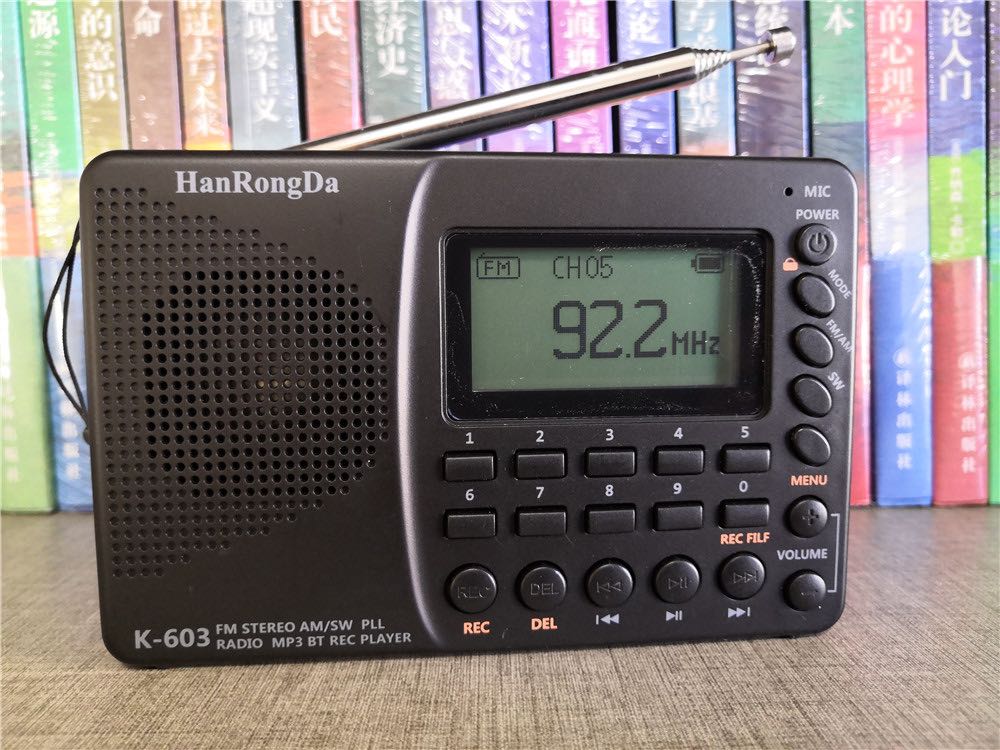
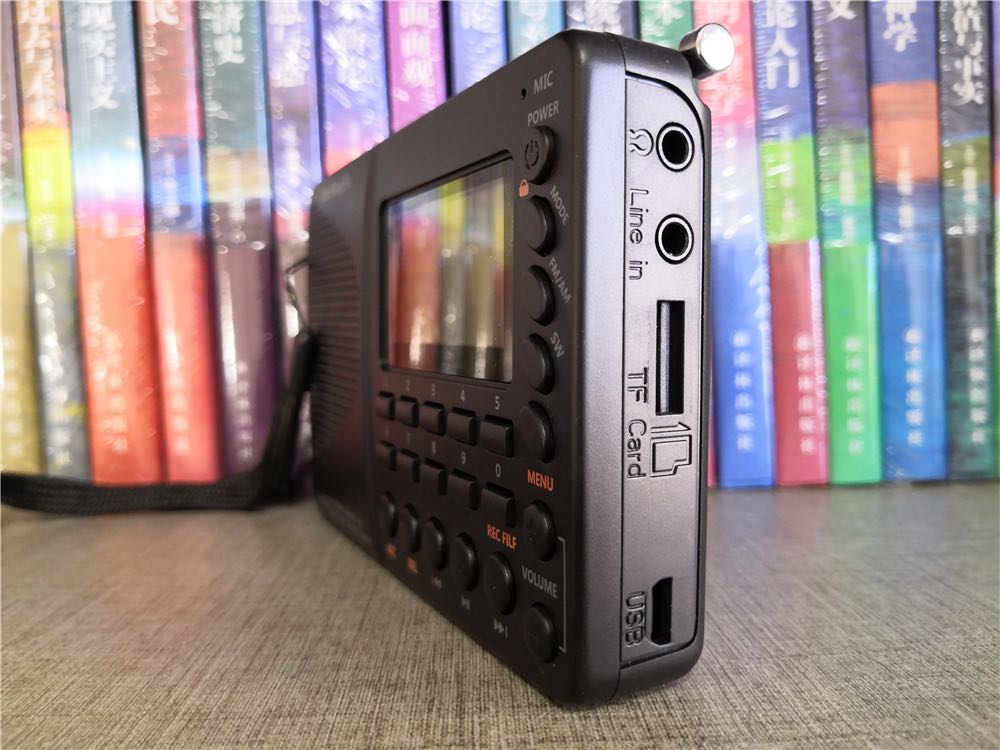
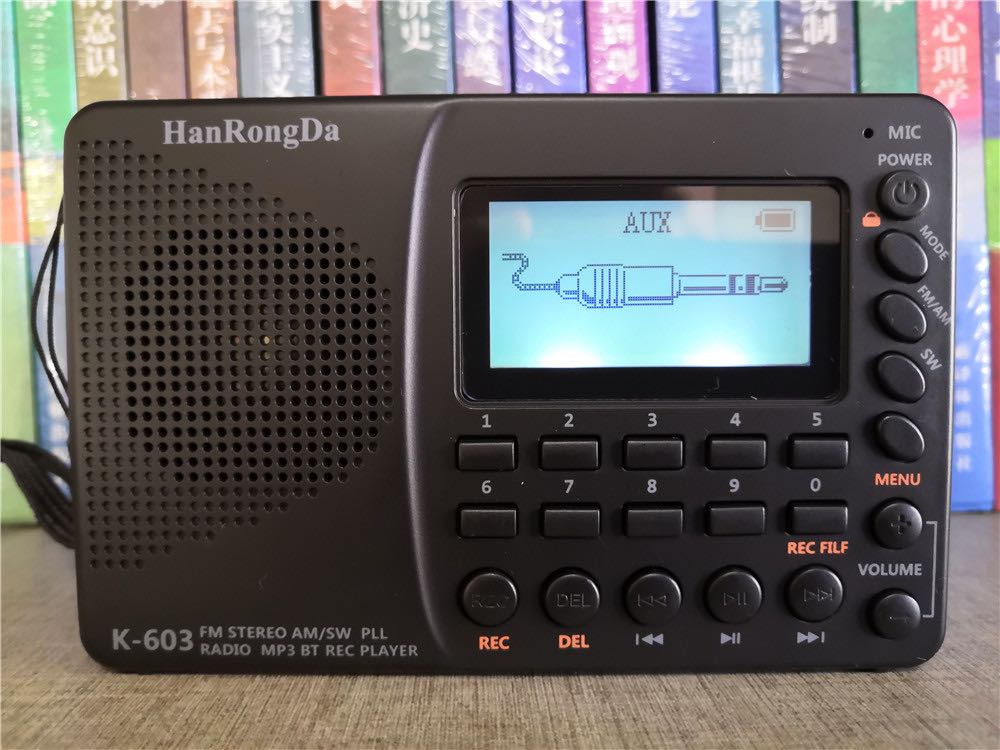
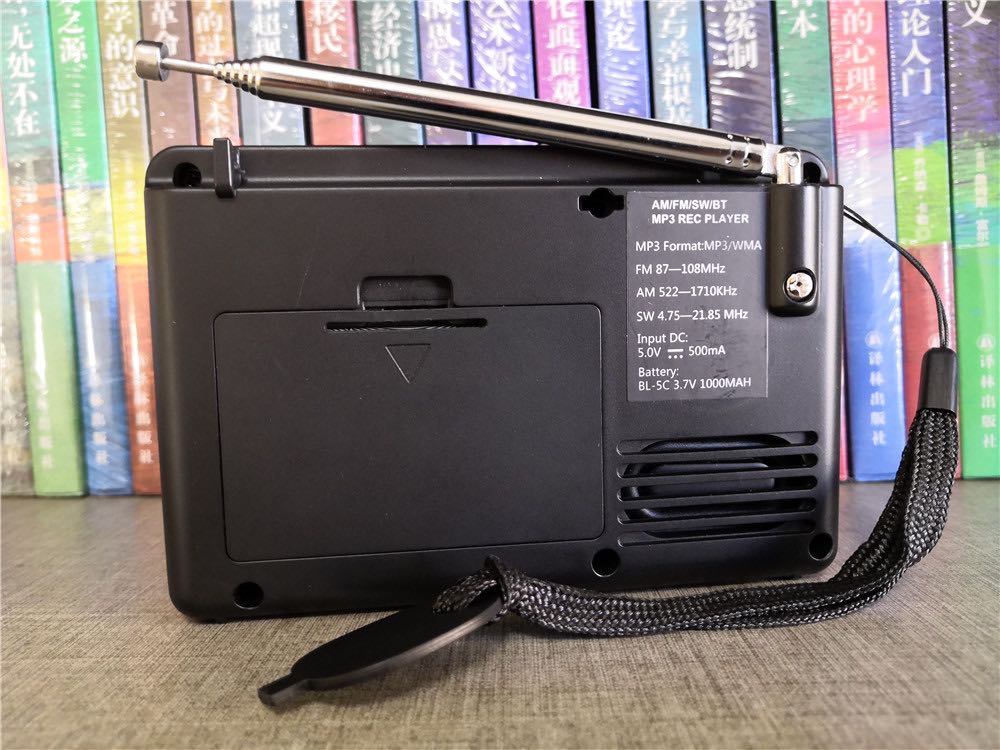
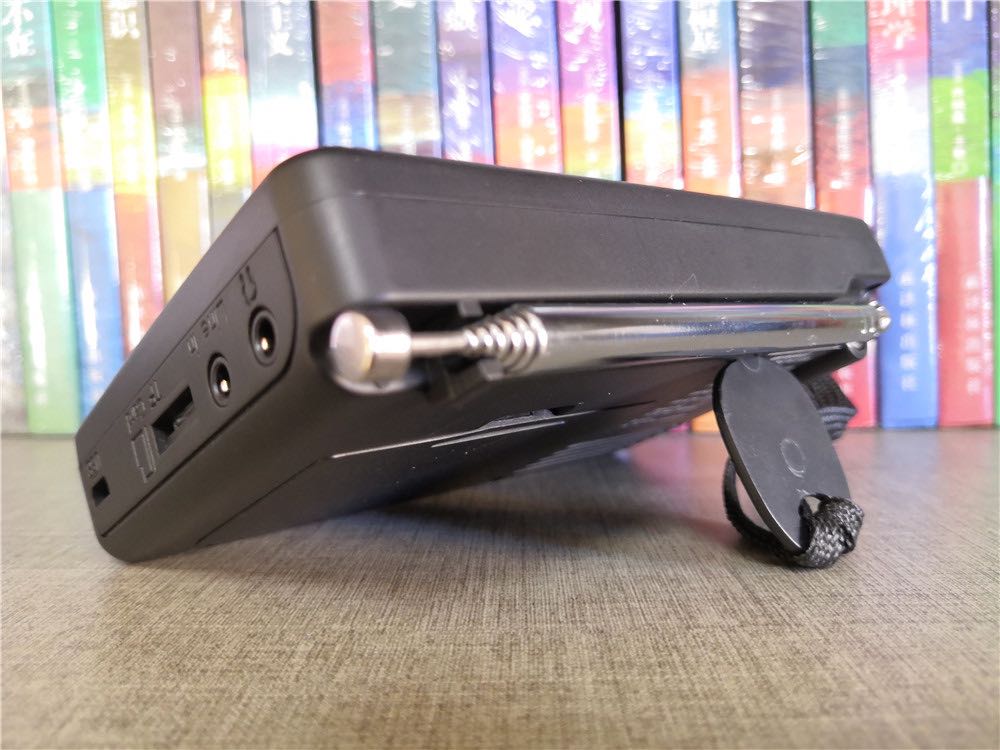
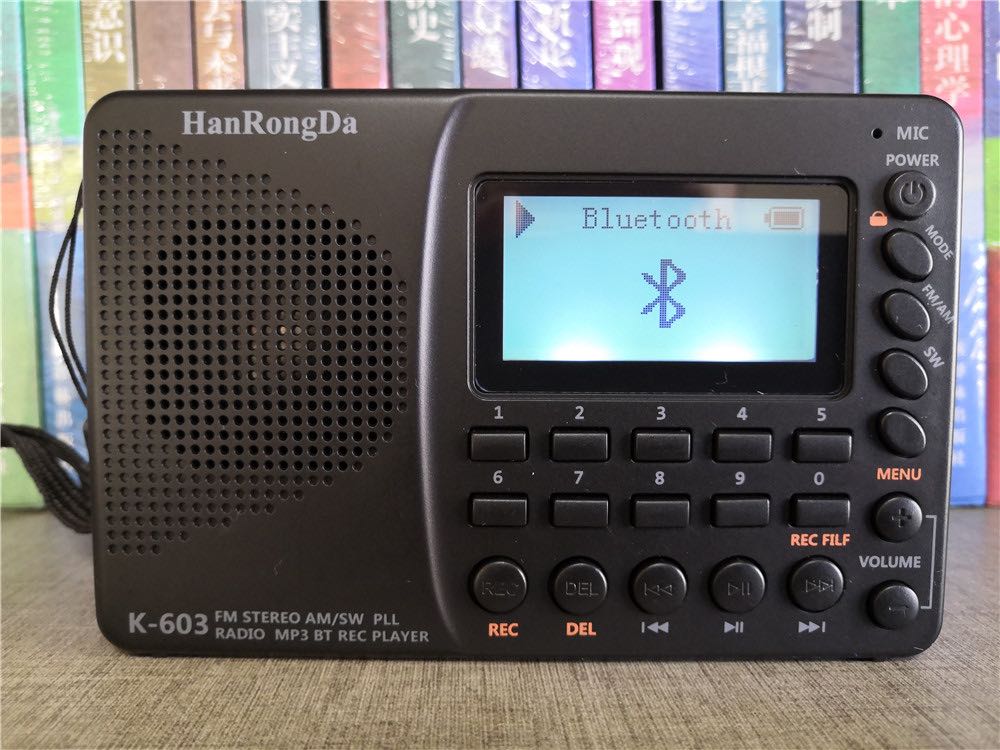
Yesterday, I received a new radio: the HanRongDa K-603, which was sent to me by the manufacture.They want me to test this prototype machine in order to find any bugs. If there is nothing to fix, I believe this radio will hit the market in this or next month.
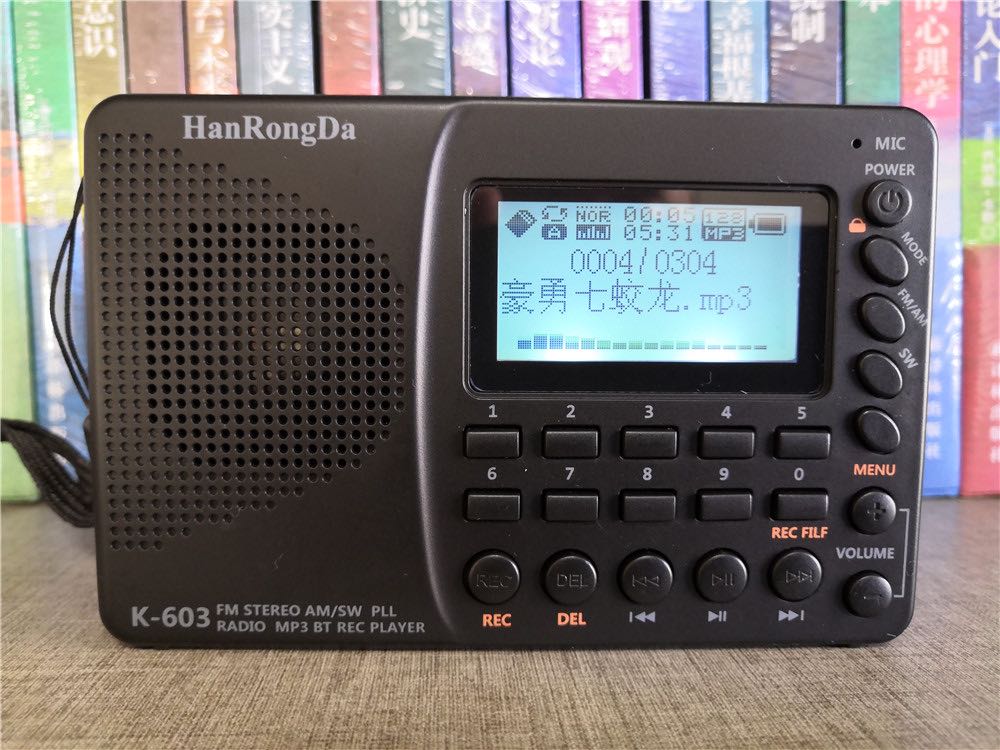
K-603 is a small portable radio which also has some great functions. Its major features include:
FM, AM, and SW bands
Bluetooth 5.0 connection
TF Card Player
Recording function
Line in
LCD can display three different languages,English?Chinese and another foreign language.
Powered by the BL-5C Li battery
MW channnel space can be switched between 9KHz adn 10KHz.
Tuning methods: Scan, ATS, and direct key entry
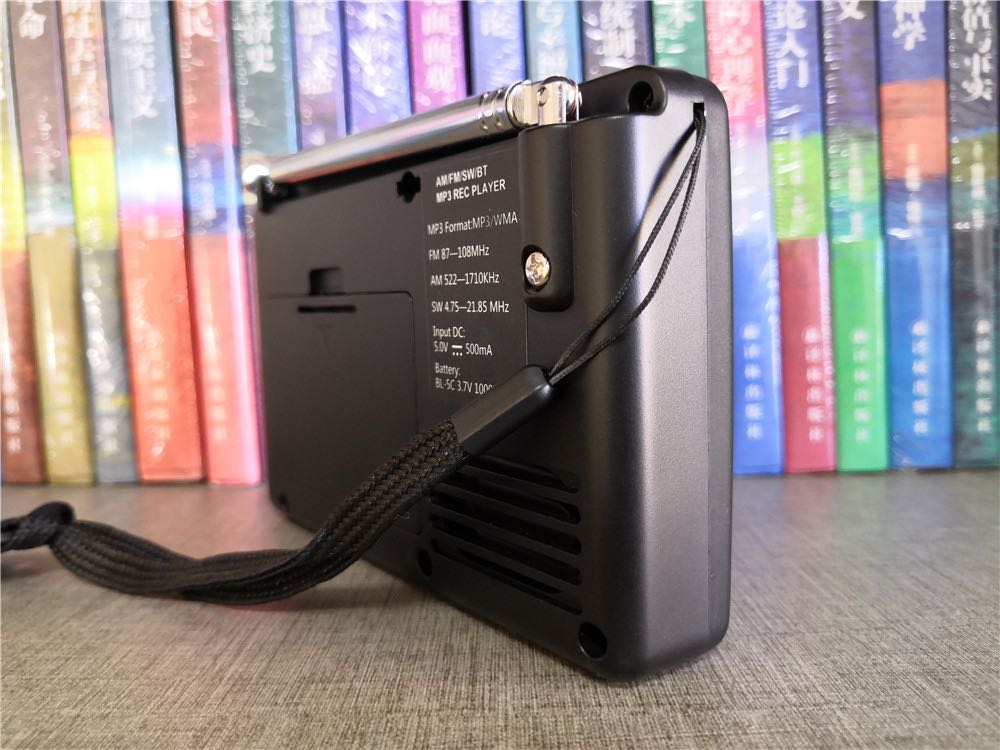
The designer told me that this K-603’s fm coverage is from 87MHz to 108MHz, but they will extend it to 64MHz in the next version. That’s really good news.
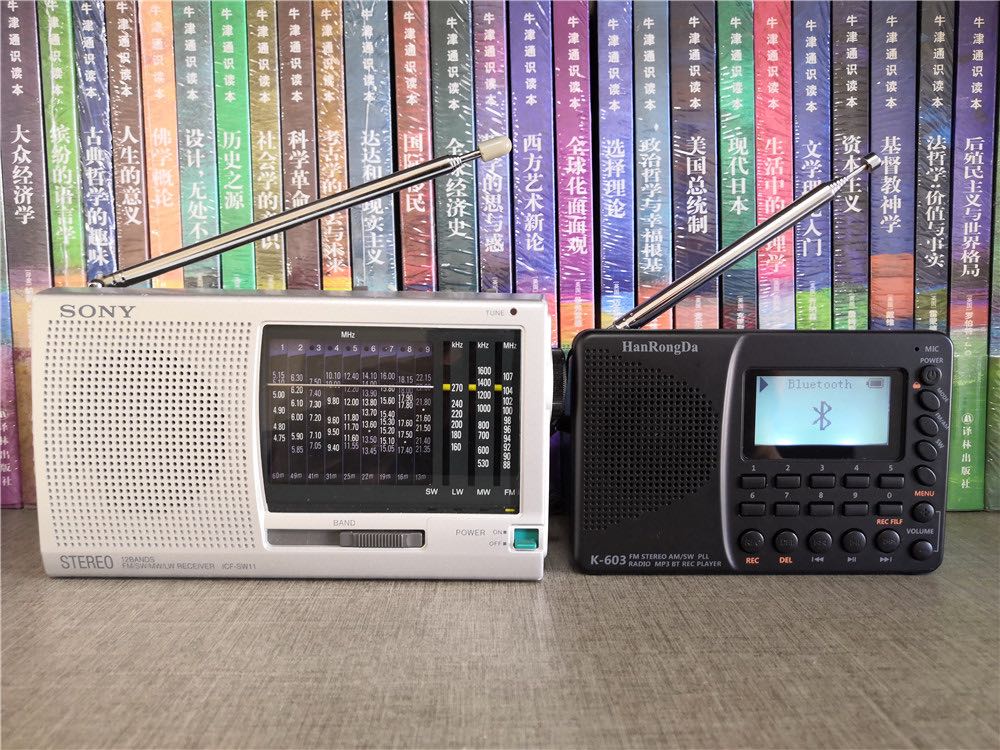
In a few days, I will test it carefully. If necessary, I will make side-by-side comparisons with my own Tecsun, Sangean, Radiwow, and Degen radios. Then i will present some text and video reviews.
I would like to share some pictures of this new radio with you and other BCLers
Best wishes to you!
Photos
Thank you, Mei Tao! We look forward to your review of the HanRongDa K-603. Yes, please let us know how it compares to your other receivers. We also look forward to any update regarding price and availability. Thanks for sharing those photos!
Please support this website by adding us to your whitelist in your ad blocker. Ads are what helps us bring you premium content! Thank you!