Shortwave listening and everything radio including reviews, broadcasting, ham radio, field operation, DXing, maker kits, travel, emergency gear, events, and more
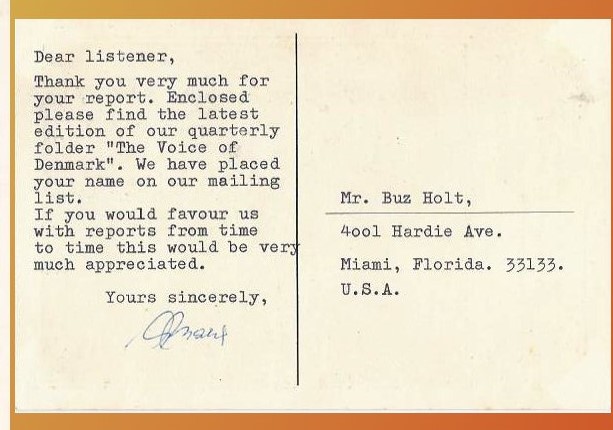
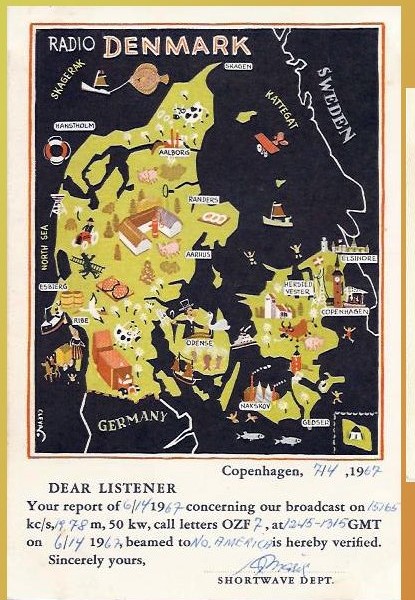
Many thanks to SWLing Post contributor, Al Holt, who shared the following QSL and note on Twitter:
The posting about WRM and its originating from Denmark got me thinking about my early days SWLing and the wonderful QSL card I got from R. Denmark.
I hope to tune WRM on 19m soon!
Thank you for sharing this, Al! That particular Radio Denmark QSL cards is one of my all-time favorites. I never received one myself, but I’ve always been fond of maps like this that highlight regional attractions/specialties.
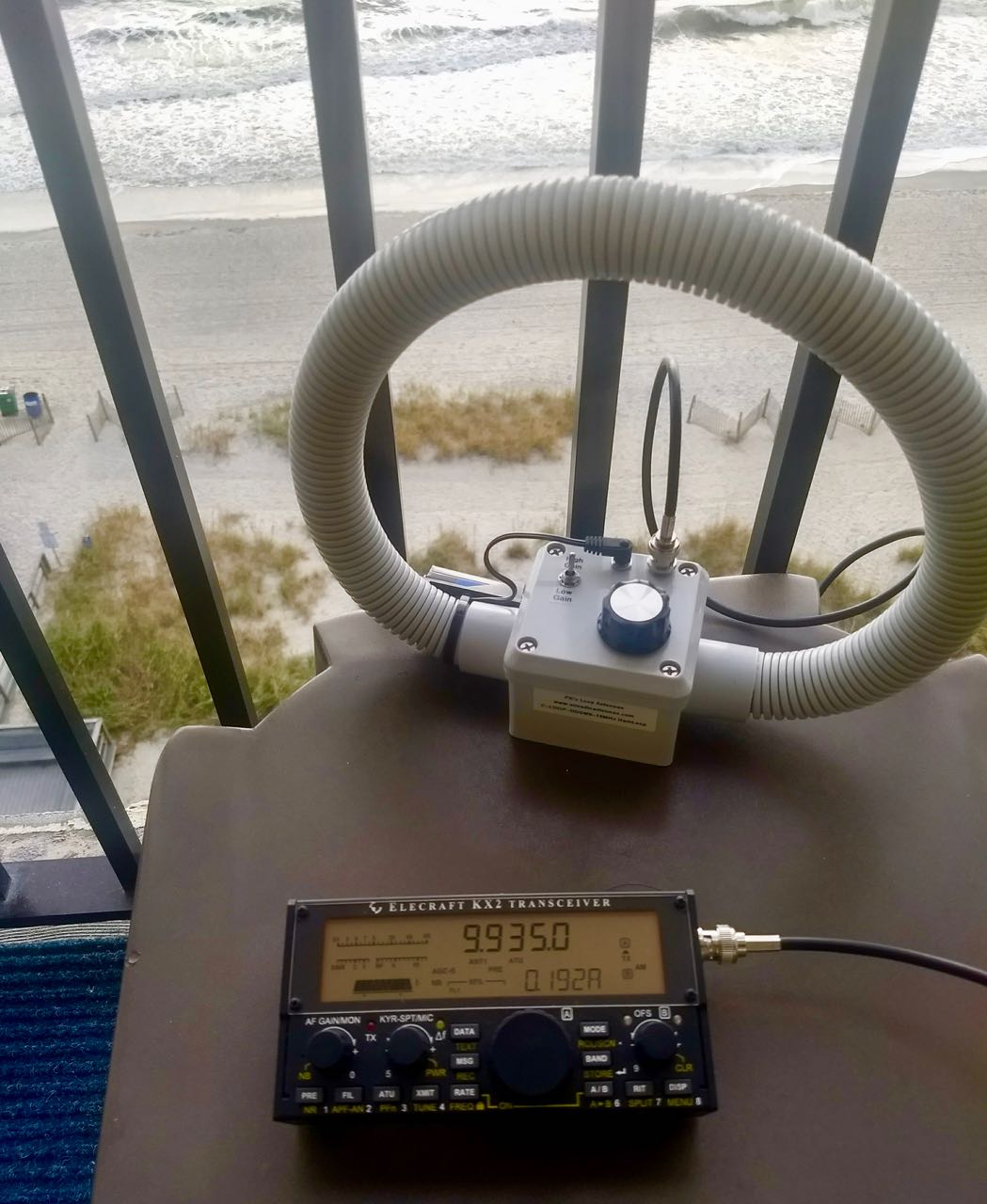
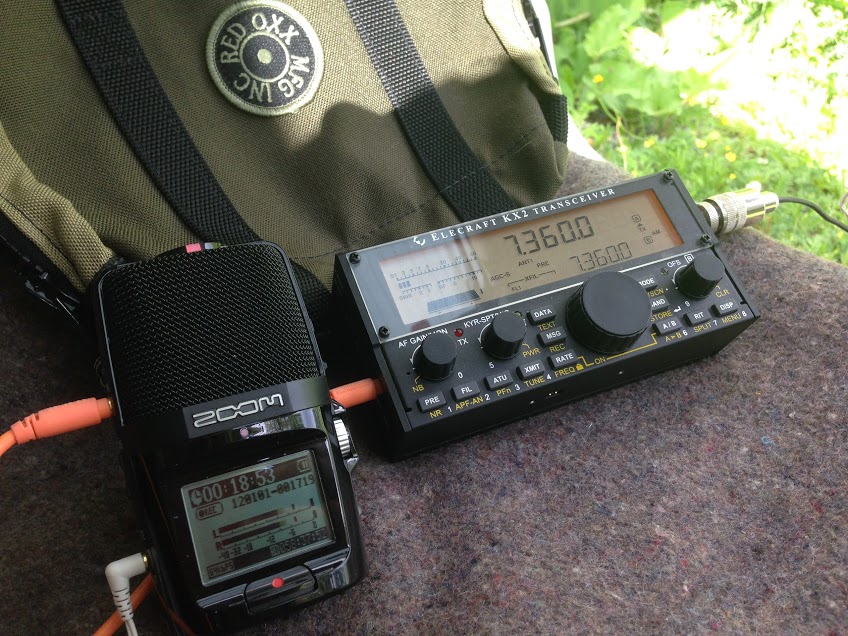
As I’ve noted in the past, I love my Elecraft KX2 and routinely use it for SWLing. I just learned that Elecraft has published a new KX2 firmware update that even includes some minor tweaks for AM mode reception. A proper nod to the SWLs in the Elecraft community.
AM Receive: AM mode can provide a “warmer” sound when used to copy shortwave broadcast stations, and VFO tuning is less critical than when using SSB modes to copy AM. MENU:VFO CRS provides coarse-tuning selections of 1, 5, 9 and 10 kHz for AM mode.
Many thanks to SWLing Post contributor, Harald Kuhl, who shares the following from Stig Hartvig Nielsen with World Music Radio.
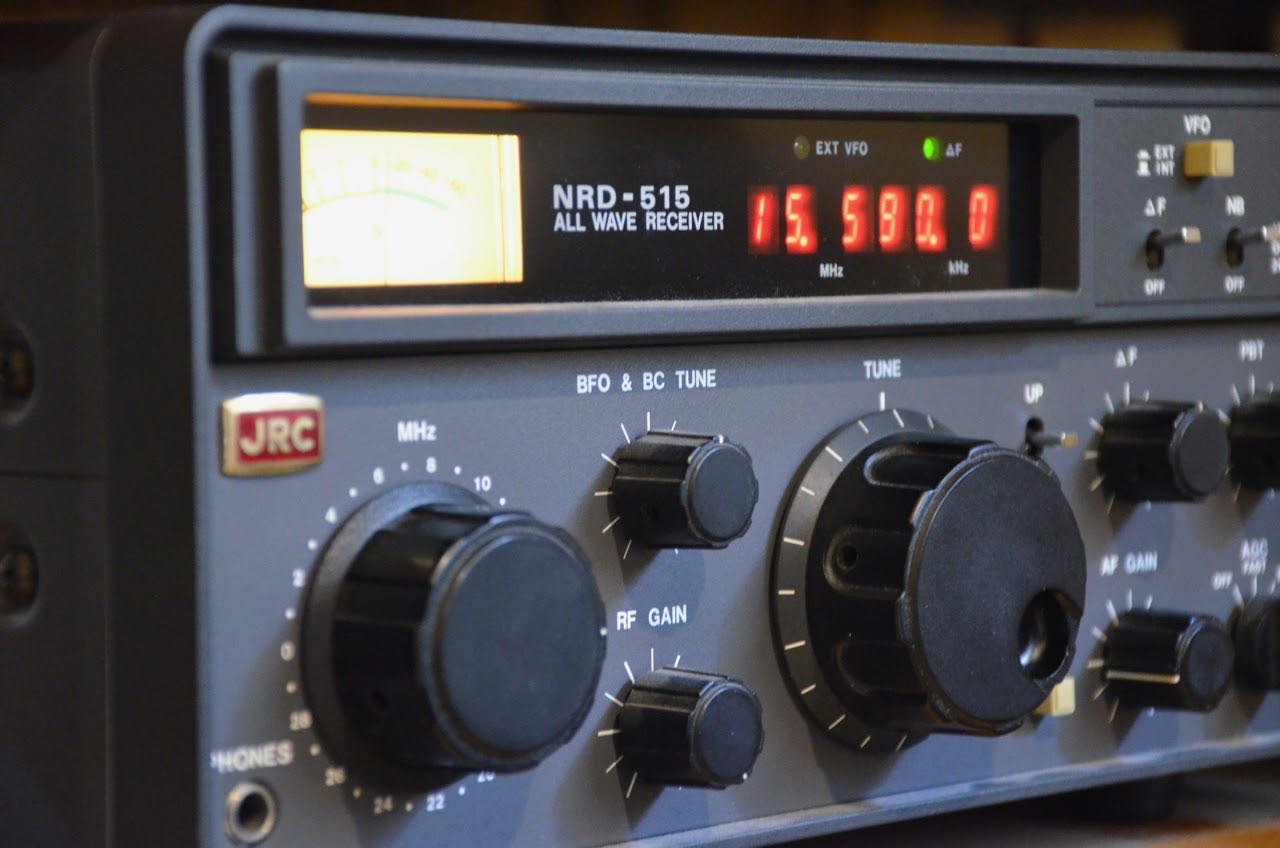
I’m testing a new audio feed for the 15805 kHz transmitter. Hopefully more stable than the previous one, which sometimes would run 24 hrs without a single drop out – at other times produce drop outs almost continuously.
My plan is to keep 15805 kHz (200 W) on the air 24/7 for the next week or two. Should give DXers around the world a chance to catch 15805 when conditions on 15 MHz in some rare cases might improve. Currently propagation on 15 MHz is usually poor with a few fair days, but right now at this time of the years I suppose chances are the best.
WMR on 15805 kHz (200 W) – transmitter site: Randers
WMR on 5840 kHz (100 W) – transmitter site: Bramming
F.pl.: Power increase to 500 W on 5840 kHz. And new transmitter on 927 kHz
(500 W) in Hvidovre
Best 73s
Stig Hartvig Nielsen www.wmr.radio
Keeping Short Wave Radio Alive!
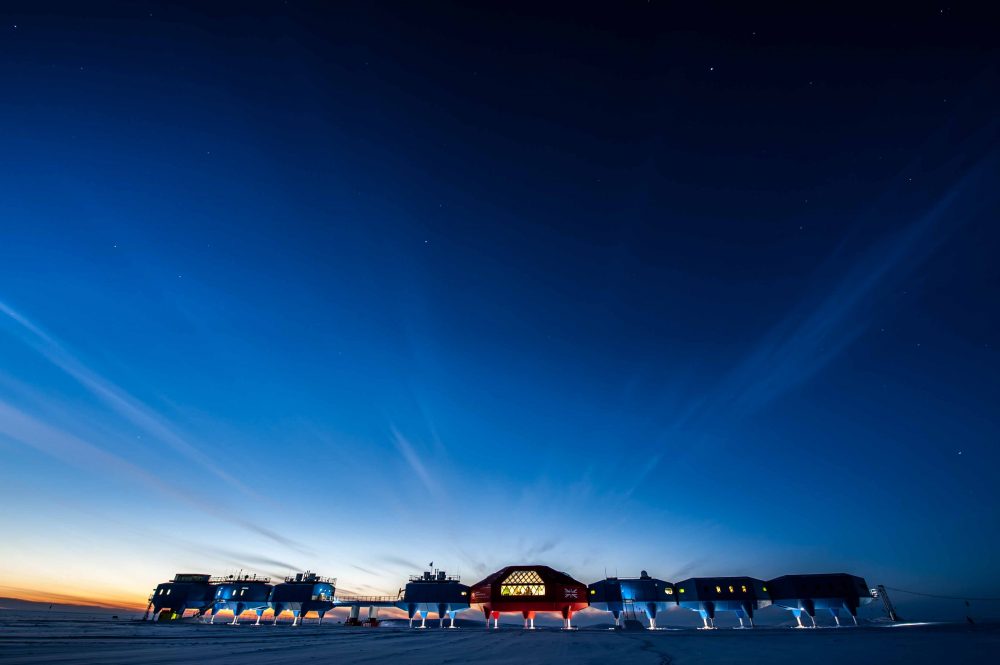
Halley VI Research Station on the Brunt Ice Shelf in Antarctica (Source: British Antarctic Survey)
Every year, the BBC broadcasts a special program to the scientists and support staff in the British Antarctic Survey Team. The BBC plays music requests and sends special messages to the small team of 40+ located at various Antarctic research stations. Each year, the thirty minute show is guaranteed to be quirky, nostalgic, and certainly a DX-worthy catch!
After successful listener events from years past, I’m once again calling on all SWLing Post readers and shortwave radio listeners to make a short recording (say, 30-60 seconds) of the BBC Antarctic Midwinter Broadcast and share it here at the Post (frequencies and time below).
The recording can be audio-only, or even a video taken from any recording device or smart phone. It would be helpful to have a description and/or photo of your listening environment and location, if possible. Please only submit recordings made from your location–since this is all about how you’re able to receive the broadcast at your location, we would rather not include WebSDR recordings.
Audio should be in the MP3 format and videos either hosted on YouTube or Vimeo so that I can easily embed them without having to convert and upload myself.
If you submit your recording to me, I will post it here on the SWLing Post–and insure that the British Antarctic Survey receives the post, too. The recordings will be arranged by geographic location. Note that due to my schedule this year, it might take a few weeks before I can curate all of the recordings (the process typically takes 8+ hours!).
2020 Midwinter Broadcast Frequencies
The BBC Antarctica winter solstice broadcast will be on June 21, 2020 at 2130-2200 UTC.
Many thanks to SWLing Post contributor, Troy Riedel, who shares the frequencies the BBC plan to use. Note that, in the past, the BBC has sometimes only broadcast on three of the four announced frequencies:
5790 kHz Woofferton
6170 kHz Ascension
7360 kHz Woofferton
9580 kHz Ascension
The Midwinter broadcast is one of my favorite programs of the year. I suppose, in part, this is because it happens on June 21–the Summer/Winter solstice–which also happens to be my birthday!
Recording the Midwinter Broadcast has become an SWLing Post community tradition!
Radio Waves: Stories Making Waves in the World of Radio
Because I keep my ear to the waves, as well as receive many tips from others who do the same, I find myself privy to radio-related stories that might interest SWLing Post readers. To that end: Welcome to the SWLing Post’sRadio Waves, a collection of links to interesting stories making waves in the world of radio. Enjoy!
Many thanks to SWLing Post contributors Heath Hall, Tom Daly, and Alexander (DL4NO) for the following tips:
[Note: this article may require login to read at the NY Times]
Afghans once tuned into Radio Afghanistan twice a day to hear the reading of death notices. But in an age of social media, the voice of the nation has lost much of its sway.
KABUL, Afghanistan — Through decades of coups, invasions and endless war, Afghans tuned their radios to Radio Afghanistan every morning at 7 and every afternoon at 4:05 to hear the names of the newly dead.
One of the voices they often heard reading those death notices belongs to Mohamad Agha Zaki, at the mic for the state broadcaster for more than 42 years now. For much of that stretch, his counterpart at the station has been Ziauddin Aziz, the clerk who rushes to Mr. Zaki with the messages the public brings to the station’s small “Death Advertisements” window.
“Ads today?” Mr. Zaki, half asleep, asked on a recent dawn after opening the door to Mr. Aziz’s knock. Outside, birds chirped and the new day’s soft light covered the peaks of the tall pine trees in the station’s compound in Kabul, the capital.
No, said Mr. Aziz, who had waited behind the door in the kind of deference saved for masters of a different era. They had gone weeks without anyone arriving at the little window — just four ads in 40 days, though certainly many more had died.[…]
The US Postal Service (USPS) has temporarily suspended international mail acceptance for items addressed to certain destinations due to service impacts related to the COVID-19 pandemic. This situation could result in the return or loss of mail, such as QSL cards, addressed to affected parts of the world. The USPS has posted a list of affected countries, which is updated regularly. The Postal Service will, upon request, refund postage and fees on mail bearing a customs stamp that’s returned due to the suspension of service, or the sender may re-mail returned items with existing postage once service has been restored. When re-mailing under this option, customers should cross out the markings “Mail Service Suspended — Return to Sender.”[…]
In this video Shannon Morse KM6FPP visits coastal radio station KPH which provided ship to shore communications using Morse code. Volunteers have preserved it and operate weekends
Watch The Last Active Morse Code Station in the US – KPH Radio Station
More information about the Software Defined Radio Academy (Upper-Bavarian Bulletin)
Hamradio online
The Hamradio normally is the largest ham radio exhibition in Europe. But this year it cannot be held.
At the beginning of April, a team around the project manager Markus Heller, DL8RDS, started the project “Hamradio online”. This was only possible as DARC, the German hamradio society, started to introduce electronic collaboration tools long before Corona.
Within this virtual working environment a concept was developed of presentations, distinctions, and more. The program is being prerecorded and will partly be produced as live as possible. Especially the SDR Academy heavily depends on viewer feedback. There will also be videos from the Hamradio Convention that was held last March im Munich. These videos have not been published before.
The infrastructure is being maintained by the teams of the SDR Academy and “Facination Hamradio”. They produce the videos and streamline the installation so all action on the last weekend of June will happen smoothly. These transmissions will be transmitted through several Youtube cannels.
Obviously, personal meetings would be preferable. The advantage of this new solution are the possibly much more participants on both sides: audience and lecturers. The advantage is especially valid for the SDR Academy as most of it is done in English.
Halley VI Research Station on the Brunt Ice Shelf in Antarctica (Source: British Antarctic Survey)
Many thanks to the British DX Club who shares the following information about a BBC Midwinter Broadcast test being held later today:
The annual 30-minute Midwinter broadcast to British Antarctic Survey staff in Antarctica is scheduled by BBC WS for Sunday 21st June.
Ahead of this, two frequencies will be tested Sunday 14th June 2130-2145 UTC from Woofferton (UK): 5790 and 7360 kHz.
Other frequencies to be confirmed.
I will certainly attempt to catch the test broadcast as I plan to record the 2020 Midwinter Broadcast on June 21 as I do each year.
Of course, I’ll also collect, curate and share SWLing Post community recordings of the midwinter service as well. Always a highlight of my listening year!
Many thanks to SWLing Post contributor, Bill Hemphill (WD9EQD), who shares the following guest post:
Benefits to Social Distancing
I have discovered that there is a positive side effect of social distancing. With so many organizations using Zoom and other video methods for their meeting, the volume of great videos to watch has drastically increased, with most of it residing on YouTube. Also everyone is sharing video links that they have found with other.
For example, the New Jersey Antique Radio Club (NJARC) has, for some time, posted their monthly meetings on their YouTube channel. They have very enjoyable presentations. Last night was their virtual monthly meeting for June and they had a great talk by Prof. Joe Jesson on “What You Did Not Know About the RCA AR88.”
I am a fairly new member to NJARC and must recommend them to others. They are a very active group and are currently having Zoom conferences weekly between the members. They also host the RADIO TECHNOLOGY MUSEUM at the InfoAge Technology Center.
Last week, I received an email from Mark Erdle (AE2EA) referring to some videos by the Antique Wireless Museum which is hosted by the Antique Wireless Association (AWA). From his email:
The Radios (and Filming) of “Across the Pacific” presented by AWA member Brian Harrison. Brian served as the radio consultant for the 3-hour PBS documentary “Across the Pacific”, which tells the story of the early days of Pan American Airways and of Hugo C. Leuteritz, a RCA radio engineer who helped make Pan Am’s expansion across the oceans possible with radio communication and navigation systems. Brian explains how he worked to insure that this documentary portrayed the pioneering work of Hugo Leuteritz as accurately as possible. Much of the early radio equipment that Pan American used was custom made for Pan Am, and is quite rare today, but Brian hunted it down.
In addition to Brian’s video, you can also see Tom Perera’s updated presentation of “Phil Weingarten’s Fabulous Fakes” which was originally presented at the 2007 AWA conference:
Here are some other videos that people have passed along to me that I have found enjoyable. Most of these are radio-oriented and I have omitted the many cat videos:
Thank you for sharing these links and videos, Bill! I’ve been watching Phil Weingarten’s Fabulous Fakes this morning–what a fascinating bit of history!
Post readers: Have you discovered videos and sites while social distancing (a.k.a. Social DXing)? Please comment and share your links!
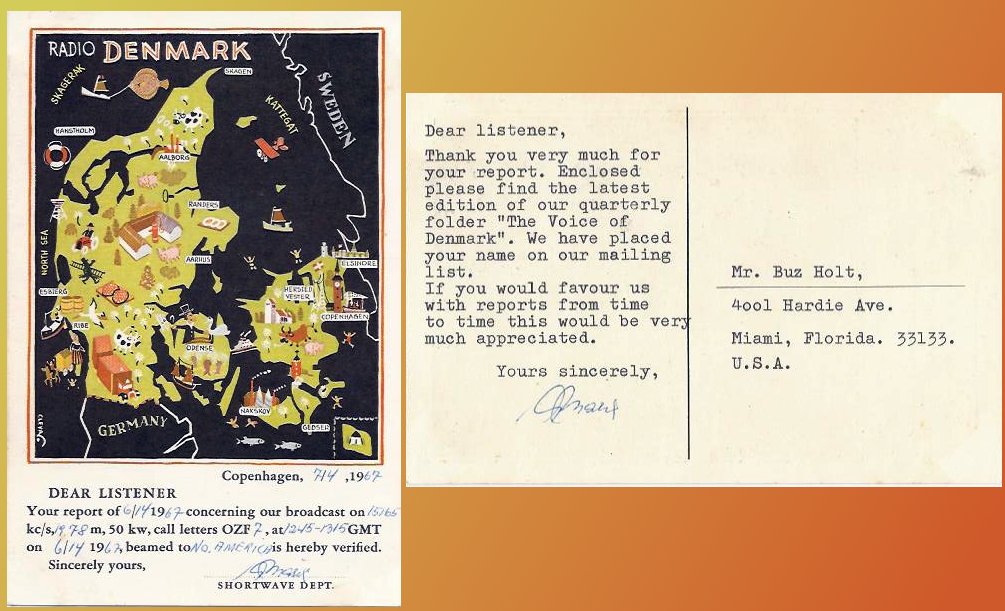 Many thanks to SWLing Post contributor, Al Holt, who shared the following QSL and note on Twitter: