Shortwave listening and everything radio including reviews, broadcasting, ham radio, field operation, DXing, maker kits, travel, emergency gear, events, and more
But it has been off the air for the past weeks due to some minor health issues. The program was interesting in that besides Slow Scan photos, he also did other digital modes using FLDigi.
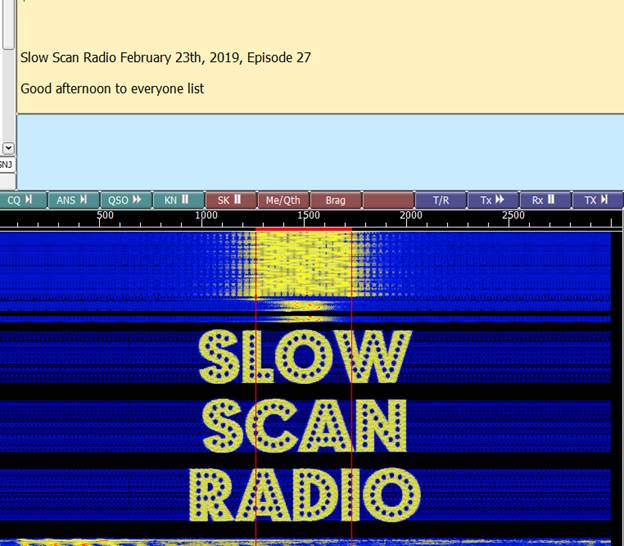
Some of the test included multiple digital signals in the same waterfall.
When I went to website today to check to see if there were any updates on when it might return to the air, I discovered that he is doing a podcast: Daily Minutes Podcast. Following is podcast feed:
This podcast is a combination of new items as well as some re-runs of earlier Show Scan Radio programs. They also are a combination of English & Dutch. The June 13 & 14 podcasts are about off-shore radio. Very interesting and enjoyable.
The Jun 12 & 14 podcasts include a re-run of an earlier Slow Scan Radio Show in the last thirty minutes of the podcast.
[The screen shot at the top of the page is a] sample of the start of the digital portion.
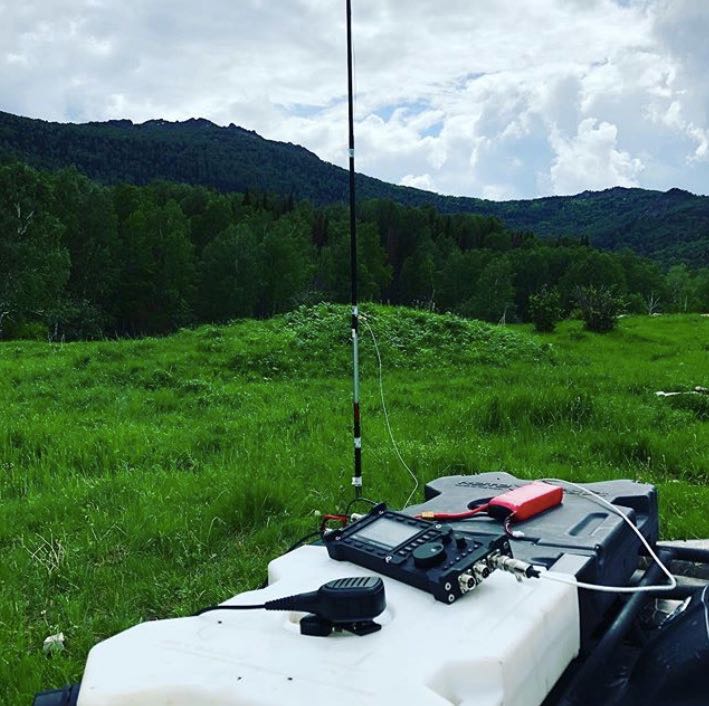
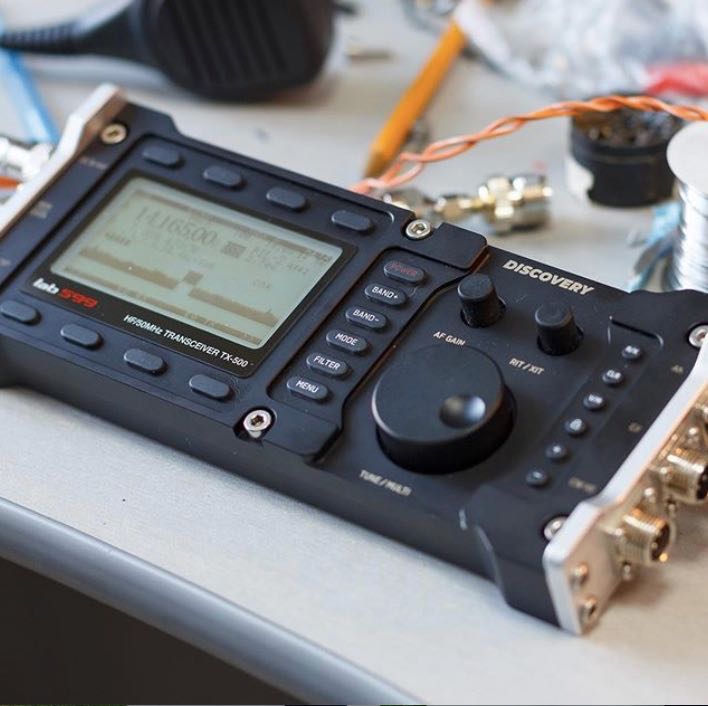
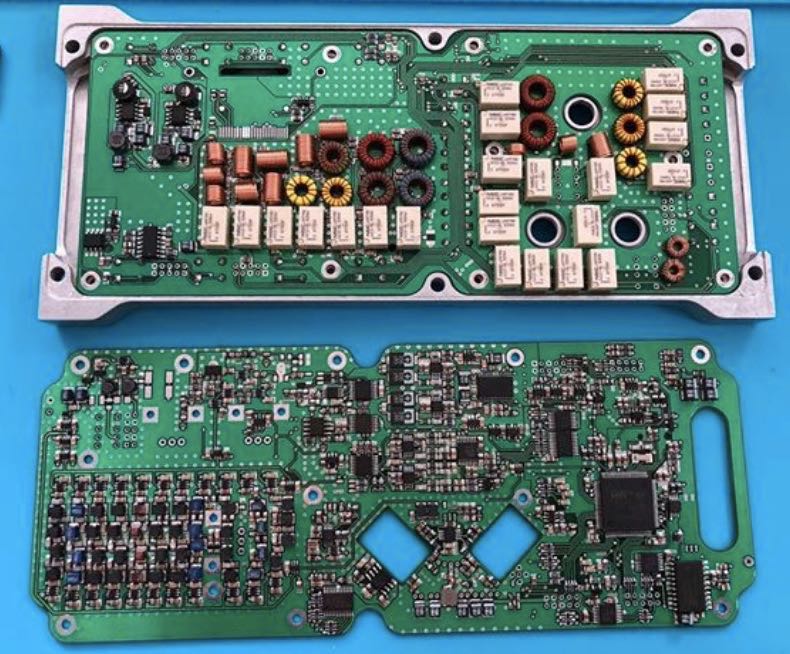
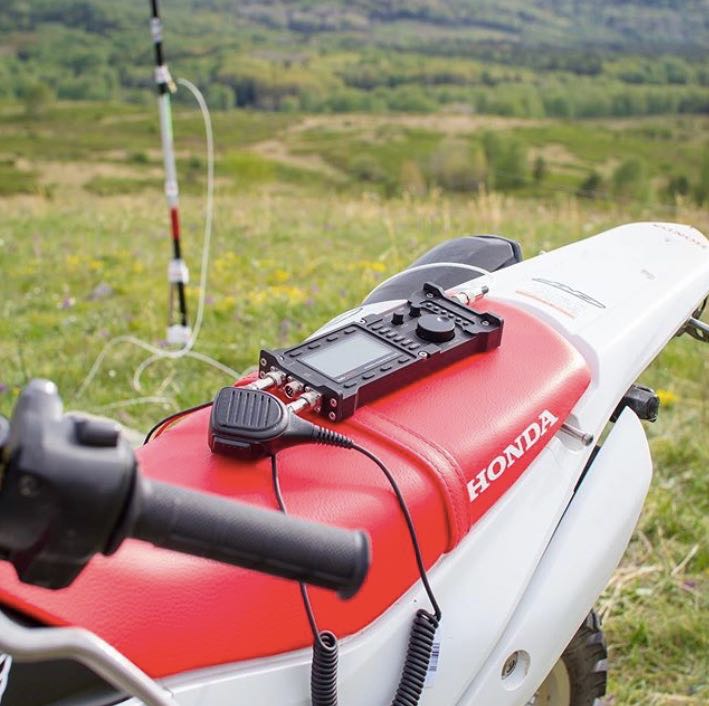
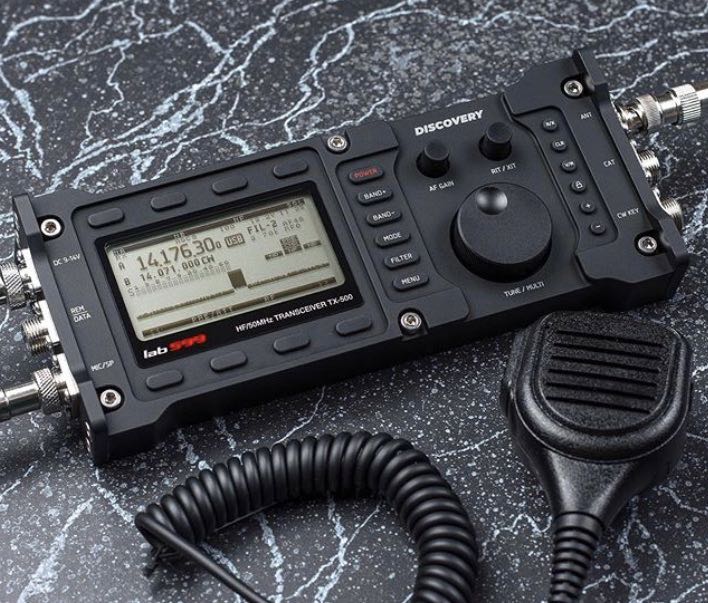
Many thanks to SWLing Post contributor, Vlad, who shares some images and a video of a new QRP transceiver in development: the Discovery TX-500 by a company called lab599.
Specifications have not been published yet, but we have confirmed a few details from the manufacturer:
10 watts PEP
HF plus 6 meters
Weight 570 grams (1.25 pounds)
Voltage 9 – 14 VDC
105 milliamps at 13.8 VDC and with backlit display on
CAT control via USB and using Kenwood codes
I/Q outputs
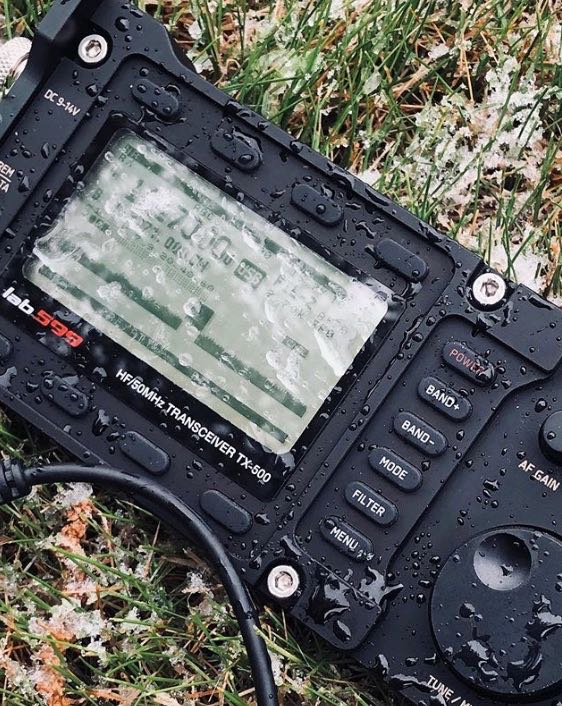
Weatherized
Expected availability autumn 2019
Target retail price is $700 US
Product website is forthcoming
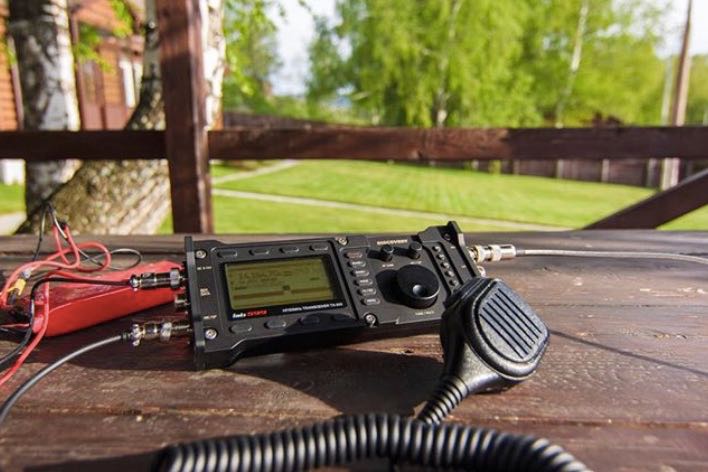
All of the following images came from the Discovery TX-500 gallery on Instagram:
For someone, like me, who loves playing radio in the field (Parks On The Air and Summits On The Air) this looks like an ideal rig. It’s one of the only ham radio transceivers I’ve seen that is weatherized to some degree (how much, we don’t know yet).
I don’t see a speaker on the TX-500, so I’m guessing it might require a mic/speaker combo or an external speaker of some sort? I also don’t see a built-in ATU, but at $700, I certainly wouldn’t expect one.
With a power consumption of 110 milliamps at 13.8 VDC, this little transceiver should run for ages on a modest battery pack.
This is certainly a fascinating prototype QRP transceiver. If the Discovery TX-500 transceiver can be produced and marketed at $700 with all of the features mentioned so far, it should certainly fly off the shelves. They can certainly take my money!
Of course, I will plan to grab one of these for review. I’m also eager to see how this little SDR transceiver might perform on the broadcast bands.
We will post post TX-500 updates and details as they become available. Bookmark the tag Discovery TX-500 and stay tuned!
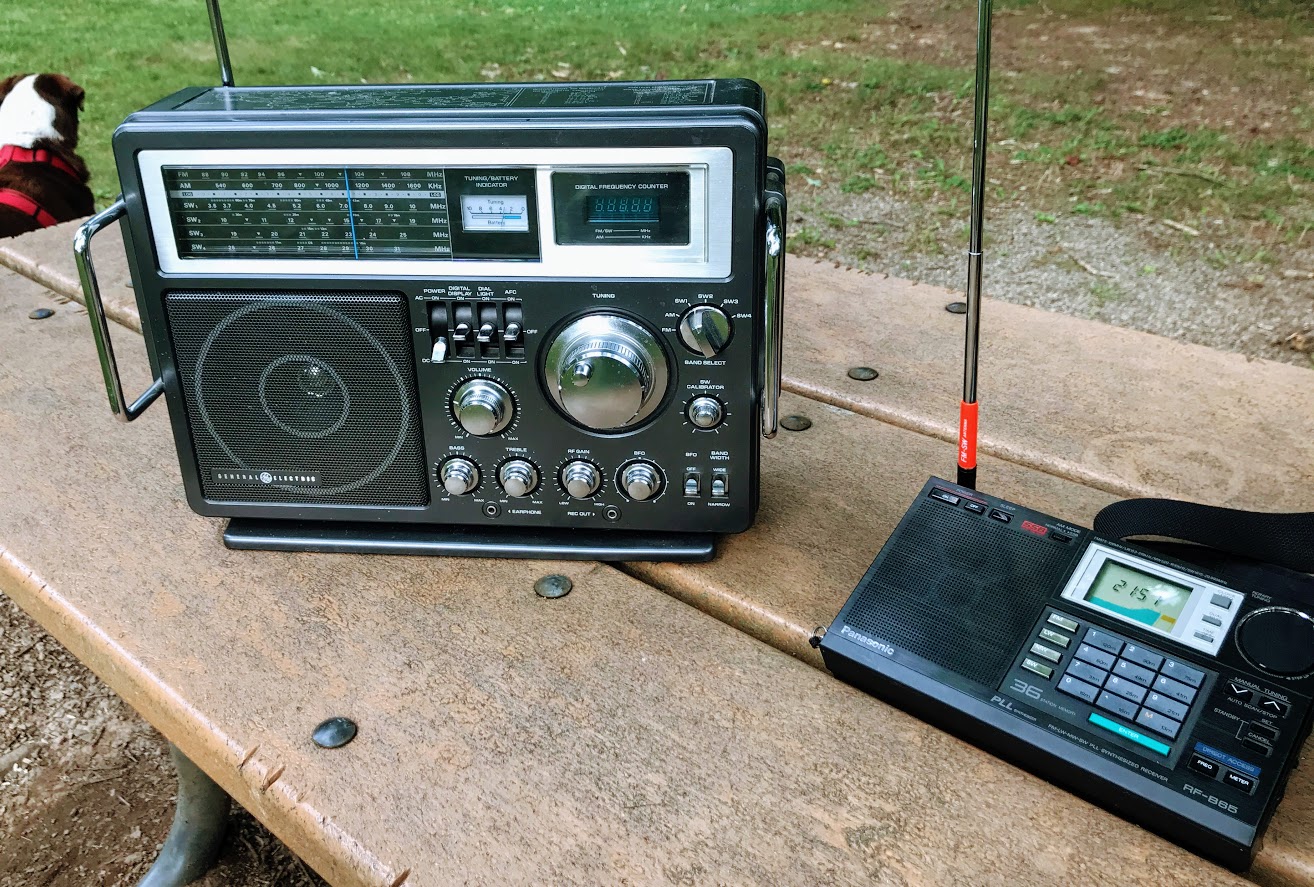
The GE 7-2990A (left) and Panasonic RF-B65 (right)
This has been a very crazy and radio-active weekend!
It started with a busy Friday that was capped off with the BBC Midwinter Broadcast and then continued into Saturday with a Parks On The Air activation and Field Day at Mount Mitchell State Park.
The Midwinter Broadcast has never been an easy catch here in North America–after all, the BBC aim their signals to Antarctica–but I always manage to receive the program with only a portable and I’m almost always travelling on the day of the broadcast.
This year, I was actually at home and could have used one of my SDRs at home to snag the broadcast, but it’s become a bit of a tradition to listen in the field, so that’s what I did.
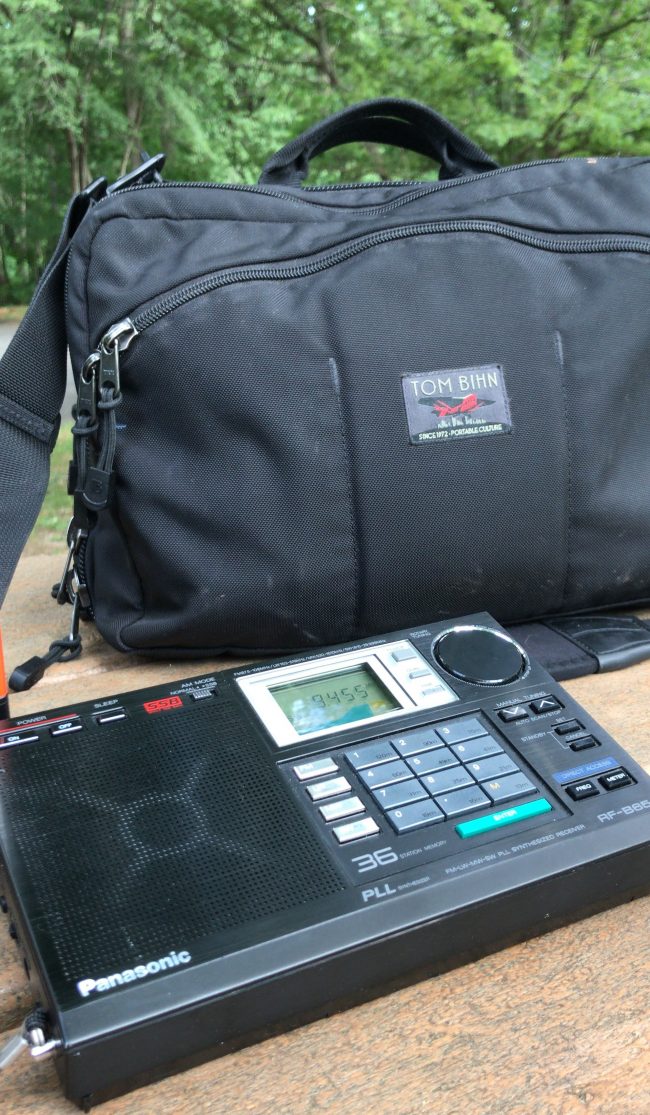
Knowing how difficult it would be to receive the broadcast–especially given the poor propagation–I reached for one of my “Holy Grail” portables: the Panasonic RF-B65.
The Panny RF-B65 is a portable DX hound!
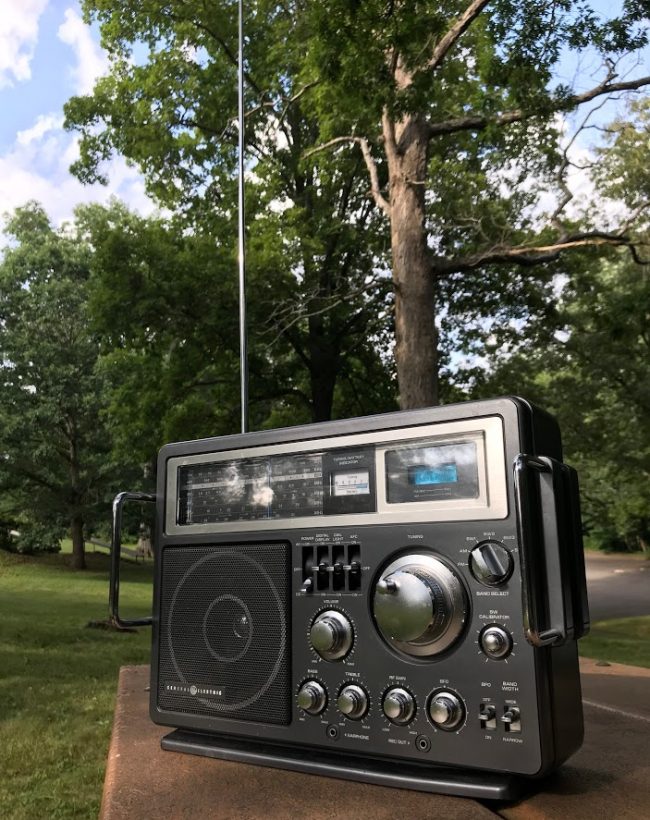
I never take only one radio to the field, though, so I decided it was time to give the hefty GE 7-2990A a little outdoor time on the Blue Ridge Parkway.
The GE 7-2990A
I’ve only had the GE 7-2990A for a few months. It came from the estate of my dear friend Michael Pool (The Professor) who passed away earlier this year.
This particular radio has quite an amazing history–remind me to share the story someday–but I’ll always cherish the 7-2990A because it was one of Michael’s favorites.
I knew the GE was one of Michael’s favorite mediumwave receivers, but I wasn’t sure how well it would perform on the shortwaves. Turns out, it’s quite an amazing HF receiver!
Out of the the three Midwinter Broadcast frequencies (5875, 7360, and 9455 kHz), I could receive the 7,360 kHz signal from Ascension Island best.
I was quite surprised with the 7-2990A’s ability to pluck this weak signal from the ether. Although the video doesn’t do it justice, the GE’s excellent audio fidelity made listening more enjoyable compared with the much smaller RF-B65.
And, yes, that’s my faithful brown and white listening companion, Hazel, in the background. In truth, she was less interested in the broadcast and more interested in finding squirrels!
Your Midwinter recordings–stay tuned!
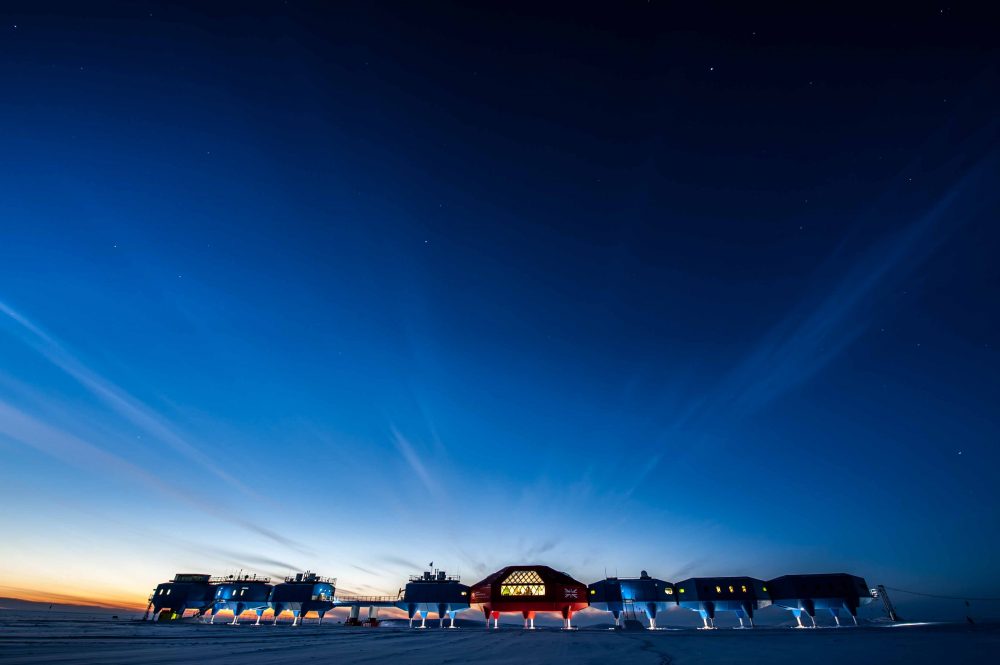
Halley VI Research Station on the Brunt Ice Shelf in Antarctica (Source: British Antarctic Survey)
I’ve already received about twenty emails from SWLing Post readers with audio and video recordings of the Midwinter Broadcast. Thank you!
If you would like to submit your recording, and you haven’t yet, please do so by email (thomas *at* swling.com) so I don’t overlook it. Remember to link to your video so that I can easily embed it on the upcoming post. Please don’t send me duplicate emails as it makes the sorting process more difficult.
I’ll try to find recordings linked via Twitter and Facebook, but it’s much more difficult to sort those in comments and know for sure that I’ve discovered them all.
Please note that, due to my schedule, it will likely be two weeks before the final post is published. I appreciate your patience and understanding!
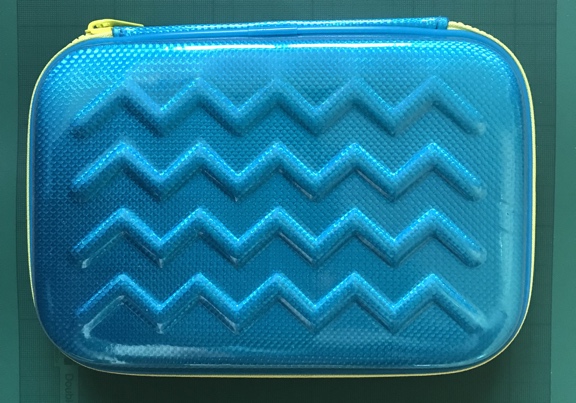
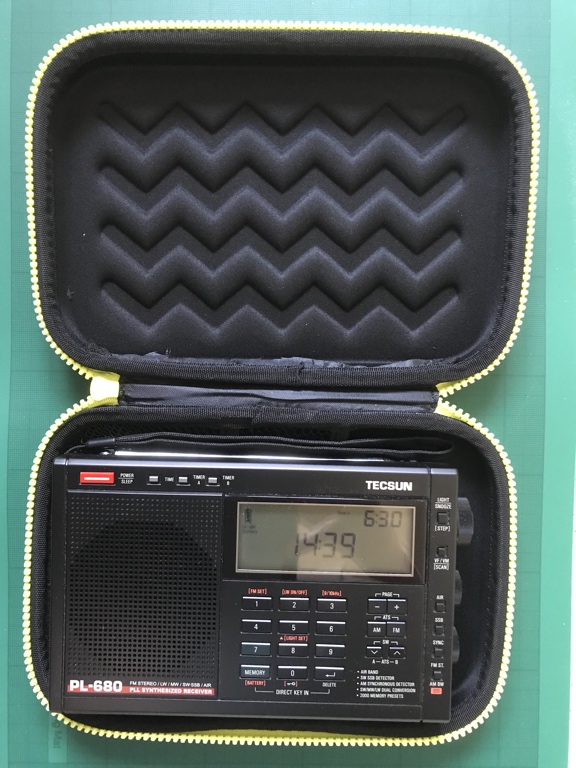
I spotted a £3 semi-rigid pencil case that looked like it might fit my new PL-680, and when I got it home, found that it was a great fit.
I cut out the internal flap that holds the pens with scissors, and the result speaks for itself.
Wow! That’s a brilliant case for for the PL-680, Mark! That exterior color will also ensure you never lose it in the wild. Thanks for sharing this tip. What a fabulous bargain at £3! Post readers in the UK, take note!
Halley VI Research Station on the Brunt Ice Shelf in Antarctica (Source: British Antarctic Survey Team)
Every year, the BBC broadcasts a special program to the scientists and support staff in the British Antarctic Survey Team. The BBC plays music requests and sends special messages to the small team of 40+ located at various Antarctic research stations. Each year, the thirty minute show is guaranteed to be quirky, nostalgic, and certainly a DX-worthy catch!
After successful listener events from years past, I’m once again calling on all SWLing Post readers and shortwave radio listeners to make a short recording (say, 30-60 seconds) of the BBC Antarctic Midwinter Broadcast today and share it here at the Post.
The broadcast will take place at 21:30 UTC today.
Many thanks to SWLing Post contributors Richard Langley and Alan Pennington who confirm the following broadcast frequencies:
5875 kHz
7360 kHz
9455 kHz
If you would like to participate in our BBC Antarctic Midwinter Broadcast recording event, please read our original post which includes all relevant details.
Every year, the BBC broadcasts a special program to the scientists and support staff in the British Antarctic Survey Team. The BBC plays music requests and sends special messages to the small team of 40+ located at various Antarctic research stations. Each year, the thirty minute show is guaranteed to be quirky, nostalgic, and certainly a DX-worthy catch!
After successful listener events from years past, I’m once again calling on all SWLing Post readers and shortwave radio listeners to make a short recording (say, 30-60 seconds) of the BBC Antarctic Midwinter Broadcast today and share it here at the Post (frequencies and time below).
Halley VI: The British Antarctic Survey’s new base (Source: British Antarctic Survey)
The recording can be audio-only, or even a video taken from any recording device or smart phone. It would be helpful to have a description and/or photo of your listening environment and location, if possible. Please only submit recordings made from your location–since this is all about how you’re able to receive the broadcast at your location, we would rather not include WebSDR recordings.
Audio should be in the MP3 format and videos either hosted on YouTube or Vimeo so that I can easily embed them without having to convert and upload myself.
If you submit your recording to me, I will post it here on the SWLing Post–and insure that the British Antarctic Survey receives the post, too. The recordings will be arranged by geographic location. Note that due to my schedule this year, it might take a few weeks before I can curate all of the recordings (the process typically takes 8+ hours!).
Frequencies
UPDATE (June 21, 2019): Broadcast frequencies have been confirmed by the BBC as 5875, 7360, and 9455 kHz.
Please note that the broadcast begins at 2130 UTC on (Friday) June 21, 2019.
The following frequencies were provided by The Bulgarian DX Blog and were used in the BBC test broadcast. Typically, the same frequencies are used during the live broadcast—we will update this post with any last-minute changes.:
2130-2145 on 5875 WOF 300 kW / 184 deg to Antarctica English-very good 2130-2145 on 5990 DHA 250 kW / 203 deg to Antarctica English-fair/good 2130-2145 on 7360 ASC 250 kW / 207 deg to Antarctica English-very good 2130-2145 on 9455 WOF 300 kW / 182 deg to Antarctica English-very good
The Midwinter broadcast is one of my favorite programs of the year. I suppose, in part, this is because it happens on June 21–the Summer/Winter solstice–which also happens to be my birthday! Woo hoo!