Category Archives: Shortwave Radio

The lab599 Discovery TX-500 ruggedized portable QRP transceiver

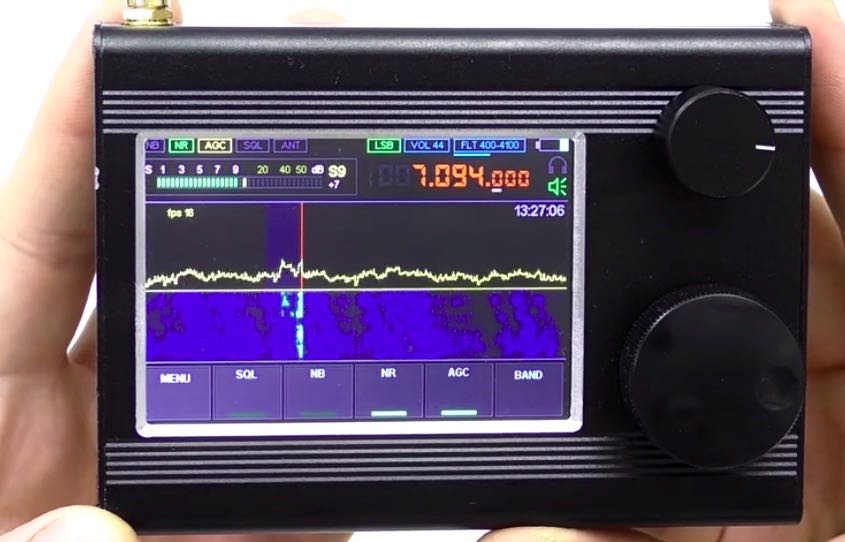
Many thanks to SWLing Post contributor, Vlad, who shares some images and a video of a new QRP transceiver in development: the Discovery TX-500 by a company called lab599.

Specifications have not been published yet, but we have confirmed a few details from the manufacturer:

  • 10 watts PEP
  • HF plus 6 meters
  • Weight 570 grams (1.25 pounds)
  • Voltage 9 – 14 VDC
  • 105 milliamps at 13.8 VDC and with backlit display on
  • CAT control via USB and using Kenwood codes
  • I/Q outputs
  • Weatherized
  • Expected availability autumn 2019
  • Target retail price is $700 US
  • Product website is forthcoming

All of the following images came from the Discovery TX-500 gallery on Instagram:

Here are a few videos:

Click here to view on Instagram.

Click here to view on Instagram.

Click here to view on Instagram.

For someone, like me, who loves playing radio in the field (Parks On The Air and Summits On The Air) this looks like an ideal rig. It’s one of the only ham radio transceivers I’ve seen that is weatherized to some degree (how much, we don’t know yet).

I don’t see a speaker on the TX-500, so I’m guessing it might require a mic/speaker combo or an external speaker of some sort? I also don’t see a built-in ATU, but at $700, I certainly wouldn’t expect one.

With a power consumption of 110 milliamps at 13.8 VDC, this little transceiver should run for ages on a modest battery pack.

This is certainly a fascinating prototype QRP transceiver. If the Discovery TX-500 transceiver can be produced and marketed at $700 with all of the features mentioned so far, it should certainly fly off the shelves. They can certainly take my money!

Of course, I will plan to grab one of these for review. I’m also eager to see how this little SDR transceiver might perform on the broadcast bands.

We will post post TX-500 updates and details as they become available. Bookmark the tag Discovery TX-500 and stay tuned!


Do you enjoy the SWLing Post?

Please consider supporting us via Patreon or our Coffee Fund!

Your support makes articles like this one possible. Thank you!

2019 BBC Midwinter Broadcast: Comparing the Panasonic RF-B65 and GE 7-2990A

The GE 7-2990A (left) and Panasonic RF-B65 (right)

This has been a very crazy and radio-active weekend!

It started with a busy Friday that was capped off with the BBC Midwinter Broadcast and then continued into Saturday with a Parks On The Air activation and  Field Day at Mount Mitchell State Park.

In short: it’s been a lot of fun!

I’ll plan to give a short report of Field Day later–it was one to remember–but first let’s talk about the 2019 BBC Midwinter Broadcast to Antarctica

To the field!

The Midwinter Broadcast has never been an easy catch here in North America–after all, the BBC aim their signals to Antarctica–but I always manage to receive the program with only a portable and I’m almost always travelling on the day of the broadcast.

This year, I was actually at home and could have used one of my SDRs at home to snag the broadcast, but it’s become a bit of a tradition to listen in the field, so that’s what I did.

Knowing how difficult it would be to receive the broadcast–especially given the poor propagation–I reached for one of my “Holy Grail” portables: the Panasonic RF-B65.

The Panny RF-B65 is a portable DX hound!

I never take only one radio to the field, though, so I decided it was time to give the hefty GE 7-2990A a little outdoor time on the Blue Ridge Parkway.

The GE 7-2990A

I’ve only had the GE 7-2990A for a few months. It came from the estate of my dear friend Michael Pool (The Professor) who passed away earlier this year.

This particular radio has quite an amazing history–remind me to share the story someday–but I’ll always cherish the 7-2990A because it was one of Michael’s favorites.

I knew the GE was one of Michael’s favorite mediumwave receivers, but I wasn’t sure how well it would perform on the shortwaves. Turns out, it’s quite an amazing HF receiver!

Out of the the three Midwinter Broadcast frequencies (5875, 7360, and 9455 kHz), I could receive the 7,360 kHz signal from Ascension Island best.

Here’s a short (informal) comparison video:

Click here to view on YouTube.

I was quite surprised with the 7-2990A’s ability to pluck this weak signal from the ether. Although the video doesn’t do it justice, the GE’s excellent audio fidelity made listening more enjoyable compared with the much smaller RF-B65.

Click here to view on YouTube.

And, yes, that’s my faithful brown and white listening companion, Hazel, in the background. In truth, she was less interested in the broadcast and more interested in finding squirrels!

Your Midwinter recordings–stay tuned!

Halley VI Research Station on the Brunt Ice Shelf in Antarctica (Source: British Antarctic Survey)

I’ve already received about twenty emails from SWLing Post readers with audio and video recordings of the Midwinter Broadcast. Thank you!

If you would like to submit your recording, and you haven’t yet, please do so by email (thomas *at* swling.com) so I don’t overlook it. Remember to link to your video so that I can easily embed it on the upcoming post. Please don’t send me duplicate emails as it makes the sorting process more difficult.

I’ll try to find recordings linked via Twitter and Facebook, but it’s much more difficult to sort those in comments and know for sure that I’ve discovered them all.

Please note that, due to my schedule, it will likely be two weeks before the final post is published. I appreciate your patience and understanding!


Do you enjoy the SWLing Post?

Please consider supporting us via Patreon or our Coffee Fund!

Your support makes articles like this one possible. Thank you!

A protective case for the Tecsun PL-680, PL-660, and similar portables

Many thanks to SWLing Post contributor, Mark Hirst, who writes:

It seems the world is full of containers that are serendipitously sized for radios and other treasured possessions.

Unfortunately, this tip is probably only helpful to UK based readers of the SWLing Post.

WH Smiths, high street stationer and purveyors of newspapers and magazines, infamous for their high prices and poor service, were doing a clearance sale in my neighbourhood.

I spotted a £3 semi-rigid pencil case that looked like it might fit my new PL-680, and when I got it home, found that it was a great fit.

I cut out the internal flap that holds the pens with scissors, and the result speaks for itself.

Wow! That’s a brilliant case for for the PL-680, Mark! That exterior color will also ensure you never lose it in the wild. Thanks for sharing this tip. What a fabulous bargain at £3!  Post readers in the UK, take note!

Reminder: Help record the 2019 BBC Antarctic Midwinter Broadcast today

Halley VI Research Station on the Brunt Ice Shelf in Antarctica (Source: British Antarctic Survey Team)

Every year, the BBC broadcasts a special program to the scientists and support staff in the British Antarctic Survey Team. The BBC plays music requests and sends special messages to the small team of 40+ located at various Antarctic research stations. Each year, the thirty minute show is guaranteed to be quirky, nostalgic, and certainly a DX-worthy catch!

After successful listener events from years past, I’m once again calling on all SWLing Post readers and shortwave radio listeners to make a short recording (say, 30-60 seconds) of the BBC Antarctic Midwinter Broadcast today and share it here at the Post.

The broadcast will take place at 21:30 UTC today.

Many thanks to SWLing Post contributors Richard Langley and Alan Pennington who confirm the following broadcast frequencies:

  • 5875 kHz
  • 7360 kHz
  • 9455 kHz

If you would like to participate in our BBC Antarctic Midwinter Broadcast recording event, please read our original post which includes all relevant details.

ELAD introduces the new DUO-X SDR Transceiver

Many thanks to SWLing Post contributor, Paul Jones, who shares an image of the new ELAD DUO-X transceiver:

A prototype of the DUO-X will be on display this weekend at Ham Radio Friedrichshafen this weekend.

I don’t have a lot of details about the DUO-X yet, but here is what I can confirm:

  • There will be two 2 versions 120 watt and a 220 watt
  • 4 independent receivers
  • 10.2 inch touchscreen
  • 4x 1″ OLED screens above four programmable multifunction knobs
  • Built-in ATU
  • Stand-alone or connect to your PC

More details to follow! Bookmark the tag ELAD DUO-X for updates.

June 21: Help record the 2019 BBC Antarctic Midwinter Broadcast

Every year, the BBC broadcasts a special program to the scientists and support staff in the British Antarctic Survey Team. The BBC plays music requests and sends special messages to the small team of 40+ located at various Antarctic research stations. Each year, the thirty minute show is guaranteed to be quirky, nostalgic, and certainly a DX-worthy catch!

After successful listener events from years past, I’m once again calling on all SWLing Post readers and shortwave radio listeners to make a short recording (say, 30-60 seconds) of the BBC Antarctic Midwinter Broadcast today and share it here at the Post (frequencies and time below).

Halley VI: The British Antarctic Survey’s new base (Source: British Antarctic Survey)

The recording can be audio-only, or even a video taken from any recording device or smart phone. It would be helpful to have a description and/or photo of your listening environment and location, if possible. Please only submit recordings made from your location–since this is all about how you’re able to receive the broadcast at your location, we would rather not include WebSDR recordings.

Audio should be in the MP3 format and videos either hosted on YouTube or Vimeo so that I can easily embed them without having to convert and upload myself.

If you submit your recording to me, I will post it here on the SWLing Post–and insure that the British Antarctic Survey receives the post, too.  The recordings will be arranged by geographic location. Note that due to my schedule this year, it might take a few weeks before I can curate all of the recordings (the process typically takes 8+ hours!).

Frequencies

UPDATE (June 21, 2019): Broadcast frequencies have been confirmed by the BBC as 5875, 7360, and 9455 kHz.

Please note that the broadcast begins at 2130 UTC on (Friday) June 21, 2019.

The following frequencies were provided by The Bulgarian DX Blog and were used in the BBC test broadcast. Typically, the same frequencies are used during the live broadcast—we will update this post with any last-minute changes.:

2130-2145 on 5875 WOF 300 kW / 184 deg to Antarctica English-very good
2130-2145 on 5990 DHA 250 kW / 203 deg to Antarctica English-fair/good
2130-2145 on 7360 ASC 250 kW / 207 deg to Antarctica English-very good
2130-2145 on 9455 WOF 300 kW / 182 deg to Antarctica English-very good

The Midwinter broadcast is one of my favorite programs of the year. I suppose, in part, this is because it happens on June 21–the Summer/Winter solstice–which also happens to be my birthday! Woo hoo!

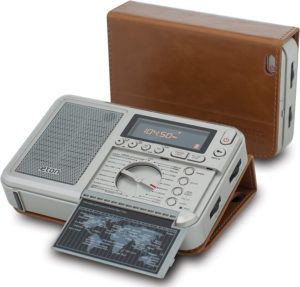
Update: Eton Elite Satellit expected Q4 with pre-order price of $349 US

Universal Radio has posted a product page for the new Eton Elite Satellit.

Pre-Order

As they have done in the past, Universal is offering a “pre-order” discounted price of $349.95 that will not be charged to the buyer until the unit actually ships.

Availability

Universal expects the Elite Satellit to ship sometime in the 4th Quarter of 2019.

I gather the Elite Satellit is still very much in the design and development stage, so I would even take the expected availability date with a grain of salt. Much may depend on how well the initial prototypes perform in evaluations. With that said, I’m sure Eton will do all they can to have the Elite Satellit ready for the 2019 holiday season.

Not a hoax–!

I’ve gotten a number of emails and comments from readers asking if the Elite Satellit is a hoax. I can assure you it is not. 🙂

I get why so many are skeptical, though. It’s not often that a legacy receiver–one that’s been off the market for nearly a decade–is re-introduced with an identical chassis, and with the promise of some internal upgrades. In fact, I can’t think of a time this has happened in the past.

Features and Specifications

All we know about the Elite Satellit is what is mentioned in Universal’s product description:

The Eton Elite Satellit is simply the finest full-sized portable in the world. The Elite Satellit is an elegant confluence of performance, features and capabilities. The look, feel and finish of this radio is superb. The solid, quality feel is second to none. The digitally synthesized, dual conversion shortwave tuner covers all long wave, mediums wave (AM) and shortwave frequencies. HD Radio improves audio fidelity and adds additional programming without a subscription fee. Adjacent frequency interference can be minimized or eliminated with a choice of three bandwidths [7.0, 4.0, 2.5 kHz]. The sideband selectable Synchronous AM Detector further minimizes adjacent frequency interference and reduces fading distortion of AM signals. IF Passband Tuning is yet another advanced feature that functions in AM and SSB modes to reject interference. AGC is selectable at fast or slow. High dynamic range permits the detection of weak signals in the presence of strong signals. All this coupled with great sensitivity will bring in stations from every part of the globe. Organizing your stations is facilitated by 500 user programmable presets with alpha labeling, plus 1200 user definable country memories, for a total of 1700 presets. You can tune this radio many ways such as: direct shortwave band entry, direct frequency entry, up-down tuning and scanning. Plus you can tune the bands with the good old fashioned tuning knob (that has new fashioned variable-rate tuning). There is also a dual-event programmable timer. Whether you are listening to AM, shortwave, FM or FM-HD, you will experience superior audio quality via a bridged type audio amplifier, large built in speaker and continuous bass and treble tone controls. RDS is included. Stereo line-level output is provided for recording or routing the audio into another device such as a home stereo. The absolutely stunning LCD has 4 levels of backlighting and instantly shows you the complete status of your radio.

Many receiver parameters such as AM step, FM coverage, beep, kHz/MHz entry etc., can be set to your personal taste via the preference menu. The Elite Satellit has a built in telescopic antenna for AM, shortwave and FM reception. Additionally there is a switchable antenna jack (PAL male) for an external antenna. Universal will offer antenna jack adapters.

This radio comes with a protective carry bag and AC adapter or may be operated from four D cells (not included). The Eton Elite Satellit is for world explorers who want to travel first class.

I agree with Post contributor Guy Atkins: the Elite Satellit appears to be based on the Eton E1 analog circuitry. Guy points to three clues in this recent comment:

  • Exact same three I.F. bandwidths as on the E1 (7.0, 4.0, 2.5 kHz). If this is a DSP radio, why only these three bandwidths?
  • Selectable sideband synchronous AM detector, as found in the E1. I’m not aware of any SiLabs chips that can provide *selectable* sidebands on sync AM.
  • I.F. passband shift control. Again, this is not a feature in any consumer DSP radio I know of.

Of course, all of the specifications Universal has published are “preliminary and subject to change.”

As I mentioned in a previous post, you can count on us to review the Elite Satellit as soon as it’s available.

Click here to pre-order the Eton Elite Satellit at Universal Radio.

To follow Eton Elite Satellit updates, bookmark this tag.


Do you enjoy the SWLing Post?

Please consider supporting us via Patreon or our Coffee Fund!

Your support makes articles like this one possible. Thank you!