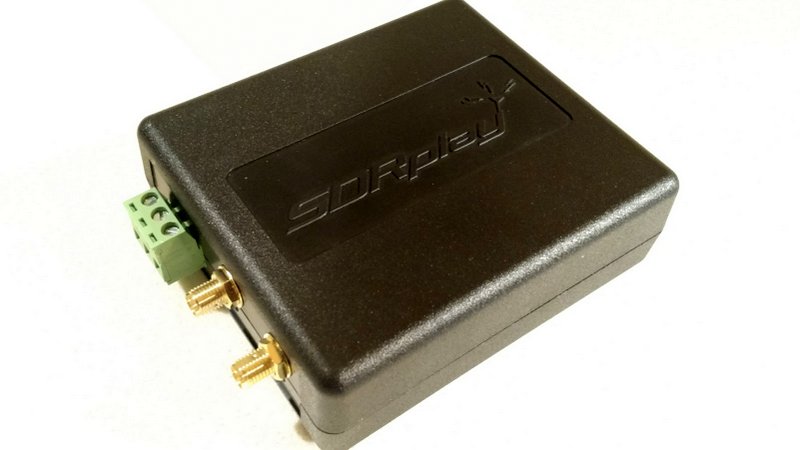
The SDRplay RSP2
This morning, SDRplay Limited announced the release––and availability––of their second generation software defined radio, the RSP2.
Regular SWLing Post readers will note that I’m a pretty big fan of SDRplay’s first SDR, the RSP, or “RSP1,” as I’ll now call it (I published a review of the RSP1 in July 2015). To me, the $129 RSP1 has been the best wideband receiver you can buy under $200 US. Its HF performance, in particular, is sincerely impressive at this price point.
Introducing the RSP2
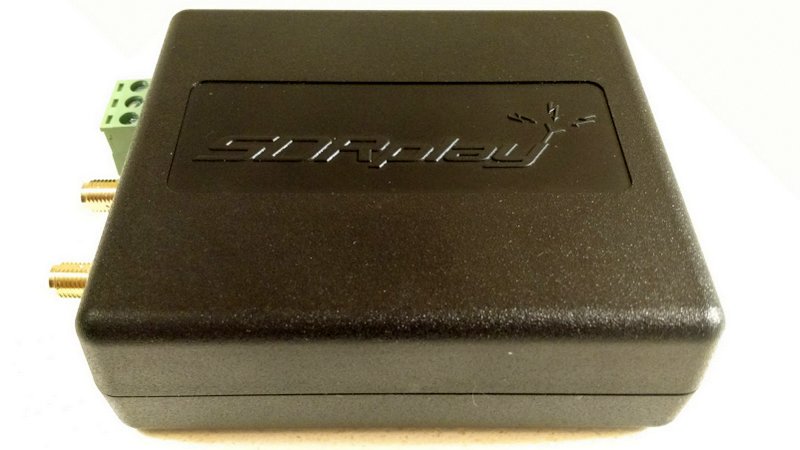
So what’s the RSP2, and how does it differ from the original RSP?
In a nutshell, here’s how SDRplay describes the difference between the two:
“The RSP2 delivers a significant number of additional features which result in a higher spec for specialist amateur radio users as well as benefits for additional scientific, educational and industrial SDR applications.”
In a sense, the RSP2 gives the enthusiast and experimenter access to more receiver parameters and control, opening it to a wider array of possible applications. The RSP2 will also cover a broader range, from as low as 1 kHz to as high as to 2 GHz, and is designed with better selectivity across the spectrum. Enhanced selectivity will certainly benefit amateur radio operators and SWL DXers who might seek weak signals in crowded portions of the band.
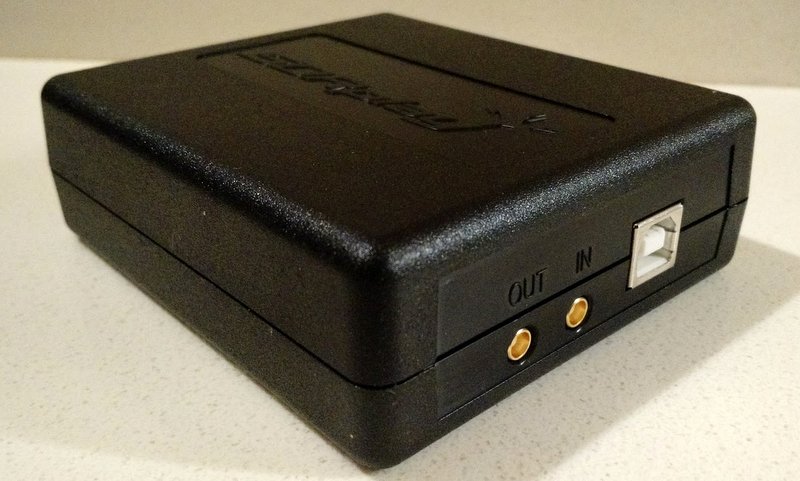
The following list outlines the primary additional features of the RSP2 (via SDRplay’s press release):
- 10 built-in, front-end pre-selection filters, with substantially enhanced selectivity
- Frequency coverage extended down to 1 KHz
- Software selectable variable gain Low Noise Preamplifier
- 2 x SMA Software Selectable 50? RF ports (1.5 MHz – 2 GHz)
- 1 x High Impedance RF port (1 kHz – 30 MHz)
- Built-in software selectable MW /FM notch filters
- Highly stable 0.5PPM TCXO trimmable to 0.01PPM
- 24MHz Reference clock input / output connections
- 4.7V Bias-T option (on one of the software selectable antenna inputs)
- RF screening within a strong plastic case for the standard RSP2
- A Rugged metal box version – the ‘RSP2pro’
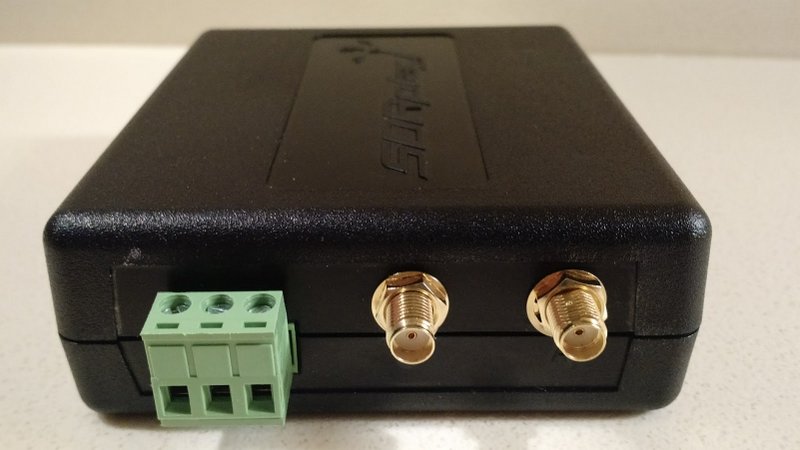
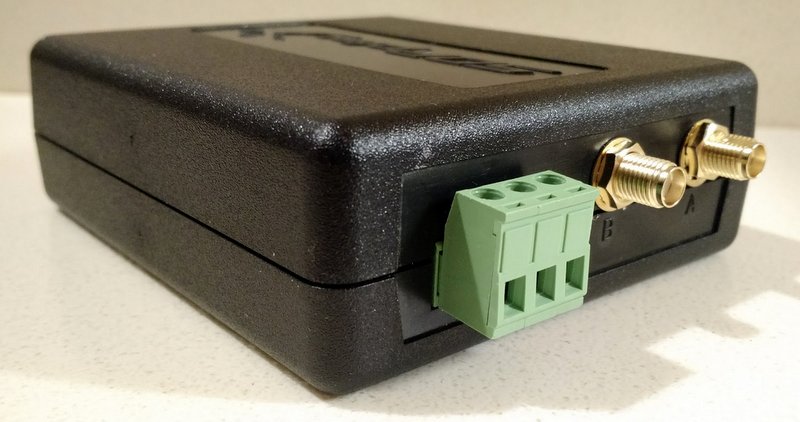
The RSP2 has a total of three antenna ports: two SMA and one Hi Z for optimal LW/MW/SW performance
For the moment, the RSP2 only works with SDRplay’s own application, SDRuno. But SDRplay is already working with developers to make the RSP2 compatible with HDSDR, Gnu Radio, CubicSDR, and SDR Console. I appreciate that although the RSP series has an excellent free proprietary application (SDRuno), it was nonetheless developed with many open-source applications, also free, as well. This level of compatibility and support makes SDRplay rather unique among SDR manufacturers.
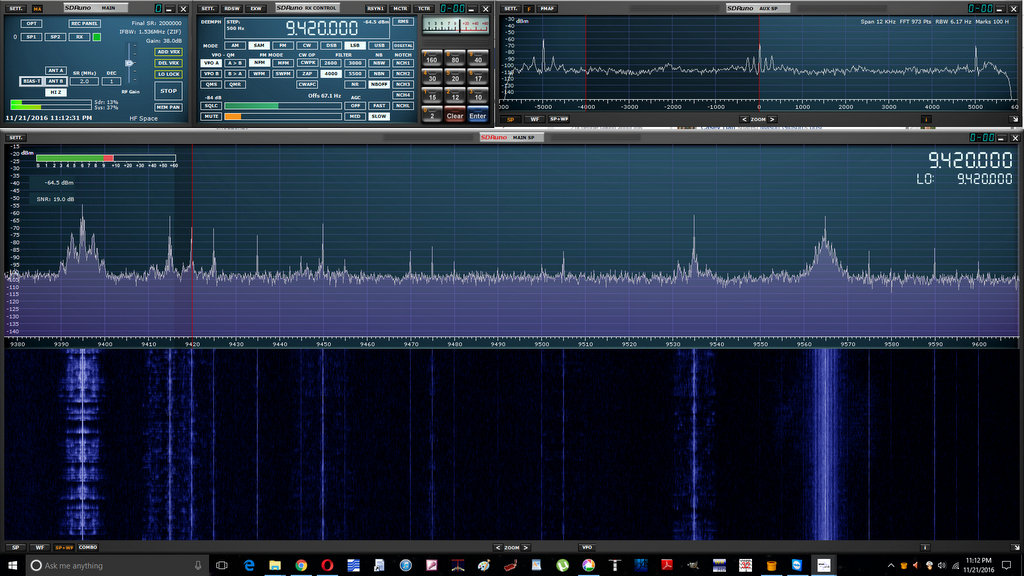
SDRuno running the RSP2 (click to enlarge).
Of course, SDRuno is a great application in its own right, and pairing it with the RSP2 will provide you with out-of-the-box calibrated RF and S meters. So far I’m very pleased with native SDRuno features like virtual receivers, embedded time code, spectrum display options, and streamlined design.
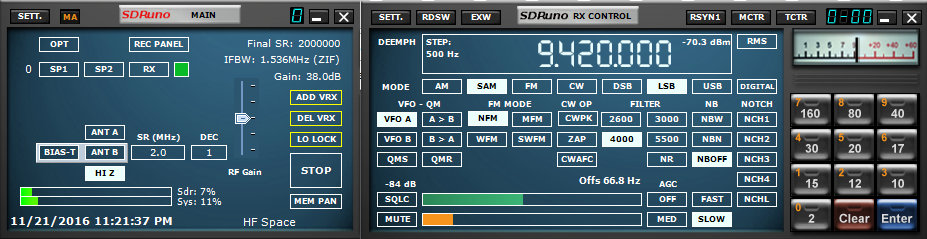
Current SDRuno users will note the different antenna and filter options with the RSP2 which works natively with the latest versions of SDRuno (click to enlarge).
SDRuno installs very easily and provides a plug-and-play experience. It does have a modest learning curve, but SDRplay has an excellent owner’s manual and “cookbook” available to help you set everything up the first time.
Preliminary impressions of the RSP2
SDRplay sent me a pre-release RSP2 (the base model, not the metal box “Pro” version) to evaluate and provide the company with feedback.
I installed SDRuno and put it on the air only this past week. In truth, as I’ve been traveling and must be on the road again this coming week, I prefer not to comment, at least in depth, on the SDRplay’s performance as I’ve had comparatively little dedicated time with the unit.
Yet I have had the RSP2 on the air a few hours of casual listening, and find that it performs as I would expect: low noise characteristics and sensitivity that seems to be at least as good as the RSP1, if not a bit better. I’m looking forward to a side-by-side with the RSP1 running an install of SDRuno on my laptop!
I must say that I’m very pleased with the RSP2’s Mediumwave/FM notch filter. It happens that a local daytime 45kW AM broadcaster in our area is having transmitter issues which send wideband spurs across the entire HF spectrum; but at night, when the station lowers its power levels, the RSP2’s MW notch filter effectively mitigates the noisy signal. I imagine this filter will be a welcome addition for listeners living in RF-dense environments.
When the RSP1 was first introduced, it retailed for $149. As the economies of scale worked in their favor, SDRplay lowered the price to $129. The new RSP2, meanwhile, is expected to retail at approximately £130 (excluding taxes), or $169 US (excluding taxes). Quite a value, in my opinion: at $169, you’re getting a lot of SDR for the price––and an effective SDR application, to boot.
But if you already own an RSP1, I wouldn’t necessarily rush out and grab the RSP2 just yet. Of course, if you like the added features mentioned above, or if you’d like an inexpensive SDR with no less than three switchable antenna ports and a MW/FM notch filter, $169 is a bargain and about the same level of investment as a good modern shortwave portable.
As for myself, I’m happy to see a mom-and-pop community-supported company like SDRplay continuing to innovate for our hobby. I’m pleased to support them, and am truly appreciative that they also support our SWLing Post. This is a win-win, in my view; I’d be pleased to support more such companies.
Again, check back here as I plan to compare the RSP2 with the RSP1 and several of my other SDRs.
Click here to read SDRplay’s full announcement and press release.
I plan to take the RSP2 with me on my travels this week. Time permitting, I might even pair it with my recently acquired PK magnetic loop antenna for some spectrum gathering and testing.
In the coming weeks, as my schedule permits, I’ll post updates here on the SWLing Post, including audio comparisons with some of my SDRs. If interested, bookmark the tag RSP2.
For more information about RSP2 pricing and availability, check out SDRplay.com.
Update: Check out RTL-SDR.com’s assessment of the RSP2.
SDRplay has also posted the following video: