Category Archives: Shortwave Radio

BBG tries to improve employee morale

BBG-LogoIn December 2012, we posted a survey from the 2012 edition of The Best Places to Work in the Federal Government by The Partnership for Public Service and Deloitte. The survey indicated that the Broadcasting Board of Governers (BBG) had been ranked in the bottom five places to work in the federal government.

According to the Washington Post, the agency is now working on a plan to boost employee morale. Some of their initiatives include:

“Agency directors and senior staff hold[ing] face-time sessions in the cafeteria for informal talks with employees, a “Civility Campaign” addresses labor-management issues, and a Workplace Engagement Initiative takes a deeper dive into the agency’s low morale ratings.

Some of the morale-boosting events are meant to be fun, such as the raffle during the fitness-center open house, a chocolate bake-off in time for Valentine’s Day, and ?after-work gatherings — a bingo night, happy hour, checkers and chess.

It’s going to take all that and some sustained work to improve the agency’s failing report cards.”

Read the full article on The Washington Post…

Many thanks to Richard Cuff for the tip!
Horizon FM Tenerife now on shortwave

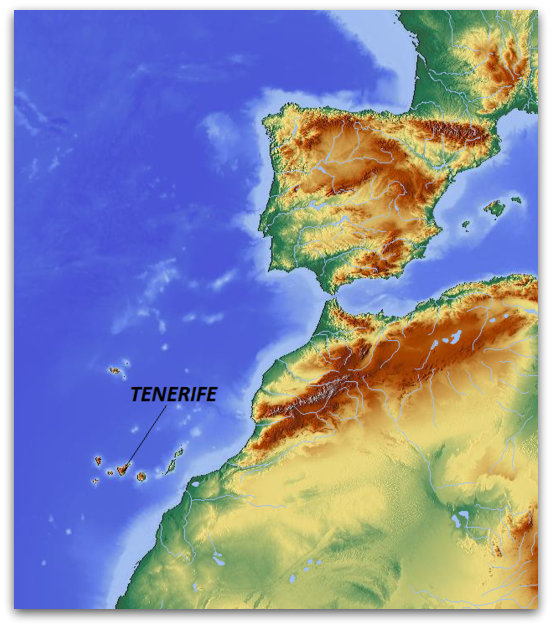
524px-Tenerife_locatorThanks to Mike Barraclough for this info:

“Horizon FM Tenerife has started broadcasting on shortwave on 5,780 [kHz], 75 watts at the moment, short English announcement on their website.”

More information can be found here along with an announcement that Horizon plans to increase output power to 1kW within the next three weeks.

Mike originally posted this info on the Cumbre DX FB page.

Eight new recordings in the Media Network Vintage Vault

RNW headquarters in Hilversum, Netherlands (photo coutesty: RNW)

RNW’s former headquarters in Hilversum, Netherlands (photo: RNW)

Jonthan Marks has just informed me that he’s added new studio recordings  to the Media Network Vintage Vault.

They include:

Jonathan comments, “I think you might like the Radio New Zealand stuff. Sounds like it was recorded yesterday.”

The New Zealand Bellbird (Anthornis melanura) provides the interval signal for RNZI (Photo: Wikimedia Commons)

The New Zealand Bellbird (Anthornis melanura) provides the interval signal for RNZI (Photo: Wikimedia Commons)

Indeed it does!

To top it off, I’m still amazed RNZI is still on the air and pumping out an amazing signal into North America. Click here for a recording made only one week ago.

Having never heard a New Zealand Bellbird live, I was most impressed to hear how RNZI (in the 1950s!) modified the Bellbird’s call for the distinctive RNZI interval signal. Don’t want to give it away, though, listen for yourself.

Shortwave Radio Recordings: Voice of America, circa 1968

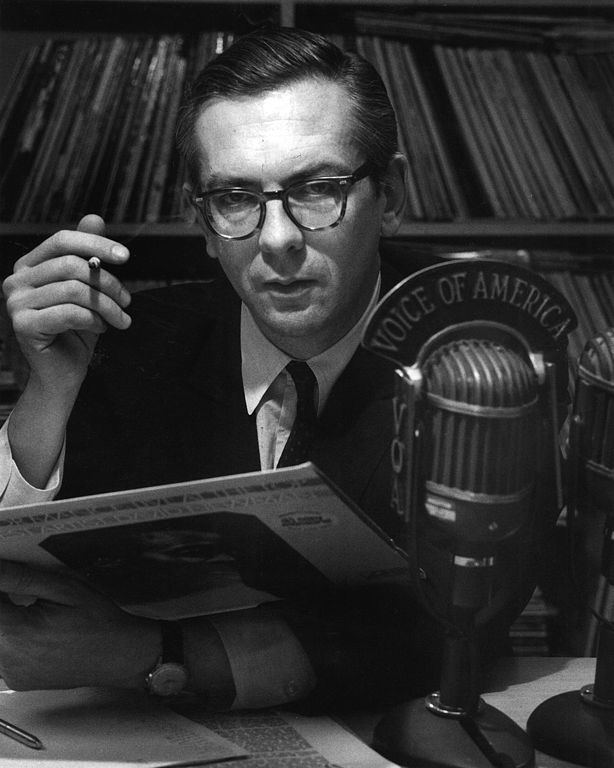
Willis Conover, The Voice of America (Source: Wikimedia Commons)

Many thanks to David Firth, who is kindly sharing shortwave radio recordings he made on reel-to-reel recording equipment in the late 1960s.

Firth is uncovering and digitizing these off air recordings as time allows and, thanks to his generosity, we will be posting these recordings on the Shortwave Radio Audio Archive.

The following is a recording of the Voice of America, which Firth recorded in 1968.

This seven minute recording will surely bring back memories with clips from VOA Jazz Hour (Willis Conover), the VOA Breakfast Show, and VOA Special English.

[Confession: the first time I heard this recording, the Willis Conover clip gave me chill bumps.]

Click here to download the recording as an MP3, or simply listen via the embedded player below:

Check out more recordings on the Shortwave Radio Audio Archive, also check out David Firth’s channel on YouTube.

Want to know more about Willis Conover? Check out David Goren’s podcast for Jazz At Lincoln Center.

Today is UNESCO World Radio Day 2014

unesco_wrd_logoToday is UNESCO World Radio Day–a day to celebrate the continued relevance of radio in the twenty-first century.

You can make a difference with radio.  Here’s how:

  1. Send a shortwave radio, care of Ears To Our World. You can send one self-powered shortwave radio to a classroom or community in the third world for as little as $40.  In impoverished regions still without internet access or electric power, your tax-deductible donation of one radio can inform and empower an entire community of listeners.
  2. If you’ve heard my 2013 recording for UNESCO regarding the relevance of radio, you may also like to visit World Radio Day’s webpage and listen to what others have to say about the relevance of shortwave radio. Share this page with your friends.
  3. If you do nothing else, please contact your representative(s) and remind them of the continued importance of shortwave radio in today’s world. Click on the following links to search for your government representative(s) in the USACanadaUnited Kingdom, Australia, and New Zealand.
  4. Need more ideas to celebrate World Radio Day?  Check out UNESCO’s list.

Oh, and here’s one more thing you can do:  Simply turn on your radio, and listen.  I’m pleased to note that World Radio Day, although still a fairly new international holiday, is receiving increased media attention each year.  After all, radio listening can be a wonderful, meaningful experience–as well as a worthy cause.  So, enjoy!

Happy listening,
Thomas

Radio New Zealand’s Peter Fry will take you on a musical journey

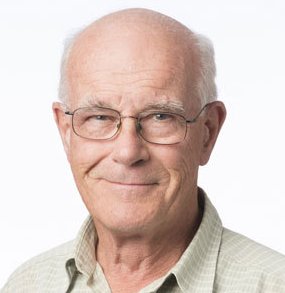
Peter Fry, host of Saturday Night on Radio New Zealand

Peter Fry, host of Saturday Night on Radio New Zealand

If you’ve ever had the distinct pleasure of tuning to Radio New Zealand International when their musical request show, Saturday Night, is on the air, chances are that you’ve become, like I have, addicted to this show.

The show’s inimitable host, Peter Fry, has one of the best radio presences in the business. His warm personality and penchant for playing absolutely anything back-to-back will captivate you. You’ll hear songs and genres (including comedy skits) spanning the decades, and Fry offers his excellent commentary between sets.

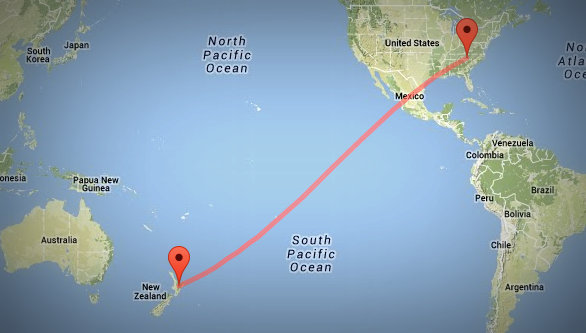
What amazes me, too, (when I stop to think about it) is the relatively robust audio fidelity from RNZI’s shortwave signal here in eastern North America, especially considering that this broadcast originates in Rangitaiki, on the north island of New Zealand, and is powered by only 50 kilowatts, a modest signal by international broadcasting standards.  RNZI’s signal crosses the Pacific at the speed of light–and at 6 watts per mile, by my calculations–delivers my Saturday Night as clearly as if it originated…well, locally.

The RNZI signal travels a full 8,249 miles (13,276 kilometers) to reach my home.

The RNZI signal travels a full 8,249 miles (13,276 kilometers) to reach my radio.

Yes, shortwave radio is magic.  And so is Peter Fry’s show:  Enjoy.

Click here to download the recording as an MP3, or simply listen via the embedded player below:

This broadcast was recorded on February 8, 2014 on 9,765 kHz, starting at 07:59 UTC.