Category Archives: Shortwave Radio

Recording Radio History: The Queen’s Diamond Jubilee via BBC World Service

Diamond Jubilee at Buckingham Palace (photo: BBC)

Ten years ago, my wife–then fiancée–and I lived in the UK, and were fortunate enough to attend The Queen’s Golden Jubilee celebration on the vast lawn at Buckingham Palace. It was without doubt the largest party I’ve ever attended, packed to the gills with the British public–a thoroughly amazing event, featuring a who’s who of past-and-present British musicians and personalities, encouraging attendees to join them in their bit of fun–and, of course, God save the Queen.

Yesterday, I re-lived the energy of that party as I heard (and recorded) the follow-up event these ten years later–The Queen’s Diamond Jubilee, on the BBC World Service–as heard from remote Ascension Island.
When hearing live events like this on shortwave–especially ones like this that celebrate national heritage–I know I’m listening to history in the making. The crowds applauding and cheering in a live broadcast over shortwave reminds me of a former era when British Expats across the globe relied on the BBC World Service to connect them with ol’ Blighty.
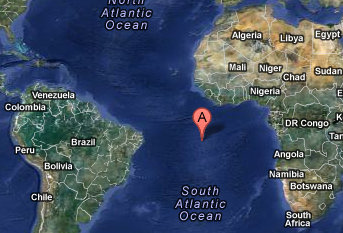
Ascension Island, marked with an "A" (image: Google Maps)

I recorded these broadcasts from my home in the southeastern US, hearing the BBC World Service relay station on the tiny, isolated Ascension Island in the South Atlantic. The broadcast was heard at first on 15,400 kHz, then moved to 9,915 kHz coinciding with their normal broadcast schedule. The broadcast, while completely intelligible, is weak in the beginning, but gains considerable strength by the end. There are summer static crashes heard as storms moved through the southeast US. I divided the broadcast into two parts, coinciding with my shift from one frequency to the other.

I also included a BBC WS news broadcast in Part 2 which followed the end of the show.

Either use the embedded Archive.org audio player below, or simply click here to download the mp3 files for Part 1 and Part 2.

I used the WinRadio Excalibur to record both of these segments. Its synchronous detection helped deal with fading (QSB) present at the beginning of the recording.

Once again, history is made…and archived on shortwave radio.  Enjoy!

Radio Australia’s Saturday Night Country is a part of my Saturday morning

Felicity Urquhart, host of ABC's Saturday Night Country. (photo: ABC)

Even though it’s well over 9,800 miles (15,800 kilometers) and many time zones from where I live, I listen to Radio Australia’s Shepparton broadcast site perhaps more than any other on the shortwave bands. For decades, it has beamed a broad and booming signal into North America on 9,580 kHz every morning. Well, I say “morning” here in the southeastern US, but in Australia, it’s their (or, for our Aussie readers, your) evening.

One show Radio Australia broadcasts that’s popular across the globe is ABC’s Saturday Night Country. Felicity Urquhart hosts the program, which showcases the best in Australian country and, indeed, country music worldwide. She knows her stuff, too–not only is she a talented host, but also an accomplished country music star in her own right. (What’s more–see above–she’s got “a face for radio”–? Try television:  she’s very photogenic.)

What I love about Saturday Night Country is that there’s lots of music, but also excellent interviews as Felicity chats with well-known and upcoming stars. Since the Radio Australia shortwave signal out of Shepparton is always so strong coming into the US, the audio fidelity is often on par with local AM (MW) stations.

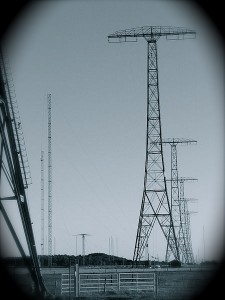
I listen to the show many Saturday mornings, and I’m not even that big a fan of country music. And I’m not alone; several of you have written asking when I’d write a post about Saturday Night Country. For our readers, I’ve done one better:  check two hours out the latest show for yourself in the recording of ABC below (or click here for the mp3). The broadcast begins with a news segment at the top of the hour; if you like, fast-forward to 4:30 for the beginning of SNC:

Incidentally, I used making this recording as an excuse to test one of the newest receivers on my bench, the WinRadio Excalibur. Its recording functionality is perhaps the best in the SDR world–and, I’ve got to say, I’m most impressed with it. Out of the chunk of spectrum I recorded, I was also able to hear RCI’s Sackville site broadcasting All In a Weekend on 9,625 kHz. In the past, these two have had conflicting schedules between 8:00-9:00 local, but with the Excalibur’s three individual receivers, I can record one while listening to the other–or better yet, record both, and track down yet another station!

RFE: Radio Farda Families A Target In Iran

One of the points I often make is that repressive regimes can track and take action against citizens who read online content from banned/blocked media sources. Here is a case in point:

(Source: Radio Free Europe)

In an escalation of ongoing efforts to thwart Radio Farda, RFE/RL’s Persian-language Service, Iranian authorities are interrogating journalists’ family members in Iran.

Employees of Radio Farda believe that their journalism, which attracts over 10 million page views monthly on Radio Farda’s website, is the motive behind at least 20 incidents this year involving the interrogation and intimidation of their family members in Iran by officials of the country’s Intelligence Ministry.

In sessions that sometimes lasted for several hours, agents denounced the work of Radio Farda journalists and warned family members against having further contact with them. In several cases they instructed family members to tell their relatives to resign from their jobs and return to Iran; in one instance they demanded that a specific series of reports be discontinued. During questioning, family members were also asked about their foreign contacts and trips abroad.

The interrogations have targeted family members, who in some cases have been repeatedly summoned, in Tehran and at least six other Iranian towns and cities.

“This is a proxy war against Radio Farda. It shows the extremes to which the regime will go to prevent the exchange of information it doesn’t control,” said Steven W. Korn, RFE/RL president. “Our journalists make enormous sacrifices for the work they do and will not submit to this pressure on them and their families.”

Radio Farda, produced in and broadcast from Prague, is a leading source of uncensored information in Iran. Each month 1.5 million users inside the country defy the government by employing proxies to access Radio Farda’s website, which is blocked. Radio Farda and “Pasfarda,” its signature satire program, are active on social media, with a combined 300,000 Facebook fans. Iranians actively participate in Radio Farda’s weekly call-in shows, connect with it daily through hundreds of email and SMS messages, and despite government jamming, tune in to satellite radio and shortwave to hear its programs.

In media freedom surveys this year, Freedom House ranked Iran 192 among 197 countries surveyed and Reporters Without Borders ranked it 175 of 179.

Yet one more reason why shortwave radio is safer than the internet as a reliable source of news and information and one more reason why countries like Canada should not abandon this vital resource.

Finding the “English Man” numbers station while scanning for pirates

While listening for pirate radio stations last night, I recorded a numbers station. I found it on 6,949 kHz at 1:30 UTC, 26 May 2012. It was broadcast in USB for almost exactly ten minutes. The ID was sent for a full four minutes of that time. I have a full recording below.
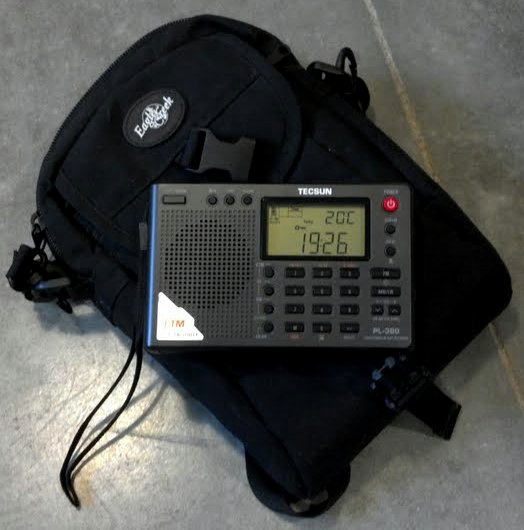
With a quick check on SpyNumbers.com, I’m pretty sure this is a station called, the “English Man.”

If you’re not familiar with numbers stations, check out this previous post where Shortwaveology author, David Goren, explores numbers stations.

If you have trouble listening to the embedded player below, simply click here to listen to the mp3 file.

The Tecsun PL-380: a great travel radio

My Tecsun PL-380 and Eagle Creek pack

SWLing Post reader, Alan, commented on our “most durable radios for travel” post:

You should include the Tecsun PL-380 [on] the list. It is an excellent tuner with good selectivity. The ETM feature was made for a traveler. The radio is cheap enough that it won’t bother you if you lose it or break it.

I have to say, I agree! In fact, I travel with the PL-380 quite often. It has become my back-up radio when I make field recordings (my primary portable for field is the Sony ICF-SW7600GR).

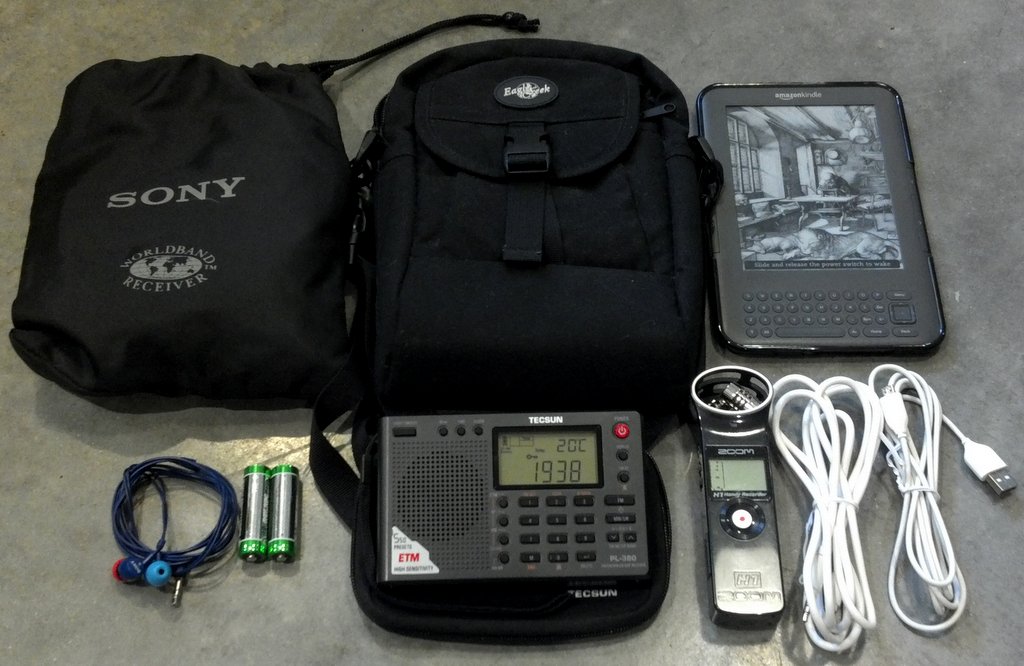
Eagle Creek pack with contents: Tecsun PL-380, Zoom H1 recorder, earphones, audio cables, external antenna, spare batteries and Kindle. Click to enlarge.

In fact, I have a small Eagle Creek bag with a shoulder strap that holds my field recording kit and other electronic “necessities:”  Tecsun PL-380, Zoom H1 recorder, ear buds, audio cables, roll up antenna, spare batteries, and, of course, my Kindle (so I can read while waiting for my plane/train/bus). In a pinch, it can even accommodate a Sony AN-LP1
active antenna (which I use primarily in hotel rooms with inoperable windows). To help you visualize, check out the photo on the right.  It’s my grab-and-go bag.

C.Crane at the Dayton Hamvention

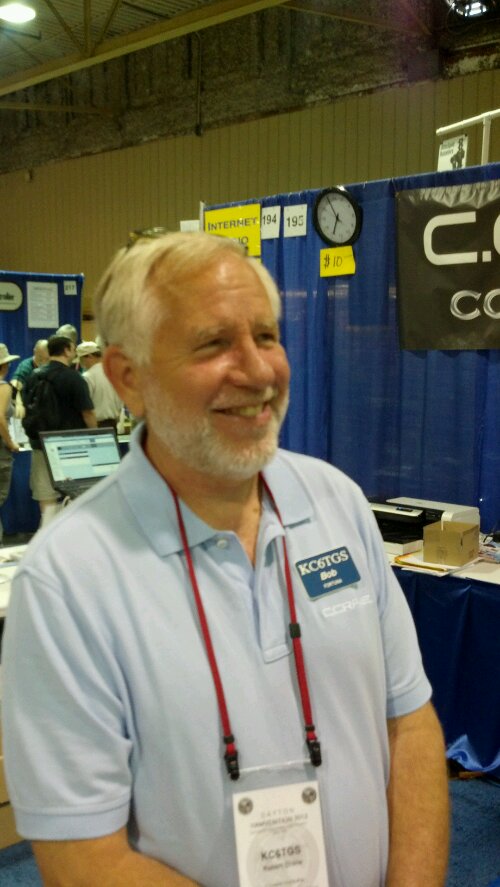
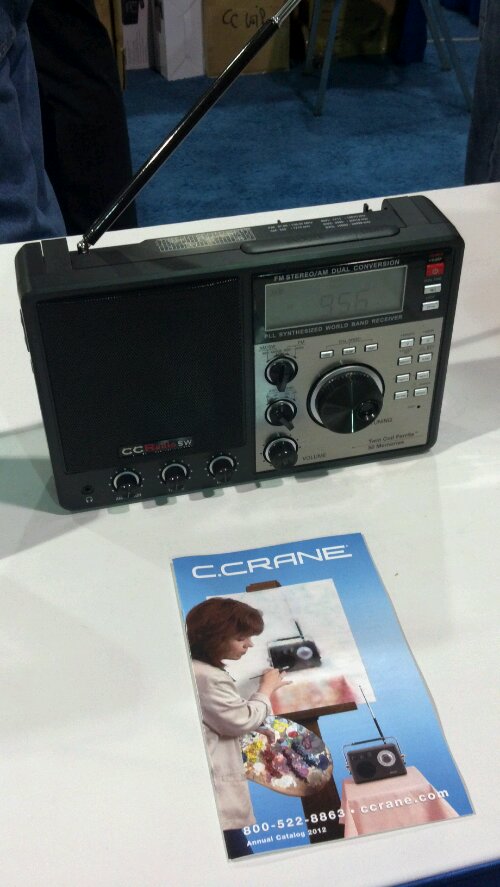
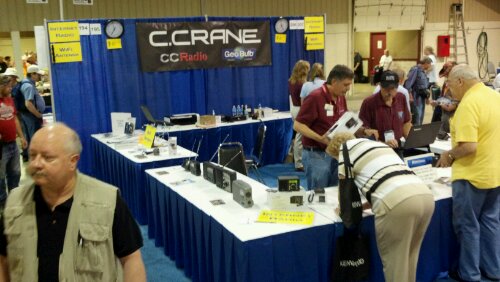
As I walk around the Dayton Hamvention, I’m finding a lot of familiar faces from the shortwave radio community. In the North Hall, I came across non other than Bob Crane with C.Crane Radio. We had a nice chat about their CCradio SW–one of my favorites for simplicity of operation and excellent audio fidelity.

image

Bob Crane, President of C.Crane

image

CCRadio SW

image

“Boatanchors” and antique wireless at the Dayon Hamvention

I’ve always found the Dayton Hamvention flea market to be a great place to find antique radios, but this year, the selection (along with the weather) seems to be exceptional.

I’ve attached a few photos I took yesterday morning as a gallery below. Simply click on a thumbnail to enlarge.  Enjoy