Category Archives: Shortwave Radio

Gizmodo: “shortwave radio deserves a place of prominence in the home of any audiophile”

(Source: Gizmodo)

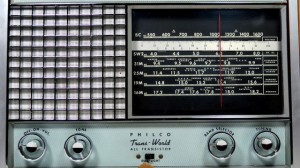
Classic turntables may get all the glamour, but the shortwave radio deserves a place of prominence in the home of any audiophile. For a stylish way to surf the airwaves, try this stunning late 1950s Trans-World T-9, produced by Philco (that’s the Philadelphia Storage Battery Company, for those who don’t like to abbreviate).

[…]Its four-foot antenna can pick up tunes, blast right-wing talk radio, or catch up on the endless, mysterious recitation of Russian numbers.[…]

Though this article points to eBay auctions–which, in truth, tends to favor the seller, price-wise–they make a point: classic radios deliver audio fidelity that, in my opinion, surpasses all modern portables.

Review of the 2012 Pirate Radio Annual

Pirate radio is perhaps one of the most dynamic aspects of the diverse landscape of SWLing. In direct contrast with major broadcasters, many of whom are now thinning out their offerings, pirate radio just seems to adapt and grow.

I started listening to shortwave pirates in earnest only a few years ago. I had listened to pirates in the past, but had never followed the pirate scene, nor understood how to reliably find pirates on the shortwave radio dial. I now know, by the number of emails I receive from SWLing Post readers, that there are many others who feel as I did then.

Pirate radio broadcasters do not follow a regular broadcasting schedule, often operate at very low power, and are not necessarily always on the same frequency or even mode.  It’s no wonder they’re hard to find.

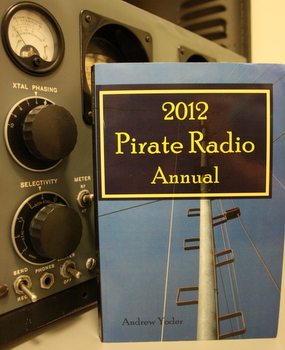
I wish, in those early days of exploring the pirate bands, I had known about the Pirate Radio Annual, produced by pirate radio guru Andrew Yoder.

Not only is this book, which explores the pirate radio scene in North America, well written and insightful, it is chock-full of information. It’s a bit like the programming section of the former Passport to Worldband Radio, only focused on pirates. The book also comes with an accompanying audio CD.  Yoder, by the way, has been covering the pirate scene for decades; he’s also the former publisher of hobbyist magazine Hobby Broadcasting.

The 2012 Pirate Radio Annual is divided into several sections:

  • An intro to the guide which–among many other things–explains important terminology, such as the difference between a pirate and a jammer
  • How to QSL pirates
  • Pirate station classification
  • A feature article comparing three different AM shortwave pirate transmitters
  • Other articles with interviews and events/media that have had an impact on the pirate scene (including the controversial “Pirate War” of 2012)
  • Profiles of pirate radio stations heard in 2011, with an additional section on international pirates heard in North America
  • An index for the included audio CD

I especially like the extensive station profiles of pirates who were active in 2011. Not only can I get more info about the more elusive stations that don’t offer many clues to their raison d’etre–such as Radio Strange Outpost–but it also makes for a handy resource to glean QSL contact info. In fact, I learned a lot about the personalities, broadcast histories and habits of many pirates we’ve featured here (like Undercover Radio, Captain Morgan Shortwave, Wolverine Radio, and North Woods Radio, to name a few). Yoder is able to provide details about these station that your average listener just wouldn’t know, including the types of transmitters used, output power, and historical perspectives.

The accompanying audio CD features clips from 78 stations, and includes audio from the transmitter comparison in the book.

For about $20.00 US (with shipping), the 2012 Pirate Radio Annual is unquestionably a great buy for those interested in pirate radio.

You can purchase the 2012 Pirate Radio Annual from:

Shortwave Radio Recordings: Voice of Greece, Radio Croatia and Radio Romania International

For your listening enjoyment:  Voice of Greece (9,420 kHz), Radio Croatia (9,925 kHz) and Radio Romania International (9,700 kHz). The Voice of Greece and Radio Croatia  broadcast an extensive mix of music; while Radio Romania International offers their English and French hours.

I recorded these broadcasts simultaneously via my WinRadio Excalibur, yesterday at 00:00 UTC.

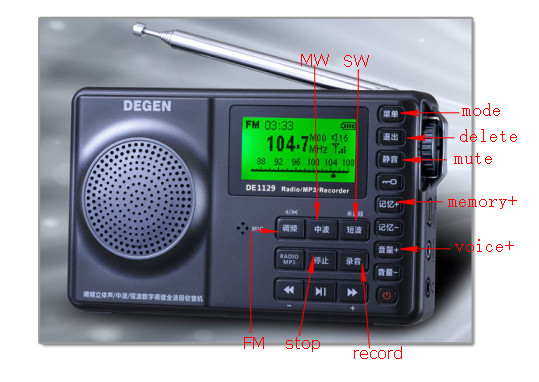
The new Degen DE1129 shortwave radio with MP3 recording and playback

(Photo source: TecsunRadio.com)

TecsunRadio.com has posted the new Degen DE1129 shortwave radio on their website. Though they have not yet posted pricing, it appears pre-orders are being taken.

The DE1129 looks like a decedent of the Degen DE1128 that has not exactly been a market success in North America. The DE1128 lacks medium wave (AM) 10kHz steps (spacing) that allows it to be useful in the North America AM broadcast market.  It also lacks English as a selectible language on the display. (The Grundig G2 Reporter, however, does have the features and is, in essence, the North American version of the DE1128).

The published features/specs of the new DE1129 do not reveal if AM spacing or English language will be an issue in the DE1129. I will try to contact the manufacturer. Until then, I would keep this in mind if pre-ordering. UPDATE: The DE1129 does have 10kHz spacing.

UPDATE: Vimal points out pricing is $102 US/each with shipping.

Thanks for the tip from the excellent Herculodge blog!

Features (per retailer)

  • FM :87.0-108 .0 MHz
  • campus radio:64.0-108.0MHz
  • MW (medium wave) :522-1710KHz
  • SW (shortwave) :2.30-23 .00 MHz
  • Stored radio frequency of 248
  • Radio signal strength indicator
  • High-frequency stereo
  • Five tuning methods: (encoder knob / manual / automatic / memory / ATS)
  • Large-size LED backlit dot-matrix screen, full support of the Chinese display
  • Playback: MP3 and WMA decoding
  • Multiple repeat mode
  • A variety of sound modes
  • Variable speed playback
  • A-B repeat
  • Recording function: MIC recording, recording radio
  • MP3/WAV sound recording format selection
  • Can be used as the active speaker
  • E-book features: TXT document reading
  • Intelligent timer switch
  • Alarm clock function
  • Sleep timer (05-90 minutes)
  • Support software upgrades
  • Support for multiple languages
  • Built-in memory, support for the MICRO SD card playback
  • Key Lock Switch
  • The electronic volume control (31)
  • Built-in top super bass vibration film and wideband audio speaker
  • MINI-USB interface, USB2.0 high-speed transmission
  • The intelligent charging can be connected to the computer charge
  • Battery level indicator, low battery automatically shut down
  • Removable battery, replace the batteries more convenient
  • Machine size: 130 * 78 * 30MM
  • Weight (with lithium battery): about 145G
  • Supplied accessories: USB cable, lithium battery, and Operations Guide


Shortwave Radio History: 50 years of transmitting at BBC Woofferton

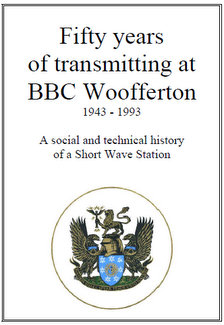
Click here to download your copy.

Thanks to the efforts of a dedicated radio historian and author, Jeff Cant, you can download and read an excellent history of the first fifty years of the BBC’s Woofferton transmission station. Cant began his history as an internal document to the station; he later finished it in his retirement. I wish every shortwave transmitter station had such a well-documented history providing a perspective on the station’s broadcasting. We owe Mr. Cant a profound debt of gratitude.

To download the PDF, simply click here.

A special thanks to Jonathan Marks for finding and sharing this great bit of radio history.

Should the link to the PDF above ever become inactive, I’ve placed an archive copy available for download on the SWLing Post server.

Jeffrey revives an old friend, his Hallicrafters SX-110

SWLing Post reader, Jeffrey Fritz, sent me the following message and has kindly allowed me to share it with other readers. I’mthoroughly inspired!
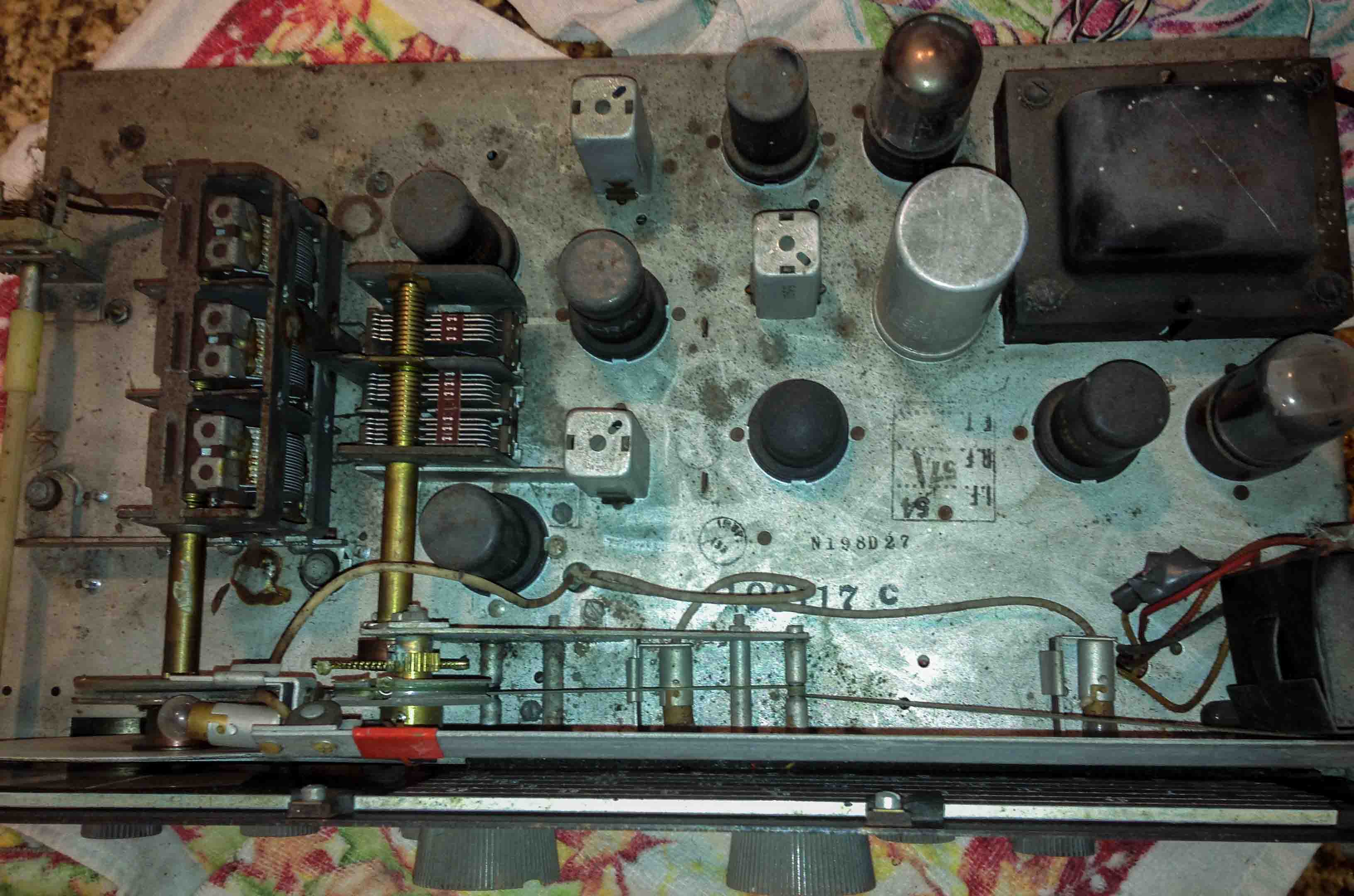
Bottoms up! Considering how old this receiver is, the chassis bottom (still with the original power cord) really is clean. This is how the bottom of the chassis looked when I removed the receiver from its metal cabinet.

As a teenager in the 1960s I spent a considerable amount of time SWLing on a Hallicrafters SX-110 communications receiver. I collected QSL cards from all over the world and loved being an SWL.

The SX-110 was purchased on 9 September 1961 from Gem Electronics in Farmingdale, Long Island, New York. My parents bought it for me, probably after a great deal of whining and cajoling on my part. Although much of my gear has long since been sent to some landfill by my parents, like my precious Lionel trains, I would not allow them to trash the SX-110.
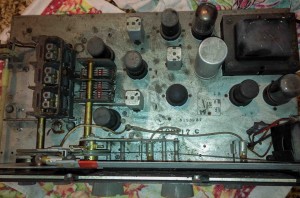
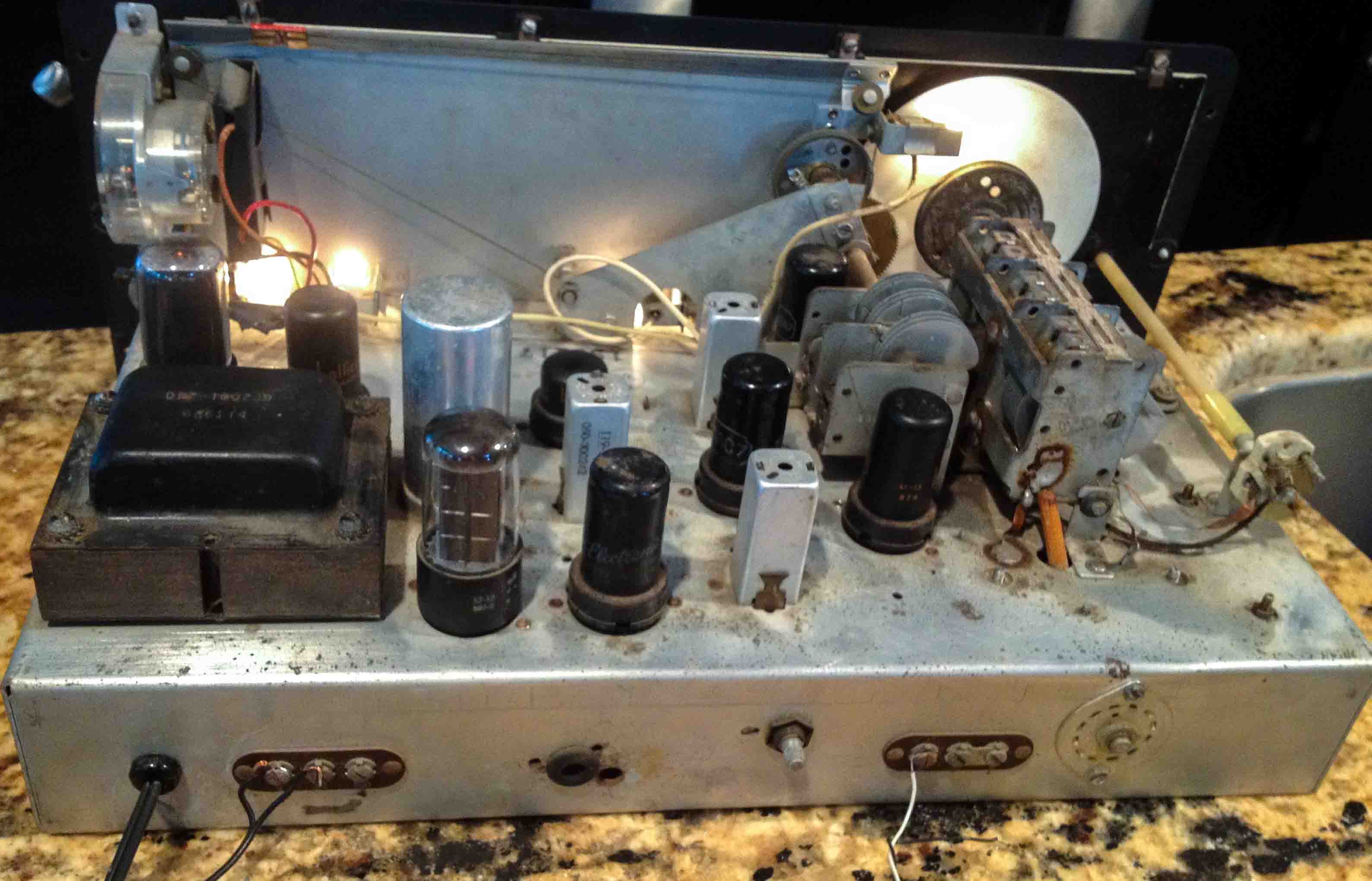
The top of the chassis, however, is not as clean. Some elbow grease will clearly be required.

The radio has been sitting in one basement or another, unused for the better part of 30 years.

Yesterday I decided to try bringing the radio back to life. Restoring this kind old receiver was a labor of love. The receiver was carefully looked over and tested with a VOM for bad components and the top of the chassis cleaned as best I could. The bottom was pristine. I just needed to clean out a few cobwebs and replace the power cord.
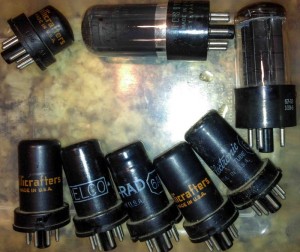
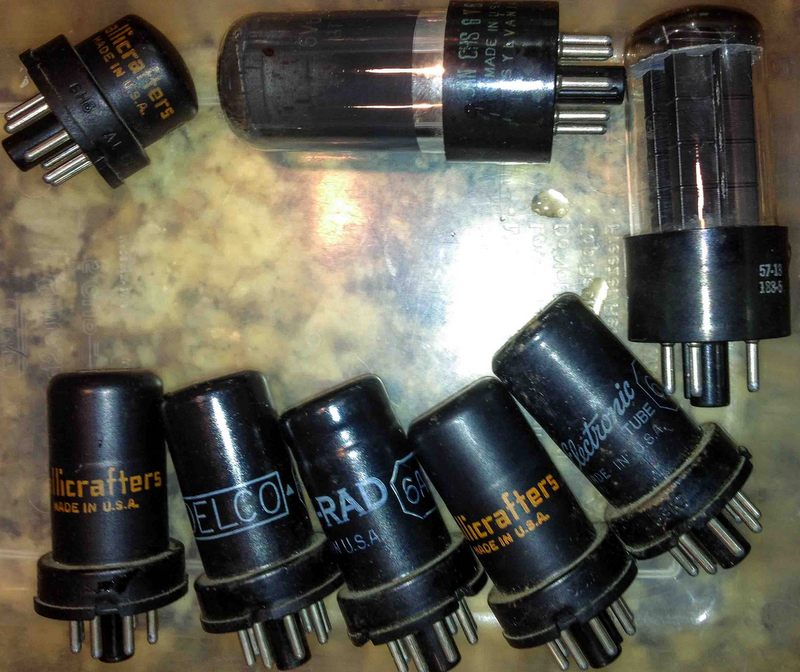
All eight tubes. Note the three original Hallicrafters tubes with the orange labeling.

After being cleaned up and several components tested, the SX-110 was slowly brought back to life on a Variac. I started at 10 volts AC and slowly increased the voltage every ten minutes by another ten volts. When I got to about 90 VAC, I could hear static and distorted audio coming out of the speaker. It was a good sign that the radio would come back to full operation once I reached the normal 110 VAC input–and that is exactly what occurred.

I am happy to report that, with a little patience and love (and a good cleaning) –and with three of the original Hallicrafters tubes still in place, my trusty old Hallicrafters SX-110 shortwave receiver is happily working today. I have it connected to its original Hallicrafters R-47 3.3 ohm speaker.
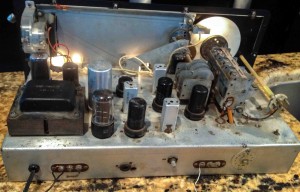
The top chassis is cleaned as much as possible. Not perfect, but a little cleaner than before. We now have about 110 volts applied through the Variac. No smoke but we do have lights!

Yesterday evening I listened to Radio Taiwan, Radio China International, Radio Havana Cuba, The Voice of Turkey and The Voice of Russia. The audio quality was rather decent without a hint of AC hum. The radio is probably due for a good alignment. I am running the radio on the Variac set at 110 volts AC and will probably keep it on the Variac because the AC voltages today in the U.S. are significantly higher than they were in 1961.

Even the XYL thinks that the radio sounds terrific! What better recommendation can there be for this old, vintage receiver?

73, Jeffrey Fritz, WB1AAL
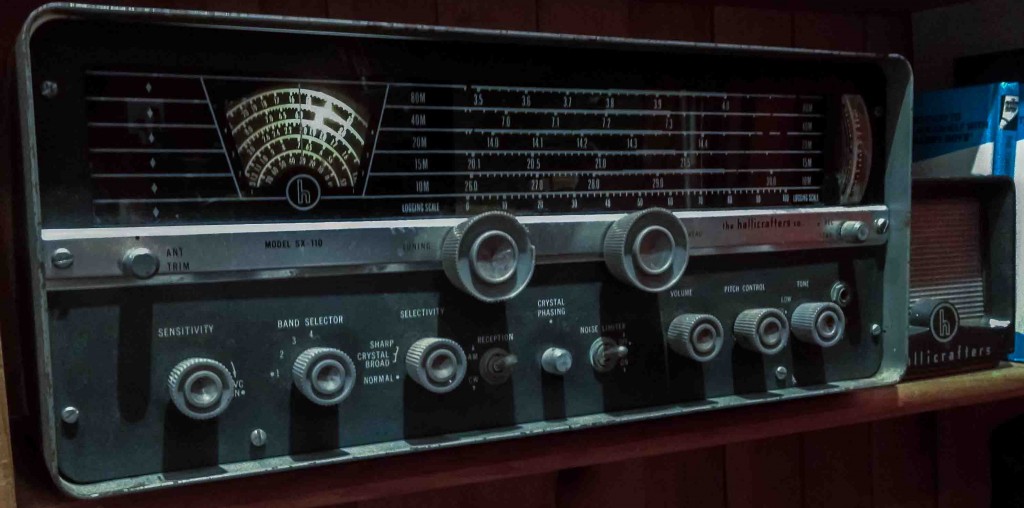
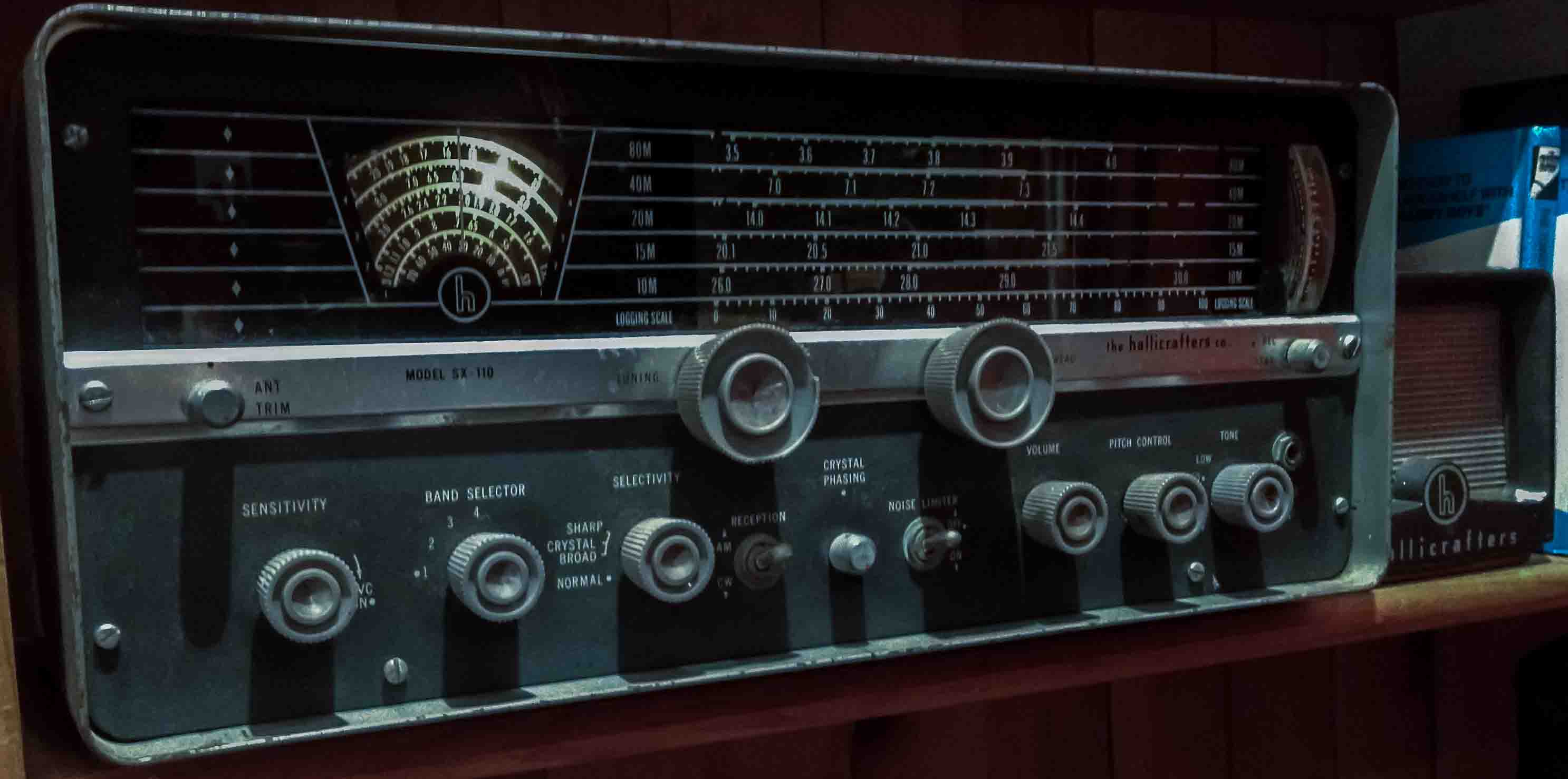
The restored SX-110 sitting on the bookshelf in the shack. No one would mistake this for a new receiver, but it works just fine.

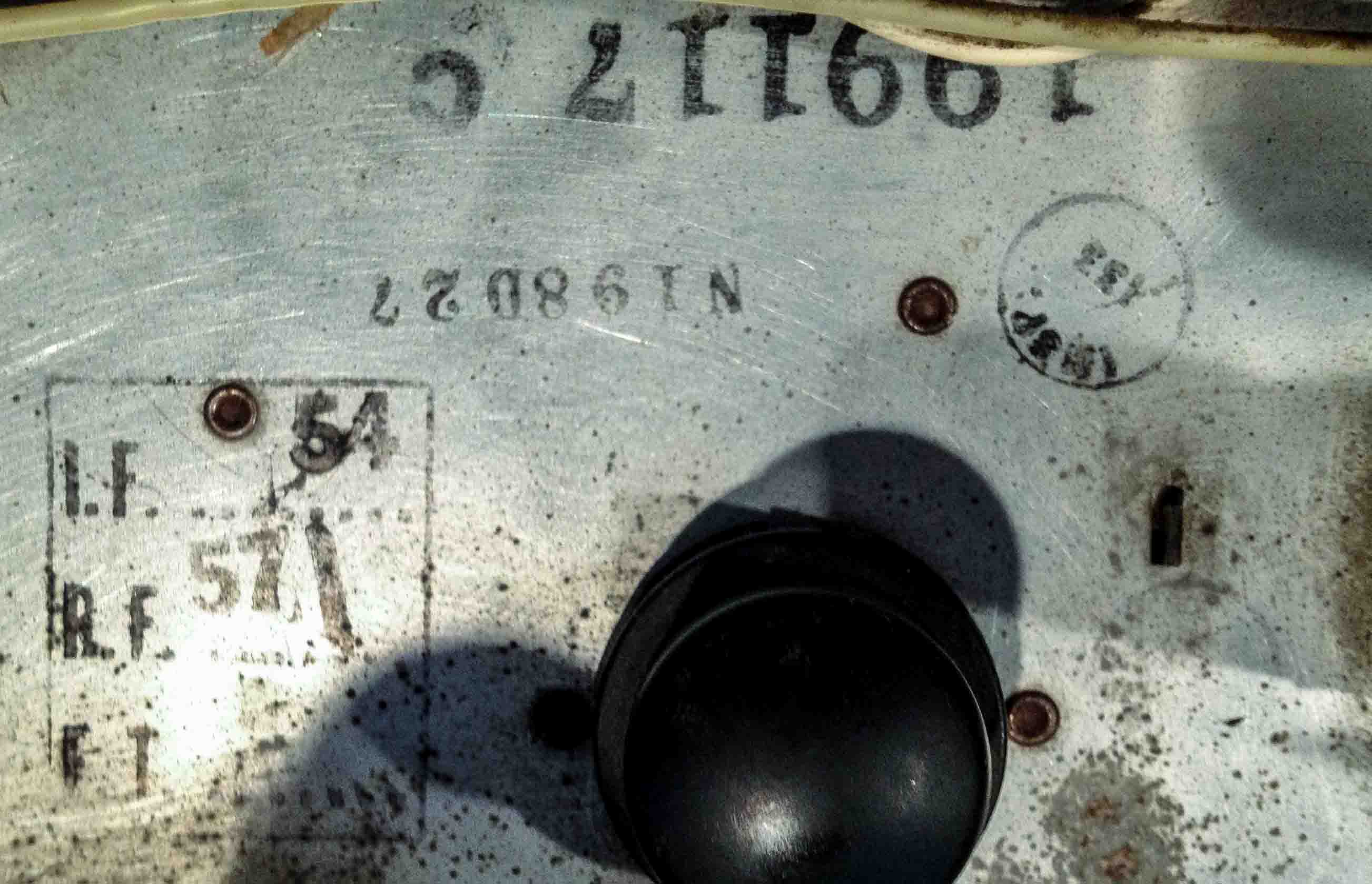
PS–Jeffrey also mentioned to me: “If you look closely at the chassis stamp photo of the SX-110, you can see a stamp that reads ‘199117 C.’ This is the manufacture date of the receiver. The fourth digit is the year, and the fifth and sixth digits are the week of the year. So, 199117 is the 17th week of 1961 or the week of 23 April 1961.”

Very interesting. Now I need to examine a few of my own Hallicrafters receivers…
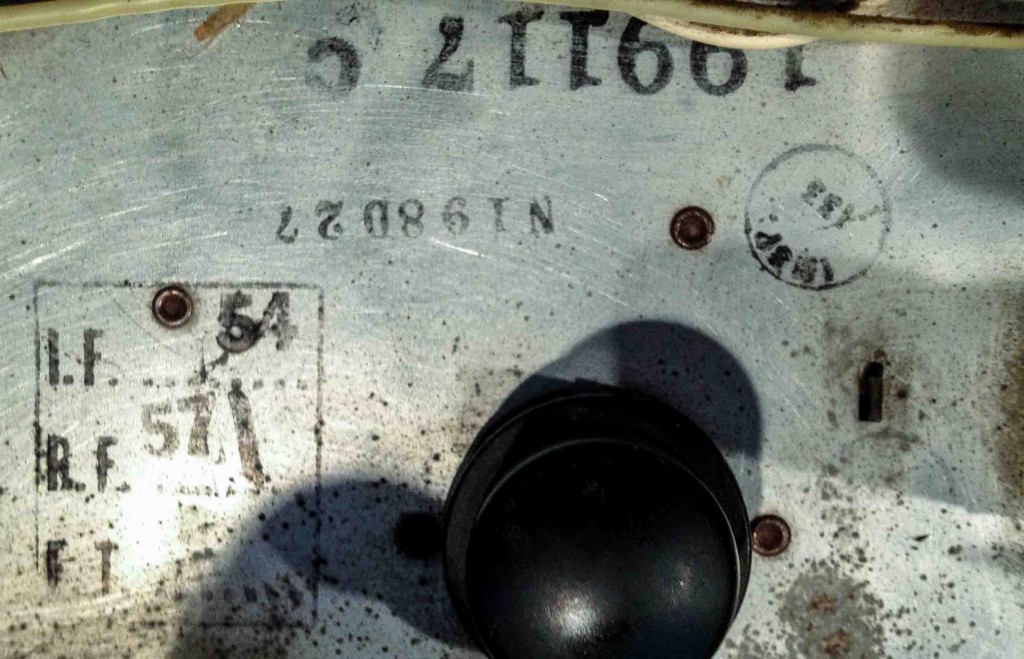
Close up of the inspection stamps. Do modern rig manufacturers take time to do this now?