Shortwave listening and everything radio including reviews, broadcasting, ham radio, field operation, DXing, maker kits, travel, emergency gear, events, and more
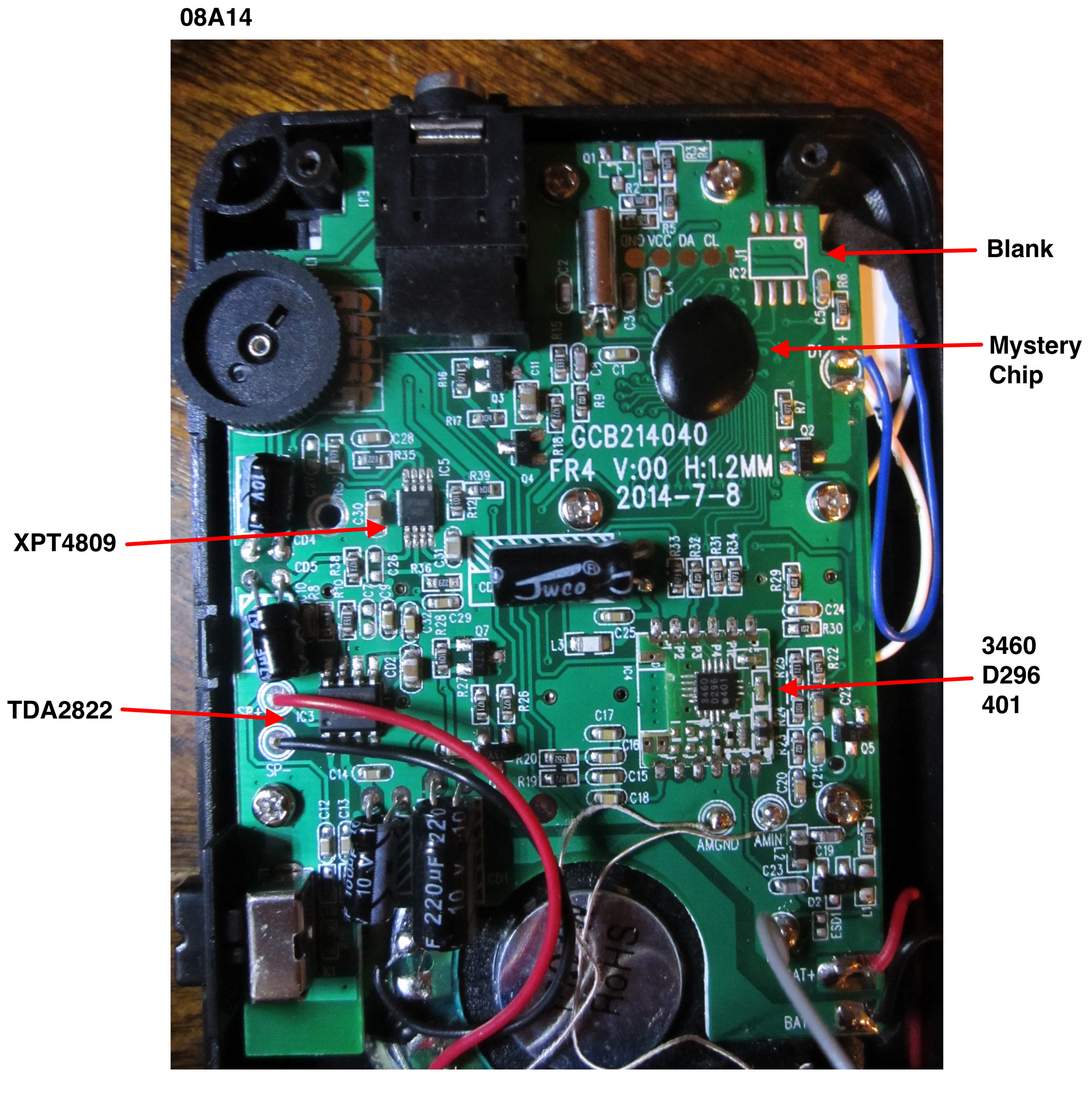
Attached [above] is an annotated photo of the RS radio’s PC board.
As you’ll see, there is a mystery “blob” chip, which probably handles the DSP functions.
The TDA2922 is an audio amplifier, but I couldn’t find data sheets for the other ICs. Maybe some of your readers can help.
There is one pad prepared for an additional chip, so additional functions might be possible. By the way, I discovered that if you remove the batteries, the memories and clock have to be reset; which is unfortunate. Overall, for $30, I’m quite happy.
Mike, thanks so much for cracking open your brand new radio so that we can take a look inside. The “blob” chip does most likely handle DSP and I bet it’s not a SiLabs chip since (I believe) they are typically labeled. Perhaps readers can chime in with additional information?
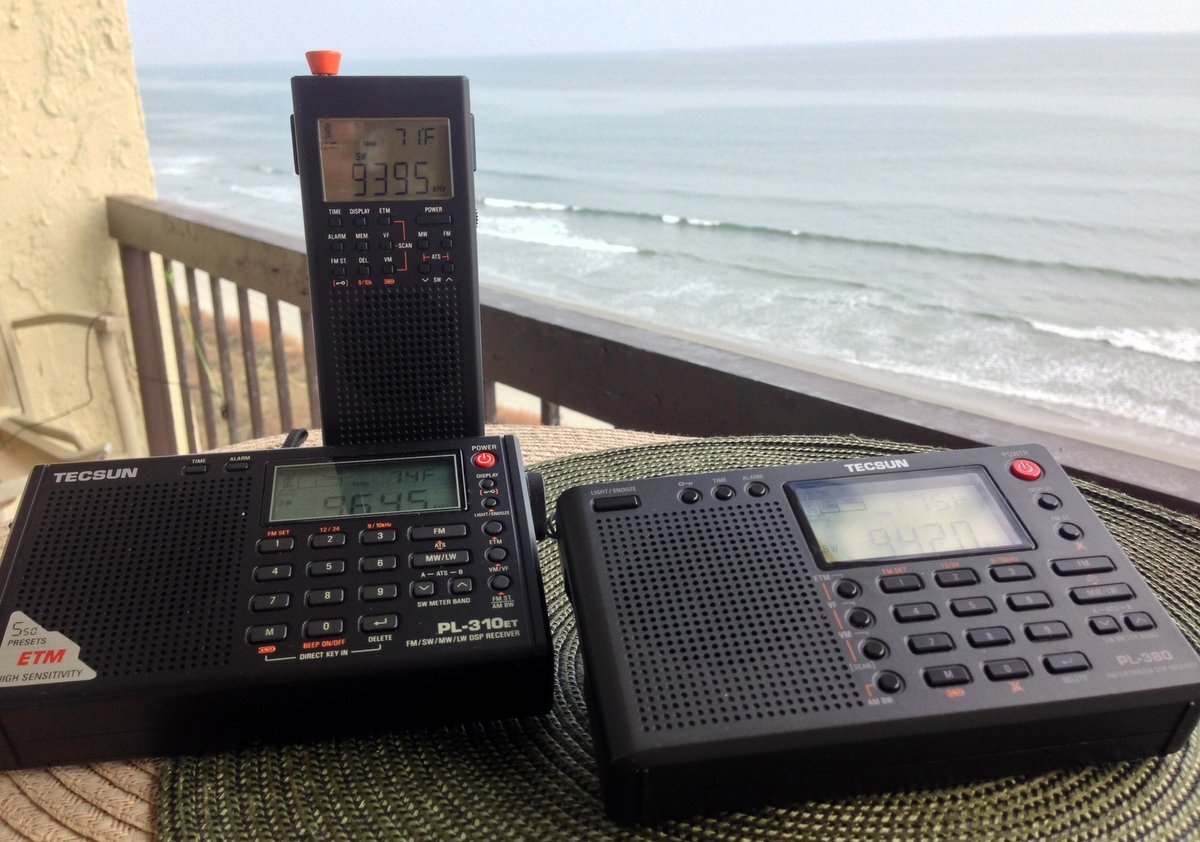
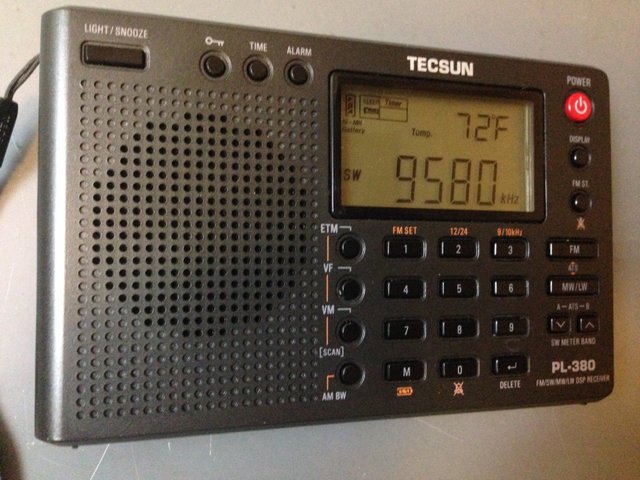
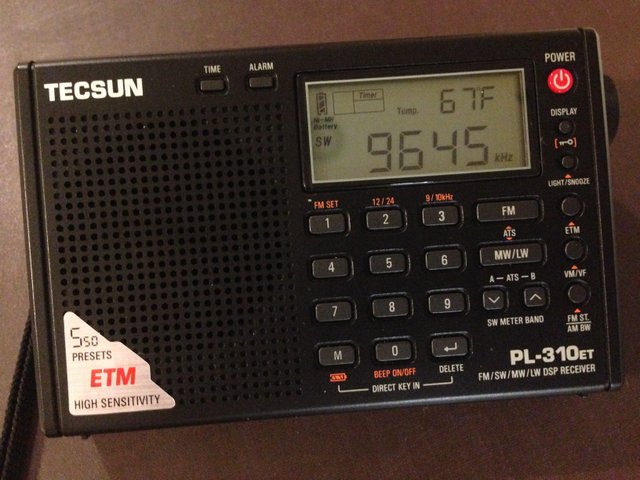
Thanks to all who participated in our ultra-portable shoot-out! A little over a week ago, I posted recordings of shortwave broadcasts, weak and strong, in an attempt to evaluate which recording–thus which radio–our listeners prefer. I conducted this test on the three radios pictured above: the Tecsun PL-310ET, the CountyComm GP5/DSP (Tecsun PL-360), and the Tecsun PL-380–among the most popular ultra-portables currently on the market. This test was “blind” in the sense that all three radios evaluated were merely labeled “Radio 1,” “Radio 2,” and “Radio 3,” respectively.
The samples
To refresh your memory, I’ve embedded the audio samples below for you to hear; but if you haven’t yet heard them, I encourage you to read our previous post before doing so. (If you’re already heard the recordings, simply skip this section.)
Global 24 – 9395 kHz (Strong)
Radio 1
Radio 2
Radio 3
ERT Open/ Voice of Greece (Relatively strong)
Radio 1
Radio 2
Radio 3
Radio Riyadh (Weak)
Radio 1
Radio 2
Radio 3
Rádio Bandeirantes (Very weak)
Radio 1
Radio 2
Radio 3
And now…the results!
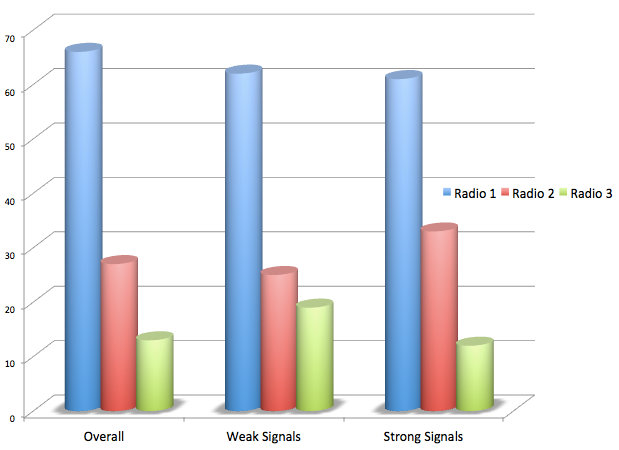
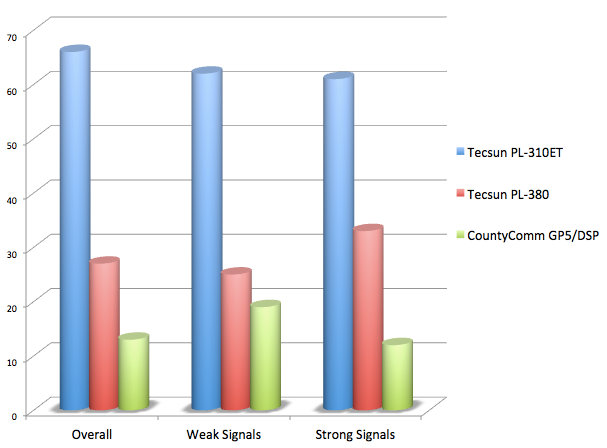
The following chart shows how each radio scored out of a total of 106 (wow!) survey responses:
Let’s start with the radio that scored lowest in this contest…
Radio 3: the CountyComm GP5/DSP (a.k.a., the Tecsun PL-360)
Interestingly, the GP5/DSP consistently came in last in every category. I think a few factors outside of receiver performance led to this.
For some reason, the recorded audio of the GP5/DSP sounds out-of-phase. Several of you noted this. The resulting sound almost mimics a “stereo” effect. No matter how many times I made recordings on the GP5/DSP, this feature predominated, and I eventually assumed it to be characteristic of this radio’s DSP.
But I’m wondering now, however, if there might be oxidation on one of the headphone jack conductors, or if the headphone jack on my unit is somehow faulty–? Because of this, before conducting the medium wave shoot-out, I’ll try to clean the conductors with a little Deoxit to see if it makes a difference.
Unlike the PL-310ET and PL-380, the GP5/DSP can’t change AM bandwidths. On the strong recordings, I widened the bandwidths of the PL-310ET and PL-380 to 6 kHz; this improved their audio fidelity. On weak signals, I narrowed the bandwidth to 3 or 4 kHz, keeping both at the same level as I did so. While the GP5/DSP’s fixed bandwidth is well chosen, it simply couldn’t compete with the wider filters of the other two radios on strong signals.
Though the GP5/DSP (Tecsun PL-360) came in last, the irony is that most people who made comments on the survey form actually mentioned that the GP5/DSP was also a strong contender. Here are a few responder’s comments:
“The bassiness of Radio 1 was pleasing to listen to, but the clarity of radio 3 was also pleasing. All three sounded very good.”
“I was divided–Radio 1 seemed to provide the better audio on the stronger stations (not as muddy) yet Radio 3 beat it out on the weak stations and seemed to hold the station steadier (less fading) thereby providing a better audio to hear and understand.”
“I think if I were to place these three radios in order of “listening pleasure” based on the provided samples, my order would be 3, 1, 2.”
“By a small margin Radio 3 seemed to have the best signal to noise ratio and general audio quality across the range of signal strengths.”
Also notable: the GP5 has one very distinct advantage over the other two radios, something that wouldn’t have been noticed in this test: its ETM function, which scans the whole band then automatically stores stations to temporary memory, is almost two times faster that that of the other radios. It also seemed to be equally accurate.
So, who would buy the CountyComm GP5/DSP (Tecsun PL-360)? Someone who likes this radio’s form factor, it’s stable AGC, and quick ETM scanning. Keep in mind, we are comparing this model with two of the best radios under $60, in my opinion. Had we compared the GP5 with most other sub-$60 radios, it might have won that shoot-out, and with ease.
The Tecsun PL-380 came in a very consistent second place in this shoot-out.
The ‘380 is one of my favorite portables on the market; for many years, it has been my go-to radio for one-bag travel.
Before recording the shoot-out, I guessed that the PL-380 might take first place. But up to this point, I had never actually compared it with either of the two other radios in this shoot-out. Listening to the blind samples, I tend agree with the results. Still, the PL-380 is a great value and a fun little radio, one I can still easily recommend for travel.
As you can see from the graph, the Tecsun PL-310ET won our shoot-out in every category–and by a fairly wide margin:
While comparatively few participants’ comments were specific to the PL-310ET (“Radio 1”), it’s interesting that these most often made note of this radio’s very close resemblance to the PL-380 (“Radio 2”).
The PL-310ET had only a slight advantage over the PL-380 to my ear, but it was enough; so along with most survey respondents, I took note of that advantage.
Now, I know this much: when people ask me whether they should purchase the PL-380 or PL-310ET, I think I’ll suggest the PL-310ET. In the end, it makes for a better travel radio because it also has an external antenna jack, one of the few sub-$60 radios that has this useful feature.
When I find the time in the next month or so, I plan to test the same radios in a medium wave (AM) shoot-out. Weak-signal medium wave will put AGC circuits and internal ferrite antennas center stage. Please be patient, however, as these tests actually take time to put together and evaluate. Again, your participation will be most welcome!
STF also mentioned that a text version of this announcement with follow in the next few days (but surely it’s more fun to decode the digital version!).
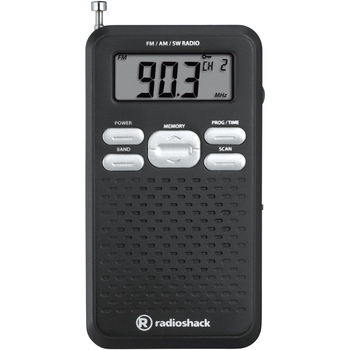
I picked one up today, and overall, I’m impressed. It does have complete coverage from 2.5 to 26.1 MHz as advertised, and overall, it has very good sensitivity and adjacent channel rejection for a small portable (in fact, the best I’ve heard from such). Sure sounds like some sort of DSP filter is involved. Reception is at least as good as my old Grundig Mini 300 and much, much better than a Degen DE22. Clipping an external long-wire antenna did not cause overloading (I was very surprised by this). AM BCB reception is actually quite decent: I was able to listen to several distant stations that were only 10 kHz from local ones. Audio is OK but not great, and the case does not stand up stably. I guess you can’t expect too much from a $30 radio. No case or earbuds are included.
By the way, if you go to a local Radio Shack store, be sure you get the internet price. We have two stores near my house; both had the radio marked as $39.99 instead of the $27.99 online sale price. The guys at the first store said “sorry, we can’t change the sticker price.” No sale. So, I went to the other store. When I pointed out the web price to the young women helping me there, she said, “this isn’t right” and called her manager over who overrode the store price with the cheaper one.
So, who makes this radio? Good question. The back of the case says “Custom manufactured in China for Radio Shack Corporation.” Maybe Tecsun?
Sounds like this may be a great portable for the glove compartment of a car, or to keep in your backpack/briefcase.
Thanks, Mike, and please share any other comments about this radio as you use it.
Very good question! Though I haven’t been inside a RadioShack in a couple of months, I’ve never noticed this portable on their shelves. In fact, I don’t even recognize the form factor as a re-badged Tecsun or Degen.
Has anyone purchased the model 2000669 from RadioShack?
Please support this website by adding us to your whitelist in your ad blocker. Ads are what helps us bring you premium content! Thank you!