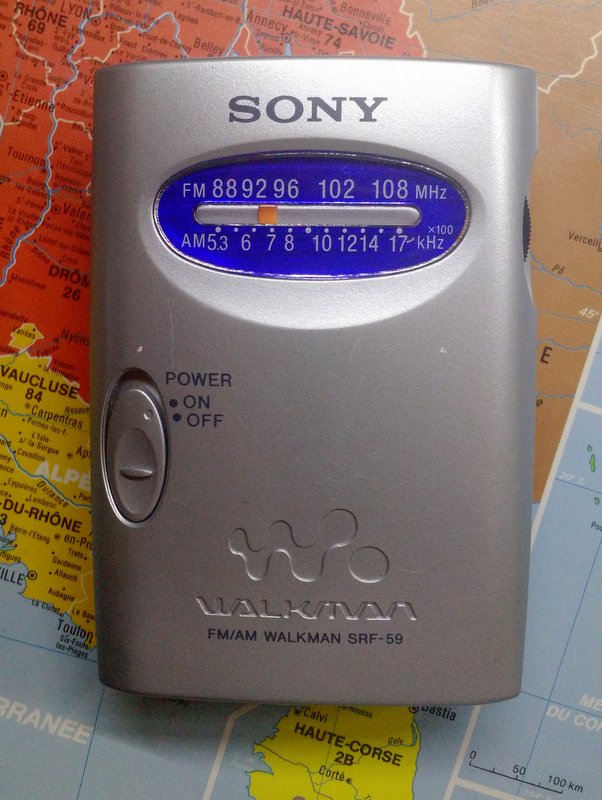
Many thanks to SWLing Post reader, Mike Ladd, who shares a link to this incredibly informative page about the vulnerable (oops!) venerable Sony SRF-59 ultralight radio:

Many thanks to SWLing Post reader, Mike Ladd, who shares a link to this incredibly informative page about the vulnerable (oops!) venerable Sony SRF-59 ultralight radio:
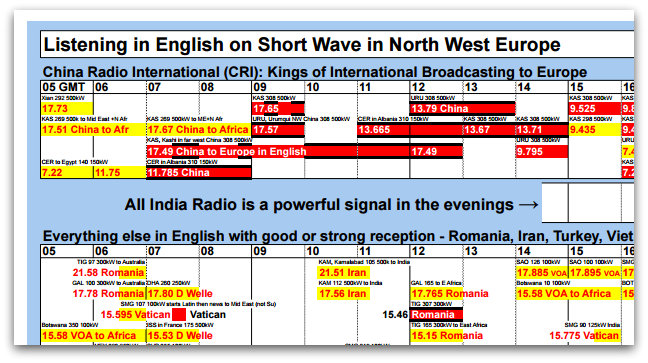
Great news! SWLing Post reader, Alex, has just informed me that he’s updated his printer-friendly shortwave frequency charts for the B15 broadcasting season.
Note that Alex creates his charts based on listening to broadcasters rather than importing schedules from other sources. His charts are essentially UK-centric, since this is where he lives and logs the broadcasts. With this said, however, many listings are appropriate for other parts of the world.
You can download the free charts on his website:
Shortwavetimes.com
Many thanks once again, Alex!
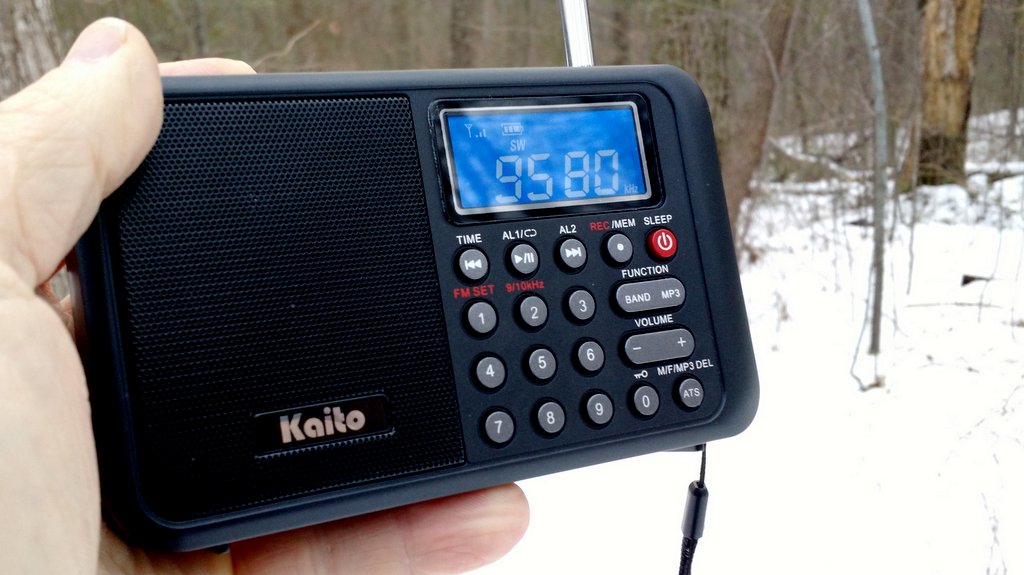
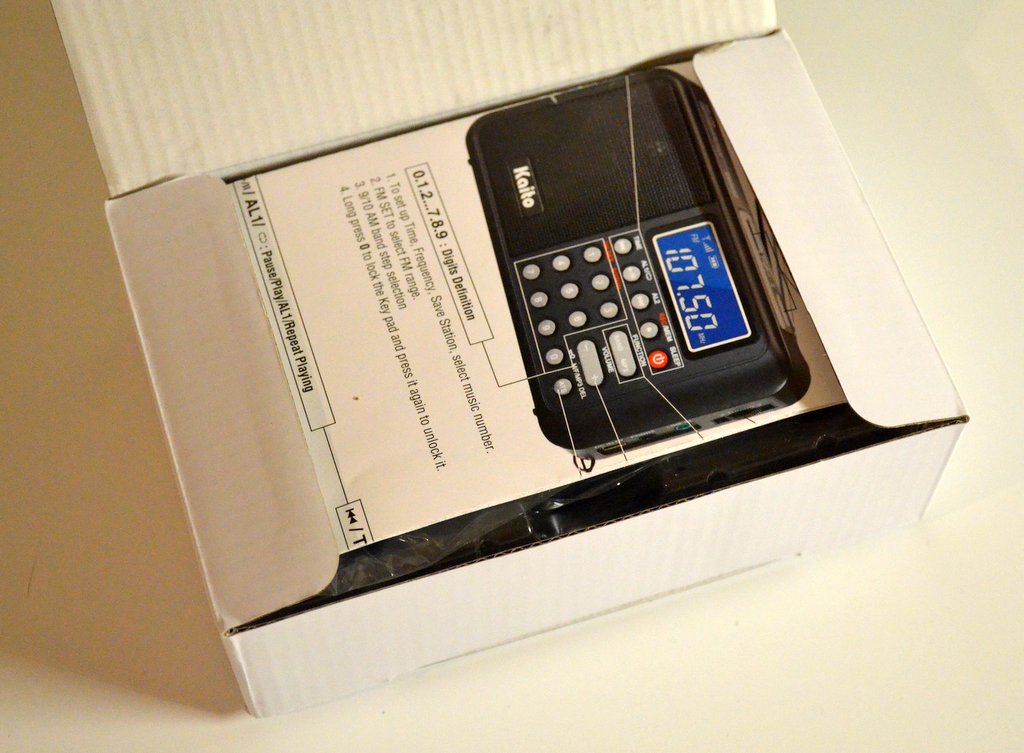
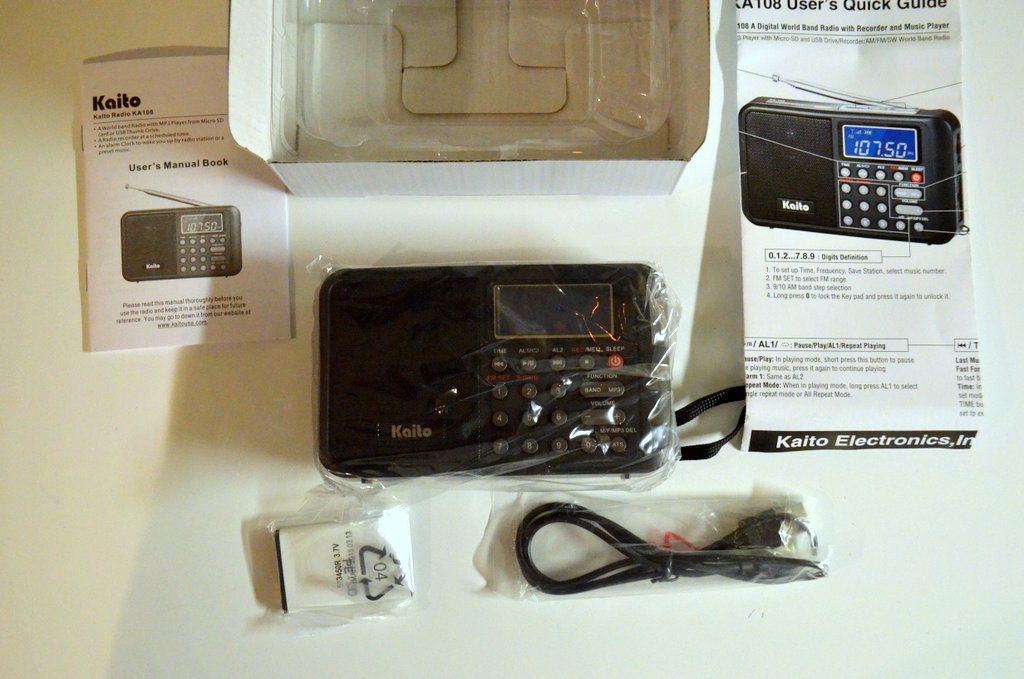
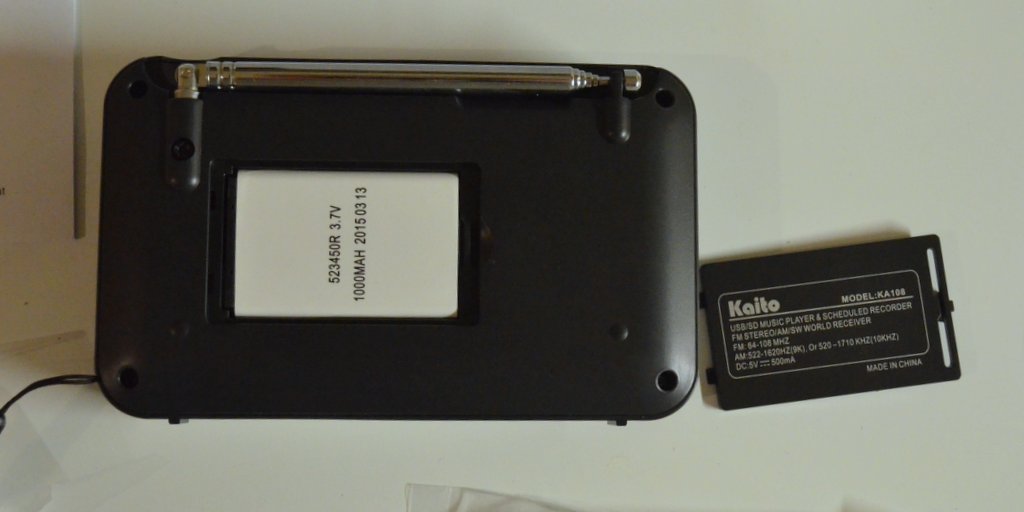
Yesterday afternoon, I ventured off of our snowy mountain for the first time since Thursday. I was very pleased to find the new Kaito KA108 waiting for me at the post office. Universal Radio kindly dispatched a unit to me for review from their very first shipment. Thanks, Universal!
I’m starting to put the KA108 through its paces: checking out reception on shortwave, mediumwave and FM. I plan to make a few recordings today and see if its internal recorder is effective (my fingers are crossed on this one!).
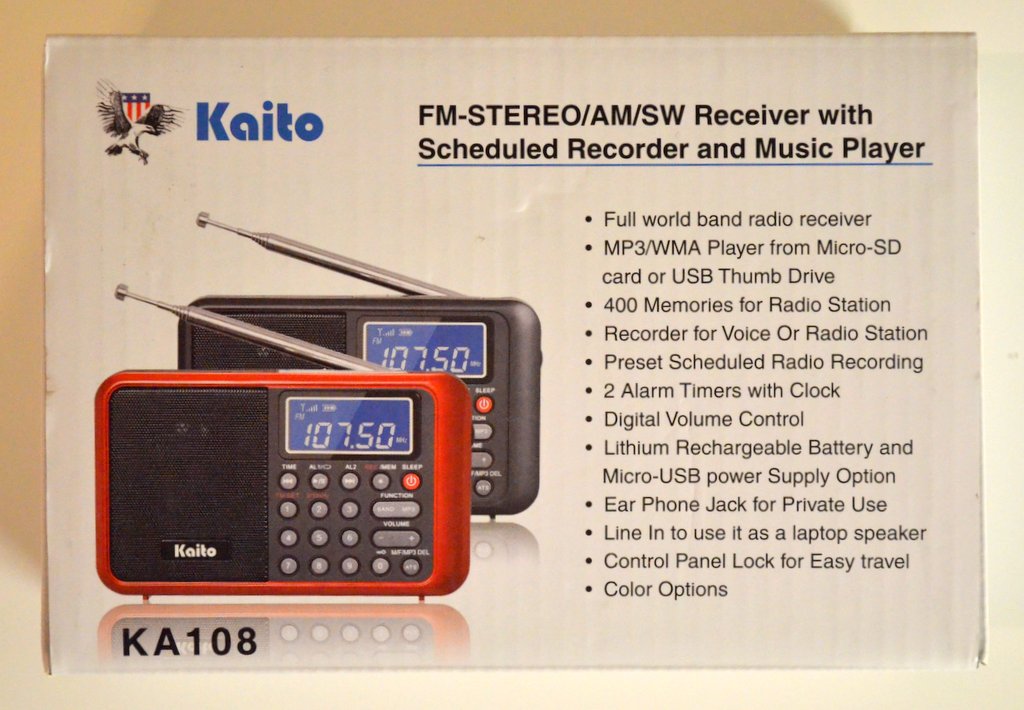
By request, I took a few photos while I unboxing the Kaito KA108 last night (click each image to enlarge):
Check back soon as I plan to post at least a short review/overview within a few days. Follow the tag: KA108
 Many thanks to Sean Gilbert who shares the following on the WRTH Facebook page:
WRTH has released a free of charge update file for the B15 (winter) international and clandestine/target broadcast schedules. The file is in PDF format and follows the same styling as the WRTH printed edition.
To download the file, please visit either: http://www.wrth.com/_shop or http://www.wrth.com/_shop/?page_id=444.
We understand from some of our web visitors that there was an issue with our donations button not working properly – this has been rectified and you are now able to make a donation to WRTH, should you wish to. This is entirely voluntary, of course.
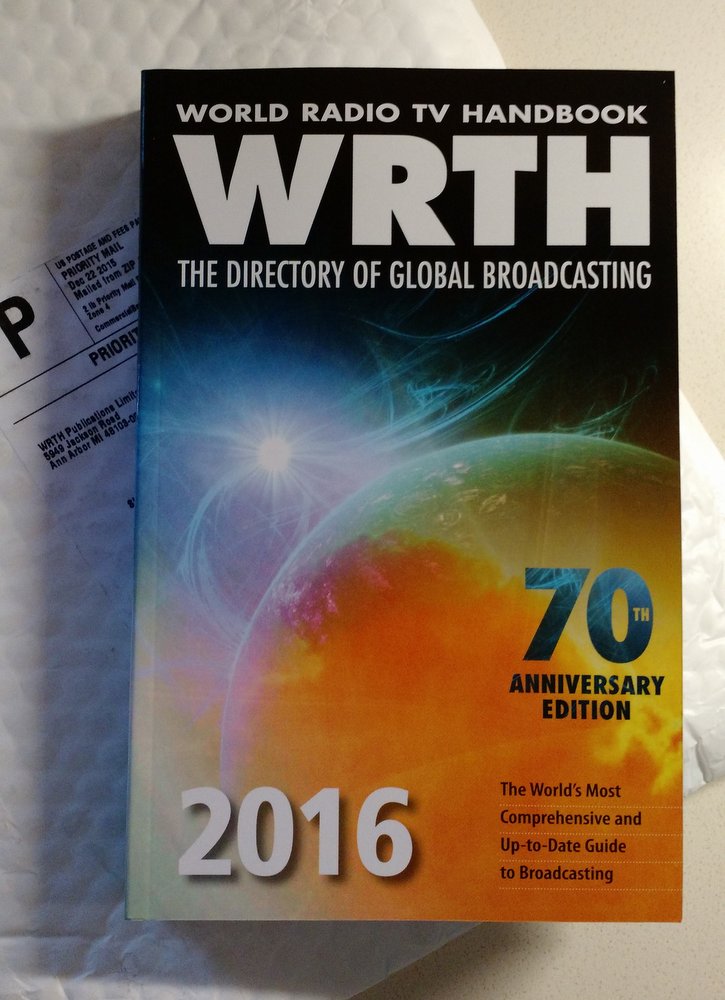
If you haven’t already purchased your copy of the 70th anniversary edition of WRTH (2016), now is the ideal opportunity! Head to our website for more information. Best wishes and happy listening/DXing from the WRTH Editorial team.
Click here to read our overview of the 2016 WRTH.
Purchase your copy of WRTH 2015 directly from WRTH’s publishers, or from a distributor like Universal Radio (US) and Amazon.com (US), or Radio HF (Canada). BookDepository.com, a U.K.-based seller, is also offering WRTH at a discount and with free worldwide shipping.
 Many thanks to SWLing Post contributor, Gregg Freeby, who writes:
I thought your readers might be interested in this story about a solar powered FM radio station operating in Austin, Texas. The article also includes a brief history of broadcast radio.
http://www.austinchronicle.com/music/2016-01-22/anthem-of-the-sun/print/
Here’s an excerpt from The Austin Chronicle:
Up on the second-story rooftop of Sun Radio, one looks east to the antenna farm near Loop 360 in West Lake Hills, and southwest at the Hill Country gateway of Dripping Springs. From where Denver O’Neal stands, eight rows of solar panels lay out along the north side of our perch.
“We’ve got 48 panels sucking in the sun’s juice,” explains O’Neal, 30, operations director of the station. “It goes into this control box, then converts AC to DC. The juice comes out AC from the panels, where it converts to DC for the outlets.”
Sunlight remains the most abundant natural resource on the planet. A single hour produces more energy than Earth’s population uses in a year. Whereas any child who’s used a magnifying glass to wreak havoc on an anthill has witnessed solar power in action, the U.S. didn’t start harnessing rays to light homes and businesses until the Seventies. Decades of steady market growth meant that by 2004 states began offering rebates for solar panels.
[…]Sun Radio – 88.9FM in Johnson City, 99.1FM for Fredericksburg, 100.1FM here in Austin, 103.1FM out in Dripping Springs, and 107.1FM around Central Texas – began its love affair with solar energy in 2009. Daryl O’Neal and his son Denver bought the station as the 5-watt KDRP running out of a defunct studio in Dripping Springs. Back then, solar tubes were the franchise, reflective consoles installed into the roof in an effort to refract sunlight. Panels replaced them when the O’Neals stretched their signal to a transmitter a mile away.
Think of transmitters as a set of bunny ear antennas. They take the signal being broadcast from a station and cast it toward the horizon. The taller the tower, the further out the signal extends. At 96 feet, Sun Radio’s Dripping Springs tower could barely register among the 1,000-foot TV towers overlooking West Lake Hills. Yet the boost in wattage allowed the station to blanket town.
In 2012, the station bought yet more space on a tower in West Lake Hills to expand its coverage, then installed panels and energy storage batteries there. In Dec. 2013, KDRP itself uprooted from Dripping Springs to Bee Cave, going solar at that location two years later. The panels currently provide enough energy to power the non-commercial station from dawn till dusk, after which they use electricity.
In September, their utility bill read negative $17.12.
Continue reading at The Austin Chronicle…
As Gregg notes, the article actually goes in-depth about the history of radio. Great read–thanks, Gregg!
This article makes me wonder how long will it be before batteries and solar (PV) panels become so efficient and compact that shortwave pirate radio stations can simply deploy a solar-powered transmitter box that absorbs energy during the day, then transmits at night?
Indeed, perhaps someone is already doing this? My only fear would be that an unattended Lithium Polymer pack might cause a fire hazard.
[See update below]
Many thanks to SWLing Post contributor, Dan Robinson, who writes:
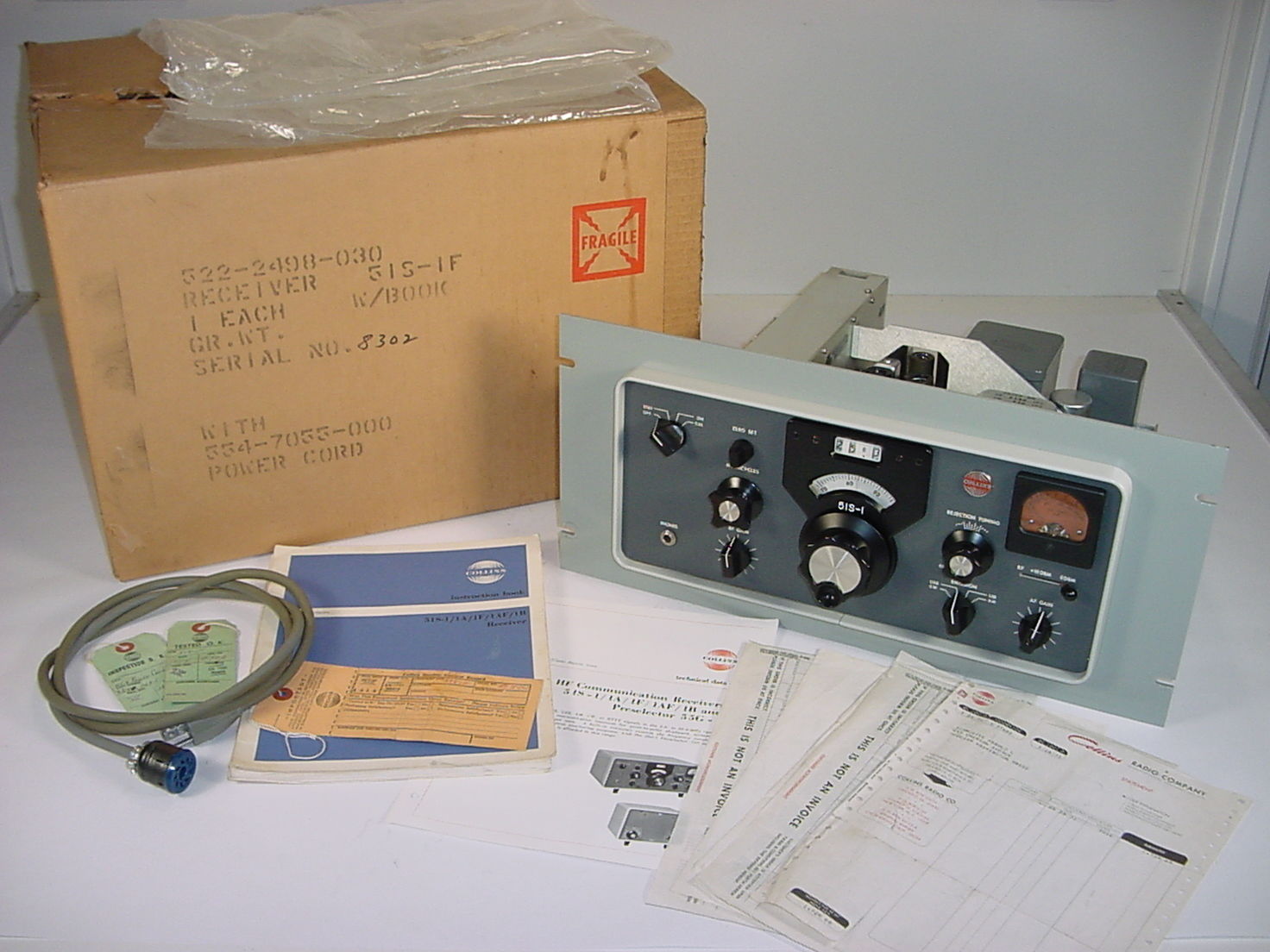
This NOS 51-S1 is headed for a record price for an Ebay sale. I have only seen one of these in this condition in my decades on Ebay. This is a rare rack version complete with box and original accessories. The preselector, also NOS, sold earlier today:
I’ll watch this auction just to see how high the price goes. At time of posting, it was at $4,850 US (plus shipping):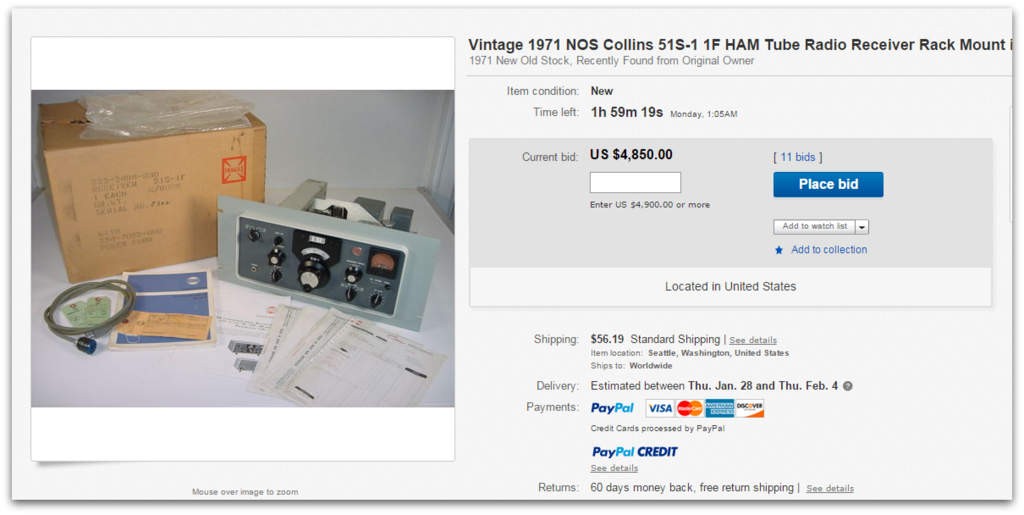
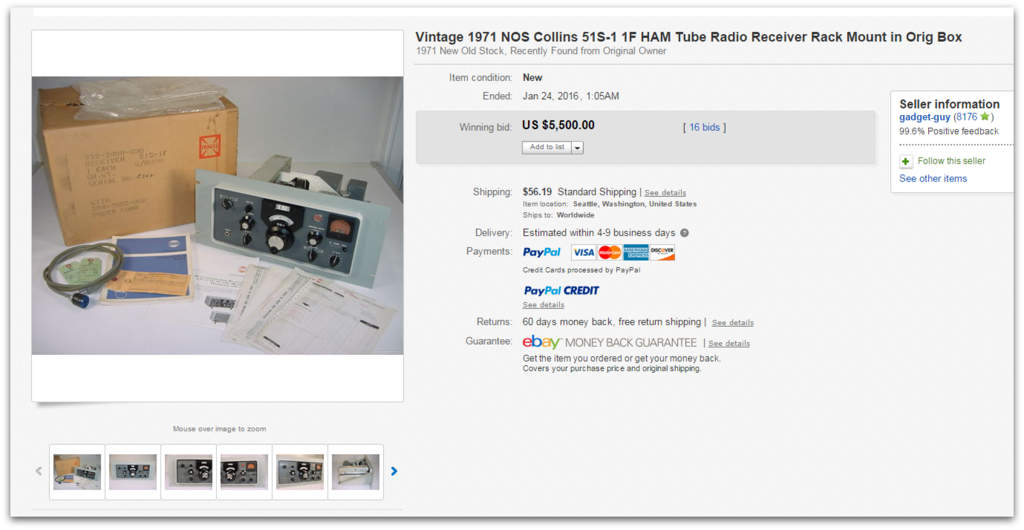
UPDATE: The winning bid was $5,500 US plus $56.19 shipping:
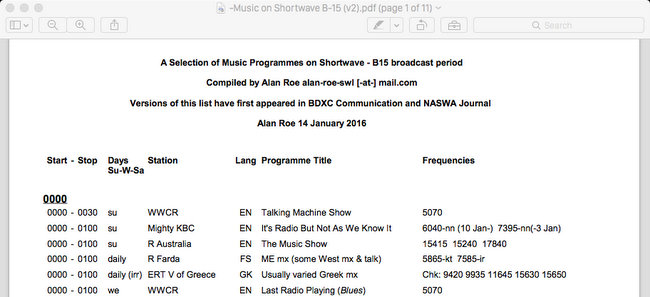
Many thanks to SWLing Post contributor, Richard Langley, for sharing Alan Roe’s excellent guide to music broadcasts on shortwave radio.
Alan Roe (who happens to be an avid SWLing Post reader!) has generously given me permission to post his guide here as a free (PDF) download. Thank you so much, Alan! I’ve already printed this guide and placed it with my WRTH and WWLG.
Click here to download Alan Roe’s guide to music on shortwave (PDF).