Tag Archives: Software Defined Radio

DX’pedition: first test of deployable 200 metre longwire antenna by Oxford Shortwave Log

A view looking toward  Oxford Shortwave Log DX’pedition territory; a wood in rural Oxfordshire

Regular viewers of my youtube channel will know that I spend much of my shortwave listening time out in an Oxfordshire wood where QRM is negligable and Tropical Band stations can be heard with, at times, unprecidented signal-to-noise. Regular viewers will also be aware that I enjoy experimenting with different antenna set-ups, particularly pushing the boundaries with longwires coupled to portables. Having applied my rather modest practical skills, I constructed a 200 metre deployable 200 metre longwire antenna and finally got around to testing it, with my Elad FDM DUO and Sony ICF-2001D. There are a number of reception videos still to be uploaded to the Oxford Shortwave Log youtube channel, howvever, the immediate information and entertainment of SWLing Post readers, I have included two here. 🙂

The first is the more commonly heard Emisoras Pio XII from Boliva on 5952.5 kHz using the Sony and the second, the much more rarely reported Radio Chaski from Peru on 5979.9 kHz using the Elad. Both reception videos were very encouraging. In fact, I would go so far as to say they demonstrated excellent reception witihin the framework of their respective contexts. Emisoras Pio XII was almost booming with unprecidented signal strength and clarity, whilst Radio Chaski was heard with discernible audio. Neither station had been received as well at my QTH or the woods, previously.

Direct link to reception video of Emisoras Pio XII from Boliva on 5952.5 kHz

Direct link to reception video of Radio Chaski from Peru on 5979.9 kHz

I hope this gives other DXers ‘food for thought’ with regard to experimenting with antennas and perhaps more importantly, making significant improvements to SNR by removing themselves from the ubiquitous blanket of QRM generated by all of those devices at home that are intrinsic to modern life. Thanks for watching. 73.

Clint Gouveia is the author of this post and a regular contributor to the SWLing Post. Clint actively publishes videos of his shortwave radio excursions on his YouTube channel: Oxford Shortwave Log. Clint is based in Oxfordshire, England.

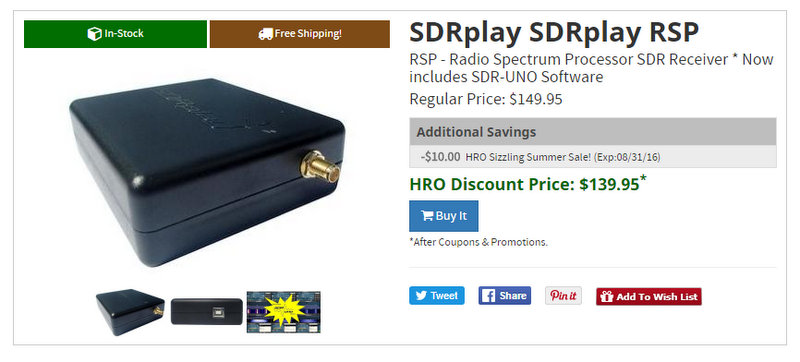
On Sale: SDRplay RSP at HRO

SDRplay-Special-HRO

Ham Radio Outlet is currently offering the SDRplay RSP software defined receiver for $139.95 in a summer sale that is set to last until the end of August.

If you’ve been considering the SDRplay RSP, this would be a great time to pull the trigger as I’ve never seen the price of the RSP below $149. Click here to view the promotion on HRO’s website.

Click here to read our review of the RSP, or here to read past posts referencing the RSP.

Radio-Sky Spectrograph: Radio Astonomy with the SDRplay RSP

The SDRplay RSP software defined radio

The SDRplay RSP software defined radio

(Source: Amateur Radio Astronomy blog)

Thanks to the efforts of Nathan Towne, we now have the ability to use [the SDRplay RSP] with Radio-Sky Spectrograph (RSS).

[…]As with RTL Bridge, a intermediary program sits between RSS and the receiver.  This program was written by Nathan Towne and is named SDRPlay2RSS, not too surprisingly.  This is a dot NET program and if you are up to date on your dot NET run-time updates you should be fine. Installation is a no brainer as SDRPlay2RSS comes with the RSS 2.8.18 update. SDRPlay2RSS does not come with the current full install of RSS so you must do the Full install and then the Update.

Continue reading…

Click here to read our review of the SDRplay RSP.

Selecting a budget antenna for urban radio listening

Urban-City-Cityscape

Yesterday, an SWLing Post reader contacted me with questions regarding budget antenna choices for an urban apartment. He’s about to purchase an SDR, but knows that a decent antenna capable of coping with urban radio interference is a critical component.

I suggested that, since I’m no expert with urban interference, he pose his question to the SWLing Post community. Here’s his reply and request:

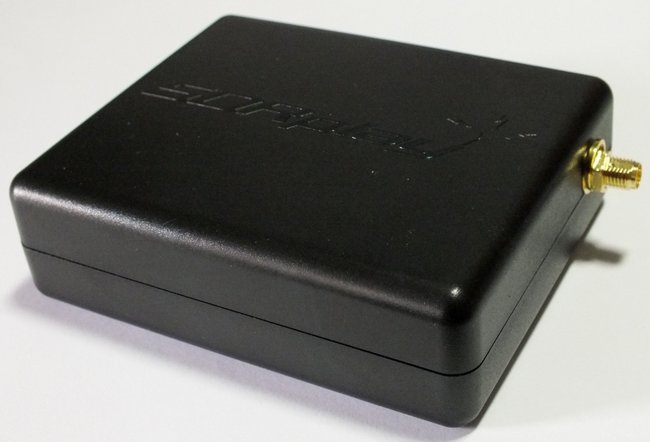
I know I’m a little behind some of my other radio friends, but I’m finally moving up to a software defined radio. Specifically the affordability of the SDRplay RSP and all good reviews for it have encouraged me to make the leap.
The SDRplay RSP software defined radio

The SDRplay RSP software defined radio

I suppose it should go without saying that once I purchase an SDRplay I would like to use it, which might not be so easy. I live in a big city full of RF pollution, and most of my listening will be in a room where there’s a fair amount of electronic gadgetry.

So, without spending a lot of money, I’m curious if any of your readers might have suggestions about what I might purchase as a “starter kit” for a new SDR user in such a scenario. I also plan to take the SDRplay with me when I have forays out of the city, but I envision that some sort of long wire might be sufficient for listening out in the countryside.

I live on the second floor in an urban apartment, and have two windows in the room where I’ll be listening. There is zero chance that I can hang or attach anything on the outside of the house here. So, my most pressing question is about antenna ideas. I’ll need something inexpensive, as I mentioned, and something “off the shelf.” I don’t have the skills or tools to really “build” anything, unfortunately. So is there some less than pricy antenna or antennas I should look at? Or is there some hope of doing something with a long wire indoors?

Tecsun AN-100 portable loop antenna

Tecsun AN-100 portable loop antenna

And will my little Tecsun AN-100 AM loop antenna going to help me at all? I mostly plan to listen to MW and the HF bands, but I will inevitably check out signals far up the bands as well. So advise about listening to these bands is also of interest to me.

Other than that, I understand it’s important to attach the SDR to the laptop with a USB cable with ferrite chokes. And it probably wouldn’t hurt to buy some extra ferrite chokes to attach to other cables I might be using. I also plan to buy a NooElec mini-balun for use with a long wire antenna, and I already purchased a PowerMate USB knob because I still prefer to do my “tuning” that way.

So other than those basics my questions would be regarding connecting cables and adapters, and the best lengths of cable to use. Should I have some cable between the balun and SDR? I believe I’ve read that it’s better to have a longer USB cable and a shorter coax to the antenna, correct? And when it comes to using a wire antenna, are there preferences as far as what type or gauge of wire to use?

I am also interested in any general suggestions or tips from SDR users on getting started. In general, I’m pretty good with navigating through software, it’s usually the hardware issues that stump me. I’m looking to spend between $100 to $150 tops on everything besides the SDR, and I’d like to hear about peripherals, cables, adapters and connectors which when added all together won’t bust my bank.

I’m sure there’s plenty of people who read this wonderful blog who have plenty of useful knowledge regarding SDR listening on a budget. And I hope a few could share a little of their experience and collected wisdom on this topic here, for me and for others considering turning their computers into receivers…

Indeed. I appreciate this reader’s question, since many listeners live in environments with heavy radio interference. While we’ve published a number of posts touting the virtues of magnetic loop antennas, I don’t think we’ve ever looked for solutions at or below $150 US. While this may be a challenge, I’m also certain there are a number of readers who’ve found solutions to this problem.

So, Post readers, what might you do–or have you done–in similar circs?  Please feel free to comment, and let’s explore inventive and affordable solutions for this reader!

Turn your Elad FDM DUO into a portable receiver, with a 200 metre longwire

As some of the subscribers to Oxford Shortwave Log  will know, I’ve been talking about building a battery pack for my Elad FDM DUO to take it out on a DXpedition. Finally, I found the time to quickly do just that with some parts that cost less than £10 – as the video below demonstrates in more detail. The FDM DUO input voltage is stated as 13.8V and although 12V would probably have been sufficient, a couple of very cheap battery cases later, 9 x 1.5V ‘C’ cells and about 20 minutes of somewhat unpractised soldering did the trick. I have also put together a 200 metre longwire antenna, deployable from a large spool, with a termination connector to add resistor grounding for a Beverage Antenna configuration, should I wish to do so in the future.  I used two spools of 100 metre equipment cable, soldered together and protected with heat-shrink.

Direct link to Oxford Shortwave Log channel

Regular viewers of my youtube channel will know that I spend much of my shortwave listening time out in an Oxfordshire wood where QRM is negligable and Tropical Band stations can be heard with, at times, unprecidented signal-to-noise. This is the first time I’ve used a longwire greater than 100 metres in length, however, to be resonant at two wavelengths for 90 metres and 3 wavelengths for 60 metres was the objective. I hope the already fine Tropical Band listening to be had out in the Oxfordshire countryside will improve further.

Clint Gouveia is the author of this post and a regular contributor to the SWLing Post. Clint actively publishes videos of his shortwave radio excursions on his YouTube channel: Oxford Shortwave Log. Clint is based in Oxfordshire, England.

Free SDRuno webinars this weekend

sdrunostartburst

Many thanks to SWLing Post contributor, Mike (K8RAT), who writes:

According to the SDRplay blog they will be hosting a series of Webinar events centered around the RSP and SDRuno. Starting this Saturday.
http://sdrplay.com/blog.html

From Jon Hudson on SDRplay’s Facebook page:

We will be hosting a series of Webinar events centred around the SDRplay RSP and SDRuno. These events will be streamed live, but will also be recorded and hosted on our website for those that are unable to attend.

The first event is scheduled for this Saturday (2nd July) at 16:00 UTC – we will give some background to SDRuno and explain it’s core functionality and what the future holds for its development. It will be fairly informal and interactive, we will try to answer as many questions as we can. We will try to stick to a timeframe of about 45 minutes to 1 hour maximum.

You will be able to view the broadcast here: http://connectcast.tv/SDRplay

If you would like to contribute to the text chat discussion, you will need to signup with an account here: http://connectcast.tv/signup

If this proves to be of interest and value, we’ll schedule some more with special guests to go through specific real world use cases with the RSP and SDRuno

Jon (SDRplay )

SDRuno: SDRplay introduces a free native app for the RSP

(Source: SDRplay Press Release)

SDRplay-Logo

SDRplay is pleased to announce the official release of SDRuno for the RSP. SDRuno is the new name for the RSP compatible version of Studio1, the rights to which we obtained and announced on 28th April. SDRuno contains native support for the SDRplay RSP and no extra plugins are required. Third party hardware can also be supported via the ExtIO interface, but with reduced functionality.

SDRuno provides a rugged and flexible, high performance SDR receiver capability and boasts some excellent features:

  • Multiple ‘Virtual Receivers’ which allow for simultaneous reception and demodulation of different types of signals within the same receiver bandwidth.
  • A selectivity filter with an ultimate rejection greater than 140 dB.
  • A unique distortion-free double stage AGC with fully adjustable parameters.
  • Multiple notch filters with BW adjustable down to 1 Hz, Notch Lock feature.
  • A unique synchronous AM mode with selectable/adjustable sidebands, dedicated PLL input filter, and selectable PLL time constants.
  • SNR (stereo noise reduction), featuring a proprietary noise reduction algorithm for stereo broadcast.
  • AFC for FM signals.
  • Calibration for receiver frequency errors.

Over time, we plan to add many more features to SDRuno to enhance the user’s experience of this very powerful piece of software. This software runs on Windows and we don’t yet know how easy it will be to migrate it to other platforms but this is something we will be investigating.

SDRuno will be made freely available to all current and future users of the RSP – to download a copy – simply go to http://www.sdrplay.com/windows.html

Our support for SDRuno in no way lessens our commitment to support HDSDR, SDR Console, Cubic SDR or ANY other software solution where the authors are willing to work with us. We fully recognise that many people have strong preferences for particular pieces of software and we do not want to do anything to undermine the options that people have to use their favoured software packages. Indeed, our view is quite the opposite. Our objective remains aim to have our hardware platforms support any and every SDR package out there. This of course may not be possible, but it is our philosophy and part of the ethos of our company.

About Studio 1:

Studio1 was developed in Italy by SDR Applications S.a.s. and has hundreds of happy customers around the world. Studio 1 is known for its user friendly stylish GUI, CPU efficiency and advanced DSP capabilities, including features not available on other SDR software packages.

www.sdrapplications.it

About SDRplay:

SDRplay limited is a UK company and consists of a small group of engineers with strong connections to the UK Wireless semiconductor industry. SDRplay announced its first product, the RSP1 in August 2014

www.sdrplay.com
Email: [email protected]