Monthly Archives: December 2014

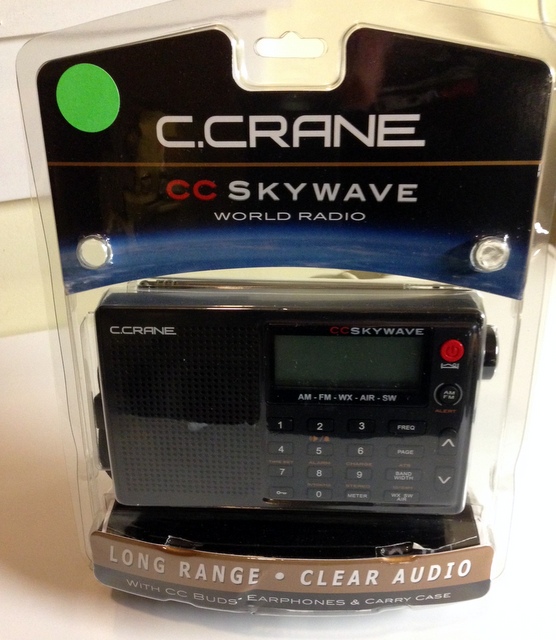
Coming soon: C. Crane CC Skywave review

IMG_7856 (1)

C. Crane has sent me their new CC Skywave shortwave portable for review. I’ve been using it since Friday and have started putting together a quick review.

If you have any thoughts or questions, please comment and I’ll try to address them in the upcoming post.

Update: Click here to read a full review of the CC Skywave.

December 13/15: Special RMRC shortwave broadcasts

SX-99-Dial(Source: Toshi Ohtake, Japan Short Wave Club, via Sean Gilbert)

RMRC Shortwave broadcasts in December 2014 about the EDXC’14 Conference

The Rhein-Main Radio Club ( RMRC ) of Frankfurt, Germany, plans to broadcast a one-hour program in English about the EDXC 2014 Conference held in September in Nice , France. There will be three separate transmissions:

There will be taped interviews with several well-known DXers who attended the meeting. Thank-you very much to Mr. Toshi Ohtake of the Japan ShortWave Club (JSWC) for taping and providing these interviews.

QSL-verification is <only> via the RMRC and either as electronic or as paper QSL. Reception reports to either:
[email protected] or RMRC, Postfach 70 08 49, 60558 Frankfurt / Main, Germany. Return postage is not required.

See also our web-page www.RMRC.de for details (“QSL-Info”).

Via Sitkunai, Lithuania:
Target Area / Frequency / UTC / Day

J/As / 11690 KHz  / 2100 – 2200/  Sat 13 Dec

Via WRMI, Okeechobee, Fl, USA:
Target Area / Frequency / UTC / Day

WNAm. / 7455 KHz / 0000 – 0100 / Mon 15 Dec
ENAm. / 5850 KHz / 0000 – 0100 / Mon 15 Dec
Car/LAm. / 5015 KHz / 0000 – 0100 / Mon 15 Dec
Eu / 15770 KHz / 2100 – 2200 / Mon 15 Dec

“Less plug” and much “more play”–!

Aw, gee–you know you’ve made it the in the world when the talented and inimitable Jeff Murray (K1NSS) takes the Mickey out of you with his quirky vintage-style imagery.  This time, it was yours truly that got a dose of the Murray treatment…
K1NSS-meJeff, you inject this hobby with the requisite dose of whimsy. Thanks so much for “plugging” Ears To Our World!

Merry listening, friends! If you would like to support Ears To Our World with a tax-deductible donation, click here!

I’ve said it before, and I’ll say it again–if you want to hire a talented artist for graphics or a unique QSL card, Jeff is clearly the guy to call upon.

Radio Exterior de España will return to shortwave

RadioExteriorDeEspanaA bit hat tip to SWLing Post contributor, London Shortwave who sent a link to this article from the Spanish news site prtelevisión [click here for English translation].

According to prtelevisión and this article from La Opinión A Coruña [English translation], yesterday morning, the Board of Directors of RTVE approved a proposal to broadcast on shortwave four hours a day: from Monday to Friday (between 20:00 and 24:00 hours) and Saturday/Sunday between 16:00 and 24:00.

The following broadcasts will air:”24 Horas”, “Radiogaceta de los deportes“, “Españoles en la Mar” and “Cinco Continentes“.  In addition, REE plans to cover sporting events.

It appears that the fisheries industry is to thank for this decision to bring REE back on shortwave as ships had no viable means to listen to REE while at sea. According to these sources, shortwave broadcasts will re-start in the near future.

Readers: please comment when you hear REE back on the air.

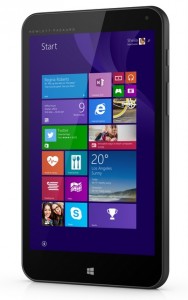
Using the Elad FDM-S2 on the $99 HP Stream 7 tablet

The HP Stream 7 Windows 8.1 tablet

The HP Stream 7 Windows 8.1 tablet

Regarding the Elad FDM-S2, Guy Atkins comments:

“This week I bought an HP Stream 7 tablet from the local Microsoft Store for $99, and it runs my Elad FDM-S2 receiver great! This recently introduced tablet is the perhaps the lowest priced new computer with Windows 8.1. I can even record the entire MW band, and play back the WAV files without audio stuttering. CPU load is an impressive 11-12%. Once you add a small OTG USB adapter you can plug in a USB hub and attach a wireless mouse receiver, the SDR’s cable, and other stuff. I was recording to a micro SD card (the slot is a bit of a pain, as you need to remove the back cover of the tablet. Recording to a USB external HD or SSD may also work). I also had an AC adapter powering the USB hub, as the tablet’s micro USB port cannot supply enough current for the Elad SDR.

This will be a neat, very portable setup for camping DXpeditions and when I want to take the SDR right to the termination of a phased loop array antenna for adjusting nulls. I do that now, but it’s more of a hassle with a regular laptop.

I presume I’ll be able to run the Afedri SDR-Net in “LAN mode” also but I’ll need to attach a USB-to-LAN adapter to the tablet first. A LAN rather than a USB connection is required for this particular SDR to have the bandwidth to handle all of medium wave at once.

Here’s a review of the 7-inch, Win 8.1 tablet: http://www.youtube.com/watch?v=SoPNzx8bcVQ. Also, when you buy it for $99 USD it includes a one-year subscription to MS Office 365, that can be used on two different devices. That’s worth $70 in itself.”

Wow–thanks so much for sharing this, Guy.

I’m very impressed you can record the entire MW band to an SD card and playback without stuttering. The quad core Atom processor must have enough horsepower to cope with the incoming data.

This setup would be ideal for field recording then taking the SD card back to the PC for analyzing later on a larger screen.

As you use this set-up, Guy, please keep us informed about any tips or quirks you discover along the way!

I found the Stream 7 at the following places online:

Update: Check out Guy’s video demonstration of the Stream 7/FDM-S2 combo. 

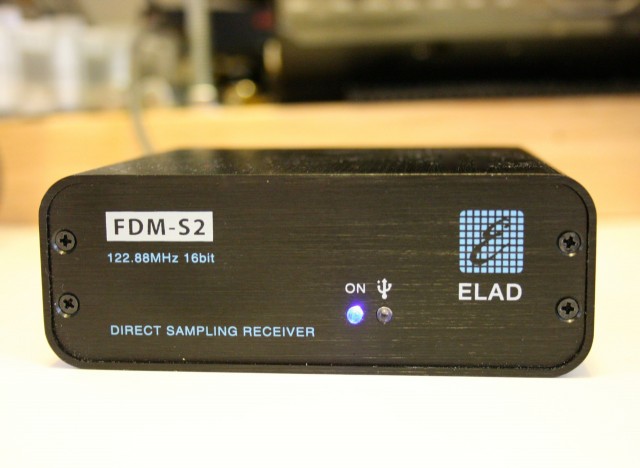
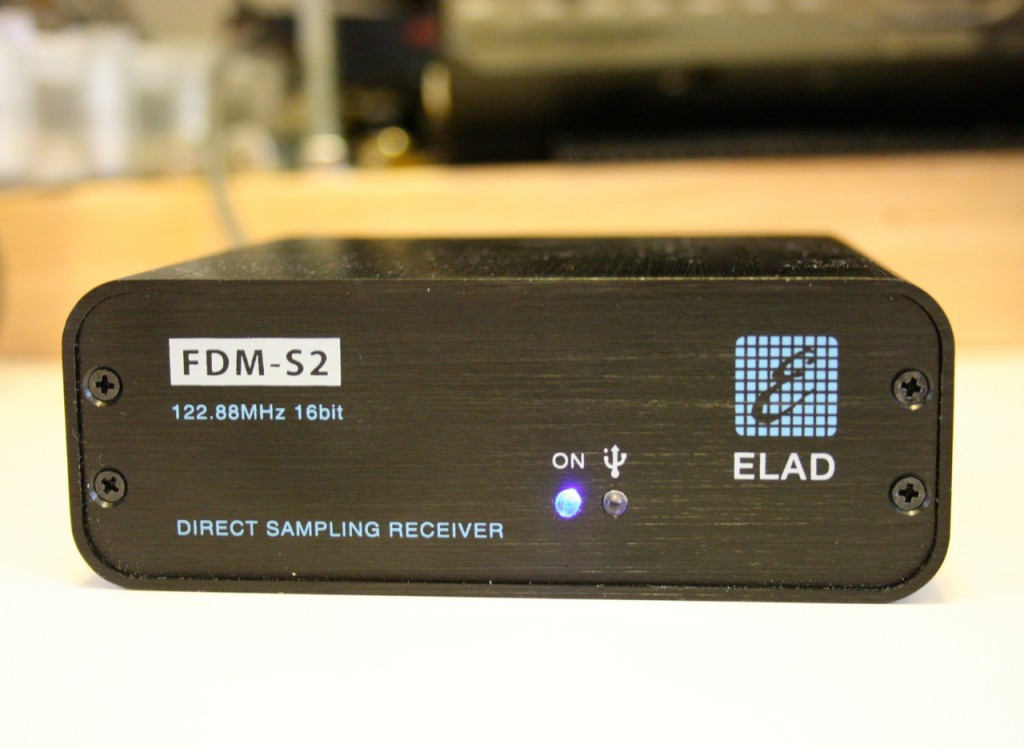
Elad FDM-S2: Eric’s method of mitigating strong local signals

Elad-FDM-S2-FrontPanel

Many thanks to SWLing Post reader Eric Cottrell, who writes:

“Thanks for your excellent review of the Elad FDM-S2. I bought one and received it yesterday.

I tried out the software earlier this week by downloading 4GB of sample files from DK8OK and the Elad software. There are a lot of interesting features.

It is small! I like the use of the USB port for power. I can see how it would be a good receiver to throw into your laptop bag for trips.

I have a harsher Urban RF environment with 5KW and 1KW AM Broadcast transmitters within 2.5 miles. They reduce power at night. The Wellbrook AHA1530 Loop outputs a very high signal level from all the area’s AM stations. I have to use the attenuator on any radio at my QTH below about 2.5 MHz.

The unit having one preselection filter for LW/MW/HF is noticeable as I got ADC Clip warnings when directly connected to the Wellbrook loop. Turning on the 11 dB attenuator took care of the problem and did not seem to affect the weak signals much. It also was not as bad when I connected a Mini-Circuits ZFSC-2-6+ two port splitter between the Elad and the Wellbrook.

The Perseus has multiple preselection filters, but I noticed only one low pass filter for the 0 to 1.7 MHz range. So a MW band reject filter would be useful for Long Wave with both units. I plan on building an external preselector.

The option for multiple receivers and two RF ranges is pretty neat. I was listening to multiple FM stations at once. This morning I set one range to 31 meters and the other to 49 meters. I listened to Radio Australia on 9580 KHz using the right laptop speaker for audio, and could check their other frequencies on 31 and 49 meters using the left laptop speaker for audio.

I do HF Utility monitoring on digital signals, so I want to setup the Elad software with external decoder software. I have seen reports that the Elad can receive Airband pretty good, so I will also try receiving and decoding multiple ACARS frequencies at the same time.

So many experiment to try this Winter!”

Thanks for sharing your experience, Eric! Since I live in such a rural area, I never have to worry much about low pass filters (though I’m sure they couldn’t hurt). I’ve had the FDM-S2 since June this year.  I can tell you that there are so many features, settings and possibilities with this radio, you could easily spend the winter and spring experimenting. I have yet to use the WinRad app to drive the S2.

Eric, we welcome any other discoveries you make along the way! Many thanks!

Mike’s RadioShack Model 2000669 modification to prevent station memory loss

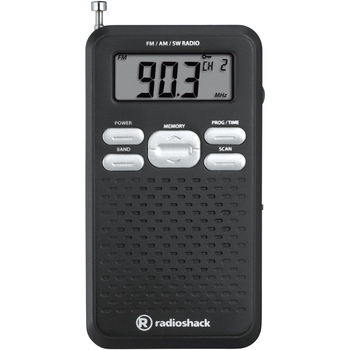
RS-ShortwaveRadioSWLing Post contributor, Mike (W5RST), writes:

This is a follow-up to my mini-review of the new Radio Shack model 2000669 receiver.

Overall, I continue to be quite happy with this receiver, however, I think the loss of memories and time when replacing batteries is annoying.

So, I did a simple mod to the radio to help prevent having to re-program everything after installing new batteries.

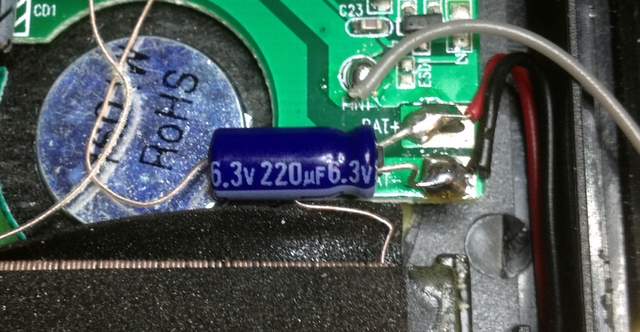
I found that there was enough space within the case to tack a 220 µF 6.3 V electrolytic capacitor across the pads on the PC board where the battery leads are attached [see the photo below]. Adding a series resistor to limit current flow might be better, but this simple change seems to be OK.

Click to enlarge

Click to enlarge

The mod won’t prevent long-term memory loss, but it will keep enough voltage on the circuit for a quick battery change (especially if you change one battery at a time). The radio is not actually altered, and the mod can be easily removed if desired.

Close-up of added capacitor.

Close-up of added capacitor.

Many thanks for creating and documenting this simple mod, Mike!

On a side note, I remember when RadioShack used to pride themselves on having a full line of products that could maintain memory if batteries were removed or in case of power outage. RadioShack badged VCRs, receivers, radios and clocks all had this feature in the 1990s, at least.

Again, Mike, many thanks!