Author Archives: Thomas

Radio Waves: “Tuning In The World”, Subcarrier Signals, SSTV Event from the ISS, the Zeptosecond and Israel Army Radio Shut Down

Radio Waves:  Stories Making Waves in the World of Radio

Because I keep my ear to the waves, as well as receive many tips from others who do the same, I find myself privy to radio-related stories that might interest SWLing Post readers.  To that end: Welcome to the SWLing Post’s Radio Waves, a collection of links to interesting stories making waves in the world of radio. Enjoy!

Many thanks to SWLing Post contributors Tracy Wood, Dennis Dura, John Forsyth, and the Southgate ARC for the following tips:


Tuning In The World (Far From Home)

When David Goren was 13 years old, he and his family went to visit their Uncle Lou.

“He was usually just railing about my long hair or criticizing rock and roll,” he recalled. But this time was different. “He gave me an old radio of his that had a shortwave band on it. I really didn’t know what that was. I asked my dad, and he was like, ‘You won’t hear anything on that!’”

David was curious, though, so after he got home, he turned it on, started fidgeting with the dial, and was amazed to discover sounds and music from around the world![…]

Click here to read the full post and click here to subscribe to the Far From Home podcast.

Subcarrier Signals: The Unsung Heroes of the FM Dial (IEEE Spectrum)

How subcarrier radio signals made room for hidden FM stations—and helped ensure that everyone has access to the news

A version of this post originally appeared on Tedium, a twice-weekly newsletter that hunts for the end of the long tail.

In our modern era, we tend to choose devices with as many functions as possible, and we bristle at the thought of an object with a single use—hence why umbrellas can be so frustrating to carry around. But sometimes, a single use case is exactly the right level of functionality. This is something I’ve been thinking about recently after I got my hands on a fairly large radio that has literally one function: You turn it on and a specific station plays, and there’s no surface-level way to do anything else with it.

This is a weird device—but for its niche, this device, called a subcarrier radio, was perfect. And it was one of many niches that subcarrier radios made possible.

What the heck is a subcarrier radio signal?
In 1985, a South Florida Sun-Sentinel article discussed a potentially lucrative offering for the owners of FM radio stations: ways to make extra money from parts of the licensed signal they weren’t already using.

This phenomenon was not unusual at the time; the practice had been around for decades. But what the article highlighted were the numerous ways radio signals were being used that the average listener was likely not even aware of—for background music, for stock reports, even to transmit computerized data.

And while station owners weren’t earning a ton of extra money—a single lease brought in US$1,400 a month (about $3,500 today)—for a struggling station, the additional revenue could mean the difference between being in the red and being in the black.

The thing that allows many radio stations to monetize their signals in this way is, essentially, a technical gap inside the FM broadcast signal. These gaps, or subcarriers, are frequencies that aren’t being used for the primary signal but could find secondary uses in more specialized contexts.[]

Amateur Radio on Shuttle, Mir and ISS (Southgate ARC)

ARISS report there will be an ‘Amateur Radio on Shuttle, Mir and ISS’ Slow Scan TV (SSTV) event from June 21-26. Transmissions from the International Space Station will be on 145.800 MHz FM using PD120

The ARISS team will be transmitting SSTV images continuously from June 21 until June 26. The images will be related to some of the amateur radio activities that have occurred on the Space Shuttle, Mir space station and the International Space Station.

The schedule start and stop times are:

Monday, June 21 – Setup is scheduled to begin at 09:40 UTC (transmissions should start a little later).

Saturday, June 26 – Transmissions are scheduled to end by 18:30 UTC.
Downlink frequency will be 145.800 MHz and the mode should be PD120.

Those that recently missed the opportunity during the limited period of MAI transmissions should have numerous chances over the 6 day period to capture many (if not all 12) of the images.

Check the ARISS SSTV blog for the latest information
http://ariss-sstv.blogspot.com/

The signal should be receivable on a handheld with a 1/4 wave whip. If your rig has selectable FM filters try the wider filter for 25 kHz channel spacing.

You can get predictions for the ISS pass times at
https://www.amsat.org/track/

Useful SSTV info and links
https://amsat-uk.org/beginners/iss-sstv/

Meet the zeptosecond, the shortest unit of time ever measured (Space.com)

Scientists have measured the shortest unit of time ever: the time it takes a light particle to cross a hydrogen molecule.

That time, for the record, is 247 zeptoseconds. A zeptosecond is a trillionth of a billionth of a second, or a decimal point followed by 20 zeroes and a 1. Previously, researchers had dipped into the realm of zeptoseconds; in 2016, researchers reporting in the journal Nature Physics used lasers to measure time in increments down to 850 zeptoseconds. This accuracy is a huge leap from the 1999 Nobel Prize-winning work that first measured time in femtoseconds, which are millionths of a billionths of seconds.

It takes femtoseconds for chemical bonds to break and form, but it takes zeptoseconds for light to travel across a single hydrogen molecule (H2). To measure this very short trip, physicist Reinhard Dörner of Goethe University in Germany and his colleagues shot X-rays from the PETRA III at Deutsches Elektronen-Synchrotron (DESY), a particle accelerator in Hamburg.[]

Defense minister says he is sticking to plan to shut Army Radio (The Times of Israel)

Defense Minister Benny Gantz reiterated on Wednesday his belief that Army Radio should not continue in its current format as part of the Israel Defense Forces.

“I think that IDF soldiers must be kept as far as possible from any political involvement, and the station should be apolitical, and it has long stopped being so,” Gantz said in response to a query from Shas MK Moshe Abutbul on the Knesset floor. “I don’t think there is any way to operate Army Radio in its current form, largely due to the political angle.”[…]


Do you enjoy the SWLing Post?

Please consider supporting us via Patreon or our Coffee Fund!

Your support makes articles like this one possible. Thank you!

The 2021 BBC Midwinter Broadcast to Antarctica next week!

Halley VI Research Station on the Brunt Ice Shelf in Antarctica (Source: British Antarctic Survey)

Many thanks to SWLing Post contributor, David (G4EDR), who writes:

I know that you and many of the readers of the SWLing Post like to tune into the annual BBC WS Antarctic Mid Winter broadcast. I requested some information from the BDXC (of which I am a member) about this year’s broadcast and got the following reply:

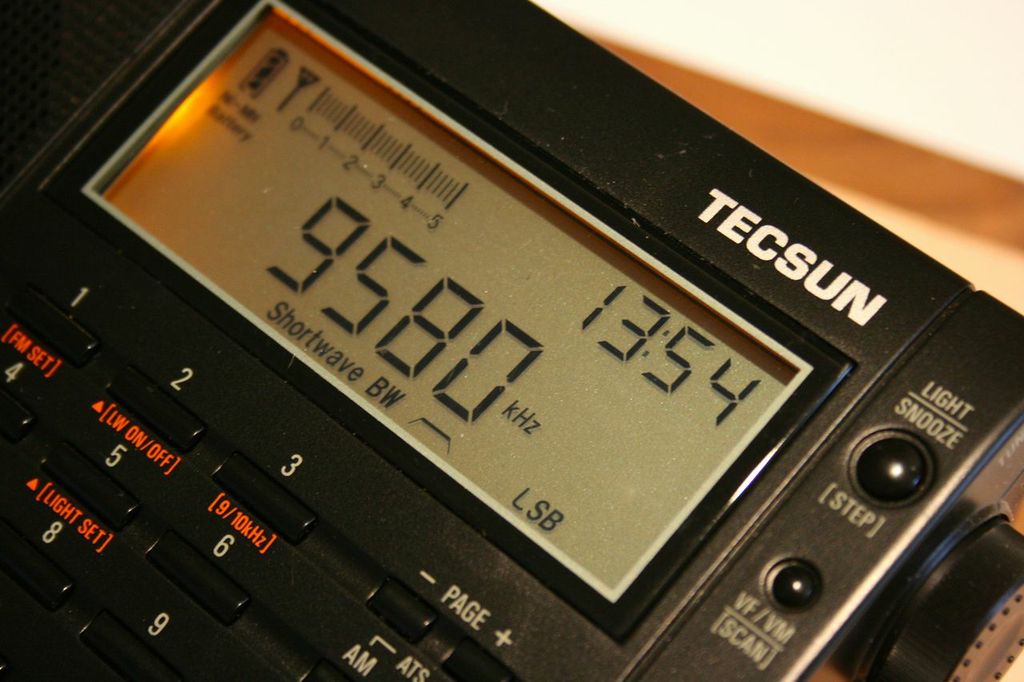
The broadcast will be on Monday 21 June from 2130-2200 utc. There are usually three extra SW frequencies beamed to Antarctica, these have not yet been confirmed but last year’s frequencies (which may be the same this year) were 5790 and 7360 via Woofferton and 9580 via Ascension.

This year its also being carried on most of the World Service English streams from 2132-2200, however the only shortwave outlets at this time are to Africa on 11810 and 12095 via Ascension. For those of us in the UK it should also be on the BBCWS DAB stream at the same time.

Its slightly shorter via the regular WS streams so to hear the full broadcast we should listen to the special Antarctica frequencies.

Thank you for sharing this and for the reminder, David!

I look forward to the Midwinter broadcast every year! It falls on my birthday and almost without fail also happens when I’m travelling. This year will be no exception.

I will still welcome photos and recordings as in years past as I love sharing these! I might ask, however, that readers and listeners simply leave their videos, audio, and notes in the comments section of the relevant post. Maybe I can even offer a little prize to a random listener–that would be fun!

Stay tuned! Please comment or contact me should you learn of the frequencies the BBC will use this year!

Dan spots a number of radios in the Netflix series “Sweet Tooth”

Many thanks to SWLing Post contributor, Dan Van Hoy (VR2HF), who notes that he spotted a number of radios including the Kenwood TS-930S in the new Netflix series, Sweet Tooth (see above). He writes:

[Also] seen in the last minutes of the final episode of season one: An AWA (Amalgamated Wireless Australasia) Teleradio Model 110H HF SSB transceiver.

Interesting history about AWA:

[Also spotted] test equipment plus all kinds of other gadgets in the zoo sanctuary.

Very cool–thank you for sharing this, Dan! That Teleradio Model 110 looks like a fascinating set! I’ve never seen one before.

More Comb Stereo Broadcasts via Radio Gum Tree June 18 & 25, 2021

Many thanks to SWLing Post contributor, TomL, who notes:

Episode 2 of Radio Gum Tree will be rebroadcast this coming Friday night June 18, 2021 at 9:45 EDT on on 5850 kHz in case anyone missed it. Episode 3 should be on June 25.

You can find the program notes for these Test broadcasts at this web site address. I will not be archiving the broadcast on the internet due to music copyright concerns.

www.radiogumtree.com/?p=54

Many thanks for putting together this Comb Stereo series, TomL!

For more information, check out TomL’s initial announcement.

Pre-Detection Recordings: Any in existence, declassified and accessible–?

Many thanks to SWLing Post contributor, Chip, who writes:

I remember reading a number of years ago that the NRO/NSA was the largest consumer of magnetic tape, utilized for pre-detection recordings of various spans of spectrum, all over the world.

I’m wondering if those tapes become declassified at some point, and if they are available through FOIA requests. Were they just bulk erased, destroyed or sold at GSA auction along the way.

Do you know if anyone has ever queried into their existence, and if they have been electronically preserved to some other digital medium?

The idea that our government records huge chunks of spectrum, fuels thoughts in my mind of huge spans of non-classified spectrum from across the years. All the DX shortwave outlets captured for posterity.

Thank you for sharing this note, Chip.

Of course, I’ve always been interested in adding recordings like this to the Radio Spectrum Archive. If these recordings exist, I would love to see them added to the Internet Archive–who stores Radio Spectrum Archive recordings– so that they could be shared and enjoyed by all.

Post readers: If you have any information on this, please comment!

KFOG broadcasts on June 20th and 26th, 2021 via Channel 292

Many thanks to SWLing Post contributor, Pete Madtone, who shares the following:


KFOG takes to the high seas via Channel 292 on Sunday June 20th 2021 at 1200 UTC (11am UK time) and on Saturday June 26th at 0900 utc (8am UK time) on 6070 kHz. Expect tunes in a nautical style and “see the glimmer from a distant lighthouse, as the buoys ding and the (radio) waves crash onto the rocky shore. This is music from the mist!” as they say at KFOG HQ.

Expect a mix from One Deck Pete called “A mix from across the Pond” with tunes from Kiyoko, Honeychild & DJ Olive, BOATS, Robert Mellin and The Congo’s. Grab yourself a lifejacket and a shortwave radio and tune in. If the shortwave radio is a problem tune in here at the alloted time. If you haven’t a lifejacket we’re sorry but we can’t help you with that!

Dan reviews latest firmware version of the Tecsun PL-368 and shares list of hidden features

Many thanks to SWLing Post contributor, Dan Robinson, who shares the following guest post:


Revisiting the Tecsun PL-368:  Assessing a Later Firmware Unit

by Dan Robinson

This past April, I reviewed Tecsun’s PL-368, the update of the PL-365 (also sold by CountyComm as the GP5).  There were some major changes:  Tecsun shifted from AA batteries to a flat BL-5C cellphone type battery, and of course the marquee design change was the addition of a keypad.

The keypad is a night and day change – whereas before the PL-365 was a handy receiver but hobbled by archaic tuning limited to memory access and the side thumb wheel, the 368 provides easy instant frequency selection.

In my previous review, I mentioned the well-known characteristic of the 360 and 365 models which exhibited over-sensitivity to the touch.  When removing your hand, signal levels plummeted – usually, a full grip was necessary and any variation caused reduced sensitivity – noticed mostly in shortwave mode.

The PL-368 I reviewed was from among the first versions of the receiver.  It had a firmware of 3681, from a 2020 production run.  Recently, I received from Anon-Co – the most reliable supplier of Tecsun receivers – an updated unit, with firmware 3684.

Please see my previous review for comments on various aspects of the 368: the longer but less robust telescopic antenna, addition of detents on the volume wheel, and the welcome addition of adjustable bandwidths, synchronous detection, and ability to tune in 10 hz increments, and other changes.

PROBLEMS

SYNCHRONOUS DETECTION:  As with the 909x and H-501, the upgraded 368 now has Synchronous Detection.  I did not expect any change in the 3684 firmware – SYNC still has some distortion and loss of lock.

As with the 330, 990x, and 501x successful use of this mode requires a delicate dance involving careful selection of various bandwidths while in SYNC mode and fine tuning.

However, whereas on the previous 3681 unit there was significant “warbling” when in SSB and SYNC, and phonics when touching the keypad, the 3684 unit has little to no such warbling and the phonics appear to be gone, or minimized.

It’s not known what Tecsun may have done to address these issues – my review of a previous 3681 firmware unit was published in April, so it’s hard to think that Tecsun made any major physical changes to the PCB/keypad and radio body.  But there does seem to be some improvement.

I had no expectation that a firmware change would result in any improvement in the other major issue common to the 360 series – reduction of sensitivity when the receiver is not being held in the hand.

The 368 still shows a noticeable reduction in signal strength, visible on the display, when left standing on its own versus being fully gripped.  But the problem does not seem to be as serious as it was with the PL-360/365.

And since my first review of the 368, I have done some additional comparisons with older portables which were constructed with more robust cabinets.  Some of those also exhibited reduced sensitivity when not being held.

For the PL-368 with firmware 3684, the headline really has to be the apparent disappearance of the “phonics” when tapping the keypad and cabinet top surface.  This was the elephant in the room on the first very early sample of the PL-368.

While there is still distortion using SYNC mode, this issue seems to have been slightly reduced with the latest firmware.  Without confirmation by Tecsun, there is no way to know what specifically may have been done to impact the SYNC issue in a positive direction.

A major disappointment is confirmation from Anon-Co via Tecsun that the re-calibration function seen in the PL-330, 990x and H-501x is absent from the PL-368.

That leaves a user with only the fine tuning option in SSB.  This is a real puzzler, since surely Tecsun could have enabled re-calibration on the 368 in the same way it did with the other receivers.

SUMMARY

I stated in my first review of the 368 that this receiver would be an automatic must-buy in my book, were it not for the earlier issues of cabinet phonics and signal level reduction when the radio isn’t being fully gripped in hand.

One hopes that the phonics issue has been fully addressed by Tecsun.  It’s possible that my initial early unit of the 368 had some weakness in the PCB for the keypad, and LCD display that has been recognized and corrected.

Without confirmation from Tecsun, it’s also difficult to declare that the 3684 firmware has truly brought about a measurable improvement in SYNC and SSB.  But based on my testing of this particular 3684 firmware unit, the radio is more usable and tolerable in SYNC and SSB.

And of course, addition of the keypad along with multi-bandwidth options moves the 368 firmly into the same zone as Tecsun’s other portables, albeit perhaps more in the “prepper” category.

There are so many offerings now from Tecsun in portables that it’s hard for me to place the PL-368 in the “must-buy” category, especially since the PL-330, 990x and H-501x bring so many superb features to the game.

But the PL-368 has a certain appeal – its walkie-talkie style design makes it an easy quick-grab for trips, similar to the PL-330, though the 368 can not really be safely balanced on a flat surface and is best used with some kind of stand.

In terms of raw performance, one has to observe that the wonderful Belka DX has to be considered as a top choice and major competition when it comes to extreme portability and top performance, especially with the available speaker/battery backs.

And the PL-368 still has major competition from the XHDATA D-808 (now appearing under the RADIWOW SIHUADON label) with excellent AIR band capability and multiple bandwidths, though no synchronous detection.

To “save” the PL-36xx series, Tecsun will have to ensure steady QC (quality control) in manufacturing and when possible, further firmware updates of the 368, as with all Tecsun receivers.


Preliminary List of Hidden Features for PL-368

Source: Anna at Anon-Co

Switch between internal ferrite rod and whip on AM (MW & LW)

1. Select the MW or LW band.
2. Press and hold key ‘3’ for about 2 seconds.

When the display briefly shows “CH-5” this means that the device is set to MW/LW reception using the telescopic antenna. The display shows MW (or LW) and SW on the left side of the screen.

When the display briefly shows “CH-A” this means that the device is set to MW/LW reception using the internal ferrite antenna. The display shows only MW (or LW) on the left side of the screen.

Adjusting the maximum volume level

Select the frequency band, then press and hold key ‘7’ for 2 seconds until a number is displayed. At this moment, rotate the [ TUNING ] knob to adjust and press the key ‘7’ again to save and exit.

Firmware Version

In power-off mode, press and hold [ VF/VM ] for 0.5 seconds until all characters on the display are shown, then wait a few seconds until the firmware version is briefly displayed at upper right of the display.

Extend SW-range for European setting (1621-29999 kHz)

1. In power-off mode, press and hold the [ 3 ] key to set the MW tuning steps to 9kHz.
2. Select the SW band, and then press and hold the [ 5 ] key for 10 seconds to enable/disable the SW frequency extension.

The starting point of the SW frequency range will become 1621 or 1711 kHz.