Author Archives: Thomas

Hurricane Matthew: WRMI battons down the hatches

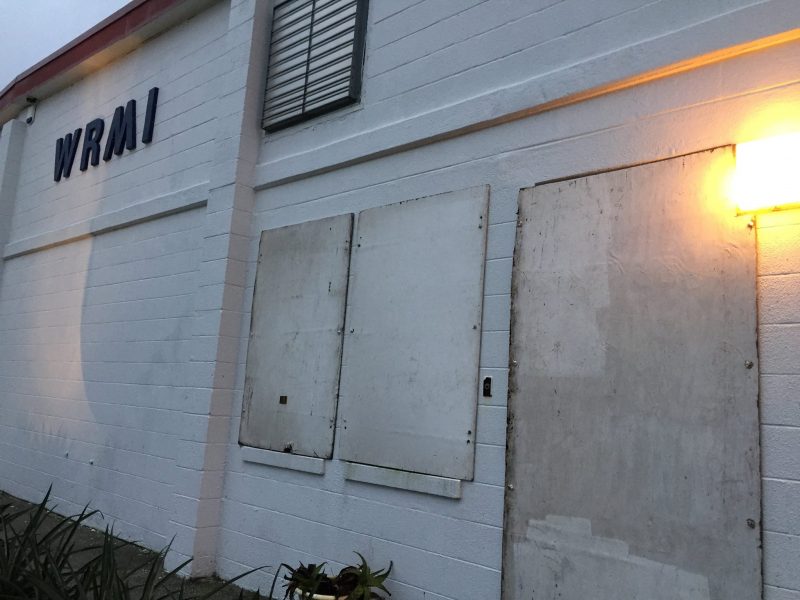
wrmi-hurricane(Source: WRMI at 23:00 UTC, 06 October 2016)

Our windows are boarded up, but we are still on the air here at WRMI as Hurricane Matthew approaches the east coast of Florida at 2300 UTC Thursday, October 6. The worst winds and rain are expected during the next several hours.

Nuestras ventanas estan protegidas por planchas de madera, pero todavia estamos en el aire aqui en WRMI mientras el Huracan Matthew se acerca a la costa este de la Florida a las 2300 UTC el jueves 6 deoctubre. Los vientos y las lluvias mas fuertes se esperan durante las proximas horas.

I’m very happy to hear that WRMI has prepared for this storm and I certainly hope they’re able to stay on the air and have and suffer no storm damage.

Yesterday, WRMI posted the following notice:

To WRMI listeners: As of 1600 UTC Wednesday, October 5, Hurricane Matthew appears to have a path which will take the center of the Category 4 storm very near Okeechobee. We will have extremely strong winds and rain during the next few days, and there is the possibility of the loss of electrical power and/or Internet service. We will keep all of WRMI’s transmissions on the air as long as we have electrical power and it is safe to operate. But if you find that we are off the air sometime within the next 48-72 hours, it will be due to the hurricane, and we will attempt to resume regular operations as soon as possible after the hurricane passes and power is restored to our transmitter site. Thank you for your understanding.
fullscreen-capture-1062016-114358-pm

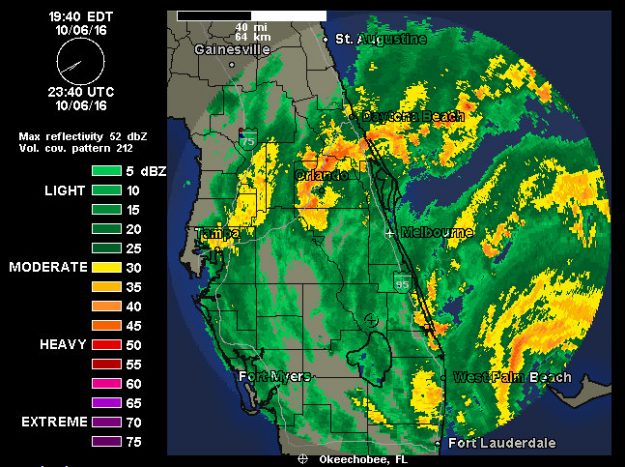
I expect WRMI/Okeechobee will have to cope with hurricane force winds tonight. The west wall of the hurricane eye is currently travelling up the eastern Florida coast and is sure to tax the WRMI antenna farm.

Here’s hoping our friends at WRMI make it through unscathed.

Is Hurricane Matthew affecting any SWLing Post readers? Please comment!

UPDATE: (Source: WRMI at 7:45 UTC, 07 October 2016)

As of 0630 UTC Friday, our electricity is out at the WRMI transmitter site in Okeechobee. We are operating on emergency generator power, which powers our lights, air conditioning and computers. However, all transmitters are off the air except 6855 kHz, which remains on the air on extremely low power. Winds are extremely strong here, and we do not have an estimate of when electricity will be restored. The center of Hurricane Matthew is northeast of us now.

KBS seeking reports for test transmissions this week

kbs_worldMany thanks to SWLing Post reader, @andy_fab, who shared the following press release from KBS via Twitter:

Test Transmission Notice

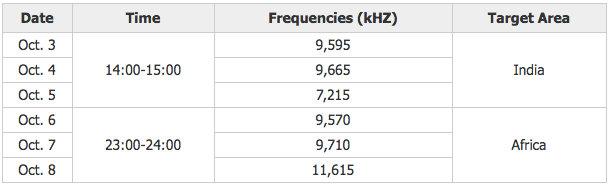
KBS World Radio English Service will carry out test transmission from October 3 to 8 ahead of the B16 shortwave frequency adjustment. Please tune into the following frequencies and send us your reception reports. Your feedback will help us greatly in choosing the best frequency option for the new season. Thank you!

kbs-schedule

Click here to submit a KBS listener report.

Hurricane Watch Net frequencies: monitoring “ground truth” observations

hurricane-matthew

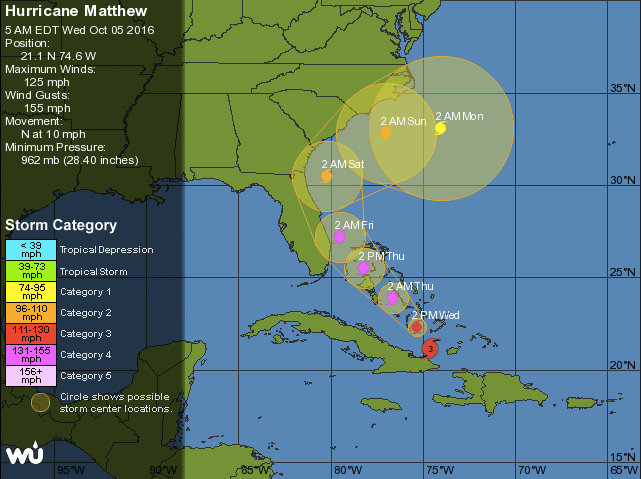
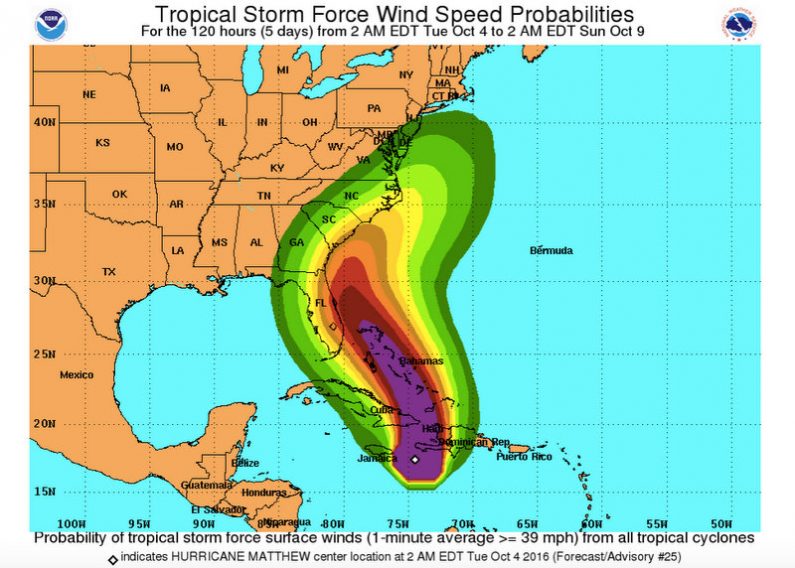
As Hurricane Matthew makes its slow trek through the Caribbean, it is expected to have impact on the Bahamas, Florida, South Carolina and North Carolina. It has already battered Haiti and Cuba.

A few readers have asked about frequencies to monitor as the storm approaches.

Hurricane Watch Net (HWN)

hwn-hurricane-watch-netThe Hurricane Watch Net is a group of amateur radio operators who are trained and organized “to provide essential communications support to the National Hurricane Center during times of Hurricane emergencies.” The HWN focuses on “ground truth” observations (much like SkyWarn nets).

The Hurricane Watch Net is activated when a hurricane is within 300 statute miles of expected land-fall. The HWN covers the Caribbean, Central America, Eastern Mexico, Eastern Canada, and all US Coastal States.

The HWN operates in both English and Spanish, and is active on 14.325 MHz (upper sideband) during the day and 7.268 MHz (lower sideband) at night. The HWN is known to operate on both frequencies if propagation allows.

Please keep HWN frequencies clear

If you’re an amateur radio operator, please avoid using 14.325 MHz and 7.268 MHz anytime the HWN has been activated.

Other emergency net frequencies

ARRL Southern New Jersey Section manager, Skip Arey (N2EI), recently noted several other frequencies being used in the Caribbean:

“CO2KK reports the Cuba National Emergency Net is operating on 7110 primary, 7120 secondary in the daytime, with provincial nets on 7045, 7080 and possibly others. At night the primary is 3740 and secondary 3720. The main net control station is CO9DCN, operating from the Cuban National Civil Defense Headquarters, in Havana, with CO2JC in charge. Volunteer hams across the island nation are going portable to check on flooding of rivers and roads and plan to report in.

The Dominican Republic on Cuba’s eastern neighbor, the island of Hispaniola, is using 7065 kHz LSB for emergency communications.”

Please note these frequencies and, again, keep them clear of non-essential communications.

Monitoring hurricane frequencies

PL-660

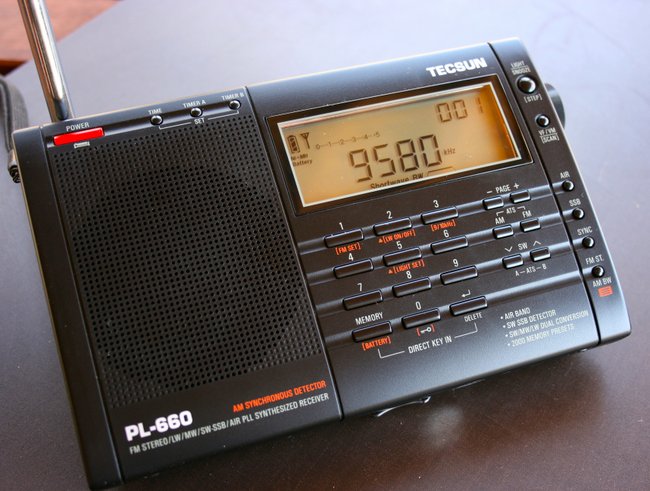
If you have a shortwave radio with a BFO/SSB mode–and you live within the propagation footprint–you can monitor the Hurricane Watch Net.

Note that you’ll need to use upper sideband on 14.325 MHz and lower sideband on 7.268 MHz.

You can also monitor the Hurricane Watch Net via the following web stream: http://www.broadcastify.com/listen/feed/20970/web

Click here to view the Hurricane Watch Net website.

Como Audio Solo and Duet: How to add and organize Internet radio stations

como-audio-solo-close-up

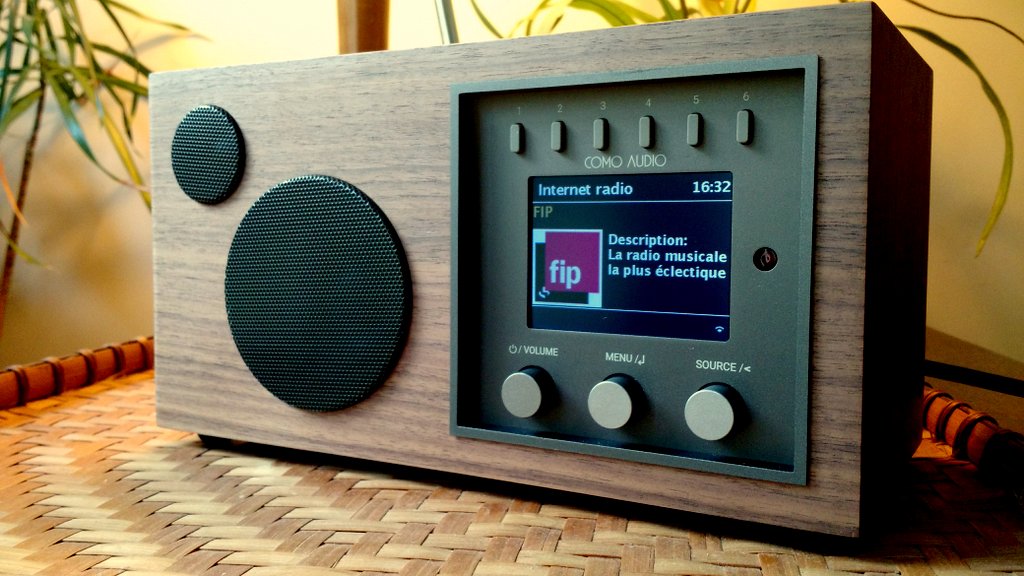
This weekend, I received the Como Audio Solo that I backed in a summer Kickstarter campaign. I’m pleased the Solo not only met delivery expectations, but I’m happy with the overall quality of this radio. I will post a preliminary review soon.

One of the main reasons I purchased the Solo was to use and review it as a WiFi radio. In the Kickstarter campaign, Como Audio didn’t give details about the radio station aggregator the Solo or Duetto would use (click here to read a primer about aggregators).  I contacted Como Audio asking for more information and received a reply from Tom DeVesto himself:

Hi Thomas.
Very sorry for the delayed reply.
[…]Our products use Vtuner for the Internet radio stations and Podcasts.

I was a little bummed to have received this information because I’ve heard very little praise for vTuner among WiFi radio enthusiasts.

To make a long story short, I spent a lot of time trying to figure out a way to pair my Solo with the vTuner aggregator. The owner’s manual has no information about using the aggregator nor how to manage and organize stored stations. The only help Como has published thus far is a short video which shows how to add favorites via the radio itself–not via a web portal.

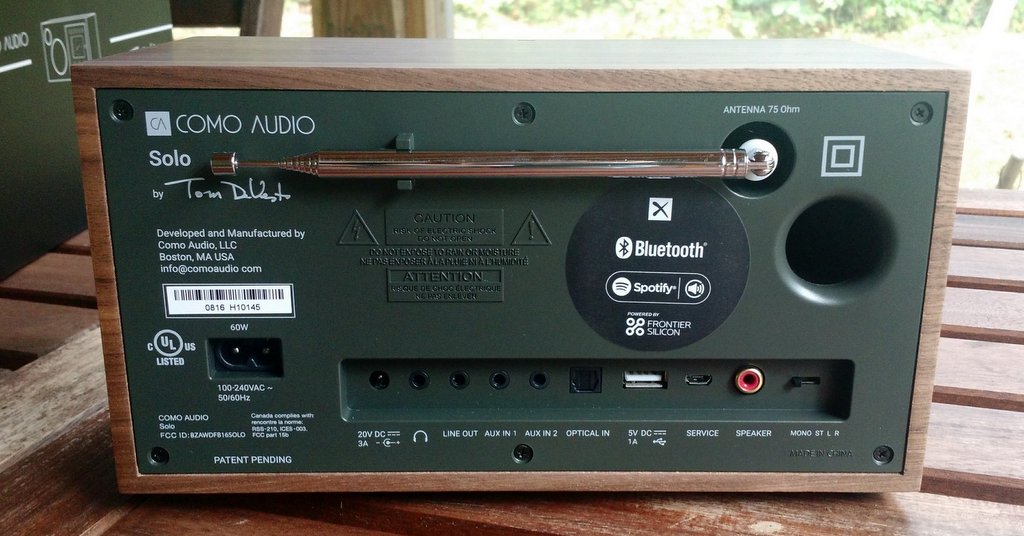
When taking a closer look at the back panel of the Solo, though, I noticed a Frontier Silicon logo.

como-audio-solo-back

Wait…what?

My Sangean WFR-28 uses the Frontier Silicon aggregator! This explains why the Solo’s WiFI radio interface looks exactly like that of my WFR-28!

Obviously, somewhere along the way, Como Audio changed aggregators. I’m not at all disappointed as I give Frontier Silicon positive marks in the WFR-28 review.

Via Frontier Silicon, you can pair your Como Audio radio to the aggregator database, thus allowing much easier control of memories and station categories through their Radio Portal page!  Since this isn’t documented (yet) by Como Audio, here’s how you can easily pair the two:

How to pair your Como Audio device with Frontier Silicon

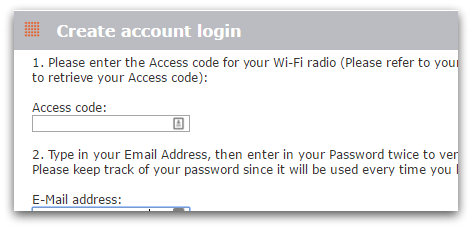
  1. First, if you don’t already have an account with Frontier Silicon, you’ll need to create one by clicking here.fullscreen-capture-1032016-112429-pm
  2. The form firsts asks for your “Access code” before you enter any other credentials. Here’s how to find the access code from your Como Audio device:
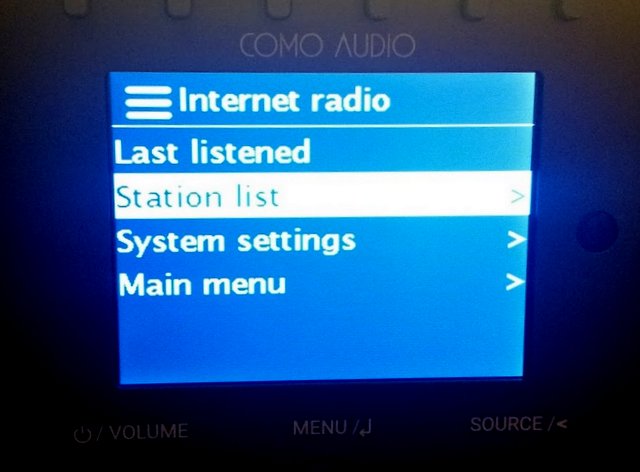
    1. From the Main Menu on your radio, select ‘Internet radio’ as the source
    2. Select “Station list”img_20161003_202200751
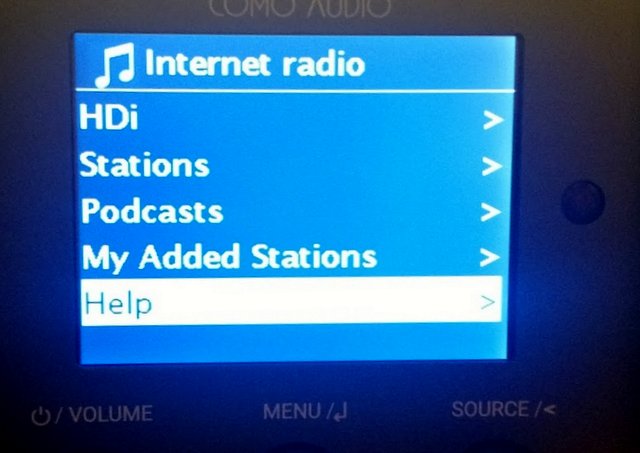
    3. Select the “Help” directoryimg_20161003_202218488
    4. Select the “Get access code” itemimg_20161003_202227970
  3. The access code is 7 digits long–simply enter it in the dialog box on the Frontier Silicon web page and proceed with creating your account.

If you already have a Frontier Silicon account…

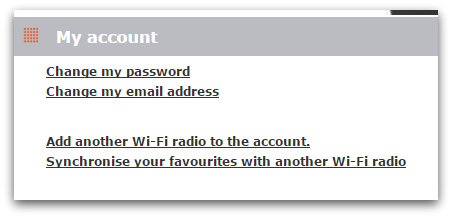
  1. Login to My Account > My Preferences page, then click Add another Wi-Fi radio to the account.fullscreen-capture-1032016-110249-pm
  2. Next, you’ll need to enter the Access code for your Como Audio device. Here are the steps you take to find your unique access code (see images above–same process):
    1. From the Main Menu on your radio, select ‘Internet radio’,
    2. Select “Station list”
    3. Select the “Help” directory
    4. Select the “Get access code” item
  3. The access code is 7 digits long, simply add it in the Access Code field on the Frontier Silicon web page.

Start searching and organizing

fullscreen-capture-1042016-11713-am

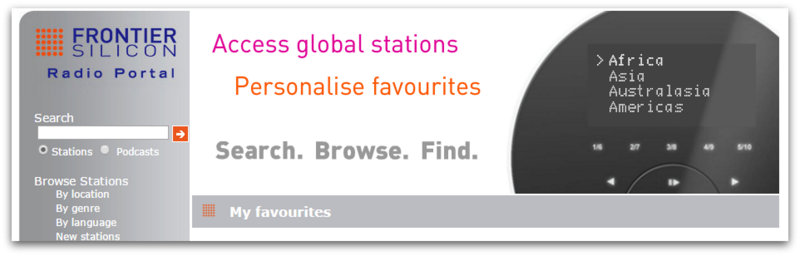
Once your radio is paired, managing station memories is very easy via the Frontier Silicon Radio Portal

Preliminary review soon

I’ve been testing the Como Solo and plan to post a preliminary review soon. Follow the Como Audio tag for updates!

Hurricane Matthew: VOA adds emergency shortwave coverage for Haiti

hurricanematthew

Many thanks to Mauno Ritola who notes the following news via the WRTH Facebook page:

VOA emergency shortwave coverage for Haiti in Creole & English has started as follows via Greenville [North Carolina]:

  • 2200-0200 7305 kHz
  • 0200-1200 7405 kHz
  • 1200-1630 9565 kHz

Last night, I looked at the projected path of Hurricane Matthew. Sadly, Haiti and parts of Cuba will receive the brunt of Matthew’s energy in the Caribbean.

North American SW DX Contest

IMG_20160903_085705777

Many thanks to SWLing Post contributor, John Cooper, who shares the following announcement:

To all North American SW DX contest survey respondents and other interested North American SW DXers. The proposed SW DX Contest is a go, and will be conducted in early January 2017.

I am in the process of drafting the contest rules/ guidelines/prizes together so I can get final approval, and send the information out to you. I will be the primary point of contact for the contest. As it stands right now the NASWA will be a sponsor for the contest according to Richard D’Angelo.

Thanks to everyone who completed surveys and gave me some great ideas. More information will be forthcoming in November. I will get the Contest info posted online at several websites, and by mail to those who sent letters to me.

At any rate; mark your calendars now for a proposed start date of 7 January, 2017. Those of you who might be interested but did not submit a survey are invited to participate fully.

You can contact me at [email protected] or John Cooper, 734 Sally Ann drive, Lebanon, PA 17046.

Many thanks, John, for making this contest a reality! We look forward to posting your updates.

RTE to keep 252 longwave radio service (for now)

Crosley-Dial-BlackAndWhite

(Source: Independent.ie via London Shortwave)

RTE is set to scrap controversial plans to axe its longwave radio service, aimed at saving the cash-strapped broadcaster €250,000 a year, the Sunday Independent has learned.

As the station grapples with an unprecedented financial crisis, it was announced two years ago that it planned to wind down longwave 252 broadcasts before full shutdown in May 2017.

But the plan caused widespread anger, particularly among the Irish community in Britain, where the service is seen as a crucial lifeline for thousands of older emigrants who cannot access digital broadcasts.

RTE sources say the service was targeted for shutdown because it is considered outdated, and is an ongoing and unnecessary cost, during a time of increasing financial pressures.
However, as a result of a public backlash, the broadcaster was forced to temporarily postpone the closure until 2017, giving listeners more time to move over to digital platforms.

But the station has confirmed it is now carrying out a “review” of its previous announcement.
A spokesperson added that there is now no specific date for the termination of the service. However, it is understood there remains an ongoing risk as regards its long-term viability.

[…]Many of the older emigrants left Ireland in the 1950s – with only basic education – as Ireland grappled with widespread unemployment.

They are now elderly and a significant number are in difficult financial circumstances, according to social services.

This radio service is still a crucial ‘link with home’ for many thousands of older Irish in Britain, according to various immigrant groups working with social services.

Continue reading the full article via Independent.ie…