Category Archives: AM

Medium wave SDR spectrum with over 20 transatlantic signals: a quick tour


Tour of a medium wave spectrum with over 20 transatlantic signals

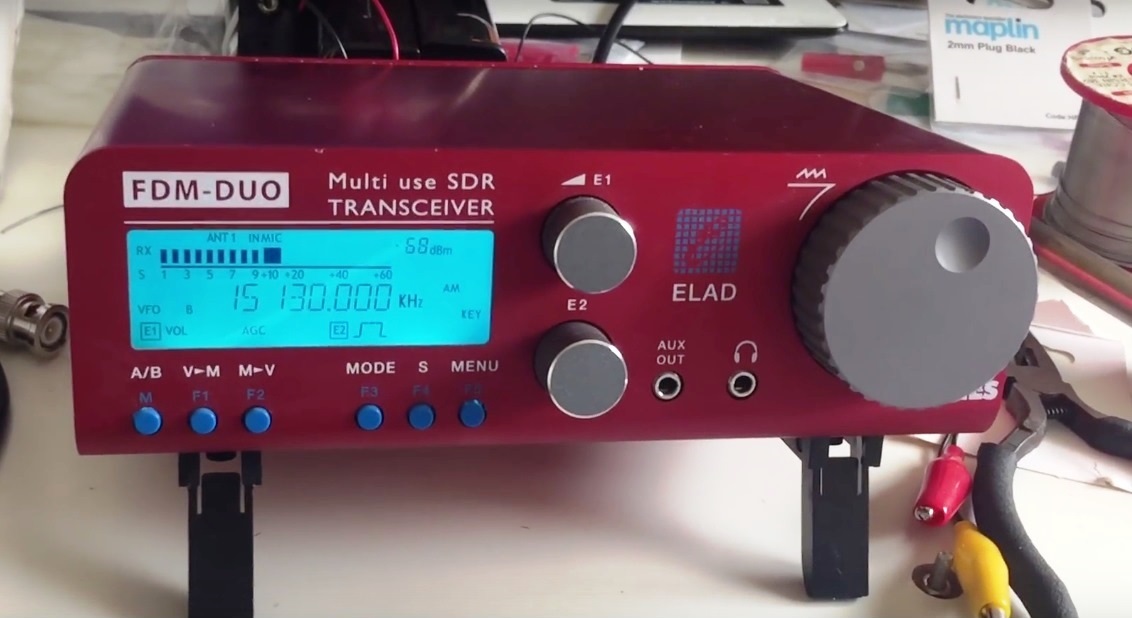
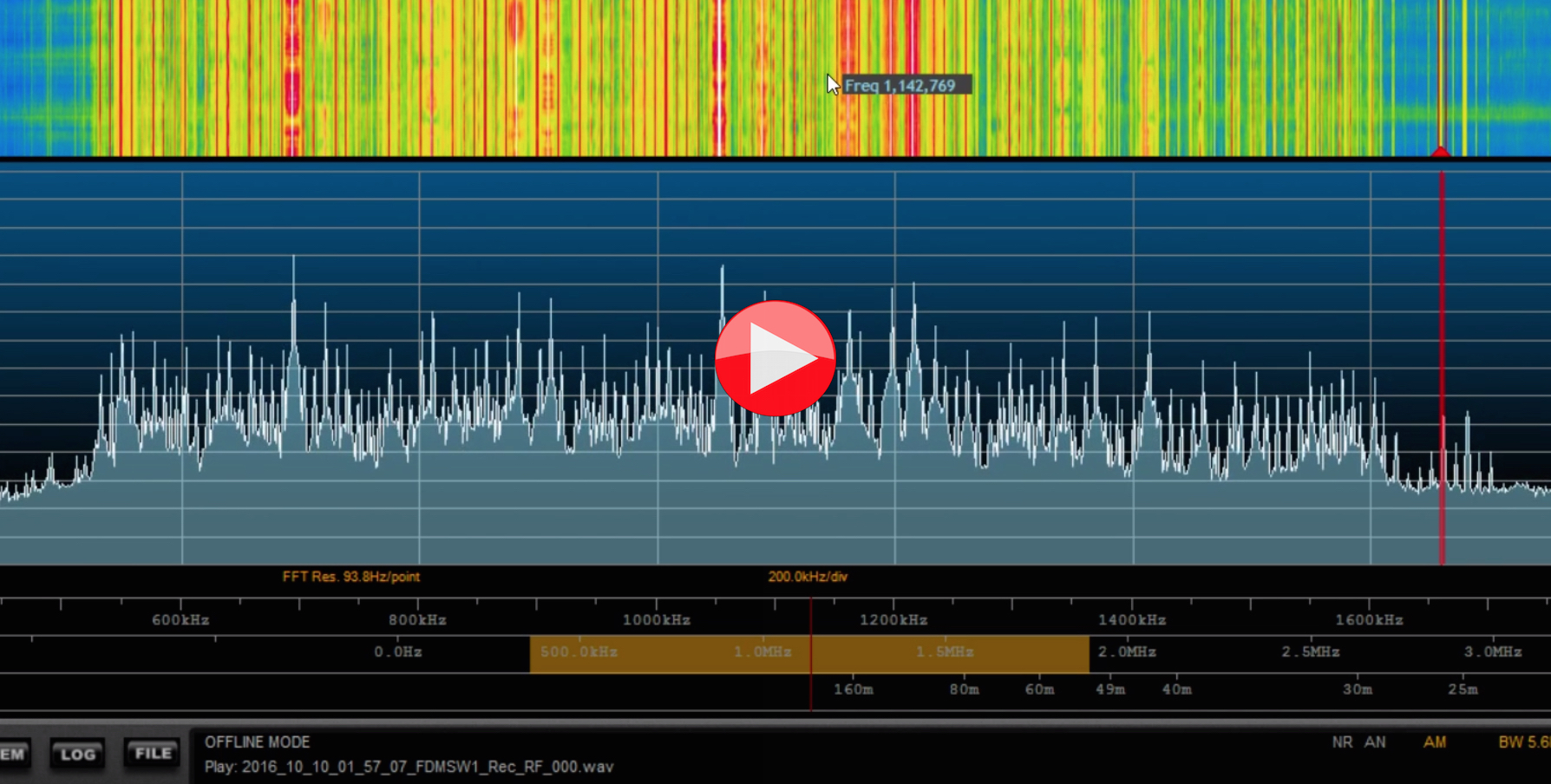
Hi there, I thought some of the readers of SWLing Post might be interested in a review of a MW spectrum with multiple transatlantic signals – all with audio. This is one of the recordings I took with the 200 metre Beverage antenna and although I haven’t properly counted, I believe it generated about 50 catches that were either personal firsts or best-ever receptions. You will note that this video is nearly 20 minutes long, whilst the recording is only just over 5 minutes, thus to capture the signals listed below and demonstrate audio to you, it was necessary to effectively ‘rewind’ a few times. I haven’t annotated the video, however, the stations I’ve paused on to demonstrate audio are listed below. There are actually more catches in this spectrum, but hopefully the video will give you a good idea of propagation on the morning of 10/10/16 and the effectiveness of the Beverage/Elad FDM DUO combination. Also note, I didn’t have time to fully optimise the demodulation settings, so for example, I haven’t used AM SYNC in this demonstration. Individual videos of all catches, with optimised settings appear on my YouTube channel Oxford Shortwave Log. I hope you enjoy it! Recorded in Oxford UK on 10/10/16 at 02:00 hrs UTC. Thanks for watching and I wish you all great DX!


590 kHz VOCM Saint John’s
600 kHz CBNA Saint Anthony
620 kHz CKCM Grand Falls-Windsor
660 kHz WFAN New York
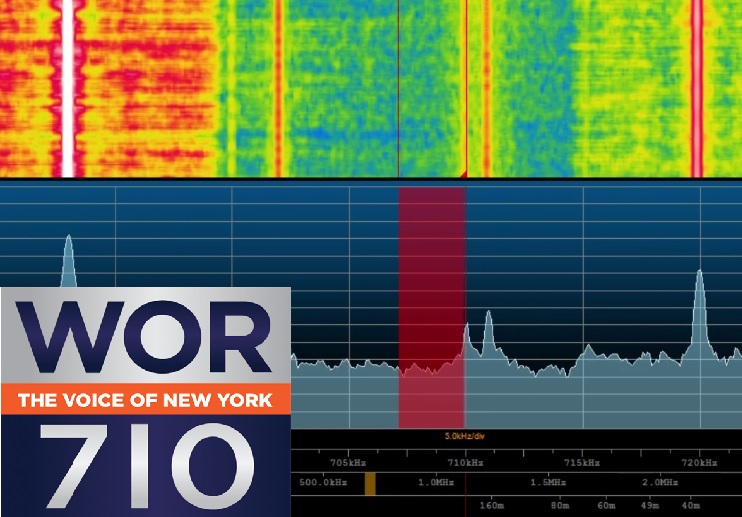
710 kHz WOR New York
730 kHz CKAK Montreal
750 kHz CBC Radio 1 Bonavista Bay
790 kHz WAXY (presumed)
800 kHz VOWR
970 kHz WBGG
1010 kHz CFRB Toronto
1030 kHz WBZ Boston
1130 kHz WBBR New York
1190 kHz WLIB New York
1280 WADO New York
1390 WEGP Presque Isle
1400 kHz CBC Radio 1 Gander
1440 kHz WRED Westbrook
1510 kHz WMEX Boston
1520 kHz WWKB Buffalo
1570 kHz XERF La Poderosa, Mexico
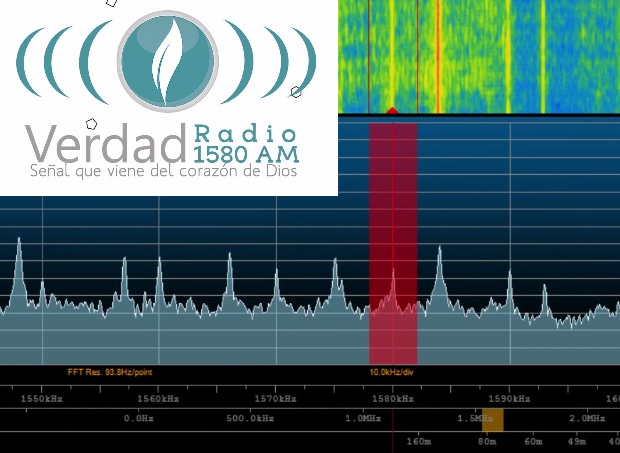
1580 kHz HJQT Verdad Radio 1580 kHz, Bogotá, Colombia
1610 kHz Caribbean Beacon, Anguilla
1660 kHz WGIT Puerto Rico


Clint Gouveia is the author of this post and a regular contributor to the SWLing Post. Clint actively publishes videos of his shortwave radio excursions on his YouTube channel: Oxford Shortwave Log. Clint is based in Oxfordshire, England.
BBC Research Department Report on the beverage antenna

Many thanks to SWLing Post contributor, Kris Partridge, who writes:

[R]esearch on DTH satellite TV service took me to a public website which is an archive going back to 1934. And boy, there is so much information there ..!

So what I pass to you for the Blog is this one as a start:

http://downloads.bbc.co.uk/rd/pubs/reports/1991-12.pdf

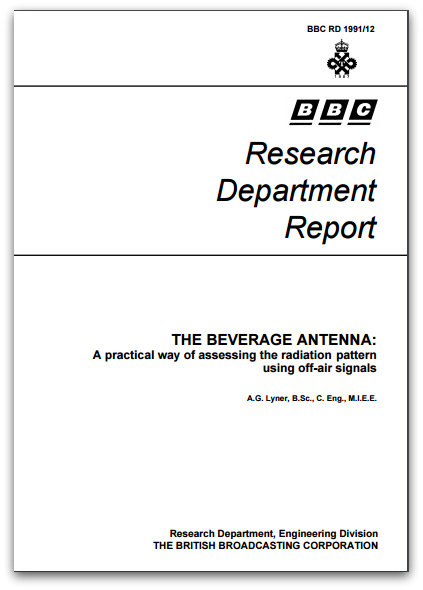
Knowing that many of your readers/contributors have made mention of using Beverage antennas I think this may make interesting reading. The report describes a method for accessing the performance of a Beverage, long wire, receiving antenna using off-air HF broadcast signals.

[…]It looks like the lower the better. And yes, there’s some heavy maths formula in there ..!

Wow–you’re right, Kris! This is very useful information. I’ll skip the maths bit and just follow the advice! Thank you for sharing.

Oxford Shortwave Log: transatlantic MW DX catches with 200 metre Beverage – part 2

verdad-final

Hi there, here is the second set of reception videos for my transatlantic MW DX catches using the 200 metre Beverage antenna. Most of the signals originate from the United States and Canada, however, there is also a catch from Mexico – XERF La Ponderosa – which is a personal first and another from Bogotá, Colombia – Verdad Radio. I hope you enjoy them. Please do not hesitate to contact me if you would like further details regarding the Beverage design and/or construction. in the meantime, thank you for watching/listening and I wish you all great DX!


Clint Gouveia is the author of this post and a regular contributor to the SWLing Post. Clint actively publishes videos of his shortwave radio excursions on his YouTube channel: Oxford Shortwave Log. Clint is based in Oxfordshire, England.
Oxford Shortwave Log: transatlantic MW DX catches with 200 metre Beverage – part 1

worspectrum

Hi there, a few weeks ago I posted a couple of medium wave DX catches with the Elad FDM DUO and newly constructed 200 metre Beverage antenna. Since then (and following my trip to Brazil) I have uploaded several more catches, some of which I would like to share with you. It has become evident that the Beverage’s low-gain but high SNR properties resulted in a huge increase in the sensitivity of my entire set-up and as a result. I have achieved numerous personal firsts on the medium wave band, coupled with many other signals that I can only describe ‘best-ever reception’. If nothing else, this endevour has underlined the importance of utillising the best antenna possible for your particular circumstances. We’ve all read at some point, how, in many respects, the antenna is more important than the receiver – and these catches demonstrate how absolutely true that statement is. All of the reception videos were captured using the Elad FDM DUO running on a home-brew battery-pack and connected to the Beverage via a 50 Ohm input transformer.

Below is the first set of reception videos, most of which are signals from East Coast of the United States. However, there is also an absolutely booming signal from WGIT Puerto Rico into my QTH in Oxford UK. Part 2 will follow almost immediately, but in the mean time thanks for watching/listening and I wish you all great DX!


elad


Clint Gouveia is the author of this post and a regular contributor to the SWLing Post. Clint actively publishes videos of his shortwave radio excursions on his YouTube channel: Oxford Shortwave Log. Clint is based in Oxfordshire, England.
Radios With Rotatable AM Antennas?

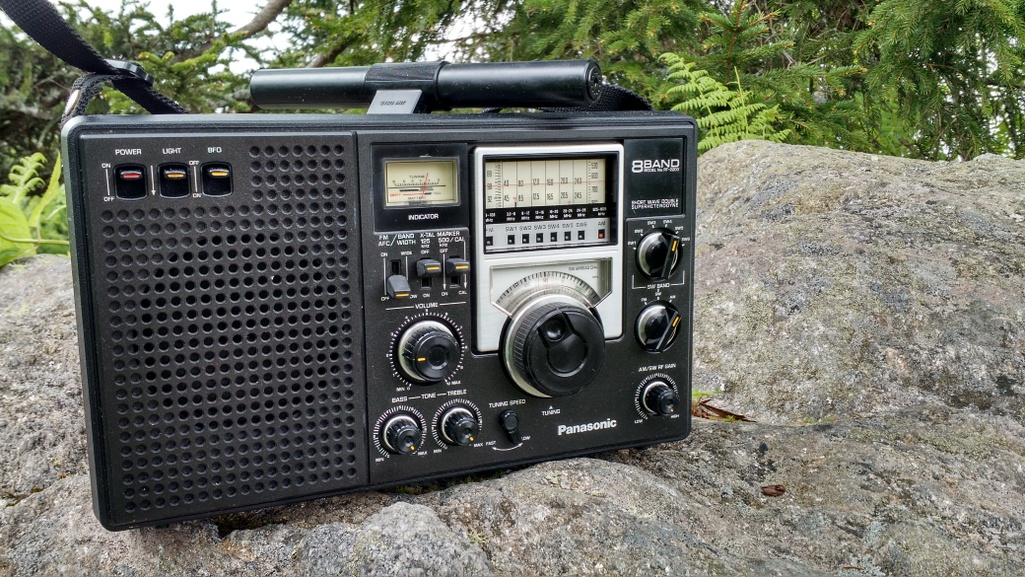
The Panasonic RF-2200 sports a rotatable AM/MW antenna

The Panasonic RF-2200 sports a rotatable AM/MW antenna

Many thanks to SWLing Post contributor, Mario Filippi (N2HUN), who writes:

With your broad knowledge of radios, wondering if you can add anything to this list of portable radios, past and present, that have 360 degree rotatable directional AM ferrite antennas. Reason is I am looking for an AM portable for the nightstand for nulling out unwanted AM stations while also doing a little DXing.

The list I have from data mining the ‘Net is:

New models with rotatable AM antennas:

  • CountyCom GP5/SSB,
  • Tecsun PL-360,
  • Grundig Satellite 750,

Older (vintage) models:

  • Panasonic RF-2200,
  • Panasonic RF-1150,
  • Panasonic RF-877,
  • Panasonic RF-1180
  • most RDF (Radio Direction Finder) radios that were used on boats

“Boom Box” variety:

  • Radio Shack 12- 795,
  • Emerson MBR-1,
  • Rhapsody RY-610.

[RDF radios] are kind of big, however Raytheon, Ray Jefferson, and Nova-Tech did have smaller model RDFs that could be considered table-tops).

The alternative is to build or buy a passive indoor antenna.

Maybe readers know of other models?

Thank you for your inquiry, Mario! I will do a little research of my own because you listed every model (and more) I could think of off the top of my head.

Post readers: Please comment with any models we could add to this list.

I will take all of the suggestions and make a master list to post here on the SWLing Post so it’ll be easier for others to research in the future. I’m pretty sure this question has come up before.

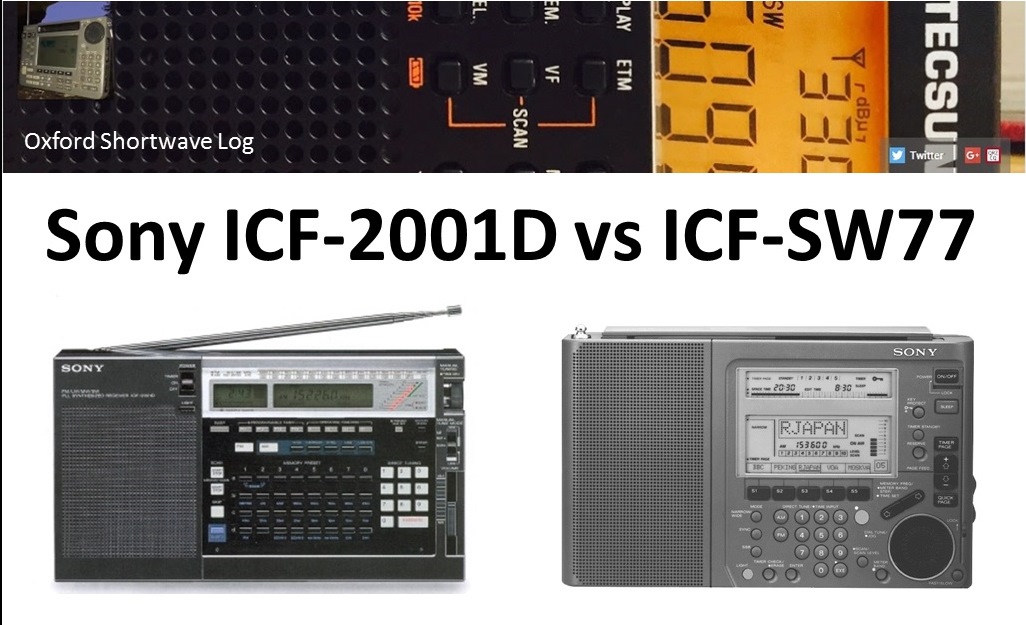
Which is the best? Sony ICF-2001D/2010 or ICF-SW77? Part two

sony-test

Hi there, after the first set of recordings were analysed, the score was 4-3 to the ICF-2001D, demonstrating how similar these two great receivers are in overall performance. There were a copule of notable differences however. The synchronous detection circuit on the ICF-2001D allows the user to effectively tune through a signal in 01. kHz steps, whilst the receiver automatically locks onto either the upper or lower sideband, depending on the frequency offset. The ICF-SW77 synchronous detection system differs in that the user must tune the signal and select the sideband. The results of this test confirmed that whilst the ICF-2001D almost always retained SYNC lock, the ICF-SW77 was very prone to losing lock, which of course affected the audio quality in many cases. The other issue was with the ICF-SW77 in that the narrow audio bandwidth filter often seemed to deliver ‘muddy’ audio. Whilst this feature proved to be excellent in terms of mitigating adjacent channel QRM, it also reduced signal clarity/ audio discernibility a little too much in my opinion. However, overall, sensitivity and selectivity was very similar between both radios – in fact, one recording had to be judged a draw (Radio Bandeirantes, Sao Paolo on 9645.4 kHz) – I simply couldn’t split them. Part two of the reception testing follows, using signals from Canda, DR Congo, Brazil, Cuba and Peru.

I hope you enjoy the recordings – text links and embedded videos follow below:


Clint Gouveia is the author of this post and a regular contributor to the SWLing Post. Clint actively publishes videos of his shortwave radio excursions on his YouTube channel: Oxford Shortwave Log. Clint is based in Oxfordshire, England.
Which is the best? Sony ICF-2001D/2010 or ICF-SW77? The halfway score

Hi there, here is a summary of the first half of tests comparing the Sony ICF-2001D against it’s replacement the ICF-SW77. Both receivers are widely acknowledged as being amongst the best shortwave portables ever made, but how close are they in performance? Is there a clear winner after the first 8 reception tests? I hope you enjoy the summary video. Links to the first half of reception tests follow again, below, whilst the second half will follow in a separate post. Thanks and good DX to all.


Clint Gouveia is the author of this post and a regular contributor to the SWLing Post. Clint actively publishes videos of his shortwave radio excursions on his YouTube channel: Oxford Shortwave Log. Clint is based in Oxfordshire, England.