Shortwave listening and everything radio including reviews, broadcasting, ham radio, field operation, DXing, maker kits, travel, emergency gear, events, and more
Radio Waves: Stories Making Waves in the World of Radio
Because I keep my ear to the waves, as well as receive many tips from others who do the same, I find myself privy to radio-related stories that might interest SWLing Post readers. To that end: Welcome to the SWLing Post’sRadio Waves, a collection of links to interesting stories making waves in the world of radio. Enjoy!
Many thanks to SWLing Post contributors Dan Van Hoy, Dennis Dura, Rich Cuff, and the Southgate ARC for the following tips:
There’s still lots to listen to, and new ways to do it
Surprise! Shortwave radio as a broadcast medium is holding its own, despite the intrusion of the internet, transmission cutbacks by major broadcasters such as the BBC World Service and Voice of America and abandonment of the SW bands by other state-owned broadcasters.
Meanwhile, the ways in which people listen to SW radio transmissions are evolving, because SW receiver manufacturers are keeping up with the technological times.
Stayin’ alive
There is no doubt that the variety of stations on the SW bands has declined, due to the end of the Cold War — the propaganda war of which drove the medium in the 1950s and 1960s — and the emergence of the internet.
Radio Waves: Stories Making Waves in the World of Radio
Because I keep my ear to the waves, as well as receive many tips from others who do the same, I find myself privy to radio-related stories that might interest SWLing Post readers. To that end: Welcome to the SWLing Post’sRadio Waves, a collection of links to interesting stories making waves in the world of radio. Enjoy!
Many thanks to SWLing Post contributors Wilbur Forcier, Dan Van Hoy, and the Southgate ARC for the following tips:
In an increasingly interconnected world, the US military is facing new challenges in old stomping grounds.
Even though the US isn’t at war with China, competition with Beijing is already raging, and conventional and special-operations troops deployed around the world are exposed, either directly or through proxies, to Chinese technology that could hinder them in a conflict.
The worst offender is 5G, the same mobile communications technology ordinary people use or will be using in the future.
[…]However, Chinese firm Huawei – which is suspected of stealing its 5G technology from a Canadian firm through cyberattacks – has been deploying its 5G technology worldwide.
Given China’s peculiar national security laws, which require individuals and companies to cooperate with the Chinese security services, any Huawei technology around the world is a potential threat to privacy and national security. Through Huawei, Beijing could spy on or disrupt infrastructure and operations during peace or war.
Governments have realized the danger and have been banning Huawei from their networks. The British government did so in 2020, and the US Federal Communications Commission designated Huawei a national security threat in 2021, following several Chinese cyberattacks.[…]
The severity of the global computer chip shortage has broadcast equipment manufacturers finding creative ways to manage supply channels while trying to meet product demand.
Despite the semiconductor shortages, people in the radio technology marketplace who spoke with Radio World say products are still being shipped, with mostly minor delays, thanks to prior planning. Equipment suppliers said they hope the semiconductor shortage will ease soon, perhaps by early 2022.
Jonathan notes: “[The video os very] nicely done. It compliments episode 4 of the video I made with Olrich Cip”:
Many thanks for sharing this, Jonathan, and for documenting this important piece of our international broadcasting story.
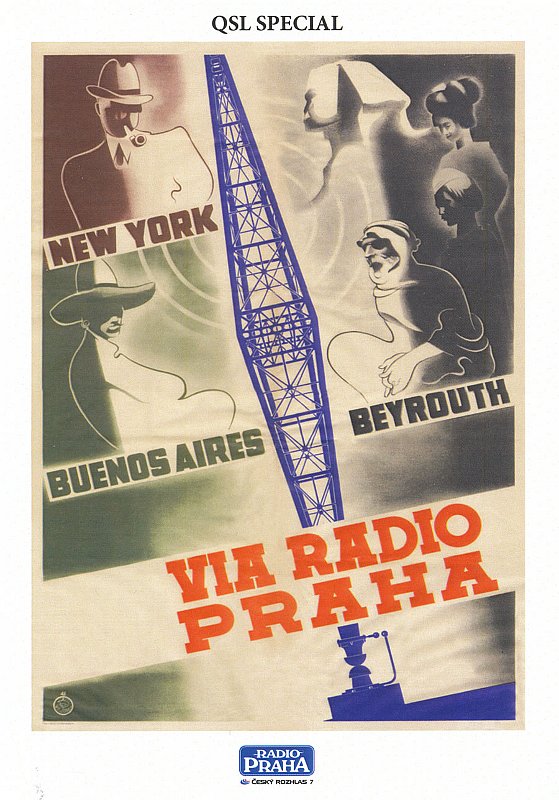
Post readers: If you’d like more information about the 85th Anniversary of Radio Prague, check out this (and other) stories on the Radio Prague Website:
Although the origins of foreign language broadcasting on Czech Radio stretch as far back as 1926 – in the form of English and French lectures about Czechoslovakia – the birth of the foreign language service is traditionally dated to August 31, 1936, when the Technical Director of Czechoslovak Radio Eduard Svoboda officially announced the beginning of regular foreign language broadcasting. Continue reading →
Radio Waves: Stories Making Waves in the World of Radio
Because I keep my ear to the waves, as well as receive many tips from others who do the same, I find myself privy to radio-related stories that might interest SWLing Post readers. To that end: Welcome to the SWLing Post’sRadio Waves, a collection of links to interesting stories making waves in the world of radio. Enjoy!
Many thanks to SWLing Post contributors David Iurescia, Ronnie Smith, Troy Riedel, Jack Dully, and the Southgate ARC for the following tips:
Radio Prague asks, “Would you like to be featured on our broadcast?” (Radio Prague via Facebook)
Our 85th anniversary is coming up on August 31st! We’re celebrating the occasion with a special broadcast that day and would love to hear from you – our listeners. If you’d like to send us your greetings, please record a message and send an audio file via email (to [email protected]) or Facebook. Due to time constraints, your recording should be around 30 seconds long. Please include your first name, where you live, how long you’ve been listening, and what you like most about Radio Prague Int’l.
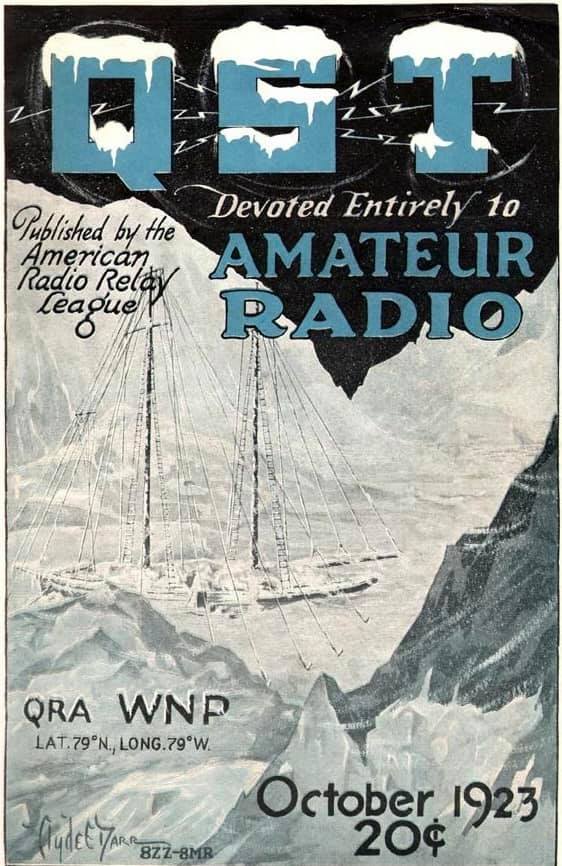
The schooner Bowdoin is a century old this year. Now owned by the Maine Maritime Academy (MMA) as a training vessel, the ham radio history of the 88-foot (LOA) Bowdoin is often neglected. Constructed in Maine specifically for Arctic exploration, the vessel relied on amateur radio for communication during explorer Donald B. MacMillan’s Arctic Expedition of 1923 and on the MacMillan-McDonald-Byrd Expedition of 1925 — thanks in part to ARRL co-founder Hiram Percy Maxim, W1AW. The venerable vessel, the official vessel of the State of Maine and the flagship of Maine Maritime Academy’s Vessel Operations and Technology Program, recently underwent a complete hull restoration and refitting and has done a little touring to mark its centenary. Its home port is Castine, Maine.
The longwave transmitters MacMillan used on his earlier missions had proved “unable to penetrate the screen of the aurora borealis,” then-ARRL historian Michael Marinaro, WN1M (SK), explained in his article, “Polar Exploration,” from the June 2014 issue of QST. In 1923, MacMillan turned to ARRL for help in outfitting his next expedition with better wireless gear. Marinaro recounted, “It was enthusiastically provided.” Maxim and the ARRL Board recruited Donald H. Mix, 1TS, of Bristol, Connecticut, to accompany the crew as its radio operator.
M.B. West, an ARRL Board member, designed the gear, which was then built by amateurs at his firm, Zenith Electronics. The transmitter operated on the medium-wave bands of 185, 220, and 300 meters, running 100 W to a pair of Western Electric “G” tubes. Earlier exploratory missions had used gear that operated on longwave frequencies. The shipboard station on board the Bowdoin was given the call sign WNP — Wireless North Pole. [Continue reading…]
In 1893, sending information across America is a time-consuming process. Letters travel slowly by land, and those who can afford it, send telegrams along a limited network of fixed wires. But two rival inventors have the same idea for improving things: wireless communication. Nikola Tesla is one of the most famous and successful thinkers of his day, single-handedly changing the way electricity is supplied and generated. Guglielmo Marconi is a young, uneducated Italian inventor who ignores scientific consensus and goes with his gut. Both want to rid the world of wires and send messages through the air. With millions of dollars on the line, the two men battle to dominate the new market and bring radio to the masses. [Click here to view episode on the History Channel.]
MARION COUNTY, Fla. — A Marion County woman is taking on her neighborhood association, in a matter she said puts her health at risk.
Michelle Smith, a Type 1 Diabetic, and a consultant determined that her neighbor’s ham radio hobby might have interfered with the doses of insulin being pushed out from her pump.
The 55+ community where she lives hired that consultant and told the neighbor to shut down his amateur radio station.
But a copy of the community’s rules shows a change was put in place that could pave the way for other similar antennas to be installed.
9 Investigates learned that Smith’s complaint went all the way to the state level.
She wants the Florida Commission on Human Relations to make a determination whether the community’s board and management is doing enough to protect her and others with medical devices.[…]
RTE carried out essential maintenance of the Long Wave transmitter in Clarkstown, Co. Meath for two months during which period RTE Radio 1 was not available on 252 kHz.
This essential maintenance of the transmitter was due to be carried out in 2020, but was postponed due to Covid-19 restrictions. For the health and safety of those carrying out the works, the transmitter had to be switched off for the works period. Any overhaul has to be completed during the summer months when there is good light and weather conditions.
Transmissions commenced once again last Monday with an output of 500 kiloWatt during daytime and 100 kiloWatt at nighttime.
During this shutdown, one could receive Radio Algeria transmitting on the same frequency with 1.5 megaWatt during the day and 750 kiloWatt at night, broadcasting a varied program.
Radio Waves: Stories Making Waves in the World of Radio
Because I keep my ear to the waves, as well as receive many tips from others who do the same, I find myself privy to radio-related stories that might interest SWLing Post readers. To that end: Welcome to the SWLing Post’sRadio Waves, a collection of links to interesting stories making waves in the world of radio. Enjoy!
In 1949, Victor Hoeflich held a press conference to introduce the “Man from Mars, Radio Hat”. Hoeflich knew a picture would tell the story so he had several teenagers modeling the radio hats for the reporters and photographers. Soon pictures and news stories appeared in newspapers coast to coast. The articles typically included a photo of a young lady wearing the hat and a six-paragraph story.
Although the radio hat had a futuristic appearance at the time, this was in fact due to technical limitations. While the transistor had been invented in 1947, it was still experimental and not widely available. The hat’s radio relied on vacuum tube technology, and Hoeflich made the tubes a prominent feature, as well as the loop aerial. The tuning knob sat between the two valves. The battery was carried in the user’s pocket.
Radio Waves: Stories Making Waves in the World of Radio
Because I keep my ear to the waves, as well as receive many tips from others who do the same, I find myself privy to radio-related stories that might interest SWLing Post readers. To that end: Welcome to the SWLing Post’sRadio Waves, a collection of links to interesting stories making waves in the world of radio. Enjoy!
SEOUL — In the show Crash Landing on You, a rich South Korean woman accidentally paraglides into North Korea, where she is rescued by an army officer and falls in love with him. The series, which was released on Netflix in 2019, was a hit across the Korean Peninsula — including in the North, where it circulated on smuggled thumb drives.
“It created quite a stir, with Kim Jong Un even forbidding people from watching it,” says Kang Nara, a North Korean defector in Seoul who served as a consultant to the show.
That’s not surprising, as all South Korean content is effectively banned in North Korea.
Kang says she found Crash Landing on You appealing for its realistic depictions of life in the North, including the language. As in real life, North Koreans in the drama, for example, call their intimate partners “comrade” instead of “honey.”
But differences in language from the South are a sensitive issue for the North Korean regime. It has fought for more than half a century to purge North Korea’s language of foreign influences, and for roughly two decades to keep out southern-style expressions that northerners are gleaning from bootlegged South Korean TV dramas, movies and K-pop music. [Continue reading…]
Clever hackers use a range of techniques to cover their tracks on a target computer, from benign-looking communication protocols to self-erasing software programs.
It’s not very often, though, that digital attackers turn to Morse Code, a 177-year-old signaling system, for operational security. Yet that’s exactly what played a part in a year-long phishing campaign that Microsoft researchers outlined on Thursday.
Morse Code — a method of representing characters with dots and dashes popularized by telegraph technology — was one of several methods that the hackers, whom Microsoft did not identify, used to obscure malicious software. It’s a reminder that, for all of their complexities, modern offensive and defensive cyber measures often rest on the simple concept of concealing and cracking code. Continue reading →
Radio Waves: Stories Making Waves in the World of Radio
Because I keep my ear to the waves, as well as receive many tips from others who do the same, I find myself privy to radio-related stories that might interest SWLing Post readers. To that end: Welcome to the SWLing Post’sRadio Waves, a collection of links to interesting stories making waves in the world of radio. Enjoy!
Many thanks to SWLing Post contributors Paul, David Goren, Pete Polanyk, Ulis Fleming, Troy Riedel, Tracy Wood, Dan Robinson, and Kris Partridge for the following tips:
This episode was written and produced by Olivia Rosenman.
Since World War I, countries around the world have been broadcasting mysterious numerical messages via shortwave radio. Though concrete evidence is hard to come by, the general consensus is that these coded messages are meant for undercover agents operating abroad. And one particular Russian station may have an even more sinister purpose. Featuring computer engineer Andrus Aaslaid, historian Maris Goldmanis, and documentary photographer Lewis Bush.
A public SDR network triangulates the island as the source of mystery signals
By Stephen Cass
As anti-government protests spilled onto the streets in Cuba on July 11, something strange was happening on the airwaves. Amateur radio operators in the United States found that suddenly parts of the popular 40-meter band were being swamped with grating signals. Florida operators reported the signals were loudest there, enough to make communication with hams in Cuba impossible. Other operators in South America, Africa, and Europe also reported hearing the signal, and triangulation software that anyone with a web browser can try placed the source of the signals as emanating from Cuba.
Cuba has a long history of interfering with broadcast signals, with several commercial radio stations in Florida allowed to operate at higher than normal power levels to combat jamming. But these new mystery signals appeared to be intentionally targeting amateur radio transmissions. A few hours after the protest broke out on the 11th, ham Alex Valladares (W7HU) says he was speaking with a Cuban operator on 7.130 megahertz in the 40-meter band, when their conversation was suddenly overwhelmed with interference. “We moved to 7170, and they jam the frequency there,” he says. Valladares gave up for the night, but the following morning, he says, “I realize that they didn’t turn off those jammers. [Then] we went to [7]140 the next day and they put jamming in there.”[…]
Houlton School, where Rugby Radio Station once stood, is set take its first influx of pupils in September
Plans for a new school at the historic former home of Rugby Radio Station are being fine-tuned and remain on track for a September start.
Houlton School, which will be named after the town in America that received the first transatlantic voice broadcast from Rugby Radio Station in 1927, will take its first influx of 180 Year 7 pupils this autumn.
The school, which forms part of the 6,200-home urban extension in Houlton, east of Rugby town centre, will take a new year group of 180 pupils every 12 months.
Michael McCulley, the school’s Principal Designate, said: “Whilst building a fantastic £39m new school during three lockdowns has had its challenges, we are also acutely aware that we have had a completely blank page from which to develop our exciting curriculum and pastoral programme.
“This freedom has been important as we have needed to evolve to the changing needs of our first group of students.[…]
Ham Radio Outlet to open store in Florida (Amateur Radio Newsline)
Ham Radio Outlet, the nationwide amateur radio retailer in the US, has announced that its ongoing expansion plans will include a store in the state of Florida. The new store will join 12 already open in such states as California in the West, where the company is based, to Delaware in the East, Arizona and Texas in the South, New Hampshire in the North. The company’s announcement on social media set off a wave of speculation about the new location, especially on Instagram where the company wrote, “We’re not telling yet! We’re open to suggestions.” The closest Ham Radio Outlet to Florida is in Atlanta, Georgia. The company, which calls itself the world’s largest supplier of amateur radio equipment, is also known for shipping internationally.
Every Sunday, an operator with Pune Police’s wireless wing sends a Morse Code message to the office of the Director General of Police, Maharashtra.
IN THE era of satellite communication, which involves transmitting signals into space and back, and internet based systems transferring gigabytes of data in a flash, police have kept alive the age-old system of Morse Code – a primitive method of sending messages in the form of dots and dashes.
Every Sunday, an operator with Pune Police’s wireless wing sends a Morse Code message to the office of the Director General of Police, Maharashtra. While this is their way of paying tributes to one of the earliest modes of telecommunication, it is primarily a way of maintaining a robust stand-by mode of message delivery in case all other means of communication fail.
Pune City police have recently started a series of tweets featuring the communication systems used by the police and their evolution till date. On Sunday, Pune Police Commissioner Amitabh Gupta tweeted, “As an ode to the beginning of wireless communications, the Commissioner’s Office still uses Morse Code to transmit Messages every Sunday.”[…]
ANTIQUES ROADSHOW saw a World War II spy radio which was disguised as a toolbox fetch a huge valuation when it travelled to Kenilworth Castle.
Antiques Roadshow’s expert Mark Smith marvelled at the ingenuity of a spy radio which was used in World War Two in a recent episode. The item, from the outside, was made to look like a toolbox but when opened, displayed a detailed radio which could be “powered by any source”. So how much was it worth? Mark put a £10,000 to £15,000 price tag on it.[…]
Former WNYC director Seymour N. Siegel suggested that WNYC once received fan mail from Einstein. As I continue to look far and wide for evidence of this alleged bit of praise, I can’t help but wonder, what broadcast prompted the great man to write? Alas, so far, the document has eluded me. But, we do know that the father of the theory of relativity was a subscriber to both the WNYC and WQXR program guides. And we have no less than Erwin Panofsky, the noted German-American art historian and friend of Einstein’s, to thank for that.
It all began when the distinguished gang at the Institute for Advanced Study in Princeton, New Jersey decided to chip in and build the Nobel laureate a “high-fidelity” radio for his 70th birthday. The 1949 gift included subscriptions to the WNYC, WQXR, and WABF program guides.[…]