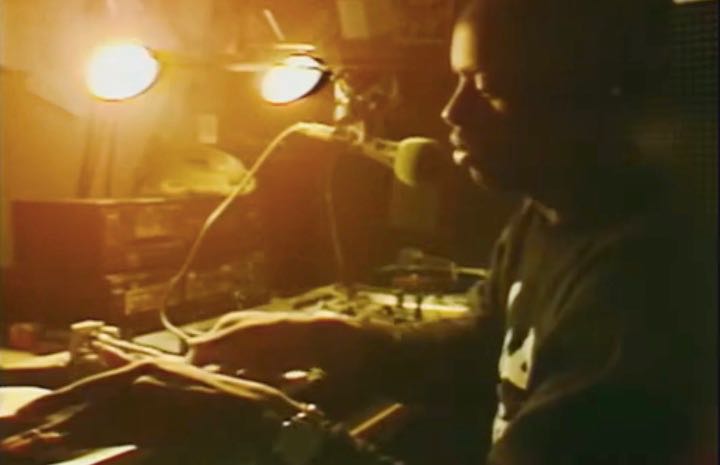
Many thanks to SWLing Post contributor, Mark Fahey, who shares a link to this BBC documentary about pirate radio:
Category Archives: FM
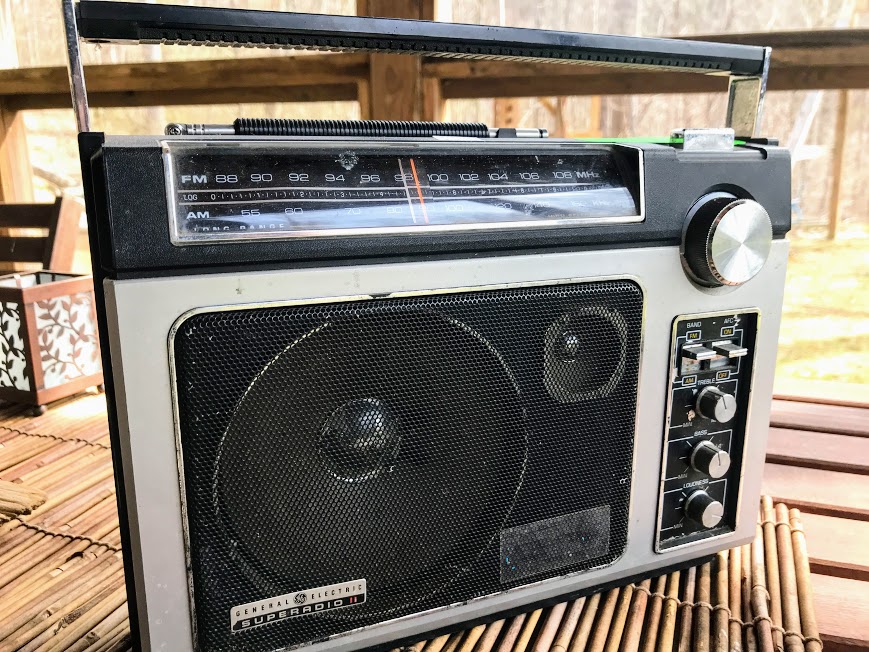
Thrift Store Find: A $2.50 GE Super Radio II
A few weeks ago, I stopped by our local Habitat For Humanity ReStore searching for reclaimed building supplies.
This particular ReStore is one of the largest in the area–it has an amazing selection of building supplies, furniture, housewares, books and even music, but has a very small section dedicated to electronics which is primarily stocked with DVD players, VCRs and occasionally the odd component system. The person who sets the prices for electronics always over-inflates them so it seems items sit on the shelf for ages.
In all of the years I’ve visited this store, I’ve never found a portable radio of interest…until a few weeks ago.
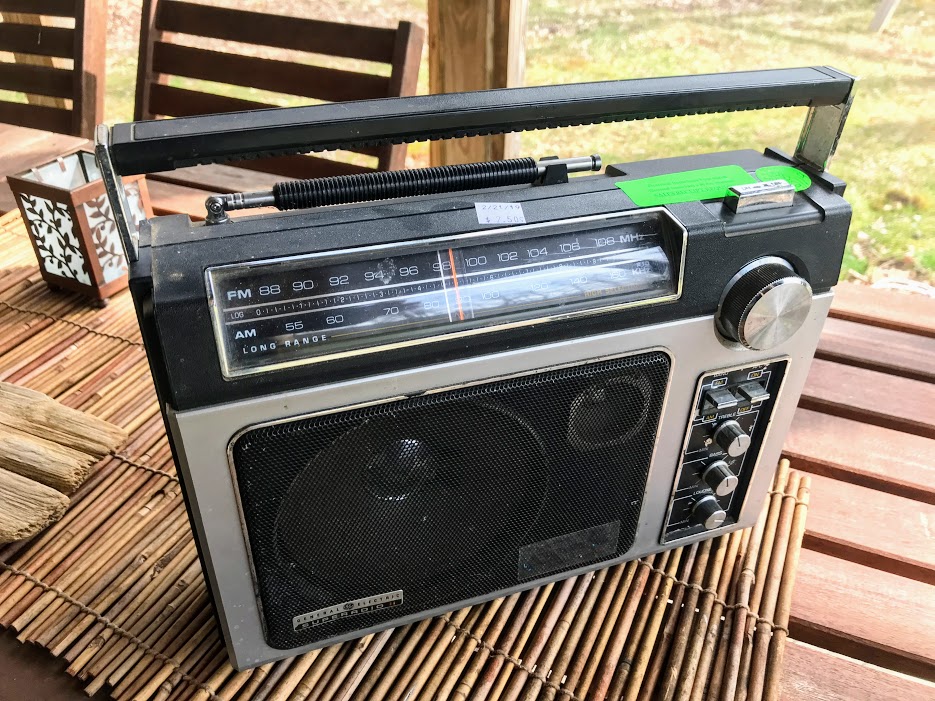
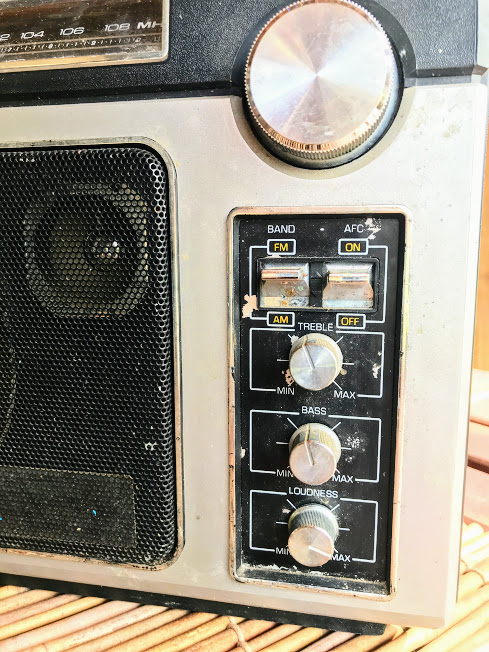
As I passed by the shelf, a GE Super Radio II caught my eye. Cosmetically, it was in rough shape (in other words, “well-loved”).
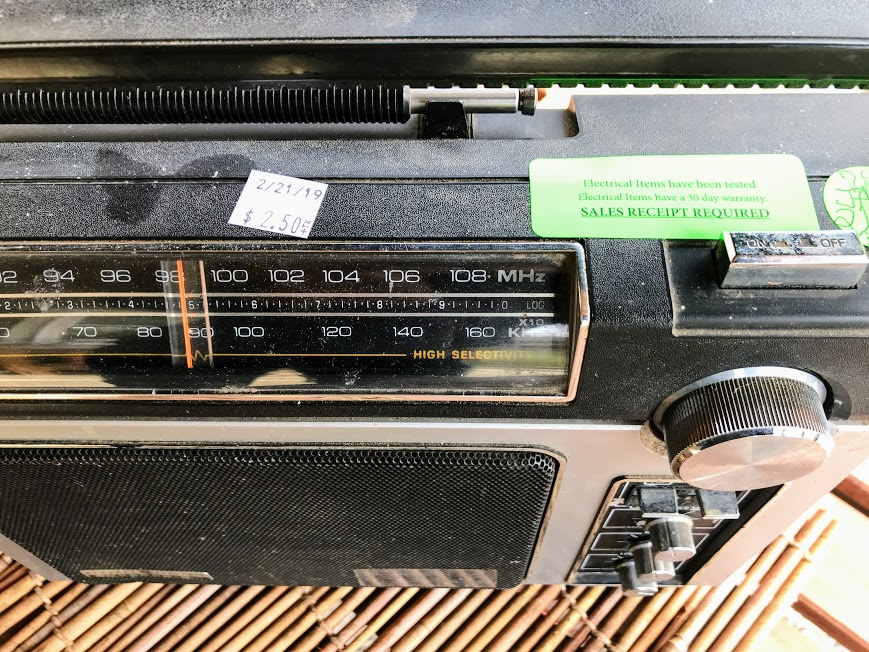
I expected a $50 price tag but instead was surprised when I saw $2.50! I put on my reading glasses just to make sure I was reading it correctly.
I plugged the radio in and tested it on FM. It easily snagged a number of FM stations and the audio sounded amazing although the loudness, treble and bass pots were very scratchy.
The AM broadcast band worked as well, but the RFI/noise inside the retail warehouse was overwhelming.
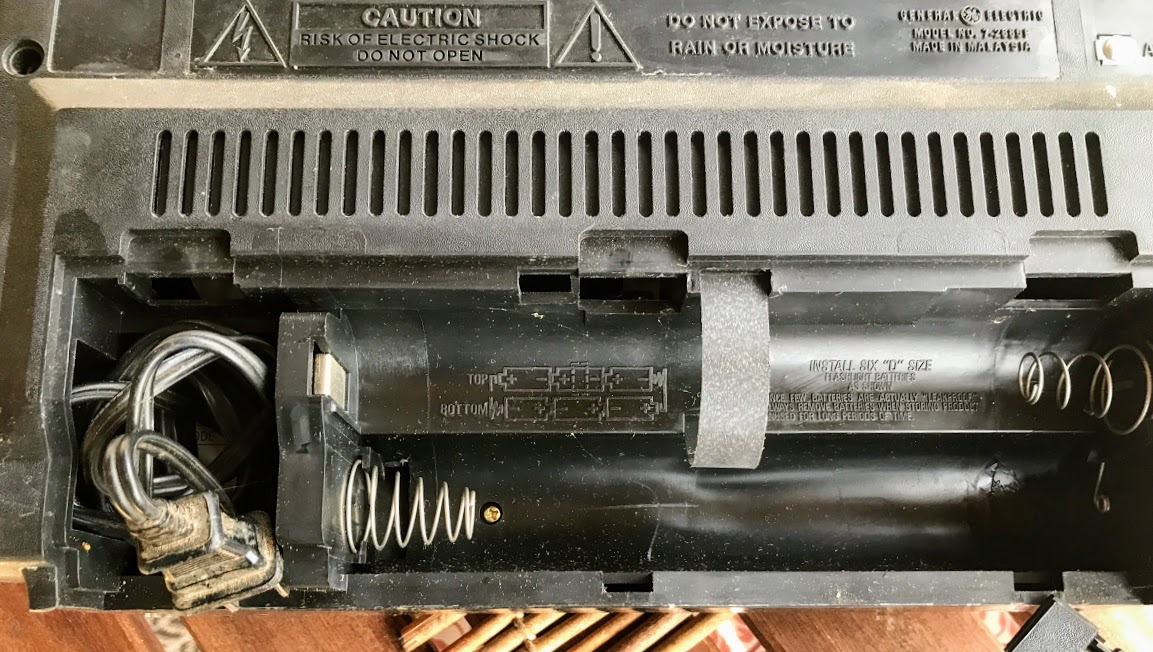
I opened the back of the radio and found an immaculate battery compartment. Obviously, the previous owner was either diligent with removing cells when not in use, or never used batteries.
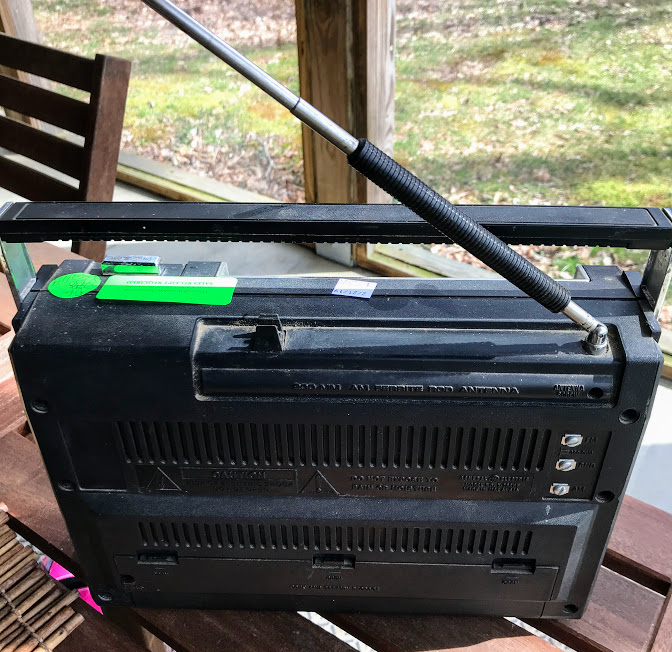
The antenna was in great shape and had no bends or breaks.
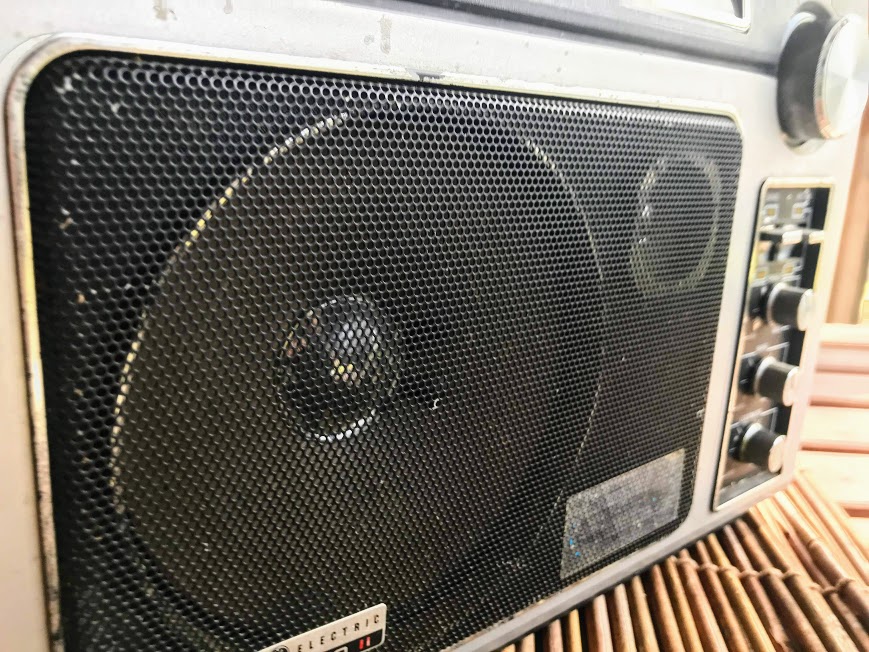
The speakers were in tact as well.
I took the radio to the counter and the guy who rang up the order said, “Well…she ain’t pretty, but for $2.50 how can you go wrong?”
My thoughts exactly!
I brought the Super Radio II home with the idea of immediately cleaning her up (like David Korchin did with his “barn find” II), but I’ve had a couple intense travel and work weeks, so it had to wait.
Fast-forward to yesterday when my father-in-law was in town and stopped by for a visit.
He mentioned in passing that after his favorite public radio station decreased power from one of its translators, he could no longer receive it easily with his small AM/FM portable at home. Of course, I have at least four dozen radios here that could easily receive this station, but few of those include a power cord, are incredibly simple to operate and have room-filling audio.
I took a look at the GE Super Radio II, then a look at my father-in-law, and decided he needed it. I knew the ‘Super II would make him a happy man.
I quickly dusted off the chassis and cleaned the pots with DeOxit–it played like a new one.
I tuned to an FM station playing classical music, turned up the volume and my father-in-law beamed when he heard the rich, clear audio.
No doubt, this time-honored portable will get a lot of use and love in its second life.
If I’m being honest with myself, this might not have been a truly altruistic move. You see, when we do an overnight at my father-in-law’s house, I can now do a little AM DXing without having to lug one of my own receivers!
A win-win in my book.
Post Readers: Have you snagged a good radio deal lately? Please comment/brag with models and prices!
Do you enjoy the SWLing Post?
Please consider supporting us via Patreon or our Coffee Fund!
Your support makes articles like this one possible. Thank you!
Photos from the 2019 Charlotte Hamfest

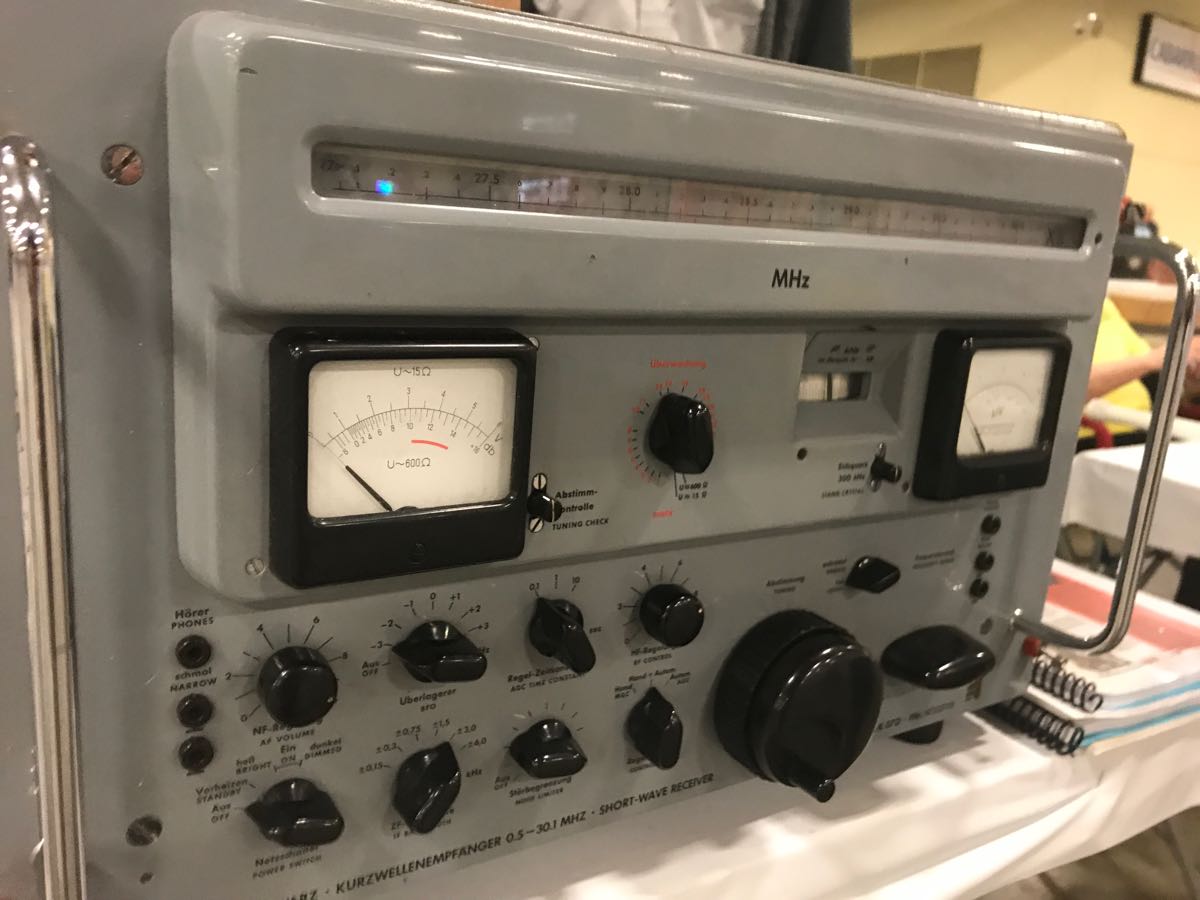
This RS HF receiver was pristine. If I had the budget and the shack space, it would have gone back with me. See more photos in our gallery below.
Yesterday morning around 5:30 AM I started my nearly three hour pilgrimage to the 2019 Charlotte (North Carolina) Hamfest. The Charlotte Hamfest is one of the larger regional hamfests in the area–due to its central location, it attracts people from all of the surrounding states.
The Charlotte Hamfest typically falls on the heels of (or the same weekend as) the Winter SWL Fest in Pennsylvania so I usually don’t even put the dates in my calendar. Indeed, the last time I attended the Charlotte Hamfest was about twenty years ago! It was at a different location and, back then, was also very much a computer show. Today it’s almost purely radio.
The Charlotte Hamfest is a Friday/Saturday event held at the Cabarrus Arena & Events Center in Concord, NC. The center is a superb hamfest venue: it’s well lit, clean, spacious and can easily house all of the vendors indoors–a huge bonus as weather was less than desirable.
My buddy, Vlado (N3CZ) reserved two vendor tables and packed it with gear to sell–I also brought along a handful of items.
I was very impressed with the turnout–indeed, it was one of the busiest regional hamfests I’ve attended in ages. I sold a couple of items and Vlado sold a lot (he also purchased a lot, but that’s another story!).
I believe I’ll start putting the Charlotte hamfest in my calendar–even though timing isn’t always convenient for me, I think it’s well worth the trip!
Kudos to the Mecklenburg Amateur Radio Society for putting on such a great show!
Photos
I’ve embedded over 140 photos of the Charlotte Hamfest below–click each one to enlarge. Being a lover of vintage radios, my photos feature a lot of boat anchors. Note that when possible, I try to include the price tags for each item.
Note: If you can’t view the embedded photos below in our email digest, click here to view them on the web.
Do you enjoy the SWLing Post?
Please consider supporting us via Patreon or our Coffee Fund!
Your support makes articles like this one possible. Thank you!
Guest Post: A Visit to Radio Tarma

Many thanks to SWLing Post contributor, Don Moore–author of Following Ghosts in Northern Peru–for the following guest post:
A Visit To Radio Tarma
By Don Moore
(Note: A more extensive set of photos from Radio Tarma, and other Peruvian radio stations, can be found at Don’s website. The website also contains details of the Peruvian travelogue book he recently wrote and published.)
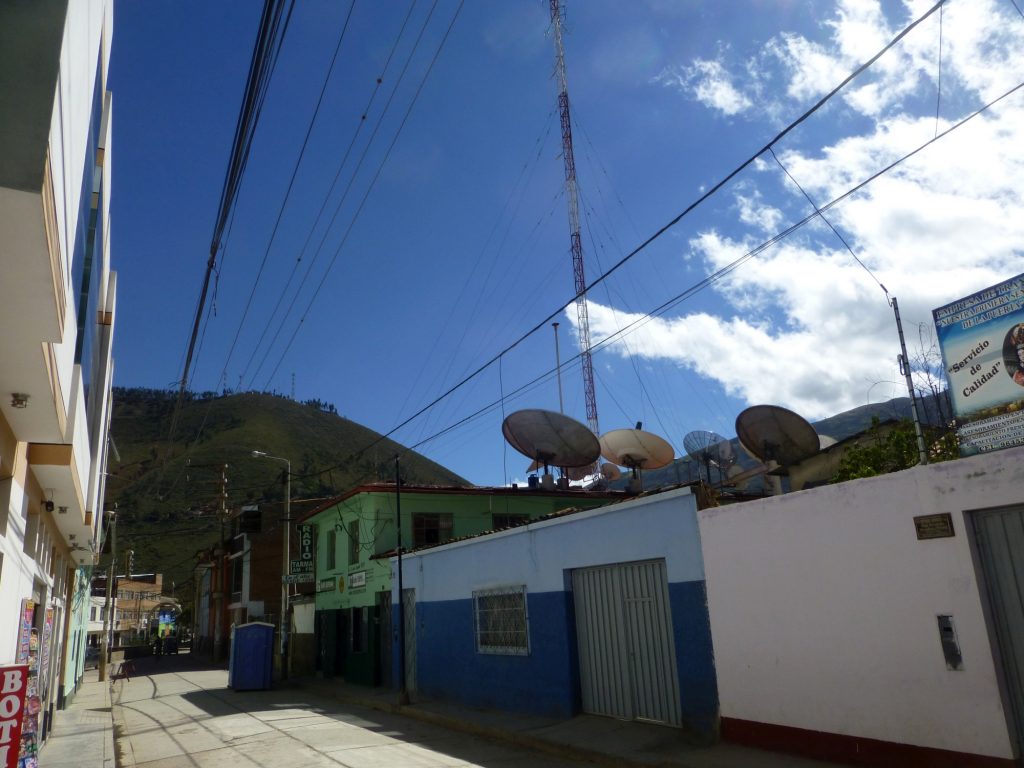
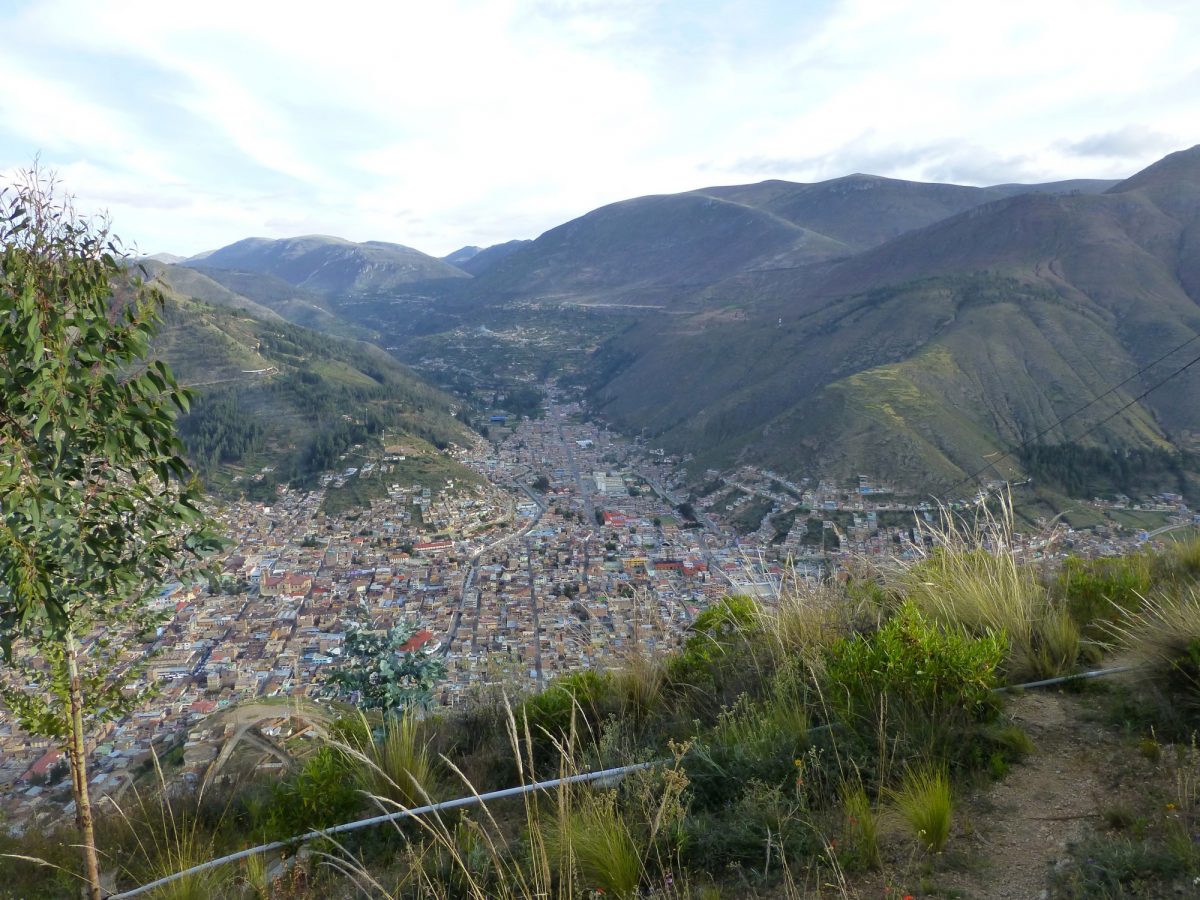
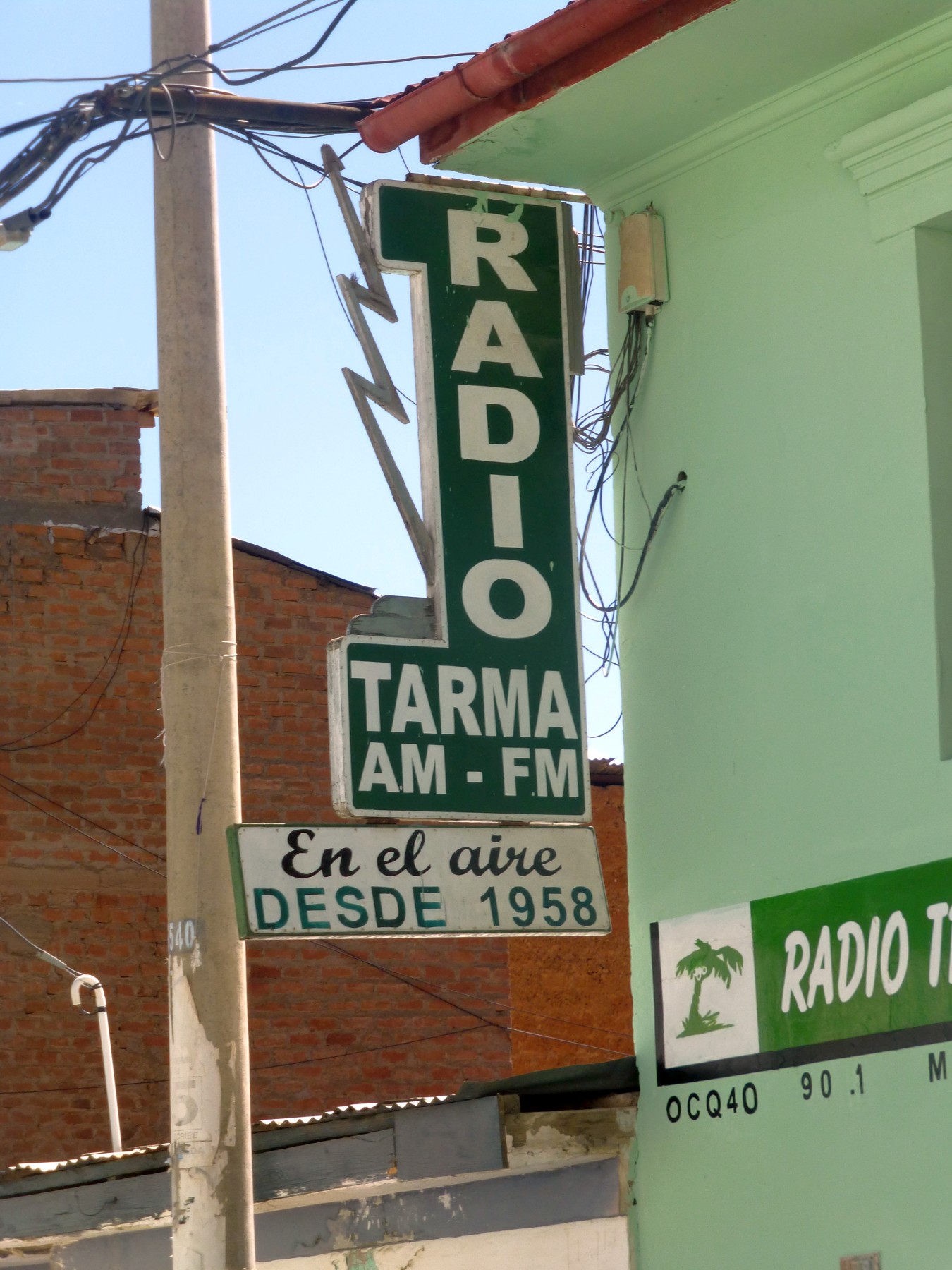
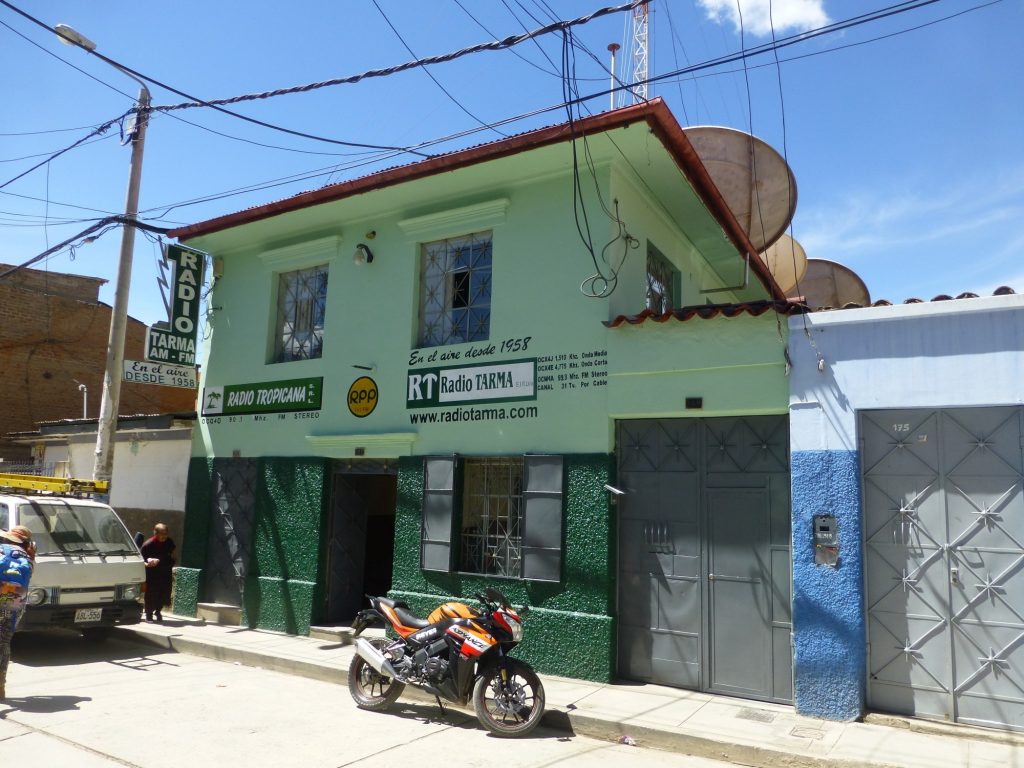
Shortwave stations in South America are few and far-between these days, but those of us who have been tuning the bands for a few decades remember the days when the tropical bands were filled with Latin American broadcasters from dozens of scattered mountain and jungle towns. One such place was Tarma, a picturesque but chilly city of about 50,000 nestled in a narrow valley in the central Peruvian Andes at 3,000 meters above sea level. Tarma has been an important commercial center since colonial times and archaeological findings indicate that the region was heavily populated long before the Spanish came. Today it sits at the junction of two major trade routes, so it continues to be a bustling place.
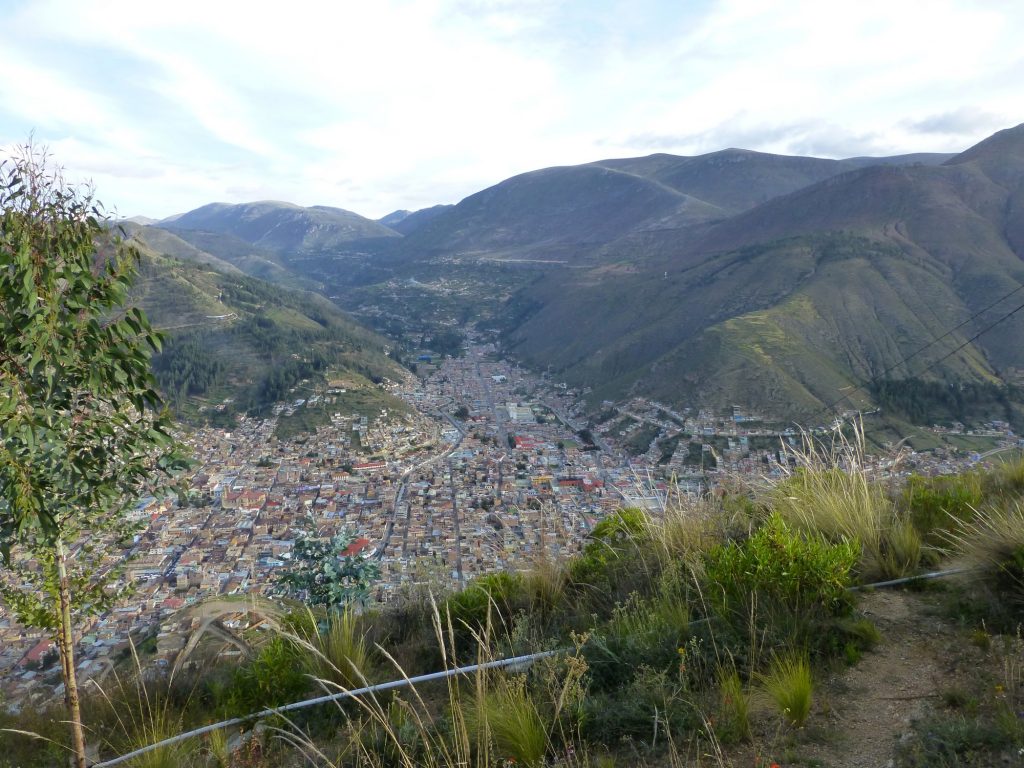
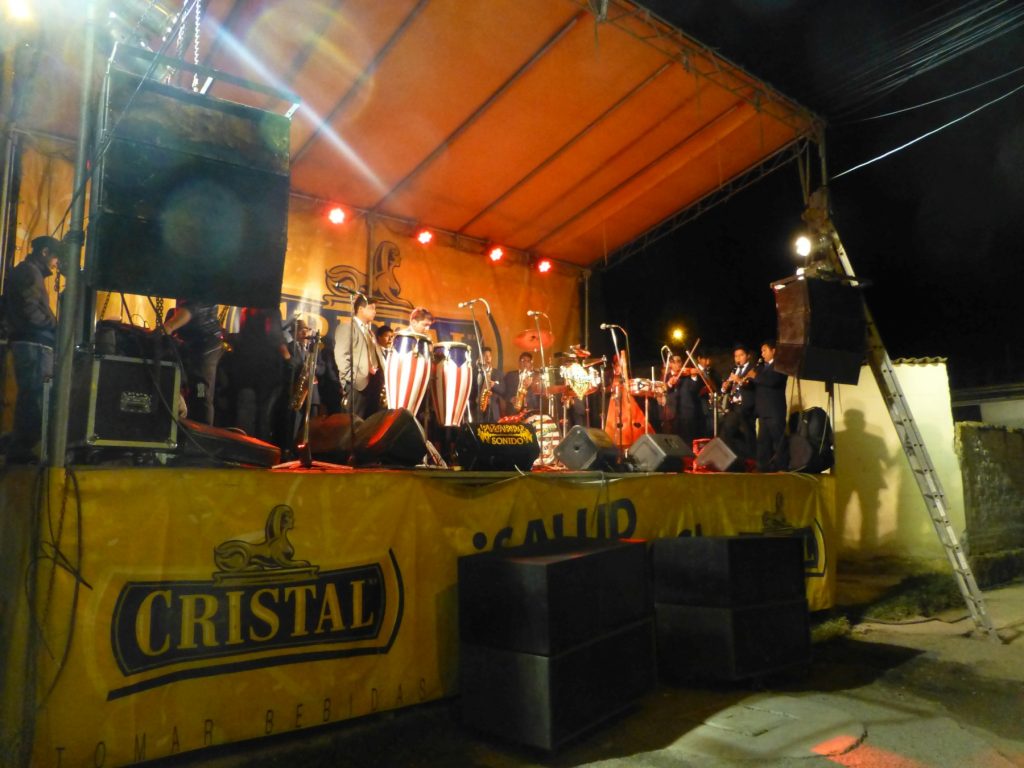
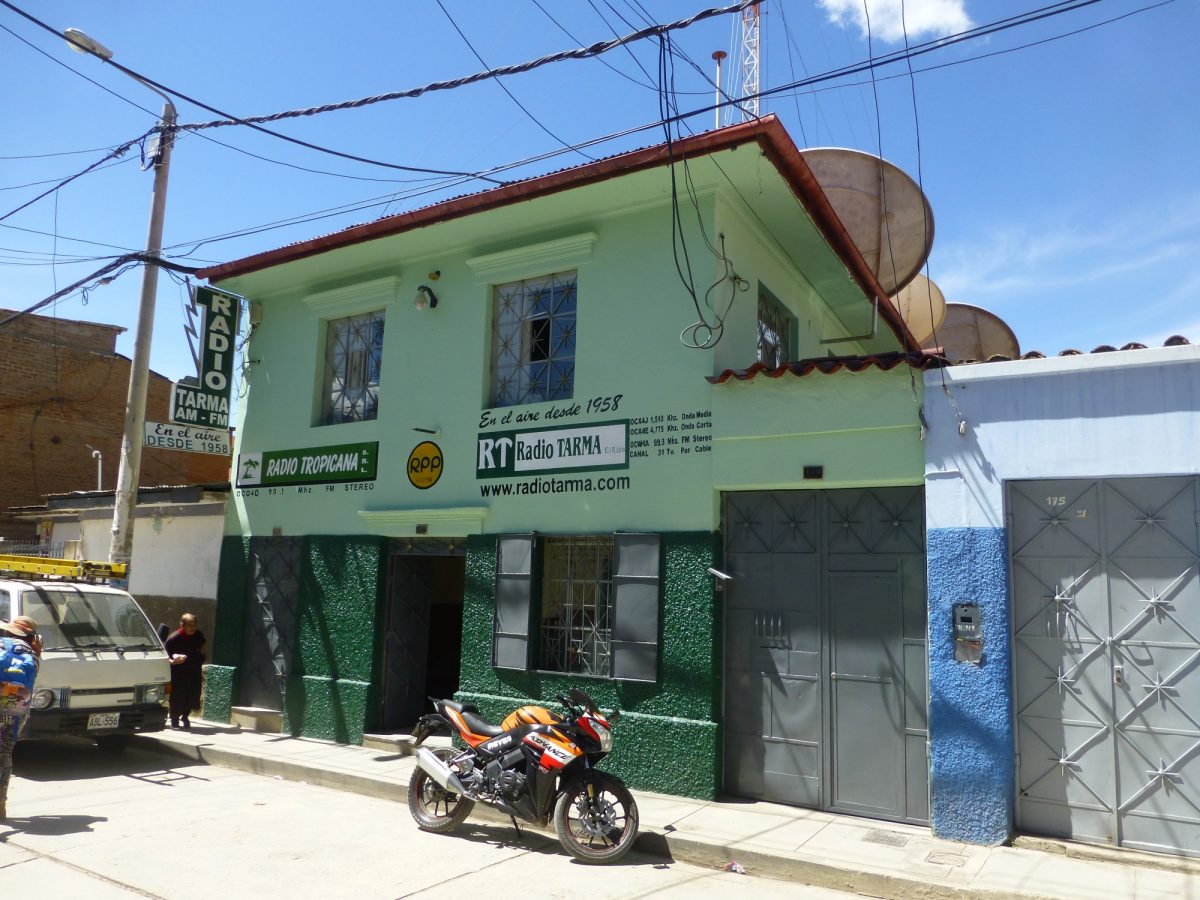
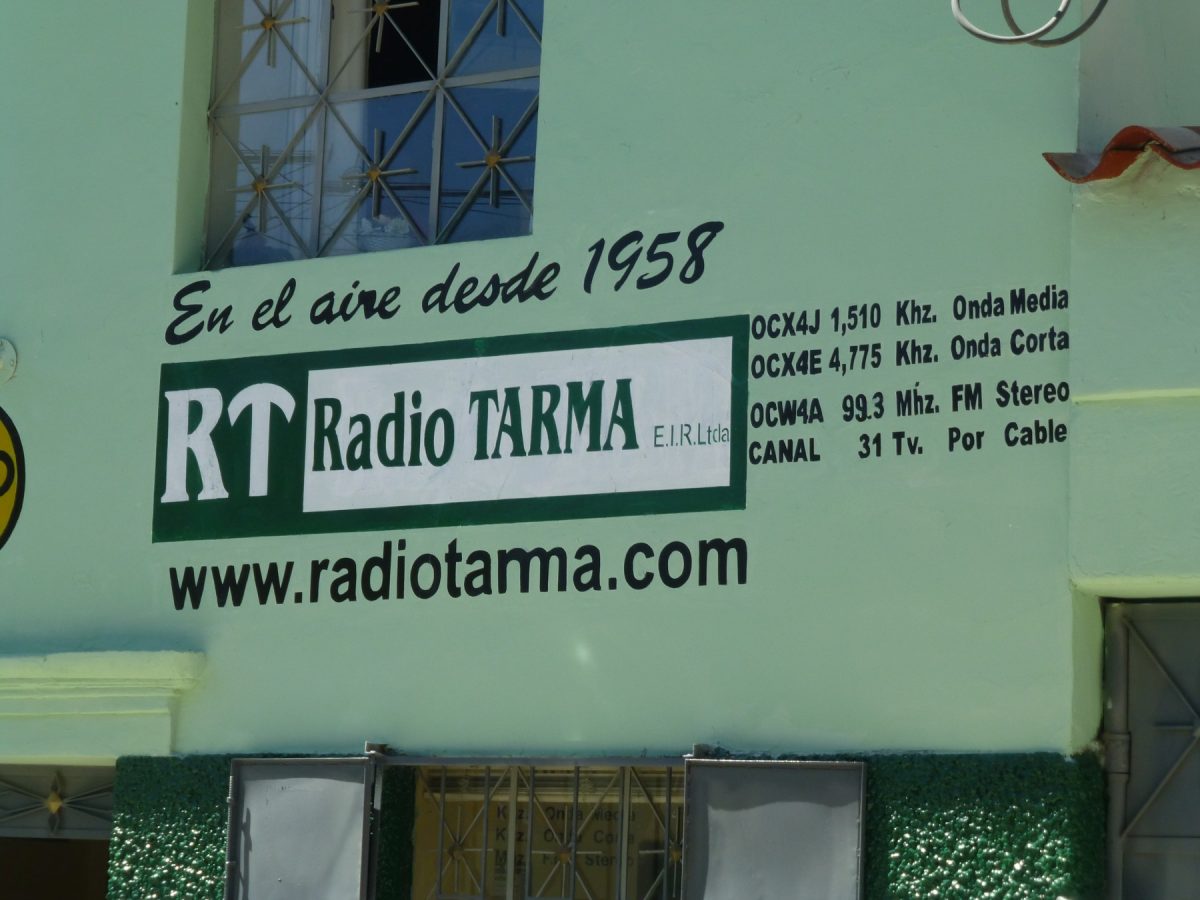
While wandering around central Peru in April 2018, I made a point of stopping in Tarma so as to visit the town’s namesake broadcaster, Radio Tarma, one of the few Peruvian stations still on shortwave. Radio Tarma’s frequency of 4775 kHz has been a fixture on the sixty meter band for over four decades. What I didn’t know was that this would turn out to be the best of the over one hundred Latin American station visits that I have made in my travels.
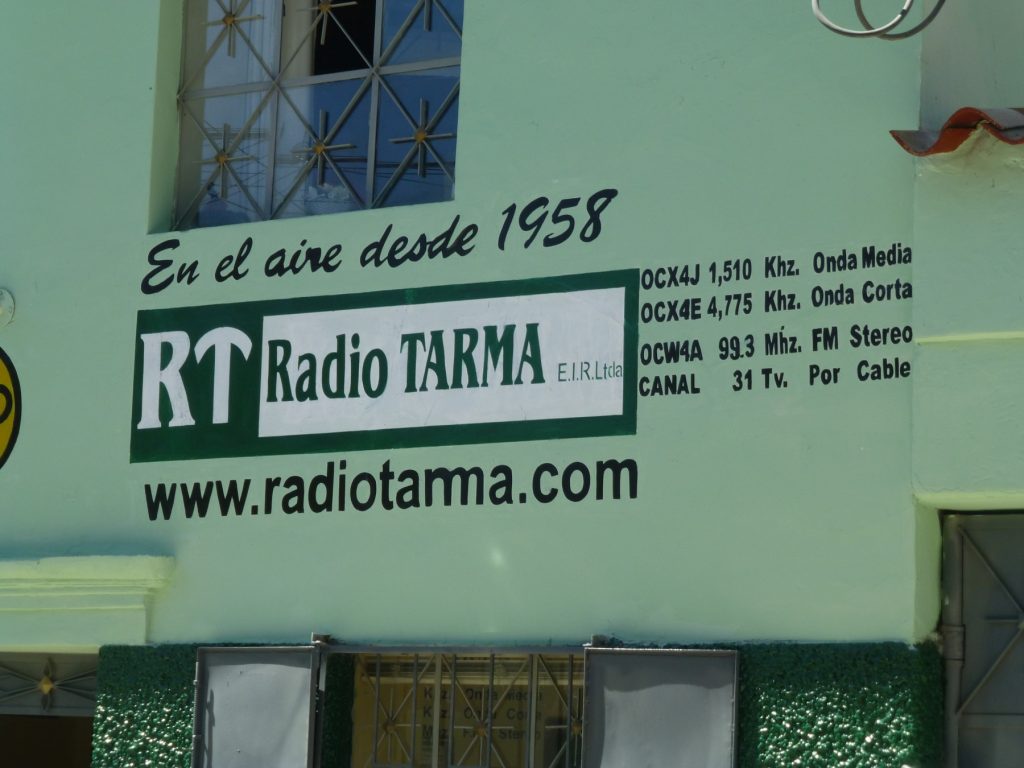
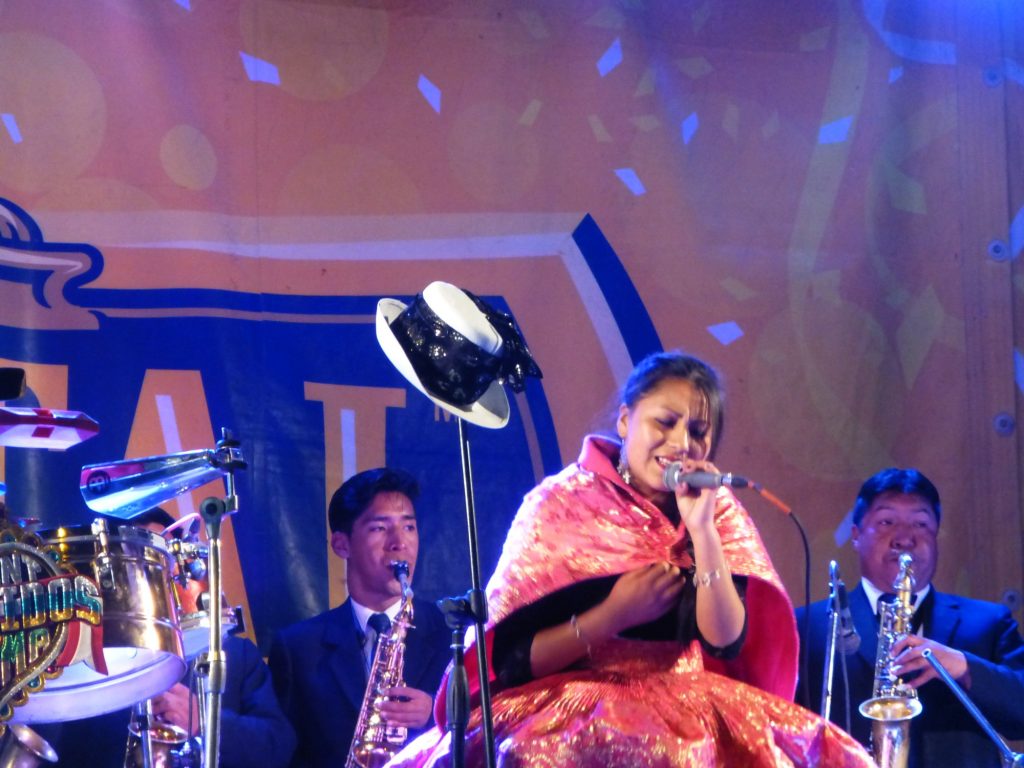
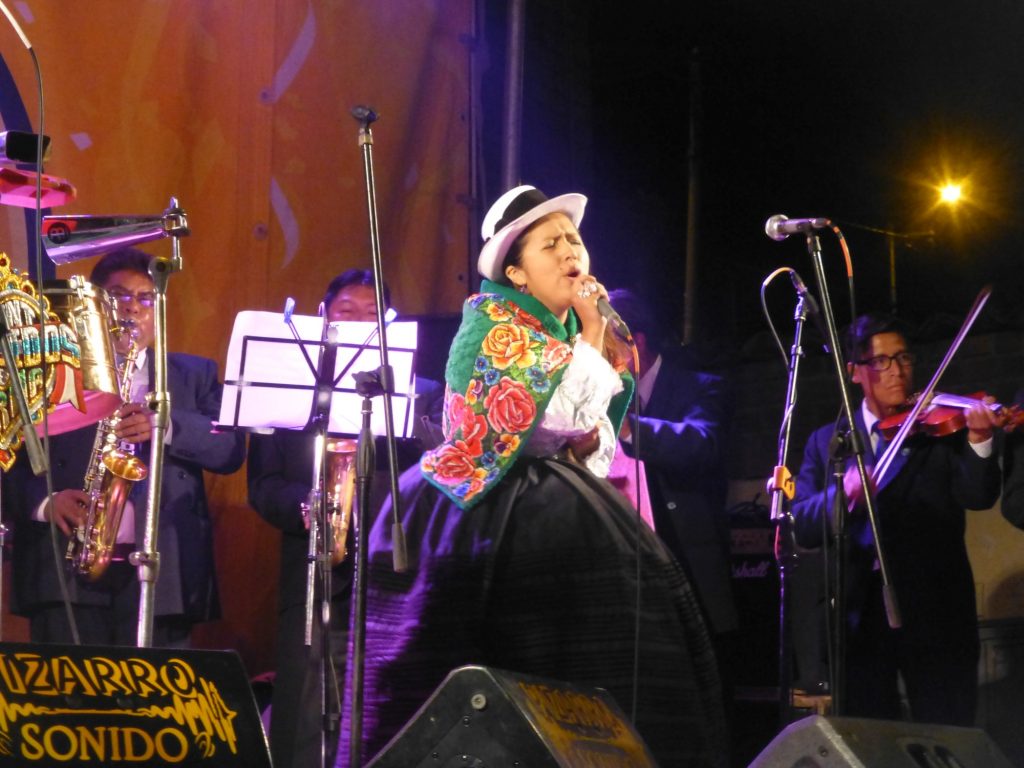
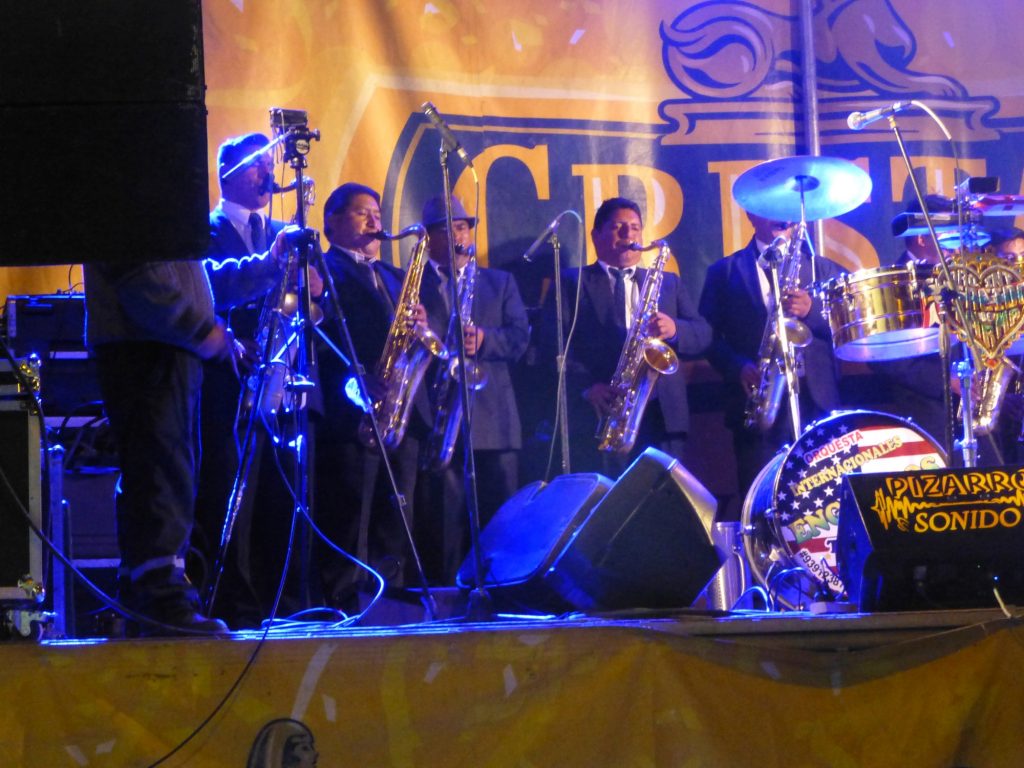
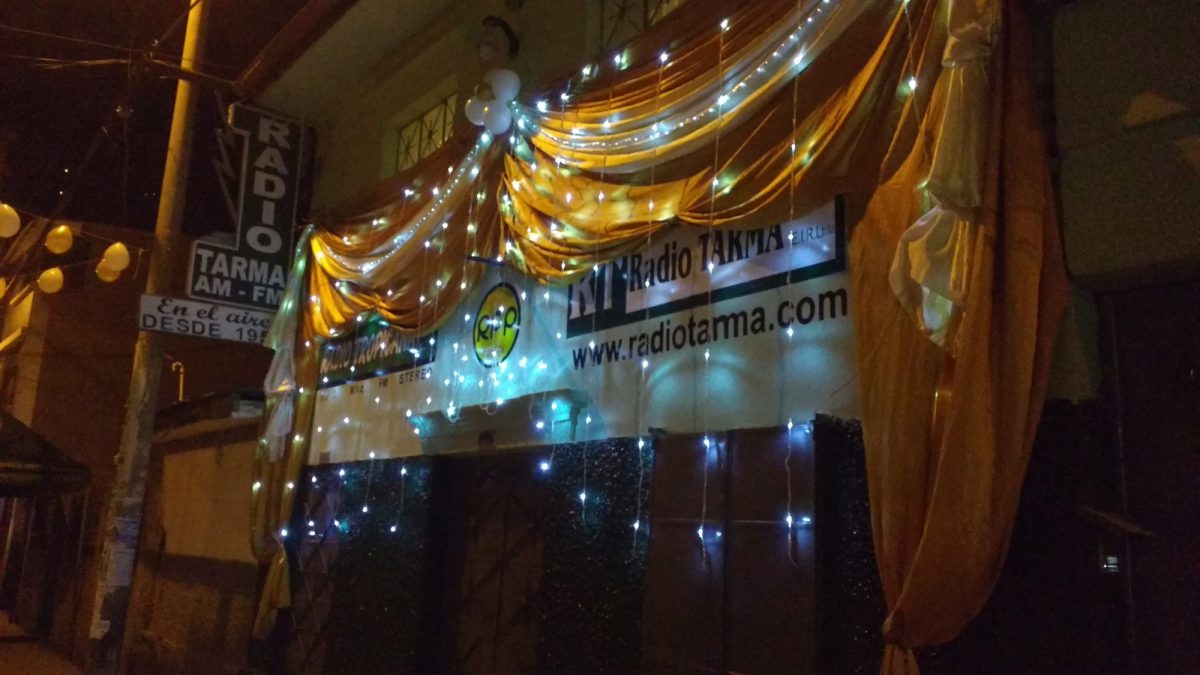
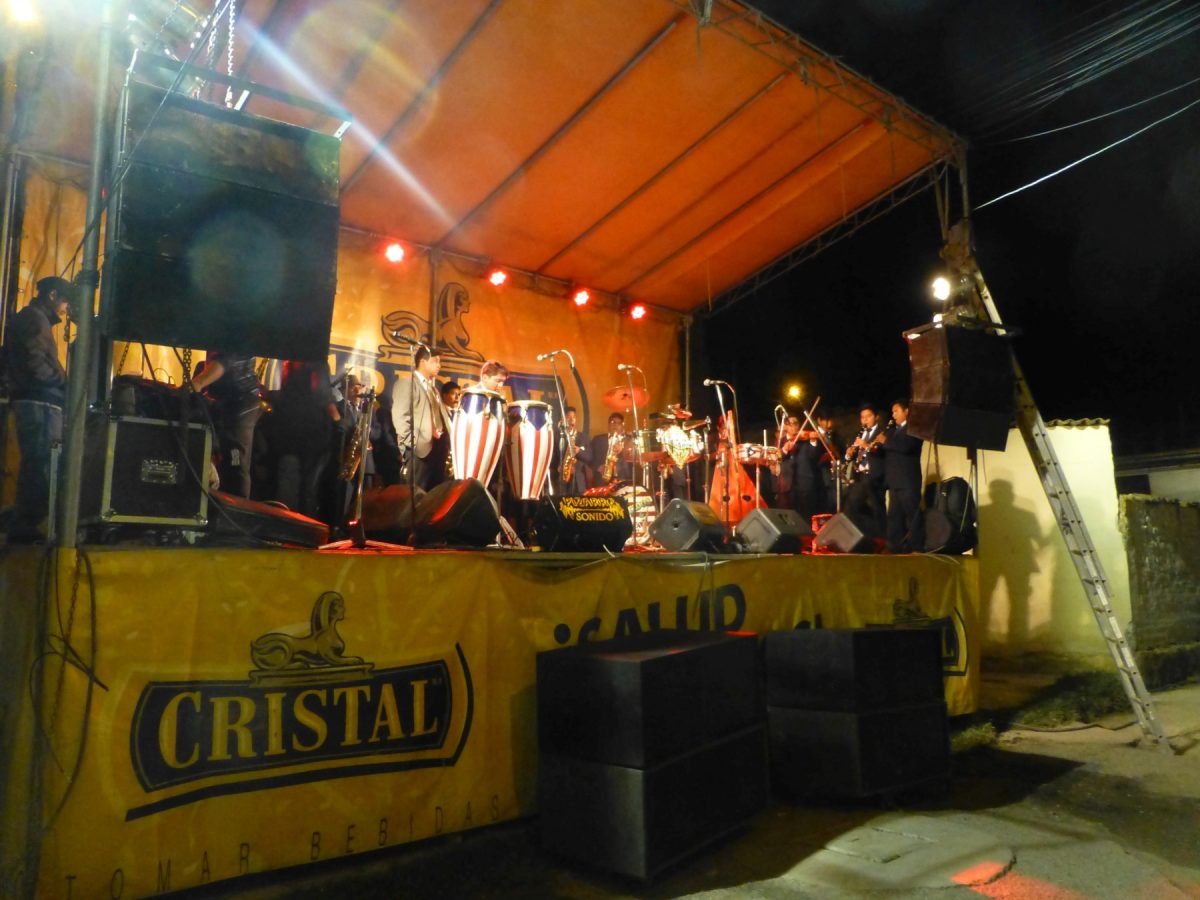
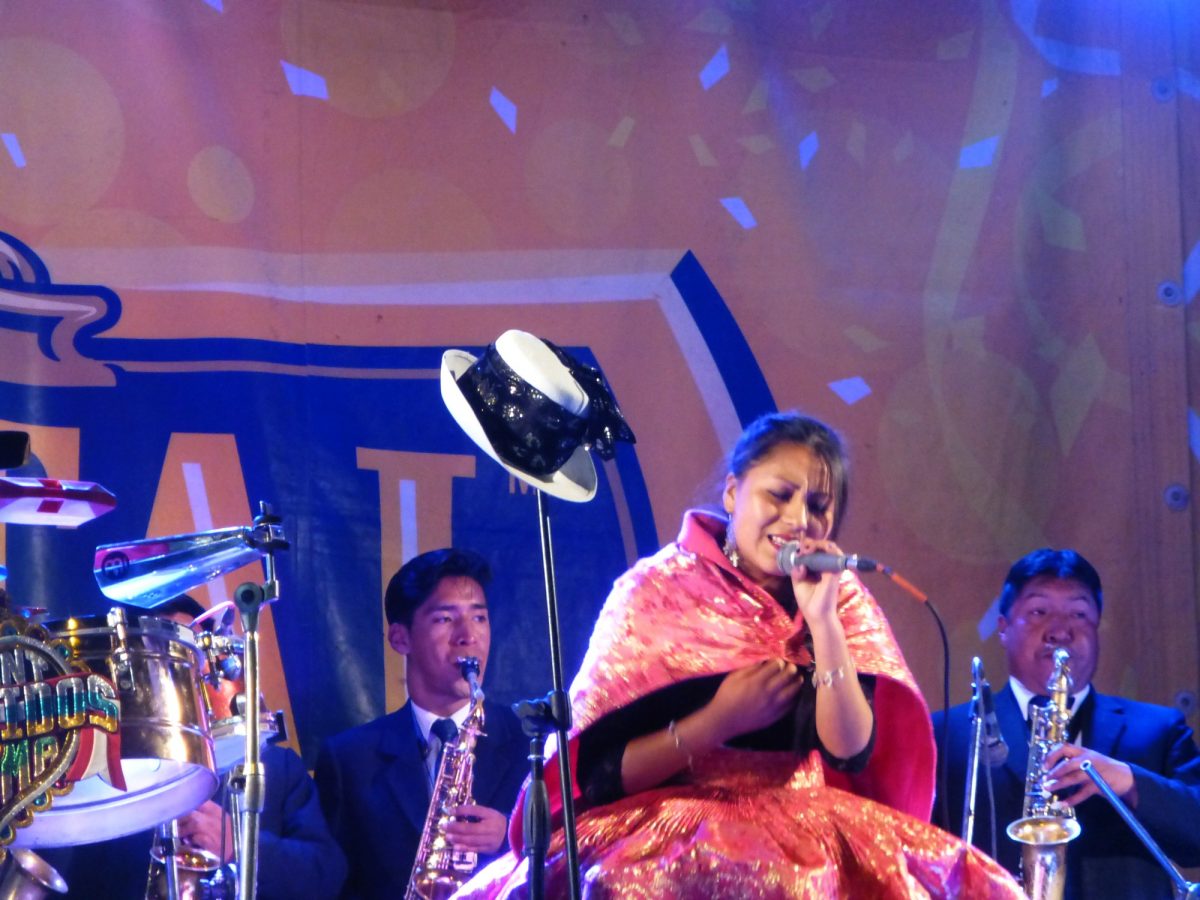
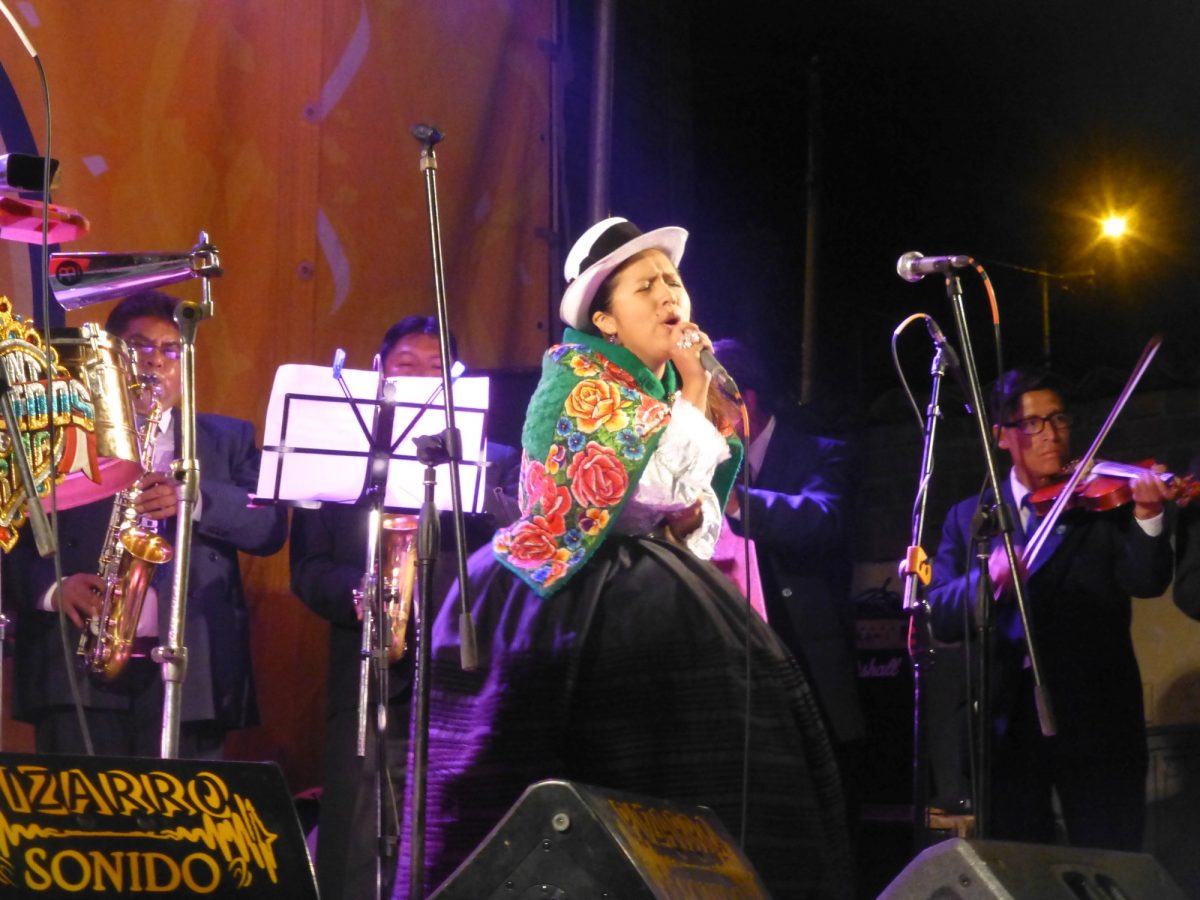
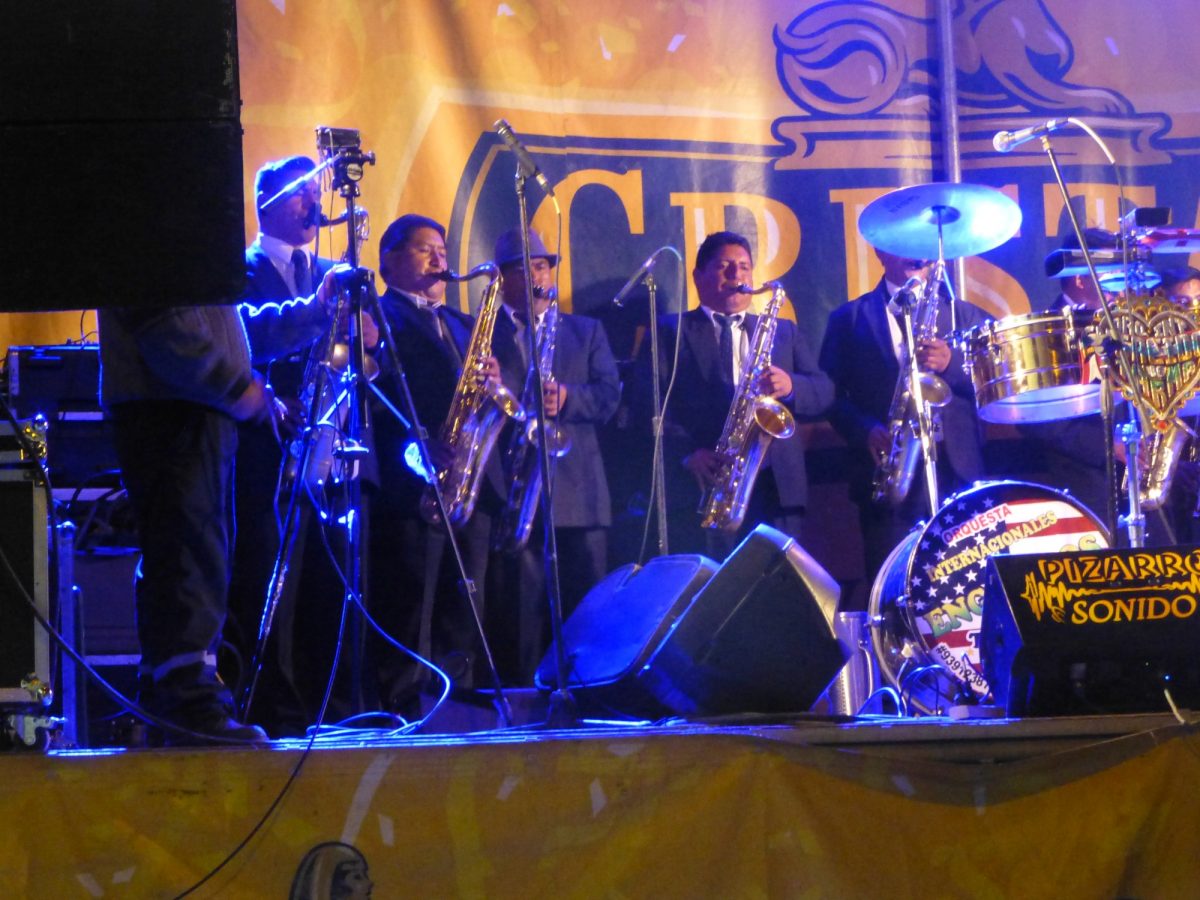
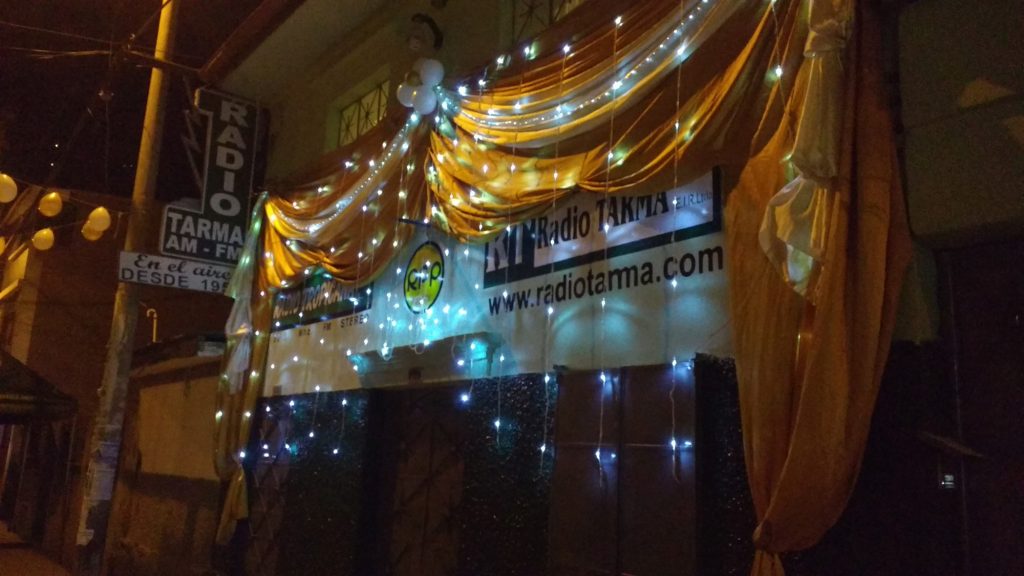
When I first stopped by on Monday afternoon, everyone was busy and no one had time for a visiting gringo. By chance I had arrived on the station’s sixtieth anniversary and they were preparing for a big celebration that night. I was invited to come back in the evening when there would be a huge street party with live music. That evening I got to talk to several members of the station staff and was introduced to owner-manager Mario Monterverde, who invited me to come back for a tour in two days after the celebrations and ceremonies were over.
Radio Tarma Owner/Manager Mario Monteverde
The reason for Radio Tarma’s continued presence on the sixty meter band is Mario Monteverde, Radio Tarma’s energetic owner-manager.
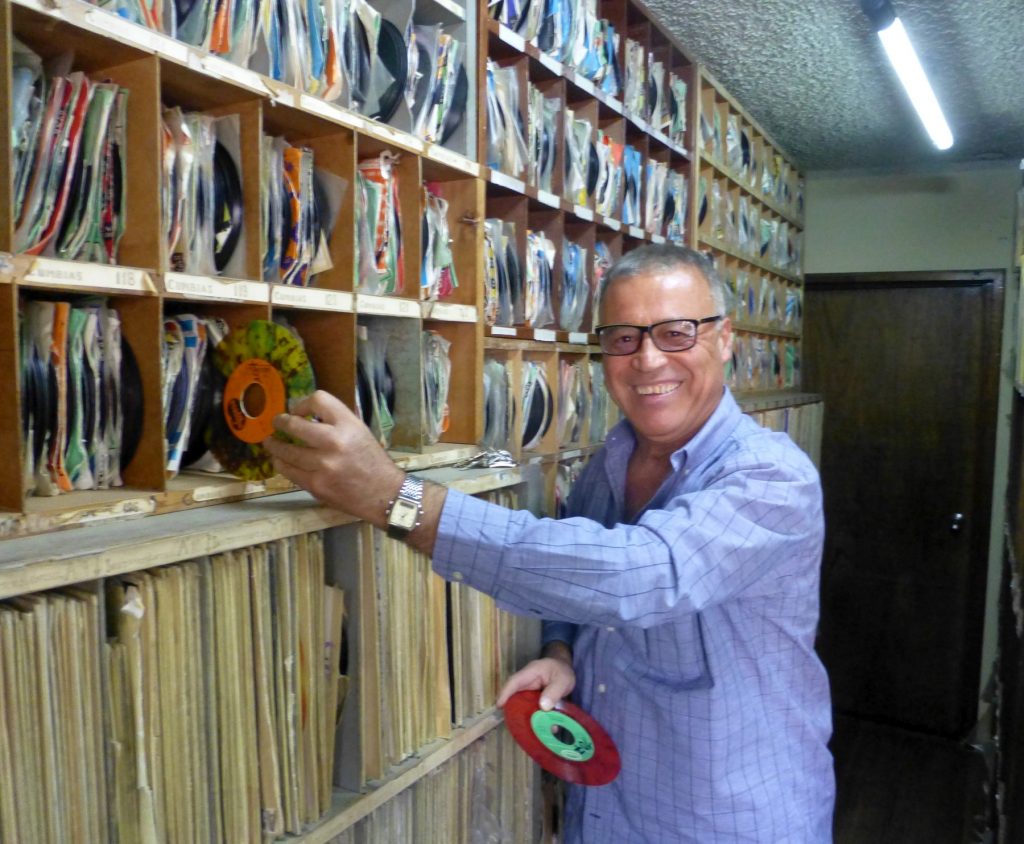
Running radio stations is his passion, and that includes reaching distant listeners on shortwave. Don Mario remembers what shortwave used to be like in Peru and he can rattle off station names and frequencies from past and present as good as any serious DXer. We spend a lot of time talking about stations I used to hear and the ones that I visited in my 1985 trip to Peru. We mostly talk in Spanish, although he speaks English well. He studied in Lima and later in the United States for several months. In the 1980s, he lived in San Francisco for a year while working as a DJ at a Spanish language FM station.
Don Mario thinks that it’s unfortunate that there is so little use of shortwave in Peru today, but other radio station owners think he is crazy to continue to use shortwave. The only listeners to shortwave in Peru are peasants in jungle settlements and remote mountain valleys. That may be a suitable audience for a religious broadcaster, but these listeners have no value to commercial stations, such as Radio Tarma, as they are mostly outside the money economy and of no interest to advertisers. But Don Mario doesn’t care and so Radio Tarma continues to broadcast on shortwave several hours every morning and evening for whoever might happen to tune in.
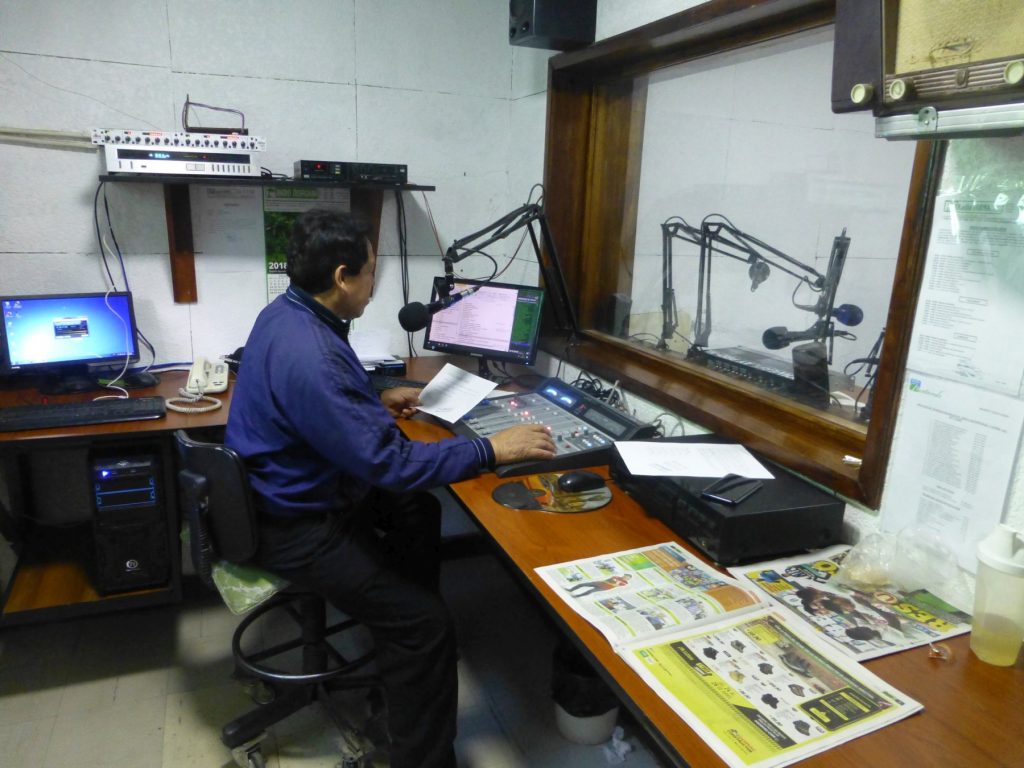
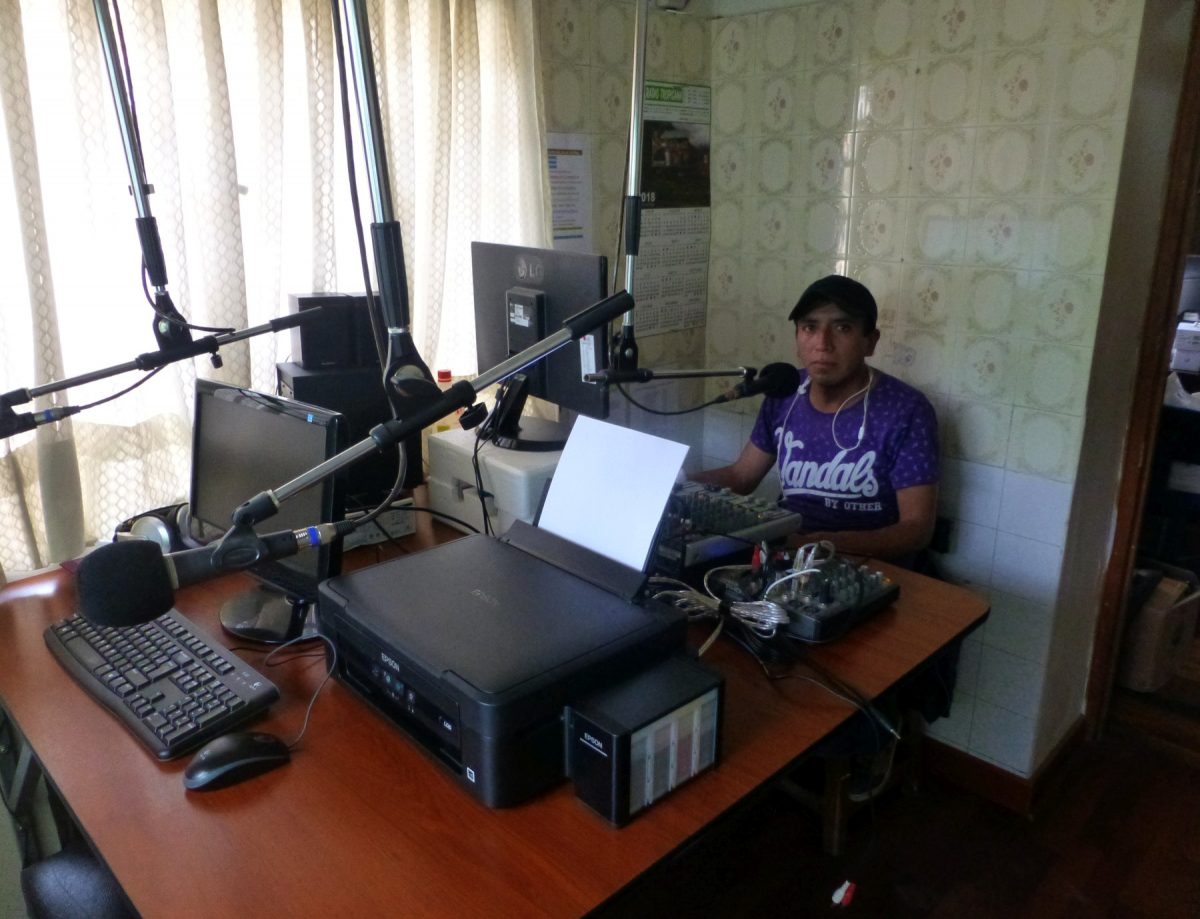
And, Radio Tarma can afford to broadcast as it sees fit. Don Mario’s Grupo Monteverde is one of the most professionally run and profitable communications companies that I have visited in Peru. In addition to Radio Tarma (on MW, FM, and SW), the company operates two television stations in Tarma, the local cable network, the local FM repeater for Radio Programas del Peru (Peru’s radio news network), and Radio Tropicana, a chain of FM music stations in Tarma and three nearby towns.
(Click here to open video in separate window.)
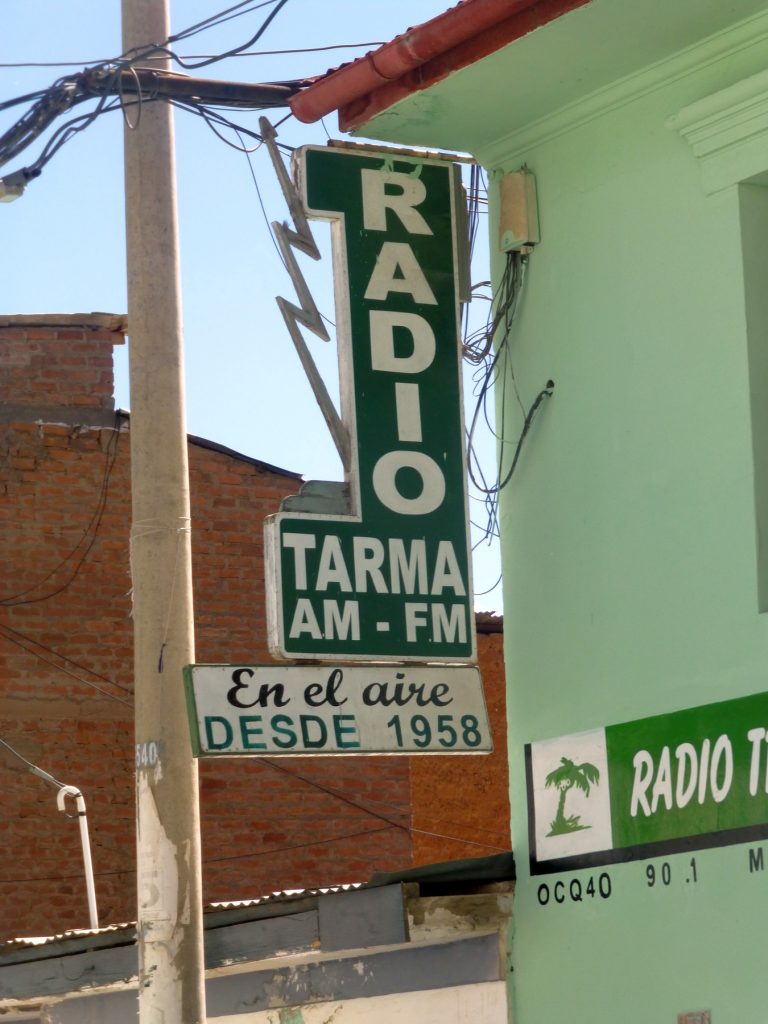
Founded in 1958 by Mario’s father, Radio Tarma was the first radio station in this city. Using two homemade 500 watt transmitters, the station initially broadcast on both medium wave and 6045 kHz shortwave, but the shortwave went off the air after about a year. Then in 1978, Mario’s father dusted off the old shortwave transmitter and applied for a new license. He was granted 4770 kHz, but that was soon changed to 4775 kHz, where Radio Tarma has been ever since. In the past four decades, Radio Tarma has been logged by thousands of DXers all over the world and, although it’s hard to believe, when I visited Tarma in April 2018 they were still using that original 500 watt transmitter that Mario’s father built sixty years before. However, a new one-thousand watt solid state transmitter was currently in Lima being tested by the Ministry of Transport and Communications. It should be on the air by now.
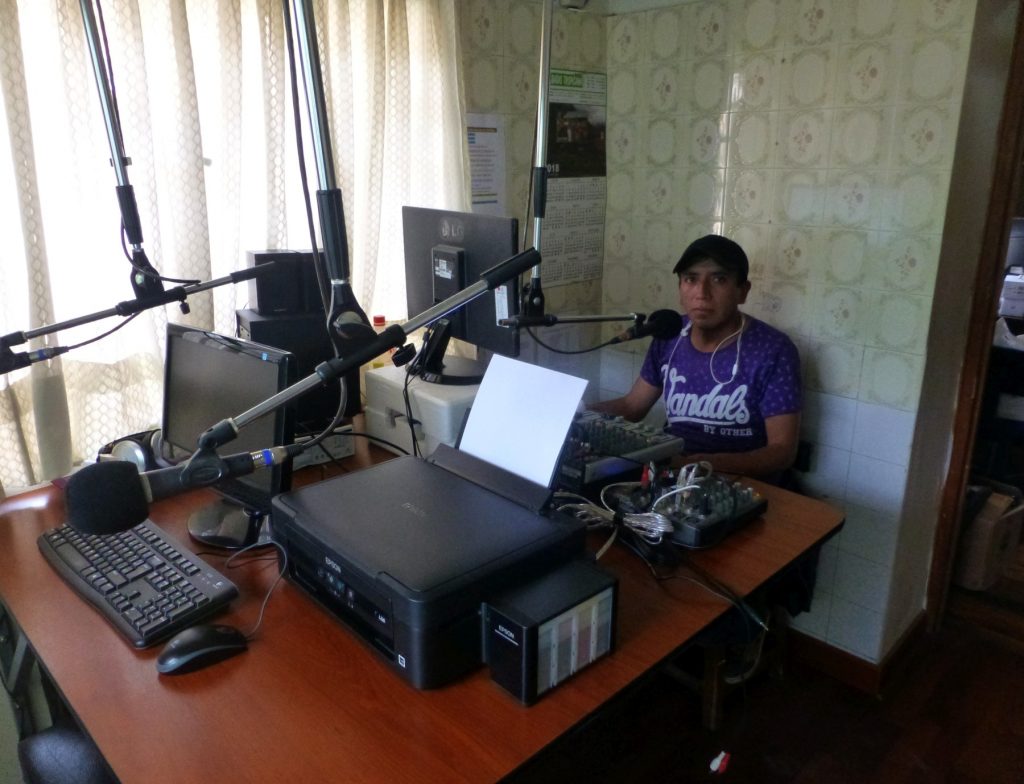
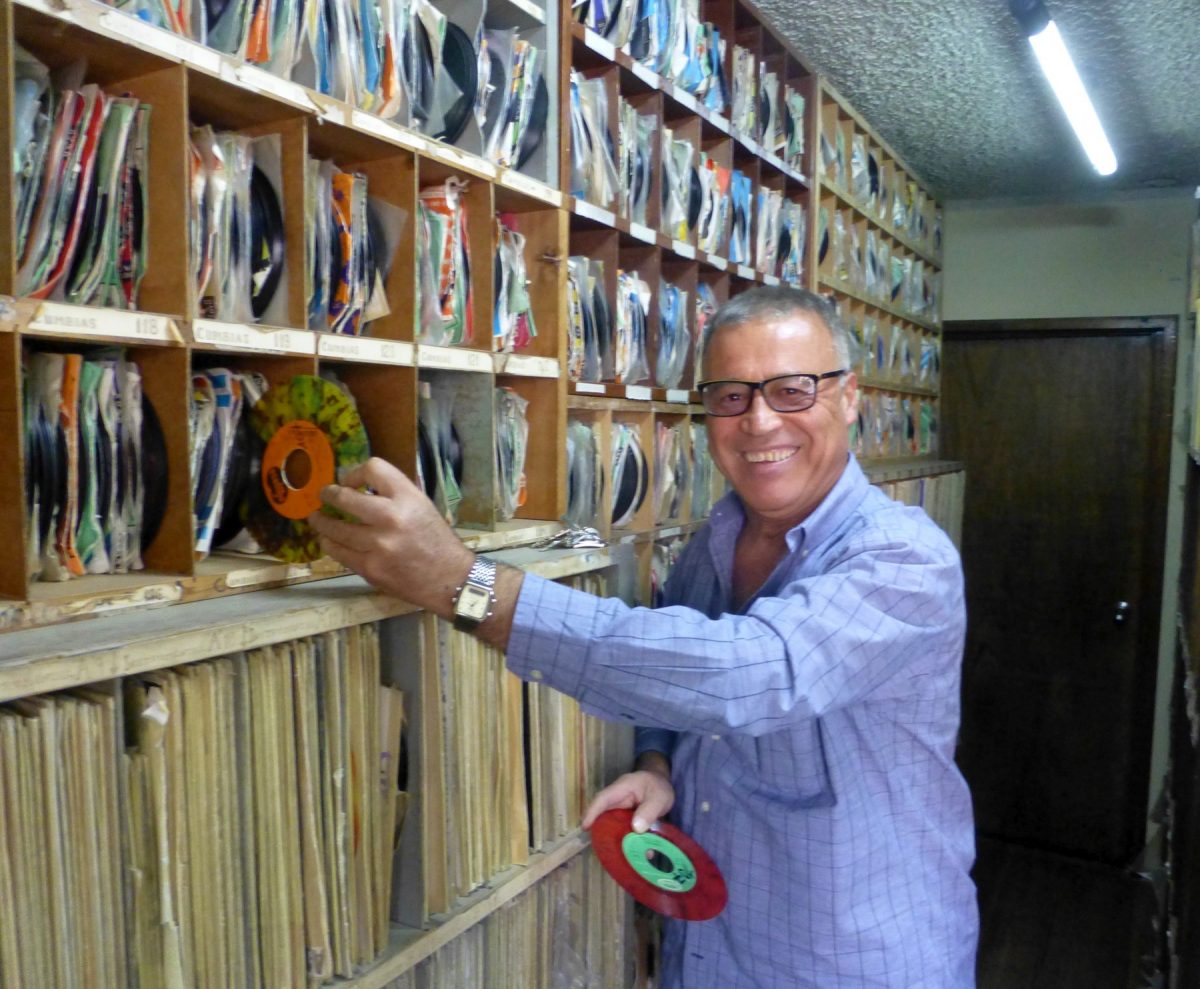
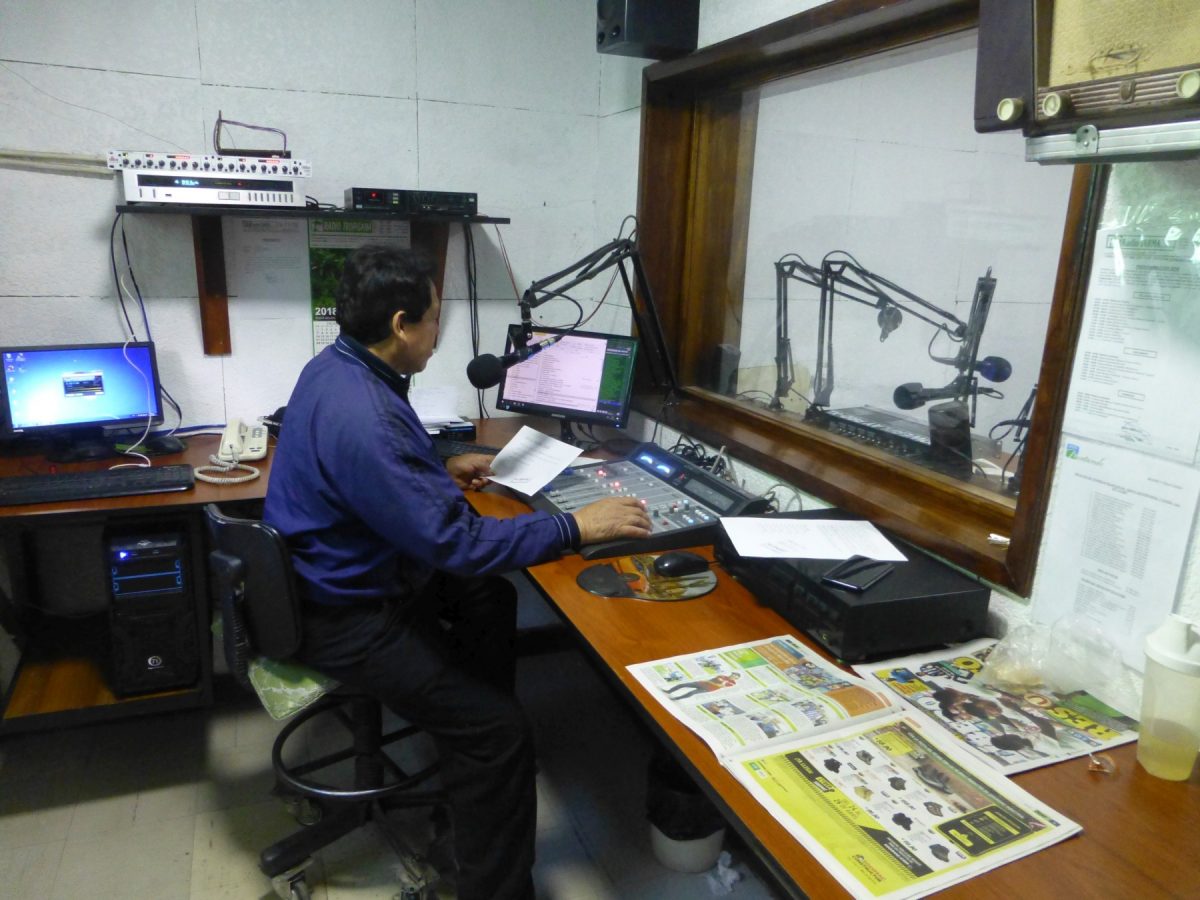
Don Mario starts by giving me a tour of the station building and its well-equipped offices and studios. He shows me the closet where the transmitter for the studio-to-transmitter-site link is and then takes me upstairs to the record library. Radio Tarma has one of the largest and oldest collections of vinyl records in the Peruvian Andes and includes numerous rare recordings. Many of the disks are EPs, or extended-play, which was once a very common format in the Andes. These records are the size of a 45 but recorded at 33 rpm so that there are two songs on each side. Don Mario keeps the records for their value but they aren’t used on the air anymore as Radio Tarma and its sister stations are all fully computerized. When there’s time they work on digitizing the better historical recordings from their collection.
Radio Tarma mountaintop transmitter site
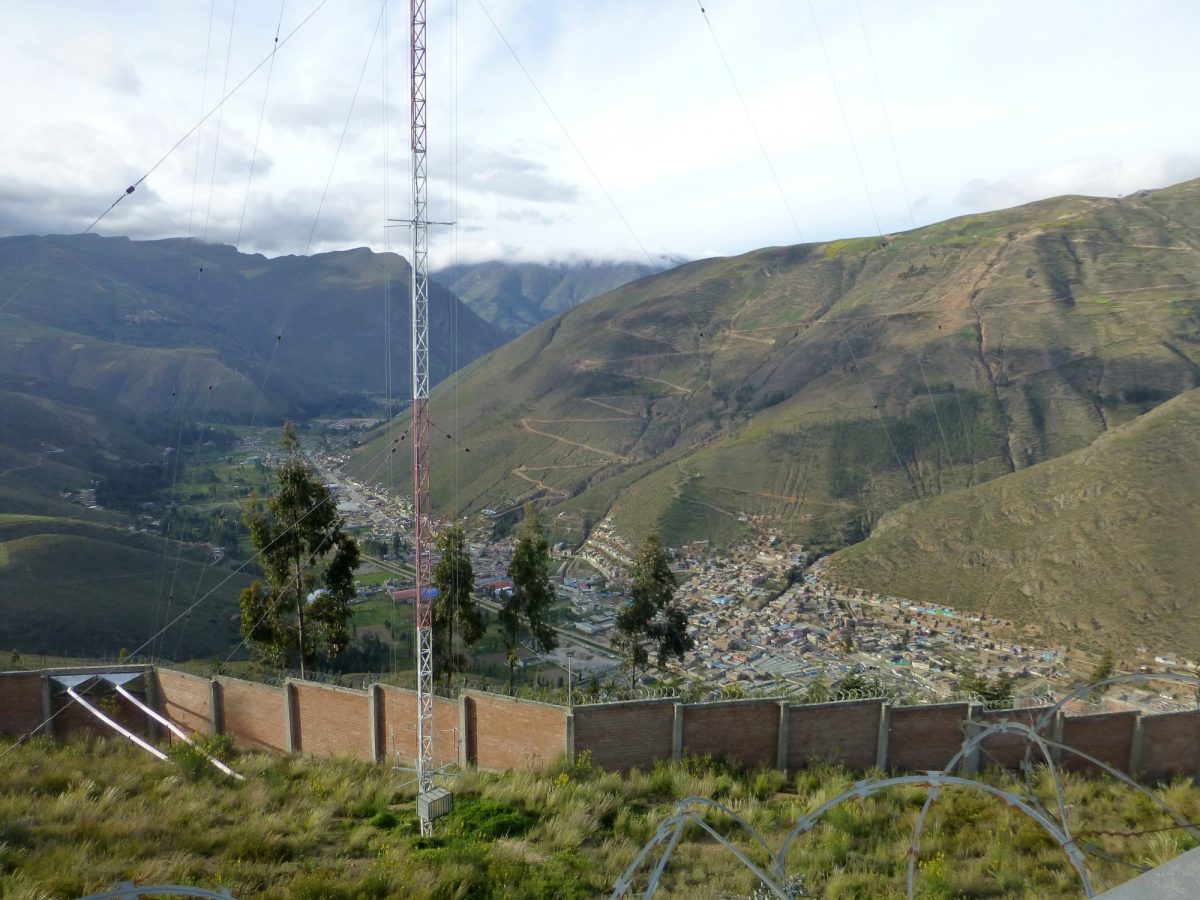
After seeing the studio, we get in Don Mario’s four-wheel drive SUV for the trip up a steep and winding dirt road that leads to the mountaintop transmitter site. For most of the station’s history, Radio Tarma broadcast from a field on the north side of town.
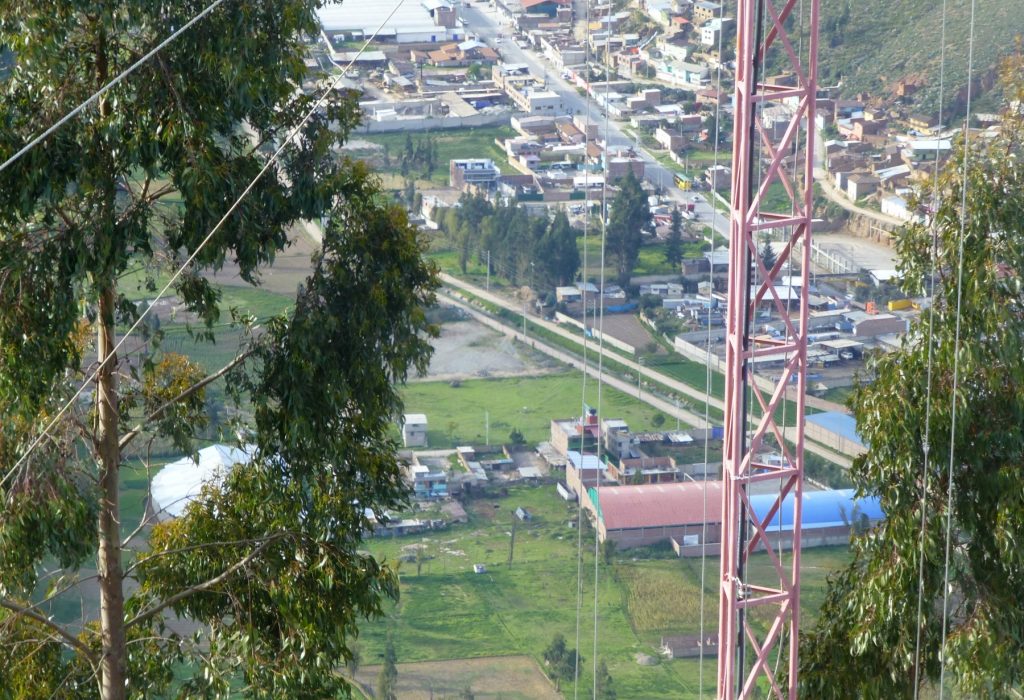
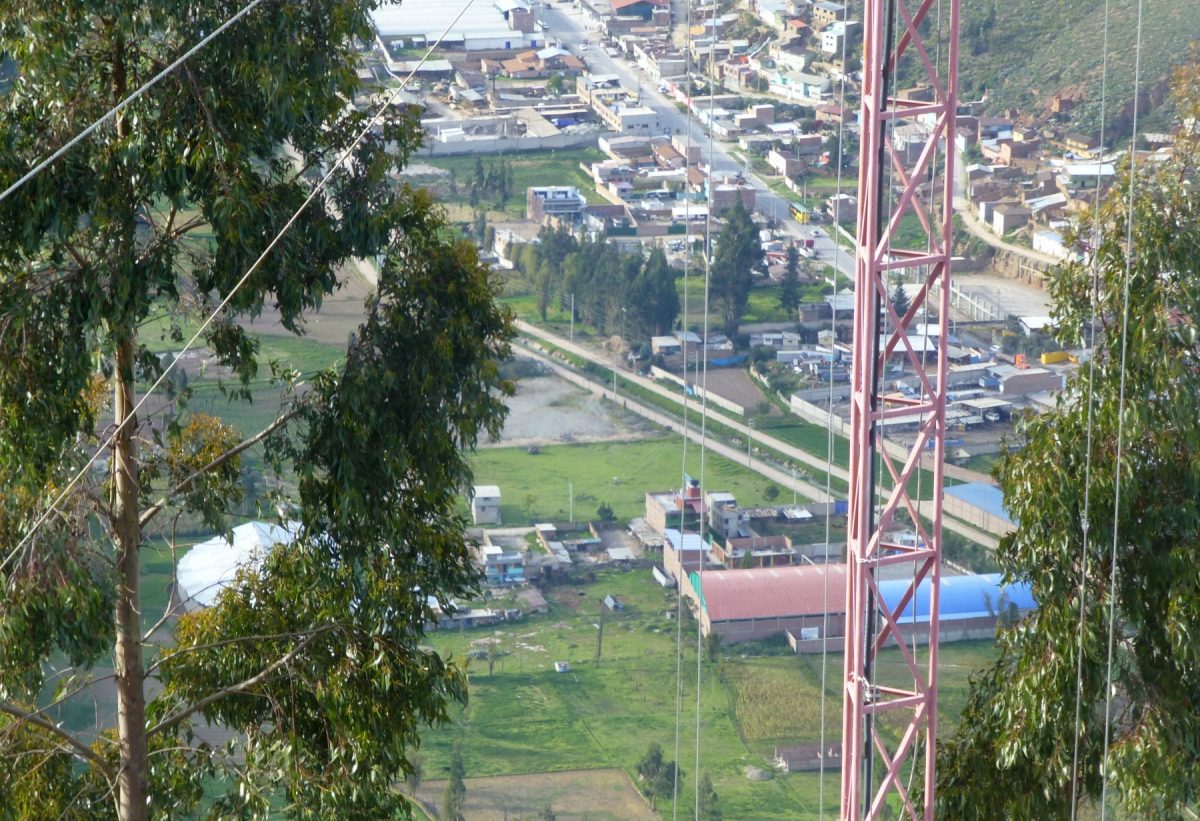
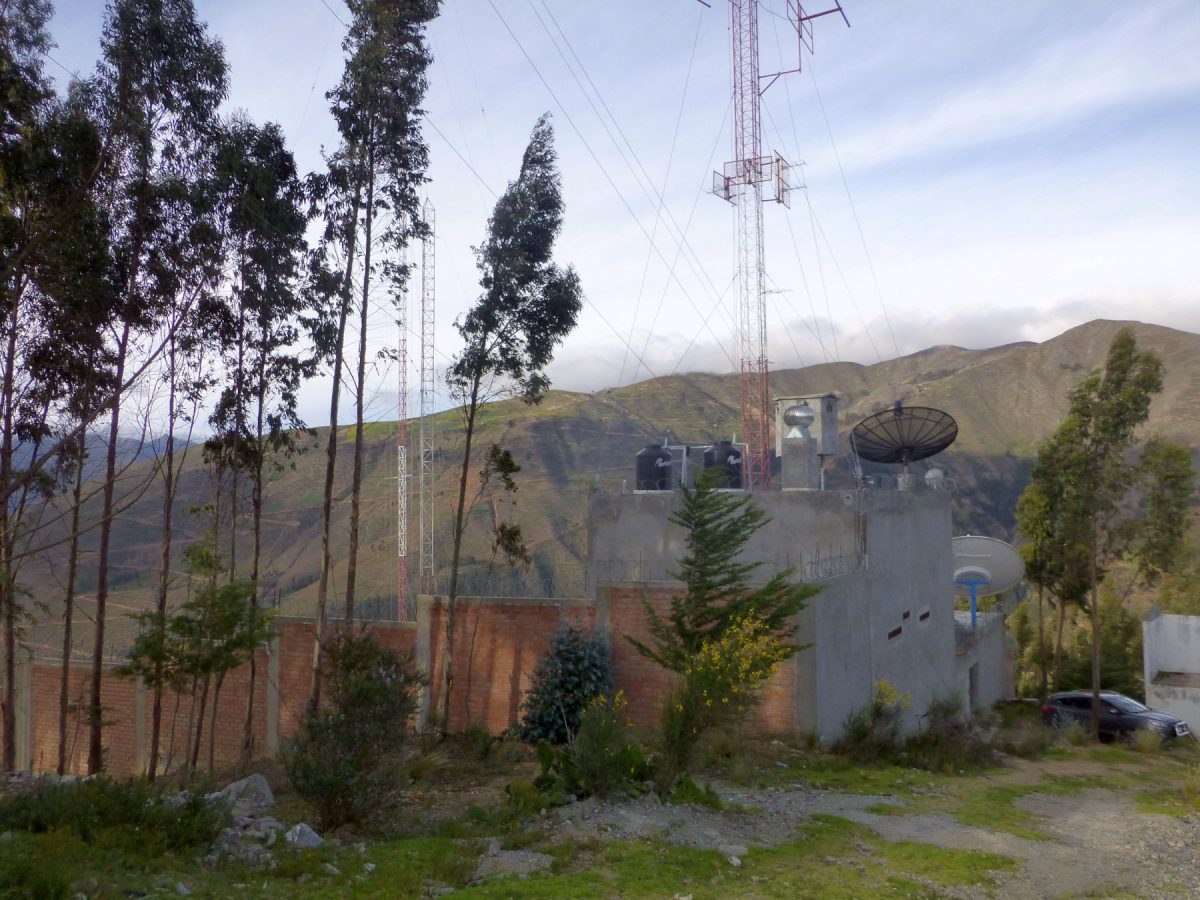
Then in 2010 Don Mario decided to modernize by buying a modern 3000 watt solid-state transmitter for the medium wave frequency and by building a modern transmitter facility on a ridge overlooking town. The new site, which was inaugurated in 2012, is at 3,600 meters elevation (over 600 meters higher than Tarma) and located about 1.5 kilometers south of the old site. (If you’ve logged Radio Tarma both before and after 2012, I think it’s fair to count these as two different transmitter sites.)
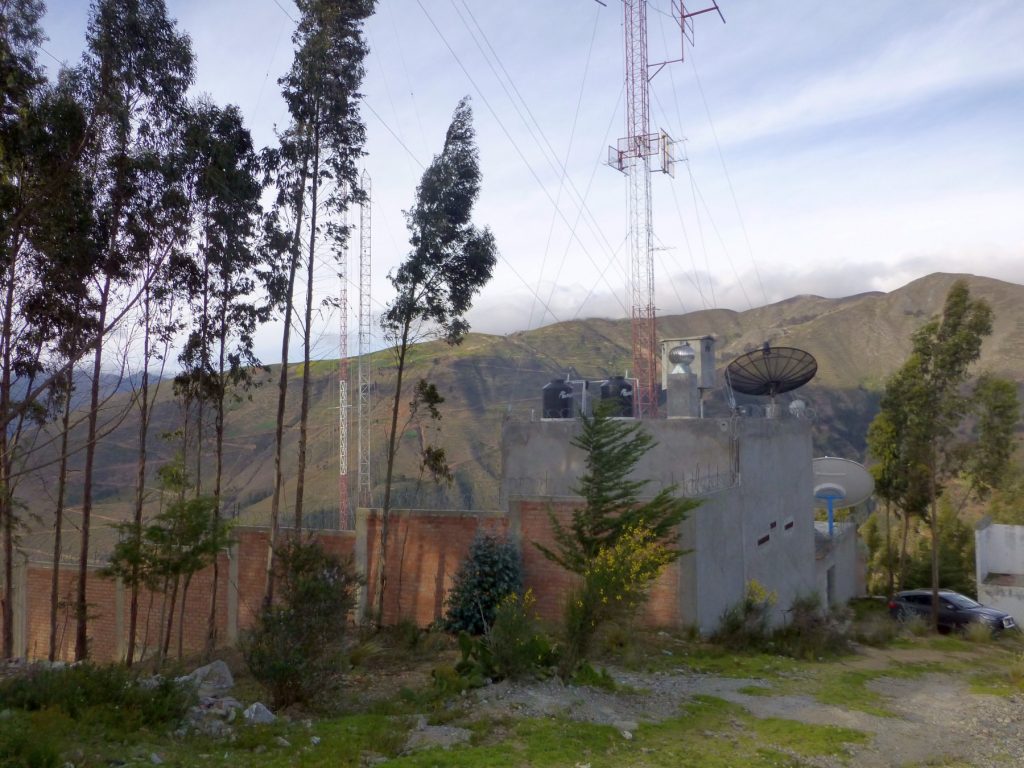
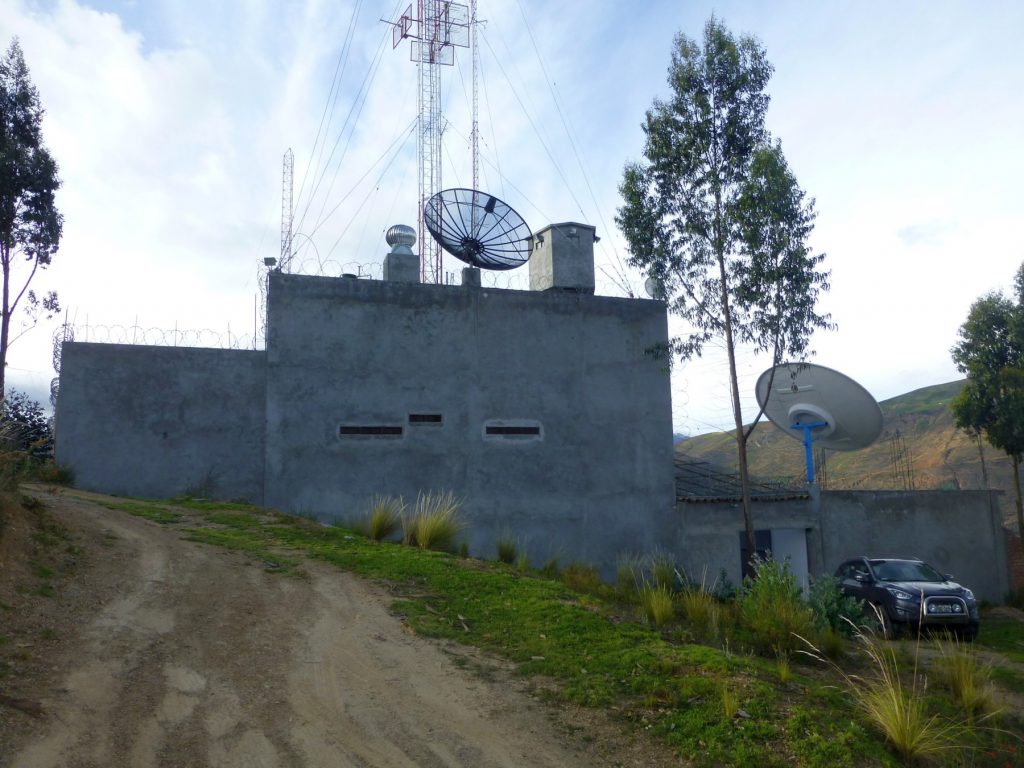
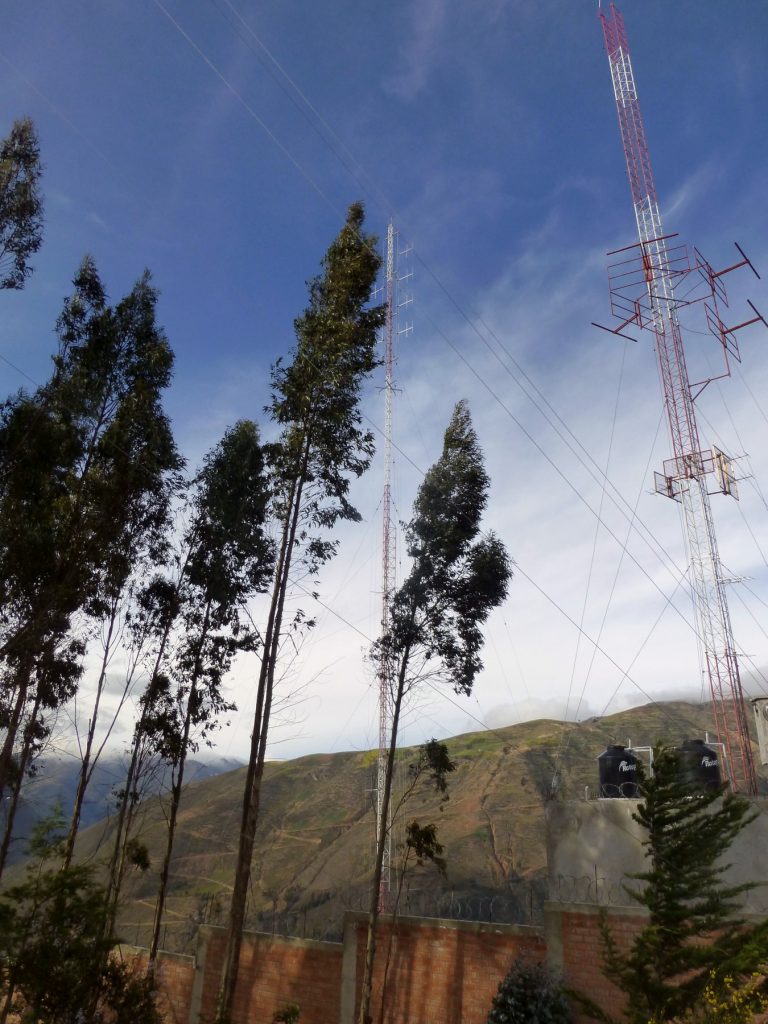
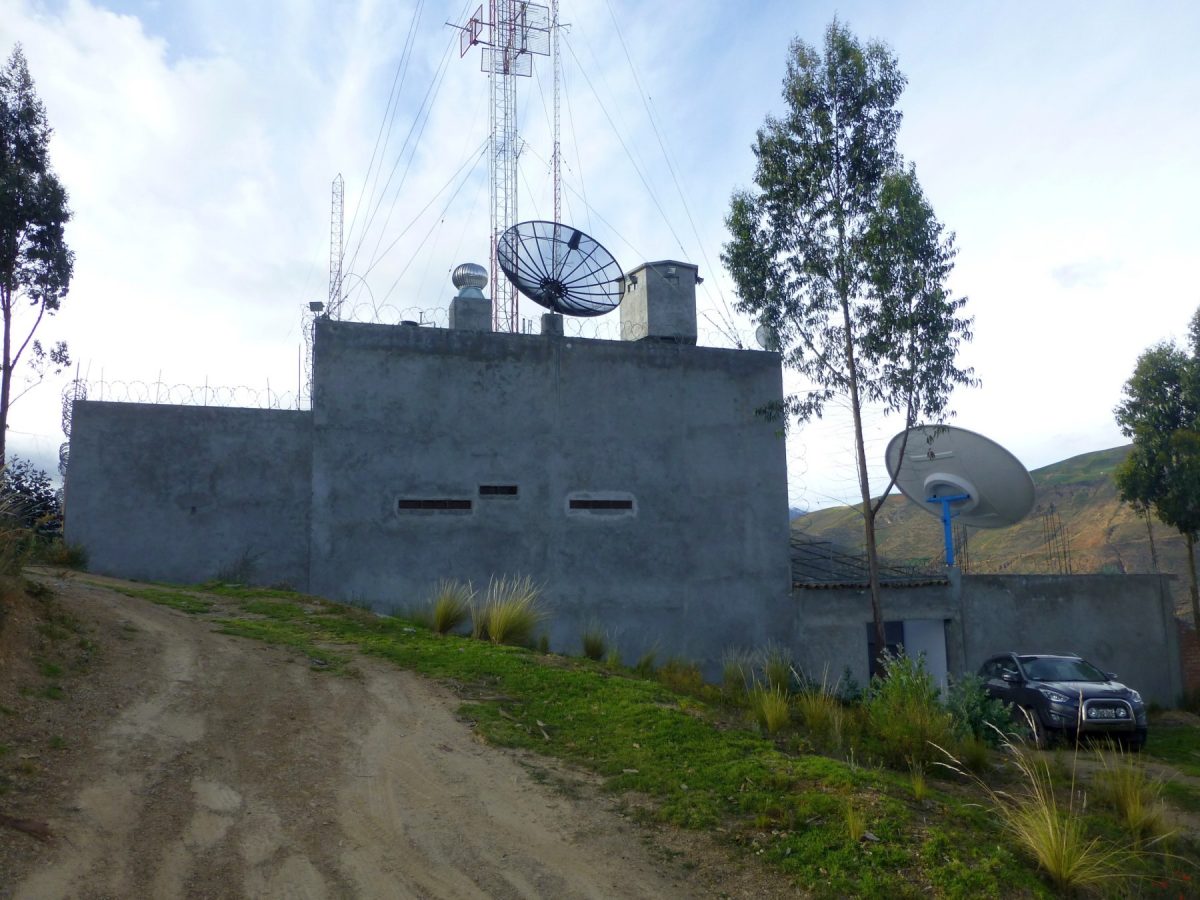
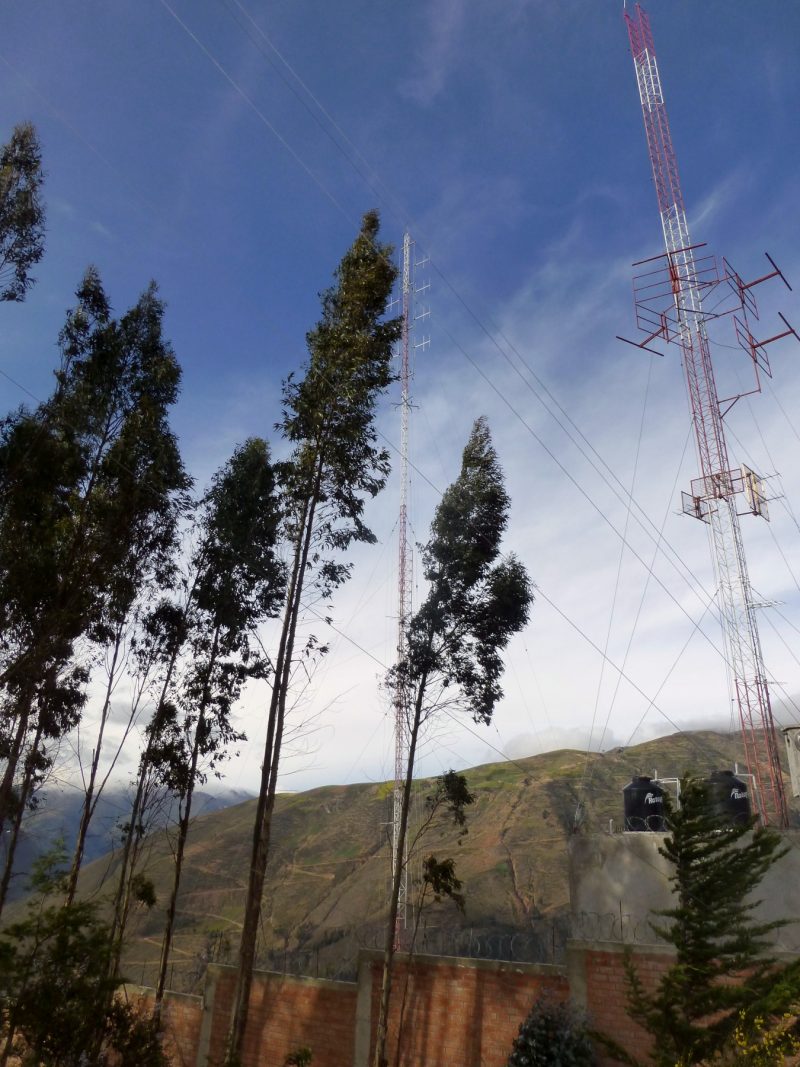
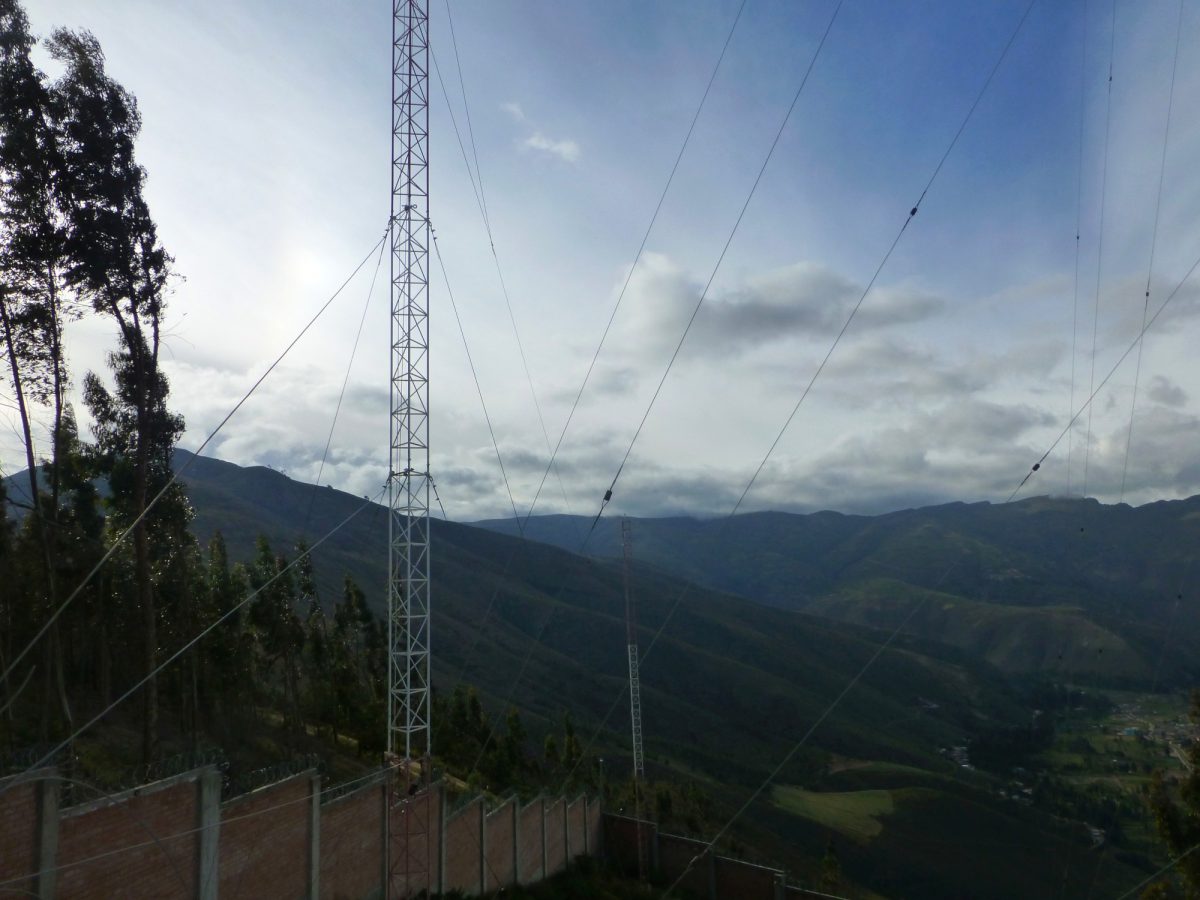
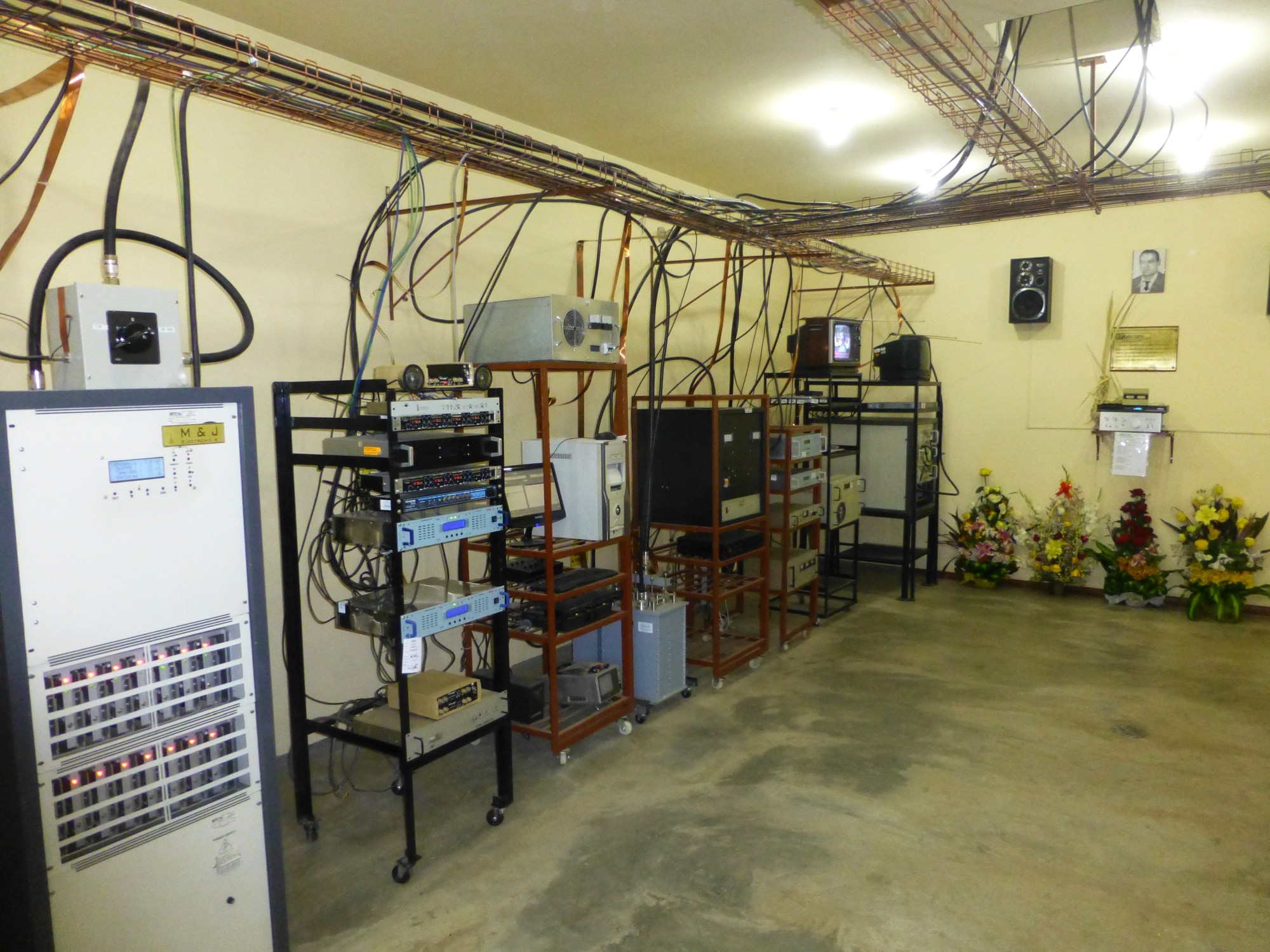
The transmitters and antennas for all the Grupo Monteverde stations in Tarma (MW, FM, SW, and TV) are housed in the gray fortress-like cement building covered with a jungle of antennas and satellite dishes, for both receiving and transmitting. All of Peru’s main cellular services have towers nearby, as do several other FM and TV stations in Tarma, but Radio Tarma has the best location, right at the end of the ridge overlooking all of the town. For shortwave, Radio Tarma uses a dipole antenna strung between two masts.
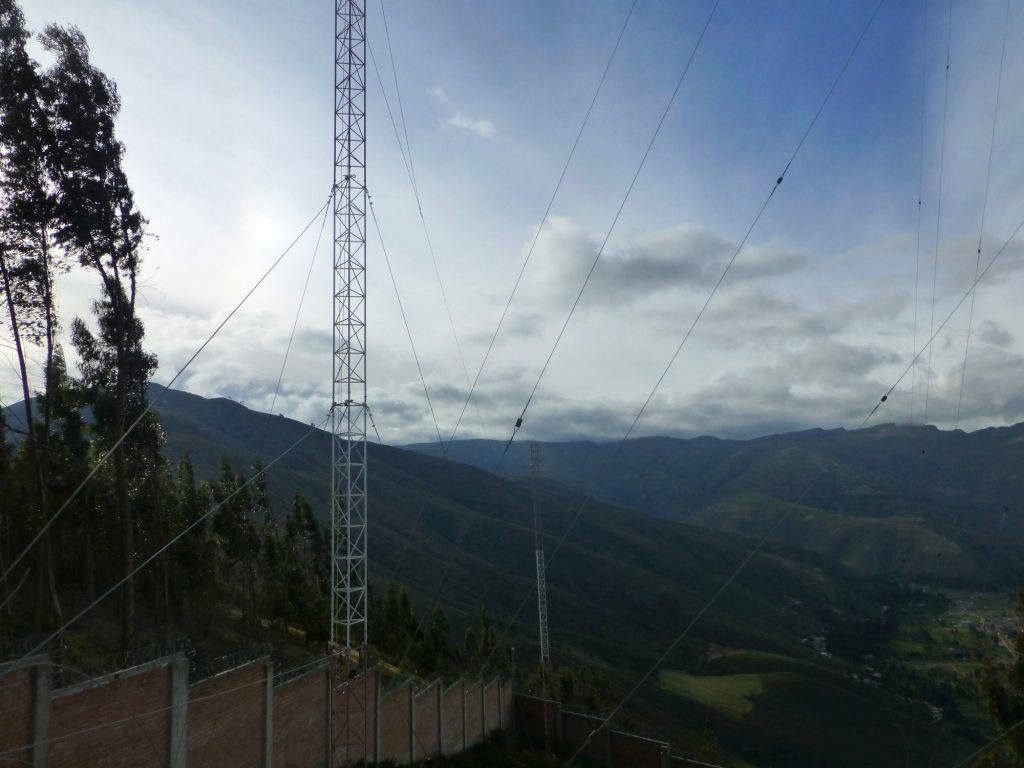
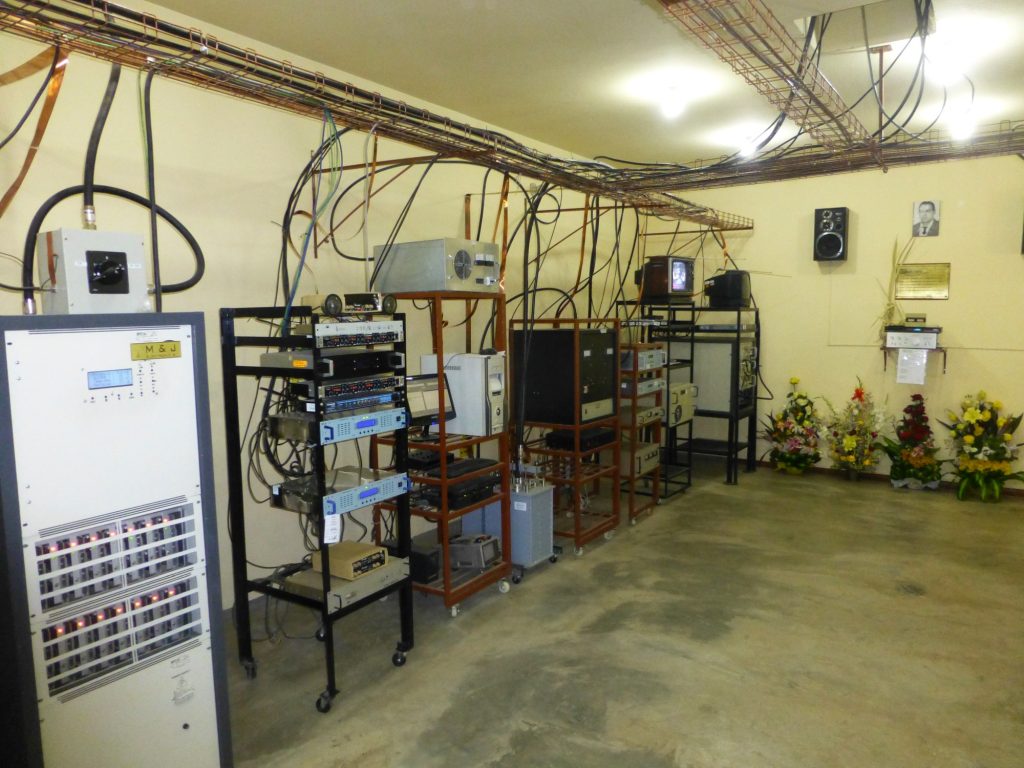
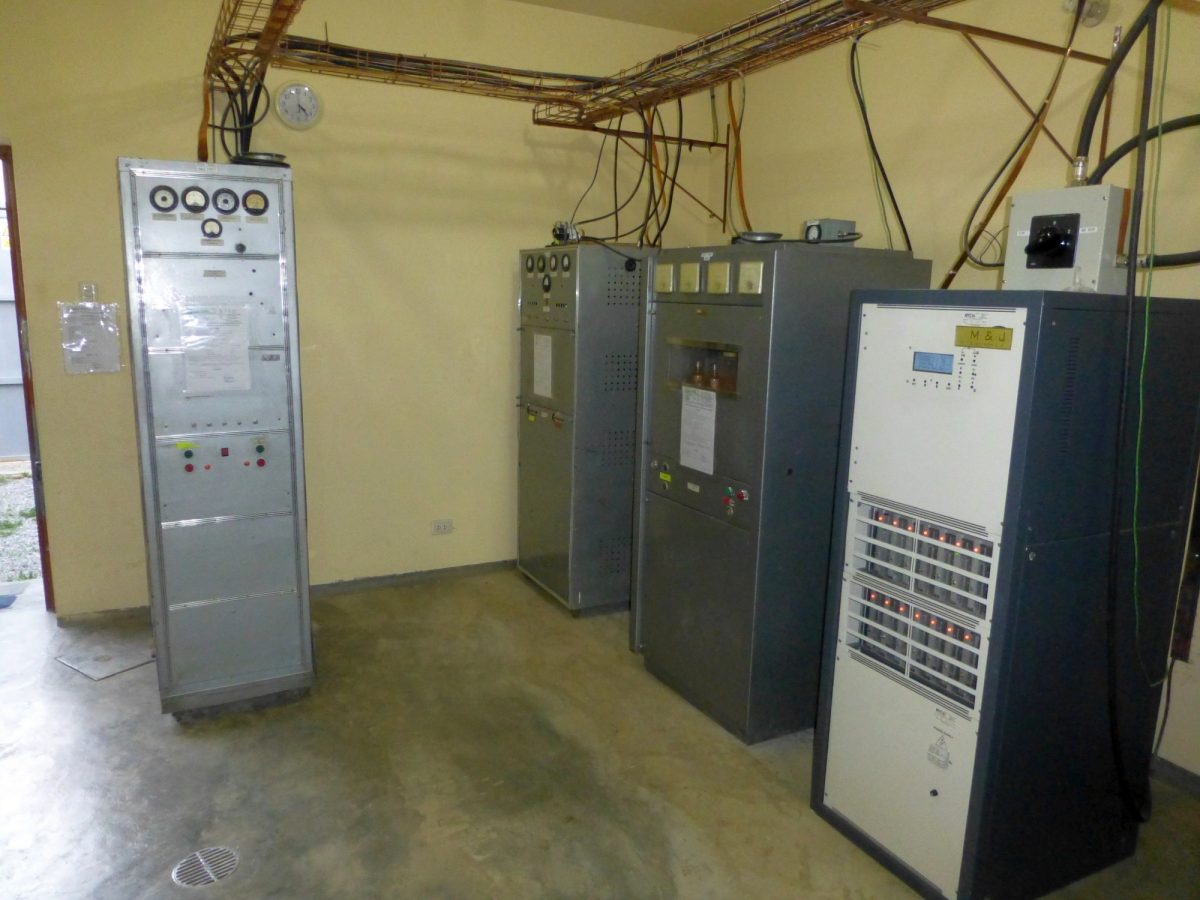
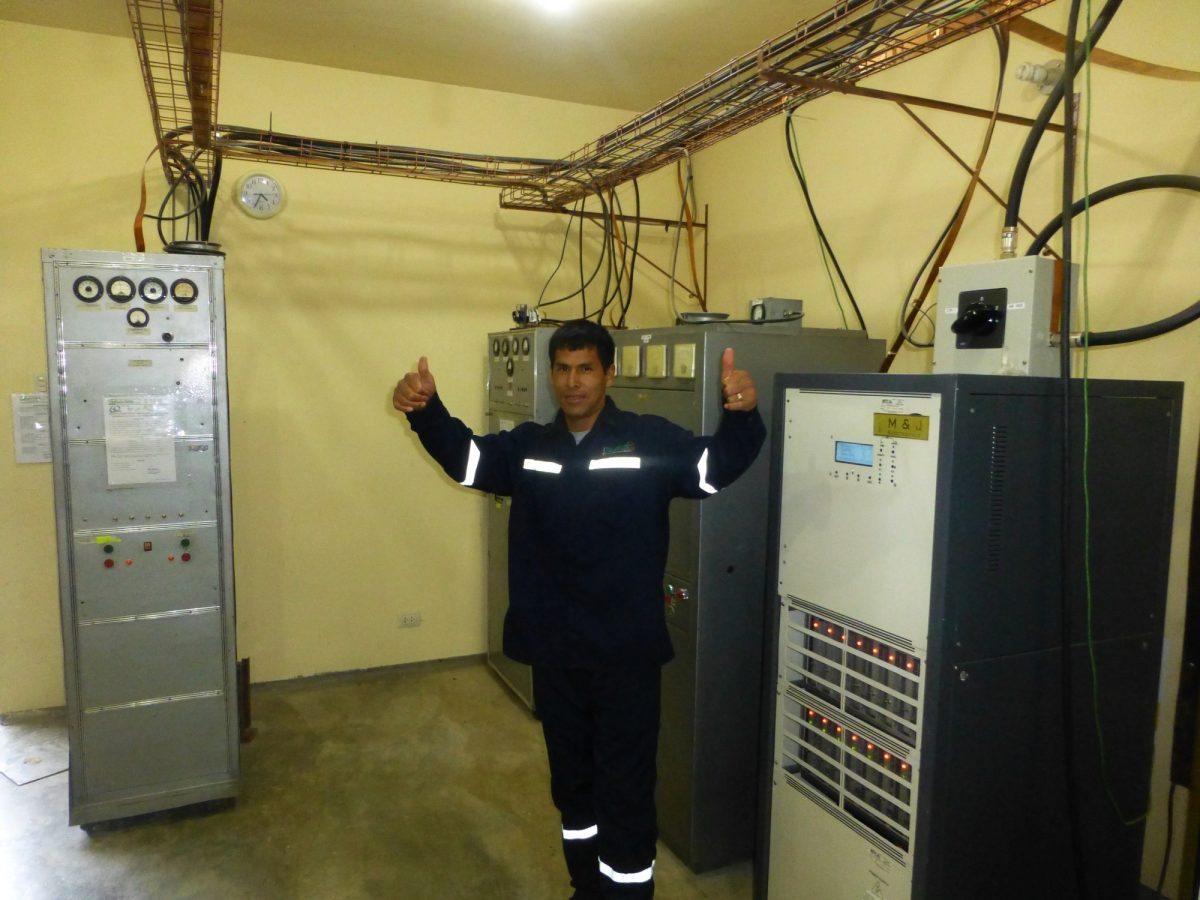
The transmitters and other technical equipment are all housed in a large room that takes up most of the first floor of the building. Upstairs there is a small apartment, complete with a living room and kitchen, for the technician who lives here plus another small apartment where Don Mario comes to stay when he feels like escaping to the quiet mountaintop for a night or two.
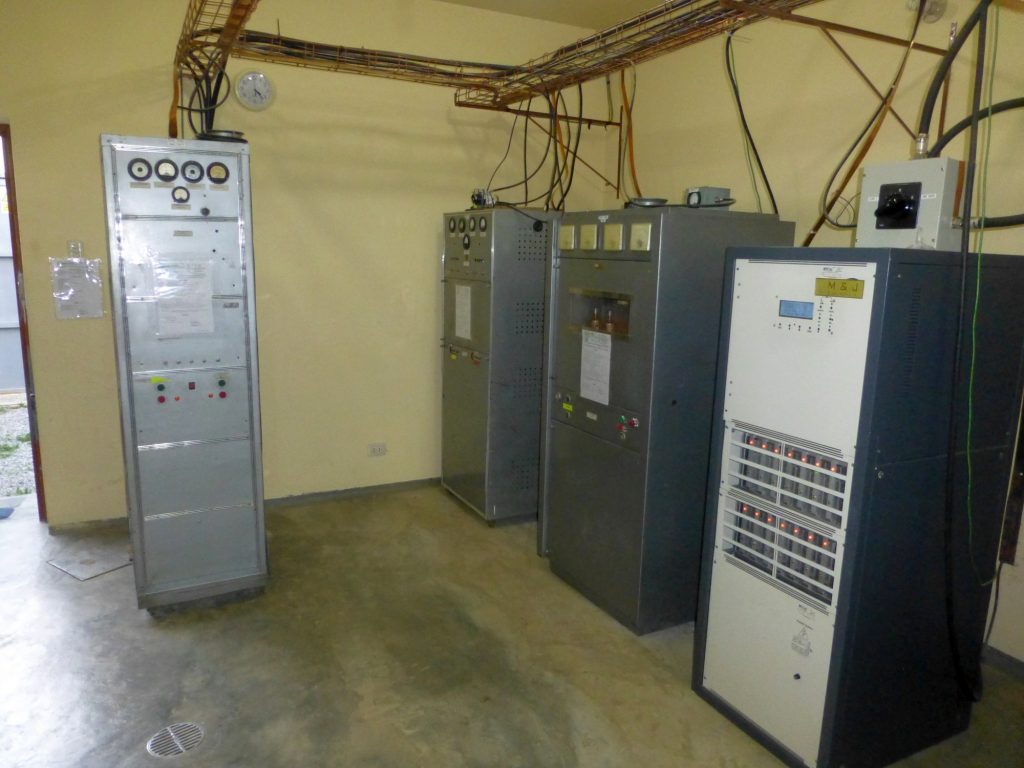
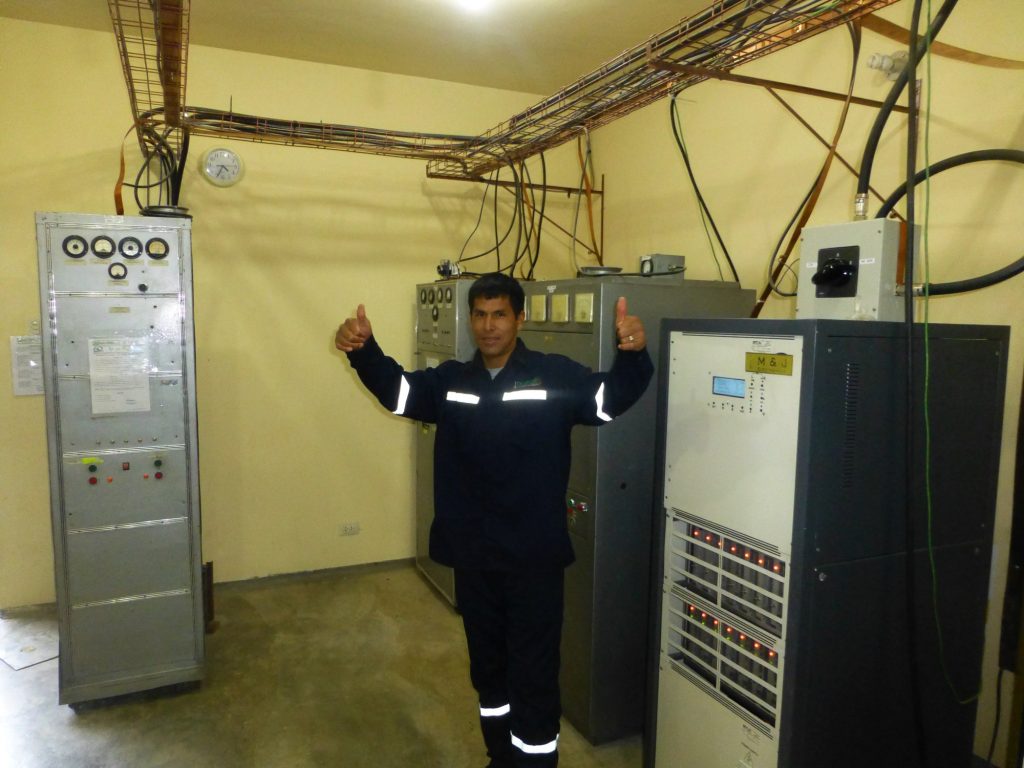
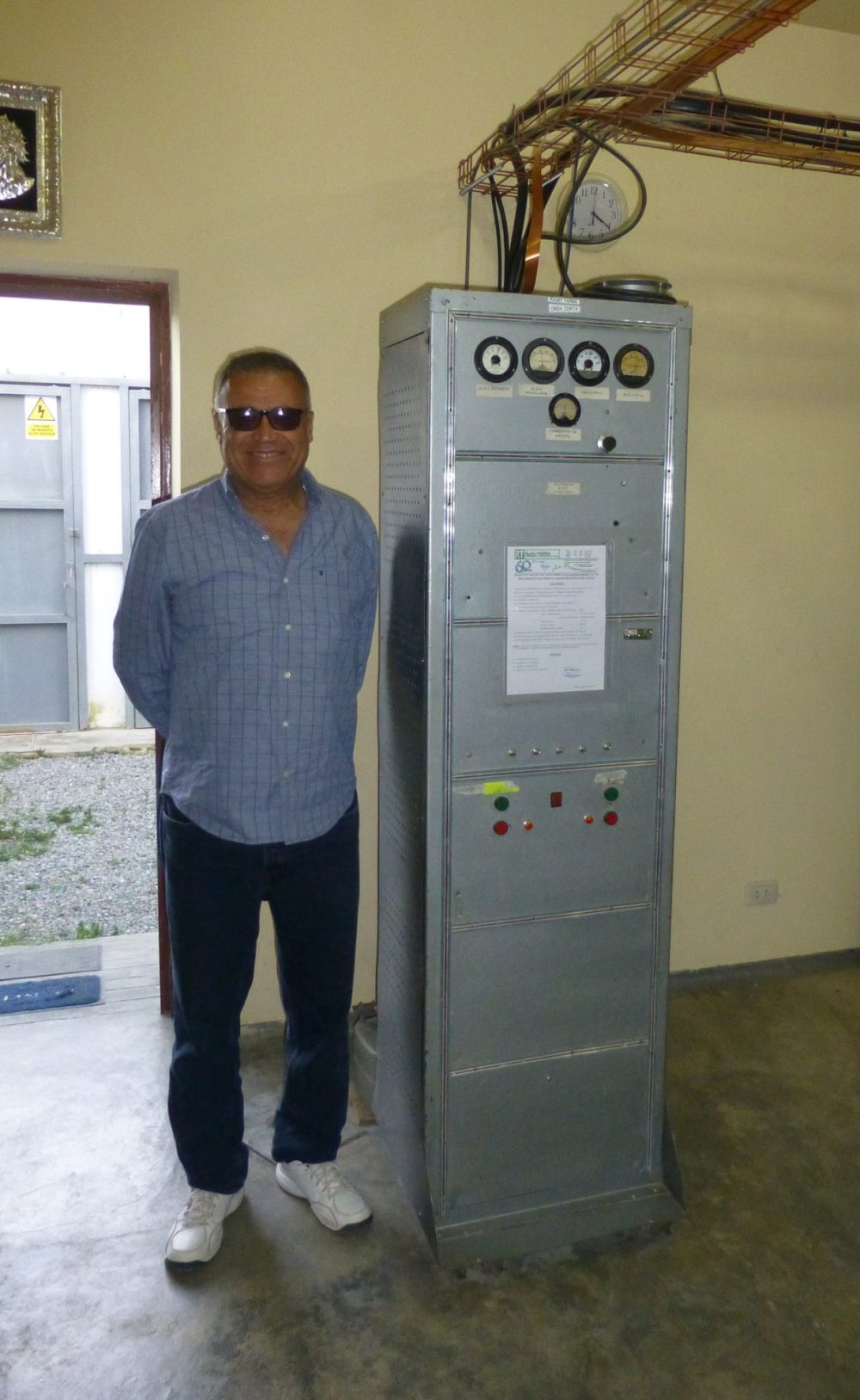
Don Mario takes pride in showing me the original 500 watt medium wave and shortwave transmitters that his father made. Normally the shortwave service is shut down for several hours in midday when the frequency won’t propagate, but he turns on the transmitter so that I can see the tubes come to life. The three medium wave transmitters – the original 500 watt one, its 1978 1000 watt replacement, and the new 300 watt solid-state one – are lined up against the wall adjacent to the shortwave transmitter.
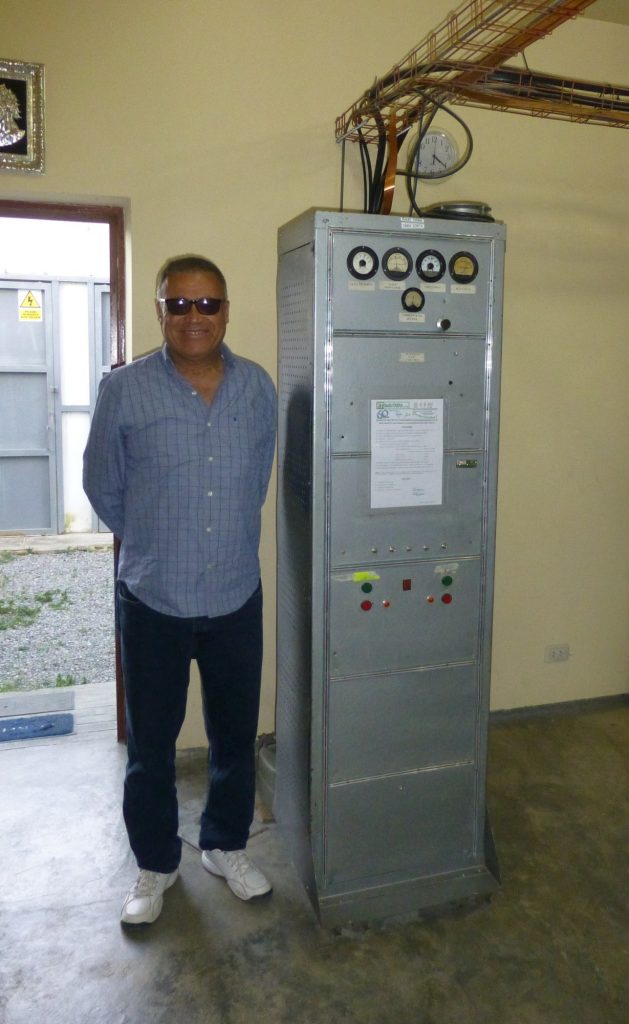
Don Mario tells me that the two older medium wave transmitters are regularly maintained so that they could be used at a moment’s notice if needed. He then proceeds to show me that he means just what he says, and shuts down the solid-state transmitter. Once that’s down, he powers up the original Radio Tarma MW transmitter that his father made, and we watch the old tubes light up. Then when it’s operating fully, he turns his father’s transmitter off and switches on the 1978 transmitter for a few minutes before finally returning the signal to full power on the new transmitter. One wonders just what his listeners thought was happening with all this on-and-off transmitting on a beautiful sunny day barely a cloud in the sky!
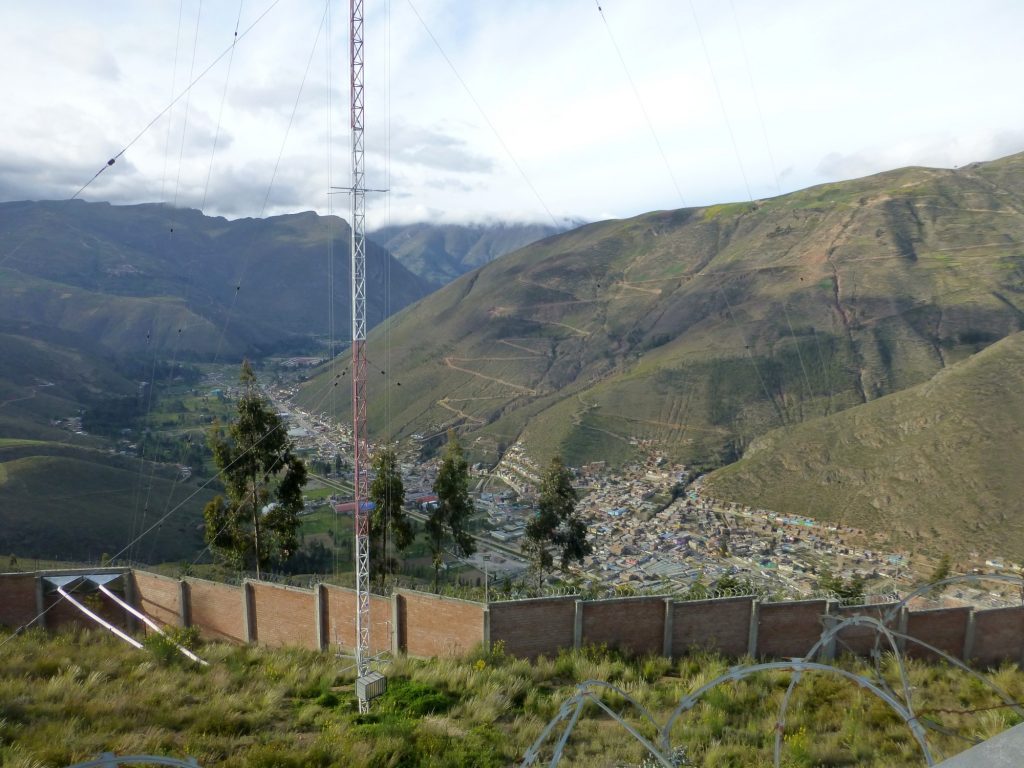
Radio Tarma and the Grupo Monteverde are a model operation for radio in smaller cities in the Peruvian Andes. Getting to know both the city and the station was one of the highlights of a seven-month journey through the northern Andes in South America.
Don Mario’s father built the foundation and Don Mario turned Radio Tarma and its sister stations into the small but professional media group that they are. He’s now in his mid-sixties and plans to run the radio operations for several more years. But he is beginning to think of the future. He never married and has no children, his siblings live in Spain and Lima, and all his nieces and nephews are in the United States. It’s not likely that anyone in the family would return to Tarma to run a radio station. He is investigating options of how to set up the corporation so that Radio Tarma and its sister stations would continue as locally-owned and operated radio broadcasters. Whatever he works out, let’s hope it includes a commitment to continue broadcasting on shortwave for many years to come!
If shortwave conditions aren’t the best, you can always listen to Radio Tarma on the web.
Wow–Don, this was amazing. Thank you for taking us on a tour of the amazing Radio Tarma! What a special station to encounter during your travels!

Post Readers: If you like the photos Don included in this guest post, you’ll enjoy browsing even more on Don’s Radio Tarma page.
Check out other radio travel photos’ on Don’s Peru DX Photos Page.
Don’s new book, Following Ghosts in Northern Peru: In the Footsteps of 19th Century Travelers on the old Moyobamba Route is available in Kindle and print formats via Amazon.
Purchasing through this Amazon link supports both the author and the SWLing Post.

“How one tiny Ontario station keeps listeners tuning in”
(Source: TVO.org)
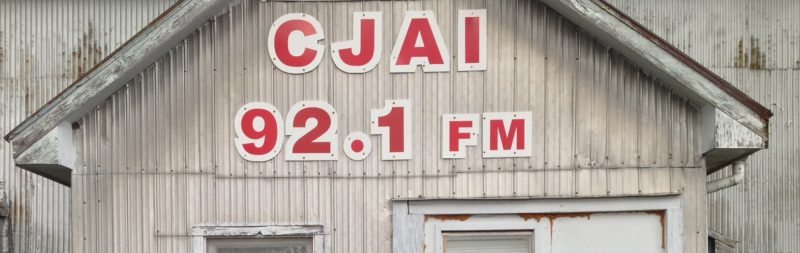
At Amherst Island’s CJAI 92.1 FM, volunteers host shows, work the mixing board, and woo advertisers — it’s just one of many small local radio stations across the province trying to do more with less
AMHERST ISLAND — Radio host Brian Little takes a quick break from playing hit songs from 1975 on his weekly Friday Morning Show to throw to Keith Miller and the CJAI traffic chopper.
“Thanks, Brian!” Miller yells over the sound of swooshing blades. “Your traffic update for Amherst Island: There are four cars in the ferry lineup. A few cars stopped at Concession Road 2 taking pictures of the snowy owls. This concludes your traffic update!”
Miller, an 78-year-old former dairy farmer, gives Little a satisfied grin as he pulls away from the microphone and puts down an oscillating fan with “CJAI Chopper” written on it in black Sharpie. It’s clearly one of Miller’s favourite gags.
CJAI 92.1 FM, a community radio station on Amherst Island, about 30 kilometres west of Kingston, in Lake Ontario, was created in 2006 by a group of residents — including veteran broadcaster Peter Trueman, who had retired to the island — to promote local content and community events. It now reaches roughly 10,000 listeners from Picton to the western edge of Kingston and airs more than 40 hours a week of live shows: Jazz Jim’s Vault (jazz classics and history), Saturday Night Barn Burner (lesser-known artists with a focus on rock), Sally’s Books (readings from selected books), and Birding (birding), to name just a few.
Like most of Ontario’s 54 campus and community radio stations, it relies on a team of dedicated volunteers to keep it running and is fighting to survive in a rapidly changing media landscape. And CJAI’s fight for survival has only gotten tougher since it learned that it may lose Dayle Gowan’s milk house — the building that’s been its home since the station’s inception.
“When they first started, they basically had no money, and this old milk house just had some junk, so I said, ‘Do you want to use it?’” says Gowan.[…]
Click here to read the full article.
Listen to CJAI live via TuneIn Radio:
Preview: The C. Crane CCRadio3 AM/FM/WX and 2 Meter receiver
In early January 2019, C. Crane sent me a pre-production unit of their latest radio for evaluation: the C. Crane CCRadio3.
Since I received the CCradio3, I’ve had it on the air and have been evaluating it in real-life listening conditions, searching for any potential quirks that C. Crane should address before a full production run of the radio hits the market.
Yesterday, C. Crane announced the CCRadio3 in their email newsletter:
So now, finally, I can break my silence to inform you all about this latest iteration of the venerable CCRadio. And, indeed, I have a lot to tell…
CCRadio3 Preview
What follows is a preview of the CCRadio3 based on my time with the pre-production unit. I will not refer to this as a “review” of the CCRadio3, since this is a pre-production unit. I’ll obtain a first production run unit when available and post a full review at that time.
In the meantime…here are some of my impressions based on the pre-production unit, organized by feature.
Bluetooth
What’s new with the CCRadio3? The major upgrade is the addition of Bluetooth connectivity. In fact, that’s the only obvious upgrade other than the fact you can now toggle between AM/FM band rather than scroll through all the bands on one band button.
With Bluetooth connectivity, you can pair with your smart phone, tablet, laptop, PC or any other Bluetooth device, and use the CCRadio3 as your Bluetooth speaker.
The pairing is incredibly simple and Bluetooth connectivity most impressive. I find that no matter where I go in my house, the CCRadio3 maintains a solid Bluetooth connection with my iPhone. Most of my other Bluetooth devices will lose connectivity if I put a couple walls between my iPhone and the receiver, but not the CCRadio3.
Audio
The internal speaker on the CCRadio3 provides room-filling audio with clear, rich fidelity. The separate bass and treble controls do help tailor the sound based on the audio source. It reproduces music brilliantly in FM and Bluetooth modes.
2 Meter Ham Radio Band
One unique feature of the CCRadio series is 2 meter ham band reception. This is a great way to monitor local amateur radio repeater traffic.
In truth, I’ve spent comparatively little time with the CCRadio3 on 2 meters thus far, having focused instead on the AM/FM and WX bands, but I have verified that I can receive local repeaters and the squelch functionality is quite effective.
I’ll spend more time on this band in my upcoming full review.
Weather Radio (WX) Band
The CCRadio3 can receive all seven NOAA/Environment Canada radio frequencies.
And here’s something that really surprised me: this pre-production CCRadio3 has the best weather radio reception of any radio I’ve ever tested to date. Normally, at my home, I can receive two NOAA stations with the average weather radio. The best of my weather radio receivers might hear a total of three. The CCRadio3, with antenna fully-extended, can receive five NOAA stations! I can almost WX DX with this rig!
I’m so pleased C. Crane places an emphasis on WX band performance. Their CC Skywave and CC Skywave SSB also have best-in-class weather radio reception.

The CCRadio3 uses four D cells for battery operation which should yield about 120 hours of AM broadcast listening at moderate volume.
FM
Thus far I’m very pleased with FM performance. I’ve noted that the CCRadio3 receives all of my local and distant benchmark stations with ease. I believe it would certainly be an FM benchmark receiver. As I mentioned earlier, audio fidelity is excellent via the internal speaker.
AM/Mediumwave
I consider the CCradio3’s predecessor––the CCRadio2E––to be one of the finest AM broadcasting listening portables currently in production. I’ll admit that when I heard the CCRadio3 added Bluetooth, I feared somehow that would equate to possible noise somewhere in the audio chain…Fortunately, this fear was entirely unfounded. In fact, looking at the CCRadio3 announcement, I note that C. Crane took this concern seriously:
“The CCRadio 3 is one of the few high-performance radios with Bluetooth® that has no detectable noise and some of the best reception available.”
When I first turned on the CCRadio3 and tuned to the AM band, I did what I always do when testing mediumwave performance: In the early morning, as the sun was rising (i.e., grey line propagation), I tried to pull my benchmark station––WAIZ, a 1,000 watt station about 95 miles away as the crow flies––out of the muddle. The CCRadio3 was able to do it; in fact, I could hear the station’s morning crew doing their “Wacky Wake-Up” shenanigans. Turning the radio body, I also gathered, rather quickly, that the CCRadio3’s Twin Coil Ferrite Bar antenna does an excellent job of nulling out unwanted stations.
An impressive start of the evaluation.
Comparing the CCRadio3 with Panny RF-2200
Looking around SWLing Post HQ, I picked up my recently re-capped and refurbished Panasonic RF-2200. I wanted to see how the CCRadio3 would stack up against what I consider one the finest AM broadcast portables ever produced…
I’ve tested the CCRadio3 and ‘2200 at various locations––in the morning, midday, and at night––and can say that not only does the CCRadio3 give the RF-2200 a run for its money, but it even outperforms the RF-2200 at times, in terms of weak station intelligibility.
In fact, I think the CCRadio3 may possibly have a very slight edge on the RF-2200 in terms of sensitivity, as well.
However, note that there are two factors that make this comparison a tough call:
- First of all, I find that the RF-2200’s AGC is smoother than that of the CCRadio3––the peaks and dips in audio are not as strong when listening through AM flutter. Most of the time, this makes it a little easier for me to discern weak signal audio. I believe the CCRadio3’s AGC and soft mute may be making the troughs in AGC a little deeper, as well. It would be amazing if C. Crane could allow users to disable soft mute like recent Sangean models have.
- Secondly, the RF-2200 has two AM bandwidth settings: narrow and wide. I almost always use the RF-2200 with the wide bandwidth setting. I find the narrow filter is a little too narrow unless I need it to block an adjacent signal. In general, I use wider AM filter settings than many DXers because I find that the filter between my ears does a better job of discerning signals with a little more audio information.
The CCRadio3 has only one bandwidth. I’m guessing––based purely on my listening experience––that it’s 4 to 6 kHz in width. (I’ll try to confirm this with C. Crane). Obviously this is narrower than the RF-2200’s wide filter. In side-by-side comparisons, the RF-2200’s AM fidelity therefore sounds much richer, especially when music is involved.
That this is so really shouldn’t be a surprise, as the Radio3 and its predecessors were designed around spoken word intelligibility––in other words, making it easy for the listener to understand what’s being said. And, frankly, it works. Most of the time, I find that the CCRadio3 does a better job of making weak signals “pop” out of the static. It’s a little easier catching weak signal station IDs with the CCRadio3, even if you have to listen through a more active AGC/soft mute tug.
So…is the CCRadio3 (at least, this pre-production unit) better than the RF-2200 at weak signal DXing? In some respects, yes. In others, not quite. Yet the fact that it can even compare with the RF-2200 speaks volumes…no pun intended. I would have never guessed that it would have a sensitivity edge on the RF-2200.
I made a few early afternoon videos comparing the CCRadio3 with the RF-2200. In the first video, I’m tuned to a station approximately 20-25 miles away. You’ll note how the RF-2200’s audio fidelity, with the wide filter engaged, is hard to match:
Click here to view on YouTube.
In the second video, I’m tuned to 1290 AM (WHKY), a 50,000 watt station about 95 miles away. [Note that I erroneously give an inaccurate mileage figure in this video; not sure what I was thinking! Sorry about that, folks.]
Click here to view on YouTube.
In the third video, I’m tuned to 630 AM (WAIZ), again, a 1000 watt station about 100 miles away. As you can imagine, it’s very weak and both radios struggle to receive any intelligible audio through the ocean waves of fluttering radio jumble. [Again, please ignore the distance I give in the video; this station is actually a little over 95 miles away.]
Click here to view on YouTube.
I also did a late afternoon comparison video around sunset using one of my favorite AM radio stations ever: CFZM in Toronto–about 980 miles distant. Here’s the video:
Click here to view on YouTube.
In these video comparisons, the radios are nearly side-by-side. I found this had little to no effect on reception. When comparing these radios off camera, I had them spaced at least 40″ apart and always, of course, oriented the antennas identically.
Conclusion
Again, this is merely a preview of the pre-production unit of the CCRadio3. I thought I’d touch on reception and a few of the key points that might help some of the CCRadio3’s early adopters make a purchase decision. I have yet to do testing with headphones or external antennas and still wish to compare it with even more radios, to make my review as thorough as I’d like.
And I’m really looking forward to reviewing the production unit of the CCRadio3, because this pre-production receiver has certainly surpassed my expectations!
This latest iteration of the CCRadio should remain king of AM radio reception, compared with any other portable radio currently in production.
C. Crane has announced that they have a very limited number of first-production-run units available for order right now. If you order one, use the coupon code CC3B19 at checkout, so that, as the above ad suggests, you can snag it for $179.00–$20 off the future retail price. I suspect this first run will sell out fast.
Click here to check out the CCRadio3 product/order page.
Eager for the full review of the C. Crane CCRadio3? Stay tuned!
Do you enjoy the SWLing Post?
Please consider supporting us via Patreon or our good old Coffee Fund!
Your support makes articles like this one possible. Thank you!
Radios: What are your daily drivers?
Many thanks to SWLing Post contributor, John C., who writes:
“Hi Thomas, I love [the SWLing Post] and have been meaning to thank you for all of the amazing reviews. Truly a treasure trove. But as I contemplate my next radio purchase I would like to know what radio you use more than any other. In other words…what’s your daily driver??? Enquiring minds want to know! Thank you. – JC”
Thanks for your question and the kind compliment, John.
Your inquiry is one I get quite a bit, so I hope you don’t mind if I share my response here publicly.
First of all, I should state that I don’t have a single “daily driver.”
Since I evaluate, test, and review radios I spend a lot of time with a variety of new receivers and transceivers.
I’m currently evaluating the Radiwow R-108, so it goes with me pretty much everywhere since I like to test receivers in a variety of settings. I’m also packing the Tecsun PL-310ET and the CC Skywave so I have units to compare with the R-108.
My Daily Drivers
Still, there are a number of radios in my life that get heavy use. Here’s my current list based on activity:
For Travel
When I travel, I reach for my favorite multi-function ultra-compact shortwave portable. In the past, I would have reached for the Grundig G6, the Sony ICF-SW100, the Tecsun PL-310ET, the Digitech AR-1780, or the C. Crane CC Skywave, Currently, I reach for the C. Crane CC Skywave SSB.
When I travel, I try to pack as lightly as I can–perhaps some would even call me a borderline travel minimalist. For example, when I fly to Philadelphia later this month for the Winter SWL Fest, I will take only one piece of luggage, a “personal carry-on” item: the Tom Bihn Stowaway, a pack the size of a small laptop bag. The Stowaway will contain my iPad, cords/accessories, and all of my clothes and toiletries for about 5 days of travel. As you can imagine, there’s not a lot of spare room in there for radio gear (quite the understatement).
I’ll still have room in my bag for the CC Skywave SSB, though, because the receiver is so compact. In addition, it’s a little “Swiss Army Knife” of a radio which covers the AM/MW, Shortwave, WX, and AIR bands. It also has SSB mode and uses common AA batteries. The Skywave SSB is a welcome travel companion.
For Portable Shortwave DX
When I head to a park or go on a camping trip with the goal of doing a little weak signal DXing, I reach for a full-featured portable. In the past, I’ve relied heavily on the Tecsun PL-660 or PL-680, the Sony ICF-SW7600GR, and the Tecsun PL-880.
After acquiring the amazing Panasonic RF-B65 last year, it has become my choice full-featured portable. Of course, the RF-65B hasn’t been in production for ages, but thanks to a number of friends/enablers (including Dan Robinson and Troy Riedel) I finally found one for an acceptable price on eBay.
I’ve been incredibly pleased with the RF-B65’s performance and feel like I got a decent deal snagging one in great shape for less than $200. Only a few months prior to my purchase, it was hard to find good units under $300. Click here to check current prices, if interested.
For Morning News and Music
Since my staple morning news source, Radio Australia, went off the air, I spend a lot more time in the mornings listening to Internet radio mainly because I like listening to news sources that no longer, or never have, broadcast on the shortwaves.
Without a doubt, my favorite WiFi radio is the Como Audio Solo. I use it to listen to the CBC in St. John’s Newfoundland, The UK 1940s Radio Station, RFI Musique, ABC Radio Sydney, and a number of other news and music outlets.
The Como Audio Solo also serves as an audio feed for my SSTran AM Transmitter which then allows me to listen to all of this excellent content on 1570 kHz with vintage tube radios such as my Scott Marine SLR-M, my BC-348-Q, and my Minerva Tropicmaster.
For Mediumwave DXing
Without a doubt, my favorite radio for mediumwave/AM broadcast band DXing is the Panasonic RF-2200.
I mentioned in a previous post that my buddy Vlado (N3CZ) recently repaired, cleaned, and calibrated one of my RF-2200s.
Let’s just say that Vlado worked his magic and my RF-2200 now operates and performs like a brand new unit. Seriously. It’s simply unbelievable.
Not only does the Panny ‘2200 provide benchmark MW performance, it’s simply a pleasure to operate. It also produces some of the richest AM audio you’ll ever hear from a portable radio.
Of course, the ‘2200 hasn’t been produced in decades, so you’ll have to search for used ones on eBay, at hamfests, or through your favorite radio classifieds.
And, yes, I still need to finish a Part 2 blog-post about the ‘2200 repair–once I get a few details and photos from Vlado, I’ll post it!
Your Daily Drivers? Please comment!
Keep in mind that my “daily drivers” change quite a bit–the ones listed above are my current favorites and have been for a year or more.
So now that I’ve shared my daily drivers, I hope you will, too!
Is there a particular radio you reach for more than any other? Please comment and tell us why it’s your favorite!
Do you enjoy the SWLing Post?
Please consider supporting us via Patreon or our Coffee Fund!
Your support makes articles like this one possible. Thank you!