Category Archives: Ham Radio

Radio Waves: US Emergency Alert System Vulnerabilities, Tape Measure Antennas, Eight Year Old Chats with ISS, and Power of Prison Radio

Radio Waves:  Stories Making Waves in the World of Radio

Welcome to the SWLing Post’s Radio Waves, a collection of links to interesting stories making waves in the world of radio. Enjoy!


“Huge flaw” threatens US emergency alert system, DHS researcher warns (ARS Technica)

Hackers can disrupt legit warnings or issue fake ones of their own.

The US Department of Homeland Security is warning of vulnerabilities in the nation’s emergency broadcast network that makes it possible for hackers to issue bogus warnings over radio and TV stations.

“We recently became aware of certain vulnerabilities in EAS encoder/decoder devices that, if not updated to the most recent software versions, could allow an actor to issue EAS alerts over the host infrastructure (TV, radio, cable network),” the DHS’s Federal Emergency Management Agency (FEMA) warned. “This exploit was successfully demonstrated by Ken Pyle, a security researcher at CYBIR.com, and may be presented as a proof of concept at the upcoming DEFCON 2022 conference in Las Vegas, August 11-14.”

Pyle told reporters at CNN and Bleeping Computer that the vulnerabilities reside in the Monroe Electronics R189 One-Net DASDEC EAS, an emergency alert system encoder and decoder. TV and radio stations use the equipment to transmit emergency alerts. The researcher told Bleeping Computer that “multiple vulnerabilities and issues (confirmed by other researchers) haven’t been patched for several years and snowballed into a huge flaw.”

“When asked what can be done after successful exploitation, Pyle said: ‘I can easily obtain access to the credentials, certs, devices, exploit the web server, send fake alerts via crafts message, have them valid / pre-empting signals at will. I can also lock legitimate users out when I do, neutralizing or disabling a response,’” Bleeping Computer added. [Continue reading…]

Just how good is a tape measure antenna anyway? (Hackaday)

Amateur radio operators have played a longstanding game of “Will It Antenna?” If there’s something even marginally conductive and remotely resonant, a ham has probably tried to make an antenna out of it. Some of these expedient antennas actually turn out to be surprisingly effective, but as we can see from this in-depth analysis of the characteristics of tape measure antennas, a lot of that is probably down to luck.

At first glance, tape measure antennas seem to have a lot going for them (just for clarification, most tape measure antennas use only the spring steel blade of a tape measure, not the case or retraction mechanism — although we have seen that done.) Tape measures can be rolled up or folded down for storage, and they’ll spring back out when released to form a stiff, mostly self-supporting structure.

But [fvfilippetti] suspected that tape measures might have some electrical drawbacks, thanks to the skin effect. That’s the tendency for current to flow on the outside of a conductor, which at lower frequencies on conductors with a round cross-section turns out to be not a huge problem. [Continue reading on Hackaday…]

Broadstairs eight-year-old to feature on NASA website after radio chat with ISS astronaut (The Isle of Thanet News)

A Broadstairs eight-year-old has chatted with an astronaut aboard the International Space Station and a recording of the conversation will feature on the NASA website.

Isabella Payne spoke to Astronaut Kjell Lindgren as the ISS flew overhead last week.

The youngster was with dad Matthew who is a license holding amateur radio enthusiast and tutor. He and Isabella are both members of Hilderstone Radio Society.

Matthew said: “Isabella has been a member of the radio club ever since she was born and has been playing with the radio since she was six. Because I have the full licence she can sit on my knee and use the radio to speak to people as long as I am controlling it. Everyone at the club can do that. She has been involved in a few radio events, Children On The Air events, and will hopefully go for her own licence soon. [Click here to read the full article and view the photos.]

The power of prison radio in giving voice to the voiceless around the world (ABC)

“I plan my life by the radio these days, my contact with the outside world in a sense…”

The first ever international prison radio conference has just been held in Norway, bringing together representatives of prison radio shows from 19 countries, including Australia, where Indigenous people continue to be grossly over-represented in prison populations.

Prison radio shows, wherever they are in the world, all work to give voice to the voiceless and empower people by enabling them to tell their own stories.

Click here to listen to the podcast episode.


Do you enjoy the SWLing Post?

Please consider supporting us via Patreon or our Coffee Fund!

Your support makes articles like this one possible. Thank you!

Radio Waves: Radio Liberty Journalist Bugged, Invisible Battle, RNZ Shortwave After Tonga Eruption, Closing Analog FM in Spain to Save Energy, and Keeping Morse Code Alive

Radio Waves:  Stories Making Waves in the World of Radio

Welcome to the SWLing Post’s Radio Waves, a collection of links to interesting stories making waves in the world of radio. Enjoy!


Journalist Vitaly Portnikov was found to be “eavesdropped” at his home in Lviv, – Knyazhytskyi (Espeso)

Note this article has been translated in English. Original in Ukrainian found here.

The police promptly responded to the call, but the SBU for some reason delays its response to illegal actions People’s deputy Mykola Knyazhytskyi announced this on Facebook .

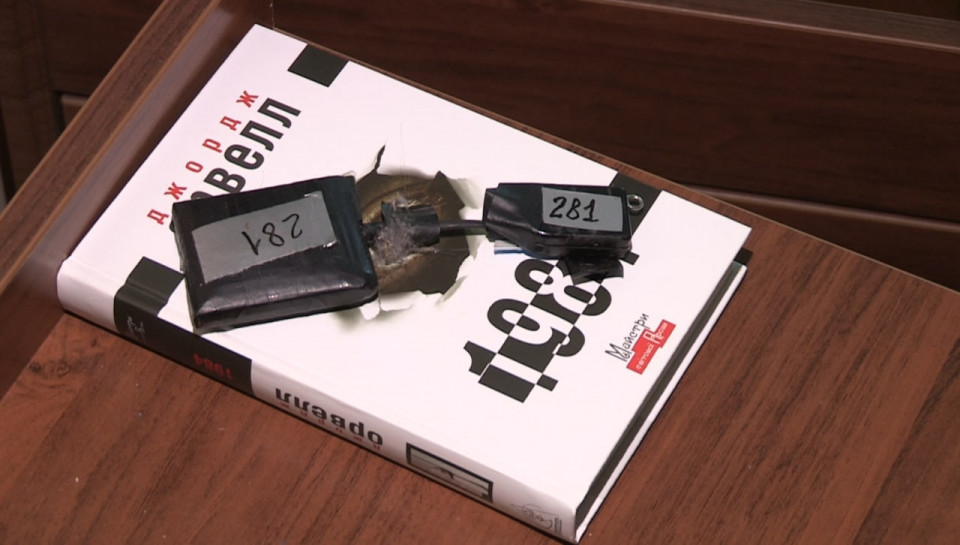
“In Lviv, journalist Vitaly Portnikov, who hosts programs on Espresso and Radio Svoboda, found a eavesdropping device at home. It is a voice recorder with the ability to record for a long time. The police were called. They arrived quickly. The SBU was called. They are not going. As a member of the Verkhovna Rada, I ask the SBU to come immediately and disrupt case. We don’t know who installed this device and for what purpose: our services, foreign services or criminality,” the politician said.

Image via Espreso

Vitaly Portnikov commented on the incident for “Espresso”:

“Today, while cleaning the apartment I lived in at the end of February, when the war started, I found a recording device under the bed. The device had an inventory number. I informed the law enforcement authorities about my discovery so that they could investigate this incident.”

The journalist added that he hoped for a high-quality investigation and clarification of all the circumstances of the case:

“After my statement, the investigators of the SBU of the Lviv region conducted an inspection of the premises and seized a device that is a device for listening and recording information. I hope that the relevant structures will conduct an examination and find out by whom and why this device was placed in my apartment.”

Vitaly Portnikov is a well-known Ukrainian journalist, publicist and political commentator. Cooperates with Radio Svoboda and Espresso. On the Espresso TV channel, he creates the programs “Political Club of Vitaly Portnikov” and “Saturday Political Club”. [Click here to read the full article at Espreso.]

The Invisible Battle of the Cold War Airwaves (Bureau of Lost Culture)

This Episode explore three stories of cold war era radio in the USSR: Soviet Radio Jammers, the Russian ‘Woodpecker’ and the Soviet Radio Hooligans

[Click here to listen to the podcast via PodBean.]

We meet with Russian broadcaster Vladimir Raevsky to talk about radio jamming in cold war era Soviet Union.

As East and West super powers square up to each with nuclear weapons, a parallel invisible war is being fought in the airwaves. Continue reading

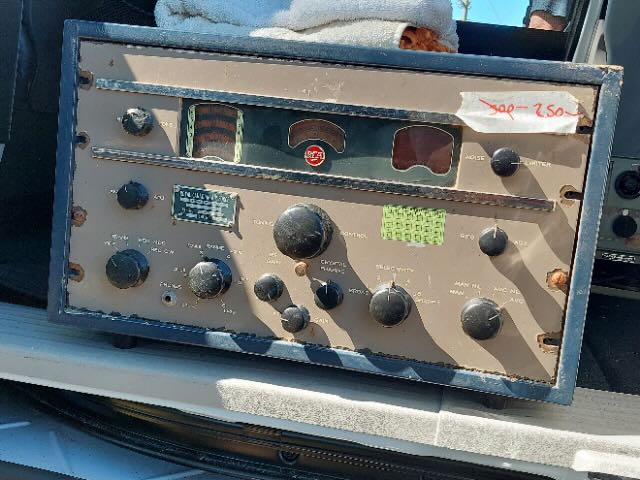
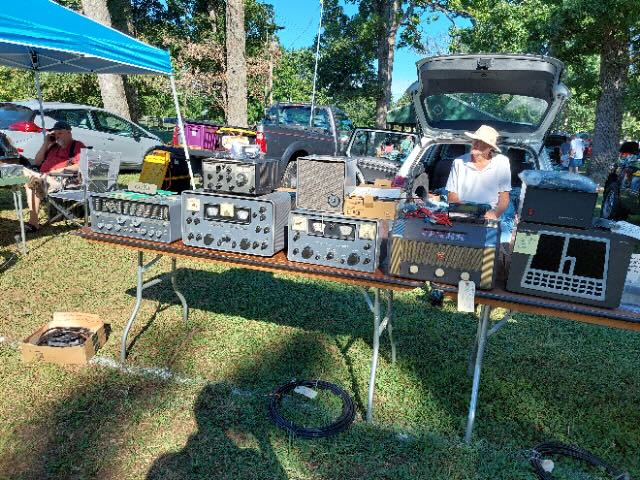
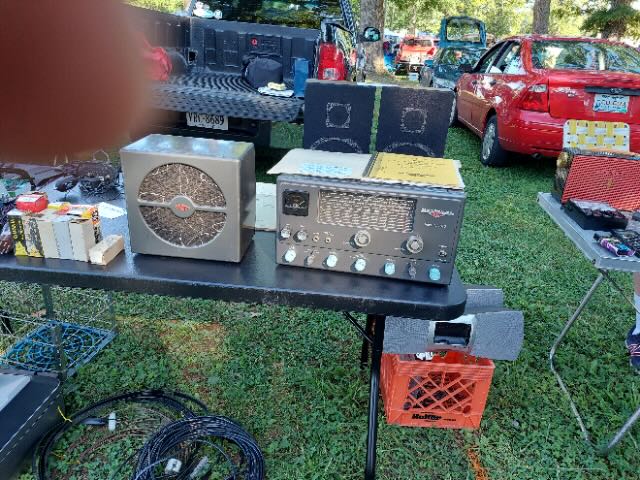
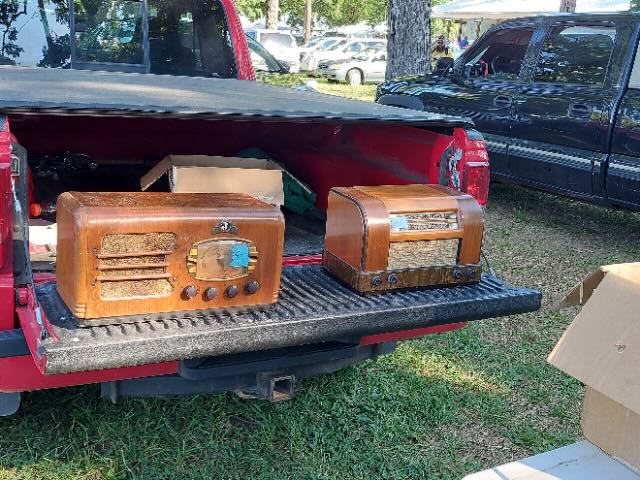
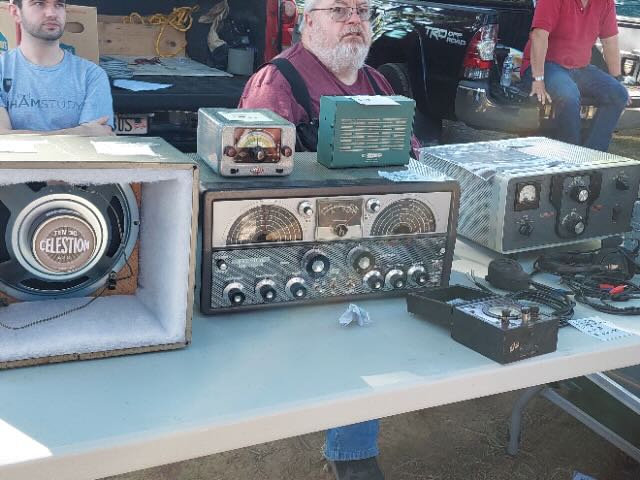
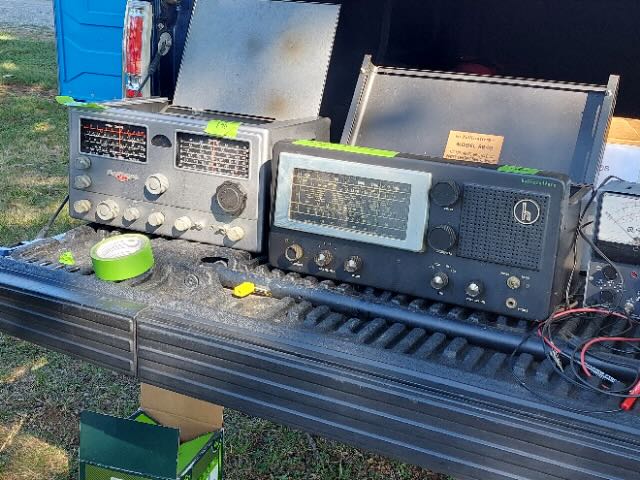
Dan shares a few photos from the Berryville Hamfest

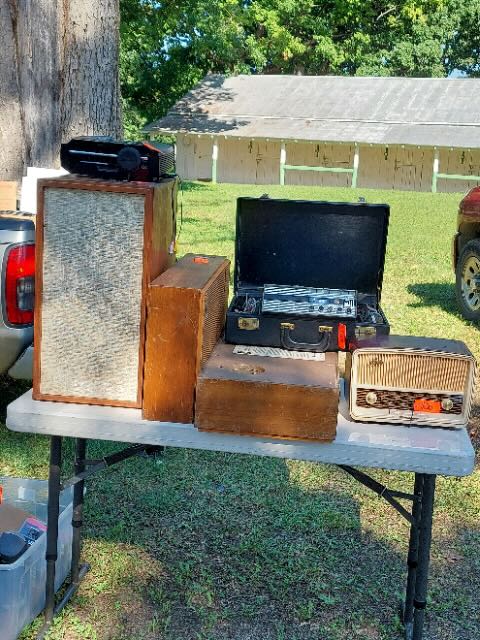
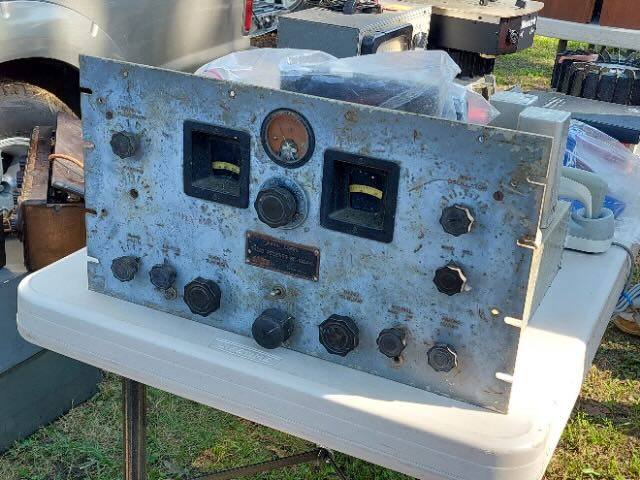
Many thanks to SWLing Post contributor, Dan Robinson, who shares the following photos from the Berryville Hamfest.

Dan notes that the resolution is not great in these photos, but I believe we can still see enough detail to know that this hamfest had many vintage treasures:

Thank you once again for sharing these, Dan!

Click here to see images from previous Berryville Hamfests.

Radio Waves: Brooklyn Pirate Radio Interview, Emergency Radio Evolution, SOTA Hams Prevent Forest Fire, and Morse Code Documentary

Radio Waves:  Stories Making Waves in the World of Radio

Welcome to the SWLing Post’s Radio Waves, a collection of links to interesting stories making waves in the world of radio. Enjoy!


Interview about Brooklyn pirate radio (Irish Pirate Radio Audio Archive)

Although Irish pirate radio is our main interest, today we explore the lively pirate scene in the Brooklyn area of New York City. The Brooklyn Pirate Radio Sound Map is a fascinating project established by radio producer and audio archivist David Goren and provides interactive maps and historical and contemporary recordings of the many unlicensed stations in Brooklyn.

This is a longer version of an interview by John Walsh with David Goren first featured in Wireless, a series about radio, audio and media on Flirt FM in Galway. It covers the history of pirate radio in Brooklyn and New York generally, attempts to crack down on the unlicensed stations, the role of low-powered FM, the background to the Brooklyn Pirate Radio Sound Map itself and plans for the future. Many thanks to David for taking the time to explain this fantastic project for us. [Read the full article and listen to the interview on the Irish Pirate Radio Audio Archive…]

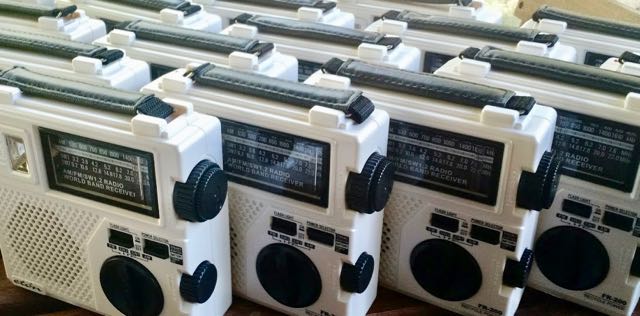
The Evolution of the Emergency Radio (Radio World)

From AM-only portables to multi-function machines

With the advent of the 9V battery-powered transistor radio in the 1950s, the “Emergency Radio” was born.

Unlike vacuum tube receivers with heavy batteries or unpowered crystal radios, these handheld AM portables were small and simple enough to keep in a drawer. They could then be retrieved whenever man-made or natural disasters knocked out the power, providing listeners with lifeline connections to news, weather and relief information. Continue reading

A most unusual QSL . . . card?

By Jock Elliott, KB2GOM

Okay, I realize this is ham related, but I thought it was fun, and I hope you do too.

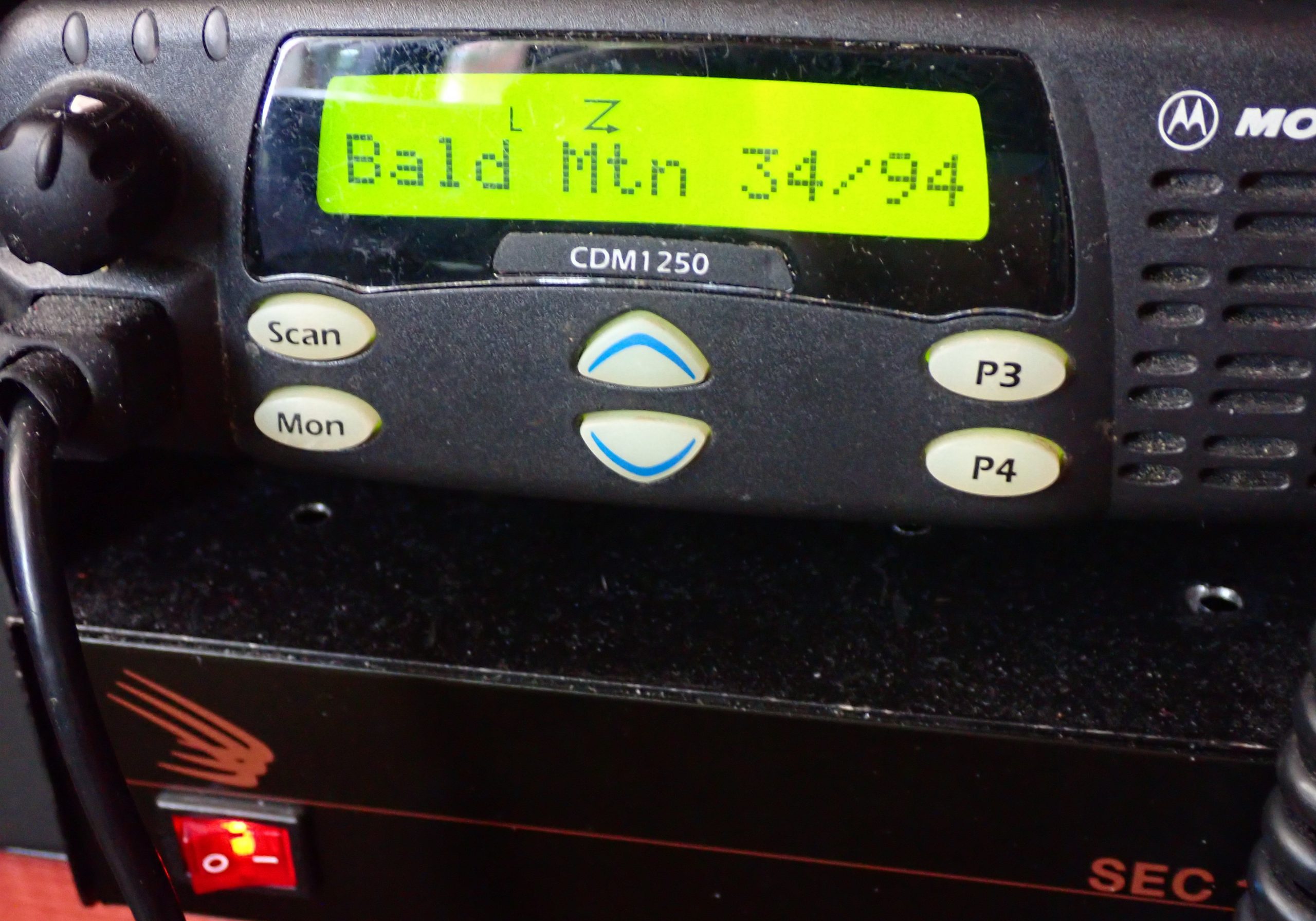
On a quiet Saturday morning in May, the “Big Gun” Motorola 1250 (which is used for running the Commuter Assistance Net) is quietly scanning through half a dozen frequencies.

The scanning stops on the 147.330 repeater, and a computer voice announces: “Echolink activated.”

Huh, that’s unusual, I think.

According to echolink.org, here’s the scoop on EchoLink:

EchoLink® software allows licensed Amateur Radio stations to communicate with one another over the Internet, using streaming-audio technology.  The program allows worldwide connections to be made between stations, or from computer to station, greatly enhancing Amateur Radio’s communications capabilities.  There are more than 350,000 validated users worldwide — in 159 of the world’s 193 nations — with about 6,000 online at any given time.

A few seconds later, a male voice with a distinct British accent drops a call on the repeater: “GB2022ER.”

What?!! A Great Britain call sign with multiple numbers in the middle? What’s going on?

I reply: KB2GOM.

Mark, the British ham, tells me he is running a special events station with a special call sign to celebrate the Queen’s Jubilee. He tells me I am the very first contact for the special events station. I tell him that he is my very first Echolink contact.

We chat for a bit, exchange good wishes and sign off.

A bit later, I look him up on QRZ and send Mark an email. Since I am his first contact for the special events station, is there a QSL card available? He replies that he will see what he can do.

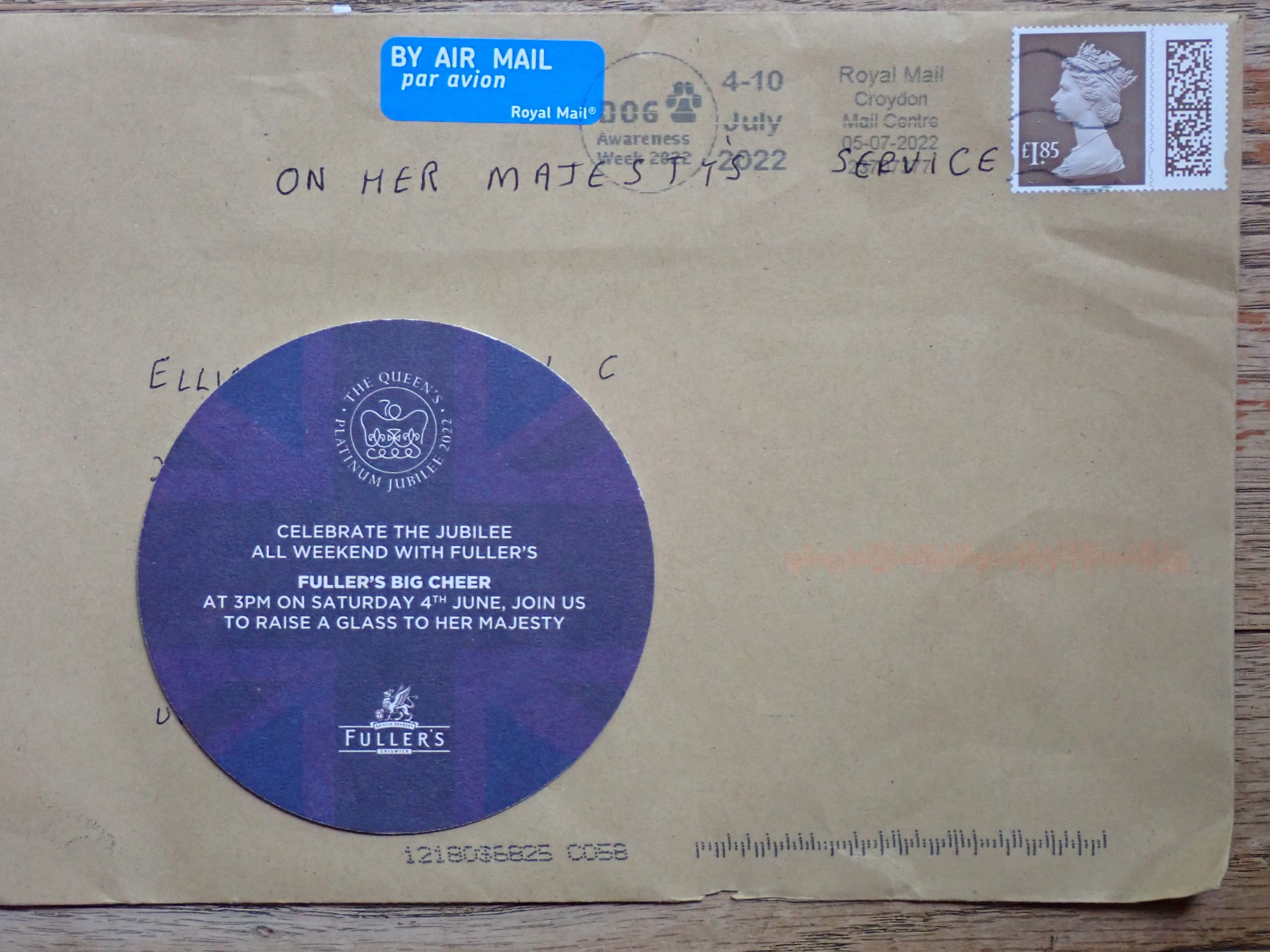
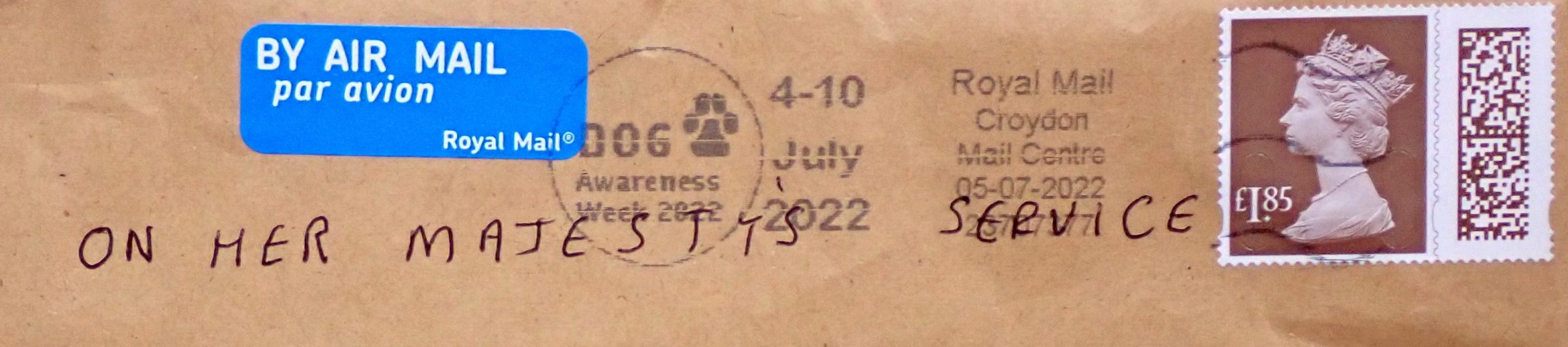
A few weeks later, an envelope arrives with this coaster inside:

For a moment, I felt like James Bond:

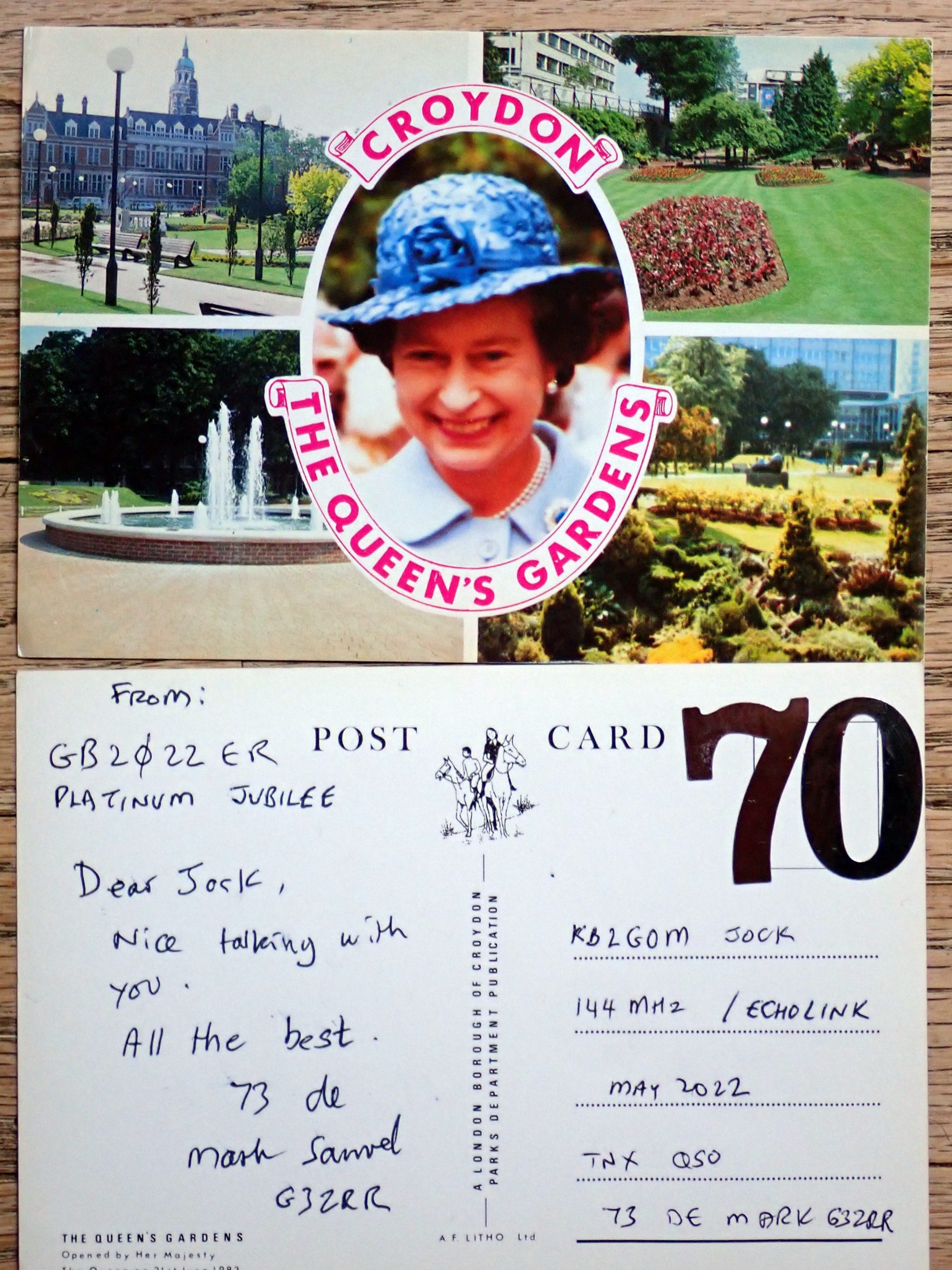
Also inside were these postcards:

In all, it made me smile.

Bottom line – moral of the story, if you will – you never know what’s going to happen on the radio.

W9IMS: From the Speedway to Your Wall

From the Speedway to Your Wall: Taking the W9IMS Checkered Flag

By Brian D. Smith, W9IND

The Checkered Flag is in sight – for hams and SWLs who’ve completed two-thirds of the chase for the annual W9IMS certificate. And for those who haven’t, there’s still a special QSL card awaiting all who snare the final contact during the coming week.

As its initials imply, W9IMS stages special events in honor of the Indianapolis Motor Speedway’s three major races. The third and final operation of 2022 – commemorating the NASCAR 200 at the Brickyard – will activate between the hours of midnight Indy time (0400 UTC) Monday, July 25, and midnight Sunday, July 31 (0400 UTC Tuesday, August 1).

Earning the 2022 Checkered Flag Award depends on working or tuning in each of the three special events. Since the first two races (the IndyCar Grand Prix and the Indianapolis 500) ran in May, it’s obviously too late to claim the clean sweep.

However, W9IMS also issues collectible QSL cards for the three individual races, so there’s still time to get a piece of the action.

Where to start? Well, W9IMS favors 20 and 40 meters, sometimes adding 80 meters later in the week (not to mention 2 meters on Race Day for locals and fans in the stands at the Speedway). Preferred frequencies are 14.245 and 7.245 SSB, plus or minus QRM.

But rather than spin the dial, try scanning the following tips for finding W9IMS on the air:

  1. Check DX Summit (www.dxsummit.fi) for spots listing the current frequency or frequencies of W9IMS, if any. By typing “W9IMS” in the search box at upper right, you can customize it to show reports for only Indianapolis Motor Speedway special events. Naturally, you’ll be interested in only the ones from July 2022.
  2. Go to the W9IMS web page (www.w9ims.org) and look for the heading, “2022 Operating Schedule.” Click on the NASCAR 200 link, which opens into a weeklong schedule listing individual operators and their reserved time slots. Your odds of catching W9IMS on the air improve significantly during these hours.
  3. Prime operating time on weeknights is 6 to 10 p.m. Indy time (2200-0200 UTC). However, W9IMS can appear anytime, even on two bands at once, between 0400 Monday, July 25, and 0400 Sunday, July 31.
  4. Remember that the published schedule can be shortened by adverse circumstances, such as noisy band conditions, local thunderstorms or a lack of calling stations. Don’t wait till the final hour to chase W9IMS!
  5. Operators often get on the air at unscheduled times. That’s why DX Summit is your best bet for locating W9IMS’s current spot(s).
  6. If you plan on going for the 2023 Checkered Flag Award, remember that the three required W9IMS special event QSOs (or reception reports) must come from each of the year’s three races – the Grand Prix, the 500 and the Brickyard. Making three contacts during the coming week still earns you the colorful Brickyard QSL card, but no extra credits toward the 2022 certificate.

Radio Waves: DRM Demo in Australia, Decoding the JWST, the ARDC, and EV Makers Dropping AM Radio

Radio Waves:  Stories Making Waves in the World of Radio

Welcome to the SWLing Post’s Radio Waves, a collection of links to interesting stories making waves in the world of radio. Enjoy!


Australia Demonstrates DRM on AM, FM (Radio World)

Since September 2020, ABC Radio has been quietly trialing DRM technology in Victoria

The public-service Australian Broadcasting Corp. and its transmission contractor BAI Communications Transmission Network hosted a public demonstration of Digital Radio Mondiale broadcasts on June 29, 2022. ABC highlighted the use of DRM on both AM and FM in Wagaratta, Victoria.

According to the DRM Consortium, the demonstration was the culmination of almost two years of COVID-impacted work to assess the performance of DRM services in Australia’s VHF and medium-wave bands.

Previously, the Australian Amateur Radio Experimenters Group reported that AREG member Steve Adler (VK5SFA) had been monitoring “a very un-publicized Digital Radio Mondiale (DRM) trial” on 747 kHz from Wangaratta in August 2021.

The Australian Communications and Media Authority provided ABC with a license variation to conduct the DRM 30 trials from September 1, 2020, to August 31, 2022.

At the public demonstration, senior representatives from the public, commercial and community radio sectors, along with regulators and other interested parties, were able to hear and see the capabilities of DRM broadcasting on AM from Dockers Plains and on FM from Mount Baranduda. They were also able to review the transmission equipment at Wagaratta.[Continue reading…]

Also check out the DRM Consortium’s article on this same topic.

Decoding James Webb Space Telescope (Daniel Estévez)

The James Webb Space Telescope probably needs no introduction, since it is perhaps the most important and well-known mission of the last years. It was launched on Christmas day from Kourou, French Guiana, into a direct transfer orbit to the Sun-Earth L2 Lagrange point. JWST uses S-band at 2270.5 MHz to transmit telemetry. The science data will be transmitted in K-band at 25.9 GHz, with a rate of up to 28 Mbps.

After launch, the first groundstation to pick the S-band signal from JWST was the 10 m antenna from the Italian Space Agency in Malindi, Kenya. This groundstation commanded the telemetry rate to increase from 1 kbps to 4 kbps. After this, the spacecraft’s footprint continued moving to the east, and it was tracked for a few hours by the DSN in Canberra. One of the things that Canberra did was to increase the telemetry rate to 40 kbps, which apparently is the maximum to be used in the mission.

As JWST moved away from Earth, its footprint started moving west. After Canberra, the spacecraft was tracked by Madrid. Edgar Kaiser DF2MZ, Iban Cardona EB3FRN and other amateur observers in Europe received the S-band telemetry signal. When Iban started receiving the signal, it was again using 4 kbps, but some time after, Madrid switched it to 40 kbps.

At 00:50 UTC on December 26, the spacecraft made its first correction burn, which lasted an impressive 65 minutes. Edgar caught this manoeuvre in the Doppler track.

Later on, between 7:30 and 11:30 UTC, I have been receiving the signal with one of the 6.1 metre dishes at Allen Telescope Array. The telemetry rate was 40 kbps and the spacecraft was presumably in lock with Goldstone, though it didn’t appear in DSN now. I will publish the recording in Zenodo as usual, but since the files are rather large I will probably reduce the sample rate, so publishing the files will take some time.

In the rest of this post I give a description of the telemetry of JWST and do a first look at the telemetry data. [Continue reading…]

Helping Secure Amateur Radio’s Digital Future (Hackaday)

The average person’s perception of a ham radio operator, assuming they even know what that means, is more than likely some graybeard huddled over the knobs of a war-surplus transmitter in the wee small hours of the morning. It’s a mental image that, admittedly, isn’t entirely off the mark in some cases. But it’s also a gross over-simplification, and a generalization that isn’t doing the hobby any favors when it comes to bringing in new blood.

In reality, a modern ham’s toolkit includes a wide array of technologies that are about as far away from your grandfather’s kit-built rig as could be — and there’s exciting new protocols and tools on the horizon. To ensure a bright future for amateur radio, these technologies need to be nurtured the word needs to be spread about what they can do. Along the way, we’ll also need to push back against stereotypes that can hinder younger operators from signing on.

On the forefront of these efforts is Amateur Radio Digital Communications (ARDC), a private foundation dedicated to supporting amateur radio and digital communication by providing grants to scholarships, educational programs, and promising open source technical projects. For this week’s Hack Chat, ARDC Executive Director Rosy Schechter (KJ7RYV) and Staff Lead John Hays (K7VE) dropped by to talk about the future of radio and digital communications. [Continue reading…]

Interference causes EV makers to drop AM radio (Radio World via the Southgate ARC)

Radio World reports the Electromagnetic Interference generated by Electric Vehicles is causing some EV automakers to drop AM (medium wave) radio

The article says:

Some EV automakers are dropping AM altogether due to audio quality concerns, but that’s just one piece of the puzzle as radio continues to fight for space on the dash.

“As carmakers increase electric vehicle offerings throughout their lineups, the availability of AM radio to consumers is declining,” said Pooja Nair, communications systems engineer with Xperi Corp., in a Radio World guest commentary. “This is because the effects of electromagnetic interference are more pronounced in EVs than in vehicles with internal-combustion engines.”

In other words, electromagnetic frequencies generated by EV motors occupy the same wavelength as AM radio signals. The competing signals clash, effectively cancelling each other out. As EV motors grow more powerful, AM static tends to increase.

Read the full story at
https://www.radioworld.com/news-and-business/headlines/why-are-some-automakers-ditching-am-radio


Do you enjoy the SWLing Post?

Please consider supporting us via Patreon or our Coffee Fund!

Your support makes articles like this one possible. Thank you!