Shortwave listening and everything radio including reviews, broadcasting, ham radio, field operation, DXing, maker kits, travel, emergency gear, events, and more
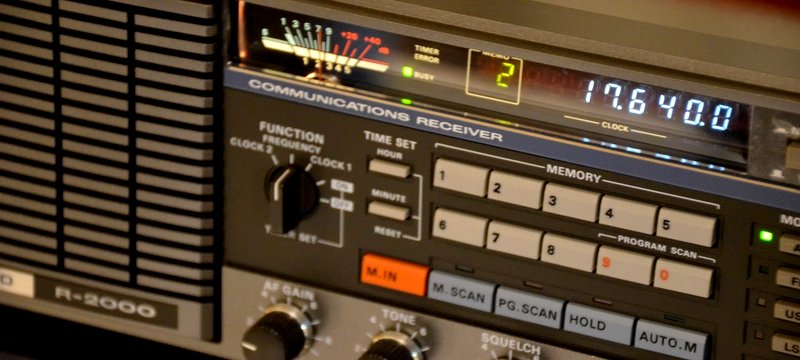
Hi there, I’ve just returned from a business trip to Genoa, Italy and took the Eton Satellit with me. Now, I’m sure many of you know from your own experiences that DXing from a noisy hotel room can be just about impossible – and so it was in the main. I did however manage to copy a very nice signal from BBC Radio 5 Live on 693 kHz medium wave and Chaîne 3, from Tipaza, Algeria on 252 kHz – the latter is a much more difficult catch back in the UK. Reception videos for these two signals also follow below and I have to say that given the very noisy environment, this was a pleasing result using the Eton’s internal ferrite antenna. Prior to my trip this week, I recorded a really nice signal from Radio Nacional Brasilia on 11780 kHz and the best signal from North Korea (Voice of Korea KCBS) I’ve ever copied on the 41 metre broadcast band. Both are testament to the Eton Satellit’s performance as an excellent portable reciever per se and it’s hard-core DXing capabilities. Finally, what now feels a very poignant recording, I managed to catch – ABC Northern Territories on 2325, 2485 and 4835 kHz during the same session and on one reception video. Embedded videos and text links to these videos on Oxford Shortwave Log follow below, along with a brief video review of the main functions and features of the Satellit.
With regard to the closure of ABC on shortwave, my full support goes out Senator Nick Xeonophon and his quest to introduce new legislation to force the ABC to reinstate their shortwave transmissions. There, I’ve said it and that’s enough politics for now lol. In the meantime, my plans to test the Eton Satellit against more established DXing portables remain in place and work commitments allowing, this should happen soon. Thanks for reading/watching/listening and I wish you all great DX!
Clint Gouveia is the author of this post and a regular contributor to the SWLing Post. Clint actively publishes videos of his shortwave radio excursions on his YouTube channel: Oxford Shortwave Log. Clint is based in Oxfordshire, England.
Many thanks to SWLing Post contributor, Richard Langley who shares the following video of VL8A Alice Springs signing off for the final time on January 31, 2017:
Operator at the Alice shortwave transmitter sends a parting message via morse code: Goodbye this is station vl8a ceasing transmission. pic.twitter.com/l48bYKe2QI
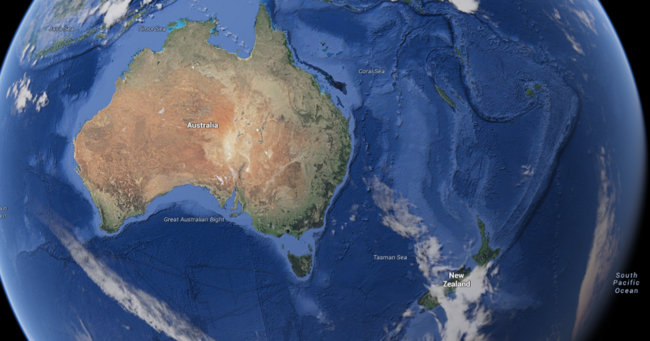
Press release: Following the ABC’s decision to cut shortwave radio transmission in the Pacific, Radio New Zealand International wants to reassure our listeners that we are committed to our Pacific broadcast partners.
Radio New Zealand International (RNZI) continues to serve people across the Pacific region, delivering essential day to day news and information and providing a vital lifeline in times of natural disaster.
RNZ CEO, Paul Thompson, has confirmed that there will be no reduction in Radio New Zealand’s commitment to its Pacific broadcast partners. His reassurance comes as Radio Australia closes its international shortwave transmission service to Papua New Guinea and the Pacific.
Paul Thompson has emphasised the importance of RNZI’s 25 year relationship with New Zealand’s Pacific neighbours.
“Remote parts of Papua New Guinea, Solomon Islands and Vanuatu who may be feeling the loss of the ABC can rest assured RNZI will continue to provide independent, timely and accurate news, information and weather warnings as well as entertainment to its Pacific listeners.”
RNZI has been broadcasting since 1990 to the Pacific and is regarded as the authoritative voice of the Pacific. It can be heard across the region and has proven to be a vital lifeline during times of disaster. In 2007 RNZI was named international Radio Station of the Year by the Association for International Broadcasting (AIB).
RNZI broadcasts timely cyclone and tsunami warnings via shortwave and can continue to be heard should local broadcasters go off-air due to a cyclone or other disaster.
Paul Thompson said the essential nature of Radio New Zealand’s role in the Pacific has been regularly underlined by the positive feedback to RNZI following cyclone and tsunami alerts.
“A Vanuatu villager has told our reporter Koroi Hawkins that he knew to take shelter during Cyclone Pam just because of the warnings broadcast on RNZI. At times like this we are the essential voice of the Pacific ” See attached photograph.
RNZI’s coverage of the aftermath of Cyclone Pam in Vanuatu in 2015 won RNZI reporter Koroi Hawkins a silver medal at the prestigious New York Festival Radio Awards in 2016.
RNZI broadcasts in digital and analogue short wave to radio stations and individual listeners across the Pacific region.
Around twenty Pacific radio stations relay RNZI material daily, and individual short-wave listeners and internet users across the world tune in directly to RNZI content.
The RNZI signal can sometimes be heard as far away as Japan, North America, the Middle East and Europe. RNZI also provides rich content for online users through our website
The ABC ends its short-wave service to the region from 1pm Solomon Islands time and says it will focus on FM and online services.
Ruth Liloqula said people from Choiseul to Malaita and as far south east as Tikopia tuned in to the ABC because the signal was stronger than that of the country’s public broadcaster SIBC.
Ms Liloqula who works with Transparency International says the ABC has been very valuable for the country and a good way to get her message across.
“We are very very mindful of the fact that the SIBC media here is owned by the government. I mean they don’t ask the questions that they need to ask for obvious reasons. I mean we do get asked those tough questions by ABC and that gives us the opportunity to talk about the issues that affect this country.”
Ms Liloqula said after the recent earthquake people in the bush in Choiseul only knew there was no tsunami by listening to the ABC.[…]
This morning, I woke up, tuned to 9,580 kHz and all I heard was static.
Other than when the Shepparton transmitting station has been silenced for maintenance in the past, 9,580 kHz is one of the most reliable frequencies I’ve ever know on shortwave. Radio Australia has met me there every morning I’ve listened since I was eight years old.
I feel like I’ve lost a dear friend and certainly a staple source of news on shortwave radio. I know I’m not alone–a number of readers have shared similar sentiments this morning.
Archiving Radio Australia’s final days on the air
Listening to Radio Australia on 12,065 kHz with the Titan SDR Pro.
Since the beginning of the year, a few of us have been making a concerted effort to thoroughly archive Radio Australia’s final days on the air. Mark Fahey, London Shortwave, Richard Langley, Rob Wagner and I (to name a few) have been making both audio and/or spectrum recordings.
At 0100 UTC on January 31, 2017, we heard the “Waltzing Matilda” interval signal for one last time. As I understand it, the crew at the Shepparton site left the transmitter on a few extra seconds extra so their famous interval signal would be, in essence, the final sign-off.
Due to propagation and the time of day when the shut down happened, I was unable to make a recording, so I’m pleased others could.
Mark compares shortwave and satellite feeds
Mark Fahey’s Wellbrook Mag Loop antenna.
I’m grateful to friend and contributor, Mark Fahey, who lives near Sydney, Australia, and was also able to record the final moments of Radio Australia as well. Mark recorded the shortwave service and RA satellite feed simultaneously.
Mark shares the following recordings and notes:
Recording 1
This is RA’s final few minutes on shortwave – it was recorded on 17840kHz.
The file picks up the regular program ending, then into a Promo for RA “Pacific Beat” (a Pacific current affairs program), then the classic RA Interval Signal then the transmitter clicks off and the void is heard.
The file starts at exactly the same time as the first file, but in this example we are monitoring the Network Feed from Intelsat 18 at 180.0 degrees east (above the equator right on the international date line). This satellite feed is the way Radio Australia gets to the network of FM Transmitters they have scatted around the Pacific Region (which is why they feel they don’t need shortwave anymore for – most populated areas of Radio Australia’s target area now is covered by a network of Radio Australia FM transmitters).
Some differences to the first file – Radio Australia is produced in FM quality stereo, though of course DXers only ever heard it in shortwave quality mono. So this network feed is in stereo and has a wider dynamic range that what DXer’s are familiar with from Radio Australia. At the end of the Pacific Beat Promo, Radio Australia goes straight into News, the closing of the shortwave service was not an event that would have been noticed for the typical listeners of RA who now listen via FM in Pacific capitals and major towns.
Thank you Mark for your comparison–I’ve never heard RA so clearly. Only you would’ve thought to simultaneously record the satellite feed! It gives the moment that much more context.
A number of SWLing Post contributors have been sharing recordings this morning. I will plan to collect these and put them on the Shortwave Archive in the near future.
Rest assured: if Xenophon’s legislation gains traction, we will post updates!
No doubt, Radio New Zealand International’s shortwave service has just become that much more important in remote Pacific Islands. Click here to view RNZI’s schedule.
Please support this website by adding us to your whitelist in your ad blocker. Ads are what helps us bring you premium content! Thank you!