Category Archives: Mediumwave

Guest Post: Radiofreunde NRW’s DXpedition-grade signal distribution system


Many thanks to SWLing Post contributor, Joachim von Geisau (DH4JG), for the following guest post:


Signal distribution at SWL camps: The new JK-1000 HF distributor

by Joachim von Geisau (DH4JG)

The Friends of Radio NRW – an independent group of shortwave listeners and radio amateurs in Germany – have been organizing 2-3 SWL camps per year for a number of years, where they meet as far away as possible from electrical noise in order to listen to shortwave together.

To distribute antenna signals, we have previously used an RFT AVV01 antenna distributor.

At an SWL camp there are high demands on signal distribution. Both very weak and strong signals should be distributed well, un-distorted, without noise and other interference. The signal levels are approximately between 0.2 ?V (S1) to over 5 mV (S9 + 40 dB), with a frequency range of at least from 150 kHz to 30 MHz, thus broadcast bands from LW to SW are covered, also all amateur radio bands from 160 m to 10 m.

Popular among listeners are RFT AVV01 RF distributors from the former GDR, at least 30 years old. However, the use of an AVV01 has several disadvantages: high power consumption, difficulties in getting spare parts, high upkeep with corroded contacts and the like. In addition, the transmission of the LW/MW range drops, which is a disadvantage especially for MW listeners. The NV-14 system from Rohde & Schwarz from the late 1960s has the same weaknesses.

Two years ago, the desire arose to develop a concept for the replacement of the RFT system.
The following aspects were important:

  • Frequency range at least 100 kHz – 30 MHz, as linear as possible
  • frequencies below or above desirable
  • Running on 12 V DC or integrated noise-free power supply
  • Remote power supply for active antennas
  • Robust structure
  • Versatility
  • Hobby friendly budget

The amateur radio market offers several products for RF signal distribution (e.g., ELAD, Bonito et al.), but no solution to distribute 6-8 antennas to 10-12 receivers. It was clear from the beginning that DIY development was inevitable.

The starting point of the considerations was to integrate remote power supply for active antennas, an amplifier stage and a distribution network.

Such a distributor is able to distribute an antenna signal to several receivers; several antennas require several such distributors, which led to the decision to implement the project in plug-in technology.

With OM Frank Wornast DD3ZE (www.dd3ze.de), known e.g. for his converters, filters and the like, a well-known RF developer could be won, who took over the implementation of the concept based on the detailed specifications. OM Wornast first produced a prototype without remote power supply, which already did an excellent job of RF signal distribution.

A “hardness test” at an SWL camp showed that this distribution module easily fulfilled our requirements: Frequency range 10 kHz – 50 MHz (also usable with a few dB loss above 50 MHz). Supplemented by a switchable remote power supply and a 90V gas discharger at the antenna socket, the final PCB layout was created, representing the core of the new HF distribution system of Radio Freunde NRW

The distribution block consists of the following components:

  • Input with 90V arrester & 100 kOhm MOX resistor to dissipate static interference
  • Remote power supply, switchable, 10-14 V, max. 350 mA
  • Amplifier stage with 14-14.5 dB
  • Resistor network for distribution

The device is characterized by a very smooth frequency response and has a very low inherent noise. It offers the possibility of using levels of -120dBm with very good SNR
to process up to strong levels of up to + 14dBm. In addition, the reception on VLF is now possible, which did not work with the previous system.


The PCB is designed in a very practical way: series resistors for LEDs are integrated as well as fixing points for coaxial cables. The remote power supply can be switched separately, but can also be used permanently by means of a jumper.

With this concept, the distribution block can be used universally: use on an active or passive antenna with distribution to several receivers, by means of a step switch in front of it also for several antennas; if you leave the remote feed path unconnected, the block can also be used as a simple distributor, so it is almost universal for hobby purposes.

For use on SWL camps, we decided to install them in 19 “rack-mount technology. A standard rack can thus accommodate 4 distributors and a power supply, allowing  distribution of 4 antennas to 12 outputs each. An example of the installation is shown in the following picture: Parallel to the input is another BNC socket, which is connected via a C 100 nF where the input signal can be used DC-free for measurement purposes or the like. The distribution unit is installed in a transport case. The components themselves are mounted in slide-in housings which are provided with a corresponding front panel: Such front panels might be obtained from CNC manufacturers.

On the back + 12V DC must be supplied as operating voltage. For the power supply units, we opted for linear power supplies because we have made the best experience with these without interference. For a distribution unit with 4 slots, a power supply with 12V 1A is sufficient – each distribution block takes about 55 mA, an active antenna up to 150 mA, so even with “full load” a power supply with 1 A is sufficient. The distributor was tested with various well-known active and passive antennas, including a PA0RDT MiniWhip, active loops, long wires and T2FD.

Due to the wide input voltage range, the module can handle nearly any antenna. The cost for a distributor for 4 antennas amounts  (depending on the version: housing, sockets, switches, power supply, etc.) to about 700-1000 €. That may seem a lot at first glance. However, taking into account that a simple 5-gang distributor from mass production costs already around 250 ¬, the cost of the distribution of 4 antennas to each up to 12 outputs are not that much. The Friends of Radio NRW use two of these distribution units for SWL camps.

If you are interested in building one, please contact the author ([email protected]) for further information. The development history of the distribution unit is also available at www.dx-unlimited.eu.


Wow!  What a beautifully engineered antenna distribution solution, Joachim!  I love how you worked together to sort out all of the requirements for your system then build it for ultimate performance and flexibility.  No doubt, you and your colleagues at  Radiofreunde NRW posses a lot of design and engineering skills!  Simply amazing and thank you for sharing your design with the radio community!

Contact Joachim for more details and check out notes and discussion at www.dx-unlimited.eu (may require registration).

Radio Waves: WBCN, Reactions to AM Digital, More KPH, and Cereal Box Telescopes

Radio Waves:  Stories Making Waves in the World of Radio 

Because I keep my ear to the waves, as well as receive many tips from others who do the same, I find myself privy to radio-related stories that might interest SWLing Post readers.  To that end: Welcome to the SWLing Post’s Radio Waves, a collection of links to interesting stories making waves in the world of radio. Enjoy!

Many thanks to SWLing Post contributors, Mike Terry, Troy Riedel, andGrant Porter for the following tips:


WBCN history reveals revolutionary power in local radio (Boston University News Service)

SOMERVILLE – What started as a midnight to 6 a.m. slot on a failing classical music station, became the voice of a generation in 1970s Boston. Now, more than 50 years after WBCN sparked a “revolutionary new experiment in radio,” the bygone rock station is still making waves.

The 2018 documentary, “WBCN and The American Revolution,” tells the origin story of Boston’s first rock and roll station through a combination of rock hits. Never-before-seen photos, videos and interviews with some of Boston’s most beloved radio hosts, were greeted with cheers at the Somerville Theatre screening Thursday night.

Bill Lichtenstein, who began volunteering with WBCN at 14, directed and produced the film. After crowdfunding and a decade in the making, it has been touring independent theaters and festivals across the U.S. for the last year and a half.

WBCN was grounded in good music. Founded by Ray Riepen, owner of South End music venue The Boston Tea Party, WBCN introduced voices like The Velvet Underground, The Who, Bruce Springsteen and Led Zeppelin to the city, and quickly found a home in Boston’s huge student population. Within three months, the station, run by amateur hosts and young volunteers during classroom breaks, was playing 24 hours per day.[…]


“It Will Make Millions of Receivers Obsolete … This Is Needless” (Radio World)

What people are saying to the FCC about all-digital on the AM band

Radio World is providing an ongoing sampler of comments of what people are telling the FCC about its proposal to allow U.S. stations on the AM band to switch voluntarily to all-digital transmission. Here are more in the series:

Kirk Mazurek told the FCC that he is an avid AM listener who has “invested time and money in equipment towards my hobby as many others have. If this proposal goes through it will make the millions of receivers obsolete requiring the purchase of new equipment. This is needless, there are a lot of people who have vintage radios and a lot of them have been restored. This proposal would make them useless. I urge you not to ratify this proposal.”

Mark Wells raised concern about interference from digital to analog signals on the same channel. “This is especially applicable at night when one is listening to distant stations in out-of-state markets, he wrote. “For example, clear channel stations WBT in Charlotte and KFAB in Omaha are both on both on 1110 kHz. Let’s say one switches to digital, and one does not. As it is they both may fade in and out as the atmosphere does its nightly tricks, but the signals remain mostly useable. But, if one is digital and the other analog would it not ‘blank out’ the analog station?”[…]


Podcast features Coastal Radio Station KPH (DitDit.fm)

There was a time when the airways bristled with Morse Code. There were commercial radio stations all around the world whose business was sending and receiving Morse Code messages to ships at sea. Coast station KPH, located at Point Reyes National Seashore near San Francisco, is one of those stations. Richard Dillman was there in 1997 when KPH sent it’s last message and closed it’s doors. It was the end of the line for the men and women who had spent their careers sending Morse Code to ships at sea. There was nowhere else for them to go…

Two years later, Richard Dillman with a group of volunteers returned to KPH and put it back on the air. Listen as Richard tells us about the future of Maritime Morse Code Coastal Station KPH!


A hydrogen line telescope made from cereal boxes and an RTL-SDR (RTL-SDR.com)

SpaceAustralia.com have recently been hosting a community science project that involves encouraging teams to build backyard radio telescopes that can detect the arms of our Milky Way Galaxy by receiving the Hydrogen line frequency of 1420 MHz.

This can be achieved at home by building a horn antenna out of cardboard and aluminum foil, and a feed from a tin can. Then the Hydrogen line and galactic plane can be detected by using an RTL-SDR, LNA, and software capable of averaging an FFT spectrum over a long period of time.

While most horn antennas are typically made from four walls, one participant, Vanessa Chapman, has shown that even trash can be used to observe the galaxy. Vanessa’s horn antenna is made from multiple cereal boxes lined with aluminum foil and an old tin fuel can. The boxes are held together by some string and propped up by some sticks.

With her cereal box horn antenna combined with an RTL-SDR Blog V3, and an RTL-SDR Blog Wideband LNA, Vanessa was able to use software to average the spectrum over time as the galactic plane passed overhead, revealing the Hydrogen line peak and corresponding doppler shift from the galactic plane.[…]


Do you enjoy the SWLing Post?

Please consider supporting us via Patreon or our Coffee Fund!

Your support makes articles like this one possible. Thank you!

Shortwave Radio Audio Archive: A treasure trove of radio history and nostalgia

One of the most amazing things about hosting and curating a massive collection of shortwave radio recordings is listening to each recording as they’re published on the site.

I created the Shortwave Radio Audio Archive (SRAA) in 2012 as a dedicated space to post and share off-air recordings with the world. Listening to SRAA recordings and subscribing to the podcast is 100% free, and entirely void of any advertising. The fact is, I pay for this site out of my own pocket, although some of your generous coffee fund and Patreon gifts are used to reinforce the archive’s longevity and future.

Not only does the SRAA serve as a historical record of radio–and even as audio samples for musicians–it’s also for radio listeners like us to enjoy.  We have over 3000 podcast and RSS subscribers. We invite you to subscribe as well as to contribute content in the form of your own radio recordings!

Great content, great contributors

Speaking of recordings, check out a sampling of our latest offerings from our amazing contributors:

Note that you can subscribe to the Shortwave Radio Audio Archive as a podcast via iTunes or by using the following RSS feed: http://shortwavearchive.com/archive?format=rss You can also listen via TuneIn.

Of course, one of the best ways to listen to recordings and read all of the recording notes is by visiting the SRAA website.


Do you enjoy the SWLing Post?

Please consider supporting us via Patreon or our Coffee Fund!

Your support makes articles like this one possible. Thank you!

Krasne Antenna Array: Help Rick solve a 22 year old mysetery

The mystery array

Many thanks to SWLing Post contributor, Rick Slobodian, who seeks help solving a 22 year old mystery. Rick writes:

[Perhaps you can help me] explain this antenna….a 22 year old mystery antenna (see photo above)? What sort of antenna is this and how does it work? It’s at 49.8994 N 24.685 E near Krasne, Ukraine.

I was at this transmitter site in 1998.

Antenna switch room

I was writing articles for a number of magazines hoping to find customers for airtime and to make this site viable.

I spent all day at the site wrote extensively about EVERYTHING ELSE: the shortwave transmitters, the longwave transmitters, the shortwave antennas, the vertical long wave antennas, and the vertical MW antennas.

Longwave antenna at Krasne

HRS curtain array at Krasne

The transmitters were behemoths: Komintern Burans 500Kw 1000 Kw 1200 Kw

New 1200 Kw transmitter under construction

This antenna was over a km form the main building and they would let me go there:

I took this photo of the array as I traveled past it by train.

Its 36 towers strung in a NE SE line–over 2 km long and each tower is approximately 40 m tall.

[My hosts] were they so evasive about this antenna array yet not the rest of the site.

[There are some peculiarities:]

  1. Do you see a feed line running along the bottom of the towers near the ground?
  2. I do not see any tuning shacks.
  3. Is it fed from one end or the other end or is each tower fed?
  4. If each tower is fed, then where are the tuning shacks/phasors?
  5. iIf it is a beverage then why so may towers and such close spacing?
  6. Is it something completely different?

What do you think it is? How do you think it works and what would be its purpose?

Thanks for sharing, Rick!  My hope is that one of the members of the Post community may be able to shed a little light on this interesting antenna array.  Please comment!

More BBC Mediumwave Closures

(Source BBC Blog via Mike Terry)

By Kieran Clifton
Director, BBC Distribution & Business Development

In my blog posted in the summer of 2017, I explained the BBC’s plans for local radio and the reasons for the closure of some of our medium wave transmitters – which happened in January last year. This was the first stage of putting into action a plan that the BBC originally announced in 2011. Starting in February 2020, and completing in mid-2020, we will be moving on to the next stage of the plan, closing a further 18 medium wave transmitters across England, Scotland and Wales. There is a list of services affected at the end of this blog post.

My earlier blog post explained why we are closing some local medium wave transmitters, but I wanted to recap again here. The majority of radio listening in the UK – including to the BBC – is now digital, and digital listening is continuing to grow. We want to make our services available to you when and how you want them, but it’s also right that the BBC continues to ensure that the ways we distribute our services represent good value for money for you, the licence fee payer.

The BBC is committed to a digital future for radio, and in the past few years we have funded local DAB expansion, made all local radio stations available on digital terrestrial TV (such as Freeview), and we have transformed our online and mobile offering with BBC Sounds.  Together with FM (which has recently been expanded for Radio Wales), these ways of receiving our stations now make up the great majority of listening, and as a result continuing to transmit these services on medium wave would no longer represent good value for money.

This change was planned as long ago as 2011, but we have taken a measured approach to implementing it to ensure that as many of you as possible have already moved on to other ways of receiving the services before we make this change.  We know that the changes will impact some of you, and that’s why we’re speaking about the plans again now. We want to make sure that people listening to these transmissions will be able to use other methods to hear the same programmes.

All stations which will be affected will continue to be on FM and digital outputs (such as DAB, digital television, or online). For most people, re-tuning their radios or cars to FM or DAB is likely to be the simplest solution.

You can use our Problem Assistant tool to get more information on how to access all BBC services in your area.

The stations which will no longer be transmitted on MW are:

    • Three Counties Radio (3CR)
    • Radio Merseyside
    • Radio Newcastle
    • Radio Solent (for Dorset)
    • Radio Solent
    • Radio Cornwall
    • Radio York

In addition, the following stations will have reduced MW coverage:

Radio Scotland

    • Areas in and around both Aberdeen and Kirkcudbright

Radio Wales

    • Tywyn, Forden and Llandrindod Wells transmitter areas

Radio Cumbria

    • Areas in and around Whitehaven

Radio Norfolk

    • Areas in and around Norwich

Radio World: Time to “sound off to the FCC about using all-digital on the AM band”

Many thanks to SWLing Post contributor, Dan Robinson, who shares the following note posted by Paul McClane at Radio World:

For those who want to sound off to the FCC about using all-digital on the AM band — either “fer it” or “agin it” —- the comment deadlines now are set.

Comments are due March 9, reply comments are due April 6.

As RW has reported, the FCC recently released a notice of proposed rulemaking to establish rules governing all-digital broadcasting by AM radio stations in the United States.

Read the NPRM here. The NPRM number is 19-123.

Click here to read at Radio World.

As we mentioned yesterday, this proposal is certainly in the final stages at this point.

WRTH 2020: A look inside

I received my review copy of the 2020 World Radio and TV Handbook (WRTH) shortly after returning from holiday travels last week. I always look forward to receiving this excellent staple radio reference guide–and this is their 74th edition! The WRTH has never disappointed, so my expectations are always quite high.

Once again, the WRTH lived up to my expectations.

WRTH’s team of noted DXers from around the world curate frequencies and broadcaster information by region; while I’m not sure how they orchestrate all of this, the end result is truly a symphony of radio information. In addition to broadcaster listings, WRTH’s radio reviews, feature articles, and annual HF report make for excellent reading.

But the WRTH isn’t just a frequency guide: the publication always devotes the first sixty or so pages to articles relating to various aspects of the radio hobby. Following, I offer a quick overview of these.

The first article always features a WRTH contributor:  this year, they feature Luis Cavalho who is their contributor for Portugal, the Azores and Madeira. His path to becoming a WRTH contributor began in his childhood snagging mediumwave DX with an array of portable radios. His love of radio lead him to the world of shortwave radio, WRTH and eventually his own radio website to serve Portuguese listeners.

WRTH Reviews

The second set of articles is always my favorite: WRTH receiver reviews.

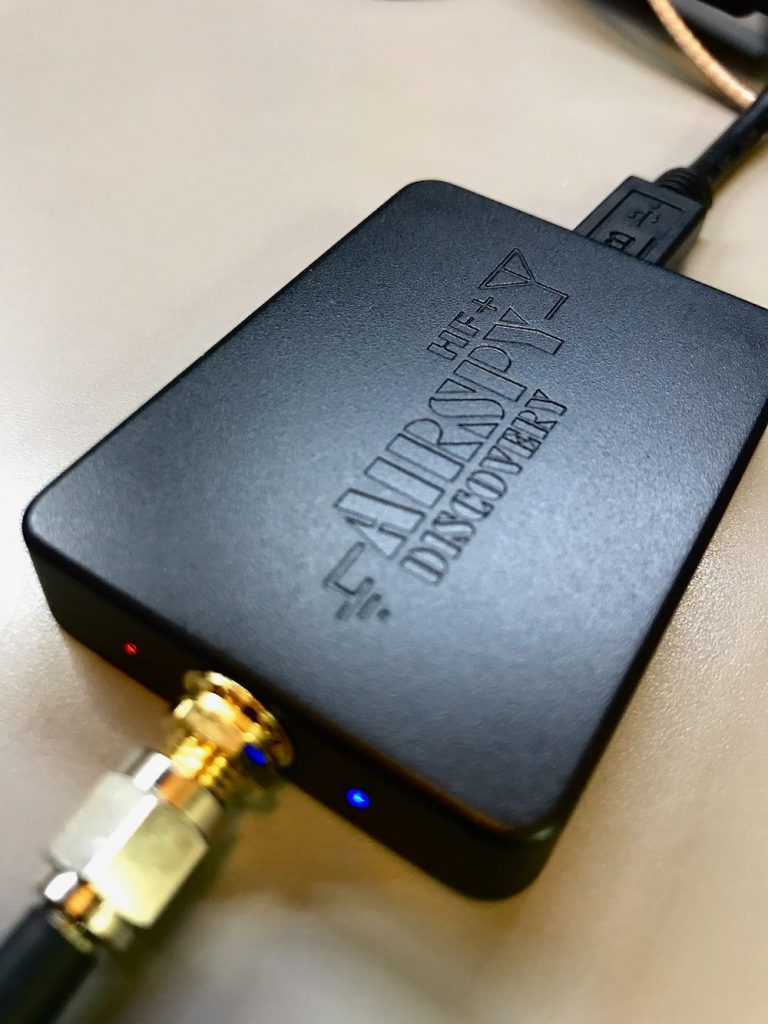
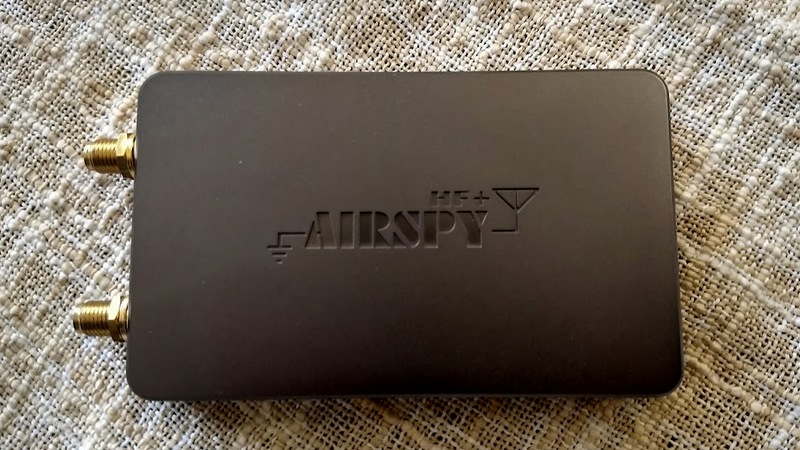
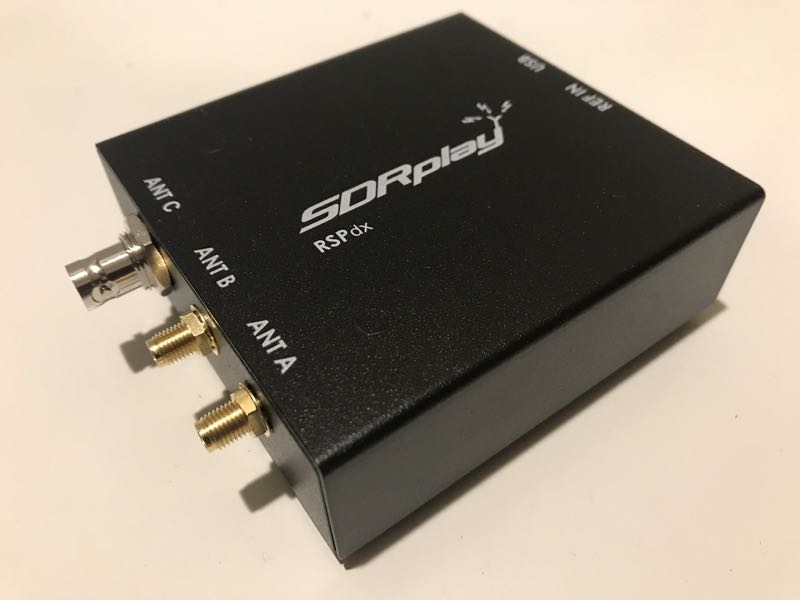
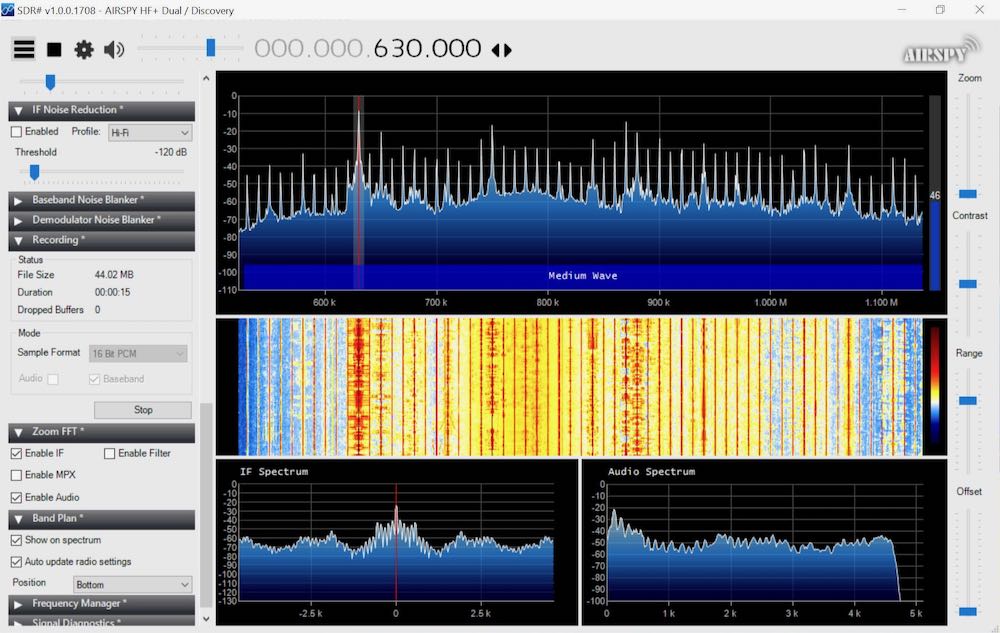
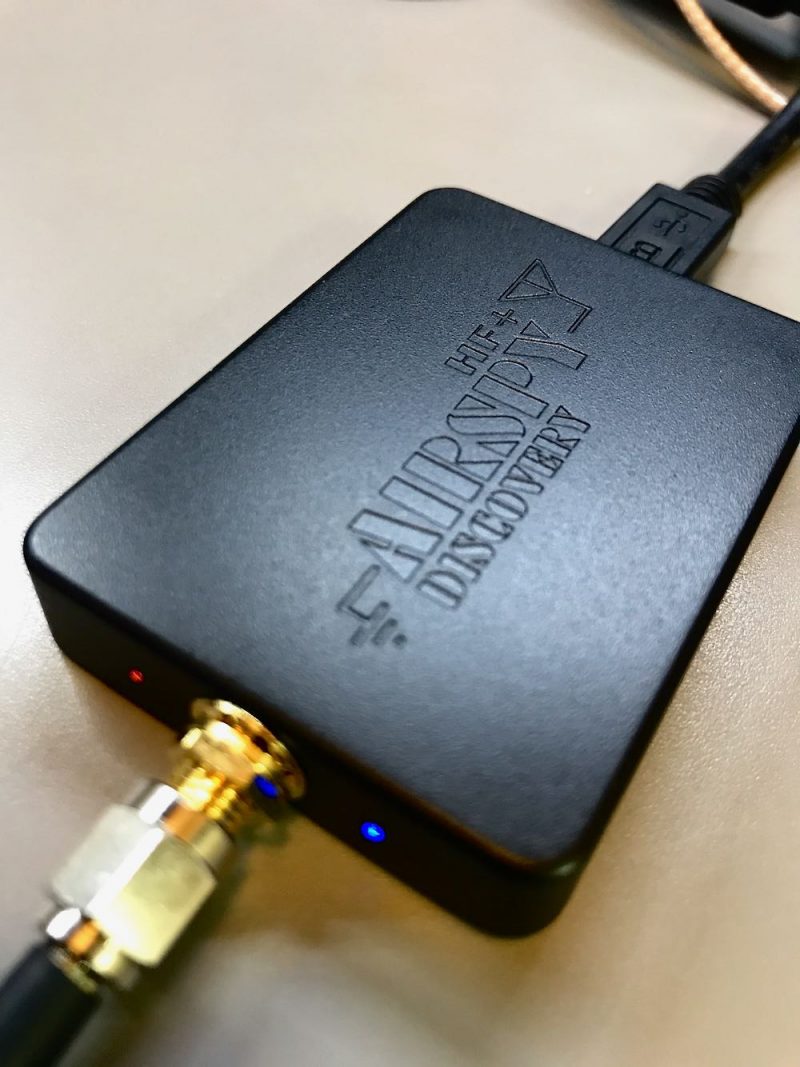
This year, WRTH begins with an in-depth review of the excellent ELAD FDM-DUOr tabletop SDR receiver.  Next they build on their 2019 review of the SDRplay RSPduo by exploring its unique diversity reception capabilities. They also review the AirSpy HF+ Discovery and were so impressed they awarded it the 2020 Best Value SDR.

This year, WRTH also reviewed two portable radios by Pure: the Pure Elan E3 DAB, DAB+, FM receiver and the Pure Elan IR5 WifI radio.

The final two reviews are of affordable products that offer incredible value for the radio listener: the venerable Tecsun PL-310ET ultralight radio and the Tecsun AN-200 MW Loop Antenna. I enjoyed reading a fresh review of each of these products as I’ve personally used both for nearly a decade.

WRTH Features

The first feature article, written by none other than Dave Porter, focuses on the development of HF broadcast antennas. His article serves as an excellent primer on the topic, covering Rhombic Antennas, Corner Quadrant Antennas, Log-Periodic Arrays and ALLISS /Rigid Curtain Arrays. A must-read for those who want to know more about the “business side” of a broadcast signal!

Hans Johnson’s feature, Sea Breeze and Wind from Japan, explores the story behind the broadcasts to Japanese citizens abducted by North Korea. Truly, an inspiring story of a determined and mission-dedicated broadcasters.

The following feature article was written by WRTH contributor and chief editor of the New Zealand DX Times, Stu Forsyth, who outlines the history of broadcasting from New Caledonia in the Pacific.

The next feature article focuses on the “finer points” of mediumwave propagation. I thought this was an informative and and timely article as so many shortwave DXers (including yours truly) spend time on the mediumwave bands especially during winter and times of rough HF propagation. A must-read!

Ashraf Chaaban, president of the Association des Radio Amateurs Tunisiens, takes WRTH readers with him on a visit to the Sidi Manson Transmitter Site in Tunisia in the final feature article. Having an affinity for broadcast sites, I sincerely enjoyed the focus on Sidi Manson which fell silent on shortwave in 2014.

Next, WRTH spotlight the annual Digital Update which summarizes the dynamic state of digital broadcasting. I’ve found this feature to be incredibly informative as we see how digital broadcasting is penetrating both domestic and international services.

The final article–a tradition–is the WRTH  HF propagation report/forecast by Ulf-Peter Hoppe. Always an informative read especially as we work our way out of a log-term solar slump.

The 74th is another fantastic edition of the World Radio TV Handbook. As I say every year, I’ve never been disappointed with WRTH. Their publishing standards are such that the quality of their reviews, their writing, and (most importantly) their broadcast listings are simply unparalleled.

At the heart of any WRTH is an uncompromising and unparalleled amount of information regarding regional and international broadcasting.

For DXers who collect QSL cards, you’ll find that broadcaster contact information in WRTH is often more up-to-date than a broadcaster’s own website. When readers contact me asking for QSL information from an obscure broadcaster, the first place I search is the current WRTH. Remember: their information is based on volunteer contributors who specialize in specific regions of the world–the most knowledgeable regional DXers keep this publication accurate.

Purchase your copy of WRTH 2020 directly from WRTH’s publishers, or from a distributor like Universal Radio (US) , Amazon.com (US),  or the Book Depository (international).