Category Archives: News

BBC World Service features DRM

In this BBC World Service report, Mark Whittaker explores Digital Radio Mondiale (DRM) and, especially, its potential in India. Use the embedded player or link below to listen:

(Source: Audioboo via Tarmo Tanilsoo on Facebook)

drmlogoYou’ll note the BBC World Service fails to mention that DRM has been in use now for over a decade.

The report ends by suggesting that portable DRM receivers will be on the market in a few months. Even if DRM radios start appearing, whether or not they’ll be effective and inexpensive remains to be seen. So far, portable DRM radios have been mediocre performers (at best) and relatively expensive.

Don’t get me wrong: I would love to see DRM take hold, I just have my doubts. DRM might stand a chance if a manufacturer like Tecsun were to build an inexpensive portable radio, with a form factor much like that of their other portables. If they made a DRM version of the PL-380, for example, it could be a winner for both the company and the medium/mode.

By the way, if you’ve never heard what DRM sounds like over the shortwaves, I just posted a fifty eight minute recording of All India Radio on the Shortwave Radio Audio Archive. Contributor, Mark Fahey, recorded the broadcast from his home in Australia.

I’ve embedded a link to the audio below, but you can listen to the broadcast and read Mark’s notes on the shortwave archive (click here).

Radio Andorra Postage Stamp

Boc_RADIO_ANDORRA_B2M0.aiMany thanks to SWLing Post reader, Marty, who writes from Madrid:

“Just wanted to let you know about an interesting postage stamp that was issued this month in the Principality of Andorra. Actually, the Spanish Post Office “Correos” issues the stamps for Andorra, and this one in particular observes the 30th anniversary of the cease in transmissions of Radio Andorra! Interesting stuff. Most other countries, the US Postal Service included, use to issue stamps in celebration of the anniversaries of the ongoing broadcasts of their international stations. I think this is the first time I have seen one that marks the closure. Here is the stamp 92 cents of a euro, mainly for international destinations. It was taken from a photograph by Gerard Massot.”

Click here to see this stamp on the Spanish Post Office (Correos) web site.

Air Force plans to decommission HAARP

800px-HAARP20l

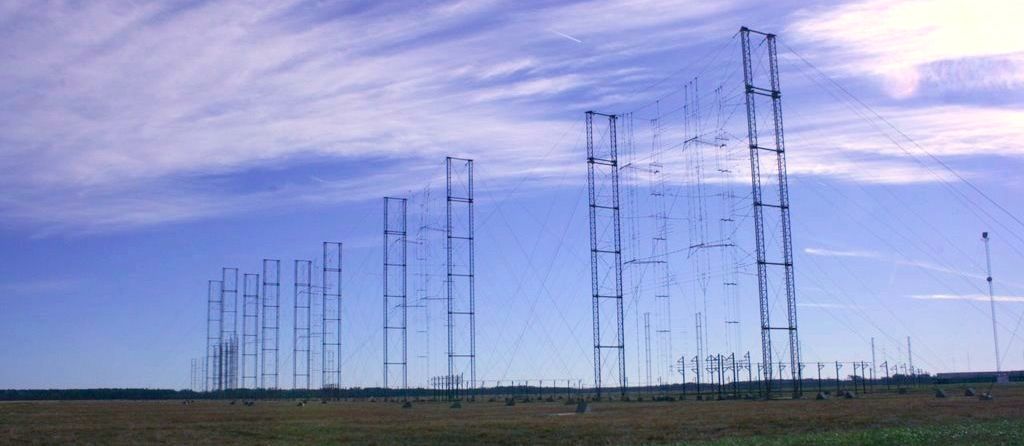
HAARP (the High Frequency Active Auroral Research Program) in Alaska is now slated to be decommissioned as the US Air Force plans to “initiate divestiture in June 2014,” according to a USAF representative in this KTOO article.

HAARP was officially shut down in early May 2013–during a contractor “regime change“–but one of HAARP’s clients, DARPA (Defense Advanced Research Projects Agency), continued to use the facility for their research into 2014.

Unless someone steps up to pay HAARP’s expenses, the facility will be shut down.

Incidentally, HAARP has been the source of much speculation and conspiracy. A simple Google search for “HAARP” will reveal a number of theories.

Click here to read the full news article about the HAARP closure on KTOO.

Weak signals: Which radio do you prefer?

SideBySide-FourRadios

I’m in the process of reviewing a number of shortwave portables and pitting them against each other. Sometimes, it can be very difficult to decide which radio is better–especially if you have more than two radios to compare at a time.

What I’ll often do to help level the playing field is to make an in-line recording of each radio (via my Zoom H2N handy recorder) with the mic and volume levels equal. I then tune to the same frequency with similar filter settings (wide, maximum RX gain, antennas fully extended, etc.).

I also like comparing radios while listening to weak signals and/or when conditions are less favorable. Those were exactly the circumstances yesterday when I pitted four radios against each other: the Sangean ATS-909X, Tecsun PL-660, Tecsun PL-880 and the Sony ICF SW7600GR.

I found a weak signal from Radio Romania International on 11,975 kHz. Normally, the signal would have been stronger, but propagation was rough and QSB (fading) was pronounced at times. Under these conditions you get the opportunity to hear how the AGC circuit handles fading and troughs, how the noise floor sounds as conditions change and note the overall sensitivity.

While I give priority to a receiver’s sensitivity and selectivity, there’s more to evaluate–for example, sometimes the more sensitive radio may be less pleasing to listen to.

Below are three recordings of Radio Romania International made from three of the four radios tested (I did not include one of the four radios that was notably less sensitive). These are audio snapshots, but represent what a listener would hear via headphones during similar conditions. All recordings were made within a four minute period of time.

[Update: Check out the results of this test.]

Which of the three recordings do you prefer? Which radio do you find handles these unfavorable conditions best? Why do you prefer one over the others?

Sample 1:

Sample 2:

Sample 3:

Please add your comment below, or contact me via email with your favorite and any comments. I’m also very interested in which one you believe is second best. I’ll tally up the results in one week and will reveal which radio came out on top!

Shortwave Shindig rebroadcast, April 18 and 19

ShindigLogoWhiteThis just in from David Goren at Shortwaveology:

Shortwave Shindig rebroadcast!

The show originally broadcast on 3/14 will be heard again on WRMI: Friday, April 18, at 6-7 pm ET (2200-2300 UTC) and Saturday, April 19 at 11 pm-12 midnight ET (0300-0400 UTC April 20) — both on 9955 kHz from Okeechobee.

Another solution for whole-house shortwave

London Shortwave posts the following on Twitter:

Inspired by @SWLingDotCom‘s RaspberryPi post I put this together to listen to the radio in my shack around the house http://youtu.be/vOX41wIS1Qk 

On YouTube, London Shortwave explains that much of his modern system was inspired by a drawing from a 1930s shortwave listening magazine.

Below is a scan of the original illustration that inspired him:

WholeHouseShortwaveRadio

Shortwave Radio Recordings: ABC Radio Far North as Cyclone Ita makes landfall

tropical-cyclone-ita

Many thanks to SWLing Post reader, Mark Fahey, who has shared this special recording: a shortwave relay of the ABC Far North radio service.

Mark explains:

“ABC Radio (Australian Broadcasting Corporation) Far North (Queensland, Australia) Emergency Broadcast Service during the period that Severe Tropical Cyclone was making landfall in Australia’s Far North Queensland region. This capture of the shortwave broadcast was made near Sydney, Australia on 6.15MHz at 2119 Queensland Time (1119 UTC) on the 11th April 2014. The broadcast was being transmitted via a re-purposed Radio Australia transmitter in Shepperton, Victoria.

Severe Tropical Cyclone Ita is a tropical cyclone that crossed the coast of Queensland, Australia on 11 April 2014. The system was first identified over the Solomon Islands as a tropical low on 1 April 2014, and gradually moved westward, eventually reaching cyclone intensity on 5 April. On 10 April, Ita intensified rapidly into a powerful Category 5 system on the Australian Scale, but it weakened significantly in the hours immediately precedinglandfall the following day. At the time of landfall at Cape Flattery at 12 April 22:00 (UTC+10), Dvorak intensity was approximately T5.0, consistent with a weak Category 4 system, and considerably lower than T6.5 observed when the system was at maximal intensity. Meteorologists noted the system had, at such time, developed a secondary eyewall which weakened the inner eyewall; as a result, the system was considerably less powerful than various intensity scales predicted. Ita’s impact on terrain was attenuated accordingly.”

Click here to download this recording as an MP3, or simply listen via the embedded player below. Note that this broadcast has also been added to the Shortwave Radio Audio Archiveplease subscribe to our podcast to receive future recordings automatically.