Category Archives: Radios

Shortwave Radio Recordings: Worldwide All-Ireland GAA finals via RTÉ

22 September 2002; A general view of Croke Park at 3.29pm, a minute before the start of the game. Kerry v Armagh, All Ireland Football Final, Croke Park, Dublin. Picture credit; Brendan Moran / SPORTSFILE

22 September 2002; A general view of Croke Park at 3.29pm, a minute before the start of the game. Kerry v Armagh, All Ireland Football Final, Croke Park, Dublin. (Photo credit; Brendan Moran / SPORTSFILE)

Sunday afternoon, I was at home to catch a bit of the GAA finals via RTÉ on 17,725 kHz, starting around 15:00 UTC.

I enjoy hearing sporting events broadcast over shortwave–perhaps it’s my imagination filling in the gaps from the live coverage or the washy sound of the crowds roaring.  Regardless, RTÉ has a long-standing track record of broadcasting the GAA finals on every medium possible.

As I listened to the live broadcast, Sunday, I read Norman Freeman’s account of listening to the GAA finals from a ship in the Indian Ocean, back in 1956. He writes:

“Almost 50 years ago, listening to the All-Ireland by radio was uncertain and frustrating.

In 1956, RTÉ knew how much the All-Ireland meant to the Irish diaspora. Arrangements were made with the authorities in the then French Congo to have the match rebroadcast the following evening, on the powerful short-wave transmitter in Brazzaville.

The time and frequencies were published in the Irish newspapers. This information was sent by letter to the Irish on oil rigs off the coast of Borneo, to round-the-year painters on Brooklyn Bridge, and to missionaries within sight of Mount Kilimanjaro.

I had noted the time and frequencies before I was sent out to Mumbai to join my first ship, the Amra, as second radio officer. The hurling final was between two giants, Cork and Wexford.”
[Continue reading…]

While Freeman doesn’t miss the uncertainty and fickle nature of shortwave radio as the messenger of his favorite sporting event, his look back is certainly nostalgic. After all, Radio Brazzaville transported Freeman and his boss back to Ireland for the length of the game. And to RTÉ’s credit, they continue to broadcast to the Irish diaspora on shortwave radio, if only for this event. 

If you would like to hear my recording of the GAA Finals, click here to download the MP3 recording, or simply listen via the embedded player below:

Living off-grid? The ideal shortwave radio system for you

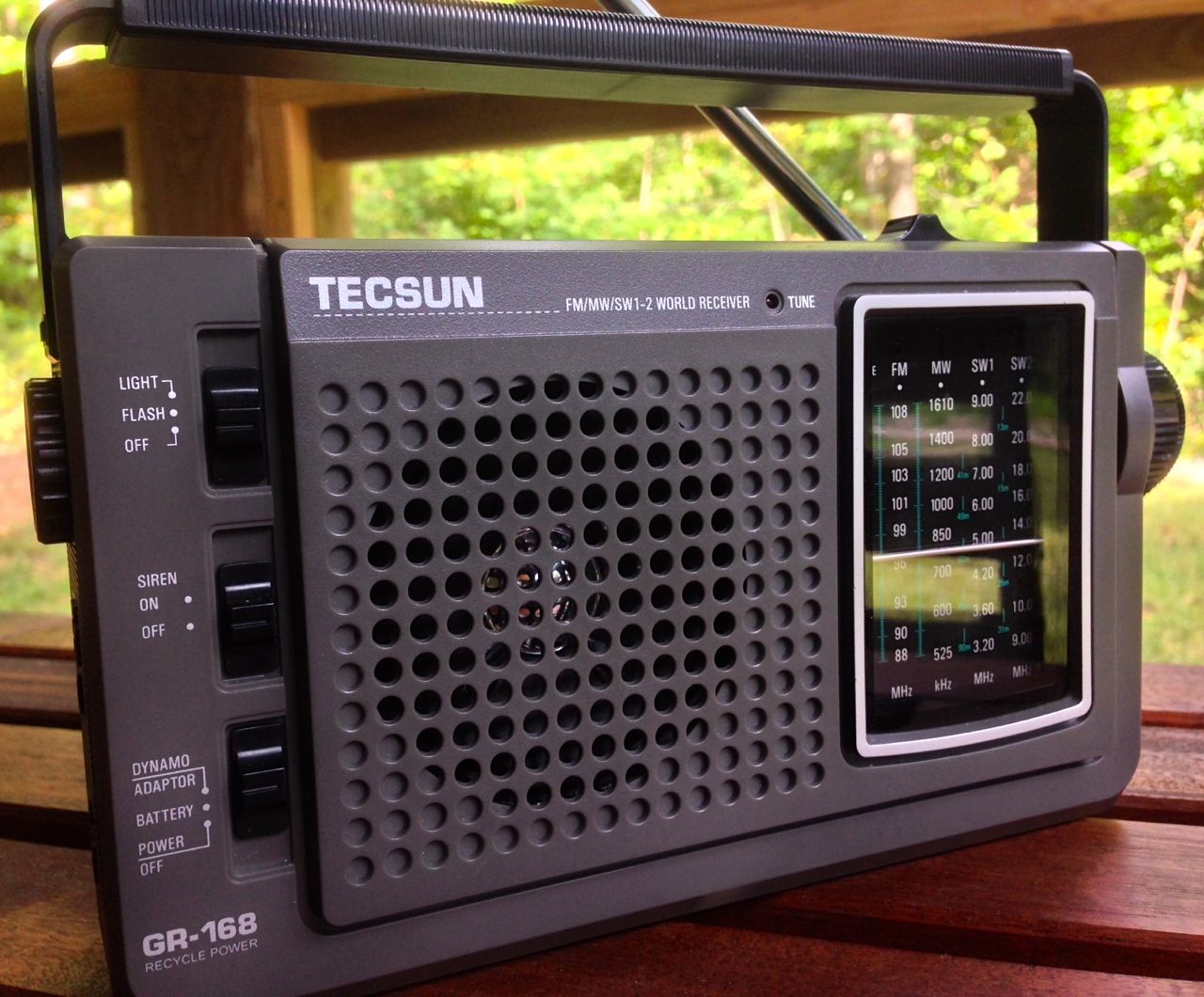
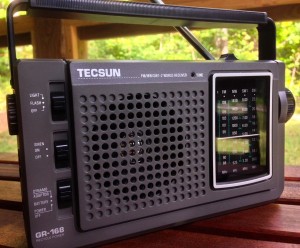
While the Tecsun GR-168 is my current pick amongst self-powered shortwave radios, their performance is only mediocre compared to a proper, hobby-grade receiver with SSB.

While the Tecsun GR-168 is my current pick amongst self-powered shortwave radios, performance is only mediocre compared with a proper, hobby-grade receiver with SSB.

What’s the best system for off-grid living? From time to time, I’m asked this question in the “comments” section of the website or via email.  Recently it came up again, and I thought it might make sense to answer it here, and also open it for discussion.

Specifically, SWLing Post reader, Phil, writes:

“[H]i, I am looking for a SW radio that can be used in an off-grid location (rechargeable/ wind-up/ 12 volt DC/ or solar powered), that can pick up a wide range of English speaking stations from here in SW Spain, fantastic audio quality, in the £100-200 price range, and can pick up ham etc transmissions in an emergency (with SSB?).  I know NOTHING about SW, so the CCRadio-SW looked about right, except it doesn’t have SSB.  Any other suggestions?
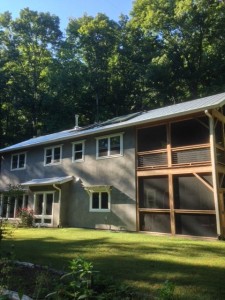
SolarQTH2

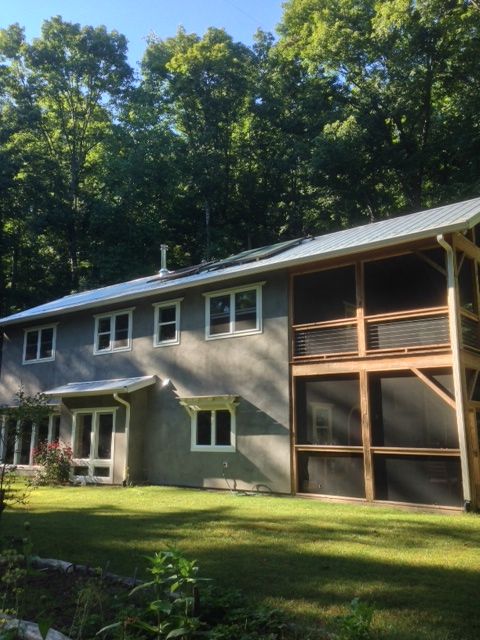
Our little solar cottage, where The SWLing Post is often produced from the sun’s energy

Phil, I’m glad you asked. I may be uniquely qualified to answer this question, as I live in and work from a solar house that is off-grid at least some of the time, and I run a charitable non-profit, Ears To Our World (ETOW), that uses shortwave radio for educational purposes.  ETOW works in schools, homes, and entire communities that are very often extremely remote, and, by default, off-grid.

So, you have a number of great options to choose from–and whatever options I overlook, our fellow SWLing Post readers will surely supply.

As the ability to receive SSB signals is important to you (and I agree), all of these options will take this requirement into account. You’ll notice that I’m not elaborating on crank/wind-up radios; while there are many of these on the market, none include SSB as an option. Fewer and fewer even include shortwave radio as an option. With that said, my current pick is the Tecsun GR-168 (photo above). Another to consider is the EU/Asian version of the Eton Rover (US versions lack SW, but feature NOAA frequencies).

Following are the options I would suggest for you–or for anyone looking to add a solar-powered radio system to their off-grid set-up.
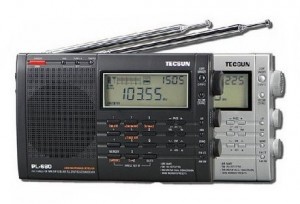
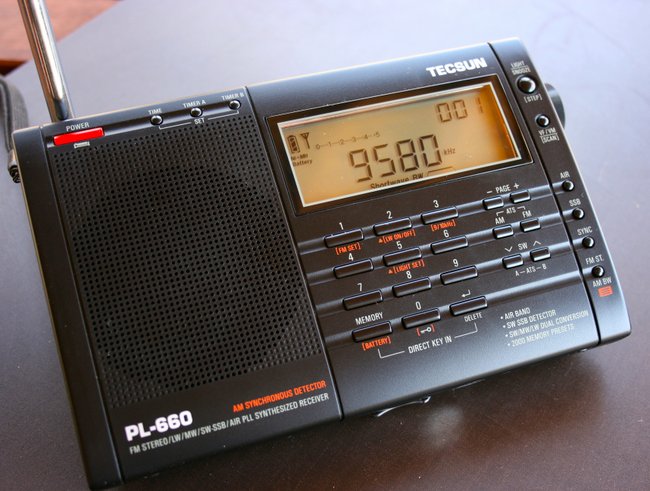
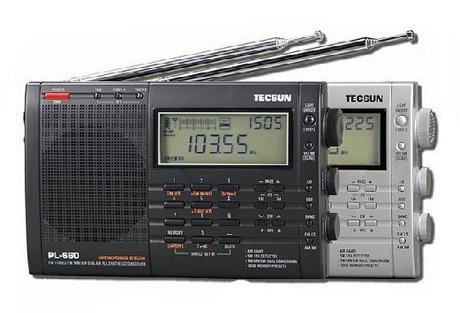
The Tecsun PL-660

The Tecsun PL-660

Option 1: Portable radio

Most of the good portable radios on the market use AA batteries and can run quite a long time on a set.  I would recommend purchasing the Tecsun PL-660, Sangean ATS-909X, or the Sony ICF-SW7600GR. The PL-660 is possibly the best choice for ease of use and overall value; it’s an impressive little radio, and has good audio fidelity for the size.

Since these radios operate from AA batteries, I would simply purchase a 12V AA battery charger, if you have 12 volts DC available.
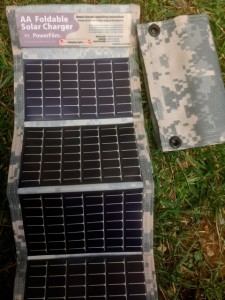
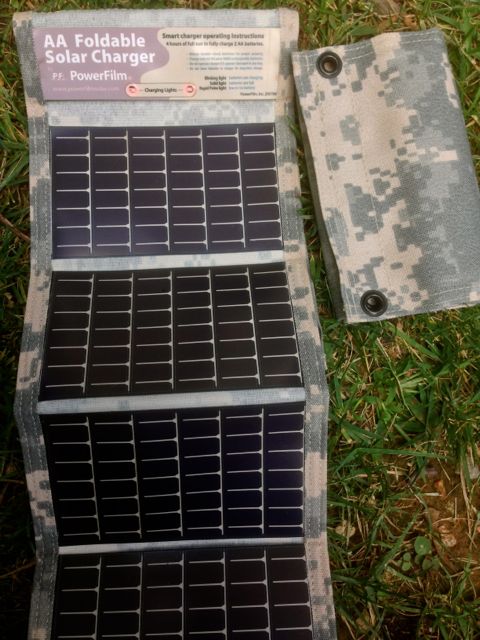
A PowerFilm Solar AA charger unfolded and charging on left, folded panel on right.

A PowerFilm Solar AA charger unfolded and charging on left, folded panel on right.

The other option would be to purchase a solar AA battery charger. I’ve tested a lot of these, and the best I’ve found are made by PowerFilm Solar here in the USA. What I like about these solar chargers is that they can charge either two or four batteries at a time––the panel folds out and has enough wattage to charge depleted cells within a few hours of sunlight exposure.  Folded up, they’re small enough (a little larger than a wallet) to be used for travel.

I have used PowerFilm’s solar chargers extensively and they continue to impress.  Note, however, that they are not waterproof––you cannot leave them outside in rainy conditions.

This radio/panel combo can be purchased for under $250 US (£155/185 EUR).

Option 2: Tabletop receiver
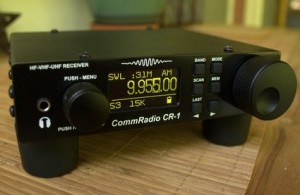
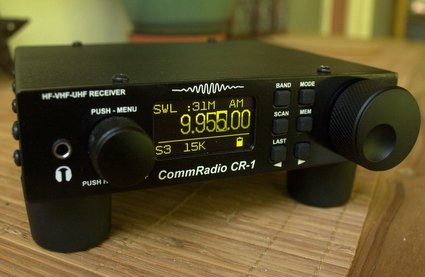
The CommRadio CR-1

The CommRadio CR-1

If you have access to 12 volts DC in your home or cabin, and you’re less concerned about portability, then a tabletop receiver might fit your price range and will offer you better performance, when coupled with a reasonable outdoor wire antenna.

You would want to find a tabletop receiver that could run on 12-13.8 volts DC. Many amateur radio-class communications receivers will do this. I would recommend one of the following:

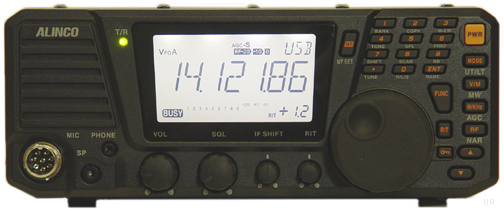
  • The Alinco DX-R8: an excellent receiver for the price. You can find them used for around $350 US. I ran one off solar power here at my home for almost 2 years.
  • The CommRadio CR-1: A new product this year. A bit out of your £100-200 price range, Phil, but worth considering as not only is it beautifully engineered, but it’s portable, and operates anywhere from 6 to 18 VDC! As a bonus, it has a built-in battery that will power it for hours.  I’m due to publish the full review of the CR-1 very soon–here’s a quickie.
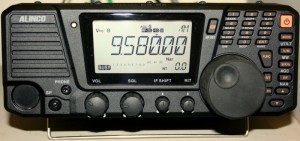
AlincoDX-R8T

The Alinco DX-R8T tabletop shortwave receiver

One side note: It’s possible–depending on the type you use–that your home’s solar charge controller(s) could inject a lot of noise into your daytime shortwave radio listening.  My charge controller does this, but I can turn it off and, if it becomes too much of a problem, actually modify it to do charging with less switching.
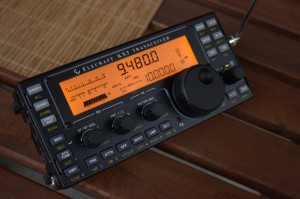
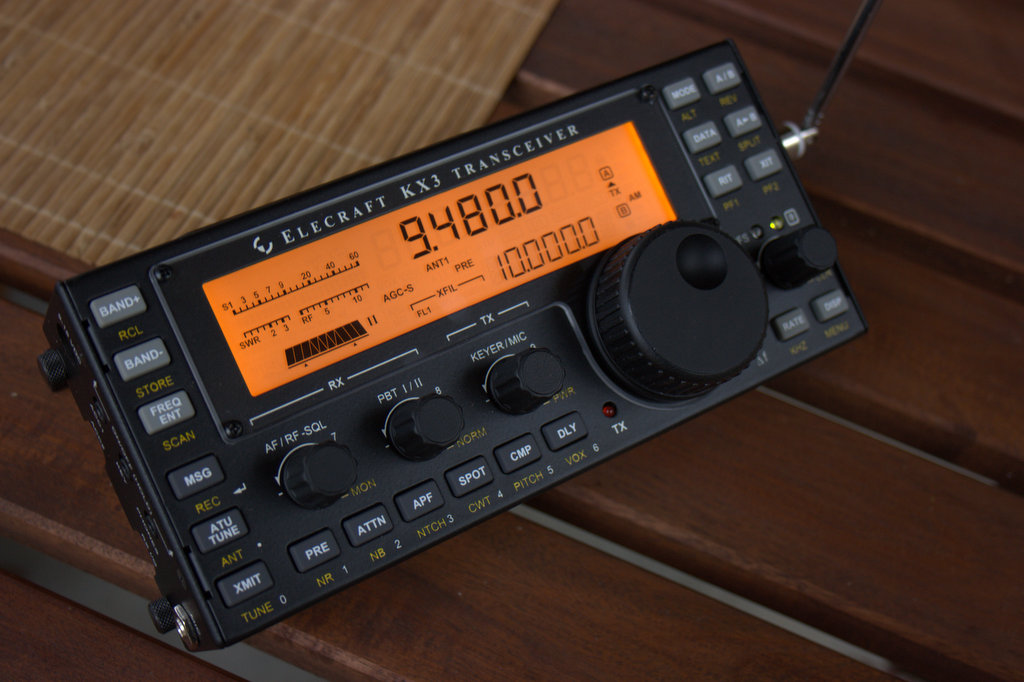
The Elecraft KX3 general coverage Transceiver (Click to enlarge)

The Elecraft KX3 general coverage Transceiver (Click to enlarge)

Option 3: Get your amateur radio ticket and a transceiver

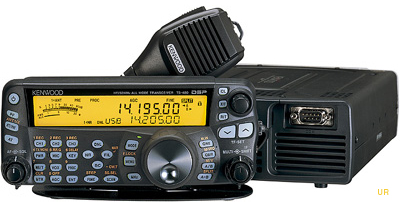
This option is identical to option 2, other than instead of buying a receiver, you buy a transceiver. I’m talking about becoming a licensed amateur radio operator or “ham.” Living where you do, and being a bit of a preparation guru, I can assure you that a ham radio license is a true asset and can keep you connected with the world when everything else fails or when you want to chat with a friend 3,000 miles away.

It’s well beyond the scope of my advice here to cover amateur radio–it’s a vast and multi-faceted hobby–but as a ham (callsign K4SWL–and, formerly, M0CYI in the UK) I can tell you that becoming one is a decision you’re not likely to regret.
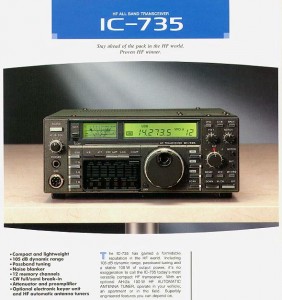
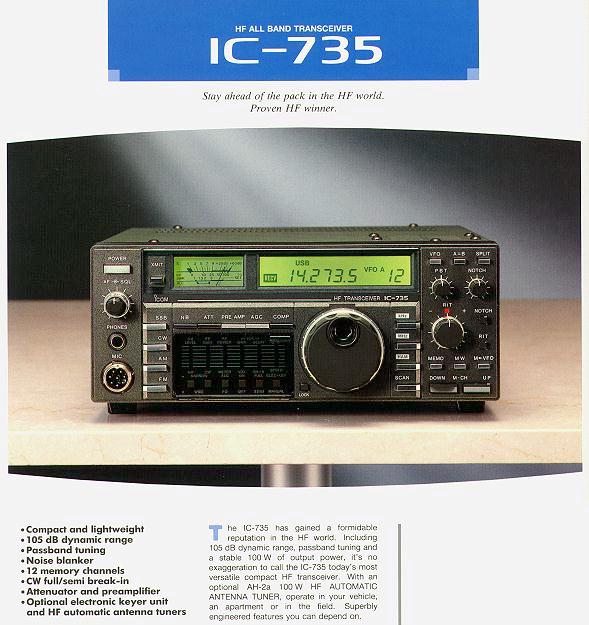
A brochure of the original IC-735. These can be easily found for $300-350 US used.

A brochure of the original IC-735. These can be easily found used for $300-350 US (220-260 EUR).

If you’re licensed, you can purchase a general coverage ham radio transceiver and not only be able to use the rig for ham radio purposes, but also for all aspects of shortwave radio listening. I spent many years using the (now very affordable) Icom IC-735 as my shortwave receiver. Though I have dedicated receivers at home, I now use the Elecraft KX3 for ham radio and receiving on the go.  I recently posted a review of the KX3 that can better explain in detail.

Phil, since you’re from the UK, consider contacting the RSGB and asking about becoming a ham in Spain (or getting licensed in the UK and getting a Spanish call sign). If you lived in the US, I’d advise you contact the ARRL, or in Canada the RAC.  Most countries, however, have a support organization for amateur radio–the IARU can help guide you.

More options?

I’m sure SWLing Post readers may also have suggestions for off-grid SWLing–please check this post’s comments.

Readers: be sure to check out Phil’s website about simple, off-grid living in southern Spain.  Phil, thanks for the question!

Phil identifies mystery radio as the Digitech Audio AR1945

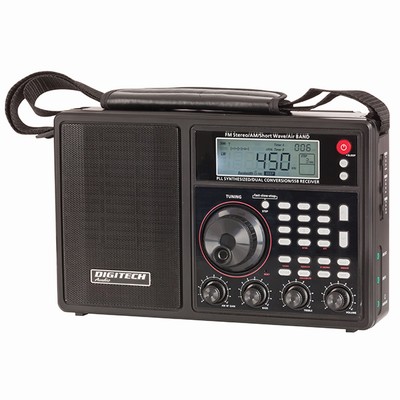
The Digitech AR1945 portable radio

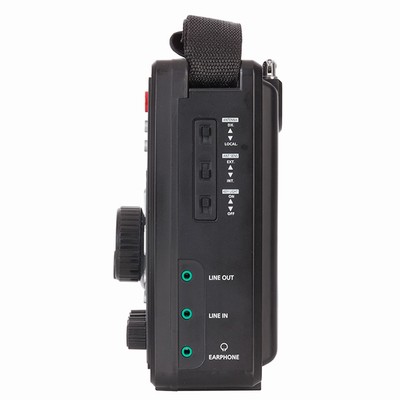
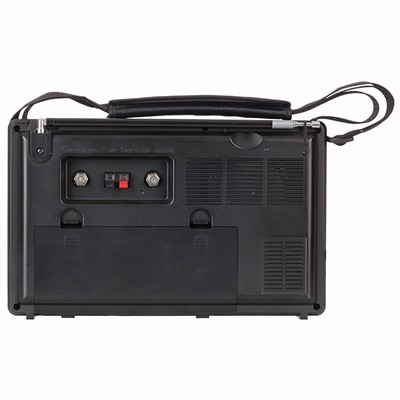
The Digitech AR1945 portable radio (Click to enlarge)

SWLing Post reader, Phil, noticed the unidentified radio from this post as the Digitech Audio AR1945.

He comments:

This radio has been released in Australia via the Jaycar Electronics Stores as the Digitech Audio AR 1945. It has all the hallmarks of Redsun radios.

I bought one and overall the performance is very good on MW and SW, FM is ok and AIR band isn’t too bad. The big drawback is the SSB. It is dreadful, by far the worst SSB demodulation I have ever come across in a radio. This needs to be addressed and once done so, will be a good receiver.

Pity it doesn’t have Synchronous detection as, if you look at the display carefully, provision has been made for this feature. I wonder how it can be activated? I would appreciate any comments on a fix for the SSB

Phil, thanks so much for the mini review. Here’s a link to the AR1945 on Jaycar’s website: http://www.jaycar.com.au/productView.asp?ID=AR1945

Has anyone found a mod to activate a potentially dormant sync detector or to improve SSB demodulation? Please comment.

I’ve posted various views of the Digitech AR1945 below, along with this full description from Jaycar’s website:

The Digitech AR1945 portable radio“Ideal for a novice ham radio licensor, keen fisherman or even just the outdoors type, this radio has everything you will ever need in a radio with the added function of single-sideband modulation (SSB). SSB is used to obtain current weather reports, so it is perfect to take to sea to avoid changing weather conditions. However with great FM and AM coverage and battery operation it is also perfect for camping, BBQs and thanks to its world/local time selection clock and alarm, it can even be used as an alarm clock! Additional features include auto tuning saving, 500 memories and keypad direct entry. This is certainly a radio of many uses! Power options are 6 x AA (not included) used with supplied 6 x D size battery adaptors, 6 x D batteries (not included) or the supplied 9V PSU. Supplied with a carry strap.”

AR1945side• FM: 87.5-108.0MHz
• MW(AM): 522-1620kHz (9kHz); 530-1710kHz (10kHz)
• AIR: 118-137MHz
• SW: 1,711-29,999kHz
• LW: 144-450 kHz

Features:
• Large back lit LCD 
• RF gain control 
• Bass & treble controls
• Key lock
• IF output 
• Line in and out 
• Earphone socket
AR1945back• Speaker 5W/4 ohms
• Local/DX antenna switch
• External antenna connection 
• Internal full range speaker 
• Mains or battery operated 
• Dimensions: 310(W) x 195(H) x 100(D)mm


Of course, this radio is most likely available in other parts of the world under different brand names. Let us know if you’ve seen it.

Grundig G3 discontinued, Tecsun PL-880 on the way

The Grundig G3 shortwave radio.

The Grundig G3 shortwave radio.

Not really a surprise, but I’ve confirmed that the Grundig G3 has been discontinued. They are still available, for the moment, from Universal Radio and online sources like Amazon.com. I would not advise buying from Amazon as I’ve received numerous complaints that they’ve shipped faulty units. Universal Radio, on the other hand, is testing each an every G3 leaving their shop.

With the exit of the G3, this leaves Grundig with the following selection of shortwave portables:

TecsunPL-880Box

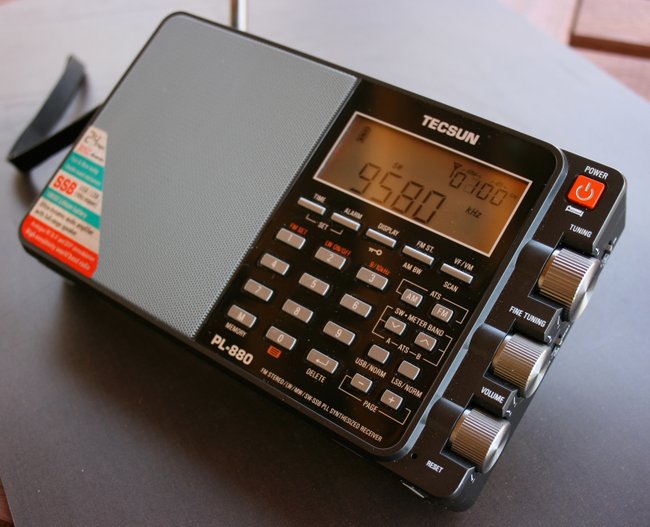
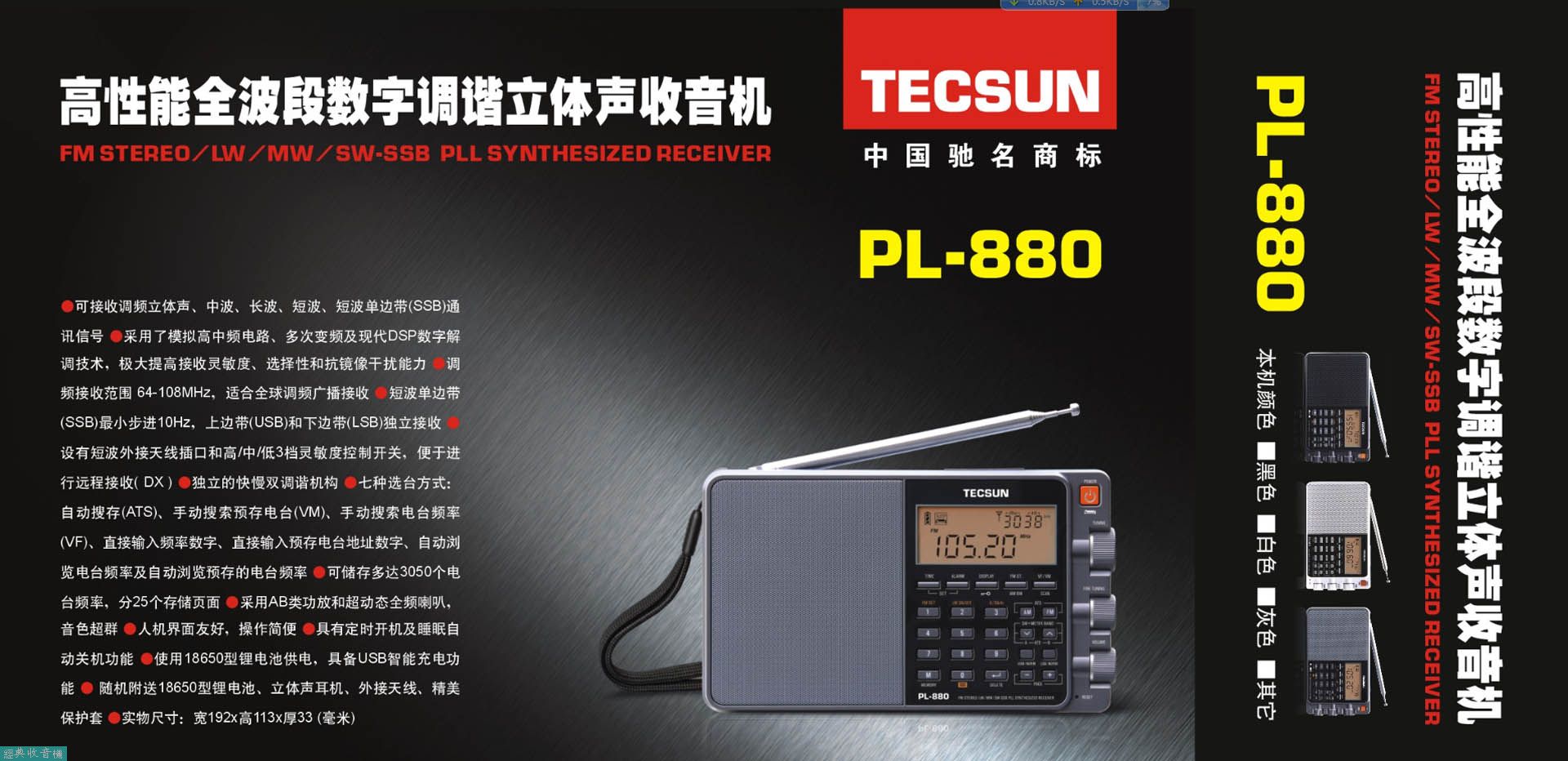
Tecsun PL-880

Tecsun, meanwhile, is adding to their extensive line of shortwave portables. Indeed, this morning, W4ASZ comments:

“I found this link courtesy of the manly men at Herculodge :

http://tecsunradio.com/2013/09/14/new-arrival-tecsun-pl880-fm-radio-dsp-stereo-speaker-coming-soon/9030

Looking pretty good !”

I agree and I do feel cautiously optimistic about the Tecsun PL-880. Could it be my new travel radio? Though I still happily travel with the Grundig G3, Sony ICF-SW7600GR and Tecsun PL-380, a guy can’t have too many radios to choose from!

I’ll plan to review the PL-880 once it’s available. I’m particularly interested in seeing how it stacks up against the venerable Tecsun PL-660.

Stay tuned!

Review of the RadioShack AM/FM portable digital radio, Model 12-587

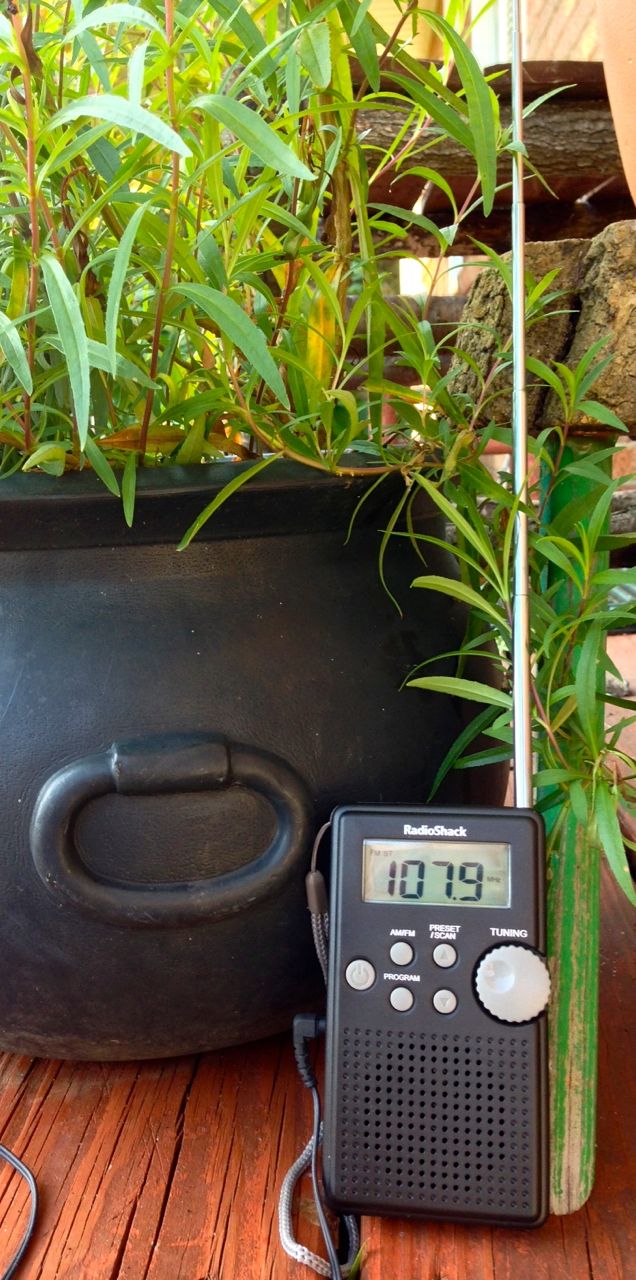
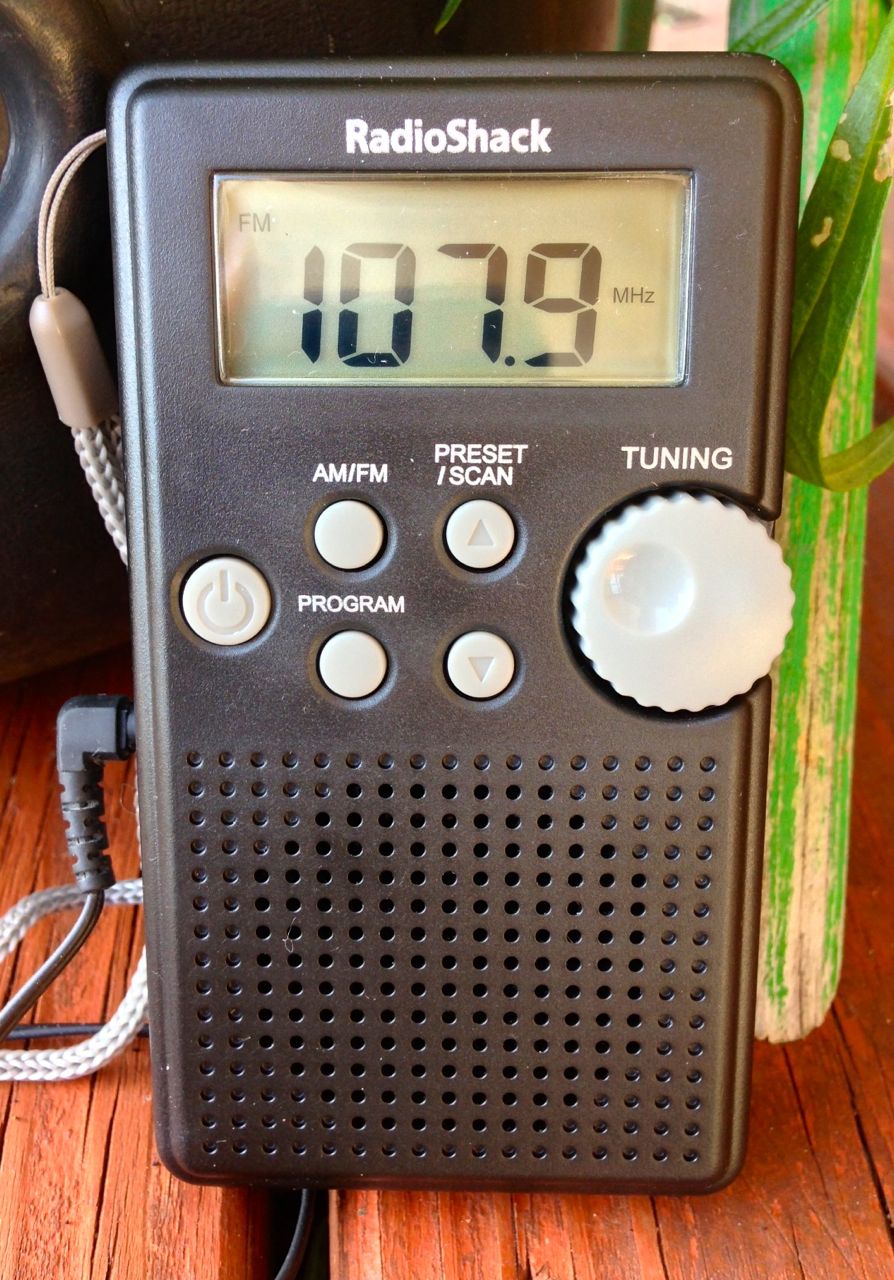
The RadioShack Model 12-587 AM/FM Radio

The RadioShack Model 12-587 AM/FM Radio

Three days a week, my father––now in his seventies––takes a three mile walk through his home town, revisiting the neighborhoods of his youth. He began the walks upon retirement, and in my opinion, the routine has helped keep him in great shape. When he first started walking I learned he was carrying around a heavy AM/FM radio with him.  I bought him a bargain one-off Coby AM/FM portable that is not only lightweight but sports a handy neck strap. Dad’s loved it. Indeed––much to my surprise––it’s lasted about ten years, and is still playing, although starting to show signs of wear…

So I decided it was time to test drive a suitable replacement. After searching, I found the RadioShack Model 12-587 AM/FM radio. At a clearance price of $14.99 (US), there will be no loss of sleep if Dad misplaces it or drops it on the pavement.

Still, I couldn’t resist giving it the once-over, and thought I might share the mini review that resulted. As I always say for radios in this price range, my expectations were low.

Here’s a summary of this little AM/FM radio’s pros and cons:

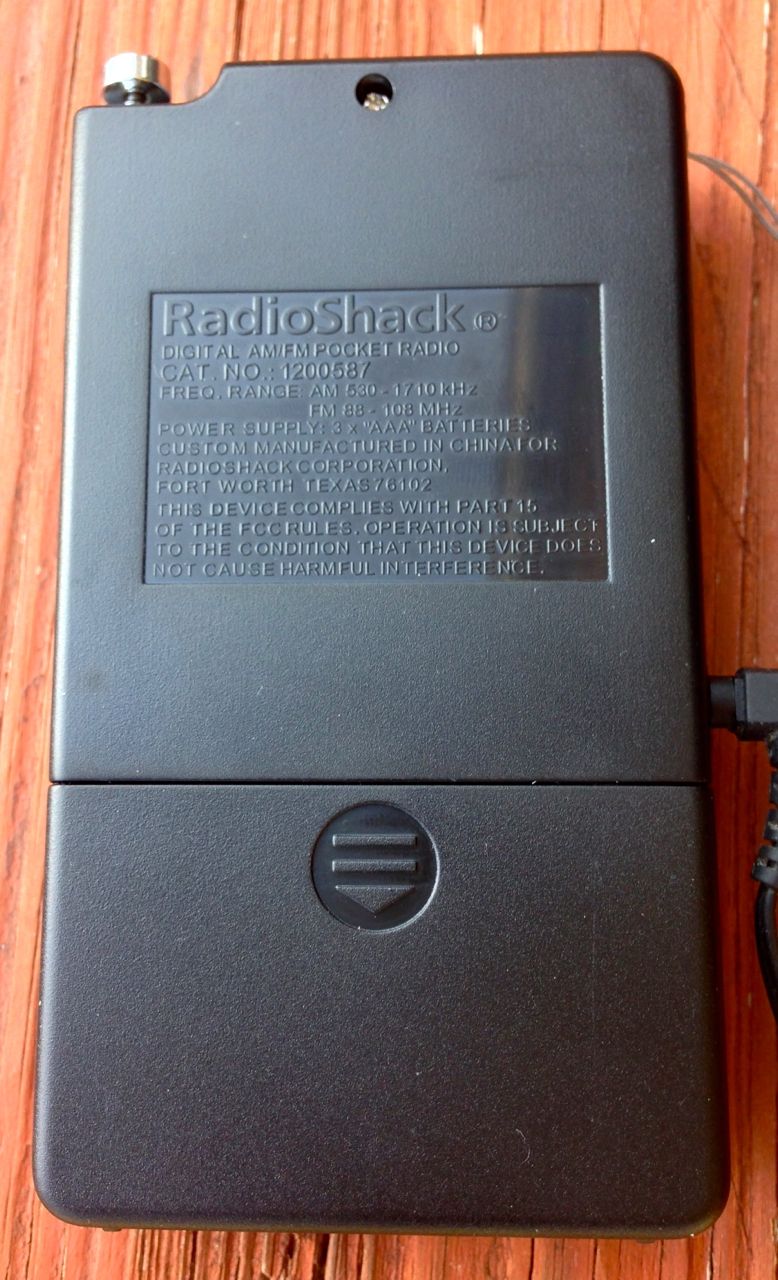
Back of model RadioShack 12-587

Back of model RadioShack 12-587

Pros:

  • Very good FM selectivity and sensitivity
  • Excellent FM stereo lock
  • Scan function both useful and quick
  • 10 AM and 10 FM memories (see con)
  • Large, amber back-lit LCD display
  • Simple control lock switch on right side
  • AM (medium wave) sensitivity adequate
  • AM nulling above average
  • Plastic “blister” packaging very easy to open!

Cons:

  • Tinny sounding audio via built-in speaker
  • Headphone audio lacks high/low; mid-range only
  • Memory allocations supposedly volatile (when batteries are replaced)
  • AM frequency steps fixed at 10 kHz (cannot adapt to 9 kHz steps used in rest of the world)
  • AM (medium wave) sensitivity mediocre at best
  • Complete mute while tuning; not capable of band-scanning
  • Dimple on tuning knob not useful
  • Very sensitive to noise (QRM) on the AM band, resulting in static popping/crackling in audio

Obviously, this is not a radio for the radio hobbyist or world traveler, as it lacks any real medium wave sensitivity and cannot tune in 9 kHz steps. FM tuning is also locked on odd frequencies, thus will not work throughout parts of the world with even spacing. And though the radio is touted as having “extended bass,” the audio is tinny, even via headphones.

RadioShack-Model12-587-AMFMRadio-2BUT.  This is a perfect example of a situation in which, though cons outweigh pros, the RS Model 12-587 is a great match for its intended purpose: my father’s morning walks. Why? It’s a simple-to-operate radio with a large, back-lit display (Dad won’t need to put on his glasses to read it). It receives local AM and FM stations very well. The mid-range audio––while lacking ample fidelity for music––are perfect for the talk shows he listens to while walking. The radio is durable, lightweight, easy to tune, and has a lock feature. It is also remarkably easy to program memories: simply press the program button until preset flashes in the LCD display, use the scan up/down buttons to choose a memory number then press program again.  It’s also very affordable, so no problem to replace as necessary.

In conclusion, the RS Model 12-587 is not a performance radio––and I wouldn’t generally recommend it––but it suits my father’s needs very well.  Like to walk or run? Maybe it’s just what you’re looking for, too.

Redsun RP-3100 ready for pre-order

Redsun-RP3100Radio Flynn writes:

I found some information about the release date of the Redsun RP-3100 and posted it on Herculodge – lets hope it is real:
http://herculodge.typepad.com/herculodge/2013/09/not-to-fan-the-flames-of-redsun-rp-3100-lust-.html

The Redsun RP-3100 has been rumored for ages.  Glad to see it’s coming to fruition!

The Ten-Tec RX-320D and Model 1254 have been discontinued

Tthe RX-320D black box receiver

Tthe RX-320D black box receiver

I just confirmed with Ten-Tec that the RX-320D PC controlled receiver and the Ten-Tec Superhet receiver kit, the Model 1254, have both been discontinued.  A Ten-Tec representative told me the reason both of these models have been discontinued and removed from Ten-Tec’s product line is because one of the parts used in production is now obsolete.

A long run…

The RX-320 and RX-320D have had a very long product life as the RX-320 was introduced in the late 1990’s (1998, if memory serves)–pretty amazing.

I owned an RX-320D for a long time and thought that it was still a great value. Here’s a review I wrote in 2009.

The Ten-TEc Model 1254 "superhet" receiver

The Ten-Tec Model 1254 Superhet Receiver kit

As third generation SDRs have emerged, and become so affordable in the past few years, it’s hard to justify the purchase of a receiver whose control software was designed for Windows 95.

So long RX-320D, you’ve had a long run…

I have SWLing Post reader, Larry, to thank as his recent inquiry about the Model 1254 Superhet kit prompted me to call Ten-Tec for verification.