Shortwave listening and everything radio including reviews, broadcasting, ham radio, field operation, DXing, maker kits, travel, emergency gear, events, and more
Many thanks to SWLing Post contributor, Eric McFadden (WD8RIF), who notes that the excellent website, Atlas Obscura, recently featured The Shipping Forecast:
Why a Maritime Forecast Is So Beloved in the United Kingdom
For the penultimate song on their 1994 album Parklife, Blur chose the swirling, meditative epic, “This Is a Low.” The song envisions a five-minute trip around the British Isles as an area of low pressure hits.
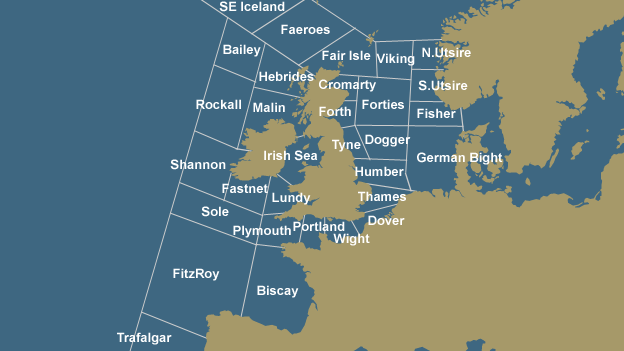
“Up the Tyne, Forth, and Cromarty,” sings the lead singer Damon Albarn, “there’s a low in the high Forties.” The song’s litany of playful-sounding place names, including the improbable “Biscay” and “Dogger,” may seem obscure to listeners abroad, but to a British audience, they resonate.
The song’s lyrics were inspired by the Shipping Forecast, a weather report that is broadcast on BBC Radio 4 on behalf of the Maritime and Coastguard Agency. Sailors working around the coasts of Britain and Ireland, recipients of the wrath of the North Atlantic and North Sea, are the ostensible beneficiaries of the forecast.
But, for listeners who tune in while tucked in bed rather than sailing the high seas, the reassuring sound—a simple, steady listing of conditions in the seas around the British Isles, broken down into 31 “sea areas,” most of which are named after nearby geographical features—is something more akin to the beating pulse of the United Kingdom, as familiar as the national anthem or the solemn chimes of Big Ben.[…]
When I lived in the UK, I would often fall asleep and/or wake up to the Shipping Forecast. Here in the States, I can listen to the forecast live via the U Twente WebSDR, but I rarely remember to do so.
And, of course, I can navigate to the Radio 4 website and stream current and past forecasts on demand, but I find the audio a little too clean and full fidelity. I prefer listening to my maritime poetry via Amplitude Modulation (AM)!
Many thanks to SWLing Post contributor, The Professor, who shares the following guest post:
Late Night Pre-Christmas Medium Wave Scan, NYC 2017
I haven’t recorded a proper scan of the AM dial in New York City for a while, so I took a shot at it a week before Christmas, starting around three A.M. Monday morning, December 18.
I asked Thomas if his readers might be interested in the audio from an AM scan here and some annotations, kind of like I used to do on my Radio Kitchen blog not so long ago. When I scan the dial I often start at the top of the AM dial and work my way up, but sometime it’s fun to do it the other way around and begin with more low power small stations where the fare is a little more exotic than the typical talk and news formats you hear from regional and powerful clear channel transmitters up the dial.
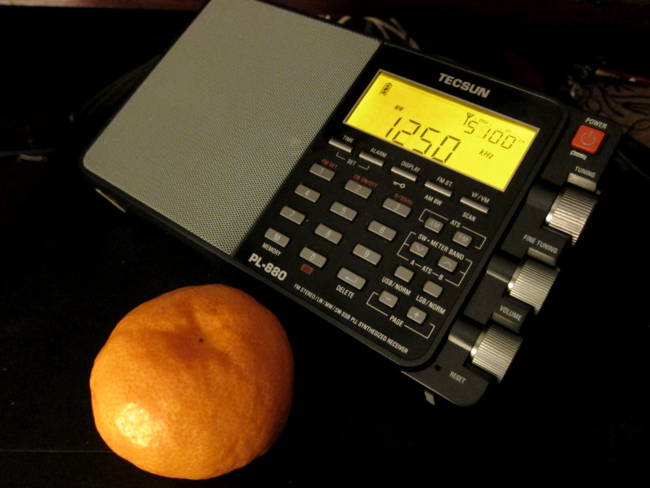
I have a number of radios that would really be better candidates to do this sort of thing, but since I’m kind of between places right now and most of my radios are in a storage unit somewhere, I’m using the Tecsun PL-880 I have with me. And typically I’d do this with a loop antenna up next to the radio, but they’re in storage too. So it’s just the stock ferrite antenna inside the radio doing all the work here. There’s some of the typical urban RF noise in the mix, but it’s not all that bad. Then there’s the awful splatter of digital IBOC to plow through. Not fun to listen to, and some stations you might otherwise find are masked by hash.
If you don’t listen to AM this late at night (or this early in the morning), it’s really not a great time to hear live programming. A lot of talk shows from daylight hours are rerun at this time, and the few music stations you might find are often running music automation with no live DJs. But a few talk local talk shows in big cities are live, and syndicated ones like Coast to Coast or Red Eye Radio are broadcast live overnight on quite a number of stations.
Instead of trying to do a lot of DX digging and pull in the really hard to hear stuff, I’m not equipped for that right now so I just plow through looking for what I can find without too much trouble. As I said, I didn’t have another antenna to assist me, but I duly rotated the radio and adjusted the bandwidth when appropriate. If you’re keeping score at home I do at least pause on every viable MW frequency, even if there’s nothing there.
I wouldn’t say it’s a typical late night New York medium overview of the band, as a few common finds on the dial were missing, and didn’t find many of the smaller Canadian locals I’ve heard on other nights. The one difference is that for years I’ve been listening from my former home in Greenpoint, Brooklyn. For now I’m down in Bay Ridge, at the bottom southwest corner of Brooklyn, and a few things are different. Like the very first station I come across.
1710 kHz – This scan begins with an oddity, WQFG689 a “traveler’s information station” broadcasting just a notch above the x-band, but a spot on the dial that is still included on contemporary AM radios. According to Wikipedia it’s the only legit station in America broadcasting on 1710. It’s owned by Hudson County in New Jersey broadcasting on a handful of ten watt transmitters. I’m assuming this reception might be coming from Jersey City, which is across the water not far from here. A few years ago one of the Hasidic communities in Brooklyn had a lo-fi pirate station at this frequency, but I haven’t heard it there in a long time. And as WQFG689 sits in a very lonely place on the dial, this station is a popular DX target. Apparently at this hour they were experiencing “technical difficulties.”
1690 kHz – Some contemporary R&B style pop song with a male singer. It’s an English language performance however (is it Spanish?). I’m not sure what this might be, but from looking around on the web it may be CHTO, a multicultural station in Toronto, Ontario.
1650 kHz – A weak reception of a talk radio show. Some discussion of the desires of Harvey Weinstein and other matters. Perhaps this is WHKT in Portsmouth, Virginia.
1630 kHz – At this spot on the dial I receive an image of WINS (1010kHz) as well as some station broadcasting the unavoidable Brother Stair. Don’t know exactly what is going on there, but the PL-880 is known to toss in some stray images on the dial in dense radio markets like New York.
1600 kHz – Some spirted South Asian pop music. Bollywood stuff I suppose. This would be WWRL here in New York, broadcasting from Secaucus, New Jersey.
1570 kHz – I believe this is the Eagles singing about Christmas. I have no idea what station this might be. WFLR in Dundee, New York is a guess.
1560 kHz – A little bit of Bible from Family Radio – still on New York City radio, but not on the FM dial anymore. Otherwise known as WFME here in New York. Armed with fifty-thousand watts, their signal has quite a reach. I hear the ghost of Harold Camping on here from time to time.
1530 kHz – Speaking of ghosts, it’s Ol’ Brother Stair buying some time on WJDM in Elizabeth, New Jersey I believe. Is he in prison yet?
1520 kHz – Sports talk from WWKB in Buffalo, New York.
1500 kHz – A discussion of Christmas treats on WTOP in Washington, D.C.
1480 kHz – Seasonal mischief in Chinese from WZRC, a Cantonese station here in New York.
1460 kHz – Some distant choral or Christmas music from somewhere.
1430 kHz – Casual talk of God’s happiness plan from WNSW in Newark, New Jersey. Not to judge, but Catholic talk radio is just more civilized than most Protestant talk radio. A little more breezy than the fire and brimstone stuff. They always sound like their shirts are ironed. Carrying the Catholic radio network “Relevant Radio” is the latest format at this frequency in the city. Before that the “Voice of Russia” was broadcast here.
1380 kHz – More Chinese talk. This time it’s from another multicultural station – WKDM here in New York City.
1350 kHz – A poor reception of late night talk. I believe it’s “Red Eye Radio.” I really don’t know where this is coming from.
1310 kHz – A female host on a talk radio program. Mediocre reception from another unknown AM station.
1300 kHz – Again, a female conversation here as well, but this time the topic is spectator sports of some kind. I’m thinking this is the ESPN affiliate WAVZ in New Haven, Connecticut.
1280 kHz – A medical case study in Spanish and English from WADO, here in New York. This is a Spanish news/talk station owned by Univision.
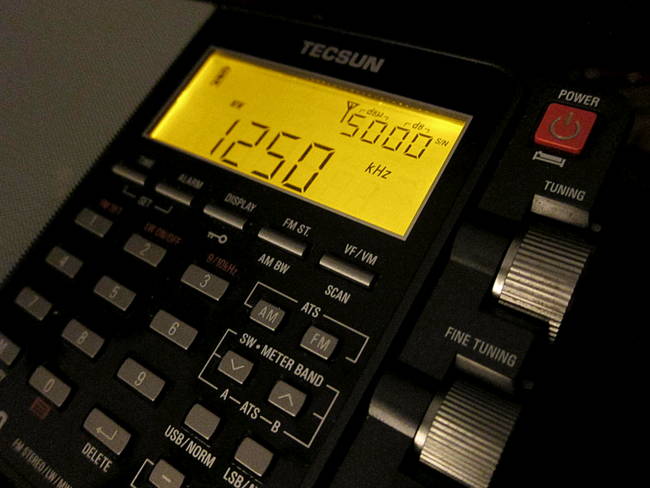
1250 kHz – It’s WMTR in Morristown, New Jersey, which is essentially the only true oldies station that reaches New York City. During the day it’s not a rock solid signal in New York, but anybody who knows how to fiddle with a decent AM radio can pick it up. At night, I had a hard time getting a good read on WMTR when I lived up at the top of Brooklyn, but down here in Bay Ridge at the South Brooklyn waterfront it’s pretty solid as you can hear. Starting with “Da Doo Ron Ron” and “Sugar, Sugar” I let it roll for a few minutes. Not many radio stations play a “classic oldies” format these days, or if they do it might just be the torture of a super tight 300 song playlist. While WMTR can’t top the huge music library of WLNG out at the end of Long Island, they rotate a respectable mix of the old hits. There’s a rather interesting Wikipedia entry for WMTR, where you can read about their experimentations with AM Stereo and how they’ve tweaked their oldies rotation over the last few years, partly in response to WCBS-FM in New York moving away from oldies into a morass of format noodling.
1210 kHz – WHPT in Philadelphia playing the conspiracy/paranormal Coast to Coast program, the most popular syndicated overnight radio show in North America. It’s George Knapp hosting, but during the week it’s George Noory. The original host and creator of the program, Art Bell is long gone after quitting radio about five times. After one A.M. or so, moving across the AM dial means you’ll come across Coast to Coast many times. Tonight the topic is Area 51, which is hardly surprising.
1190 kHz – Some contemporary R&B flavored Christian music from WLIB. in New York. This station was actually the original flagship station for “Air America,” the short-lived progressive talk network. For those of you who may remember WOWO, the Midwest clear channel 50,000 watt station heard far and wide at 1190 from Fort Wayne, WLIB’s powerful 30,000 watt upgrade is directly related to that Indiana station’s demise as a nighttime powerhouse. Back in 1994 the owners of WLIB actually bought WOWO for the specific purpose of cutting back their signal after dark (It’s now only 9,300 watts and directional) so WLIB’s could be increased up to what it is today. Sneaky, eh?
1180 kHz – Coast to Coast again, this time coming from in WHAM, in Rochester, New York. Great call letters.
1170 kHz – Coast to Coast coming from WRVA in Wheeling, West Virginia this time.
1130 kHz – WBBR in New York, otherwise known as “Bloomberg Radio.” I may find it kinda tedious, but if you’re a big time profiteer this might be your favorite radio station. Just listen to the commercials, sheesh! And as a bonus you get a public service announcement about how high-tone Manhattanites should prepare for disaster.
1110 kHz – A strong read of Coast to Coast from WBT in Charlotte, North Carolina.
1100 kHz – It’s WTAM in Cleveland, Ohio broadcasting Coast to Coast. Not as strong as the signal from Ohio.
1090 kHz – WBAL in Baltimore, Maryland offering some tips on “layering” customer rewards programs.
1050 kHz – Sports in Spanish from WEPN in New York City.
1030 kHz – WBZ in Boston, Massachusetts. Something about hips. One of the few talk stations I’ve heard which still specialize in local programming around the clock. WLW in Cincinnati would be another.
1010 kHz – WINS in New York. News radio which still features the hokey teletype sound effects in the background. I let this play for a few minutes, including a PSA about a cocaine cessation program.
960 kHz – Something about a meatball sub. It may well be WELI in New Haven, Connecticut.
970 kHz – 970 “The Answer,” otherwise known as WNYM in Hackensack, New Jersey with top of the hour Fox News. The big story – the power outage at the airport in Atlanta.
970 kHz – More Fox News from WNYM in New York City.
950 kHz – Choral Christmas music. Probably the Family Radio outlet WKDN in Philadelphia, Pennsylvania.
930 kHz – WPAT, a brokered station in Patterson, New Jersey. In this late night slot it’s either an infomercial or just a discussion of meditation and mindfulness.
920 kHz – Newsradio 920, an iHeartMedia station – WHJJ in Providence, Rhode Island. The weather.
910 kHz – “Eight Days a Week” from the Beatles. I don’t know where this is coming from, but it might be bumper music for a talk radio show like Coast to Coast (They often let the bumper music play for a minute or two) or a full playing of the song on a music radio station. Some crosstalk from a talk station in the mix on this reception.
900 kHz – CHML in Hamilton, Ontario. I know this Canadian news and talk station for playing old time radio shows overnight. Kind of odd to me that they’re covering the hearings of an American judge. Followed by some news about Prince Harry.
880 kHz – It’s WCBS in New York, a powerful clear channel news outlet heard across the country. Here you get a dramatic report on four separate shootings in New York City, the kind of news you don’t hear so much these days. I let this play for a few minutes.
860 kHz – Very poor reception of CJBC, a French CBC outlet in Toronto. I’ve heard a wide variety of great music on this station over the years. I almost always would get a good copy on this station from my former home in North Brooklyn, but then again late night AM reception does vary.
820 kHz – WNYC-AM in New York, the sole NPR outlet on the AM dial in the city. Overnight they carry the BBC World Service, which is what you hear in this scan.
770 kHz – Trump apologetics from “Red Eye Radio” on WABC in New York. While this syndicated program has roots in Bill Mack’s great country music program, now it’s just one more conservative talk show. But it’s the exception to the rule as most live overnight talk radio programs don’t stray into political opinion like this, unlike during the day when it’s everywhere.
750 kHz – WSB in Atlanta, Georgia. It’s a strong signal up the east coast. Here I find them in a commercial break which leads into a snippet of a rebroadcast of the Johnny Kielbasa Final Fast Food Review of 2017. Then the much beloved Meg calls in.
740 kHz – CFZM, or “Zoomer Radio” in Toronto, Ontario. It’s a quirky format, and often the only dependable music radio station for listeners in the eastern middle of North America. Here we’re treated to Jim Croce and some holiday fare.
710 kHz – WOR in New York. It’s former WABC talk host Mark Simone enthusiastically selling “My Pillow.” AM radio can be so comforting late at night, but the IBOC surrounding this frequency not so much.
700 kHz – You can almost hear WLW in Cincinnati, Ohio trying to cut through the IBOC from WOR, but it’s a mess. I guess it’s a sacrifice so all those dozens of HD radio listeners can enjoy WOR in all its digital glory.
660 kHz – WFAN in New York. Sports radio heaven I guess.
640 kHz – Some old-fashioned vocal belting in Spanish. Not sure what this is. Perhaps WWJZ in Mount Holly, New Jersey.
620 kHz – WSNR in Jersey City booming in. Here you get one of the epic and much-played recordings of Alexander Scourby reading from the King James Version. What a voice – warm, authoritative and dramatic. I have to admit he sounds dated, but in a good way. His recitation of the Bible is still popular almost seventy years after it was recorded.
610 kHz – Difficult to read signal of a talk radio show. Male host. I’m guessing this is sports talk WTEL in Philadelphia.
600 kHz – Another hard to hear transmission of a talk show with a male host, and it seems to be another sports discussion.
570 kHz – A cheesy Infomercial on WMCA. Once a great top 40 station, WMCA was also where the “Father of Talk Radio” Barry Gray got his start back in the nineteen-forties. Nowadays it’s a New York City Christian outlet owned by Salem Media, which apparently pays some bills by playing tightly edited testimonials praising the miracles of consuming fruit and vegetable pills. I never hear programming like this promoting a diet of real fruits and vegetables.
560 kHz – More Christian broadcasting from another former legendary top 40 station, WFIL in Philadelphia. They’re also owned by Salem. Some more traditional preaching, and not a great signal arriving here in Brooklyn.
From there, I stop by a couple very weak signals up to the top of the dial, and that’s it.
There were a number of radio stations I almost always hear late at nights that were absent or very faint in this scan, like WHAS in Louisville, WAY in Schenectady, WJR in Detroit and WHKW in Cleveland come to mind. And on a good night (especially if the IBOC on an adjacent station isn’t active), if I can null out a booming local next door I can receive WSM in Nashville, or KMOX in St. Louis and even occasionally pick up WLS in Chicago sneaking over the edge of booming clear channel WCBS at 880.
I hope some shortwave listeners find something of interest in this medium wave excursion. Thomas runs a fantastic blog, and I’m proud to be a little part of it today.
Thanks for listening, and reading.
Thanks so much, Prof, for taking us on a guided tour of the Brooklyn AM radioscape!
I thoroughly enjoyed your recordings and, especially, your commentary and insight. You’re welcome here on the SWLing Post anytime. I’m also posting your recordings and notes to the Shortwave Radio Audio Archive.
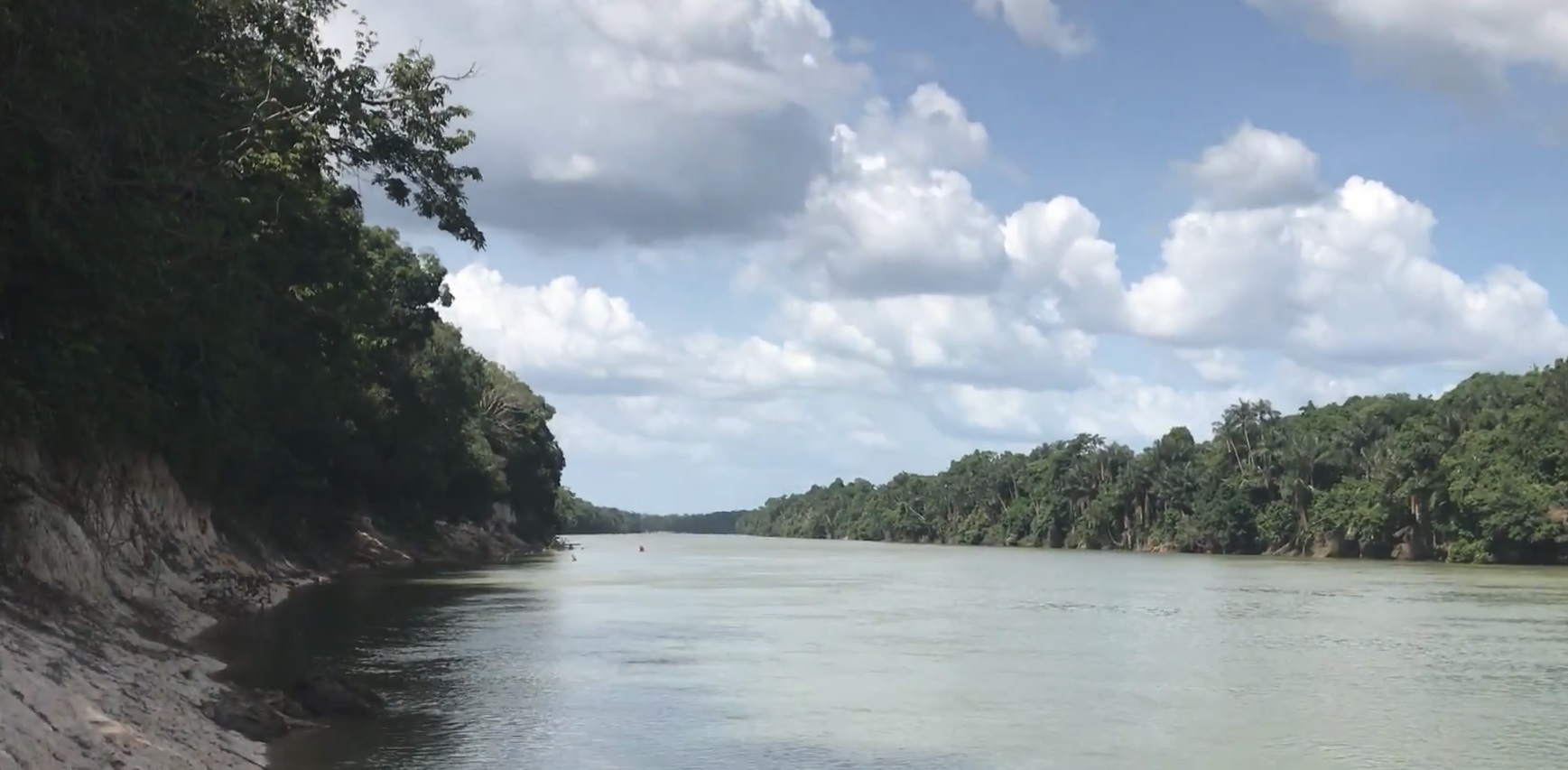
The beautiful Capim River in a land of Jaguars, Tarantulas and occasionally, wonderful shortwave DX
Hi there, I returned from my third trip to the Rio Capim area of Pará, Northern Brazil about 5 weeks ago, having been out there for exactly a month. Now, whilst this was strictly a business trip I always make time to tune around the bands, mostly shortwave, in the hope of copying some interesting DX. My previous two trips were reasonably successful; however, I didn’t really hear anything new – just lots of Tropical Band – and tropical stations with much greater signal strength and clarity. Part of the problem is one of which most of us suffer from – the dreaded local QRM. Even in the depths of the rain forest noise is present from building electrical systems (particularly lighting) and other equipment. In my first attempt to escape the noise on this trip I ventured out of my accommodation building (basically a very large hut) to the wire fence that separates us and the larger fauna (although having said that, the monkeys and everything else that lives in the area appears to have no difficulty scaling a 6 foot fence – funny that! ). Anyway, ultimately, you’ve really got to want to hear something special quite badly to venture out. I suppose it could be the definition of hard-core DX! I tried this only once because as I was copying a very nice signal from Radio Guinea on 9650 kHz, I found myself about 2 feet from a Tarantula Hawk Wasp dispatching a very large spider (check out the very brief video on my YouTube channel). That was me done for alfresco DXing in the jungle.
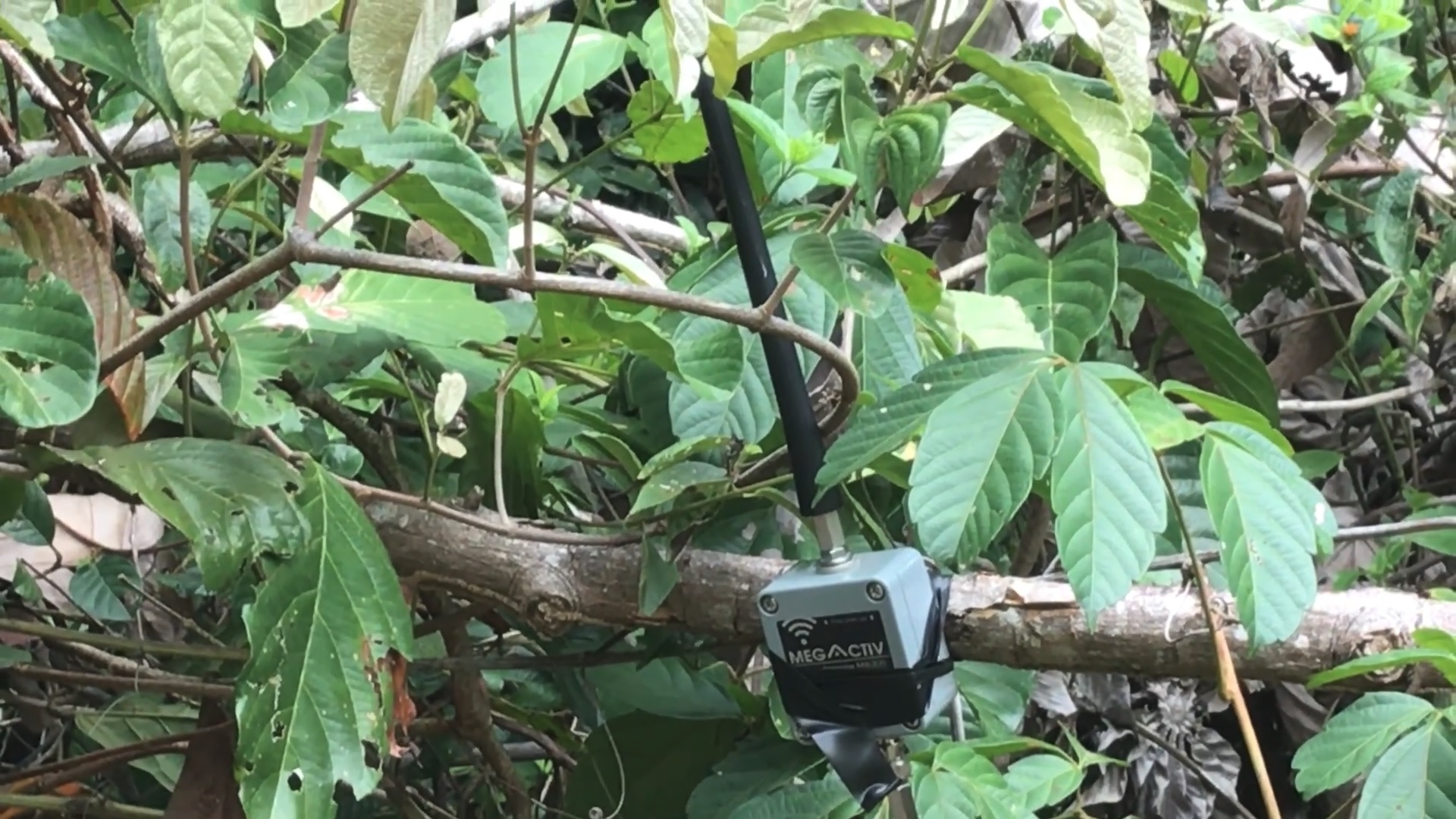
Bonito’s USB-powered MegActive MA305 E-field antenna up a tree…performed superbly in Brazil
Fortunately, I was lent a 4-wheel drive truck for the duration of my visit and so I decided to find a quiet location to park up and listen to the radio – therefore only having to venture outside (at night) to place my antenna. One evening after dinner I got in the truck and drove around the site for a while until I found a location, effectively on the edge of the jungle that was mostly very quiet. Perfect…as long as I didn’t end up as something else’s dinner. I took the super-compact USB-powered Bonito MegActive MA305 antenna with me on this trip because I’d already tested it at home on DXpeditions and in Crete and thus I was confident as to how superbly well it would perform in a quiet location. To supplement my antenna choices, during the first weekend, I made the 90 km drive to the nearest town and bought, amongst other supplies, a 40 metre length of speaker wire and a 3.5 mm jack connector to make a temporary long-wire antenna.
In my experience, there are roughly 3 tiers of Tropical and Tropical Band DX on short wave. There’s the bottom tier of stations which with a decent portable and a few metres of wire can be readily heard in the UK on a Dxpedition – and at home with a magnetic loop antenna, for example and a good quality table-top receiver or SDR. Amongst this group of signals I would include Rádio Clube do Pará, Brazil on 4885 kHz, Radio Difusora Roraima on 4875.3 kHz, Emisoras Pio XII 5952.5 kHz, Radio Santa Cruz, 6134.8 kHz etc. etc. On the next tier are tropical stations that are really difficult to hear in the UK – but can be heard with good propagation and good equipment. This group includes Radio Aparecida on 6135.2 kHz particularly, Rádio Educação Rural on 4925.2 kHz, Radio Tarma Internacional on 4774.9 kHz, Rádio Evangelizar (formerly Radio RB2) on 6040.7 kHz etc. There are many more examples from these two groups I could use, but you get the picture. Lastly, there is a tier of stations that are very rarely or never heard in Europe, irrespective of equipment or propagation. Often these stations operate with low TX power which makes them extremely difficult to copy anyway – and that leads to ambiguity farther as to whether they are even on-air. Furthermore, some of these stations broadcast very irregularly, which makes copying them even more of a lottery.
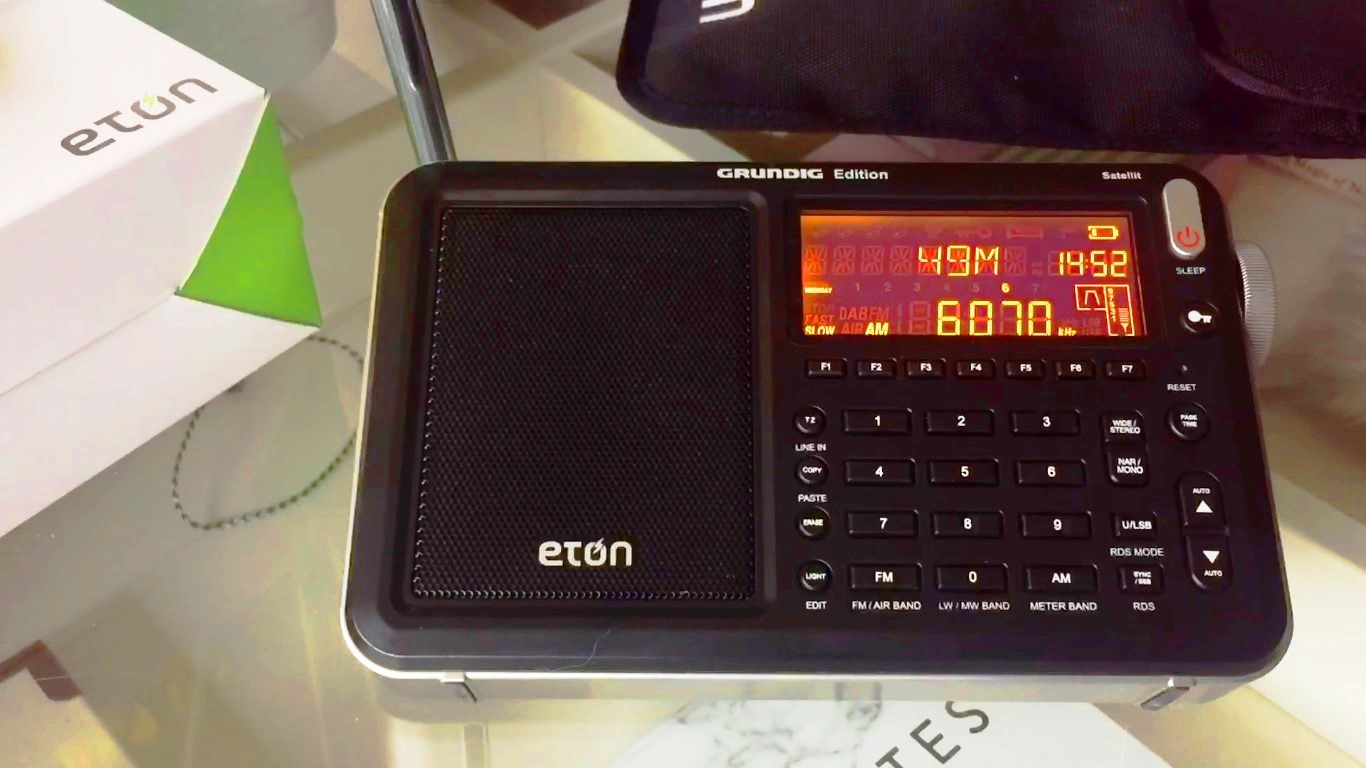
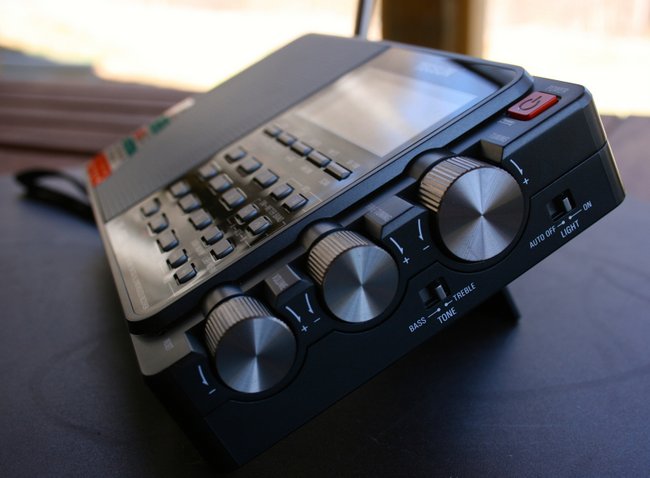
My mainstay travel receiver, the brilliant Eton Satellit..two-time veteran of South American DXing
In this context, a month in Northern Brazil was a useful timescale for surveying the Tropical Bands and geographically tropical stations for the presence of very rare signals. Fortunately, over many hours of listening in Rio Capim with the Eton Satellit and mostly the Bonito MegActive MA305 antenna, I manged to record six signals that are very rarely heard outside of South America. The list of stations follows below, complete with the antenna arrangement. Further below you will find embedded reception videos and text links to the same videos on the Oxford Shortwave Log YouTube channel. Please take the time to watch the videos and note the comments made by some of my subscribers with local knowledge. In particular, Rádio Gaúcha and Rádio Canção Nova on 4825 kHz are very irregular broadcasters and therefore I was fortunate to be in the right place, at the right time to copy their signal. More luck came my way with the reception of Radio Sora de Congonhas on 4775 kHz – made possible because of a total power cut on site, reducing noise effectively to zero (I was indoors at the time). I, personally, never heard anything else other than Radio Tarma, Peru on or around 4775 kHz – itself something of a rarity, except when conditions are very good.
In conclusion, I have to say, once again, the DXing credentials of the Eton Satellit and the Bonito MegActive MA305 USB-powered antenna are clearly demonstrated here. The perfect travelling companions for the serious DXer and broadcast band listener alike, I had no issues getting through security at any of the airports and their combined weight is unnoticeable in a fully loaded backpack. I definitely recommend both products. It’s also worth noting that if you’re travelling to a relatively remote location, even with modest equipment, you might be able to copy rare signals that will provide good information to the rest of us trying to hear those same signals from 1000’s of km away. I will be returning to Rio Capim early in 2018 and I’m seriously considering taking my Perseus SDR with me. A superbly sensitive and selective receiver with noise reduction that actually works, it opens up the possibility of even more exotic DX on that trip.
As always, thanks for watching/listening/reading and I wish you all excellent DX and Season’s Greetings. 73!
The list of exotic catches and antennas utilised:
Radio Apintie 4990 kHz, Suriname – Bonito MegActive MA305
Radio Cançao Nova 9675 kHz Sao Paulo – 20 metre long-wire
Radio Verdes Florestas 4865 kHz, Cruzeiro do Sul – Bonito MegActive MA305
Rádio Gaúcha 11915 kHz, Porto Alegre – Bonito MegActive MA305
Radio Sora de Congonhas 4775 kHz, Congonhas – Bonito MegActive MA305 antenna
Rádio Canção Nova 4825 kHz, Cachoeira Paulista – Bonito MegActive MA305
Clint Gouveia is the author of this post and a regular contributor to the SWLing Post. Clint actively publishes videos of his shortwave radio excursions on his YouTube channel: Oxford Shortwave Log. Clint is based in Oxfordshire, England.
President Franklin Roosevelt called December 7, 1941, “a date which will live in infamy”–the day Japan attacked Pearl Harbor, Hawaii by air.
This morning, I was reminded of an off-air recording I made in 2013 of the pirate radio station, Radio Free Whatever. Please enjoy this bit of history from the Post archive:
USS Shaw exploding in Pearl Harbor on December 7, 1941
For your listening pleasure: one hour, seven minutes of the pirate radio station, Radio Free Whatever.
I recorded this broadcast on December 15 2013, starting around 2:40 UTC, on 6,925 kHz AM. This broadcast was a tribute to WWII and Pearl Harbor and contains news clips and music from the same time period. I believe my recording begins about five or so minutes into their broadcast.
I’ve mentioned many times before what a joy it is to curate the Shortwave Radio Audio Archive (SRAA). Sometimes I’m sent recordings that evoke a flood of memories. SRAA contributor, Tom Laskowski, just submitted another such recording.
Tom included the following notes with his Radio RSA – Voice of South Africa recording:
Every Saturday night during the early 1980s [in South Bend, Indiana] I would regularly tune to 9580 kHz at 0200 to listen to Radio RSA (Channel Africa as it is now known) to hear DX Corner, their regular DX program.
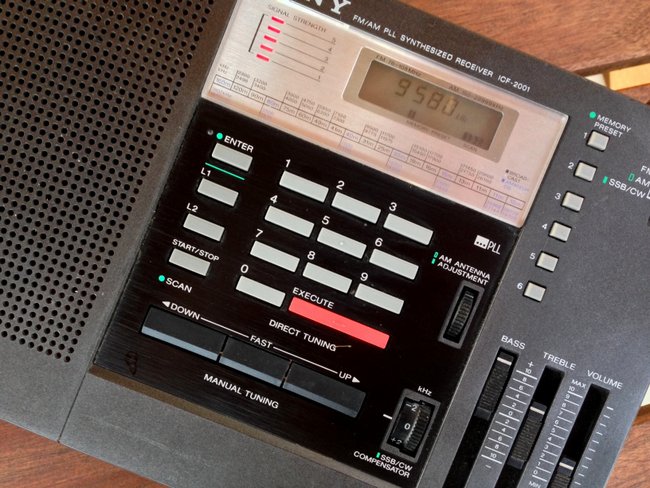
This episode from March 14, 1982 was a look at a brand new hot radio, the Sony ICF-2001.
The audio isn’t great but should be listenable. I think this was recorded using my new Realistic DX-302. Enjoy:
One of the joys of running the Shortwave Radio Audio Archive (SRAA) is that, over time, more and more people have become aware of it and submit recordings they’ve had in their private collections for decades.
Quite often, SRAA off-air recordings were originally made on reel-to-reel or cassette tapes which degrade with time. When SRAA contributors take the time to digitize these recordings, and share them via the SRAA, they put these collections in the hands of hundreds of archivists. We’re grateful each time we receive one of these shortwave or mediumwave/AM recordings.
You can imagine my excitement when I received the following message from one of our newest contributors, Colin Anderton:
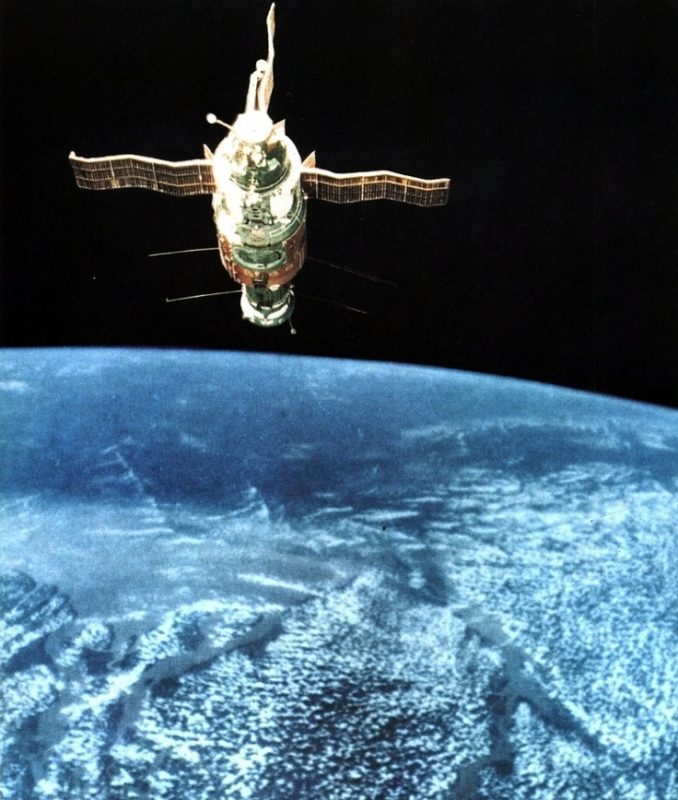
“As a space flight nut, I have many recordings from the 1970s from Radio Moscow. They used to broadcast on the medium wave, and I used to record the news bulletins during some of the space flights. In particular, there was a period between December 1977 and March 1978 when Soviet cosmonauts first lived aboard the Salyut 6 space station. I recorded each days’ news reports on the flights, and also some additional items about them.”
Colin’s recordings are amazing. Here’s a sample from December 10, 1977:
We’ve started publishing Colin’s recordings on the archive at regular intervals.
Interestingly, I discovered that Colin also has a website dedicated to NASA highlight recordings from the space age. Several months ago, he spent a considerable amount of time making the public domain series more listenable–removing voice-actuated recorder noises, tape clicks, etc.
Colin has made his collection of re-engineered NASA recordings free to download on his website. If you download and enjoy his recordings, consider dropping him a donation. If you’re into spaceflight like I am, you’ll certainly enjoy this collection:
Hi there, the garden at my house is pretty small and as a consequence, I am very limited in terms of what antennas I can usefully employ. You can’t position anything further than about 10 metres from the brickwork and to compound this, we are surrounded on all sides by neighbours in close proximity. All very nice people, but all very noisy – electrically speaking lol. I simply can’t get far enough away from these sources of electrical noise to achieve excellent SNR.
The solution to my problem was ultimately a Wellbrook ALA1530 magnetic loop, but prior to that I used an end-fed random wire, the performance of which deteriorated as the months went by as the ubiquitous blanked of local QRM continued to increase. Eventually, I was forced outdoors, well away from my town – effectively catalysing my forays into the Oxfordshire countryside on DXpeditions. That first experience of listening to the radio on shortwave, in the absence of any QRM was enlightening to say the least and of course, subsequently, DXpeditions have become a mainstay of my listening activities. However, despite enjoying some great DX successes out in the woods, one has to be realistic about how often it’s possible to leave the house just to listen to the radio. This led me to the purchase of the Wellbrook ALA1530 magnetic loop. It proved to be a triumph of electrical noise mitigation and an absolute necessity in copying transatlantic medium wave signals in such a noisy and compact space. A total game-changer. The brilliant performance of the Wellbrook eventually led to me purchase a second, cheaper active antenna; the E-field Bonito Boni Whip and in turn, that purchase led me to the MegActive MA305, kindly supplied by Bonito themselves for objective testing.
Have DXing kit, will travel…everything you need in a small flight case…
You might remember my initial tests at home confirmed, as expected, that E-field antennas don’t work well in electrically noisy environments (except at LW frequencies in my experience) but outdoors, away from noise, they are superb. I have a number of reception videos on my YouTube channel – Oxford Shortwave Log which clearly demonstrate identical performance of the Bonito MegActive MA305 antenna and Wellbrook ALA1530 magnetic loop out in the woods. So, what if you’ve got a large garden in a suburban area that allows you to be just far enough from sources of electrical noise…how much of a difference does it make to the noise floor of your receiving equipment? Can E-field antennas such at the Bonito MegActive MA305 do the job? Furthermore, how well does a random wire work in a larger garden?
My MegActive MA305 antenna system for mobile DXing…and another use for a washing line…
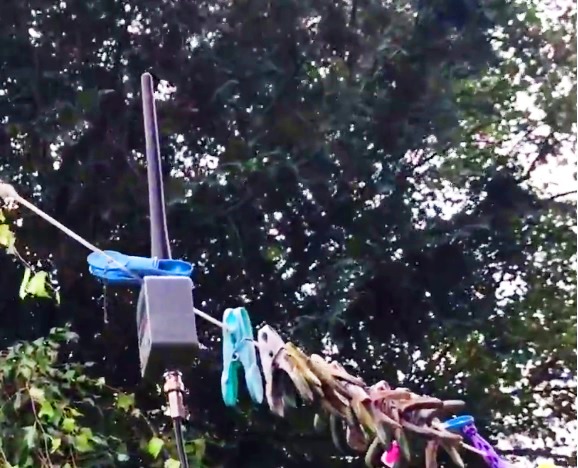
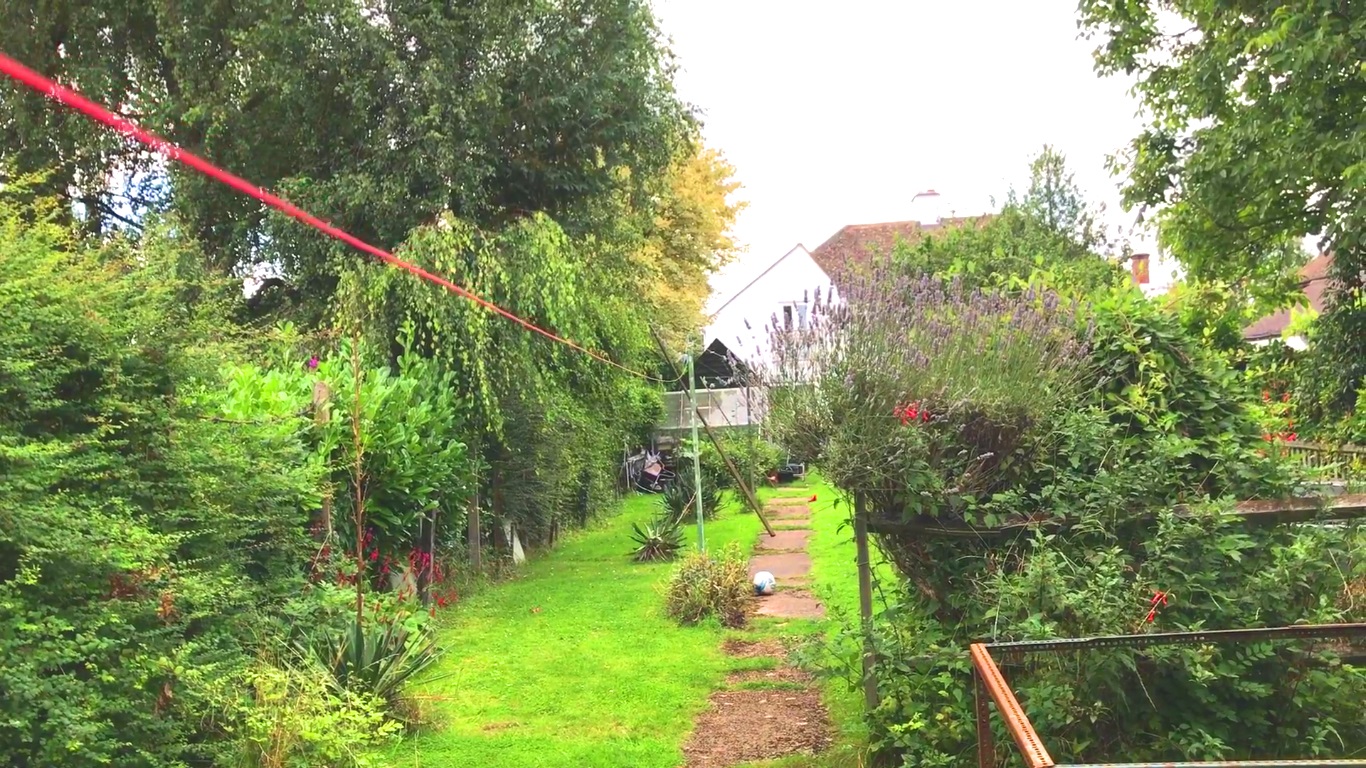
I was fortunate enough to know someone who owns a house with a large garden, quite close to my QTH (a 10 minute walk) and who was more than willing to let me set up my DXing equipment and sit around until the early hours of the morning, listening to and recording various signals on my Eton Satellit. In preparation, I set up the Bonito MegActive MA305 antenna and hung the radiating element on the washing line – sounds ridiculous but actually worked very well, placing it about 2.5 metres above the ground. I also set up a 40 metre longwire, which at its closest point, was still approximately 25 metres from the house, and 30 metres from the neighbours. This post will focus on the performance of the MA305; a subsequent post will detail the performance of the longwire.
The large garden I ‘borrowed’ for my DXing session with the Bonito MegActive MA305 antenna
Suffice to say, the MegActive MA305 performed admirably during my first listening session. In the middle of the afternoon I copied a very strong signal from The Voice of Korea around 15:44 hrs UTC on the 25 metre broadcast band, followed at 17:10 hrs UTC with a superb signal from The Voice of the Broad Masses 2, Eritrea, on the 40 metre ham band. Later on in the evening I copied Radio Mail with excellent modulation, CHU Canada with voice announcements (almost impossible at home), Myanmar Radio with an untypically strong signal and XEPPM Radio Educación from Mexico City with a signal I would normally expect on a DXpedition-proper with a large antenna.
My conclusions to this experiment are simply that E-field antennas can work in a suburban environment, if you are able to site them far enough away from adjacent sources of electrical noise. I don’t have empirical data on this, however, I can confirm that 10 metres proximity is too close at my QTH and 30 metres is sufficiently far away at this test location. One has to assume the houses nearby are similarly equipped to mine with electrical appliances that generate electrical noise. Thus, if you’re interested in a very well-priced, compact antenna and you live in an urban or suburban environment with access to a large garden/ outdoor space, an E-field Boni Whip or MegActive MA305 might well be suitable – and you’ll have a superb portable antenna for those listening sessions away from home!
Finally, I should mention the Eton Satellit. Much-maligned in certain quarters when it was first introduced into the market, it continues to demonstrate superb DXing credentials. I won’t forget some words of wisdom from a friend of mine and fellow DXer, with more than 3 decades of experience in listening to the bands on HF. He told me that Judging from his own experience with some of the original Grundig Satellit models of the 1980s and early 90s (namely the 400, 500 and 700) he was quite sure that the Eton Satellit is a considerably better DX performer than those vintage sets, that offered great sound for casual listening to international broadcasters, but didn’t perform too convincingly on weak DX signals. The Eton Satellit has been a revelation and I’m pleased to have played a small part in turning around the rather widely held view that it was less than worthy of the Satellit branding.
Fresh out of the box, the Eton Satellit has surpassed all my expectations…
Please find embedded reception videos below and text links to the Oxford Shortwave Log YouTube channel. My next post on this subject will cover the performance of a 40 metre longwire in this large garden environment. Thank you for reading/watching/listening and I wish you all great DX!
Clint Gouveia is the author of this post and a regular contributor to the SWLing Post. Clint actively publishes videos of his shortwave radio excursions on his YouTube channel: Oxford Shortwave Log. Clint is based in Oxfordshire, England.


For the penultimate song on their 1994 album Parklife, Blur chose the swirling, meditative epic, “This Is a Low.” The song envisions a five-minute trip around the British Isles as an area of low pressure hits.
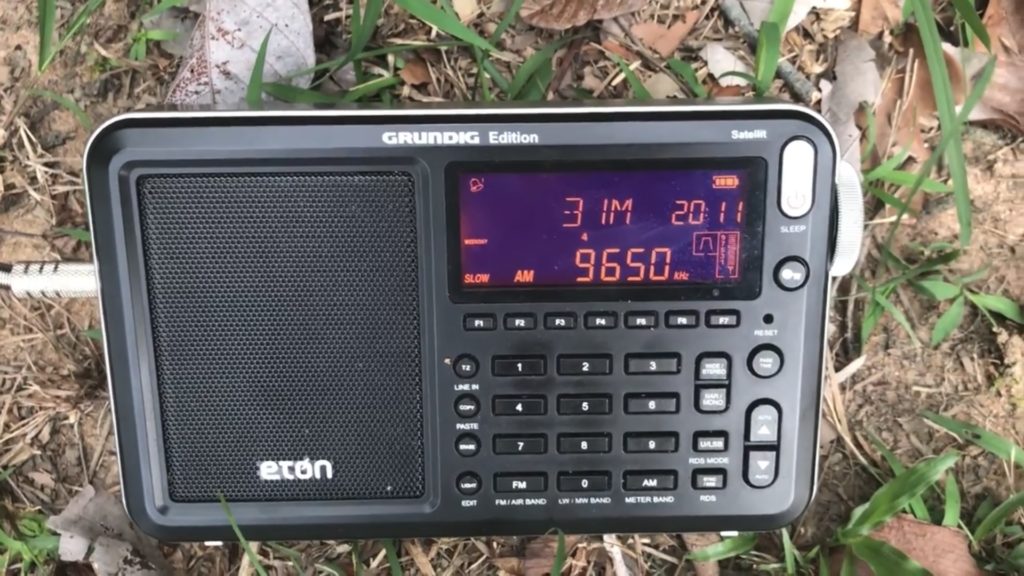 My mainstay travel receiver, the brilliant Eton Satellit..two-time veteran of South American DXing