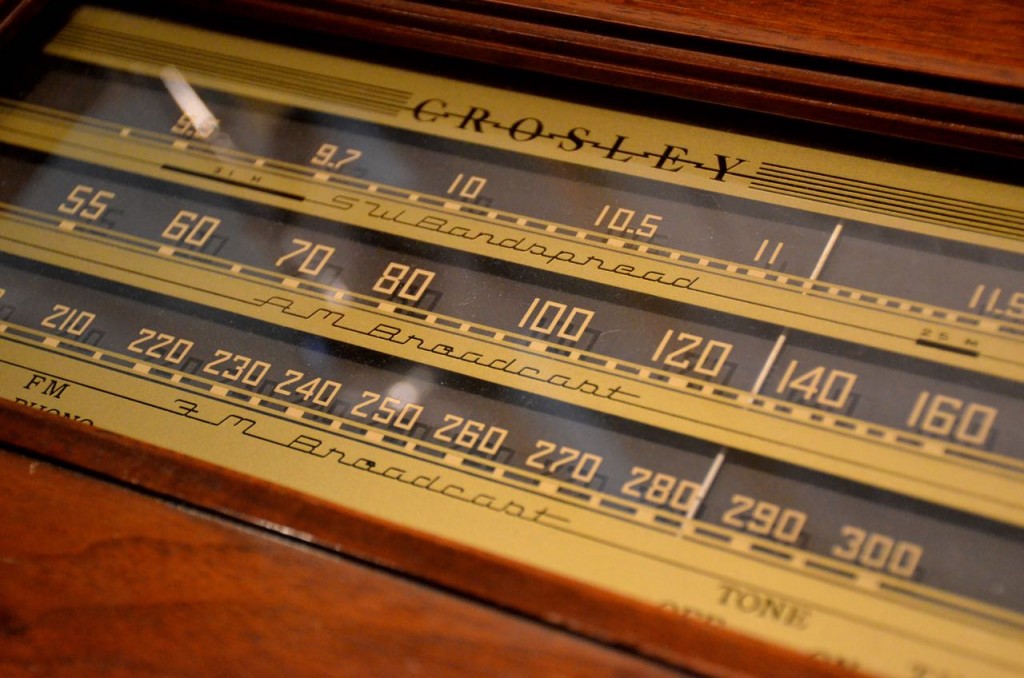
“Picking up on the idea of revisiting archive Christmas and New Year shows, here are some from Radio Netherlands for the SWL Blog.
Seasons Greetings, Jonathan”
Media Network 26.12.1996 Boxing Day Show
A radio Christmas spent in the Media Network studio way back in 1996. Sounds like we were having fun! I look back on this period as perhaps one of the golden years for Dutch external broadcasting, producing a range of documentary productions in English and Spanish and recording great concerts, both classical and jazz.
This programme focussed on answering listeners’ letters on subjects like satellite television in Australia (DW was organising a bouquet of signals) and the major changes to the commercial radio scene in New Zealand. The auction of FM frequencies in the Netherlands and shortwave stations that sold radios were also topics for discussions. RBI archives have, for the most part, been destroyed. Swiss shortwave listeners were quizzed on their listening habits. The 410 ft tower formerly used by AFN has been dynamited out of existence. Capital Radio in South Africa is in trouble.
MN.28.12.1995 Rhodesia – Answering Back From Francistown
I met the late Harold Robin a couple of times at his home in Tunbridge Wells, UK. He was a brilliant Foreign Office engineer who built the wartime Aspidistra transmitter famous for its clandestine work out of Crowborough. Have a listen to the programmes Wartime Deception and you’ll see what I mean.
Although his work during the war is well documented in books like “The Black Game”by Ellic Howe, I think we managed to capture the other stories from later in his life. For instance, how he invented the “Picolo” modulation system as used by the diplomatic service to communicate text over shortwave between embassies. He also built the BBC Overseas relay station in Oman, and the external service of UAE Radio from Dubai. This edition, recorded after Christmas in 1995, looked at the story of the British response to the declaration of independence by Ian Smith in, what was then, Rhodesia. Harold talks about setting up a mediumwave transmitter in a matter of weeks in the town of Francistown, in the Bechuanaland Protectorate, now called Botswana. Thanks also to Colin Miller for some of the recordings of the RBC. It seems that one of the two transmitters was sent to Cyprus after the World and Rhodesia operation ended, the other ended up in Ordfordness for some experiments on 648 kHz. You might also want to check out the video of Margaret Howard, who refers to a special programme transmitted over this MW sender. It was called the World and Rhodesia and was more of a UK government editorial than any programme the BBC would make. The programme concept didn’t work although it seemed to have taken the British government a couple of years to find out. Harold refers to staying in the Tati Hotel River Lodge, about 8 kms outside of Francistown. Sure enough, it’s still there.
MN.23.12.1982: Christmas Review 33 years ago
I picked this recording out of the archives because it has a nice capsule summary of the major media stories from 1982. The highlight was, of course, the Falklands-Malvinas “conflict”. This programme contains clips from the FIBS, RAE Argentina and the BBC’s Calling the Falklands Programme. We also looked in some detail at the short-lived Radio South Atlantic which broadcast in May and June 1982 from a requisitioned BBC transmitter on Ascension Island. We asked the British Ministry of Defence to explain how the station was operated. We also analyzed a transmission broadcast on May 20th 1982 (the second night of transmission).
But it was also the last programme in which Wim van Amstel appeared as RNW Frequency Manager. It was certainly not the last time he was heard on the programme, though. Again it is striking to hear some of the predictions – and how they were spot on. The call with Arthur Cushen in New Zealand is rather like making contact with the moon. Cannot believe how fast time has flown.
At the time of publishing this podcast, I was also sad to hear of the passing of BBC correspondent and broadcaster Brian Hanrahan, who famous line when broadcasting under censorship from the Falklands Fleet was brilliant. Unable to reveal how many British aircraft had been involved in the conflict, he reported that after one sortie he “counted them all out and I counted them all back.
MN.26.12.1991.Year End Review
This was a news show 1.6 million tune in to Radio Netherlands in Dutch during their summer holiday. WWV and WWVH have had problems with their automated time announcements. Drum recorders are back on line. Victor Goonetilleke has news about Cambodia. VOA is having challenges building its transmitters at a new site 50km North of Colombo.
Why did we broadcast all these numbers? People forget none of the listeners had access on-line and only a fraction of the audience had access to printed DX bulletins. Andy Sennitt reports on what is in the 1992 World Radio TV Handbook. James Robinson reports that several UK local radio stations are leaving mediumwave. WLS 890kHz is scrapping its FM format. A new Catholic SW station WEWN was being built in Birmingham, Alabama. (The late) Dave Rosenthal reports on an experiment in McMurdo. Remember this show is 24 years old!
Vasily Strelnikov signs off at Radio Moscow World Service and recommends people to tune into Radio Netherlands. Radio Moscow staff watch the red flags of the USSR being lowered.
I’m looking forward to several hours of listening over the coming days.

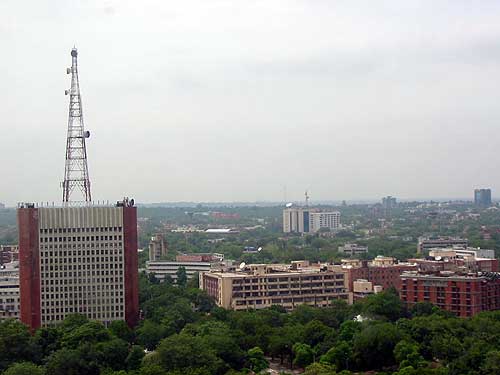
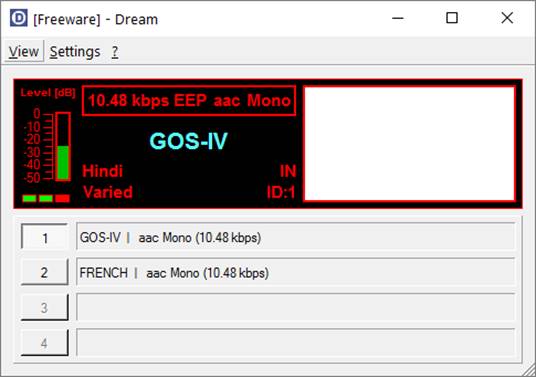 So what’s the twist, aside from the 2 feeds on 1 frequency? Even at +5 over S9, the feed was only strong enough to occasionally flutter in with some decoded audio. Mostly, it was silence.
 Sean Gilbert, WRTH’s International Editor, recently shared this audio he originally recorded on June 19, 2014. Sean writes: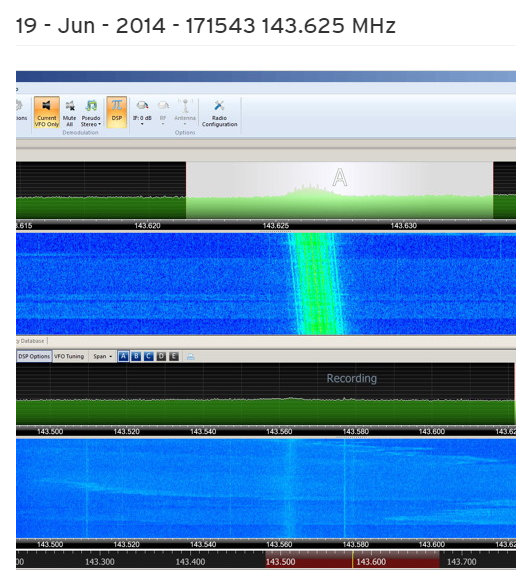
 Many thanks to several of you who recorded the final sign-ons and sign-offs of several European broadcasters
  SWLing Post readers may remember
 Many thanks to