Shortwave listening and everything radio including reviews, broadcasting, ham radio, field operation, DXing, maker kits, travel, emergency gear, events, and more
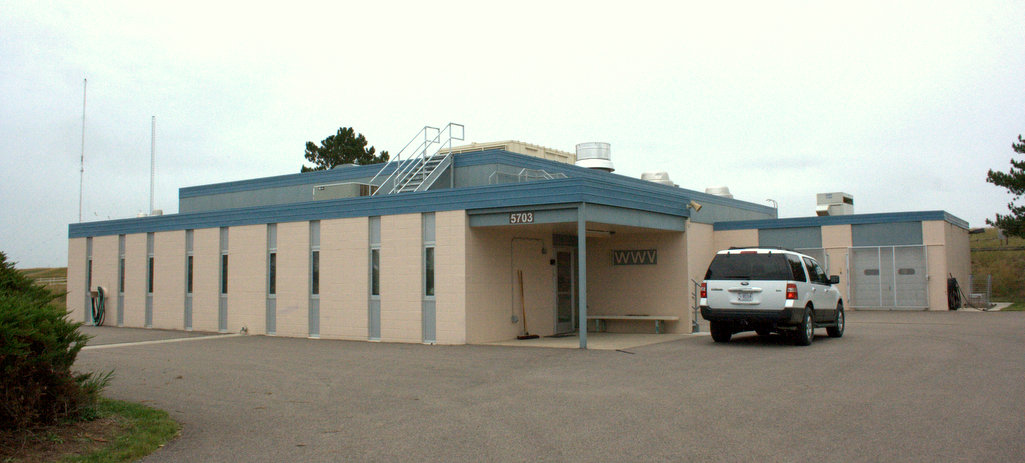
WWV’s transmitter building in Fort Collins, Colorado (2014)
Shortwave Radio Audio Archive contributor, Brian D. Smith, recently contacted me; I was enthused when he described the recording he was sharing:
This recording captures the last 5 minutes of WWV’s old format (giving the time every 5 minutes) and the first 5 minutes of the new format (giving the time every 1 minute), which took place on July 1, 1971 UTC.
Apologies for the less-than-stellar audio quality, but I recorded this as a 15-year-old fledgling SWL with limited knowledge of audio recording techniques. So I simply placed the microphone from my cassette tape recorder next to the speaker on the receiver and hit the record button. The signal quality wasn’t the greatest, either — lots of QSB and QRM — but I still managed to get what I was going for.
The resulting recording has accompanied me everywhere since then, preserved only on its original cassette, until 2008, when I finally decided it was time to learn how to transfer it onto my hard drive, burn it onto a CD and stop having to rely on the integrity of 37-year-old audio tape.
Even as a teenager, I regarded the WWV changeover as historic, and felt I should attempt to record it for posterity. Consider yourself posterity!
Brian received this broadcast on 10 MHz care of a Hallicrafters S-108, with random length of wire attached to the back of the receiver serving as an antenna. Location was Franklin, Indiana.
As Brian mentions, the audio quality is a little rough, but this is still quite a treasure of a recording!
Again, thanks so much for bringing us this recording, Brian! We look forward to any other archived recordings you–or any other readers–may have to share with us here at the Post.
I decided to record the leap second on as many shortwave time station frequencies as possible. The only viable options for me–based on time of day and my reception location–were the WWV frequencies 10, 15, 20, and 25 MHz, and CHU frequencies 7,850 and 14,670 kHz.
I was able to monitor four different time station frequencies simultaneously on the TitanSDR Pro. (click to enlarge)
Unfortunately, HF propagation was very poor yesterday, so the higher WWV frequencies–20 and 25 MHz–were completely inaudible, as was CHU on 14,670 kHz. There were numerous thunderstorms in our area, so static crashes were prevalent.
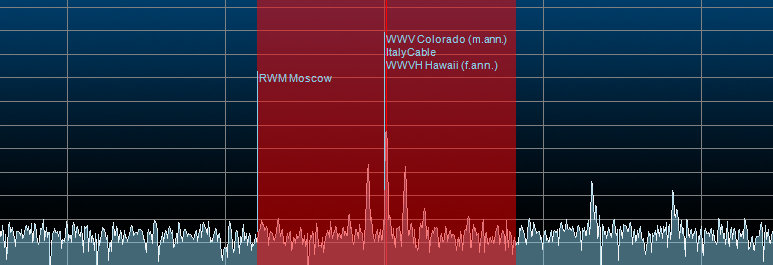
Still, since this was a first attempt to record a “leap second,” I didn’t want to take any chances. I had the Titan SDR Pro monitoring and recording two CHU and two WWV frequencies [screenshot], the Elad FDM-S2 recording WWV on 15 MHz [screenshot], and the WinRadio Excalibur on WWV’s 10 MHz frequency, as well as recording the whole 31 meter band spectrum [screenshot].
In the end, the strongest frequencies I captured were CHU on 7,850 kHz and WWV on 15,000 kHz. WWV on 10,000 kHz was much weaker than normal and the band was quite noisy–still, it’s readable, so I included this recording, too. Recordings follow…
Recordings
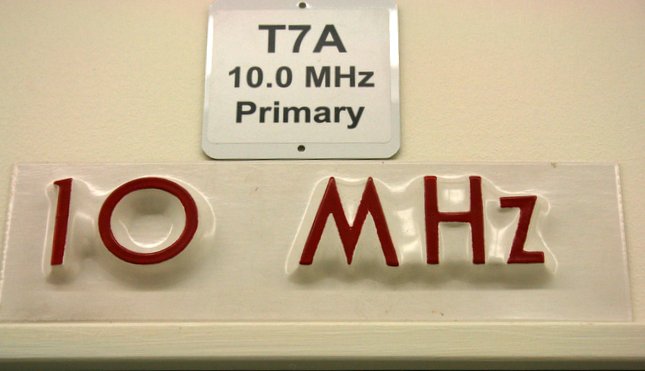
The sign above WWV’s primary 10 MHz transmitter (2014).
All of the recordings start just before the announcement of 23:59 UTC.
WWV added the extra second and higher tone, then continued with their top of the hour announcements, including a note about leap second (which begins after the 00:04 announcement). CHU simply injects a one second silence before the long tone.
One interesting note about the 10 MHz WWV recording above: I believe I may be hearing BPM China in the background. I’m curious if anyone can confirm this because I don’t know BPM’s cadence/pattern well enough to ID it.
Other recordings…?
Did you record a shortwave time station as leap second happened? If so, please comment, and feel free to share a link to your recording!
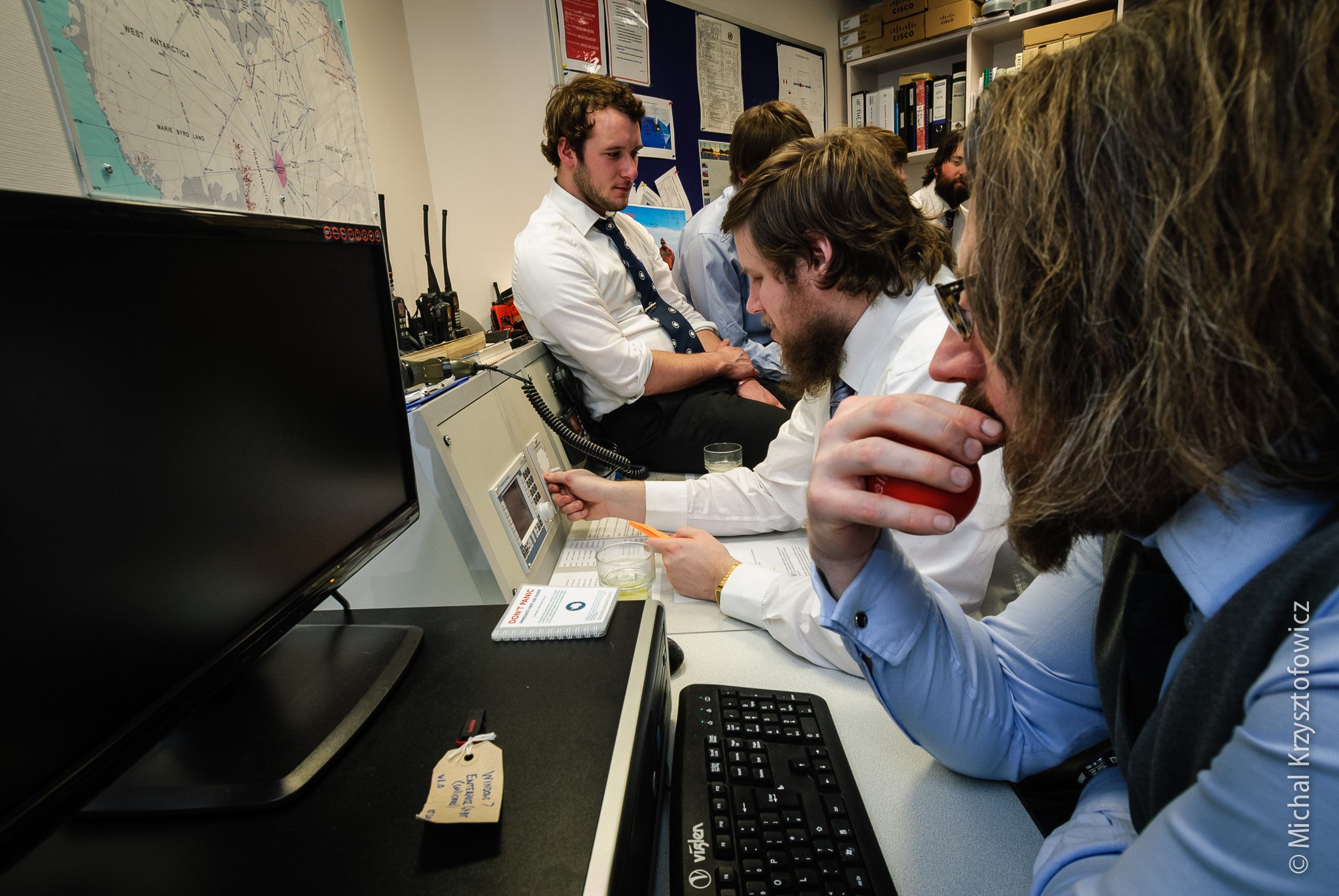
We gathered in the Comms Office to listen to the audition, during which our loved ones sent us their messages. Even though we all can talk to our families and friends on the phone with relative ease today, it was still a very touching moment. (Credit: Michal Krzysztofowicz, Halley VI Research Station)
This is one of my favorite annual broadcasts, and I endeavor to listen every year. This year, the SWLing Post called upon readers to make a short recording of the broadcast from their locale. We received a total of thirty (!) recordings, from every continent (save Antarctica, that is; I’m sure the BAS team were too busy celebrating)…Wow! Thank you, participants!
Below are the entries, roughly organized by continent and country/region, including reader’s photos if provided. (If I’ve somehow missed including your entry, please contact me; I’ll amend this post.)
So, without further ado….
The Recordings
Africa
Morocco
SWL (Shortwave Listener):@K7al_L3afta Location: Chaouia-Ouardigha, Morocco Notes: The BBC World Service Antarctic Midwinter Broadcast. Woofferton transmitter.
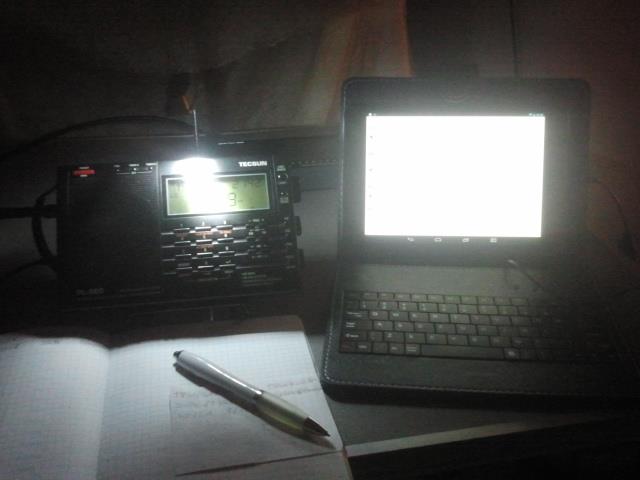
Receiver: Tecsun PL-660 + 15m wire antenna.
Asia
India
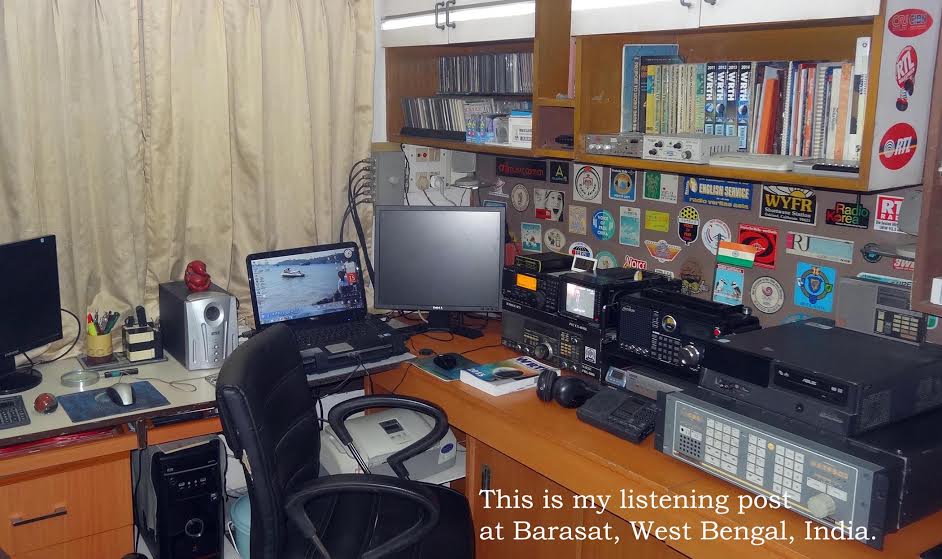
SWL: Babul Gupta Location: Barasat, West Bengal, India Notes: Babul listened to the broadcast with his ICOM IC-R75 receiver, connected to a 176 meter long beverage antenna oriented in a West South direction.
Malaysia
SWL: Timm Breyel Location: Subang Jaya, Selangor, Malaysia Notes: Here is a sound file of the broadcast monitored in central Malaysia, using the frequency 5.985 kHz via Ascension Island at 21.30 UTC.By 21.35 UTC, QRM from presumably Myanmar Radio overwhelmed this frequency. Worst of all, reception on 9.590 kHz via Wooffeton was in audible due to strong QRM from PBS Xizang. Transmission on 5.905 via Dhabbaya was the only audible signal after 21.35 UTC, and it was a paltry (SINPO) 15341, best heard in USB.
Australia
Australia
SWL:Rob Wagner (VK3BVW) Location: Mount Evelyn, Victoria, Australia Notes: All three freqs noted here at Mount Evelyn, southeastern Australia: 5905.1 – Off freq and with a slight hum but a good signal, 5985 – Best of the three freqs, strong and clear, 9590 – Good signal but with moderate QRM from PBS Xizang co-channel. Pity! I suspect that freq would not have been as good down south either. Overall, a reasonable success this year.
Australia
SWL: Michael Stevenson Location: Port Macquarie, NSW on the east coast of Australia Notes: “5905 kHz Dhabbaya was only just fair and rather noisy while 5985 Woofferton was fair and still noisy with 9590 kHz Woofferton was the strongest signal but was marred by CRI China here in Port Macquarie, NSW on the east coast of Australia!”
New Zealand
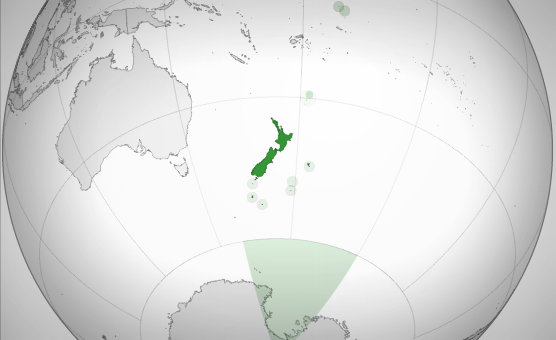
SWL: Chris Mackerell Location: Motueka, New Zealand Notes: Receiving setup: Elad FDM-S2 SDR, Wellbrook ALA-1530S+ loop. QTH Marahau, Tasman District, New Zealand 41.00S 173.01E
Europe
Cyprus
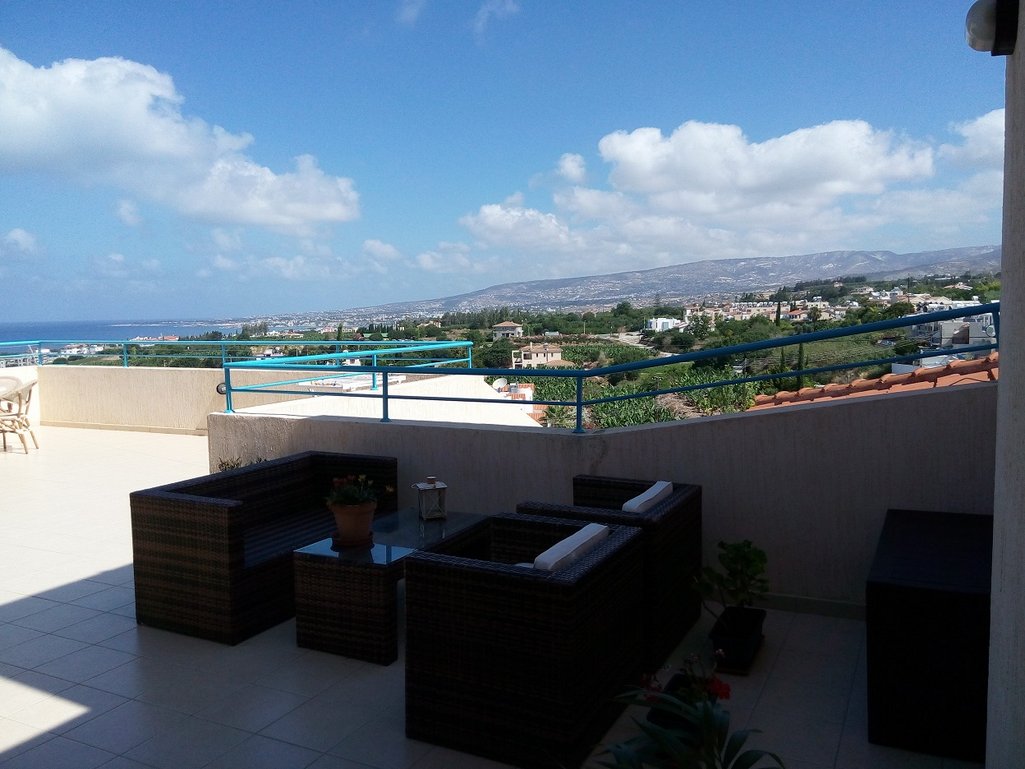
SWL: Arjen Huisman Location: Kissonerga, Cyprus Notes: Attached my recording of the BBC Antarctic Midwinter broadcast on 5985 kHz. last Sunday June 21st. Something about my listening conditions: I have been listening with a JRC NRD-535DG to which a 13,5 longwire has been connected, hanging outside on the (large) uncovered balcony of my apartment, 3rd (top) floor.
I live about 500m from the coastline of the western part of Cyprus, about 8 km. north of the city of Paphos in a village called Kissonerga. Generally reception conditions are very good here, so close to the sea with no high buildings around.
Denmark
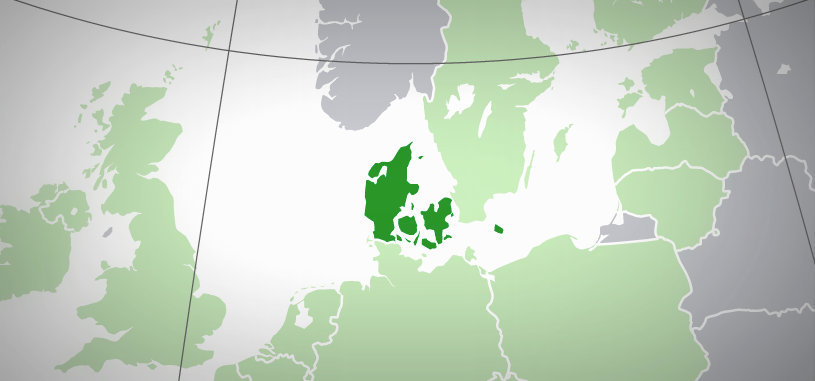
SWL: Willy Andersen (OZ4ZT) Location: Soeborg near Copenhagen, Denmark Notes: Willy used an Icom IC-756 Pro with an inverted V antenna. He noted that 9590 kHz and 5985 kHz were equal in signal strength and quality.
Germany
SWL: Gunther Rose Location: Wetter, Germany
Notes: Here is my recording of the last 1,5 minutes of the Antarctic Midwinter Broadcast 2015 on 5985 kHz. My receiving-setup: Tecsun PL-880 with telescope antenna (indoor near a window on the 4th floor), line out to Macbook (audacity-software) Unfortunately I got lots of RFI from my neighbour’s powerline adapter so the signal from Wooferton was strong but not noise-free.
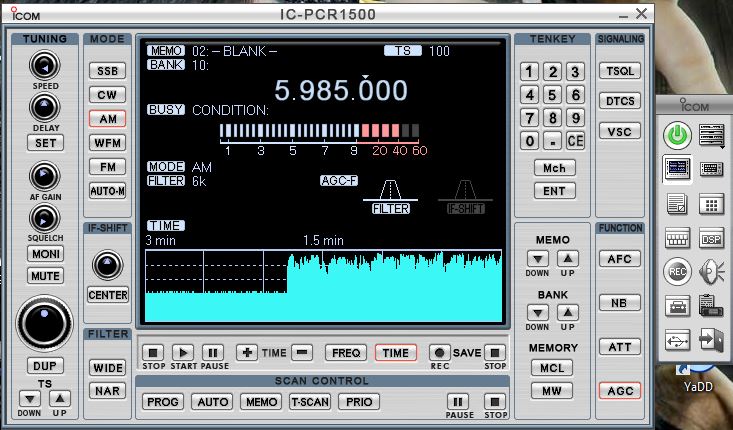
SWL: Gabriele Somma (IZ8094SWL) Location: Salerno Roccapiemonte, Italy Notes: recorded the broadcast on his Icom IC-PRC1500 with an antenna at 10 meters high.
Italy
SWL: Giuseppe Morlè (Joseph) Location: Ponza island in the Tyrrhenian Sea, Italy Notes: I heard the BBC broadcast with my AOR AR 3030 receiver and Mini Whip antenna, and Tecsun PL-660.
Netherlands
SWL: Jonathan Marks Location: University Twente, Netherlands Notes: Here’s a clip from the University Twente SDR reception from Woofterton 5985 from 2145 onwards.
SWL: Sérgio Pimenta Location: Porto, Portugal Notes:[H]ere is my reception in Portugal (Porto, northern of Portugal), using a Tecsun PL-310ET with just the telescopic antenna on my kitchen window, very strong signal.
SWL: Dennis Location: Moscow, Russia Notes: BBC Antarctic Midwinter Broadcast 2015 – for SWLing.com. Moscow. Grundig Satellit 1400 built-in mini whip.
Spain
SWL: Michael Haun Location: Menorca, Spain Notes: Please find 2 recordings from your special Midwinter broadcast: 5905 kHz (S9+10, rapid fading, quite noisy) and 5985 kHz ( S9+40, fantastic signal).
Receiver used was a PERSEUS SDR and a 5×10 meters active loop antenna. Keep up the good work and 73 also to all in the Antarctica!
Turkey
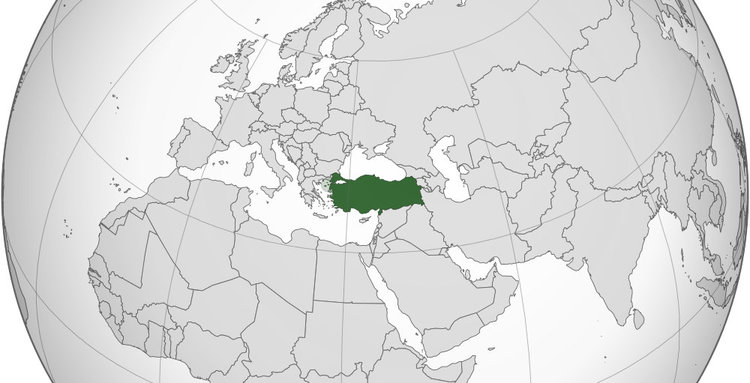
SWL: Oktay Egi Location: Istanbul, Turkey Notes: I am located in Istanbul, Turkey. I used Sony ICF-SW77 for listening with internal antenna on 5905 KHz. The sound was not clear but understandable. Time was 21:35 UTC.
United Kingdom
SWL: Mark Harper (MW1MDH) Location: Saltney, England Notes: “I’m running an IC-R75, on an internal, RF systems Windom, the ATU isn’t connected in the attached video. I’m located in Saltney, which is about 2 miles west of Chester, but just over the Welsh border by about 200 yards, I’m also just north of Wooferton! Hope the audio is ok, I’m running my 75 on an external speaker, just off to the side.”
United Kingdom
SWL: “Driverfilms” Location: Newcastle Under Lyne in Staffordshire, England
United Kingdom
SWL: Andrew Svonja Location: Hinckley, Leicestershire in the Midlands in the UK Notes: On Sunday 21/06/15 at 21:30 UTC I recorded a segment of the BBC Winter Solstice broadcast to the Antarctic–SINPO reading was a complete 5 across the board
United Kingdom
SWL: Stephen Cooper Location: Southport, England, Notes: 9,590Khz on the Elad FDM-S2 with a 15m random wire.
North America
Canada
SWL: Fred Location: London, Ontario Notes: The recording was made using a camera in AVI format, which has been converted to MP3. The time stamp on the video is 17:46 EST. The recording is from a Grundig Yacht Boy 400. The best reception was by laying the Grundig flat with the radio antenna facing North East. No longwire or external aerial was used. I was also able to receive the signal on my Tecsun PL-380, but the signal was very muffled with excessive static.
Canada
SWL: Richard Langley Location: Hanwell, New Brunswick, Canada
Richard’s Tecsun PL-880 and Tecsun digital recorder in a protective plastic case outdoors.
Notes: Richard listened to the broadcast on 9,590 kHz. He notes that it was received on a Tecsun PL-880 receiver with a Tecsun AN-03L 7-metre wire antenna in AM mode with 3.5 kHz RF filtering.
United States
SWL: Dan Robinson Location: Potomac, Maryland, USA Notes: using a JRC NRD-515 receiver, with Wellbrook 1530 loop antenna.
Dan also included the following audio recording:
United States
SWL: Frank Colella Location: Westchester County, New York Notes:Sangean ATS-909 receiver
United States
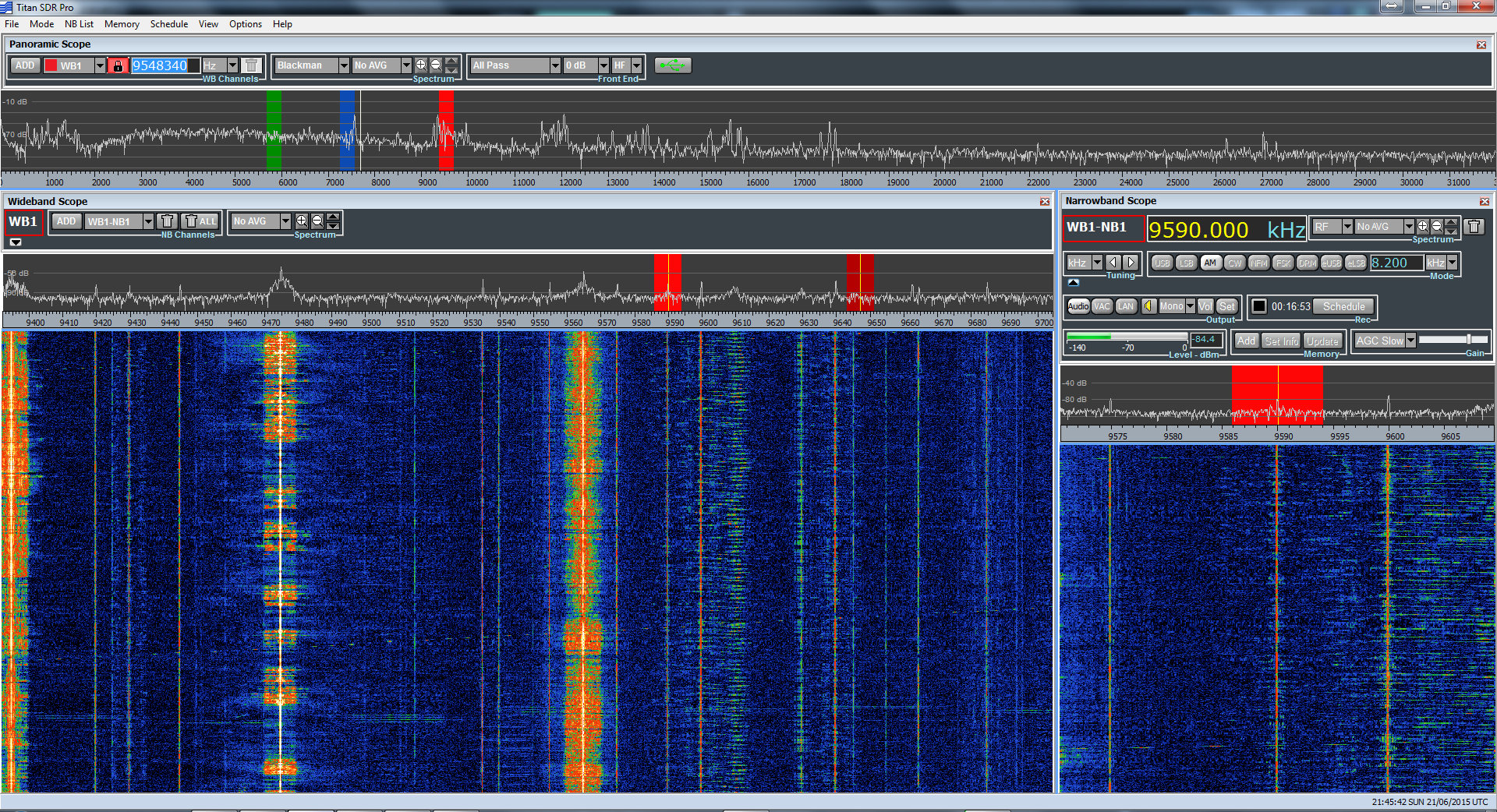
A screen capture of the TitanSDR Pro as I recorded all three frequencies of the BBC Midwinter broadcast simultaneously.
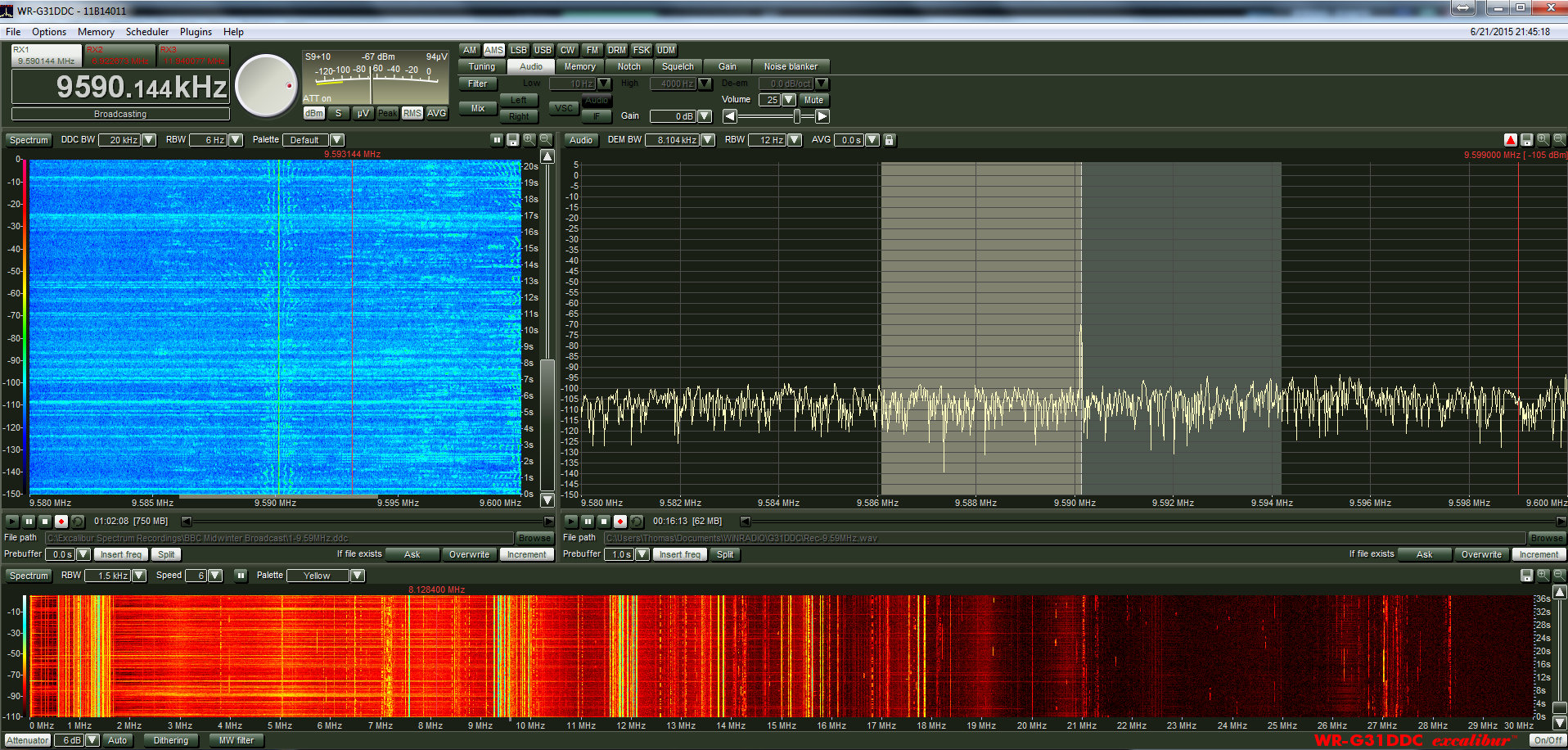
SWL: Thomas Witherspoon Location: North Carolina, USA Notes: I recorded the broadcast on a total of three SDRs simultaneously: the TitanSDR Pro, Elad-FDM-S2 and the WinRadio Excalibur.
Screen capture of the Elad FDM-S2
I was very pleased to hear the broadcast on 9590 kHz. Since North Carolina was not in the path of this broadcast, it was a weak signal. All three receivers were using the same large outdoor horizontal delta loop at 60′ above the ground.
Screen capture of the WinRadio Excalibur
The following embedded audio player, should contain all three recordings. Note that the FDM-S2 recording (which is perhaps the best of the three) starts in the middle of the broadcast.
South America
Brazil
SWL: Flavio PY2ZX Location: Brazil Notes: Also noted the three frequencies in Brazil but 9590 kHz sounds better despite the presence of PBS Xizang. Great to hear such friendship spirit through the shortwaves! Congratulations BBC and BAS team. My recording:
Colombia
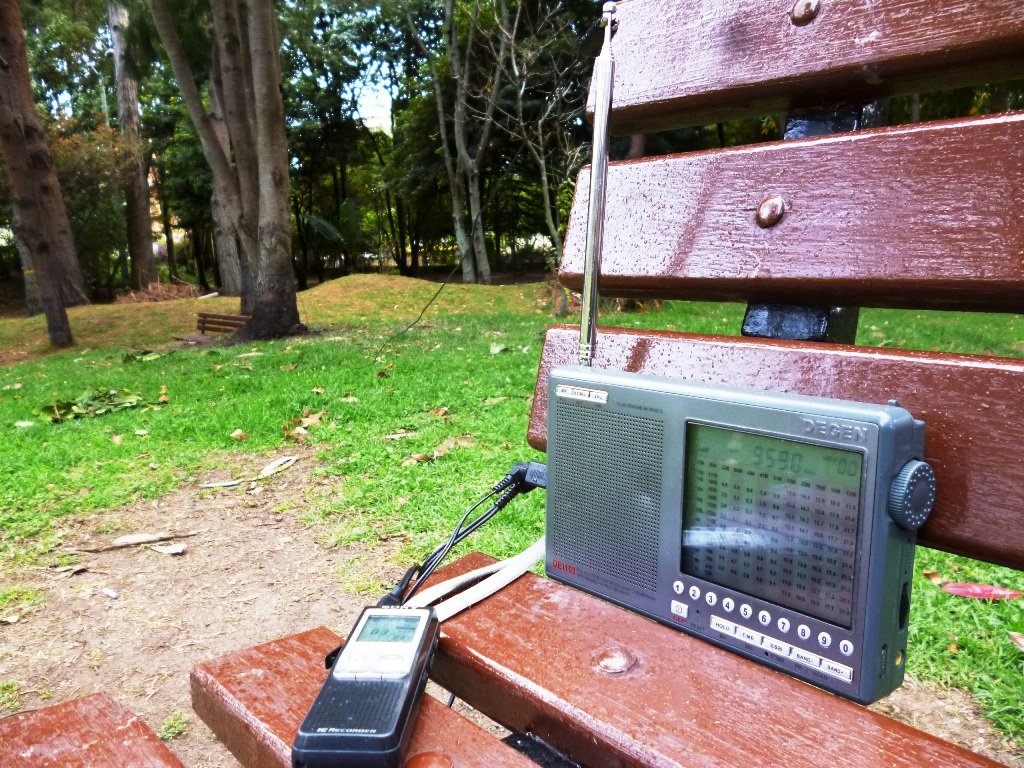
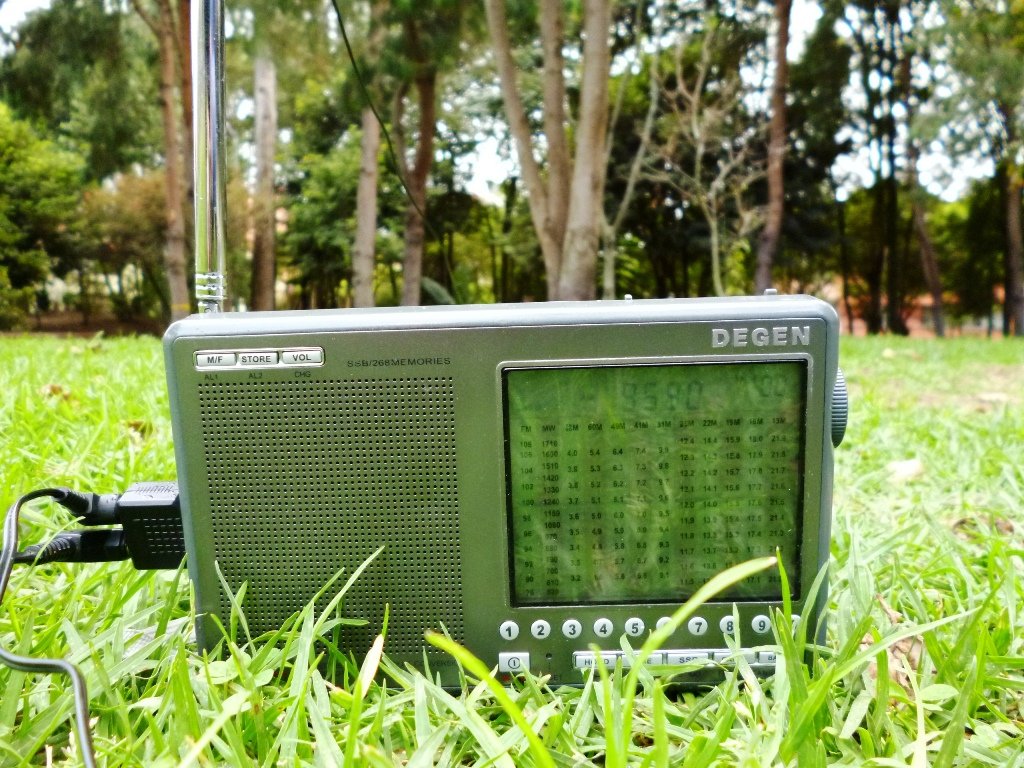
SWL:Rafael Rodriguez R. Location: Bogota, Cundinamarca, Colombia Notes: Greetings from Colombia. I could only hear the signal at 9590 KHz. The location is [at] a park close to my house (aprox. Lat 4 72 62 N Long 74 02 85 W; alt 2577 m over level sea).
Once again, many thanks to all of you who submitted your recordings of the BBC Midwinter Broadcast! We’ll be sharing this post with both the British Antarctic Survey and the BBC World Service. And to all of you, from the SWLing Post: Happy Midwinter! Happy Summer/Winter Solstice!
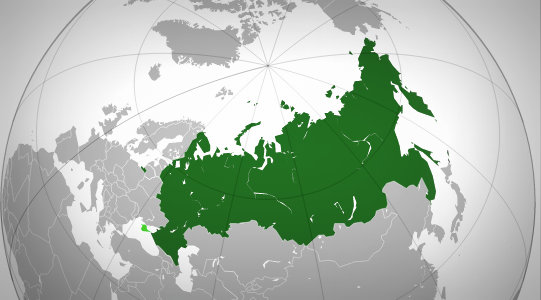
Please note that any map graphics used in this post were originally designed by NuclearVacuum and Ssolbergj–they have been modified for this post under a Creative Commons License CC BY-SA 3.0.
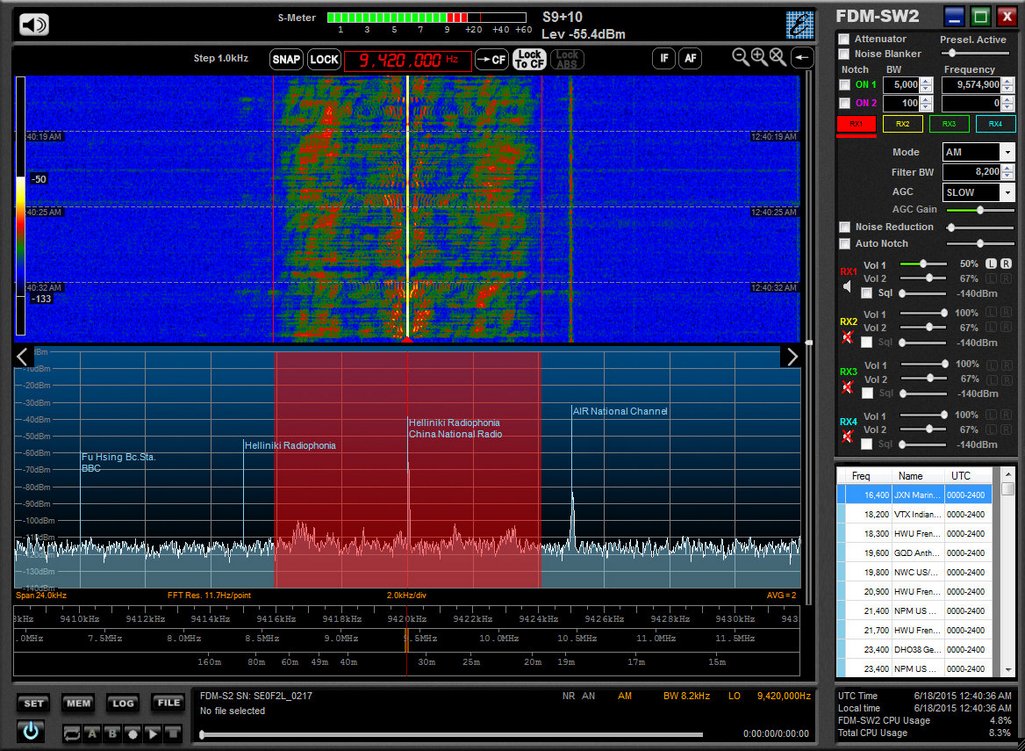
Early this morning, around 01:14 UTC, I tuned to 9,420 kHz with the Elad FDM-S2 and heard the Voice of Greece for the first time since the Greek national broadcaster, ERT had been restored.
SWLing Post contributor, Richard Langley, also noted the strong signal from Greece. He has kindly shared the following information which he also posted in the DXLD Yahoo group:
“Greece is back on 9420 kHz this evening after being absent for some days and is now carrying the Voice of Greece […] program and not ERT from Athens or Thessaloniki. Noted with good signals in eastern Canada at 01:40 UTC. Radio audio is about half a minute delayed with respect to Internet stream: […](http://www.ert.gr/i-foni-tis-elladas/?). Not noted on other frequencies.
[…]9420 kHz signed off just after [02:00] UTC. Internet stream continued. And I should correct myself when I mentioned “not ERT from Athens or Thessaloniki.” Should have said not ERA from Athens or Thessaloniki. ERA is the abbreviation for Hellenic Radio […], as opposed to ERT which stands for Hellenic Radio-Television […]. ERT1, ERT2, etc. are TV stations while ERA1, ERA2, etc. are radio stations. This is a bit like BB1, BBC2, …, and BBC Radio 1, BBC Radio 2, and so on.”
Richard followed up a few hours later:
“I continued listening to the Internet stream after the SW transmission ended, and at 02:57 UTC, the station identified itself in both Greek (“Edo Athina, I Foni Tis Elladas”) and English (“This is Athens. You are listening to the Voice of Greece”) several times, followed by the traditional interval signal and then what I believe to be the Greek national anthem at 03:00 UTC. A program of Greek music then ensued.”
Many thanks for sharing the details, Richard. My recording actually ended when VOG signed off–I suppose I caught about the last 46 minutes of the broadcast.
Frank recorded VOK from his home in Europe on June 10, 2015 on 13760 kHz, starting at 21:00 UTC, using a Kenwood R-5000 receiver and a Wellbrook ALA 1530+ antenna.
For your listening pleasure: the Voice of Turkey English language service.
This program was recorded on June 7, 2015, starting around 2205 UTC on 9830 kHz. I started recording the program a few minutes after the top of the hour when a digital transmission on the same frequency finally went off air. I made this recording with the TitanSDR Pro hooked up to my horizontal delta loop antenna.
You will actually hear a few seconds of the digital broadcast at the very beginning of the recording. Click here to download the recording as an MP3, or simply listen via the embedded player below:
“Hello friends: Long time no see. I’ve finally posted the final 21 tracks from our 2013 season on Socotra Island: transmissions from Eritrea, China, Iran, and Tajikistan. Enjoy.”
For more information about Myke’s on-going project, ShortWaveMusic, check out his website. Great to see a new post from you, Myke!



 SWL: Babul Gupta