Category Archives: Shortwave Radio

Reminder: Comb Stereo Broadcast via Radio Gum Tree–June 18, 2021

A quick reminder that the rebroadcast of Radio Gum Tree Episode 2 will take place tomorrow: June 18, 2021 at 9:45 EDT (or June 19, 2021 at 01:45 UTC) on on 5850 kHz. You can find the program notes for these Test broadcasts at this web site address: www.radiogumtree.com/?p=54

Many thanks for putting together this Comb Stereo series, TomL!

For more information, check out TomL’s initial announcement.

Jock designs a Horizontal Room Loop to cope with reception issues

Many thanks to SWLing Post contributor, Jock Elliott, who shares the following guest post:


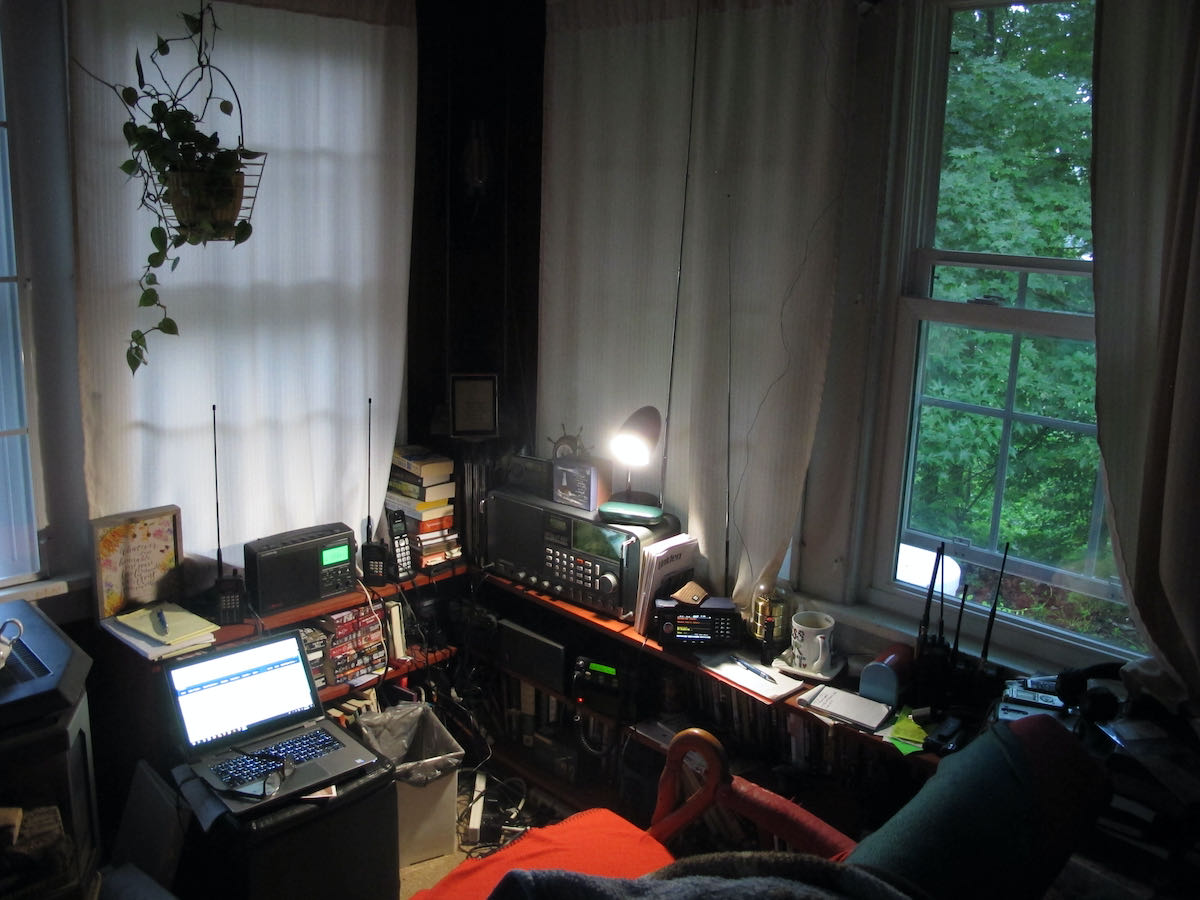
There’s a 50-foot antenna in this room. Can you spot it?

Got reception issues? An idea worth considering: the “Horizontal Room Loop.”

by Jock Elliott (KB2GOM)

When my radio room was in the front of the house (on the east side), it was easy to run a feedline to a large RF-hungry SWL dipole with various stubs and feeders.

Now, however, with my “shack” moved to the SW corner of the house, any attempt to mount an outdoor antenna of any significant length raised potential safety issues because of nearby electrical lines.

Monitoring VHF/UHF is no big deal because of high-performance scanner antennas. HF, however, presents challenges.

My main SWL receiver is a Satellit 800, which has the guts of a Drake R8 and also has a large telescoping vertical antenna. It works okay, but I wanted more signal. I had been looking at small loops and got some great recommendations on Radio Reference, but then I had a thought: what if I turned the 8′ x 12′ room into a giant horizontal passive loop?

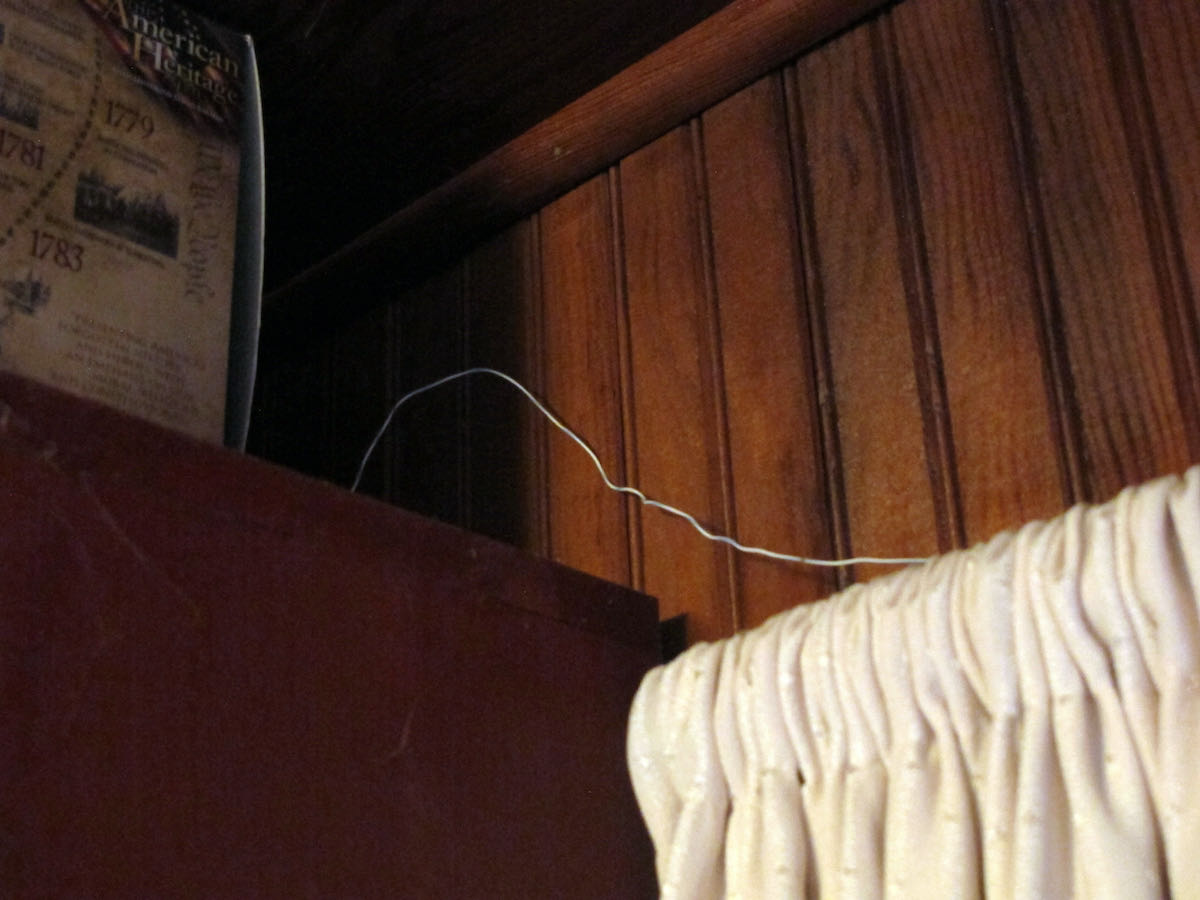
Here’s a hint.

So I called a ham friend and ran the idea by him. “Sure,” he said, “give it a try.” He gave me 25 feet of 4-conductor phone wire. Before I could use it, I had to strip off the outer insulation so I could get at the four separate insulated wires inside. The better half helped. Once I had the four wires, I connected two of them together and ran the resultant 50-foot strand around the perimeter of the room by taping the wire to the top of window frames and hiding the wire on the top shelves of book cases. As a result, the horizontal room loop is near the ceiling, about 7 feet in the air, and the room itself is on the first floor.

With the loop in place, I hooked the ends to the clip-in terminals on the back of the Satellit 800.

There’s a switch on the back of the 800 that allows me to quickly compare the loop with the radio’s built-in vertical antenna. And . . . it works! It pulls in more signal than the vertical (as measured on the signal strength meter), but I have not noticed a dramatic reduction in noise. On some stations, the horizontal room loop brings the signal up to full scale, and then the sound is very agreeable indeed.

In all, I am pleased with the results.

For anyone who wants squeeze more performance out of their shortwave receiver, I can recommend giving the horizontal room loop a try. It’s not expensive; it’s relatively easy to do (and undo if you don’t like the results), and just might improve your shortwave reception.

If you are not blessed with a bunch of window frames on which you could tape the wire for your room loop, you’ll have to get creative, but with lightweight wire, you don’t need a massive support structure. Tape, map tacks, or even self-adhesive Velcro segments might work for putting your room loop in place.

I don’t claim that this is the “ultimate” SWL DX antenna, but it certainly improved my situation. Perhaps others have suggestions for improving it.

— Jock Elliott, KB2GOM

Possible frequencies for the 2021 BBC Midwinter Broadcast

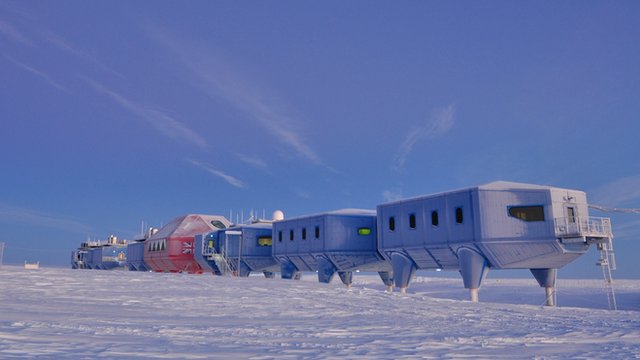
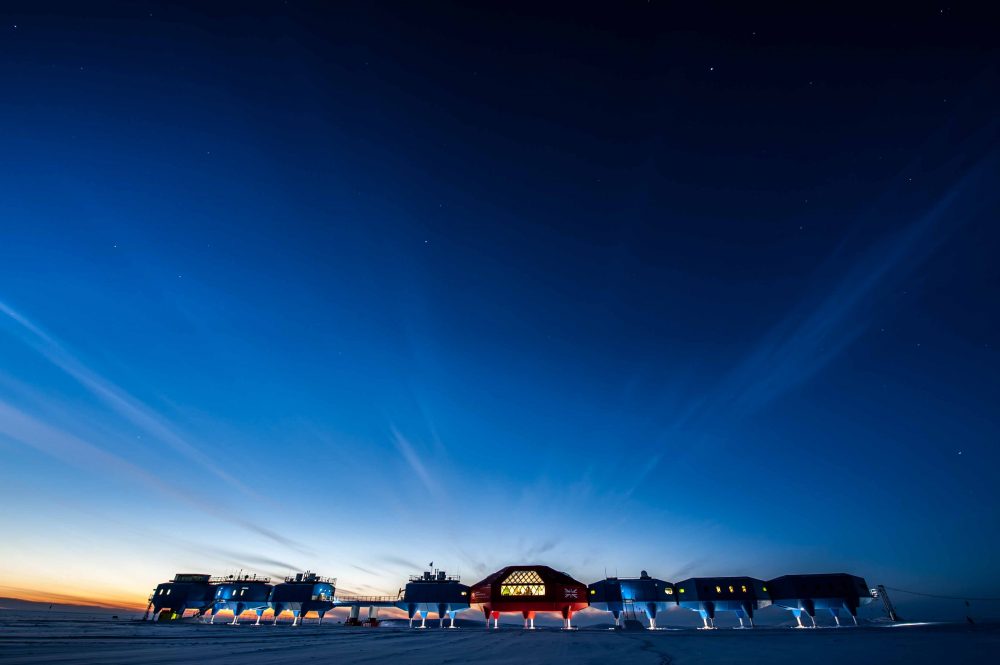
Halley VI: The British Antarctic Survey’s new base (Source: British Antarctic Survey)

Click here to read an update to this post (17 June 2021).

Many thanks to SWLing Post contributor, Richard Langley, who follows up with the following information about the 2021 Midwinter Broadcast to Antarctica:

As usual, there was a test of this year’s possible frequencies yesterday (14 June) from 21:30 to 21:45 UTC.

They were:

    • 6035 kHz from Dhabbaya
    • 6170 kHz from Ascension
    • 7305 kHz from Woofferton
    • 9505 kHz from Woofferton

As has been the case in past years, three of these frequencies will be chosen for the actual broadcast. Here in NB yesterday, good signals were received on 6170, 7305, and 9505 kHz. 6035 kHz was not heard.

Thank you for sharing this, Richard!

Radio Waves: “Tuning In The World”, Subcarrier Signals, SSTV Event from the ISS, the Zeptosecond and Israel Army Radio Shut Down

Radio Waves:  Stories Making Waves in the World of Radio

Because I keep my ear to the waves, as well as receive many tips from others who do the same, I find myself privy to radio-related stories that might interest SWLing Post readers.  To that end: Welcome to the SWLing Post’s Radio Waves, a collection of links to interesting stories making waves in the world of radio. Enjoy!

Many thanks to SWLing Post contributors Tracy Wood, Dennis Dura, John Forsyth, and the Southgate ARC for the following tips:


Tuning In The World (Far From Home)

When David Goren was 13 years old, he and his family went to visit their Uncle Lou.

“He was usually just railing about my long hair or criticizing rock and roll,” he recalled. But this time was different. “He gave me an old radio of his that had a shortwave band on it. I really didn’t know what that was. I asked my dad, and he was like, ‘You won’t hear anything on that!’”

David was curious, though, so after he got home, he turned it on, started fidgeting with the dial, and was amazed to discover sounds and music from around the world![…]

Click here to read the full post and click here to subscribe to the Far From Home podcast.

Subcarrier Signals: The Unsung Heroes of the FM Dial (IEEE Spectrum)

How subcarrier radio signals made room for hidden FM stations—and helped ensure that everyone has access to the news

A version of this post originally appeared on Tedium, a twice-weekly newsletter that hunts for the end of the long tail.

In our modern era, we tend to choose devices with as many functions as possible, and we bristle at the thought of an object with a single use—hence why umbrellas can be so frustrating to carry around. But sometimes, a single use case is exactly the right level of functionality. This is something I’ve been thinking about recently after I got my hands on a fairly large radio that has literally one function: You turn it on and a specific station plays, and there’s no surface-level way to do anything else with it.

This is a weird device—but for its niche, this device, called a subcarrier radio, was perfect. And it was one of many niches that subcarrier radios made possible.

What the heck is a subcarrier radio signal?
In 1985, a South Florida Sun-Sentinel article discussed a potentially lucrative offering for the owners of FM radio stations: ways to make extra money from parts of the licensed signal they weren’t already using.

This phenomenon was not unusual at the time; the practice had been around for decades. But what the article highlighted were the numerous ways radio signals were being used that the average listener was likely not even aware of—for background music, for stock reports, even to transmit computerized data.

And while station owners weren’t earning a ton of extra money—a single lease brought in US$1,400 a month (about $3,500 today)—for a struggling station, the additional revenue could mean the difference between being in the red and being in the black.

The thing that allows many radio stations to monetize their signals in this way is, essentially, a technical gap inside the FM broadcast signal. These gaps, or subcarriers, are frequencies that aren’t being used for the primary signal but could find secondary uses in more specialized contexts.[]

Amateur Radio on Shuttle, Mir and ISS (Southgate ARC)

ARISS report there will be an ‘Amateur Radio on Shuttle, Mir and ISS’ Slow Scan TV (SSTV) event from June 21-26. Transmissions from the International Space Station will be on 145.800 MHz FM using PD120

The ARISS team will be transmitting SSTV images continuously from June 21 until June 26. The images will be related to some of the amateur radio activities that have occurred on the Space Shuttle, Mir space station and the International Space Station.

The schedule start and stop times are:

Monday, June 21 – Setup is scheduled to begin at 09:40 UTC (transmissions should start a little later).

Saturday, June 26 – Transmissions are scheduled to end by 18:30 UTC.
Downlink frequency will be 145.800 MHz and the mode should be PD120.

Those that recently missed the opportunity during the limited period of MAI transmissions should have numerous chances over the 6 day period to capture many (if not all 12) of the images.

Check the ARISS SSTV blog for the latest information
http://ariss-sstv.blogspot.com/

The signal should be receivable on a handheld with a 1/4 wave whip. If your rig has selectable FM filters try the wider filter for 25 kHz channel spacing.

You can get predictions for the ISS pass times at
https://www.amsat.org/track/

Useful SSTV info and links
https://amsat-uk.org/beginners/iss-sstv/

Meet the zeptosecond, the shortest unit of time ever measured (Space.com)

Scientists have measured the shortest unit of time ever: the time it takes a light particle to cross a hydrogen molecule.

That time, for the record, is 247 zeptoseconds. A zeptosecond is a trillionth of a billionth of a second, or a decimal point followed by 20 zeroes and a 1. Previously, researchers had dipped into the realm of zeptoseconds; in 2016, researchers reporting in the journal Nature Physics used lasers to measure time in increments down to 850 zeptoseconds. This accuracy is a huge leap from the 1999 Nobel Prize-winning work that first measured time in femtoseconds, which are millionths of a billionths of seconds.

It takes femtoseconds for chemical bonds to break and form, but it takes zeptoseconds for light to travel across a single hydrogen molecule (H2). To measure this very short trip, physicist Reinhard Dörner of Goethe University in Germany and his colleagues shot X-rays from the PETRA III at Deutsches Elektronen-Synchrotron (DESY), a particle accelerator in Hamburg.[]

Defense minister says he is sticking to plan to shut Army Radio (The Times of Israel)

Defense Minister Benny Gantz reiterated on Wednesday his belief that Army Radio should not continue in its current format as part of the Israel Defense Forces.

“I think that IDF soldiers must be kept as far as possible from any political involvement, and the station should be apolitical, and it has long stopped being so,” Gantz said in response to a query from Shas MK Moshe Abutbul on the Knesset floor. “I don’t think there is any way to operate Army Radio in its current form, largely due to the political angle.”[…]


Do you enjoy the SWLing Post?

Please consider supporting us via Patreon or our Coffee Fund!

Your support makes articles like this one possible. Thank you!

The 2021 BBC Midwinter Broadcast to Antarctica next week!

Halley VI Research Station on the Brunt Ice Shelf in Antarctica (Source: British Antarctic Survey)

Many thanks to SWLing Post contributor, David (G4EDR), who writes:

I know that you and many of the readers of the SWLing Post like to tune into the annual BBC WS Antarctic Mid Winter broadcast. I requested some information from the BDXC (of which I am a member) about this year’s broadcast and got the following reply:

The broadcast will be on Monday 21 June from 2130-2200 utc. There are usually three extra SW frequencies beamed to Antarctica, these have not yet been confirmed but last year’s frequencies (which may be the same this year) were 5790 and 7360 via Woofferton and 9580 via Ascension.

This year its also being carried on most of the World Service English streams from 2132-2200, however the only shortwave outlets at this time are to Africa on 11810 and 12095 via Ascension. For those of us in the UK it should also be on the BBCWS DAB stream at the same time.

Its slightly shorter via the regular WS streams so to hear the full broadcast we should listen to the special Antarctica frequencies.

Thank you for sharing this and for the reminder, David!

I look forward to the Midwinter broadcast every year! It falls on my birthday and almost without fail also happens when I’m travelling. This year will be no exception.

I will still welcome photos and recordings as in years past as I love sharing these! I might ask, however, that readers and listeners simply leave their videos, audio, and notes in the comments section of the relevant post. Maybe I can even offer a little prize to a random listener–that would be fun!

Stay tuned! Please comment or contact me should you learn of the frequencies the BBC will use this year!

Guest Post: Dikeside Icom IC-705 RX action

Many thanks to SWLing Post contributor, 13dka, who shares the following guest post:


The IC-705 in action at the dike

by 13dka

When I got the IC-705 in late October 2020, I didn’t get that much chance to enjoy it at the dike: After a couple of initial tests and 2 nightly “FYBO” MW DX sessions in November, a way too long and wet winter struck the German North Sea coast, with nighttime temperatures recovering to 2-digit Celsius figures only in the past few weeks. I took the opportunity to do more experiments with loops, preamps and a phasing unit to improve the RFI-stricken reception at home, so I could at least listen to European hams on 80 and 40m raving about their new 705s and start to write my own musings about that lovely little radio, recently posted here.

SSB DX

June 1st, 202

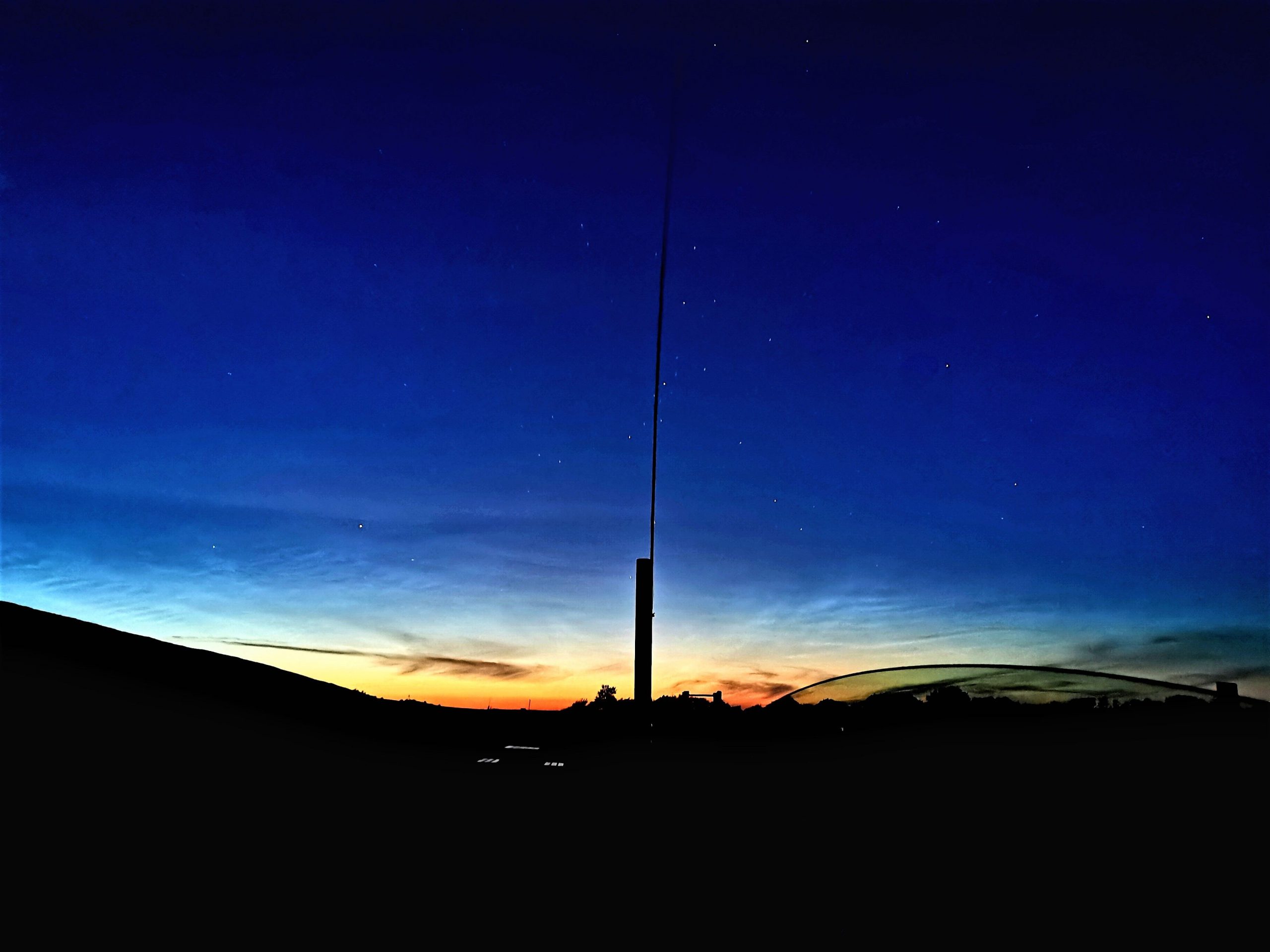
Finally, acceptable temperatures at night! But they come with a downside: When I connected the vertical around 8:00pm (local time), it was still almost 2 hours before sunset and a lot of thunderstorms in Europe made even 14 MHz very noisy, my hopes for some nice catches were immediately taking a dive. A short scan of the bands brought up nothing special, the only notable thing being the CB and 10m bands being moderately open. I should’ve known better: As soon as the sun splashed into the ocean, grayline propagation worked its magic!

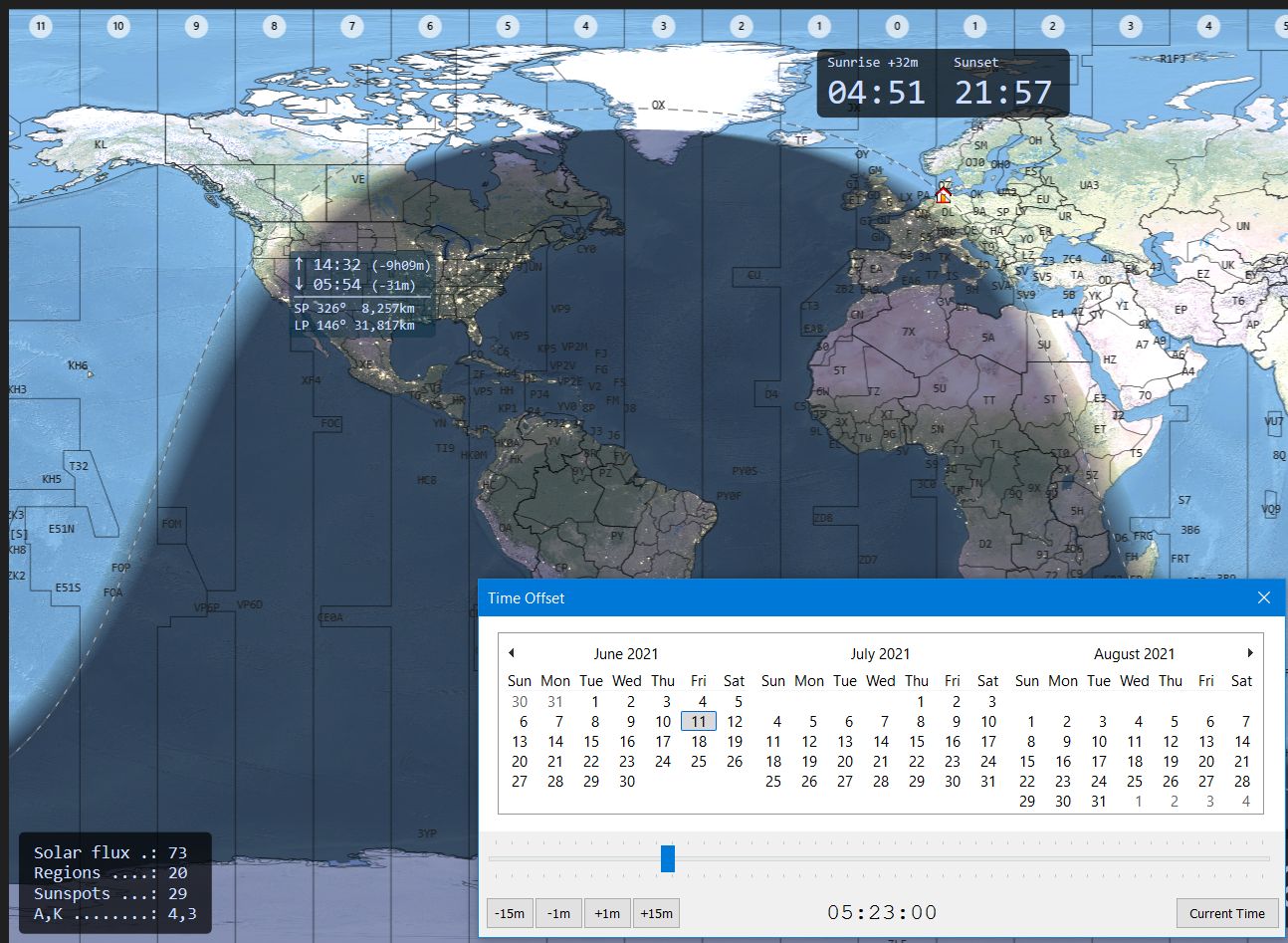
Grayline while receiving Japan, June 1st

As the image probably hints, a couple of Japanese “big guns” produced some nice, comfy signals on the monopole, in addition to the South American and Carribbean stations usually booming in here!

Video: A short collection of ham stations heard around midnight

After midnight I noticed a residue signal of WWV on 20 MHz and still a few EU beacons on 10m. Both incredibly weak with QSB making them disappear but that’s where the 705 really shines – it’s not only picking up these grassroots signals just fine, it shows me that they’re there, or that they were there – a waterfall display keeps on proving that a perceived lack of activity on a band is often pure bad luck – you can tune across an entire band without hearing anything because on each frequency with some activity there’s the other (inaudible to you) station speaking right now, QSB is dipping the signal just when you tune past it…

June 5/6, 2021

That evening the Japanese stations were missing on 20m, I thought I picked one up on 17m, and like so often, the one odd Australian station came in on 20m. After midnight I noticed the 10m beacons again, there were even a few more of them. This time I brought my Belka DSP to the dike so I could compare it with the IC-705, after all the Belka proved to be my most sensitive portable before! The devastating result is likely owed to the fact that the Belka is pretty picky about passive antennas not being matched very well to its input (which is much optimized for the whip) but it picked up diddly squat. If it isn’t a testimony for the sensitivity of the IC-705, it might be one for its aptitude to cope with all sorts of antennas.

Then I tuned into the 10m SSB range and I was veeeery surprised to hear VO1FOG from St. Johns, Canada! This is the first time I heard a transatlantic signal on 10m in a solar minimum ever, but it was with condx only elevated enough for some daytime DX within the EU…and literally in the middle of the night! The signal was very unstable though, he later switched to the 12m band which worked better. Back to what I said about the waterfall display above: Without it, I could’ve missed this station with a pretty high probability simply because I didn’t expect any activity up there, so I wouldn’t have tuned across that band for very long, and without seeing the signal while the VFO is already somewhere else…

I also heard another new country (Ecuador) in SSB, the usual collection of Carribbean islands and some participants of the “Museum Ships Weekend Event” including NI6IW, which is the vanity call of the history-charged USS Midway in San Diego. The “Japanese” station JW4GUA turned out to be on Svalbard island, with the main town Longyearbyen being the northernmost town in the world, only 650 miles from the north pole, and I don’t hear stations from there very often!

Video: June 5th

June 10/11

The past days saw the SFI passing 80 and 11/10m becoming quite busy. By the time I parked the car at the dike, SFI had dropped to 73. That evening the grayline confined itself to colorizing the horizon. 10m and 11m were still full of signals, I could still hear 2 British chaps chatting on 27 MHz at 3:00 in the morning, but nothing really “extraordinary” was coming in – the one odd VK, more Carribbean islands, one Argentinian but not much from other parts of South America, it never gets boring how this all defies predictability. But as always I heard most of the North American continent, not booming in much that night but I followed 2 POTA activations for a while, which are usually at most 100W stations working a lot of other “barefoot” stations and I heard almost all of them. In the morning grayline window for the west coast I finally got one solid signal from Oregon. All my radio life, the US west coast has been a tough target for some reason.

The signal had that typical “over the pole” sound, a relatively quick phasing imprinted into the signal by the charged particles converging over the pole, causing northern lights in the region and that exiting feeling when observing really big, planetary scale physics in realtime, over here at my listening post. The magic of shortwave. 🙂

Broadcast bands

After the post touting the IC-705 as a SWL/BCL receiver, demonstrating it on the broadcast bands seems mandatory to me. However, capturing cool BC DX is a very different business than waiting on the ham bands for interesting stations coming and going and collecting spectacular (-ish) results in a single night this way. Broadcast schedules have to be studied, current “hardcore” DX targets identified… and I have to admit that I’m out of that loop currently. Just turning the knob and recording whatever is populating the bands, and doing that between 21-22:00 UTC, when all programs are directed towards anywhere except Europe turned out to yield pretty boring results. Here it goes anyway:

Video: Browsing the most important BC bands

CONDX and antenna:

The antenna I was using in these videos was a simple wire running up a 10m/33′ fiberglass pole, forming a very archetypical “monopole” or “Marconi” antenna, just a vertical wire, no counterpoise, no matching network, no un-un, transformer or flux capacitor. I planned on using this to make some experiments about the practical benefits (for reception) of all the components it’s now lacking, but it already demonstrates that the beauty of receive-only antennas is that they often don’t require crazy efforts: On the conductive soil at the dike it works pretty well (good signals all over the bands and sufficiently low takeoff angle) as it is.

The evening and the 2 full nights at the dike once again had condx that nobody would phone home about:

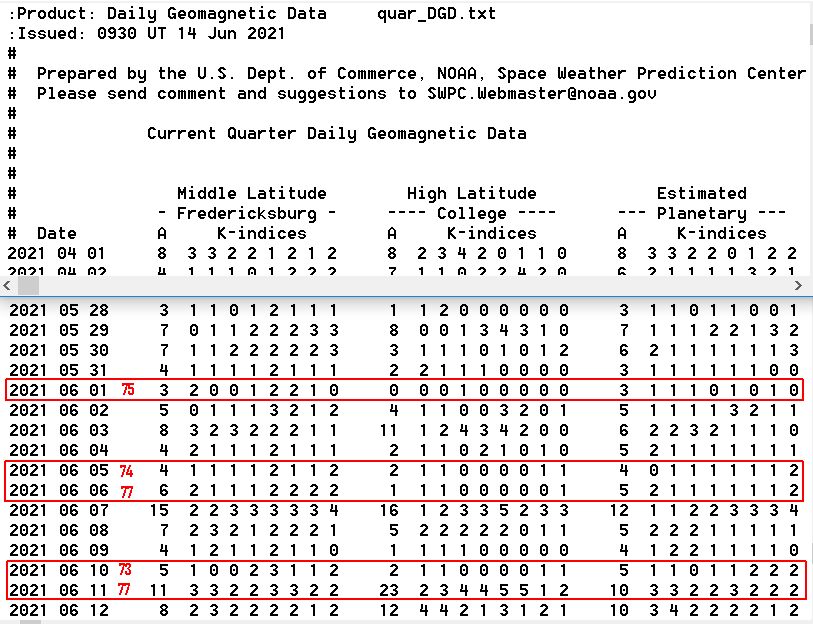
SFI, A and 3-hourly K-indices while I was at the dike.

It’s not that these numbers always fully explain actual and current condx but decreasing SFI and rising A/K-indices mean low expectations. Despite the condx still characterized by the solar minimum that way, the location is always delivering proper DX for my radios. Unless stormy or severely unsettled geomagnetic conditions give DX a day off, there’s almost always something to take home, be it a new country, a rare island, unexpectedly loud signals from the other end of the planet at unusual times and/or on unusual bands or other ionospheric mysteries.

Speaking of location: These videos demonstrate the properties of that listening post as much as the capability of the IC-705 to harvest them, and they don’t put that into relation to other radios, so you have to rely on my word on this: Compared to what I brought to that place so far it’s jaw-droppingly good, but a big contributor to that is that only few of my other radios can really cope with the antennas I like to use out there in first place. A radio like the IC-705 is sure making the most out of location and antenna, but it’s not the key component because a low-noise location is everything, it always was and it is today more than ever. Without it, radios and antennas can’t really play their jokers.

Dan spots a number of radios in the Netflix series “Sweet Tooth”

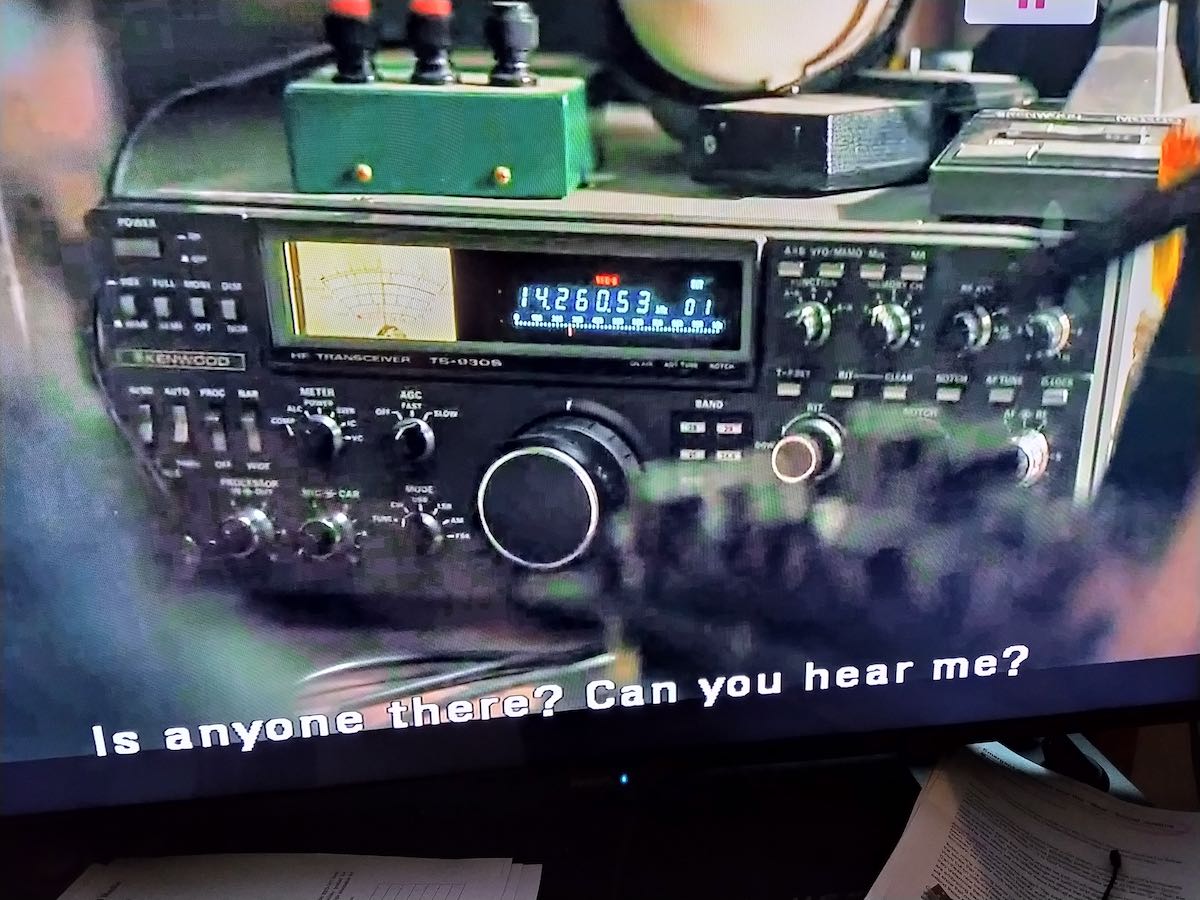
Many thanks to SWLing Post contributor, Dan Van Hoy (VR2HF), who notes that he spotted a number of radios including the Kenwood TS-930S in the new Netflix series, Sweet Tooth (see above). He writes:

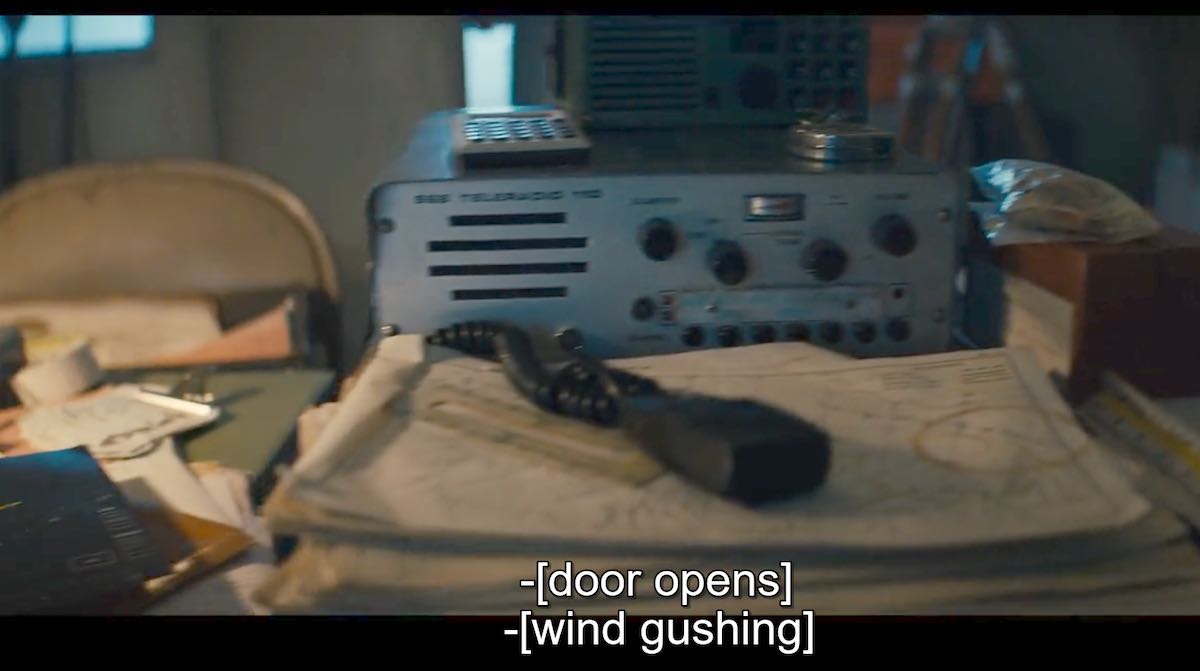
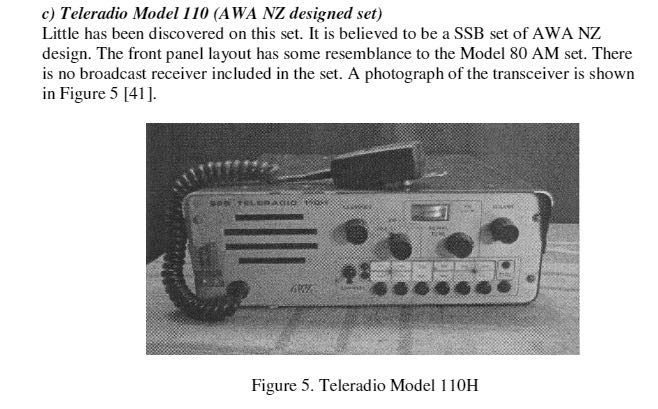
[Also] seen in the last minutes of the final episode of season one: An AWA (Amalgamated Wireless Australasia) Teleradio Model 110H HF SSB transceiver.

Interesting history about AWA:

[Also spotted] test equipment plus all kinds of other gadgets in the zoo sanctuary.

Very cool–thank you for sharing this, Dan! That Teleradio Model 110 looks like a fascinating set! I’ve never seen one before.