Category Archives: Shortwave Radio

Radio Waves: Ted Lipien Named Head of RFE/RL, The American Radio Archives, Drive-Thru Ham Tests, and VOA Broadcasts to Displaced Communities in Africa

Radio Waves:  Stories Making Waves in the World of Radio

Because I keep my ear to the waves, as well as receive many tips from others who do the same, I find myself privy to radio-related stories that might interest SWLing Post readers.  To that end: Welcome to the SWLing Post’s Radio Waves, a collection of links to interesting stories making waves in the world of radio. Enjoy!

Many thanks to SWLing Post contributors Ted Lipien, Josh Shepperd, Ronnie Smith, and Gary Butterworth,  for the following tips:


Ted Lipien returns to U.S. international broadcasting as head of RFE/RL December 18, 2020 (USAGM)

WASHINGTON, D.C. — Michael Pack, CEO of the U.S. Agency for Global Media (USAGM), announced today that veteran civil servant Ted Lipien is returning to U.S. international broadcasting as CEO and President of Radio Free Europe/Radio Liberty (RFE/RL).

“Few people have a greater understanding than Ted of the multifaceted operation and mission of U.S. international broadcasting,” said CEO Pack. “Ted is an ardent and captivating advocate of democracy who will excel at sharing America’s founding principles and ideals with the world.”

“When I was a teenager in Communist Poland, I would listen to Radio Free Europe to find out what the government was not telling me,” said Mr. Lipien. “It had an enormous impact on my life, and on the lives of millions of others. I’m honored, and humbled, to be entrusted with helping this storied organization continue to break the hold of censorship and give voice to the silenced.”

Mr. Lipien has dedicated virtually his entire career to U.S. international broadcasting. He joined Voice of America (VOA) in 1973 and served as the network’s Polish Service Chief for 12 years, from 1981 to 1993, including the Solidarity labor union’s struggle for human rights and democracy in Soviet-communist-ruled Poland. From 1993 to 2003, he served as the Broadcasting Board of Governors’ Eurasia Marketing Specialist and Director, first in Munich and, later, in Prague. Mr. Lipien then rejoined VOA, serving as Eurasia Division Director from 2003 to 2005 and Acting Associate Director from 2005 to 2006. He has interviewed a number of eminent public figures, including Cardinal Karol Wojty?a (Pope John Paul II), Lech Wa??sa, George H.W. Bush, Zbigniew Brzezinski, and Czes?aw Mi?osz.

In 2008, after leaving the federal service, Mr. Lipien founded Free Media Online, a non-governmental organization committed to supporting free media worldwide. His pro-media freedom work has been noted in a variety of national publications, including the New York Times, Wall Street Journal, and Washington Post. His articles have appeared in National Review, Washington Times, and Washington Examiner. Mr. Lipien earned his bachelor’s degree in international relations with distinction from George Washington University.

RFE/RL, headquartered in Prague, is a non-federal network funded by the United States Congress through USAGM. Daisy Sindelar, who had been serving as Acting President of RFE/RL since June 2020, is returning to her former role as the network’s Vice President and Editor-in-Chief.[]

On the Radio: The Library’s Special Research Collections to become home to the American Radio Archives (UC Santa Barbara)

The American Radio Archives, one of the world’s largest and most valuable collections of radio broadcasting will soon become part of the UC Santa Barbara Library’s Department of Special Collections.

Established by the Thousand Oaks Library Foundation (TOLF) in 1984, the archive is one of the first in the state and includes original recordings of Winston Churchill, as well as broadcast photographs, radio and television scripts, books and film dated as early as 1922.

“It is critical that such a wonderfully curated collection documenting the golden age of radio is preserved and accessible, said Thousand Oaks Mayor Claudia Bill-de la Peña. “UCSB has one of the largest collections of performing arts records, sound recordings and broadcast recordings on the West Coast as well as a state-of-the-art audio laboratory, making it our first choice and a natural fit for the American Radio Archives.”

The collection was established in 1984 and grew significantly with the purchase in 1987 of radio memorabilia from the estate of Rudy Valleé, one of the nation’s most popular singing bandleaders and personalities. Valleé documented his career, which took off in the1920s, through an extensive array of journals, photographs and original pieces of advertising.

The prominence of the Valleé collection attracted numerous celebrities and radio historians from around the world who gravitated toward the American Radio Archives. Among them were such luminaries as Norman Lear, Carl Reiner, Ron Howard, Ray Bradbury, Norman Corwin, Edward Asner, Walter Cronkite, Janet Waldo, Candice Bergen and William Shatner.

When Norman Corwin — dubbed America’s poet laureate of radio — donated his career files in 1990, it further increased esteem for the archives and generated significant interest among radio aficionados. As a result, many noteworthy collections were donated to TOLF, including, among others, those of radio station KNX-CBS; radio actor and radio historian Frank Bresee, who hosted “The Golden Days of Radio”; comedian Red Skelton; Carlton Morse, the creator of the long-running radio soap opera “One Man’s Family”; radio and television writers Milton and Barbara Merlin; and Allin Slate, a pioneer of the sports talk show format on KABC radio in Los Angeles.[]

Oregon ARRL VEC Testing Group Offers Testing from the Comfort of Your Car (ARRL News)

The coronavirus pandemic has made life difficult for everyone. On the plus side, however, it’s prompted creative solutions to work around the various roadblocks the pandemic has imposed. Volunteer Examiners in Grant County, Oregon, affiliated with the ARRL Volunteer Examiner Coordinator (VEC) put their heads together to overcome the adversity and hold a safe and secure exam session. Current health regulations in Oregon precluded both indoor and outdoor gatherings. Nonetheless, the Grant County Amateur Radio Club, the local ARES Group, and the Grant County Emergency Radio Infrastructure Coalition (ERIC) combined forces to offer five candidates the chance to obtain their first license or to upgrade their existing license, all from the comfort of their vehicles.

“Many amateur radio clubs have experimented with exams via the internet,” said Steve Fletcher, K7AA, who is the ARES Emergency Coordinator for Grant County. “In eastern Oregon, with the cooperation of the County Roads Department, we chose to hold a ‘drive-up’ exam session on Saturday, December 12. Under the circumstances, we used four ARRL VEs for the exam instead of the required three.” Wheeler County ARES loaned Stuart Bottom, K7FG, to help as the third required Amateur Extra-class Volunteer Examiner.

Fletcher reports three new Technician licensees and two new General-class radio amateurs resulted from the session.

Required ARRL VEC forms contained pre-printed data — including the FCC Registration Number (FRN) — were given to the candidates on a clipboard. Each candidate took the exam in the front seat of their own vehicle. Cell phones, papers, and anything not required for the exam were removed.

“Everyone dressed warmly, and most candidates had their heaters running,” Fletcher reported. A camper owned by Ronda Metler, KB5LAX, and a communications van owned by Fletcher served as sites to check results and sign forms.

The Grant County Roads Department loaned its parking area for the exam session.[]

On International Migrants Day, VOA Expands Broadcasts to Displaced Communities in Africa (VOA Press Release)

As the world observes International Migrants Day on December 18, Voice of America continues to enhance its operations to serve the growing refugee populations in Africa. UNHCR, the UN Refugee Agency, reports that, in just the past few weeks, 50,000 Ethiopian refugees have joined the world’s 80 million forcibly displaced people, including more than 18 million in sub-Saharan Africa.

Recognizing the deteriorating conditions in northern Ethiopia’s Tigray region in recent weeks, VOA rapidly added existing Tigrigna-language radio broadcasts to existing VOA FM radio stations in the Libyan cities of Tripoli and Misrata. These newscasts reach not only the newly displaced civilians, but also Eritreans in both cities who arrived prior to the current exodus and still have ties to the crisis-affected area. Newly created “micro sites” deliver digital content in TigrignaAmharic, Afan Oromo and English from VOA regional reporting teams.

In Kakuma, Kenya, site of one of the world’s oldest refugee camps, VOA launched a new FM station to provide both refugees and the local community with news, music, and educational content in English, Swahili, and Somali. For the Dadaab refugee complex near Kenya’s border with Somalia, a new VOA station offers local residents and refugees a mix of VOA English and Somali language content that airs in Somalia and Djibouti.

“VOA is committed to providing vital news and information to underserved populations worldwide, including refugees and other forcibly displaced persons,” said VOA Director Robert Reilly. “In particular, as the only international broadcaster with a presence in Kakuma, VOA serves as a critical lifeline for individuals in this region with access to few other reliable media resources.”

VOA’s efforts to reach at-risk refugee populations expanded exponentially in 2017 in south Asia and Latin America. VOA’s Bangla language service began broadcasting in Rohingya to reach refugees in Kutupalong, the world’s largest refugee camp. Nearly one million ethnic Rohingya, who fled persecution in neighboring Myanmar, inhabit the site. When Venezuelans began to flee President Nicolás Maduro’s regime, the VOA Spanish language service significantly increased its coverage of this unfolding crisis for audiences all across the region.

VOA FM Frequencies

Existing in Libya: Tripoli (106.6 MHz); Misrata (99.1 MHz)

New in Kenya: Kakuma (99.9 MHz); Dadaab (106.7 MHz)


Do you enjoy the SWLing Post?

Please consider supporting us via Patreon or our Coffee Fund!

Your support makes articles like this one possible. Thank you!

Alan Roe’s Guide to 2020 Holiday Broadcasts on Shortwave

Many thanks to SWLing Post contributor, Alan Roe, who writes:

I have been collating a list of programming on shortwave over the forthcoming holiday period. The programmes listed are predominantly, but not necessarily, seasonal. Here is the first edition of this compilation, which will be updated and redistributed if and when more information becomes available.

Regular weekly music programming, where no special advance programme information has been provided, are not included in this list, but please refer to my Music on Shortwave list also uploaded to the files section.

I hope that you find it useful.

Additions and corrections are most welcome to [email protected]

Best wishes for Christmas and a Happy New Year
Alan Roe, Teddington, UK

Click here to download (PDF). [V4 Update]

This is brilliant, Alan! Thank you so much for curating this guide and sharing it!

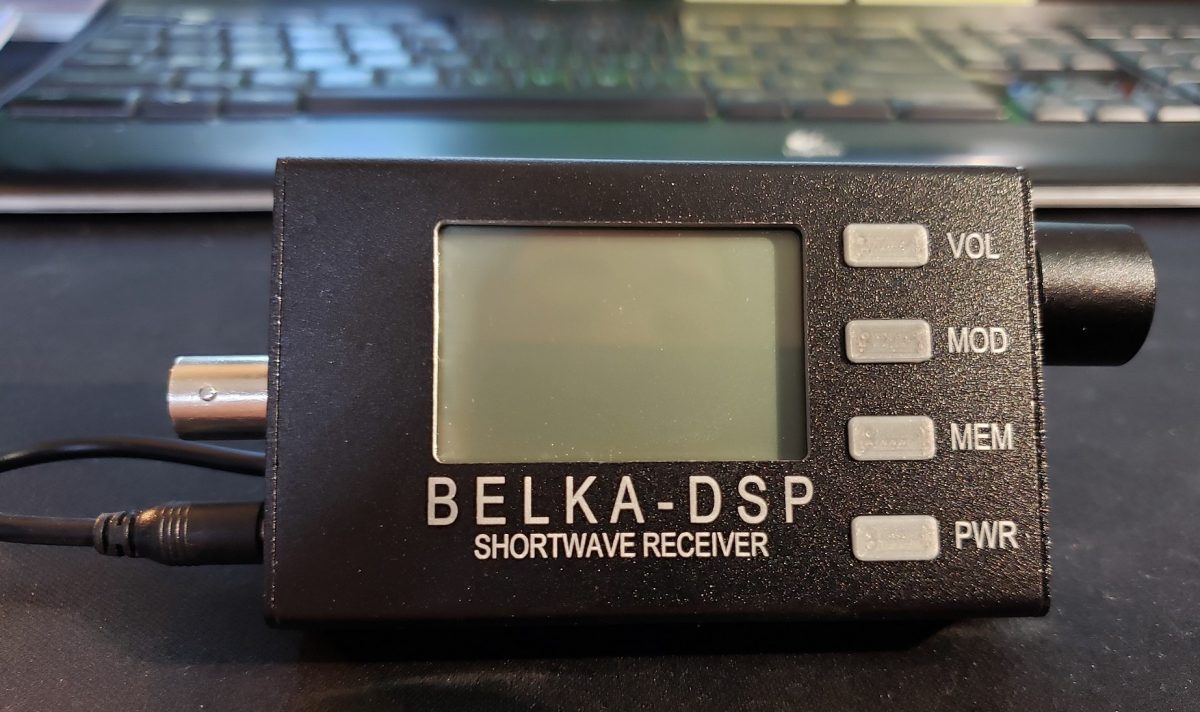
Bluetooth adapter that also serves as a Belka stand

Many thanks to SWLing Post contributor, Joe Patti (KD2QBK), who writes:

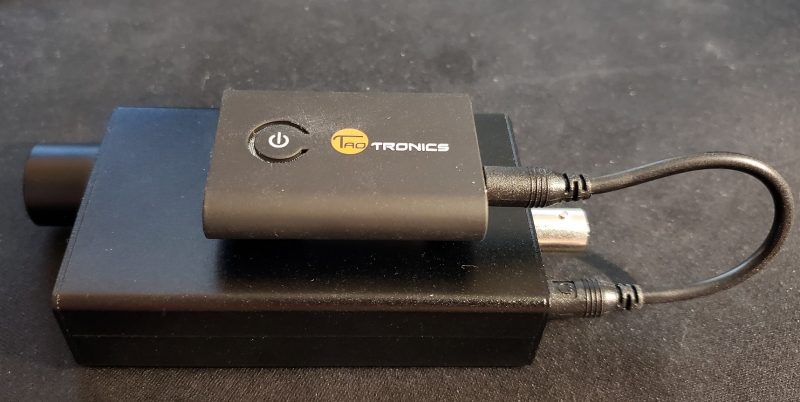
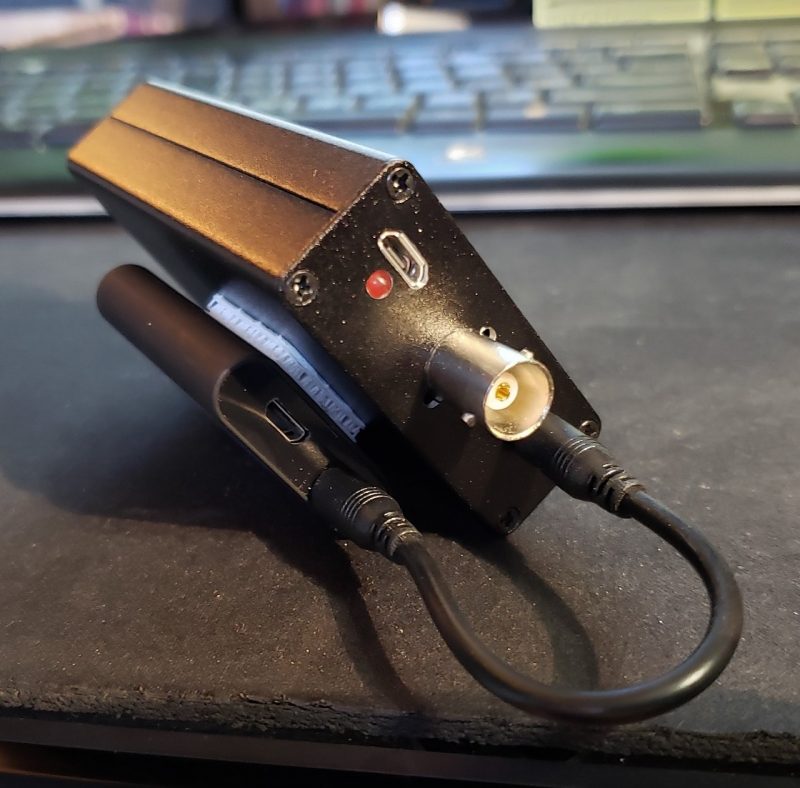
Not sure anyone would be interested, but in using a Bluetooth adapter with my Belka I inadvertently came up with a little stand for it.

I attached the adapter to the back of the radio with a piece of plastic 3M Command picture hanger strip. It props up the little radio at exactly the right angle.

Love the blog!

Thank you, Joe! Looks like this is the Bluetooth adapter you’re using. What a clever way to have your Bluetooth adapter do double duty! Also, I’m so glad you enjoy the Post!  Thanks for sharing your tip!

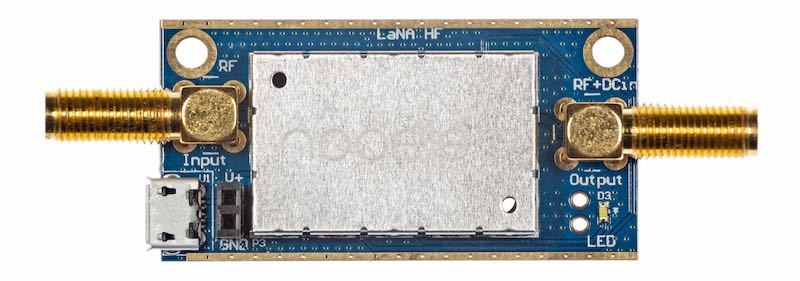
Nooelec LaNA HF Barebones Ultra Low-Noise LF, MF & HF Amplifier

Many thanks to SWLing Post contributor, Chris Rogers, who writes:

[Here’s] an interesting new amplifier that is suitable for SDR’s and antennas like Youloop etc with Bias-Tee provision. Unsure of the specifications.

The ad claims made in North America:
https://www.nooelec.com/store/lana-hf-barebones.html

Thanks for the tip, Chris! Yes, it’s a bit of a surprise it’s made in North America. I must admit that these Nooelec amps all look the same to me, so I’m guessing this model is simply the latest iteration?

Post readers: have you used this particular LNA? Please comment!

Tom builds a portable Loop-On-Ground antenna

Many thanks to SWLing Post contributor, TomL, who shares the following guest post:


My First Loop-On-Ground antenna

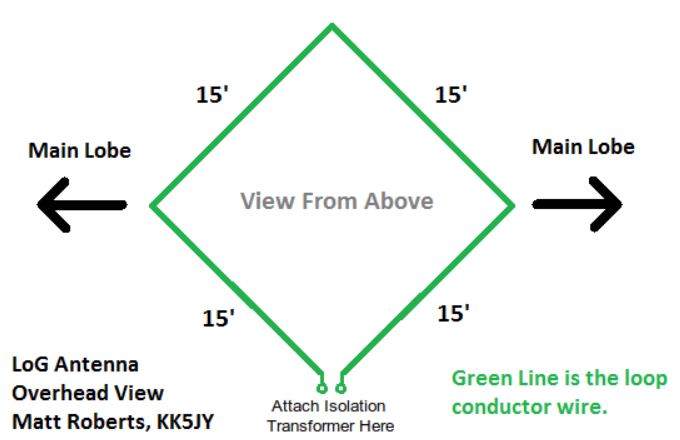
A number of people have mentioned the Loop On Ground (LOG) antenna in the past as a good receive-only antenna.  I did some research but could only find a few examples by amateur radio operators.

Matt Roberts (KK5JY) has a good article including some antenna theory and measurements, you can find it here:

http://www.kk5jy.net/LoG/ 

Someone named Tom (KG3V) has a write up on it but it is a little short on details:

https://kg3v.com/2020/01/04/loop-on-ground-the-simplest-receive-antenna-you-will-ever-build-and-it-works/

Stana Horzepa (WA1LOU) has something similar:

https://tapr.org/loop-on-ground-log-antenna/

I also read somewhere that for transmitting, a LOG antenna is useless as it radiates much of the energy right into the ground!  But I didn’t care about that.  I needed something for receive I can deploy easily without supports and take down just as easily.  As you may recall, my home condo is literally saturated with noise and I cannot null it out.  So a wire looped on the ground is supposed to work?  You bet it does!

Of course, there are some conditions to meet.  There has to be enough flat ground away from people or pets (or lawn mowers!) who would get tangled in the wire on the ground.  The wire should be as close to the ground as possible (although I had good results laying the wire on top of cut grass).  The loop of wire can vary in circumference from about 20 feet to 150 feet (the shorter length will stay in an omnidirectional pattern higher in frequency but lower in signal pickup and vice-versa for the longer length).  The wire needs to be insulated.  That’s about it!

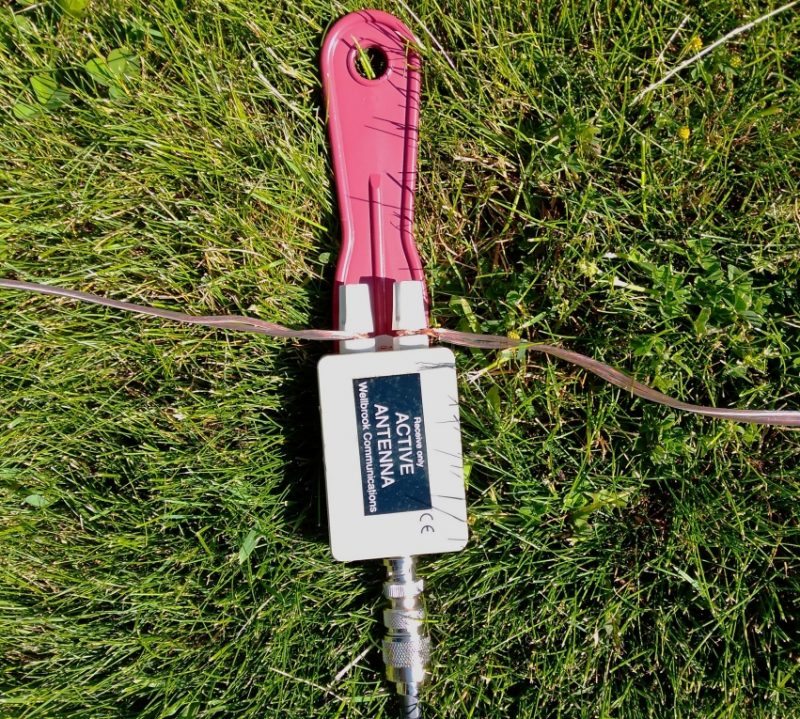
So, off to the hardware store to buy a cheap spool of 100 foot 18 gauge speaker wire.  But, the articles mention using a balun and they all made their own.  I did not feel like doing that (I am not that good at making things from scratch) and I did not want to spend money ordering one. More reading somewhere informed me that my existing Wellbrook Medium Aperture loop amplifier has a built-in balun at the antenna side of the device.  Hallelujah!

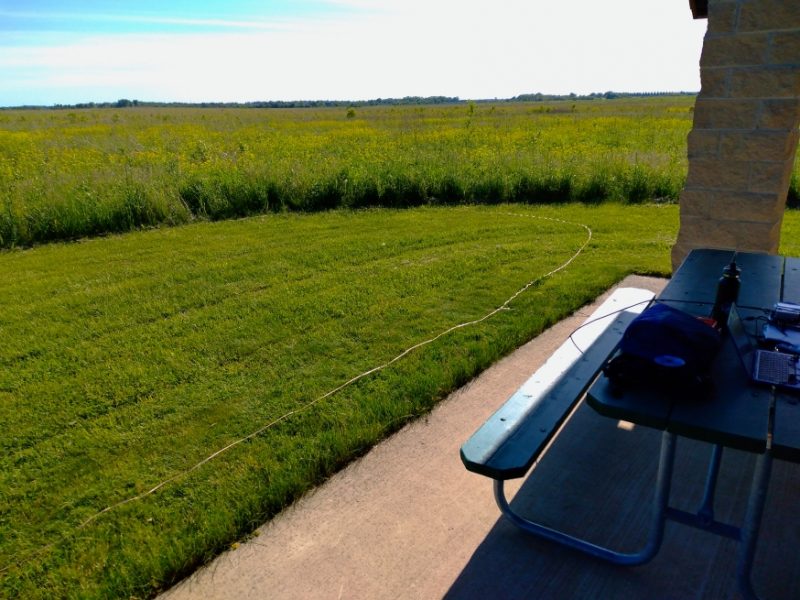
I bundled together the wire, Wellbrook parts and battery supply, small laptop and Airspy HF+ to my favorite Lake Nelson Forest Preserve.  The shelter there is little used and is adjacent to the prairie with cut grass.  It did take a good 15 minutes to lay out the 100 feet of wire on the ground while trying to keep it as flat as possible. And I did not have enough space for a circle, so I ended up with an oblong shape.  The long sides are facing directly north-south, so in theory (I think) this gives me an oblong shaped reception pattern east-west.  The photo shows half of the wire laying on the grass.

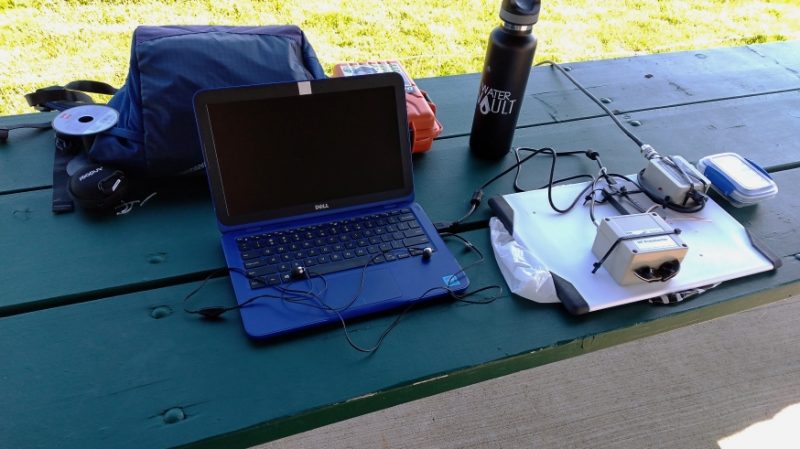
I ended up with this setup on a picnic table at the rear end of the shelter.  The coax wire goes from the Wellbrook amp into its power module, then to a Cross Country Wireless preselector, then to the Apirspy HF+ and laptop.

I was really impressed by the signal strength of the usual suspects like Radio Nacional da Amazonia.  I could see that the Wellbrook amp was boosting signals across the board with only a little extra noise.

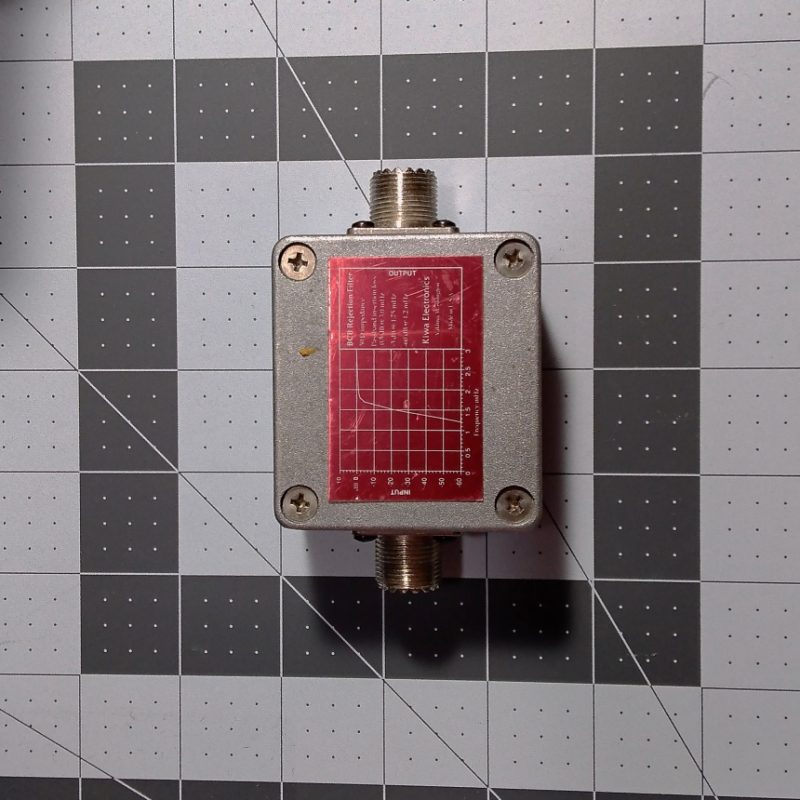
I use the preselector to try to keep the Airspy radio from overloading, especially mediumwave broadcast signals which can sound like a small amount of extra “hash” type noise in the background.  I have since added into the accessory chain an old Kiwa Electronics BCB filter that does a great job of knocking down the frequencies below 2 MHz.

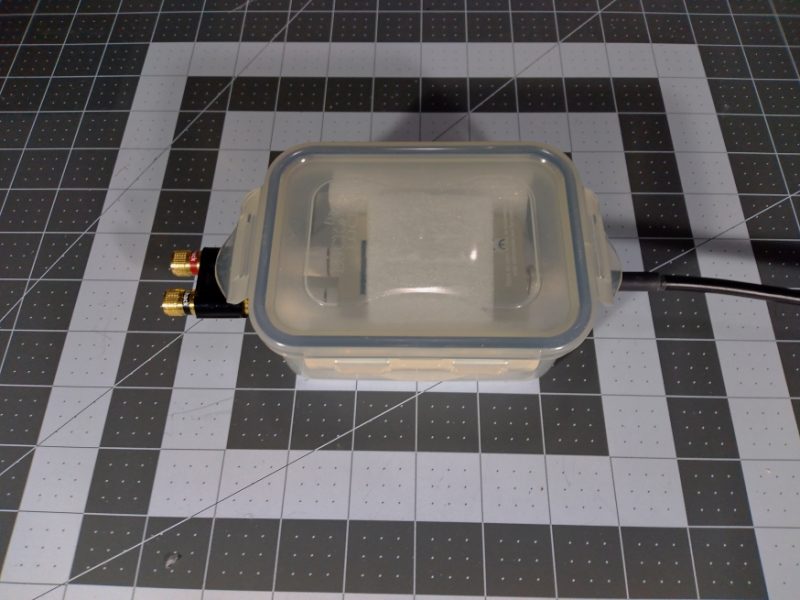
I have also since added a water resistant box to enclose the Wellbrook amp to keep it safe from getting stepped on or too wet.

Also, a couple of weeks later I was able to go to a campgound and try out 60 feet of wire but the result was noisier since I was surrounded by RV vehicles in a crowded campsite.  It was not horrible and I was able to listen to some good radio stations but location can matter with any antenna.

I hope you like the recordings below.  Because of some serious health issues this summer, these May 31 2020 recordings & report are just being published now (I am recovering slowly but surely!).  My small laptop is under-powered, so I was only able to record MP3 files one at a time.  It kept me busy as I went from one frequency to the next and kept recording anything I heard.  I was able to hear a couple of stations I never heard before and that is a success in my book.

It remains to be seen if this antenna is as good as my 19 foot vertical antenna attached to the top of the car roof, especially low-angle DX signals.  Maybe you will have the chance to experiment as well and share your experience, too.  Now, will a small loop-on-ground antenna around my car parked late at night at a far corner of the grocery store work OK???  I will have to try it!

Recordings (crank up the volume if it is too weak):

22:00 UTC, Radio Saudi (Arabic) 11915 kHz

22:04 UTC, KDSA Adventist Radio (Indonesian) 11955 kHz

22:14 UTC, KDSA Adventist Radio (English) 12040 kHz

22:20 UTC, Voice of Korea (Japanese) 11865 kHz

22:23 UTC, Yemen Radio (heavily jammed) 11860 kHz

22:35 UTC, Radio Brazil Central (Portuguese) 11815 kHz

22:50 UTC, WWV booming in 10000 kHz

23:11 UTC, UnKnown (might be FEBC) 9795 kHz

23:15 UTC, China Radio Int’l (Spanish teaching Chinese, from Kashi) 9800 kHz

23:17 UTC, China Radio Int’l Business Radio (from Xianyang) 9820 kHz

23:19 UTC, China Radio Int’l (Chinese from Urumqi) 9865 kHz

23:21 UTC, Voice of Korea (Korean) 9875 kHz

23:23 UTC, Maybe Radio Taiwan without jamming from CNR 9900 kHz

23:34 UTC, China Radio Int’l (Chinese from Bamako Mali) 7295 kHz

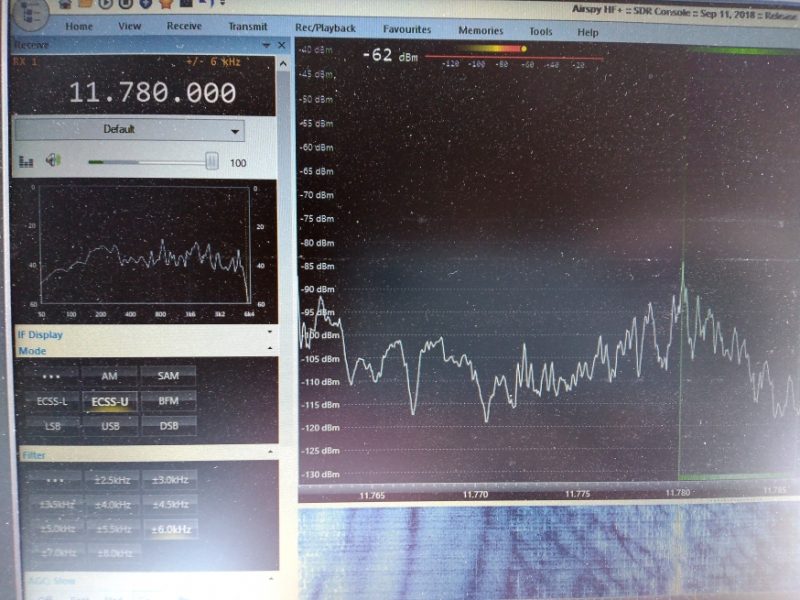
23:43 UTC, Radio Nacional da Amazonia 6180 kHz (& 11780 kHz around 40 seconds)

23:50 UTC, MAYBE China PBS from Xinjiang in Kazakh (nothing else listed on schedules) 6015 kHz

23:56 UTC, Radio Mali (French announcer humming to music and acting crazy) 5995 kHz

00:07 UTC, Radio Rebelde (Spanish w/clear signal, Bauta, Cuba) 5025 kHz

00:15 UTC, 75 meter Amateur Radio 3913 kHz (LSB)

00:27 UTC, CHU Ottawa 3330 kHz

00:30 UTC, XEPPM Radio Educacion (Spanish Mexico City) 6185 kHz


This is brilliant Tom! Thank you for sharing. 

Our antenna guru contributor, Grayhat, has been encouraging me (understatement!) to build a Loop-On-Ground antenna but I haven’t done this yet because, at home, our driveway would interfere with its deployment. That and I have no RFI to speak of in my rural/remote home so my skyloop antenna is tough to beat. But having one available for portable use would make a lot of sense.  I’m going to put this on my 2021 project list!

Post Readers: Do you use a LoG antenna at home or in the field? Please comment!

KTMS Test Transmission December 17, 2020


Many thanks to SWLing Post contributor, Bill Hemphill (WD9EQD), who shares the following announcement he originally discovered via reddit user fastradioburst23:

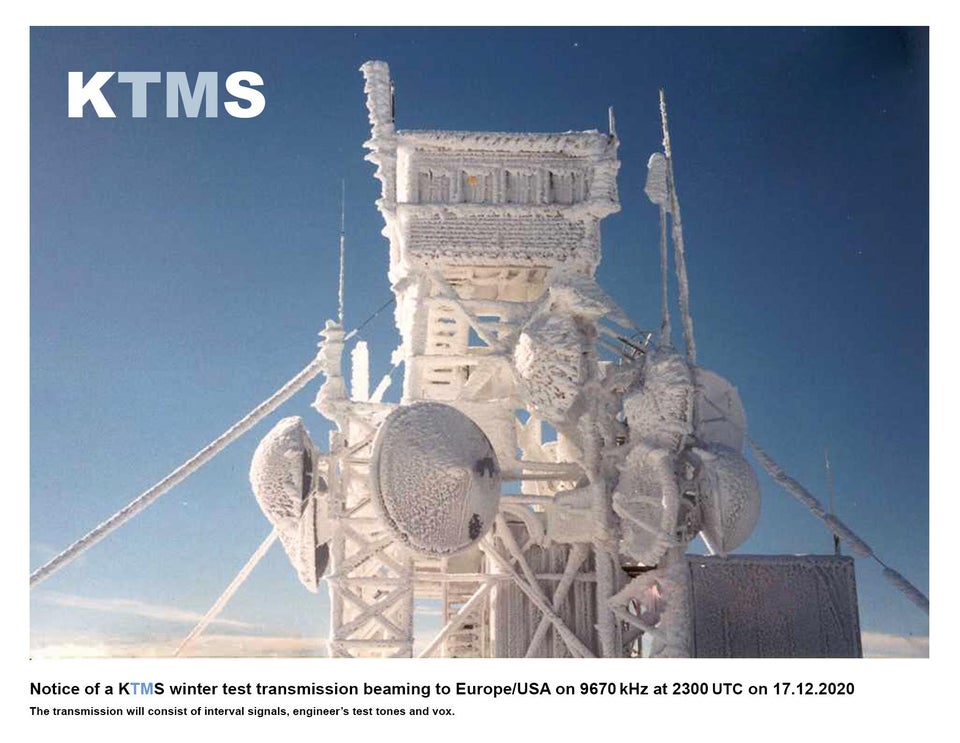
Notice of a KTMS winter test transmission beaming to Europe/USA on 9670 kHz at 2300 UTC on 17.12.2020. This transmission will consist of interval jingles, engineer test signals, rare re-media mixes of cult radio favorites, strange tones, and vox. Thank you for your continued attention as the KTMS crew continue working to bring the SWL community unique transmissions.

Thanks for the tip, Bill!

Radio Waves: New SiriusXM Satellite, Tour of CHU, Icom ID-52 Delay, and Grant’s Prototype Broadcast Receiver

Radio Waves:  Stories Making Waves in the World of Radio

Because I keep my ear to the waves, as well as receive many tips from others who do the same, I find myself privy to radio-related stories that might interest SWLing Post readers.  To that end: Welcome to the SWLing Post’s Radio Waves, a collection of links to interesting stories making waves in the world of radio. Enjoy!

Many thanks to SWLing Post contributors Mike Terry, Tracy Wood, John Palmer, and Greg Jasionek for the following tips:


SpaceX Launches Latest Satellite For SiriusXM Radio (Spaceflight Insider)

On Sunday December 13, a SpaceX Falcon 9 rocket successfully lifted off from SLC-40 at Cape Canaveral Space Force Station in Florida, carrying the SXM-7 satellite to a geostationary transfer orbit. The flight came two days after SpaceX’s first launch attempt on Friday, which was aborted at t-minus 30 seconds. The company tweeted the reason for the scrub, “Standing down from today’s launch attempt to perform additional ground system checkouts.” While SpaceX did not point to a specific reason for the hold call, it can be assumed that either the onboard computers or ground controllers found something off-nominal in the final seconds before liftoff.

[…]The payload, the SXM-7 satellite, is the latest addition to Sirius XM’s constellation of satellites aimed at delivering an extensive library of music and entertainment to most parts of the world. SXM-7, along with its sister satellite SXM-8 launching in 2021, are aiming to replace the company’s aging XM-3 and XM-4 satellites. Contracted and built by Maxar for Sirius XM, the 7,000 Kilogram satellite is based on the SSL-1300 Bus and utilizes a host of S band transponders to provide satellite radio to customers in North America.

“Maxar and SiriusXM have worked together for more than two decades to build world-class digital audio radio satellites that bring entertainment to almost every new car in America,” said Megan Fitzgerald, Maxar’s Senior Vice President of Space Programs Delivery. “We are proud to have built the latest addition to the SiriusXM constellation and look forward to the launch of their next Maxar-built satellite, SXM-8, next year.”[]

CHU, Canada’s Time Station (Radio World)

Look inside the facility that broadcasts voice time signals in two languages

It is nestled in a farmer’s field in southwestern Ottawa, Canada, in a protected area known as the Greenbelt, surrounded by miles of sprawling suburbia.

It is CHU, Canada’s own automated time station.

Operating from a 1940s-era transmitter building and three vertical antenna towers, CHU broadcasts automated voice time signals in both English and French 24/7.

Its broadcasts are transmitted on 3.33, 7.85 and 14.67 MHz, and are heard through central/eastern Canada and the eastern United States, plus many other areas of the planet on a regular basis.

CHU’s time service is operated by Canada’s National Research Council, with the station being remotely controlled from the NRC’s Montreal Road headquarters central Ottawa some 12 miles away. The time signals are based on CHU’s trio of atomic clocks on-site, which are constantly checked against the atomic clocks at NRC headquarters.

“We are equipped with 1960s-era 10 kW transmitters that have been highly modified over the years,” said Bill Hoger. He is the Research Council officer who maintains the unmanned station as part of his overall duties along with two other off-site technicians.[]

ID-52 Apology and Notice of Production Delay (Icom)

Thank you for your continued patronage of Icom products.

Regarding the 144 / 430MHz dual band 5W digital transceiver “ID-52” released in October 2020, there is a delay in the supply of parts from external partner companies, and additional production is significantly delayed. We sincerely apologize for the inconvenience caused to customers and retailers who are waiting for ID-52.

We will inform you about the timing of resuming production as soon as it is confirmed.

We are doing our utmost to resume production as soon as possible, and we appreciate your understanding.

New Type of Broadcast Receiver (LinkedIn Post)

There has been a lot of testing over last few month, with the new working prototype AM receiver. It has taking almost two years to get to this point with a lot of testing to find out what works and what does not.

The performance on Long wave and Medium wave is outstanding with the external loop configuration, this has many advantages over a ferrite rod antenna design. The Short wave performance is OK, where the front end RF transformers need to be improved with more testing. It out performs my Tecsun PL-398 that uses Digital Signal Processing (DSP), and comes close to what is possible within the high noise floor that you get in buildup areas.

The adaptive processing works very well, where you can set in software to work based on the signal level and if there is a pilot tone been detected (stereo indicator), this works for both the AM bands and for FM. As with the adaptive processing the noise reduction also works with both AM and FM bands, that has been use with Short wave and Long wave stations. The de-emphasis cave is design for 50 ?s, to pass a wider modulation bandwidth through up to 12.5 kHz.

The Denon TU-680NAB has been the reference receiver throughout all the testing to get to this test point. As this was designed for the high end audio market in the 1990’s, to provide the best possible performance for HiFi systems of the day.

[…]This will be marketed as a high end broadcast receiver, the aim is to stay well clear of low cost products from China, that are all too common these days. This is a Canadian product, showing that there are many new ideas and what possible in this area of development. With all these advancement it possible to provide a high quality music programming using AM radio that sounds as good as FM, with the advantages of larger coverage areas.[…]

Click here to read the full post with specifications.


Do you enjoy the SWLing Post?

Please consider supporting us via Patreon or our Coffee Fund!

Your support makes articles like this one possible. Thank you!