Category Archives: Shortwave Radio

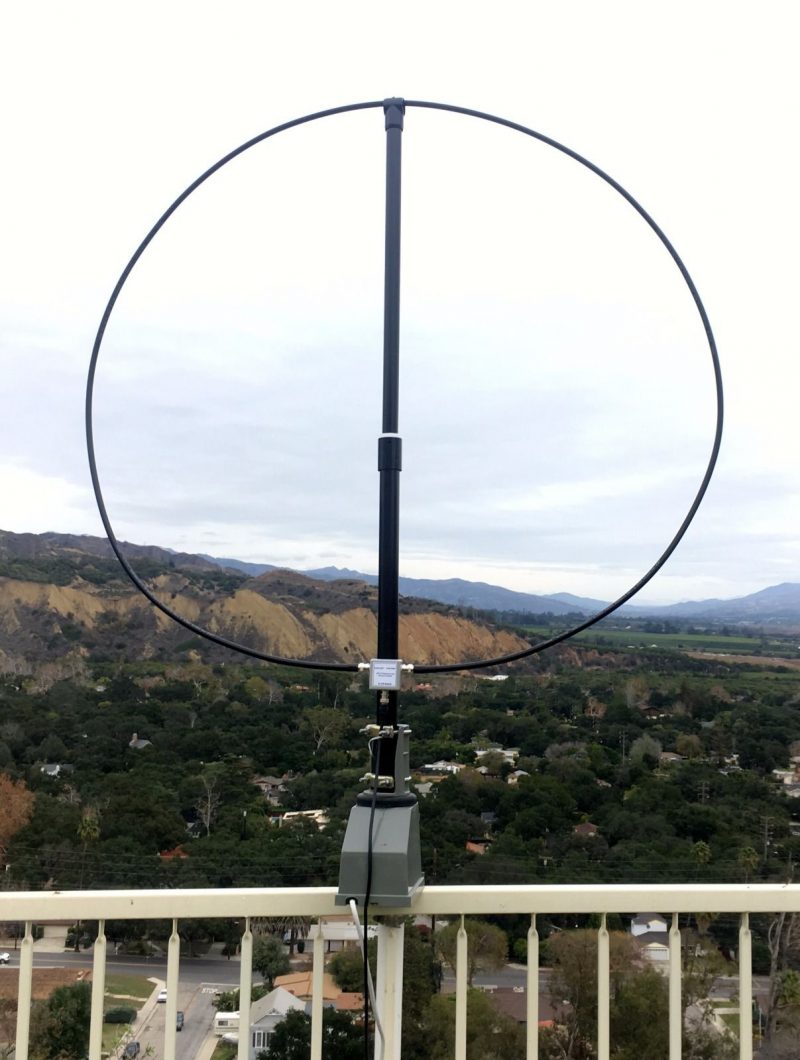
Kenneth is impressed with the W6LVP Magnetic Loop Antenna

Many thanks to SWLing Post contributor, Kenneth Wigger, who writes:

One Friday evening I contacted Larry W6LVP and asked a question about the kind of coax that he would recommend for his Magnetic Loop antenna. I was surprised to get a response with technical information within an hour or so. With this kind of customer service I decided to go ahead and order one of his antennas later that evening. I actually received the antenna on Monday afternoon within a couple days.

I have extreme electrical noise that was S-8 most of the time on my Carolina Windom and made my radio almost unusable. I temporarily installed the Magnetic Loop antenna on a short 5 FT pole in the backyard. With the XYL as the null monitor at the radio I called her on my cell phone and rotated the antenna by hand and was able to get a sharp noise null of about S-1. Very tight null when rotating just a few degrees one way or the other. Went in the house and couldn’t believe the clear signals that were hidden by the previous high noise level. It reminded me of SWLing 50 years ago as a kid back in the good old days before the electrical noise environment turned so bad!

As I mentioned, the antenna arrived within a couple days and was of high quality construction and packed extremely well for shipment. I had read the previous reviews about Larry’s product quality and customer service and my experience was also very good!!

I am planning to mount the antenna on a Channel Master rotator one of these days to get the full effect of the excellent directionally of this Magnetic Loop antenna. I even read where Broadcast Band Listeners use this antenna to pick up and select between multiple stations on the exact same AM frequencies.

I highly recommend Larry W6LVP and his Magnetic Loop antenna to other Hams and SWL listeners. He responds personally to emails within a business day usually just an hour or two. What more could a customer ask for?

Thank you, Kenneth, for sharing your review! It’s nice to have an alternative to the pricier Wellbrook and Pixel Loop antennas. Someday, I’ll get around to reviewing the W6LPV loop antenna as well.
Click here to view W6LVP antennas on eBay.

Click here to view the W6LVP website.

VORW Radio International Test Broadcast Today

Many thanks to SWLing Post contributor TheReportOfTheWeek who shares the following update:

This Sunday (January 28th) and next Sunday (February 4th) there will be test transmissions of VORW Radio International via radio station WINB in Pennsylvania. These tests are beamed toward North America but may be heard elsewhere, reception reports are very much appreciated to gauge effectiveness.

Sunday 2100 UTC (4 PM Eastern) – 9265 kHz – WINB 50 kW – Test to North America

Also, here is the full broadcast schedule, each show features some misc talk and commentary and some listener requested music. It can make for a fun listen!

Thursday 2000 UTC – 7780 kHz – WRMI 100 kW – Eastern North America
Thursday 2300 UTC – 9955 kHz – WRMI 100 kW – South America
Friday 0000 UTC (Thu 7 PM Eastern) – 7730 kHz – WRMI 100 kW – Western North America
Friday 0100 UTC – 9395 kHz – WRMI 100 kW – North America
Friday 0100 UTC – 9455 kHz – WRMI 100 kW – Central America
Friday 0100 UTC – 5850 kHz – WRMI 100 kW – North America
Sunday 2100 UTC – 9395 kHz – WRMI 100 kW – North America
Sunday 2100 UTC – 7780 kHz – WRMI 100 kW – North America

Questions, comments, reception reports and music requests may be sent to [email protected]

Reception reports will receive a QSL!

A $25 upgrade for the Elecraft KX2

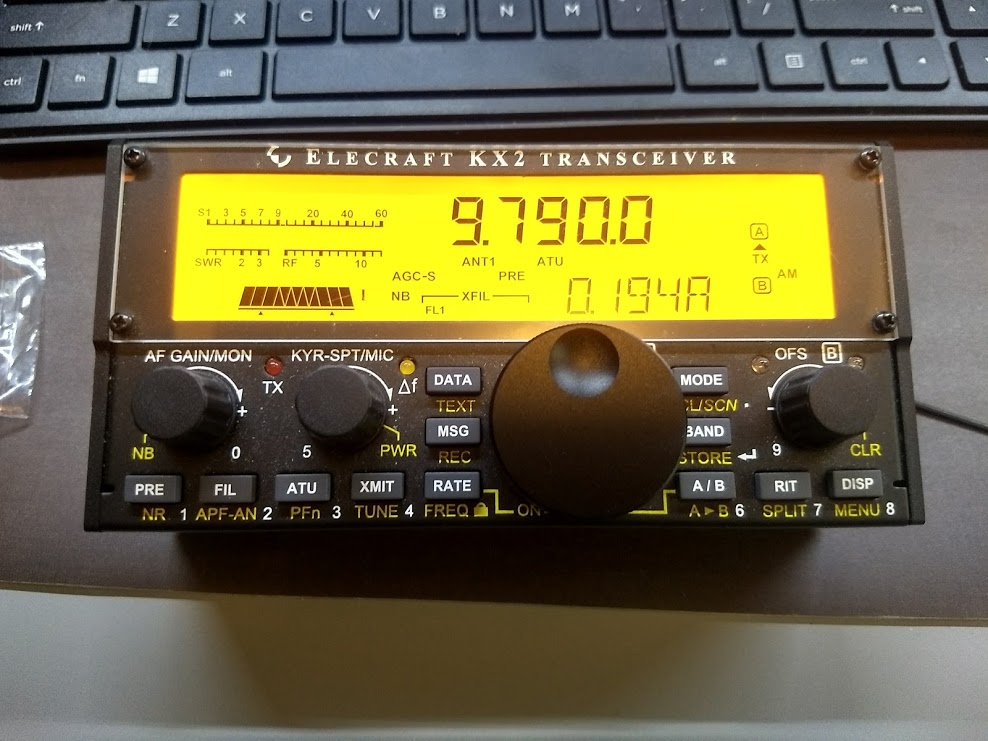
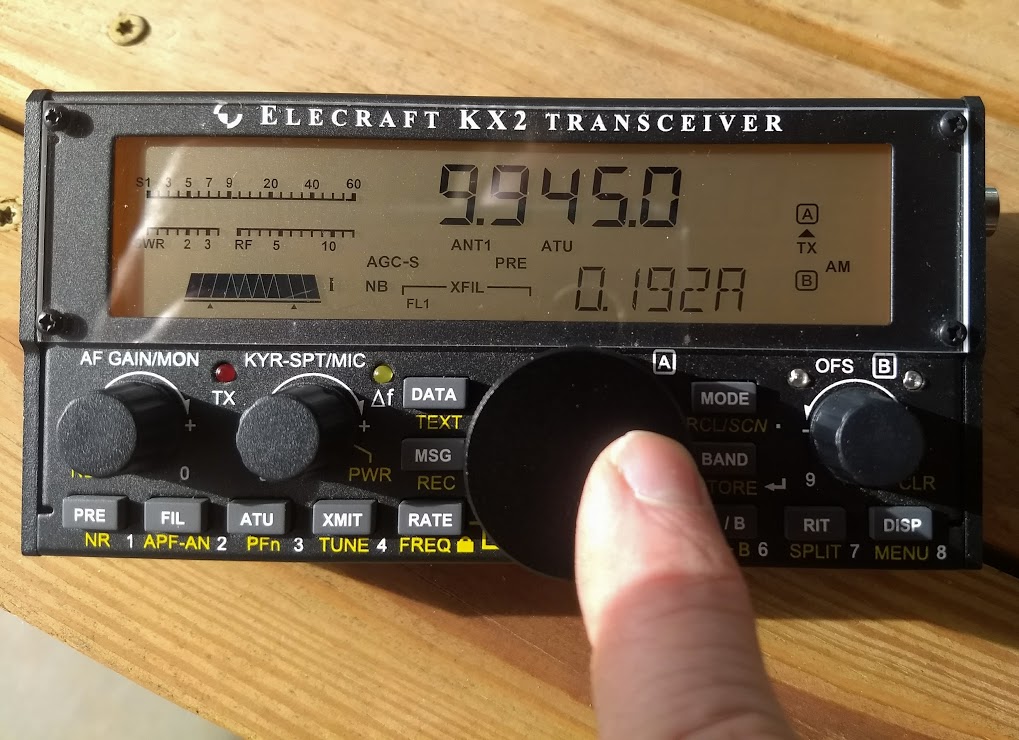
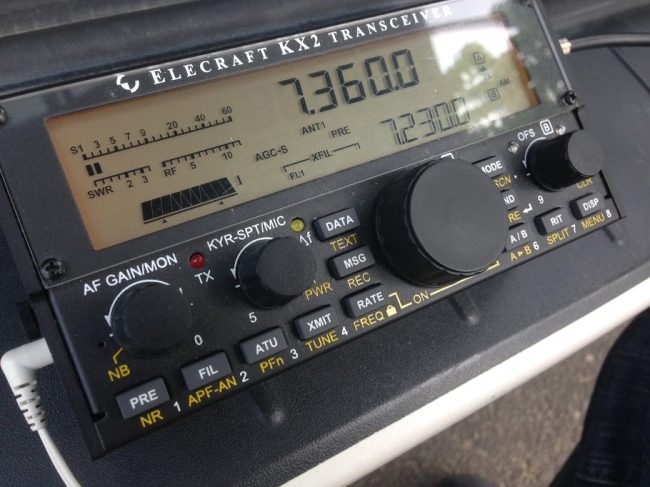
Many of you know I’m quite a fan of the Elecraft KX2. I take this little transceiver along almost any time I travel. Not only is it a full-featured ham radio transceiver, but it’s also an exceptional shortwave broadcast receiver.

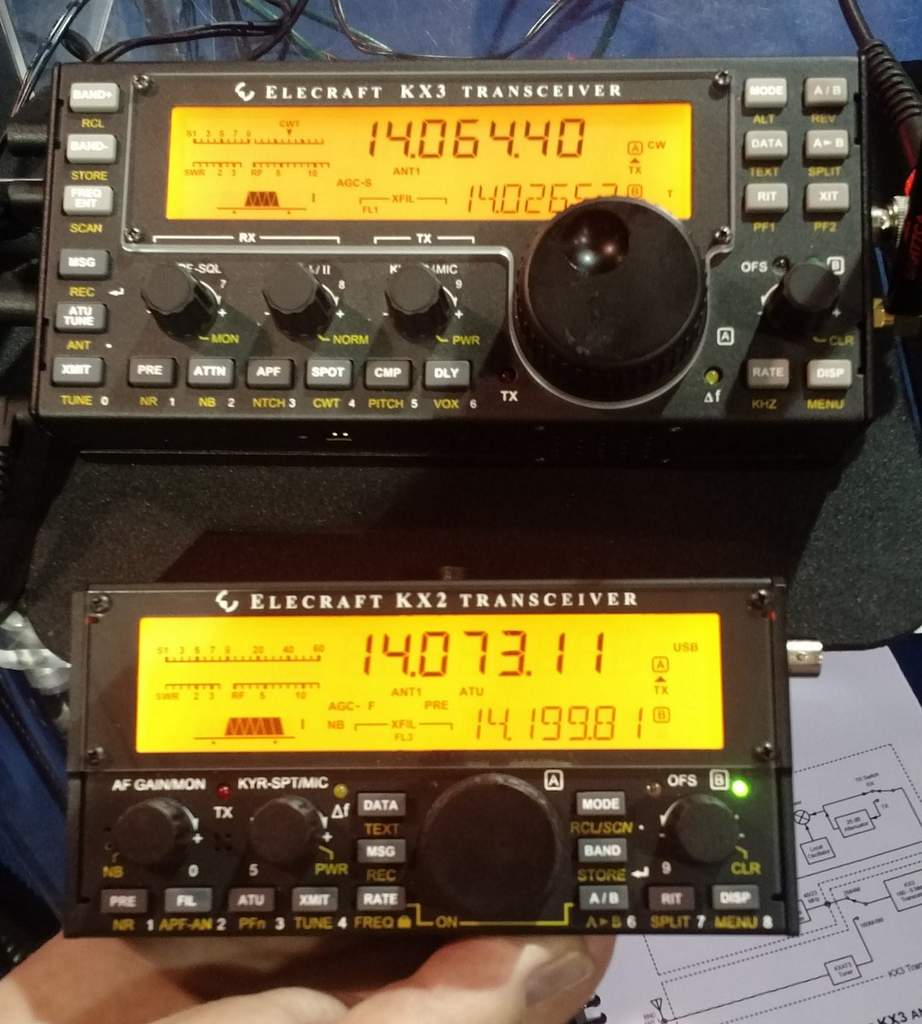
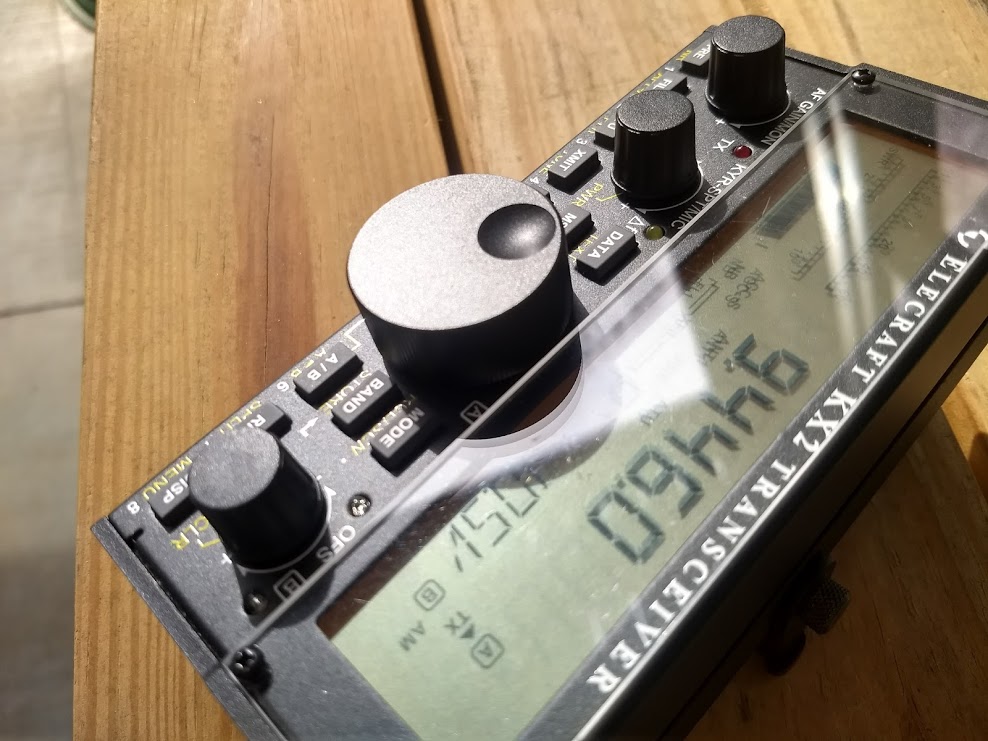
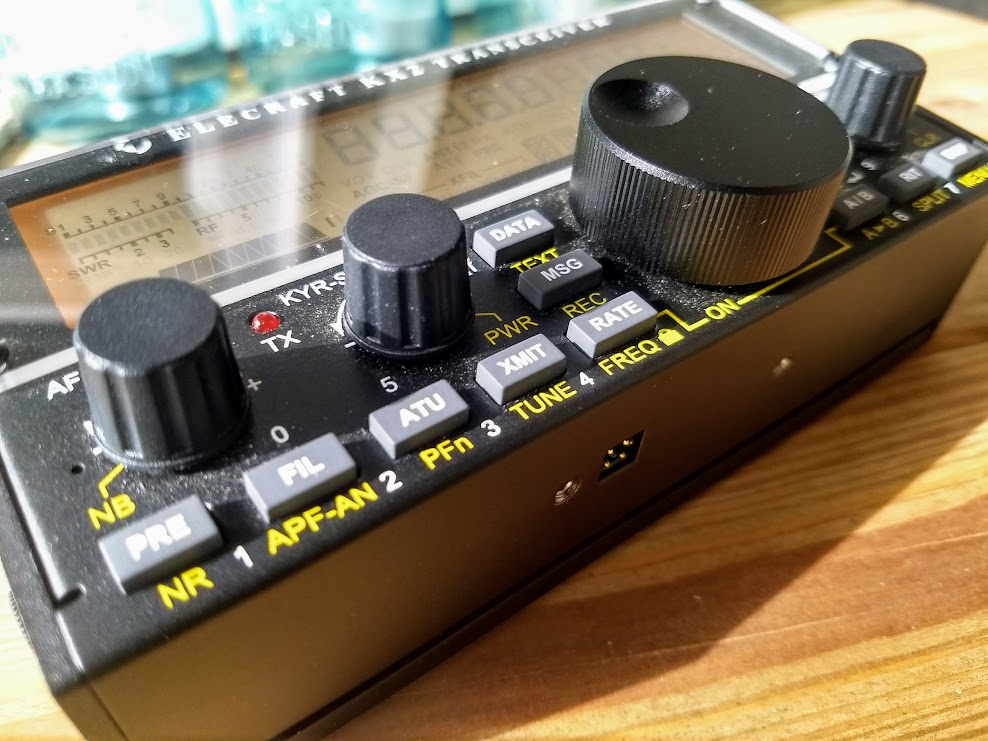
The KX2 is a quality US-built rig (like all of Elecraft’s gear) but I’ve never been a fan of its plastic encoder knob. It lacks a finger dimple and feels cheap compared to the rest of the radio. Don’t get me wrong: the stock encoder knob gets the job done, but it’s not nearly as nice as the one on the slightly larger Elecraft KX3.

Comparing the Elecraft KX3 (top) and KX2 (bottom) at Elecraft’s Dayton Hamvention booth.

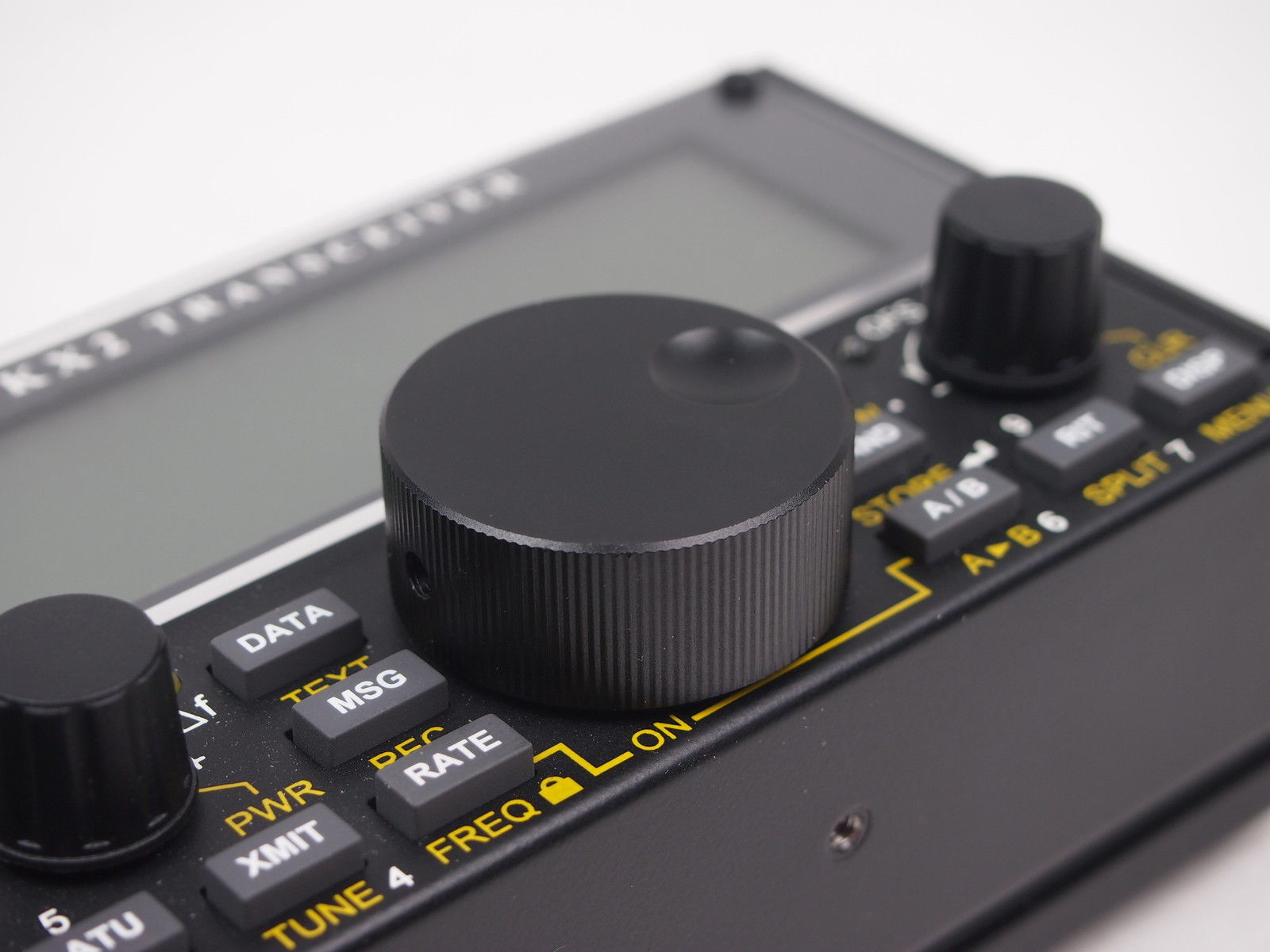
Two weeks ago, I ran into another Elecraft KX2 owner and happened to notice that his KX2 had a solid aluminium encoder knob with a finger dimple. Turns out, he purchased the knob from a ham radio operator (W1JH) in Maine who manufactures and sells this knob on eBay.

The price was $24.95 US shipped. I didn’t hesitate to place an order.

You might think $24.95 is a lot to pay for such a small item, but third party Elecraft vendors tend to charge much more for comparable items. I’ve also considered adding a heatsink to my KX3, for example, but those can total upwards of $100!

My new encoder knob arrived in only a couple of days via the USPS–installing it was a breeze.

It took me all of thirty seconds to pull the plastic knob off of the KX2 and replace it with the new aluminium one. The seller even includes an Allen wrench to secure the new knob.

The new knob is slightly larger in outer diameter, but fits the KX2 like a glove. The slightly larger size makes the finger dimple a practical addition for smooth band-scanning.

If you own an Elecraft KX2 (or the Elecraft KX1) I highly recommend this simple encoder/VFO knob upgrade!

Click here to order on eBay.

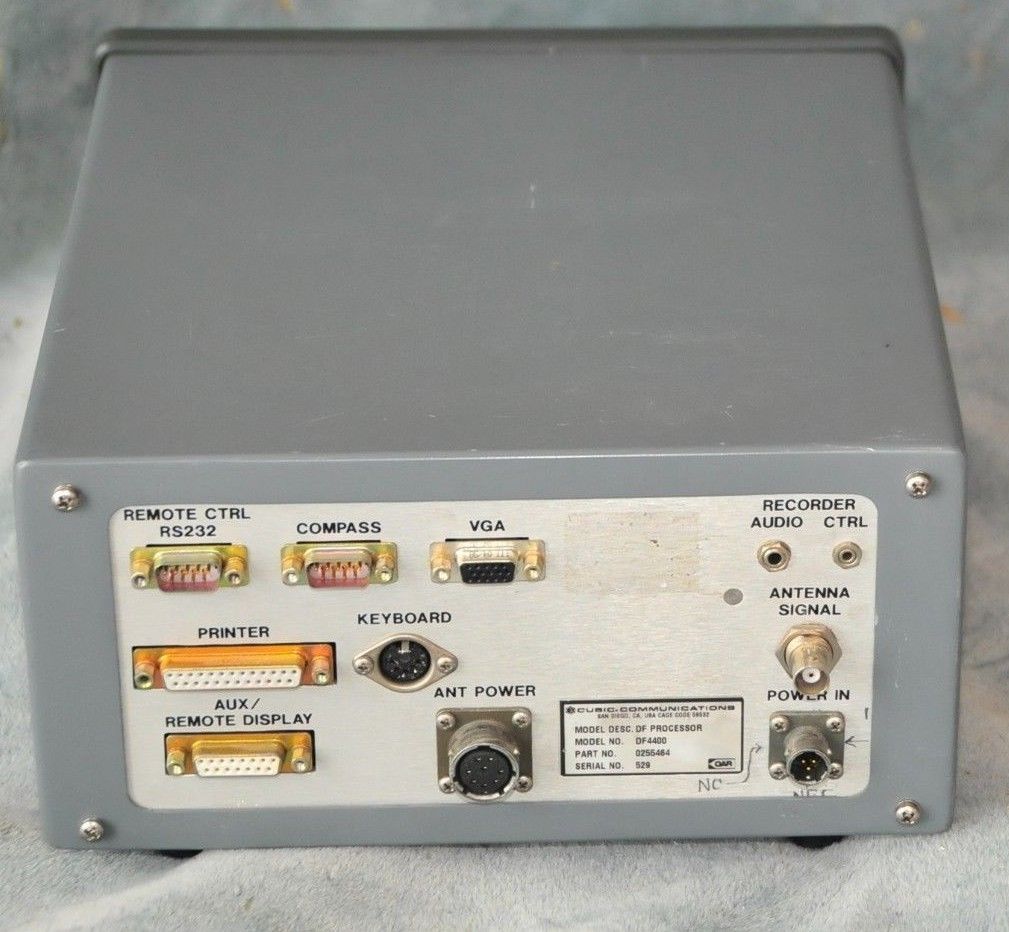
eBay Find: Cubic Defense Applications Model 4400DF

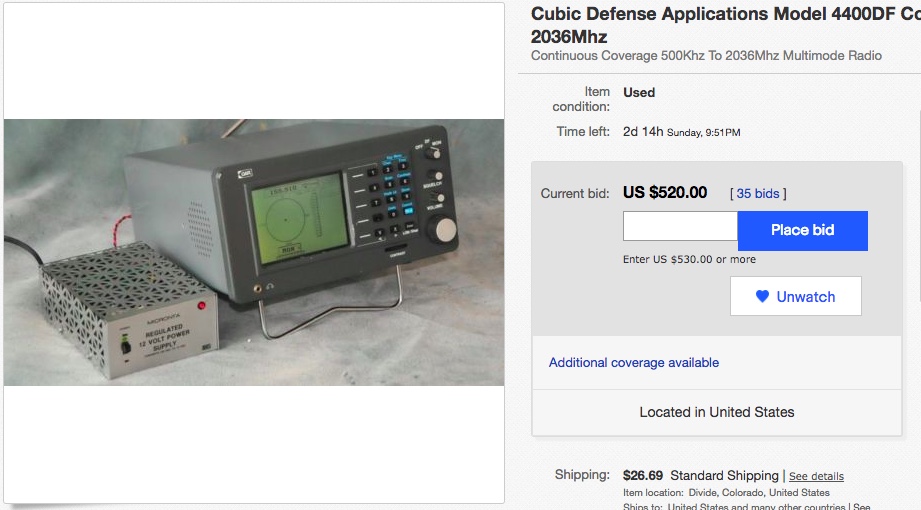
Many thanks to SWLing Post contributor, Dan Robinson, who shares a link to this Cubic Defense Applications Model 4400DF communications receiver on eBay.

I’ve been following this listing the past few days–the seller actually launched the item with a very low starting bid.

eBay unearths so many products that I would have never known existed. This military receiver is certainly a case in point.

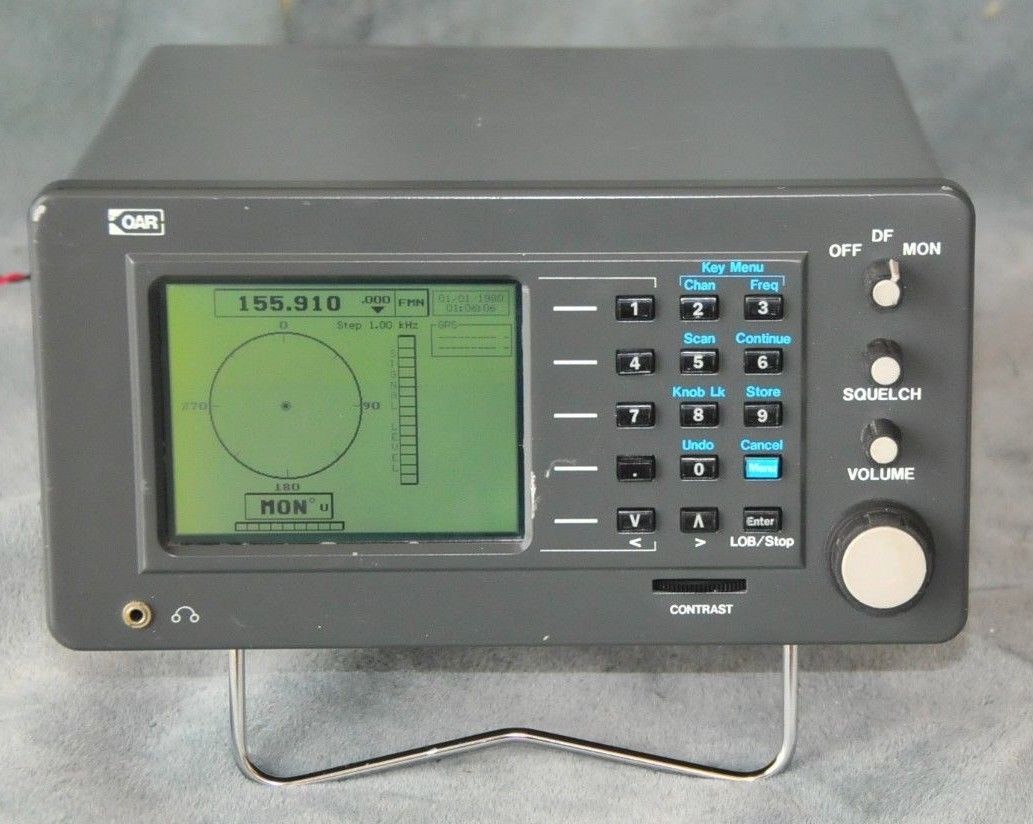
As the seller states, I imagine the original price tag for this receiver was hefty–likely thousands of dollars. The front panel lacks many of the controls we’d like to see on an HF radio (bandwidth, RF gain, notch, etc.), however, I imagine there are a number of functions on the backlit screen and possibly accessible via an external monitor and/or keyboard.

I’m curious: are there any SWLing Post readers out there who can comment about the performance of this receiver? Have you ever put one on the air? Please comment!

Click here to view the Cubic Defense Applications model 4400DF on eBay.

Anil’s hack: Using a smart phone battery bank to power portable receivers

Many thanks to SWLing Post contributor, Anil Raj, who writes:

I wanted to share a small but useful hack with your readers.

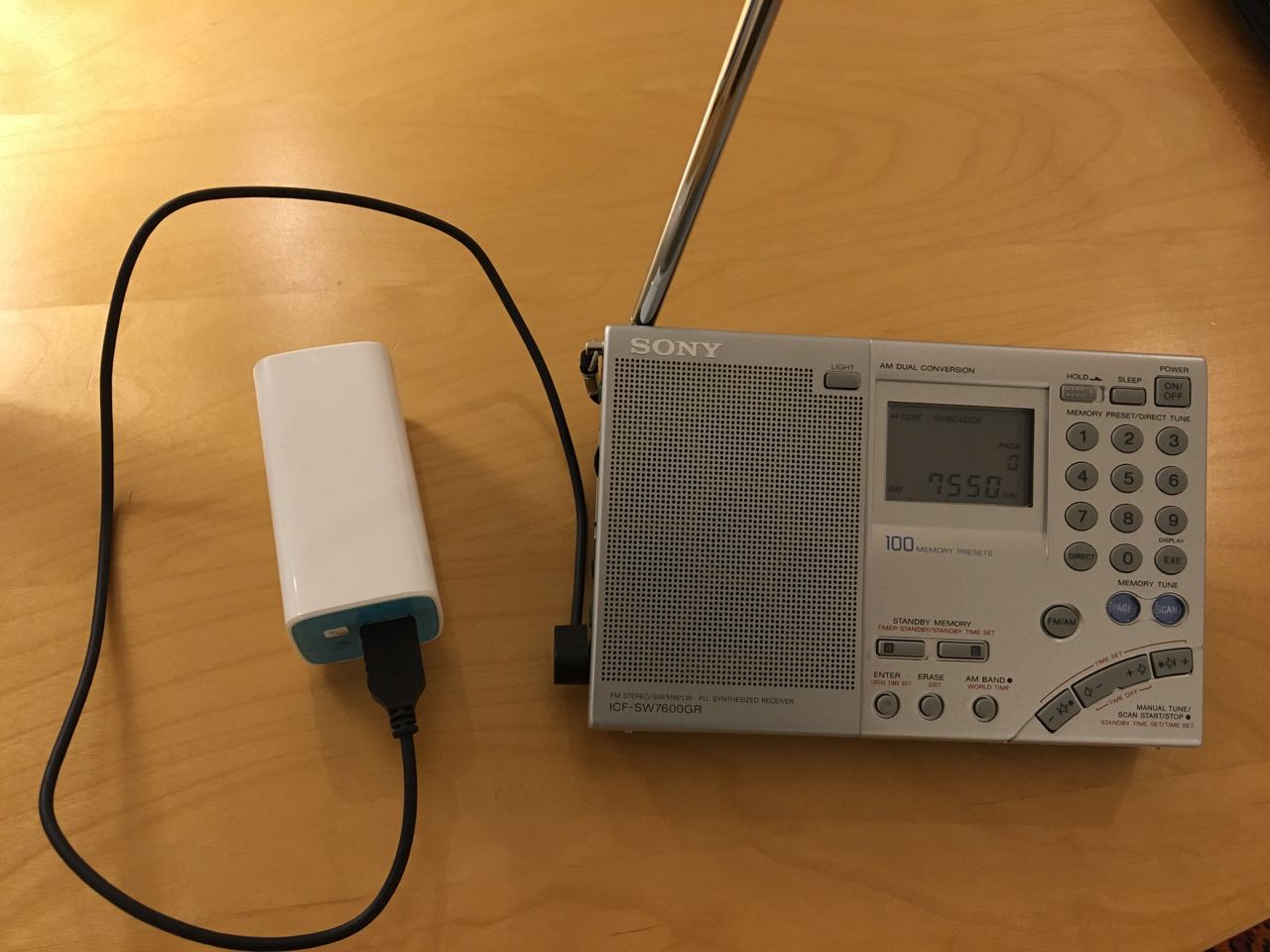
I use a common garden variety smartphone “Powerbank” 10,000 mAH Li Ion pack to power my Sony 7600GR which is perfectly happy with the 5V which the pack supplies. [See photo above.] I see no reason why this won’t work with other radios which require a 6V supply.

As you can imagine, the setup typically lasts for many weeks of extended daily listening and recharges in a jiffy. However, one needs to sacrifice a USB cable by soldering a DC plug at the other end. Haven’t bought AA batteries in a long time…

Thank you, Anil! What a simple but useful hack. The best part is, battery packs/banks are  very inexpensive these days and, I for one, have a number of USB cables I could sacrifice for the job!

Digging in the Noise: Weak Signal Audio Recovery with the AirSpy HF+ and Elad FDM-S2

I’m currently spending the better part of a week at Cape Lookout State Park on the Oregon coast, with a great view of the ocean through tall evergreen trees. This is one of my favorite parks in the Pacific Northwest, especially when DXing during the blustery winters from one of the nice cabins at Cape Lookout.

The view from the beach near my cabin; the turbulent waves were a precursor to the gale force winds at the park during the night of the 23rd!

https://youtu.be/EYUSU_gzgu4

Although I’m at the park for trans-Pacific medium wave DXing, I’m also comparing receivers, both SDRs and portables. This morning I sought out a few weak shortwave signals, pitting the Elad FDM-S2 SDR ($529 USD) against the AirSpy HF+ ($199 USD). I have a pair of the HF+ receivers to cover all of medium wave (as the FDM-S2 easily does). Many SWLing Post readers already know that the upstart HF+ trades bandwidth to gain high performance in order to keep the price reasonable.

My antenna used for the following recordings was a small “Flag” antenna using a Wellbrook Communications FLG100LN module and a 2K ohm variable potentiometer for termination. The design uses crossed tent poles in an “X” formation to support the wire loop. This design travels easily in a compact package; I have Dave Aichelman of Grants Pass, Oregon to thank for this very useful “tent pole loop” implementation of the Wellbrook FLG100LN.

The Wellbrook-based antenna functions superbly, and its low-noise design helps hold down QRM from the nearby cabins (which unfortunately have been “upgraded” recently with noisy cold fluorescent [CFL] light bulbs). The area around the Cape Lookout cabins used to be superbly low noise and suitable for radio listening, but now it is more of a challenge than before. The Wellbrook FLG100LN is perfect for the situation though; Wellbrook ALA1530LN  Pro and ALA1530S+ 1-meter loop antennas work commendably at the park too.

The Wellbrook FLG100LN module with a home brew RFI choke in-line

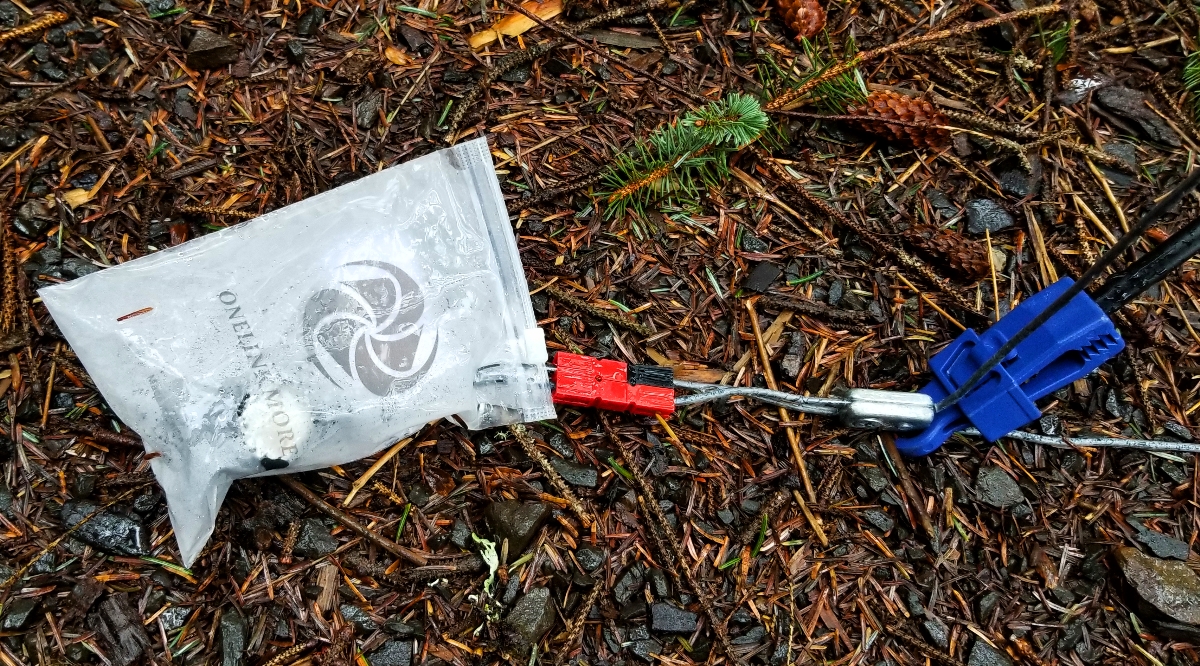
A 2K ohm variable potentiometer is protected from the elements in a small plastic bag. The “pot” is adjusted for the best nulling of medium wave stations off the back side of the antenna’s reception pattern.

The “tent pole loop” antenna is strapped to a fence railing with ultra-strong Gorilla Tape to keep the 7-ft. square loop vertical.

On with the recordings…

For the FDM-S2 and HF+ comparisons I used the SDR-Console V3 software. Every parameter was identical for the receivers–sampling bandwidth, filter bandwidth, AGC, mode and so on.

Take a critical listen to the weak signals recorded with the SDR receivers, identified as only “Radio A” and “Radio B”. A link to a poll is at the end of this article; please indicate which recording of each pair has the most intelligible audio in your opinion, and submit your choices when you’ve made up your mind on each audio clip. After a week or so I’ll post the results of the voting, and identify the receivers.

9.615 MHz, LSB, Radio A


9.615 MHz, LSB, 
Radio B (note: the same male announcer heard in clip “A” begins at 00:14 in this “B” clip)


9.730 MHz, USB, Radio A


9.730 MHz, USB, 
Radio B


7.230 MHz, S-AM, Radio A


7.230 MHz, S-AM, 
Radio B


9.860 MHz, S-AM, Radio A


9.860 MHz, S-AM, 
Radio  B


Note on 7.230 MHz recording: this was an interesting frequency, as the signal was tightly surrounded by a very strong local 40m ham radio LSB station as well as a strong China Radio International signal. There were other strong amateur and broadcast stations within 30-50 kHz of 7.230 MHz, also. This A-B test more than the others may indicate receiver performance in a strong RF environment on a crowded band.

Ready for the poll? Register your votes at the Google Docs form below:

https://tinyurl.com/ya38wj69

In a week to 10 days I’ll post the results in another article. NOTE: I haven’t provided a “both sound the same” choice in the poll to encourage you to ‘dig deep’ into the audio and listen critically–to find something that stands out in one clip versus the other.

Guy Atkins is a Sr. Graphic Designer for T-Mobile and lives near Seattle, Washington.  He’s a regular contributor to the SWLing Post.

Doctor Vlado repairs the Panasonic RF-2200 (Part 1)

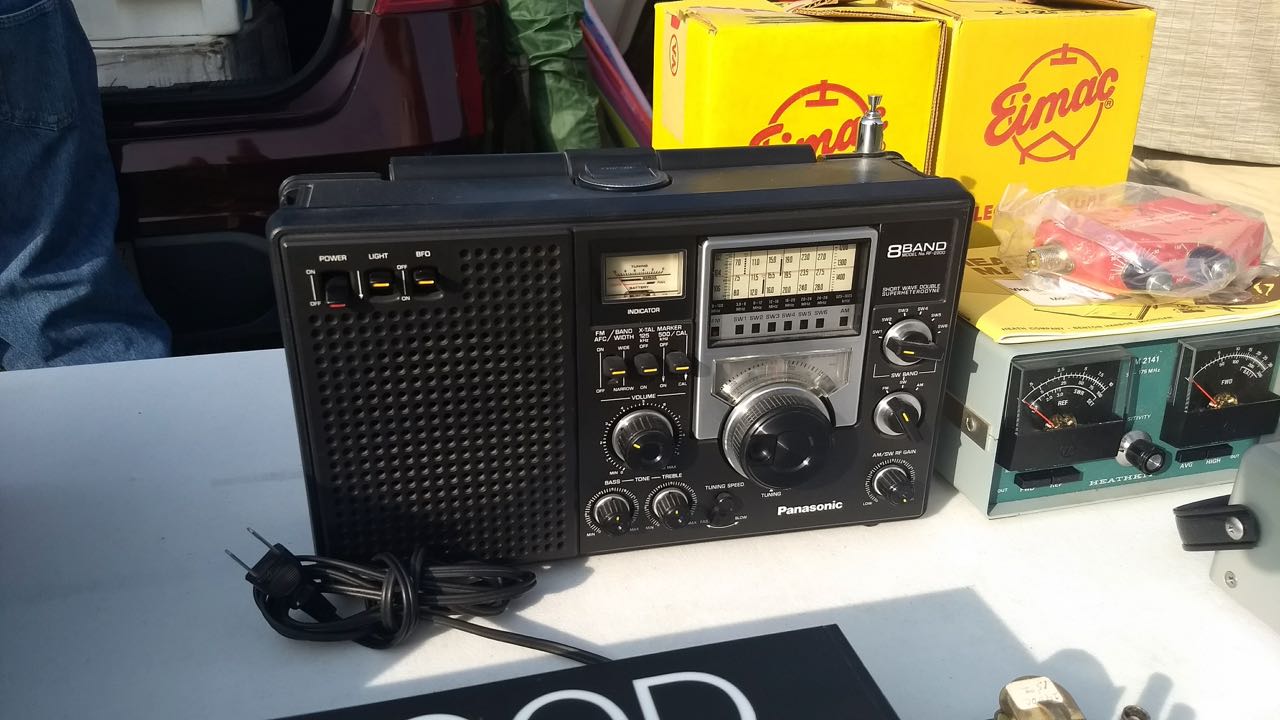
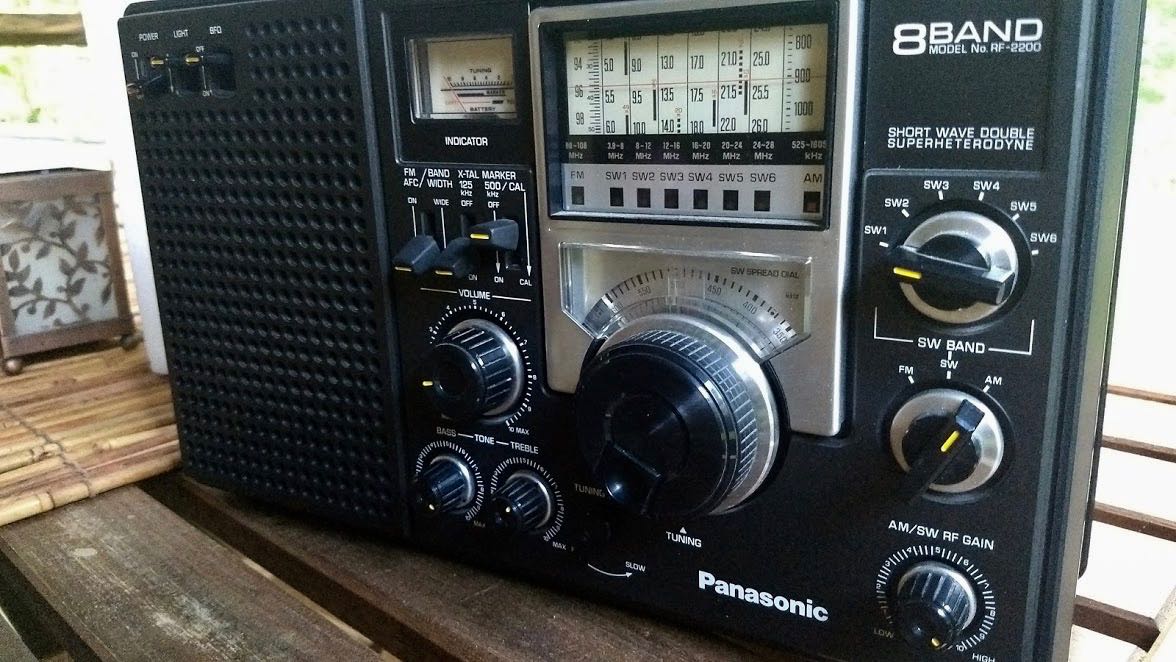
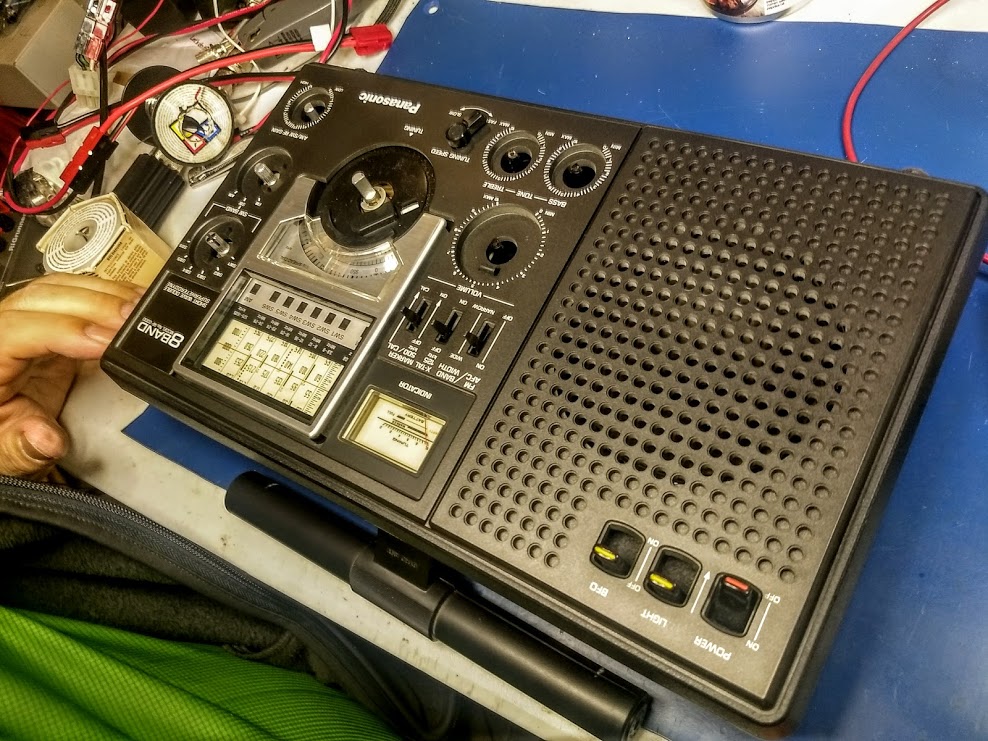
Panasonic RF-2200 at Hamvention

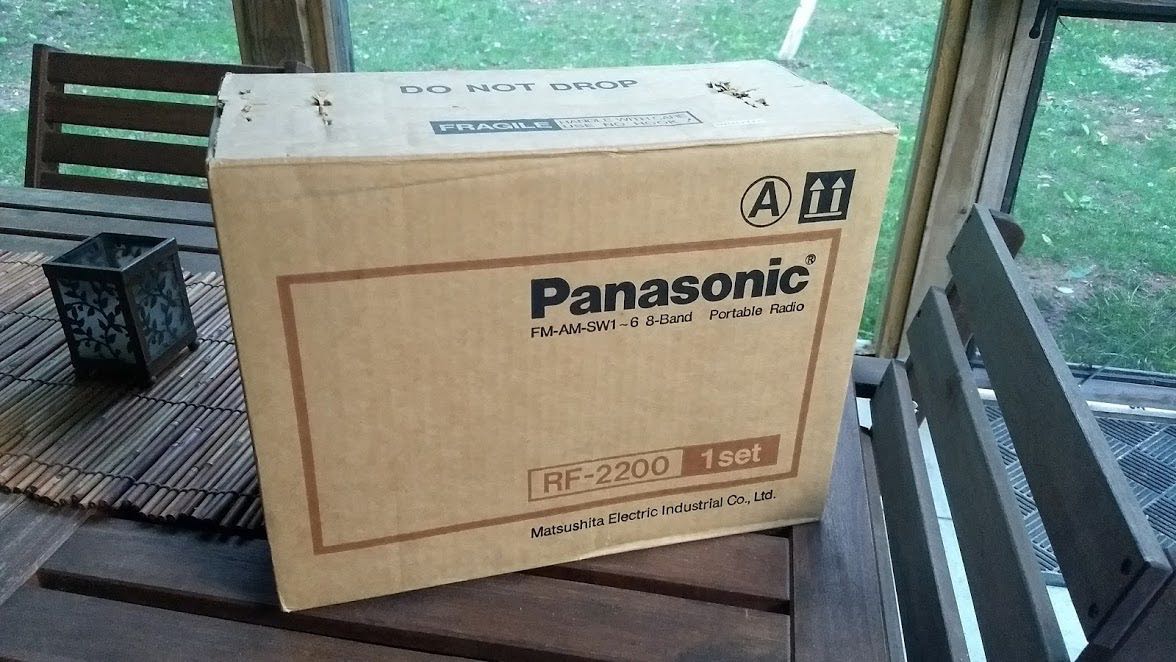
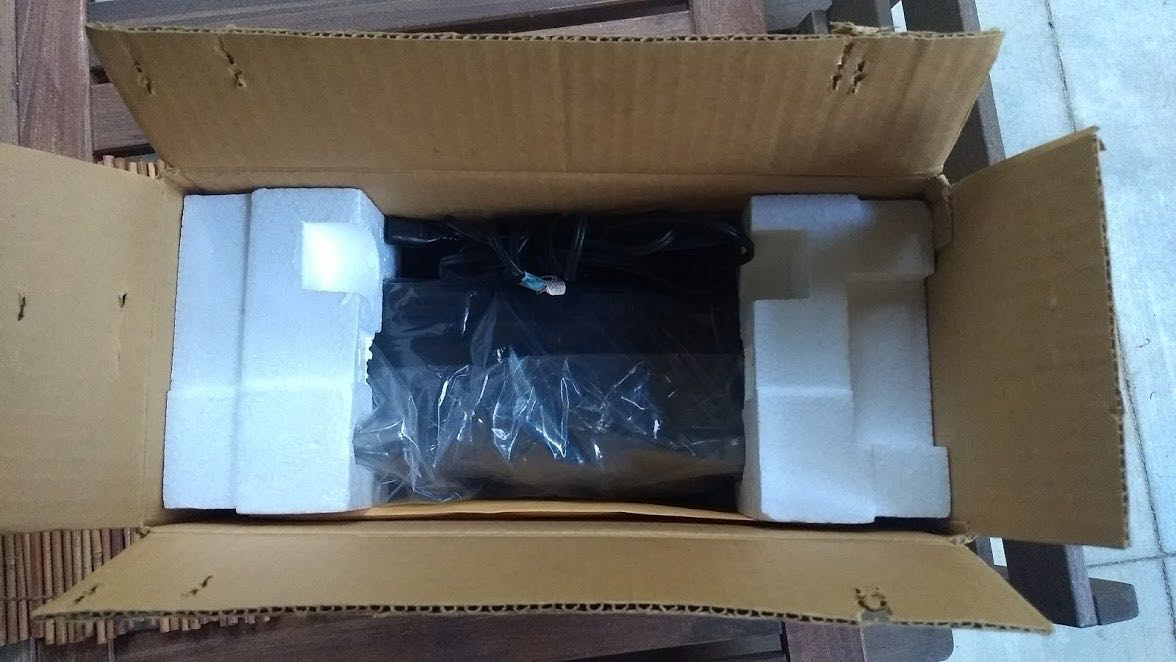
Last year, at Hamvention, I picked up a Panasonic RF-2200 for $70. It came with the original box, manual and was in superb cosmetic condition.

The seller told me that over the years he exclusively used the radio to listen to a local FM station.

At that price, I didn’t hesitate to make the purchase even if this would have simply been a non-functioning parts radio for my other RF-2200.

After I brought the radio home, I unpacked it and gave it a quick test.

FM worked brilliantly. Mediumwave and shortwave, however, were essentially deaf. I made the assumption that the ‘2200’s switches and pots likely needed cleaning with DeoxIT. The next day, I was leaving for a two month trip to Canada though, so I packed the RF-2200 back into its box and set it to the side of my shack table.

Fast-forward to yesterday…

While digging around my shack, I re-discovered the boxed RF-2200. Since I was planning to visit my buddy Vlado (the best radio repair guy in the world) yesterday evening, I thought I’d take the RF-2200 and do a proper contact cleaning. Several of the RF-2200’s switches and pots cannot be easily cleaned without removing the chassis.

(Click photos to enlarge.)

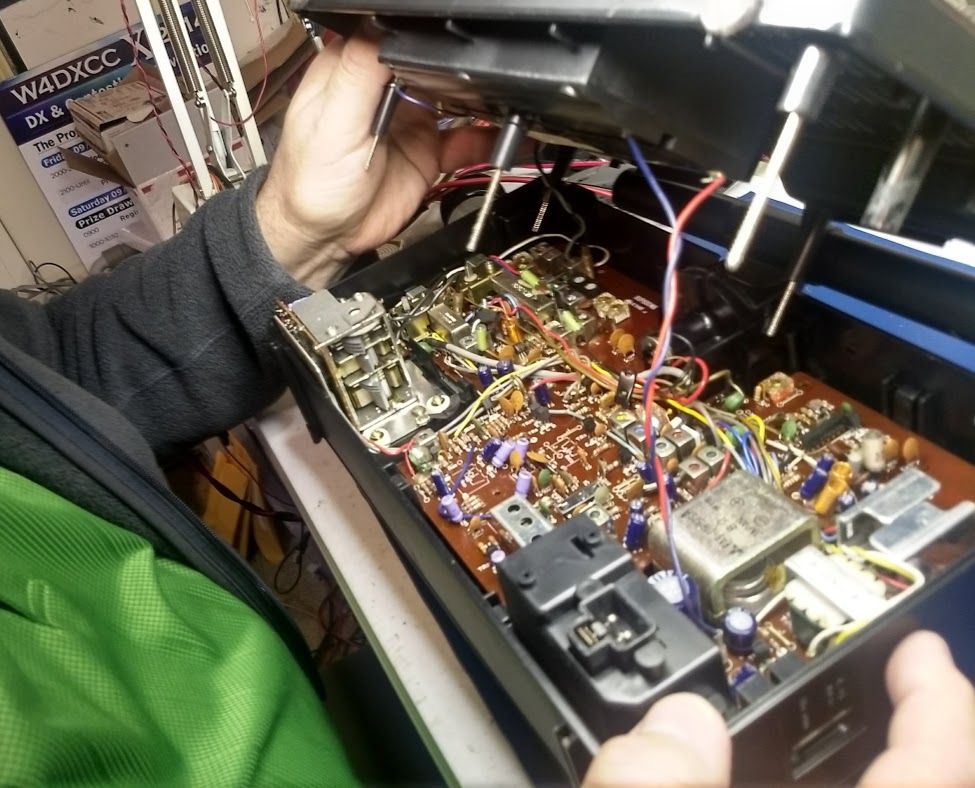
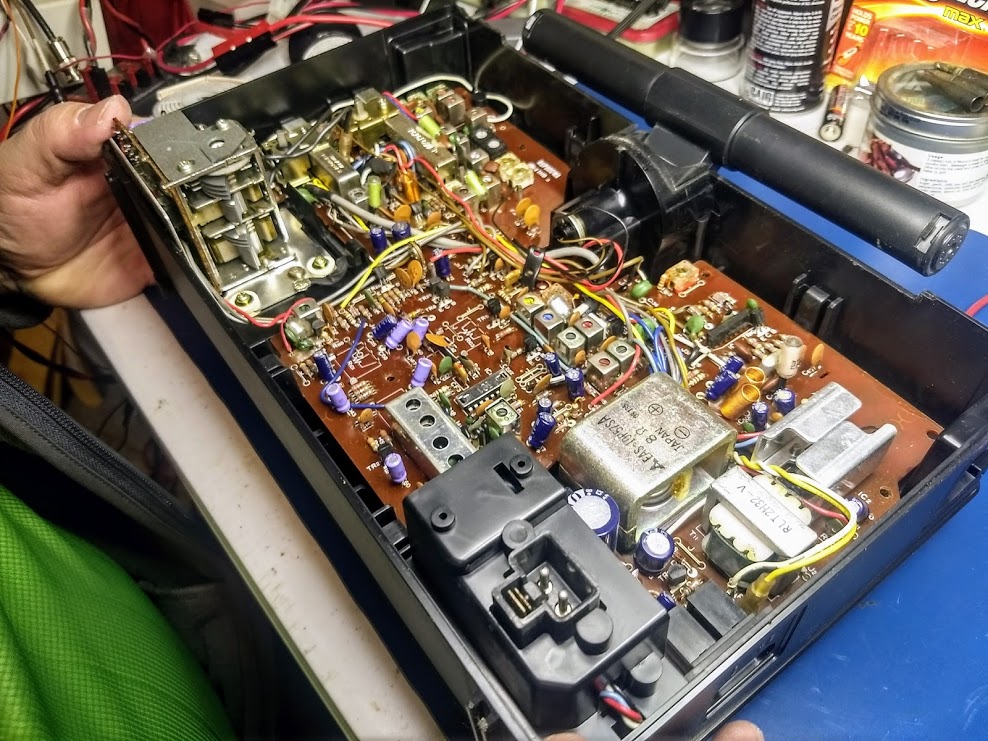
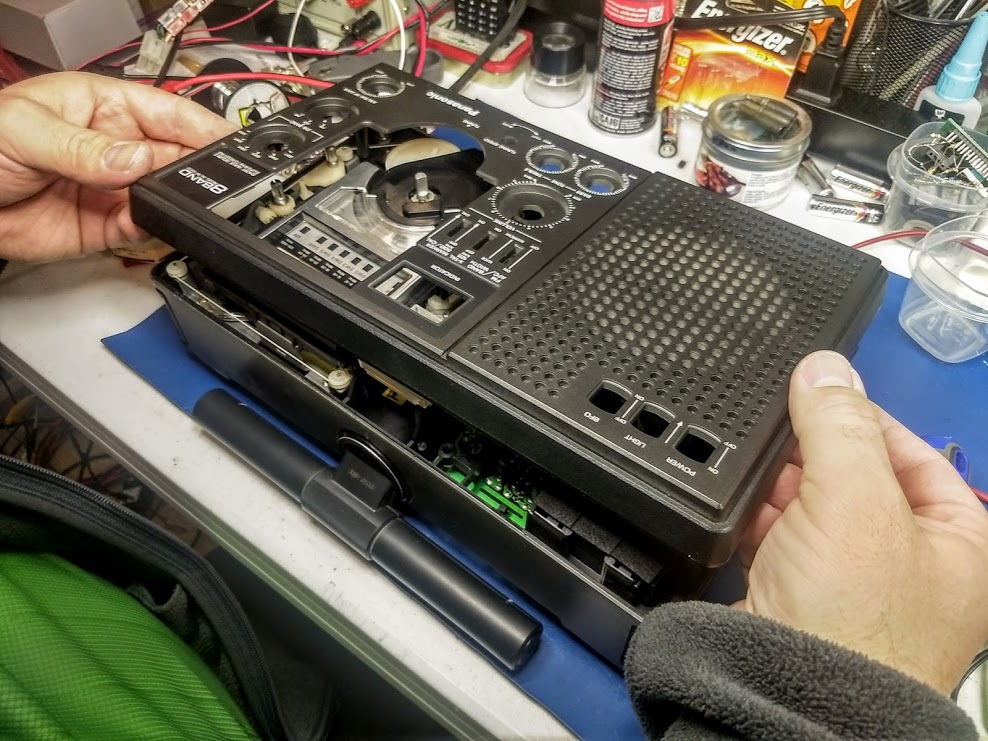
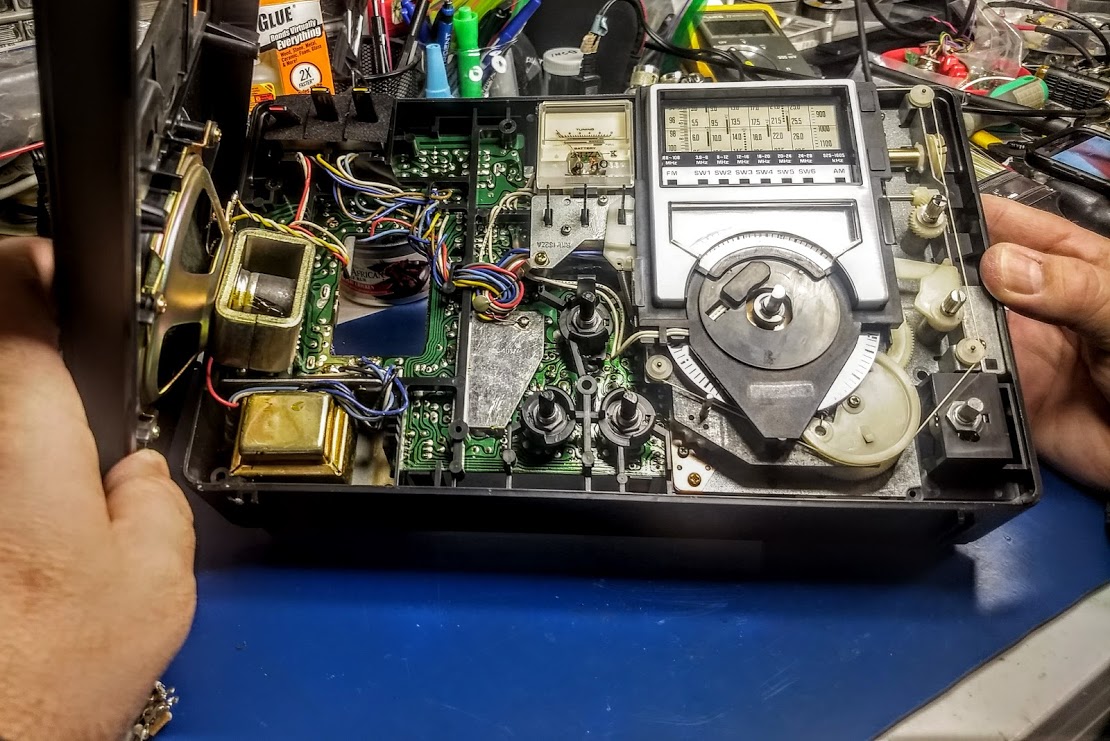
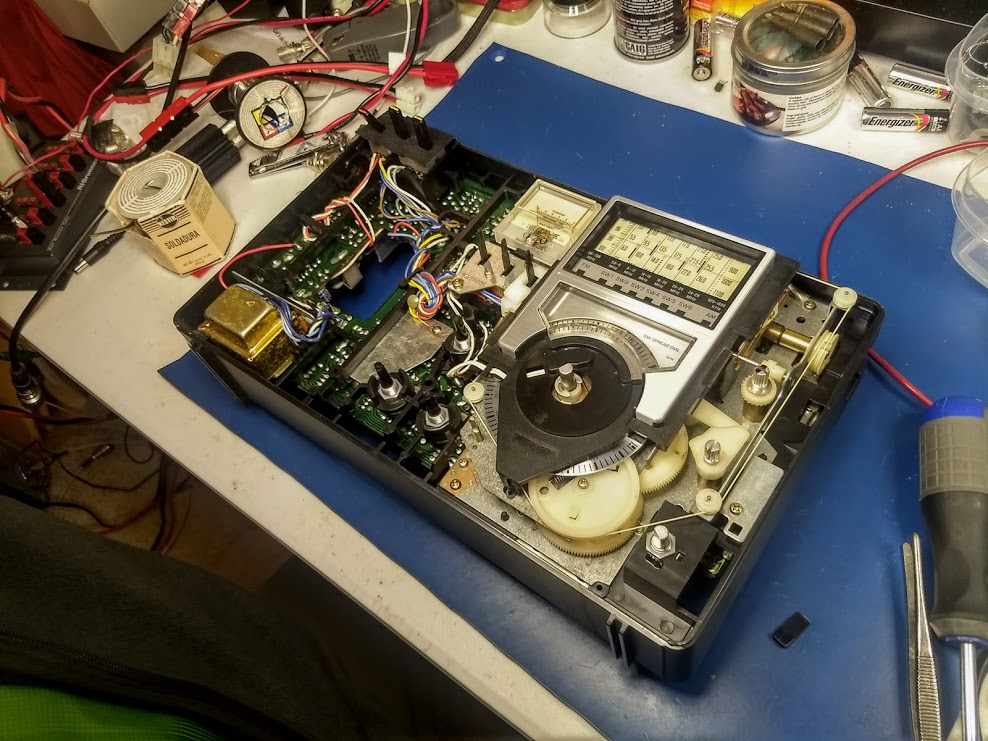
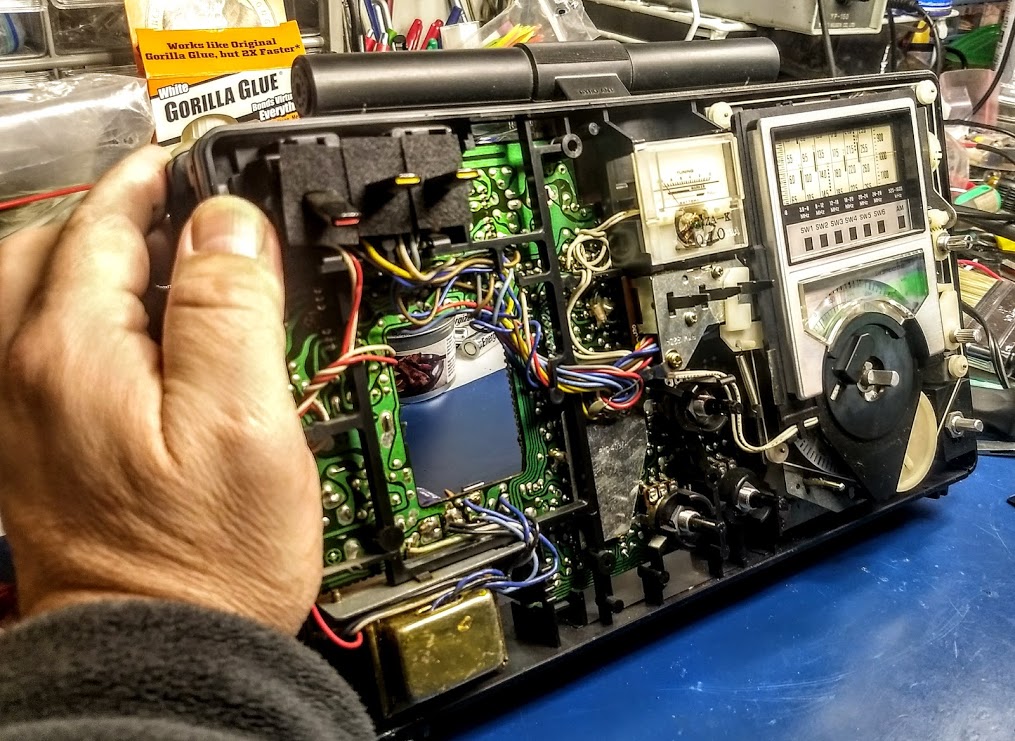
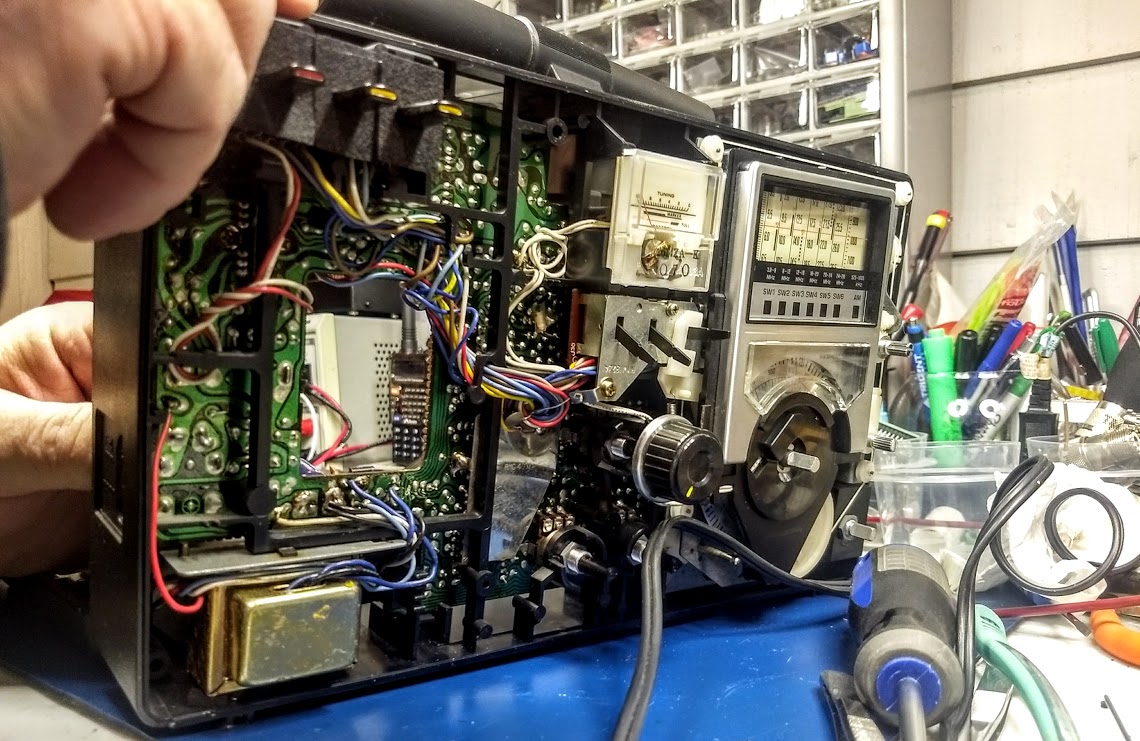
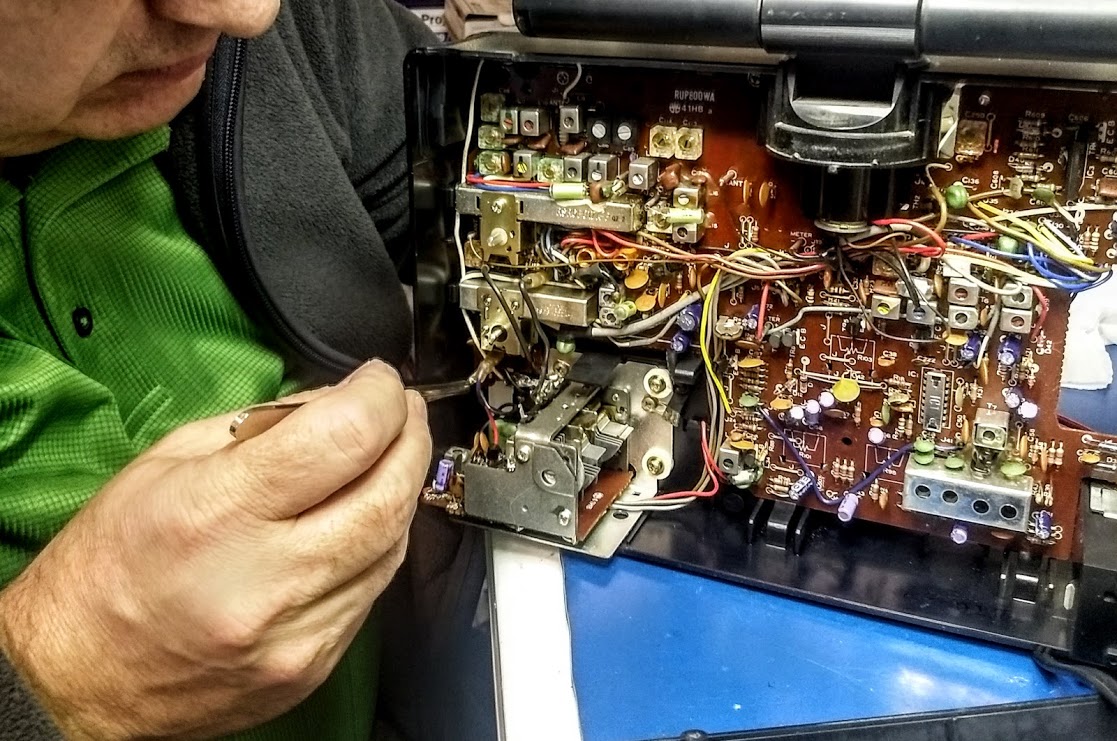
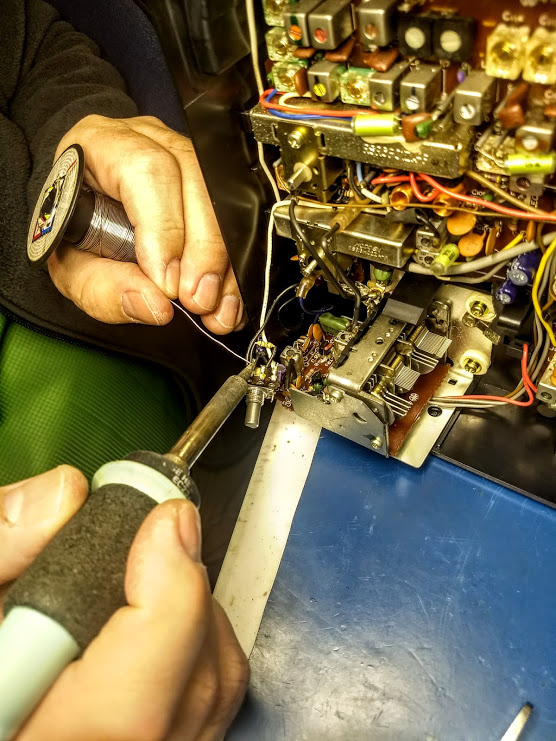
Vlado is familiar with the RF-2200 and since it’s not the easiest radio to work on, I asked for his expert hands on the job. Within seconds of handing him the radio, he plugged it in, tested the switches and pots, then removed the back cover (disconnecting the battery compartment leads) and then the front cover (disconnecting the speaker leads).

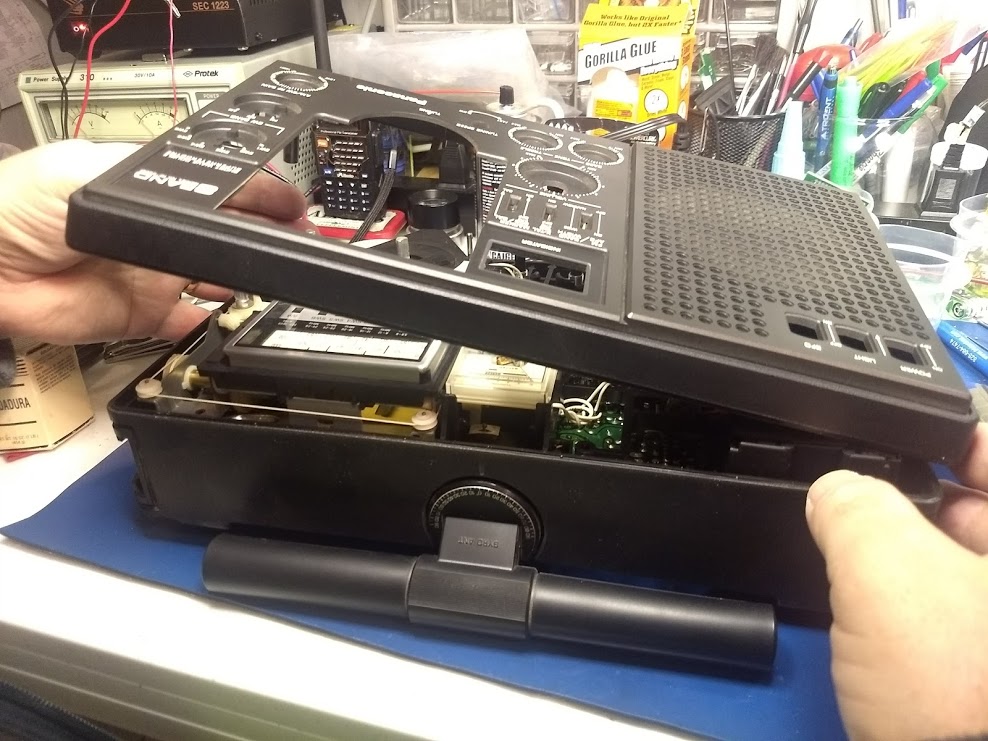
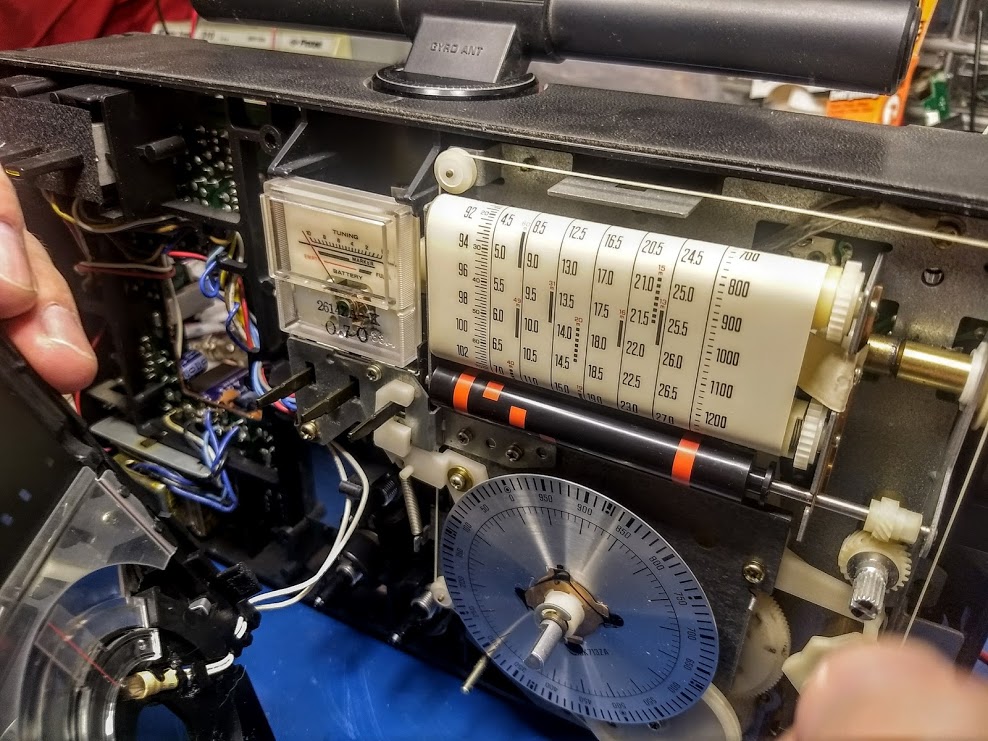
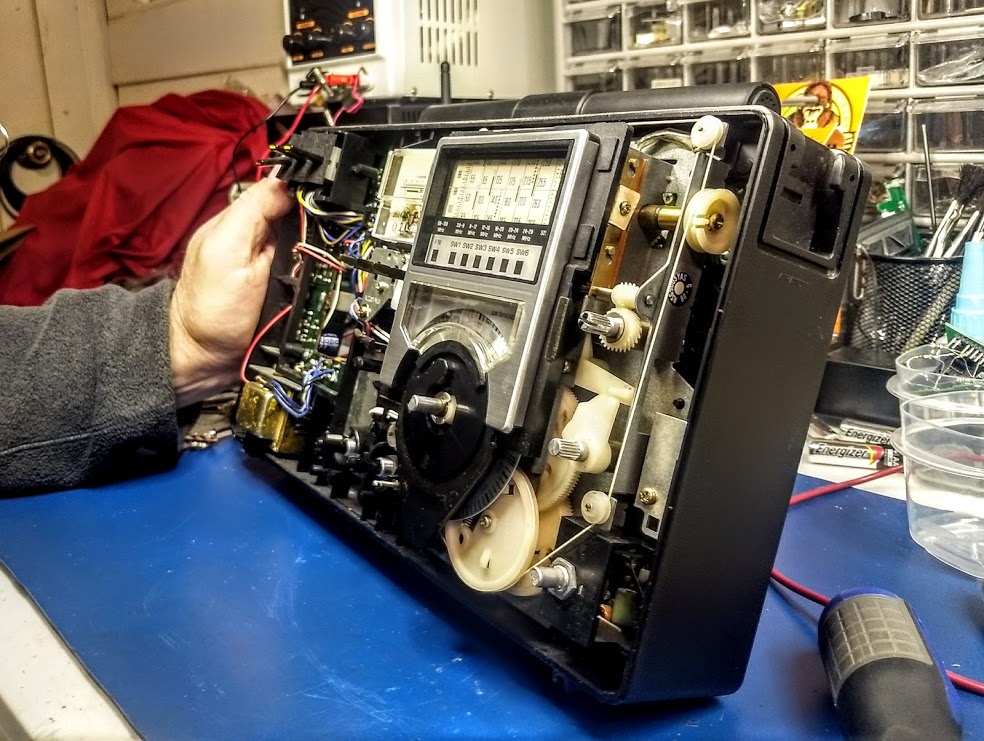
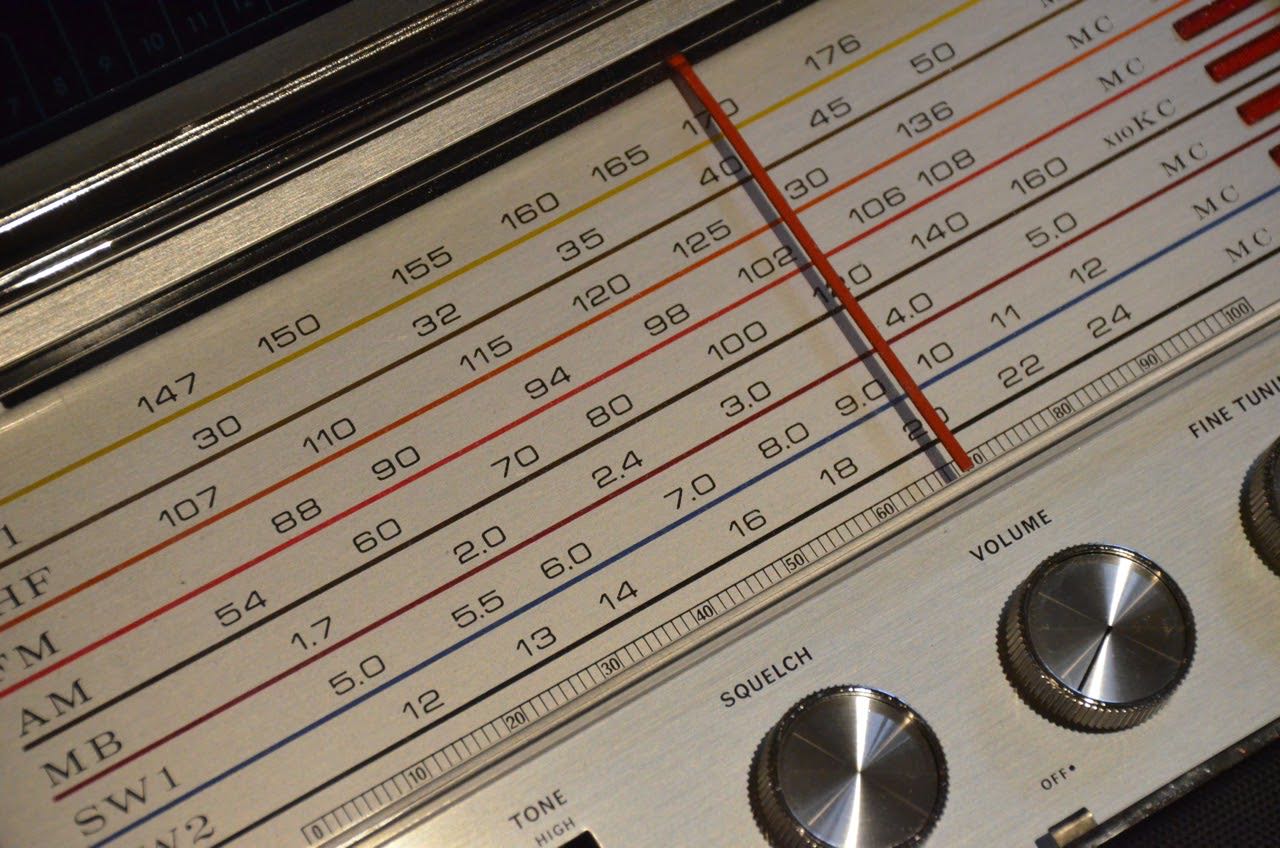
The magic behind the RF-2200’s classic analog dial:
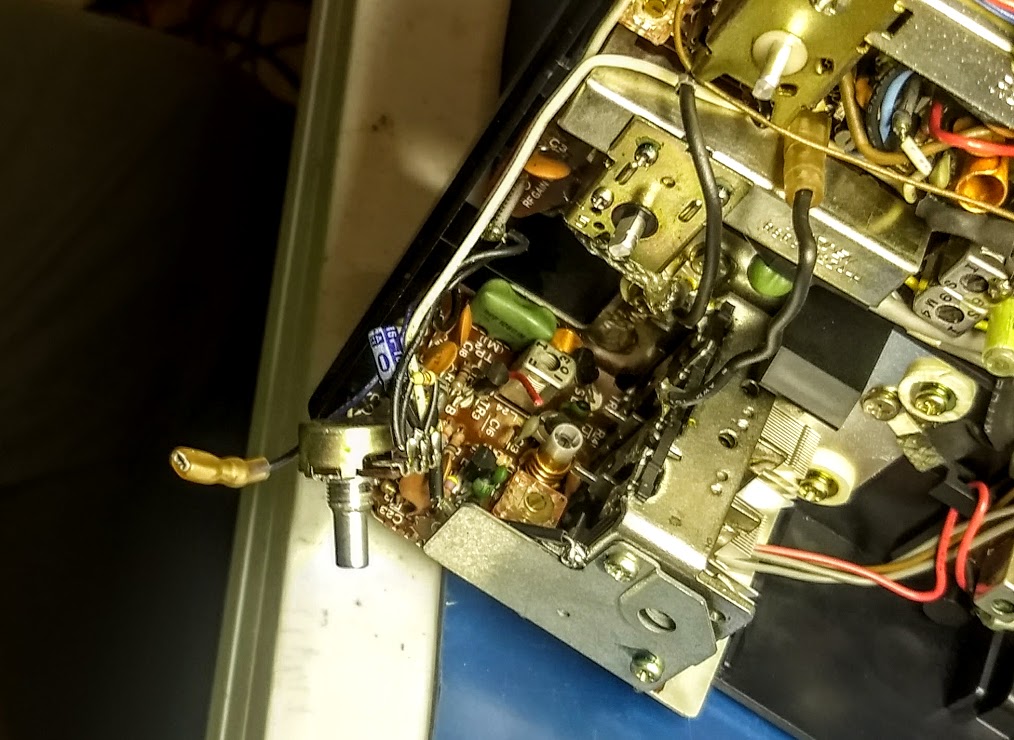
Vlado offered a word of caution to anyone operating on their RF-2200: as you can see in the photo below, the dial string snakes around the front of the radio and is very close to some key components. You must exercise caution when having a soldering iron tip near the string, or using lubricants nearby.I didn’t realize this, but by the time Vlado started taking apart the RF-2200, he had already determined that even though the contacts needed cleaning, this wasn’t the source of the audio problem for the MW and SW bands.Vlado expertly pulled out the pot for the FM/AM/SW selection–not an easy task–began cleaning it, testing it and re-soldering contacts.

Vlado determined the pot was actually in good shape, thus started testing the rest of the circuit.

After a few minutes of performing tests and getting intermittent performance, he determined that at least one, if not more, of the RF-2200’s caps need to be replaced. Of course, neither one of us was terribly surprised. At this point though, it was getting late and I had an early wake up time in the morning, so I left my RF-2200 with Vlado.

Am I worried about this prognosis?  No, not in the slightest…

Doctor Vlado is on the job!

Vlado will have the RF-2200 back on the air in no time, working as well as it did when it was new. He’s actually performed a similar RF-2200 repair for an SWLing Post reader and I’m willing to bet this repair job is relatively simple compared to most he encounters (including the Icom IC-7200 he recently repaired after it was hit by lightening!).

I’ll try to post a “Part 2” update with photos of the RF-2200 repair.  Follow the tag: Panasonic RF-2200 Repair