Category Archives: Shortwave Radio

SDR Spectrum to Radio: Can someone please make this device?

The venerable RF switch box from the 1970s/80s allowed game consoles and computers to use analog TVs as monitors.

As I’ve mentioned in the past, I actively record and index radio spectrum recordings via my various software defined receivers. Indeed, I have at least 50 TB of SDR spectrum recordings at the moment–and that number is growing!

I was just chatting with SWLing Post contributor, Mark Fahey, and a familiar topic came up: the idea of an RF switch box for radios.

The concept is a piece of hardware that re-modulates–converts digital spectrum data from a digital storage device back to analog RF– and injects a signal into a real tabletop radio.

As Mark described:

“This is just like early computers and Atari-like games consoles did to allow the “computer” to display on a lounge room TV. The games console tricked the TV into thinking it was tuned to a TV station on “Channel 1 (or whatever the console outputted the video to).”

Radio time travel machine!

How cool would it be to take a spectrum recording from 2008, play it through your Hallicrafters SX-100, Kenwood R-1000 or Alinco DX-R8T, and tune through the 31 meter band? You’d receive Radio Australia, Radio Bulgaria, Radio Netherlands Worldwide, Radio Canada International, Voice of Russia and many other broadcasters that are no longer on the air. Indeed, there’s a strong possibility you might uncover DX you didn’t catch when the recording was first made.

I’m enough of a radio geek to know that I would thoroughly enjoy travelling back in time once in a while with a classic radio.

Additionally, this device would make it much easier for museums to create kiosks where visitors could tune through recordings of, say, important events in history.

Can it be done?

I know the technology is out there.  In fact, if you’ve ever been to a large hamfest where Icom, Yaesu or Kenwood have a number of their transceivers “on the air”–so customers can try out transceiver features–they are using a device called a “radio time machine.”

Icom uses recorded IF instead of live antenna input so customers can experience “contest conditions” while evaluating a radio.

The Radio Time Machine injects recorded analog RF, from a HiFi VCR, into the antenna ports of a vendor’s various transceivers. The recordings are typically of a ham radio band during a contest–that way, the customer can get a sense of how well the rig would perform under crowded band conditions.

These devices have limitations: while their bandwidth is ample to tune through the CW or phone portion of a ham band, it’s much too narrow for most broadcast bands. They’re also fed the recording from an analog HiFi VCR.

The device Mark and I dream of would convert digital spectrum files–from a WinRadio, Perseus, Elad, SDRplay, Airspy or other SDR–into analog RF any radio with an external antenna port could tune.

SWLing Post readers: you’re a diverse and knowledgeable community–please comment if you know what it would take to develop such a device and how it could be done. Is this a dream or could it become reality?

From the Shortwave Archives: Radio RSA reviews the Sony ICF-2001

I’ve mentioned many times before what a joy it is to curate the Shortwave Radio Audio Archive (SRAA). Sometimes I’m sent recordings that evoke a flood of memories. SRAA contributor, Tom Laskowski, just submitted another such recording.

Tom included the following notes with his Radio RSA – Voice of South Africa recording:

Every Saturday night during the early 1980s [in South Bend, Indiana] I would regularly tune to 9580 kHz at 0200 to listen to Radio RSA (Channel Africa as it is now known) to hear DX Corner, their regular DX program.

This episode from March 14, 1982 was a look at a brand new hot radio, the Sony ICF-2001.

The audio isn’t great but should be listenable. I think this was recorded using my new Realistic DX-302. Enjoy:

Click here to download this recording as an MP3.

 Thank you, Tom! I think Radio RSA did an admirable job reviewing the ICF-2001!

Post Readers: You can listen to more archived shortwave recordings at the SRAA website, or by subscribing to the audio feed via iTunes. You can also listen to the archive on TuneIn radio.

Radio Romania International: 2017-2018 Winter Broadcast Frequencies

Many thanks to SWLing Post contributor, David Iurescia (LW4DAF), who shares the RRI 2017-2018 Winter Broadcast Frequencies (effective 29/10/2017 to 24/3/2018):

You can also listen to RRI’s English language programming live over the internet using the same SW broadcast schedule given above. All you need to do is go to the “RRI Live!” section in the top-right of our website, choose channel “2” for English and then select your desired audio format (WMA, MP3 or ACC).

Listen to English language programming on demand via the RRI website
RRI broadcasts in English are also available for listening on demand via our website. The “On Demand” feature is located immediately below the “RRI Live!” section in the top-right of the RRI homepage. To listen again to a programme all you need to do is select the date of broadcast from the drop-down list and then click the desired programme. Our programmes become available for listening on demand two hours after the original broadcast.

RRI and social media

RRI can also be found on Facebook, Twitter, YouTube, Vimeo, Dailymotion, Google+, Flickr, Pinterest, LinkedIn, Tumblr, SoundCloud and Instagram.

RRI via mobile phone in the US and on TuneIn

Did you know that if you’re in the US you can also listen to RRI broadcasts on your mobile phone? Our English language programmes are available both live and on demand via the following AudioNow “call-to-listen” phone number: 716.274.2526. Calling this number incurs no extra charge above the equivalent of a standard US mobile phone call.
Our programs are also available on TuneIn (Radio Romania International 1)

Click here to view on RRI’s website.


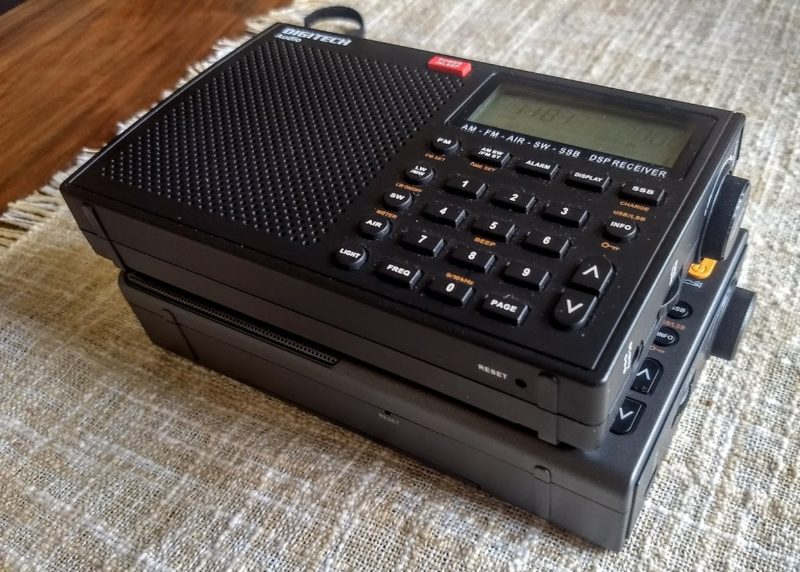
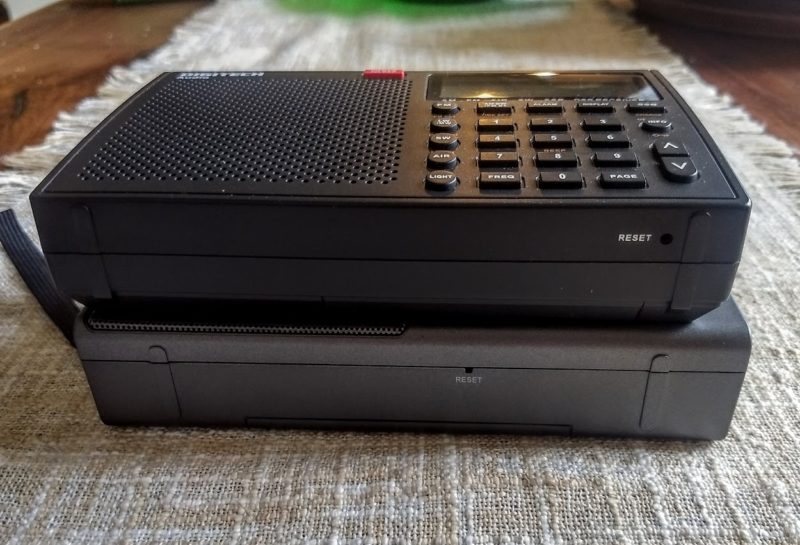
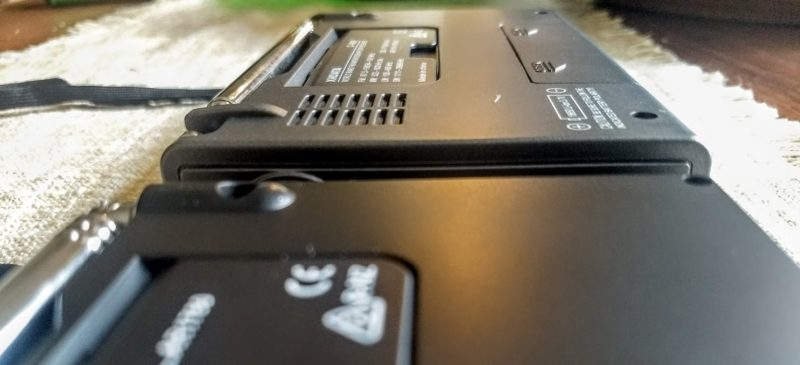
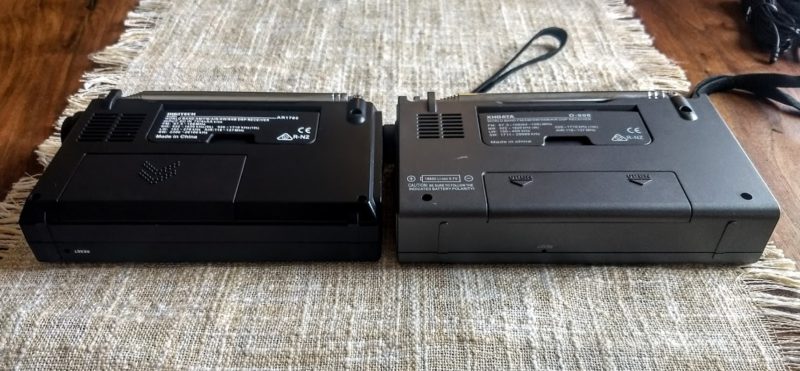
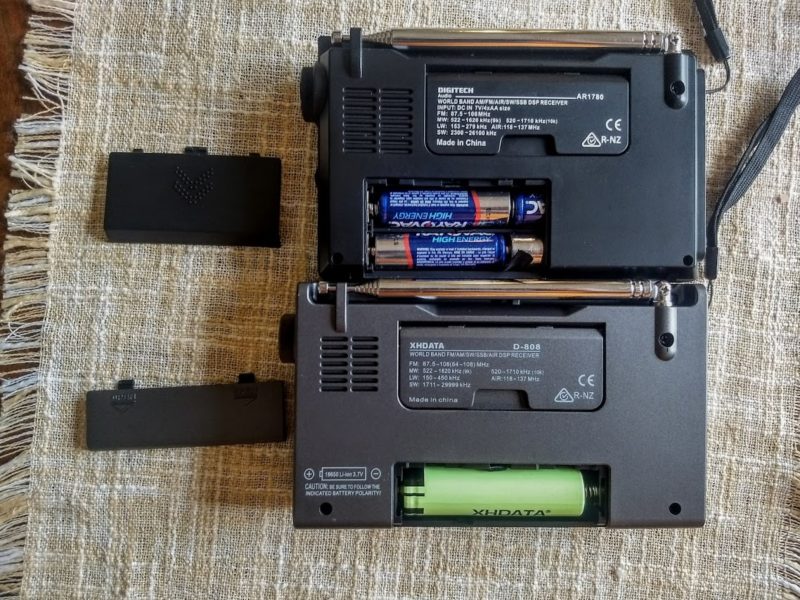
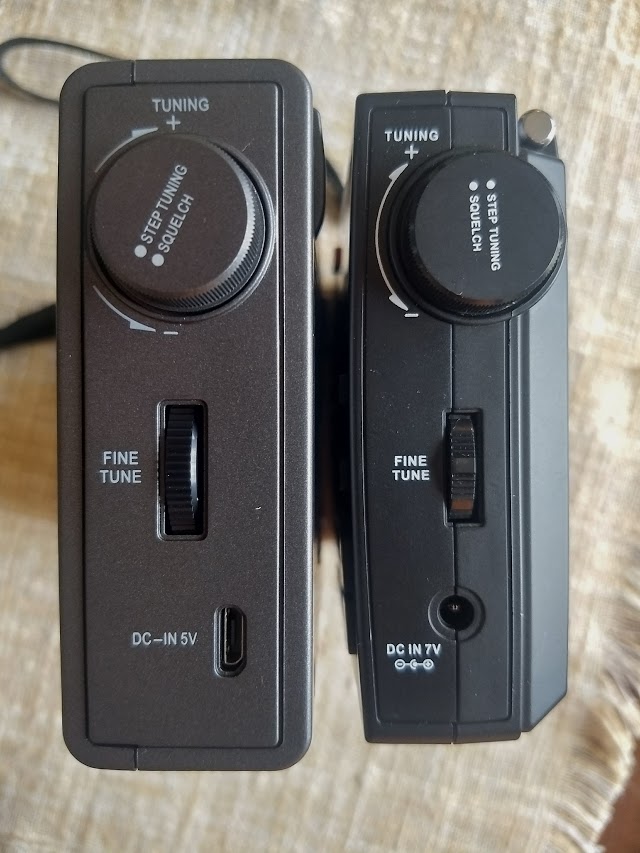
Radio Deal: Digitech AR-1780 $99 AUD/$119 NZD via Jaycar

[UPDATE: Click here to read our full review of the Digitech AR-1780.]

Many thanks to SWLing Post reader, Wesley, who notes:

For those in Australia, the Jaycar in Bondi Junction is currently selling the Digitech AR-1780 for AUD$99. I suspect the other locations are offering the same price.

I picked one up – pretty happy with it so far! Really excited that it contains several filter bandwidths, which should help with receiving weather fax and SITOR signals.

UPDATE: SWLing Post reader, Davo notes:

It’s on special in NZ too: NZ$119 saving of $30

https://www.jaycar.co.nz/pocket-world-radio-with-ssb/p/AR1780

Thank you for the tips!  Yes, indeed, I would purchase the AR-1780 for $99 AUD in a heartbeat. It’s certainly a great value at that price (roughly $77 US). I don’t think Jaycar ships internationally, so this sale may only apply to those living in Australia and New Zealand.

I can’t tell via the Jaycar site how long this sale may last. If you live in Australia or NZ and have been considering the AR-1780, I would jump on this deal. It’s a decent little portable. Besides visiting a Jaycar location, you can also place your order online.

Click here to view this deal at Jaycar Australia and here for Jaycar New Zealand.

Those of us outside of Australia/NZ can always purchase via the eBay seller I used–though the total price with shipping will set you back about $134 US.

Click here to read some of our Digitech AR-1780 posts. Also, note that on November 1 2017, I will publish a full review of the AR-1780 here on the SWLing Post.

U Twente antenna damaged

Many thanks to SWLing Post contributor, Dan Robinson, who shares the following item from BCL News and Richard Langley:

Antenna of Twente SDR receiver damaged // Bclnews
http://www.bclnews.it/2017/10/06/antenna-of-twente-sdr-receiver-damaged/

The antenna was damaged yesterday during a storm. As posted on the WebSDR website:

“The antenna currently is not working properly. After a preliminary repair of rain/storm damage on October 5, it seems reception has faded away again during the night. We’ll try to fix this soon, weather and spare-time manpower permitting.”

(Richard Langley via dxld yg)

Radio Day at Mount Mitchell State Park

Troy Riedel preparing the Tecsun S-8800 and Grundig Field BT for a comparison review.

Shortly after publishing my review of the Tecsun S-8800, SWLing Post contributor Troy Riedel contacted me and asked if I would consider comparing the S-8800 to the Grundig Field BT. Of course I was very curious how the $130 Grundig Field BT might compare with the $268 Tecsun S-8800, but I’ve got a lot on my plate at the moment and didn’t really want to purchase another large portable.

Long story short: Troy found a honey of a deal on a perfect Grundig Edition Field BT via eBay. He ordered it and we decided to bring the two radios together yesterday at beautiful Mount Mitchell State Park the highest point east of the Mississippi river.

Yesterday was an ideal day, too. The weather was picture-perfect, the park was (surprisingly) not too busy and propagation was the best I’ve experienced in weeks.

Troy left early in the morning and embarked on the 6+ hour pilgrimage to Mount Mitchell–I only live an hour away, so it was a casual drive for me. We met at noon.

Parks On The Air

After a quick lunch, we deployed my Elecraft KX2 with EFT Trail-Friendly antenna and made my first Parks On The Air (POTA) activation.

You might recall I was very active during the ARRL National Parks On The Air (NPOTA) program last year, but since then I’ve done few field deployments. It was great fun to get on the air again and do a park activation for the World Wide Flora & Fauna POTA program.

While we didn’t log a lot of stations, I was still impressed we worked stations from Texas to Quebec to the Azores. Not bad for 10 watts SSB!

Sure, I only worked a handful of stations, but this activation was essentially unannounced so chasers had no advance notice. No doubt, many more POTA activations are in my future! The bug has bitten!

Radio Fun

Except for a break to eat dinner at the park restaurant and a short hike to the peak of Mount Mitchell,  we played radio until about 8:00 PM. It was amazing, uninterrupted fun.

Troy spent a lot of time comparing the Tecsun S-8800 with the Grundig Field BT and made several videos. No doubt, he’ll post his thoughts and review in the near future!

Being a bit of radio geek, I couldn’t help but bring a few “extra” radios and accessories. Here’s what I packed:

We were a little disappointed to discover that both my Tecsun PL-680 and Grundig Satellit exhibited flaky behavior.

During my S-8800 comparison tests, a few weeks ago, I did notice that sometimes when I turned on the PL-680, it was absolutely deaf. Next time I turned it on, it worked fine. Yesterday, the PL-680 simply didn’t want to perform. I’m not sure what happened.

The Grundig Satellit, on the other hand, worked great, but sometimes if you touched either the antenna or even brought your hands near the radio body while tuned to a station, it would go deaf. You could correct this by tuning off frequency, then back on–still…very strange! It’s as if the AGC or RF gain were hanging up.

Have any Post readers experienced this before? I’ll look into the issue this week and reset both radios. Perhaps that will help.

A great “Mini DXpedition”

Thank you, Troy, for suggesting the meet up and for making the pilgrimage. It was great meeting you in person! I also thoroughly enjoyed watching someone else do comparison tests and exploring a new radio–Troy certainly has a knack for doing radio evaluations!

This has encouraged me to do more meet-ups, perhaps during my travels. Great fun!

Post Readers: be on the lookout for Troy’s comparison of the Grundig Field BT and Tecsun S-8800 in the coming days/weeks (no pressure, Troy!).

UPDATE: Click here to read Troy’s comparison.

CC Skywave SSB: C. Crane publishes pre-order page with pricing, availability and features

C. Crane has published a full pre-order page for their latest travel portable: the CC Skywave SSB.

The price is $169.99 US–they’ve noted an expected ship date of sometime after November 3, 2017.

We’ve been testing a pilot run CC Skywave SSB and recently posted photos. Once we have an production unit, we’ll post comparison videos and review notes.

Click here to view the CC Skywave SSB product page at C. Crane.